Research Article · Volume 14, Issue 11, 17 October 2026 · Open Access
Phenotypic Characteristics, Population Structure, and Inbreeding Rate of Traditional Muscovy Ducks in East Halmahera, North Maluku
· · · ·
Affiliations & Notes ⌄
- 1Animal Husbandry Study Program, Faculty of Agriculture, Khairun University, Street H.M Yusuf Abdul Rahman, Campus 2, Gambesi Village, South Ternate City, North Maluku Province, Indonesia. *Correspondence | Sariffudin Fatmona, Animal Husbandry Study Program, Faculty of Agriculture, Khairun University. Street H.M Yusuf Abdul Rahman, Campus 2, Gambesi Village, South Ternate City, North Maluku Province, Indonesia
- 2Email: sariffudinunkhair2002@gmail.com
Article Info ⌄
- Journal:
- Advances in Animal and Veterinary Sciences
- Published:
- 17 October 2026

Abstract
INTRODUCTION
The Muscovy duck is one of the waterfowl species with significant economic value in smallholder poultry production systems in many tropical countries . In this study, entok refers to the local name for the Muscovy duck (Cairina moschata). This species is recognized for its strong adaptability to diverse environmental conditions, relatively high feed utilization efficiency, and good meat quality . Consequently, Muscovy ducks are widely raised by small-scale farmers in rural areas as an important source of animal protein and household income ; ; . In traditional production systems, the Muscovy duck is generally raised under semi-extensive management with simple husbandry practices and the utilization of locally available feed resources . Such production systems enable this species to play an important role in supporting household food security and improving the livelihoods of rural communities . In Indonesia, the Muscovy duck is locally known as entok and represents a valuable indigenous poultry genetic resource with considerable potential for further development . This species is wsidely reared by rural communities due to its strong adaptability to tropical environments, relatively high disease tolerance, and ability to utilize low-quality feed resources efficiently ; ; .
In eastern Indonesia, particularly in North Maluku, the Muscovy duck, locally known as entok, is generally raised under traditional management systems characterized by natural mating without structured breeding programs . Such conditions may lead to imbalances in population structure, a low effective population size, and an increased risk of inbreeding within the population. Phenotypic characterization represents an essential initial step in the identification, utilization, and conservation of indigenous livestock genetic resources. This characterization includes the analysis of morphometric traits and qualitative characteristics, which can provide important insights into the level of phenotypic diversity within a population . High phenotypic diversity within a livestock population reflects substantial genetic potential that can be utilized for breeding programs and for improving animal productivity in the future ; .
In addition to phenotypic characteristics, population structure analysis represents an important component in livestock population genetics studies. Population structure can be evaluated using several parameters, including sex ratio, effective population size (Ne), and the inbreeding rate (ΔF). These parameters are essential for assessing population sustainability and for identifying potential risks of genetic diversity loss within a livestock population . Effective population size (Ne) is a fundamental parameter in population genetics that reflects the number of individuals effectively contributing genes to the next generation. A low effective population size increases the risk of inbreeding, potentially reducing genetic diversity, productivity, and resilience to diseases and environmental changes . Therefore, the analysis of effective populatio . Population size and inbreeding rate provides important information for the sustainable management of indigenous livestock populations .
Objective to evaluate the morphometric characteristics, population structure, effective population size (Ne), and inbreeding rate (ΔF) of traditionally raised Muscovy ducks in East Halmahera Regency, North Maluku, Indonesia. Novelty This study presents the first integrated assessment of morphometric characteristics and population genetic parameters, including effective population size (Ne) and inbreeding rate (ΔF), in traditionally raised Muscovy ducks from East Halmahera, North Maluku. The findings provide baseline scientific evidence to support genetic conservation and sustainable breeding programs for indigenous Muscovy ducks in eastern Indonesia.
MATERIALS AND METHODS
Study area
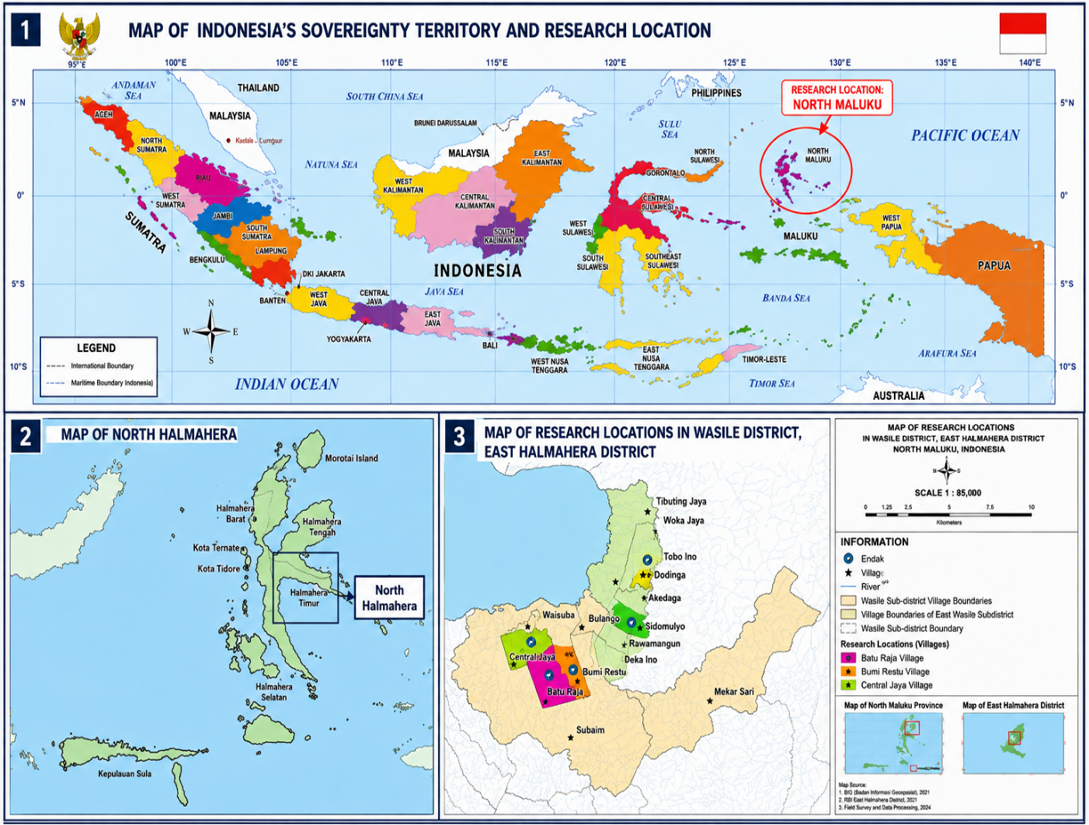
This study was conducted in Wasile Subdistrict and East Wasile Subdistrict, located in East Halmahera Regency. Geographically, the study area is situated at approximately 0°30’–1°30’ N latitude and 128°–130° E longitude, representing an archipelagic ecosystem characterized by a humid tropical climate with relatively high rainfall throughout the year. Wasile and East Wasile districts are among the main areas for raising the local Muscovy duck, which is traditionally reared by rural communities under semi-extensive management systems. Field data collection was conducted from June to August 2023. The map of the study area is presented in Figure 1.
Sampling
A total of 298 adult local Muscovy ducks were used as research samples, consisting of 138 males and 160 females. The samples were obtained from two study areas, namely Wasile Subdistrict, comprising 60 males and 80 females, and East Wasile Subdistrict, comprising 78 males and 80 females. The observed ducks belonged to smallholder farmers and were traditionally raised in several villages within the two districts. Sampling was conducted using a purposive sampling method, in which individuals were randomly selected based on specific criteria, including ducks that had reached adulthood, were healthy and active, and had no physical abnormalities. Each duck was measured only once to avoid measurement bias.
Research variables
The variables examined in this study consisted of quantitative phenotypic traits, qualitative phenotypic traits, and population parameters of the Muscovy duck population observed in Wasile Subdistrict and East Wasile Subistrict.
Quantitative phenotypic variables
Quantitative phenotypic variables consisted of morphometric traits that were directly measured using standard measuring instruments and analyzed using the mean, standard deviation, and coefficient of variation. The observed variables included: (1) body weight (g); (2) body length (cm); (3) bill length (cm); (4) bill width (cm); (5) neck length (cm); (6) wing length (cm); (7) chest length (cm); (8) chest width (cm); (9) chest circumference (cm); (10) back length (cm); (11) thigh length (cm); (12) shank length (cm); and (13) shank circumference (cm). These variables were used to describe the morphometric diversity and body size variation of the Muscovy duck population in the study area.
Qualitative phenotypic variables
Qualitative phenotypic variables consisted of morphological traits that were visually observed without numerical measurement and were presented in the form of frequencies and percentages. The observed variables included: (1) plumage color; (2) shank color; (3) bill color; (4) crest shape; (5) ear color; and (6) skin color. These traits were used to describe the phenotypic diversity of the Muscovy duck population raised by smallholder farmers. Calculating the formula of the average, standard deviation, and coefficient of diversity Steel et al. (1997) in Hendrawan et al. (2025).
Population structure
Variables: Population structure variables were used to describe the condition of the Muscovy duck population in the study area. The observed parameters included: (1) number of males (Nm); (2) number of females (Nf); and (3) sex ratio.
Population genetic parameter variables
Based on the number of male and female populations, several population genetic parameters were calculated, including: (1) effective population size (Ne) and (2) inbreeding rate (ΔF). These parameters were used to assess genetic diversity and the potential risk of inbreeding in the local Muscovy duck population.
Data analysis
Quantitative phenotypic traits were summarized using descriptive statistics, including mean, standard deviation (SD), minimum, maximum, and coefficient of variation (CV), as described by Steel et al. (1997). Qualitative phenotypic traits were summarized using relative frequency analysis to determine the proportion of each phenotypic characteristic within the population, following the guidelines of Steel et al. (1997).
Population structure was evaluated based on the numbers of breeding males and breeding females to estimate the effective population size (Ne) according to Eigen et al., (2007).
The rate of inbreeding per generation (ΔF) was estimated following the method described by Namura (2005). The sex ratio was calculated as the proportion of male to female individuals in the population according to Eigen et al., (2007). All statistical analyses were performed using IBM SPSS Statistics for Windows, Version 21.0 (IBM Corp., Armonk, NY, USA).
RESULTS
Morphometric characteristics and genetic parameters in the wasele, east halmahera area
Morphometric characteristics
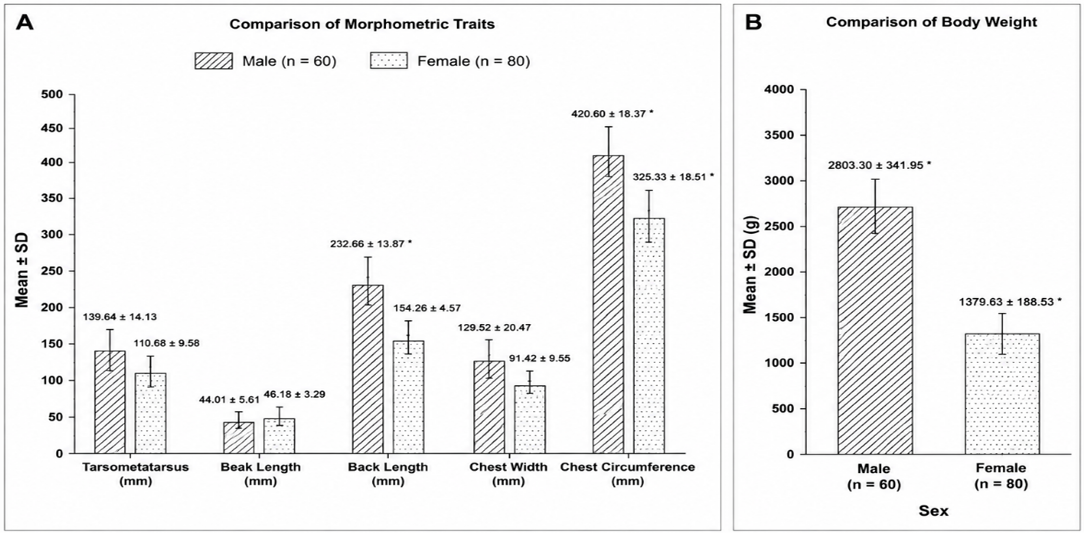
The results of the measurement of the morphometric measurements of traditionally raised Muscovy ducks (Cairina moschata) from Wasile District are presented as means (X̄) and standard deviations (SD) in Table 1 and Figure 2.
Table 1: Comparison of morphometric characteristics of male and female entok (Cairina moschata) in Wasile Subdistrict.
|
Observation variables |
Male (n = 60) X̄ ± SD |
CV (%) |
Female (n = 80) X̄ ± SD |
CV (%) |
|
Body Weight (g) |
2803.30 ± 341.95 |
12.20 |
1379.63 ± 188.53 |
13.66 |
|
Tarsometatarsus (mm) |
139.64 ± 14.13 |
10.12 |
110.68 ± 9.58 |
8.66 |
|
Beak Length (mm) |
44.01 ± 5.61 |
12.75 |
46.18 ± 3.29 |
7.12 |
|
Back Length (mm) |
23.66 ± 13.87 |
58.63 |
154.26 ± 4.57 |
2.96 |
|
Chest Width (mm) |
129.52 ± 20.47 |
15.80 |
91.42 ± 9.55 |
10.44 |
|
Chest Circumference (mm) |
420.60 ± 18.37 |
4.37 |
325.33 ± 18.51 |
5.69 |
Abbreviations: X̄, mean; SD, standard deviation; CV, coefficient of variation.
Male Muscovy ducks generally exhibited greater body size than females, particularly for body weight, tarsometatarsus length, chest width, and chest circumference. Body weight was 2803.30 ± 341.95 g (CV 12.20%) in males and 1379.63 ± 188.53 g (CV 13.66%) in females, while chest circumference reached 420.60 ± 18.37 mm (CV 4.37%) and 325.33 ± 18.51 mm (CV 5.69%), respectively. In contrast, females had slightly longer beaks than males (46.18 ± 3.29 vs. 44.01 ± 5.61 mm), indicating clear sexual dimorphism in most morphometric traits.
Morphometric variability was generally low to moderate, although back length in males showed an unusually high CV (58.63%) compared with females (2.96%). Because the male back-length value (23.66 ± 13.87 mm) is markedly lower than the female value (154.26 ± 4.57 mm), this measurement should be verified against the original dataset before publication. Overall, the findings demonstrate substantial sexual differentiation in body size among traditionally managed Muscovy ducks in East Halmahera, North Maluku.
Qualitative phenotypic traits of male and female muscovy ducks (Cairina moschata) in wasile subdistrict
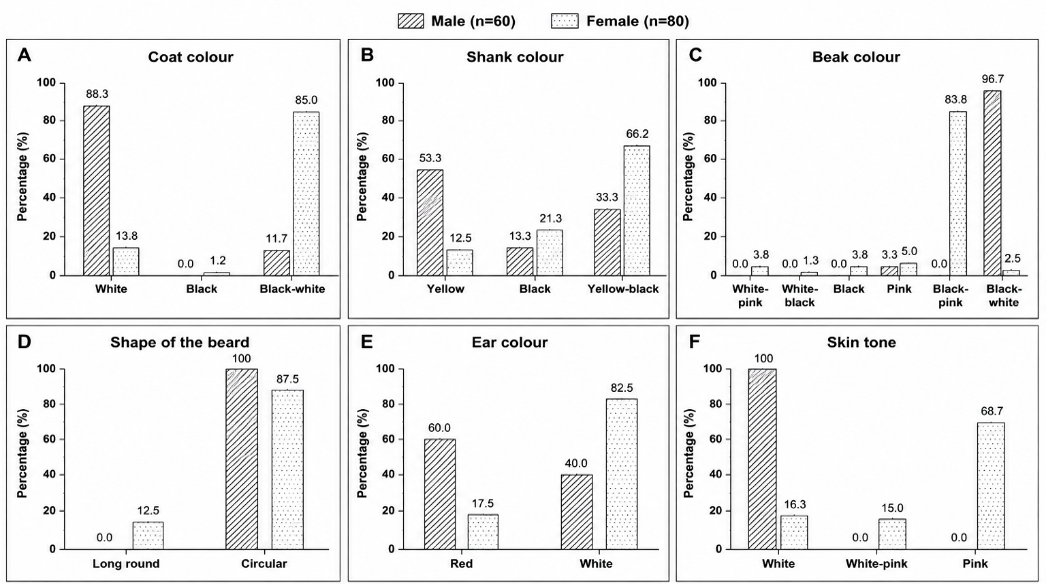
The qualitative phenotypic traits of male and female Muscovy ducks (Cairina moschata) in Wasile Subdistrict were assessed based on six main characteristics, namely plumage color, shank color, bill color, comb morphology, ear lobe color, and skin pigmentation. The distribution of each character is presented in Figure 3.
Based on Figure 3, the variation in qualitative phenotypic traits of Muscovy ducks in Wasile Subdistrict showed different distributions between males and females. For plumage color, male ducks were predominantly white, accounting for 53 individuals (88.3%), whereas female ducks were mainly characterized by black–white plumage, comprising 68 individuals (85.0%). Pure black plumage was observed exclusively in female ducks, with a very low frequency (1.2%). Regarding shank color, male ducks were predominantly yellow, with 32 individuals (53.3%), followed by a yellow–black combination in 20 individuals (33.3%), and black in 8 individuals (13.3%). In contrast, female ducks showed a different pattern, with the most common shank color being yellow–black (53 individuals; 66.2%), followed by black (17 individuals; 21.3%) and yellow (10 individuals; 12.5%). For bill color, nearly all male Muscovy ducks exhibited a black–white bill pattern, accounting for 58 individuals (96.7%), while the pink bill color was observed in only 2 individuals (3.3%). In contrast, female ducks were predominantly characterized by a black–pink bill combination, comprising 67 individuals (83.8%), whereas other categories such as white–pink, white–black, black, pink, and black–white were recorded at relatively low frequencies.
Table 2: Quantitative phenotypes of male and female entok in East Wasile subdistrict.
|
Male (n=78) X̄ ± SD |
CV Male (%) |
Female (n=80) X̄ ± SD |
CV Female (%) |
|
|
Body Weight (g) |
2445.60 ± 265.42 |
10.85 |
1479.03 ± 337.89 |
22.85 |
|
Tarsometatarsus (mm) |
137.15 ± 7.90 |
5.76 |
123.07 ± 12.10 |
9.83 |
|
Beak Length (mm) |
46.65 ± 3.56 |
7.63 |
47.22 ± 6.67 |
14.13 |
|
Back Length (mm) |
229.66 ± 88.99 |
38.75 |
144.61 ± 11.64 |
8.05 |
|
Chest Width (mm) |
129.24 ± 15.16 |
11.73 |
93.65 ± 21.31 |
22.75 |
|
Chest Circumference (mm) |
411.66 ± 15.77 |
3.83 |
316.66 ± 16.67 |
5.26 |
Abbreviations: X̄, mean; SD, standard deviation; CV, coefficient of variation.
Regarding comb morphology, all male ducks exhibited a round comb shape (100%). Among females, the round comb shape was also predominant, occurring in 70 individuals (87.5%), whereas an elongated-round comb shape was observed in 10 individuals (12.5%). Ear lobe coloration differed between sexes. Male ducks were predominantly characterized by red ear lobes, observed in 36 individuals (60.0%), while 24 individuals (40.0%) had white ear lobes. In contrast, white ear lobes predominated among females, occurring in 66 individuals (82.5%), whereas red ear lobes were recorded in only 14 individuals (17.5%). Skin pigmentation showed a distinct pattern between sexes. All male ducks exhibited white skin (100%). Among females, pink skin was the predominant phenotype, occurring in 55 individuals (68.7%), followed by white skin in 13 individuals (16.3%) and a white–pink combination in 12 individuals (15.0%).
Population and genetic parameters in wasile
The population parameter analysis of traditional Muscovy ducks in East Halmahera District revealed a relatively balanced population structure between males and females. A total of 140 individuals were observed, consisting of 60 males and 80 females. Based on this composition, the sex ratio was estimated at 1:1.33, indicating approximately 75 males per 100 females within the population. This relatively balanced sex ratio suggests that the duck population in the study area still has good reproductive potential and a relatively stable capacity for population sustainability. The estimated effective population size (Ne) was 137.14 individuals. This value represents the number of breeding individuals that genetically contribute to the next generation. The relatively large effective population size indicates that the Muscovy duck population in the study area still possesses a sufficient capacity to maintain genetic variation, with a relatively low risk of genetic diversity loss.
In addition, the estimated inbreeding rate (F) was 0.0036 per generation, equivalent to 0.36%. This value is considered low and indicates that the level of inbreeding within the traditional Muscovy duck population in East Halmahera remains at a safe threshold. A low inbreeding rate generally suggests that the exchange of individuals among farmers or an open management system is still occurring, thereby reducing the likelihood of mating between closely related individuals. Overall, the population parameters obtained indicate that the traditional Muscovy duck population in the study area remains in relatively good genetic condition, characterized by an adequate effective population size and a low level of inbreeding. This condition provides substantial opportunities for the conservation of local poultry genetic resources and for the development of sustainable breeding programs based on indigenous populations.
Morphometric characteristics and genetic parameters in east wasile subdistrict, east halmahera
Morphometric characteristics
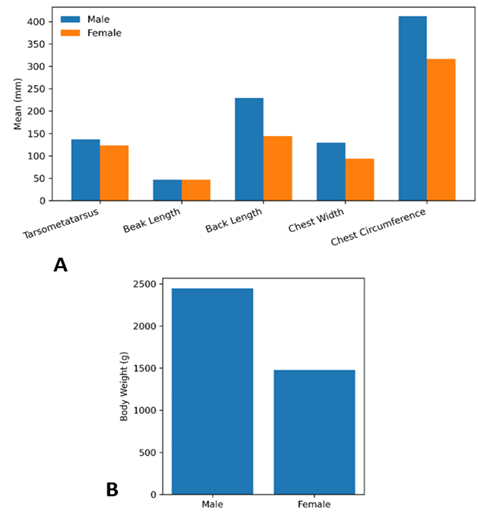
The morphometric characteristics of traditional Muscovy duck (Cairina moschata) populations in East Wasile District were evaluated based on key quantitative traits, including body weight, tarsometatarsus length, beak length, back length, chest width, and chest circumference. The mean (X̄), standard deviation (SD), and coefficient of variation (CV) for each trait are presented in Table 2 and Figure 4A, B.
Table 2 and Figure 4A, B show that male Muscovy ducks generally exhibited larger body dimensions than females, particularly for body weight, tarsometatarsus length, back length, chest width, and chest circumference. Male body weight averaged 2445.60 ± 265.42 g, compared with 1479.03 ± 337.89 g in females, whereas bill length was slightly greater in females (47.22 ± 6.67 mm) than in males (46.65 ± 3.56 mm). This pattern indicates pronounced sexual dimorphism in the morphometric traits of Muscovy ducks in East Wasile Subdistrict.
The CV values indicated trait-specific variation, ranging from 3.83–38.75% in males and 5.26–22.85% in females. Chest circumference showed the lowest variability in both sexes, whereas male back length exhibited the highest variation (38.75%). Overall, these findings demonstrate clear quantitative phenotypic variation between sexes in the Muscovy duck population of East Wasile Subdistrict.
Distribution of qualitative phenotypic traits of male and female east wasile subdistrict
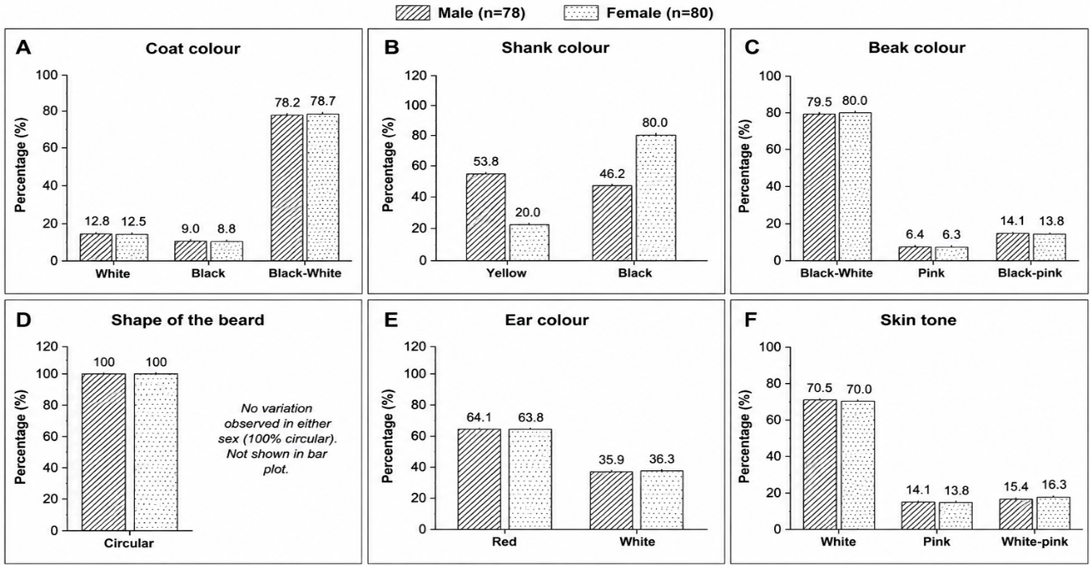
Muscovy Ducks (Cairina moschata) in East Wasile Subdistrict. The distribution of qualitative phenotypic traits in male and female Muscovy ducks (Cairina moschata) from east Wasile District is presented in Figure 5. The observed traits included plumage color, shank color, beak color, comb morphology, ear lobe color, and skin pigmentation.
Based on Figure 5, plumage color in both male and female Muscovy ducks in East Wasile Subistrict was predominantly black–white. In males, 61 individuals (78.2%) exhibited black–white plumage, while a similar proportion was observed in females (63 individuals; 78.7%). Pure white and black plumage types occurred at lower frequencies in both sexes. For shank color, males were predominantly characterized by yellow shanks (42 individuals; 53.8%), whereas females were mainly characterized by black shanks (64 individuals; 80.0%), indicating a clear sex-related divergence in shank pigmentation patterns.
Beak color showed a relatively similar distribution between sexes, with black–white being the most frequent phenotype. In males, 62 individuals (79.5%) exhibited black–white beak coloration, while in females this proportion reached 64 individuals (80.0%). Pink and black–pink beak colors were observed at lower frequencies in both sexes. All male and female individuals (100%) exhibited a round comb morphology, indicating that this trait is highly fixed within the studied population. Ear lobe color was predominantly red in both sexes, with 50 males (64.1%) and 51 females (63.8%) showing this phenotype, while white ear lobes were observed in 28 males (35.9%) and 29 females (36.3%). For skin color, white pigmentation was the most common phenotype in both sexes, recorded in 55 males (70.5%) and 56 females (70.0%). This was followed by white–pink (12 males; 15.4% and 13 females; 16.3%) and pink (11 males; 14.1% and 11 females; 13.8%), indicating a relatively consistent distribution pattern across sexes.
Population and genetic parameters in east wasile district
Based on the analysis of Muscovy duck (Cairina moschata) populations in East Wasile Subdistrict, comprising 78 males (Nm) and 80 females (Nf), several population and genetic parameters were estimated, including effective population size, inbreeding rate, and sex ratio. The effective population size (Ne) was estimated at 157.97 individuals. This parameter reflects the number of breeding individuals that effectively contribute to gene transmission across generations and thus determines the genetic structure of the population.
The estimated inbreeding rate (ΔF) was 0.0031 per generation (0.31%), indicating a low rate of inbreeding accumulation within the studied population. This suggests that the population maintains a relatively high level of genetic variability and has not yet experienced significant inbreeding pressure. In addition, the sex ratio was 1:1.02 (male: female), indicating a nearly balanced population structure. Such a balanced sex ratio is generally favorable for maintaining reproductive efficiency and ensuring population sustainability under traditional management systems. Overall, the population and genetic parameters indicate that the Muscovy duck population in Wasile Timur District is currently in a relatively stable genetic condition. However, proper mating management strategies are still required to maintain genetic diversity and prevent potential increases in inbreeding in future generations.
DISCUSSION
Morphometric characteristics of muscovy ducks in Wasile subdistrict
Male Muscovy ducks (Cairina moschata) showed greater body dimensions than females for most morphometric traits, indicating clear sexual dimorphism characteristic of domestic poultry.
These biological mechanisms contribute to differential energy allocation, resulting in larger body size and more robust skeletal development in males compared to females . The significantly higher body weight observed in male Muscovy ducks compared to females in the present study is consistent with previous reports indicating that males can attain nearly twice the body mass of females. This agreement with earlier findings further confirms the presence of pronounced sexual dimorphism in Muscovy duck populations .
These characteristics indicate that male Muscovy ducks possess a greater body capacity, particularly in the thoracic region, which is closely related to the development of the pectoralis muscles that play a key role in meat production. . Larger chest circumference in males is also often used as an indicator of meat production potential in local poultry. The size difference in the variable tarsometatarsus also shows a similar tendency, where male Muscovy has a longer size compared to females. Tarsometatarsus length is often used as an indicator of skeletal size and weight support in poultry . Some studies suggest that tarsometatarsus size has a positive correlation with body weight and overall body size in local poultry .
In traditional rearing systems, unstandardized feed and heterogeneous environmental conditions can lead to considerable morphometric variation in local poultry populations . In general, the results of this study show that the Muscovy population in the Wasile region has a fairly high phenotypic diversity, which is a common characteristic in local livestock that is extensively raised by smallholder farmers. Such phenotypic diversity is particularly important in the context of the conservation of livestock genetic resources, as populations with high phenotypic variation tend to have better adaptability to environmental changes .
In addition, morphometric characteristics can also be used as a basis for local livestock breeding and selection programs. Morphometric analysis is often used as an initial method to identify the genetic potential and population structure of livestock before more complex molecular analyses are undertaken . Therefore, information on the morphometric characteristics of local Muscovy in East Halmahera has an important value as a data baseline for the development of conservation programs and the increase in productivity of local Muscovy in the Indonesian archipelago. Overall, the morphometric differences between male and female Muscovy found in this study suggest that the entok population in the study area still retains the normal biological characteristics commonly found in Cairina moschata species. However, good breeding management is still needed to maintain the sustainability of the population and maintain existing genetic diversity.
Qualitative phenotypic character of muscovy in Wasile subdistrict
Character distribution of Muscovy Qualitative Phenotype Figure 3. The results of the analysis of the qualitative phenotype character of entok in Wasile District showed that there was a fairly high phenotype diversity in several main traits, especially the color of feathers, shank, beak, and skin color. This variation indicates that the entok population in the region is still genetically heterogeneous and has not undergone strict targeted selection, so allele variation is still fairly maintained in the population .
Plumage color was predominantly white in males (88.3%) and black-white in females (85.0%). This pattern suggests the presence of sex-based phenotypic dimorphism, which is common in domestic poultry due to differences in autosomal gene expression and environmental interactions . In the shank character, males are dominated by yellow (53.3%), while females show more yellow-black (66.2%). This variation in the color of the shank is closely related to the deposition of melanin and carotenoid pigments, which are influenced by genetic and nutritional factors . Males are dominated by black-and-white (96.7%), while females are dominated by black-pink (83.8%). This phenotypic variation indicates a strong phenotypic polymorphism, which is often found in livestock populations with low to moderate inbreeding rates . The crest shape of both sexes is dominated by round shapes (100% males and 87.5% females), indicating that this character is relatively genetically stable and has low variability. The stability of this phenotype suggests the possibility of simple genetic control with little environmental influence.
Ear color showed a predominance of red in males (60.0%) and white in females (82.5%), indicating differences in sex-limited hormonal expression. This character is often used as an indicator of phenotypic selection in local poultry studies. Skin color shows a very clear difference, where all males (100%) have white skin, while females are more diverse, with pink dominance (68.7%). This variation indicates the presence of a fairly high genetic polymorphism in the female population, which can be influenced by a combination of genetic, environmental, and maintenance management factors . Overall, these results suggest that the entok population in Wasile still has a high qualitative phenotype diversity, which is an important indicator in the conservation of local livestock genetic resources. This diversity is very important to maintain the resilience of the population to natural selection and environmental pressures, as well as to be the basis for the development of locally-based breeding programs.
Muscovy population and genetic parameters in wasile subdistrict
The traditional Muscovy duck population exhibited a relatively stable structure, comprising 60 males and 80 females (sex ratio 1:1.33), indicating a balanced breeding population. The sex ratio structure is one of the important indicators in the evaluation of population dynamics and reproductive capacity in local poultry . The relatively balanced sex ratio suggests favorable reproductive potential for maintaining population sustainability. In traditional farming systems, females are generally retained in greater numbers because of their essential roles in egg production and population regeneration. Therefore, the dominance of females in the entok population in the study area can be considered as a pattern commonly found in local poultry rearing systems in various tropical regions.
The effective population size (Ne) was estimated at 137.14 individuals. Effective population size is an important parameter in population genetics because it describes the number of individuals who genetically contribute to the next generation ; . The relatively high Ne value indicates that the entok population in the study area still has the capacity to maintain genetic variation in the long term. Populations with large Ne values generally have a lower risk of genetic variation loss due to genetic drift compared to populations with small effective sizes . In the context of livestock genetic resource conservation, effective population values greater than 50 individuals are generally considered sufficient to prevent the occurrence of inbreeding depression in the short term, while values above 100 individuals are required to maintain genetic variation in the long term. Thus, the Ne value of 137.14 in the entok population in the study area indicates that the population is still in a relatively safe condition from the risk of genetic erosion.
In addition to effective population size, another important parameter in population genetics is the inbreeding rate. The results of this study showed that the value of the inbreeding rate (F) was 0.0036 per generation or around 0.36%. This value is relatively low and shows that the rate of marriage between individuals who have close kinship relationships is still relatively limited. Low inbreeding rates usually indicate individual exchanges between groups of breeders or open breeding systems, thereby increasing gene flow in the population ; Wu, 2021). In traditionally raised local livestock populations, the exchange of males between breeders often occurs naturally through semi-extensive rearing systems or through the practice of buying and selling livestock between villages. These conditions can increase gene flow in the population and help reduce the risk of increased inbreeding. Several studies on local poultry in different countries also reported that traditional rearing systems tend to produce relatively low inbreeding values compared to closed breeding systems (Cendron et al., 2018; .
Without proper breeding management, geographically isolated populations remain vulnerable to increased inbreeding over time. Therefore, monitoring effective population size and inbreeding rates is essential for conserving local genetic resources. The present study indicates that traditional Muscovy ducks in East Halmahera maintain favorable genetic conditions, characterized by a balanced sex ratio, a large effective population size, and a low inbreeding rate, providing a strong foundation for sustainable conservation and breeding programs.
Morphometric characteristics of muscovy ducks in East Wasile subdistrict
The results of morphometric analysis in Figure 4A, B showed that the Muscovy duck (Cairina moschata) traditionally kept in East Wasile District had a clear pattern of sexual dimorphism in most of the morphometric characters observed. Sexual dimorphism is a common characteristic in domestic poultry, where male individuals usually have a larger body size compared to females due to the influence of genetic, hormonal, and different growth rates , 2026). In this study, the average body weight of male entok reached 2445.60 g, while female entok was only 1479.03 g.
The difference in body weight shows a difference in growth capacity between the two sexes. Several previous studies on entok populations in different countries have also reported a similar pattern, where male entok has a body weight 1.5 to 2 times greater than females . This difference is mainly due to higher androgen hormone activity in males which plays a role in increasing muscle tissue growth and skeletal development. In addition to body weight, size differences are also seen in the character of tarsometatarsus length. The average length of the tarsometatarsus in males reaches 137.15 mm, while in females it is 123.07 mm. Tarsometatarsus length is often used as an indicator of skeletal size and weight-bearing capacity in poultry ; ; . The longer size of the tarsometatarsus in male entok suggests that male individuals have a larger skeletal structure to support a higher body weight.
The difference in body size is also reflected in the variables of chest size and back length. Male entok has a larger chest width and chest circumference compared to females. Chest circumference is one of the important indicators in the evaluation of meat production potential in poultry because it is related to the development of the pectoralis muscle which is the main component of poultry meat ; . The larger breast dimensions of male Muscovy ducks indicate greater meat production potential than females. In contrast, females exhibited slightly longer beaks, possibly reflecting adaptation to foraging behavior under traditional semi-extensive management. Most morphometric traits showed low to moderate coefficients of variation, indicating relatively uniform phenotypic characteristics shaped by both genetic and environmental influences.
However, some characters such as the width of the chest in female muscovy show relatively high diversity coefficient values. Large variations in certain characters can be caused by several factors, including differences in individual age, maintenance system, feed quality, and differences in genetic background between individuals in the population ; ; ; ; ; . Overall, traditional Muscovy ducks in East Halmahera exhibit large body size and adequate phenotypic variation, highlighting their potential for genetic improvement, conservation, and selection in smallholder production systems.
Qualitative phenotypic character of muscovy in East Wasile subdistrict
The distribution of qualitative phenotypic traits of male and female Muscovy ducks (Cairina moschata) in East Wasile Subdistrict is presented in Figure 5. The observed traits include plumage color, shank color, beak color, comb shape, ear lobe color, and skin color. Qualitative phenotypic characteristics in local poultry are important indicators for identifying morphological diversity and assessing the genetic resource potential of indigenous livestock ; . The Muscovy duck population in East Wasile was predominantly characterized by black–white plumage in both sexes. This common phenotype reflects genetic variation in feather pigmentation and is likely maintained by natural selection and uncontrolled mating under traditional extensive management systems ; ; .
Shank color differed between sexes, with yellow predominating in males and black in females. This variation is primarily determined by genetic regulation of carotenoid and melanin pigmentation, with additional influences from nutrition and environmental conditions . Shank color is also frequently used as a phenotypic marker in the characterization of local livestock, as it is relatively stable and easily observed in traditionally managed poultry populations ; ; Ramandhani et al., 2025). The beak color trait in the Muscovy duck population in East Wasile Subdistrict is predominantly characterized by a black–white coloration pattern in both males and females. Beak coloration in poultry is a phenotypic trait influenced by the combined effects of melanin and carotenoid pigments that accumulate in the keratinized tissues of the beak (Ramandhani et al., 2025)).
The low variation in beak color indicates a relatively uniform phenotype, likely reflecting a shared genetic background. Likewise, all Muscovy ducks exhibited a round comb, suggesting that this is the predominant morphological trait in the studied population and a useful characteristic for breed identification . In addition, several studies have shown that the character of the crest can also be influenced by hormonal factors and the physiological condition of the birds ; . The distribution of ear lobe color indicates that red coloration is more dominant than white in both sexes. Ear lobe color in poultry is often associated with genetic traits related to eggshell color and tissue pigmentation systems . Variation in ear lobe color in local poultry populations is often reported as an indicator of genetic diversity within traditionally managed livestock populations.
Skin color traits in both male and female Muscovy ducks are predominantly white, followed by white–pink and pink variations. Skin color in poultry is a phenotypic trait influenced by the interaction of carotenoid and melanin pigments, as well as genetic factors regulating pigment deposition in skin tissues . Variation in skin color is associated with genetic background and natural mating under traditional management systems. Overall, the observed qualitative traits indicate substantial morphological diversity, highlighting the genetic value of the East Wasile Muscovy duck population for characterization, conservation, and future breeding programs.
Muscovy population and genetic parameters in East Wasile subdistrict
Population parameter analysis of traditionally reared Muscovy ducks (Cairina moschata) in East Wasile Subdistrict revealed a relatively stable population structure. A total of 78 males and 80 females were recorded, resulting in a nearly balanced sex ratio of 1:1.02. This balanced ratio supports reproductive efficiency and the long-term sustainability of the population . In livestock population genetics, sex ratio directly influences effective population size (Ne), with imbalanced ratios reducing Ne and increasing the risk of genetic variation loss . Therefore, the relatively balanced sex ratio observed in the Muscovy duck population in the study area indicates a good reproductive potential and the ability to maintain gene flow across generations.
The estimated effective population size (Ne) in this study was 157.97 individuals. Effective population size is a key parameter in conservation genetics, as it represents the number of individuals that genetically contribute to the next generation . A relatively high Ne value in the studied Muscovy duck population indicates that the population still has a good capacity to maintain genetic diversity in the long term. According to previous studies, livestock populations with an Ne value above 50 are generally still able to retain genetic variation in the short term, whereas an Ne value above 100 is considered more secure for long-term genetic sustainability . In addition to effective population size, another important parameter in population genetic evaluation is the inbreeding rate. The results of this study indicate an inbreeding rate (ΔF) of 0.0031, or 0.31% per generation. This value is considered low and remains below the commonly recommended threshold for livestock population management, which is approximately 1% per generation . A low inbreeding rate indicates that the probability of mating between closely related individuals remains relatively small.
The low inbreeding level is likely attributable to the semi-extensive management system, where free-ranging practices and the exchange of breeding stock among farmers promote gene flow and maintain genetic diversity. However, unmanaged small or geographically isolated populations remain vulnerable to inbreeding . Therefore, proper mating management is still required to ensure that the genetic diversity of the population is maintained. Several strategies that can be implemented include the exchange of breeding males among farmers, male rotation, and the establishment of a community-based breeding program.
Overall, the traditional Muscovy duck population in East Halmahera exhibits favorable genetic conditions, characterized by a large effective population size, a balanced sex ratio, and low inbreeding. These findings support its potential for sustainable breeding, conservation, and genetic resource management in the Indonesian archipelago.
CONCLUSIONS AND RECOMMENDATIONS
The traditionally managed Muscovy duck (Cairina moschata) population in East Halmahera exhibits clear sexual dimorphism, low to moderate phenotypic variation, a relatively large effective population size, and a low inbreeding rate, indicating favorable genetic conditions for sustainable breeding and conservation of local poultry genetic resources. This study was limited to phenotypic characterization and population genetic parameter estimation and did not include histological analyses. Future studies should integrate morphometric, histological, and molecular approaches to provide a more comprehensive understanding of the biological mechanisms underlying phenotypic variation and to support more effective breeding and conservation strategies for indigenous Muscovy ducks.
ACKNOWLEDGMENTS
The authors would like to express their sincere gratitude to the Faculty of Agriculture and the Institute for Research and Community Service (LPPM), Universitas Khairun, for financial support through the Higher Education Faculty Competitive Research Grant in 2023, which made this study possible. The authors also extend their appreciation to the Muscovy duck farmers in East Wasile Subdistrict, East Halmahera Regency, for their valuable support and assistance during field data collection.
NOVELTY STATEMENT
The novelty of this study lies in the integrated assessment of morphometric characteristics and population genetic parameters, providing the first quantitative baseline demonstrating that traditionally managed Muscovy duck populations in East Halmahera maintain moderate phenotypic diversity, relatively large effective population sizes, and low inbreeding levels, thereby supporting their long-term genetic sustainability and conservation.
AUTHOR’S CONTRIBUTION
SF: Conceptualization, methodology, investigation, data curation, formal analysis, writing original draft, and supervision. S: Investigation, data collection, validation, and writing review and editing. SU: Methodology, data analysis, and writing review and editing. ES: Investigation, resources, and data curation. SL: Validation, visualization, and writing review and editing. All authors have read and approved the final version of the manuscript.
Ethical approval
This study was purely observational and did not involve any experimental treatment or manipulation of the animals. All phenotypic observations and morphometric measurements were performed using non-invasive procedures under normal smallholder farming conditions, in accordance with the animal welfare guidelines of Universitas Khairun.
Generative AI and AI assisted technology statement
Generative AI was used to assist with language editing and clarity. The authors manually reviewed and edited the manuscript to produce the final version.
Conflict of interest
The authors have declared that they have no financial or non-financial competing interests that could have influenced the results of this study.
Figures

Map of the study area. The map shows: (1) the location of North Maluku Province within Indonesia; (2) the location of East Halmahera Regency within North Maluku Province; and (3) the locations of Wasile and East Wasile Subdistricts within East Halmahera Regency, where the study population was sampled.

Comparison of morphometric characteristics between male (n = 60) and female (n = 80) Muscovy ducks (Cairina moschata) in Wasile Subdistrict, North Maluku, Indonesia. (A) Mean (± SD) values of morphometric traits, including tarsometatarsus length, beak length, back length, chest width, and chest circumference. (B) Comparison of body weight between male and female Muscovy ducks. Error bars represent the standard deviation (SD).

Qualitative phenotypic characteristics of male (n = 60) and female (n = 80) Muscovy ducks (Cairina moschata) from Wasile Subdistrict, North Maluku, Indonesia. (A) Coat colour, (B) shank colour, (C) beak colour, (D) shape of the comb, (E) ear colour, and (F) skin tone. Comb represent the percentage of birds in each phenotypic category.

A: Morphometric comparison (mm) and B: Comparison of body weight (g) between male and female ducks from East Wasile Subdistrict.

Percentage distribution of qualitative phenotypic traits in male (n = 78) and female (n = 80) Muscovy ducks (Cairina moschata) from East Wasile Subdistrict, East Halmahera Regency, North Maluku Province. Panels represent (A) coat colour, (B) shank colour, (C) beak colour, (D) comb shape, (E) ear colour, and (F) skin tone.
References
- Adeola AC, Sola-Ojo FE, Opeyemi YA, Oguntunji AO, Nneji LM, Ewuola MK, Bello SF, Olaniyi WA, Adesoji AT, Karuno AP, Sanke OJ, Daniel EL (2022). Genetic diversity and population structure of Muscovy duck (Cairina moschata) from Nigeria. PeerJ, 10: e13236. https://doi.org/10.7717/peerj.13236[CrossRef]
- Bati JB, Biza-Koukaba CK, Banga-Mboko H, Mfoukou-Ntsakala A, Bakoutana D, Adzona PP, Hornick JL, Leroy PL (2014). Phenotypic characterization according to the feather color of indigenous Muscovy ducks bred in the backyard in Brazzaville, the Congo. Anim. Prod., 16(3): 140-145. https://doi.org/10.20884/1.jap.2014.16.3.459[CrossRef]
- Carvalho EL, Santana RLS, Araujo TF, Benigno RNM, Giese EG (2025). Revisiting trematodes in Cairina moschata (Linnaeus, 1758) (Anseriformes: Anatidae) in the Brazilian Amazon. Contrib. Cienc. Soc., 18(2): e15522. https://doi.org/10.55905/revconv.18n.2-220[CrossRef]
- Cendron F, Mastrangelo S, Tolone M, Perini F, Lasagna E, Cassandro M (2021). Genome-wide analysis reveals the patterns of genetic diversity and population structure of 8 Italian local chicken breeds. Poult. Sci., 100(2): 441-451. https://doi.org/10.1016/j.psj.2020.10.023[CrossRef]
- Chakraborty D, Guinat C, Müller NF, Briand FX, Andraud M, Scoizec A, Lebouquin S, Niqueux E, Schmitz A, Grasland B, Guerin JL, Paul MC, Vergne T (2022). Phylodynamic analysis of the highly pathogenic avian influenza H5N8 epidemic in France, 2016-2017. Transbound. Emerg. Dis., 69(5): e1574-e1583. https://doi.org/10.1111/tbed.14490[CrossRef]
- Chapuis H, Lagüe M, Bonnefont CMD, David I, Bernadet MD, Hazard A, Gilbert H (2024). Genetic parameters of feeding behaviour traits in ducks bred for foie gras production. Animal, 18(8): 101234. https://doi.org/10.1016/j.animal.2024.101234[CrossRef]
- Deng S, Yang W, Hu S, Li L, He J, Bian G (2025). Integrated analysis of carotenoid metabolism, lipid profiles, and gut microbiota reveals associations fundamental to skin pigmentation in Lingshan chickens. Animals, 15(19): 2832. https://doi.org/10.3390/ani15192832[CrossRef]
- Engen S, Ringsby TH, Sæther BE, Lande R, Jensen H, Lillegård M, Ellegren H (2007). Effective size of fluctuating populations with two sexes and overlapping generations. Evolution, 61(8): 1873-1885. https://doi.org/10.1111/j.1558-5646.2007.00155.x[CrossRef]
- Fatmona S, Hoda A, Utami S (2024). Phenotype character of the first generation (G1) results of crossing Elba chicken with Ternate village chicken to improve the quality of local chicken. Adv. Anim. Vet. Sci., 12(8): 1410-1421. https://doi.org/10.17582/journal.aavs/2024/12.8.1410.1421[Full text][CrossRef]
- Fatmona S, Hoda A, Utami S, Saelan E, Sulasmi, Nur TD, Sahil J (2025). Characteristics of Ternate local chickens based on single nucleotide polymorphism (SNP) on D-loop mitochondrial DNA. Int. J. Agric. Biosci.
- Fatmona S, Sjafani N, Sulasmi, Utami S, Wahyuni S, Sahil J, Keintjem JRM (2024). Genetic distance and kinship relationship of Walik Kembang Sula bird (Ptilinopus melanosphila) based on mtDNA CO1 in North Maluku, Indonesia. Int. J. Vet. Sci., 14(3): 548-556.
- Fatmona S, Hoda A, Utami S, Saelan E, Sulasmi, Nur TD, Sahil J (2026). Characteristics of Ternate local chickens based on single nucleotide polymorphism (SNP) on D-loop mitochondrial DNA. International Journal of Agriculture and Biosciences 15(2): 404–414. https://doi.org/10.47278/journal.ijab/2025.169[CrossRef]
- Graham AM, Lavretsky P, Wilson RE, McCracken KG (2024). High-altitude adaptation is accompanied by strong signatures of purifying selection in the mitochondrial genomes of three Andean waterfowl. PLoS One, 19(1): e0294842. https://doi.org/10.1371/journal.pone.0294842[CrossRef]
- Guteta A (2021). Dynamics of poultry production system, constraints, opportunities and marketing in Ethiopia. J. Mark. Consum. Res., 77: 1-9.
- Hazard A, Vignal A, Demars J, Rouger R, Teissier M, Gilbert H (2024). Cost-efficient assignment panel for ducks. Setup of a cost-efficient assignment panel for duck populations. Peer Commun. J., 4: e92. https://doi.org/10.24072/pcjournal.475[CrossRef]
- Hendrawan PA, Wijaya SH, Sumantri C, Jakaria (2025). NADH dehydrogenase subunit 1 gene sequences in Jambi buffalo: Implications for genetic diversity. Open Vet. J., 15(10): 4928-4935. https://doi.org/10.5455/OVJ.2025.v15.i10.12[CrossRef]
- Herrera-Castillo CM, Geiger M, Núñez-León D, Nagashima H, Gebhardt-Henrich S, Toscano M, Sanchez-Villagra MR (2022). Skeletal variation in bird domestication: Limb proportions and sternum in chicken, with comparisons to mallard ducks and Muscovy ducks. PeerJ, 10: e13229. https://doi.org/10.7717/peerj.13229[CrossRef]
- Holt RV, Skånberg L, Keeling LJ, Estevez I, Lepej P, Andersen IL, Vas J, Newberry RC (2024). Comb size, shape complexity and laterality of laying hens reared in environments varying in resource choice. Animal, 18(6): 101157. https://doi.org/10.1016/j.animal.2024.101157[CrossRef]
- Kadurumba OE, Iloeje MU, Ogundu UE, Okoli IC, Okoro VMO, Kadurumba C (2022). Characteristics of indigenous ducks and their production system in Nigeria: A review. Agric. Rev., 43(4): 443–449. https://doi.org/10.18805/ag.RF-238[CrossRef]
- Li L, Quan J, Liu H, Yu H, Chen H, Xia C, Zhao S, Gao C (2024). Identification of the genetic characteristics of copy number variations in experimental specific pathogen-free ducks using whole-genome resequencing. BMC Genom., 25: 17. https://doi.org/10.1186/s12864-023-09928-8[CrossRef]
- Libanio D, Kinkpe L, Bouassi T, Behingan MB, Goswami N, Kadurumba OE, Pokoo-Aikins A, Houndonougbo FM, Archille C, Chrysostome AC (2025). Phenotypic and morphometric characterization of local Muscovy ducks raised in West Africa, Benin. PLoS One, 20(12): e0338829. https://doi.org/10.1371/journal.pone.0338829[CrossRef]
- Linh NT, Dong NTK, Thu NV (2022). A survey of Muscovy duck production in rural areas of Tra Vinh Province, Vietnam. J. Indonesian Trop. Anim. Agric., 47(2): 138–145. https://doi.org/10.14710/jitaa.47.2.138-145[CrossRef]
- Lucas-Domínguez R, Rius C, Liu Y, Sixto-Costoya A, Valderrama-Zurián JC (2025). Sex and gender differences in cancer research and its application to clinical oncology and therapeutics. Clinics, 80: 100670. https://doi.org/10.1016/j.clinsp.2025.100670[CrossRef]
- Lyu W, Yang H, Li N, Lu L, Yang C, Jin P, Xiao Y (2021). Molecular characterization, developmental expression, and modulation of occludin by early intervention with Clostridium butyricum in Muscovy ducks. Poult. Sci., 100(8): 101271. https://doi.org/10.1016/j.psj.2021.101271[CrossRef]
- Maharani D, Mustofa F, Sari APZNL, Fathoni A, Sasongko H, Hariyono DNH (2021). Phenotypic characterization and principal component analyses of indigenous chicken breeds in Indonesia. Vet. World, 14(6): 1665–1676. https://doi.org/10.14202/vetworld.2021.1665-1676[CrossRef]
- Man Y, Wang H, Xu X, Li D, Ji J, Yao L, Bi Y, Xie Q (2026). Natural selection dominates the codon preference and host adaptability of the novel goose astrovirus related to gout symptoms, with non-structural protein playing a key role. Poult. Sci., 105(3): 106320. https://doi.org/10.1016/j.psj.2025.106320[CrossRef]
- Manyelo TG, Selaledi L, Hassan ZM, Mabelebele M (2020). Local chicken breeds of Africa: Their description, uses and conservation methods. Animals, 10(12): 2257. https://doi.org/10.3390/ani10122257[CrossRef]
- Michel BO, Soara AE, Tokofai BM, Chrysostome CAAM, Tozo SK, Dayo GK, Dossa LH (2025). Advances in the genetic characterization of guinea fowl in Africa: A comprehensive overview of the current status, progress of genome genotyping, and future perspectives. Poult. Sci., 104(9): 105363. https://doi.org/10.1016/j.psj.2025.105363[CrossRef]
- Moftah H, Ahmad A, Yousaf MR, Ahmed B, Kurnianto EDY, Lestari DAYU, Mustofa F, Sutopo, Setiaji A (2025). Phenotypic characteristics of native chickens in Libya based on morphometric and plumage traits. Biodiversitas, 26(8): 3659–3673. https://doi.org/10.13057/biodiv/d260801[CrossRef]
- Monira KN, Sultana S, Islam MR, Faruque S, Hasan MS (2026). Conservation and genetic evaluation of exotic chicken germplasms and their crossbreds under intensive rearing in Bangladesh. Turkish Journal of Agriculture - Food Science and Technology 14(1): 47–55. https://doi.org/10.24925/turjaf.v14i1.47-55.8098[CrossRef]
- Nomura T (2005). Developments in prediction theories of the effective size of populations under selection. Anim. Sci. J., 76(2): 87–96. https://doi.org/10.1111/j.1740-0929.2005.00242.x[CrossRef]
- Nhan P (2025). Whole-genome characterization and evolutionary analysis of a novel duck reovirus isolated from Cairina moschata in Vietnam. Vet. World, 18: 4172–4183. https://doi.org/10.14202/vetworld.2025.4172-4183[CrossRef]
- Putra A, Pradana TG, Alfachri D (2022). Analisis morfometrik ternak itik Manila (Cairina moschata) di Kecamatan Hamparan Perak Kabupaten Deli Serdang. J. Ilmu Peternakan Vet. Trop., 12(2). https://doi.org/10.46549/jipvet.v12i2.215[CrossRef]
- Qi K, He J, Kwame F (2025). Analysis of comb morphology in Sichuan mountainous black-bone chickens and its correlation with growth performance. Poult. Sci., 104(7): 105168. https://doi.org/10.1016/j.psj.2025.105168[CrossRef]
- Rahayu A, Santoso B, Luthfiana NA (2019). Identification of Magelang ducks to analyze morphological diversity in Ngadirojo Village, Secang District, Magelang Regency. J. Anim. Livest. Prod., 3(2): 179–185. https://doi.org/10.31002/jalspro.v3i2.2034[CrossRef]
- Ramandhani MICE, Sianturi FK, Setiaji A (2025). Morphometric and phenotypic variation of Muscovy ducks (Cairina moschata) in Central Java, Indonesia. Biodiversitas, 26(9): 4267–4273. https://doi.org/10.13057/biodiv/d260902[CrossRef]
- Reinke BA, Avery JD, Hua J (2025). Visual ecology in challenging environments: A call to integrate non-visual functions of pigments and their interactions with visual functions to understand global change impacts on visual systems. Funct. Ecol., 39: 2588–2600. https://doi.org/10.1111/1365-2435.14656[CrossRef]
- Ren P, Zhang M, Khan MZ, Yang L, Jing Y, Liu X, Yang X, Zhang C, Zhang M, Zhu Z (2024). Genome-wide structural variation analysis and breed comparison of local domestic ducks in Shandong Province, China. Animals, 14(24): 3657. https://doi.org/10.3390/ani14243657.[CrossRef]
- Rochus CM, Price CF, Pocrnic I (2025). Review: Assessing available genetic diversity estimates of rare breeds of livestock. Animal, 19: 101669. https://doi.org/10.1016/j.animal.2025.101669[CrossRef]
- Setiawan H, Suharyati S, Siswanto, Hartono M (2021). Factors affecting calving interval of Ongole Grade (PO) cattle in Wawasan Village, Tanjungsari District, South Lampung Regency. J. Riset Inov. Petern., 5(3): 133-139. https://doi.org/10.23960/jrip.2021.5.3.133-139[CrossRef]
- Steel RGD, Torrie JH, Dickey DA (1997). Principles and procedures of statistics: A biometrical approach. 3rd ed. McGraw-Hill, New York, USA.
- Suhartati L, Arlina F (2025). Population structure and management of Bayang ducks, Kamang ducks, Pitalah ducks and Sikumbang Jonti ducks in the Sittu area as local ducks of West Sumatra. Int. J. Agric. Biol., 14(5): 1022–1026.
- Sun HX, Guo RB, Gu TT, Zong YB, Xu WW, Chen L, Tian Y, Li GQ, Lu LZ, Zeng T (2024). Investigating the correlation between phenotypes, adrenal transcriptome, and serum metabolism in laying ducks exhibiting varying behaviours under the same stressor. Animal, 18: 101343. https://doi.org/10.1016/j.animal.2024.101343[CrossRef]
- Susanti R, Iswari RS, Fibriana F, Sari RI (2017). Mitochondrial D-loop sequence variation among Central Javanese ducks in Indonesia. Acta Sci. Anim. Sci., 39(4): 449–456. https://doi.org/10.4025/actascianimsci.v39i4.34352[CrossRef]
- Susanto A, Purwantini D, Tugiyanti E, Awalludin AN (2018). Morphometric traits and melanocortin 1 receptor (MC1R) gene polymorphism of Indonesian Muscovy ducks of different plumage color populations. Int. J. Poult. Sci., 17(7): 327–335. https://doi.org/10.3923/ijps.2018.327.335[CrossRef]
- Tambiev T, Tazayan A, Fedorov V, Gak Y, Derezina T, Avetisyan D (2021). Features of the manifestation of Marek’s disease in poultry farms of the Rostov region, Russian Federation. KnE Life Sci., 601–610. https://doi.org/10.18502/kls.v0i0.8996[CrossRef]
- Tamzil MH, Lestari L, Indarsih B (2018). Measurement of several qualitative traits and body size of Lombok Muscovy ducks (Cairina moschata) in semi-intensive rearing. J. Indonesian Trop. Anim. Agric., 43(4): 333–342. https://doi.org/10.14710/jitaa.43.4.333-342[CrossRef]
- Tavares L, Berriel D, Pittella A (2022). Molecular identification of Cryptosporidium baileyi in Muscovy ducks (Cairina moschata domestica) in free-range production systems. Cienc. Rural, 52(5): e20210001. https://doi.org/10.1590/0103-8478cr20210001[CrossRef]
- Thirunavukkarasu P, Vasanthakumar T, Kannan V (2024). Phenotypic characterization of the native chicken variety maintained at Hosur. Indian J. Anim. Sci., 94(1): 39–43. https://doi.org/10.56093/ijans.v94.i1.142235[CrossRef]
- Tu YC, Wei LY, Chang YY, Liu HC, Lee HH, Yu YH, Chen MC (2019). Effects of melanocortin 1 receptor (MC1R) gene polymorphisms on plumage color in mule ducks. Rev. Bras. Zootec., 48: e20180180. https://doi.org/10.1590/rbz4820180180[CrossRef]
- Vostry L, Vostra-Vydrova H, Moravcikova N, Kasarda R, Margetin M, Rychtarova J, Drzaic I, Shihabi M, Cubric-Curik V, Sölkner J, Curik I (2024). Genomic analysis of conservation status, population structure, and admixture in local Czech and Slovak dairy goat breeds. J. Dairy Sci., 107: 8205–8222. https://doi.org/10.3168/jds.2023-24607[CrossRef]
- Widianingrum D, Widjastuti T, Anang A, Setiawan I (2020). Technical characteristics of Muscovy duck (Cairina moschata) in Ciayumajakuning, West Java, Indonesia. J. Agric. Sci. Sri Lanka, 15(2): 299–308. https://doi.org/10.4038/jas.v15i2.8814[CrossRef]
- Wilson CS, Murdoch BM, Brito LF, Taylor JB, Rocha AO, Freking BA, Murphy TW, Lewis RM (2026). Genetic diversity and population structure of U.S. Suffolk sheep participating in the National Sheep Improvement Program. Genet. Sel. Evol., 58(1). https://doi.org/10.1186/s12711-025-01027-4[CrossRef]
- Wu M (2022). Farm animal breeding of genetic resources for young farmers in Taiwan. Acta Sci. Pol. Zootechnica, 20(3): 97–104. https://doi.org/10.21005/asp.2021.20.3.13[CrossRef]
- Yalwandamai YI, Nyifi AS, Torhemen LN, Torhemen M, Abel-Achimugu J, Mundi HL, Odiba J, Edidiong FD (2025). Carcass and gut characteristics of broiler chickens fed diets containing “Masakwa” sorghum (Sorghum bicolor L.) variety as replacement for maize. Vet. Med. Public Health J., 6(1): 13. https://doi.org/10.31559/VMPH2025.6.1.3[CrossRef]
- Ye H, Ji C, Liu X, Bello SF, Guo L, Fang X, Lin D, Mo Y, Lei Z, Cai B, Nie Q (2025). Improvement of the accuracy of breeding value prediction for egg production traits in Muscovy duck using low-coverage whole-genome sequence data. Poult. Sci., 104(2): 104812. https://doi.org/10.1016/j.psj.2025.104812[CrossRef]
- Yu S, Liu Z, Li M, Zhou D, Hua P, Cheng H, Fan W, Xu Y, Liu D, Liang S, Zhang Y, Xie M, Tang J, Jiang Y, Hou S, Zhou Z (2023). Resequencing of a Pekin duck breeding population provides insights into the genomic response to short-term artificial selection. Gigascience, 12: giad016. https://doi.org/10.1093/gigascience/giad016[CrossRef]
- Zhang W, Zou M, Xiong X, Wei Y, Ke C, Li H, Xie J, Wei Q, Huang J (2024). Transcriptome analysis reveals the regulatory mechanism of myofiber development in male and female black Muscovy duck at different ages. Front. Vet. Sci., 11: 1484102. https://doi.org/10.3389/fvets.2024.1484102[CrossRef]
- Zhang X, Yang F, Zhu T, Zhao X, Zhang J, Wen J, Zhang Y, Wang G, Ren X, Chen A, Wang X, Wang L, Lv X, Yang W, Qu C, Wang H, Ning Z, Qu L (2021). Whole-genome resequencing reveals genomic regions related to red plumage in ducks. Poult. Sci., 103(6): 103694. https://doi.org/10.1016/j.psj.2024.103694[CrossRef]
- Zhou H, Tian X, Ma Y, Liang A, Zhuang X (2025). Dietary supplementation with herbal powder of Elsholtzia cypriani improves immune function in Muscovy ducks by activating endogenous antioxidant system and modulating gut microbiota. Poult. Sci., 104(12): 106080. https://doi.org/10.1016/j.psj.2025.106080[CrossRef]
Services
Article usage statistics
Loading…