Research Article · Volume 14, Issue 11, 13 October 2026 · Open Access
Flea Infestation in Stray Cats in Jember Regency, East Java, Indonesia: Prevalence, Morphological Characterization and One Health Implications
· · · · · · · · · · · · · · ·
Affiliations & Notes ⌄
1Veterinary Medicine Study Program, Faculty of Health, Medicine, and Life Science, Universitas Airlangga, Banyuwangi 68425, East Java, Indonesia
2Biology Study Program, Department of Biology, Faculty of Science and Analytical Data, Institut Teknologi Sepuluh Nopember, Surabaya 60111, East Java, Indonesia. *Correspondence | Ryan Adi Taufiqurrahman, Veterinary Medicine Study Program, Faculty of Health, Medicine, and Life Sciences, Universitas Airlangga, Banyuwangi 68425, East Java, Indonesia
This descriptive analytical study investigated flea infestation in stray cats across all 31 districts of Jember Regency, East Java, Indonesia, from February to June 2025. A total of 470 stray cats were examined, and fleas were collected from the entire body surface, preserved in 70% ethanol, prepared as permanent slides, and identified morphologically using taxonomic identification keys. Among the 470 cats examined, 433 were infested with at least one flea species, yielding an overall prevalence of 92.1% (95% CI: 89.3-94.2%). Flea infestation was detected in all 31 districts, with district-level prevalence ranging from 77.8% to 100.0%. Female cats accounted for 77.4% of flea-positive cats, of which 55.7% were pregnant and 21.7% non-pregnant. Three flea species were identified: Ctenocephalides felis (predominant, detected in 87.1% of flea-positive cats), C. canis (40.9%), and Xenopsylla cheopis (17.8%). Mixed-species infestations were observed in 42.3% of flea-positive cats, with C. felis + C. canis being the most frequent combination (28.9%). The study concludes that flea infestation is highly prevalent and widely distributed among stray cats in Jember Regency, and the identification of three flea species highlights the need for continued flea surveillance and control within a One Health framework.
Keywords | Ectoparasite, Taxonomic, Zoonotic pathogen, One health, Jember Regency, Indonesia
INTRODUCTION
Stray cats are unowned cats that live freely in environments such as traditional markets, residential areas, and waste disposal sites, where abundant food resources and poor sanitation may increase their exposure to ectoparasites ; . Their increasing population, driven by uncontrolled reproduction, abundant food waste, and limited sterilization, together with high humidity and organic waste accumulation, may create favorable conditions for ectoparasite infestation ; ; . Fleas are among the most common and important ectoparasites of cats and domestic environments because of their high reproductive capacity, ability to feed on multiple host species, and the adverse effects of their bites . Flea infestation refers to the presence and establishment of fleas on the external surface of the host ; .
Flea infestation represents an important veterinary and public health concern. In cats, flea infestation can cause pruritus, skin irritation, flea allergy dermatitis, hypersensitivity, and anemia in heavy infestations, particularly in young or debilitated animals ; . Fleas may also serve as vectors or intermediate hosts of pathogens of veterinary and public health importance, including Dipylidium caninum, Rickettsia felis, Bartonella henselae, Yersinia pestis, and Rickettsia typhi, which may cause dipylidiasis, flea-borne spotted fever, cat-scratch disease, plague, and flea-borne typhus in humans ; ; ; ; ; . These concerns underscore the importance of flea surveillance in stray cats, particularly in environments shared by cats, humans, and potential reservoir hosts.
Flea occurrence is influenced by environmental and demographic conditions, including temperature, humidity, host density, and habitat characteristics ; . Jember Regency, with approximately 2.62 million inhabitants in 2026, has numerous traditional markets, densely populated settlements, and waste accumulation sites that may facilitate interactions between stray cats, other animals, and humans ; Badan Pusat Statistik Kabupaten Jember, 2026). Its warm and humid tropical climate may further support flea survival and reproduction ; . Previous studies in Indonesia have reported flea infestation among stray cats in several locations. Fauziyah et al. (2020) reported a 74.75% ectoparasite infestation prevalence in stray cats in Surabaya, with C. felis predominating. In Sidoarjo, flea infestation prevalence was 81.8% and 54.5% in two traditional markets, respectively, with C. felis identified as the predominant species . More recently, Putri et al. (2026) identified C. felis, C. canis, Ctenocephalides sp., and Pulex irritans in stray cats in Bogor, with an ectoparasite infestation prevalence of 59.76%. These findings indicate geographic variation in flea occurrence and species composition in Indonesia.
However, comprehensive information on flea prevalence, species composition, and spatial distribution among stray cats in Jember Regency remains unavailable. This study provides a comprehensive district-level assessment of flea infestation among stray cats across all 31 districts of Jember Regency. Therefore, this study aimed to determine the prevalence and species composition of fleas infesting stray cats and to characterize their spatial distribution across Jember Regency, East Java, Indonesia. The findings provide baseline epidemiological data for ectoparasite surveillance and contribute to the understanding of flea distribution and its potential veterinary and One Health implications in Indonesia.
MATERIALS AND METHODS
Study design and sample size determination
This descriptive analytical study investigated flea infestation and species diversity in stray cats across all 31 districts of Jember Regency, East Java, Indonesia, from February to June 2025. All 31 districts comprising Jember Regency were included in the study, with no district excluded. Fleas were processed and identified at the Parasitology Laboratory, Faculty of Health, Medicine, and Life Science, Universitas Airlangga, and Medical Parasitology Laboratory, Universitas Jember. The study protocol was adapted from established flea collection and identification methods ; ; ; . District names and geographical coordinates are presented in Table 1.
The minimum sample size was calculated using Cochran’s formula for an unknown population, using an assumed prevalence of 50%, a 5% margin of error, and a 95% confidence level, yielding a minimum of 385 stray cats . Sample size was calculated for the overall study population and was not intended to provide a separate minimum sample size for each district. Sampling employed non-probability convenience sampling. Within each district, stray cats were selected based on their availability and accessibility during field surveys, without a predetermined sample quota or minimum sample size for individual districts. Cats were included regardless of sex, age, coat color, or other physical characteristics . Additional eligible cats encountered during sampling were included whenever possible.
Sample collection and preservation
Captured cats were examined for fleas by combing their fur across the entire accessible body surface for 5 min using a fine-toothed comb . Pregnancy status was determined by abdominal palpation during physical examination, based on palpable uterine swellings consistent with pregnancy . All fleas encountered during the examination were collected using cotton moistened with 70% ethanol and placed in individually labelled sterile 1.5 mL tubes containing 70% ethanol for preservation and subsequent laboratory identification ; . Each tube was labelled with the host identification, collection location, and collection date and stored at room temperature until laboratory examination.
Table 1: Sampling locations and geographic coordinates of the 31 districts in Jember Regency, East Java, Indonesia.
No
Name of District
Coordinate
1
Kaliwates
-8.173, 113.703
2
Sumbersari
-8.168, 113.716
3
Patrang
-8.133, 113.700
4
Rambipuji
-8.206, 113.601
5
Ajung
-8.231, 113.687
6
Balung
-8.274, 113.537
7
Jenggawah
-8.266, 113.697
8
Tanggul
-8.165, 113.445
9
Ambulu
-8.345, 113.606
10
Gumukmas
-8.305, 113.480
11
Kencong
-8.283, 113.366
12
Umbulsari
-8.262, 113.444
13
Bangsalsari
-8.120, 113.530
14
Wuluhan
-8.338, 113.714
15
Puger
-8.379, 113.472
16
Semboro
-8.188, 113.442
17
Sukorambi
-8.129, 113.663
18
Kalisat
-8.105, 113.758
19
Arjasa
-8.082, 113.704
20
Mumbulsari
-8.242, 113.755
21
Mayang
-8.166, 113.826
22
Pakusari
-8.110, 113.781
23
Ledokombo
-8.071, 113.878
24
Jombang
-8.229, 113.482
25
Sumberbaru
-8.061, 113.461
26
Jelbuk
-8.021, 113.670
27
Sukowono
-8.046, 113.850
28
Panti
-8.065, 113.587
29
Sumberjambe
-8.015, 113.803
30
Silo
-8.230, 113.935
31
Tempurejo
-8.293, 113.991
Slides preparation and flea identification
Permanent slides were prepared following Siagian et al. (2023) with slight modifications. Fleas were cleared in 10% KOH at 60°C for 30 min, dehydrated through 50%, 70%, and 96% ethanol (15 min each), cleared twice in xylene (15 min), and mounted with Entellan®. Specimens were examined under a light microscope and identified to species level using published taxonomic keys based on diagnostic morphological features, including head morphology, genal and pronotal ctenidia, thoracic structures, genitalia and other species-specific diagnostic features, following the identification criteria described by Mathison and Pritt (2014), Schwan et al. (2016), Rust (2017), Ali et al. (2020), Wells and Elston (2020), Yevstafieva et al. (2021), Wei et al. (2022), and Shamsudduha et al. (2025).
Data analysis
Data from physical and microscopic identification were analyzed using quantitative descriptive methods following Sardana et al. (2023). Prevalence was calculated following Njogela et al. (2025) using the formula:
Figure 1.
Where Ni is the number of flea-infested cats and Nt is the total number examined. Prevalence was calculated for the overall study area and each district, while flea species composition and distribution were summarized as frequencies and percentages. 95% CI were calculated using the Wilson score method, and Pearson’s chi-square test was used to compare prevalence between sexes and reproduction status, with p< 0.05 considered significant . Data were tabulated using Microsoft Excel® 2019 (Microsoft Corporation, Redmond, WA, USA), and spatial distribution maps were generated using Quantum GIS 2019 software (QGIS Development Team).
RESULTS
Total prevalence of flea infestation in stray cats
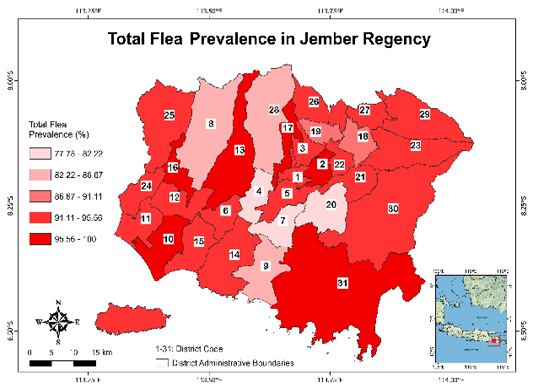
A total of 470 stray cats were examined across 31 districts of Jember Regency, East Java, Indonesia. Overall, 433/470 (92.1%) of the examined stray cats were flea-positive (95% CI: 89.3-94.2%). Flea infestation was detected in all 31 districts, with district-level prevalence ranging from 77.8% to 100.0% (Figure 1, Table 2). The highest prevalence (100.0%) was recorded in Sumbersari, Gumukmas, Bangsalsari, Semboro, Sukorambi, and Tempurejo, whereas the lowest prevalence was recorded in Rambipuji (77.8%), Mumbulsari (78.6%), and Jenggawah (80.0%).
Distribution of flea-positive cats according to sex and reproductive status
As shown in Table 3, female cats constituted the majority of the sampled population, accounting for 360/470 (76.6%), while male cats accounted for 110/470 (23.4%). Flea infestation prevalence was 335/360 (93.1%) among female cats (95% CI: 89.9-95.3%) and 98/110 (89.1%) among male cats (95% CI: 81.9-93.6%). Although female cats showed a slightly higher observed prevalence,
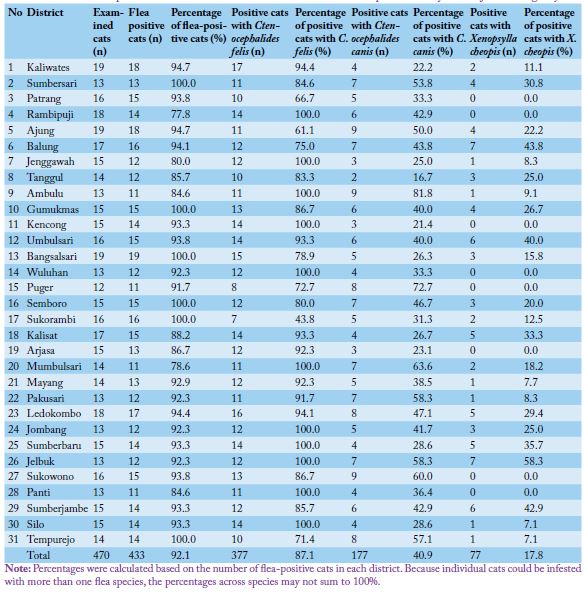
Table 2: District-level prevalence of flea infestation and distribution of flea species in stray cats in Jember Regency.
Table 3: Distribution of flea infestation among stray cats by sex and female reproductive status in Jember Regency, East Java, Indonesia.
Group
Examined cats (n)
Flea-positive
cats (n)
Flea-negative
cats (n)
Prevalence (%)
95% CI
χ²
df
p-value
Sex
Male
110
98
12
89.1
81.9-93.6
Female
360
335
25
93.1
89.9-95.3
1.49
1
0.223
Female reproductive status
Pregnant
260
241
19
92.7
88.8-95.5
Non-pregnant
100
94
6
94.0
87.5-97.5
0.19
1
0.662
Note: Confidence intervals were calculated using the Wilson score method. Pearson’s chi-square test was used to assess differences in flea infestation prevalence between male and female cats and between pregnant and non-pregnant female cats.
the difference was not statistically significant (χ²= 1.49, df= 1, p= 0.223). Among the female cats, pregnant cats constituted the majority, accounting for 260/360 (72.2%), while non-pregnant cats accounted for 100/360 (27.8%). Flea infestation prevalence was 241/260 (92.7%) among pregnant cats (95% CI: 88.8-95.5%) and 94/100 (94.0%) among non-pregnant cats (95% CI: 87.5-97.5%). Among flea-positive female cats, 241/335 (71.9%) were pregnant and 94/335 (28.1%) were non-pregnant. The difference in flea infestation prevalence between pregnant and non-pregnant cats was not statistically significant (χ²= 0.19, df= 1, p= 0.662).
Distribution of flea species
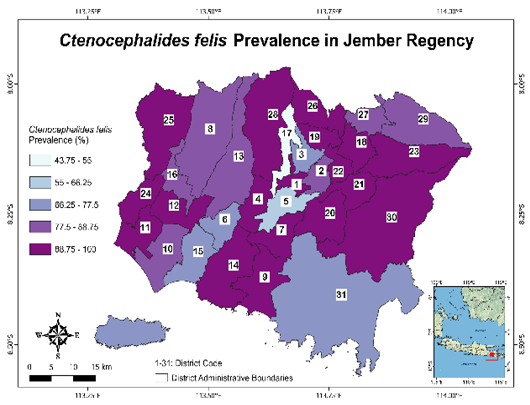
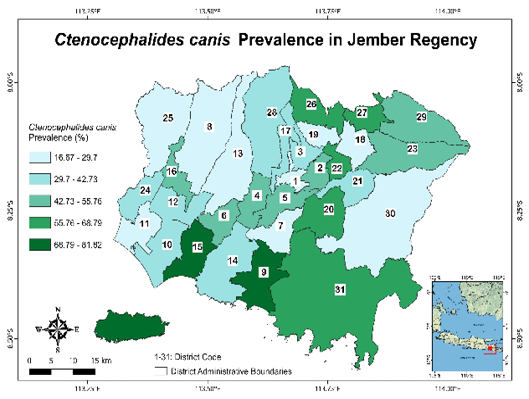
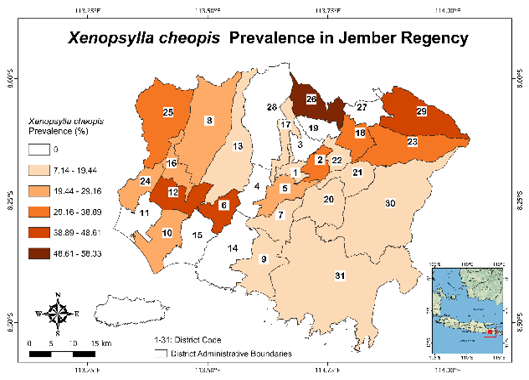
Three flea species were identified among the 433 flea-positive cats: Ctenocephalides felis, C. canis, and Xenopsylla cheopis. C. felis was the predominant species, detected in 377/433 flea-positive cats (87.1%) (95% CI: 83.6-89.9%) and recorded in all 31 surveyed districts. Its highest occurrence (100.0%) was recorded in Rambipuji, Ambulu, Kencong, Wuluhan, Mumbulsari, Jombang, Sumberbaru, Jelbuk, Panti, and Silo, whereas the lowest was recorded in Sukorambi (43.8%) (Figure 2, Table 2). C. canis was detected in 177/433 flea-positive cats (40.9%) (95% CI: 36.3-45.6%) and was also recorded across all 31 districts, with proportions ranging from 16.7% to 81.8%. The highest occurrences were recorded in Ambulu (81.8%), Puger (72.7%), Mumbulsari (63.6%), Sukowono (60.0%), Pakusari (58.3%), Jelbuk (58.3%), and Tempurejo (57.1%), while the lowest were observed in Tanggul (16.7%), Kencong (21.4%), Kaliwates (22.2%), and Arjasa (23.1%) (Figure 3, Table 2). In contrast, X. cheopis was the least frequently detected species, occurring in 77/433 flea-positive cats (17.8%) (95% CI: 14.5-21.7%) and showing a more restricted distribution. Its highest occurrences were recorded in Jelbuk (58.3%), Balung (43.8%), Sumberjambe (42.9%), and Umbulsari (40.0%), while it was not detected in Patrang, Rambipuji, Kencong, Wuluhan, Puger, Arjasa, Sukowono, or Panti (Figure 4, Table 2).
Mixed infestations involving more than one flea species were also observed among the examined cats. Among the 433 flea-positive cats, both single and mixed-species flea infestations were observed (Table 4). Single-species infestations were detected in 250 cats (57.7%), comprising Ctenocephalides felis only in 207 cats (47.8%), C. canis only in 24 cats (5.5%), and Xenopsylla cheopis only in 19 cats (4.4%). Mixed-species infestations were observed in 183 cats (42.3%). The most frequent combination was C. felis + C. canis, occurring in 125 cats (28.9%), followed by C. felis + X. cheopis in 30 cats (6.9%) and C. canis + X. cheopis in 13 cats (3.0%). Infestation with all three flea species was observed in 15 cats (3.5%). Overall, C. felis was involved in 377 flea-positive cats (87.1%), followed by C. canis in 177 cats (40.9%) and X. cheopis in 77 cats (17.8%).
Table 4: Distribution of single and mixed-species flea infestations among flea-positive stray cats in Jember Regency, East Java, Indonesia.
Infestation pattern
Number of cats (n)
Percentage of positive cats (%)
C. felis only
207
47.8
C. canis only
24
5.5
X. cheopis only
19
4.4
C. felis + C. canis
125
28.9
C. felis + X. cheopis
30
6.9
C. canis + X. cheopis
13
3.0
C. felis + C. canis + X. cheopis
15
3.5
Total
433
100
DISCUSSION
Total prevalence of flea infestation in stray cats
The overall flea infestation prevalence of 92.1%, with infestation detected across all 31 districts (Figure 1; Table 2), was higher than that reported in stray cats from Surabaya (74.75%) , Bogor (59.76%) , and two traditional markets in Sidoarjo (81.8% and 54.5%) . These differences may reflect variations in sampling coverage, location characteristics, cat population dynamics, and sampling approaches. Traditional markets, poor sanitation, and waste accumulation may facilitate close animal contact and flea persistence ; .
The high prevalence observed in Jember may also be related to local environmental and demographic conditions. In 2026, Jember had a population of 2.625.429 inhabitants and a population density of 792.58 persons/km² (Badan Pusat Statistik Kabupaten Jember, 2026), together with 29 traditional markets, TPA Pakusari, and numerous TPS and TPS 3R facilities (Badan Pusat Statistik, 2018). Such human-modified environments may provide food and shelter for stray cats, supporting persistent cat populations and increasing opportunities for flea transmission ; ; .
Meteorological conditions may further support flea persistence. Jember recorded annual rainfall of 3,359.6 mm, an average temperature of 25.93°C, and relative humidity of 90.67% in 2025 (Badan Pusat Statistik Kabupaten Jember, 2026). Warm and humid conditions favor the development and survival of flea eggs, larvae, and pupae, potentially supporting sustained flea populations and contributing to the high infestation prevalence observed in stray cats .
Distribution of flea-positive cats according to sex and reproductive status
The predominance of female cats in the sampled population (Table 3) may be related to their tendency to form social groups, whereas males generally exhibit more solitary and wider-ranging behavior . Despite this difference in population composition, the slightly higher flea infestation prevalence observed in females than males was not statistically significant, suggesting that sex alone may not be an important determinant of flea infestation in this population. The predominance of pregnant females was consistent with previous findings, with pregnant females accounting for 72.2% in the present study, compared with 72.09% reported by Azrizal-Wahid et al. (2019) and 62.6% by Fauziyah et al. (2020). However, flea infestation prevalence was slightly lower in pregnant than non-pregnant females, and the difference was not statistically significant. Increased nutritional demands and altered immune defenses during pregnancy may increase susceptibility to flea infestation . In addition, pregnancy-related hormonal and physiological changes may influence grooming and activity patterns, while closer contact with other cats during the reproductive period may increase flea exposure and reinfestation risk .
Distribution of flea species
The distribution of the three flea species across the 31 districts is summarized in Table 2 and illustrated in Figures 2-4. C. felis was the predominant species, with the highest and most widespread occurrence among the three species (Figure 2; Table 2). Its predominance is consistent with reports from tropical and subtropical regions and may be associated with its broad host range, high reproductive potential, and ecological adaptability ; . However, these factors were not directly assessed in the present study and should therefore be considered possible explanations based on previous literature rather than direct findings of this study. Similarly, Purwa and Ardiansyah (2021) reported C. felis as the predominant flea species infesting stray cats in traditional markets in Sidoarjo Regency.
The widespread occurrence of C. felis across all 31 districts (Figure 2) should be interpreted with consideration of the varying numbers of flea-positive cats sampled in each district. Although 100% occurrence was observed in several districts, including Rambipuji (14/14) and Ambulu (11/11), these estimates were based on relatively small sample sizes and therefore have wider confidence intervals and lower precision. Nevertheless, the consistent detection of C. felis across all 31 districts supports its widespread distribution in the study area. This widespread occurrence may be further supported by the tropical climatic conditions of Jember, characterized by an average annual temperature of approximately 25.93 °C and relative humidity of 90.67% (Badan Pusat Statistik Kabupaten Jember, 2026). Its ability to persist across diverse environments, including residential areas, traditional markets, agricultural land, and other human-modified habitats, may also contribute to its broad distribution ; . More broadly, flea distribution may be influenced by host preferences, ecological adaptability, and local habitat characteristics, including the availability of alternative hosts ; ; .
In contrast, C. canis showed greater spatial variation despite being detected in all 31 districts (Figure 3; Table 2). Although commonly known as the dog flea, C. canis is not strictly host-specific and may infest various mammalian hosts, including cats, while coexisting with other flea species . Its occurrence on stray cats may therefore be related to ecological overlap between free-roaming dogs and cats, with spatial variation potentially influenced by host community composition and habitat overlap . However, data on dog abundance, free-roaming dog populations, or the presence of dogs at individual sampling sites were not collected in the present study. Therefore, the role of dog abundance and dog-cat interactions in explaining the observed distribution of C. canis remains speculative. Local environmental conditions may also contribute to its distribution .
The relatively high occurrence of C. canis in Ambulu, Puger, Mumbulsari, and Tempurejo (Figure 3; Table 2) may be associated with environments that provide food resources and support free-roaming carnivores. In Ambulu, Watu Ulo Beach, where waste from local communities and tourists contributes to substantial waste accumulation, together with traditional markets and transportation facilities, may provide food resources and increase animal movement, potentially facilitating contact between free-roaming dogs and stray cats . Similarly, the fish auction market in Puger and the densely populated commercial area surrounding Mumbulsari Market may sustain free-roaming carnivores and increase opportunities for cross-host flea transmission ; . The relatively high occurrence in Tempurejo may likewise reflect interactions between free-roaming dogs and stray cats in plantation, agricultural, and rural environments ; Badan Pusat Statistik Kabupaten Jember, 2026).
Conversely, the lower occurrence of C. canis in Tanggul, Kencong, Kaliwates, and Arjasa (Figure 3; Table 2) may reflect differences in host community composition, habitat overlap, sanitation, and other local environmental characteristics ; . Because C. canis depends primarily on carnivore hosts rather than environmental reservoirs, its distribution is likely influenced by the composition and abundance of local host communities ; .
X. cheopis showed the most restricted and heterogeneous distribution among the three flea species (Figure 4; Table 2). This species is primarily associated with synanthropic rodents, particularly Rattus rattus, R. norvegicus, and R. tanezumi, but may temporarily infest other mammals, including cats, dogs, and humans, when host switching occurs ; . Stray cats may therefore act as incidental hosts when hunting or contacting infested rats or sharing habitats such as traditional markets, waste disposal sites, storage facilities, and densely populated residential areas ; .
The heterogeneous distribution of X. cheopis shown in Figure 4 may reflect differences in habitat characteristics, rodent abundance, and the frequency of rodent-cat contact rather than permanent adaptation to feline hosts ; ; . Its relatively high occurrence in Jelbuk may be associated with its predominantly agricultural landscape, with rice production reaching 15,222 tons and productivity of 5.91 tons/ha in 2024, while corn had a harvested area of 755 ha (Badan Pusat Statistik Kabupaten Jember, 2025). Such agricultural settings may sustain rodent populations and flea habitats, while stray cats frequenting these environments may consequently encounter flea-infested hosts or contaminated areas ; .
Similar conditions may contribute to the occurrence of X. cheopis in Umbulsari, an important agribusiness center with extensive agricultural land and an active traditional market . These environments may provide food and shelter for rodents and facilitate interactions among rats, cats, and humans, increasing opportunities for host switching ; . In Sumberjambe, the interface between agricultural land and residential settlements may facilitate rodent movement between farmland and human habitation and consequently increase rodent-cat contact (Badan Pusat Statistik Kabupaten Jember, 2026). Likewise, the major traditional market in Balung may provide food waste, storage areas, and shelter for synanthropic rodents, increasing opportunities for stray cats to acquire rodent-associated fleas ; ; .
The absence of X. cheopis from several districts (Figure 4; Table 2) should not necessarily be interpreted as evidence of an absence of rodents or flea populations. The number of cats sampled per district ranged from 12 to 19, which may have limited the probability of detecting this relatively uncommon flea species. Assuming the overall observed prevalence of X. cheopis (17.8%), sampling 12 cats would provide an approximately 90.4% probability of detecting at least one positive cat, indicating that non-detection may still occur even when the species is present. Therefore, the absence of X. cheopis in some districts should be interpreted cautiously. Its low overall prevalence, patchy ecology, differences in rodent abundance, habitat structure, sanitation, rat-cat overlap, and sampling stochasticity may all contribute to non-detection ; .
Moreover, X. cheopis is less adapted to felids than C. felis and is generally recovered at lower frequencies on cats, more likely reflecting temporary contact with rodent reservoirs . As a nest-associated flea, X. cheopis may spend less time on the host and may be more frequently associated with the host’s nest or surrounding environment, which could further reduce its detection on cats compared with C. felis . Therefore, its relatively low occurrence on stray cats may partly reflect differences in host association and detection probability. Its detection on stray cats is more appropriately interpreted as incidental infestation associated with spatial overlap between rats and cats rather than evidence that cats are principal hosts ; . Host switching remains ecologically plausible because adult fleas may leave their original hosts and survive off-host before locating new ones . This is consistent with reports of X. cheopis on stray cats and dogs, with higher occurrence on dogs, while C. felis remains predominant on cats ; .
As shown in Table 4, mixed-species infestations accounted for a substantial proportion of flea-positive cats, with C. felis + C. canis being the most frequent combination. This pattern may reflect overlapping habitats and opportunities for contact among cats and other potential hosts. Such co-infestations may be facilitated by shared environments and interactions with dogs and rodents ; ; . Shared habitats, host behavior, population dynamics, and host movement may consequently contribute to flea transfer among suitable host species ; .
The occurrence of X. cheopis in both single- and mixed-species infestations is also noteworthy. Its presence alongside C. felis and C. canis may reflect exposure of stray cats to environments shared with other potential hosts, particularly rodents ; . Overall, these mixed-species patterns highlight the ecological complexity of flea infestations in stray cats and suggest that flea exposure may be influenced not only by host-specific factors but also by interactions among hosts and their shared environments.
Morphological characterizations of flea species
Morphological characteristics of Ctenocephalides felis and Ctenocephalides canis
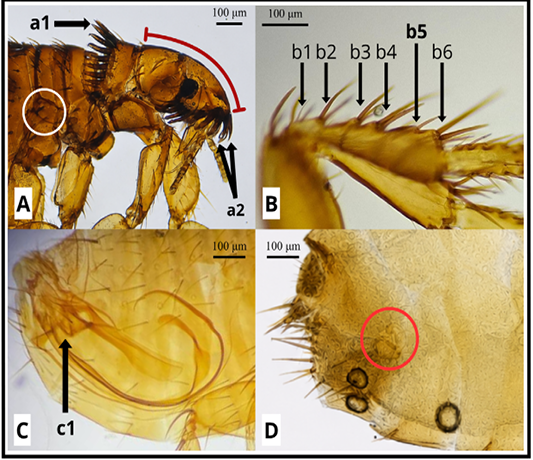
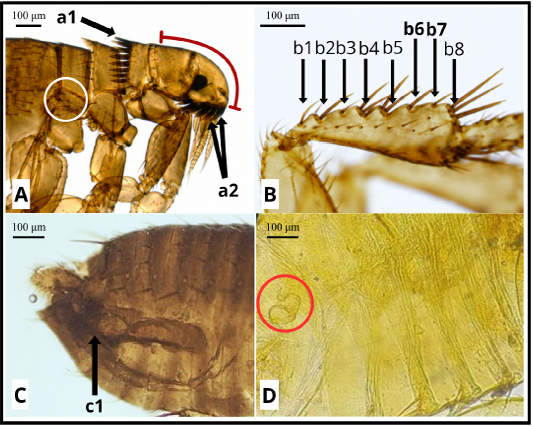
The morphological characteristics observed in this study were consistent with the diagnostic features of the genus Ctenocephalides, particularly the presence of genal and pronotal ctenidia . Ctenocephalides felis and C. canis are the two species most commonly associated with cats and dogs . Both species possess genal and pronotal ctenidia, with 16 genal teeth and 14-15 pronotal teeth in males and 15-17 in females (Figures 5 and 6A: a1, a2). Therefore, ctenidial tooth number is less useful for species differentiation . Sexual identification can be supported by genital morphology, with an aedeagus in males (Figures 5 and 6C: c1) and a spermatheca in females (Figures 5 and 6D: red circle) ; .
The most useful characters for distinguishing C. felis from C. canis are related to head morphology and genal spines. C. felis has an elongated head with an angled frons, with head length exceeding twice its height (Figure 5A: red line shape) . Its first and second genal spines are approximately equal in length (Figure 5A: a2). C. canis has a shorter head, with length less than twice its height (Figure 6A: red line shape), while the first genal spine is approximately half the length of the second (Figure 6A: a2) ; .
Differences are also evident in the leg chaetotaxy. The lower marginal area consistenly contains two bristles in C. felis and three in C. canis (Figure 5 and 6A: white circle). The tibiae bear 5-6 notches in C. felis and 7-8 in C. canis (Figure 5 and 6B: b1-b6/b1-b8). The dorsal margin of the hind tibia has one stout bristle in C. felis (Figure 5B: b5) and two in C. canis (Figure 6B: b6, b7). Metatibial chaetotaxy further differs between the species, with arrangements of 2-2-2-2-1-3 in C. felis (Figure 5B: b1-b6) and 2-2-2-2-2-1-1-3 in C. canis (Figure 6B: b1-b8) .
Morphological characteristics of Xenopsylla cheopis
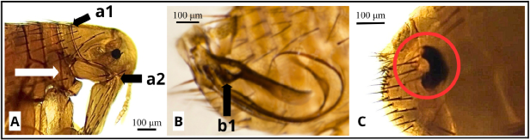
Xenopsylla cheopis is commonly known as the Oriental rat flea . It is typically brown and approximately 2.5 mm long . The genus can be readily distinguished from Ctenocephalides by the absence of genal and pronotal ctenidia (Figure 7A: a1, a2) . The mesopleuron is divided by internal sclerotization (Figure 7A: white arrow), which further distinguishes Xenopsylla from Pulex species ; .
Species-level identification was supported by genital morphology. Males exhibit a curved, elongated distal aedeagus (Figure 7B), while females possess a characteristic C-shaped spermatheca consisting of a rounded to oval bulga with an elongated, slender, curved hilla (Figure 7C). These genital characteristics are consistent with the diagnostic descriptions of X. cheopis and support its differentiation from other Xenopsylla species .
One health and public health implications of flea infestation
The fleas identified in this study have public health significance as potential vectors or intermediate hosts of zoonotic pathogens. The predominance of Ctenocephalides felis (87.1%) (95% CI: 83.6-89.9%) and C. canis (40.9%) (95% CI: 36.3-45.6%) across all 31 districts is relevant because these species may transmit Rickettsia felis and Bartonella henselae and serve as intermediate hosts of Dipylidium caninum ; ; . R. felis may persist through transovarial transmission and cause non-specific illness resembling murine typhus or dengue fever, while B. henselae causes cat-scratch disease, including potentially severe complications; transmission may occur through infected flea feces contaminating scratches or abrasions (Tsokana et al., 2022; .
Xenopsylla cheopis occurred in 17.8% (95% CI: 14.5-21.7%) of flea-positive cats, with higher occurrence in Jelbuk (58.3%), Balung (43.8%), Sumberjambe (42.9%), and Umbulsari (40.0%). As a rodent-associated flea, X. cheopis is an established vector of Yersinia pestis and Rickettsia typhi, while Bartonella spp., R. felis, and Rickettsia asembonensis have also been detected in fleas, although vector competence for some remains uncertain ; . Y. pestis is transmitted through regurgitation following bacterial proliferation and biofilm formation in the flea proventriculus, whereas R. typhi is primarily transmitted through infected flea feces entering damaged skin or mucous membranes ; ; . Murine typhus remains a relevant re-emerging zoonosis in Indonesia ; . Fleas may consequently contribute to pathogen maintenance and circulation among animal hosts, vectors, and the environment ; .
Although cats are not primary reservoirs of Y. pestis or R. typhi, the presence of X. cheopis may indicate ecological overlap among rodents, cats, and humans and facilitate flea movement toward human environments ; ; . Together, the high flea prevalence (92.1%) and occurrence of multiple flea species support integrated surveillance of flea vectors, animal hosts, and environmental factors within a One Health framework.
CONCLUSION
Flea infestation in stray cats in Jember Regency was found to be highly prevalent and widely distributed across all 31 districts, with Ctenocephalides felis as the predominant species, followed by C. canis and Xenopsylla cheopis. The widespread occurrence of these flea species highlights their potential importance for animal and public health and indicates the need for continued surveillance and integrated flea-control measures.
LIMITATIONS AND RECOMMENDATIONS
Convenience sampling may have introduced selection bias, while the relatively small and unequal number of cats sampled per district (12-19) may have limited the precision of district-level estimates and detection of less common flea species. Sampling sites within districts were also not standardized. Clinical signs, dermatological lesions, post-mortem findings, and flea abundance were not systematically assessed. Species identification relied solely on morphological examination without molecular confirmation. No pathogen screening or human exposure data were collected, limiting direct assessment of flea-borne pathogens and One Health implications. Environmental variables, including temperature, humidity, rodent and dog abundance, and host-environment interactions, were not systematically assessed. Spatial analysis was descriptive without spatial autocorrelation or hotspot analysis. The February-June 2025 sampling period may have introduced temporal variation, and the cross-sectional design limits assessment of temporal trends and causality. Although flea species co-occurrence was recorded, detailed ecological interactions were not assessed. Future studies should use standardized sampling and incorporate temporal, environmental, molecular, pathogen, clinical, and ecological assessments to better characterize flea infestation and its One Health significance.
ACKNOWLEDGMENTS
The authors would like to thank Universitas Airlangga and Universitas Jember for providing laboratory facilities and support for this study. This study received no external funding and was fully self-funded by the authors.
NOVELTY STATEMENT
This study provides novel field-based evidence on flea infestation in stray cats across all 31 districts of Jember Regency, East Java, Indonesia, where comprehensive epidemiological data remain limited. By combining infestation prevalence, flea species composition, host sex, and reproductive status, the study characterizes flea infestation patterns at a broad regional scale. The findings establish baseline epidemiological data for Jember Regency and contribute to the limited evidence on flea infestation in stray cats in Indonesia, providing a basis for future surveillance and integrated flea-control strategies relevant to animal and public health.
AUTHOR’S CONTRIBUTION
RAT contributed to conceptualization, data curation, formal analysis, investigation, methodology, software, visualization, and writing-original draft. SNZ and APRD contributed to investigation, data curation, methodology, and writing-original draft. YAS, SA, AMR, AAFP, RHSPL, and FN contributed to investigation. MRF, RDL, FAH, and BRB contributed to resources. RES and FIS contributed to project administration. LWF contributed to supervision, validation, and writing-review and editing.
Ethical approval
All procedures were conducted in accordance with accepted animal welfare principles. Fleas were collected non-invasively using gentle handling and minimal restraint. IACUC or equivalent ethical approval was not required because no experimental procedures, treatment, or euthanasia were involved. All cats were returned to their original locations after examination and flea collection. The study complied with Indonesian Law No. 18/2009, as amended by Law No. 41/2014.
Availability of data and materials
All data generated and analyzed in this study are presented in the manuscript. Individual level raw data and QGIS map files are not provided as supplementary materials.
Generative AI and AI-assisted technology statement
Generative AI tools were not used to create or develop the scientific content of this manuscript. AI assistance was limited to minor language refinement, while all ideas, interpretations, and conclusions were developed and approved by the authors.
Conflict of interest
The authors have declared no conflict of interest.
Figures
Figure 1:.
Spatial distribution of flea infestation and flea species among stray cats in Jember Regency, East Java, Indonesia. Numbers on the map correspond to the district codes listed in Table 1.
Figure 2:.
Spatial distribution of Ctenocephalides felis among stray cats in Jember Regency, East Java, Indonesia. Numbers on the map correspond to the district codes listed in Table 1.
Table 2:.
District-level prevalence of flea infestation and distribution of flea species in stray cats in Jember Regency.
Figure 3:.
Spatial distribution of Ctenocephalides canis among stray cats in Jember Regency, East Java, Indonesia. Numbers on the map correspond to the district codes listed in Table 1.
Figure 4:.
Spatial distribution of Xenopsylla cheopis among stray cats in Jember Regency, East Java, Indonesia. Numbers on the map correspond to the district codes listed in Table 1.
Figure 5:.
Morphological characteristics of Ctenocephalides felis. (A) Lateral view showing the pronotal ctenidium (a1), the first and second genal spines (a2), and lateral metanotal area (LMA); (B) hind tibia showing the dorsal setae and notches; (C) male genitalia showing the aedeagus (c1); and (D) female genitalia showing the spermatheca (red circle). Scale bars as shown in the Figure.
Figure 6:.
Morphological characteristics of Ctenocephalides canis. (A) Lateral view showing the pronotal ctenidium (a1), the first and second genal spines (a2), and lateral metanotal area (LMA); (B) hind tibia showing the dorsal setae and notches; (C) male genitalia showing the aedeagus (c1); and (D) female genitalia showing the spermatheca (red circle). Scale bars as shown in the Figure.
Figure 7:.
Morphological characteristics of Xenopsylla cheopis. Lateral view showing the absence of the genal ctenidium (a1) and pronotal ctenidium (a2), and the mesopleuron (white arrow). (B) Male genitalia showing the aedeagus. (C) Female genitalia showing the spermatheca. Scale bars as shown in the Figure.
References
Ali Y, Barman A, Abdullah SM, Islam KBMS, Mohanta UK (2020). Morphological identification and prevalence of the dog flea Ctenocephalides canis (Curtis, 1826) and the cat flea Ctenocephalides felis (Bouché, 1835) in Dhaka city, Bangladesh. Parazitologiya, 54(2): 163-172. https://doi.org/10.31857/S1234567806020066[CrossRef]
Azizah N, Mahtuti EY, Faisal (2022). Fixation process with 10% KOH immersion and variation of heating temperatures on the quality of Pediculus humanus capitis. Medicra J. Med. Lab. Sci. Technol., 5(2): 80-85. https://doi.org/10.21070/medicra.v5i2.1635[CrossRef]
Azrizal-Wahid N, Sofian-Azirun M, Low VL (2019). Risk factors associated with flea infestation on cats. Trop. Biomed., 36(4): 810-21.
Badan Pusat Statistik (2018). Direktori pasar tradisional dan pusat perbelanjaan 2017. Badan Pusat Statistik, Jakarta, Indonesia.
Badan Pusat Statistik Kabupaten Jember (2025). Kecamatan Jelbuk dalam angka 2025. Volume XXXIX. BPS Kabupaten Jember, Indonesia.
Badan Pusat Statistik Kabupaten Jember (2026). Kabupaten Jember dalam angka 2026 (Jember Regency in figures). Volume XLV. BPS Kabupaten Jember, Indonesia.
Balasubramanian S, Zecca IB, Koger A, Hamer SA (2026). Rickettsia typhi, Bartonella henselae, and related zoonotic agents in fleas from domestic cats (Felis catus) from the Rio Grande Valley, Texas. Parasit. Vectors, 19: 281. https://doi.org/10.1186/s13071-026-07421-1[CrossRef]
Bossard RL, Lareschi M, Urdapilleta M, Cutillas C, Zurita A (2023). Flea (Insecta: Siphonaptera) family diversity. Diversity, 15(10): 1096. https://doi.org/10.3390/d15101096[CrossRef]
Budiman A, Naufal MI, Arumsari DN (2023). Potential of puger coastal fish auction place (TPI) with SWOT approach and marketing plan. J. Econ. Finance Manage. Stud., 6(10): 5003-9.
Cahyani AP, Suartha IN, Dharmawan NS (2020). Laporan kasus: Penanganan dipylidiasis pada kucing Anggora dengan praziquantel. J. Sains Teknol. Petern., 1(1): 20-24. https://doi.org/10.31605/jstp.v1i1.540[CrossRef]
Canneti B, Cabo-Lopez I, Puy-Núñez A, Garcia Garcia JC, Cores FJ, Trigo M, Suárez-Gil AP, Rodriguez-Regal A (2019). Neurological presentations of Bartonella henselae infection. Neurol. Sci., 40(2): 261-268. https://doi.org/10.1007/s10072-018-3618-5[CrossRef]
Clark NJ, Seddon JM, Šlapeta J, Wells K (2018). Parasite spread at the domestic animal-wildlife interface: anthropogenic habitat use, phylogeny and body mass drive risk of cat and dog flea (Ctenocephalides spp.) infestation in wild mammals. Parasit. Vectors, 11(1): 8. https://doi.org/10.1186/s13071-017-2564-z[CrossRef]
Damayanti P, Irawati NBU (2025). Ctenocephalides felis sebagai ektoparasit: Biologi dan potensi zoonosis. Jurnal Kedokteran Universitas Lampung, 9(2): 252-255.
Deak G, Safarov A, Xie XC, Wang R, Mihalca AD, Šlapeta J (2022). Fleas from the Silk Road in Central Asia: identification of Ctenocephalides canis and Ctenocephalides orientis on owned dogs in Uzbekistan using molecular identification and geometric morphometrics. Parasit. Vectors, 15(1): 345. https://doi.org/10.1186/s13071-022-05477-3[CrossRef]
Eneku W, Erima B, Byaruhanga Maranda A, Cleary Gillian N, Atim G, Tugume T, Ukuli Aquino Q, Kibuuka H, Mworozi E, Douglas C, Koehler William J, von Fricken Emery M, Tweyongyere R, Wabwire-Mangen F, Byarugaba Karuhize D (2025). Molecular detection and characterization of Rickettsia felis, R. asembonensis, and Yersinia pestis from peri-domestic fleas in Uganda. Infect. Ecol. Epidemiol., 15(1). https://doi.org/10.1080/20008686.2025.2473159[CrossRef]
Fauziyah S, Furqoni AH, Fahmi NF, Pranoto A, Baskara PG, Safitri LR, Salma Z (2020). Ectoparasite infestation among stray cats around Surabaya traditional market, Indonesia. J. Trop. Biodiv. Biotechnol., 5(3): 201-210. https://doi.org/10.22146/jtbb.53687[CrossRef]
Garcia-Sanchez AM, Zurita A, Cutillas C (2022). Morphometrics as a complementary tool in the differentiation of two cosmopolitan flea species: Ctenocephalides felis and Ctenocephalides canis. Insects, 13(8): 707. https://doi.org/10.3390/insects13080707[CrossRef]
Hatem AN, Yasir TA (2026). Survey of flea species (Order: Siphonaptera) on domestic mammals in Basrah Province, Southern Iraq. Bull. Iraq Natl. Hist. Mus., 19(1): 231-242. https://doi.org/10.26842/binhm.7.2026.19.1.0231[CrossRef]
Herwanto V, Widiastuti SU, Gunawan, Lie KC (2025). Beyond the fever: A serial report on moderate to severe murine typhus cases and diagnostic hurdles in Indonesia. Trop. Med. Infect. Dis., 10(8): 204. https://doi.org/10.3390/tropicalmed10080204[CrossRef]
Indrasti R, Rawung JBM (2021). The assessment of production system and marketing of Siam citrus in Jember Regency. E3S Web Conf., 232: 02025. https://doi.org/10.1051/e3sconf/202123202025[CrossRef]
Kamani J, Harrus S, Nachum-Biala Y, Salant H, Mumcuoglu KY, Baneth G (2018). Pathogenic and endosymbiont apicomplexans in Ctenocephalides felis (Siphonaptera: Pulicidae) from cats in Jerusalem, Israel. Compar. Immunol. Microbiol. Infect. Dis., 57: 29-33. https://doi.org/10.1016/j.cimid.2018.03.002[CrossRef]
Kamaruddin NC, Adrus M, Ismail WN (2020). Prevalence of ectoparasites on a stray cat population from “Town of Knowledge” Kota Samarahan, Sarawak, Malaysian Borneo. Turk. J. Vet. Anim. Sci., 44(6): 1212-1221. https://doi.org/10.3906/vet-2005-24[CrossRef]
Kinanthi CA, Noveyani AE, Simanjuntak TD (2023). Waste management education for preventing infectious diseases among coastal community in Watu Ulo Beach, Jember. J. Commun. Ser. Soc. Empower., 2(1): 19-26. https://doi.org/10.59653/jcsse.v2i01.374[CrossRef]
Lawrence AL, Brown GK, Peters B, Spielman DS, Morin-Adeline V, Šlapeta J (2014). High phylogenetic diversity of the cat flea (Ctenocephalides felis) at two mitochondrial DNA markers. Med. Vet. Entomol., 28(3): 330-336. https://doi.org/10.1111/mve.12051[CrossRef]
Mahmood MI, Younis LS (2025). Evaluation of ultrasonography, progesterone analysis, and relaxin-based methods for pregnancy detection in domestic cats. J. Anim. Health Prod., 13(1): 970–980. https://doi.org/10.17582/journal.jahp/2025/13.s1.970.980[Full text][CrossRef]
Mburu J (2026). Cochran’s formula calculator. StatCalc.net. Available at: https://statcalc.net/cochrans-formula-calculator/ (accessed 7 Sep 2026).
Miarinjara A, Bland DM, Belthoff JR, Eads DA, Eisen RJ (2021). Poor vector competence of the human flea, Pulex irritans, to transmit Yersinia pestis. Parasit. Vectors, 14: 317. https://doi.org/10.1186/s13071-021-04805-3[CrossRef]
Mohan S, Halle-Ekane G, Konje JC (2020). Intestinal parasitic infections in pregnancy: A review. Eur. J. Obstet. Gynecol. Reprod. Biol., 254: 59-63. https://doi.org/10.1016/j.ejogrb.2020.09.007[CrossRef]
Moore CO, André MR, Slapeta J, Breitschwerdt EB (2024). Vector biology of the cat flea Ctenocephalides felis. Trends Parasitol., 40(4): 324-337. https://doi.org/10.1016/j.pt.2024.02.006[CrossRef]
Murbarani ADP (2018). The influence of free-roaming dogs to the conservation of critically endangered Bawean deer and human health. Undergraduate thesis, IPB University, Bogor, Indonesia.
Njogela N, Nzalawahe J, Mafie E (2025). Factors affecting diversity and distribution of haemoparasites and ectoparasites of rodents and shrews in Iringa District. J. Appl. Vet. Sci. Technol., 6(1): 54-63. https://doi.org/10.20473/javest.V6.I1.2025.54-63[CrossRef]
Pauling CD, Beerntsen BT, Song Q, Anderson DM (2024). Transovarial transmission of Yersinia pestis in its flea vector Xenopsylla cheopis. Nat. Commun., 15: 7266. https://doi.org/10.1038/s41467-024-51668-0[CrossRef]
Purwa AA, Ardiansyah S (2021). Identification and prevalence of flea in feral cats in some markets Sidoarjo District. Medicra J. Med. Lab. Sci. Technol., 4(2): 127-132. https://doi.org/10.21070/medicra.v4i2.1577[CrossRef]
Putri TA, Supriyono S, Hadi UK, Soviana S, Widhyari SD (2026). Diversity of flea species infesting pet and stray cats in Babakan, Dramaga, Bogor. J. Vet., 27(1): 1-11.
Rahmiati DU, Wismandanu O, Anggaeni TK (2020). Kontrol populasi dengan kegiatan sterilisasi kucing liar di lingkungan Unpad. Dharmakarya: J. Aplikasi Ipteks untuk Masyarakat, 9(2): 114-116. https://doi.org/10.24198/dharmakarya.v9i2.24714[CrossRef]
Rajamannar V, Govindarajan R, Kumar A, Samuel PP (2022). A review of public health important fleas (Insecta, Siphonaptera) and flea-borne diseases in India. J. Vector Borne Dis., 59(1): 12-21. https://doi.org/10.4103/0972-9062.328977[CrossRef]
Rojas-Saunero LP, Glymour MM, Mayeda ER (2024). Selection bias in health research: Quantifying, eliminating, or exacerbating health disparities? Curr. Epidemiol. Rep., 11(1): 63-72. https://doi.org/10.1007/s40471-023-00325-z[CrossRef]
Rust MK (2017). The biology and ecology of cat fleas and advancements in their pest management: A review. Insects, 8(4): 118. https://doi.org/10.3390/insects8040118[CrossRef]
Sardana N, Shekoohi S, Cornett EM, Kaye AD (2023). Qualitative and quantitative research methods. In: Kaye, A.D., Urman, R.D., Cornett, E.M., Edinoff, A.N. (eds), Substance use and addiction research: Methodology, mechanisms, and therapeutics. Academic Press, USA. pp. 65-69. https://doi.org/10.1016/B978-0-323-98814-8.00008-1[CrossRef]
Schwan TG, Lopez JE, Safronetz D, Anderson JM, Fischer RJ, Maiga O, Sogoba N (2016). Fleas and trypanosomes of peridomestic small mammals in sub-Saharan Mali. Parasit. Vectors, 9: 541. https://doi.org/10.1186/s13071-016-1818-5[CrossRef]
Segura-Tinoco JC, Morales-Guerrero RE, Perez-Rivero JJ, Rico-Chavez O, Del Río-Araiza VH, Alcala-Canto Y (2025). Feline parasitic infections, risk factors, and their association with parasitic treatment in Mexico. Parasitologia, 5(3): 48. https://doi.org/10.3390/parasitologia5030048[CrossRef]
Shamsudduha M, Rahman MM, Naher J, Barkat AI, Akter S, Alam MS (2025). Morphological and molecular identification of the cat flea Ctenocephalides felis from Bangladesh. J. Adv. Vet. Anim. Res., 12(1): 280-286. https://doi.org/10.5455/javar.2025.l894[CrossRef]
Siagian T, Prabandari D, Hidayati A, Siagian G, Nasphy M (2026). Flea infestation of Ctenocephalides felis in stray cats and its impact on humans. J. Pembelajaran Biol. Nukleus, 12(1): 1-9.
Siagian TB, Hadi IS, Syafitri W (2023). Prevalensi ektoparasit pada kucing di Klinik Hewan Winadivet Malang. J. Biol. UNAND, 11(2): 70-74. https://doi.org/10.25077/jbioua.11.2.70-74.2023[CrossRef]
Snellgrove AN, Goddard J (2024). Murine typhus: a re-emerging rickettsial zoonotic disease. J. Vector Ecol., 50(1): 1-13. https://doi.org/10.52707/1081-1710-50.1-1[CrossRef]
Tsokana CN, Kapna I, Valiakos G (2022). Current data on Rickettsia felis occurrence in vectors, human and animal hosts in Europe: A scoping review. Microorganisms, 10(12): 2491. https://doi.org/10.3390/microorganisms10122491[CrossRef]
Vogel PUB, Schaub GA (2025). Interaction of bacteria and fleas, focusing on the plague bacterium-A review. Microorganisms, 13(11): 2619. https://doi.org/10.3390/microorganisms13112619[CrossRef]
Wei F, Jia X, Wang Y, Yang Y, Wang J, Gao C, Wang Y (2022). The complete mitochondrial genome of Xenopsylla cheopis (Siphonaptera: Pulicidae). Mitochondrial DNA Part B: Resources, 7(1): 170-171. https://doi.org/10.1080/23802359.2021.2017368[CrossRef]
Wells LE, Elston DM (2020). What’s eating you? Oriental rat flea (Xenopsylla cheopis). Cutis, 106(3): 124-126. https://doi.org/10.12788/cutis.0072[CrossRef]
Yanti I, Purwanti NLL, Ningtyas NSI, Atma CD (2024). Detection of ectoparasites in domestic cats (Felis silvestris catus) at the Mataram City traditional market. Mandalika Vet. J., 4(1): 8-10. https://doi.org/10.33394/mvj.v4i1.9752[CrossRef]
Yevstafieva V, Horb K, Melnychuk V, Gorb O (2021). Differential characters of fleas of the genus Ctenocephalides (Siphonaptera, Pulicidae) obtained from dogs. Regulat. Mechan. Biosyst., 12(1): 65-70. https://doi.org/10.15421/022110[CrossRef]
Zaidi S, Bessas A, Hezil D, Benseghir H, Bitam I (2024). Molecular surveillance of Yersinia pestis from stray dogs and cats and their fleas in Algiers. Arch. Razi Inst., 79(2): 279–286. https://doi.org/10.32592/ARI.2024.79.2.279[CrossRef]
Flea Infestation in Stray Cats in Jember Regency, East Java, Indonesia: Prevalence, Morphological Characterization and One Health Implications · ResearchersLinks