Research Article · Volume 14, Issue 11, 13 October 2026 · Open Access
Factors Associated with Smallholder Dairy Farming Succession Intention among Productive-Age Individuals: A Theory of Planned Behavior Study in Enrekang Regency, Indonesia
· ·
Affiliations & Notes ⌄
1¹Animal Science and Technology, Faculty of Animal Science, Hasanuddin University, Makassar, South Sulawesi, Indonesia
2²Department of Socio-Economics of Animal Science, Faculty of Animal Science, Hasanuddin University, Makassar, South Sulawesi, Indonesia. *Correspondence | Aslina Asnawi, Department of Socio-Economics of Animal Science, Faculty of Animal Science, Hasanuddin University, Makassar, South Sulawesi, Indonesia
Farming-related respondent characteristics, particularly dairy-farming experience, were significantly associated with Attitude, Subjective Norms, and Perceived Behavioral Control, which were subsequently associated with succession intention among productive-age respondents in Enrekang Regency.
Farming experience was the dominant contributor to the formative RC construct, while Perceived Behavioral Control showed the strongest direct association with succession intention (β = 0.361, p < 0.001).
These findings indicate that farmer regeneration strategies should integrate social support with efforts to strengthen potential successors’ capability, access to resources, and confidence in dairy-farming activities.
Selected from the article's own text.
Abstract
Farmer regeneration is an important challenge for the sustainability of smallholder dairy farming in Indonesia. This study examined factors associated with succession intention among productive-age respondents in Enrekang Regency using the Theory of Planned Behavior (TPB), with Respondent Characteristics (RC) specified as a formative construct. A cross-sectional survey was conducted among 315 productive-age respondents from six dairy-producing subdistricts. Data were analyzed using Partial Least Squares Structural Equation Modeling (PLS-SEM). After measurement refinement, the RC construct consisted of age and dairy-farming experience, with farming experience showing the strongest formative contribution. RC was significantly associated with Attitude (ATT), Subjective Norms (SN), and Perceived Behavioral Control (PBC). Furthermore, ATT, SN, and PBC were significantly associated with Succession Intention (SI), with PBC showing the strongest direct association (β = 0.361, p < 0.001). The strongest indirect association was observed through RC → PBC → SI (β = 0.224, p < 0.001). The refined model explained 79.4% of the variance in SI (adjusted R² = 0.792). These findings indicate that succession intention in an Eastern Indonesian smallholder dairy context is associated with respondents’ farming-related background characteristics and TPB psychological mechanisms, particularly perceived behavioral control. Farmer-regeneration strategies should therefore integrate interventions that strengthen technical capability, access to farming resources, and social support for potential successors.
Keywords | Dairy farming, Succession intention, Theory of planned behavior, Enrekang regency, Farmer regeneration.
INTRODUCTION
Enrekang Regency, South Sulawesi, is a key smallholder dairy-producing area in Eastern Indonesia and is closely associated with dangke, a traditional dairy product that contributes to the region’s economic and cultural identity ; . In this study, smallholder dairy farming refers to household-based dairy production systems managed by individual farmers or families, where farming activities rely primarily on household labor, locally available resources, and intergenerational transfer of farming knowledge. Therefore, maintaining dairy-farming continuity represents an important agricultural sustainability issue that also supports local dairy-based livelihoods and cultural products associated with Enrekang’s regional identity, including dangke. The sustainability of smallholder dairy farming is therefore important for understanding the broader livelihood context in which dairy-related cultural products are maintained. Consequently, farmer regeneration has become an important concern, particularly because younger rural populations may perceive farming as labor-intensive, economically uncertain, and less attractive than non-farm employment ; .
In 2026, the present study identified 69 active dairy farmers managing 257 dairy cattle in the study area, whereas the six dairy-producing subdistricts contained 98,902 productive-age residents . This comparison is not intended to indicate an optimal or insufficient number of dairy farmers, but rather illustrates the difference between current dairy-farming participation and the broader productive-age population that may represent a potential successor pool. Understanding farmer regeneration therefore requires attention not only to individuals already engaged in dairy farming but also to productive-age community members who may consider participating in or continuing dairy farming in the future.
In this study, succession intention refers to respondents’ prospective plans, willingness, readiness, and commitment toward continuing dairy farming. For respondents already involved in dairy farming, succession intention reflects prospective continuity of their existing involvement. For those without current dairy-farming experience, it represents their prospective willingness and readiness to participate in dairy farming in the future. Accordingly, the construct captures intention rather than actual farm takeover behavior.
More broadly, in developing countries, smallholder dairy farming supports rural livelihoods, employment, and food security ; ; . In Indonesia, dairy production is largely organized through smallholder and family-based farming systems that provide economic and social functions for rural households ; . Within such systems, succession decisions are influenced not only by economic considerations but also by family expectations, perceived access to resources, individual capability, and evaluations of farming as a future livelihood.
In rural family-based farming systems, potential successors are not limited to current farm operators. Younger household members and productive-age community members may represent future entrants whose willingness to engage in dairy farming determines long-term regeneration. Therefore, assessing succession intention among productive-age populations provides insight into the potential successor pool rather than only current succession processes.
The Theory of Planned Behavior (TPB) provides an established framework for examining behavioral intention through Attitude (ATT), Subjective Norms (SN), and Perceived Behavioral Control (PBC) . TPB has been widely applied to agricultural decision-making, including technology adoption and farm succession ; . In the present context, ATT represents respondents’ evaluations of dairy farming as a prospective livelihood, SN reflects perceived expectations and support from family and the surrounding social environment, and PBC represents perceived capability and access to the resources required to engage in dairy farming.
Farm-succession research has also identified age, educational background, and farming experience as potentially relevant background characteristics ; . These characteristics are conceptually distinct rather than interchangeable manifestations of a common latent trait. For example, an individual may be relatively young but have substantial farming experience, while an older respondent may have limited exposure to dairy farming. Educational attainment also does not necessarily vary systematically with farming experience. Respondent Characteristics (RC) were therefore initially modeled as a formative background composite in which distinct observed attributes jointly contribute to the composite rather than reflect an underlying latent variable ; . This specification allows the empirical contribution of each characteristic to be assessed while examining its relationship with the proximal psychological mechanisms proposed by TPB. Although dairy-farming experience was expected to provide the dominant contribution within RC, retaining age allowed the construct to capture distinct life-stage characteristics that may influence farming exposure, readiness, and succession-related perceptions. Therefore, RC should not be interpreted as a proxy for farming experience alone.
Existing studies have provided evidence on farmer regeneration, rural youth mobility, family-farm succession, and sociopsychological determinants of agricultural intention in Indonesia and other contexts ; ; ; ; . However, less is known about how respondents’ background characteristics are associated with ATT, SN, and PBC and how these psychological mechanisms relate to dairy-farm succession intention within an Eastern Indonesian smallholder dairy system. This gap is particularly relevant in Enrekang because dairy farming is embedded in family-linked production systems and contributes to local dairy-based livelihoods, including culturally associated products such as dangke. The study therefore contributes context-specific evidence on the behavioral and social mechanisms associated with farmer regeneration rather than treating geographical location alone as the source of novelty.
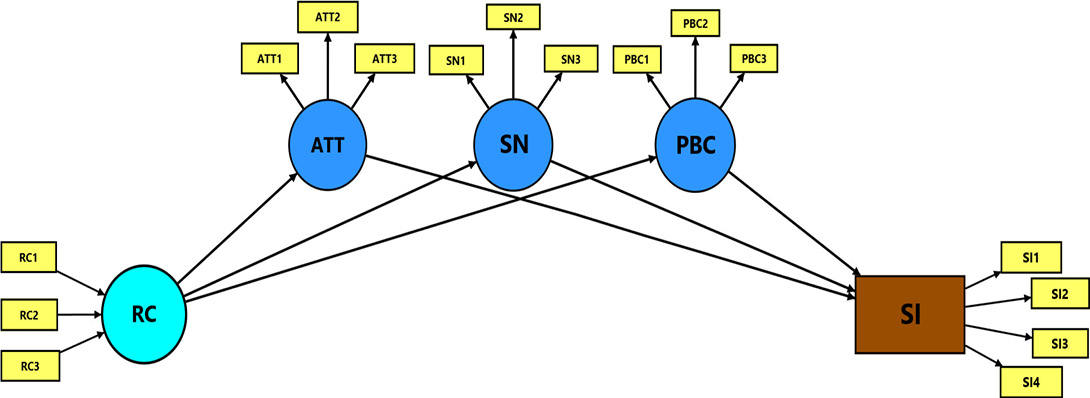
Figure 1 presents the initial conceptual framework developed based on the Theory of Planned Behavior (TPB) before empirical assessment and measurement model refinement. The proposed model examines the relationships between farming-related Respondent Characteristics (RC) and the three TPB constructs, namely Attitude (ATT), Subjective Norms (SN), and Perceived Behavioral Control (PBC), followed by their relationships with Succession Intention (SI). The framework also specifies indirect pathways from RC to SI through ATT, SN, and PBC.
In this study, RC was conceptualized as a distal background factor rather than a direct psychological determinant of intention. Therefore, no direct RC → SI relationship was specified in the proposed model. The indirect relationships were examined as theory-informed associations through TPB mechanisms and were not interpreted as evidence of statistical full mediation.
Farming-related characteristics may shape psychological perceptions by influencing familiarity with dairy activities, perceived capability, and exposure to farming-related social networks. However, these characteristics may not independently determine intention because their influence is expected to operate through proximal psychological mechanisms within TPB.
Accordingly, this study aimed to examine: (1) the relationships between farming-related respondent characteristics and the TPB constructs (ATT, SN, and PBC); (2) the relationships between ATT, SN, and PBC and succession intention; and (3) the indirect associations between RC and succession intention through the TPB constructs.
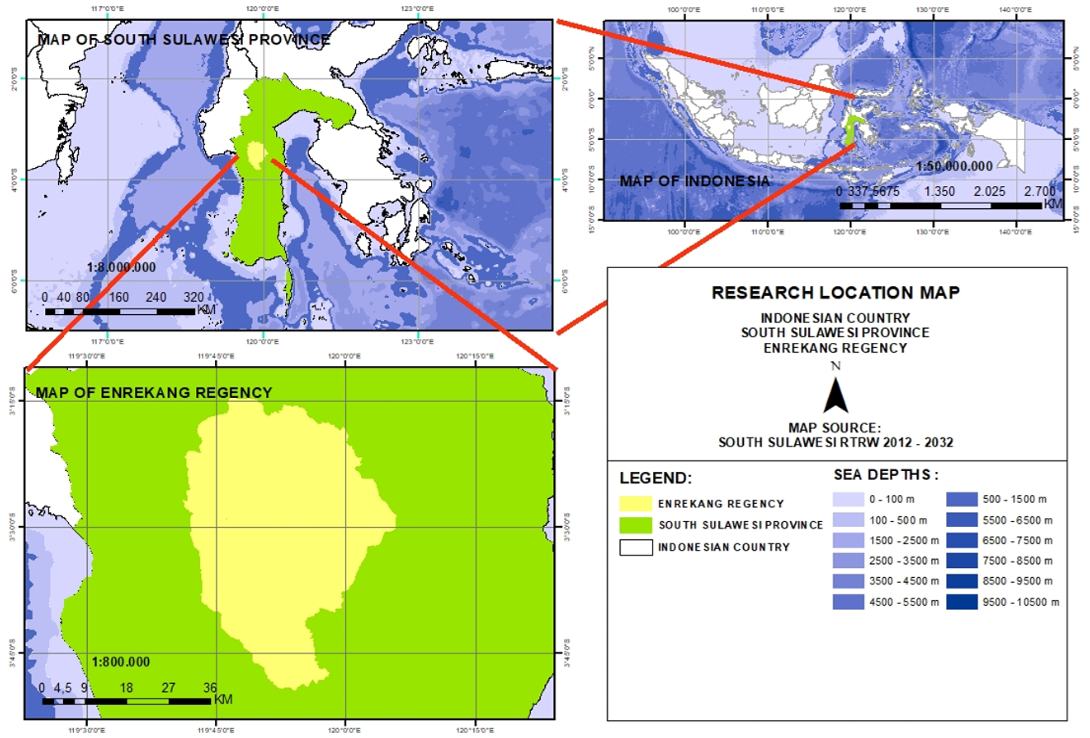
The study was conducted in Cendana, Enrekang, Anggeraja, Baraka, Buntu Batu, and Alla subdistricts of Enrekang Regency, South Sulawesi (Figure 2).
Data were collected from February to April 2026 through interviewer-administered questionnaires. The questionnaire was developed and administered in Bahasa Indonesia. The English item descriptions presented in the manuscript and Appendix A were prepared for international reporting and were not used as a separate field instrument. Before full data collection, the questionnaire underwent face and content review by three experts in agricultural socio-economics to assess conceptual relevance, wording clarity, and contextual appropriateness. A trial administration with 10 local productive-age participants was subsequently conducted to assess comprehension, wording, and completion time. No separate quantitative pilot sample was used for psychometric estimation.
Face-to-face interviews were conducted by three trained enumerators with academic backgrounds in animal science and familiarity with the local context. All enumerators completed a standardized one-day training session covering the research objectives, interpretation of questionnaire items, informed-consent procedures, consistent administration, and non-leading clarification techniques. Interviews generally lasted 20–30 minutes and were conducted at respondents’ residences, community gathering locations, or locations associated with dairy-farming activities. Each questionnaire was checked immediately after completion, resulting in no missing responses in the final analytic dataset.
The study protocol received ethical approval from the Hasanuddin University Ethics Committee (No. 051/UN4.12/EC/II/2026), and informed consent was obtained from all respondents.
Population and sample
The study population comprised productive-age residents aged 15–64 years in the six subdistricts, totaling 98,902 people .
Because no complete individual-level sampling frame was available for the productive-age population across the six rural subdistricts, respondents were recruited using accidental/convenience sampling. Recruitment was distributed across all six subdistricts, different community settings, and different times of day to reduce concentration of recruitment within a single location or social group. Of 342 eligible individuals approached, 315 agreed to participate, yielding a response rate of 92.1%. However, because selection probabilities were unknown, the final sample should not be considered statistically representative of the total productive-age population. No demographic
information was collected from individuals who declined participation; therefore, non-response differences could not be formally assessed.
While active commercial dairy farming in the region was operated by 69 registered smallholder farms, this study deliberately targeted the broader productive-age population to examine potential succession intention within dairy-producing communities. Among the 315 respondents, 53.3% had direct involvement in dairy farming, whereas 46.7% reported no current farming experience. For respondents without current dairy-farming experience, succession intention was interpreted as prospective willingness and readiness to participate in dairy farming in the future rather than as continuation of an existing farming role. The distribution and characteristics of respondents are presented in Table 1a.
Table 1a: Distribution and characteristics of productive-age respondents.
Variable
Category
n
%
Subdistrict
Cendana
123
39.0
Alla
57
18.1
Enrekang
40
12.7
Anggeraja
38
12.1
Buntu Batu
32
10.2
Baraka
25
7.9
Gender
Male
179
56.8
Female
136
43.2
Age
15-24 years
132
41.9
25-34 years
58
18.4
35-44 years
28
8.9
45-54 years
63
20.0
55-64 years
34
10.8
Education
No formal education
4
1.3
Elementary
12
3.8
Junior high
37
11.7
Senior high
165
52.4
Diploma
12
3.8
Bachelor's
80
25.4
Postgraduate
5
1.6
Total
315
100
Source: Primary data, 2026; Note: Percentages may not sum exactly to 100% due to rounding.
Table 1b: Distribution of respondents according to dairy-farming experience status.
Dairy-farming experience status
n
%
Without dairy-farming experience
147
46.7
With dairy-farming experience
168
53.3
1–8 years
79
25.1
9–16 years
79
25.1
17–24 years
6
1.9
25 – 32 years
4
1.3
Total
315
100
Source: Primary data, 2026; Note: Dairy-farming experience refers to previous involvement in dairy-farming activities.
Variables and measurement
Five constructs were analyzed in this study. Respondent Characteristics (RC) was initially specified as a formative construct comprising age, education, and dairy-farming experience, whereas Attitude (ATT), Subjective Norms (SN), Perceived Behavioral Control (PBC), and Succession Intention (SI) were specified as reflective constructs.
ATT, SN, PBC, and SI were measured using a five-point Likert scale ranging from 1 (“Strongly Disagree”) to 5 (“Strongly Agree”). ATT included three indicators concerning the attractiveness, perceived profitability, and enjoyment of dairy farming. SN was initially measured using three indicators concerning parental expectations, peer support, and community support. However, following discriminant validity assessment, the parental expectation indicator was removed because it showed conceptual overlap with succession intention in the context of family-based dairy farming. The refined SN construct consisted of peer support and community support indicators.
PBC included three indicators concerning technical skills, resource access, and availability of parental farming facilities. SI was initially measured using four indicators concerning future plans, commitment to learn dairy-farm management, readiness to maintain farm continuity, and intention to become a successor. After measurement model refinement, the indicator related to personal plans to continue the parental dairy farm was removed because of its conceptual similarity with subjective norms. The refined SI construct retained indicators representing commitment to learning dairy-farm management, readiness to maintain farm continuity, and intention to become a successor.
The complete wording of all indicators is presented in Appendix A. The questionnaire was originally administered in Bahasa Indonesia, and the English version presented in Appendix A is provided only for reporting purposes.
For RC, age was measured in years, education according to the highest formal education level completed, and dairy-farming experience according to the length of involvement or assistance in dairy-farming activities.
RC was initially specified as a formative composite because its indicators represented distinct and non-interchangeable background attributes rather than manifestations of a common underlying psychological trait. Age represented respondents’ life stage, education represented formal educational attainment, and farming experience represented accumulated exposure to dairy-farming activities. During the measurement model assessment, education was removed due to its insufficient empirical contribution to the formative construct. The refined RC construct consisted of age and dairy-farming experience.
The empirical contribution of each formative indicator was assessed using outer weights, outer loadings, and collinearity diagnostics.
Data analysis
PLS-SEM was conducted using SmartPLS 4 . Reflective constructs were evaluated using outer loadings, Cronbach’s alpha, rho_A, composite reliability, AVE, and discriminant validity. For the formative RC construct, assessment focused on VIF, outer weights, and outer loadings. Bootstrapping with 5,000 subsamples was used to assess significance. Because all reflective constructs were collected using the same questionnaire format, potential common method-related limitations were acknowledged. Procedural remedies were applied through anonymous participation, standardized questionnaire administration, and consistent data collection procedures to reduce potential response bias. However, a formal statistical assessment of common method bias was not conducted and is acknowledged as a limitation of this study.
The structural model was assessed using path coefficients, R², and specific indirect effects. Model diagnostics included SRMR as a supplementary assessment of the discrepancy between the observed and estimated correlation matrices. Because PLS-SEM is primarily prediction-oriented, SRMR was interpreted together with explained variance (R²), measurement quality, and structural relationships rather than as the sole criterion for model evaluation.
RESULTS
Measurement model
The initial RC construct included age, education, and farming experience. All VIF values were below 5, indicating no critical multicollinearity. However, education showed a very low outer loading (0.086) and was removed during measurement model refinement. The removal decision was not based solely on statistical performance. Conceptually, education represented general formal educational attainment, whereas the RC construct in this study was intended to capture farming-related background characteristics associated with dairy succession contexts. Therefore, retaining education within the formative composite would reduce the conceptual coherence of the construct. The refined RC construct consisted of age and dairy-farming experience.
Dairy-farming experience showed the strongest contribution to the formative construct (outer weight = 0.942, p < 0.001), whereas age showed a weaker contribution (outer weight = 0.174, p = 0.055) (Table 2). Although the outer weight of age was not statistically significant, it was retained because formative indicators represent distinct conceptual components that jointly define a construct. Additionally, age showed a significant outer loading (0.410, p < 0.001), supporting its retention in the formative construct.
All reflective indicators had loadings above 0.70. The reflective constructs demonstrated satisfactory internal consistency, with Cronbach’s alpha values ranging from 0.835 to 0.920, composite reliability values ranging from 0.900 to 0.943, and AVE values ranging from 0.751 to 0.825, indicating satisfactory convergent validity (Table 3a).
The Fornell–Larcker criterion was satisfied. However, the initial HTMT assessment showed that the HTMT value between SN and SI was 0.947, exceeding the recommended threshold and indicating potential empirical overlap between the two constructs. Therefore, a measurement refinement procedure was conducted. A conceptual review identified that the parental expectation indicator within SN (SN1) and the personal continuation-plan indicator within SI (SI1) represented closely related aspects of intergenerational dairy farming continuation. These indicators were removed to improve construct distinctiveness while maintaining the theoretical distinction between social influence (SN) and personal succession intention (SI).
After refinement, the HTMT value decreased to 0.913, indicating improved discriminant validity while reflecting the theoretically expected relationship between social influence and succession intention in family-based dairy succession contexts (Table 3b).
Structural model and hypothesis testing
The structural model showed significant positive relationships for all six hypothesized paths. Among the
Table 2: Initial and refined formative assessment of farming-related respondent characteristics (RC).
Indicator
Initial Weight
Initial Loading
VIF
Final Weight
Final Loading
p-value
Final VIF
Decision
Age
0.165
0.387
1.073
0.174
0.393
0.055
1.067
Retained
Education
0.180
0.086
1.012
—
—
—
—
Removed
Dairy-farming experience
0.946
0.973
1.072
0.942
0.986
<0.001
1.067
Retained
Source: Primary data, processed using SmartPLS 4 (2026); Note: Education was removed after considering both empirical contribution and conceptual relevance to the farming-related RC construct. Although education may influence agricultural decision-making, it represented general formal attainment rather than a farming-specific background characteristic in this study.
Table 3a: Reflective measurement model assessment.
Construct
α
rho_A
CR
AVE
√AVE
ATT
0.881
0.882
0.927
0.808
0.899
SN
0.835
0.841
0.900
0.751
0.867
PBC
0.894
0.894
0.934
0.825
0.909
SI
0.920
0.920
0.943
0.806
0.898
Table 3b: Discriminant validity assessment using htmt criterion.
Construct
ATT
PBC
SI
SN
ATT
—
PBC
0.819
—
SI
0.893
0.893
—
SN
0.796
0.761
0.913
—
Source: Primary data, processed using SmartPLS 4 (2026); Note: HTMT values are reported for each construct pair. The initial assessment identified potential discriminant validity concerns between SN and SI. After measurement model refinement through the removal of conceptually overlapping indicators, the HTMT value between SN and SI decreased, indicating improved construct differentiation while preserving the theoretical distinction between social influence and individual succession intention.
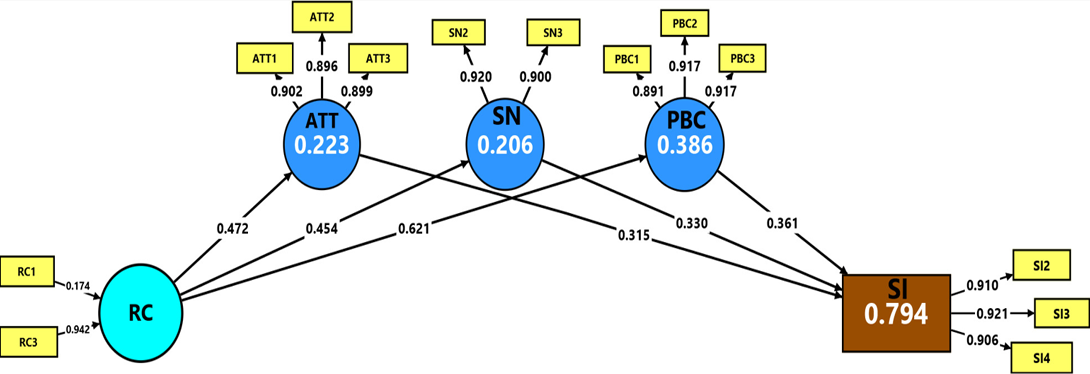
relationships from Respondent Characteristics (RC) to TPB constructs, RC showed the strongest association with Perceived Behavioral Control (PBC) (β = 0.621), followed by Attitude (ATT) (β = 0.472) and Subjective Norms (SN) (β = 0.454) (Table 4a).
Among the TPB constructs predicting Succession Intention (SI), Perceived Behavioral Control showed the largest standardized coefficient (β = 0.361), followed by Subjective Norms (β = 0.330) and Attitude (β = 0.315) (Table 4a). Therefore, PBC demonstrated the strongest direct association with succession intention in the final model.
The final PLS-SEM structural model after measurement model refinement is presented in Figure 3. The final model was estimated after removing education (RC2), the parental expectation indicator of Subjective Norms (SN1), and the personal continuation-plan indicator of Succession Intention (SI1). The figure presents the final path coefficients, outer loadings, and explained variance (R²) obtained from the PLS Algorithm. The statistical significance of the structural relationships was assessed using bootstrapping results reported in Table 4a.
Table 4a: Structural path and hypothesis testing.
Hypothesis
Path
β
t
p
Result
H1
RC → ATT
0.472
12.697
<0.001
Supported
H2
RC → SN
0.454
10.600
<0.001
Supported
H3
RC → PBC
0.621
22.774
<0.001
Supported
H4
ATT → SI
0.315
6.928
<0.001
Supported
H5
SN → SI
0.330
7.954
<0.001
Supported
H6
PBC → SI
0.361
8.384
<0.001
Supported
Table 4b: Coefficient of determination.
Construct
R²
Adjusted R²
ATT
0.223
0.221
SN
0.206
0.203
PBC
0.386
0.384
SI
0.794
0.792
Source: Primary data, processed using SmartPLS 4 (2026); Note: R² values indicate the proportion of variance explained by the predictor constructs. Adjusted R² values are reported to account for the number of predictors included in each endogenous construct.
Regarding explained variance, the refined model explained 79.4% of the variance in succession intention (adjusted R² = 0.792) (Table 4b), indicating substantial explanatory power within the study sample. However, this value should be interpreted cautiously because the study used a cross-sectional design and assessed succession intention rather than actual succession behavior.
All three specific indirect associations were statistically significant (Table 5). The strongest indirect association was observed for RC → PBC → SI (β = 0.224), followed by RC → SN → SI (β = 0.150) and RC → ATT → SI (β = 0.148). Because no direct RC → SI path was estimated, these results are interpreted as significant indirect associations through TPB mechanisms rather than evidence of statistical full mediation.
Regarding model discrepancy assessment, the saturated-model SRMR was 0.048, whereas the estimated-model SRMR was 0.210. The saturated-model SRMR indicates that the observed correlations among constructs were adequately represented. However, the estimated-model SRMR was higher than the saturated-model SRMR, indicating discrepancy associated with the structural specification. Therefore, SRMR was interpreted as supplementary diagnostic information rather than as a standalone criterion for model acceptance, consistent with the prediction-oriented nature of PLS-SEM. Therefore, this value was considered as additional diagnostic information and was taken into account when interpreting the structural model results.
Table 5: Specific indirect effects of rc on succession intention through tpb constructs.
Specific Indirect Association
β
t
p
Result
RC → ATT → SI
0.148
6.005
<0.001
Significant
RC → SN → SI
0.150
6.359
<0.001
Significant
RC → PBC → SI
0.224
7.886
<0.001
Significant
Source: Primary data, processed using SmartPLS 4 (2026); Note: Specific indirect associations represent the estimated indirect relationships between farming-related respondent characteristics (RC) and succession intention (SI) through TPB-related constructs. Because no direct RC → SI path was estimated, these results are interpreted as significant indirect associations rather than evidence of full mediation.
Consistent with the predictive orientation of PLS-SEM, the interpretation of the structural model was based on the integration of measurement quality, explained variance, path significance, theoretical consistency, and model diagnostics rather than relying on a single fit criterion.
DISCUSSION
Respondent characteristics as a formative construct
The formative specification showed that dairy-farming experience had the largest empirical contribution within RC, whereas education made only a weak empirical contribution and was removed during measurement refinement (Table 2). This result supports the distinction between formative background characteristics and reflective psychological constructs emphasized in PLS-SEM methodology ; .
Although dairy-farming experience represented the dominant contribution within RC, age was retained because it captures a theoretically distinct life-stage dimension that may influence exposure opportunities, readiness, and succession-related perceptions. Therefore, RC should not be interpreted as a proxy for farming experience alone, but as a farming-related background composite consisting of distinct characteristics that jointly contribute to the construct.
The distribution of respondents also indicated variation in dairy-farming exposure, with 168 respondents (53.3%) reporting previous dairy-farming experience and 147 respondents (46.7%) having no dairy-farming experience (Table 1b). This variation supports the interpretation of RC as a farming-related background composite rather than a general demographic index.
Importantly, the contribution of dairy-farming experience to RC does not imply that farming experience independently determines succession intention. Instead, the RC construct represents background characteristics that may operate through psychological mechanisms. Consistent with the TPB perspective, demographic and experiential factors may influence intention indirectly through proximal psychological determinants such as attitude, subjective norms, and perceived behavioral control rather than functioning as direct determinants of intention .
Effects of rc on tpb constructs
RC was significantly associated with ATT, SN, and PBC. Among the TPB constructs, the association between RC and PBC showed the largest standardized coefficient (β = 0.621), followed by ATT (β = 0.472) and SN (β = 0.454) (Table 4a). The strong RC–PBC relationship is consistent with the role of farming exposure in enhancing perceived capability and familiarity with dairy-farming activities.
The significant RC–ATT relationship indicates that respondent characteristics were also associated with evaluations of dairy farming (Table 4a). Previous succession research has shown that beliefs concerning satisfaction, farm management, and the perceived consequences of taking over a family farm can shape successors’ attitudes .
The RC–SN relationship highlights the social dimension of succession (Table 4a). Farm succession is embedded within family relationships and intergenerational expectations, meaning that respondent background characteristics may shape the context in which social support and intergenerational expectations are perceived ; .
Psychological determinants of succession intention
Among the TPB constructs, perceived behavioral control showed the largest standardized coefficient in predicting succession intention (β = 0.361), followed by subjective norms (β = 0.330) and attitude (β = 0.315) (Table 4a). This indicates that perceived capability, access to farming resources, and confidence in performing dairy-farming activities represent important psychological mechanisms underlying succession intention.
The significant effect of subjective norms indicates that social influences remain relevant in shaping succession intention. In family-based agricultural systems, expectations from parents, peers, and communities may influence whether younger generations perceive dairy farming as a viable future pathway. However, the results suggest that social influence operates alongside individual perceptions of capability and control rather than functioning as the sole dominant determinant.
These findings are consistent with the TPB framework , where intention formation results from the combined influence of attitude, subjective norms, and perceived behavioral control. Therefore, farmer regeneration strategies should integrate social support mechanisms with interventions that strengthen technical capability, resource access, and positive evaluations of dairy farming.
Attitude and perceived behavioral control
ATT significantly affected SI (β = 0.315), indicating that respondents with more favorable evaluations of dairy farming were more likely to express succession intention (Table 4a). This is consistent with the TPB and previous farm-succession research ; . Similarly, PBC significantly affected SI (β = 0.361), indicating that respondents who perceived greater capability and control over farm-related resources were more likely to intend to become successors (Table 4a). This highlights that technical competence, access to resources, and family farming infrastructure remain essential drivers of farmer regeneration.
A notable structural characteristic of this study sample is that 46.7% of respondents did not have active individual involvement in commercial dairy farming at the time of the survey. In traditional rural ecosystems like Enrekang Regency, measuring succession intention among non-farming respondents reflects their prospective willingness and readiness to participate in dairy farming activities in the future, even though they are not currently engaged as farm operators. The strong influence of PBC and ATT across this diverse sample indicates that perceived capabilities and attitudes shape career intentions throughout the broader productive-age rural population, providing a realistic baseline assessment of potential future entrants into the dairy sector beyond currently registered commercial operators.
Indirect effects and explanatory power
All three indirect pathways were significant, with RC → PBC → SI showing the strongest indirect association (β = 0.224), followed by RC → SN → SI (β = 0.150) and RC → ATT → SI (β = 0.148) (Table 5). This indicates that respondent characteristics are associated with succession intention through psychological mechanisms, particularly perceived behavioral control. Because the direct RC → SI relationship was not estimated, these pathways are interpreted as theory-informed indirect associations through TPB mechanisms rather than as evidence of mediation effects. The indirect relationships indicate that farming-related respondent characteristics are associated with succession intention through proximal TPB mechanisms, particularly perceived behavioral control.
The refined model explained 79.4% of the variance in SI (Table 4b). This indicates substantial explanatory power within the sample. However, because the study is cross-sectional and measures intention rather than actual succession behavior, this result should not be interpreted as evidence that the model predicts actual succession outcomes.
The relatively high explanatory power should nevertheless be interpreted cautiously because explanatory power reflects the variance explained within the sample and does not necessarily indicate complete theoretical coverage of all factors influencing succession intention. Additional theoretically relevant relationships may exist beyond the current specification.
The initial HTMT assessment indicated potential conceptual overlap between SN and SI (HTMT = 0.947). Following measurement refinement through removal of conceptually overlapping indicators, the HTMT value decreased to 0.913 (Table 3b). This suggests improved construct differentiation, although the relatively close relationship between social influence and succession intention remains theoretically meaningful in family-based dairy farming contexts.
The remaining conceptual proximity between SN and SI reflects the closely interconnected nature of social influence and succession intention in family-based dairy farming contexts. Within the TPB framework, subjective norms represent external social influences, whereas succession intention reflects an individual’s motivational state. The high association observed in this study may reflect the strong role of family expectations in smallholder dairy succession, where decisions are embedded within intergenerational relationships.
Implications
To address farmer regeneration challenges in Enrekang Regency, agricultural policies should integrate interventions that strengthen both individual capability and social support mechanisms. Since Perceived Behavioral Control (PBC) showed the largest direct association with Succession Intention (SI), policy initiatives should prioritize improving potential successors’ technical capability, access to farming resources, and confidence in engaging in dairy farming activities through training, mentoring, and farm-management support.
Subjective norms also remain relevant, as family, peer, and community support may influence perceptions of dairy farming as a viable future livelihood. Therefore, regeneration strategies should incorporate intergenerational communication, family involvement, and farmer-group support. In addition, strengthening positive evaluations of dairy farming through role models and successful farm examples may contribute to more favorable attitudes among potential successors.
Given the cultural association between dairy farming and dangke production in Enrekang, youth-oriented dairy development programs may consider incorporating local dairy value-chain awareness as part of broader farmer regeneration strategies. Such approaches may complement efforts to strengthen perceived behavioral control, social support, and positive attitudes toward dairy farming.
Limitations
This study has several limitations. First, the cross-sectional design and self-reported data limit causal interpretation. Therefore, the relationships among respondent characteristics (RC), TPB constructs, and succession intention (SI) should be interpreted as empirical associations rather than causal effects.
Second, the use of convenience sampling limits the generalizability of the findings. The results represent productive-age respondents from the studied dairy-producing communities rather than the entire population of Enrekang Regency. Furthermore, the inclusion of respondents with and without dairy-farming experience requires cautious interpretation because succession intention may represent continuation among experienced respondents and prospective entry among inexperienced respondents.
Third, RC should be interpreted as a farming-related formative background composite rather than a general demographic construct. Although dairy-farming experience was the dominant contributor, future studies should examine alternative operationalizations of background characteristics and compare different successor groups.
Fourth, because the study relied on self-reported questionnaire data collected from the same respondents, potential common method bias cannot be completely excluded. Although procedural measures were applied during data collection, statistical assessment of common method bias was not conducted. Future studies should consider additional procedural and statistical approaches to further minimize this potential limitation.
Finally, the initial HTMT assessment indicated conceptual overlap between SN and SI (HTMT = 0.947), which was addressed through measurement refinement by removing conceptually overlapping indicators (SN1 and SI1). Although the refined model showed improved construct differentiation and explained substantial variance in SI (adjusted R² = 0.792), future longitudinal studies with independent samples are needed to examine whether succession intentions translate into actual farm succession behavior.
CONCLUSION
Farming-related respondent characteristics, particularly dairy-farming experience, were significantly associated with Attitude, Subjective Norms, and Perceived Behavioral Control, which were subsequently associated with succession intention among productive-age respondents in Enrekang Regency. Farming experience was the dominant contributor to the formative RC construct, while Perceived Behavioral Control showed the strongest direct association with succession intention (β = 0.361, p < 0.001). The strongest indirect association occurred through RC → PBC → SI (β = 0.224, p < 0.001), and the final model explained 79.4% of the variance in succession intention (adjusted R² = 0.792).
These findings indicate that farmer regeneration strategies should integrate social support with efforts to strengthen potential successors’ capability, access to resources, and confidence in dairy-farming activities. Strengthening technical competence, mentoring, family communication, and farmer-group support may contribute to more favorable conditions for dairy-farm succession in Enrekang.
ACKNOWLEDGMENTS
The authors thank the smallholder dairy-farming community and local government agencies in Enrekang Regency for their participation and assistance during data collection. The authors also acknowledge Hasanuddin University and all individuals who supported the implementation of this research.
NOVELTY STATEMENT
This study contributes to the literature by applying the Theory of Planned Behavior to investigate the psychological pathways underlying dairy farm succession intention among productive-age respondents in Enrekang Regency, Indonesia. Unlike previous studies that primarily focus on existing farmers or succession planning processes, this study examines succession intention among the broader productive-age population within dairy-producing communities. Furthermore, Respondent Characteristics (RC) were specified as a formative background composite to examine how farming-related characteristics are associated with proximal psychological mechanisms within the TPB framework. The findings highlight that perceived behavioral control, subjective norms, and attitude represent interconnected psychological mechanisms associated with succession intention, with perceived behavioral control showing the largest direct association. This integrated framework provides context-specific evidence regarding the behavioral and social mechanisms underlying farmer regeneration within an Eastern Indonesian smallholder dairy-farming system.
AUTHORS CONTRIBUTIONS
S. Zalsabila, contributed to conceptualization, methodology, formal analysis, investigation, data curation, writing-original draft preparation. A. Asnawi: contributed to conceptualization, supervision, validation, writing review and editing. A. Abdullah contributed to supervision, validation, writing review and editing.
Generative ai and ai-assisted technology statement
During preparation of this manuscript, AI-assisted tools were used for language editing and formatting. The authors reviewed and edited the manuscript and take full responsibility for its final content.
Conflict of interest
The authors declare that there is no conflict of interest regarding the publication of this article.
Figures
Figure 1:.
Conceptual framework of the study based on the Theory of Planned Behavior.
Figure 2 :.
Map showing the six study subdistricts in Enrekang Regency, South Sulawesi, Indonesia.
Figure 3:.
Final structural model showing path coefficients and coefficient of determination (R²).
References
Ajzen I (1991). The theory of planned behavior. organizational behavior and human decision processes, 50(2): 179-211. https://doi.org/10.1016/0749-5978(91)90020-T[CrossRef]
Asiamah N, Mensah HK, Abayie EFO (2022). Non-probabilistic sampling in quantitative clinical research: A typology and highlights for students and early career researchers. Int. J. Appl. Res., Public Health Manage., 7(1) :1-18. https://doi.org/10.4018/IJARPHM.290379[CrossRef]
Badan Pusat Statistik Enrekang (2025). Enrekang regency in figures 2025. bps-statistics of enrekang regency.
Diamantopoulos A, Winklhofer HM (2001). Index construction with formative indicators: An alternative to scale development. J. Mark. Res., 38(2): 269-277. https://doi.org/10.1509/jmkr.38.2.269.18845[CrossRef]
Firman A, Daud AR, Arief H (2023). Succession process for sustainability of family dairy farming. agraris. 9(2): 299-315. https://doi.org/10.18196/agraris.v9i2.349[CrossRef]
Griffin C, Sirimorok N, Dressler WH, Sahide MAK, Fisher MR, Faturachmat F, Muin F, Mary AVP, Batiran KB, R, Rizaldi M, Toumbourou T, Suwarso R, Salim W, Utomo A, Akhmad F, Clendenning J (2024). The persistence of precarity: youth livelihood struggles and aspirations in the context of truncated agrarian change, south sulawesi, Indonesia. Agric. Human Values. 41(1): 293-311. https://doi.org/10.1007/s10460-023-10489-5[CrossRef]
Hair JF, Hult GTM, Ringle CM, Sarstedt M (2022).A primer on partial least squares structural equation modeling (PLS-SEM). 3rd edn. Sage publications, Thousand oaks. https://doi.org/10.1007/978-3-030-80519-7[CrossRef]
Herrero M, Grace D, Njuki J, Johnson N, Enahoro D, Silvestri S, Rufino MC (2013).The roles of livestock in developing countries. Animal, 7(SUPPL.1): 3-18. https://doi.org/10.1017/S1751731112001954[CrossRef]
Kihoro E, Vernooij V, Schoneveld G, Crane T, Vellema S (2024). Does dairy intensification threaten livelihood diversity in East Africa? Global Food Security. 41,100770. https://doi.org/10.1016/j.gfs.2024.100770[CrossRef]
Kusumastuti TA, Abidin MZ, Widiati R (2024). total economic value of smallholder dairy farm in Java Island Indonesia. Int. J. Dairy Sci.. 19(1):8-17. https://doi.org/10.3923/ijds.2024.8.17[CrossRef]
Mokoena OP, Ntuli TS, Ramarumo T, Seeletse SM (2023). Sustainability of rural small-scale farmers using a thematic content-fed analytic hierarchy process. Sustainability. 15(15). https://doi.org/10.3390/su151511983[CrossRef]
Morais M, Binotto E, Borges JAR (2017). Identifying beliefs underlying successors’ intention to take over the farm. Land Use Policy, 68: 48-58. https://doi.org/10.1016/j.landusepol.2017.07.024[CrossRef]
Müller AC, Borges JAR, Tofollo V (2024). Sociopsychological factors underlying dairy farmers’ intention to adopt succession planning. Anim. open space, 3, 100057. https://doi.org/10.1016/j.anopes.2023.100057[CrossRef]
Ngadi N, Zaelany AA, Latifa A, Harfina D, Asiati D, Setiawan B, Ibnu F, Triyono T, Rajagukguk Z (2023). Challenge of agriculture development in Indonesia: Rural youth mobility and aging workers in agriculture sector. Sustainability, 15(2): 922. https://doi.org/10.3390/su15020922[CrossRef]
Ringle CM, Wende S, Becker JM (2024). SmartPLS 4. SmartPLS, Bönningstedt.
Sa’pang M, Salam A, Harna H, Rahmayanti R, Seprianto S, Nurmalasari M, Ruhmayanti NA, Swamilaksita PD (2023).An explorative study of indonesian traditional cheese ”dangke” as high protein food from enrekang, south sulawesi. Poltekita: J. Ilmu Kesehatan. 17(3):955-965. https://doi.org/10.33860/jik.v17i3.3345[CrossRef]
Setiarto RHB, Nur N, Romulo A, Herlina VT (2025). Dangke: unveiling indonesian traditional fermented cheese from enrekang, south sulawesi. J. Ethnic Foods. 12(1): 16. https://doi.org/10.1186/s42779-025-00279-1[CrossRef]
Sok J, Borges JR, Schmidt P, Ajzen I (2021). Farmer behaviour as reasoned action: a critical review of research with the theory of planned behaviour. J. Agric. Econ., 72(2): 388-412. https://doi.org/10.1111/1477-9552.12408[CrossRef]
Tama RAZ, Ying L, Yu M, Hoque MM, Adnan KMM Sarker SA (2021). Assessing farmers’ intention towards conservation agriculture using the extended TPB. J. Environ. Manage., 280: 111654. https://doi.org/10.1016/j.jenvman.2020.111654[CrossRef]
Timban ARS, Mawuntu IM, Paendong A, Pua EMG, Fauzi MTAR (2024). Farmer regeneration through family farming succession in Indonesia: Driving factors, challenges, strategies. Agri-Sosioekonomi, 20(2). https://doi.org/10.35791/agrsosek.v20i2.57525[CrossRef]
Wahyono ND, Hasanah N, Parmawati R, Wong WK (2023). Improving economic welfare through capital development: Case study of smallholder dairy farmers in Pujon District. Sustainability. 15(11): 8453. https://doi.org/10.3390/su15118453[CrossRef]