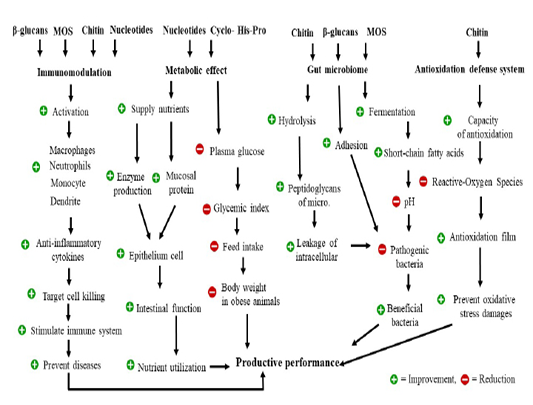
Nucleotides in yeast (NY): Yeast can be a source of nucleotides that are structure of DNA and RNA, a phosphate group (adenine, cytosine, guanine, or thymine bases) and a pentose sugar (Tibbets, 2002; Bacha et al., 2013). Yeasts are a source of nucleobases, nucleosides, and nucleotides; especially, adenosine (1,497 mg kg−1) and guanosine (1,445 mg kg−1) (Pastor-Belda et al., 2021). Nucleotides are significantly required by cell replication process, particularly intestinal epithelial and lymphoid cells, which have low capacity of nucleotides synthesis (Waititu et al., 2017).
Approximately, 12– 20% of total nitrogen in yeast are derived from nucleic acids (purine and pyrimidine bases of nucleoproteins) (Rumsey et al., 1992). NY may improve nutrient digestibility, due to the development of jejunal morphology of pig (Shen et al., 2009). Furthermore, NY also promotes epithelium cell function in the intestinal tract by increasing the synthesis of mucosal protein, and increasing the ratio of the maltase/lactase enzyme (Uauy et al., 1990; Pérez et al., 2004). Rumsey et al. (1992) found that using RNA extract from yeast increased hepatic nucleic acids, and providing nucleic acids in diet could be utilized by the tissue.
Supplementing nucleotides in diet stimulate immune system of the animal (Grimble and Westwood, 2001). Although the mechanism of nucleotides on the stimulation of gut immune system is unclear, being building blocks of ATP, DNA, and RNA is emphasis (Grimble and Westwood, 2001). The nucleotides from yeast extract also involve with the functions of interleukin (IL)-1β, IL-6, IL-10, TNF-α, and the programmed cell death gene-1 (PD-1) (Waititu et al., 2017). The effects of supplementing NY in pig diets are summarized in Table 7.
Other compounds: There are other cellular chemical components in yeast cells, such as amino acids, peptides, proteins, lipids, long chain fatty acids, diacetyl, α-acetolactic acid, ethyl decanoate, oxidized polyphenols, oxidized α-acid, and alkaline substance (Wang et al., 2018). High concentration of umami-taste amino acids, peptides, and nucleotides in yeast improve the palatability and feed intake of the animal (Foster, 2011; Keimer et al., 2018). Jung et al. (2011) and Jung et al. (2016) reported that
Table 6: Summarized effects of dietary mannan-oligosaccharides from yeast cell walls on growth performance and immune response
Table 7: Summary of dosage effects of nucleotides yeast in pig diets