Supplementing broiler diets with β-G+MOS at 100-200 ppm regardless the source had positive effects on broilers growth performance and plasma protein fractions comparing to control group.
Neither lymphoid organs nor giblets percent was affected by β-G+MOS addition.
Generally, no significant differences were observed between β-G+MOS sources and levels with slight improvement for YCW source than MR source.
1Department of Animal Production, Faculty of Agriculture, Cairo University, Giza, Egypt; 2Animal Production Research Institute, Agricultural Research Center, Giza, Egypt.
Abstract | This study compared between yeast cell wall (YCW) and mushroom (MR) as sources of both β-Glucan and mannan oligosaccharide (β-G+MOS) at different supplementation levels on growth performance, carcass characteristics and plasma protein fractions of 420 unsexed a day-old Arbor Acres broiler chick. Chicks were randomly allocated to seven dietary treatments each of 4 replicates (15 birds per replicate). Birds had the same management protocol and were housed in three-deck batteries, and had free access to feed and water up to 35 days of age. Birds were switched to the experimental diets as follows; T1, a basal control diet. Diets T2, T3 and T4 were supplemented with a combination of β-G+MOS at 100, 200 and 300 ppm from YCW, respectively. Diets T5, T6 and T7 were were supplemented with a combination of β-G+MOS at 100, 200 and 300 ppm from MR, respectively. Results show that live body weight (LBW), live body weight gain (LBWG), feed consumption (FC) and feed conversion ratio (FCR) were not significantly affected by source or level of β-G+MOS during all experimental periods, except that YCW had higher (p=0.02) LBWG during finisher and lower FC during starter (p=0.001) than MR based diets. Dietary addition of β-G+MOS improved final LBWG (p=0.007) and FCR (p=0.005) compared to the control. Broilers group fed 200 ppm β-G+MOS from YCW recorded more live weight gain by 13.2 percent and better FCR by 12.17 percent over the control. Carcass percent of 300 ppm β-G+MOS from YCW group was the highest carcass (p=0.03) and being higher by 4.52 percent over the control. It could be suggested that supplementing of β-G+MOS to broiler diets might improve broiler performance regardless the sources or level although, YCW source may be superior especially at finisher period.
The poultry production is one of the biggest sectors in livestock production, it covering animal protein demanding for millions of people world wide, because poultry meat is cheaper and healthier than red meat . Broiler chick’s selection for commercial goals has been extremely developed over the recent decades . It can be a result of feed conversion efficiency increasing and a reduction of feed costs . So, feed alternatives needed to improve broiler growth performance and protect the birds from disease infections.
Many countries has been used antibiotics as growth promotant, as birds during their breeding are exposed to many stressors that could effect on health, growth and mortality. Also, they have been used as immuno-modulators, hence participate to enhance the growth performance and health status of birds ; . Although, there are increasingly consumer concerns about drug residues in meat products and the rise of antibiotic resistance of pathogenic bacteria ; . For these reasons, the European Union, besides many countries banned the use of antibiotics in animal diets as growth promotants since 2006 ; ; ; Zia-Ur-Rehman et al., 2017). Otherwise this ban has resulted in a negative impact in animal health and growth performance ; . So, there is a continuous seek for safe alternatives serve the same goals achieved by antibiotics ; Brummer et al., 2010; ; ; ; .
Prebiotics defined as non-digestible ingredients that affect the host by stimulating the growth of beneficial bacteria in the gastro-intestinal of the host ; ; . Beta-glucans (β-G) and mannan oligosaccharides (MOS) are prebiotics commonly used in many poultry species ; . MOS and β-G are carbohydrates, which form the structure of cell wall of yeast, fungi, algae, and cereal grains ; ; . The YCW MOS and β-G have beneficial effects on poultry gut health and growth performance ; ; ; . Yeast β-G supplementation can protect poultry against many pathogens such as Salmonella, E.coli and Eimeria species by improving immune response and gut health ; ; . Cox et al. (2010a) showed that supplementation of β-glucan at 100 ppm in broiler chicken diets maintain gut health by reducing the intestinal damage severity of broiler chickens challenged with Eimeria. Shao et al. (2013) concluded that supplementation of yeast β-G at 100 ppm in diets of broiler chickens challenged with Salmonella typhimurium can improve gut health due to protect intestinal mucosal barrier against salmonella and increase villi heights compared to un-supplemented challenged chicks. Tian et al. (2016) reported that supplementation of yeast β-G at 200 ppm in Clostridium perfringens challenged broiler chicken diets improved growth performance accompanied with increasing up to 10% in average daily gain whereas decreasing up to 6% in feed conversion ratio (FCR) compared to control challenged chicks. Addition of MOS has been heavily investigated to assess their potential as alternatives to antibiotic growth promoters ; ; ; ; . Jahanian et al. (2016) found that dietary MOS supplementation at 2000 ppm in aflatoxin-challenged broiler chicks diet enhanced growth performance via improving feed digestibility and increase nutrient absorptive surface. Jahanian and Ashnagar (2015) and Ghasemian and Jahanian (2016) showed that addition of MOS at 1000-1500 ppm to laying hen diets enhanced growth performance due to improve gut health and nutrients digestibility under challenged conditions.
Therefore, this study was conducted to investigate the effect of dietary MOS and β-G from yeast cell wall or edible mushroom on growth performance and immune status in broiler chickens.
MATERIALS AND METHODS
The present experiment was designed and approved by institutional animal care and use committee (CU-IACUC) at Cairo University, Egypt (CU-II-F-8-21).
Experimental design and management
This experiment was carried out at El-Azab Research Farm, Fayoum, Egypt during December 2019 to January 2020. Experimental diets and water were offered ad-libitum throughout the growth trail term. Chicks in all treatments were kept under similar management conditions. Artificial lighting was provided all over 24 hours during the whole experimental period. Gas heaters were used to provide chicks with heat needed for brooding.
Chicks were vaccinated against Newcastle disease (ND) with hichner B-1 (0.2 cm subcutaneous injection) + IB (eye drop) on the third day of age. Chicks were vaccinated twice against infectious bursal disease (IBD) in drinking water firstly on the 8th day of age and the second was on the 14th day of age. Chicks were also vaccinated against ND+AI (0.5 cm sub cutaneous injection) and against ND+IB (eye dropping) on the 10th of the age.
β-G+MOS sources
Mushroom (Pleurotus ostreatus): Dried and grinded edible mushroom was purchased from the Egyptian local market, it containing 54% β-glucan + 5% MOS. According to Synytsya et al. (2009), the mushroom fruit body is about 5–15% of dry matter containing 19–35% crude protein.
Fubon yeast cell wall (saccharomyces cerevisiae)
A commercial source cell wall extract of saccharomyces cerevisiae contained 20% β-G+20% MOS was provided by Angel yeast co., ltd– china. It composed of 15-30% of the dry weight of vegetative yeast . Commercial YCW contains 30-60% polysaccharides including mannan and β-glucan polymers, 15-30% proteins, 5-20% lipids, and a small portion of chitin .
Experimental birds and diets
A total of 420 unsexed day-old Arbor Acres broiler chicks with 39.2 g initial weight were housed in 3 deck batteries with cages dimensions 60*100*25 cm3. Birds were divided into seven dietary treatments with 4 replicates of 15 birds each and were kept in a semi closed house under the same experimental conditions. Diets were formulated to meet the nutrients requirements of Arbor Acres (2019) in a mash form as indicated in Table 1. Dietary treatments were the control (T1), groups 2 to 4 were fed diets supplemented with 100, 200 and 300 ppm β-G and MOS from yeast cell wall, respectively, and groups 5 to 7 were fed diets supplemented with 100, 200 and 300 ppm β-G and MOS from mushroom, respectively.
Table 1: Ingredients composition and calculated chemical analysis of the basal diets.
Ingredient
Starter
Grower
Finisher
1-14 d
15-28 d
29-35 d
Yellow corn
54.30
57.12
61.50
Soybean meal (46%)
34.30
30.21
24.58
Corn gluten (60%)
4.50
4.69
5.10
Crude soy oil
2.43
3.50
4.35
Limestone
1.50
1.58
1.58
Mono-calcium phosphate
1.50
1.48
1.48
Vitamins and Minerals Premix
0.3
0.3
0.3
NaCl
0.32
0.26
0.26
Sodium bicarbonate
0.1
0.17
0.17
DL-Methionine
0.24
0.16
0.16
L-Lysine HCl
0.18
0.22
0.22
Choline chloride (60%)
0.33
0.31
0.30
Total
100
100
100
Calculated analysis
Crude protein (%)
23.00
21.50
19.50
Metabolizable Energy (kcal/kg)
3000
3100
3200
Crude Fiber (%)
3.25
3.09
2.89
Ether Extract (%)
5.07
6.19
7.14
Calcium (%)
0.91
0.92
0.90
Available Phosphorus (%)
0.47
0.46
0.45
Methionine
0.65
0.55
0.53
Methionine+Cystine
1.03
0.90
0.85
Lysine
1.34
1.26
1.10
Sodium
0.17
0.16
0.16
Each 1 Kg diet contains: Vit. A 12000 IU, Vit. D 5000 IU, Vit. E 80 IU, Vit. K3 3.20 mg, Vit. B1 3.20 mg, Vit. B2 8.60 mg, Vit. B12 0.017 mg, Vit. B6 4.30 mg, Niacin 65 mg, Pantothenic acid 20 mg, Folic acid 2.20 mg, Biotin 0.22 mg, Copper 16 mg, Iodine 1.25 mg, Iron 20 mg, Zinc 110 mg, Manganese 120 mg, Selenium 0.30 mg and Cobalt 0.10 mg. *The 100, 200 and 300 ppm of β-G+MOS from YCW corresponded to 25, 50 and 75-gram YCW per 100 kg diet for starter, grower and finisher diets, respectively. *The 100, 200 and 300 ppm of β-G+MOS from MR corresponded to16.9, 33.8 and 50.7 gram MR per 100 kg diet for starter, grower and finisher diets, respectively.
Measurements
Growth performance: Chicks were individually weighed at the beginning and at the end of each growth interval to calculate live body weight gain (LBWG). Feed consumption (FC) of each period was recorded/bird/pen and used to calculate the amount of feed consumed (kg) to produce 1 kg of meat.
Carcass characteristics: Five birds of each group representing the average final treatment weight ±10% were overnight fasted then were slaughtered to complete bleeding, and plucked of feathers. The carcass, lymphoid organs (bursa, thymus and spleen), and giblets (heart, gizzard and liver) were weighed and expressed as percent of live body weight.
Blood parameters: At slaughtering, birds assigned to slaughter test were also used for blood plasma assay. Blood samples were immediately collected from the same slaughtered birds (5 birds/ treatment) into dry clean centrifuge tubes containing droplets of heparin solution and plasma was separated by centrifugation at 3000 r.p.m. for 15 minutes. Collected plasma was kept at -20°C at deep freezer for subsequent metabolites determinations. Total protein (Tp; g/dL) according to Gornal et al. (1949), and albumin (A; g/dL) according to Doumas et al. (1971) were measured. Globulin (G; g/dL) was calculated by the difference between Tp and A, and A/G ratio was subsequently calculated.
Statistical analysis
The statistical analysis was computed using analysis of variance using SAS program (SAS® Institute, 2004). The significance differences means between treatments were separated using Duncan’s Multiple Range .
The statistical models used were:
One way analysis: Yij= µ + Ti + eij, where Yij= an observation, µ= the overall mean, Ti= Effect of treatment (i= 1, ...7) and eij= experimental error.
Factorial analysis: Yijk = µ + Si + Lj + SLij + e ijk, where Yij = an observation, µ= overall mean, Si= β-G+MOS source effect (i = 1, 2), Lj= β-G+MOS level effect (j = 1, 2, 3), SLij = effect of interaction between β-G+MOS source and level, and eijkl= experimental error.
Results and Discussion
Productive performance
Effect of different β-G+MOS sources, levels and their interactions on broiler performance; live body weight (LBW), average body weight gain (ABWG), feed consumption (FC) and feed conversion ratio (FCR) at starter, grower and finisher periods are presented in Tables 2 and 3. Broiler performance did not significantly affected by either β-G+MOS sources or levels during all experimental periods and overall period except BWG was significantly increased at finisher period and FC was significantly decreased at grower period with YCW vs. mushroom (MR) source. Chicks fed diets with added β-G+MOS were significantly improved BWG and FCR compared with those fed control diet at overall period. Generally, the group of (T6) which fed 200 ppm β-G+MOS from MR was significantly (P= 0.045) recorded the highest ABWG during starter period by 12.36% compared to control and numerically during grower period. Group fed 200 ppm β-G+MOS of YCW (T3) was significantly achieved the highest BWG during overall period by 13.22% and best FCR by 12.17% compared to control.
Lymphoid organs
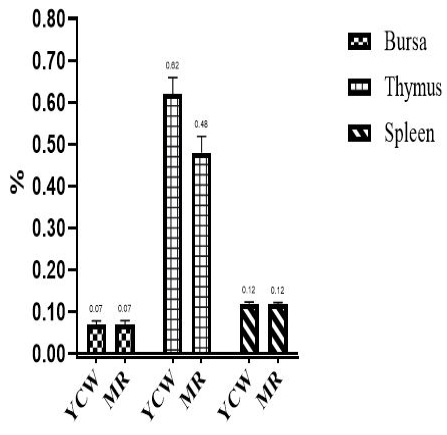
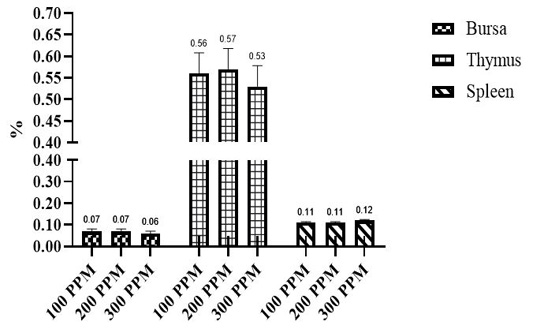
Effects of different β-G+MOS sources, levels and their interactions on relative lymphoid organs percent are in Table 5 and Figures 1 and 2. Chicks fed diets added with β-G+MOS from YCW were significantly (P= 0.02) recorded thymus percent higher than MR groups. Otherwise no significant differences were observed in relative lymphoid organs percent due to neither β-G+MOS levels nor treatments.
Plasma protein parameters
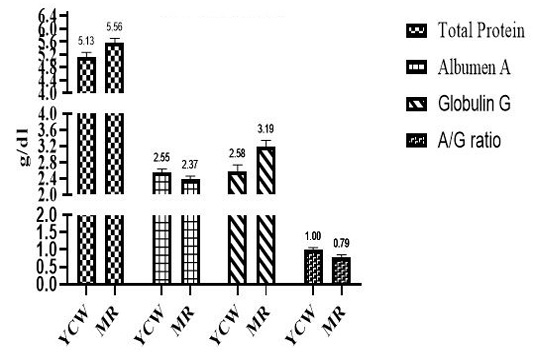
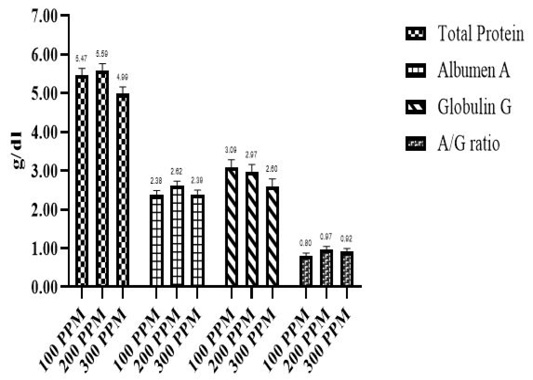
Effect of different β-G+MOS sources, levels and their interactions on blood plasma protein parameters; (Total protein (Tp), albumin (A) and globulin (G)) is presented in Table 5 and Figures 3 and 4. Chicks fed MR β-G+MOS source were significantly (P=0.02) recorded higher Tp, also G value was significantly (P=0.01) increased in chicks groups fed MR β-G+MOS compared to those fed YCW source. While lower A/G ratio was significantly (P=0.03) recorded for chicks fed MR β-G+MOS than those fed YCW source, where no significant differences were detected with β-G+MOS levels in all plasma protein parameters except Tp values. Chicks fed 200 ppm was significantly (P= 0.04) recorded higher Tp than those fed 300 ppm. All blood plasma protein parameters were significantly affected by β-G+MOS either sources and levels interactions or control group. Generally, the blood plasma protein parameters values were within normal range.
Table 2: Effect of β-G+MOS source, level and treatments on live body weight and live body weight gain.
* β-G+MOS sources
β-G+MOS levels (ppm)
Live body weight (g)
Live body weight gain (g)
Starter
Grower
Finisher
Overall period
1d
14d
28d
35d
1-14d
15-28d
29-35d
1-35d
Source:
YCW
-
39.4
357.5
1317.4
1919.8
318.0
959.9
602.3a
1880.3
MR
-
38.2
365.6
1340.0
1901.2
326.4
974.3
561.1b
1862.0
SEM
-
0.216
4.12
17.56
23.32
4.015
15.98
11.80
23.23
P value
-
0.37
0.18
0.37
0.58
0.15
0.53
0.02
0.58
Level:
-
100
39.7
356.0
1300.2
1883.3
316.3
944.1
583.1
1843.6
-
200
39.4
369.7
1358.3
1926.3
330.3
988.5
568.0
1886.8
-
300
38.9
358.8
1327.6
1921.8
319.9
968.8
594.1
1882.9
SEM
-
0.264
5.05
21.51
28.57
4.91
19.57
14.45
28.46
P value
-
0.12
0.15
0.19
0.51
0.14
0.29
0.45
0.50
Treatment:
Control T1
-
38.4
339.3 c
1267.2
1714.3b
300.8b
927.9
447.1c
1675.9b
YCW T2
100
39.8
352.7 bc
1311.7
1910.0a
312.9b
958.9
598.3ab
1870.2a
YCW T3
200
39.7
362.4ab
1346.4
1937.3a
322.6ab
984.0
590.9ab
1897.6a
YCW T4
300
38.9
357.3abc
1294.3
1912.0a
318.4ab
936.9
617.7a
1873.0a
MR T5
100
39.5
359.4abc
1288.8
1856.7a
319.8ab
929.4
567.9ab
1817.1a
MR T6
200
39.1
377.1a
1370.2
1915.2a
338.0a
993.0
545.0b
1876.1a
MR T7
300
38.9
360.3abc
1361.0
1931.6a
321.4ab
1000.6
570.6ab
1892.7a
SEM
-
0.387
6.97
28.50
39.05
6.85
26.33
21.54
38.90
P value
-
0.148
0.045
0.123
0.0075
0.045
0.263
0.0004
0.0075
a, b means in each column, within each factor, bearing the same superscripts are not significantly different. *β-G+MOS= β-Glucan + Mannan oligosaccharides, YCW= Yeast Cell Wall, MR= Mushroom and D= Day.
Table 3: Effect of β-G+MOS source, level and treatments on feed consumption and feed conversion ratio.
β-G+MOS sources
β-G+MOS levels (ppm)
Feed consumption (g)
Feed conversion ratio (g feed/g gain)
starter
grower
finisher
overall period
starter
grower
finisher
overall period
1-14 d
15-28 d
28-35d
1-35d
1-14d
15-28d
28-35d
1-35d
Source
YCW
-
367.3
1328.3b
910.6
2606.3
1.15
1.38
1.51
1.38
MR
-
368.8
1386.5a
910.1
2665.4
1.13
1.42
1.62
1.43
SEM
-
4.76
6.33
18.63
22.34
0.018
0.021
0.042
0.018
P value
-
0.82
0.0001
0.98
0.07
0.34
0.22
0.08
0.10
Level
-
100
357.7
1341.8
897.2
2596.8
1.13
1.42
1.54
1.41
-
200
371.6
1363.7
909.7
2645.1
1.12
1.38
1.61
1.40
-
300
374.8
1366.7
924.0
2665.6
1.17
1.41
1.56
1.41
SEM
-
5.83
7.75
22.82
27.36
0.022
0.026
0.052
0.022
P value
-
0.11
0.07
0.71
0.21
0.24
0.45
0.66
0.91
Treatment
Control T1
-
387.8a
1330.4cd
900.69
2618.9
1.29b
1.43
2.03b
1.56b
YCW T2
100
369.4abc
1327.2cd
907.91
2604.6
1.18ab
1.39
1.52a
1.39a
YCW T3
200
359.9bc
1312.9d
931.25
2604.1
1.11a
1.33
1.57a
1.37a
YCW T4
300
372.6ab
1344.8cd
892.75
2610.1
1.17ab
1.43
1.44a
1.39a
MR T5
100
346.0c
1356.4bc
886.66
2589.1
1.08a
1.46
1.56a
1.42a
MR T6
200
383.3ab
1414.5a
888.25
2686.1
1.13a
1.42
1.64a
1.43a
MR T7
300
377.1ab
1388.6ab
955.41
2721.1
1.17a
1.39
1.68a
1.43a
SEM
-
8.19
12.20
29.92
37.169
0.034
0.035
0.084
0.030
P value
-
0.027
0.0001
0.632
0.148
0.009
0.270
0.002
0.005
a, b means in each column, within each factor, bearing the same superscripts are not significantly different. *β-G+MOS= β-Glucan + Mannan oligosaccharides, YCW= Yeast Cell Wall, MR= Mushroom and D= Day.
Effects of different β-G+MOS sources, levels and their interactions on carcass characteristics are presented in Table 4. There were no significant differences in liver, heart and gizzard% due to either β-G+MOS sources and levels or treatments. Carcass % was significantly (P= 0.05) increased with increasing β-G+MOS level, while no significant differences were observed due to different sources. The group fed 300 ppm β-G+MOS from YCW (T4) recorded the highest carcass% +4.52% over the control.
Results show that dietary β-G+MOS addition to broiler diets significantly improved the growth performance regardless either source or level compared to control one. These results might be due to the beneficial effect of β-G+MOS via several ways. 1-Enhancing the beneficial bacteria populations in broilers gut, as lactobacilli and yeast which enhance production of short chain fatty acids produced via fermentation, which in turn sustain gut health ; ; ; 2008b; , 2-Inhibiting the adhesion of pathogenic bacteria and remove them from the gut of broiler such as Salmonella and E.coli and enhance the immune status , 2015; . 3-Developing gut morphology, protecting the broilers from primary infections by increasing goblet cell density which may led to promote performance , 4-Increasing ileal dry matter, crude protein and ether extract digestibility with MOS addition to E. coli challenged as in laying hen diets , and 5-Increasing the absorption surface via increasing villi length . Additionally, no significant differences between sources and levels of β-G + MOS, although chicks fed YCW were showed slight improvement in performance. It might be caused by several reasons; (1) YCW protein content is 15-30% and a small portion of chitin . (2) The added amount of YCW was more than MR to cover the graded levels of β-G+MOS being 100, 200 and 300 ppm. (3) Increasing MOS percentage in YCW (20%) vs. MR contains (5%).
Our results were in agreement with Cheraghi et al. (2014) who reported that dietary β-G+MOS improved BWG when broiler chicks fed combination of 24% β-G+ 10% MOS up to 1000 ppm compared to control. Reisinger et al. (2012) concluded that broilers fed 0.1% yeast derivative (0.017% and 0.025% of MOS and β-G, respectively) enhanced LBW, LBWG and FCR compared to control group. Similarly, Tian et al. (2016) reported that supplementation of broiler diets with 200 ppm yeast derived β-G in Clostridium perfringens challenged broiler chicken diets, improved growth parameters by reduce the gut wall damage and increase villi height compared to challenged control group. Baoan et al. (2019) observed an improvement in broiler chickens growth performance when 1000-2000 ppm of yeast β-1, 3/1, 6-glucan was supplemented in their diets compared to control by improving nutrient digestibility due to improve intestinal morphology and increase the counts of intestinal microflora. Cheng et al. (2018) concluded that dietary MOS supplementation at 1000 ppm enhanced growth performance of the broiler chicks. Benites et al. (2008) suggested that birds fed MOS (0.1/0.05/0.05% of starter/ grower/ finisher diet, respectively) significantly increased LBW compared to the control via maintaining the healthy balance of microflora within gut that may improve nutrients efficiency. Similarly, Shendare et al. (2008) concluded that addition of 0.1% MOS significantly improved BWG and FCR of broiler chickens compared to the control group. Zikic et al. (2011) reported that supplementation of MOS (0.1/0.075/0.05% in starter, grower and finisher diet, respectively) led to better broilers BWG than un-supplemented group, with a slight improvement in FCR.
On the other hand, some researchers reported that β-G+MOS in broiler chicken diets didn’t improve their growth performance ; . Chae et al. (2006) reported that no significant differences were observed in BWG, FC and FCR during the starter period. M’Sadeq et al. (2015) reported that supplementation of YCW at (400, 800 and 200 ppm, respectively) during (starter, grower and finisher period, respectively) in broiler diets had no significant effect on broiler performance between 0 to 10 days of age.
Table 4: Effect of β-G+MOS source, level and treatments on carcass characteristics of broiler chicks at 35 days of age.
β-G+MOS sources
β-G+MOS levels (ppm)
Carcass percent
Liver percent
Heart percent
Gizzard percent
Giblets percent
Source
YCW
-
72.18
2.76
0.60
1.76
5.12
MR
-
71.28
2.84
0.60
1.76
5.21
SEM
-
0.416
0.073
0.020
0.045
0.073
P value
-
0.14
0.41
0.95
0.98
0.41
Level
-
100
70.68b
2.66
0.57
1.83
5.07
-
200
71.98ab
2.88
0.62
1.73
5.25
-
300
72.54a
2.85
0.60
1.72
5.13
SEM
-
0.510
0.090
0.025
0.055
0.089
P value
-
0.05
0.19
0.36
0.34
0.38
Treatment
Control T1
-
70.69bc
2.66
0.56
1.78
5.02
YCW T2
100
70.01c
2.54
0.57
1.77
4.89
YCW T3
200
72.65ab
2.99
0.59
1.76
5.35
YCW T4
300
73.89a
2.74
0.63
1.74
5.13
MR T5
100
71.35bc
2.78
0.52
1.88
5.24
MR T6
200
71.32bc
2.78
0.66
1.70
5.15
MR T7
300
71.19bc
2.96
0.56
1.70
5.24
SEM
-
0.752
0.120
0.035
0.084
0.125
P value
-
0.03
0.16
0.42
0.75
0.23
a, b means in each column, within each factor, bearing the same superscripts are not significantly different. *β-G+MOS= β-Glucan + Mannan oligosaccharides, YCW= Yeast Cell Wall and MR= Mushroom
Table 5: Effect of β-G+MOS source, level and treatments on relative lymphoid organs weight and plasma protein fractions.
β-G+MOS sources
β-G+MOS levels (ppm)
Relative lymphoid organs
Plasma protein fractions
Bursa percent
Thymus percent
Spleen percent
Total protein (g/dl)
Albumin (g/dl)
Globulin (G) (g/dl)
A/G ratio
Control T1
-
0.10
0.67
0.11
4.93b
2.50b
2.43b
1.03ab
YCW T2
100
0.07
0.59
0.11
4.88b
2.20b
2.68b
0.81bc
YCW T3
200
0.07
0.68
0.11
5.50ab
3.07a
2.43b
1.29a
YCW T4
300
0.05
0.60
0.12
5.02b
2.37b
2.64b
0.90bc
MR T5
100
0.06
0.53
0.12
6.05a
2.56b
3.49a
0.80bc
MR T6
200
0.06
0.46
0.11
5.68ab
2.40b
3.51a
0.65c
MR T7
300
0.07
0.46
0.12
4.96b
2.16b
2.55b
0.94bc
SEM
-
0.022
0.068
0.007
0.242
0.152
0.254
0.104
P value
-
0.79
0.16
0.89
0.013
0.008
0.014
0.010
a, b means in each column, within each factor, bearing the same superscripts are not significantly different. * β-G+MOS= β-Glucan + Mannan oligosaccharides, YCW= Yeast Cell Wall and MR= Mushroom.
The results indicate YCW source gave significantly higher thymus gland percent than those of MR source, which had important role in immune response by T-cells secretion. Awaad et al. (2011) concluded that the addition of yeast cell wall containing 25% β-G+24% MOS at 2000 ppm to chicken’s diets can enhance immune response against ochratoxicosis beside growth performance. Rathgeber et al. (2008) reported that yeast derived β-G had a positive effect in promoting growth as antibiotic in broiler diets, explaining that β-G may replace antibiotics in stimulating the broilers immune system. Chae et al. (2006) concluded that above 0.2% dietary yeast β-G improved growth performance and immunity in broilers. Matur et al. (2011) found that 0.1% of YCW derivatives (26% β-G+15% MOS) improved the innate immune system in aflatoxin-challenge broiler breeders. Zhang et al. (2008) suggested that 50 ppm of β-G in the diet may improve broilers performance and humoral immune response. It was observed that MOS can activate gut maturation, nutrient absorption and improve growth performance . Zakeri and Kashefi (2011) concluded that addition of 0.1% MOS significantly enhanced immune response. Shao et al. (2013) reported that 100 ppm of YCW β-glucan to the diet of broilers infected with Salmonella improved gut health and immunity by increasing villus height, villus height/crypt depth ratio, goblet cell count, and IgA expression cells and content in the jejunum. It was reported that MOS and β-G could improve immune response and prevent pathogenic bacteria adhesion within gut . Ozpinar et al. (2010) reported that the plasma IgG level was significantly increased when birds fed 1500 ppm MOS compared to control group.
The results indicate that no significant differences were observed between treatments for relative lymphoid organs (bursa, thymus and spleen). The results are in agreement with Cengiz et al. (2012) who reported that dietary supplementation of 1000 ppm β-G+MOS for broiler chicks did not affect the relative weight of spleen. Results are not in agreement with that observed by ; ; Morales-López et al., 2009) who reported that yeast β-glucan is responsible for increasing broilers lymphoid organs relative weight. Sedaghi et al. (2013) reported that supplementation of 1000 ppm MOS+β-G to Salmonella enteritidis challenged chicks diets increased the spleen percent. Awaad et al. (2011) recorded that dietary supplementation of 2000 ppm MOS+β-G increased the bursal percent in Ochratoxicated broiler chickens. Usama et al. (2018) concluded that dietary 4000 ppm β-G+MOS increased broilers lymphoid organs percent that may be attributed to prevent pathogenic bacteria colonization and development of microflora within gut thereby increasing the nutrients absorption and utilization. Chand et al. (2019) reported that MOS up to 100 g/kg of feed can be used to increase weight of lymphoid organs. Also, Teo and Tan (2007) reported that MOS increased weight of lymphoid organs which might be due to increasing gut health, goblet cells count and improving beneficial bacteria population and decreasing of pathogenic bacteria counts within gut and therefore better health status of broiler chicks.
Results indicate significant improvements in carcass percent by 4.5% compared to control, while no significant differences were observed between treatments for giblets (liver, heart, and gizzard) percent. Cengiz et al. (2012) reported that dietary supplementation of 1000 ppm β-G+MOS for broiler chicks did not affect the giblets percent. Also, Yalçin et al. (2014) reported that dietary supplementation with 1000, 2000 and 3000 ppm YCW MOS did not affect the relative weights of broiler chickens giblets. While, Sedaghi (2013) reported that 1000 ppm β-G+MOS increased weight of giblets. Waqas et al. (2019) reported that 600 ppm MOS from YCW in broiler diets improved all carcass traits compared to 200 and 400 ppm levels. In the same line, Alzueta et al. (2010) and Fernandes et al. (2014) reported that the improvement in carcass characteristics might be due to the MOS from YCW content of many beneficial nutritive factors such as protein, B complex and minerals. Protein was needed for muscle development, B complex and minerals involved in gluconeogenesis which improved carcass parameters . The fact that MOS prevent adhesion of pathogenic bacteria in the gut may have reduced competition for nutrients between pathogens and chicks, thus using more nutrients for building tissues and growth. On the other side, Syed et al. (2020) observed that no significant improvements of MOS prebiotic on carcass characteristics when added to broiler chicken diets at (0, 500, 1000 and 1500 ppm) for 42 days of age. Blair et al. (2004) and Konca et al. (2009) reported that carcass percentage was not affected by dietary supplementing of MOS in turkey chicks.
Concerning blood plasma parameters, there are significant increases in the total protein, albumin and globulin in β-G+MOS treated chicks. This may be a result of stimulating the activity of digestive enzymes, increasing nutrient digestibility, increasing the absorption rate as a result of increasing intestinal villus length and providing plasma total protein and albumin synthesis with more available amino acids. Oni et al. (2020) demonstrated that serum total protein, albumin and globulin were significantly higher for MOS (500 ppm) supplemented chickens than those for the control group. While, Zhang et al. (2012); Putri et al. (2017) did not observe any significant improvements in blood plasma profiles.
Conclusions and Recommendations
Supplementing broiler diets with β-G+MOS at 100-200 ppm regardless the source had positive effects on broilers growth performance and plasma protein fractions comparing to control group. Neither lymphoid organs nor giblets percent was affected by β-G+MOS addition. Generally, no significant differences were observed between β-G+MOS sources and levels with slight improvement for YCW source than MR source.
Novelty Statement
Our results showed that edible mushrooms and yeast cell wall are natural sources of β-Glucan and MOS and may be used as alternatives to antibiotic growth promoters to enhance broilers performance.
Author’s Contribution
All authors are contributed equally.
Conflict of interest
The authors have declared no conflict of interest.
References
• Abudabos AM, Alyemni AH, Dafalla YM, Khan RU (2018). The effect of phytogenics on growth traits, blood biochemical and intestinal histology in broiler chickens exposed to Clostridium perfringens challenge. J. Appl. Anim. Res., 46: 691-695. https://doi.org/10.1080/09712119.2017.1383258[CrossRef]
• Abudabos AM, Alyemni AH, Dafallah YM, Khan RU (2016). The effect of phytogenic feed additives to substitute in-feed antibiotics on growth traits and blood biochemical parameters in broiler chicks challenged with Salmonella typhimurium. Environ. Sci. Poll. Res., 23: 24151-24157. https://doi.org/10.1007/s11356-016-7665-2[CrossRef]
• Alzueta C, Rodriguez ML, Ortiz LT, Rebole A, Trevin J (2010). Effects of inulin on growth performance, nutrient digestibility and metabolisable energy in broiler chickens. Br. Poult. Sci., 51: 393-398. https://doi.org/10.1080/00071668.2010.503482[CrossRef]
• Attia YA, Al-Hamid AE, Ibrahim S, Al-Harthi MA, Bovera F, Elnaggar AS (2014). Productive performance, biochemical and hematological traits of broiler chickens supplemented with propolis, bee pollen, and mannan oligosaccharides continuously or intermittently. Livest. Sci., 164: 87–95. https://doi.org/10.1016/j.livsci.2014.03.005[CrossRef]
• Awaad MH, Atta AM, Wafaa AA, Elmenawey MM, Ahmed K, Hassan AA, Nada AA, Abdelaleem GA (2011). Effect of a specific combination of mannan-oligosaccharides and β-Glucans extracted from yeast cell wall on the health status and growth performance of Ochratoxicated broiler chickens. J. Am. Sci., 7(3): 82-96. http://www.americanscience.org
• Baoan D, Juanshan Z, Xiezhong W, Licheng Z, De S, Quanhu X, Andrea P, Baldassare F (2019). Effects of dietary yeast beta-1,3-1,6-glucan on growth performance, intestinal morphology and chosen immunity parameters changes in Haidong chicks. Asian-Aust. J. Anim. Sci. 32(10): 1558-1564. https://doi.org/10.5713/ajas.18.0962[CrossRef]
• Baurhoo B, Phillip L, Ruiz-Feria CA (2007). Effects of purified lignin and mannan oligosaccharides on intestinal integrity and microbial populations in the ceca and litter of broiler chickens. Poult. Sci., 86: 1070–1078. https://doi.org/10.1093/ps/86.6.1070[CrossRef]
• Benites V, Gilharry R, Gernat AG, Murillo JG (2008). Effect of dietary mannan oligosaccharide from bio-mos or saf-mannan on live performance of broiler chickens. J. Appl. Poult. Res., 17(4): 471-475. https://doi.org/10.3382/japr.2008-00023[CrossRef]
• Blair EC, Allen HM, Brooks SE, Firman JD, Robbins DH, Nishimura K, Ishi-maru H (2004). Effects of Calsporins on turkey performance, carcass yield and nitrogen reduction. Int. J. Poult. Sci., 3: 75–79.
• Bozkurt M, Tokusoglu O, Kucukyilmaz K, Aksit H, Cabuk M, Catli AU, Seyrek K, Cinar M (2012). Effects of dietary mannan oligosaccharide and herbal essential oil blend supplementation on performance and oxidative stability of eggs and liver in laying hens. Ital. J. Anim. Sci., 11(2): 223-229. https://doi.org/10.4081/ijas.2012.e41[CrossRef]
• Brümmer M, Jansen RC, Moran C (2010). Saccharomyces cerevisiae cell wall products: the effects on gut morphology and performance of broiler chickens. South Afr. J. Anim. Sci., 40: 14-21. https://doi.org/10.4314/sajas.v40i1.54125[CrossRef]
• Castanon JI (2007). History of the use of antibiotic as growth promoters in European poultry feeds. [Historical Article]. Poult. Sci., 86(11): 2466-2471. https://doi.org/10.3382/ps.2007-00249[CrossRef]
• Cengiz O, Koksal BH, Yagin O, Bakirci AS, Beyaz D, Buyukyoruk S and Onol AG (2012). Influence of dietary prebiotic addition on Influence of dietary prebiotic addition on digestibility and intestinal microflora of young male broiler chickens exposed to delayed feed access after hatch. Int. J. Poult. Sci., 11: 408–416. https://doi.org/10.3923/ijps.2012.408.416[CrossRef]
• Chae BJ, Lokakare JD, Moon WK, Lee SL, Park YH, Hahn TW (2006). Effects of supplementation of β-glucan on the growth performance and immunity in broilers. Res. Vet. Sci., 80: 291-298. https://doi.org/10.1016/j.rvsc.2005.07.008[CrossRef]
• Chand N, Shamsullah R, Rifat K, Muhammad M, Shabana N, Ebrahim R, Murad A (2019). Mannan oligosaccharide (MOS) in Broiler Ration during the Starter Phase: 1. Growth Performance and Intestinal Histomorpholgy. Pak. J. Zool., 51(1): 173-176. https://doi.org/10.17582/journal.pjz/2019.51.1.173.176[Full text][CrossRef]
• Cheng G, Hao H, Xie S, Wang X, Dai M, Huang L, Yuan Z (2014). Antibiotic alternatives: the substitution of antibiotics inanimal husbandry. Natl. Center Biotechnol. Inf., pp. 1. https://doi.org/10.3389/fmicb.2014.00217[CrossRef]
• Cheng Y, Mingfang D, Qiao X, Yueping C, Chao W, Yanmin Z (2018). Dietary mannan oligosaccharide improves growth performance, muscle oxidative status, and meat quality in broilers under cyclic heat stress. J. Therm. Biol., 75: 106–111. https://doi.org/10.1016/j.jtherbio.2018.06.002[CrossRef]
• Cheraghi A, Khosravinia H, Mousavi SM, Massori B (2014). Effects of dietary levels of yeast extracted β-glucans and β-mannans (AlphamuneTM) on performance of broiler chicken raised in normal and thermal-stressed conditions. Eur. Poult. Sci., pp. 78.
• Combs GF (2008). The vitamins: Fundamental aspects in nutrition and health. San Die-go: Elsevier, ISBN, 9780121834937. https://www.amazon.com/Vitamins-Fundamental-aspects-nutrition-health/dp/012183493X
• Cox CM, Stuard LH, Kim S, McElroy AP, Bedford MR, Dalloul RA (2010a). Performance and immune responses to dietary beta-glucan in broiler chicks. Poult. Sci., 89(9): 1924-1933. https://doi.org/10.3382/ps.2010-00865[CrossRef]
• Doumas BT, Watson WA, Biggs HG (1971). Albumin standards and the measurement of serum albumin with bromocresol green. Clin. Chem. Acta, pp. 31-87. https://doi.org/10.1016/0009-8981(71)90365-2[CrossRef]
• Duncan DB (1955). Multiple range and multiple F-test. Biometrics, 11: 1-42. https://doi.org/10.2307/3001478[CrossRef]
• ERUASYP European association for yeast products (2015). Yeast cell wall Retrieved November14, 2012, from http://www.yeastextract.info/public/ documents/yeast-products/yeast_cell_wall.pdf
• Fadl SE, El-Gammal G, Sakr OA, Salah AA, Atia AA, Prince AM, Hegazy AM (2020). Impact of dietary Mannan-oligosaccharide and β-Glucan supplementation on growth, histopathology, E-coli colonization and hepatic transcripts of TNF-α and NF-κB of broiler challenged with E. coli. BMC Vet. Res., 16: 204. https://doi.org/10.1186/s12917-020-02423-2[CrossRef]
• Farrell D (2013). Poultry development review. The role of poultry in human nutrition. FAO, pp. 1–2. http://www.fao.org/3/i3531e/i3531e02.pdf
• Ferket PR (2004). Alternatives to antibiotics in poultry production: Responses, practical experience and recommendations. Paper presented at the Nutritional biotechnology in the feed and food industries. Proceedings of Alltech’s 20th annual symposium: Re-imagining the feed industry, Lexington, Kentucky, USA. https://www.cabdirect.org/cabdirect/abstract/20063210005
• Fernandes BC, Martins MR, Mendes AA, Milbradt, EL, Sanfelice C, Martins BB, Aguiar EF, Bresne C (2014). Intestinal integrity and performance of broiler chickens fed a probiotic, a prebiotic, or an organic acid. Braz. J. Poult. Sci., 16: 417-424. https://doi.org/10.1590/1516-635X1604417-424[CrossRef]
• Gadde U, Kim WH, Oh ST, Lillehoj HS (2017). Alternatives to antibiotics for maximizing growth performance and feed efficiency in poultry: A review. Anim. Hlth. Res. Rev., 18: 26-45. https://doi.org/10.1017/S1466252316000207[CrossRef]
• Gao J, Zhang HJ, Yu SH, Wu SG, Yoon I, Quigley J, Gao YP, Qi GH (2008). Effects of yeast culture in broiler diets on performance and immunomodulatory functions. Poult. Sci., 87: 1377–1384. https://doi.org/10.3382/ps.2007-00418[CrossRef]
• Ghasemian M, Jahanian R (2016). Dietary mannan-oligosaccharides supplementation could affect performance, immunocompetence, serum lipid metabolites, intestinal bacterial populations, and ileal nutrient digestibility in aged laying hens. Anim. Feed Sci. Technol., 213: 81–89. https://doi.org/10.1016/j.anifeedsci.2015.12.012[CrossRef]
• Gibson GR, Roberfroid MB (1995). Dietary modulation of the human colonic microbiota: introducing the concept of prebiotics. J. Nutr., 125: 1401-1412. https://doi.org/10.1093/jn/125.6.1401[CrossRef]
• Gornal AC, Bardwill CJ, David MM (1949). Determination of serum proteins by means of biuret reaction. J. Biol. Chem., 177: 751.
• Guo Y, Ali RA, Qureshi MA (2003). The influence of β-glucan on immune responses in broiler chicks. Immunopharm. Immunot., 25: 461-472. https://doi.org/10.1081/IPH-120024513[CrossRef]
• Huff GR, Huff WE, Farnell MB, Rath NC, Solis de Los Santos F, Donoghue AM (2010). Bacterial clearance heterophil function, and hematological parameters of transport-stressed turkey poults supplemented with dietary yeast extract. Poult. Sci., 89: 447–456. https://doi.org/10.3382/ps.2009-00328[CrossRef]
• Jahanian E, Mahdavia AH, Asgary S, Jahanian R (2016). Effect of dietary supplementation of mannan oligosaccharides on growth performance, ileal microbial counts, and jejunal morphology in broiler chicks exposed to aflatoxins. Livest. Sci., 190: 123–130. https://doi.org/10.1016/j.livsci.2016.05.008[CrossRef]
• Jahanian R, Ashnagar M (2015). Effect of dietary supplementation of mannan-oligosaccharides on performance, blood metabolites, ileal nutrient digestibility, and gut microflora in Escherichia coli-challenged laying hens. Poult. Sci., 94: 2165–2172. https://doi.org/10.3382/ps/pev180[CrossRef]
• Khan RU, Naz S (2013). Application of probiotics in poultry production. World’s Poult. Sci. J., 69: 621-632. https://doi.org/10.1017/S0043933913000627[CrossRef]
• Khan RU, Chand N, Ali A (2016). Effect of organic acids on the performance of Japanese quails. Pak. J. Zool., 48: 1799-1803. http://zsp.com.pk/pdf48/1799-1803%20(27)%20QPJZ-0606-2015%20%2015-8-16%20revised%20version.pdf
• Kocher A, Denev SA, Dinev I, Nikiforov I, Scheidemann C (2005). Effects of mannan oligosaccharides on composition of the cecal microflora and performance of broiler chickens. Paper presented at: 4 BOKU-Symposium Tierernaehrung; Tierernaehrung ohne antibiotis che Leistungsfoerderer; Universitaet fuer Bodenkunde Wien, Wien, pp. 216-220. https://www.researchgate.net/publication/210304924
• Kolida S, Gibson GR (2011). Synbiotics in health and disease. Annu. Rev. Fd. Sci. Technol., 2: 373–393. https://doi.org/10.1146/annurev-food-022510-133739[CrossRef]
• Konca Y, Kirkpinar F, Mert S (2009). Effects of mannan-oligo saccharides and live yeast in diets on the carcass, cut yields, meat composition and colour of finishing turkeys. Asian-Aust. J. Anim. Sci., 22: 550–556. https://doi.org/10.5713/ajas.2009.80350[CrossRef]
• Lipke PN, Ovalle R (1998). Cell wall architecture in yeast: new structure and new challenges. J. Bacteriol., 180(15): 3735-3740. https://doi.org/10.1128/JB.180.15.3735-3740.1998[CrossRef]
• Lourenço MC, de Souza AM, Hayashi RM, da Silva AB, Santin E (2016). Immune response of broiler chickens supplemented with prebiotic from Saccharomyces cerevisiae challenged with Salmonella enteritidis or Minnesota. J. Appl. Poult. Res., 25: 165-172. https://doi.org/10.3382/japr/pfv094[CrossRef]
• Lowry VK, Farnell MB, Ferro PJ, Swaggerty CL, Bahl A, Kogut MH (2005). Purified beta-glucan as anabiotic feed additive up-regulates the innate immune response in immature chickens against Salmonella enterica serovar Enteritidis. Int. J. Fd. Microbiol., 98: 309–318. https://doi.org/10.1016/j.ijfoodmicro.2004.06.008[CrossRef]
• Matur E, Ergul E, Akyazi I, Eraslan E, Inal G, Bilgic S, Demircan H (2011). Effects of Saccharomyces cerevisiae extract on haematological parameters, immune function and the antioxidant defence system in breeder hens fed aflatoxin contaminated diets. Br. Poult. Sci., 52(5): 541-550. https://doi.org/10.1080/00071668.2011.617726[CrossRef]
• Morales-Lopez R, Auclair E, García F, Esteve-García E, Brufau J (2009). Use of yeast cell walls; beta-1,3/1,6-glucans; and mannoproteins in broiler chicken diets. Poult. Sci., 88: 601–607. https://doi.org/10.3382/ps.2008-00298[CrossRef]
• M’Sadeq SA, Wu SB, Choct M, Forder R, Swick RA (2015). Use of yeast cell wall extract as a tool to reduce the impact of necrotic enteritis in broilers. Poult. Sci., 94(5): 898-905. https://doi.org/10.3382/ps/pev035[CrossRef]
• Obolewska A, Elminowska-Wenda G, Bogucka J, Dankowiakowska A, Kułakowska A, Szczerba A, Stadnicka K, Szpinda M, Bednarczyk M (2017). The influence of in ovo injection with the prebiotic DiNovo® on the development of histomorphological parameters of the duodenum, body mass and productivity in large-scale poultry production conditions. J. Anim. Sci. Biotechnol., 8(1): 45. https://doi.org/10.1186/s40104-017-0176-2[CrossRef]
• Oni OO, Alabi JO, Adebayo RM (2020). Comparative efficacy of lactose and mannan-oligosaccharides on performance, nutrient digestibility and health status of broiler chicks. Indian J. Poult. Sci., 55(2): 121−128. https://doi.org/10.5958/0974-8180.2020.00017.3[CrossRef]
• Orlean P (1997). Biogenesis of yeast wall and surface components the molecular and cellular biology of the yeast Saccharomyces: Cell cycle and cell biology, 3: 229-362. N.Y: Cold Spring Harbor Laboratory Press.
• Ozpinar H, Erhard M, Ahrens F, Kutay C, Eseceli H (2010). Effects of vitamin E, vitamin C and mannan oligosaccharides (Bio-MOS) supplementation on performance and immune system in broiler chicks. J. Vet. Anim. Adv., 9: 2647-2654. https://doi.org/10.3923/javaa.2010.2647.2654[CrossRef]
• Putri ANS, Sumiati, Meryandini A (2017). Effect of dietary mannan-oligosaccharides from copra meal on intestinal microbes and blood profile of broiler chickens. J. Indonesian Trop. Anim. Agric., 42(2): 109-119. https://doi.org/10.14710/jitaa.42.2.109-119[CrossRef]
• Raa J (1996). The use of immuno stimulatory substances in fish and shellfish farming. Rev. Fish. Sci., 4: 229–288. https://doi.org/10.1080/10641269609388587[CrossRef]
• Rahman Z, Naz S, Khan RU, Tahir M (2017). An update on the potential application of L-carnitine in poultry. World’s Poult. Sci. J., 73: 823-830. https://doi.org/10.1017/S0043933917000733[CrossRef]
• Rathgeber BM, Budgell KL, MacIsaac JL, Mirza MA, Doncaster KL (2008). Growth performance and spleen and bursa weight of broilers fed yeast beta-glucan. Can. J. Anim. Sci., 88: 469-473. https://doi.org/10.4141/CJAS07101[CrossRef]
• Reisinger N, Gannera A, Masching S, Schatzmayr G, Applegate TJ (2012). Efficacy of a yeast derivative on broiler performance, intestinal morphology and blood profile. Livest. Sci., 143: 195–200. https://doi.org/10.1016/j.livsci.2011.09.013[CrossRef]
• Revolledo L, Ferreira CS and Ferreira AJ (2009). Prevention of salmonella typhimurium colonization and organ invasion by combination treatment in broiler chicks. Poult. Sci., 88: 734–743. https://doi.org/10.3382/ps.2008-00410[CrossRef]
• Rizwan HM, Khan MK, Iqbal Z, Deeba F (2016). Immunological and therapeutic evaluation of wheat (Triticum aestivum) derived beta-glucans against coccidiosis in chicken. Int. J. Agric. Biol., 18: 895-902. https://doi.org/10.17957/IJAB/15.0182[CrossRef]
• Safari O, Shahsavani D, Paolucci M, Atash MM (2014). Single or combined effects of fructo and mannan oligosaccharide supplements on the growth performance, nutrient digestibility, immune responses and stress resistance of juvenile narrow clawed crayfish, Astacus leptodactylus leptodactylus Eschscholtz, 1823. Aquaculture, 432: 192–203. https://doi.org/10.1016/j.aquaculture.2014.05.012[CrossRef]
• SAS Institute (2004). SAS, DSTAT users Guide. SAS Institute, Inc. Cary, NC. https://support.sas.com/en/software/sas-stat-support.html
• Seal BS, Lillehoj HS, Donovan DM, Gay CG (2013). Alternatives to antibiotics: A symposium on the challenges and solutions for animal production. Anim. Hlth. Res. Rev., 14: 78-87. https://doi.org/10.1017/S1466252313000030[CrossRef]
• Sedaghi AA, Mohammadi A, Shawrang P, Aminafshar M (2013). Immune responses to dietary inclusion of prebiotic-based man-nan-oligosaccharide and β-glucan in broiler chicks challenged with Salmonella enteritidis. Turk. J. Vet. Anim. Sci., 37: 206–213.
• Shao Y, Guo Y, Wang Z (2013). Beta-1,3/1,6-Glucan alleviated intestinal mucosal barrier impairment of broiler chickens challenged with Salmonella enterica serovar Typhimurium. Poult. Sci., 92: 1764–1773. https://doi.org/10.3382/ps.2013-03029[CrossRef]
• Shendare RC, Gongle MA, Rajput AB, Wanjari BV, Mandlekar SM (2008). Effect of supplementation of manno-oligosaccharide and b-glucans on maize based meal on commercial broilers. Vet. World, 1: 13-15. https://agris.fao.org/agris-search/search.do?recordID=DJ2012059645
• Sohail MU, Hume ME, Byrd JA, Nisbet DJ, Ijaz A, Sohail, A, Shabbir MZ, Rehman H (2012). Effect of supplementation of prebiotic mannan-oligosaccharides and probiotic mixture on growth performance of broilers subjected to chronic heat stress. Poult. Sci., 91: 2235-2240. https://doi.org/10.3382/ps.2012-02182[CrossRef]
• Song SK, Beck BR, Kim D, Park J, Kim J, Kim HD, Ringo E (2014). Prebiotics as immunostimulants in aquaculture: A review. Fish Shellf. Immunol., 40: 40–48. https://doi.org/10.1016/j.fsi.2014.06.016[CrossRef]
• Spring P, Wenk C, Connolly A, Kiers A (2015). A review of 733 published trials on Bio-Mos®, a mannan oligosaccharide, and Actigen®, a second-generation mannose rich fraction, on farm and companion animals. J. Appl. Anim. Nutr., 3: 1–11. https://doi.org/10.1017/jan.2015.6[CrossRef]
• Spring P, Wenk C, Dawson KA, Newman KE (2000). The effects of dietary mannan oligosaccharides on cecal parameters and the concentrations of enteric bacteria in the ceca of salmonella-challenged broiler chicks. Poult. Sci., 79(2): 205-211. https://doi.org/10.1093/ps/79.2.205[CrossRef]
• Swi, atkiewicz S, Koreleski J, Arczewska A (2010). Laying performance and eggshell quality in laying hens fed diets supplemented with prebiotics and organic acids. Czech J. Anim. Sci., 55: 294–306. https://www.agriculturejournals.cz/publicFiles/24034.pdf; https://doi.org/10.17221/207/2009-CJAS[CrossRef]
• Syed ML, Irfan SS, Masroor AB, Khalid M, Nadeem R, Saad ullah J, Aleem MA, Majed R, Zarmina KM, Shahina H, Arshad F, Haseeb SA, Usama AR (2020). Effect of MOS on growth physiological and immune performance of broiler chickens. Pak. Euro. J. Med. Life Sci., 3(2): 76-85.
• Synytsya A, Katerina M, Alla S, Ivan J, Jiri S, Vladimir E, Eliska K, Jana C (2009). Glucans from fruit bodies of cultivated mushrooms Pleurotus ostreatus and Pleurotus eryngii: Structure and potential prebiotic activity. Carbohydrate Polymers, 76: 548–556. https://doi.org/10.1016/j.carbpol.2008.11.021[CrossRef]
• Taha FA (2003). The poultry sector in middle-income countries and its feed requirements: The case of Egypt. Outlook Report No. WRS03-02. Economic Research Service, USDA. Http: // www.ers. usda.gov / publications
• Tallentire CW, Ilkka L, Ilias K (2016). A review: Breeding for efficiency in the broiler chicken Agron. Sustain. Dev., 36: 66. https://doi.org/10.1007/s13593-016-0398-2[CrossRef]
• Teo AY, Tan HM (2007). Evaluation of the performance and Intestinal gut microflora of broilers fed on corn-soy diets supplemented with Bacillus subtilis PB6 (CloSTAT). J. Appl. Poult. Res., 16: 296-303. https://doi.org/10.1093/japr/16.3.296[CrossRef]
• Tian X, Shao Y, Wang Z, Guo Y (2016). Effects of dietary yeast β-glucan supplementation on growth performance, gut morphology, intestinal Clostridium perfringens population and immune response of broiler chickens challenged with necrotic enteritis. Anim. Feed Sci. Technol., 215: 144-155. https://doi.org/10.1016/j.anifeedsci.2016.03.009[CrossRef]
• Toghyani M, Toghyani M, Tabeidian SA (2011). Effect of probiotic and prebiotic as antibiotic growth promoter substitutions on productive and carcass traits of broiler chicks. Int. Conf. Fd. Eng. Biotechnol., 9: 82-86. http://www.ipcbee.com/vol9/16-B042.pdf
• Usama TM, Manal AM, Hosnia SA, Omar AA (2018). Agrimos prebiotics: Effect on behavior, performance, cecal microbial population and humeral immunity in broiler chickens. J. Adv. Vet. Res., 8(3): 49-59. https://advetresearch.com/index.php/AVR/article/view/303
• Vetvicka V, Vetvickova J (2015). Glucan supplementation enhances the immune response against an influenza challenge in mice. Ann. Transl. Med., 3: 22.
• Volman JJ, Ramakers JD, Plat J (2008). Dietary modulation of immune function by β– glucans. Physiol. Behav., 94(2): 276-284. https://doi.org/10.1016/j.physbeh.2007.11.045[CrossRef]
• Wang Y, Dong Z, Song D, Zhou H, Wang W, Miao H, Wang L (2018). Effects of microencapsulated probiotics and prebiotics on growth performance, antioxidative abilities, immune functions, and caecal microflora in broiler chickens. Fd. Agric. Immunol., 29(1): 859–869. https://doi.org/10.1080/09540105.2018.1463972[CrossRef]
• Waqas M, Mehmood S, Mahmud A, Saima HJ, Ahmad S, Tahir KA, Abdel-Rehman MW, Shaheen MS (2019). Effect of yeast based mannan oligosaccharide (Actigen™) supplementation on growth, carcass characteristics and physiological response in broiler chickens. Indian J. Anim. Res., 53(11): 1475-1479. https://doi.org/10.18805/ijar.B-923[CrossRef]
• Xiao R, Power RF, Mallonee D, Routt K, Spangler L, Pescatore AJ, Cantor AH, Ao T, Pierce JL, Dawson KA (2012). Effects of yeast cell wall-derived mannan-oligosaccharides on jejunal gene expression in young broiler chickens. Poult. Sci., 91(7): 1660-1669. https://doi.org/10.3382/ps.2011-02035[CrossRef]
• Yalçin S, Yalçin S, Eser H, Şahin A, Yalçin SS, Güçer Ş (2014). Effects of dietary yeast cell wall supplementation on performance, carcass characteristics, antibody production and histopathological changes in broilers. Kafkas Univ. Vet. Fakultesi Dergisi, 20: 757–764. https://doi.org/10.9775/kvfd.2014.11088[CrossRef]
• Yalcinkaya I, Gungor T, Basalan M, Erdem E (2008). Mannan oligosaccharides (MOS) from Saccharomyces cerevisiae in broilers: Effects on performance and blood biochemistry. Turk. J. Vet. Anim. Sci., 32(1): 43-48. https://www.researchgate.net/publication/290022978_Mannan_oligosaccharides_MOS_from_Saccharomyces_cerevisiae_in_broilers_Effects_on_performance_and_blood_biochemistry/citation/download
• Yang Y, Iji PA, Choct M (2009). Dietary modulation of gut microflora in broiler chickens: A review of the role of six kinds of alternatives to in-feed antibiotics. World’s Poult. Sci. J., 65(1): 97-114. https://doi.org/10.1017/S0043933909000087[CrossRef]
• Yang Y, Iji PA, Kocher A, Mikkelsen, LL, Choct M (2007). Effects of mannan oligosaccharide on growth performance, the development of gut microflora and gut function of broiler chickens raised on new litter. J. Appl. Poult. Res., 16: 280-288. https://doi.org/10.1093/japr/16.2.280[CrossRef]
• Yang Y, Iji PA, Kocher A, Mikkelsen LL, Choct M (2008b). The response of broiler chickens to mannan oligosaccharide, or fructo ligosaccharide supplemented diet against pathogenic Escherichia coli challenge. Br. Poult. Sci., 49(5): 550-559. https://doi.org/10.1080/00071660802290408[CrossRef]
• Yang Y, Iji PA, Kocher A, Thomson E, Mikkelsen LL, Choct M (2008a). Effects of mannan oligosaccharide in broiler chicken diets on growth performance, net energy utilization, nutrient digestibility, and intestinal microflora. Br. Poult. Sci., 49: 186-194. https://doi.org/10.1080/00071660801998613[CrossRef]
• Zakeri A, Kashefi P (2011). The comparative effects of five growth promoters on broiler chickens humoral immunity and performance. J. Anim. Vet. Adv., 10(9): 1097-1101. https://doi.org/10.3923/javaa.2011.1097.1101[CrossRef]
• Zhang B, Guo YM, Wang Z (2008). The modulating effect of beta-1,3/1,6-glucan supplementation in the diet on performance and immunological responses of broiler chickens. Asian Aust. J. Anim. Sci., 21(2): 237-244. https://www.animbiosci.org/upload/pdf/21-35.pdf https://doi.org/10.5713/ajas.2008.70207[CrossRef]
• Zhang ZF, Zhou TX, Ao X, Kim IH (2012). Effects of β-glucan and Bacillus subtilis on growth performance, blood profiles, relative organ weight and meat quality in broilers fed maize-soybean meal based diets. Livest, Sci., 150: 419-424. https://doi.org/10.1016/j.livsci.2012.10.003[CrossRef]
• Zia UR, Chand N, Khan RU (2017). The effect of vitamin E, L-carnitine and ginger on production traits, immune response and antioxidant status in two broiler strains exposed to chronic heat stress. Environ. Sci. Poll. Res., 24: 26851-26857. https://doi.org/10.1007/s11356-017-0304-8[CrossRef]
• Zikic D, Peric L, Uscebrka G, Stojanovic S, Miliv D, Nollet L (2011). Influence of dietary mannan oligosaccharides on histological parameters of the jejunal mucosa and growth performance of broiler chickens. Afr. J. Biotechnol., 10: 6172-6176.