
Typhoons can hit the aquaculture industry. In this study, the water quality during typhoon was simulated under indoor water flowing seawater aquaculture model (C: salinity 32.5%, ammonia nitrogen 0.01mg/L; T1: salinity 30.0%, ammonia nitrogen 0.04mg/L, T2: salinity 27.5%, ammonia nitrogen 0.10mg/L; T3: salinity 25.0%, ammonia nitrogen 0.18mg/L) to investigate the tissue damage of gills and head kidneys and the changes of serum indicators of hybrid grouper (Epinephelus lanceolatus ♂ × Epinephelus fuscoguttatus ♀) in 96 h. The results showed that the survival rate of each group was 100%, and no abnormal behavior was observed in juvenile fish. The damage performance in gill generally deepened over time. Lamellar fusion and curling of secondary lamellae also deepened from C group to T3 group. The proportion of interrenal tissue and hematopoietic tissue was moderate in all head kidney. Tissue vacuoles, ambiguous cell boundaries and necrotic cells deepened over time within 96h and also deepened from C group to T3 group. In all groups, triglyceride increased with time. In the treatment groups, the cholesterol was higher than that in C group at 6 h. The high-density lipoprotein cholesterol of C group remained stable at a higher level than the treatment groups. The low-density lipoprotein cholesterol of C group remained stable at a lower level than the treatment groups. The changes of serum ion concentration in hybrid grouper over time can be divided into three categories: change near the level of the C group (Na+, K+), roughly higher than the C group (Cl-, Fe3+, P5+) and roughly lower than the C group (Ca2+, Mg2+, Zn2+). The serum urea nitrogen showed an increasing trend, while serum creatinine and uric acid showed a decreasing trend. In conclusion, the simulated typhoon seawater can damage the gills and head kidney tissues of juvenile hybrid grouper, and obviously affect the serum indicators, but some indicators can be restored to normal by adaptation. From the perspective of this study, indoor flowing seawater system can be properly opened during typhoons, but attention should be paid to water quality monitoring and to observe whether juvenile hybrid grouper has abnormal behavior.
Research Article · Volume 55, Issue 4, 19 July 2023 · Open Access
Will Typhoon Cause Great Damage to Juvenile Hybrid Grouper (Epinephelus lanceolatus ♂ × Epinephelus fuscoguttatus ♀) under Indoor Flowing Seawater Aquaculture Model?
·
Affiliations & Notes ⌄
- 1South China Sea Fisheries Research Institute, Chinese Academy of Fishery Sciences and Key Lab of South China Sea Fishery Resource Exploitation and Utilization, Ministry of Agriculture, Guangzhou 510300, China 2Tropical Aquaculture Research and Development Center , South China Sea Fisheries Research Institute, Chinese Academy of Fishery Sciences, Sanya 572018, China 3Sanya Tropical Fisheries Research Institute, Sanya, Hainan 572018, China * Corresponding author: zhenhua.ma@hotmail.com
Article Info ⌄
- Journal:
- Pakistan Journal of Zoology
- Published:
- 19 July 2023

From the article
- During typhoon periods, many indoor flowing water seawater fish farms adopt the strategy of feed deprivation and closing flowing water to reduce the stress response of fish caused by sudden changes in water quality.
- Through the analysis of histological and serum indicators, we found that juvenile hybrid grouper had a tolerance to water quality changes during typhoon.
- According to the results, the salinity changes of the three treatment groups in this study did not exceed the tolerance level of juvenile hybrid grouper.
- In this study, no similar phenomenon had been observed, the hybrid grouper was basically within the tolerance range of ammonia nitrogen, but short rises had been observed in serum K+ concentration.
Selected from the article's own text.
Abstract
Introduction
Aquaculture is a crucial agricultural industry in many countries in the world. Aquaculture products are important food for human beings and good sources of protein, fatty acids, vitamins, minerals and essential micronutrients. Grouper aquaculture has emerged as a promising food production sector because grouper is in high demand worldwide, especially in Southeast Asia and China ; . Grouper species available for farming are wide variety, including giant grouper (Epinephelus lanceolatus), brown-marbled grouper (Epinephelus fuscoguttatus), orange-spotted grouper (Epinephelus coioides), red-spotted grouper (Epinephelus akaara) greasy grouper (Epinephelus tauvina), humpback grouper (Cromileptes altivelis) and coral trout (Plectropomus leopardus) ; . In addition, there are at least 15 hybrid groupers that have been developed . China is the largest producer of grouper with 23,4798 tons production in 2019 (FAO, 2021), and fry rearing is mainly carried out in Hainan Province. At present, there are three aquaculture modes of grouper: marine cage, outdoor pond and indoor concrete tank, of which marine cages are the main mode ; . Before juvenile fish are put into the marine cages or grow-out farms, they must go through the nursery phase. The nursery phase generally refers to the phase of fish body length from 10-20 mm to 100 mm ; . Whether the juvenile fish are in a favorable growth environment at the nursery phase has a certain influence on their later growth performance and survival ; . In general, the risks that may occur in the nursery phase of juvenile are natural or man-made environmental changes, cannibalism, and the prevalence of diseases ; .
Typhoons are generally accompanied by heavy rains and strong winds, and the increase in precipitation and the waves that pick up sediment can cause sudden changes in coastal water quality ; . In addition to the huge economic losses caused by the typhoon to the marine cage, it also has an impact on the indoor culture model in the flowing water. Generally, simple treatment will be carried out before pumping seawater to indoor concrete tanks, such as sedimentation, sand filtration, etc. Such treatment can remove or reduce some abnormal water quality indexes caused by typhoons, but there will still be some effects. After long-term monitoring of water quality of indoor flowing water system, we found that salinity and ammonia nitrogen were the most variable water quality indexes after typhoon. Our findings are consistent with a lot of research on coastal water quality after typhoons ; . In Hainan, the seedling rearing of grouper is generally start in spring. Before sent to the marine cages, juvenile fishes will experience a summer typhoon period in hatchery, so they may face the challenge of environmental fluctuation brought by typhoon. Environmental fluctuations can cause instantaneous physiological effects on aquatic animal, even cause damage to the cells or tissues that are difficult to repair, and affecting growth and survival ; . Although under artificial rearing conditions, human intervention can be used to maintain the stability of the environment so as to reduce the unnecessary energy consumption of fish to adapt to the environment and the physiological damage caused by critical environment, there are still some environmental changes that are inevitable.
Many indicators for rapid assessment of fish stress state have been reported. Histological analysis is a very intuitive way to reflect fish tissue damage, especially for gills, which are directly in contact with the water environment ; . The head kidney is a unique immune and endocrine organ of teleost, histological evaluation of the head kidney can infer its immune function ; . Fish serum parameters such as ions, metabolites, enzymes and hormones are important stress biomarkers and have been widely used in many stress studies, especially Na+, K+, Cl−, cortisol, total protein, glucose, lactate, triglycerides, and blood urea nitrogen (BUN) , 2020). In this study, juvenile hybrid grouper was treated for 96h under the indoor flowing seawater system that simulated the water quality after typhoon. Histological of gills and head kidneys and blood indexes were evaluated to explore the harm of typhoon weather to juvenile hybrid grouper, providing reference for typhoon coping strategies of grouper aquaculture.
Materials and Methods
Animals and acclimation
Juvenile hybrid grouper (mean weight = 21.04±3.62 g), belonging to the same batch, were obtained from Tropical Aquaculture Research and Development Center, South China Sea Fisheries Research Institute (Hainan, China). The juvenile fish were randomly divided into four groups in triplicate, with 100 individuals in each concrete tank (1000 L). The experiment was conducted in indoor flow seawater tanks. The Daily exchange volume of seawater was around 250%. During the 7 days acclimatization, water quality parameters are kept in a relatively stable range (salinity 32 ± 0.50%, 27±0.2 oC, pH 8.00 ± 0.20, dissolved oxygen > 6.50 mg/L, ammonia nitrogen < 0.01 mg/L, nitrite nitrogen < 0.001 mg/L) with a natural light condition. The fish were fed on a commercial pellet diet (TZU-Feng Aquaculture Supplies CO., LTD) twice daily. In each tank, water was changed 1 h after feeding with the water exchange rate over 30% of the tank volume each time for removal of food residues and feces.
Experiment design and sampling
Summarizing and analyzing the water inlet data of the experimental base in three years, we found that the water quality parameters that fluctuate greatly when the typhoon comes are salinity and ammonia nitrogen. Based on several typical water quality changes, the following experimental groups were designed:
Control group (C): salinity 32.5%, ammonia nitrogen 0.01mg/L
Treatment group 1 (T1): salinity 30.0%, ammonia nitrogen 0.04mg/L
Treatment group 2 (T2): salinity 27.5%, ammonia nitrogen 0.10mg/L
Treatment group 3 (T3): salinity 25.0%, ammonia nitrogen 0.18mg/L
Tap water aerated for 24 h as a fresh water source for achieved the desired salt concentrations, and a mother liquor of 10 g/L was prepared using analytically pure NH4Cl as an ammonia nitrogen source. Each experimental tank was equipped with a storage tank, and the seawater in the storage tank was pumped into the experimental tank at a uniform speed using a water pump, The flow rate was adjusted according to the original daily exchange capacity and was same in each tank. During the experiment, close the water inlet of the experimental tanks. Starting from pumping, the experiment lasted 96 h. The fish fasted during the experiment. Dispense sea water in the plastic bucket according to the experimental design, and replenish the storage tank in time.
After treatment for 6 h, 24 h, 48 h, 72 h and 96 h, 6 fish were randomly sampled with from each tank for serum biochemical parameters analysis and histological analysis. The fish were anesthetized at 200 mg/L MS-222 before sampled.
Histological analysis
The gill and head kidney were collected and fixed in 4% paraformaldehyde. The fixed tissues were embedded in paraffin blocks and sliced in a series of transverse section (4 μm thick) using a Leica RM 2016 rotary microtome (Shanghai Leica Instrument Co., Ltd., China). A hematoxylin-eosin (HE) stain was used for general histological analysis. Each slide with tissue sections was mounted permanently using neutral balsam. The sections were observed using a Nikon Eclipse Ni-U Upright Microscope (Nikon Instruments Inc., Japan). The histopathological changes in the gill and head kidney were examined in the randomly selected ten sections from each fish (only the gill filament region is selected in gill). The mean prevalence of each histopathological parameter was categorized as mild (+, < 25% of sections), moderate (++, 25–50% of sections) and severe (+++, > 50% of sections) .
Serum biochemical parameters analysis
Blood was withdrawn from the caudal vein by a sterile injector (1 mL). The Serum preparation method was described by , and then stored at –80oC for further analysis. The serum biochemical parameters were determined according to the manufacturer’s instructions using commercial kits (Nanjing Jiancheng Bioengineering Institute, Nanjing, China) i.e., triglyceride (TG): Phosphate oxidase peroxidase aminoantypirin method; total cholesterol (TC): Cholesterol Oxidase peroxsidase aminoantypirin method; high-density lipoprotein cholesterol (HDL-C) and low-density lipoprotein cholesterol (LDL-C): direct method; Na+: 6-potassium antimony hydroxide method; K+: sodium tetraphenylborate method; Ca2+: methylthymol blue method; Mg2+: calmagite; Zn2+: 5-Br-PAPS method; Cl-: mercury thiocyanate method; Fe3+: acidic reduction method; P5+: molybdic acid method; urea nitrogen (UN): urease method; creatinine (CR): sarcosine oxidase method; uric acid (UA): enzyme colorimetry.
Statistical analysis
The data in this study were expressed as mean ± standard error (SE). Microsoft Excel 2019 (Microsoft corporation) was used for data entry and Origin 2019 was used for data analysis and mapping.
Results
Histological damage
During the experiment, epithelial hyperplasia, epithelial necrosis and desquamation, epithelial lifting and oedema, lamellar fusion and curling of secondary lamellae were the main damages in the gill filament of hybrid grouper (Fig. 1). This damage performance generally deepened over time within 96h. Lamellar fusion and curling of secondary lamellae also deepened from C group to T3 group (Table I).
The proportion of internal tissue and hematopoietic tissue was moderate in the head kidney of all groups. Tissue vacuoles, ambiguous cell boundaries, necrotic cells, colloidal enlargement and melanomacrophage centers (MMCs) distribution were the main damages in the head kidney of hybrid grouper (Fig. 2). Tissue vacuoles, Ambiguous cell boundaries and necrotic cells deepened over time within 96h and also deepened from C group to T3 group. Colloidal enlargement and MMCs distribution had no particular pattern (Table II).
Serum biochemical parameters
In all groups, serum TG increased with time, and the values at 96 h from high to low were 5.40±0.27 mmol/L (T2), 4.17±0.14 mmol/L (T1), 2.29±0.16 mmol/L (C), 1.15±0.27 mmol/L (T3) (Fig. 3A). In the treatment groups, the serum CHO were higher than that in group C at 6 h, followed by the same trend of T2 and T3 group, which increased first and then decreased, while T3 group continued to decrease (Fig. 3B). The serum HDL of C group remained stable at a higher level than the treatment groups, T3 fluctuated near the C group, T1 and T2 group decreased in the fluctuation (Fig. 3C). The serum LDL of C group remained stable at a lower level than the treatment groups, the three treatment groups had the same change trend, the treatment groups were higher than the control group at 6 h and then decreased continuously, reached the minimum and lower than the control group at 48h, then increased continuously and were higher than the control group at 96 h (Fig. 3D).
Table I. Histological damage of simulated seawater of typhoon in the gill of hybrid grouper. (−) None, (+) mild, (++) moderate, (+++) severe.
| Parameters | C | T1 | T2 | T3 | ||||||||||||||||
| 6h | 24h | 48h | 72h | 96h | 6h | 24h | 48h | 72h | 96h | 6h | 24h | 48h | 72h | 96h | 6h | 24h | 48h | 72h | 96h | |
| Epithelial hyperplasia | - | - | - | - | - | - | + | - | + | ++ | - | + | - | + | +++ | - | + | - | ++ | ++ |
| Epithelial necrosis and desquamation | - | - | - | - | - | + | - | ++ | ++ | +++ | + | - | + | +++ | +++ | + | ++ | ++ | ++ | ++ |
| Epithelial lifting and oedema | - | - | - | - | - | + | ++ | + | ++ | + | - | ++ | + | + | + | - | - | ++ | + | ++ |
| Lamellar fusion | + | - | - | - | - | + | + | + | ++ | +++ | + | ++ | ++ | - | +++ | + | + | + | +++ | +++ |
| Curling of secondary lamellae | - | - | - | - | - | - | + | + | + | + | - | + | - | +++ | +++ | + | + | - | + | +++ |
Table II. Histological damage of simulated seawater of typhoon in the head kidney of hybrid grouper. (−) None, (+) mild, (++) moderate, (+++) severe.
| Parameters | C | T1 | T2 | T3 | ||||||||||||||||
| 6h | 24h | 48h | 72h | 96h | 6h | 24h | 48h | 72h | 96h | 6h | 24h | 48h | 72h | 96h | 6h | 24h | 48h | 72h | 96h | |
| Tissue vacuoles | - | - | - | - | - | - | + | + | +++ | +++ | + | ++ | +++ | +++ | +++ | + | +++ | +++ | +++ | +++ |
| Ambiguous cell boundaries | - | - | - | - | - | - | - | + | + | + | - | + | ++ | +++ | +++ | + | +++ | ++ | +++ | +++ |
| Necrotic cells | - | - | - | - | - | - | - | - | ++ | + | - | - | + | ++ | +++ | - | - | + | ++ | +++ |
| Colloidal enlargement | + | - | - | - | - | - | + | - | - | + | + | + | - | + | - | + | ++ | - | - | - |
| MMCs distribution | - | - | - | - | - | - | - | + | - | - | - | + | + | + | - | + | + | - | + | ++ |
The changes of serum ion concentration in hybrid grouper over time can be divided into three categories: change near the level of the control group (Na+, K+), roughly higher than the control group (Cl-, Fe3+, P5+) and roughly lower than the control group (Ca2+, Mg2+, Zn2+). Among them, K+, Cl-, Fe3+ and P5+ in all treatment groups were lower than those in control group at 6h and 48h, and Ca2+ and Zn2+ in all treatment groups were higher than those in control group at 6h and 48h (Fig. 4).
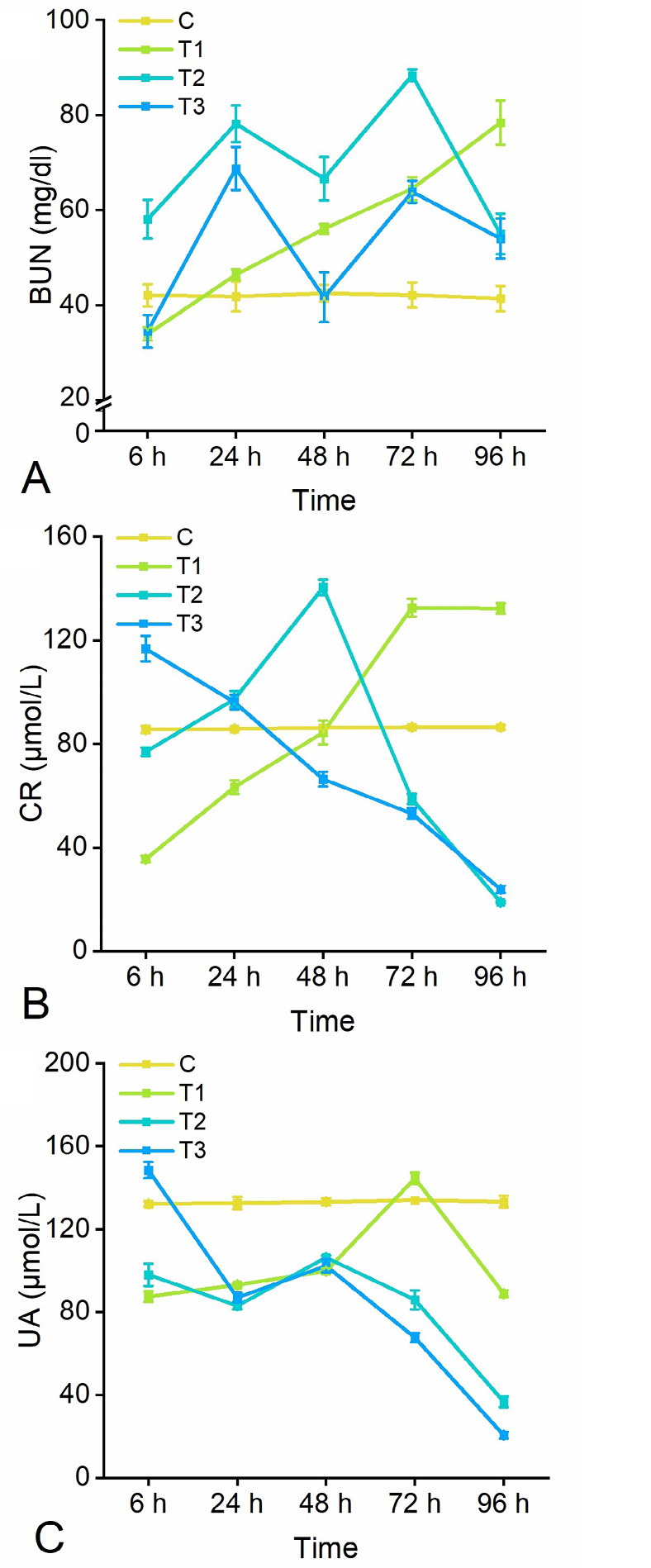
In serum UN of hybrid grouper, the T2 group was higher than the control group at 6h, and the other two treatment groups were lower than the control group. After that, the T1 group continued to increase, the T2 and the T3 group had similar trends, both of which fluctuated in the range higher than the control group, and the T2 group was always higher than the T3 group (Fig. 5A). In serum CR of hybrid grouper, only the T3 group at 6h was higher than the control group, and then continued to decrease. The trend of the T1 group was contrary to that of the T3 group, which was continues to rise. The T2 group raised at 6-48h and falled at 48-96 h (Fig. 5B). In serum UA of hybrid grouper, except that the T3 group at 6h and the T1 group at 72h were higher than the control group, all of them were lower than the control group (Fig. 5C).
Discussion
During typhoon periods, many indoor flowing water seawater fish farms adopt the strategy of feed deprivation and closing flowing water to reduce the stress response of fish caused by sudden changes in water quality. Fluctuations in coastal salinity are common, especially during the rainy season ; . Ammonia nitrogen is the inorganic nitrogen that fluctuates greatly in water, and it will change synergistically with the increase of total nitrogen during typhoon ; . In this study, we simulated water quality during typhoons. Through the analysis of histological and serum indicators, we found that juvenile hybrid grouper had a tolerance to water quality changes during typhoon.
Many grouper species are euryhaline as juveniles, and in their natural habitat along coast and estuaries, often face the challenge of sudden drops in salinity caused by heavy rains ; ; . There are many studies on salinity of juvenile groupers that show that juvenile groupers have low salinity tolerance and even better growth performance in low salinity water ; . According to the results, the salinity changes of the three treatment groups in this study did not exceed the tolerance level of juvenile hybrid grouper. Serum ions are key indicators of changes in osmotic pressure ; , especially Ca2+ and Mg2+ . In this study, although several serum ions mostly showed large fluctuations at 24-72 h, they were all equal to or about to be equal to the control group at 96 h.
Ammonia nitrogen in water environment can lead to ammonia accumulation in fish circulatory system and induce anoxic state, resulting in cell or tissue damage ; . Studies have shown that ammonium toxicity can inhibit hematopoietic function by destroying the site of red blood cell production ; . The head kidney is an important specialized hematopoietic and immune organ of teleost . However, in this study, no large amount of damage was found in the hematopoietic tissue of the head kidney, and some damage was only in a small range, about 3-5 damaged cell clusters. Some research shows that the ammonia will exchange the K + in cells, leading to the central nervous cell death, which result in the abnormal behavior of fish such as convulsions, euphoria, out of balance and coma, etc. ; . In this study, no similar phenomenon had been observed, the hybrid grouper was basically within the tolerance range of ammonia nitrogen, but short rises had been observed in serum K+ concentration. A similar result has been observed in rainbow trout due to the loss of K+ from intracellular to extracellular due to the instantaneous stimulation of ammonia nitrogen .
The analysis of blood indicators has proven to be a valuable method for analyzing the health status of aquatic animals, as these indicators provide reliable information about metabolic disorders, deficiencies and stress states prior to their appearance in clinical settings ; . External factors, such as stress, management and diseases always cause major changes in blood composition ; ; . In this study, fish blood lipid profiles changes reflected they lipid metabolism under the stress, the typhoon treatment group serum cholesterol concentration fell under the control level after rising first, that may be due to lipid transfer from synthesis site for subsequent utilization either through oxidation or a gradually restore process of lipid molecules ; . HDL helps to clear cholesterol in extrahepatic tissues, and its change under stress is inversely proportional to cholesterol, which has been confirmed in this study and Channa punctatus . High serum LDL levels are associated with stress, presumably due to changes in gene expression of some hepatic enzymes . High serum UN level in fish is usually indicative of gill and kidney dysfunction, accompanied by gill hyperplasia, which was found in this study ; ; . Electrolyte (Na+, K+, Ca2+ and P) levels indicate the operation of various homeostasis mechanisms. For example, in this study, there was a temporary increase in Ca2+. The increase in serum Ca2+ concentration may come from internal pool and from a disturbance of calcium exchanges through the gill and the intestines . Mg2+ and Zn2+ are related to the action of enzymes . Mg2+ is an activator of many enzymatic reactions (such as alkaline and acid phosphatase and hexokinase) ; . Zn2+ participates in the composition of many coenzymes . In this study, Mg2+ and Zn2+ briefly increased and then returned to normal level, which may be related to the enhancement of some enzymatic reactions caused by stress.
Acknowledgement
The study was supported by Scientific Research and Technology Development Project of Fangchenggang City (Fangke AB19008009), Central Public-interest Scientific Institution Basal Research Fund, CAFS (2020XT0602, 2020TD55) and National Key RandD Program of China (2019YFD0900800)
Statement of conflict of interest
The authors have declared no conflict of interest.
Figures
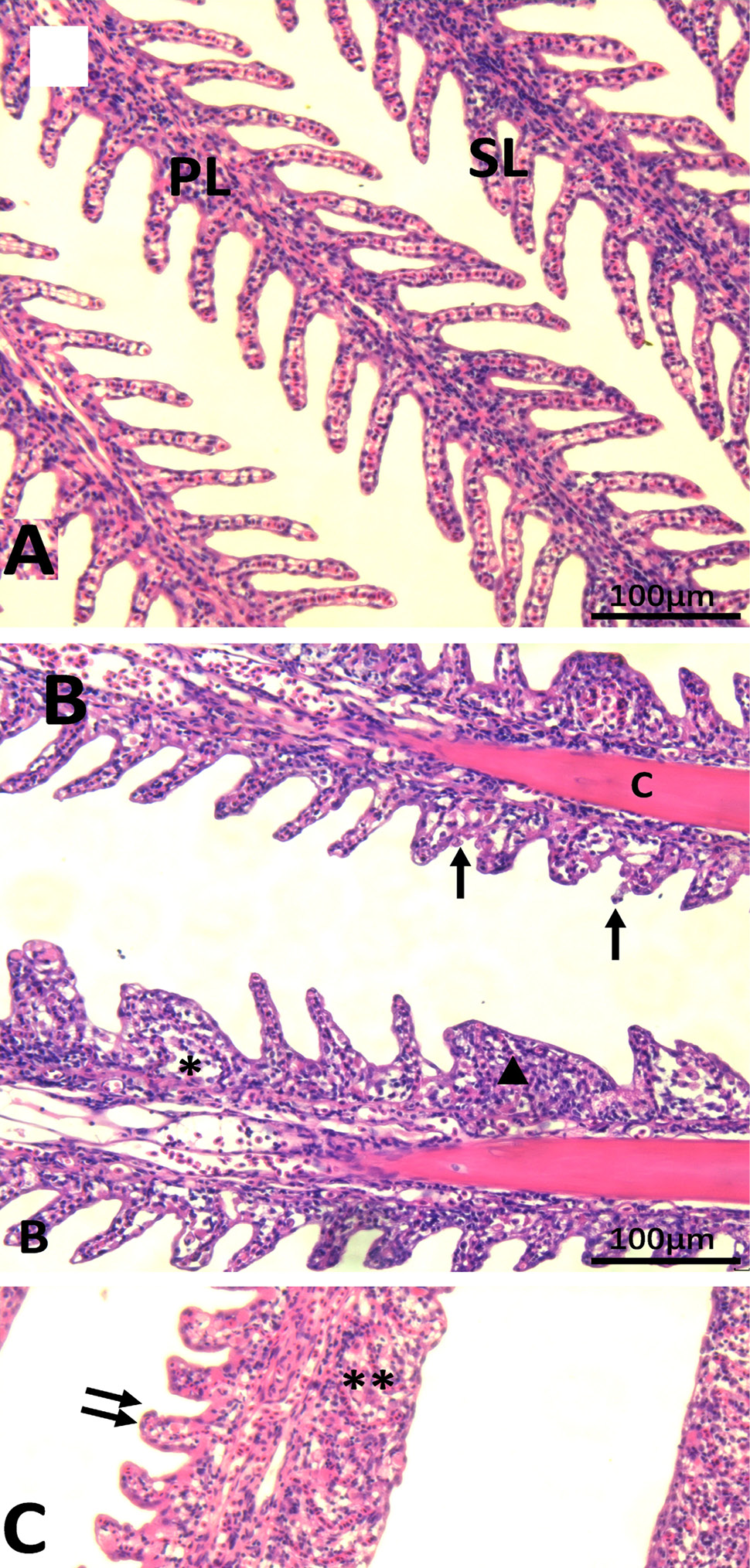
Transverse sections showing histopathology of gill(200X), A: Normal appearance (C group, 6 h); B: Hyperplasia in lamellar epithelium leading to lamellar fusion, epithelial lifting, curling of secondary lamellae; C: Hyperplasia in lamellar epithelium leading to lamellar fusion, epithelial lifting and occasional desquamation and disruption (T3 group, 96 h). Note: primary lamellae (PL), secondary lamellae (SL), epithelial hyperplasia (â–²), epithelial necrosis and desquamation (↑), curling of secondary lamellae (↑↑), epithelial lifting and oedema (*), lamellar fusion (**).
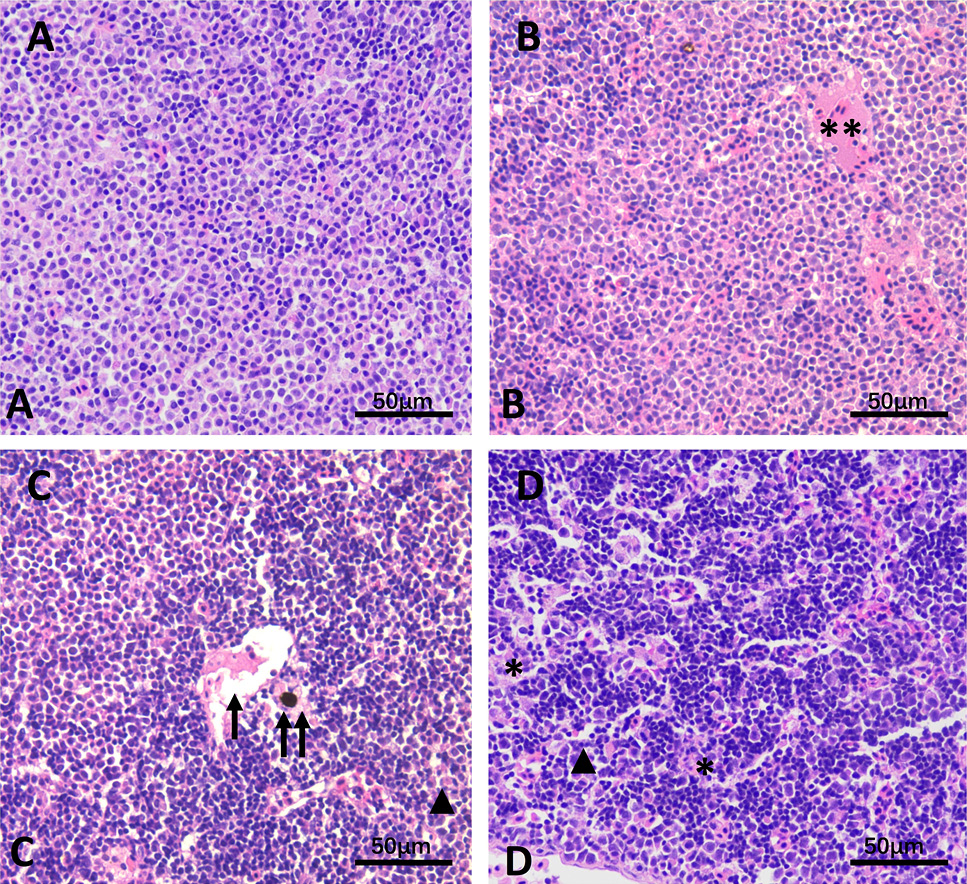
Transverse sections showing histopathology of head kidney(400X), A: Normal appearance (C group, 6 h); B: A small amount of MMCs appeared, tissue vacuoles and ambiguous cell boundaries were occasionally seen (T3 group, 6 h); C: Colloidal enlargement, tissue boundaries were occasionally seen (T2 group, 6h); D: ambiguous cell boundaries and massive necrotic cells (T1 group, 96 h). Note: ambiguous cell boundaries (â–²), tissue vacuoles (↑), MMCs distribution (↑↑), necrotic cells (*), colloidal enlargement (**).
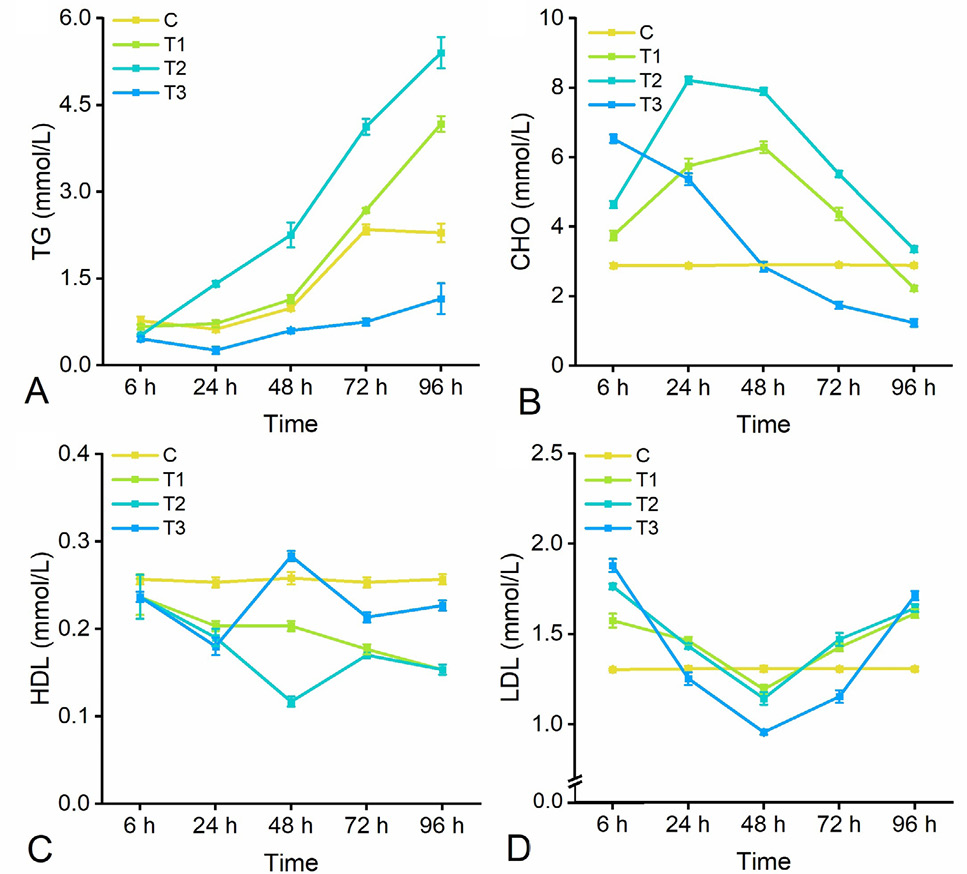
Changes of serum lipid in hybrid grouper exposed to simulating typhoon seawater for 96 h. A: Triglyceride (TG); B: cholesterol (CHO); C: High density lipoprotein cholesterol (HDL); D: Low density lipoprotein cholesterol (LDL).
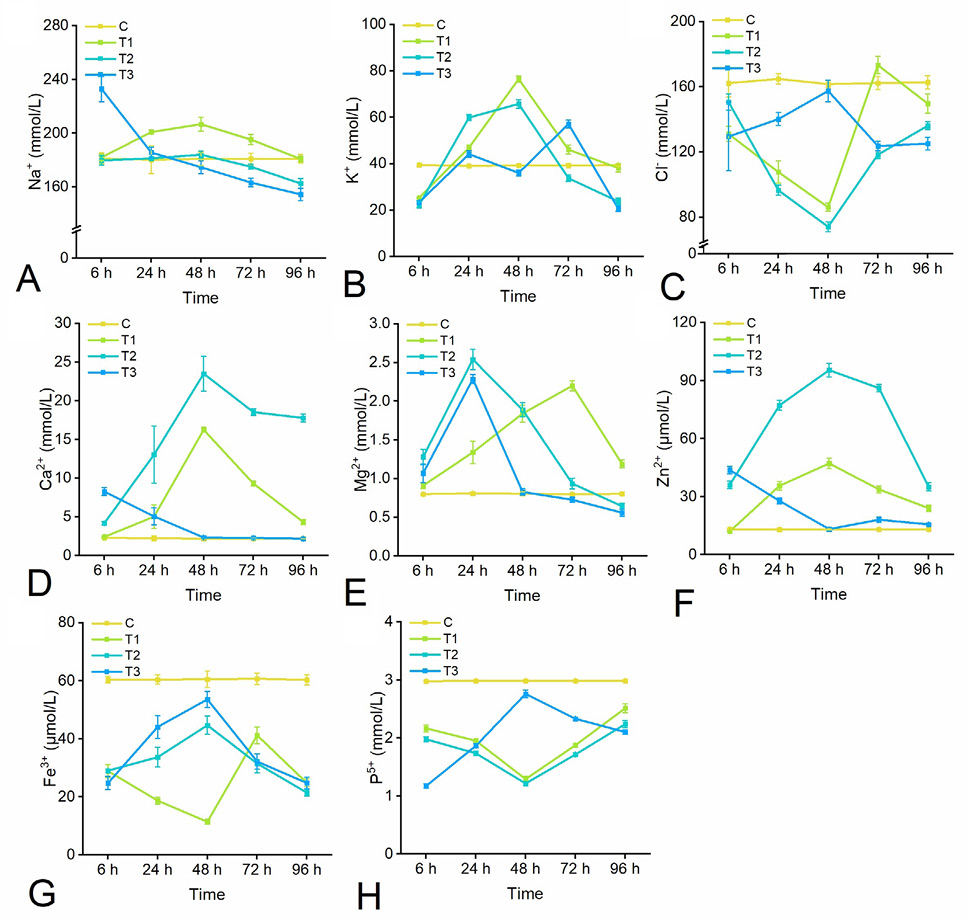
Changes of serum ions in hybrid grouper exposed to simulating typhoon seawater for 96 h. A: Na+; B: K+; C: Cl-; D: Ca2+; E: Mg2+; F: Zn2+; G: Fe3+; H: P5+.
References
- Akbary, P., 2014. Consideration of blood serum biochemical parameters of yellow fin sea bream (Acantopagrus latus Houttuyn, 1782) and orange-spotted grouper (Epinephelus coioides Hamilton, 1822). Adv. Biol. Chem., 4: 407-413. https://doi.org/10.4236/abc.2014.46046[CrossRef]
- Ali, H., Rezvan, K., and Majid, M.K., 2019. The study of metabolic and ionic factors in the blood serum of young Acipenser persicus caught from Guilan coastal waters. Int. J. Fish. aquatic. Stud., 7: 195-200.
- Bahmani, M., Kazemi, R., and Donskaya, P., 2001. A comparative study of some hematological features in young reared sturgeons (Acipenser persicus and Huso huso). Fish Physiol. Biochem., 24: 135-140. https://doi.org/10.1023/A:1011911019155[CrossRef]
- Bjørgen, H., and Koppang, E.O., 2021. Anatomy of teleost fish immune structures and organs. Immunogenetics, 73: 53-63. https://doi.org/10.1007/s00251-020-01196-0[CrossRef]
- Camargo, J.A., and Alonso, Á., 2006. Ecological and toxicological effects of inorganic nitrogen pollution in aquatic ecosystems: A global assessment. Environ. Int., 32: 831-849. https://doi.org/10.1016/j.envint.2006.05.002[CrossRef]
- Das, S.K., Xiang, T.W., Noor, N.M., De, M., Mazumder, S.K., and Goutham-Bharathi, M.P., 2021. Temperature physiology in grouper (Epinephelinae: Serranidae) aquaculture: A brief review. Aquac. Rep., 20: 100682. https://doi.org/10.1016/j.aqrep.2021.100682[CrossRef]
- Davidson, J., Good, C., Welsh, C., and Summerfelt, S.T., 2014. Comparing the effects of high vs. low nitrate on the health, performance, and welfare of juvenile rainbow trout Oncorhynchus mykiss within water recirculating aquaculture systems. Aquac. Engin., 59: 30-40. https://doi.org/10.1016/j.aquaeng.2014.01.003[CrossRef]
- Dennis, L.P., Ashford, G., Thai, T.Q., Van-In, V., Ninh, N.H., and Elizur, A., 2020. Hybrid grouper in Vietnamese aquaculture: Production approaches and profitability of a promising new crop. Aquaculture, 522: 735108. https://doi.org/10.1016/j.aquaculture.2020.735108[CrossRef]
- Emam, M.A., Shourbela, R.M., El-Hawarry, W.N., Abo-Kora, S.Y., Abdel-Monem Gad, F., Abd El-latif, A.M., and Dawood, M.A.O., 2021. Effects of Moringa oleifera aqueous extract on the growth performance, blood characteristics, and histological features of gills and livers in Nile tilapia. Aquacult. Fish., 12: 1-12. https://doi.org/10.1016/j.aaf.2021.12.011[CrossRef]
- Evans, D.H., Piermarini, P.M., and Choe, K.P., 2005. The multifunctional fish gill: Dominant site of gas exchange, osmoregulation, acid-base regulation, and excretion of nitrogenous waste. Physiol. Rev., 1: 77-97. https://doi.org/10.1152/physrev.00050.2003[CrossRef]
- FAO, 2021. Fish Stat J, a tool for fishery statistics analysis. FAO Fisheries and Aquaculture Department, FIPS – Statistics and information, Rome.
- Fu, Z., Qin, J.G., Ma, Z., and Yu, G., 2021. Acute acidification stress weakens the head kidney immune function of juvenile Lates calcarifer. Ecotoxol. environ. Saf., 225: 112712. https://doi.org/10.1016/j.ecoenv.2021.112712[CrossRef]
- Fu, Z., Zhou, S., Yu, G., Yang, R., Han, M., and Ma, Z., 2021. Influence of non-protein diets on hepatic metabolism and endocrine in barramundi (Lates calcarifer). Front. Mar. Sci., 8: 386-395. https://doi.org/10.3389/fmars.2021.649747[CrossRef]
- Gao, X., Fei, F., Huang, B., Meng, X.S., Zhang, T., Zhao, K., Chen, H., Xing, R., and Liu, B., 2021. Alterations in hematological and biochemical parameters, oxidative stress, and immune response in Takifugu rubripes under acute ammonia exposure. Comp. Biochem. Physiol. C Toxicol. Pharmacol., 243: 108978. https://doi.org/10.1016/j.cbpc.2021.108978[CrossRef]
- Graham, D.E., Graupner, M., Xu, H., and White, R.H., 2001. Identification of coenzyme M biosynthetic 2-phosphosulfolactate phosphatase. Eur. J. Biochem., 268: 5176-5188. https://doi.org/10.1046/j.0014-2956.2001.02451.x[CrossRef]
- Herbeck, L.S., Unger, D., Krumme, U., Liu, S.M., and Jennerjahn, T.C., 2011. Typhoon-induced precipitation impact on nutrient and suspended matter dynamics of a tropical estuary affected by human activities in Hainan, China. Estuar. Coast. Shelf. Sci., 93: 375-388. https://doi.org/10.1016/j.ecss.2011.05.004[CrossRef]
- Hong, W., and Zhang, Q., 2003. Review of captive bred species and fry production of marine fish in China. Aquaculture, 227: 305-318. https://doi.org/10.1016/S0044-8486(03)00511-8[CrossRef]
- Ibarz, A., Padrós, F., Gallardo, M.Á., Fernández-Borràs, J., Blasco, J., and Tort, L., 2010. Low-temperature challenges to gilthead sea bream culture: Review of cold-induced alterations and winter syndrome. Rev. Fish Biol. Fish., 20: 539-556. https://doi.org/10.1007/s11160-010-9159-5[CrossRef]
- Javed, M., Ahmad, M.I., Usmani, N., and Ahmad, M., 2017. Multiple biomarker responses (serum biochemistry, oxidative stress, genotoxicity and histopathology) in Channa punctatus exposed to heavy metal loaded waste water. Sci. Rep. U. K., 7: 1675. https://doi.org/10.1038/s41598-017-01749-6[CrossRef]
- Jiang, Y., Wang, J., Han, T., Li, X., and Hu, S., 2015. Effect of dietary lipid level on growth performance, feed utilization and body composition by juvenile red spotted grouper (Epinephelus akaara). Aquacult. Int., 23: 99-110. https://doi.org/10.1007/s10499-014-9801-7[CrossRef]
- Kim, J., Cho, J., Kim, S., and Hur, Y.B., 2020. Toxic effects of waterborne ammonia exposure on hematological parameters, oxidative stress and stress indicators of juvenile hybrid grouper, Epinephelus lanceolatus ♂ × Epinephelus fuscoguttatus ♀. Environ. Toxicol. Phar., 80: 103453. https://doi.org/10.1016/j.etap.2020.103453[CrossRef]
- Kim, J., Park, H., Hwang, I., Han, J., Kim, D., Oh, C.W., Lee, J.S., and Kang, J., 2017. Alterations of growth performance, hematological parameters, and plasma constituents in the sablefish, Anoplopoma fimbria depending on ammonia concentrations. Fish. aquat. Sci., 20: 4. https://doi.org/10.1186/s41240-017-0049-9[CrossRef]
- Kim, S., Kim, J., Park, M., Hwang, S.D., and Kang, J., 2015. The toxic effects of ammonia exposure on antioxidant and immune responses in rockfish, Sebastes schlegelii during thermal stress. Environ. Toxicol. Phar., 40: 954-959. https://doi.org/10.1016/j.etap.2015.10.006[CrossRef]
- Kojima, M., Masui, T., Nemoto, K., and Degawa, M., 2004. Lead nitrate-induced development of hypercholesterolemia in rats: Sterol-independent gene regulation of hepatic enzymes responsible for cholesterol homeostasis. Toxicol. Lett., 154: 35-44. https://doi.org/10.1016/j.toxlet.2004.06.010[CrossRef]
- Kumar, A., Mishra, D.R., Equeenuddin, S.M., Cho, H.J., and Rastogi, G., 2017. Differential impact of anniversary-severe cyclones on the water quality of a tropical coastal lagoon. Estuar. Coast., 40: 317-342. https://doi.org/10.1007/s12237-016-0172-3[CrossRef]
- Lam, K., Tsui, T., Nakano, K., and Randall, D.J., 2005. Physiological adaptations of fishes to tropical intertidal environments. Academic press. Fish Physiol., pp. 501-581. https://doi.org/10.1016/S1546-5098(05)21011-7[CrossRef]
- Liu, Y., Chen, T., Li, M., Xu, H., Jia, A., Zhang, J., and Wang, J., 2015. 1H NMR based metabolomics approach to study the toxic effects of dichlorvos on goldfish (Carassius auratus). Chemosphere, 138: 537-545. https://doi.org/10.1016/j.chemosphere.2015.07.030[CrossRef]
- Mishra, A.K., and Mohanty, B., 2008. Acute toxicity impacts of hexavalent chromium on behavior and histopathology of gill, kidney and liver of the freshwater fish, Channa punctatus (Bloch). Environ. Toxicol. Phar., 26: 136-141. https://doi.org/10.1016/j.etap.2008.02.010[CrossRef]
- Mishra, A.K., and Mohanty, B., 2009. Chronic exposure to sublethal hexavalent chromium affects organ histopathology and serum cortisol profile of a teleost, Channa punctatus (Bloch). Sci. Total Environ., 407: 5031-5038. https://doi.org/10.1016/j.scitotenv.2009.05.042[CrossRef]
- Olla, B.L., Davis, M.W., and Ryer, C.H., 1998. Understanding how the hatchery environment represses or promotes the development of behavioral survival skills. B. Mar. Sci., 62: 531-550.
- Olorunniji, F.J., Igunnu, A., Adebayo, J.O., Arise, R.O., and Malomo, S.O., 2007. Cofactor interactions in the activation of tissue non-specific alkaline phosphatase: Synergistic effects of Zn2+ and Mg2+ ions. Biokemistri, 19: 43-48. https://doi.org/10.4314/biokem.v19i2.56422[CrossRef]
- Paerl, H.W., 2018. Mitigating toxic planktonic cyanobacterial blooms in aquatic ecosystems facing increasing anthropogenic and climatic pressures. Toxins, 10: 76-92. https://doi.org/10.3390/toxins10020076[CrossRef]
- Pandey, R.K., Verma, D.K., and Das, V.K., 2020. Chlorpyrifos induced disruption in serum Ca2+, Mg2+ and Pi electrolytes level in freshwater catfish Heteropneustes fossilis (Bloch). Sci. Temper., 11: 67-73.
- Park, Y.J., Yoon, N.J., and Kyu, L.H., 2018. Effects of low salinity on growth, survival, and stress response in the longtooth grouper, Epinephelus bruneus and E. bruneus× E. lanceolatus hybrid grouper. Israel. J. Aquacult., 70: 1-11. https://doi.org/10.46989/001c.20938[CrossRef]
- Pereira, L.C.C., Oliveira, S.M.O.D., Costa, R.M.D., Costa, K.G.D., and Vila-Concejo, A., 2013. What happens on an equatorial beach on the Amazon coast when La Niña occurs during the rainy season? Estuar. Coast. Shelf Sci., 135: 116-127. https://doi.org/10.1016/j.ecss.2013.07.017[CrossRef]
- Petitgas, P., Rijnsdorp, A.D., Dickey-Collas, M., Engelhard, G.H., Peck, M.A., Pinnegar, J.K., Drinkwater, K., Huret, M., and Nash, R.D.M., 2013. Impacts of climate change on the complex life cycles of fish. Fish. Oceanogr., 22: 121-139. https://doi.org/10.1111/fog.12010[CrossRef]
- Pierre, S., Gaillard, S., Prévot-D’Alvise, N., Aubert, J., Rostaing-Capaillon, O., Leung-Tack, D., and Grillasca, J., 2008. Grouper aquaculture: Asian success and mediterranean trials. Aquat. Conserv. Mar. Freshw. Ecosyst., 18: 297-308. https://doi.org/10.1002/aqc.840[CrossRef]
- Rimmer, M.A., and Glamuzina, B., 2019. A review of grouper (Family Serranidae: Subfamily Epinephelinae) aquaculture from a sustainability science perspective. Rev. Aquacult., 11: 58-87. https://doi.org/10.1111/raq.12226[CrossRef]
- Russell, I.C., Aprahamian, M.W., Barry, J., Davidson, I.C., Fiske, P., Ibbotson, A.T., Kennedy, R.J., Maclean, J.C., Moore, A., Otero, J., Potter, T.E.C.E., and Todd, C.D., 2012. The influence of the freshwater environment and the biological characteristics of Atlantic salmon smolts on their subsequent marine survival. ICES J. Mar. Sci., 69: 1563-1573. https://doi.org/10.1093/icesjms/fsr208[CrossRef]
- Ruyet, J.P., Lamers, A., Roux, A.L., Sévère, A., Boeuf, G., and Mayer-Gostan, N., 2003. Long-term ammonia exposure of turbot: Effects on plasma parameters. J. Fish Biol., 62: 879-894. https://doi.org/10.1046/j.1095-8649.2003.00073.x[CrossRef]
- Schneider, G., and Zeppezauer, M., 1983. Kinetics and mechanisms of the recombination of Zn2+, Co2+, and Ni2+ with the metal-depleted catalytic site of horse liver alcohol dehydrogenase. J. Inorg. Biochem., 18: 59-69. https://doi.org/10.1016/0162-0134(83)85040-5[CrossRef]
- Sogard, S.M., 1997. Size-selective mortality in the juvenile stage of teleost fishes: A review. B. Mar. Sci., 60: 1129-1157.
- Sutthinon, P., Thongprajukaew, K., Saekhow, S., and Ketmanee, R., 2015. Juvenile hybrid grouper (Epinephelus coioides × E. lanceolatus) are euryhaline and can grow in a wide range of salinities. Aquacult. Int., 23: 671-682. https://doi.org/10.1007/s10499-014-9845-8[CrossRef]
- Svobodová, Z., Vykusová, B., Modrá, H., Jarkovský, J., and Smutná, M., 2006. Haematological and biochemical profile of harvest-size carp during harvest and post-harvest storage. Aquacult. Res., 37: 959-965. https://doi.org/10.1111/j.1365-2109.2006.01511.x[CrossRef]
- Thangam, Y., Perumayee, M., Jayaprakash, S., Umavathi, S., and Basheer, S.K., 2014. Studies of ammonia toxicity on haematological parameters to freshwater fish Cyprinus carpio (common carp). Int. J. Curr. Mocrobiol. appl. Sci., 3: 535-542.
- Tucker, J.W., and Kennedy, S.B., 2001. Comparison of some developmental, nutritional, behavioral, and health factors relevant to stocking of striped mullet (Mugilidae), sheepshead (Sparidae), common snook (Centropomidae), and nassau groupers (Serranidae). Ecol. Aquac. Species enhance. Stocks, 30: 191-194.
- Valiela, I., Camilli, L., Stone, T., Giblin, A., Crusius, J., Fox, S., Barth-Jensen, C., Monteiro, R.O., Tucker, J., Martinetto, P., and Harris, C., 2012. Increased rainfall remarkably freshens estuarine and coastal waters on the Pacific coast of Panama: Magnitude and likely effects on upwelling and nutrient supply. Glob. Planet. Change, 92-93: 130-137. https://doi.org/10.1016/j.gloplacha.2012.05.006[CrossRef]
- Vaseem, H., and Banerjee, T.K., 2013. Contamination of the River Ganga and its toxic implication in the blood parameters of the major carp Labeo rohita (Ham). Environ. Sci. Pollut. R., 20: 5673-5681. https://doi.org/10.1007/s11356-013-1570-8[CrossRef]
- Vedel, N.E., Korsgaard, B., and Jensen, F.B., 1998. Isolated and combined exposure to ammonia and nitrite in rainbow trout (Oncorhynchus mykiss): effects on electrolyte status, blood respiratory properties and brain glutamine/ glutamate concentrations. Aquat. Toxicol., 41: 325-342. https://doi.org/10.1016/S0166-445X(97)00071-4[CrossRef]
- Walaas, E., Walaas, O., Bridgwater, R.J., Briggs, T., Haslewood, G., and Flood, H., 1962. The activation of muscle hexokinase by divalent metal ions. Acta Chem. Scand., 16: 1682-1694. https://doi.org/10.3891/acta.chem.scand.16-1682[CrossRef]
- Wang, X., Wang, W., and Tong, C., 2016. A review on impact of typhoons and hurricanes on coastal wetland ecosystems. Acta Ecol. Sin., 36: 23-29. https://doi.org/10.1016/j.chnaes.2015.12.006[CrossRef]
- Wang, Z., Dong, Z., Yang, Y., Wang, J., Yang, T., Chen, X., Liang, L., and Mu, W., 2021. Histology, physiology, and glucose and lipid metabolism of Lateolabrax maculatus under low temperature stress. J. therm. Biol., 104: 103161. https://doi.org/10.1016/j.jtherbio.2021.103161[CrossRef]
- Xu, C., Li, E., Suo, Y., Su, Y., Lu, M., Zhao, Q., Qin, J.G., and Chen, L., 2018. Histological and transcriptomic responses of two immune organs, the spleen and head kidney, in Nile tilapia (Oreochromis niloticus) to long-term hypersaline stress. Fish Shellf. Immun., 76: 48-57. https://doi.org/10.1016/j.fsi.2018.02.041[CrossRef]
- Xu, Z., Cao, J., Qin, X., Qiu, W., Mei, J., and Xie, J., 2021. Toxic effects on bioaccumulation, hematological parameters, oxidative stress, immune responses and tissue structure in fish exposed to ammonia nitrogen: A review. Animals, 11: 3304-3323. https://doi.org/10.3390/ani11113304[CrossRef]
- Zhang, M., Li, M., Wang, R., and Qian, Y., 2018. Effects of acute ammonia toxicity on oxidative stress, immune response and apoptosis of juvenile yellow catfish Pelteobagrus fulvidraco and the mitigation of exogenous taurine. Fish Shellf. Immun., 79: 313-320. https://doi.org/10.1016/j.fsi.2018.05.036[CrossRef]
- Zhao, H., Tang, D., and Wang, D., 2009. Phytoplankton blooms near the Pearl River Estuary induced by Typhoon Nuri. J. Geophys. Res. Oceans, 114: 1-9. https://doi.org/10.1029/2009JC005384[CrossRef]
- Zhou, J., Li, N., Wang, H., Mu, C., and Wang, C., 2020. Effects of salinity on the ions important and sodium-potassium ATPase in osmoregulation, cortisol, amino acids, digestive and immune enzymes in Scylla paramamosain during indoor overwintering. Aquacult. Res., 51: 4173-4182. https://doi.org/10.1111/are.14759[CrossRef]
Services
Article usage statistics
Loading…