Zingiberaceae Plants as Potential Feed Additives in Aquaculture: A Review
· · · · · · · ·
Affiliations & Notes ⌄
1Higher Institute Centre of Excellence (HICoE), Institut Marin Borneo, Universiti Malaysia Sabah, Jalan UMS, 88400 Kota Kinabalu, Sabah, Malaysia
2Biotechnology Research Institute, Universiti Malaysia Sabah, Jalan UMS, 88400 Kota Kinabalu, Sabah, Malaysia
3Aquaculture Research Institute, Kindai University, Uragami, Nachikastuura, Wakayama 649-5145, Japan
4College of Marin Science, Guangxi Key Laboratory of Beibu Gulf Biodiversity Conservation, Beibu Gulf Ocean Development Research Center, Beibu Gulf University, Beibu Gulf Marine Ecological Environment Field Observation and Research Station of Guangxi, Qinzhou, Guangxi, China. *Correspondence | Annita Seok Kian Yong, Higher Institute Centre of Excellence (HICoE), Institut Marin Borneo, Universiti Malaysia Sabah, Jalan UMS, 88400 Kota Kinabalu, Sabah, Malaysia
This review consolidates current scientific evidence supporting the potential of Zingiberaceae plants as natural feed additives in aquaculture, emphasizing their functional roles in enhancing fish health, growth performance, and disease resistance.
Overall, the scientific validation presented in this review highlights Zingiberaceae plants as promising, natural, and safe alternatives to conventional feed additives.
Rather than broadly concluding that Zingiberaceae plants are effective, review emphasize that certain species and specific preparations have demonstrated promising effects under particular aquaculture conditions.
Addressing these aspects will accelerate the Zingiberaceae-based feed additives from experimental research to practical implementation, reinforcing sustainable aquaculture development and ensuring safe, high-quality seafood.
Selected from the article's own text.
Abstract
Aquaculture plays an important role in meeting the growing global demand for sustainable protein sources. However, the intensification of aquaculture systems has increased the risk of disease outbreaks, environmental stress, and excessive use of antibiotics and chemotherapeutic agents. Natural feed additives are gaining attention in aquaculture as sustainable alternatives to improve fish health, production efficiency, and sustainable seafood production. Zingiberaceae family have emerged as promising functional feed additives due to their rich content of bioactive compounds, including phenolics, flavonoids, terpenoids, and essential oils. Previous reports revealed that Zingiberaceae in vitro and in vivo studies demonstrating antioxidant, antimicrobial, and immunomodulatory activities with effectiveness in feeding trials is associated with growth performance, feed utilization, immune responses, and disease resistance, particularly in high-value species such as grouper (Epinephelus spp.). Additionally, this review critically evaluates the scientific evidence supporting the application of Zingiberaceae plants in aquaculture, encompassing plant-derived powders, extracts, and essential oils. Overall, this review highlights the potential of Zingiberaceae plants as natural, safe, and effective feed additives that can reduce antibiotic dependence, improve food safety, and contribute to sustainable aquaculture development and long-term seafood security.
Aquaculture has emerged as a critical component of the global food system and a vital solution for enhancing food security. Wild fish populations cannot sustain the world’s growing population in the future. Therefore, aquaculture offers a significant contribution on the food security by ensuring a steady and reliable food stock . Additionally, aquaculture plays an important role in controlling and scaling food production systems by providing an alternative and sustainable source of seafood. It helps stabilize fish populations affected by human activities such as overfishing and coastal development, disease outbreaks caused by pathogen infections, and seasonal variations associated with global warming. Furthermore, aquaculture can reduce pressure on wild fish stocks . Based on Food and Agriculture Organization (FAO) in 2024 report, the global aquaculture production shows a clear increasing trend. The latest trend from 2020 to 2022, the total aquaculture production increased steadily from 87.7 to 94.4 million tonnes. This rapid expansion has been driven by the intensification of farming practices to meet the growing global demand for seafood. However, intensification particularly high stocking density, has introduced significant challenges including environmental stress, reduced growth performance, disease outbreaks, and increased mortality . These challenges negatively influence the aquaculture productivity. Therefore, in recent years, the incorporation of functional feed additives such as probiotics , prebiotics , enzymes , and amino acids (Salmanca et al., 2025) effective to enhance growth performance, immune system and disease resistance.
The application of the natural feed additives has gained attention as a sustainable and eco-friendly alternative to synthetic growth promoters. Natural additives derived from plants, herbs, microorganisms, and algae contain bioactive compounds such as phenolics, flavonoids, alkaloids, and essential oils that can enhance growth performance, improve immunity, and increase resistance to pathogens . Their therapeutic effects help in controlling bacterial, viral, and parasitic infections, reducing oxidative stress, and promoting tissue repair by strengthening innate and adaptive immune systems . Researchers have intensified efforts to explore the potential natural products such as Zingiberaceae plants as an alternative dietary supplement that enhance growth performance and the immune system of cultured fish instead of chemotherapeutic agents. Zingiberaceae plants, commonly known as the ginger family, comprises a diverse group of aromatic perennial herbs predominantly found mainly in tropical and subtropical region in Southeast Asia. Indonesia, Malaysia, Singapore, Brunei, Philippines and Papua New Guinea represent the center of diversity for this family . The family comprises about more than 50 genera and over 1,300 species which were used traditionally in food, medicine and cosmetic. These plants have been used in traditional medicine particularly rhizome part. The rhizome of Zingiber Zerumbet, Zingiber montanum and Zingiber officinale are typically used to treat diarrhea, stomachache and flatulence . Beyond their medicinal applications, members of Zingiberaceae family are also valued for their culinary uses as spices and herbs, as well as their role in the production of natural dyes. The leaves of some Zingiberaceae species are also of culinary importance. For example, the leaves of Kaempferia galanga and Curcuma longa are commonly used in spicy savory dishes in Peninsular Malaysia, while Elettariopsis slahmong has been reported as a traditional flavoring used by certain local communities .
In aquaculture research, Zingiberaceae plants have been widely investigated as feed additives to improve fish’s growth, immune system and disease resistance with minimizing adverse effects. The application of Zingiberaceae plants as feed additives in aquaculture offers numerous positive effects on fish health and production performance. Their rich bioactive composition comprising phenolics, flavonoids, terpenoids, and essential oils provides strong antioxidant, antimicrobial, and immunostimulatory properties . Table 1 summarizes bioactive compounds present in Zingiberaceae plants and their functional properties. However, the efficacy of these plants can vary depending on factors such as plant species, plant part, dosage levels, extraction methods and the species of aquatic organisms. These variation are related to differences in the composition and concentration of bioactive compound present in Zingiberaceae plant. Numerous studies on freshwater fish (e.g., Clarias gariepinus, Oreochromis niloticus, Cyprinus carpio) and marine crustaceans (e.g., Litopenaeus vannamei, Penaeus monodon) have reported generally positive outcomes following dietary inclusion of Zingiberaceae. Experimental feeding trials have demonstrated that these additives enhance feed utilization, stimulate immune responses, and improve resistance against bacterial and parasitic infections, with effects observed across a range of plant species and plant-derived components (e.g., leaves and rhizomes). For instance, Z. officinale powder at 1% inclusion promoted growth and reduced the microbial load of the fish , C. longa leaf powder at 2.5% inclusion resulted better growth and immunity against Aeromonas hydrophila while C. longa rhizome at 1% inclusion improved the haematological parameter and improved the immune response by increasing the level of serum . Zingiberaceae-derived products, administered as powders, extracts, or essential oils, have been proposed as safe and natural alternatives to synthetic antibiotics and chemical growth promoters. These additives have been reported to improve growth performance, feed conversion efficiency, and survival rates in various aquaculture species (Asimi et al., 2020). This trend suggests that the efficacy of Zingiberaceae-derived products may depend on the bioavailability of their active compounds, with extracts providing more concentrated bioactive constituents, whereas powders retain fiber and associated micronutrients that may contribute to synergistic effects. However, the practical use of Zingiberaceae a based additives requires a standard procedure based on variation in plant species, extraction method, and dosage, which can influence the efficiency and safety outcomes.
Table 1: Bioactive phytochemical and their properties found in Zingiberaceae plants.
Plant species
Plant part
Identified compound
Properties
References
Zingiber officinale
Rhizome (essential oil)
Α-curcumene (8.38%), geranial (28%), and geraniol (7.37%)
Antibacterial activities inhibiting growth of pathogen and microbs.
This review aims to provide an overview of the applications of Zingiberaceae plants in aquaculture, focusing on their roles in enhancing health status, immune responses, and improving growth performance. It also highlights the effectiveness of additives depend on the species types, dosage, extraction method, knowledge gaps, and future perspectives for integrating Zingiberaceae based additives into sustainable aquaculture practices. Information of this review will benefit to the researchers and feed formulator industry as a guideline for improving aquatic animal health through natural bioactive sources.
Literature research
According to the previous studies, a total of ninety nine articles (n= 88), published between 1995 to 2026 have been selected to review in this article from scientific databases including Elsevier, Springer Nature, MDPI, Wiley Online Library, and Google Scholar with keywords of ‘Zingiberaceae feed additives in aquaculture’, ‘bioactive compound in Zingiberaceae’, and ‘Zingiberaceae plant immunostimulants’. Review articles were providing the relevant background information on phytochemistry, extraction methods, and mechanisms of action. The selected literature was then categorized into five thematic sections: Zingiberaceae efficacy, bioactive compounds, feeding trials, inclusion levels, and pathogen challenge tests. Future directions and research recommendations are discussed in the final section.
The benefits of Zingiberaceae-derived phytochemicals in aquaculture
Zingiberaceae family plays significant role in aquaculture focusing in the fish growth and health. To date, the potential of Zingiberaceae family specifically on Aframomum melegueta, Etlingera elatior, and Z. officinale previously documented.
According to a recent study by Osisienemo et al. (2026), A. melegueta seed and fruit enhanced the fish growth and immunity. These parts contain Urs-12-en-3-ol, acetate, (3β) that responsible to inhibition of inflammation signal, tumor necrosis factor-alpha (TNF-α) and Interleukin-6 (IL-6) by downregulating NF-kB signalling pathway . These cytokines associated with immune response towards tissue injury and infection.
For fish growth and health associated with nutrient absorption, E. elatior flower possesses bioactive compounds like, terpene and zingiberene that suggested plays important role in digestion and absorption . As a result, African catfish (C. gariepinus) growth and health improved due to feed utilization specifically on the intake of amino acids ; .
Majority of the previous studies performed Z. officinale based on the significant medicinal value of the rhizome part. Z. officinale rhizome reported contains saponins, tannins, flavonoids, and polyphenols that enhanced the immune system of Nile tilapia (O. niloticus) improved, suggesting these compounds enhanced the immune system of fish against pathogenic infection ; . Other factors might be due to the reduction of total lipids resulting by increasing immunoglobulin M (IgM) level ; ; ; ; Şahan et al., 2016), and nutrient absorption associated with healthy digestive tract ; . Similar study by Rawat et al. (2022) revealed the improvement of rohu (Labeo rohita) hematological parameters such as red blood cells (RBCs), white blood cells (WBCs), hemoglobin (Hb), hematocrit (Ht), and superoxide dismutase (SOD). These parameters might imporved due to the presence of saponins, gingerols, shogaols, paradols, and zingerone in Z. officinale rhizome. Saponins reported with antihyperlipidemic activity , while gingerols, shogaols, paradols, and zingerone potentially reduced blood glucose and scavenging activity ; . Other parts such as leaves and skins performed on tambaqui and catfish, respectively. Interestingly, the respective parts affecting the effectiveness of Z. officinale towards specific fish species. A study by Monteiro et al. (2021) revealed the essential oil derived from Z. officinale leaves and rhizome did not significantly improve on the Colossoma macropomum growth with concentrations of 0.625 and 1.25 g/kg; 1.25 and 5.0 g/kg; 1.25 and 5.0 g/kg in the diet, respectively. The essential oils content majorly compounds of geranial (23.2 %), neral (16.7 %), 1.8-cineol (15.8 %), and camphene (11.3 %). Z. officinale essential oil did not produce significant improvements in the growth or survival of tambaqui (Colossoma macropomum) under the specific experimental conditions tested. Therefore, further studies are needed to optimize the concentration and treatment duration to identify an effective therapeutic window for managing diseases. In contrast, the treatment of Z. officinale outer layer (skin) improved catfish (Clarias batrachus) growth, feed utilisation, immunity, serum biochemistry and haematological health . The presence of gingerols, shogaols, paradols and zingerone compounds in skin might enhanced the insulin production and immune response via alkaline phosphatase (ALP) and retinoblastoma protein (RB) activities ; ; ; Hwang et al., 2013; .
Zingiberaceae additives in fish diet
Feeding trials are one of the approaches to evaluate the growth performance based on weight gain (WG) and specific growth rate (SGR) while inclusion level refers to a specific amount of concentration of feed additive administrated in the diet of cultured aquatic species . The optimal inclusion level depending on the plant species and fish physiology. To date, Zingiberaceae species such as A. galanga, C. longa, and Z. officinale have been performed in aquaculture. Additionally, the formulation also showed promising in aquafeed.
Alpinia galanga
To date, the treatment of A. galanga influences the growth, nutritional, and physiological responses of the Nile tilapia (O. niloticus). According to Zaki et al. (2016), concentration of 5 g/kg was the optimal additive concentration among the 10, and 20 g/kg diets. At a concentration of 5 g/kg, fish with an initial weight of 11.31 g showed significant improvements in final weight gain (19.79 g), growth rate (174.96%), SGR (1.35% day⁻¹), nutritional values [feed conversion ratio (FCR) = 1.95 and protein efficiency ratio (PER) = 1.75], and physiological responses, including protein (7.83 g/dl), lipid (6.85 g/dl), and haemoglobin levels (7.85 g/dl). Another study by Chaweepack et al. (2015), evaluating the effect of A. galanga extract on the growth performance and resistance to Vibrio harveyi and white spot disease in Pacific white shrimp (L. vannamei). Although there is no significant difference between shrimp fed galangal supplemented diets and those in the control group in terms of growth performance, however, galangal supplementation significantly enhanced disease resistance. Shrimp fed diets supplemented with A. galanga exhibited a significantly enhanced ability to clear bacteria from the hemolymph within 3 hours following infection with V. harveyi. These benefits improved overall farm profitability by reducing the severe economic losses associated with disease outbreaks in shrimp aquaculture. In addition, galangal supplementation serve as a low-cost preventive strategy that reduces mortality, lowers dependence on synthetic antibiotics, and supports the production of safer, residue-free aquaculture products. Moreover, A. galanga extract enhanced survival rates in shrimp infected with White Spot Syndrome Virus (WSSV), suggesting potential antiviral and immunoprotective effects. In addition to improved survival, nested PCR analysis reported in the study indicated reduced White Spot Syndrome Virus (WSSV) detection in treated shrimp, supporting the antiviral activity. These findings highlight the potential protective role of galangal as both an antibacterial and antiviral agent in enhancing disease resistance in shrimp.
Curcuma longa
Best of knowledge, C. longa incorporated into the fish diet with highest inclusive level reported. A study by Adeshina et al. (2017) fed 3% C. longa to African catfish (C. gariepinus) resulting WG and SGR with 54.54±4.69g and the SGR 0.96±0.04% day-1, respectively. They also found the improvement on PER (1.36±0.12), FCR (1.26±0.02) and energy intake (300.40±30.55 Kcal/fish) compared to the control-PER (0.63±0.13), FCR (2.41±0.16) and energy intake (256.48±63.43 kcal), respectively. Upon further evaluation of the study by Adeshina et al. (2017), no adverse effects on feed palatability or feed intake were reported at the 3% inclusion level.Instead, fish fed the 3% C. longa diet showed higher feed intake, better feed conversion ratio, higher survival rate, and improved growth performance compared to the control group. A study by Yazdani et al. (2023) found that 10.0 mg/kg improved the feed ratio of Nile tilapia (O. niloticus) to 1.34±0.08 due to feed utilization. The improvement also noticed on fish growth performance and immune responses. This statement aligns with Abdel-Tawwab and Abbass (2016) as they found that the turmeric concentrations of 1, 2, and 5 g/kg on common carp (C. carpio) influences the growth performance and immune responses. Among these concentrations, 2 g/kg identified as the most effective level. At 2 g/kg the growth improved WG (1557.1%), SGR (4.01% day-1), feed utilization (FCR= 1.24, and PER= 2.86). The inclusion of turmeric powder in common carp diets contribute to improved growth performance, possibly through enhanced nutrient utilization and digestibility, although these mechanisms were not directly evaluated in the study. The immune parameter such as nitroblue tetrazolium (NBT) and lysozyme activity increase with the inclusion level. This might be because turmeric powder has strong antimicrobial properties and could inhibit the occurrence of A. hydrophila. There was no drop in immune parameters at the highest dose of 5.0 g/kg. In fact, fish in the 5.0 g/kg group showed the highest resistance to Aeromonas hydrophila infection, with the lowest cumulative mortality (56.7%) compared to the control group (83.3%). No deleterious effects or reduction in survival rate were detected at 5.0 g/kg, indicating that the higher supplementation level remained safe under the experimental conditions.
Zingiber officinale
A study by Talpur et al. (2013) revealed the Z. officinale showed nutritional value into Asian seabass (Lates calcarifer) diets as they found the treatment at 15 days significantly improved WG (67.8 ± 1.9% vs. 34.2 ± 1.7%) and SGR (1.9 ± 0.2 vs. 0.9 ± 0.4% day-1). These results revealed that Z. officinale supplementation contains bioactive compounds with growth-promoting properties. However, the 15-day feeding period was relatively short for evaluating long-term growth performance in Asian seabass. Therefore, the observed improvements may partly reflect short-term effects on feed intake and digestibility rather than sustained growth, highlighting the need for longer-term feeding studies. Interestingly, Z. officinale at 0.8% inclusion level applied to rohu (L. rohita) fingerlings improved their WG and SGR with 93.47±1.73 and 3.41±0.14g, respectively, compared to control (WG= 79.26±1.04g, and SGR= 3.12±0.05g) . In comparison, 0.8% inclusion level of Z. officinale in koi carp (Cyprinus carpio) diets enhanced the WG (38.82%) and SGR (0.729%day-1) compared to control (0.394% day-1). The FCR and PER values were 2.406 and 1.188, respectively, compared to control (FCR = 4.793, PER = 0.596) . Increasing the inclusion level of Z. officinale to 1.0% showed the improvement of African catfish (C. gariepinus) to WG (49.98±2.96 g), and SGR (5.58 ± 0.08 g), respectively. In the study by Ashry et al. (2023), the growth performance of striped catfish significantly decreased at the highest tested dose (1.5% or 15 g/kg). Additionally, the improvement also noticed to PER with 1.31 ± 0.08 % compared to the control PER (0.91±0.03%). The nutritional advantage of Z. officinale showed promising on the crustacean’s growth specifically in white-leg shrimp (Litopenaeus vannamei) and tiger shrimp (Penaeus monodon). This statement aligns with Shahraki et al. (2021) that treatment of 1.0 g/kg significantly improved on L. vannamei WG (476.20±8.17g) and SGR (1.69±0.05gday-1) than the control (WG= 428.30±16.8%, WG= 1.61±0.31% day-1). The white leg shrimp also improved on FCR (1.65±0.02) and PER (2.61±0.3%). Similarly, the tiger shrimp (P. monodon) post-larvae fed Artemia containing Z. officinale exhibited WG (98.4 ± 0.1g), SGR (0.14 ±0.01%day-1) . The results also revealed the feed conversion ratio value significantly decreased from 1.2 ± 0.0 (control diet) to 0.97 ± 0.05 (treatment). A study by Eregena et al. (2023) found 5 g/kg Z. officinale extract improved survival rate of Nile tilapia (O. niloticus) juvenile to 81.66%, but high concentration 12 g/kg treatment showed higher mortality (55%). Therefore, the author recommend 5 g/kg supplementation level was considered the most effective and safest inclusion level for juvenile Nile tilapia, as it produced the highest survival rate and improved hematological parameters, including red and white blood cell counts.
Other Zingiberaceae species
In addition to the widely studied A. galanga, C. longa, and Z. officinale, several other Zingiberaceae species have demonstrated promising potential as natural feed additives in aquaculture. A study by Li et al. (2023) Alpinia oxyphylla extract has demonstrated significant growth-promoting and physiological benefits in juvenile white-leg shrimp (L. vannamei). Dietary supplementation at 200 mg/kg resulted in optimal performance, markedly improving WG (117.73%) and SGR (1.39% day-1), as well as enhanced muscle composition and elevated the antioxidant enzyme activities in serum and liver. Similarly, dietary inclusion of E. elatior leaf powder at 2–3% has been shown to significantly enhance growth performance in African catfish (C. gariepinus), as evidenced by increased WG (1604.3%), SGR (2.2% day-1), and improved feed conversion ratio (FCR) with the value 1.19 . Interestingly, in marine species, supplementation with Etlingera coccinea stem has shown promising results in hybrid grouper juveniles, a crossbreed of tiger grouper (Ephinephelus fuscogutatus) and giant grouper (Epinephelus lanceolatus). Dietary inclusion of 0.5% E. coccinea was reported to improve growth performance, as indicated by higher WG (593.7 ± 81.8%) and SGR (3.5±0.2% day-1) compared to the control group WG (572.3 ± 97.6%) and SGR (3.4 ± 0.3 % day-1) within 8 weeks feeding trials . Another previous study, dietary supplementation with Elettaria cardamomum demonstarted significant improvements in growth performance and physiological responses in the Indian river prawn (Macrobrachium malcolmsonii). The treatment resulted in enhanced WG (0.77 ± 0.07 g), SGR (2.05 ± 0.30 % day-1) alongside a favorable FCR (1.42 ± 0.11) and high survival rate (92%) with 1% E. cardamomum seed dietary .
Pathogenic challenges test
Fish pathogens such as bacteria, viruses, fungi, and parasites in aquaculture production affecting food stocks and facilities. Therefore, outbreak factors and innovative sensor for first stage detection are highly demanded for continuous monitoring the aquaculture food security . Additionally, natural medicines and vaccines also have been developed to overcome this problem . The main objective of these approached to enhance fish immunity as well as reducing the mortality rate due to the pathogen infection. The fish immunity will be tested based on the pathogen challenge test. This test is a controlled experimental procedure on cultured aquatic species by investigating on their effect of immune response, disease resistance, and their survival towards selected pathogenic bacteria with induced concentration. The effectiveness of dietary supplements, vaccines, or other interventions in the presence of antimicrobial agents will be evaluated based on parameters such as survival rate after pathogen challenge, cumulative mortality, clinical signs, bacteria load reduction and immunophysiological responses. Interestingly, several studies have demonstrated Zingiberaceae species such as C. longa, Curcuma zedoaria, Z. officinale, and E. elatior in feed additives can enhance the disease resistance in aquaculture species.
According to Kumar et al. (2022), the efficacy of turmeric (C. longa) essential oil as feed additive in catfish (Pangasianodon hypophthalmus) significantly enhanced survival rates during co-infection by two bacterial species, Ichthyophthirius multifiliis and Aeromonas hydrophila at optimal inclusion 10 to 20 ppm. The improvement of the survival rates and physiological stress in P. hypophthalmus were associated with reduction of the cortisol levels, enhanced antioxidant enzyme activities (SOD and Catalase, CAT), and the upregulation of immune-related genes such as interleukin-1β, complement C3, and IgM. The beneficial effects might be due to the presence of bioactive compounds in turmeric essential oil, ar-turmerone and curlone with anti-stress activity . Similarly, Debnath (2025) demonstrated that dietary supplementation with C. zedoaria alone improved resistance of L. rohita with 85% survival against the ectoparasite Argulus siamensis, further reinforcing the role of phytobiotics in enhancing host defense. Survival rates were higher particularly in the combined treatment with (0.5% C. zedoaria and 0.5% C. longa), which achieved the highest survival (92%), indicating a synergistic interaction between bioactive compounds. This protective effect was associated not only with enhanced immune responses and antioxidant activity but also with improved physiological stability, as evidenced by reduced stress indicators and lower parasite burden. Clinical observations supported these findings, with untreated fish exhibiting typical argulosis pathology, reduced growth, and increased susceptibility to secondary infections, while treated fish showed improved condition and reduced parasite attachment. Extending these findings, Kusi et al. (2025) further demonstrated that a multi-phytobiotic formulation consisting of garlic (Allium sativum), ginger (Z. officinale), and turmeric (C. longa) significantly enhanced disease resistance in O. niloticus challenged with Streptococcus agalactiae. In line with previous studies, improved survival and reduced clinical severity were observed in all supplemented groups, with the highest survival recorded in the garlic-treated group. This enhanced protection was attributed to increased bactericidal activity, elevated innate immune responses (e.g., lysozyme and respiratory burst activity), and the antimicrobial effects of bioactive compounds such as alkaloids, flavonoids, and tannins. The herbs were evaluated individually, to compare their relative effectiveness against Streptococcus agalactiae. The garlic-treated group showed the highest survival rate (67.7%), followed by ginger (53.3%) and turmeric (46.7%), with all treatment groups demonstrating higher survival than the control group (26.7%).
A similar study by Ghosh et al. (2023) reported that ginger (Z. officinale) has immunomodulatory potential in dietary supplementation. As result, the ginger extract significantly enhanced the resistance of tiger shrimp (P. monodon) against White Spot Syndrome Virus (WSSV), due to increasing SOD activity. These finding is supported by Shahraki et al. (2021), who similarly observed enhanced resistance in white-leg shrimp (L. vannamei) against Photobacterium damselae, also associated with elevated SOD activity. Notably, survival analysis revealed that the control group exhibited 100% mortality within 6 days post-infection, whereas shrimp fed 0.05% ginger extract showed markedly improved survival, with only 20% mortality over 14 days . The results indicate that the higher dose of 0.1% ginger extract was significantly less effective with 65% mortality compared to 0.05%. The enhanced protection was attributed to bioactive compounds such as gingerols and shogaols, which strengthen antioxidant defenses and activate the prophenoloxidase (proPO) system, thereby enhancing innate immune responses against viral infection . In comparison, Luo et al. (2024) demonstrated the efficacy of ginger derived polysaccharides in teleost fish, where dietary supplementation significantly improved disease resistance in goldfish (Carassius auratus) challenged with Aeromonas hydrophila. Ginger supplementation enhanced survival, with the treated group (0.4% ginger polysaccharides) achieving 68.42% survival compared to 31.58% in the control group, indicating more than a twofold increase. Thus, fish survival is not only associated with antioxidant and innate immune activation such as increased lysozyme activity but it also involving the immunoregulatory effects, including the downregulation of pro-inflammatory cytokines (TNF-Α, IL-8, IFN-γ) and upregulation of anti-inflammatory mediators (IL-10, TGF-β). Furthermore, ginger polysaccharides contributed to the stabilization of gut microbiota by suppressing pathogenic Proteobacteria and promoting beneficial bacteria such as Cetobacterium and Firmicutes, thereby enhancing intestinal health and resistance to infection.
For torch ginger (E. elatior), Lee et al. (2024) reported this species has protective effect in African catfish (C. gariepinus) challenged with Edwardsiella tarda. The inclusion of torch ginger flower powder in the diet significantly increased antioxidative responses such as SOD, CAT, and glutathione peroxidase (GPx) levels, which mitigated the stress of infection and led to a higher cumulative survival rate compared to the control groups. In addition, the WBC count was significantly higher in fish fed E. elatior supplemented diets compared to the control group. The WBC levels plays a role in strengthening the fish’s immune defense against bacterial invasion . The elevation of WBC levels contributed to an enhanced immune response in fish, which was consequently reflected in their survival performance. A low cumulative survival rate (3.3%) was observed in the control group, indicating high susceptibility to Edwardsiella tarda infection with the clinical observations, abnormal swimming behavior, pale body coloration, and visible skin lesions. In contrast, fish fed diets supplemented with 2% and 3% E. elatior exhibited the highest survival rates (66.7%), demonstrating a substantial improvement in disease resistance.
In conclusion, Zingiberaceae plants represent a promising, natural, and sustainable alternative to conventional chemotherapeutics and antibiotics in aquaculture. Their multifunctional properties not only enhance disease resistance but also contribute to improved overall health and resilience of cultured aquatic organisms. However, limitation arises from the variability in experimental conditions across studies, where differences in cultured species, pathogen types, environmental settings, and experimental designs hinder direct comparisons and constrain the generalization of findings.
Fish physiological improvement: Delivery, mechanism and pathways
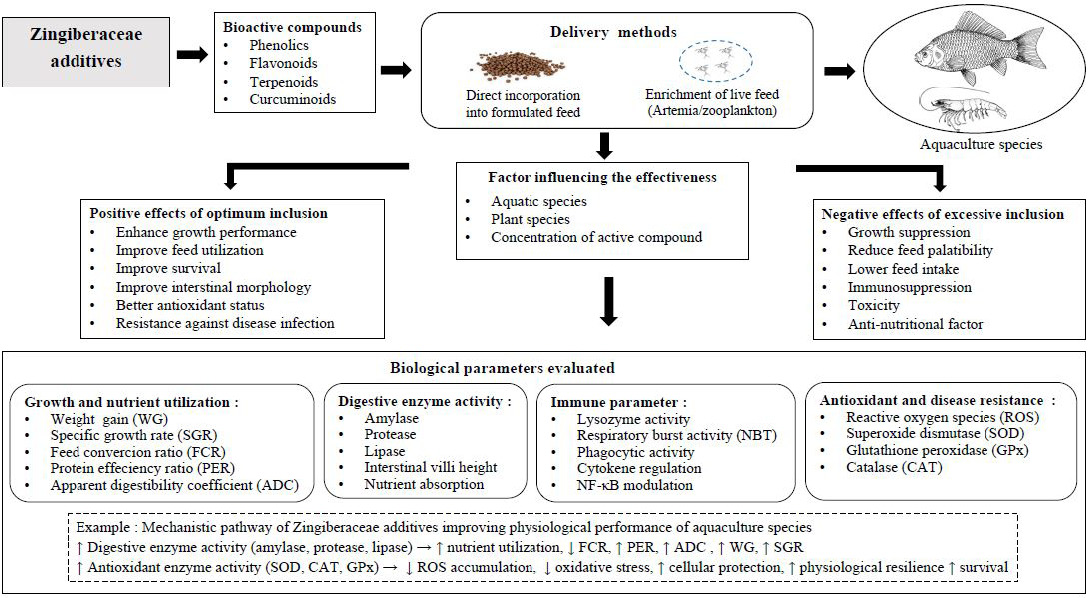
Plant-based additives derived from the Zingiberaceae contain a wide range of bioactive compounds, including phenolics, flavonoids, terpenoids, and essential oils, which are responsible for their biological activities in aquaculture systems. Zingiberaceae additives can be delivered to aquaculture species through two primary approaches: direct incorporation into formulated diets or indirect administration via the enrichment of natural live feeds such as zooplankton (Figure 1). This method is applied using organisms like Artemia, enhances the nutritional and functional value of live feed by allowing bioactive compounds to be bioencapsulated and subsequently transferred to the cultured species. An example of previous study by Venkatramalingam et al. (2007) on experimental feeding strategy in which P. monodon postlarvae were provided with live feed brine shrimp (Artemia) that had been enriched with the herbal additive Z. officinale at 400 mg/L for 48 hours prior to feeding, which likely allowed sufficient uptake and accumulation of the bioactive compounds. The Artemia acts as a carrier (bioencapsulation system), absorbing the ginger extract. When the shrimp consume the enriched Artemia, the bioactive compounds (e.g., gingerols) are transferred into their system.
The most practical and widely applied method in aquaculture is the delivery of feed additives through direct incorporation into formulated diets. In this method, plant-based additives (e.g., powders, extracts, or essential oils) are mixed directly into the feed ingredients during pellet preparation or coated onto finished pellets which commonly done in farming industry. For example, A. galanga extract was incorporated into commercial pellet feeds at specific inclusion levels to formulate experimental diets, as reported by Chaweepack et al. (2015). Similarly, powder of Z. officinale was directly mixed with the dry ingredients of a basal diet during feed preparation . However, the factor influencing these delivery methods depend on the species of aquatic organism, the type of Zingiberaceae used, and the form of the additives, which determine the concentration of active compounds. Different aquatic species exhibit varying digestive capacities, metabolic rates, and feeding behaviors, which affect how efficiently these bioactive compounds are absorbed and utilized. Moreover, the type of Zingiberaceae plant used, determines the specific phytochemical profile, which differ in their biological activity. The form of the additive also plays a crucial role where the extracted generally provide higher concentrations of active compounds and faster physiological responses, while powders may have lower bioavailability but offer more sustained effects. Therefore, the efficacy of additives derived from the Zingiberaceae was evaluated through dose–response feeding trials, in which varying inclusion levels were incorporated into experimental diets to determine the optimal dosage for enhancing fish physiological performance, including growth, immune response, antioxidant status, and disease resistance.
Inclusion level
Inclusion level refers to a specific amount of concentration of feed additive administrated in the diet of cultured aquatic species. The inclusion levels are generally expressed as grams per kilogram per feed (g/kg), milligram per kilogram per feed (mg/kg) or as a percentage of the diets (%). For example, a simple conversion, 10 g/kg feed additive is equivalent to a 1% dietary inclusion level. Determining the optimal inclusion level is the key parameter, as excessive or sub-optimal doses can influence the efficacy and feed palatability. Optimal inclusion level can enhance growth performance, immunity, antioxidant status and disease resistance . The optimal level is typically identified through key biological indicators such as improved feed conversion ratio, weight gain, protein efficiency ratio, apparent digestibility coefficient, and digestive enzyme activity. Supporting this, a previous study by Abdel-Tawwab and Abbass (2016) showed that dietary turmeric (C. longa) supplementation in common carp (C. carpio) at 1.0, 2.0, and 5.0 g/kg improved growth performance and immune responses, with 2.0 g/kg identified as the most effective level when increasing dose to 5.0 g/kg did not resulted significant difference to growth performance and immune marker. This indicated that 2.0 g/kg was the most suitable turmeric powder level for optimal performance. Similar results were obtained by Zaki et al. (2016), who evaluated the effect of four different levels of A. galanga meal (0, 5, 10, and 20 g/kg) as feed additives for Nile tilapia (O. niloticus). Alpinia galanga meal supplementation in O. niloticus produced the best growth, nutritional, and physiological responses at 5 g/kg. In crustaceans, Z. officinale extract was supplemented into diets of L. vannamei at inclusion levels of 0, 0.5, 1.0, and 1.5 g/kg. The results indicated that the optimal inclusion level was 0.5 g/kg, which significantly improved weight gain and protease activity while reducing FCR, suggesting enhanced feed utilization efficiency and improved digestive performance . Growth performance is primary parameter indicator used to evaluate the optimal inclusion level of Zingiberaceae plants in aquafeeds because it reflects how effectively fish or crustaceans utilize nutrients for biomass gain. Across feeding trials, a consistent pattern emerges in which low to moderate dietary inclusion levels improve growth. However, the magnitude of these effects varies among aquaculture species due to differences in digestive physiology, feeding habits, and tolerance to phytogenic compounds. Consequently, the optimal inclusion level and efficacy of Zingiberaceae additives may differ between marine and freshwater species, as well as between fish and crustaceans. The lower optimal inclusion level observed in shrimp is much lower compared to fish may be associated with species-specific physiological and digestive sensitivities. In shrimp, beneficial effects of Z. officinale were achieved at relatively low supplementation levels, whereas higher concentrations rapidly reduced growth performance and digestive efficiency. This response may be linked to the greater sensitivity of crustacean digestive physiology to bioactive compounds and anti-nutritional factors present in ginger. In particular, excessive supplementation may interfere with nutrient digestion and absorption, resulting in diminished growth benefits. Furthermore, shrimp rely heavily on the hepatopancreas for digestion and metabolism, which may make them more susceptible to metabolic disturbances caused by high concentrations of phytogenic additives compared to fish with more complex gastrointestinal systems.
In aquaculture, feed optimal levels improve physiological performance, cost effective, and immune system, as well as reducing the palatability issues that cause by excessive level of the plant additives . This highlights the importance of identifying a balanced, optimal dosage, as also demonstrated in previous studies. Ude et al. (2018) reported that dietary ginger supplementation at varying levels (0, 5, 10, 15 and 20 g/kg) produced a clear dose dependent effect on growth. Dietary ginger supplementation enhanced growth up to 10 g/kg, after which performance declined at 15 –20 g/kg. The result presented 10 g/kg inclusion level resulted in optimal performance, with the highest final weight (75.07±2.97 g), weight gain (49.98±2.96 g), and SGR (5.58±0.08 g). Higher supplementation levels (15 to 20 g/kg) did not further improve the growth performance. The decline in growth performance at higher supplementation levels be associated with the accumulation of anti-nutritional compounds, such as tannins, oxalates, phytates, and saponins, which could interfere with nutrient digestion, absorption, and normal physiological functions. High inclusion level can cause palatability issues which lead to a direct reduction in feed intake. In crustaceans, Ashry et al. (2023) have been evaluated that Z. officinale extract at 0.5 g/kg inclusion level was more effective than 1.0 g/kg in promoting growth of giant tiger shrimp (P. monodon). According to Asimi and Sahu (2013) the excessive supplementation levels may reduce the efficacy of herbal additives under certain conditions, although direct evidence of immunosuppression was not experimentally demonstrated in the review. Increasing dietary ginger powder beyond a certain level resulted decrease in survival under bacterial challenge. This may be explained by the fact that bioactive compounds in these plants, such as phenolics, flavonoids, and essential oils, can stimulate digestion, improve gut health, and enhance metabolism at appropriate doses, but excessive supplementation may reduce palatability, alter feed intake, or impose metabolic costs that offset growth benefits.
The reported optimal levels differ substantially among studies, ranging from 2 g/kg to 10 g/kg of diet (powder) for fish while 0.5 g/kg for shrimp, which suggests that inclusion level cannot be generalized across all Zingiberaceae species or cultured animals. The optimal inclusion level should be determined based on the form of Zingiberaceae additives used such as powders, extracts, or essential oils because each form contains different concentrations and availability of active compounds. For example, a low inclusion level of essential oil may deliver a much higher concentration of phenolics or terpenoids than a substantially higher level of crude powder (Stratev et al., 2018). As a result, inclusion levels reported on a percentage or g/kg basis are not always directly comparable across studies. This highlights a major limitation in the current literature where most studies define the optimal dose only in terms of feed inclusion rate, without standardizing or quantifying the actual concentration of bioactive compounds delivered. Future studies should therefore move toward standardization based on active compound concentration rather than crude additive weight alone, which would allow more meaningful comparisons among plant species, preparation forms, and experimental conditions. Another important pattern in the literature is that negative outcomes begin to appear when inclusion levels exceed the optimal range. In some cases, high semi-synthetic such as amoxicillin has been associated with lower survival under pathogen challenge, suggesting that toxicity effect without improvement on the fish treatment . These findings are important because they show that plant extract might shows low side effect as well as dosage optimization and cost-effective management. Furthermore, variations in plant extract additive preparation methods, together with differences in the concentration and inclusion levels of bioactive compounds, significantly affect the consistency of the physiological responses observed.
Growth performance
A positive relationship between weight gain (WG) and specific growth rate (SGR) indicates enhanced growth efficiency, whereby increases in WG is generally accompanied by higher SGR reflecting improved growth performance in aquaculture species . Those studies of Z. officinale, C. longa and A. galanga supplementation in feed diet reported statistically significant improvement in WG and SGR of aquaculture species involving fish and crustacean ; Adbel-Tawwab and Abbas, 2016; ; . This improvement is driven by several interconnected physiological mechanisms that enhance nutrient utilization efficiency. Nutrient utilization refers to the efficiency of the aquaculture species digest, absorb and convert feed into the body and energy for growth . It is important indicator of dietary efficiency in aquatic species reflecting how effectively consumed nutrients are converted into biomass. In tiger shrimp post-larvae, FCR significantly improved from 1.2 in the control group to 0.97 in the group fed 100% Z. officinale enriched Artemia (Venkatramlingam et al., 2007). In this case, the uneaten feed and faecal waste were collected and accounted for during feed consumption measurements. A value below 1.0 FCR indicates more efficient feed utilization, where the shrimp are able to convert feed into biomass more effectively. Feed intake was estimated gravimetrically by subtracting the dry weight of uneaten feed from the total feed supplied, which likely improved the accuracy of the calculated FCR values. FCR and PER are complementary indicator of growth performance. Low FCR indicating that the fish or shrimp convert feed more efficiently to muscle growth while higher PER indicate effective use of protein resulting in increased weight gain. These findings support the use of Zingiberaceae-derived additives as natural enhancer of feed utilization in aquaculture.
Improved feed utilization in fish and crustaceans supplemented with Zingiberaceae-derived additives may be also closely associated with changes in digestive physiology. One of the primary mechanisms involves the stimulation of digestive enzyme activity. This mechanism is supported by a study showing that dietary supplementation with ginger powder significantly increased the activities of these digestive enzymes, including amylase, protease and lipase in striped catfish compared with the control group. The increased enzyme activities were not merely due to greater feed passage through the intestine, but were more likely associated with enhanced digestive capacity induced by ginger supplementation. The enzyme activities were standardized relative to protein concentration in the intestinal samples to minimize the influence of gut content volume. The enhanced enzymatic activity promotes more efficient breakdown of dietary proteins, carbohydrates, and lipids into absorbable molecules, thereby improving nutrient digestibility and ultimately contributing to lower FCR and higher PER values. An addition to enzymatic activity, phytogenic feed additives may influence the structural development of the gastrointestinal tract (Adbelli et al., 2021). Several studies have reported that herbal supplementation can improve intestinal morphology, which plays an important role in enhancing nutrient digestion and absorption in fish. Structural modifications of the intestine, such as increased villi height, mucosal thickness, and absorptive surface area, can significantly improve the efficiency of nutrient uptake ; . Supporting this mechanism, another study by Chung et al. (2021) using essential oil evaluating the intestine morphology of Nile tilapia (O. niloticus) fed diets supplemented with essential oil of Z. officinale particularly at 0.5 mL kg⁻¹ diet reported significant increases in intestinal villi size compared with the control group. These morphological changes indicate an improvement in intestinal functionality. For instance, the increased thickness of the intestinal wall and muscular layers enhances the motility of the digestive tract, which supports essential intestinal processes such as nutrient digestion, moisture re-absorption, and waste elimination . Such structural improvements in the digestive tract may contribute to enhanced nutrient absorption efficiency. Similar improvements in apparent digestibility coefficients (ADC) have been reported in diets supplemented with Zingiberaceae herbs such as C. longa and E. coccinea . Improved intestinal morphology, particularly increased absorptive surface area, contributes to higher ADC, as more nutrients (proteins, lipids, and carbohydrates) are efficiently digested and absorbed rather than excreted. Enhanced gut morphology allows for greater contact between digested nutrients and the intestinal epithelium, leading to more efficient nutrient absorption and assimilation . Consequently, improvements in intestinal morphology have also been suggested for Zingiberaceae-derived feed additives, where the bioactive compounds present in plants may stimulate intestinal development and enhance nutrient absorption in aquaculture species.
Immune response
In aquaculture nutrition research, immune response refers to a range of biochemical, cellular, and molecular indicators used to evaluate the immune status of aquatic organisms following dietary supplementation or pathogen exposure (Moktar et al., 2023). Similar to other vertebrates, the immune system of fish consists of two main components: the innate (non-specific) immune system and the adaptive (specific) immune system. The innate immune system serves as the first line of defense against invading pathogens and provides rapid but non-specific protection, whereas the adaptive immune system generates targeted responses through immune memory ; . Innate immune markers include lysozyme activity, respiratory burst activity of leukocytes, leukocyte counts, antioxidant enzymes, and cytokine expression. These parameters reflect the ability of immune cells to recognize and eliminate pathogens. In contrast, adaptive immune responses in fish are commonly evaluated through humoral parameters such as immunoglobulin levels and lymphocyte activity, which reflect the capacity to develop specific immune responses against pathogens . Unlike shrimp, which rely primarily on innate immunity, fish possess both innate and adaptive immune systems. However, the adaptive immune system of fish is less complex than that of mammals, characterized by limited immunoglobulin diversity, absence of lymph nodes, weaker immunological memory, and slower development of specific immune responses .
Existing literature provides strong evidence that plants belonging to the Zingiberaceae family possess significant immunostimulatory properties when incorporated into aquafeeds. Among these plants, ginger (Z. officinale) has been the most extensively studied. Dietary supplementation with ginger has consistently been reported to improve hematological and immune responses in several aquaculture species, particularly freshwater fish. For instance, studies on treated groups of African catfish (C. gariepinus) have demonstrated that dietary ginger supplementation improves hematological parameters such as red blood cell count, hemoglobin concentration, and hematocrit values . These parameters are widely used as indicators of physiological health and oxygen transport capacity. Adequate oxygen supply is essential for maintaining metabolic processes, including immune cell activity and tissue repair, suggesting that improved hematological profiles may indirectly support immune competence (Faizo, 2019). Comparable findings have been reported in rainbow trout (Oncorhynchus mykiss), where ginger supplementation enhanced hematological parameters associated with improved physiological condition and stress tolerance . The consistent enhancement of these parameters across different species suggests that Zingiberaceae supplementation contributes to improved systemic health, which may strengthen the organism’s capacity to resist disease.
Several studies have demonstrated that Zingiberaceae supplementation directly stimulates innate immune responses. For example, increased respiratory burst activity in leukocytes has been observed in fish fed diets supplemented with ginger . Respiratory burst activity represents the ability of immune cells to generate reactive oxygen species (ROS) that are used to destroy invading pathogens. In this way, respiratory burst activity enhances the organism’s innate immune defense by promoting effective pathogen destruction during infection. Similarly, elevated lysozyme activity has been reported following ginger supplementation on common carp (C. carpio). At 0.2% and 0.4% inclusion levels, elevated lysozyme, immunoglobulins (IgM), superoxide dismutase (SOD), and catalase (CAT) activities indicate enhanced immune and antioxidant response in koi carp (C. carpio) . Lysozyme is an important antimicrobial enzyme present in fish serum and mucus that breaks down bacterial cell walls by hydrolyzing peptidoglycan components . Other findings also observed in dietary supplementation of ginger, Z. officinale significantly enhanced lysozyme activity and total immunoglobulin in skin mucus of rohu (L. rohita) . The enhanced in activity of lysozyme activity therefore reflects to an improved humoral defense mechanisms against bacterial infections. Together, these findings indicate that dietary Zingiberaceae additives might stimulate both cellular and humoral components of innate immunity, thereby strengthening the organism’s primary defense against pathogens. Similar study by Wen et al. (2014) tryptophan in grass carp revealed the possible lysozyme pathways through activation of immune signaling pathways such as the NF-κB signaling pathway, which stimulates the production of antimicrobial enzymes and immune-related proteins. As a result, fish are better equipped to recognize and eliminate invading pathogens. Therefore, the increase in lysozyme activity following Zingiberaceae supplementation clearly demonstrates its role in strengthening the innate immune system and improving disease resistance in aquaculture species.
Antioxidant status and disease resistance
Antioxidant improvement is physiologically important because it reflects a stronger capacity of the animal to neutralize reactive oxygen species (ROS) generated during normal metabolism, environmental stress, and pathogen challenge. In aquaculture species, excessive ROS can damage lipids, proteins, and cellular membranes, leading to oxidative stress, impaired tissue function, weakened immunity, and reduced survival . Therefore, the enhancement of antioxidant enzymes by Zingiberaceae additives is not only a biochemical response but also an indication of improved physiological resilience. In this context, Zingiberaceae plants contain bioactive compounds that enhance the antioxidant defense system of aquatic animals and stimulate the antioxidant enzymes. Enzymes such as SOD, CAT, and GPx are the major antioxidant enzyme, which work together in maintaining immune function and cellular protection . Specifically, SOD catalyzes the conversion of superoxide radicals into hydrogen peroxide, while CAT and GPx further detoxify hydrogen peroxide into water and oxygen, thereby preventing the accumulation of harmful oxidants (Aydemir and Ulusu, 2026). Through this mechanisms, improved antioxidant capacity is closely linked to enhanced immune performance, as it protects immune cells during respiratory burst activity, where ROS are produced to eliminate pathogens.
Evidence from crustacean study support the antioxidant benefits of Zingiberaceae supplementation. In whiteleg shrimp (L. vannamei), dietary supplementation with ginger extract has been shown to enhance the activity of immune related antioxidant enzymes, including phenoloxidase (PO), SOD, CAT, and glutathione peroxidase (GPx). The strongest antioxidant responses were observed at an inclusion level of 1.0 g/kg, as indicated by significantly increased activities of PO (38.45 ± 1.62 U mg-1 protein), GPx (262.47 ± 3.15 U mg-1 protein), and CAT (4.14 ± 0.17 U mg-1 protein) . The observed increase in PO, GPx, and CAT activities at the optimal inclusion level is physiologically significant because it suggests that ginger extract strengthened the shrimp’s antioxidant defense system, thereby improving its ability to cope with oxidative stress induced by pathogen exposure and other culture-related stressors. This explains why improved antioxidant status is often associated with stronger disease resistance and higher survival in feeding trials using Zingiberaceae-based additives.
Several studies have demonstrated the potential of Zingiberaceae-based feed additives in enhancing disease resistance across a wide range of aquaculture species. In crustaceans, dietary inclusion of Z. officinale extract in whiteleg shrimp (L. vannamei) improved resistance against Photobacterium damselae infection . In this study, shrimp were immersed in aquarium water inoculated with P. damselae with the bacterial concentration used for the challenged test was adjusted to LD70 for a duration of 4 hours, followed by a 10-day challenge test. The cumulative mortality rate (40±8.5%) was significantly lower in shrimp fed with 1 g/kg ginger extract compared to the control group (75.2±6.5%). Similarly, another study reported that A. galanga extract subsequently challenged with Vibrio harveyi showed a reduced bacterial load in the hemolymph (<50 CFU/mL) and higher survival rate (72±8.4%) compared to the control group (70±8.0%) . This protective effect of Zingiberaceae is also evident in finfish species. In marine aquaculture studies by Anjur and Sabram (2021) demonstrated the therapeutic potential of Z. officinale crude extract in tiger grouper (E. fuscoguttatus) challenged with A. hydrophila. Fish were intraperitoneally injected with the pathogen at 10⁶ CFU mL⁻¹ (0.1 mL per fish) and subsequently showed typical clinical signs of infection, including skin discoloration, exophthalmia, and fin rot. However, after seven days of treatment, fish fed with ginger crude extract (0.4–2.0 g/L) showed marked recovery with no observable external lesions or abnormalities, while control fish continued to exhibit poor swimming performance and reduced appetite. The highest survival rate (89%) was recorded in the 0.8 g/L treatment group while the lowest survival (44%) in the control group, indicating the effectiveness of ginger extract in enhancing disease resistance and recovery. A similar trend has been observed in freshwater species. For example, A. galanga rhizome extract demonstrated its therapeutic efficacy in sangkuriang catfish (C. gariepinus) infected with A. hydrophila . The infected fish exhibited clinical signs such as ulceration, hemorrhage, fin damage, and abdominal distension (dropsy). Treatment with galangal extract significantly improved survival outcomes over a 14-day period, with the highest survival rate recorded in the 500 mg/L group (90%) compared to the untreated group (36.67%). The findings indicated that A. galanga extract, at 500 mg/L, was effective in enhancing disease resistance and promoting recovery in infected catfish. These findings indicate that the enhanced antioxidant status induced by Zingiberaceae not only improves physiological resilience against oxidative stress but also contributes directly to increased disease resistance and survival in aquaculture species as summarized in Figure 1. Therefore, these findings demonstrate that Zingiberaceae-derived additives contribute not only to biochemical antioxidant enhancement but also to meaningful physiological outcomes, including reduced mortality, improved immune competence, and enhanced recovery from pathogenic stress.
Research limitations and perspective
The limitations are focused on the identification of the Zingiberaceae plants capable of improving fish growth and immunity through additional ingredients in fish feed. The identification of potential plants is mainly based on previous reports and traditional applications. Most reports focus on the antioxidant bioactivity and synergistic effects of Zingiberaceae plants, but there is limited information on their biological effects. To date, investigations continue on growth performance, feed utilization, immune responses, and disease resistance as summarized in this review article. In this context, no identity test limitation based on the number of reported plant species, identified compound species, practical issues in fish additives, and mechanism dynamics.
Zingiberaceae application
The major limitation of this study is the application of Zingiberaceae itself. Previous studies mainly claimed that the plant used in traditional practices, but scientific validation is still limited. Although species through scientific validation, the data provided at vitro assessment or mimic human trials. In fish dietary studies, Zingiberaceae plants such as Alpinia galanga, Curcuma longa, Zingiber officinale, Alpinia oxyphylla, and Etlingera elatior have been performed to specific fish species ; Talpar et al., 2013; . Based on these studies, several important questions remain: (a) What is the dietary effect of saltwater and freshwater fish, as they are live in different environments? (b) Does one species show similar dietary effects on one specific species? If the answers are mutual, the secondary limitation focusing on the compound species with significant bioactivity needs to be further discussed in the next section.
Product metabolites
Plant contains secondary metabolites in their defense system against parasites, diseases, and predators. Most of the researchers believe that the secondary metabolites with significant bioactivity potentially express a similar effect to animal trials as evaluated through protein-compound interaction using in vitro and in silico studies. The main factor is due to the specific compound structure built up with specific compound class and bonds. Specific compound structures influence their bioactivity. In pharmacological study, the modification of the compound structure changes their physical and chemical properties. Example, the structure can be changes to be more soluble for penetrating stomach and blood vessel through structure protonation. On the other hand, fish has different delivery system as they live in water with unique organ adaptation to extract dissolved oxygen from water, gills. Although no comprehensive report previously, the effect of compound within this system might different as low oxygen required in fish system. Therefore, the identification and interaction of specific compound species in Zingiberaceae plants are the first step in fish dietary study.
Mechanism dynamics
To date, fish possess hundreds of different hormones, while IGF-1 is one of the hormones that has been proven to significantly influence fish growth. Fish physiological and biochemical dynamics are influenced by the type of pellet and the added extract that are produced and obtained, respectively. The optimal formulation requires a balance between pellet and extract to avoid toxicity and spoilage. Toxic pellets may cause negative physiological effects in fish, such as reduced body weight, abnormal swimming behaviour, or death. Meanwhile, biochemical changes in fish may express more inflammatory biomarkers such as AST (Aspartate Aminotransferase), indicating that the fish system is disrupted or degraded. Additionally, the effectiveness of pellets and extracts should be aligned with high-quality dietary systems depending on the “compatibility” of the extract structure to interact with proteins in the fish system, thereby triggering insulin-like growth factor (IGF-1). In conclusion, more studies are needed focusing on plant extracts, especially Zingiberaceae plants, and their effects on fish hormones.
Conclusion and Recommendations
This review consolidates current scientific evidence supporting the potential of Zingiberaceae plants as natural feed additives in aquaculture, emphasizing their functional roles in enhancing fish health, growth performance, and disease resistance. Collectively, studies reviewed demonstrate that plant-derived materials from the Zingiberaceae family, possess a wide range of bioactivities validated through in vitro assays, notably antioxidant, antimicrobial, and immunomodulatory properties. Feeding trials across various cultured species, consistently indicate improvements in growth efficiency, feed utilization, immune responses, and physiological resilience when Zingiberaceae based additives are incorporated at appropriate inclusion levels. Moreover, pathogen challenge tests further confirm their effectiveness in enhancing resistance against bacterial infections commonly encountered in aquaculture, thereby reducing reliance on synthetic chemotherapeutics. Overall, the scientific validation presented in this review highlights Zingiberaceae plants as promising, natural, and safe alternatives to conventional feed additives. Their integration into aquafeeds offers a practical strategy to improve animal health, strengthen food safety, and support environmentally sustainable aquaculture practices, contributing directly to long-term seafood security.
However, several research gaps remain that must be addressed to facilitate the broader application of Zingiberaceae plants in aquaculture. Rather than broadly concluding that Zingiberaceae plants are effective, review emphasize that certain species and specific preparations have demonstrated promising effects under particular aquaculture conditions. Future studies should prioritize standardized processing methods for plant-derived materials to ensure consistency in bioactive compound composition and efficacy. Variability in extraction techniques, plant parts used, and phytochemical concentrations currently limits direct comparison across studies and application. Furthermore, sensory evaluation of fish flesh is essential to support consumer acceptance and regulatory approval and finally, cost benefit analyses on farm validation studies are recommended to assess the economic feasibility of large-scale application in commercial aquaculture. Addressing these aspects will accelerate the Zingiberaceae-based feed additives from experimental research to practical implementation, reinforcing sustainable aquaculture development and ensuring safe, high-quality seafood.
Acknowledgments
The authors thank to the Ministry of Higher Education Malaysia for the partial funding of the project under Higher Institution Center of Excellence (HICoE) Research Grant Scheme (Approval Leter No.JPT (BKPI) 1000/016/018/35(2)-HIC2403.
Novelty Statemenet
The novelty of this review is provides synthesis knowledge on Zingiberaceae plants as potential natural feed additives in aquaculture by integrating evidence on their bioactive compounds, antioxidant and immunomodulatory properties with their effect on fish growth performance, feed utilization, immune response, and disease resistance. It also identifies research gaps and provides future direction for the practical development of Zingiberaceae based feed additives for sustainable aquaculture.
Open access funding provided by The Ministry of Higher Education Malaysia and Universiti Malaysia Sabah. The paper is funded by the Higher Institution Centre of Excellence (HICoE) Research Grant Sceme (Approval letter No. JPT (BKPI)1000/016/018/35(2), Grant Code (HIC2403), provided by the Ministry of Higher Education, Malaysia.
Generative AI and AI assisted technology statement
The authors declare that no generative AI and AI assisted technology was used in the creation of this manuscript.
Conflict of interest
The authors have declared no conflict of interest.
Figures
Figure 1:.
Effect of Zingiberaceae-drived bioactive compound additives towards aquaculture species.
Abdelli N, Solà-Oriol D, Pérez JF (2021). Phytogenic feed additives in poultry: Achievements, prospective and challenges. Animals, 11(12): 3471. https://doi.org/10.3390/ani11123471[CrossRef]
Abdel-Tawwab M, Abbass FE (2016). Dry whey meal as a protein source in practical diets for Nile tilapia, Oreochromis niloticus fingerlings. J. Appl. Aquacult., 28(4): 276–284. https://doi.org/10.1080/10454438.2016.1215686[CrossRef]
Abdullahi NA, Isah Z, Saidu H, Salihu ZS (2015). Phytochemical analysis and antibacterial activity of ginger (Zingiber officinale) methanolic extract against Escherichia coli and Staphylococcus aureus. BIMA J. Sci. Technol. Gombe, 9(1B): 239-247.
Adegbesan SI, Obasa SO, Akintokun AK, Abdulraheem I (2019). Effects of dietary supplementation of Zingiber officinale root-powder on growth, nutrient utilization and intestinal microbes of African mud catfish (Clarias gariepinus) fingerlings. Aquacult. Fish., 3(1): 1–4. https://doi.org/10.24966/AAF-5523/100016[CrossRef]
Adeoye AA, Jaramillo-Torres A, Fox SW, Merrifield DL, Davies SJ (2016). Supplementation of formulated diets for tilapia (Oreochromis niloticus) with selected exogenous enzymes: Overall performance and effects on intestinal histology and microbiota. Anim. Feed Sci. Technol., 215: 133–143. https://doi.org/10.1016/j.anifeedsci.2016.03.002[CrossRef]
Adeshina I, Adewale YA, Tiamiyu LO (2017). Growth Performance and Innate Immune Response of Clarias gariepinus Infected with Aeromonas hydrophila fed diets fortified with Curcuma longa leaf. West Afr. J. Appl. Ecol., 25(2): 87–99.
Ali A, Al-Ogaily SM, Al-Asgah NA, Goddard JS, Ahmed SI (2008). Effect of feeding different protein to energy (P/E) ratios on the growth performance and body composition of Oreochromis niloticus fingerlings. J. Appl. Ichthyol., 24: 30-37.
Andriani Y, Wati DS, Zidni I, Herman RG (2024). The The effectiveness of galangal Alpinia galanga extract for the treatment of sangkuriang catfish Clarias gariepinus infected Aeromonas hydrophila. J. Akuakult. Indones., 23(1): 44–55. https://doi.org/10.19027/jai.23.1.44-55[CrossRef]
Anene A, Okorie EO, Ajima MNO, Onyemaonwu J (2021). Dietary supplement of tumeric (Curcuma longa) powder: Impact on haematological and biochemical responses in Clarias gariepinus (Burchell, 1822) fingerlings. Aquacult. Stud., 22(2). https://doi.org/10.4194/AQUAST714[CrossRef]
Anjur N, Sabran SF (2006). Potential of ginger (Zingiber officinale) crude extract as a chemotherapeutic agent for tiger grouper (Epinephelus foscoguttatus) infected by Aeromonas hydrophila. IOP Conf. Ser. Earth Environ. Sci., 736(1): 012006–6. https://doi.org/10.1088/1755-1315/736/1/012006[CrossRef]
Apines-Amar MJS, Amar EC, Faisan Jr, Pakingking Jr, Satoh S (2012). Dietary onion and ginger enhance growth, hemato-immunological responses, and disease resistance in brown-marbled grouper, Epinephelus fuscoguttatus. Aquacult. Aquar. Conserv. Legislat., 5: 231–239.
Arulnangai R, Thabassoom HA, Banu HV, Thirugnanasambandham K, Ganesamoorthy R (2025). Recent developments on ursolic acid and its potential biological applications. Toxicology reports., 14, 101900. https://doi.org/10.1016/j.toxrep.2025.101900[CrossRef]
Ashry AM, Habiba MM, El-Zayat AM, Badreldeen AH, Younis NA, Ahmed HA, El-Dakroury MF, Ali MAM, Dawood MAO (2023). Effects of ginger (Zingiber officinale) on the growth performance, digestive enzyme activity, antioxidative response, and antibacterial capacity of striped catfish (Pangasianodon hypophthalmus) reared in outdoor conditions. Aquacult. Rep., 33: 101760–0. https://doi.org/10.1016/j.aqrep.2023.101760[CrossRef]
Asimi O, Sahu N (2013). Herbs/spices as feed additive in aquaculture. Sci. J. Pure Appl. Sci., 2(8): 284–92.
Aydemir D, Ulusu NN (2025). Multifaceted roles of superoxide dismutases (SODs) in cellular homeostasis and cancer progression: Redox regulation and therapeutic implications. J. Med. Biochem., 44(9). https://doi.org/10.5937/jomb0-59010[CrossRef]
Bae JS, Lee CW, Yang CY, Jeong EH, Kim B, Park KH, Seo JS, Kwon MG, Lee JH (2025). Comparative pharmacological assessment of amoxicillin in five cultured fish species: Implications for off-label use in aquaculture. Antibiotics (Basel), 14(4): 346. https://doi.org/10.3390/antibiotics14040346[CrossRef]
Bhavan PS, Anisha TC, Srinivasan V, Muralisankar T, Manickam N (2014). Effect of spice, Papaver somniferum, Elettaria cardamomum, Foeniculum vulgare and Syzygium aromaticum on growth promotion in Macrobrachium malcolmsonii early juveniles. Int. J. Pure Appl. Biosci., 2(6): 120-131.
Butt RL, Volkoff H (2019). Gut microbiota and energy homeostasis in fish. Front. Endocrinol., 10(10): 9. https://doi.org/10.3389/fendo.2019.00009[CrossRef]
Cárdenas GGR, Elizondo LJH, Bazaldúa RAF, Chávez MA, Pérez HRA, Martínez DAJ, López VSM, Rodríguez RJ, Sánchez CRM, Castillo VU, Rodríguez LOE (2021). Benefits of cardamom (Elettaria cardamomum (L.) Maton) and turmeric (Curcuma longa L.) extracts for their applications as natural anti-inflammatory adjuvants. Plants, 10(9): 1908. https://doi.org/10.3390/plants10091908[CrossRef]
Carvalho J, Lira A, Costa D, Moreira E, Pinto L, Abreu R, Albinati R (2011). Desempenho zootécnico e morfometria intestinal de alevinos de tilápia-do-Nilo alimentados com” Bacillus subtilis” ou mananoligossacarídeo. Rev. Brasil. Saúde E Produção Anim., 12.
Chaplin DD (2010). Overview of the immune response. J. Allergy Clin. Immunol.,125(2): S3–23. https://doi.org/10.7202/1009286ar[CrossRef]
Chaweepack T, Khomvilai C, Chaweepack S, Kamei K (2015). Effect of galangal (Alpinia galanga Linn.) extract on the growth rate and resistance to Vibrio harveyi and white spot diseases in pacific white shrimp (Litopenaeus vannamei). J. Agric. Sci., 7(9). https://doi.org/10.5539/jas.v7n9p117[CrossRef]
Chung S, Ribeiro K, Melo JFB, Teixeira DV, Vidal LVO, Copatti CE (2021). Essential oil from ginger influences the growth, haematological and biochemical variables and histomorphometry of intestine and liver of Nile tilapia juveniles. Aquaculture, 534: 736325. https://doi.org/10.1016/j.aquaculture.2020.736325[CrossRef]
Debnath C (2025). Dietary supplementation with white and common turmeric improves resistance to Argulus siamensis in Labeo rohita. Parasit. Immunol., 47(8). https://doi.org/10.1111/pim.70020[CrossRef]
Elliott JM, Hurley MA (1995). The functional relationship between body size and growth rate in fish. Funct. Ecol., 9(4): 625. https://doi.org/10.2307/2390153[CrossRef]
Eregena A, Natarajan P, Bedewi Z (2023). Isolation and characterisation of potential bacterial pathogens from Oreochromis niloticus (Linnaeus, 1758) of Lake Hawassa, Ethiopia. Indian Journal of Fisheries., 70(4), 134-141. https://doi:10.21077/ijf.2023.70.4.129958-14[CrossRef]
Esmaeili M (2021). Blood performance: A new formula for fish growth and health. Biology, 10(12): 1236. https://doi.org/10.3390/biology10121236[CrossRef]
Fang C, Ma M, Ji H, Ren T, Mims SD (2015). Alterations of digestive enzyme activities, intestinal morphology and microbiota in juvenile paddlefish, Polyodon spathula, fed dietary probiotics. Fish Physiol. Biochem., 41(1): 91–105. https://doi.org/10.1007/s10695-014-0008-7[CrossRef]
Farahi A, Kasiri M, Sudagar M, Iraei MS, Shahkolaei MD (2010). Effect of garlic (Allium sativum) on growth factors, some hematological parameters and body compositions in rainbow trout (Oncorhynchus mykiss). Aquacult., Aquarium, Conserv. Legislation Bioflux, 3 Aquac Aquar Conserv Legis Bioflux, 3: 317317–23323.
Fazio F (2019). Fish hematology analysis as an important tool of aquaculture: A review. Aquaculture, 500: 237–242. https://doi.org/10.1016/j.aquaculture.2018.10.030[CrossRef]
Gao Y, Lu Y, Zhang N, Udenigwe CC, Zhang Y, Fu Y (2022). Preparation, pungency and bioactivity of gingerols from ginger (Zingiber officinale Roscoe): A review. Crit. Rev. Food Sci. Nutr., pp. 1–26.
Ghosh AK, Ahmmed SS, Islam R, Hasan MA, Banu GR, Panda SK, Schoofs L, Luyten W (2023). Oral administration of Zingiber officinale and Aegle marmelos extracts enhances growth and immune functions of the shrimp Penaeus monodon against the white spot syndrome virus (WSSV). Aquacult. Int., 32(1): 613–632. https://doi.org/10.1007/s10499-023-01177-6[CrossRef]
Gjedrem T (2015). Disease resistant fish and shellfish are within reach: A review. J. Mar. Sci. Eng., 3(1): 146–153. https://doi.org/10.3390/jmse3010146[CrossRef]
Haghighi M, Rohani MS (2013). The effects of powdered ginger (Zingiber officinale) on the haematological and immunological parameters of rainbow trout Oncorhynchus mykiss. J. Med. Plant Herbal Therapy Res., 1: 8–12.
Hassanin M, Hakim Y, Badawi M (2014). Dietary effect of ginger (Zingiber officinale Roscoe) on growth performance, immune response of Nile tilapia (Oreochromis niloticus) and disease resistance against Aeromonas hydrophila. Abbassa Int. J. Aquacult., 7: 35–52.
Hossain MS, Small BC, Kumar V, Hardy R (2024). Utilization of functional feed additives to produce cost-effective, ecofriendly aquafeeds high in plant-based ingredients. Reviews in Aquaculture., 16(1), 121-153. https://doi.org/10.1111/raq.12824[CrossRef]
Hossain S, Small BC, Kumar V, Hardy RW (2024). Utilization of functional feed additives to produce cost-effective, ecofriendly aquafeeds high in plant-based ingredients. Rev. Aquacult., 16(1). https://doi.org/10.1111/raq.12824[CrossRef]
Hu X, Ma W, Zhang D, Tian Z, Yang Y, Huang Y, Hong Y (2025). Application of natural antioxidants as feed additives in aquaculture: A review. Biology, 14(1): 87–97. https://doi.org/10.3390/biology14010087[CrossRef]
Hwang JH, Lee SW, Rha SJ, Yoon HS, Park ES, Han KH, Kim SJ (2012). Dietary green tea extract improves growth performance, body composition, and stress recovery in the juvenile black rockfish, Sebastes schlegeli. Aquacult. Int., 21(3): 525–538. https://doi.org/10.1007/s10499-012-9586-5[CrossRef]
Jennings S, Stentiford GD, Leocadio AM, Jeffery KR, Metcalfe JD, Katsiadaki I, Auchterlonie NA, Mangi SC, Pinnegar JK, Ellis T, Peeler EJ, Luisetti T, Baker-Austin C, Brown M, Catchpole TL, Clyne FJ, Oye, SR, Admonds NJ, Hyder K, Lee J, Lees DN, Morgan OC, O’Brien CM, Iodtmann B, Posen PE, Santos AR, Taylor NGH, Turner AD, Townhill BL, Verner-Jeffreys DW (2016). Aquatic food security: Insights into challenges and solutions from an analysis of interactions between fisheries, aquaculture, food safety, human health, fish and human welfare, economy and environment. Fish Fisheries, 17(4): 893–938. https://doi.org/10.1111/faf.12152[CrossRef]
Kumar S, Kumar A, Kumar N, Singh P, Singh TU, Singh BR, Gupta PK, Thakur VK (2022). In vivo therapeutic efficacy of Curcuma longa extract loaded ethosomes on wound healing. Vet. Res. Commun., 46. https://doi.org/10.1007/s11259-022-09952-1[CrossRef]
Kusi IO, Obirikorang KA, Adjei-Boateng D (2025). Effects of Phytobiotic Curcuma longa, Allium sativum and Zingiber officinale-Supplemented Diets on Growth, Utilisation of Feed and Nile Tilapia (Oreochromis niloticus) Resistance Against Streptococcus agalactiae. Aquacult. Res., 2025(1). https://doi.org/10.1155/are/9911375[CrossRef]
Lai W, Yang S, Lin X, Zhang X, Huang Y, Zhou J, Fu C, Li R, Zhang Z (2022). Zingiber officinale: a systematic review of botany, phytochemistry and pharmacology of gut microbiota-related gastrointestinal benefits. The American Journal of Chinese Medicine., 50(04), 1007-1042. https://doi.org/10.1142/S0192415X22500410[CrossRef]
Lamin BD, Kumar M, Pailan GH, Singh DK, Bisawal A, Udit UK (2018). Effect of dietary supplementation of Zingiber officinale (Ginger) on growth and nutrient utilization of Cyprinus carpio (Linnaeus, 1758). J. Exper. Zool. India, 21(2): 849–853.
Larsen K, Ibrahim H, Khaw SH, Saw LG (1999). Gingers of peninsular Malaysia and Singapore. Natural History Publications (Borneo), Kota Kinabalu.
Lee SW, Liew VK, Kari ZA, Kabir MA, Azra MN, Khoo MI, Wee W (2024). Protective effects of dietary Etlingera elatior (Jack) Bud Flower Powder against Edwardsiella tarda infection in African Catfish, Clarias gariepinus. Aquacult. Res., 2024(1). https://doi.org/10.1155/2024/1754005[CrossRef]
Li JT, Zhao YH, Lv Y, Su X, Mei WL, Lu YP, Zheng PH, Zhang ZL, Zhang XX, Chen HQ, Dai HF, Xian JA (2023). Evaluating the antioxidant properties of the leaves and stems of Alpinia oxyphylla in vitro and its growth-promoting, muscle composition change, and antioxidative stress function on juvenile Litopenaeus vannamei. Antioxidants, 12(10): 1802. https://doi.org/10.3390/antiox12101802[CrossRef]
Liang X, Luo X, Lin H, Han F, Qin JG, Chen L, Xu C, Li E (2022). Growth, health, and gut microbiota of female pacific white shrimp, Litopenaeus vannamei broodstock fed different phospholipid sources. Antioxidants, 11(6): 1143–3. https://doi.org/10.3390/antiox11061143[CrossRef]
Longo SB, Clark B, York R, Jorgenson AK (2019). Aquaculture and the displacement of fisheries captures. Conserv. Biol., 33(4). https://doi.org/10.1111/cobi.13295[CrossRef]
Luo L, Meng X, Wang S, Zhang R, Guo K, Zhao Z (2024). Effects of dietary ginger (Zingiber officinale) polysaccharide on the growth, antioxidant, immunity response, intestinal microbiota, and disease resistance to Aeromonas hydrophila in crucian carp (Carassius auratus). Int. J. Biol. Macromol., 275: 133711. https://doi.org/10.1016/j.ijbiomac.2024.133711[CrossRef]
Ma W, Zeng W, Zhang D, Zhou Y, Huang Y, Hong Y (2025). Oxidative stress in aquaculture: Pathogenic mechanisms and preventive strategies in farmed aquatic animals. Curr. Issues Mol. Biol., 47(11): 873. https://doi.org/10.3390/cimb47110873[CrossRef]
Madhulika Ngasotter S, Meitei MM, Kara T, Meinam M, Sharma S, Rathod SK, Singh SB, Singh SK, Bath RAH (2025). Multifaceted role of probiotics in enhancing health and growth of aquatic animals: Mechanisms, benefits, and applications in sustainable aquaculture: A review and bibliometric analysis. Aquacult. Nutr., 2025(1). https://doi.org/10.1155/anu/5746972[CrossRef]
Magnadóttir B (2006). Innate immunity of fish (overview). Fish Shellf. Immunol., 20(2): 137–151. https://doi.org/10.1016/j.fsi.2004.09.006[CrossRef]
Magnadottir B (2010). Immunological control of fish diseases. Mar. Biotechnol., 12(4): 361–379. https://doi.org/10.1007/s10126-010-9279-x[CrossRef]
Mahardika RW, Ibrahim H, Nurulhusna AH, Awang K (2017). Efficacy of four species of Zingiberaceae extract against vectors of dengue, chikungunya and filariasis. Trop. Biomed., 34: 375-387.
Maimulyanti A, Prihadi R (2015). Chemical composition, phytochemicals and antioxidant activity from extract of Etlingera elatior flower from Indonesia. J. Pharmacog. Phytochem., 3(6): 233-238
Mao QQ, Xu XY, Cao SY, Gan RY, Corke H, Beta T, Li HB (2019). Bioactive compounds and bioactivities of ginger (Zingiber officinale Roscoe), 8(6): 185. https://doi.org/10.3390/foods8060185[CrossRef]
Marcharla E, Vishnuprasadh A, Gnanasekaran L, Vinayagam S, Sundaram T, Ganesan S (2025). The role of functional feed in modulating fish gut microbiome to enhance resistance against aquaculture pathogens. Probiotics Antimicrob. Proteins, 18(2): 3010-3039. https://doi.org/10.1007/s12602-025-10660-w[CrossRef]
Mashhadizadeh N, Khezri S, Esfahani DE, Mohammadzadeh S, Ahmadifar E, Ahmadifar M, Moghadam MS, El-Haroun E (2024). Enhancing growth performance, antioxidant defense, immunity response, and resistance against heat stress in Nile Tilapia (Oreochromis niloticus) fed Saccharomyces boulardii and/or Bifidobacterium bifidum. Aquacult. Rep., 39: 102462. https://doi.org/10.1016/j.aqrep.2024.102462[CrossRef]
Masoud H, Rohani M (2014). The effects of powdered ginger rhizome (Zingiber officinale) on haematological and immunological parameters of rainbow trout Oncorhynchus mykiss. Asian J. Mar. Sci., pp. 7–11.
Mohammadi G, Rashidian G, Hoseinifar SH, Naserabad SS, Doan HV (2020). Ginger (Zingiber officinale) extract affects growth performance, body composition, haematology, serum and mucosal immune parameters in common carp (Cyprinus carpio). Fish Shellf. Immunol., 99: 267–273. https://doi.org/10.1016/j.fsi.2020.01.032[CrossRef]
Mokhtar DM, Zaccone G, Alesci A, Kuciel M, Hussein MT, Sayed RKA (2023). Main components of fish immunity: An overview of the fish immune system. Fishes, 8(2): 93. https://doi.org/10.3390/fishes8020093[CrossRef]
Monteiro PC, Brandão FR, Farias CFS, de Alexandre Sebastião F, Majolo C, Dairiki JK, Oliveira MR, Chaves FCM, de Almeida O’Sullivan FL, Martins ML, Chagas ECA (2021). Dietary supplementation with essential oils of Lippia sidoides, Ocimum gratissimum and Zingiber officinale on the growth and hemato-immunological parameters of Colossoma macropomum challenged with Aeromonas hydrophila. Aquacult. Rep., 19: 100561. https://doi.org/10.1016/j.aqrep.2020.100561[CrossRef]
Nyadjeu P, Divine D, Tamko A, Nguenang GN, Chamsy Y, Tabi-Tomedi ME (2021). Effect of Zingiber officinale and Allium sativum powders as natural feed additives promoting growth, feed utilization and whole-body composition in Clarias gariepinus fry. Food Nutr. Sci., 12(06): 526–543. https://doi.org/10.4236/fns.2021.126040[CrossRef]
Orellana-Paucar AM (2024). Turmeric essential oil constituents as potential drug candidates: A comprehensive overview of their individual bioactivities. Molecules, 29(17): 4210–0. https://doi.org/10.3390/molecules29174210[CrossRef]
Osisienemo AG, Oniye SJ, Auta J, Onimisi HU, Yusuf A (2026). Phytochemical screening and GC-MS analyses of aqueous extracts of Aframomum Melegueta (alligator pepper) seeds and fruits as potential agents for managing fish health. Fudma J. Sci., 10(2): 275–286. https://doi.org/10.33003/fjs-2026-1002-4486[CrossRef]
Rahman MH, Arifuzzaman M (2021). An experiment on growth performance, specific growth rate (SGR) and feed conversion ratio (FCR) of Rohu (Labeo rohita) and Tilapia (Oreochromis niloticus) in tank based intensive aquaculture system. Int. J. Aquac. Fish Sci., 7(4), 35-41. https://dx.doi.org/10.17352/2455-8400.000071[CrossRef]
Rawat P, Kaur VI, Tyagi A, Norouzitallab P, Baruah K (2022). Determining the efficacy of ginger Zingiber officinale as a potential nutraceutical agent for boosting growth performance and health status of Labeo rohita reared in a semi-intensive culture system. Frontiers in Physiology., 13, 960897. https://doi: 10.3389/fphys.2022.960897[CrossRef]
Riaz B, Sohn S (2023). Neutrophils in inflammatory diseases: Unraveling the impact of their derived molecules and heterogeneity. Cells, 12(22): 2621. https://doi.org/10.3390/cells12222621[CrossRef]
Riera Romo M, Pérez-Martínez D, Castillo Ferrer C (2016). Innate immunity in vertebrates: An overview. Immunology, 148(2): 125–139. https://doi.org/10.1111/imm.12597[CrossRef]
Ringgit G, Siddiquee S, Yanuhar U, Amrillah AM, Lal MTM (2026). Innovative biosensing approaches for early detection of marine fish diseases. Microchem. J., 220: 116388. https://doi.org/10.1016/j.microc.2025.116388[CrossRef]
Sahu SK, Das BK, Mishra BK, Pradhan J, Sarangi N (2007). Effect of Allium sativum on the immunity and survival of Labeo rohita infected with Aeromonas hydrophila. J. Appl. Ichthyol., 23(1): 80–86. https://doi.org/10.1111/j.1439-0426.2006.00785.x[CrossRef]
Salamanca N, Herrera M, de la Roca E (2025). Amino acids as dietary additives for enhancing fish welfare in aquaculture. Animals, 15(9): 1293. https://doi.org/10.3390/ani15091293[CrossRef]
Shahraki N, Imanpour MR, Akbary P, Safari R, Jafari V (2021). Dietary administration of aqueous Zingiber officinale extract on growth performance, antioxidant activity and resistance of shrimp Litopenaeus vannamei against Photobacterium damselae. Iran. J. Fish. Sci., 20(1): 32–44.
Sharifi-Rad M, Varoni E, Salehi B, Sharifi-Rad J, Matthews K, Ayatollahi S, Kobarfard F, Ibrahim SA, Mnayer D, Zakaria ZA, Sharifi-Rad M,Yousaf Z, Iriti M, Basile A, Rigano D (2017). Plants of the Genus Zingiber as a source of bioactive phytochemicals: From tradition to pharmacy. Molecules, 22(12): 2145. https://doi.org/10.3390/molecules22122145[CrossRef]
Sirirugsa P (1997). Thai Zingiberaceae: Species diversity and their uses. Pure Appl. Chem., 70(11): 2111-2117. http://www.iupac.org/symposia/proceedings/phuket97/sirirugsa.html.
Sivasothy Y, Chong WK, Hamid A, Eldeen IM, Sulaiman SF, Awang K (2011). Essential oils of Zingiber officinale var. rubrum Theilade and their antibacterial activities. Food Chem., 124(2): 514-517. https://doi.org/10.1016/j.foodchem.2010.06.062[CrossRef]
Stratev D, Zhelyazkov G, Noundou XS, Krause RWM (2017). Beneficial effects of medicinal plants in fish diseases. Aquacult. Int., 26(1): 289–308. https://doi.org/10.1007/s10499-017-0219-x[CrossRef]
Sukumaran V, Park T, Giri SS (2016). Role of dietary ginger Zingiber officinale in improving growth performances and immune functions of Labeo rohita fingerlings. Fish Shellf. Immunol., 57: 362–370. https://doi.org/10.1016/j.fsi.2016.08.056[CrossRef]
Talpur AD, Ikhwanuddin M, Bolong AAM (2013). Nutritional effects of ginger (Zingiber officinale Roscoe) on immune response of Asian sea bass, Lates calcarifer (Bloch) and disease resistance against Vibrio harveyi. Aquaculture, 400-401: 46–52. https://doi.org/10.1016/j.aquaculture.2013.02.043[CrossRef]
Tran VTK, Le TT, Nguyen CH, Tran TNT, Hoang V (2024). Chemical composition, antibacterial, anticancer, and anti-a-glucosidase activities of essential oils from Alpinia nelumboides. J. Appl. Pharm. Sci., 14(12): 068–075. https://doi.org/10.7324/JAPS.2024.192641[CrossRef]
Tu PTC, Lien NTK, Diep DX, Ly TH (2023). Effect of ginger, Zingiber officinale extract on growth performance, digestive enzyme and stress tolerance of whiteleg shrimp, Litopenaeus vannamei juveniles. Israeli J. Aquacult. Bamidgeh, 75(2). https://doi.org/10.46989/001c.90973[CrossRef]
Uddin N, Shahriar F, Ibnasina AHEA, Hasan MT, Kawsar MA, Munny FJ (2025). Efficacy of Zingiber officinale for the modulation of growth, feed utilisation and health status of magur (Clarias batrachus) in cage culture system. Aquacult. Fish Fish., 5(3). https://doi.org/10.1002/aff2.70087[CrossRef]
Ude E, Iheanacho SC, Ogbu M, Ayotunde E, Ogueji E (2018). Growth, hematology and immuno-modulatory potential of ginger (Zingiber officinale) supplemented diets in Clarias gariepinus juvenile (Burchell, 1822). Aquacult. Stud., 18(1). https://doi.org/10.4194/2618-6381-v18_1_05[CrossRef]
Vairappan CS, Beng OJ, Nagappan T, Gobilik J, Ramachandram T (2012). Essential oil profiles at major populations Zingiber officinale Rosc. utilized in Malaysia for traditional medicine. J. Trop. Biol. Conserv., 9(2).
Van HN (2015). The use of medicinal plants as immunostimulants in aquaculture: A review. Aquaculture, 446: 88–96. https://doi.org/10.1016/j.aquaculture.2015.03.014[CrossRef]
Venkatramalingam K, Christopher JG, Citarasu T (2007). Zingiber officinalis an herbal appetizer in the tiger shrimp Penaeus monodon (Fabricius) larviculture. Aquacult. Nutr., 13(6): 439–443. https://doi.org/10.1111/j.1365-2095.2007.00495.x[CrossRef]
Wei LS, Tahiluddin AB, Wee W (2025). A glimpse on influences of ginger and its derivatives as a feed additive in finfish farming: A mini-review. Heliyon, 11(2): e41914. https://doi.org/10.1016/j.heliyon.2025.e41914[CrossRef]
Wen H, Feng L, Jiang W, Liu Y, Jiang J, Li S, Tang L, Zhang Y, Kuang S, Zhou X (2014). Dietary tryptophan modulates intestinal immune response, barrier function, antioxidant status and gene expression of TOR and Nrf2 in young grass carp (Ctenopharyngodon idella). Fish Shellf. Immunol., 40(1): 275–287. https://doi.org/10.1016/j.fsi.2014.07.004[CrossRef]
Yang S, Liu H, Liu Y (2025). Advances in intestinal epithelium and gut microbiota interaction. Front. Microbiol., 16: 1499202. https://doi.org/10.3389/fmicb.2025.1499202[CrossRef]
Yaqoob MA, Khalid MS, Javed R, Raza M, Ashraf Z, Bashir Z, Hussain SS, Ullah M (2024). Ameliorative Effect of Ginger on Hematology and Histopathology of Nile Tilapia (Oreochromis niloticus). J. Wildl. Ecol., 8(4): 235–244.
Yit KH, Zainal-Abidin Z (2024). Antimicrobial potential of natural compounds of Zingiberaceae plants and their synthetic analogues: A scoping review of in vitro and in silico approaches. Curr. Top. Med. Chem., 24(13): 1158–1184. https://doi.org/10.2174/0115680266294573240328050629[CrossRef]
Zaki MA, Ibrahim MAR, Khalafalla MM, Mocuta D, Rahoveanu AT, Rahoveanu MMT, Hassan AA (2016). Physiological and nutritional studies on improving growth of Nile Tilapia (Oreochromis niloticus) fingerlings using Alpinia meal (Alpinia galanga) as a feed additive. Agricult. Agric. Sci. Proc., 10: 604–614. https://doi.org/10.1016/j.aaspro.2016.09.043[CrossRef]