
An investigation was conducted into the variety of phytoplankton species present in the coastal waters of Lasbela, Baluchistan. Seasonal sampling was conducted From September 2019 to August 2020, at Miani Hor Lagoon and both offshore in the adjacent open water. Over the course of three seasons, the post-monsoon, pre-monsoon and monsoon a total of 119 species of phytoplankton from inshore and offshore waters were identified as planktonic. Bacillariophyta and Dinophyta are two diverse groups of phytoplankton species that were found during the seasonal study. A total 64 species of the Bacillariophyta group and 55 species of the Dinophyta group have been identified throughout the study. Based on the relative abundance of the division Dinophyta, there were significant variations in the species composition during the pre-monsoon, monsoon, and post-monsoon seasons. Dinophyta comprised 40.75% of the species observed in offshore waters and 59.25% of the species observed in inshore waters during the post-monsoon season. In the pre-monsoon season, division Dinophyta accounted for 48.03% of inshore species and 51.97% of offshore species. Dinophyta, or planktonic algae, are thought to make up 62.70% of species in inshore water and 37.30% of species in offshore water during the monsoon season. There were 6 Dinophyta families were present in inshore waters, while 7 families were investigated in offshore waters in the post-monsoon season. During the pre-monsoon season, 10 families of the Dinophyta group were seen in inshore waters and 12 families were the subject of investigations in offshore waters. There were 19 division Dinophyta families have been observed in offshore waters during the monsoon season, while 18 have been found in inshore waters.
Research Article · 29 September 2026 · Open Access
The Study of Dinophyta Species Diversity in the Coastal Waters of Lasbela, Baluchistan
· ·
Affiliations & Notes ⌄
- 1Lasbela University of Agriculture, Water and Marine Sciences, Uthal-90150, Baluchistan * Corresponding author: azrabano2006@yahoo.com
Article Info ⌄
- Journal:
- South Asian Journal of Zoology
- Published:
- 29 September 2026
From the article
- The study presents the phytoplankton composition of Miani Hor, the offshore and inshore waters of Balochistan, collectively with information on its more abundant seasonal flora.
- During the study period, which range from September 2019 to August 2020, the various species dinoflagellates were observed in samples taken from both the open sea and the lagoon.
- The most prevalent species during the pre-monsoon season (46%) were phytoplankton species.
- Numerous species (Prorocentrum micans, Dinophysis sp., Ceratium azoricum and Dinophysis acuta) exhibit extremely high ratios in both inshore and offshore waters during the transitional period of September 2019 to August 2020.
Selected from the article's own text.
Abstract
INTRODUCTION
Dinoflagellates are a monophyletic group of single-celled eukaryotes that are typically categorized as protists . They are present in both freshwater and marine environments (Telesh et al., 2021; ; ; . They are distinguished from other groups by their distinctive traits, which include consistent flagellar insertion, coloration, and nucleus features ; . The salinity, depth, and sea surface temperature all affect their numbers . While a significant part of dinoflagellates are photosynthetic, but many of them also combine photosynthesis and prey ingestion (phagotrophy and myzocytosis) to become mixotrophic . Dinoflagellates are among the largest groupings of marine eukaryotes in terms of species, although being much smaller than diatoms . In the phytoplankton community, dinoflagellates and diatoms are essential, particularly in shelf and near-shore seas . About half of the extant dinoflagellate species are heterotrophs that do not photosynthesize, and the other half are autotrophs with chloroplasts ; . Dinoflagellate species are marine organisms’ endosymbionts that are crucial to the biology of coral reefs . A few species of dinoflagellates, such Oodinium and Pfiesteria, are parasitic while the majority are unpigmented predators of other protozoa .
As part of their life cycles, certain dinoflagellates create resting stages known as dinoflagellate cysts or dinocysts; 84 of the 350 identified freshwater species and slightly over 10% of the known marine species exhibit this behavior ; . Dinoflagellates are alveolates that have two flagella, which is a trait shared with bikonts . Dinoflagellates are characterized by the presence of two flagella, which facilitate their forward motility and spin .
A total of 2000 living dinoflagellate species, including freshwater, marine, and parasitic species, are suggested by the present assessments . The majority of dinoflagellates live in marine environments, with only 17% of all species having settled in continental waters. Planktonic species predominate in dinoflagellates, with benthic forms making up 8% of the total species .
When specific dinoflagellates rapidly accumulate, the water will become visibly colored. This is called red tide, or a toxic algal bloom, and it can cause shellfish poisoning if people consume contaminated shellfish ; . Additionally, certain dinoflagellates show bioluminescence, mainly in the form of blue-green light emissions. As a result, some areas of the ocean glow blue-green at night .
As to the classification of numerous scholars, the dinophyceae class is the largest class among all the Dinophyta classes. According to Lemonnier et al. (2016), the class Dinophyceae is made up of several family types, including Cerratiaceae, Dinophysaceae, Oxytoxaceae, Prorocentraceae, and Pyrocystaceae. Nine unique primary dinoflagellate orders can be distinguished using genetic and morphological data: Prorocentrales, Dinophysiales, Phytodiniales, Noctilucales, Suessiales, Peridiniales, Gymnodiniales, Suessiales, and Pyrocystales .
The effect of natural components on phytoplankton dynamics has been the subject of numerous studies ; De Huszar and Nina, 1998; ; .
This study was conducted to evaluate the phytoplankton diversity assemblages in the coastal waters of Lasbela, Baluchistan. Investigations were also conducted into annual variations in the taxonomic composition of phytoplankton, the proportion of phytoplankton in the sample, and a comparison of the physicochemical characteristics of phytoplankton at various sampling locations.
MATERIALS AND METHODS
Sampling site
The sampling location the Miani Hor lagoon was selected in order to examine the phytoplankton species for seasonal variations (inshore water 25°45.151′N, 66°55.966′E, and offshore water 25°45.539′N, 66°53.888′E) (Fig. 1).
Sample collection
Data on phytoplankton were collected monthly over a period of six months in order to examine seasonal fluctuations. The monsoon season runs from May to August 2020; the post-monsoon season runs from September to December 2019; and the pre-monsoon season runs from January to April 2020.
At both locations, samples were collected using a boat towing a phytoplankton net with a mesh size of 55μm horizontally across a 100 m depth beneath 0.5 meters of water. The boat was being pulled at a steady four knots per hour. The filtrate of the plankton net was immediately moved to a L-1 bottle and preserved with 5% formalin.
The salinity, temperature, and pH of the seawater from both Miani Hor sample stations were also collected in order to evaluate the seasonal physical and chemical characteristics. A thermometer, a refractometer, and a portable pH meter were used to measure the water’s temperature, salinity, and pH in-situ. Phytoplankton species were observed using a microscope (Wetzlar XLZPN).
Identification
A variety of literature, including Hoque et al. (1999), Chaghtai and Saifullah (1988, 2001), Richard (1987), Fritsch (1961), Prescott (1962), Kasymov (2000), and Tiffany and Britton (1971), were used to identify phytoplankton samples.
Quantitative estimation of phytoplankton
In order to analyze total phytoplankton abundance, cells L-1 were used which was then expressed as a percentage of total phytoplankton abundance. Since there were many species within each genus, the number of species within each genus was counted instead of the number of species within each particular species.
Results
The study presents the phytoplankton composition of Miani Hor, the offshore and inshore waters of Balochistan, collectively with information on its more abundant seasonal flora. During the study period, which range from September 2019 to August 2020, the various species dinoflagellates were observed in samples taken from both the open sea and the lagoon. From the two sampling locations, the dinoflagellate species were identified.
Bacillariophyta in inshore and offshore waters
Throughout the post-monsoon season, higher quantities of the phytoplankton algae group Dinophyta were found in inshore waters (59.25%) and lower concentrations (40.75%) in offshore waters (Fig. 2A). During monsoon season, a greater percentage of the phytoplankton species were found in inshore waters (62.70%) than in offshore areas (37.30%) (Fig. 2B). Whereas during the pre-monsoon season, 48.03% and 51.97% of the Dinophyta group’s members were found in inshore and offshore waters, respectively (Fig. 2C).
Phytoplankton abundance
The number of phytoplankton species found in the inshore and offshore waters of Miani Hor, Balochistan, was found to be 2782 x 102 cells l-1. This data was collected between September 2019 and August 2020. The density of Dinophyta (dinoflagellates) in the same waters was found to be 1131 x 10 2 cells l-1.
In Miani Hor Balochistan’s inshore and offshore waters, a total of three seasons-post, pre, and monsoon the presence of phytoplankton species that are members of the Dinophyta group (Fig. 3). The variety of phytoplankton species found in large quantities in three seasons of inshore (52.38%) and offshore waters (47.62%) near Miani Hor, Balochistan.
Seasonal change in phytoplankton density
Seasonal variation in phytoplankton density due to roughness of sea, collection was not possible in June and July, so the data does not accurately depict phytoplankton density. The seasons were classified as post monsoon (September 2019 to December 2019), pre monsoon (January 2020 to April 2020), and monsoon (May 2020 to August 2020).
The Dinophyta in this study has a broad spectrum of taxa with different structural variants. Between September 2019 and August 2020, a large number of species were seen in very high densities in both inshore and offshore waters. A number of species have been identified as members of the group Dinophya, including Ceratium arcticum, C. azoricum, C. furca, Dinophysis acuta, Dinophysis sp., and Prorocentrum micans.
Post-monsoon season at Miani Hor saw the highest growth of phytoplankton species, while pre-monsoon and monsoon seasons showed the lowest ratio. The highest ratio of Ceratium furca was seen in all three seasons.
Richness and diversity of species
A statistical analysis was performed, after counting each of the sample. Using the Simpson diversity index equation, the diversity index (D) was determined:
D = Σ (n − 1)/(N – 1)
where n is number of certain species of organism and N is the total number of members of all species within a family. An organism or family has very low diversity, according to the diversity index, if it is found in the range between zero and one, and very significant diversity, if it is found in the range between one and two.
During the post-monsoon season, 5 Dinophyta families were identified in both inshore and offshore waters (Fig. 4A) The Protoperidiniaceae and Prorocentraceae families have the highest diversity values in offshore water among all the Dinophyta families, with D= 0.998 in the figure. Ceratiaceae, the second most divergent family, showing D= 0.820 diversity values in inshore water and D= 0.794 in offshore water. Throughout the season, the family Ostreopsidaceae showed the least diversification of all the families, with D= 0.536 in inshore water and D= 0.389 in offshore water (Fig. 4B).
During the monsoon season, 11 Dinophyta families were identified in both inshore and offshore waters. In inshore waters, the families Protoperidiniaceae and Pyrocystaceae have the highest diversity among all over the families in the Group Dinophyta, with D=1.000 in the Figure 4C. Ceratiaceae, the second most divergent family, showing D= 0.657 diversification in inshore water and D=0.728 in offshore water. Throughout the season, the families Gymnodiniaceae and Oxytoxaceae showed very little diversification, with D= 0.000 in inshore water and= D 0.000 in offshore water across all families (Fig. 4D).
During the premonsoon season, 13 Dinophyta families were recorded in both inshore and offshore waters (Fig. 4E-F). In inshore water, the family Ostreopsidaceae, Protoperidiniaceae and Pyrocystaceae have the highest diversity among all the Dinophyta families, with D=1.000 and D = 0.333 in the figure. In offshore water the family Metacylidiaceae and Oxytoxaceae shown the highest diversity value with D= 1.00. Throughout the season, the family Kofoidiniaceae showed least diversity among all the families, with D=0.037 in inshore water and D= 0.031 in offshore water (Fig. 4F).
DISCUSSION
The current study extends data on the abundance and distribution of important dianoflagellate taxa in relation to environmental factors. Seasons appear to affect the number of phytoplankton, with a uni-modal distribution peak taking place in the northeast monsoon between October 2019 and February 2020 ; . This might be due to the significant upwelling that often takes place in the Arabian Sea’s central and northern regions, which controls the distribution and abundance of phytoplankton in the region and boosts primary output (Chowdhury et al., 2021; ; .
Although upwelling along the Pakistani coast is unknown, wind-induced convective mixing and upsloping of nutrient-rich water are the causes of the high productivity in the northern Arabian Sea during the northeast monsoon period (Cicily and Nandan, 2015; ; ; . Rivers contribution of dissolved nutrients has an impact on the coastal waters high primary productivity ; . The Porali and Windor seasonal run-off rivers discharge into the study area along the coastal belt (Saifullah and Rasool, 2002).
Numerous species of dinoflagellates were collected at the Miani Hor in the lagoon and the adjacent open sea ; . The most prevalent species during the pre-monsoon season (46%) were phytoplankton species. In the post-monsoon and monsoon seasons, it was 31% and 23%, respectively. Studying diatoms in Felent Creek, Turkey, Solak et al. (2012) found that species richness was higher in the winter than in the summer.
At Miani Hor, the pre-monsoon season had the highest growth of phytoplankton species, while the monsoon season saw the lowest ratio. Over all three seasons, Prorocentrum micans demonstrated the greatest ratio. Ceratium furca was the most abundant ratio across all three seasons, coming in subsequent.
Numerous species (Prorocentrum micans, Dinophysis sp., Ceratium azoricum and Dinophysis acuta) exhibit extremely high ratios in both inshore and offshore waters during the transitional period of September 2019 to August 2020.
The Arabian Sea appears to be significantly impacted by sea level rise and global warming, which alters seasonality, intensifies the monsoon seasons, and increases productivity ; .
Numerous physical factors, such as precipitation, inland runoff (volume of fresh water), climatic seasonality, sea surface temperature, acidification, etc., have an impact
on the parameters that determine the vertical water column since sea level is generally rising due to global warming (Riebesell, 2004; .
Since there is currently little information available regarding the phytoplankton composition and abundance in the Maini Hor Lagoon, the existing data would serve as a foundation for future research in the area.
Declarations
Acknowledgments
The Vice Chancellor of Lasbela University of Agriculture, Water, and Marine Science is acknowledged by the authors for his steadfast assistance in providing the facility. We also acknowledge the support provided by the LUAWMS, Faculty of Marine Science staff in the preparation of this manuscript.
Funding
The study received no external funding.
Statement of conflict of interest
The authors have declared no conflict of interest.
Figures
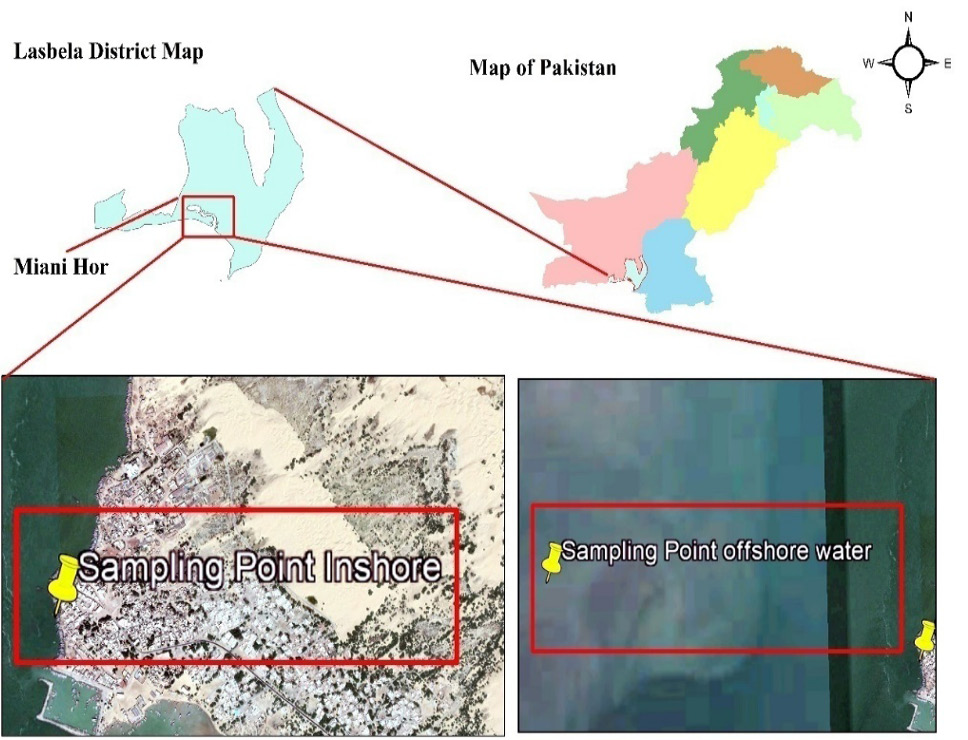
A map displaying the offshore and inshore sampling locations at Lasbela Balochistan, Pakistan’s Miani Hor Lagoon (Habib and Bano, 2023).
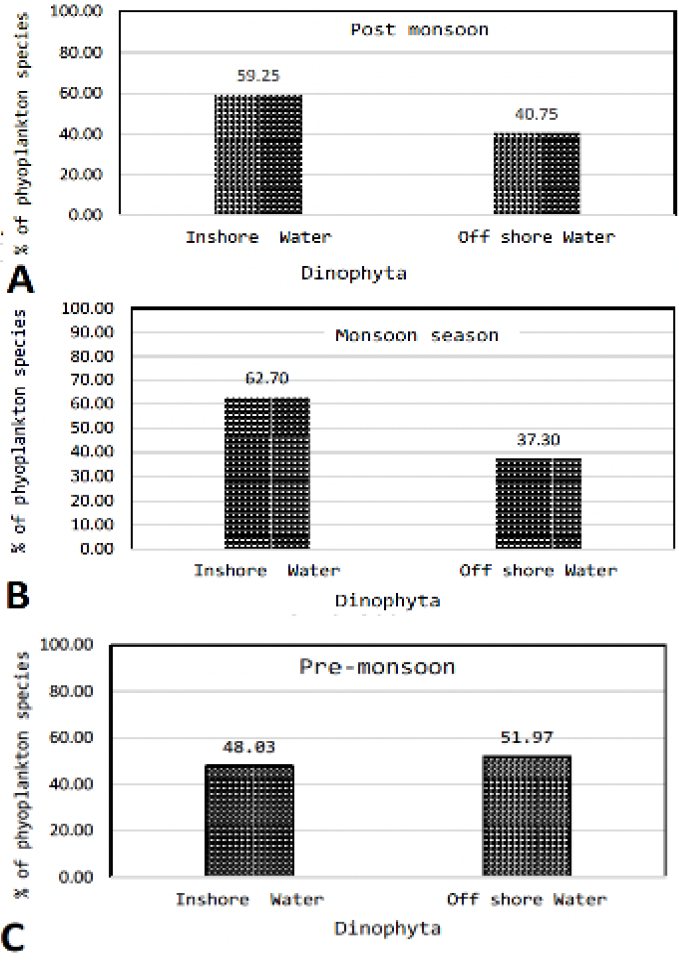
Dinophyta species recorded in the inshore and offshore waters of Miani Hor, Balochistan during post monsoon season (A), monsoon season (B) and premonsoon season (C).
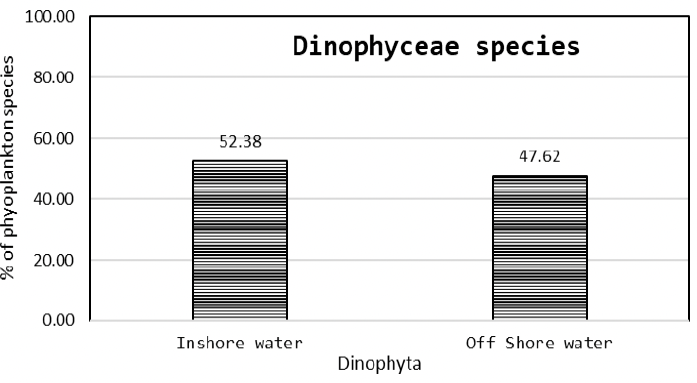
The abundance of phytoplankton species in inshore and offshore waters Miani Hor, Balochistan, during three seasons.
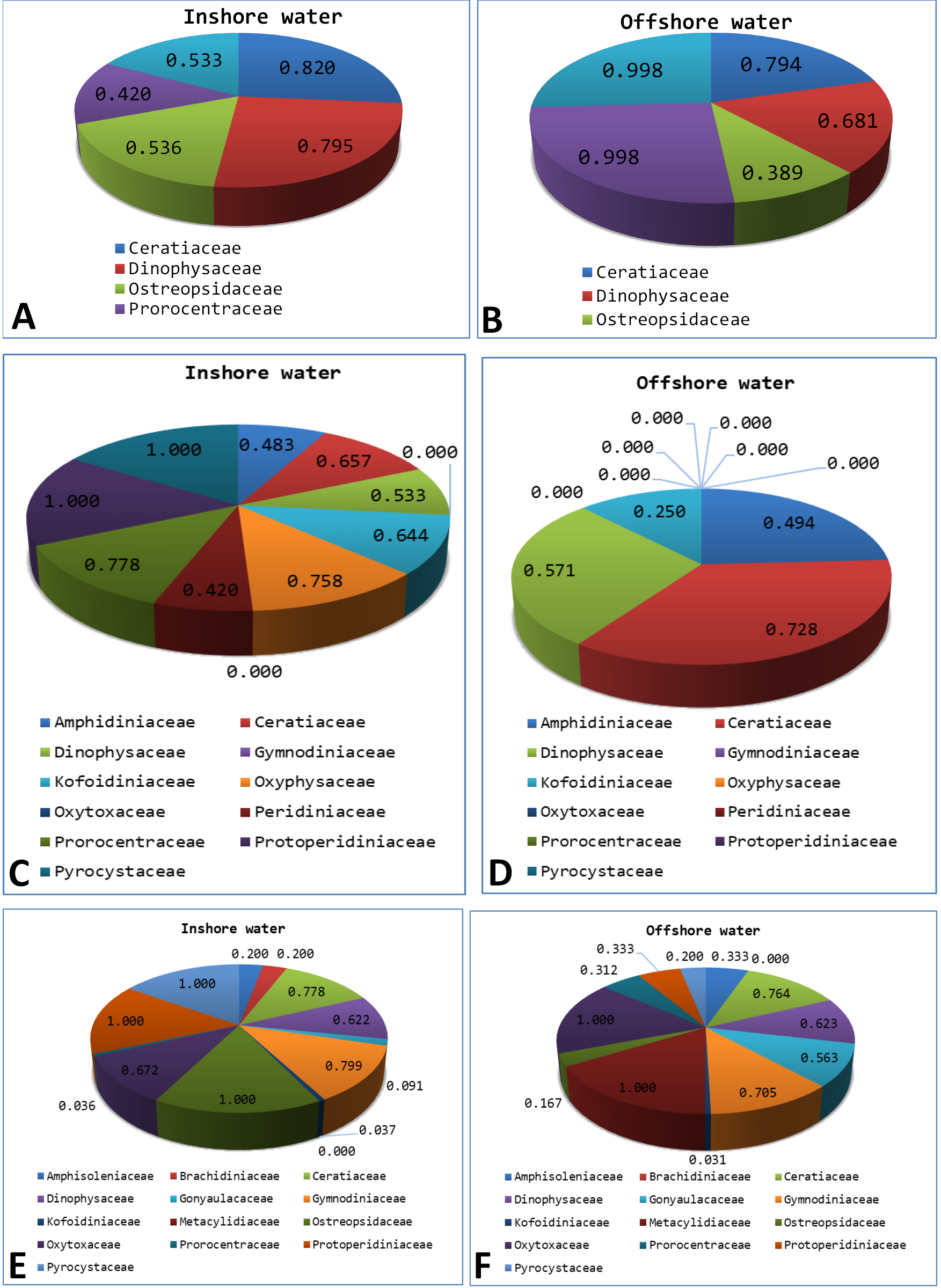
Diversity index value of Group Dinophyta throughout the inshore (A), offshore (B) during post-monsoon season, inshore (C) and offshore (D) during monsoon season, inshore (E) and offshore (F) waters of Miani Hor Balochistan during pre-monsoon season.
References
- Banse, K., 1968. Hydrography of the Arabian sea shelf of India and Pakistan and effects on demersal fishes. Deep Sea Res. Oceanogr. Abstract., 15: 45-79. Elsevier. https://doi.org/10.1016/0011-7471(68)90028-4[CrossRef]
- Barber, R.T., Marra, J., Bidigare, R.C., Codispoti, L.A., Halpern, D., Johnson, Z., Latasa, M., Goericke, R. and Smith, S.L., 2001. Primary productivity and its regulation in the Arabian Sea during 1995. Deep Sea Res. II: Topical Stud. Oceanogr., 48: 1127-1172. https://doi.org/10.1016/S0967-0645(00)00134-X[CrossRef]
- Béjard, T.M., Rigual-Hernández, A.S., Tarruella, J.P., Flores, J.A., Sanchez, V.A., Llamas, C.I. and Sierro, F.J., 2024. Planktic foraminifera assemblage composition and flux dynamics inferred from an annual sediment trap record in the Central Mediterranean Sea. EGUsphere, 2024: 1-34. https://doi.org/10.5194/egusphere-2023-3101[CrossRef]
- Bjørneklett, H.K., 2018. Marine protist diversity and harmful algae revealed by metabarcoding. Master’s thesis.
- Bogus, K., Mertens, K.N., Lauwaert, J., Harding, I.C., Vrielinck, H., Zonneveld, K.A. and Versteegh, G.J., 2014. Differences in the chemical composition of organic-walled dinoflagellate resting cysts from phototrophic and heterotrophic dinoflagellates. J. Phycol., 50: 254-266. https://doi.org/10.1111/jpy.12170[CrossRef]
- Boney, A.D., 1989. Phytoplankton. Edward Arnold. Second Edit. pp. 118.
- Boudouresque, C.F., 2015. Taxonomy and phylogeny of unicellular eukaryotes. Environ. Microbiol. Fundament. Appl. Microb. Ecol., pp. 191-257. https://doi.org/10.1007/978-94-017-9118-2_7[CrossRef]
- Carty, S., 2014. Freshwater dinoflagellates of North America. Cornell University Press. https://doi.org/10.7591/9780801470370[CrossRef]
- Cebrián, J. and Valiela, I., 1999. Seasonal patterns in phytoplankton biomass in coastal ecosystems. J. Plankton Res., 21: 429-444. https://doi.org/10.1093/plankt/21.3.429[CrossRef]
- Chaghtai, F. and Saifullah, S.M., 1988. An illustrated account of the species of Ceratium Shrank found in North Arabian Sea bordering Pakistan. Publ. No. 5, pp. 50. Centre of Excellence in Marine Biology, University of Karachi, Shamim Printing Press, Karachi.
- Chaghtai, F. and Saifullah, S.M., 2001. Harmful algal bloom (HAB) organisms of the North Arabian Sea bordering Pakistan. I. Gonyaulax diesing. Pakistan J. Bot., 33: 69–75.
- Chowdhury, M., Biswas, H., Mitra, A., Silori, S., Sharma, D., Bandyopadhyay, D., Shaik, A.U.R., Fernandes, V. and Narvekar, J., 2021. Southwest monsoon-driven changes in the phytoplankton community structure in the central Arabian Sea (2017–2018): After two decades of JGOFS. Prog. Oceanogr., 197: 102654. https://doi.org/10.1016/j.pocean.2021.102654[CrossRef]
- Cicily, L.T. and Nandan, B.S., 2015. Microphytoplankton community structure in the North Eastern Arabian Sea during winter monsoon. Doctoral dissertation, Cochin University of Science and Technology.
- De, M.V.L.H. and Nina, F.C., 1998. The relationship between phytoplankton composition and physical– chemical variables: A comparison of taxonomic and morphological–functional descriptors in six temperate lakes. Freshw. Biol., 40: 679-696. https://doi.org/10.1046/j.1365-2427.1998.00369.x[CrossRef]
- Draredja, M.A., Frihi, H., Boualleg, C., Gofart, A., Abadie, E. and Laabir, M., 2019. Seasonal variations of phytoplankton community in relation to environmental factors in a protected meso-oligotrophic southern Mediterranean marine ecosystem (Mellah lagoon, Algeria) with an emphasis of HAB species. Environ. Monit. Assess., 191: 1-17. https://doi.org/10.1007/s10661-019-7708-5[CrossRef]
- Fritsch, F.E., 1961. The structure and reproduction of algae. Vol. I. University Press Cambridge, Cambridge.
- Goes, J.I., Thoppil, P.G., Gomes, H.D.R. and Fasullo, J.T., 2005. Warming of the Eurasian landmass is making the Arabian Sea more productive. Science, 308: 545-547. https://doi.org/10.1126/science.1106610[CrossRef]
- Gómez, F., 2012. A quantitative review of the lifestyle, habitat and trophic diversity of dinoflagellates (Dinoflagellata, Alveolata). Syst. Biodiv., 10: 267-275. https://doi.org/10.1080/14772000.2012.721021[CrossRef]
- Habibullah and Bano, A., 2023. The study of Bacillariophyta species diversity in the coastal waters of Lasbela, Baluchistan. Proc. Pakistan Congr. Zool., 41: 29-36.
- Hansen, P.J., 2011. The role of photosynthesis and food uptake for the growth of marine mixotrophic dinoflagellates 1. J. Eukaryot. Microbiol., 58: 203-214. https://doi.org/10.1111/j.1550-7408.2011.00537.x[CrossRef]
- Hassan, F.M., Kathim, N.F. and Hussein, F.H., 2008. Effect of chemical and physical properties of river water in Shatt Al-Hilla on phytoplankton communities. E J. Chem., 5: 323-330. https://doi.org/10.1155/2008/940542[CrossRef]
- Hilaluddin, F., Yusoff, F.M. and Toda, T., 2020. Shifts in diatom dominance associated with seasonal changes in an estuarine-mangrove phytoplankton community. J. Mar. Sci. Eng., 8: 528. https://doi.org/10.3390/jmse8070528[CrossRef]
- Hoque, S.A., Zafar, M. and Mahmood, N., 1999. Temporal and spatial distribution of phytoplankton with emphasis on Skeletonema costatum in the Mathamuhuri River estuary (Chakaria mangrove ecosystem), Bangladesh. Pak. J. Mar. Sci., 8: 29-39.
- Hu, L., Peng, X., Zhou, J., Zhang, Y., Xu, S., Mao, X Gao, Y. and Liang, J. 2015. Characterizing the interactions among a dinoflagellate, flagellate and bacteria in the phycosphere of Alexandrium tamarense (Dinophyta). Front. Mar. Sci., 2: 100. https://doi.org/10.3389/fmars.2015.00100[CrossRef]
- Kagalou, I., Papastergiadou, E. and Leonardos, I., 2008. Long term changes in the eutrophication process in a shallow Mediterranean lake ecosystem of W. Greece: Response after the reduction of external load. J. Environ. Manage., 87: 497-506. https://doi.org/10.1016/j.jenvman.2007.01.039[CrossRef]
- Kasymov, A., 2000. Methods of monitoring in Caspian Sea. Qapp-Poliqraf, Baku, pp. 57.
- Latif, S., Ayub, Z. and Siddiqui, G., 2013. Seasonal variability of phytoplankton in a coastal lagoon and adjacent open sea in Pakistan. Turk. J. Bot., 37: 398-410. https://doi.org/10.3906/bot-1201-6[CrossRef]
- Le Bescot, N., Mahé, F., Audic, S., Dimier, C., Garet, M.J., Poulain, J., Wincker, P., De Vargas, C. and Siano, R., 2016. Global patterns of pelagic dinoflagellate diversity across protist size classes unveiled by metabarcoding. Environ. Microbiol., 18: 609-626. https://doi.org/10.1111/1462-2920.13039[CrossRef]
- Le Mézo, P., Beaufort, L., Bopp, L., Braconnot, P. and Kageyama, M., 2017. From monsoon to marine productivity in the Arabian Sea: Insights from glacial and interglacial climates. Clim. Past, 13: 759-778. https://doi.org/10.5194/cp-13-759-2017[CrossRef]
- Lemonnier, H., Lantoine, F., Courties, C., Guillebault, D., Nézan, E., Chomérat, N., Escoubeyrou, K., Galinié, C., Blockmans, B., N., Escoubeyrou, K., Galinié, C., Blockmans, B. and Laugier, T., 2016. Dynamics of phytoplankton communities in eutrophying tropical shrimp ponds affected by vibriosis. Mar. Pollut. Bull., 110: 449-459. https://doi.org/10.1016/j.marpolbul.2016.06.015[CrossRef]
- Lovko, V.J., 2008. Pathogenicity of the purportedly toxic dinoflagellates Pfiesteria piscicida and Pseudopfiesteria shumwayae and related species. The College of William and Mary.
- McGowan, S., 2023. Harmful algal blooms. In: Biological and environmental hazards, risks, and disasters. Elsevier. pp. 9-53. https://doi.org/10.1016/B978-0-12-820509-9.00002-2[CrossRef]
- Moffett, J.W. and Landry, M.R., 2020. Grazing control and iron limitation of primary production in the Arabian Sea: Implications for anticipated shifts in Southwest Monsoon intensity. Deep Sea Res. II: Topical Stud. Oceanogr., 179: 104687. https://doi.org/10.1016/j.dsr2.2019.104687[CrossRef]
- Moore, S.K., Trainer, V.L., Mantua, N.J., Parker, M.S., Laws, E.A., Backer, L.C. and Fleming, L.E., 2008. November. Impacts of climate variability and future climate change on harmful algal blooms and human health. Environ. Hlth. BioMed. Centr., 7: 1-12. https://doi.org/10.1186/1476-069X-7-S2-S4[CrossRef]
- Noga, E.J. and Levy, M.G., 2006. Phylum dinoflagellata. Fish Dis. Disord., 1: 16-45. https://doi.org/10.1079/9780851990156.0016[CrossRef]
- Not, F., Siano, R., Kooistra, W.H., Simon, N., Vaulot, D. and Probert, I., 2012. Diversity and ecology of eukaryotic marine phytoplankton. Advan. Bot. Res., 64: 1-53. https://doi.org/10.1016/B978-0-12-391499-6.00001-3[CrossRef]
- Prescott, G.W., 1962. Algae of western great lake area. William C. Brown Company Publishers. pp. 977. https://doi.org/10.5962/bhl.title.4650[CrossRef]
- Rasheed, S., Bano, A., Rashid, M. and Latif, A., 2019. A study of occurrence of planktons from Balochistan Waters. Int. J. Mar. Sci., 9: 45-48. https://doi.org/10.5376/ijms.2019.09.0005[CrossRef]
- Richard, M., 1987. Atlas du Phytoplancton marin Volume II: Diatomophycees. Centre National de La Recherche Scientifique, Paris. pp. 297.
- Riebesell, U., 2004. Effects of CO2 enrichment on marine phytoplankton. J. Oceanogr., 60: 719-729. https://doi.org/10.1007/s10872-004-5764-z[CrossRef]
- Rodríguez, F., Escalera, L., Reguera, B., Nogueira, E., Bode, A., Ruiz-Villarreal, M., Rossignoli, A.E. Ben-Gigirey, B., Rey, V. and Fraga, S., 2024. Red tides in the Galician rías: Historical overview, ecological impact, and future monitoring strategies. Environ. Sci. Proc. Impacts, 26: 16-34. https://doi.org/10.1039/D3EM00296A[CrossRef]
- Saifullah, S.M. and Rasool, F., 2002. Mangroves of Miani Hor lagoon on the north Arabian Sea coast of Pakistan. Pak. J. Bot., 34: 303-310.
- Santhanam, R., 2022. Bioluminescent marine plankton. Bentham Science Publishers. https://doi.org/10.2174/97898150502021220101[CrossRef]
- Schapira, M., Vincent, D., Gentilhomme, V. and Seuront, L., 2008. Temporal patterns of phytoplankton assemblages, size spectra and diversity during the wane of a Phaeocystis globosa spring bloom in hydrologically contrasted coastal waters. J. Mar. Biol. Assoc. U.K., 88: 649-662. https://doi.org/10.1017/S0025315408001306[CrossRef]
- Sherr, E.B. and Sherr, B.F., 2007. Heterotrophic dinoflagellates: A significant component of microzooplankton biomass and major grazers of diatoms in the sea. Mar. Ecol. Prog. Ser., 352: 187-197. https://doi.org/10.3354/meps07161[CrossRef]
- Skarlato, S.O., Telesh, I.V., Matantseva, O.V., Pozdnyakov, I.A., Berdieva, M.A., Schubert, H., Filatova, N.A., Knyazev, N.A. and Pechkovskaya, S.A., 2018. Studies of bloom-forming dinoflagellates Prorocentrum minimum in fluctuating environment: Contribution to aquatic ecology, cell biology and invasion theory. Protistology, 12: 113-157. https://doi.org/10.21685/1680-0826-2018-12-3-1[CrossRef]
- Solak, C.N., Barinova, S., Acs, E. and Dayioğlu, H., 2012. Diversity and ecology of diatoms from Felent creek (Sakarya River basin), Turkey. Turk. J. Bot., 36: 191-203. https://doi.org/10.3906/bot-1102-16[CrossRef]
- Suggett, D.J., Warner, M.E. and Leggat, W., 2017. Symbiotic dinoflagellate functional diversity mediates coral survival under ecological crisis. Trends Ecol. Evol., 32: 735-745. https://doi.org/10.1016/j.tree.2017.07.013[CrossRef]
- Tang, Y.Z., Gu, H., Wang, Z., Liu, D., Wang, Y., Lu, D. Hu, Z., Deng, Y., Shang, L. and Qi, Y., 2021. Exploration of resting cysts (stages) and their relevance for possibly HABs-causing species in China. Harmf. Algae, 107: 102050. https://doi.org/10.1016/j.hal.2021.102050[CrossRef]
- Taylor, F.J.R., Hoppenrath, M. and Saldarriaga, J.F., 2008. Dinoflagellate diversity and distribution. Biodiv. Conserv., 17: 407-418. https://doi.org/10.1007/s10531-007-9258-3[CrossRef]
- Telesh, I., Schubert, H. and Skarlato, S., 2021. Abiotic stability promotes dinoflagellate blooms in marine coastal ecosystems. Estuar. Coast. Shelf Sci., 251: 107239. https://doi.org/10.1016/j.ecss.2021.107239[CrossRef]
- Thara, K.J. and Sajeev, R., 2011. Response of eastern Arabian Sea to extreme climatic events with special reference to selected pelagic fishes. Doctoral dissertation, Cochin University of Science and Technology.
- Tiffany, L.H. and Britton, M.E., 1971. The algae of illinois. Hafner Publication Company, New York. pp. 407.
- Uitz, J., Claustre, H., Gentili, B. and Stramski, D., 2010. Phytoplankton class-specific primary production in the world’s oceans: Seasonal and interannual variability from satellite observations. Glob. Biogeochem. Cycles, 24: https://doi.org/10.1029/2009GB003680[CrossRef]
- Vidal, S., Cano, I.L. and Sierro, F.J., 2024. Planktic foraminifera assemblage composition and flux dynamics inferred from an annual 1 sediment trap record in the Central Mediterranean Sea 2.
- Vincent, F. and Bowler, C., 2020. Diatoms are selective segregators in global ocean planktonic communities. Msystems, 5: 10-1128. https://doi.org/10.1128/msystems.00444-19[CrossRef]
Services
Article usage statistics
Loading…