
Although microplastics provide much convenience to humans, they also pose a threat to the ecological environment on which humans depend. Microplastics persist in the environment and spread throughout the planet through the atmosphere, ocean currents, wind and animals, and it of different shapes and sizes can directly or indirectly affect organisms and pose health risks to animals and humans. Therefore, the size and types of microplastics and their effects on different organs of different types of animals were reviewed in this paper. However, we found that the health risks posed by microplastics to amphibians and reptiles remain unknown. Then, we reviewed the effects of microplastics on amphibians and reptiles, and most previous studies have focused on turtles and tadpoles; by comparison, few studies have been conducted on snakes, lizards and crocodiles. Although the extinction of some species has increased awareness of the need for conservation, there are still many gaps in research on the effects of microplastics on amphibians and reptiles. More research on the effects of microplastics on amphibians and reptiles is needed to to learn more about the potential effects and direct ongoing future conservation efforts. Finally, some constructive countermeasures are proposed to promote microplastics research in amphibians and reptiles.
Review · Volume 54, Issue 6, 20 September 2022 · Open Access
Microplastics: Their Effects on Amphibians and Reptiles-A Review
·
Affiliations & Notes ⌄
- 1Kunming Institute of Zoology, Chinese Academy of Sciences, No. 17 Longxin Road, Panlong District, Kunming 650201, China * Corresponding author: raodq@mail.kiz.ac.cn
Article Info ⌄
- Journal:
- Pakistan Journal of Zoology
- Published:
- 20 September 2022

From the article
- Although the effects of microplastics have received attention from various researchers, research on the effects of microplastics or macroplastics on amphibians and reptiles is still lacking.
- With the continual increase in the production and use of plastic products, there is a pressing need to document the effect of microplastics on amphibians and reptiles to aid their conservation.
- In addition to research on the effect of microplastics on amphibians and reptiles, green products need to be increasingly used to protect the environment for the well-being of both humans and animals.
- The following research directions relating to the physical and biochemical effects of microplastics on amphibians and reptiles would be particularly fruitful.
Selected from the article's own text.
Abstract
Introduction
Plastics are high molecular weight compounds that are produced either by addition polymerization or polycondensation reactions with monomers extracted from coal, oil and natural gas . Since the development of synthetic polymers in the 1950s, the production and use of plastic products have increased . In 2019, approximately 368 million tons of plastic were produced . Plastic products are widely used for their light weight, high strength, durability, low cost, high ductility and stable properties . Plastic products are currently used in various products, including medical equipment, building supplies, personal care products, household products and toys .
Microplastics have been found in diverse parts of the globe including marine environments, freshwater habitats and soil, and they can persist in the environment for long periods . In our daily life, we have often found discarded pesticide plastic bottles (Fig. 1A) and plastic films (Fig. 1B); with the sun’s ultraviolet radiation and the wind, they gradually decompose into smaller pieces of plastic, which can eventually mix into the soil. The harmful and toxicological effects of microplastics can vary because of their different shapes and properties, and the persistence of microplastics in the environment stems from their small particle size and weak photodegradation ability ; . A variety of additives in waste plastic products may be released in the process of recycling and natural aging, and most of these additives are harmful ; . Microplastics can react with other pollutants to produce more complex secondary pollutants with higher compound toxicity . In addition to greatly harming the ecological environment, microplastics affect human health as they are passed through the food chain . Microplastics are almost everywhere in the environment (Fig. 2).
Because of rapid human population growth, the intensification of human activities and frequent natural disasters, the ecological environment has deteriorated and continues to deteriorate, the habitat of many species has become fragmented or even disappeared and populations have sharply decreased; this has contributed to a rapid decline in global biodiversity and accelerated the rate of species extinction ; ; . According to Hoffmann et al. (2010), approximately 20% of vertebrates (25% of mammals, 13% of birds, 22% of reptiles and 41% of amphibians) are threatened by extinction, and the outlook for amphibians and reptiles was not optimistic . Amphibians and reptiles are key components of ecosystems, and habitat protection is considered key for amphibian and reptile conservation . Consequently, several studies have examined how various environmental variables affect amphibians and reptiles, such as the water environment, soil environment, threats, temperature and humidity ; de la Vega-Pérez et al., 2019; . Species diversity has also been a major focus of amphibian and reptile conservation research. Several studies examining species composition, elevational patterns, floristic distribution characteristics, threatened species and new species have aided species diversity conservation ; ; .
The objectives of this review were to (1) outline the size and types of microplastics and their effects on different organs of different types of animals and (2) clarify the effects of microplastics on amphibians and reptiles and their conservation. Several research directions relating to the physical and biochemical effects of microplastics on amphibians and reptiles that merit future study are also discussed.
Status of RESEARCH on MICROPLASTICS
Microplastics of different particle sizes
The concept of microplastics was first proposed in 2004, and microplastics were defined as plastic debris and particles with diameters less than 5 mm . Qi et al. (2020) further divided microplastics into small microplastics (< 1 mm), medium microplastics (1–3 mm), large microplastics (3–5 mm), nanoplastics (1–1000 μm) and picoplastics (< 1 μm) ; ; ; ; ; ; . In a comprehensive study on microplastic pollution, 1167 fish samples were collected in southern Germany. The results show that more than 95% of the particles may be less than 40 μm. Beyond the detection range of most other micro plastic investigations today. Moreover, the smaller particle size of microplastics in this study may increase the prevalence of microplastics in fish to 100%; And 70% of the particles are less than 5 μm. Therefore, it is more suitable to transfer to the organization, which is of key significance for fish health and consumer contact . The same problem has been found in other studies, for example, study on microplastics in the Asian clam (Corbicula fluminea) in Taihu Lake, China, the result shown that the size of microplastics ranged from 0.021-4.83 mm, and microplastics in the range of 0.25-1 mm were dominant . This showed that in addition to the larger plastic products such as plastic bottles and plastic bags that are usually visible to the naked eye, more and more plastic products have begun to decompose into smaller particles, and can even escape the general detection means.
The effects of microplastics of different shapes and sizes have been studied, and this work has shown that plastic products including plastic bottles, plastic bags and plastic debris can become entangled with animals, suffocate them or damage their organs following ingestion. Vasaruchapong and Chanhome (2013) found a wild-captured female Monocellate Cobra (Naja kaouthia) in an abnormal posture that had difficulty moving because of swelling in the middle third of the body. Surgery later revealed that the swelling was caused by a plastic bottle and a piece of cloth in the gastrointestinal tract. After removing these items, the snake fully recovered. However, a wild King Cobra (Ophiophagus hannah) did not fare as well after ingesting an opaque plastic bag with unknown contents. The snake’s physical condition rapidly deteriorated, which was reflected by the substantial weight loss and large area of wrinkled skin. Over time, the surrounding muscle tissue atrophied, and the nerve arch became more prominent .
Studies of plastics of different sizes viz. millimeters, microns and nanometers have also been conducted. Dong et al. (2018) evaluated the size-dependent migration and retention of micron-sized plastic spheres (2.0, 1.5, 0.8, 0.6, 0.4 and 0.1 µm) in marine sandy environments with different salinities. They found that the aggregation of 0.6, 0.4 and 0.1 μm microplastics weakens their fluidity. At 17.5, 3.5 and 0 PSU, the effect of salinity on the transport of microplastics depends on the size of microplastics. The mechanism by which cell transport is promoted under high ionic strength varies among plastic particles of different sizes; the adsorption of 0.02 μm microplastic particles on the surface of cells and the obstruction caused by suspended plastic particles can promote cell transport . Plastic particles are confirmed carriers of pollutants, and microplastic particles of different sizes have different Deposition rates in the marine and soil environment ; ; . In addition, the capacity of microplastics of the same particle size to adsorb pollutants and their effects on animals vary at different concentrations ; ; .
Microplastics of different material types
Plastics can be divided into several different types based on their chemical composition, including polyethylene (PE), polyvinyl chloride (PVC), polypropylene (PP), polystyrene (PS), polyamide (PA), polycarbonate (PC), polyethylene terephthalate (PET), phthalate acid esters (PAEs), polytetrafluoroethylene (PTFE), polymethyl methacrylate (PMMA) and acrylonitrile butadiene styrene copolymers (ABS) ; ; ; ; ; ; ; .
Plastic products of different materials vary in the risks they pose to human and animal health. Rochman et al. (2013) pointed out that monomers and other components of PVC, PS, PC and polyurethane may cause cancer and affect the hormones of organisms according to laboratory tests (vom Saal and Hughes, 2005; ; . These materials are generally made of toxic materials that are difficult to recycle. However, the effects of some of the plastic products are more benign, such as PE . The continuous exposure of fish to high concentrations of PVC may have negative effects on fish physiology . The effects of PS nanoparticles of different sizes (50 and 100 nm) and types (plain PS, carboxyl-modified and amine-modified) on organisms can vary . In addition, surface functional groups appear to affect the affinity of organic matter and Ca2+ to nanoplastics . Based on aggregation kinetics experiments and Derjaguine-Landaue-Verweye-Overbeek theoretical calculations, nano PS has high stability in aquatic environments . PS, PE, PP, PVC and other microplastic particles can easily adsorb pollutant particles, and the adsorption capacity of microplastics increases as the pollutant concentration increases; the deposition of pollutants in the water environment and soil environment can harm the ecological environment ; ; .
Because of the wide application of plastic products, the content of the same type of plastic product can vary among locations, and the concentration of PAEs is higher in more developed areas . With the spread of urbanization, the content of phthalate esters in the soil of suburban wasteland has increased; furthermore, the use of plastic film in non-urban areas has led to a gradual increase in the content of PAEs in soil ; ; . Although He et al. (2015) proposed the use of microbial degradation, phytoremediation and bioavailability by adsorption to remediate PAE-contaminated soil, remediation remains difficult because we lack a sound understanding of the mechanisms underlying the wide distribution of phthalate esters in soil. In addition to affecting soil quality and pollutant accumulation, microplastics (e.g., PE and PP) can affect soil microbial diversity and bacterial community structure .
Effects of microplastics on different organisms
The effects of plastics vary among animals, and plastics can directly or indirectly induce chemical toxicity, including growth inhibition, reductions in fecundity, alterations of enzyme activity and increases in mortality ; ; ; , 2019; . Microplastics research on terrestrial vertebrates has mainly focused on rodents. Deng et al. (2017) showed that the distribution of microplastics in animal tissues depends on their size; specifically, large particles (20 μm diameter) tend to be distributed in all tissues, whereas small particles (5 μm diameter) tend to be concentrated in the intestines. In addition, metabolites involved in lipid metabolism increased, and choline decreased, in the serum of mice exposed to microplastics ; . Microplastics research on terrestrial invertebrates has mainly focused on the earthworm (Lumbricus terrestris). Earthworms produce more mucus when they ingest substances that are not rich in fresh organic matter . The increase in the microplastics concentration (high doses) in garbage may stimulate earthworms to produce more intestinal mucus, the growth and weight of earthworms are reduced . Microplastics may also lead to changes in the energy distribution of another worm (Eisenia andrei) .
Aquatic animals are one of the most well-studied groups of animals in the field of microplastics. In environments with high concentrations of microplastics, the swimming ability of fish is weakened, predation efficiency is decreased, the oral cavity is vulnerable to damage and mortality increases because of inflammation ; ; ; , 2019; . Aside from the concentration of microplastics, the exposure time to microplastics can substantially affect fish: the health status of fish decreases as the exposure time increases (Li et al., 2020a). PE and PET have been documented in shellfish, which are commonly consumed by humans, and these microplastics can transfer nutrients in the food chain . Détrée and Gallardo-Escárate (2018) exposed the edible Mediterranean mussel (Mytilus galloprovincialis) to different concentrations of microplastics and found that homeostasis was altered, and stress and immune-related proteins were produced, which resulted in a decrease in the energy required for growth. When mussels were exposed to an environment without microplastics, apoptosis was activated, and immune receptors and stress-related proteins were up-regulated. Furthermore, microplastics also induce intestinal macrobiotic imbalance and specific bacterial changes, which will provide new insights into the potential mechanism of intestinal toxicity caused by microplastics ; .
Several studies have been conducted on the toxic reactions of birds, insects and even nematodes to microplastics. Reynolds and Ryan (2018) explored the potential environmental threat of microplastics in African freshwater systems by testing and analyzing 283 fecal samples and 408 feather brushings. They found that 5% of fecal samples and 10% of feather samples contained microplastic fibers. Galleria mellonella, Tenebrio molitor and Plodia interpunctella can degrade PE and PS microplastics, which may be related to their intestinal bacterial flora ; ; . The ability of microplastic particles to induce death and reproductive dysfunction in Caenorhabditis elegans, decrease the intestinal calcium level and increase the expression of oxidative stress genes depends on the size of the microplastic particles (Lei et al., 2018a).
Effects of microplastics on different organs
Many studies have examined the toxicity of microplastics to different organs, including those of the respiratory system, digestive system, nervous system, immune system and reproductive system.
Respiratory system: Examination of 114 human lung specimens revealed fibers in 99 cases (87%), including plastic fibers . PS nanoparticles were detected in the lung, testis, spleen, and heart of rats, which indicates that PS nanoparticles can circulate throughout the body .
Digestive system: Digestive system has mainly focused on the gastrointestinal tract, liver. Exposure to microplastics leads to decreased intestinal mucus secretion, decreased intestinal microflora richness and liver lipid disorder in mice ; , 2018a; , 2020; Lei et al., 2018a; ; ; Li et al., 2020b). Rainieri et al (2018) evaluated the differential gene expression of some biomarker genes selected by zebrafish in liver, intestine and brain. In addition, perfluorinated compounds in the liver, brain, muscle tissue and intestine of some selected samples were quantified. The addition of microplastics containing adsorbed pollutants produced the most obvious effect, especially on the liver .
Nervous system: Schirinzi et al. (2017) exposed human brain cells and epithelial cells to an environment polluted by PE and PS in vitro and then explored chemical toxicity at the cellular level by measuring oxidative stress and cell viability. They found that oxidative stress is one of the cytotoxic mechanisms at the cellular level. When rats were exposed to PS nanoplastics, subtle and transient effects on neurobehavior were observed . The results of Lei et al. (2018b) indicate that 1 μm PS particles have the most substantial effect on the survival, development and motor-related neurons of nematodes. Plastic nanoparticles can move up the food chain, enter the brain of top consumers and affect their behavior .
Immune system: Microplastic particles can cause vascular occlusion in animals and humans and blood coagulation ; they may also be toxic to blood cells . Furthermore, microplastics can affect the immune response and immunosuppression of organisms ; ; .
Reproductive system: Microplastics may induce reproductive toxicity through oxidative stress or the activation of signaling pathways . Microplastics can result in abnormal sperm quality and testosterone levels in male mice ; ; exposure of pregnant female mice to PS microplastics increases the risk of metabolic disorders in their offspring .
EFFECTS OF MICROPLASTICS ON AMPHIBIANS AND REPTILES
Effects of microplastics on amphibians
Most studies of the effects of plastics on amphibians have focused on the effects of microplastics on tadpoles. Boyero et al. (2020) proposed three reasons for the need to explore the effect of microplastics on amphibians: (1) the causes of the global amphibian decline are manifold , and microplastics may interact with other causes of their decline ; (2) tadpoles are important primary consumers in freshwater ecosystems that may consume microplastics, and this might affect primary production, nutrient cycling and other processes ; and (3) the accumulation of microplastics in amphibians may lead to the transfer of pollutants through trophic levels and across ecosystem boundaries .
To date, research on the effects of microplastics on amphibians has mainly focused on three aspects (Table I). The first is the toxicity of bisphenol A (BPA) to tadpoles. BPA is a synthetic organic compound used for manufacturing polycarbonate plastics and epoxy resins . High concentrations of BPA have been shown to affect the sexual and physical development of amphibians ; . Although the experimental study of high concentrations of BPA does not replicate the natural concentrations of BPA in the ecological environment (aquatic organisms: 0–9340 ng/g; surface water: 0–63640 ng/L, , research on this aspect is still of value because it provides basic data such as concentration thresholds for the toxic damage of microplastics to amphibians. The second focus is on the toxic effects caused by direct contact or ingestion. After a short period of exposure to microplastics, the movement ability, anti-anxiety behavior and anti-predator responses of Physalaemus cuvieri tadpoles decreases ; additionally, the accumulation of microplastics in tadpoles causes pathological changes in liver tissue . The third focus is on the detection of microplastics in amphibians in the natural environment. Since awareness of the need for natural environments to be protected has increased, amphibians have been shown to be highly sensitive to pollutants and habitat changes . Several studies (e.g., have begun to explore the effects of microplastics on nutrient transfer in tadpoles.
Effects of microplastics on reptiles
Habitat degradation and overexploitation have made reptiles some of the most endangered animals on the planet ; ; . Kolenda et al. (2021) recently evaluated 503 animal samples trapped in abandoned containers around the world, and reptiles (15.3%) were the second most common animals after mammals (78.5%); the proportion of animals trapped in glass or plastic cans and beverage bottles was 48.9%. The effect of microplastics on turtles has been a major focus of research (Table II). Reptiles can become easily entangled with plastics and can ingest large pieces of plastic, such as plastic bottles, bags or straws, which can result in physical injury, including asphyxia or organ damage. Well-known examples include turtles with an obstructed nasopharynx following the inhalation of plastic pipes, which increases the difficulty of breathing, as well as turtles entangled by plastic nets, which limits their mobility ; ; ; ; ; . Entanglement may cause long-term pain, a gradual deterioration in their health, reduce their foraging ability, drowning or death by starvation ; . Turtles may also be trapped in plastic debris from land sources .
Snakes are one of the main groups of reptiles. Snakes have often been documented to be entangled by plastic bags and swallow plastic bottles , bags ; and bottle caps , which can negatively affect their health and even result in death (Table II). Udyawer et al. (2013) reported that a sea snake (Hydrophis elegans) on the northeast coast of Queensland, Australia died because it was
Table I. A number of studies on the effects of (micro)plastics on amphibians.
| Mainly aspects | Authors | Research subjects | Main contents |
| Toxicity of bisphenol A in tadpoles | Bhandari et al., 2015 | Aquatic wildlife species including fish, amphibians, aquatic reptiles, aquatic mammals, etc. | Clarify the effects of the environmental estrogenic contaminants bisphenol A and 17α-ethinyl estradiol on sexual development and adult behaviors in aquatic wildlife species. |
| Tamschick et al., 2016 | Xenopus laevis, European tree frog (Hyla arborea) and European green toad (Bufo viridis) | Bisphenol A diversely affects amphibians with different evolutionary history, sex determination systems and larval ecologies. | |
| Wolkowicz et al., 2016 | Rhinella arenarum (Fam. Bufonidae) | Industrial wastewaters containing bisphenol A, diglycidyl ether, as well as its migration substances and metabolites, represent potential sources of aquatic contamination, which may disrupt populations of amphibian. | |
| Gao et al., 2018 | Chinese giant salamander (Andrias davidianus) | Bisphenol A treatment reduced bodyweight and ERα expression in the gonads in male larvae. | |
| Arancio et al., 2019 | X. laevis | Early exposure to Bisphenol A, Bisphenol AF, or di-n-butyl phthalate has significant, concentration dependent effects on early cleavage, neural development, and embryo survival. | |
| Wu et al., 2020 | Seven taxonomic groups (162 species) across 31 countries | Clarify the effect of the plastic pollutant bisphenol A on the biology of aquatic organisms. | |
| Zhu et al., 2020 | X. laevis | Bisphenol A and bisphenol F at environmentally relevant concentrations can activate Notch signaling and subsequently disrupt intestinal development in vertebrates. | |
| Niu et al., 2020 | X. laevis | Comparison on acute toxicity and stress induction of bisphenol A with its substitutes to Xenopus laevis. Bisphenol A is less harmful than bisphenol AF, and is close to bisphenol A. | |
| Toxicity caused by direct contact or ingestion | Mathieu-Denoncourt et al., 2015 | Western clawed frogs (Silurana tropicalis) | Monomethyl phthalate is unlikely to threaten amphibian populations as only concentrations four orders of magnitude higher than the reported environmental concentrations altered the animal physiology. |
| Gardner et al., 2016 | X. laevis | Developing Xenopus laevis exposed to diethyl, di-n-propyl, and di-n-butyl showed similar malformations that also occurred at lower concentrations with increasing alkyl chain length. | |
| Hu et al., 2016 | Xenopus tropicalis | Microspheres were likely to be ingested and egested relatively fast by tadpoles. Aquatic vertebrate organisms might ingest more microplastics if the abundance of microplastics continues to increase while the available food becomes less. | |
| De Felice et al., 2018 | X. laevis | Polystyrene microplastics can be ingested by tadpoles, but they did not alter X. laevis development and swimming behavior at least during early-life stages, also at high, unrealistic concentrations. | |
| Araújo et al., 2019 | Physalaemus cuvieri | Polyethylene microplastic accumulates in tadpole liver and induces histopathotoxicity in P. cuvieri. Polyethylene microplastic bioaccumulation in tadpoles’ liver was correlated to different histopathological changes. | |
| Boyero et al., 2020 | Midwife toad (Alytes obstetricans) | Microplastics can be an important source of stress for amphibians in addition to other pollutants, climate change, habitat loss or chytrid infections, and that amphibians can be a major transfer path for microplastics from freshwater to terrestrial ecosystems. | |
| Table continues on next page................ | |||
| Mainly aspects | Authors | Research subjects | Main contents |
| Araújo et al., 2020 | Physalaemus cuvieri | Polyethylene microplastic accumulation in P. cuvieri tadpoles can affect important biological aspects such as locomotion ability, anxiogenic behavior, and antipredator response deficit in anurans exposed to potential predators. | |
| Buss et al., 2021 | Wood frog (Rana sylvatica) | Polyester microplastic fibers can augment host–parasite interactions, but only at high concentrations. | |
| Detection of (micro)plastics | Hu et al., 2018 | Microhyla ornata, Rana limnochari, and Pelophylax nigromaculatus and/or Bufo gargarizans | The dominant shape and polymer of microplastic in water and tadpole samples were polyester fibers, and polypropylene fibers and fragments were dominant in sediment samples. Tadpole length was positively correlated to the number of microplastics detected. |
| Iannella et al., 2020 | Italian crested newt (Triturus carnifex) | Livestock pressure directly influences Triturus carnifex diet and highlight that the emerging issue of plastics is a threat even in remote high-altitude environments. | |
| Karaoğlu and Gül, 2020 | Pelophylax ridibundus and Rana macrocnemis | In tadpoles, polyethylene terephthalate, nylon, and polyacrylic were the dominant microplastics. | |
| Kolenda et al., 2020 | Bufo bufo, Rana temporaria, Pelophylax esculentus, Pelobates fuscus and Hyla arborea | IR-ATR analysis revealed that particles were of anthropogenic origin and included nylon, polyurethane, polyisoprene and 1,2 polybutadiene. |
Table II. A number of studies on the effects of (micro)plastics on reptiles.
| Classify | Mainly aspects | Authors | Research subjects | Main contents |
| Biochemical effects | Ingestion | Ng et al., 2016 | Chelonia mydas | Plastics and other foreign materials were found in the stomach contents of 2 of the 8 individuals sampled. |
| Pham et al., 2017 | Caretta caretta | The increasing quantity of plastic debris in the North Atlantic pose a significant risk for loggerhead populations that are already under pressure of other anthropogenic threats such as fishing activities. | ||
| Duncan et al., 2019 | mydas, C. caretta, Lepidochelys kempii, Dermochelys coriacea, Natator depressus, Eretmochelys imbricata, Lepidochelys olivacea | The results showed that synthetic particles being isolated from species occupying different trophic levels suggest the possibility of multiple ingestion pathways. | ||
| Clukey et al., 2017 | L. olivacea, C. mydas, C. caretta, D. coriacea | Comparing the four species, authors found that pelagic juvenile green turtles ate the greatest amounts of plastic and proportionally more sheets and line. | ||
| White et al., 2018 | C. caretta, C. mydas, E. imbricata | This study of ingested micronizing plastic in stranded post-hatchling sea turtles correlates with the ratio of production levels of plastic for disposable consumer markets. | ||
| Jung et al., 2018a | L. olivacea, C. mydas, C. caretta | Low-density polyethylene and polypropylene, some of the most produced and least recycled polymers worldwide, account for the largest percentage of plastic eaten by sea turtles in the Central Pacific. | ||
| Table continues on next page................ | ||||
| Classify | Mainly aspects | Authors | Research subjects | Main contents |
| Wilcox et al., 2018 | C. mydas, E. imbricata, C. caretta, N. depressus, L. olivacea, two unidentified dead turtles | The results provide the critical link between recent estimates of plastic ingestion and the population effects of this environmental threat. | ||
| Velez-Rubio et al., 2018 | C. mydas | The results detected a negative correlation between the presence of plastics debris and turtle's size. | ||
| Domènech et al., 2019 | C. caretta | The composition of marine debris (occurrence and amounts of different categories) was similar to that found in other studies for the western Mediterranean and their amounts seem not to be an important threat to turtle survival in the region. | ||
| Eastman et al., 2020 | C. caretta | This report demonstrates that plastic ingestion is a critical issue for marine turtles from the earliest stages of life. | ||
| Digka et al., 2020 | C. caretta | Results indicated a variation in plastic ingestion amongst life stages of the loggerhead specimens. | ||
| Machovsky-Capuska et al., 2020 | C. mydas | The realized nutritional niche from estuarine turtles was subject to the debris density in the environment, lack of benthic food resources available and the surface foraging behavior, likely preventing them from reaching their nutritional goals and resulting in lower fitness. | ||
| Effects on organs | Di Renzo et al., 2021 | C. caretta | Microplastics and additives surely impact the health status of turtles that showed gastrointestinal impairment and an important level of contamination in tissues. | |
| Savoca et al., 2018 | D. coriacea , C. caretta | The total concentration of all analyzed phthalates, showed high values in all tissues. | ||
| Colferai et al., 2017 | C. mydas | The patterns of anthropogenic marine debris distribution along the gastrointestinal tract and their relationship with obstructions and faecalomas in 62 green turtles (Chelonia mydas) that died during rehabilitation in southern Brazil were determined. | ||
| Galoppo et al., 2017 | Caiman latirostris | The alterations in the caiman female reproductive tract exposed to Bisphenol A highlight the importance of preserving aquatic environments from plastic pollution. | ||
| Banaee et al., 2020 | Emys orbicularis | Microplastics intake induced notable alterations in blood biochemical parameters of Emys orbicularis. | ||
| Detection method | Jung et al., 2018b | L. olivacea, C. mydas, C. caretta | Of 828 ingested plastics pieces from 50 Pacific sea turtles, 96% were identified by attenuated total reflectance Fourier transform infrared spectroscopy (ATR FT-IR) as High-density and low-density polyethylene, unknown PE, polypropylene (PP), PE and PP mixtures, polystyrene, polyvinyl chloride, and nylon. | |
| Caron et al., 2018 | C. mydas | The authors developed a microplastic extraction protocol for examining green turtle (Chelonia mydas) chyme, which is multifarious in nature, by modifying and combining pre-established methods used to separate microplastics from organic matter and sediments. | ||
| Gonzalez-Jauregui et al., 2019 | Crocodilians | The method used during the experiment consists of 1) immobilization of the crocodile; 2) extraction of microplastics from stomach contents obtained through stomach flushing; 3) separation, identification and quantification of recovered microplastic fragments using microscopy and FTIR. | ||
| Table continues on next page................ | ||||
| Classify | Mainly aspects | Authors | Research subjects | Main contents |
| Marn et al., 2020 | C. caretta | Overcomes the difficulties by modelling individual ontogeny under reduced energy intake and expenditure caused by debris ingestion. The predicted ontogeny is combined with a population dynamics model to identify ecological breakpoints: cessation of reproduction or negative population growth. | ||
| Physical effects | Habitat environmental monitoring | do Sul et al., 2011 | Sea turtle | The results showed that the majority (~52-94%) was plastic debris regardless of the sampling approach, considered sources or season of sampling in Brazil (Costa dos Coqueiros, Bahia State). |
| Beckwith and Fuentes, 2018 | C. caretta | The results indicate that microplastic accumulation on nesting sites for the Northern Gulf of Mexico may be of great concern, and could negatively affect the incubating environment for marine turtles. | ||
| Gündoğdua et al., 2019 | C. mydas | Macroplastic pollution can cause negative effects, especially entanglement and entrapment, on green sea turtle females and hatchlings. | ||
| In vivo removal or degradability | Müllera et al., 2012 | C. mydas, C. caretta | The gastrointestinal fluids of the herbivorous Green turtle showed an increased capacity to break down the biodegradable polymer relative to the carnivorous Loggerhead, but at a much lower rate than digestion of natural vegetative matter. | |
| Andrades et al., 2019 | C. mydas | Opportunistic scavenging behavior, an adaptive behavior in most marine ecosystems, may now pose a threat to a variety of marine animals due to the current widespread plastic pollution found in oceans. | ||
| Odors and colors | Pfaller et al., 2020 | C. caretta | Understanding the mechanisms that underlie the attractiveness of marine plastics is therefore critical for optimizing mitigation efforts to protect wildlife and ecosystems threatened by the ever-rising levels of marine plastic debris. | |
| Santos et al., 2016 | C. mydas | Floating darker debris were ingested over the proportions found in the environment and lighter debris under the proportions in green turtle. | ||
| Entanglement or ingestion | Vasaruchapong and Chanhome, 2013 | Naja kaouthia | A plastic bottle and a piece of cloth causes a wild-captured female monocellate cobra (Naja kaouthia) had abnormal posture and move with difficulty as consequences of swelling at the middle third of the body. | |
| Udyawer et al., 2013 | Hydrophis elegans | A ceramic washer had constricted the body and over time caused extensive damage to the underlying tissues. | ||
| Strine et al., 2014 | Ophiophagus hannah | Improper disposal of food and plastic waste can be a threat to snakes, highlighting the need to maintain a waste-free environment, especially in areas inhabited by vulnerable species. | ||
| Deshmukh et al., 2017 | Bungarus caeruleus | The consumed plastic bag halts the digestion and restricts movement so that the snake becomes an easy meal for another predator or scavenger, which could in turn suffer the same consequences. | ||
| Lettoof and Orton, 2020 | Notechis scutatus | The organs around the bottle cap appeared to be heavily damaged, it is unlikely the snake could have passed any waste from this blockage. | ||
| Sindha et al., 2020 | Python molurus | Incidents involve the death of snakes entangled in fishing nets, which traps the pythons until they drown. | ||
| Barreiros and Raykov, 2014 | C. caretta | Plastic debris and discarded/lost nylon fishing gear are part of a serious pollution problem affecting all the world’s oceans. |
trapped by a ceramic ring. The ceramic ring prevented food from entering the stomach and intestines of the snake. Plastic rings of similar shapes and sizes are likely widespread in the environment. We speculate that these plastic rings may cause the death of other snakes. Thus, microplastics in the environment can potential to affect reptiles. There is a need for more research to characterize the types of injury induced by microplastics on reptiles and the factors affecting the likelihood of injury.
CONCLUSIONS AND PERSPECTIVES
Plastic pollution is now considered a major factor responsible for the global decline in biodiversity and is a major threat to the functioning of ecosystems and human health . Although many countries have implemented new measures on the use of plastics, such as using paper materials to make straw instead of plastic straw and the plastic boxes made of environmentally friendly materials, a large amount of plastic waste is still discharged into the natural environment, which affects natural habitats and the animals that occupy them. Although the effects of microplastics have received attention from various researchers, research on the effects of microplastics or macroplastics on amphibians and reptiles is still lacking. With the continual increase in the production and use of plastic products, there is a pressing need to document the effect of microplastics on amphibians and reptiles to aid their conservation. In addition to research on the effect of microplastics on amphibians and reptiles, green products need to be increasingly used to protect the environment for the well-being of both humans and animals.
The following research directions relating to the physical and biochemical effects of microplastics on amphibians and reptiles would be particularly fruitful.
Physical effects
Investigation of the effects of different shapes, sizes and types of microplastics on amphibians and reptiles: Different amphibians and reptiles have different feeding habits. Generally, snakes can swallow larger food, while frogs use their tongues to prey on insects. Moreover, the breathing mode of frogs is also special. Tadpole larvae breathe with gills, and adults can breathe through lungs and skin. Therefore, microplastics of different sizes and types on land or water have different effects on different amphibious and reptile species.
The distribution of microplastics in different areas, habitats, altitudes and other environments where amphibians and reptiles are found and its effect on amphibians and reptiles: Generally, with the change of environment such as altitude and regional type, the range of human activities will change accordingly, and the concentration of microplastics produced by human activities will also change. The distribution of amphibians and reptiles in different environments is also different, so the impact of microplastics on amphibian and reptile populations is also different in different environments.
Investigation on the effect of entanglement of plastic debris products on amphibians and reptiles: In order to facilitate human production and life, some plastic products are made into grids, such as fishing nets, shading nets, etc. These grid shaped plastic products are not only a barrier for amphibians and reptiles to move on land, but also affect the swimming trajectory in water.
Biochemical effects
Study of the toxic effects of microplastics on amphibian and reptile larvae and adults: If microplastics are absorbed by amphibians and reptiles, it is difficult to discharge smoothly as excreta. When they exist in animals for a long time, they will release the chemical toxicity of microplastics, thus affecting animal health.
Toxic effects of microplastics on different organs of amphibians and reptiles: The size and function of different organs of amphibians and reptiles are different. There are also different ways of inhalation and discharge of microplastics. At the same time, they also have different enrichment degrees in different organs. Therefore, it is very necessary to study this part.
Study of the effect of plastic concentration and exposure time on amphibians and reptiles: We speculate that different microplastics concentrations and different times have different toxic effects on amphibians and reptiles, and the differences of effects need a lot of scientific research.
ACKNOWLEDGMENTS
This work was supported by the National Natural Science Foundation of China (31772424; 31970404). We thank Liwen Bianji (Edanz) (www.liwenbianji.cn/) for editing the English text of a draft of this manuscript.
Statement of conflict of interest
The authors have declared no conflict of interest.
Figures
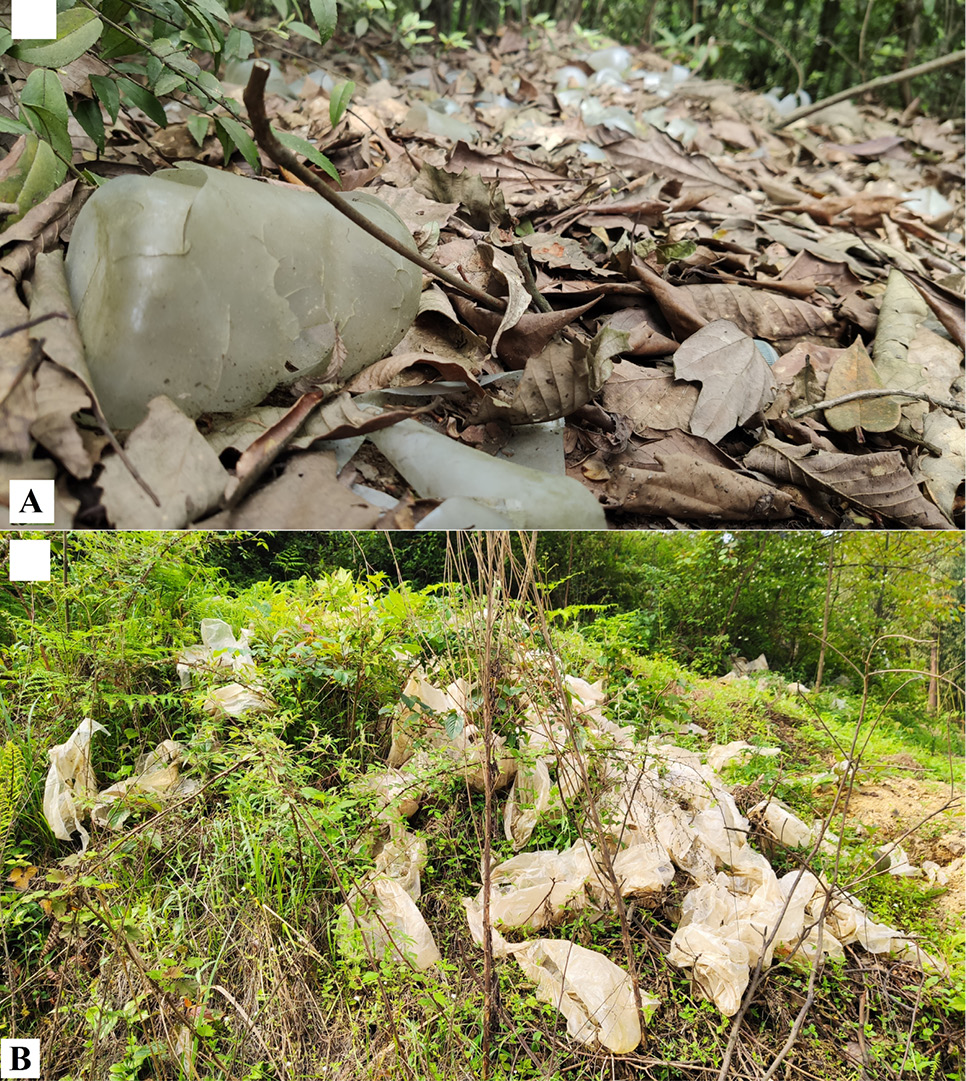
Pesticide plastic bottles (A) and plastic films (B) discarded in the natural environment that have decomposed under the action of ultraviolet light and wind.
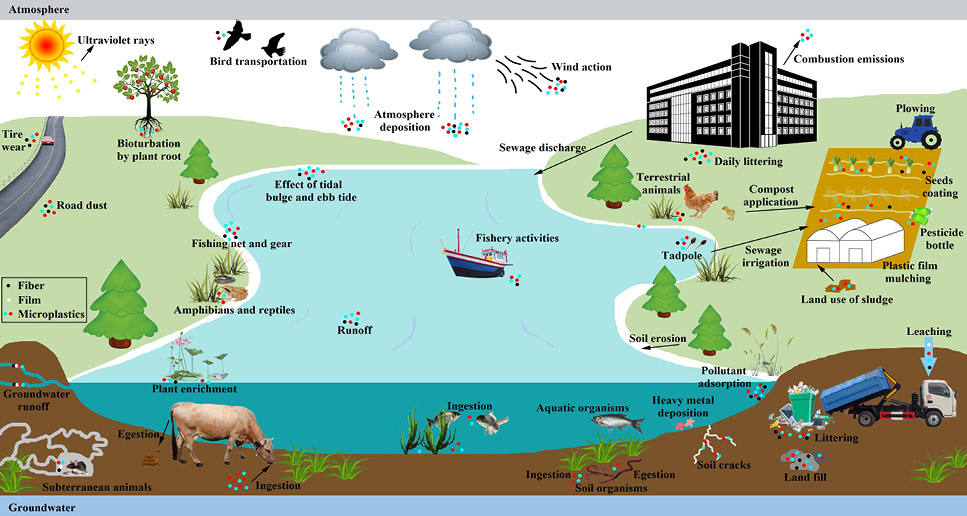
The sources and distribution of microplastics in the natural environment.
References
- Acevedo-Charry, O. and Aide, T.M., 2019. Recovery of amphibian, reptile, bird and mammal diversity during secondary forest succession in the tropics. Oikos, 128: 1065-1078. https://doi.org/10.1111/oik.06252[CrossRef]
- Alimi, O.S., Budarz, J.F., Hernandez, L.M. and Tufenkji, N., 2017. Microplastics and nanoplastics in aquatic environments: Aggregation, deposition, and enhanced contaminant transport. Environ. Sci. Technol., 52: 1704-0724. https://doi.org/10.1021/acs.est.7b05559[CrossRef]
- Andrades, R., dos Santos, R.A., Martins, A.S., Teles, D. and Santos, R.G., 2019. Scavenging as a pathway for plastic ingestion by marine animals. Environ. Pollut., 248: 159-165. https://doi.org/10.1016/j.envpol.2019.02.010[CrossRef]
- Andrady, A.L. 2011. Microplastics in the marine environment. Mar. Pollut. Bull., 62: 1596-1605. https://doi.org/10.1016/j.marpolbul.2011.05.030[CrossRef]
- Andrés Rodríguez-Seijo, R.P., 2018. Microplastics in agricultural soils are they a real environmental hazard? Chapter 3. In: Bioremediation of agricultural soils. CRC Press, Boca Raton, FL. https://doi.org/10.1201/9781315205137-3[CrossRef]
- Arancio, A.L., Cole, K.D., Dominguez, A.R., Cohenour, E.R., Kadie, J., Maloney, W.C., Cilliers, C. and Schuh, S.M., 2019. Bisphenol A, Bisphenol AF, di-n-butyl phthalate, and 17β-estradiol have shared and unique dose-dependent effects on early embryo cleavage divisions and development in Xenopus laevis. Reprod. Toxicol., 84: 65-74. https://doi.org/10.1016/j.reprotox.2018.12.005[CrossRef]
- Araújo, A.P.D.C. and Malafaia, G., 2020. Can short exposure to polyethylene microplastics change tadpoles’ behavior? A study conducted with neotropical tadpole species belonging to order anura (Physalaemus cuvieri). J. Hazard. Mater., 391: 122214. https://doi.org/10.1016/j.jhazmat.2020.122214[CrossRef]
- Araújo, A.P.D.C. and Malafaia, G., 2021. Microplastic ingestion induces behavioral disorders in mice: A preliminary study on the trophic transfer effects via tadpoles and fish. J. Hazard. Mater., 401: 123263. https://doi.org/10.1016/j.jhazmat.2020.123263[CrossRef]
- Araújo, A.P.D.C., Gomes, A.R. and Malafaia, G., 2019. Hepatotoxicity of pristine polyethylene microplastics in neotropical Physalaemus cuvieri tadpoles (Fitzinger, 1826). J. Hazard. Mater., 386: 121992. https://doi.org/10.1016/j.jhazmat.2019.121992[CrossRef]
- Banaee, M., Gholamhosseini, A., Sureda, A., Soltanian, S., Fereidouni, M.S. and Ibrahim, A.T.A., 2020. Effects of microplastic exposure on the blood biochemical parameters in the pond turtle (Emys orbicularis). Environ. Sci. Pollut. Res., 28: 9221-9234. https://doi.org/10.1007/s11356-020-11419-2[CrossRef]
- Barboza, L.G.A., Vethaak, A.D., Lavorante, B.R.B.O., Lundebye, A.K. and Guilhermino, L., 2018. Marine microplastic debris: An emerging issue for food security, food safety and human health. Mar. Pollut. Bull., 133: 336-348. https://doi.org/10.1016/j.marpolbul.2018.05.047[CrossRef]
- Barreiros, J.P. and Raykov, V.S., 2014. Lethal lesions and amputation caused by plastic debris and fishing gear on the loggerhead turtle Caretta caretta (Linnaeus, 1758). Three case reports from Terceira Island, Azores (NE Atlantic). Mar. Pollut. Bull., 86: 518-522. https://doi.org/10.1016/j.marpolbul.2014.07.020[CrossRef]
- Beckwith, V.K. and Fuentes, M.M.P.B., 2018. Microplastic at nesting grounds used by the northern Gulf of Mexico loggerhead recovery unit. Mar. Pollut. Bull., 131: 32-37. https://doi.org/10.1016/j.marpolbul.2018.04.001[CrossRef]
- Bhandari, R.K., Deem, S.L., Holliday, D.K., Jandegian, C.M., Kassotis, C.D., Nagel, S.C., Tillitt, D.E., Saal, F.S.V. and Rosenfeld, C.S., 2015. Effects of the environmental estrogenic contaminants bisphenol A and 17α-ethinyl estradiol on sexual development and adult behaviors in aquatic wildlife species. Gen. Comp. Endocr., 214: 195-219. https://doi.org/10.1016/j.ygcen.2014.09.014[CrossRef]
- Blaustein, A.R., Han, B.A., Relyea, R.A., Johnson, P.T.J., Buck, J.C., Gervasi, S.S. and Kats, L.B., 2011. The complexity of amphibian population declines: Understanding the role of cofactors in driving amphibian losses. Annls N. Y. Acad. Sci., 1223: 108-119. https://doi.org/10.1111/j.1749-6632.2010.05909.x[CrossRef]
- Boyero, L., Lopez-Rojo, N., Bosch, J., Alonso, A., Correa-Araneda, F. and Perez, J., 2020. Microplastics impair amphibian survival, body condition and function. Chemosphere, 244: 125500. https://doi.org/10.1016/j.chemosphere.2019.125500[CrossRef]
- Brennecke, D., Duarte, B., Paiva, F., Caçador, I. and Canning-Clode, J., 2016. Microplastics as vector for heavy metal contamination from the marine environment. Estuar. Coast. Shelf S., 178: 189-195 https://doi.org/10.1016/j.ecss.2015.12.003.[CrossRef]
- Buck, J.C., Scheessele, E.A., Relyea, R.A. and Blaustein, A.R., 2012. The effects of multiple stressors on wetland communities: pesticides, pathogens and competing amphibians. Freshw. Biol., 57: 61-73. https://doi.org/10.1111/j.1365-2427.2011.02695.x[CrossRef]
- Buckley, J. and Beebee, T., 2004. Monitoring the conservation status of an endangered amphibian: The Natterjack toad Bufo calamita in Britain. Anim. Conserv., 7: 221-228. https://doi.org/10.1017/S1367943004001428[CrossRef]
- Buss, N., Sander, B. and Hua, J., 2021. Effects of polyester microplastic fiber contamination on amphibian–trematode interactions. Environ. Toxicol. Chem., in press. https://doi.org/10.1002/etc.5035[CrossRef]
- Cai, L., Peng, S.N., Wu, D. and Tong, M.P., 2016. Effect of different-sized colloids on the transport and deposition of titanium dioxide nanoparticles in quartz sand. Environ. Pollut., 208: 637-644. https://doi.org/10.1016/j.envpol.2015.10.040[CrossRef]
- Canesi, L., Ciacci, C., Bergami, E., Monopoli, M.P., Dawson, K.A., Papa, S., Canonico, B. and Corsi, I., 2015. Evidence for immunomodulation and apoptotic processes induced by cationic polystyrene nanoparticles in the hemocytes of the marine bivalve Mytilus. Mar. Environ. Res., 111: 34-40. https://doi.org/10.1016/j.marenvres.2015.06.008[CrossRef]
- Caron, A.G.M., Thomas, C.R., Berry, K.L.E., Motti, C.A., Ariel, E. and Brodie, J.E., 2018. Ingestion of microplastic debris by green sea turtles (Chelonia mydas) in the great barrier reef: Validation of a sequential extraction protocol. Mar. Pollut. Bull., 127: 743-751. https://doi.org/10.1016/j.marpolbul.2017.12.062[CrossRef]
- Casale, P., Affronte, M., Insacco, G., Freggi, D., Vallini, C., D’Astore, P.P., Basso, R., Paolillo, G., Abbate, G. and Argano, R., 2010. Sea turtle strandings reveal high anthropogenic mortality in Italian waters. Aquat. Conserv., 20: 611-620. https://doi.org/10.1002/aqc.1133[CrossRef]
- Chatto, R., Guinea, M. and Conway, S., 1995. Sea turtles killed by flotsam in northern Australia. Mar. Turtle Newsl., 69: 17-18.
- Cheng, Y.L., Song, W.H., Tian, H.M., Zhang, K.H., Li, B., Du, Z.K., Zhang, W., Wang, J.H., Wang, J. and Zhu, L.S., 2021. The effects of high-density polyethylene and polypropylene microplastics on the soil and earthworm Metaphire guillelmi gut microbiota. Chemosphere, 267: 129219. https://doi.org/10.1016/j.chemosphere.2020.129219[CrossRef]
- Churg, A. and Brauer, M., 2000. Ambient atmospheric particles in the airways of human lungs. Ultrastruct. Pathol., 24: 353-361. https://doi.org/10.1080/019131200750060014[CrossRef]
- Clause, A.G., Celestian, A.J. and Pauly, G.B., 2021. Plastic ingestion by freshwater turtles: A review and call to action. Sci. Rep., 11: 5672. https://doi.org/10.1038/s41598-021-84846-x[CrossRef]
- Clukey, K.E., Lepczyk, C.A., Balazs, G.H., Work, T.M. and Lynch, J.M., 2017. Investigation of plastic debris ingestion by four species of sea turtles collected as bycatch in pelagic pacific longline fisheries. Mar. Pollut. Bull., 120: 117-125. https://doi.org/10.1016/j.marpolbul.2017.04.064[CrossRef]
- Colferai, A.S., Silva, R.P., Martins, A.M. and Bugoni, L., 2017. Distribution pattern of anthropogenic marine debris along the gastrointestinal tract of green turtles (Chelonia mydas) as implications for rehabilitation. Mar. Pollut. Bull., 119: 231-237. https://doi.org/10.1016/j.marpolbul.2017.03.053[CrossRef]
- Cortes-Gómez, A.M., Ruiz-Agudelo, C.A., Valencia-Aguilar, A. and Ladle, R.J., 2015. Ecological functions of neotropical amphibians and reptiles: A review. Univ. Sci., 20: 229-245. https://doi.org/10.11144/Javeriana.SC20-2.efna[CrossRef]
- Craioveanu, O., Craioveanu, C., Cosma, I., Ghira, I. and Miresan, V., 2017. Shelter use assessment and shelter enrichment in captive bred common toads (Bufo bufo, Linnaeus 1758). North-West. J. Zool., 13: 341-346.
- Cressey, D., 2016. The plastic ocean. Nature, 536: 263-265. https://doi.org/10.1038/536263a[CrossRef]
- De Felice, B., Bacchetta, R., Santo, N., Tremolada, P. and Parolini, M., 2018. Polystyrene microplastics did not affect body growth and swimming activity in Xenopus laevis tadpoles. Environ. Sci. Pollut. R., 25: 34644-34651. https://doi.org/10.1007/s11356-018-3408-x[CrossRef]
- de la Vega-Pérez, A.H.D., Jiménez-Arcos, V.H., Centenero-Alcalá, E., Méndez-de la Cruz, F.R. and Ngo, A., 2019. Diversity and conservation of amphibians and reptiles of a protected and heavily disturbed forest of central Mexico. Zookeys, 830: 111-125. https://doi.org/10.3897/zookeys.830.31490[CrossRef]
- Deng, Y.F., Yan, Z.H., Shen, R.Q., Wang, M., Huang, Y.C., Ren, H.Q., Zhang, Y. and Lemos, B., 2020. Microplastics release phthalate esters and cause aggravated adverse effects in the mouse gut. Environ. Int., 143: 105916. https://doi.org/10.1016/j.envint.2020.105916[CrossRef]
- Deng, Y.F., Zhang, Y., Lemos, B. and Ren, H.Q., 2017. Tissue accumulation of microplastics in mice and biomarker responses suggest widespread health risks of exposure. Sci. Rep., 7: 46687. https://doi.org/10.1038/srep46687[CrossRef]
- Derraik, J.G., 2002. The pollution of the marine environment by plastic debris: A review. Mar. Pollut. Bull., 44: 842-852. https://doi.org/10.1016/S0025-326X(02)00220-5[CrossRef]
- Deshmukh, R.V., Deshmukh, S.A., Badhekar, S.A. and Katgube, S.D. 2017. A plastic bag consumed by a common Indian Krait, Bungarus caeruleus (Schneider 1801). IRCF Reptiles Amphibians, 24: 172-174. https://doi.org/10.17161/randa.v24i3.14200[CrossRef]
- Détrée, C. and Gallardo-Escárate, C., 2018. Single and repetitive microplastics exposures induce immune system modulation and homeostasis alteration in the edible mussel Mytilus galloprovincialis. Fish Shellf. Immun., 83: 52-60. https://doi.org/10.1016/j.fsi.2018.09.018[CrossRef]
- Di Renzo, L., Mascilongo, G., Berti, M., Bogdanovic, T., Listes, E., Brkljaca, M., Notarstefano, V., Gioacchini, G., Giorgini, E., Olivieri, V., Silvestri, C., Matiddi, M., D’Alterio, N., Ferri, N. and Di Giacinto, F., 2021. Potential impact of microplastics and additives on the health status of loggerhead turtles (Caretta caretta) stranded along the Central Adriatic Coast. Water Air Soil Poll., 232: 98. https://doi.org/10.1007/s11270-021-04994-8[CrossRef]
- Digka, N., Bray, L., Tsangaris, C., Andreanidou, K., Kasimati, E., Kofidou, E., Komnenou, A. and Kaberi, H., 2020. Evidence of ingested plastics in stranded loggerhead sea turtles along the Greek coastline, East Mediterranean Sea. Environ. Pollut., 263: 114596. https://doi.org/10.1016/j.envpol.2020.114596[CrossRef]
- Dirzo, R., Young, H.S., Galetti, M., Ceballos, G., Isaac, N.J.B. and Collen, B., 2014. Defaunation in the Anthropocene. Science, 345: 401-406. https://doi.org/10.1126/science.1251817[CrossRef]
- do Sul, J.A.I., Santos, I.R., Friedrich, A.C., Matthiensen, A. and Fillmann, G., 2011. Plastic Pollution at a sea turtle conservation area in NE Brazil: Contrasting developed and undeveloped beaches. Estuar. Coast., 34: 814-823. https://doi.org/10.1007/s12237-011-9392-8[CrossRef]
- Domènech, F., Aznar, F.J., Raga, J.A. and Tomas, J., 2019. Two decades of monitoring in marine debris ingestion in loggerhead sea turtle, Caretta caretta, from the western Mediterranean. Environ. Pollut., 244: 367-378. https://doi.org/10.1016/j.envpol.2018.10.047[CrossRef]
- Dong, Z.Q., Qiu, Y.P., Zhang, W., Yang, Z.L. and Wei, L., 2018. Size-dependent transport and retention of micron-sized plastic spheres in natural sand saturated with seawater. Water Res., 143: 518-526. https://doi.org/10.1016/j.watres.2018.07.007[CrossRef]
- Duncan, E.M., Broderick, A.C., Fuller, W.J., Galloway, T.S., Godfrey, M.H., Hamann, M., Limpus, C.J., Lindeque, P.K., Mayes, A.G., Omeyer, L.C.M., Santillo, D., Snape, R.T.E. and Godley, B.J., 2019. Microplastic ingestion ubiquitous in marine turtles. Glob. Change Biol., 25: 744-752. https://doi.org/10.1111/gcb.14519[CrossRef]
- Eastman, C.B., Farrell, J.A., Whitmore, L., Ramia, D.R.R., Thomas, R.S., Prine, J., Eastman, S.F., Osborne, T.Z., Martindale, M.Q. and Duffy, D.J., 2020. Plastic ingestion in post-hatchling sea turtles: Assessing a major threat in Florida near shore waters. Front. Mar. Sci., 7: 693. https://doi.org/10.3389/fmars.2020.00693[CrossRef]
- Espinosa, C., Cuesta, A. and Esteban, M.A., 2017. Effects of dietary polyvinylchloride microparticles on general health, immune status and expression of several genes related to stress in gilthead seabream (Sparus aurata L.). Fish Shellf. Immun., 68: 251-259. https://doi.org/10.1016/j.fsi.2017.07.006[CrossRef]
- Ficetola, G.F., Rondinini, C., Bonardi, A., Baisero, D. and Padoa-Schioppa, E., 2015. Habitat availability for amphibians and extinction threat: A global analysis. Divers. Distrib., 21: 302-311. https://doi.org/10.1111/ddi.12296[CrossRef]
- Gall, S.C. and Thompson, R.C., 2015. The impact of debris on marine life. Mar. Pollut. Bull., 92: 170-179. https://doi.org/10.1016/j.marpolbul.2014.12.041[CrossRef]
- Galoppo, G.H., Canesini, G., Tavalieri, Y.E., Stoker, C., Kass, L., Luque, E.H. and Munoz-de-Toro, M., 2017. Bisphenol A disrupts the temporal pattern of histofunctional changes in the female reproductive tract of Caiman latirostris. Gen. Comp. Endocr., 254: 75-85. https://doi.org/10.1016/j.ygcen.2017.09.021[CrossRef]
- Gao, W.J., Wei, L.X. and Wu, K., 2021. Research progress of microplastics in the environment. Plast. Sci. Technol., 49: 111-116.
- Gao, Y., Yang, C.H., Gao, H.H., Wang, L.Q., Yang, C.M., Ji, H. and Dong, W.Z., 2018. Molecular characterisation of oestrogen receptor ERα and the effects of bisphenol A on its expression during sexual development in the Chinese giant salamander (Andrias davidianus). Reprod. Fert. Dev., 31: 261-271. https://doi.org/10.1071/RD18107[CrossRef]
- Gardner, S.T., Wood, A.T., Lester, R., Onkst, P.E., Burnham, N., Perygin, D.H. and Rayburn, J., 2016. Assessing differences in toxicity and teratogenicity of three phthalates, Diethyl phthalate, Di-n-propyl phthalate, and Di-n-butyl phthalate, using Xenopus laevis embryos. J. Toxicol. Environ. Hlth. A, 79: 71-82. https://doi.org/10.1080/15287394.2015.1106994[CrossRef]
- Gesamp, 2015. Sources, fate and effects of microplastics in the marine environment: Part 2 of a global assessment. International Maritime Organization, London, UK.
- Geyer, R., Jambeck, J.R. and Law, K.L., 2017. Production, use, and fate of all plastics ever made. Sci. Adv., 3: e1700782. https://doi.org/10.1126/sciadv.1700782[CrossRef]
- Gonzalez-Jauregui, M., Borges-Ramirez, M., Barão-Nóbrega, J.A.L., Escamilla, A., Dzul-Caamal, R. and Rendón-von Osten, J., 2019. Stomach flushing technique applied to quantify microplastics in Crocodilians. Methods X, 6: 2677-2685. https://doi.org/10.1016/j.mex.2019.11.013[CrossRef]
- Gregory, M.R., 2009. Environmental implications of plastic debris in marine settings-entanglement, ingestion, smothering, hangers-on, hitch-hiking and alien invasions. Phil. Trans. R. Soc. B, 364: 2013-2025. https://doi.org/10.1098/rstb.2008.0265[CrossRef]
- Gündoğdua, S., Yeşilyurta, İ.N. and Erbaş, C., 2019. Potential interaction between plastic litter and green turtle Chelonia mydas during nesting in an extremely polluted beach. Mar. Pollut. Bull., 140: 138-145. https://doi.org/10.1016/j.marpolbul.2019.01.032[CrossRef]
- Hahladakis, J.N., Velis, C.A., Weber, R., Iacovidou, E. and Purnell, P., 2018. An overview of chemical additives presents in plastics: Migration, release, fate and environmental impact during their use, disposal and recycling. J. Hazard. Mat., 344: 179-199. https://doi.org/10.1016/j.jhazmat.2017.10.014[CrossRef]
- He, L., Wu, D., Rong, H.F., Li, M., Tong, M.P. and Kim, H., 2018. Influence of nano- and microplastic particles on the transport and deposition behaviors of bacteria in quartz sand. Environ. Sci. Technol., 52: 11555-11563. https://doi.org/10.1021/acs.est.8b01673[CrossRef]
- He, L.Z., Gielen, G., Bolan, N.S., Zhang, X.K., Qin, H., Huang, H.G. and Wang, H.L., 2015. Contamination and remediation of phthalic acid esters in agricultural soils in China: A review. Agron. Sustain. Dev., 35: 519-534. https://doi.org/10.1007/s13593-014-0270-1[CrossRef]
- Hermabessiere, L., Dehaut, A., Paul-Pont, I., Lacroix, C., Jezequel, R., Soudant, P. and Duflos, G., 2017. Occurrence and effects of plastics additives on marine environments and organisms: A review. Chemosphere, 182: 781-793. https://doi.org/10.1016/j.chemosphere.2017.05.096[CrossRef]
- Hilje, B. and Aide, T.M., 2012. Recovery of amphibian species richness and composition in a chronosequence of secondary forests, northeastern Costa Rica. Biol. Conserv., 146: 170-176. https://doi.org/10.1016/j.biocon.2011.12.007[CrossRef]
- Hirai, H., Takada, H., Ogata, Y., Yamashita, R., Mizukawa, K., Saha, M., Kwan, C., Moore, C., Gray, H., Laursen, D., Zettler, E.R., Farrington, J.W., Reddy, C.M., Peacock, E.E. and Ward, M.W., 2011. Organic micropollutants in marine plastics debris from the open ocean and remote and urban beaches. Mar. Pollut. Bull., 62: 1683-1692. https://doi.org/10.1016/j.marpolbul.2011.06.004[CrossRef]
- Hoffmann, M., Hilton-Taylor, C., Angulo, A., Böhm, M., Brooks, T.M., Butchart, S.H.M., Carpenter, K.E., Chanson, J., Collen, B., Cox, N.A., Darwall, W.R.T., Dulvy, N.K., Harrison, L.R., Katariya, V., Pollock, C.M., Quader, S., Richman, N.I., Rodrigues, A.S.L., Tognelli, M.F., Vié, J.C., Aguiar, J.M., Allen, D.J., Allen, G.R., Amori, G., Ananjeva, N.B., Andreone, F., Andrew, P., Ortiz, A.L.A., Baillie, J.E.M., Baldi, R., Bell, B.D., Biju, S.D., Bird, J.P., Black-Decima, P., Blanc, J.J., Bolaños, F., Bolivar-G, W., Burfield, I.J., Burton, J.A., Capper, D.R., Castro, F., Catullo, G., Cavanagh, R.D., Channing, A., Chao, N.L., Chenery, A.M., Chiozza, F., Clausnitzer, V., Collar, N.J., Collett, L.C., Collette, B.B., Fernandez, C.F.C., Craig, M.T., Crosby, M.J., Cumberlidge, N., Cuttelod, A., Derocher, A.E., Diesmos, A.C., Donaldson, J.S., Duckworth, J.W., Dutson, G., Dutta, S.K., Emslie, R.H., Farjon, A., Fowler, S., Freyhof, J., Garshelis, D.L., Gerlach, J., Gower, D.J., Grant, T.D., Hammerson, G.A., Harris, R.B., Heaney, L.R., Hedges, S.B., Hero, J.M., Hughes, B., Hussain, S.A., Icochea, M.J., Inger, R.F., Ishii, N., Iskandar, D.T., Jenkins, R.K.B., Kaneko, Y., Kottelat, M., Kovacs, K.M., Kuzmin, S.L., La Marca, E., Lamoreux, J.F., Lau, M.W.N., Lavilla, E.O., Leus, K., Lewison, R.L., Lichtenstein, G., Livingstone, S.R., Lukoschek, V., Mallon, D.P., McGowan, P.J.K., McIvor, A., Moehlman, P.D., Molur, S., Alonso A.M., Musick, J.A., Nowell, K., Nussbaum, R.A., Olech, W., Orlov, N.L., Papenfuss, T.J., Parra-Olea, G., Perrin, W.F., Polidoro, B.A., Pourkazemi, M., Racey, P.A., Ragle, J.S., Ram, M., Rathbun, G., Reynolds, R.P., Rhodin, A.G.J., Richards, S.J., Rodríguez, L.O., Ron, S.R., Rondinini, C., Rylands, A.B., Rondinini, C., Rylands, A.B., de Mitcheson, Y.D., Sanciangco, J.C., Sanders, K.L., Santos-Barrera, G., Schipper, J., Self-Sullivan, C., Shi, Y., Shoemaker, A., Short, F.T., Sillero-Zubiri, C., Silvano, D.L., Smith, K.G., Smith, A.T., Snoeks, J., Stattersfield, A.J.[CrossRef]
- Horton, A.A., Walton, A., Spurgeon, D.J., Lahive, E. and Svendsen, C., 2017. Microplastics in freshwater and terrestrial environments: Evaluating the current understanding to identify the knowledge gaps and future research priorities. Sci. Total Environ., 586: 127-141. https://doi.org/10.1016/j.scitotenv.2017.01.190[CrossRef]
- Hou, B.L., Wang, F.Y., Liu, T. and Wang, Z.P., 2021. Reproductive toxicity of polystyrene microplastics: In vivo experimental study on testicular toxicity in mice. J. Hazard. Mater., 405: 124028. https://doi.org/10.1016/j.jhazmat.2020.124028[CrossRef]
- Hu, D.F., Shen, M.C., Zhang, Y.X., Li, H.J. and Zeng, G.M., 2019. Microplastics and nanoplastics: Would they affect global biodiversity change? Environ. Sci. Pollut. R., 26: 19997-20002. https://doi.org/10.1007/s11356-019-05414-5[CrossRef]
- Hu, L.L., Chernick, M., Hinton, D.E. and Shi, H.H., 2018. Microplastics in small waterbodies and tadpoles from Yangtze River Delta, China. Environ. Sci. Technol., 52: 8885-8893. https://doi.org/10.1021/acs.est.8b02279[CrossRef]
- Hu, L.L., Su, L., Xue, Y.G., Mu, J.L., Zhu, J.M., Xu, J. and Shi, H.H., 2016. Uptake, accumulation and elimination of polystyrene microspheres in tadpoles of Xenopus tropicalis. Chemosphere, 164: 611-617. https://doi.org/10.1016/j.chemosphere.2016.09.002[CrossRef]
- Iannella, M., Console, G., D’Alessandro, P., Cerasoli, F., Mantoni, C., Ruggieri, F., Di Donato, F. and Biondi, M., 2020. Preliminary analysis of the diet of Triturus carnifex and pollution in mountain karst ponds in Central Apennines. Water, 12: 44. https://doi.org/10.3390/w12010044[CrossRef]
- Jani, P., Halbert, G.W., Langridge, J. and Florence, A.T., 1990. Nanoparticle uptake by the rat gastrointestinal mucosa: Quantitation and particle size dependency. J. Pharm. Pharmacol., 42: 821-826. https://doi.org/10.1111/j.2042-7158.1990.tb07033.x[CrossRef]
- Jensen, M.P., Limpus, C.J., Whiting, S.D., Guinea, M., Prince, R.I.T., Dethmers, K.E.M., Adnyana, I.B.W., Kennett, R. and FitzSimmons, N.N., 2013. Defining olive ridley turtle Lepidochelys olivacea management units in Australia and assessing the potential impact of mortality in ghost nets. Endanger. Species Res., 21: 241-253. https://doi.org/10.3354/esr00521[CrossRef]
- Jin, H.B., Ma, T., Sha, X.X., Liu, Z.Y., Zhou, Y., Meng, X.N., Chen, Y.B., Han, X.D. and Ding, J., 2021. Polystyrene microplastics induced male reproductive toxicity in mice. J. Hazard. Mater., 401: 123430. https://doi.org/10.1016/j.jhazmat.2020.123430[CrossRef]
- Jin, Y.X., Lu, L., Tu, W.Q., Luo, T. and Fu, Z.W., 2019. Impacts of polystyrene microplastic on the gut barrier, microbiota and metabolism of mice. Sci. Total Environ., 649: 308-317. https://doi.org/10.1016/j.scitotenv.2018.08.353[CrossRef]
- Jin, Y.X., Xia, J.Z., Pan, Z.H., Yang, J.J., Wang, W.C. and Fu, Z.W., 2018. Polystyrene microplastics induce microbiota dysbiosis and inflammation in the gut of adult zebrafish. Environ. Pollut., 235: 322-329. https://doi.org/10.1016/j.envpol.2017.12.088[CrossRef]
- Jones, A.E., Watts, J.A., Debelak, J.P., Thornton, L.R., Younger, J.G. and Kline, J.A., 2003. Inhibition of prostaglandin synthesis during polystyrene microsphere-induced pulmonary embolism in the rat. Am. J. Physiol. Lung C, 284: L1072-L1081. https://doi.org/10.1152/ajplung.00283.2002[CrossRef]
- Jung, M.R., Balazs, G.H., Work, T.M., Jones, T.T., Orski, S.V., Rodriguez, C.V., Beers, K.L., Brignac, K.C., Hyrenbach, K.D., Jensen, B.A. and Lynch, J.M., 2018a. Polymer identification of plastic debris ingested by pelagic-phase sea turtles in the Central Pacific. Environ. Sci. Technol., 52: 11535-11544. https://doi.org/10.1021/acs.est.8b03118[CrossRef]
- Jung, M.R., Horgen, F.D., Orski, S.V., Rodriguez, C.V., Beers, K.L., Balazs, G.H., Jones, T.T., Work, T.M., Brignac, K.C., Royer, S.J., Hyrenbach, K.D., Jensen, B.A. and Lynch, J.M., 2018b. Validation of ATR FT-IR to identify polymers of plastic marine debris, including those ingested by marine organisms. Mar. Pollut. Bull., 127: 704-716. https://doi.org/10.1016/j.marpolbul.2017.12.061[CrossRef]
- Karaoğlu, K. and Gül, S., 2020. Characterization of microplastic pollution in tadpoles living in small water-bodies from Rize, the northeast of Turkey. Chemosphere, 255: 126915. https://doi.org/10.1016/j.chemosphere.2020.126915[CrossRef]
- Kasirajan, S. and Ngouajio, M. 2012. Polyethylene and biodegradable mulches for agricultural applications: A review. Agron. Sustain. Dev., 32: 501-529. https://doi.org/10.1007/s13593-011-0068-3[CrossRef]
- Kim, S.W. and An, Y.J., 2019. Soil microplastics inhibit the movement of springtail species. Environ. Int., 126: 699-706. https://doi.org/10.1016/j.envint.2019.02.067[CrossRef]
- Koelmans, A.A., Nor, N.H.M., Hermsen, E., Kooi, M., Mintenig, S.M. and De France, J., 2019. Microplastics in freshwaters and drinking water: Critical review and assessment of data quality. Water Res., 155: 410-422. https://doi.org/10.1016/j.watres.2019.02.054[CrossRef]
- Kolenda, K., Kusmierek, N. and Pstrowska, K., 2020. Microplastic ingestion by tadpoles of pond-breeding amphibians first results from Central Europe (SW Poland). Environ. Sci. Pollut. R., 27: 33380-33384. https://doi.org/10.1007/s11356-020-09648-6[CrossRef]
- Kolenda, K., Pawlik, M., Kusmierek, N., Smolis, A. and Kadej, M., 2021. Online media reveals a global problem of discarded containers as deadly traps for animals. Sci. Rep., 11: 267. https://doi.org/10.1038/s41598-020-79549-8[CrossRef]
- Kong, S.F., Ji, Y.Q., Liu, L.L., Chen, L., Zhao, X.Y., Wang, J.J., Bai, Z.P. and Sun, Z.R., 2012. Diversities of phthalate esters in suburban agricultural soils and wasteland soil appeared with urbanization in China. Environ. Pollut., 170: 161-168. https://doi.org/10.1016/j.envpol.2012.06.017[CrossRef]
- Kremen, C. and Merenlender, A.M., 2018. Landscapes that work for biodiversity and people. Science, 362: eaau6020. https://doi.org/10.1126/science.aau6020[CrossRef]
- Larsen, S., Muehlbauer, J.D. and Marti, E., 2016. Resource subsidies between stream and terrestrial ecosystems under global change. Glob. Change Biol., 22: 2489-2504. https://doi.org/10.1111/gcb.13182[CrossRef]
- Lei, L.L., Liu, M.T., Song, Y., Lu, S.B., Hu, J.N., Cao, C.J., Xie, B., Shi, H.H. and He, D.F., 2018b. Polystyrene (nano) microplastics cause size-dependent neurotoxicity, oxidative damage and other adverse effects in Caenorhabditis elegans. Environ. Sci-Nano, 5: 2009-2020. https://doi.org/10.1039/C8EN00412A[CrossRef]
- Lei, L.L., Wu, S.Y., Lu, S.B., Liu, M.T., Song, Y., Fu, Z.H., Shi, H.H., Raley-Susman, K.M. and He, D.F., 2018a. Microplastic particles cause intestinal damage and other adverse effects in zebrafish Danio rerio and nematode Caenorhabditis elegans. Sci. Total Environ., 619: 1-8. https://doi.org/10.1016/j.scitotenv.2017.11.103[CrossRef]
- Lettoof, D. and Orton, K., 2020. Evidence of plastic consumption by a tiger snake (Notechis scutatus) from a highly urbanised wetland. West. Aust. Nat., 31: 187-189.
- Li, B.Q., Ding, Y.F., Cheng, X.P., Sheng, D.D., Xu, Z., Rong, Q.Y., Wu, Y.L., Zhao, H.L., Ji, X.F. and Zhang, Y., 2020b. Polyethylene microplastics affect the distribution of gut microbiota and inflammation development in mice. Chemosphere, 244: 125492. https://doi.org/10.1016/j.chemosphere.2019.125492[CrossRef]
- Li, Q.J., Zheng, S., Zhu, M.L. and Sun, X.X., 2020a. Study on the Feeding of Microplastics by Turbot Juveniles (Scophthalmus Maximus). Environ. Prot., 48: 40-46.
- Lithner, D., Larsson, A. and Dave, G., 2011. Environmental and health hazard ranking and assessment of plastic polymers based on chemical composition. Sci. Total Environ., 409: 3309-3324. https://doi.org/10.1016/j.scitotenv.2011.04.038[CrossRef]
- Liu, M.T., Lu, S.B., Song, Y., Lei, L.L., Hu, J.N., Lv, W.W., Zhou, W.Z., Cao, C.J., Shi, H.H., Yang, X.F. and He, D.F., 2018. Microplastic and mesoplastic pollution in farmland soils in suburbs of Shanghai, China. Environ. Pollut., 242: 855-862. https://doi.org/10.1016/j.envpol.2018.07.051[CrossRef]
- Lu, L., Wan, Z.Q., Luo, T., Fu, Z.W. and Jin, Y.X., 2018a. Polystyrene microplastics induce gut microbiota dysbiosis and hepatic lipid metabolism disorder in mice. Sci. Total Environ., 631-632: 449-458. https://doi.org/10.1016/j.scitotenv.2018.03.051[CrossRef]
- Lu, S.H., Zhu, K.R., Song, W.C., Song, G., Chen, D.Y., Hayat, T., Alharbi, N.S., Chen, C.L. and Sun, Y.B., 2018b. Impact of water chemistry on surface charge and aggregation of polystyrene microspheres suspensions. Sci. Total Environ., 630: 951-959. https://doi.org/10.1016/j.scitotenv.2018.02.296[CrossRef]
- Lu, Y.F., Zhang, Y., Deng, Y.F., Jiang, W., Zhao, Y.P., Geng, J.J., Ding, L.L. and Ren, H.Q., 2016. Uptake and accumulation of polystyrene microplastics in zebrafish (Danio rerio) and toxic effects in liver. Environ. Sci. Technol., 50: 4054-4060. https://doi.org/10.1021/acs.est.6b00183[CrossRef]
- Lundqvist, M., Stigler, J., Elia, G., Lynch, I., Cedervall, T. and Dawson, K.A., 2008. Nanoparticle size and surface properties determine the protein corona with possible implications for biological impacts. Proc. natl. Acad. Sci. U. S. A., 105: 14265-14270. https://doi.org/10.1073/pnas.0805135105[CrossRef]
- Luo, T., Zhang, Y., Wang, C.Y., Wang, X.Y., Zhou, J.J., Shen, M.L., Zhao, Y., Fu, Z.W. and Jin, Y.X., 2019. Maternal exposure to different sizes of polystyrene microplastics during gestation causes metabolic disorders in their offspring. Environ. Pollut., 255: 113122. https://doi.org/10.1016/j.envpol.2019.113122[CrossRef]
- Lwanga, E.H., Gertsen, H., Gooren, H., Peters, P., Salanki, T., van der Ploeg, M., Besseling, E., Koelmans, A.A. and Geissen, V., 2016. Microplastics in the terrestrial ecosystem: Implications for Lumbricus terrestris (Oligochaeta, Lumbricidae). Environ. Sci. Technol., 50: 2685-2691. https://doi.org/10.1021/acs.est.5b05478[CrossRef]
- Machovsky-Capuska, G.E., Andrades, R. and Santos, R.G., 2020. Debris ingestion and nutritional niches in estuarine and reef green turtles. Mar. Pollut. Bull., 153: 110943. https://doi.org/10.1016/j.marpolbul.2020.110943[CrossRef]
- Mao, Y.F., Li, H., Huangfu, X.L., Liu, Y. and He, Q., 2020. Nanoplastics display strong stability in aqueous environments: Insights from aggregation behaviour and theoretical calculations. Environ. Pollut., 258: 113760. https://doi.org/10.1016/j.envpol.2019.113760[CrossRef]
- Marn, N., Jusup, M., Kooijman, S.A.L.M. and Klanjscek, T., 2020. Quantifying impacts of plastic debris on marine wildlife identifies ecological breakpoints. Ecol. Lett., 23: 1479-1487. https://doi.org/10.1111/ele.13574[CrossRef]
- Mathieu-Denoncourt, J., de Solla, S.R. and Langlois, V.S., 2015. Chronic exposures to monomethyl phthalate in Western clawed frogs. Gen. Comp. Endocr., 219: 53-63. https://doi.org/10.1016/j.ygcen.2015.01.019[CrossRef]
- Mattsson, K., Johnson, E.V., Malmendal, A., Linse, S., Hansson, L.A. and Cedervall, T., 2017. Brain damage and behavioural disorders in fish induced by plastic nanoparticles delivered through the food chain. Sci. Rep., 7: 11452. https://doi.org/10.1038/s41598-017-10813-0[CrossRef]
- Müllera, C., Townsendb, K. and Matschullat, J., 2012. Experimental degradation of polymer shopping bags (standard and degradable plastic, and biodegradable) in the gastrointestinal fluids of sea turtles. Sci. Total Environ., 416: 464-467. https://doi.org/10.1016/j.scitotenv.2011.10.069[CrossRef]
- Naji, A., Nuri, M. and Vethaak, A.D., 2018. Microplastics contamination in molluscs from the northern part of the Persian Gulf. Environ. Pollut., 235: 113-120. https://doi.org/10.1016/j.envpol.2017.12.046[CrossRef]
- Navas, C.A., Gouveia, S.F., Solano-Iguaran, J.J., Vidal, M.A. and Bacigalupe, L.D., 2021. Amphibian responses in experimental thermal gradients: Concepts and limits for inference. Comp. Biochem. Physiol. B., 254: 110576. https://doi.org/10.1016/j.cbpb.2021.110576[CrossRef]
- Nelms, S.E., Duncan, E.M., Broderick, A.C., Galloway, T.S., Godfrey, M.H., Hamann, M., Lindeque, P.K. and Godley, B.J., 2016. Plastic and marine turtles: a review and call for research. ICES J. Mar. Sci., 73: 165-181. https://doi.org/10.1093/icesjms/fsv165[CrossRef]
- Ng, C.K.Y., Ang, P.O., Russell, D.J., Balazs, G.H. and Murphy, M.B., 2016. Marine macrophytes and plastics consumed by green turtles (Chelonia mydas) in Hong Kong, South China Sea Region. Chelonian Conserv. Bi., 15: 289-292. https://doi.org/10.2744/CCB-1210.1[CrossRef]
- Niu, Y., Zhu, M., Liu, P.Y. and Qin, Z.F., 2020. Comparison on acute toxicity and stress induction of bisphenol A with its substitutes to Xenopus laevis. Asian J. Ecotoxicol., 15: 141-148.
- Pauly, J.L., Stegmeier, S.J., Allaart, H.A., Cheney, R.T., Zhang, P.J., Mayer, A.G. and Streck, R.J., 1998. Inhaled cellulosic and plastic fibers found in human lung tissue. Cancer Epidem. Biomar., 7: 419-428.
- Pfaller, J.B., Goforth, K.M., Gil, M.A., Savoca, M.S. and Lohmann, K.J., 2020. Odors from marine plastic debris elicit foraging behavior in sea turtles. Curr. Biol., 30: R213-R214. https://doi.org/10.1016/j.cub.2020.01.071[CrossRef]
- Pham, C.K., Rodriguez, Y., Dauphin, A., Carrico, R., Frias, J.P.G.L., Vandeperre, F., Otero, V., Santos, M.R., Martins, H.R., Bolten, A.B. and Bjorndal, K.A., 2017. Plastic ingestion in oceanic-stage loggerhead sea turtles (Caretta caretta) off the North Atlantic subtropical gyre. Mar. Pollut. Bull., 121: 222-229. https://doi.org/10.1016/j.marpolbul.2017.06.008[CrossRef]
- Plastics Europe, 2020. Plastics-the facts 2020, an analysis of European plastics production, demand and waste data. https://www.plasticseurope.org/en/resources/market-data.
- Popgeorgiev, G.S., Tzankov, N.D., Kornilev, Y.V., Naumov, B.Y. and Stoyanov, A.Y., 2014. Amphibians and reptiles in Ponor special protection area (Natura 2000), western Bulgaria: Species diversity, distribution and conservation. Acta Zool. Bulgar., 66: 85-96.
- Qi, R.M., Jones, D.L., Li, Z., Liu, Q. and Yan, C.R., 2020. Behavior of microplastics and plastic film residues in the soil environment: A critical review. Sci. Total Environ., 703: 134722. https://doi.org/10.1016/j.scitotenv.2019.134722[CrossRef]
- Qiao, R.X., Deng, Y.F., Zhang, S.H., Wolosker, M.B., Zhu, Q.D., Ren, H.Q. and Zhang, Y., 2019. Accumulation of different shapes of microplastics initiates intestinal injury and gut microbiota dysbiosis in the gut of zebrafish. Chemosphere, 236: 124334. https://doi.org/10.1016/j.chemosphere.2019.07.065[CrossRef]
- Rafiee, M., Dargahi, L., Eslami, A., Beirami, E., Jahangiri-rad, M., Sabour, S. and Amereh, F., 2018. Neurobehavioral assessment of rats exposed to pristine polystyrene nanoplastics upon oral exposure. Chemosphere, 193: 745-753. https://doi.org/10.1016/j.chemosphere.2017.11.076[CrossRef]
- Rainieri, S., Conlledo, N., Larsen, B. K., Granby, K. and Barranco, A., 2018. Combined effects of microplastics and chemical contaminants on the organ toxicity of zebrafish (Danio rerio). Environ. Res., 162: 135-143. https://doi.org/10.1016/j.envres.2017.12.019[CrossRef]
- Reynolds, C. and Ryan, P.G., 2018. Micro-plastic ingestion by waterbirds from contaminated wetlands in South Africa. Mar. Pollut. Bull., 126: 330-333. https://doi.org/10.1016/j.marpolbul.2017.11.021[CrossRef]
- Rhodin, A.G.J., Stanford, C.B., van Dijk, P.P., Eisemberg, C., Luiselli, L., Mittermeier, R.A., Hudson, R., Horne, B.D., Goode, E.V., Kuchling, G., Walde, A., Baard, E.H.W., Berry, K.H., Bertolero, A., Blanck, T.E.G., Bour, R., Buhlmann, K.A., Cayot, L.J., Collett, S., Currylow, A., Das, I., Diagne, T., Ennen, J.R., Forero-Medina, G., Frankel, M.G., Fritz, U., Garcia, G., Gibbons, J.W., Gibbons, P.M., Gong, S.P., Guntoro, J., Hofmeyr, M.D., Iverson, J.B., Kiester, A.R., Lau, M., Lawson, D.P., Lovich, J.E., Moll, E.O., Paez, V.P., Palomo-Ramos, R., Platt, K., Platt, S.G., Pritchard, P.C.H., Quinn, H.R., Rahman, S.C., Randrianjafizanaka, S.T., Schaffer, J., Selman, W., Shaffer, H.B., Sharma, D.S.K., Shi, H.T., Singh, S., Spencer, R., Stannard, K., Sutcliffe, S., Thomson, S. and Vogt, R.C., 2018. Global conservation status of turtles and tortoises (order testudines). Chelonian Conserv. Bi., 17: 135-161. https://doi.org/10.2744/CCB-1348.1[CrossRef]
- Rillig, M.C., 2012. Microplastic in terrestrial ecosystems and the soil? Environ. Sci. Technol., 46: 6453-6454. https://doi.org/10.1021/es302011r[CrossRef]
- Roch, S., Walter, T., Ittner, L.D., Friedrich, C. and Brinker, A., 2019. A systematic study of the microplastic burden in freshwater fishes of south-western Germany-Are we searching at the right scale? Sci. Total Environ., 689: 1001-1011. https://doi.org/10.1016/j.scitotenv.2019.06.404[CrossRef]
- Rochman, C.M., Browne, M.A., Halpern, B.S., Hentschel, B.T., Hoh, E., Karapanagioti, H.K., Rios-Mendoza, L.M., Takada, H., Teh, S. and Thompson, R.C., 2013. Classify plastic waste as hazardous. Nature, 494: 169-171. https://doi.org/10.1038/494169a[CrossRef]
- Rodriguez-Seijo, A., Lourenco, J., Rocha-Santos, T.A.P., da Costa, J., Duarte, A.C., Vala, H. and Pereira, R., 2017. Histopathological and molecular effects of microplastics in Eisenia andrei Bouché. Environ. Pollut., 220: 495-503. https://doi.org/10.1016/j.envpol.2016.09.092[CrossRef]
- Santos, R.G., Andrades, R., Fardim, L.M. and Martins, A.S., 2016. Marine debris ingestion and Thayer’s law. The importance of plastic color. Environ. Pollut., 214: 585-588. https://doi.org/10.1016/j.envpol.2016.04.024[CrossRef]
- Saravia, J., You, D., Thevenot, P., Lee, G.I., Shrestha, B., Lomnicki, S. and Cormier, S.A., 2014. Early-life exposure to combustion-derived particulate matter causes pulmonary immunosuppression. Mucosal Immunol., 7: 694-704. https://doi.org/10.1038/mi.2013.88[CrossRef]
- Savoca, D., Arculeo, M., Barreca, S., Buscemi, S., Caracappa, S., Gentile, A., Persichetti, M.F. and Pace, A., 2018. Chasing phthalates in tissues of marine turtles from the Mediterranean sea. Mar. Pollut. Bull., 127: 165-169. https://doi.org/10.1016/j.marpolbul.2017.11.069[CrossRef]
- Schirinzi, G.F., Perez-Pomeda, I., Sanchis, J., Rossini, C., Farre, M. and Barcelo, D., 2017. Cytotoxic effects of commonly used nanomaterials and microplastics on cerebral and epithelial human cells. Environ. Res., 159: 579-587. https://doi.org/10.1016/j.envres.2017.08.043[CrossRef]
- Seddon, N., Mace, G.M., Naeem, S., Tobias, J.A., Pigot, A.L., Cavanagh, R., Mouillot, D., Vause, J. and Walpole, M., 2016. Biodiversity in the Anthropocene: prospects and policy. Proc. Roy. Soc. B-Biol. Sci., 283: 2016-2094. https://doi.org/10.1098/rspb.2016.2094[CrossRef]
- Serrano-Ruiz, H., Martin-Closas, L. and Pelacho, A.M., 2021. Biodegradable plastic mulches: impact on the agricultural biotic environment. Sci. Total Environ., 750: 141228. https://doi.org/10.1016/j.scitotenv.2020.141228[CrossRef]
- Sharma, S. and Chatterjee, S., 2017. Microplastic pollution, a threat to marine ecosystem and human health: A short review. Environ. Sci. Pollut. R., 24: 21530-21547. https://doi.org/10.1007/s11356-017-9910-8[CrossRef]
- Sighicelli, M., Pietrelli, L., Lecce, F., Iannilli, V., Falconieri, M., Coscia, L., Di Vito, S., Nuglio, S. and Zampetti, G., 2018. Microplastic pollution in the surface waters of Italian subalpine lakes. Environ. Pollut., 236: 645-651. https://doi.org/10.1016/j.envpol.2018.02.008[CrossRef]
- Sindha, P., Vyas, R. and Mistry, V., 2020. Entanglement in fishing nets: Deaths of Indian Rock Pythons (Python molurus). RCF Reptiles Amphibians, 26: 248-249. https://doi.org/10.17161/randa.v26i3.14427[CrossRef]
- Song, Z.F., Yang, X.Y., Chen, F.M., Zhao, F.Y., Zhao, Y., Ruan, L.L., Wang, Y.G. and Yang, Y.S., 2019. Fate and transport of nanoplastics in complex natural aquifer media: Effect of particle size and surface functionalization. Sci. Total Environ., 669: 120-128. https://doi.org/10.1016/j.scitotenv.2019.03.102[CrossRef]
- Sruthy, S. and Ramasamy, E.V., 2017. Microplastic pollution in Vembanad Lake, Kerala, India: The first report of microplastics in lake and estuarine sediments in India. Environ. Pollut., 222: 315-322. https://doi.org/10.1016/j.envpol.2016.12.038[CrossRef]
- Stanford, C.B., Iverson, J.B., Rhodin, A.G.J., van Dijk, P.P., Mittermeier, R.A., Kuchling, G., Berry, K.H., Bertolero, A., Bjorndal, K.A., Blanck, T.E.G., Buhlmann, K.A., Burke, R.L., Congdon, J.D., Diagne, T., Edwards, T., Eisemberg, C.C., Ennen, J.R., Forero-Medina, G., Frankel, M., Fritz, U., Gallego-Garcia, N., Georges, A., Gibbons, J.W., Gong, S.P., Goode, E.V., Shi, H.T., Hoang, H., Hofmeyr, M.D., Horne, B.D., Hudson, R., Juvik, J.O., Kiester, R.A., Koval, P., Le, M., Lindeman, P.V., Lovich, J.E., Luiselli, L., McCormack, T.E.M., Meyer, G.A., Paez, V.P., Platt, K., Platt, S.G., Pritchard, P.C.H., Quinn, H.R., Roosenburg, W.M., Seminoff, J.A., Shaffer, H.B., Spencer, R., Van Dyke, J.U., Vogt, R.C. and Walde, A.D., 2020. Turtles and tortoises are in trouble. Curr. Biol., 30: E721-E735. https://doi.org/10.1016/j.cub.2020.04.088[CrossRef]
- Steinmetz, Z., Wollmann, C., Schaefer, M., Buchmann, C., David, J., Troeger, J., Munoz, K., Fror, O. and Schaumann, G.E., 2016. Plastic mulching in agriculture. Trading short-term agronomic benefits for long-term soil degradation? Sci. Total Environ., 550: 690-705. https://doi.org/10.1016/j.scitotenv.2016.01.153[CrossRef]
- Stock, V., Bohmert, L., Lisicki, E., Block, R., Cara-Carmona, J., Pack, L.K., Selb, R., Lichtenstein, D., Voss, L., Henderson, C.J., Zabinsky, E., Sieg, H., Braeuning, A. and Lampen, A., 2019. Uptake and effects of orally ingested polystyrene microplastic particles in vitro and in vivo. Arch. Toxicol., 93: 1817-1833. https://doi.org/10.1007/s00204-019-02478-7[CrossRef]
- Strine, C.T., Silva, I., Crane, M., Nadolski, B., Artchawakom, T., Goode, M. and Suwanwaree, P., 2014. Mortality of a wild King Cobra, Ophiophagus hannah cantor, 1836 (Serpentes: Elapidae) from northeast Thailand after ingesting a plastic bag. Asian Herpetol. Res., 5: 284-286. https://doi.org/10.3724/SP.J.1245.2014.00284[CrossRef]
- Su, L., Cai, H., Kolandhasamy, P., Wu, C., Rochman, C.M. and Shi, H., 2018. Using the Asian clam as an indicator of microplastic pollution in freshwater ecosystems. Environ. Pollut., 234: 347-355. https://doi.org/10.1016/j.envpol.2017.11.075[CrossRef]
- Su, L., Xue, Y.G., Li, L.Y., Yang, D.Q., Kolandhasamy, P., Li, D.J. and Shi, H.H., 2016. Microplastics in Taihu Lake, China. Environ. Pollut., 216: 711-719. https://doi.org/10.1016/j.envpol.2016.06.036[CrossRef]
- Takada, H., 2006. Call for pellets! international pellet watch global monitoring of POPs using beached plastic resin pellets. Mar. Pollut. Bull., 52: 1547-1548. https://doi.org/10.1016/j.marpolbul.2006.10.010[CrossRef]
- Tamschick, S., Rozenblut-Koscisty, B., Ogielska, M., Kekenj, D., Gajewski, F., Kruger, A., Kloas, W. and Stock, M., 2016. The plasticizer bisphenol A affects somatic and sexual development, but differently in pipid, hylid and bufonid anurans. Environ. Pollut., 216: 282-291. https://doi.org/10.1016/j.envpol.2016.05.091[CrossRef]
- Tang, R., Lin, J.Y., Lao, Q.B., Xu, Z.R., Tan, Z.M. and Wu, Z.W., 2020. Effect of feeding on polyethylene microplastics on the growth and development of Galleria mellonella. Anhui Agric. Sci. Bull., 26: 93-96.
- Teuten, E.L., Saquing, J.M., Knappe, D.R.U., Barlaz, M.A., Jonsson, S., Bjorn, A., Rowland, S.J., Thompson, R.C., Galloway, T.S., Yamashita, R., Ochi, D., Watanuki, Y., Moore, C., Pham, H.V., Tana, T.S., Prudente, M., Boonyatumanond, R., Zakaria, M.P., Akkhavong, K., Ogata, Y., Hirai, H., Iwasa, S., Mizukawa, K., Hagino, Y., Imamura, A., Saha, M. and Takada, H., 2009. Transport and release of chemicals from plastics to the environment and to wildlife. Phil. Trans. R. Soc. B, 364: 2027-2045. https://doi.org/10.1098/rstb.2008.0284[CrossRef]
- Thompson, R.C., Olsen, Y., Mitchell, R.P., Davis, A., Rowland, S.J., John, A.W.G., McGonigle, D. and Russell, A.E., 2004. Lost at Sea: Where is all the plastic? Science, 304: 838. https://doi.org/10.1126/science.1094559[CrossRef]
- Trigo, D., Barois, I., Garvin, M.H., Huerta, E., Irisson, S. and Lavelle, P., 1999. Mutualism between earthworms and soil microflora. Pedobiologia, 43: 866-873.
- Udyawer, V., Read, M.A., Hamann, M., Simpfendorfer, C.A. and Heupel, M.R., 2013. First record of sea snake (Hydrophis elegans, Hydrophiinae) entrapped in marine debris. Mar. Pollut. Bull., 73: 336-338. https://doi.org/10.1016/j.marpolbul.2013.06.023[CrossRef]
- Urban, M.C., 2015. Accelerating extinction risk from climate change. Science, 348: 571-573. https://doi.org/10.1126/science.aaa4984[CrossRef]
- Vasaruchapong, T. and Chanhome, L., 2013. Surgical removal of foreign bodies in the gastrointestinal tract of Monocellate Cobra, Naja kaouthia. Thai J. Vet. Med., 43: 297-300.
- Vegter, A.C., Barletta, M., Beck, C., Borrero, J., Burton, H., Campbell, M.L., Costa, M.F., Eriksen, M., Eriksson, C., Estrades, A., Gilardi, K.V.K., Hardesty, B.D., do Sul, J.A.I., Lavers, J.L., Lazar, B., Lebreton, L., Nichols, W.J., Ribic, C.A., Ryan, P.G., Schuyler, Q.A., Smith, S.D.A., Takada, H., Townsend, K.A., Wabnitz, C.C.C., Wilcox, C., Young, L.C. and Hamann, M., 2014. Global research priorities to mitigate plastic pollution impacts on marine wildlife. Endanger. Species Res., 25: 225-247. https://doi.org/10.3354/esr00623[CrossRef]
- Velez-Rubio, G.M., Teryda, N., Asaroff, P.E., Estrades, A., Rodriguez, D. and Tomas, J., 2018. Differential impact of marine debris ingestion during ontogenetic dietary shift of green turtles in Uruguayan waters. Mar. Pollut. Bull., 127: 603-611. https://doi.org/10.1016/j.marpolbul.2017.12.053[CrossRef]
- Velzeboer, I., Kwadijk, C.J.A.F. and Koelmans, A.A., 2014. Strong sorption of PCBs to nanoplastics, microplastics, carbon nanotubes, and fullerenes. Environ. Sci. Technol., 48: 4869-4876. https://doi.org/10.1021/es405721v[CrossRef]
- Virsek, M.K., Lovsin, M.N., Koren, S., Krzan, A. and Peterlin, M., 2017. Microplastics as a vector for the transport of the bacterial fish pathogen species Aeromonas salmonicida. Mar. Pollut. Bull., 125: 301-309. https://doi.org/10.1016/j.marpolbul.2017.08.024[CrossRef]
- vom Saal, F.S. and Hughes, C., 2005. An extensive new literature concerning low-dose effects of bisphenol A shows the need for a new risk assessment. Environ. Hlth. Persp., 113: 926-933. https://doi.org/10.1289/ehp.7713[CrossRef]
- Walczak, A.P., Hendriksen, P.J.M., Woutersen, R.A., van der Zande, M., Undas, A.K., Helsdingen, R., van den Berg, H.H.J., Rietjens, I.M.C.M. and Bouwmeester, H., 2015. Bioavailability and biodistribution of differently charged polystyrene nanoparticles upon oral exposure in rats. J. Nanopart. Res., 17: 231. https://doi.org/10.1007/s11051-015-3029-y[CrossRef]
- Wang, F., Shih, K.M. and Li, X.Y., 2015. The partition behavior of perfluorooctanesulfonate (PFOS) and perfluorooctanesulfonamide (FOSA) on microplastics. Chemosphere, 119: 841-847. https://doi.org/10.1016/j.chemosphere.2014.08.047[CrossRef]
- Wei, L., Liao, P.Q., Wu, H.F., Li, X.J., Pei, F.K., Li, W.S. and Wu, Y.J., 2008. Toxicological effects of cinnabar in rats by NMR-based metabolic profiling of urine and serum. Toxicol. appl. Pharm., 227: 417-429. https://doi.org/10.1016/j.taap.2007.11.015[CrossRef]
- Whiles, M.R., Hall, R.O., Dodds, W.K., Verburg, P., Huryn, A.D., Pringle, C.M., Lips, K.R., Kilham, S.S., Colon-Gaud, C., Rugenski, A.T., Peterson, S. and Connelly, S., 2013. Disease-driven amphibian declines alter ecosystem processes in a tropical stream. Ecosystems, 16: 146-157. https://doi.org/10.1007/s10021-012-9602-7[CrossRef]
- White, E.M., Clark, S., Manire, C.A., Crawford, B., Wang, S., Locklin, J. and Ritchie, B.W., 2018. Ingested micronizing plastic particle compositions and size distributions within stranded post-hatchling sea turtles. Environ. Sci. Technol., 52: 10307-10316. https://doi.org/10.1021/acs.est.8b02776[CrossRef]
- Wilcox, C., Puckridge, M., Schuyler, Q.A., Townsend, K. and Hardesty, B.D., 2018. A quantitative analysis linking sea turtle mortality and plastic debris ingestion. Sci. Rep., 8: 12536. https://doi.org/10.1038/s41598-018-30038-z[CrossRef]
- Wolkowicz, I.H., Svartz, G.V., Aronzon, C.M. and Coll, C.P., 2016. Developmental toxicity of bisphenol a diglycidyl ether (epoxide resin badge) during the early life cycle of a native amphibian species. Environ. Toxicol. Chem., 35: 3031-3038. https://doi.org/10.1002/etc.3491[CrossRef]
- Wright, S.L. and Kelly, F.J., 2017. Plastic and human health: A micro issue? Environ. Sci. Technol., 51: 6634-6647. https://doi.org/10.1021/acs.est.7b00423[CrossRef]
- Wright, S.L., Rowe, D., Thompson, R.C. and Galloway, T.S., 2013. Microplastic ingestion decreases energy reserves in marine worms. Curr. Biol., 23: R1031-R1033. https://doi.org/10.1016/j.cub.2013.10.068[CrossRef]
- Wu, N.C. and Seebacher, F., 2020. Effect of the plastic pollutant bisphenol A on the biology of aquatic organisms: A meta-analysis. Glob. Change Biol., 26: 3821-3833. https://doi.org/10.1111/gcb.15127[CrossRef]
- Wu, P.F., Huang, J.S., Zheng, Y.L., Yang, Y.C., Zhang, Y., He, F., Chen, H., Quan, G.X., Yan, J.L., Li, T.T. and Gao, B., 2019. Environmental occurrences, fate, and impacts of microplastics. Ecotoxcol. Environ. Safe., 184: 109612. https://doi.org/10.1016/j.ecoenv.2019.109612[CrossRef]
- Xie, X., Deng, T., Duan, J., Xie, J., Yuan, J.L. and Chen, M.Q., 2020. Exposure to polystyrene microplastics causes reproductive toxicity through oxidative stress and activation of the p38 MAPK signaling pathway. Ecotoxcol. Environ. Safe., 190: 110133. https://doi.org/10.1016/j.ecoenv.2019.110133[CrossRef]
- Xu, S.J. and Zhang, Y.L., 2018. Life characteristics of plastic eating Tenebrio molitor (Coleoptera: Tenebrionidae). J. Northw. A F Univ., 46: 102-108.
- Yang, J., Yang, Y., Wu, W.M., Zhao, J. and Jiang, L., 2014. Evidence of polyethylene biodegradation by bacterial strains from the guts of plastic-eating waxworms. Environ. Sci. Technol., 48: 13776-13784. https://doi.org/10.1021/es504038a[CrossRef]
- Zhang, K., Shi, H., Peng, J., Wang, Y.H., Xiong, X., Wu, C.X. and Lam, P.K.S., 2018. Microplastic pollution in China’s inland water systems: A review of findings, methods, characteristics, effects, and management. Sci. Total Environ., 630: 1641-1653. https://doi.org/10.1016/j.scitotenv.2018.02.300[CrossRef]
- Zhu, M., Li, Y.Y., Niu, Y., Li, J.B. and Qin, Z.F., 2020. Effects of bisphenol A and its alternative bisphenol F on Notch signaling and intestinal development: A novel signaling by which bisphenols disrupt vertebrate development. Environ. Pollut., 263: 114443. https://doi.org/10.1016/j.envpol.2020.114443[CrossRef]
Cited by 1 article
In journals published by ResearchersLinks.
Services
Article usage statistics
Loading…