Macroalgae-Derived Bioactives for Mitigating Oxidative Stress in Goat Semen Cryopreservation: A Mechanistic Review
· · · · · · · · · ·
Affiliations & Notes ⌄
1Department of Animal Nutrition and Biotechnology, Ladoke Akintola University of Technology, Ogbomoso, PMB 4000, Oyo State, Nigeria
2Animal Physiology Division, Indian Centre for Agricultural Research-National Institute of Animal Nutrition and Physiology, 560030 Adugodi Bangalore, India. *Correspondence | Arangasamy, A., Department of Animal Nutrition and Biotechnology, Ladoke Akintola University of Technology, Ogbomoso, PMB 4000, Oyo State, Nigeria
Oxidative stress reduces the expression of genes related to antioxidants, lipid peroxidation, stress transcription factors, stress proteins (HSP), mitochondria, DNA, apoptosis, motility, and the structure of sperm cells.
Macroalgae may neutralize or scavenge excessive ROS in sperm cells before and after cryopreservation.
Seaweeds, through the actions of bioactive compounds, activate key molecular axes such as the Nrf2 antioxidant defense, apoptosis regulation, ferroptosis suppression, and improve expression of related genes to modulate sperm cell redox balance.
Hence, we propose a redox cryobiological framework in which macroalgae-derived compounds can modulate pathways involved in sperm resilience rather than nonspecific antioxidant agents.
Selected from the article's own text.
Abstract
Goats are considered the poor man’s cow and are widely raised by poor and marginalized farmers in Asian and African countries to improve food security and generate income. However, reproductive management in these systems is often inadequate, limiting genetic improvement and productivity. Artificial insemination and semen cryopreservation are essential for improving reproductive efficiency, but their success is often challenged by sperm cryoinjury due to the production of excessive reactive oxygen species. Oxidative stress is a major constraint to sperm viability and fertility, especially in goat sperm membranes, which contain high levels of polyunsaturated fatty acids and are redox-sensitive. While antioxidants have been widely explored to mitigate oxidative damage, the evidence base for macroalgae-derived bioactives specifically remains scattered across human, large-ruminant, and non-reproductive cell studies, with no prior synthesis addressing goat sperm directly. Macroalgae are rich sources of polyphenols, carotenoids, sulfated polysaccharides, trace minerals, and vitamins, and are used as antioxidants, anti-inflammatories, and antimicrobials, yet direct evidence of their bioactivity in goat reproductive tissue remains extremely limited. This review synthesizes this cross-species evidence into a mechanistic framework linking macroalgal-derived bioactive compounds to the Nrf2/ARE signaling pathway, mitochondrial homeostasis, apoptosis regulation, and ferroptosis in goat sperm during spermatogenesis and semen cryopreservation. In doing so, this article shows that current support for these pathways is drawn almost entirely from non-reproductive tissues. Evidence for ferroptosis in goat sperm cryodamage remains limited, with evidence from frozen–thawed sperm currently restricted to a small number of studies. Moreover, direct in vivo evidence in goats is largely confined to non-macroalgal antioxidants, while the proposed suppressive effects of macroalgae on sperm ferroptosis remain untested. Rather than presenting an established evidence base, we therefore propose an integrated, testable redox model to guide future hypothesis-driven research, and outline future directions and translational prospects for harnessing the unexplored potential of macroalgae to modulate redox balance and improve reproductive efficiency in goats.
Goats are increasingly recognized as a climate-resilient livestock species that contributes substantially to meat, milk, and skin production and supports rural livelihoods across Asian and African production systems ; ; ; . However, reproductive efficiency in these systems remains constrained by continued reliance on natural mating over reproductive biotechnologies such as artificial insemination ; ; ; , whose success is in turn limited by poor semen quality arising from oxidative stress and excessive reactive oxygen species (ROS) production during spermatogenesis and cryopreservation ; .
Oxidative stress is increasingly recognized as an important contributor to impaired sperm function and fertility in goat bucks, with altered redox status associated with reduced semen quality and increased sperm damage ; . However, the proportion of AI or fertility failures attributable specifically to oxidative stress has not been quantified in goats. Environmental and physiological stressors, particularly heat stress and inadequate nutrition, can increase oxidative stress and disrupt redox homeostasis, potentially compromising reproductive function ; . Goat spermatozoa are particularly susceptible due to their high content of polyunsaturated fatty acids in the plasma membrane, making them highly susceptible to lipid peroxidation . This can result in DNA fragmentation, protein damage, reduced motility, and impaired fertilizing capacity ; ; . In addition, oxidative stress can disrupt endocrine regulation by reducing testosterone and altering luteinizing hormone (LH) and follicle-stimulating hormone (FSH) secretion, thereby impairing spermatogenesis and reproductive performance ; .
At the cellular level, ROS-mediated damage interferes with redox-sensitive signaling pathways, induces mitochondrial dysfunction, and activates apoptotic cascades in germ and sperm cells ; . These effects are further escalated during cryopreservation, where freeze–thaw cycles intensify ROS generation, impair mitochondrial respiration, and reduce the activity of key antioxidant enzymes such as superoxide dismutase (SOD), glutathione peroxidase (GSH-Px), and catalase (CAT). The cumulative effect is a marked decline in sperm concentration, motility, viability, and overall fertility outcomes.
To mitigate oxidative stress-induced reproductive dysfunction, various strategies have been explored, including dietary supplementation with trace minerals (e.g., zinc and copper) and the incorporation of antioxidants into semen extenders ; ; ; ; ; . While synthetic antioxidants such as butylated hydroxytoluene (BHT) and butylated hydroxyanisole (BHA) have demonstrated efficacy in scavenging ROS and stabilizing cellular structures, there has been recent concern regarding their toxicity, bioaccumulation, and long-term safety, which has driven the search for safer and more sustainable alternatives .
Recently, macroalgae have emerged as promising alternative feed resources and natural sources of bioactive compounds with potent antioxidant properties. These include polyphenols, flavonoids, carotenoids (such as fucoxanthin and astaxanthin), sulfated polysaccharides, and essential minerals. They play critical roles in reproductive physiology and cellular defense mechanisms ; . Macroalgae are relatively abundant in coastal environments, and excessive biomass accumulation in the form of nuisance blooms can create environmental and socioeconomic challenges that require management ; . While raw seaweed biomass may be inexpensive and abundant, processing it into standardized bioactive extracts suitable for semen extenders or feed supplementation may involve substantial costs, and the economic viability of macroalgae-derived extracts relative to synthetic antioxidants remains insufficiently established. Despite increasing interest in macroalgae, the literature has largely focused on their general antioxidant capacity, with limited integration of these bioactivities with specific cryoinjury mechanisms and redox-regulated pathways in goat reproduction.
Importantly, there is a lack of comprehensive synthesis linking macroalgae-derived bioactives to specific redox signaling pathways during spermatogenesis and semen cryopreservation in goats. Furthermore, emerging mechanisms such as mitochondrial dysfunction, apoptosis, and ferroptosis in sperm cells have not been systematically explored in the context of macroalgae supplementation. Therefore, this review addresses these gaps by critically examining ROS-induced damage during spermatogenesis and cryopreservation in goats, elucidating the mechanistic roles of macroalgae-derived bioactives in key redox-regulatory pathways, and proposing an integrated framework to guide future research and application of macroalgae supplementation in goat production systems.
The remainder of this review is structured as follows. Section 2 outlines goat-specific reproductive challenges relevant to cryopreservation. Sections 3 and 4 examine ROS-induced sperm damage and the molecular pathways underlying oxidative cryoinjury. Section 5 critically appraises existing in vitro and in vivo antioxidant strategies. Sections 6 through 8 introduce macroalgae as a feed resource, their bioactive components, and the molecular mechanisms through which these compounds are proposed to act in reproductive cells. Section 9 evaluates the in vivo evidence base in goats, Section 10 considers macroalgae-derived extracts in semen extenders, and Section 11 outlines priority directions for future research. Section 12 integrates this evidence into a proposed redox model and a set of testable hypotheses.
Goat reproduction and challenges
Goat spermatozoa possess membrane characteristics that may contribute to their susceptibility to cryoinjury. Their plasma membranes contain substantial amounts of unsaturated lipids and have a comparatively low cholesterol-to-phospholipid ratio relative to some other domestic ruminants; this influences membrane fluidity and sensitivity to temperature-induced phase transitions during cryopreservation ; . The abundance of unsaturated lipids also provides substrates for ROS-mediated lipid peroxidation, potentially amplifying membrane damage during freezing and thawing. However, comparative data on sperm cholesterol-to-phospholipid ratios across goat, bovine, ovine, and human spermatozoa are derived from disparate studies and methodologies, and a unified modern lipidomic comparison across these species remains lacking . These membrane characteristics are particularly relevant because cryopreservation can increase ROS generation and disrupt the balance between oxidative and antioxidant processes in spermatozoa. Excessive ROS can initiate lipid peroxidation and oxidative modification of proteins and DNA, contributing to impaired membrane integrity, mitochondrial dysfunction, reduced motility, and loss of post-thaw sperm viability ; ; ; .
More recently, iron-dependent lipid peroxidation and ferroptosis-related mechanisms have been proposed as additional contributors to sperm preservation injury. In goat sperm, however, evidence remains recent and limited , b) provided initial evidence and subsequent mechanistic investigation of ferroptosis-related changes during goat sperm cryopreservation. Bi et al. (2025) reported ferroptosis-related changes during chilled rather than frozen-thawed goat sperm preservation. More recently, provided independent evidence implicating the Nrf2–SLC7A11–GPX4 pathway in cryo-induced ferroptosis in dairy goat sperm. Although these findings support ferroptosis as a potentially important mechanism linking oxidative lipid damage to sperm dysfunction, its specific contribution to goat sperm cryoinjury remains to be independently validated across breeds, preservation conditions, and research groups.
Hence, the lipid composition of goat spermatozoa and their susceptibility to ROS-mediated membrane damage provide a biological rationale for investigating antioxidant strategies during cryopreservation. The following sections therefore evaluate whether macroalgae-derived bioactives can protect sperm through direct ROS scavenging, enhancement of endogenous antioxidant defenses, suppression of lipid peroxidation, and modulation of emerging ferroptosis-related mechanisms.
ROS-induced damage during spermatogenesis and cryopreservation
Excessive production of reactive oxygen species (ROS) is a major factor contributing to impaired sperm function in breeding bucks. During spermatogenesis, excessive ROS can disrupt redox-sensitive signaling, damage developing germ-cell DNA and mitochondria, and interfere with the progression and survival of germ cells. These effects may compromise the development and quality of spermatozoa before they subsequently encounter additional oxidative challenges during storage and cryopreservation. While physiological levels of ROS are essential for processes such as capacitation and the acrosome reaction, excessive ROS production disrupts redox homeostasis, initiating molecular and structural damage that can compromise sperm function and fertilizing potential ; . This cascade of damage affects sperm lipids, mitochondria, proteins, and DNA, particularly during cryopreservation, when ROS generation and oxidative damage can be exacerbated. The mechanisms underlying these forms of oxidative damage are discussed in the following paragraph. However, much of the mechanistic evidence is derived from human and other mammalian sperm rather than goat sperm; these pathways are broadly conserved across mammalian spermatozoa, but their specific involvement in goat sperm remains incompletely validated.
Oxidative stress primarily targets the sperm plasma membrane, which is enriched in polyunsaturated fatty acids (PUFAs), making it particularly susceptible to lipid peroxidation. ROS initiate the peroxidation of these unsaturated lipids, generating reactive aldehydes such as malondialdehyde (MDA) and 4-hydroxynonenal (4-HNE), which can further compromise membrane integrity and sperm function ; . This process reduces membrane fluidity, disrupts ion transport, and compromises membrane integrity, thus impairing sperm motility and fertilization capacity ; . Beyond structural damage, lipid peroxidation products act as secondary reactive species, amplifying oxidative injury and propagating cellular dysfunction.
As membrane damage progresses, its effects extend to the mitochondria, the primary site of ATP production and a major regulator of sperm motility. Oxidative damage to mitochondrial membranes impairs mitochondrial membrane potential and oxidative phosphorylation, resulting in reduced ATP generation. This energy deficit directly limits sperm motility. Moreover, dysfunctional mitochondria become a significant source of additional ROS, establishing a self-amplifying cycle of oxidative stress that exacerbates cellular damage .
Beyond lipid and mitochondrial damage, oxidative stress may alter protein structure and function through redox-dependent modifications, including thiol oxidation and S-glutathionylation. Such modifications can affect proteins involved in essential sperm functions, including motility, capacitation, oocyte recognition, and the acrosome reaction, thereby compromising sperm functional competence . Concurrently, excessive ROS can also induce oxidative damage to nuclear and mitochondrial DNA, causing strand breaks and oxidative base modifications such as 8-hydroxy-2′-deoxyguanosine (8-OHdG). Given the limited DNA repair capacity of mature spermatozoa, such lesions may accumulate and contribute to increased sperm DNA fragmentation, with potential consequences for fertilization and subsequent embryo development .
At a more advanced stage, persistent oxidative stress can activate regulated cell-death pathways. Mitochondrial dysfunction can contribute to intrinsic apoptotic signaling, promoting sperm dysfunction and cell death . More recently, emerging experimental evidence has implicated ferroptosis as a potential mechanism linking oxidative lipid damage to sperm dysfunction during low-temperature preservation of goat sperm ; . Ferroptosis is characterized by iron-dependent accumulation of lipid peroxides and represents a mechanistic convergence of iron metabolism, lipid peroxidation, and regulated cell death (Table 1). Subsequent work from one of these authors further suggested that superoxide anion-induced ferritinophagy contributes to ferroptosis during cryopreservation of cashmere goat sperm . However, evidence for ferroptosis in goat sperm cryoinjury remains limited to a small number of studies and requires further independent validation across goat breeds and cryopreservation systems before its role can be considered established.
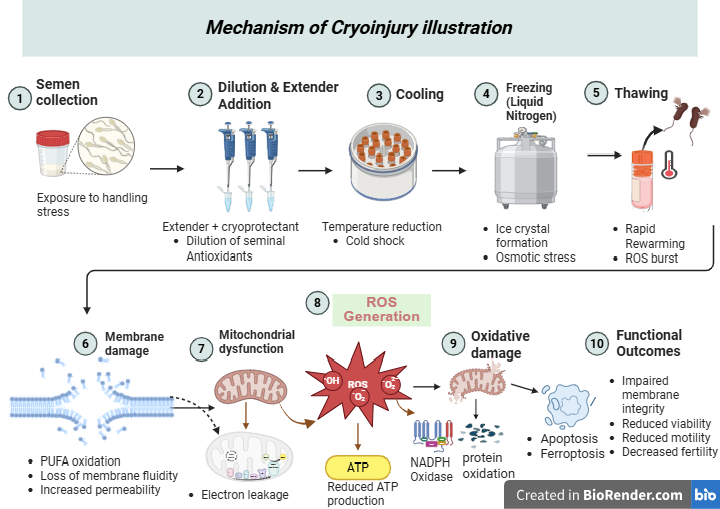
Furthermore, oxidative stress exacerbates during cryopreservation, when spermatozoa are exposed to multiple physical and chemical stressors, including rapid temperature fluctuations, osmotic stress, and extender-induced alterations (Figure 1). Cooling induces a phase transition in sperm membrane lipids from a fluid (liquid-crystalline) to a more ordered gel state, altering membrane fluidity and increasing susceptibility to structural destabilization and cold-shock injury; these membrane disturbances can occur alongside enhanced oxidative damage and lipid peroxidation during cryopreservation . Concurrently, mitochondrial dysfunction can exacerbate ATP depletion and ROS generation, further amplifying oxidative damage during cryopreservation. The cumulative effects of these processes can damage lipids, proteins, and DNA, thereby compromising sperm viability, motility, and fertilizing capacity ; , 2025).
Under normal physiological conditions, endogenous antioxidant systems, including enzymatic defenses such as superoxide dismutase (SOD), catalase (CAT), and glutathione peroxidase (GPx), together with
Table 1: Ferroptosis molecular alterations during goat sperm cryopreservation.
Marker/Component
Role in ferroptosis
Cryopreservation evidence in goat sperm
References
Lysophospholipid alterations
Associated with membrane lipid remodeling and lipid peroxidation
Increased in thawed sperm
TFR1
Mediates cellular iron uptake and can contribute to iron accumulation
Increased from 47.8% in fresh to 71.5% in thawed sperm
GPX4
Reduces lipid hydroperoxides and protects against ferroptosis
Altered following cryopreservation; GPX4-related protection implicated in ferroptosis regulation
;
Iron homeostasis
Disrupted iron metabolism can increase iron availability and promote oxidative lipid damage
Evidence of altered iron-related markers during cryopreservation
NRF2-SLC7A11-GPX4 axis
Regulates antioxidant capacity, glutathione availability, and lipid-peroxide detoxification
Modulation of this pathway was associated with reduced ferroptosis and improved post-thaw sperm quality
non-enzymatic antioxidants, maintain ROS at controlled levels and preserve redox homeostasis. During cryopreservation, this antioxidant capacity can be compromised through several mechanisms, including dilution and partial removal of seminal-plasma antioxidants during semen processing, altered enzymatic activity under low-temperature conditions, and increased consumption of antioxidant substrates under sustained oxidative stress. These changes can collectively exceed the spermatozoon’s capacity to neutralize ROS. Beyond structural and biochemical damage, oxidative stress can activate redox-sensitive signaling pathways involved in sperm survival, apoptosis, and metabolic adaptation. At the molecular level, oxidative stress, lipid peroxidation, and mitochondrial dysfunction may converge on signaling networks and regulatory proteins involved in antioxidant defense and regulated cell-death pathways, including apoptosis and, more recently, ferroptosis.
Molecular pathways underlying oxidative cryoinjury in spermatozoa
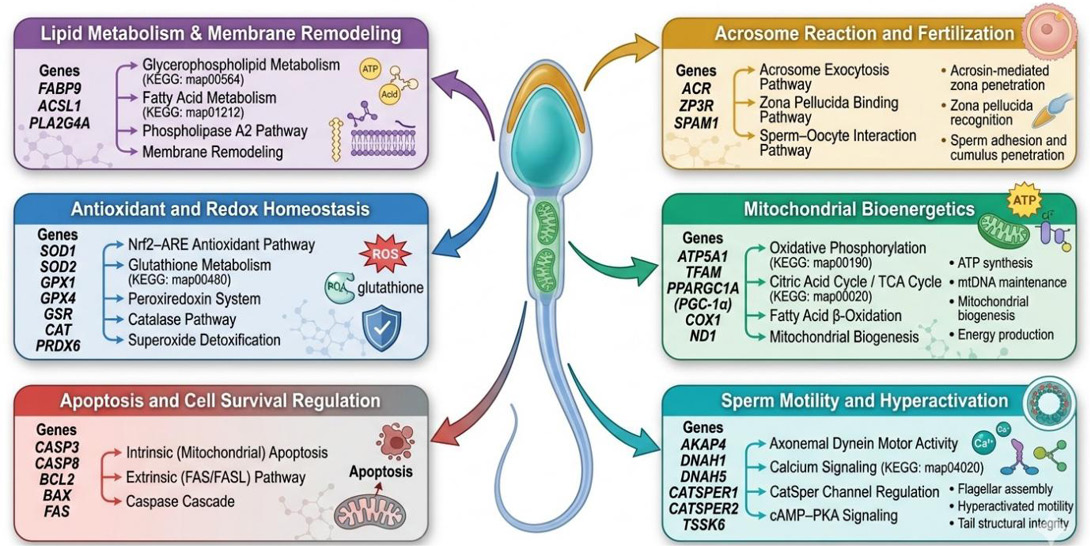
Figure 2 illustrates the proteins, genes, and molecular pathways involved in maintaining sperm structure and function and their potential responses to oxidative stress during cryopreservation. At the molecular level, cellular antioxidant defenses play a critical role in maintaining redox homeostasis. Key enzymatic antioxidants, including SOD (SOD1 and mitochondrial SOD2), CAT, and GPX (particularly GPX4), neutralize reactive oxygen species and limit oxidative damage and lipid peroxidation ; (Table 2). However, cryopreservation can disrupt this protective capacity, resulting in an imbalance between ROS generation and antioxidant defense. Consequently, excessive ROS may accumulate and amplify lipid, protein, mitochondrial, and DNA damage, creating a self-reinforcing cycle of oxidative injury. Although antioxidant defenses may respond to oxidative stress, their capacity can become insufficient under freeze–thaw conditions, resulting in redox imbalance and cellular damage ; . Among these antioxidant components, GPX4 currently has the strongest direct mechanistic evidence in cryopreserved goat sperm because of its established role in limiting lipid peroxidation and suppressing ferroptosis ; , whereas evidence for SOD and CAT is broader but provides less goat-specific mechanistic resolution. Head-to-head studies establishing which antioxidant enzyme is rate-limiting for post-thaw sperm survival are currently lacking.
In addition to classical antioxidant enzymes, stress-responsive and metabolic regulatory proteins may contribute to sperm resilience under cryogenic conditions. Recent proteomic evidence has identified changes in proteins such as glutathione S-transferase mu 3 (GSTM3), sirtuin 2 (SIRT2), and LDL receptor-related protein 8 (LRP8) in cryopreserved sperm, with these changes associated with reduced oxidative damage and improved energy metabolism . However, the functional relationships among these proteins and cryotolerance remain to be experimentally established. Similarly, heat shock proteins (HSPs), including members of the HSP70 and HSP90 families, function as molecular chaperones involved in protein folding, refolding of damaged proteins, and cellular responses to thermal and other forms of stress ; . Collectively, these findings suggest that stress-responsive proteins may contribute to sperm adaptation to environmental and cryogenic stress; however, their specific roles and regulatory interactions during sperm cryopreservation require further investigation.
Following oxidative stress-induced mitochondrial dysfunction during cryopreservation, mitochondrial integrity may be compromised through activation of the intrinsic apoptotic pathway. Pro- and anti-apoptotic BCL-2 family proteins, particularly BAX and BCL-2, regulate mitochondrial outer membrane permeabilization and the subsequent release of cytochrome c. Released cytochrome c promotes activation of caspase-9 and the downstream executioner caspase-3, ultimately contributing to apoptotic cell death ; ; .
Table 2: Key proteins and genes in antioxidant defense.
Genes
Function
Cryopreservation response
References
SOD
Converts O₂⁻ → H₂O₂
Upregulated in response to oxidative stress, but exceeded by the magnitude of oxidative damage
CAT
Converts H₂O₂ → H₂O
Enhanced with antioxidant supplementation
GSH-Px
Reduces H₂O₂ & lipid peroxides
Maintains membrane integrity
GSTM3
Detoxifies lipid peroxidation products
Upregulated in treated sperm
HO-1, NQO1, GSTM1
NRF2-dependent antioxidant genes
Protect against oxidative stress
This process is typically associated with a shift toward greater pro-apoptotic BAX relative to anti-apoptotic BCL-2 activity and increased caspase activation ; ; . Hence, apoptotic signaling in spermatozoa can be viewed as a continuum of sublethal cellular injury, with sperm exhibiting varying degrees of apoptotic and functional damage before loss of viability.
As discussed earlier, emerging evidence implicates ferroptosis as a potential mechanism of cryoinjury in goat sperm. Ferroptosis is driven by iron-dependent lipid peroxidation and is closely linked to disruptions in membrane integrity and redox balance. In goat sperm, changes in lipid metabolites, dysregulated iron homeostasis, and altered ferroptosis-related markers during cryopreservation support a potential role for this pathway in cryo-induced cell death ; . Ferroptosis may therefore provide a mechanistic link between oxidative lipid damage and cell death, highlighting a potential target for improving sperm preservation outcomes.
At the signaling level, several intracellular pathways participate in the regulation of sperm survival, oxidative stress responses, and apoptosis. The PI3K/AKT pathway, for example, has been implicated in maintaining sperm motility, mitochondrial function, and cell survival, while its inhibition has been associated with increased oxidative damage and apoptotic signaling . In parallel, the Nrf2 (NFE2L2) pathway acts as a major regulator of cellular antioxidant defense by controlling the expression of cytoprotective and antioxidant genes, including NAD(P)H quinone oxidoreductase 1 (NQO1), heme oxygenase-1 (HO-1), and glutathione-related enzymes . Other stress-responsive pathways, including MAPK, NF-κB, and p53, may also participate in the cellular response to oxidative and metabolic stress, although their specific roles during sperm cryopreservation remain less clearly defined.
Given that oxidative stress, lipid peroxidation, mitochondrial dysfunction, and ferroptosis are increasingly recognized as interconnected components of sperm cryodamage, exogenous antioxidant interventions have been widely investigated as a means of restoring redox balance and preserving sperm functional integrity.
In vitro and in vivo antioxidant strategies against oxidative stress in male fertility
To mitigate oxidative stress-induced impairment of male fertility, a wide range of antioxidant-based interventions have been investigated in both in vivo and in vitro systems ; ; ; ; ; ; ; ; ; . These strategies primarily target redox imbalance, lipid peroxidation, mitochondrial dysfunction, and apoptosis, which are important contributors to sperm damage during heat stress and cryopreservation.
Dietary inclusion of trace elements and antioxidant compounds has repeatedly shown beneficial effects on reproductive performance in goats. For example, selenium, zinc, vitamin C, and E supplementation have been reported to enhance antioxidant defense systems through the activity of enzymes such as superoxide dismutase, catalase, and glutathione peroxidase, while simultaneously reducing lipid peroxidation markers such as malondialdehyde ; . These changes in the antioxidant defense system are associated with improved sperm motility, concentration, and viability, as well as reduced sperm abnormalities.
Bioactive antioxidants such as lycopene and N-acetylcysteine have been investigated for their potential to improve sperm functional parameters by reducing oxidative damage and modulating cellular stress and apoptotic pathways ; . These compounds may help preserve sperm membrane integrity and mitochondrial function, thereby contributing to improved sperm quality. It should be emphasized that the trace-mineral, vitamin, lycopene, and N-acetylcysteine studies discussed above involve compounds unrelated to macroalgae and are cited here only to illustrate the general principle that antioxidant supplementation can improve goat reproductive outcomes; they do not constitute evidence for macroalgae-derived bioactives specifically, which are addressed separately below:
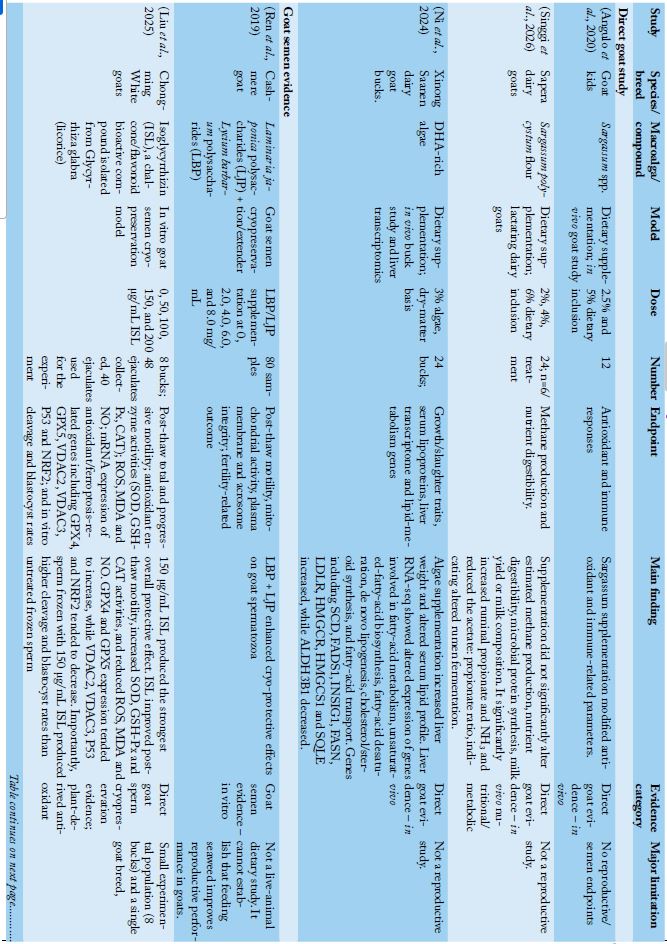
Beyond synthetic antioxidants, natural bioactive compounds derived from plants and algae have been increasingly studied for their multifunctional properties, though a quantified publication trend supporting this claim is not available. These compounds not only scavenge reactive oxygen species but also modulate redox-sensitive signaling pathways, including those involved in antioxidant defense and apoptosis regulation (Angulo et al., 2020; ; ; ; ; .
For example, supplementation with algae-derived products has been associated with improved reproductive and semen-related outcomes in goats and other animal models, including rams, rabbits, and rats, potentially reflecting the diverse bioactive composition and antioxidant properties of algae ; ; ; ; . In Zaraibi goat bucks, dietary Chlorella vulgaris, particularly in combination with vitamin C, improved sperm motility, concentration, livability, and total sperm output while reducing sperm abnormalities and MDA levels . More broadly, antioxidant interventions may protect sperm through coordinated effects on endogenous antioxidant defenses, oxidative lipid damage, mitochondrial function, and cell-survival pathways.
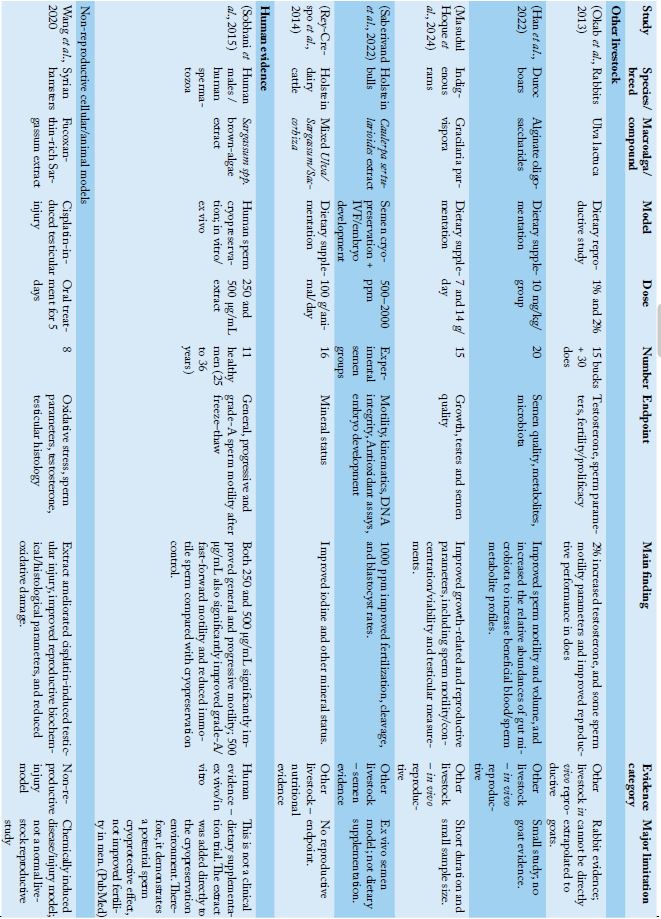
Therefore, these findings suggest that antioxidant supplementation represents a promising strategy for improving male reproductive performance under conditions of oxidative stress. A detailed summary of in vivo and in vitro studies, including experimental models, dosages, and observed effects, is presented in Table 3. Table 3 shows each study by species category (goat in vivo, goat semen in vitro/extender-based, or non-goat translational), which highlights that only a minority of the cited evidence derives from goat-specific models; most studies report low sample sizes, which appear underpowered for the effect sizes claimed, limiting confidence in the magnitude of reported benefits. For example, the isoglycyrrhizin extender trial involved eight goats and forty ejaculates (forty ejaculates) , while the human Sargassum trial discussed in Section 10 enrolled eleven men ; neither study reports a power calculation, and both are too small to exclude a meaningful risk of false-positive or overestimated effects. In vitro and in vivo evidence should not be weighted equally: in vitro assays establish plausible mechanisms and effective concentrations under controlled conditions, but it remains uncertain whether these concentrations are achievable in seminal plasma following oral or dietary administration, given the additional barriers of digestion, absorption, and tissue distribution. Data directly addressing the oral bioavailability of macroalgae bioactives, and the fraction that ultimately reaches the reproductive tract, are not currently available, representing an important gap for translating in vitro findings into practical feeding or extender protocols.
Macroalgae as antioxidant-rich alternative feed resource
Beach-accumulated seaweed (BAS) is increasingly recognized as both an environmental waste-management challenge and a potentially valuable source of bioactive compounds. Although beach stranding and subsequent degradation may alter its composition and introduce contamination risks, BAS can retain polysaccharides, polyphenols, pigments, proteins, lipids, minerals, and other biologically active constituents. This has stimulated interest in recycling and biorefinery approaches that recover high-value compounds rather than treating stranded biomass solely as waste (Dissanayake et al., 2026). However, important challenges remain regarding biomass variability, contamination, collection, processing, safety validation, regulatory requirements, and economic feasibility. In particular, comprehensive data on the quantity and consistency of beach-accumulated seaweed that could be safely utilized as livestock feed, relative to regional livestock feed requirements, remain limited. The logistics of collecting, drying, stabilizing, transporting, and processing beach-cast seaweed also require further development, particularly because rapid decomposition, high moisture content, contamination, and heterogeneous biomass can increase processing costs and affect material quality. At the same time, livestock production faces increasing challenges from heat stress and associated productivity losses, creating interest in nutritional and antioxidant strategies that may improve animal resilience. These challenges provide a rationale for exploring appropriately processed seaweed biomass as a potential feed and bioactive resource. Nevertheless, economic assessments comparing the cost of seaweed supplementation with established antioxidant strategies, together with evidence on farmer acceptance and willingness to adopt such interventions, remain important areas for future research.
Marine macroalgae, commonly referred to as seaweeds, are macroscopic, multicellular photosynthetic organisms predominantly inhabiting marine and coastal environments . They comprise diverse algal groups that can attain considerable size and produce a wide range of primary and secondary metabolites with biological activities . Macroalgae are traditionally grouped into three major classes: Chlorophyceae (green algae), Phaeophyceae (brown algae), and Rhodophyceae (red algae), which differ in their characteristic pigments, biochemical composition, and structural polysaccharides ; ; ; . Representative green algae include Ulva lactuca, Chaetomorpha crassa, Ulva reticulata, and Caulerpa racemosa; brown algae include Padina pavonica, Turbinaria ornata, and Sargassum ilifolium; while red algae include Kappaphycus alvarezii, Gelidiella acerosa, Gracilaria corticata, and Palmaria palmata. Of these taxa, only a limited subset has been investigated for reproductive or sperm-related effects, with evidence currently concentrated on genera such as Sargassum, Ulva, Kappaphycus, and Gracilaria (Table 3). The remaining species are therefore included primarily to provide taxonomic and compositional context rather than as species with established reproductive effects. Green macroalgae (Chlorophyta) represent a residual fraction (<1%) of global seaweed biomass production landings, whereas red (Rhodophyta) and brown (Ochrophyta) macroalgae collectively account for more than 32 million tonnes of production annually .
Rhodophyta (red algae) and Phaeophyceae (brown algae) differ in their characteristic storage products: Red algae primarily store floridean starch, whereas brown algae accumulate laminarin as a major storage β-glucan . Red algae are not uniformly red and may exhibit purple, reddish-brown, or other colourations depending on their pigment composition . Marine macroalgae are also important sources of bioactive compounds, including polysaccharides, pigments, polyphenols, proteins, and other metabolites. Red algae are particularly important sources of phycocolloids such as agar and carrageenan, while brown algae contain alginate and other characteristic polysaccharides such as fucoidans . Several macroalgal genera have established industrial or food applications; Eucheuma spp. and Kappaphycus alvarezii are important sources of carrageenan, Gracilaria spp. are used for agar production, while Saccharina japonica, Undaria pinnatifida, Pyropia spp., and Sargassum fusiforme are important food seaweeds . Alginate derived from brown algae has applications in dental impression materials, emulsifying formulations, paints, and wine and beer processing .
Bioactive components of macroalgae and their role in male reproduction
Macroalgae are rich sources of diverse bioactive compounds with antioxidant, anti-inflammatory, and immunomodulatory properties. Their chemical composition includes primary metabolites, such as carbohydrates, proteins, lipids, and minerals, as well as secondary metabolites, including phenolic compounds, flavonoids, and other bioactive constituents that can contribute to their biological and antioxidant activities ; ; ; . Importantly, the biological activity of macroalgae is unlikely to be attributable to a single compound and may instead reflect interactions among multiple constituents present within the biomass or extract. However, evidence for such synergistic interactions is derived largely from general phytochemical and whole-extract studies, and their occurrence and functional significance in male reproductive systems remain to be established. Among these compounds, phlorotannins, a distinctive class of polyphenolic compounds found in brown algae, have attracted considerable attention because of their strong antioxidant and other biological activities . Their antioxidant effects have been attributed to their ability to scavenge reactive species and interact with cellular redox processes, although the magnitude and mechanisms of these effects vary among phlorotannin structures and algal sources .
Similarly, phenolic compounds, including gallic acid and flavonoids, have been reported to modulate NADPH oxidase activity in various biological systems, thereby influencing the generation of reactive oxygen species and cellular redox homeostasis ; . Such mechanisms are relevant to sperm cells because excessive ROS generation can promote lipid peroxidation, membrane destabilization, mitochondrial dysfunction, and other forms of oxidative damage. In addition to phenolic compounds, marine macroalgae contain structurally diverse polysaccharides, including carrageenan, agar, alginate, and ulvan, which have attracted interest because of their potential antioxidant and biological activities. Some seaweed-derived polysaccharides can scavenge reactive species, chelate metal ions, and enhance endogenous antioxidant defenses, although these activities vary according to their chemical structure, molecular weight, degree of sulfation, and algal source ; ; . Evidence for activation of specific pathways such as Nrf2/HO-1 is emerging but remains compound- and model-dependent.
In addition to their antioxidant properties, macroalgae are valuable sources of essential minerals, including zinc, selenium, iron, and magnesium, which contribute to various physiological processes, including reproductive function ; . Zinc, for example, serves as a cofactor for numerous enzymes involved in DNA synthesis, protein metabolism, and antioxidant defense and is important for normal spermatogenesis and sperm function . Mineral concentrations can vary considerably among macroalgal species and according to environmental and harvesting conditions ; . However, this review does not quantitatively compare macroalgal mineral concentrations with established mineral requirements for goats, and such comparisons, together with assessment of potentially excessive minerals or contaminants, remain important before specific feeding recommendations can be made .
Macroalgae also contain bioactive lipids, including omega-3 and omega-6 polyunsaturated fatty acids, as well as vitamins such as A, C, E, and K, although their concentrations vary considerably among species and environmental conditions ; . These nutrients have established roles in membrane structure, antioxidant protection, and cellular function. Their relevance to sperm biology is particularly important because spermatozoa contain high levels of polyunsaturated fatty acids, making their membranes susceptible to oxidative lipid damage. Through complementary biological activities, algal-derived nutrients and bioactive compounds may contribute to the preservation of membrane integrity, redox balance, mitochondrial function, and cellular survival under oxidative stress. However, direct evidence demonstrating these combined effects of macroalgal compounds in spermatozoa remains limited. Among the compound classes discussed above, phlorotannins and sulfated polysaccharides have demonstrated substantial antioxidant activity in experimental models, although comparative data on their bioavailability, bioactivity, and reproductive effects remain insufficient to establish a definitive ranking of their translational potential.
Molecular mechanisms of macroalgal antioxidants in reproductive cells
Nrf2 pathway
Much of the mechanistic evidence discussed in this section derives from non-reproductive cellular systems or from studies of isolated macroalgal compounds, while direct mechanistic evidence in sperm and testicular tissue remains comparatively limited. Building on the bioactive composition described above, several algae-derived compounds have been reported to modulate the nuclear factor erythroid 2-related factor 2 (Nrf2)/antioxidant response element (ARE) pathway in cellular models (Table 4). Under basal conditions, Nrf2 is retained in the cytoplasm through interaction with Kelch-like ECH-associated protein 1 (Keap1); following oxidative or electrophilic stress, disruption of this interaction facilitates Nrf2 stabilization and nuclear translocation, where Nrf2 promotes transcription of cytoprotective and antioxidant genes. According to Matin et al. (2024), reviewed evidence that algae-derived constituents can activate the Nrf2 pathway in cellular models, supporting their potential antioxidant and cytoprotective effects. Fucoidan isolated from Hizikia fusiforme increased total Nrf2 levels and enhanced the expression of antioxidant enzymes, including SOD-1 and catalase, in H₂O₂-treated Vero cells . Importantly, this study was conducted in a non-
Table 4: Algae bioactives and reproductive relevance.
Bioactive compound
Algae type
Key mechanism
Reproductive relevance
References
Phlorotannins
Brown algae
Antioxidant, Nrf2 activation, anti-inflammatory
Protect sperm from oxidative stress
;
Phenolic acids
Various macroalgae
ROS scavenging, redox modulation
Reduce oxidative stress in the testes
Fucoidan
Brown algae
Antioxidant, immunomodulatory
Improve sperm viability
;
Sulfated polysaccharides
Red/green algae
Metal chelation, ROS scavenging
Protect sperm membranes
(Pappou et al., 2022)
Carotenoids
Brown algae
Singlet oxygen quenching
Protect the sperm membrane
Minerals
All groups
Enzyme cofactors
Spermatogenesis
reproductive cell model and measured total Nrf2 rather than directly demonstrating Nrf2 nuclear translocation. Thus, although Nrf2-related mechanisms provide a biologically plausible pathway through which macroalgal bioactives may influence oxidative stress in reproductive tissues, direct mechanistic evidence in sperm or testicular tissue remains limited.
Nrf2 activation regulates the transcription of antioxidant and cytoprotective genes, including glutathione S-transferases (GSTs), NAD(P)H: quinone oxidoreductase 1 (NQO1), heme oxygenase-1 (HO-1), and genes involved in glutathione metabolism. This transcriptional response can provide sustained cytoprotective capacity by enhancing endogenous antioxidant and detoxification systems, complementing the direct scavenging of ROS. reviewed evidence that brown seaweed-derived compounds can modulate stress-responsive signaling pathways, including the Nrf2/ARE antioxidant defense pathway. Because Sertoli cells provide metabolic and structural support to developing germ cells, Nrf2 activation in these cells could theoretically contribute to maintaining the antioxidant environment required for spermatogenesis under oxidative stress; however, this proposed mechanism has not been directly demonstrated following macroalgal treatment. Similarly, Nrf2 activation in epididymal epithelial cells could theoretically enhance local antioxidant defenses and contribute to protection of spermatozoa during epididymal maturation and storage, although direct evidence linking macroalgal treatment to this mechanism is currently lacking.
These mechanisms may be particularly relevant to sperm cryostress, in which oxidative imbalance and mitochondrial dysfunction contribute to loss of sperm quality. Nrf2 signaling therefore represents a plausible pathway through which macroalgal bioactives could enhance endogenous antioxidant defenses and support mitochondrial homeostasis, but this hypothesis remains to be directly tested in goat sperm.
ROS scavenging and radical neutralization
While Nrf2-mediated transcriptional activation can enhance endogenous antioxidant defenses, macroalgal bioactives may also contribute to antioxidant protection through direct chemical scavenging of reactive species. Seaweed polyphenols, particularly phlorotannins, possess multiple hydroxyl groups that can donate hydrogen atoms or electrons to reactive radicals, thereby contributing to radical neutralization . Phlorotannins identified in brown seaweeds include fucophloroethol, fucodiphloroethol, fucotriphloroethol, 7-phloroeckol, phlorofucofuroeckol and bieckol/dieckol . Purified phlorotannin extracts from Cystoseira spp. and Fucus spiralis demonstrated antioxidant activities, including superoxide-radical-scavenging and lipid-peroxidation-inhibitory effects, with activity varying according to seaweed species and phlorotannin composition . Structural characteristics, including molecular size and degree of polymerization, may influence antioxidant activity, although the relationship is not uniform across phlorotannin preparations and assay systems. Electrochemical studies have provided kinetic parameters describing electron-transfer processes for individual phlorotannins such as dieckol and phlorofucofuroeckol-A; however, these parameters are not equivalent to standardized second-order rate constants for reactions with physiologically relevant ROS. Thus, direct quantitative comparisons of individual phlorotannins with classical antioxidants such as vitamins C and E for the scavenging of superoxide (O₂•⁻), hydroxyl radical (•OH), and peroxynitrite (ONOO⁻) remain limited under physiologically comparable conditions. Consequently, the relative kinetic efficiency of individual phlorotannins versus vitamins C and E for these specific ROS remains unresolved and warrants direct comparative kinetic investigation.
Similarly, macroalgal bioactives may provide direct antioxidant protection by chemically neutralizing reactive species. Fucoxanthin, a xanthophyll carotenoid abundant in brown macroalgae, possesses an unusual chemical structure containing an allenic bond, an epoxide group, and conjugated double bonds, structural features that have been proposed to contribute to its antioxidant activity. In vitro studies have demonstrated its ability to scavenge hydroxyl and superoxide radicals and quench singlet oxygen, while direct reactivity with peroxynitrite has also been reported ; . Although direct studies of fucoxanthin supplementation in goat sperm are lacking, reproductive studies in animal models provide supportive evidence. Fucoxanthin derived from brown algae improved sperm quality, reduced lipid peroxidation, and attenuated reproductive disturbances in diabetic rats, while fucoxanthin extract from Sargassum glaucescens alleviated cisplatin-associated testicular oxidative damage and reproductive dysfunction ; . These findings suggest that fucoxanthin may have potential for mitigating oxidative damage in sperm, although its specific protective effects during goat semen cryopreservation remain to be established.
This possibility is particularly relevant to cryopreservation, during which excessive ROS generation can promote lipid peroxidation and impair sperm membrane integrity, mitochondrial function, and post-thaw sperm quality. Thus, the direct radical-scavenging properties of fucoxanthin may complement endogenous antioxidant defenses in limiting oxidative damage to spermatozoa.
Sulfated polysaccharides such as carrageenan from red algae, fucoidan from brown algae, and ulvan from green algae exhibit antioxidant properties through several mechanisms, including free-radical scavenging, reducing activity, and metal-ion chelation ; ; . Redox-active transition metals, particularly iron and copper, can promote oxidative reactions and, in the case of iron, participate in Fenton chemistry that generates highly reactive hydroxyl radicals. By chelating or sequestering redox-active metal ions, marine polysaccharides may reduce metal-catalyzed ROS generation and thereby limit oxidative cascades. Their antioxidant activity is influenced by structural characteristics such as molecular weight, sulfate content, sulfate distribution, and polysaccharide conformation ; ; . These properties may be relevant to sperm protection because limiting hydroxyl-radical formation and other ROS can reduce oxidative damage to membrane lipids, proteins, and other cellular components. Thus, the combination of radical scavenging, metal chelation, and singlet-oxygen quenching provides a plausible multilevel antioxidant mechanism for sulfated macroalgal polysaccharides, although direct evidence for these mechanisms in goat sperm remains limited.
NF-κB, MAPK, and inflammatory pathway modulation
In addition, Nrf2 signaling and seaweed-derived bioactive compounds may modulate transcriptional and signaling pathways involved in the interplay between oxidative stress and inflammation. Inflammation of the reproductive tract, arising from infection, immune dysregulation, or metabolic stress, can promote ROS production through activation of immune cells and induction of pro-inflammatory enzymes, thereby creating a pro-oxidant environment that may adversely affect spermatogenesis and sperm quality. Algae-derived compounds have been reported to modulate inflammatory signaling pathways, including NF-κB and MAPK, which regulate the expression of pro-inflammatory mediators and contribute to oxidative stress responses ; . In particular, demonstrated anti-inflammatory and antioxidant effects of secondary metabolites from the red macroalga Galaxaura oblongata, with evidence of modulation of NF-κB/MAPK-associated signaling. NF-κB regulates the expression of inflammatory mediators, including cytokines, inducible nitric oxide synthase (iNOS), and cyclooxygenase-2 (COX-2), whose sustained activation can contribute to inflammatory and oxidative tissue damage . These mechanisms provide a plausible link between the anti-inflammatory activities of macroalgal bioactives and protection against oxidative stress in the male reproductive system, although direct evidence in goat reproductive cells remains limited.
Seaweed-derived bioactive compounds may suppress NF-κB activity through mechanisms such as inhibition of NF-κB nuclear translocation, prevention of IκB degradation, and interference with DNA binding. Talero et al. (2015) reviewed evidence that bioactive compounds derived from microalgae can inhibit cell proliferation and induce apoptosis through modulation of NF-κB and MAPK-associated signaling in cancer models. It should be noted that ; Talero et al., 2015) is derived primarily from non-reproductive cellular and cancer models rather than sperm or testicular tissue; therefore, their relevance to reproductive physiology remains inferential. In testicular tissue, excessive inflammatory signaling may potentially contribute to disruption of the blood–testis barrier, germ-cell apoptosis, and impaired somatic-cell function; however, these effects should not be directly attributed to macroalgal compounds without reproductive evidence. In goat spermatozoa, MAPK signaling has been directly implicated in oxidative-stress-associated cellular damage. During liquid storage of goat sperm, ROS-activated MAPK signaling was associated with mitochondrial apoptotic pathways, including involvement of JNK, suggesting a link between oxidative stress, MAPK activation, mitochondrial dysfunction, and sperm apoptosis . Moreover, transcriptomic studies in goat sperm have identified MAPK signaling among pathways associated with sperm motility and capacitation . Thus, MAPK signaling should not be considered inherently detrimental, as appropriate MAPK activity contributes to physiological sperm functions, whereas dysregulated signaling under oxidative stress may contribute to sperm dysfunction. In goat spermatozoa, oxidative stress-associated activation of MAPK signaling has been linked with mitochondrial dysfunction and apoptotic processes, while MAPK-related signaling has also been implicated in molecular changes associated with sperm capacitation . However, no direct evidence currently demonstrates that macroalgae-derived compounds modulate or normalize MAPK signaling in goat sperm. Therefore, the possibility that macroalgal metabolites influence dysregulated MAPK signaling while maintaining physiological sperm signaling remains a proposed mechanism requiring experimental validation. The potential integration of anti-inflammatory signaling modulation with direct antioxidant activity may consequently provide complementary protection against oxidative damage in goat spermatozoa.
Optimization of mitochondrial function and sperm bioenergetics
Mitochondria are important sites of ATP production in spermatozoa, with oxidative phosphorylation contributing substantially to the energy required for sperm motility. In goat sperm, both glycolysis and mitochondrial respiration contribute to ATP production and sperm movement, highlighting the importance of maintaining mitochondrial energy metabolism . The sperm midpiece contains a helically arranged mitochondrial sheath that supports energy production but may also represent a site vulnerable to oxidative damage. Mitochondrial dysfunction following cryopreservation has been associated with reduced mitochondrial membrane potential and ATP content, together with increased ROS production in goat spermatozoa. Thus, maintenance of mitochondrial integrity is important for preserving sperm motility and viability during cryostress. Fucoxanthin has been reported to induce UCP1 expression in white adipose tissue following dietary administration in mice ; however, whether UCP1 is functionally expressed in goat spermatozoa or whether fucoxanthin induces mitochondrial uncoupling in sperm remains unknown. Therefore, UCP1-mediated uncoupling should be regarded as a hypothetical mechanism rather than a demonstrated pathway in sperm. Indeed, experimental mitochondrial uncoupling with FCCP reduces ATP production and motility in dairy goat sperm, indicating that excessive dissipation of the mitochondrial proton gradient can impair sperm energy metabolism . Fucoidan isolated from Hizikia fusiforme has demonstrated antioxidant activity in non-reproductive models, including increased total Nrf2, SOD-1 and CAT expression and reduced intracellular ROS in H₂O₂-treated Vero cells, together with reductions in ROS and lipid peroxidation in zebrafish . However, these findings cannot be interpreted as direct evidence of mitochondrial protection by fucoidan in goat sperm. These findings nevertheless provide mechanistic support for investigating whether macroalgal bioactives can preserve mitochondrial function and redox balance during goat sperm cryopreservation.
Evidence from in vivo studies in goats
In vivo investigations provide important translational validation of findings obtained from in vitro studies, which primarily provide mechanistic insights. In goat reproduction, antioxidant interventions have been investigated using different experimental approaches. For example, demonstrated that addition of 1 mM cysteamine to a semen freezing extender improved post-thaw sperm quality and fertility potential while reducing lipid peroxidation, reactive oxygen species, DNA fragmentation, and apoptotic-like changes. However, this study involved direct supplementation of the semen cryopreservation medium rather than dietary administration, and cysteamine is not a macroalgae-derived compound. Thus, it provides evidence for the importance of antioxidant protection during semen cryopreservation but does not provide evidence for the effects of dietary macroalgae supplementation in vivo. In contrast, available in vivo studies involving macroalgae in goats have primarily examined nutritional, antioxidant, immune, or stress-related responses rather than reproductive outcomes.(Angulo et al., 2020) reported that Sargassum spp. supplementation at 2.5–5% improved antioxidant status and enhanced immune parameters in goat kids; however, reproductive endpoints were not evaluated. Similarly, (Casas-Valdez et al., 2006) evaluated Sargassum spp. as a feedstuff at 25% of the diet and found no significant differences in body weight, feed intake, or feed conversion, but antioxidant and reproductive effects were not assessed. . Investigated Ascophyllum nodosum extract supplementation, providing approximately 2% of the diet, in goats subjected to simulated preslaughter stress. Although this study addressed the response to stress, semen quality, fertility, and reproductive biomarkers were not assessed. These findings indicate that, although seaweed-derived materials have been investigated in goats, the existing in vivo evidence has not directly established their effects on male reproductive function.
Table 5: In vivo studies on antioxidant supplementation in goats and implications for macroalgae.
Authors and Year
Reported Effect
Product Used
Gap for Macroalgae
(Angulo et al., 2020)
Improved antioxidant status and enhanced immune parameters in goats
Sargassum spp supplementation at 2.5-5% in goat kids
No studies with macroalgae on goat fertility
Sargassum supplementation was evaluated as a feedstuff; no significant differences in body weight, feed intake, or feed conversion were observed
Sargassum spp. at 25% of the diet
Nutritional study; antioxidant and reproductive effects were not evaluated
Seaweed extract supplementation was investigated in goats subjected to simulated preslaughter stress
Ascophyllum nodosum extract providing approximately 2% of the diet
Focus was stress response rather than reproductive function; semen, fertility and reproductive biomarkers were not assessed
Given the scarcity of direct macroalgae-goat reproductive evidence, the integrated redox model presented in Section 12 is proposed as a hypothesis-generating framework based on extrapolation across species, experimental systems, and compound classes, rather than as a model derived from demonstrated in vivo macroalgae-specific reproductive findings.
Consequently, direct in vivo evidence linking dietary macroalgae supplementation with goat reproductive outcomes remains limited. In particular, it remains unclear whether dietary macroalgae supplementation can improve semen quality, reproductive performance, oxidative-stress biomarkers, or embryo development in goats. The absence of studies specifically evaluating macroalgae supplementation in relation to goat fertility and reproductive biomarkers represents an important research gap. Table 5 summarizes the available in vivo evidence and highlights these gaps.
Macroalgae-derived extract in semen extender: Potential and limitations
Macroalgae-derived extracts and their bioactive components have attracted increasing interest as potential antioxidant additives for semen cryopreservation because of their ability to modulate oxidative stress. In a human semen study, supplementation with Sargassum extract was associated with reduced reactive oxygen species (ROS) and lipid peroxidation, together with improved post-thaw sperm characteristics . More recently, evidence from livestock semen has provided additional support for this potential. Sargassum ilicifolium extract incorporated into the freezing extender improved post-thaw progressive motility, viability and plasma membrane integrity and was associated with reductions in ROS, lipid peroxidation and DNA fragmentation in cryopreserved Simmental bull semen . These findings suggest that macroalgal extracts may provide antioxidant protection during sperm cryopreservation across different mammalian species. However, the available evidence remains limited, and the effects may depend on the macroalgal species, extraction method, bioactive composition and concentration used.
The potential application of macroalgal extracts should also be considered in relation to established antioxidant strategies used in semen extenders. Antioxidant enzymes such as catalase (CAT) and glutathione peroxidase (GPx) have been investigated for their ability to reduce oxidative damage during sperm cryopreservation . However, direct comparative studies between macroalgal extracts and enzymatic antioxidants remain insufficient to determine whether macroalgal antioxidants are equivalent or superior to these established approaches. Furthermore, the effectiveness of macroalgal extracts may be influenced by their interaction with the semen-extender matrix and by the concentration at which individual bioactive compounds exert antioxidant versus potentially pro-oxidant effects. Thus, although macroalgae-derived extracts represent a promising biologically derived antioxidant strategy, their efficacy, optimal concentration, extender compatibility, and reproductive safety require further validation, particularly in goat semen cryopreservation.
In goats, the effectiveness of antioxidant and cryoprotectant supplementation during semen cryopreservation can vary according to breed, extender composition, and the antioxidant compound used. Longobardi et al. (2020) demonstrated breed-related responses to crocin supplementation in cryopreserved goat semen from five breeds, with crocin reducing intracellular ROS and improving sperm motility in most breeds, although the magnitude of response differed among breeds. These findings demonstrate that antioxidant supplementation can modify cryostress responses in goat sperm and that the magnitude of protection may vary among breeds . Similarly, reported that supplementation with vitamin E, IGF-1 or crocin influenced post-thaw sperm quality, antioxidant enzyme activity, lipid peroxidation, and fertility-related gene expression in cryopreserved goat semen . Suwor et al. (2025) further demonstrated that cryoprotectant composition can influence post-thaw sperm quality and biomolecular characteristics, including DNA methylation, in Boer goat semen. Together, these findings indicate that antioxidant efficacy during goat semen cryopreservation is influenced by the interaction between the bioactive compound, extender composition, and biological characteristics of the sperm source. However, these studies evaluated plant-derived antioxidants or conventional cryoprotectant formulations rather than macroalgae-derived compounds. Therefore, whether macroalgal extracts exhibit breed- or extender-dependent effects in goat semen remains to be established.
Although macroalgae-derived extracts have shown promising antioxidant and cryoprotective activity in cryopreserved sperm models, several limitations constrain their current application. Their effectiveness is likely to be concentration-dependent, and inappropriate concentrations may adversely affect sperm function. For example, Sargassum ilicifolium extract incorporated into the freezing extender improved several post-thaw quality parameters and reduced oxidative-stress-associated markers in Simmental bull semen, with the most favorable overall responses reported at 500–1000 ppm . Similarly, provide controlled but non-goat evidence for the potential cryoprotective effects of macroalgal extracts. In this randomized controlled in-vitro study, semen samples from 11 healthy men were divided within each donor into a cryopreservation control and groups supplemented with 250 or 500 μg/mL ethanol extract of Sargassum, with the extract treatments showing reduced ROS levels and improved post-thaw total and progressive sperm motility. Although these findings support the potential of Sargassum extract to attenuate oxidative damage during sperm cryopreservation, the study was conducted exclusively in human sperm and therefore provides only indirect translational evidence for goat semen cryopreservation; its findings should not be interpreted as evidence of efficacy in goats. In addition, variation in macroalgal species, harvesting conditions, processing, and extraction procedures can alter the composition and concentration of bioactive compounds, creating challenges for reproducibility and standardization. The compatibility of macroalgal extracts with individual extender components, including glycerol and egg-yolk- or milk-based constituents, also requires systematic evaluation because interactions within the extender matrix may influence antioxidant activity and sperm responses. Furthermore, much of the available evidence focuses on post-thaw sperm quality parameters, whereas direct evidence linking macroalgal supplementation with fertilization, conception, pregnancy, or offspring outcomes remains limited. Therefore, controlled studies are needed to establish optimal concentrations, characterize extract composition, determine extender compatibility, evaluate molecular mechanisms, and assess whether improvements in post-thaw sperm quality translate into enhanced reproductive performance.
Future research directions
Macroalgae and their therapeutic use in reducing the damage caused by oxidative stress in the cryopreservation of goat semen are a promising but understudied area of research. Rather than representing a limitation, the scarcity of in vivo goat studies underscores the strategic importance of mechanistic synthesis to guide hypothesis-driven experimentation. In order to achieve full commercial and clinical utilization of these marine-derived bioactives, there are several key research areas that need systematic research and development.
Macroalgae extract preparation standardization
Standardization of macroalgal extraction procedures is essential for obtaining reproducible extracts with consistent chemical composition and bioactivity. Variations in extraction conditions can substantially influence extraction yield, the composition of recovered bioactive compounds, and consequently the biological activity of the resulting extracts. Therefore, systematic optimization and standardization of extraction procedures are important for improving reproducibility and facilitating the development of macroalgae-derived products.
Emerging extraction technologies such as ultrasound-assisted extraction (UAE) and microwave-assisted extraction (MAE) offer potential advantages over conventional extraction approaches by improving mass transfer and extraction efficiency for selected bioactive compounds. Their performance, however, depends strongly on the target compounds and processing conditions, including temperature, extraction time, solvent composition, solvent-to-solid ratio, and applied ultrasound or microwave energy ; . In Kappaphycus alvarezii, for example, ultrasonication pretreatment combined with solvent extraction produced a higher extraction yield and greater antioxidant and anti-inflammatory activity than the corresponding Bligh–Dyer-based approach . Nevertheless, extraction parameters must be carefully optimized to maximize recovery of desired bioactives while minimizing thermal, oxidative, or chemical degradation.
Macroalgae possess a complex, polysaccharide-rich matrix that can hinder the extraction, separation, and characterization of phenolic compounds, particularly phlorotannins. Cell-wall polysaccharides, gelling components, and interactions between phlorotannins and proteins can interfere with the recovery and characterization of these compounds . Advanced approaches, including supercritical fluid extraction (SFE), may provide advantages in selectivity and reduced solvent use, but their effectiveness remains dependent on careful optimization of parameters such as pressure, temperature, solvent characteristics, and extraction time . In addition to extraction-related variability, the chemical composition of macroalgae can vary according to species, geographic origin, season, environmental conditions, and harvesting practices. Such natural variability can contribute to inconsistencies in the concentration and composition of bioactive compounds. Consequently, standardized cultivation or harvesting practices, controlled processing, chemical fingerprinting, and appropriate quality-control measures are important for achieving reproducible macroalgal preparations. Biotechnological approaches, including controlled cultivation and, where appropriate, synthetic biology or controlled biosynthesis, may provide additional strategies for improving the consistency and scalability of selected high-value metabolites ; .
The bioactive profile of macroalgal extracts is strongly influenced by solvent selection because solvent polarity affects the recovery of different classes of compounds. demonstrated that aqueous extraction of Ascophyllum nodosum polyphenols produced extracts with measurable antioxidant activity, with extraction conditions influencing both polyphenol recovery and antioxidant capacity. Hydroethanolic systems can also facilitate the recovery of diverse polar and moderately polar bioactive constituents, although the optimal solvent composition depends on the target compounds and macroalgal species. In addition to extract-specific characteristics such as organoleptic properties and solubility, standardized quality-control parameters, including moisture and ash content, microbial and contaminant levels, and chemical markers of key bioactive constituents, should be considered to ensure extract quality, stability, and reproducibility. Further research should focus on developing standardized extraction procedures that balance extraction efficiency with sustainability, cost, reproducibility, and scalability. Ultrasound-assisted extraction combined with solvent extraction may represent a promising approach because ultrasonication can enhance mass transfer and improve recovery of selected macroalgal constituents. However, evidence from Kappaphycus alvarezii cannot be directly extrapolated to phlorotannin-rich brown macroalgae or reproductive applications. Therefore, the suitability of UAE + SE for producing standardized phlorotannin-enriched extracts for semen-extender applications requires direct experimental validation.
Comparison with other natural antioxidants
The relative efficacy of macroalgae-derived antioxidants in comparison with established natural and synthetic antioxidants warrants systematic investigation to place these marine bioactives within the broader antioxidant context. Certain macroalgae have demonstrated antioxidant activities comparable to those of established antioxidant standards. For example, Gracilaria domingensis exhibited its highest antioxidant capacity in the hexane extract based on FRAP, metal-chelating and lipid-peroxidation-inhibition assays. In addition, a fraction containing the mycosporine-like amino acids (MAAs) porphyra-334 and shinorine showed Folin–Ciocalteu responses comparable to those of BHT and Trolox . Similarly, an ethyl-acetate extract of Eucheuma sp. exhibited DPPH radical-scavenging activity with an IC50 of 27.96 µg/mL and contained measurable phenolic and triterpenoid constituents . Comparative evaluation of several macroalgal species also showed relatively high antioxidant activity in the red macroalgae Hydropuntia cornea and Porphyra umbilicalis, whereas the green macroalga Ulva rotundata showed lower activity under the tested conditions (Álvarez-Gomez et al., 2016). These findings suggest that antioxidant capacity varies substantially among macroalgal species and extraction conditions and should not be generalized solely according to algal colour group.
The combined presence of multiple bioactive constituents in macroalgal extracts may contribute to their overall antioxidant activity and could partly explain differences in activity compared with isolated compounds (Álvarez-Gomez et al., 2016). Specifically, comparative studies could evaluate standardized extracts of Gracilaria domingensis and Eucheuma sp. alongside established antioxidant standards such as BHT, Trolox, and vitamin E using concentration-response approaches across DPPH, ABTS, and ORAC assays. These chemical assays could be complemented by functional endpoints in goat spermatozoa, including post-thaw viability and motility following controlled cryopreservation, to distinguish chemical antioxidant capacity from biological protective efficacy.
To facilitate the translational application of macroalgae-derived antioxidants, further investigation of their bioavailability, stability, toxicity, and chemical consistency is also required. Such comparative studies could provide an evidence-based framework for identifying antioxidant systems with the greatest potential for incorporation into semen cryopreservation protocols.
Incorporation into commercial semen extenders
Translation of macroalgae-derived antioxidants into practical semen-extender formulations represents an important step toward their application in reproductive biotechnology. Evidence from other algal sources provides preliminary support for the feasibility of incorporating algal-derived bioactives into semen-extender systems. For example, Spirulina platensis is a cyanobacterium rather than a macroalga and has a bioactive profile distinct from that of red macroalgae; nevertheless, its use illustrates the potential feasibility of algal extract supplementation in semen extenders. Spirulina platensis extract at an optimized concentration of 10 µg/mL improved post-thaw sperm motility and reduced acrosomal damage and lipid peroxidation in buffalo bull spermatozoa . This finding supports the feasibility of algal antioxidant supplementation during sperm cryopreservation, although the effects of macroalgal extracts must be established independently in species- and extract-specific studies.
Several antioxidant compounds from algal and non-algal sources have also demonstrated protective effects on sperm quality during storage or cryopreservation. Natural astaxanthin has been reported to improve sperm antioxidant capacity and quality through mechanisms involving oxidative-stress regulation and Nrf2/MAPK-associated signaling, whereas C-phycocyanin has demonstrated protective effects on sperm motility and viability during storage ; . In addition, gallic acid and carnosic acid improved specific quality parameters of frozen-thawed ram spermatozoa, with gallic acid increasing post-thaw sperm motility and carnosic acid improving mitochondrial function and, at an appropriate concentration, plasma membrane and acrosomal integrity .
However, these compounds differ substantially in their biological sources, and astaxanthin and C-phycocyanin are primarily associated with microalgae or cyanobacteria, while carnosic acid is predominantly associated with terrestrial plants. Therefore, these studies should be regarded as supporting evidence for antioxidant-based sperm cryoprotection rather than direct evidence for macroalgal extracts. Furthermore, the protective effects of individual compounds should not be interpreted as evidence of synergistic interactions within macroalgal extracts unless such interactions are experimentally demonstrated.
Future research should prioritize dose-response optimization to identify species- and extract-specific concentrations that maximize cryoprotective effects while minimizing potential cytotoxicity. Standardized protocols are also required for incorporating red macroalgal extracts into existing semen-extender formulations, including evaluation of their compatibility with conventional cryoprotectants, buffering systems, osmolarity, pH, and other extender components. Functional validation should include post-thaw sperm motility, viability, plasma-membrane and acrosomal integrity, mitochondrial function, and oxidative-stress biomarkers. Importantly, the stability and chemical consistency of the extract during extender preparation and cryopreservation should also be assessed. Subsequent validation across different livestock species, breeds, semen-storage conditions, and cryopreservation protocols will be necessary to establish reproducibility, scalability, and commercial feasibility.
Pathway-exploration molecular and omics-based studies
Although omics studies have primarily examined macroalgal responses to environmental stress, they provide valuable insights into stress-responsive genes, metabolic pathways, and bioactive-compound biosynthesis. In the red macroalga Neoporphyra haitanensis, integrated transcriptomic and metabolomic analyses showed that recovery from UV-B stress involved activation of glycolysis and the tricarboxylic acid (TCA) cycle, accompanied by changes in related genes and metabolites and increased ATP accumulation .
Genomic measurements can offer a basic understanding of the genetic foundations of the stress resistance mechanism in macroalgae, showing the presence of genes related to photosynthetic efficiency, energy metabolism, and oxidative stress reactions . These genetic underpinnings are essential in the discovery of the optimum production of certain bioactive compounds that cause antioxidant activity. However, these findings do not establish a direct relationship between macroalgal stress responses and antioxidant protection in mammalian sperm.
Metabolomics can complement transcriptomics by identifying metabolites whose abundance changes under environmental stress, while proteomics can determine whether transcript-level changes are reflected at the protein level. Integrating transcriptomic, metabolomic, and proteomic data could therefore help identify candidate biosynthetic pathways and biomarkers associated with macroalgal antioxidant capacity.
A particularly relevant research direction is to determine whether stress conditions that alter macroalgal gene expression and metabolite profiles also enhance the antioxidant activity of extracts from the corresponding biomass when tested in goat sperm cryopreservation. Comparative multi-omics across red macroalgal species, combined with chemical profiling and functional sperm assays, could help link specific bioactive constituents with protective outcomes. Systems-biology approaches may further assist in predicting compound–pathway interactions and identifying candidate combinations for optimized semen-extender formulations. Thus, integrating macroalgal multi-omics with chemical and sperm-level validation could move research beyond descriptive antioxidant screening toward mechanism-informed biomarker discovery and formulation development.
Integrated redox model of macroalgae action in spermatogenesis and cryopreservation
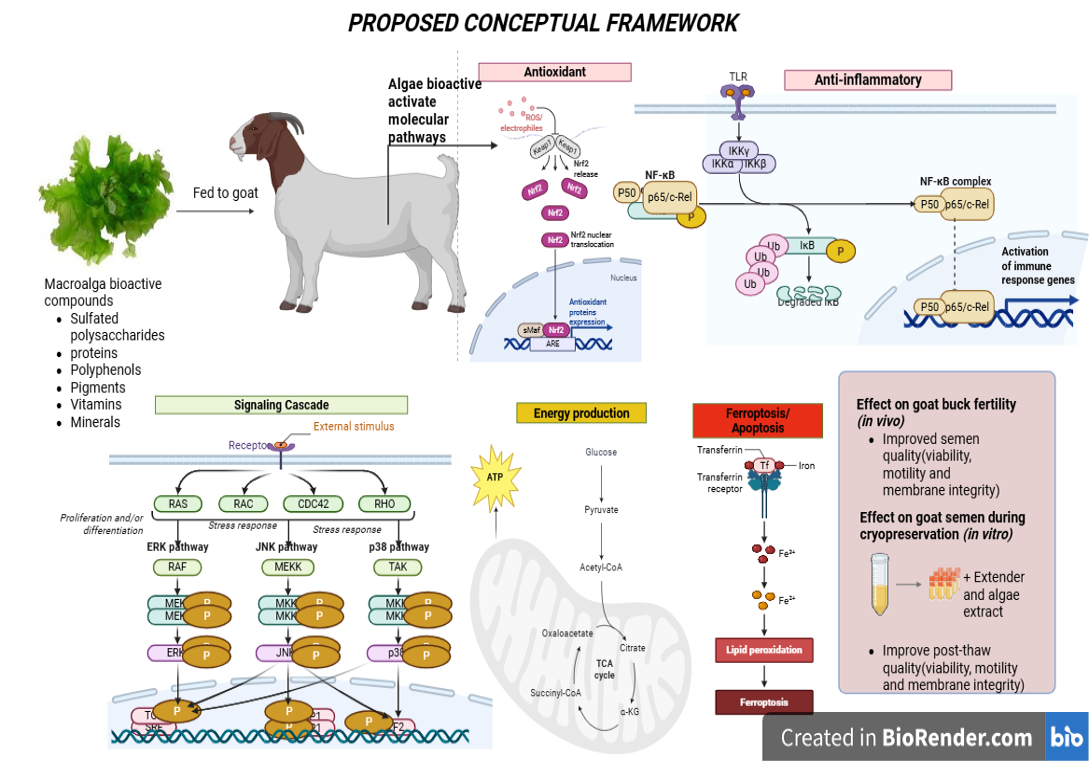
Based on the evidence synthesized in this review, an integrated redox model is proposed in which macroalgae-derived bioactives may enhance antioxidant protection during spermatogenesis and semen cryopreservation (Figure 3). In vivo, dietary supplementation may enhance antioxidant defenses through redox-sensitive pathways such as Nrf2/ARE, supporting SOD, CAT, and GPx activity, mitochondrial function, and protection against oxidative damage. However, direct evidence for Nrf2/ARE-mediated effects of macroalgae in goat reproductive tissues remains limited.
During cryopreservation, macroalgal bioactives may mitigate ROS generation, lipid peroxidation, and cell damage through direct radical scavenging, metal chelation, and potentially redox-signaling modulation. Thus, dietary and extender supplementation may provide complementary antioxidant protection and improve sperm resilience to cryostress. This model is not the only possible mechanism. Protection may also arise primarily from the direct antioxidant and metal-chelating activities of phlorotannins, carotenoids, and sulfated polysaccharides, without requiring Nrf2/ARE activation. Current evidence, largely derived from non-reproductive models, cannot establish the relative contribution of these mechanisms; both may contribute to the effects of macroalgal bioactives.
Proposed research hypotheses
Based on the integrated redox framework proposed in this review, the following hypotheses are proposed to guide future research on macroalgae application in goat reproduction:
Dietary supplementation: Goat bucks receiving a standardized macroalgae extract will exhibit enhanced antioxidant defenses, reflected by increased Nrf2-target gene expression (e.g., HO-1, NQO1) and SOD, CAT, and GPx activity, together with reduced sperm DNA fragmentation and improved morphology compared with controls.
Cryoprotective effects: Incorporation of standardized macroalgae extract into goat semen extenders will improve post-thaw progressive motility, membrane and acrosome integrity, and mitochondrial function while reducing oxidative stress and apoptotic markers compared with unsupplemented extenders.
Comparative antioxidant efficacy: Macroalgae extracts will provide cryoprotective effects comparable to or greater than established antioxidant treatments when evaluated at appropriately standardized concentrations and antioxidant-equivalent doses.
Combined dietary and extender supplementation: Concurrent dietary and extender supplementation will produce greater improvements in post-thaw sperm quality than either approach alone, indicating potential additive or synergistic effects.
Omics-based biomarkers: Integrated seminal-plasma metabolomic and sperm transcriptomic profiling will identify reproducible molecular signatures associated with macroalgae supplementation and post-thaw sperm freezability, providing candidate biomarkers of treatment responsiveness.
Conclusion
Oxidative stress negatively affects livestock fertility and its outcomes. It impairs male reproductive parameters such as sperm motility, viability, and DNA, and also causes apoptosis of sperm cells. Oxidative stress reduces the expression of genes related to antioxidants, lipid peroxidation, stress transcription factors, stress proteins (HSP), mitochondria, DNA, apoptosis, motility, and the structure of sperm cells. Macroalgae may neutralize or scavenge excessive ROS in sperm cells before and after cryopreservation. Seaweeds, through the actions of bioactive compounds, activate key molecular axes such as the Nrf2 antioxidant defense, apoptosis regulation, ferroptosis suppression, and improve expression of related genes to modulate sperm cell redox balance. Hence, seaweeds can counteract the effects of excessive reactive oxygen species from various stressors, thereby protecting the sperm membrane from lipid peroxidation and protein oxidation. Brown and red macroalgae extracts have shown promise for semen cryopreservation due to phlorotannins, fucoidans, and polysaccharides. These reviews also position macroalgae not only as alternative antioxidant sources but as a functional regulator of cryobiology with broad implications for sustainable reproductive management in small ruminants. This finding establishes a foundation for precision nutrition, next-generation semen extenders, and sustainable reproductive management in small ruminants. Hence, we propose a redox cryobiological framework in which macroalgae-derived compounds can modulate pathways involved in sperm resilience rather than nonspecific antioxidant agents.
Acknowledgements
The authors sincerely appreciate Dr. Isiaka O. Olarinre, Department of Animal Production, King Saud University, Saudi Arabia, and Dr. Prince Sasu, Department of Animal Science, Kwame Nkrumah University of Science and Technology, Ghana, for insightful suggestions during manuscript development.
Novelty Statement
This review provide the first integrated, goat-specific mechanistic synthesis linking macroalgae-derived bioactives with oxidative cryoinjury, Nrf2/ARE signaling, mitochondrial dysfunction, apoptosis, and emerging ferroptosis pathways. It critically separates direct reproductive evidence from cross-species and non-reproductive evidence and proposes a testable redox framework to guide future dietary and semen-extender applications.
Author’s Contribution
ABT: Conceptualization, literature review, data curation, writing (original draft), visualization. AA: Conceptualization, supervision, writing (review and editing). IAO: Conceptualization, Supervision, data curation, writing (review and editing). AOA and SAB: Conceptualization, Writing (review and editing). ASG: Conceptualization, Writing (review and editing). SNM and SA: Validation, Writing (review and editing). GPSP and BM: Supervision, writing (review and editing). AZA: Referencing and manuscript formatting. All authors have read and approved the final manuscript.
Funding
This research was supported by The World Academy of Sciences (TWAS), Italy, in collaboration with the Department of Biotechnology (DBT), Government of India, under the TWAS-DBT Postgraduate Sandwich Programme.
Generative AI and AI assisted technology statement
The authors declare that no generative AI and AI assisted technology was used in the creation of this manuscript.
Conflict of interest
The authors have declared that the research was conducted in the absence of any commercial or financial relationships that could be construed as a potential conflict of interest
Figures
Figure 1. Figure 1:.
Mechanism of Cryoinjury. This figure illustrates the cascade of oxidative damage during semen cryopreservation. Cryostress induces excessive ROS generation, leading to membrane damage, mitochondrial dysfunction, and lipid peroxidation. These events result in oxidative damage and impaired sperm functional outcomes.
Figure 2:.
Genes and molecular pathways governing sperm functions and structure. Overview of key genes, proteins, and molecular pathways linking oxidative stress, antioxidant defense, mitochondrial function, and apoptosis to sperm structure and function.
Figure 3:.
Redox Model of Macroalgae Action in Spermatogenesis and Cryopreservation. This figure presents a proposed conceptual framework illustrating how macroalgae-derived bioactive compounds modulate antioxidant and antiinflammatory pathways in goats. These compounds activate NRF2-mediated antioxidant responses, suppress NF-κBdriven inflammation, and support energy metabolism, while also regulating apoptosis and ferroptosis.
Table 3:.
In vivo and in vitro evidence from livestock and translational reproductive models.
References
Abdel-Khalek AE, El-Maghraby MM, Elbialy ZI, Al-Wakeel RA, Almadaly EA, Shukry M, El-Badawy AA, Zaghloul HK, Assar DH (2023). Mitigation of endogenous oxidative stress and improving growth, hemato-biochemical parameters, and reproductive performance of Zaraibi goat bucks by dietary supplementation with Chlorella vulgaris or/and vitamin C. Trop. Anim. Health Prod., 55. https://doi.org/10.1007/s11250-023-03657-6[CrossRef]
Agarwal A, Rosas IM, Anagnostopoulou C, Cannarella R, Boitrelle F, Munoz LV, Finelli R, Durairajanayagam D, Henkel R, Saleh R (2022). Oxidative stress and assisted reproduction: A comprehensive review of its pathophysiological role and strategies for optimizing embryo culture environment. Antioxidants, 11. https://doi.org/10.3390/antiox11030477[CrossRef]
Aitken RJ, Baker MA (2006). Oxidative stress, sperm survival and fertility control. Mol. Cell. Endocrinol., 250: 66–69. https://doi.org/10.1016/j.mce.2005.12.026[CrossRef]
Álvarez-Gómez F, Korbee N, Figueroa FL (2016). Analysis of antioxidant capacity and bioactive compounds in marine macroalgal and lichenic extracts using different solvents and evaluation methods. Ciencias Mar., 42. https://doi.org/10.7773/cm.v42i4.2677[CrossRef]
An Z, Xun W, Zhou H, Hou G, Shi L (2025). Effectiveness of curcumin on oxidative stress in goat semen: explorations regarding semen quality, sperm apoptosis, ultrastructure, and markers of oxidative stress. Antioxidants, 14. https://doi.org/10.3390/antiox14101242[CrossRef]
Ángulo C, Chávez-Infante L, Reyes-Becerril M, Angulo M, Romero-Geraldo R, Llinas-Cervantes X, Cepeda-Palacios R (2020). Immunostimulatory and antioxidant effects of supplemental feeding with macroalga Sargassum spp. on goat kids. Trop. Anim. Health Prod., 52. https://doi.org/10.1007/s11250-020-02218-5[CrossRef]
Arangasamy A, Krishnaiah MV, Manohar N, Selvaraju S, Rani GP, Soren NM, Reddy IJ, Ravindra JP (2018). Cryoprotective role of organic Zn and Cu supplementation in goats (Capra hircus) diet. Cryobiology, 81: 117–124. https://doi.org/10.1016/j.cryobiol.2018.02.001[CrossRef]
Arsianti A (2023). Phytochemical constituent and antioxidant activity evaluation of red seaweed Eucheuma sp. Indones. J. Med. Chem. Bioinf., 2. https://doi.org/10.7454/ijmcb.v2i1.1019[CrossRef]
Asadi A, Ghahremani R, Abdolmaleki A, Rajaei F (2021). Role of sperm apoptosis and oxidative stress in male infertility: A narrative review. Int. J. Reprod. Biomed., https://doi.org/10.18502/ijrm.v19i6.9371[CrossRef]
Backialakshmi S, Arangasamy A, Sharanya JN, Ippala JR, Bhatta R (2021). Organic mineral supplementation on differential protein profile of Osmanabadi bucks (Capra hircus). Reprod. Biol., 21(3): 100533. https://doi.org/10.1016/j.repbio.2021.100533[CrossRef]
Badr M, Rawash Z, Azab A, Dohreg R, Ghattas T, Fathi M (2021). Spirulina platensis extract addition to semen extender enhances cryotolerance and fertilizing potentials of buffalo bull spermatozoa. Anim. Reprod., 18. https://doi.org/10.1590/1984-3143-ar2020-0520[CrossRef]
Bakky MAH, Tran NT, Zhang Y, Li S (2022). Utilization of marine macroalgae-derived sulphated polysaccharides as dynamic nutraceutical components in the feed of aquatic animals: A review. Aquac. Res., 53: 5787–5808. https://doi.org/10.1111/are.16078[CrossRef]
Bansal AK, Bilaspuri GS (2011). Impacts of oxidative stress and antioxidants on semen functions. Vet. Med. Int., 686137, 7 pages. https://doi.org/10.4061/2011/686137[CrossRef]
Begum R, Howlader S, Mamun-Or-Rashid ANM, Rafiquzzaman SM, Ashraf GM, Albadrani GM, Sayed AA, Peluso I, Abdel-Daim MM, Uddin MS (2021). Antioxidant and signal-modulating effects of brown seaweed-derived compounds against oxidative stress-associated pathology. Oxid. Med. Cell. Longev., 9974890, 22 pages. https://doi.org/10.1155/2021/9974890[CrossRef]
Behera S, Harshan HM, Lekshmi Bhai KL, Aravinda Ghosh KN (2015). Effect of cholesterol supplementation on cryosurvival of goat spermatozoa. Vet. World, 8 (12): 1386–1391. https://doi.org/10.14202/vetworld.2015.1386-1391[CrossRef]
Berean DI, Bogdan LM, Cimpean R (2024). Advancements in understanding and enhancing antioxidant- mediated sperm cryopreservation in small ruminants: Challenges and perspectives. Antioxidants, 13: 624. https://doi.org/10.3390/antiox13060624[CrossRef]
Bi W, Zhu Z, Adetunji AO, Zhao S, Ma D, Kou X, Min L (2025). Oleic acid improves goat sperm quality by enhancing the MBOAT2/ACSL3 pathway to attenuate ferroptosis. Animals, 15(22): 3258. https://doi.org/10.3390/ani15223258[CrossRef]
Bodu M, Hitit M, Greenwood OC, Murray RD, Memili E (2025). Extender development for optimal cryopreservation of buck sperm to increase reproductive efficiency of goats. Front. Vet. Sci., 12: 1554771. https://doi.org/10.3389/fvets.2025.1554771[CrossRef]
Bollwein H, Bittner L (2018). Impacts of oxidative stress on bovine sperm function and subsequent in vitro embryo development. Anim. Reprod., 15 (Suppl 1): 703–710. https://doi.org/10.21451/1984-3143-AR2018-0041[CrossRef]
Buschmann AH, Camus C, Infante J, Neori A, Israel Á, Hernández-González MC, Pereda SV, Gómez-Pinchetti JL, Golberg A, Tadmor-Shalev N, Critchley AT (2017). Seaweed production: Overview of the global state of exploitation, farming and emerging research activity. Eur. J. Phycol., 52 (4): 391–406. https://doi.org/10.1080/09670262.2017.1365175[CrossRef]
Cai Z, Wang J, Zhang Y, Li X, Luo J, Gao X, Guo M (2025). Zinc and animal health: an in-depth exploration of its role in physiological functions and regulatory molecular mechanisms. J. Anim. Sci. Biotechnol., 16(1): 169. https://doi.org/10.1186/s40104-025-01301-x[CrossRef]
Cartes D, Beltrán J, Luna D, Beltrán I (2024). Effect of dietary inclusion of brown seaweed (Macrocystis pyrifera) on oxidative stress of grass-fed dairy cows. Agriculture, 14: 1881. https://doi.org/10.3390/agriculture14111881[CrossRef]
Casas-Valdez M, Hernández-Contreras H, Marín-Álvarez A, Águila-Ramírez RN, Hernández-Guerrero CJ, Sánchez-Rodríguez I, Carrillo-Domínguez S (2006). The seaweed Sargassum (Sargassaceae) as a tropical alternative for goats’ feeding. Rev. Biol. Trop., 54 (1): 83–92. https://doi.org/10.15517/rbt.v54i1.14002[CrossRef]
Catarino MD, Silva AMS, Cardoso SM (2017). Fucaceae: A source of bioactive phlorotannins. Int. J. Mol. Sci., 18(6): 1327. https://doi.org/10.3390/ijms18061327[CrossRef]
Chenyambuga SW, Lekule FP (2014). Breed preference and breeding practices for goats in agro-pastoral communities of semi-arid and sub-humid areas in Tanzania. Livestock Research for Rural Development. Volume 26, Article #117. Retrieved October 1, 2026, from http://www.lrrd.org/lrrd26/6/chen26117.html
Cherigo L, Lopez D, Martinez-Luis S (2015). Marine natural products as breast cancer resistance protein inhibitors. Mar. Drugs, 13(4): 2010–2029. https://doi.org/10.3390/md13042010[CrossRef]
Costa M, Cardoso C, Afonso C, Bandarra NM, Prates JAM (2021). Current knowledge and future perspectives of the use of seaweeds for livestock production and meat quality: a systematic review. J Anim Physiol Anim Nutr (Berl).105(6):1075-1102. doi:10.1111/jpn.13509[CrossRef]
Damaris C, Budiyanto A, Sitaresmi PI, Prihantoko KD, Hudaya MF, Mahari DA, Kusumawati A (2025). Potential of Brown Macroalgae Extract (Sargassum ilicifolium (Turner) C. Agardh) on the quality and protamine-1 (PRM1) protein levels of frozen-thawed semen in simmental bulls. Pak. Vet. J., 8318: 1–8.
Danso F, Iddrisu L, Lungu SE, Zhou G, Ju X (2024). Effects of heat stress on goat production and mitigating strategies: A review. Animals, 14: 1793. https://doi.org/10.3390/ani14121793[CrossRef]
Darin-Bennett A, White IG (1977). Influence of the cholesterol content of mammalian spermatozoa on susceptibility to cold shock. Cryobiology, 14 (4): 466–470. https://doi.org/10.1016/0011-2240(77)90008-6[CrossRef]
Dhillon N, Cheema R, Kaswan S, Singal S (2020). Seminal attributes, antioxidant defense system and fertility rate reveal an association in beetal goat bucks. Int. J. Livest. Res. 10(6): 85–96. https://doi.org/10.5455/ijlr.20200222013903[CrossRef]
Dissanayake DS, Jayawardena TU, Nagahawatta DP (2026). Transforming beach-accumulated seaweed into high-value bioactive products: A recycling perspective, pp. 1–22. https://doi.org/10.3390/recycling11070116[CrossRef]
Fernández S, Arnáiz V, Rufo D, Arroyo Y (2024). Current status of indole-derived marine natural products: Synthetic approaches and therapeutic applications. Mar. Drugs, 22(3): 126. https://doi.org/10.3390/md22030126[CrossRef]
Ferreres F, Lopes G, Gil-Izquierdo A, Andrade PB, Sousa C, Mouga T, Valentão P (2012). Phlorotannin extracts from fucales characterized by HPLC-DAD-ESI-MS n: Approaches to hyaluronidase inhibitory capacity and antioxidant properties. Mar. Drugs, 10(12): 2766-2781. https://doi.org/10.3390/md10122766[CrossRef]
Fouret G, Tolika E, Lecomte J, Bonafos B, Aoun M, Murphy MP, Ferreri C, Chatgilialoglu C, Dubreucq E, Coudray C, Feillet-Coudray C (2015). The mitochondrial-targeted antioxidant, MitoQ, increases liver mitochondrial cardiolipin content in obesogenic diet-fed rats. Biochim. Biophys. Acta Bioenerg., 1847. https://doi.org/10.1016/j.bbabio.2015.05.019[CrossRef]
Fraga CG, Oteiza PI, Hid EJ, Galleano M (2023). (Poly)phenols and the regulation of NADPH oxidases. Redox Biol., https://doi.org/10.1016/j.redox.2023.102927[CrossRef]
Getaneh M, Taye M, Kebede D (2022). Management system and breeding practices of indigenous goat types in selected districts of East Gojjam Zone, Amhara Region, Ethiopia. Cogent Food Agric., 8(1). https://doi.org/10.1080/23311932.2022.2071514[CrossRef]
Ghasemian Nafchi H, Azizi Y, Halvaei I (2022). The role of growth factors in human sperm parameters: A review of in vitro studies. Int. J. Reprod. Biomed., 20: 807–818. https://doi.org/10.18502/ijrm.v20i10.12265[CrossRef]
González Fernández LA, Castillo Ramos V, Sánchez Polo M, Medellín Castillo NA (2023). Fundamentals in applications of algae biomass: A review. J. Environ. Manage., 338: 117830. https://doi.org/10.1016/j.jenvman.2023.117830[CrossRef]
González-Meza GM, Elizondo-Luevano JH, Cuellar-Bermudez SP, Sosa-Hernández JE, Iqbal HMN, Melchor-Martínez EM, Parra-Saldívar R (2023). New Perspective for macroalgae-based animal feeding in the context of challenging sustainable food production. Plants, 12(20): 3609. https://doi.org/10.3390/plants12203609[CrossRef]
Gungor S, Inanc ME, Ozturk C, Korkmaz F, Bastan I, Cil B, Kastelic JP (2019). Gallic and carnosic acids improve quality of frozen-thawed ram spermatozoa. Andrologia, 51(10): e13393. https://doi.org/10.1111/and.13393[CrossRef]
Hai E, Li B, Song Y, Zhang J, Xu B, Liu Y, Zhang J (2025a). Superoxide anion-induced ferritinophagy is involved in ferroptosis occurrence of cashmere goat sperm during cryopreservation. J. Integr. Agric., https://doi.org/10.1016/j.jia.2025.12.033[CrossRef]
Hai E, Li B, Song Y, Zhang J, Zhang J (2025b). Ferroptosis emerges as the predominant form of regulated cell death in goat sperm cryopreservation. J. Anim. Sci. Biotechnol., 16: 1–17. https://doi.org/10.1186/s40104-025-01158-0[CrossRef]
Hamamouche K, Elhadj Z, Khattabi L, Zahnit W, Djemoui B, Kharoubi O, Boussebaa W, Bouderballa M, EL Moustapha Kallouche M, Attia SM, Ahmad SF, Atanassova M, Messaoudi M (2024). Impact of ultrasound- and microwave-assisted extraction on bioactive compounds and biological activities of Jania rubens and Sargassum muticum. Mar. Drugs, 22(12): 530. https://doi.org/10.3390/md22120530[CrossRef]
Hashem NM, Madkour M, El-Salakawy MS, Ghareeb DA, El-Shall NA (2025). Natural antioxidants in farm animals: an eco-friendly tool for improving fertility. Org. Feed Addit. Livest., pp. 57–68. https://doi.org/10.1016/B978-0-443-13510-1.00004-9[CrossRef]
Hossen S, Sukhan ZP, Cho Y, Lee WK, Kho KH (2022). Antioxidant activity and oxidative stress‐oriented apoptosis pathway in saccharide-supplemented cryopreserved sperm of Pacific Abalone, Haliotis discus hannai. Antioxidants, 11(7): 1303. https://doi.org/10.3390/antiox11071303[CrossRef]
Ismail AA, Abdel-Khalek AKE, Khalil WA, Yousif AI, Saadeldin IM, Abomughaid MM, El-Harairy MA (2020). Effects of mint, thyme, and curcumin extract nanoformulations on the sperm quality, apoptosis, chromatin decondensation, enzyme activity, and oxidative status of cryopreserved goat semen. Cryobiology, 97: 144-152. https://doi.org/10.1016/j.cryobiol.2020.09.002[CrossRef]
James J, Sharma N, Joshi HC, Kumar S, Kumar AP, Hussain A (2025). Extraction and bioactivity assessment of bio-oil from Kappaphycus alvarezii biomass using the Bligh, Dyer and Soxhlet method. J. Am. Oil Chem. Soc., 102. https://doi.org/10.1002/aocs.12931[CrossRef]
Jiang ZT, Yang SK, Zhou XD, Zhang X, Hu ZT, Guo SM, Zhang GY, Han SQ, Wen F, Chen XX, Hu JH (2026). L-Selenomethionine Alleviates Cryo-Induced Ferroptosis Through the NRF2–SLC7A11–GPX4 pathway, improving post-thaw in vitro quality of dairy goat spermatozoa. Antioxidants, 15: 1–26. https://doi.org/10.3390/antiox15030392[CrossRef]
Jiao G, Yu G, Zhang J, Ewart HS (2011). Chemical structures and bioactivities of sulfated polysaccharides from marine algae. Mar. Drugs, 9(2): 196–223. https://doi.org/10.3390/md9020196[CrossRef]
Joniver CFH, Photiades A, Moore PJ, Winters AL, Woolmer A, Adams JMM (2021). The global problem of nuisance macroalgal blooms and pathways to its use in the circular economy. Algal Res., 58: 102407. https://doi.org/10.1016/j.algal.2021.102407[CrossRef]
Kaltsas A (2023). Oxidative stress and male infertility: The protective role of antioxidants. Med., 59(10): 1769. https://doi.org/10.3390/medicina59101769[CrossRef]
Kannan G, Terrill TH, Kouakou B, Galipalli S (2007). Blood metabolite changes and live weight loss following brown seaweed extract supplementation in goats subjected to stress. Small Rumin. Res., 73: 228–234. https://doi.org/10.1016/j.smallrumres.2007.02.010[CrossRef]
Kayode OT, Afolabi OA, Ajayi GO (2023). Antioxidant and antilipidemic action of ketogenic diet and tomato powder mix in high sugar and fat fed Harwich fruit flies. Heliyon, 9(10): e20411. https://doi.org/10.1016/j.heliyon.2023.e20411[CrossRef]
Khan A, Mandal S, Gattani A, Kumar A, Nath S, Jain AK, Jesse DD, Mishra A, Patel P, Dhurvey M, Singh P (2025). Seasonal variation in antioxidant defence biomarkers and ROMO1 gene expression in relation to semen quality of goat bucks. Reprod. Domest. Anim., 60(3): e70046. https://doi.org/10.1111/rda.70046[CrossRef]
Kong ZL, Sudirman S, Hsu YC, Su CY, Kuo HP (2019). Fucoxanthin-rich brown algae extract improves male reproductive function on streptozotocin- nicotinamide-induced diabetic rat model. Int. J. Mol. Sci., 20(18): 4485. https://doi.org/10.3390/ijms20184485[CrossRef]
Kumar Alok, Prasad JK, Kumar N, Verma S, Anand M, Behera A, Kumar Ajeet, Tiwari J, Dhariya R, Singhal S, Yadav V (2025). Quercetin modulates transcription of the apoptotic and CatSper genes and optimises post-thaw viability and kinematics of buck spermatozoa. Sci. Rep., 15: 22818. https://doi.org/10.1038/s41598-025-88525-z[CrossRef]
Labbe C, Bussiere JF, Guillouet P, Leboeuf B, Magistrini M (2001). Cholesterol/phospholipid ratio in sperm of several domestic species does not directly predict sperm fitness for cryopreservation. Genet. Sel. Evol., 33(Suppl 1): S61–S74. https://doi.org/10.1186/BF03500873[CrossRef]
Lavanya M, Archana SS, Swathi D, Ramya L, Arangasamy A, Binsila B, Dhali A, Krishnaswamy N, Singh SK, Kumar H, Sivaram M, Selvaraju S (2021). Sperm preparedness and adaptation to osmotic and pH stressors relate to functional competence of sperm in Bos taurus. Sci. Rep., 11: 22563. https://doi.org/10.1038/s41598-021-01928-6[CrossRef]
Li Y, Zhang G, Wen F, Xian M, Guo S, Zhang X, Feng X, Hu Z, Hu J (2023). Glucose starvation inhibits ferroptosis by activating the LKB1/AMPK signaling pathway and promotes the high speed linear motility of dairy goat sperm. Animals, 13(9): 1442. https://doi.org/10.3390/ani13091442[CrossRef]
Liu F, Sun L, Xu J, He M, Wu C, Shen H, Zhu H, Luo F, Gao J, Dai J (2025). Isoglycyrrhizin supplementation of frozen goat semen extender improves post-thaw sperm quality and in vitro fertilization rates. Theriogenology, 234: 133–142. https://doi.org/10.1016/j.theriogenology.2024.12.008[CrossRef]
Liu T, Han Y, Zhou T, Zhang R, Chen H, Chen S, Zhao H (2019). Mechanisms of ROS-induced mitochondria-dependent apoptosis underlying liquid storage of goat spermatozoa. Aging (Albany. NY). 11: 7880–7898. https://doi.org/10.18632/aging.102295[CrossRef]
Liu X, Zeng T, Zhang E, Bin C, Liu Q, Wu K, Luo Y, Wei S (2025). Plant-based bioactives and oxidative stress in reproduction: anti-inflammatory and metabolic protection mechanisms. Front. Nutr., 12: 1650347. https://doi.org/10.3389/fnut.2025.1650347[CrossRef]
Liu Z, Sun X (2020). A critical review of the abilities, determinants, and possible molecular mechanisms of seaweed polysaccharides antioxidants. Int. J. Mol. Sci., 21(20): 7774. https://doi.org/10.3390/ijms21207774[CrossRef]
Longobardi V, Zullo G, Cotticelli A, Salzano A, Albero G, Navas L, Rufrano D, Claps S, Neglia G (2020). Crocin improves the quality of cryopreserved goat semen in different breeds. Animals, 10(6): 1101. https://doi.org/10.3390/ani10061101[CrossRef]
Maeda H, Hosokawa M, Sashima T, Funayama K, Miyashita K (2005). Fucoxanthin from edible seaweed, Undaria pinnatifida, shows antiobesity effect through UCP1 expression in white adipose tissues. Biochem. Biophys. Res. Commun., 332(2): 392–397. https://doi.org/10.1016/j.bbrc.2005.05.002[CrossRef]
Makipour A, Hosseinifar S, Khazaeel K, Reza M (2024). Protective effect of Chlorella vulgaris on testicular damage, sperm parameters, androgen production, apoptosis and oxidative stress index in male rats following doxorubicin administration. Reprod. Toxicol., 128: 108653. https://doi.org/10.1016/j.reprotox.2024.108653[CrossRef]
Makkar HPS, Tran G, Heuzé V, Giger-Reverdin S, Lessire M, Lebas F, Ankers P (2016). Seaweeds for livestock diets: A review. Anim. Feed Sci. Technol., 212 1-17. https://doi.org/10.1016/j.anifeedsci.2015.09.018[CrossRef]
Mannucci A, Argento FR, Fini E, Coccia ME, Taddei N, Becatti M, Fiorillo C (2022). The impact of oxidative stress in male infertility. Front. Mol. Biosci., 8: 799294. https://doi.org/10.3389/fmolb.2021.799294[CrossRef]
Martín-San Juan A, de Mercado E, Nieto-Cristóbal H, Cabero A, Silvestre MÁ, Morrell JM, Álvarez-Rodríguez M (2025). Protective effect of supplementation with water soluble β-carotene and α-tocopherol in boar sperm cooling-freezing extender, but not in the thawing extender. Anim. Reprod. Sci., 274. https://doi.org/10.1016/j.anireprosci.2025.107792[CrossRef]
Masudul Hoque SA, Selim ASM, Islam MM, Islam MR, Meem IJ, Rahman MM (2024). Impact of seaweed on growth performance, sperm quality, and testicular histomorphology of ram. J. Adv. Biotechnol. Exp. Ther., 7: 420–432. https://doi.org/10.5455/jabet.2024.d36[CrossRef]
Matin M, Koszarska M, Atanasov AG, Król-Szmajda K, Jóźwik A, Stelmasiak A, Hejna M (2024). Bioactive potential of algae and algae-derived compounds: Focus on anti-inflammatory, antimicrobial, and antioxidant effects. Molecules, 29(19). https://doi.org/10.3390/molecules29194695[CrossRef]
Meena MS, Mishra JP, Bhati BS, Meena SK (2025). Socio-economic drivers of knowledge and adoption in goat farming: Tribal youth’s perspective. Small Rumin. Res., 253. https://doi.org/10.1016/j.smallrumres.2025.107633[CrossRef]
Michalak I, Tiwari R, Dhawan M, Alagawany M, Farag MR, Sharun K, Emran TB, Dhama K (2022). Antioxidant effects of seaweeds and their active compounds on animal health and production: A review. Vet. Q., 42(1): 48–67. https://doi.org/10.1080/01652176.2022.2061744[CrossRef]
Mohajer M, Davachi ND, Masoudi R, Asadzadeh N (2024). Supplementation of cooling extender with L-carnitine and preserving ram’s sperm during chilling storage. Iran. J. Vet. Med., 18(1): 79-86. https://doi.org/10.32598/IJVM.18.1.1005335[CrossRef]
Mokhtari M, Khodaei-Motlagh M, Yahyaei M, Masoudi R (2024). Supplementation of plant-based freezing extender with cysteamine preserves quality parameters and fertility potential of buck sperm during cryopreservation process. Reprod. Domest. Anim., 59: e14724. https://doi.org/10.1111/rda.14724[CrossRef]
Monroy-García IN, Torres-Romero S, Castro-Ochoa LD, Mendoza-Acosta A, Viveros-Valdez E, Ayala-Zavala F (2025). Bioactive compounds from marine macroalgae: A Natural defense against oxidative stress-related diseases. Stresses, 5(1): 22. https://doi.org/10.3390/stresses5010022[CrossRef]
Morais T, Inácio A, Coutinho T, Ministro M, Cotas J, Pereira L, Bahcevandziev K (2020). Seaweed potential in the animal feed: A review. J. Mar. Sci. Eng., 8(8): 559. https://doi.org/10.3390/jmse8080559[CrossRef]
Moreira A, Cruz S, Marques R, Cartaxana P (2022). The underexplored potential of green macroalgae in aquaculture. Rev. Aquacult., 14: 5-26. https://doi.org/10.1111/raq.12580[CrossRef]
Nabil-Adam A, Ashour ML, Shreadah MA (2023). Modulation of MAPK/NF-κB Pathway and NLRP3 Inflammasome by Secondary Metabolites from Red Algae: A Mechanistic Study. ACS Omega, 8(41): 37971–37990. https://doi.org/10.1021/acsomega.3c03480[CrossRef]
Nair MRR, Sejian V, Silpa MV, Fonsêca VFC, de Melo Costa CC, Devaraj C, Krishnan G, Bagath M, Nameer PO, Bhatta R (2021). Goat as the ideal climate-resilient animal model in tropical environment: revisiting advantages over other livestock species. Int. J. Biometeorol., 65(12): 2229–2240. https://doi.org/10.1007/s00484-021-02179-w[CrossRef]
Naseer Z, Nawaz M, Ahmad E, ur Rehman Z (2024). Oxidative stress and male fertility: Promising role of nutraceuticals. https://doi.org/10.5772/intechopen.112304[CrossRef]
Nasreldeen MS, Ragab RSA, Aboelmaaty AM (2025). Zinc Nanoparticles ameliorated heat stress impacts, improved semen characteristics, and preserved normal antioxidant status and hepatic-renal functions in goat-bucks. Egypt. Pharm. J., 0: 1–10. https://doi.org/10.21608/epj.2025.424569[CrossRef]
O’Flaherty C, Matsushita-Fournier D (2017). Reactive oxygen species and protein modifications in spermatozoa. Biol. Reprod., 97(4): 577–585. https://doi.org/10.1093/biolre/iox104[CrossRef]
Pardilhó S, Cotas J, Pereira L, Oliveira MB, Dias JM (2022). Marine macroalgae in a circular economy context: A comprehensive analysis focused on residual biomass. Biotechnol. Adv., 60: 107987. https://doi.org/10.1016/j.biotechadv.2022.107987[CrossRef]
Parsad R, Ahlawat S, Bagiyal M, Arora R, Gera R, Chhabra P, Sharma U, Singh A (2025). Climate resilience in goats: A comprehensive review of the genetic basis for adaptation to varied climatic conditions. Mamm. Genome, 36: 151–161. https://doi.org/10.1007/s00335-024-10101-z[CrossRef]
Pereira L (2022). Therapeutic and nutritional uses of marine algae: A pharmacy in the ocean. Tradit. Med. Res., https://doi.org/10.53388/TMR20220310268[CrossRef]
Pintus E, Ros-Santaella JL (2021). Impact of oxidative stress on male reproduction in domestic and wild animals. Antioxidants (Basel, Switzerland), 10(7): 1154. https://doi.org/10.3390/antiox10071154[CrossRef]
Pradhan B, Nayak R, Bhuyan PP, Patra S, Behera C, Sahoo S, Ki JS, Quarta A, Ragusa A, Jena M (2022). Algal phlorotannins as novel antibacterial agents with reference to the antioxidant modulation: Current advances and future directions. Mar. Drugs, 20(6): 403. https://doi.org/10.3390/md20060403[CrossRef]
Premarathna AD, Tuvikene R, Fernando PHP, Adhikari R, Perera MCN, Ranahewa TH, Howlader MM, Wangchuk P, Jayasooriya AP, and Rajapakse RPVJ (2022). Comparative analysis of proximate compositions, mineral and functional chemical groups of 15 different seaweed species. Sci Rep 12, 19610 (2022). https://doi.org/10.1038/s41598-022-23609-8[CrossRef]
Qenawy MM, Yousef NA, Mahmoud AEZEA, Fouad EF, Hassaneen ASA (2025). Effects of combined vitamins c and e-selenium supplementation on the semen quality parameters and testicular biometry in local egyptian bucks during winter. Egypt. J. Vet. Sci., 0: 1–12. https://doi.org/10.21608/ejvs.2025.360316.2646[CrossRef]
Qin, J., Su, H., Zhang, Y., Gao, J., Zhu, L., Wu, X., Pan, H., Li, X. (2010). Highly brominated metabolites from marine red alga Laurencia similis inhibit protein tyrosine phosphatase 1B. Bioorganic & medicinal chemistry letters, 20(23), 7152–7154. https://doi.org/10.1016/j.bmcl.2010.08.144[CrossRef]
Quitério E, Grosso C, Ferraz R, Delerue-Matos C, Soares C (2022). A Critical Comparison of the Advanced Extraction Techniques Applied to Obtain Health-Promoting Compounds from Seaweeds. Mar. Drugs, 20(11): 677. https://doi.org/10.3390/md20110677[CrossRef]
Rahim A, Salhi S, El Khelfaoui N, Badaoui B, Essamadi A, El Amiri B (2024). Effect of C-phycocyanin purified from Spirulina platensis on cooled ram semen quality and in vivo fertility. Theriogenology, 215: 234–240. https://doi.org/10.1016/j.theriogenology.2023.12.007[CrossRef]
Robinson L, Gallos ID, Conner SJ, Rajkhowa M, Miller D, Lewis S, Kirkman-Brown J, Coomarasamy A (2012). The effect of sperm DNA fragmentation on miscarriage rates: A systematic review and meta-analysis. Hum. Reprod., 27(10): 2908–2917. https://doi.org/10.1093/humrep/des261[CrossRef]
Rodríguez-Martínez RE, Torres-Conde EG, Jordán-Dahlgren E (2023). Pelagic Sargassum cleanup cost in Mexico. Ocean Coast. Manag., 237: 106542. https://doi.org/10.1016/j.ocecoaman.2023.106542[CrossRef]
Sa’ayinzat FE, Bawa EK, Ogwu D and Ayo JO (2021). Oxidative stress and its effects on reproductive performance in thermally-stressed ewes. Int. J. Vet. Sci. Anim. Husb., 6(4): 09-17. https://doi.org/10.22271/veterinary.2021.v6.i4a.361[CrossRef]
Saadeldin IM, Khalil WA, Alharbi MG, Lee SH (2020). The current trends in using nanoparticles, liposomes, and exosomes for semen cryopreservation. Animals, 10(12): 2281. https://doi.org/10.3390/ani10122281[CrossRef]
Sachindra NM, Sato E, Maeda H, Hosokawa M, Niwano Y, Kohno M, Miyashita K (2007). Radical scavenging and singlet oxygen quenching activity of marine carotenoid fucoxanthin and its metabolites. J. Agric. Food Chem. 55(21): 8516–8522. https://doi.org/10.1021/jf071848a[CrossRef]
Sahoo 2010. Sahoo, D. 2010. Common seaweeds of India. I.K. International Pvt Ltd, New Delhi, India, 196 pp. 22(3):381-383.
Sahoo B, Gupta MK (2023). Effect of arginine-induced motility and capacitation on RNA population in goat spermatozoa. Vet. Res. Commun., 47(3): 1427–1444. https://doi.org/10.1007/s11259-023-10092-3[CrossRef]
Sahoo B, Mishra B, Bhaskar R, Vikas YNV, Umesh A, Guttula PK, Gupta MK (2023). Analyzing the effect of heparin on in vitro capacitation and spermatozoal RNA population in goats. Int. J. Biol. Macromol., 241: 124502. https://doi.org/10.1016/j.ijbiomac.2023.124502[CrossRef]
Sangeeta S, Arangasamy A, Kulkarni S, Selvaraju S (2015). Role of amino acids as additives on sperm motility, plasma membrane integrity and lipid peroxidation levels at pre-freeze and post-thawed ram semen. Anim. Reprod. Sci., 161: 82–88. https://doi.org/10.1016/j.anireprosci.2015.08.008[CrossRef]
Santos SAO, Félix R, Pais ACS, Rocha SM, Silvestre AJD (2019). The quest for phenolic compounds from macroalgae: A review of extraction and identification methodologies. Biomolecules, 9(12): 847. https://doi.org/10.3390/biom9120847[CrossRef]
Sejian V, Silpa MV, Reshma Nair MR, Devaraj C, Krishnan G, Bagath M, Chauhan SS, Suganthi RU, Fonseca VFC, König S, Gaughan JB, Dunshea FR, Bhatta R (2021). Heat stress and goat welfare: Adaptation and production considerations. Animals, 11(4): 1021. https://doi.org/10.3390/ani11041021[CrossRef]
Setiawan R, Christi RF, Gharizah Alhuur KR, Widyastuti R, Solihati N, Rasad SD, Hidajat K, Do DN (2024). Impact of glucose and pyruvate on adenosine triphosphate production and sperm motility in goats. Anim. Biosci., 37(4): 631–639. https://doi.org/10.5713/ab.23.0229[CrossRef]
Shitikova AM, Atroshchenko MM, Engalycheva MG, Belskikh ES (2025). Role of caspase 3, caspase 8 and caspase 9 in male infertility and sperm cryoinjury: A Review. Indian J. Anim. Res., 59: 1441–1449. https://doi.org/10.18805/IJAR.BF-1903[CrossRef]
Sikiru AB, Arangasamy A, Alemede IC, Guvvala PR, Egena SSA, Ippala JR, Bhatta R (2019). Chlorella vulgaris supplementation effects on performances, oxidative stress and antioxidant genes expression in liver and ovaries of New Zealand White rabbits. Heliyon, 5 (9): e02470. https://doi.org/10.1016/j.heliyon.2019.e02470[CrossRef]
Singh WL, Sinha S, Ahmed K, Buragohain L, Das Gupta M, Bhuyan D, Tamuly S, Abedin SN, Dhara S, Nath M (2025). IGF-1 outperforms vitamin E and crocin in improving semen quality, antioxidant profile, and fertility gene expression in cryopreserved goat (Capra hircus) semen. Anim. Reprod. Sci., 274: 107791. https://doi.org/10.1016/j.anireprosci.2025.107791[CrossRef]
Sobhani A, Eftekhaari TE, Shahrzad ME, Natami M, Fallahi S (2015). Antioxidant effects of brown algae Sargassum on sperm parameters: CONSORT-compliant article. Med. (United States), 94 (52): e1938. https://doi.org/10.1097/MD.0000000000001938[CrossRef]
Sohail T, Zhang L, Wang X, Jiang C, Wang J, Sun X, Li Y (2024). Astaxanthin improved the quality of hu ram semen by increasing the antioxidant capacity and mitochondrial potential and mitigating free radicals-induced oxidative damage. Animals, 14(2): 319. https://doi.org/10.3390/ani14020319[CrossRef]
Song M, Jia B, Dai D, Xu X, Cao J, Guo J, Wang L, Zhong T, Zhan S, Li L, Zhang H (2025). Effect of chitosan on buck semen quality and semen plasma metabolites during low-temperature storage. Front. Vet. Sci., 12: 1544234. https://doi.org/10.3389/fvets.2025.1544234[CrossRef]
Soomro MA, Malhi M, Kachiwal AB, Kaka A, Soomro SA, Soomro J (2025). Dietary organic selenium supplementation improved some histo-morphological features and stimulated G1 cell cycle progression in testis of pre-pubertal male goat. Pak. J. Zool., 58: 185–192. https://doi.org/10.17582/journal.pjz/20240731090049[Full text][CrossRef]
Suárez-Vega A, Gutiérrez-Gil B, Arranz JJ (2016). Transcriptome expression analysis of candidate milk genes affecting cheese-related traits in 2 sheep breeds. J. Dairy Sci., 99(8): 6381–6390. https://doi.org/10.3168/jds.2016-11048[CrossRef]
Suwor F, Kubota S, Nawong S, Thuangsanthia A, Toyra M, Paengkoum P, Ponchunchoovong S (2025). Effects of cryoprotectant combinations on post-thawed sperm quality, biomolecular changes, DNA methylation, and pregnancy rates in boer goat semen. Vet. Sci., 12: 1–18. https://doi.org/10.3390/vetsci12020178[CrossRef]
Talero E, García-Mauriño S, Ávila-Román J, Rodríguez-Luna A, Alcaide A, Motilva V (2015). Bioactive compounds isolated from microalgae in chronic inflammation and cancer. Mar. Drugs, 13(10): 6152–6209. https://doi.org/10.3390/md13106152[CrossRef]
Tilahun H (2023). Assessment on rearing and husbandry practices of indigenous goats in North Shewa Zone, Amhara Region, Ethiopia. J. Appl. Anim. Res., 51(1): 242–255. https://doi.org/10.1080/09712119.2023.2185625[CrossRef]
Torres P, Chow F, dos Santos DYAС (2022). A Chemical investigation of the antioxidant capacity of extracts from red macroalga Gracilaria domingensis. Phycology, 2: 332–343. https://doi.org/10.3390/phycology2030018[CrossRef]
Tsuboi M, Etoh H, Kato K, Nakatugawa H, Kato H, Maejima Y, Matsumoto G, Mori H, Hosokawa M, Miyashita K, Tokuda H, Suzuki N, Maoa T (2011). Nitrocapsanthin and nitrofucoxanthin, respective products of capsanthin and fucoxanthin reaction with peroxynitrite. J. Agric. Food Chem., 59(19): 10572–10578. https://doi.org/10.1021/jf203493k[CrossRef]
Umaru A, Sidi S (2025). Antioxidant effect of lycopene in chilled buck semen, 7: 61–69.
Vomund S, Schäfer A, Parnham MJ, Brüne B, Von Knethen A (2017). Nrf2, the master regulator of anti-oxidative responses. Int. J. Mol. Sci., 18: 1–19. https://doi.org/10.3390/ijms18122772[CrossRef]
Wang K, Yang Z, Yang F, Li G, Sun Y, Duan G, He J, Sun W, Zhou K, Xiong Z, Dai F (2025). Effects of Yin and Yang supplement on reproductive performance, antioxidant, and immunity of dairy goats. Anim. Biotechnol., 36(1): 2450349. https://doi.org/10.1080/10495398.2025.2450349[CrossRef]
Wang PT, Sudirman S, Hsieh MC, Hu JY, Kong ZL (2020). Oral supplementation of fucoxanthin-rich brown algae extract ameliorates cisplatin-induced testicular damage in hamsters. Biomed. Pharmacother., 125: 109992. https://doi.org/10.1016/j.biopha.2020.109992[CrossRef]
Wang X, Luo J, Cao M, Ju Y, Long Q, Yang R, Ji Q, Zhou G, Zhang J, Li R, Chen X (2025). Effects of different concentrations of N-acetylcysteine on the sperm quality, antioxidant enzyme activity, and antioxidant gene expression of cryopreserved goat semen. Theriogenology, 234: 101–109. https://doi.org/10.1016/j.theriogenology.2024.12.009[CrossRef]
Wang X, Zang Y, Xue S, Shang S, Xin J, Tang L, Chen J, Tang X (2024). Integrated analysis of the physiological, transcriptomic and metabolomic responses of Neoporphyra haitanensis after exposure to UV-B radiation: an energy metabolism perspective. Front. Mar. Sci., 11: 1–13. https://doi.org/10.3389/fmars.2024.1372252[CrossRef]
Wang Y, Fu X, Li H (2025). Mechanisms of oxidative stress-induced sperm dysfunction. Front. Endocrinol. (Lausanne). 16, 1–15. https://doi.org/10.3389/fendo.2025.1520835[CrossRef]
Wang Z, Li D, Zhou G, Xu Z, Wang X, Tan S, Li Z, Li X, Song C, Yuan S (2025). Deciphering the role of reactive oxygen species in idiopathic asthenozoospermia. Front. Endocrinol. (Lausanne). 16: 1–14. https://doi.org/10.3389/fendo.2025.1505213[CrossRef]
Wodajo HD, Gemeda BA, Kinati W, Mulem AA, van Eerdewijk A, Wieland B (2020). Contribution of small ruminants to food security for Ethiopian smallholder farmers. Small Rumin. Res., 184. https://doi.org/10.1016/j.smallrumres.2020.106064[CrossRef]
Yu Y, Xia W, Zhang W, Tao C, Tian X, Li M, Zhang X, Zhang J, Zhao S, Qi Y, Qin T, Li J (2025). Sericin enhances cryopreserved sperm quality in chengde hornless black goats by increasing glutamine metabolism. Animals, 15: 2830. https://doi.org/10.3390/ani15192830[CrossRef]
Zhang F, Han S, Zhang N, Chai J, Xiong Q (2023). Effect of ferulic acid on semen quality of goat bucks during liquid storage at 17 °C. Animals, 13: 1–10. https://doi.org/10.3390/ani13152469[CrossRef]
Zhang R, Wang X, Liu R, Mei Y, Miao X, Ma J, Zou L, Zhao Q, Bai X, Dong Y (2025). Proteomics and metabolomics analyses of the mechanism underlying bovine sperm cryoinjury. BMC Genom., 26(1): 63. https://doi.org/10.1186/s12864-025-11258-w[CrossRef]
Zhang W, Min L, Li Y, Lang Y, Hoque SAM, Adetunji AO, Zhu Z (2022). Beneficial Effect of Proline Supplementation on Goat Spermatozoa Quality during Cryopreservation. Animals, 12(19): 2626. https://doi.org/10.3390/ani12192626[CrossRef]
Zhong Q, Wei B, Wang S, Ke S, Chen J, Zhang H, Wang H (2019). The antioxidant activity of polysaccharides derived from marine organisms: An overview. Mar. Drugs, 17(12): 674. https://doi.org/10.3390/md17120674[CrossRef]