Research Article · Volume 14, Issue 11, 7 October 2026 · Open Access
Global Trends in Poultry Molting Research: A Bibliometric Analysis (2000 – 2024)
· ·
Affiliations & Notes ⌄
- 1School of Agriculture and Environmental Sciences, Department of Agricultural Economics and Animal Production, University of Limpopo, Private Bag X1106, Sovenga 0727, Limpopo, South Africa. *Correspondence | Thobela Louis Tyasi, School of Agriculture and Environmental Sciences, Department of Agricultural Economics and Animal Production, University of Limpopo, Private Bag X1106, Sovenga 0727, Limpopo, South Africa
- 2Email: louis.tyasi@ul.ac.za
Article Info ⌄
- Journal:
- Advances in Animal and Veterinary Sciences
- Published:
- 7 October 2026

From the article
- The study further discovered that Poultry Science and Waterbirds show significant upward trends, indicating increasing research focus and concern in these areas on poultry molting research.
- This study provides the first bibliometric analysis of global research on poultry molting published between 2000 and 2024.
- The results showed a slight decline in annual publication growth (−2.45%), suggesting that the field has matured and that research is increasingly directed toward specialized topics, including welfare-friendly alternatives to feed-withdrawal-induced molting.
- Future research should focus on developing sustainable, welfare-friendly molting programs and expanding studies to include underrepresented poultry species.
Selected from the article's own text.
Abstract
INTRODUCTION
Poultry is particularly important for smallholders and for poor communities in both rural and urban areas, mainly produced in large-scale and intensive operations, making it one of the fastest-growing agricultural sub-sectors . Poultry species, including chickens, ducks, quail, turkeys, and guinea fowl, play a vital role in global food systems by providing an accessible and high-quality source of animal protein . Poultry production also has a lower environmental impact compared with other livestock production systems, mainly due to its efficient growth-to-feed ratio . Within these production systems, one of the key biological processes influencing productivity, health, and flock management is molting. Molting is a natural physiological process during which birds replace old feathers and undergo hormonal and metabolic adjustments that can temporarily reduce reproductive performance . In commercial poultry production, induced molting has been widely used to rejuvenate laying hens and extend their productive lifespan. However, traditional methods based on feed withdrawal have raised significant animal welfare concerns and have been restricted or banned in several countries, prompting increased research into alternative, welfare-friendly molting strategies.
Although this study focuses on poultry species, the bibliometric dataset also includes research on wild birds. These studies were retained because they provide important insights into the endocrine regulation, feather replacement patterns, and environmental drivers of molting. Such fundamental knowledge has informed applied research in domestic poultry and has contributed to a broader understanding of molting biology across avian species. Understanding the research landscape and trends in molting of poultry species is therefore critical. Bibliometric analysis provides a powerful approach to systematically map and synthesize the literature, identify research hotspots, reveal collaboration networks, and uncover knowledge gaps . This study analyzed publications on poultry species molting from 2000 to 2024, examining thematic areas, scientific contributions, collaborative patterns, and emerging trends. The findings provide a comprehensive overview of the intellectual structure and development of research in this field of poultry molting and offer insights to support sustainable poultry production, improved rural livelihoods, and the conservation of locally adapted and indigenous poultry genetic resources .
MATERIALS AND METHODS
Data sources
The study used Web of Science (WoS) and Scopus for data extraction, since they are recognized as the oldest and most credible sources that provides a comprehensive coverage of research output and search questions for bibliometric studies ; . The study included only documents written in English and published between the year 2000 to 2024.
Search strategies and selection criteria
A comprehensive search on molting poultry species was conducted on the 24 April 2026. The following keywords were used: ((Molting OR Moulting OR “induced egg production cessation”) AND (“Poultry species” OR Chicken OR Turkey OR Duck OR Goose OR “guinea fowl” OR Quail OR Pigeon OR Pheasant OR Peafowl OR Ostrich)). To include all possibly relevant studies on both domesticated and less often studied bird species, the search keywords were intentionally broadened. Although terms such as pigeon, ostrich, and peafowl were included in the search strategy, no eligible publications on these species were retrieved within the study period (2000–2024).
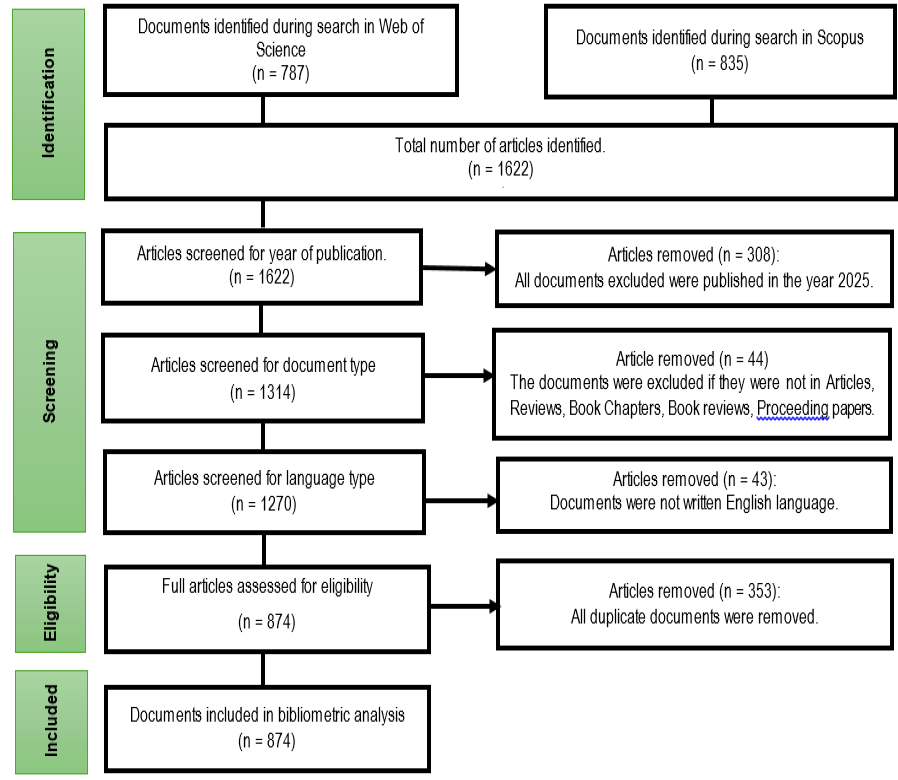
A total of 787 documents were retrieved from the Web of Science database and 835 documents from Scopus prior to data screening as shown in Figure 1. The total number of 1,622 was screened for year of publication and remain with 1314 documents which were published between year 2000 and 2024. Then 1,270 documents were then categorized as articles, book chapter article, early access article, proceeding paper articles, editorial material, meeting abstract, review, book chapter reviews and early access reviews. Then, 1270 documents were screened for language, and documents written in German, Russian, Polish, French, Hungarian, Spanish, Portuguese were excluded and left with 1227 documents which were written in English. The remaining 1,227 documents were screened, and 874 remained after duplicates were removed. The record with the most comprehensive metadata was kept when duplicate entries from Web of Science and Scopus had inconsistent citation counts or missing bibliographic fields. The Scopus record was favored in situations when the two records were equivalent as it typically offered more thorough citation and affiliation details. The study focused on the following sections which help to understand the trends in molting of poultry species: main information, publications and average total citation per year, three field plot, most relevant sources (most influential sources), most locally cited sources, most relevant authors, most local cited authors, countries’ scientific contribution, most global cited documents, most cited references, word cloud, co-occurrence network, co-citation network, author collaboration network, trend topics and thematic map.
Data extraction
The results from the WoS and Scopus after refinement were selected page by page then “Export Records to File” and the “Full Records and Cited References” options were used for extracting the data from WoS and SCOPUS database. The BibTeX format was chosen for downloading the full records of the 874 documents. Raw data were analyzed based on the number of studies published each year.
Data analysis
The R Studio (version 4.5.1, 2025) software was used to analyze and visualize bibliometric data from WoS and Scopus that was saved as a bib file . The following packages, bibliometrix and biblioshiny were installed in the software. The documents included in the study were moved to bibliometrix R-package within the biblioshiny before they were evaluated for descriptive
bibliometric analysis. The data analyzed includes the main information, publications and average total citation per year, three field plot, most relevant sources (most influential sources), most local cited sources, most relevant authors, most local cited authors, countries’ scientific contribution, most global cited documents, most cited references, world cloud, co-occurrence network, co-citation network, author collaboration network, trend topics and thematic map.
RESULTS
Descriptive statistics
Table 1 shows the outline of the data retrieved from the Web of Science for bibliometric analysis. A total of 874 documents published between 2000 and 2024 were extracted. The results showed compound annual publication growth rate of -2.45%, an international co-authorship of 23.34% and an average of 20.73 citations per document. The negative growth trend may indicate a gradual decline in research output on conventional poultry molting practices over time. This decline could be associated with increasing concerns regarding animal welfare and the subsequent shift toward welfare-friendly alternatives to traditional induced molting methods, which has influenced research priorities within the field.
Publications and citations per year
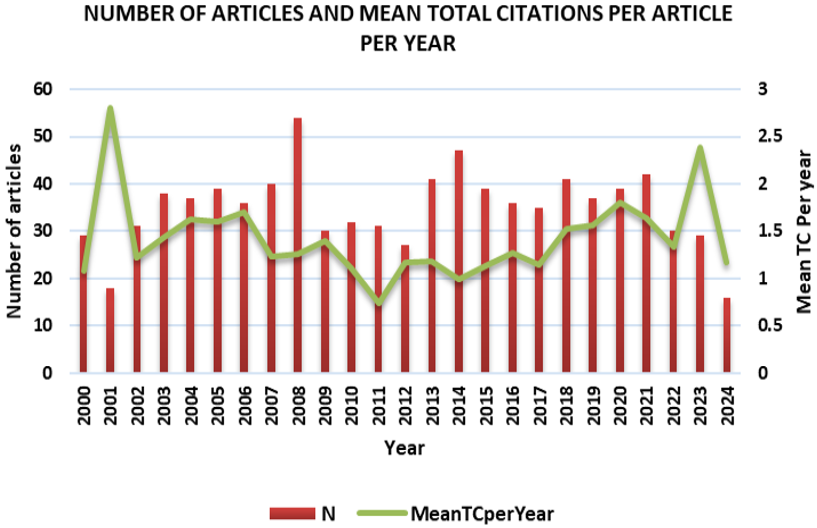
Figure 2 below represents the distribution of articles and total citations per year. The findings showed that the highest number of publications was in 2008 (n = 54) followed by 2014 (n = 47) and followed by 2021 with 42 publications. The highest annual citation total was recorded in 2001 (2.80), with the years 2023 and 2017 producing between 2 and 2.5 citations for studies concerning poultry molting research.
|
Description |
Results |
|
MAIN INFORMATION ABOUT DATA |
|
|
Timespan |
2000:2024 |
|
Sources (Journals, Books, etc) |
307 |
|
Documents |
874 |
|
Annual Growth Rate % |
-2.45 |
|
Document Average Age |
14 |
|
Average citations per doc |
20.73 |
|
References |
0 |
|
DOCUMENT CONTENTS |
|
|
Keywords Plus (ID) |
3784 |
|
Author's Keywords (DE) |
2536 |
|
AUTHORS |
|
|
Authors |
2795 |
|
Authors of single-authored docs |
71 |
|
AUTHORS COLLABORATION |
|
|
Single-authored docs |
83 |
|
Co-Authors per Doc |
4.87 |
|
International co-authorships % |
23.34 |
|
DOCUMENT TYPES |
|
|
Article |
822 |
|
Article; book chapter |
1 |
|
Article: proceedings paper |
13 |
|
Book chapter |
4 |
|
Review |
33 |
|
Review: book chapter |
1 |
Most relevant sources
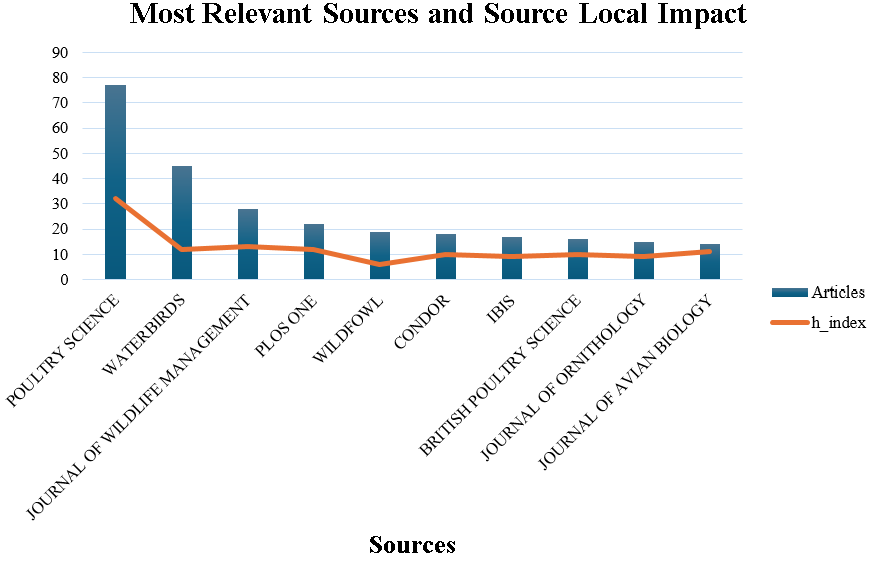
Figure 3 presents the most relevant and locally impactful sources in poultry molting research published between 2000 and 2024. The sources were ranked according to the number of articles published and their h-index values. The findings revealed that Poultry Science was the leading source in the field, publishing the highest number of articles (n = 77) and recording the highest h-index (32), indicating both high productivity and strong scholarly impact. This was followed by Waterbirds with forty-five articles (n = 45) and an h-index of 12. Journal of Wildlife Management ranked third in article output with twenty-eight publications and recorded an h-index of 13. Other notable journals included PLOS ONE, Wildfowl, Condor, IBIS, British Poultry Science, Journal of Ornithology, and Journal of Avian Biology. Overall, the dominance of Poultry Science highlights its central role in disseminating influential research on poultry molting and related avian studies.
Most relevant authors
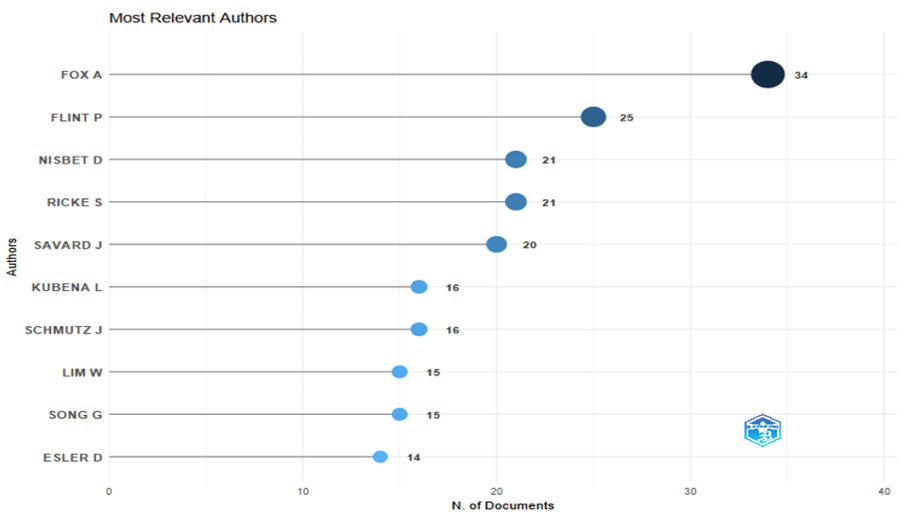
The results revealed that among the top 10 leading researchers in the specialized area of poultry molting, Fox A. stood out as the primary contributor, having produced thirty-four publications (n = 34). This was followed by Flint P. with twenty-five (n = 25) publications. At the lower end of the spectrum, Lim W., Song G., and Esler D. each contributed four documents, as depicted in Figure 4. Although several of these authors are well-known for their study on molting in wild bird species rather than domestic poultry, their inclusion reflects the scope of the bibliometric dataset and its use of the broad term “molting.” As a result, rather than focusing just on poultry molting research, these authors should be viewed as major contributors to avian molting research in general.
Most globally cited documents
The articles globally cited during the designated period of this research are detailed in Table 2. The document by Dawson A., released in 2001 in the Journal of Biological Rhythms, achieved the highest citation count, totaling 831, which corresponds to an average of 32 citations annually throughout the study’s timeframe. Following this, research conducted by Ubuka T., published in 2006 in Endocrinology, accumulated 250 citations, averaging 11.9 citations per year.
Co-occurrence network
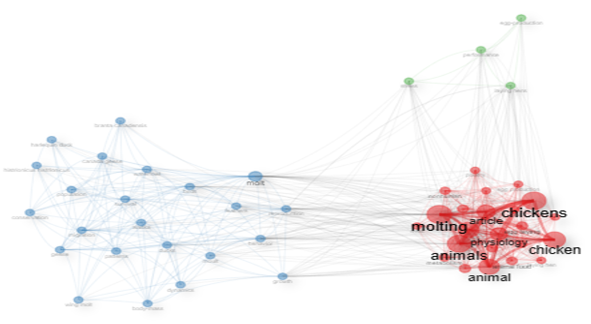
Figure 5 shows a keyword co-occurrence network derived from articles on poultry molting published between 2000 and 2024. In this network, each node represents a keyword, with the size of the node indicating the frequency of its appearance. The line between nodes represents the co-occurrence between nodes, and the size of the line indicates the strength of the relationship. The results showed 2 clusters, each represented by different colours. Cluster 1 consists of 23 keywords: “molting”, “chicken”, “chickens”, “animals”, “female”, “animal”, “physiology”, “article”, “diet”, “nonhuman”, “controlled study”, “metabolism”, “laying hen”, “egg laying”, “egg production”, “Aves”, “animal food”, “animal feed”, “egg”, “oviposition”, “poultry”, “body weight” and “eggs”. Cluster 2 consists of 23 keywords: “molt”, “migration”, “survival”, “birds”, “waterfowl”, “geese”, “population”, “behavior”, “ducks”, “growth”, “reproduction”, “alaska”, “wing molt”, “patterns”, “body-mass”, “branta canadensis”, “harlequin duck”, “dynamics”, “feathers”, “histrionicus histrionicus”, “moult”, “canada geese” and “conservation”. Lastly, cluster 3 consists of 4 keywords: “laying hens”, “performance”, “stress” and “egg-production”.
Trends topics
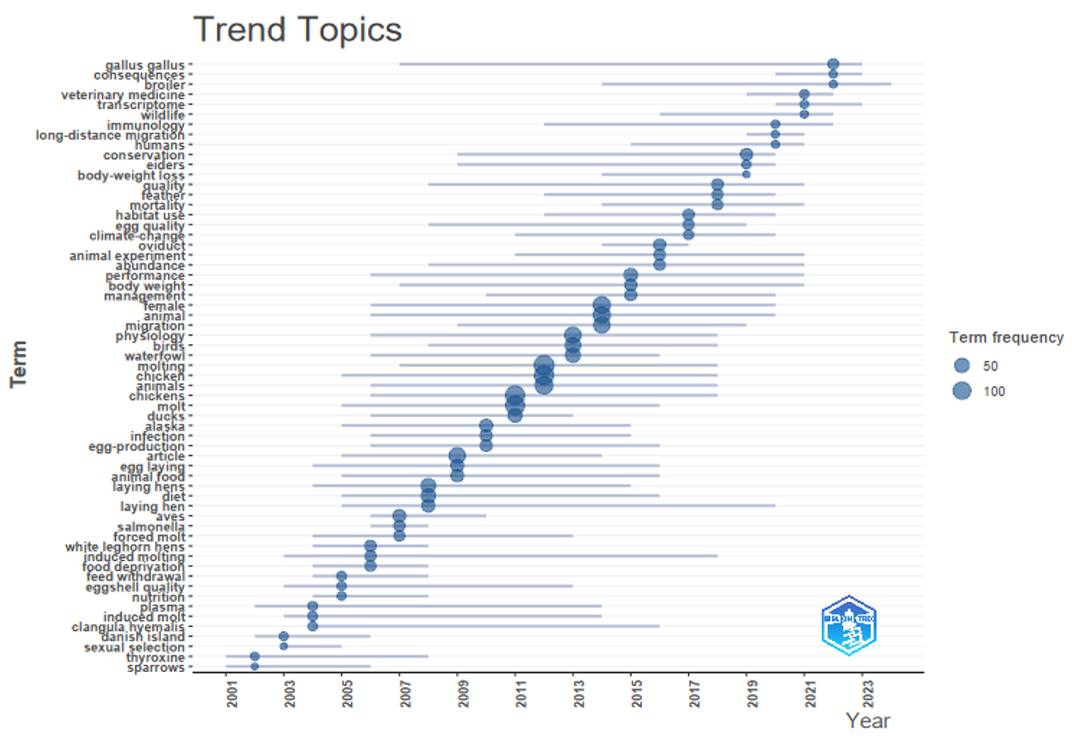
Figure 6 shows the emerging research themes related to poultry molting from 2000 to 2024. The most frequent topics were analysed for words that were used with a minimum frequency of 5 times and a maximum of 141 times across published articles from 2000 to 2024. The term ‘molting’ is the most frequently occurring keyword,
Table 2: Top ten most globally cited documents.
|
Author, year, and journal |
DOI |
Total Citations |
TC per Year |
Article title |
|
Dawson A, 2001, Journal of Biological Rhythms |
10.1177/074873001129002079 |
831 |
32 |
Photoperiodic control of seasonality in birds |
|
Ubuka T, 2006, Endocrinology |
10.1210/en.2005-1178 |
250 |
11.9 |
Gonadotropin-inhibitory hormone inhibits gonadal development and maintenance by decreasing gonadotropin synthesis and release in male quail |
|
Wu P, 2004, The International Journal of Developmental Biology |
10.1387/ijdb.15272390 |
210 |
9.1 |
Evo-Devo of amniote integuments and appendages |
|
Van der Graaf S, 2006, Ardea |
180 |
8.6 |
Surfing on a green wave – how plant growth drives spring migration in the Barnacle Goose Branta leucopsis |
|
|
Yu M, 2004, Journal of Developmental Biology |
10.1387/ijdb.15272383 |
167 |
7.3 |
The developmental biology of feather follicles |
|
Fox A, 2005, Global Change Biology |
10.1111/j.1365-2486.2005.00941.x |
165 |
7.5 |
Effects of agricultural change on abundance, fitness components and distribution of two arctic‐nesting goose populations |
|
Stahl J, 2001, Animal behaviour |
10.1006/anbe.2000.1564 |
157 |
6 |
Subordinates explore but dominants profit: resource competition in high Arctic barnacle goose flocks |
|
Berry W, 2003, Poultry Science |
10.1093/ps/82.6.971 |
154 |
6.4 |
The physiology of induced molting |
|
Clausen P, 2002, Acta Oecologica-International Journal of Ecology |
10.1016/S1146-609X(02)01150-5 |
145 |
5.8 |
Long-distance endozoochorous dispersal of submerged macrophyte seeds by migratory waterbirds in northern Europe—a critical review of possibilities and limitations |
|
Schneitz C, 2005, Food Control |
10.1016/j.foodcont.2004.06.002 |
141 |
6.4 |
Competitive exclusion in poultry––30 years of research |
TC per year: Total citation per year; DOI: Digital Object Identifier.
with a total frequency of 141 during the period from 2007 to 2018. In contrast, the term ‘chicken’ recorded a frequency of 126 from 2005 to 2018. Furthermore, between 2003 and 2014, subjects associated with the term ‘induced molt’ exhibited a notably low frequency of 10.
Thematic map
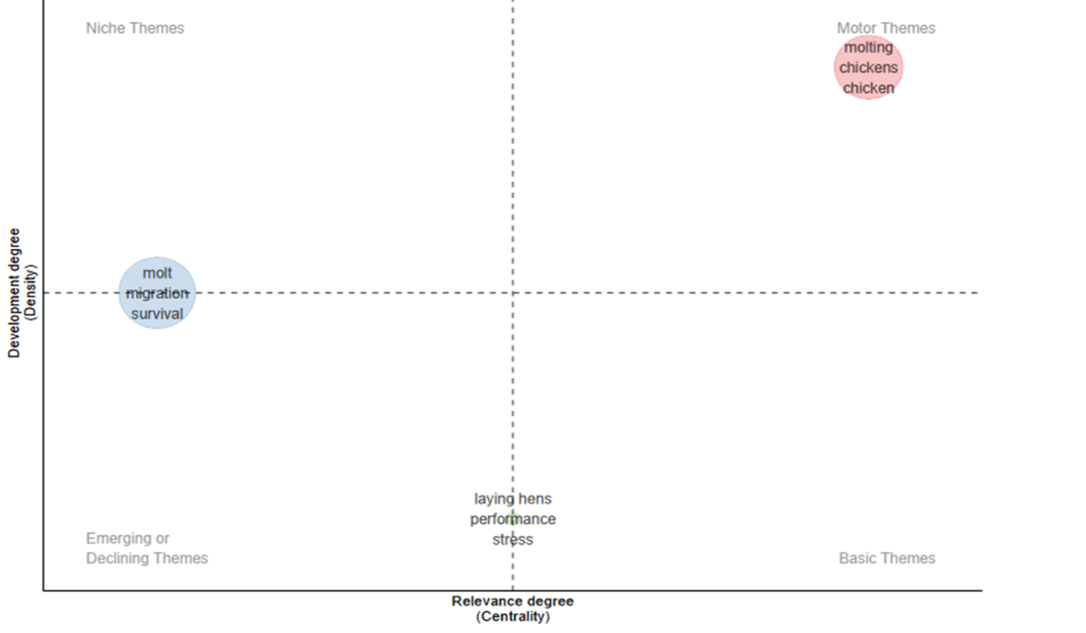
The thematic map analysis in Figure 7 shows key topic areas within the field of poultry molting research. The analysis identified three clusters, each of which contained the top 9 keywords. The upper right quadrant (motor themes) is characterised by both high centrality and high density, indicating well-developed and important topics within the research field. In this quadrant, the cluster “molting, chickens, chicken” appears prominently, suggesting that this is a core and highly developed research area that plays a central role in the field. The upper left quadrant (niche themes) represents themes with high density but low centrality, meaning they are well developed but relatively isolated or specialised. In this study, the cluster “molt, migration, survival” falls within this quadrant. These topics are highly developed internally but have limited connections to the broader research field, indicating specialised or niche areas that may not yet be widely integrated into mainstream poultry research. The lower right quadrant (basic themes) includes themes with high centrality but low density, indicating that they are important for the field but not yet well developed. The cluster “laying hens, performance, stress” is positioned in this quadrant, suggesting that these are fundamental and transversal topics that are widely relevant but still underdeveloped. These themes often represent essential research directions that require further exploration and development.
Countries collaboration
Table 3 illustrates the nations that engaged in collaborative efforts during the specified timeframe analysed in this study. The findings revealed that numerous countries engaged in collaboration. Nevertheless, the USA and Canada exhibited the greatest number of collaborative efforts (n = 48). This was followed by the USA and the United Kingdom, demonstrating collaborations at a frequency of nine (n = 9). Countries such as Brazil and Argentina had very low Collaborations at a frequency of one (n = 1).
Table 3: Countries collaboration.
|
From |
To |
Frequency |
|
United State of America |
Canada |
48 |
|
United State of America |
United Kingdom |
9 |
|
United State of America |
Korea |
8 |
|
Canada |
Denmark |
7 |
|
Canada |
France |
7 |
|
Canada |
United Kingdom |
7 |
|
United State of America |
China |
7 |
|
United State of America |
Japan |
7 |
|
China |
Denmark |
6 |
|
Germany |
Netherlands |
6 |
|
United Kingdom |
Denmark |
6 |
|
Brazil |
Argentina |
1 |
|
Brazil |
Italy |
1 |
Discussion
Although the poultry industry has scaled up production considerably, major inefficiencies and challenges persist in the current system (George and George A, 2023). In laying hens, inadequate molting management can lead to reduced egg production, physiological stress, and increased susceptibility to disease . Understanding the research landscape and trends in poultry molting is therefore important for identifying scientific advances, knowledge gaps, and priorities for future research. Several researchers, countries, institutions, and industry partners have collaborated on studies to address “poultry molting research”, thus necessitating this bibliometric analysis to understand the milestones achieved, research gaps uncovered, and the trends for future research. Bibliometric analysis helps in gaining a valuable understanding of dynamics and limitations in knowledge within the field of animal science . The present bibliometric analysis evaluated 874 publications on poultry molting published between 2000 and 2024. The results provide a comprehensive overview of publication trends, influential authors and journals, thematic developments, and collaborative networks in the field of poultry molting research. The annual growth rate of publications was −2.45%, indicating a modest decline in publication output over the study period. The negative growth trend may indicate a gradual decline in research output on conventional poultry molting practices over time. This may reflect a shift in research priorities from traditional feed-withdrawal-induced molting, which has raised animal welfare concerns and is restricted in some regions, to alternative non-feed-withdrawal methods such as dietary manipulation. These welfare-friendly approaches remain an important focus of current poultry molting research. Among the prominent authors in the subject of interest, Fox A emerged as the leading author to frequently employ the keyword “molting” in most publications. The findings should be taken with caution, as Fox A is generally linked to bird molting research in general, not only studies on commercial poultry species. The study identified the Journal of Poultry Science as the most relevant source for disseminating information on molting of poultry species. This indicates that Poultry Science is a relevant and authoritative source for high-caliber research and information related to poultry production. The study further discovered that Poultry Science and Waterbirds show significant upward trends, indicating increasing research focus and concern in these areas on poultry molting research. This shows that these journals are most prolific in the interest of poultry molting. One of the most highly cited studies on the photoperiodic control of seasonality in birds was conducted by Alistair Dawson in 2001. The thematic map and co-citation analyses show the field’s evolution and research priorities. Core topics like “molting, chickens, chicken” are recognized as high centrality and high density, indicating that they are well-developed and central to the field, whereas “laying hens, performance and stress” appear as basic themes, reflecting foundational topics that are essential but less internally developed within the research domain. The bibliometric overview maps collaborative networks, research clusters, and knowledge gaps, offering strategic insights for directing future research and policies toward poultry molting.
To the best of our knowledge, the current study is the first bibliometric analysis to examine the global research status and emerging trends on poultry molting research from 2000 to 2024. A search of the available literature did not identify any previous bibliometric studies specifically focused on poultry molting or induced molting in laying hens, although numerous review and experimental studies on induced molting have been published ; ; . Therefore, there is no related bibliometric analysis for comparison on poultry molting. It is important to point out that despite the novelty of this work and the important findings established from this study, there are a few limitations associated with it. The limitations of this study include the restriction of the literature search to the Web of Science Core Collection database and Scopus, which may not encompass all published work, particularly studies from less prominent journals or non-English sources. In addition, grey literature, conference abstracts, theses, dissertations, and unpublished studies were excluded from the analysis. The exclusion of non-English publications and grey literature may have introduced publication and language bias, potentially limiting the comprehensiveness of the findings.
Conclusion
This study provides the first bibliometric analysis of global research on poultry molting published between 2000 and 2024. A total of 874 unique documents were analyzed, revealing publication trends, influential authors and journals, major contributing countries, and the thematic structure of the field. The results showed a slight decline in annual publication growth (−2.45%), suggesting that the field has matured and that research is increasingly directed toward specialized topics, including welfare-friendly alternatives to feed-withdrawal-induced molting. Thematic analyses identified “molting,” “chickens,” and “laying hens” as central research themes, while “performance” and “stress” remain important areas for continued investigation. Key knowledge gaps include the limited number of studies on alternative molting strategies in poultry species such as ducks, quail, turkeys, and guinea fowl. Future research should focus on developing sustainable, welfare-friendly molting programs and expanding studies to include underrepresented poultry species. Overall, this bibliometric analysis offers a comprehensive overview of the evolution of poultry molting research and provides a foundation for guiding future scientific and practical advancements in the field.
ACKNOWLEDGMENTS
The authors would like to acknowledge the Department of Agricultural Economics and Animal Production at the University of Limpopo for the support.
NOVELTY STATEMENT
This study is the first bibliometric analysis mapping global research on poultry molting from 2000 to 2024 using 874 documents retrieved from Web of Science and Scopus. This study identifies influential contributors, research hotspots, emerging topics, and thematic gaps.
AUTHOR CONTRIBUTIONS
Conceptualization, TT, TG and TL; methodology, TT; software, TT and TL; validation, TT and TL; formal analysis, TT and TL; investigation, TT; resources, TT; data curation, TL; writing—original draft preparation, TG and TL; writing—review and editing, TT and TL; visualization, TG and TL; supervision, TL; project administration, TT; funding acquisition, TT. All authors have read and agreed to the published version of the manuscript.
Generative AI and AI assisted technology statement
The authors declare that no generative AI and AI assisted technology was used in the creation of this manuscript
Conflicts of interest
The author(s) declare that there are no conflicts of interest related to this publication.
Figures

Flowchart for inclusion and exclusion of documents for selection.

Number of articles vs mean total citations per article per year.

Most relevant sources and Source local impact.

Most relevant authors.

Co-occurrence network.

Trend topics.

Thematic map.
References
- Berry WD (2003). The physiology of induced molting. Poult. Sci., 82(6): 971–980. https://doi.org/10.1093/ps/82.6.971[CrossRef]
- Birkle C, Pendlebury DA, Schnell J, Adams J (2020). Web of Science as a data source for research on scientific and scholarly activity. Quant. Sci. Stud., 1(1): 363–376. https://doi.org/10.1162/qss_a_00018[CrossRef]
- Cartoni Mancinelli A, Dal Bosco A, Mattioli S, Ranucci D, Castellini C (2018). Mobile poultry processing unit as a resource for small poultry farms: planning and economic efficiency, animal welfare, meat quality and sanitary implications. Animals, 8(12): 229. https://doi.org/10.3390/ani8120229[CrossRef]
- Dawson A, King VM, Bentley GE, Ball GF (2001). Photoperiodic control of seasonality in birds. J. Biol. Rhythms, 16(4): pp.365-380. https://doi.org/10.1177/074873001129002079[CrossRef]
- Donthu N, Kumar S, Mukherjee D, Pandey N, Lim WM (2021). How to conduct a bibliometric analysis: An overview and guidelines. J. Bus. Res., 133: 285–296. https://doi.org/10.1016/j.jbusres.2021.04.070[CrossRef]
- Fisinin VI, Konopleva AP (2015). About physiological and morphological processes in poultry at natural and induced molting. Сельскохозяйственная биология 6 (eng). pp. 719-728. https://doi.org/10.15389/agrobiology.2015.6.719eng[CrossRef]
- George AS, George AH (2023). Optimizing poultry production through advanced monitoring and control systems. Partners Universal Int. Innov. J., 1(5): 77–97.
- Lebedev S, Kazakova T, Notova S, Marshinskaia O (2025). Effect of forced molting on the antioxidant status of laying hens and a new strategy for alleviating post-molting syndrome. Open Vet. J., 15(5): 2073. https://doi.org/10.5455/OVJ.2025.v15.i5.24[CrossRef]
- McCowan B, Schrader J, DiLorenzo AM, Cardona C, Klingborg D (2006). Effects of induced molting on the well-being of egg-laying hens. J. Appl. Anim. Welfare Sci., 9(1): pp.9-23. https://doi.org/10.1207/s15327604jaws0901_2[CrossRef]
- Mishra R, Mishra B, Kim YS, Jha R (2022). Practices and issues of moulting programs for laying hens: a review. Br. Poult. Sci., 63(5): 720-729. https://doi.org/10.1080/00071668.2022.2059339[CrossRef]
- Mnisi CM, Njeri FM, Maina AN, Waliaula PK, Cheng V, Kumalo I, Egbu CF, Kiarie EG (2025). A review on the potential use of eubiotics in non-chicken poultry species. Trop. Anim. Health Prod., 57(4): 213. https://doi.org/10.1007/s11250-025-04466-9[CrossRef]
- Mottet A, Tempio G (2017). Global poultry production: current state and future-outlook and challenges. World’s Poult. Sci. J., 73(2): 245–256. https://doi.org/10.1017/S0043933917000071[CrossRef]
- Sarkar S, Shuvo SKR, Chakraborty T, Shadin MSF, Hasan MM, Jahan SS, Islam MS (2024). Conservation and socio-economic potential of Aseel chicken for sustainable poultry farming in Bangladesh. Livestock Res., 2(1): 1–8. https://doi.org/10.25163/livestock.2110118[CrossRef]
- Sezgin A, Orbay K, Orbay M (2022). Educational research review from diverse perspectives: A bibliometric analysis of Web of Science (2011–2020). SAGE Open, 12(4): 215824402211416. https://doi.org/10.1177/21582440221141628[CrossRef]
- Susilo AYTB, Hanif MF, Ariyadi B, Putra ARS, Agus A (2024). Research trends on cage-free housing system in laying hens: A bibliometric analysis. Adv. Anim. Vet. Sci., 12(8): 1433–1441. https://doi.org/10.17582/journal.aavs/2024/12.8.1433.1441[Full text][CrossRef]
- Weng ZH, Chen BB, Lin JR, Xu MM, Yuan JP, Hu HK (2025). Gastric cancer radiation therapy: a bibliometric analysis of scientific literature. Front. Oncol., 15: 1513255. https://doi.org/10.5230/jgc.2025.25.e40[CrossRef]
- Wong JT, de Bruyn J, Bagnol B, Grieve H, Li M, Pym R, Alders RG (2017). Small-scale poultry and food security in resource-poor settings: A review. Glob. Food Secur., 15: 43–52. https://doi.org/10.1016/j.gfs.2017.04.003[CrossRef]
Services
Article usage statistics
Loading…