Fucoidan as an Antioxidant and Anti-Inflammatory Marine Sulfated Polysaccharide for Cellular Protection under Heat Stress: A Mechanistic Review
· · · · ·
Affiliations & Notes ⌄
1Doctoral Programme of Medical Science, Faculty of Medicine, Universitas Airlangga, Surabaya, Indonesia
2Department of Pharmaceutical Biology, Faculty of Pharmacy, Hang Tuah University, Surabaya, Indonesia
3Department of Pharmacology, Faculty of Veterinary Medicine, Universitas Airlangga, Surabaya, Indonesia
4Department of Pharmacology, Faculty of Medicine, University of Malaya, Kuala Lumpur, Malaysia
5Department of Pharmacology, Faculty of Medicine, Universitas Airlangga, Surabaya, Indonesia. *Correspondence | Rochmah Kurnijasanti, Department of Pharmacology, Faculty of Veterinary Medicine, Airlangga University, Surabaya, Indonesia
Heat stress is a complex cellular challenge that disrupts homeostasis through tightly interconnected mechanisms involving oxidative stress, inflammatory activation, mitochondrial dysfunction, proteotoxic burden, and apoptosis.
In this context, fucoidan has emerged as a promising marine-derived bioactive compound with potential relevance to cellular protection under heat stress.
Its reported biological activities suggest that fucoidan may attenuate ROS accumulation, enhance Nrf2-dependent antioxidant defense, suppress NF-κB- and MAPK-mediated inflammatory signaling, preserve mitochondrial integrity, and reduce apoptosis-related cascades.
Overall, fucoidan may represent a valuable candidate for mitigating heat stress-induced cellular injury, although further pathway-oriented and translational studies are required.
Selected from the article's own text.
Abstract
Heat stress is a critical stressor that disrupts cellular homeostasis and induces oxidative damage, inflammatory responses, mitochondrial dysfunction, and apoptosis. Excessive heat exposure promotes the accumulation of reactive oxygen species (ROS), impairs endogenous antioxidant systems, and activates redox-sensitive signaling pathways, including nuclear factor erythroid 2-related factor 2 (Nrf2), nuclear factor kappa B (NF-κB), and mitogen-activated protein kinases (MAPKs). These interconnected events accelerate cellular injury and compromise adaptive stress responses. Fucoidan, a sulfated polysaccharide primarily isolated from brown seaweeds, has gained attention as a bioactive compound with antioxidant, anti-inflammatory, and cytoprotective properties. This review highlights the molecular basis of heat stress-induced cellular damage and discusses the potential protective role of fucoidan in this context. Fucoidan may attenuate heat stress-associated injury by reducing ROS accumulation, enhancing Nrf2-mediated antioxidant defense, suppressing NF-κB-driven inflammatory signaling, modulating MAPK activation, preserving mitochondrial function, and limiting apoptosis-related pathways. In addition, the biological activity of fucoidan appears to be influenced by its structural characteristics, particularly molecular weight and degree of sulfation. Although current evidence supports the therapeutic promise of fucoidan in oxidative and inflammatory injury models, studies specifically addressing heat stress remain limited. Overall, fucoidan represents a promising multitarget compound for cellular protection under heat stress and warrants further mechanistic and translational investigation.
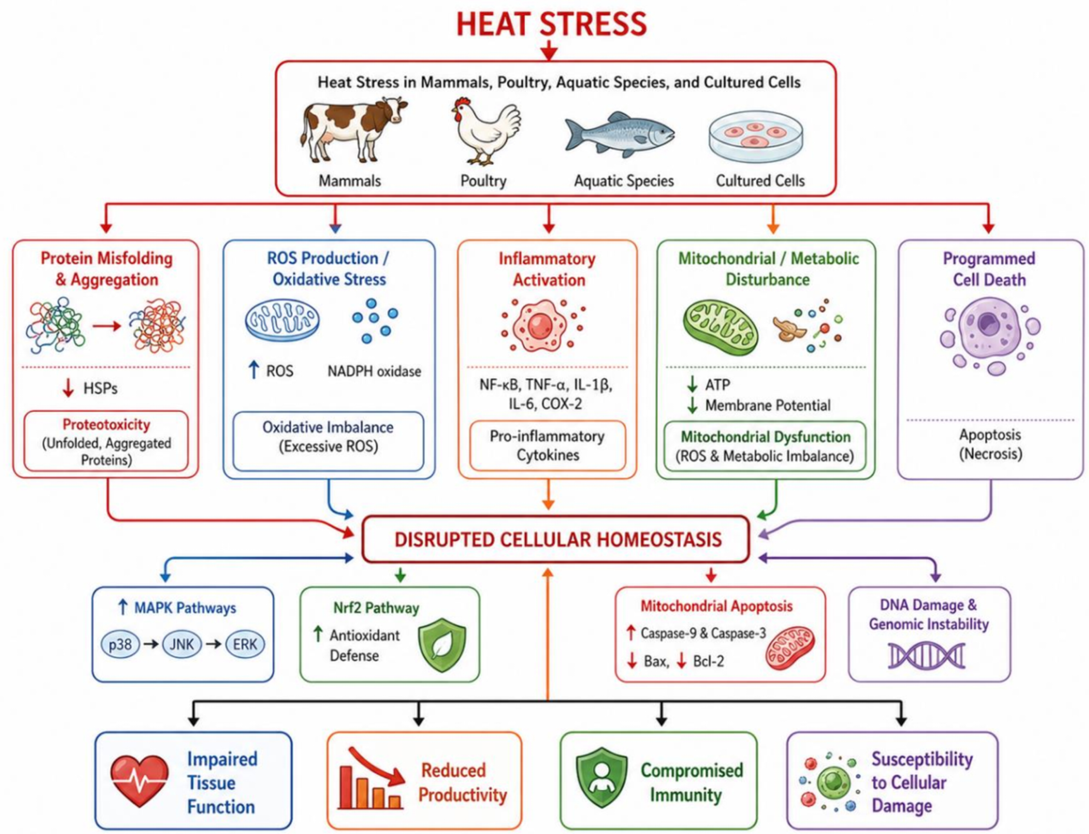
Heat stress is a major biological stressor that adversely affects cellular homeostasis in a wide range of organisms, including mammals, birds, aquatic species, and cultured cells (Figure 1). At the cellular level, excessive heat exposure does not merely represent a thermal challenge, but rather initiates a complex stress response involving proteotoxicity, oxidative imbalance, inflammatory activation, metabolic disturbance, and programmed cell death. These events are particularly relevant because heat stress has been increasingly associated with impaired tissue function, reduced productivity, compromised immunity, and enhanced susceptibility to cellular damage in both physiological and pathological settings ; ; .
One of the earliest consequences of heat stress is the disruption of intracellular protein stability and membrane integrity. Elevated temperature alters protein conformation, increases the risk of protein misfolding and aggregation, and places considerable pressure on the cellular proteostasis machinery. In response, cells activate adaptive systems such as the heat shock response, particularly through heat shock factor 1 (HSF1) and heat shock proteins (HSPs), to restore protein folding and maintain structural integrity. However, when heat exposure is severe or prolonged, these compensatory mechanisms become insufficient, leading to persistent cellular dysfunction and injury ; ; ; .
A central feature of heat stress-induced damage is the excessive generation of reactive oxygen species (ROS). Under thermal stress conditions, mitochondrial electron transport becomes less efficient, while other pro-oxidant systems, including NADPH oxidases and endoplasmic reticulum-associated oxidative processes, may further contribute to ROS accumulation. Once generated in excess, ROS oxidize lipids, proteins, and nucleic acids, thereby compromising membrane stability, enzyme activity, and genomic integrity. More importantly, ROS are not merely toxic byproducts but also potent signaling mediators that amplify stress-responsive pathways and promote further cellular deterioration ; ; , 2007).
The pathological effects of heat stress are closely linked to the crosstalk between oxidative stress and inflammation. Increased ROS production can activate redox-sensitive transcription factors and signaling cascades, particularly nuclear factor kappa B (NF-κB) and mitogen-activated protein kinases (MAPKs), resulting in the upregulation of pro-inflammatory mediators such as tumor necrosis factor-alpha (TNF-α), interleukin-1 beta (IL-1β), interleukin-6 (IL-6), cyclooxygenase-2 (COX-2), and inducible nitric oxide synthase (iNOS). This inflammatory activation further aggravates oxidative injury and disrupts mitochondrial function, creating a self-amplifying cycle of cellular damage. In parallel, mitochondrial membrane depolarization, cytochrome c release, and caspase activation may ultimately shift the cellular response from adaptation toward apoptosis ; ; ; ; .
Although cells possess endogenous antioxidant defense systems, including superoxide dismutase (SOD), catalase (CAT), glutathione peroxidase (GPx), and the nuclear factor erythroid 2-related factor 2 (Nrf2)-dependent cytoprotective network, these mechanisms are often inadequate under intense or prolonged heat stress. Consequently, there is growing interest in bioactive compounds capable of modulating multiple stress-responsive pathways simultaneously rather than acting solely as conventional radical scavengers. In this regard, compounds with both antioxidant and anti-inflammatory properties are particularly attractive, as they may interrupt the redox-inflammatory axis that underlies much of heat stress-induced cellular injury ; ; ; .
Natural bioactive molecules have attracted considerable attention as potential preventive and therapeutic agents because of their structural diversity and pleiotropic biological properties. Unlike conventional single-target compounds, many naturally derived molecules may simultaneously modulate oxidative stress, inflammatory responses, mitochondrial function, immune regulation, and cell survival pathways. Their health-promoting effects have consequently been investigated in various pathological conditions involving excessive reactive oxygen species (ROS) production, chronic inflammation, metabolic dysregulation, and cellular injury. Nevertheless, the biological activities of natural molecules are often highly context dependent and may vary according to their chemical composition, bioavailability, dosage, formulation, and the experimental model employed. Therefore, although preclinical studies frequently demonstrate promising protective effects, further mechanistic and translational investigations are required to establish their molecular targets, pharmacokinetic characteristics, safety, optimal dosing, and clinical relevance.
Within this broader group of natural bioactive compounds, fucoidan, a sulfated polysaccharide predominantly derived from brown seaweeds, has emerged as a promising candidate for cellular protection. Structurally, fucoidan is primarily composed of L-fucose and sulfate groups; however, its monosaccharide composition, branching pattern, molecular weight, sulfate content, and biological activity vary considerably depending on the algal species, harvesting conditions, extraction and purification procedures, and degree of sulfation. Such structural heterogeneity is an important consideration because it may substantially influence fucoidan’s biological efficacy and mechanism of action.
Fucoidan has been reported to exert diverse biological activities, including antioxidant, anti-inflammatory, immunomodulatory, cytoprotective, and context-dependent apoptosis-regulating effects. These pleiotropic properties suggest that fucoidan may provide cellular protection not only by directly or indirectly reducing ROS accumulation but also by modulating interconnected molecular pathways involved in cellular adaptation, inflammation, mitochondrial homeostasis, and injury. These pathways include the nuclear factor erythroid 2-related factor 2/Kelch-like ECH-associated protein 1 (Nrf2/Keap1) antioxidant pathway, nuclear factor kappa B (NF-κB)-mediated inflammatory signaling, mitogen-activated protein kinase (MAPK) cascades, and mitochondrial apoptosis-related pathways ; ; ; ; ; .
Despite the growing interest in fucoidan as a marine-derived bioactive molecule, its specific relevance to heat stress-induced cellular injury has not yet been comprehensively evaluated from an integrated molecular perspective. Most available studies have investigated fucoidan in general models of oxidative stress, inflammation, mitochondrial dysfunction, or tissue injury, whereas direct mechanistic evidence in heat stress models remains comparatively limited. Moreover, differences in fucoidan source, extraction method, molecular characteristics, experimental dosage, and biological model complicate comparisons among studies and limit the translation of preclinical findings.
Accordingly, this review discusses the molecular mechanisms underlying heat stress-induced cellular injury and critically evaluates the potential role of fucoidan as a natural antioxidant, anti-inflammatory, and cytoprotective compound. Particular emphasis is placed on the interactions among ROS generation, Nrf2-mediated antioxidant defense, NF-κB- and MAPK-dependent inflammatory signaling, mitochondrial dysfunction, and apoptosis. By integrating current mechanistic evidence, this review also identifies major knowledge gaps and highlights the need for standardized fucoidan characterization, direct heat stress-specific experimental studies, dose-response evaluation, pharmacokinetic assessment, and well-designed translational investigations before its therapeutic potential can be conclusively established ; ; .
Materials and Methods
Review design
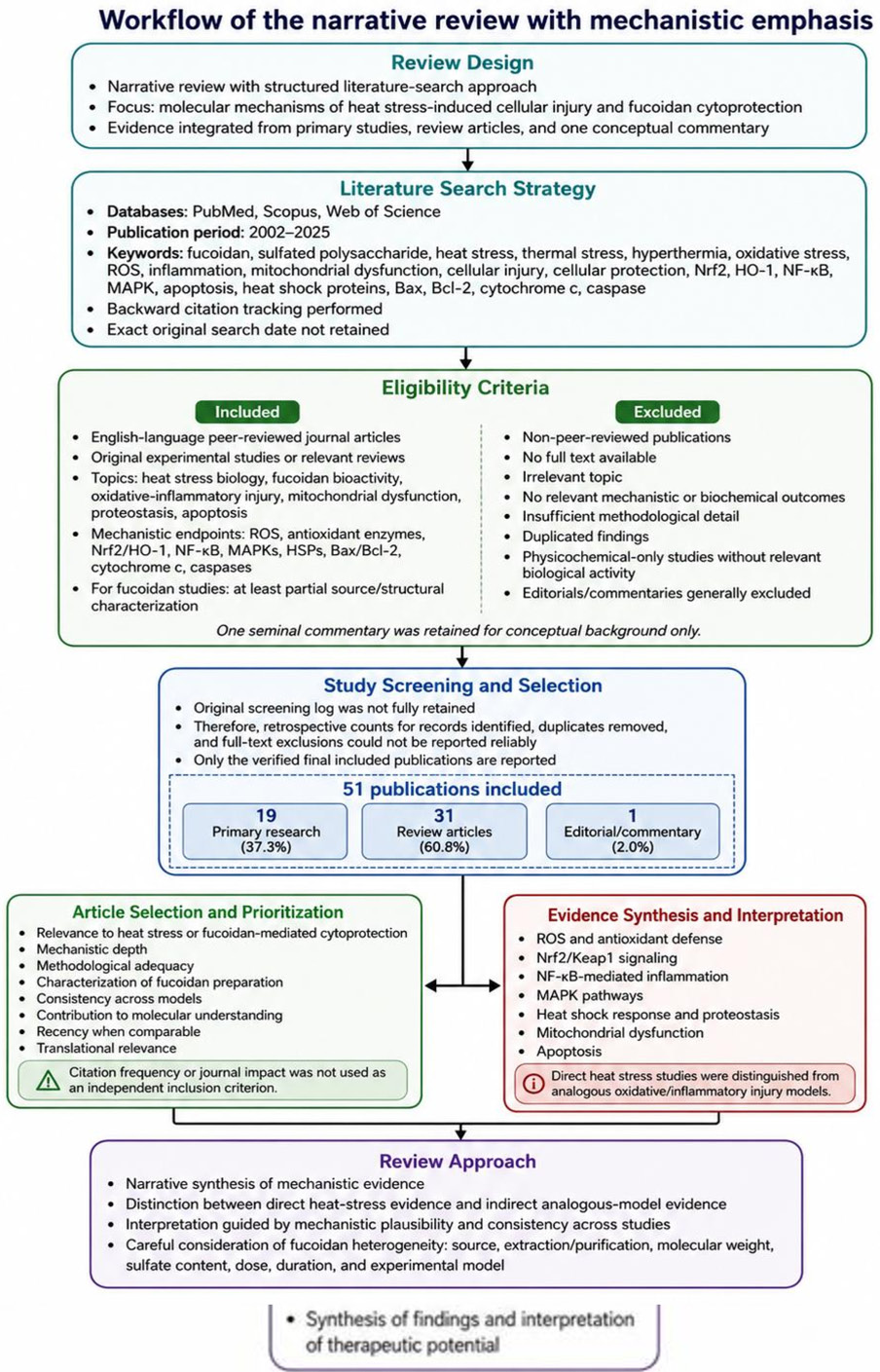
This study was conducted as a structured narrative review, not as a systematic review. A predefined literature-search strategy and eligibility criteria were used to organize evidence on heat stress-induced cellular injury and the potential cytoprotective effects of fucoidan (Figure 2). Primary studies and relevant reviews were narratively integrated across oxidative stress, inflammatory signaling, mitochondrial dysfunction, proteostasis, and apoptosis.
Importantly, direct studies evaluating fucoidan under heat stress conditions remain limited. Therefore, mechanistically relevant evidence from related models of oxidative stress, inflammation, mitochondrial dysfunction, and cellular injury was also included. Evidence from these analogous models was interpreted cautiously and distinguished from direct heat stress-specific findings ; ; .
Literature search strategy
Relevant publications were identified through searches of PubMed, Scopus, and Web of Science. The final literature corpus covered peer-reviewed publications published between 2002 and 2025. The search strategy combined free-text terms related to fucoidan, heat stress, cellular injury, and the principal molecular pathways relevant to cytoprotection.
The core Boolean search string was: (“fucoidan” OR “sulfated polysaccharide*”) AND (“heat stress” OR “thermal stress” OR hyperthermia) AND (“oxidative stress” OR “reactive oxygen species” OR inflammation OR “mitochondrial dysfunction” OR “cellular injury” OR cytoprotection OR Nrf2 OR “HO-1” OR “NF-κB” OR MAPK OR apoptosis OR “heat shock protein*” OR Bax OR “Bcl-2” OR “cytochrome c” OR caspase*).
The search syntax was adjusted according to the indexing structure and search requirements of each database. Additional publications were identified through backward citation tracking by screening the reference lists of relevant primary studies and review articles.
The final database search was conducted on [DAY MONTH YEAR] in PubMed, Scopus, and Web of Science. The same eligibility criteria and core Boolean terms were applied across all databases.
Eligibility criteria
Articles were included when they met the following criteria:
published in English in a peer-reviewed journal between 2002 and 2025;
presented original experimental research or a relevant review addressing heat stress biology, fucoidan bioactivity, oxidative-inflammatory injury, mitochondrial dysfunction, proteostasis, or apoptosis;
evaluated molecular or biochemical indicators relevant to cellular injury or protection, including ROS, lipid peroxidation, endogenous antioxidant enzymes, Nrf2/HO-1, NF-κB, MAPKs, heat shock proteins, Bax/Bcl-2, cytochrome c, or caspases;
provided mechanistic evidence relevant to the biological effects of fucoidan or the molecular basis of heat stress-induced cellular injury; and
for studies directly evaluating fucoidan, provided at least partial information regarding its biological source, extraction or purification method, molecular weight, sulfate content, chemical composition, or structural characteristics.
Articles were excluded when they:
were conference abstracts, book chapters, theses, dissertations, preprints, or other non-peer-reviewed publications;
were unavailable in full text;
were unrelated to heat stress, oxidative stress, inflammation, mitochondrial dysfunction, proteostasis, apoptosis, or fucoidan-related biological activity;
lacked relevant molecular, biochemical, or mechanistic outcomes;
contained insufficient methodological information to support interpretation of the findings;
duplicated findings reported in another publication; or
focused exclusively on physicochemical characterization without evaluating biological activity relevant to the scope of the review.
Editorials, letters, and commentaries were generally excluded. However, one seminal commentary directly addressing the relationship among NF-κB, heat shock proteins, HSF1, and inflammation was retained solely to support the conceptual background of the heat shock– inflammation interface. It was not used as primary evidence for the biological efficacy of fucoidan.
Study screening and final literature corpus
The review was developed through iterative literature identification and mechanistic evaluation. The original search records did not retain a complete screening log documenting the total number of database records retrieved, duplicate records removed, titles and abstracts screened, or full-text articles excluded. These numbers could therefore not be reconstructed reliably and were not estimated retrospectively.
The final literature corpus comprised 51 publications. Of these, 19 were primary research articles, representing 37% of the included publications; 31 were review articles, representing 61%; and one was an editorial or commentary article, representing 2%.
Primary research articles were preferentially used to support experimental findings and pathway-specific mechanistic statements. Review articles were used to establish broader conceptual frameworks, describe established signaling pathways, evaluate fucoidan structure activity relationships, and identify relevant primary studies. The single commentary article was used only for conceptual discussion and was not treated as experimental evidence.
Criteria for article selection and prioritization
Articles were selected and prioritized using a combination of predefined scientific considerations rather than citation frequency, journal impact, or novelty alone. The principal criteria were:
direct relevance to heat stress-induced cellular injury or fucoidan-mediated cellular protection;
mechanistic depth, particularly the evaluation of oxidative, inflammatory, mitochondrial, proteostatic, or apoptotic pathways;
methodological adequacy and clarity of experimental reporting;
characterization of the fucoidan preparation, including its biological source, extraction method, molecular weight, sulfate content, and degree of purification;
consistency of the findings with evidence from related experimental models;
contribution to the understanding of molecular mechanisms;
recency of the evidence, when methodological quality and relevance were comparable; and
relevance to the translational potential, limitations, and future application of fucoidan.
Recent publications were prioritized when they provided methodologically robust and directly relevant findings. Older seminal publications were retained when they provided foundational information regarding heat stress biology, fucoidan structure and bioactivity, heat shock responses, or major intracellular signaling pathways.
Scientific impact or citation frequency was not used as an independent criterion for inclusion. Highly cited publications were included only when they met the relevance and methodological criteria applied to the other publications.
Evidence synthesis and interpretation
The selected studies were synthesized narratively according to the principal mechanistic domains addressed in the review:
ROS generation and endogenous antioxidant defense;
Nrf2/Keap1-mediated cytoprotective signaling;
NF-κB-dependent inflammatory signaling;
MAPK pathway activation;
heat shock responses and proteostasis;
mitochondrial dysfunction; and
intrinsic apoptosis-related pathways.
Particular attention was given to the consistency of findings across experimental models, the biological plausibility of the proposed mechanisms, the methodological quality of the evidence, and the structural heterogeneity of fucoidan preparations ; ; ; . Evidence obtained directly from fucoidan-treated heat stress models was distinguished from indirect evidence derived from oxidative stress, inflammatory injury, mitochondrial dysfunction, and apoptosis-related models. Findings from analogous models were used to establish mechanistic plausibility but were not interpreted as direct confirmation of therapeutic efficacy under heat stress conditions.
The conclusions were interpreted cautiously because fucoidan bioactivity may be substantially affected by its biological source, extraction and purification procedures, molecular weight, sulfate content, monosaccharide composition, administered dose, treatment duration, and experimental model. Accordingly, the review used indirect evidence to identify plausible molecular pathways and research priorities requiring confirmation through dedicated heat stress-specific studies.
Heat stress and cellular injury: A molecular overview
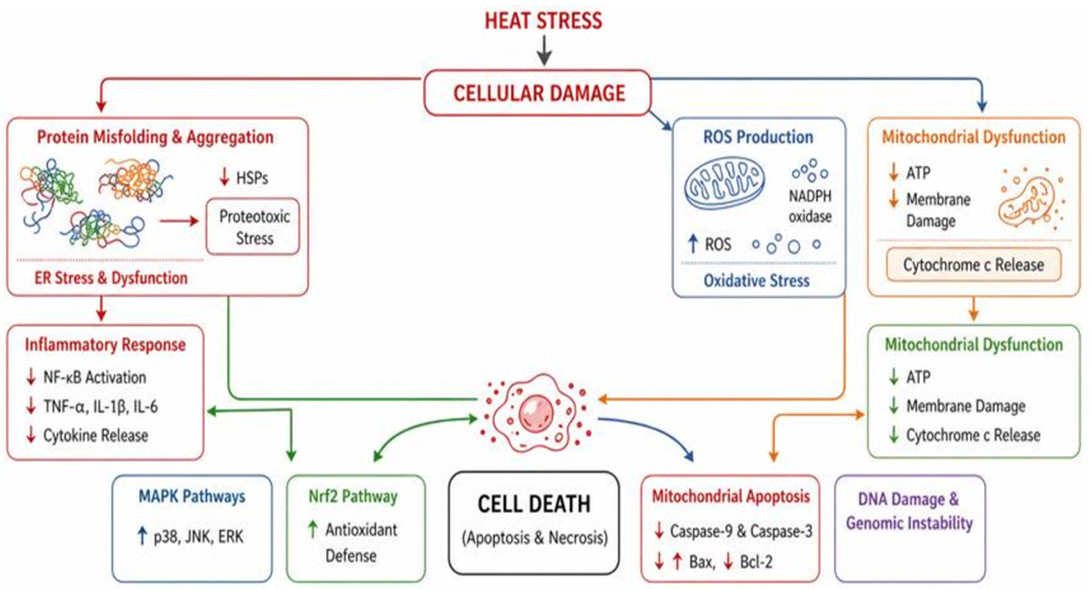
Heat stress induces cellular injury through a highly interconnected network of molecular events rather than via a single damaging mechanism (Figure 3). Excessive temperature exposure perturbs membrane dynamics, protein conformation, organelle function, and intracellular signaling, ultimately shifting the cell from an adaptive state toward injury and death. Although the initial response to heat is intended to preserve homeostasis, persistent or severe thermal stress often overwhelms endogenous defense systems and triggers a pathological cascade involving proteotoxic stress, oxidative damage, inflammatory activation, mitochondrial dysfunction, and apoptosis ; ; .
One of the earliest molecular consequences of heat stress is the disruption of proteostasis. Elevated temperature destabilizes non-covalent interactions that maintain proper protein folding, thereby increasing the likelihood of protein unfolding, misfolding, and aggregation. Under physiological conditions, cells counteract this insult by activating the heat shock response, primarily through HSF1, which promotes the transcription of HSP70, HSP90, and related molecular chaperones. These proteins facilitate refolding, prevent aggregation, and support recovery of damaged proteins. However, when heat exposure exceeds the buffering capacity of the proteostasis network, unfolded and aggregated proteins accumulate, leading to endoplasmic reticulum stress, impaired enzymatic function, and broader cellular dysfunction ; ; ; .
Another hallmark of heat stress is excessive ROS production. Mitochondria are major intracellular sources of ROS during thermal stress because heat impairs electron transport chain efficiency and increases electron leakage, especially at complexes I and III. This enhances formation of superoxide anions and downstream oxidants such as hydrogen peroxide and hydroxyl radicals. In addition to mitochondria, NADPH oxidases and endoplasmic reticulum-associated oxidative processes may also contribute. At controlled levels, ROS act as signaling molecules involved in adaptation; however, excessive ROS cause lipid peroxidation, protein oxidation, DNA damage, and membrane destabilization. Once oxidative injury begins, damaged mitochondria may produce even more ROS, creating a vicious cycle that amplifies cellular injury ; ; , 2007). The pathogenic significance of ROS extends beyond direct macromolecular damage. ROS also serve as second messengers that activate multiple stress-responsive signaling pathways, thereby linking oxidative stress with inflammation and cell death. NF-κB is one of the most important regulators of inflammatory signaling in this setting. Heat stress-associated ROS and danger signals activate the IκB kinase complex, leading to phosphorylation and degradation of IκB and allowing NF-κB to translocate into the nucleus. Activated NF-κB induces expression of TNF-α, IL-1β, IL-6, COX-2, and iNOS, all of which aggravate oxidative injury and disrupt cellular function ; ; .
Heat stress also stimulates MAPK signaling pathways, particularly p38, JNK, and ERK. These kinases are highly responsive to thermal, oxidative, and inflammatory insults and influence gene expression, stress adaptation, and apoptosis. In general, sustained activation of p38 and JNK is associated with inflammatory amplification and proapoptotic signaling, whereas ERK may exert either protective or detrimental effects depending on the context. These signaling networks are not linear; rather, they form overlapping stress circuits with ROS acting as an upstream trigger ; ; .
Mitochondria occupy a central position in heat stress-induced injury. Thermal stress reduces mitochondrial membrane potential, impairs ATP generation, disturbs calcium homeostasis, and increases membrane permeability. These changes favor release of cytochrome c, formation of the apoptosome, and activation of caspase-9 and caspase-3. The process is regulated by Bcl-2 family proteins, in which proapoptotic members such as Bax and antiapoptotic members such as Bcl-2 determine mitochondrial membrane stability. Heat stress commonly shifts this balance toward apoptosis ; ; ; .
Despite these damaging processes, cells possess endogenous defense systems designed to restore redox balance and preserve viability. Among these, the Nrf2 pathway is particularly important. Under basal conditions, Nrf2 is bound by Keap1 in the cytoplasm and targeted for proteasomal degradation. Under oxidative or electrophilic stress, this inhibitory interaction is disrupted, allowing Nrf2 to accumulate and translocate into the nucleus, where it binds antioxidant response elements and stimulates genes such as HO-1, NQO1, GCLC, SOD, CAT, and GPx. However, under intense or prolonged heat stress, endogenous Nrf2 activation may be insufficient to counterbalance excessive ROS production and downstream inflammatory injury ; ; .
Taken together, heat stress should be understood as a multidimensional form of cellular stress characterized by close interaction between proteotoxicity, oxidative imbalance, inflammation, mitochondrial dysfunction, and apoptosis. This redox-inflammatory-mitochondrial axis provides a mechanistic framework for understanding thermal injury and also explains why multitarget protective compounds may be more effective than agents acting through a single pathway ; ; .
Structural features of fucoidan relevant to cytoprotection
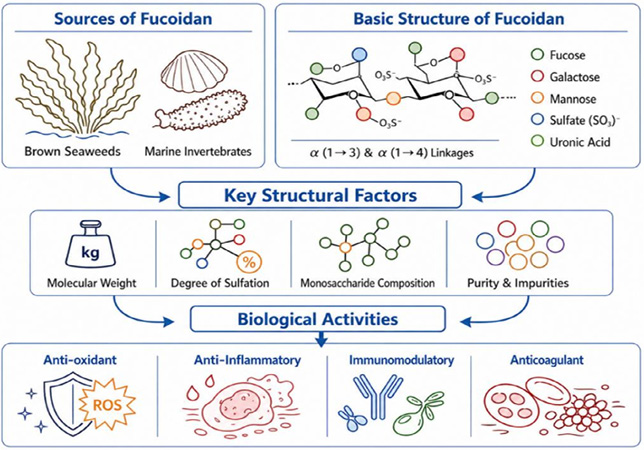
Fucoidan is a sulfated polysaccharide predominantly obtained from brown seaweeds, although it may also be isolated from certain marine invertebrates. It has attracted extensive attention because of its antioxidant, anti-inflammatory, immunomodulatory, anticoagulant, and cytoprotective activities (Figure 4). However, fucoidan is not a single uniform compound; rather, it represents a structurally heterogeneous group of fucose-rich sulfated polysaccharides whose characteristics vary according to species, harvest conditions, extraction methods, purification procedures, and molecular fractionation ; ; ; ; .
The translational relevance of extraction and purification is reflected in the patent literature. US10590207B2 describes a controlled process for isolating fucoidan and laminarin from live seaweed. Biomedical examples include a fucoidan-containing radioprotective composition (KR100791100B1) and adjunctive use in antibody-based antitumor immunotherapy (WO2022047815A1). These patents demonstrate interest in standardized production and biomedical application but do not provide direct evidence of heat stress protection.
In general, fucoidan is mainly composed of L-fucose residues and sulfate ester groups, but it may also contain galactose, mannose, xylose, glucose, and uronic acids. The backbone is commonly formed by α-(1→3)-linked L-fucopyranose residues or alternating α-(1→3) and α-(1→4) linkages, depending on the source. Sulfate groups may be attached at different positions, and branching patterns vary considerably. These structural variations influence charge density, solubility, molecular conformation, protein-binding properties, and biological reactivity ; ; .
Molecular weight is one of the most important determinants of fucoidan bioactivity. High-molecular-weight fucoidan may exert potent activity in some systems, but its size can limit absorption, diffusion, and interaction with intracellular targets. Low-molecular-weight fucoidan is often considered more favorable in terms of bioavailability, tissue penetration, and cellular accessibility. Several studies suggest that low-molecular-weight fractions may exhibit stronger antioxidant and anti-inflammatory effects, although this relationship is not always linear and may depend on the biological system examined ; ; ; .
Patent development also highlights molecular-weight control. US20100113390A1 describes defined low-molecular-weight fucoidan-derived oligosaccharides intended to improve absorption and product uniformity, whereas WO2010110223A1 claims a medium-molecular-weight fucoidan for pharmaceutical use. These patents support molecular-weight standardization but remain outside the specific context of heat stress.
The degree and pattern of sulfation also strongly influence activity. Sulfate groups contribute to the highly anionic character of fucoidan and appear to mediate electrostatic interactions with proteins, receptors, enzymes, and signaling molecules. Increased sulfation is often associated with stronger bioactivity, although sulfate position and distribution may be as important as total sulfate content. Monosaccharide composition and branching complexity further shape the biological profile of fucoidan, while impurities or co-extracted compounds may confound reported effects if purification is incomplete ; ; ; .
These structural considerations are especially relevant in heat stress. Because heat-induced injury involves ROS accumulation, inflammatory signaling, mitochondrial dysfunction, and apoptosis, any protective compound must be able to influence multiple biological targets. The sulfate-rich and polysaccharide-based nature of fucoidan may support such multitarget activity by enabling interaction with redox-sensitive pathways, inflammatory mediators, membrane-associated proteins, and stress-response regulators. Thus, the cytoprotective promise of fucoidan cannot be separated from its structural complexity ; ; ; .
Collectively, the existing patents demonstrate translational interest in standardized extraction, molecular-weight-defined preparations, radioprotection, and adjunctive immunotherapy. Nevertheless, these patented applications do not provide direct evidence that fucoidan is effective against heat stress-induced cellular injury. Among the patents considered in this review, none specifically claims fucoidan for cellular protection under heat stress. This distinction identifies an important translational and intellectual-property gap and supports the need for heat stress-specific mechanistic studies using structurally characterized and standardized fucoidan preparations.
Molecular mechanisms of fucoidan in cellular protection against heat stress
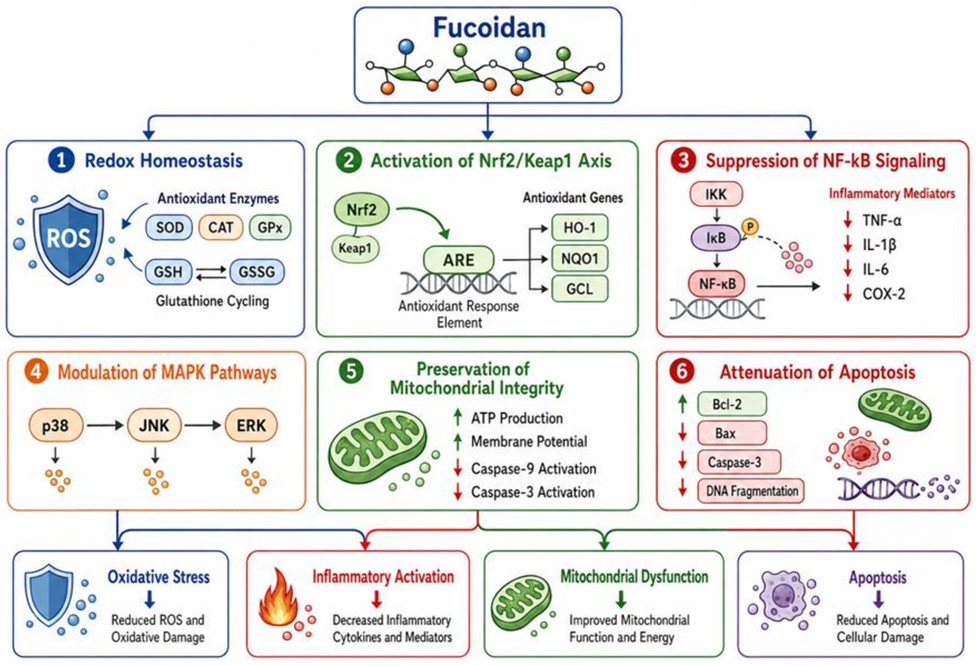
The protective potential of fucoidan against heat stress-induced cellular injury lies in its ability to modulate multiple interconnected molecular pathways rather than acting through a single mechanism (Table 1 and Figure 5). Because oxidative stress, inflammatory activation, mitochondrial dysfunction, and apoptosis reinforce one another during heat stress, effective protection requires an agent capable of re-establishing redox balance while simultaneously limiting inflammatory escalation and preserving organelle function ; ; ; ; .
Fucoidan and redox homeostasis
One of the earliest events in heat stress is excessive ROS accumulation. Fucoidan may counteract this process through both direct and indirect antioxidant actions. Although the sulfated polysaccharide structure of fucoidan may contribute to radical-neutralizing activity, this chemical effect alone is unlikely to explain its biological protection in complex cellular systems. More importantly, fucoidan appears to enhance endogenous antioxidant capacity, thereby improving the ability of the cell to buffer persistent oxidative pressure , 2010; ; .
Table 1: Potential cytoprotective effects of fucoidan under heat stress conditions.
Heat stress-induced problem
Possible protective mechanism of fucoidan
Cellular outcome
References
ROS accumulation
Reduces ROS and lipid peroxidation
Decreased oxidative damage
Slimen et al., 2014; Kurnijasanti et al., 2024; Mujahid et al., 2005; Fernando et al., 2016a; Wardani et al., 2023
Weak antioxidant defense
Enhances SOD, CAT, GPx, glutathione, and Nrf2-related antioxidant signaling
Improved redox homeostasis
Loboda et al., 2016; Wardyn et al., 2015; Yu et al., 2021; Bittkau et al., 2025
Inflammatory cytokine production
Suppresses TNF-α, IL-1β, IL-6, COX-2, and iNOS
Reduced inflammation
Liu et al., 2017; Yu et al., 2021; Fernando et al., 2016b; Zuo et al., 2022a
NF-κB activation
Inhibits IKK/IκB/NF-κB p65 signaling
Lower inflammatory gene expression
Hoesel and Schmid, 2013; Iba et al., 2025; Luthuli et al., 2019; Fernando et al., 2016b
MAPK activation
Modulates p38, JNK, and ERK signaling
Reduced inflammatory and apoptotic signaling
Cargnello and Roux, 2011; Nguyen et al., 2009; Yu et al., 2021; Guo et al., 2024
Mitochondrial dysfunction
Preserves mitochondrial membrane potential and reduces mitochondrial ROS
Improved mitochondrial integrity
Slimen et al., 2014; Kurnijasanti et al., 2024; Ma et al., 2025; Bellezza et al., 2018; Wardani et al., 2023
Apoptosis
Regulates Bax/Bcl-2 and suppresses caspase activation
Increased cell survival
Ma et al., 2025; Wardani et al., 2023; Zuo et al., 2022a; Knowlton, 2006
In several oxidative injury models, fucoidan has been reported to reduce intracellular ROS accumulation, attenuate lipid peroxidation, and improve antioxidant markers such as SOD, CAT, GPx, and glutathione. These findings suggest that the antioxidant function of fucoidan extends beyond simple radical scavenging and involves maintenance of the cellular antioxidant network. In heat stress, this distinction is crucial because continuous ROS production from damaged mitochondria cannot be controlled effectively by a passive scavenger alone , 2010; ; .
Activation of the Nrf2/Keap1 antioxidant axis
Among the molecular systems involved in redox regulation, the Nrf2 pathway is one of the most critical for adaptation to stress. Under basal conditions, Nrf2 is sequestered by Keap1 and targeted for degradation. Under oxidative stress, Nrf2 becomes stabilized, translocates into the nucleus, and activates transcription of ARE-driven genes, including HO-1, NQO1, GCLC, SOD, CAT, and GPx. These enzymes collectively enhance antioxidant capacity, detoxification, and redox homeostasis ; ; ; .
Fucoidan may exert a substantial part of its antioxidant effect through modulation of this Nrf2/Keap1 axis. In non-heat stress models, fucoidan has been reported to increase Nrf2 expression, promote nuclear translocation, and upregulate downstream antioxidant proteins. Mechanistically, fucoidan may support Nrf2 signaling by lowering cytosolic oxidative burden, modulating thiol-sensitive Keap1 function, or activating upstream kinases such as PI3K/Akt and ERK. In the context of heat stress, this mechanism is especially important because protection depends not only on lowering ROS levels but on restoring the transcriptional capacity of the cell to resist oxidative injury ; ; .
Suppression of NF-κB-mediated inflammatory signaling
Heat stress-induced oxidative imbalance is closely linked to inflammatory activation, and NF-κB plays a central role in this process. In response to ROS and other stress-related stimuli, the IKK complex phosphorylates IκB, targeting it for degradation and allowing NF-κB to translocate to the nucleus. Activated NF-κB drives transcription of pro-inflammatory mediators such as TNF-α, IL-1β, IL-6, COX-2, and iNOS ; ; ; .
Fucoidan has been widely recognized for its anti-inflammatory activity, and suppression of NF-kB signaling appears to be one of its most relevant actions. In inflammatory and oxidative injury models, fucoidan has been shown to reduce IKK activation, inhibit IκB degradation, and attenuate nuclear translocation of NF-κB p65. This is often accompanied by decreased cytokine production and lower expression of inflammatory enzymes. In heat stress, such modulation is highly relevant because inflammatory signaling acts not only as an outcome of injury but also as a major amplifier of oxidative and mitochondrial damage ; ; ; .
Modulation of MAPK pathways
MAPKs, particularly p38, JNK, and ERK, are major signaling nodes in the heat stress response. Sustained activation of p38 and JNK is generally associated with stress propagation, inflammatory amplification, and apoptosis, whereas ERK can be adaptive or detrimental depending on context. Fucoidan has been reported in several injury models to suppress excessive phosphorylation of p38 and JNK and, in some systems, normalize ERK activity. Such modulation may reduce inflammatory gene expression, limit proapoptotic signaling, and support broader cytoprotective crosstalk with Nrf2 and NF-κB ; ; .
Preservation of mitochondrial integrity
Mitochondria are both a source and a target of heat stress-induced ROS. Thermal stress impairs mitochondrial electron transport, disrupts membrane potential, compromises ATP production, and favors cytochrome c release. Fucoidan may preserve mitochondrial function by reducing ROS burden, attenuating inflammatory signaling, and stabilizing the balance between proapoptotic and antiapoptotic Bcl-2 family proteins. In several experimental systems, fucoidan has been associated with increased Bcl-2 expression, reduced Bax expression, preservation of mitochondrial membrane potential, and decreased caspase activation. These findings suggest that mitochondrial protection is a central component of fucoidan-mediated cytoprotection ; ; .
Attenuation of apoptosis-related pathways
Apoptosis is a common outcome of severe or prolonged heat stress once adaptive responses fail. Fucoidan may attenuate apoptosis by intervening at multiple levels of the intrinsic mitochondrial pathway. Its ability to reduce ROS, suppress inflammatory mediators, and stabilize mitochondria collectively lowers apoptotic threshold crossing. In addition, fucoidan has been reported to increase the Bcl-2/Bax ratio, inhibit caspase-9 and caspase-3 activation, and reduce DNA fragmentation in several injury models. These antiapoptotic effects likely represent the downstream consequence of improved cellular stress tolerance rather than a single isolated molecular action ; ; ; .
Potential interaction with heat shock response and proteostasis
Direct evidence linking fucoidan to heat shock proteins in thermal models remains limited, but several mechanistic considerations support a plausible interaction. By reducing ROS accumulation and inflammatory signaling, fucoidan may indirectly decrease the burden on protein quality-control systems, allowing the heat shock response to function more effectively. Improved mitochondrial and redox homeostasis may also reduce secondary protein damage caused by oxidative modification. This area deserves further experimental attention because it may help explain how fucoidan supports stress adaptation beyond classical antioxidant readouts ; ; ; .
Integrated model
Overall, fucoidan appears capable of intervening at several points in the heat stress injury network. It may reduce ROS accumulation, reinforce antioxidant defense through Nrf2, suppress NF-κB-dependent inflammatory signaling, modulate MAPK activity, preserve mitochondrial membrane integrity, and attenuate apoptosis-related cascades. Rather than acting as a single-target inhibitor, fucoidan should therefore be viewed as a multitarget cytoprotective compound that may reprogram the redox-inflammatory-mitochondrial axis underlying heat stress-induced injury ; ; ; .
Experimental evidence from heat stress and related models
The proposed cytoprotective role of fucoidan in heat stress is supported by a growing body of evidence from oxidative stress, inflammatory injury, and apoptosis-related models, although direct mechanistic studies in heat stress-specific systems remain relatively limited. This distinction is important. Current evidence is sufficient to support the biological plausibility of fucoidan as a protective compound, but not yet strong enough to establish definitive pathway-specific efficacy in all heat stress contexts ; ; ; .
Evidence derived from heat stress models suggests that fucoidan may attenuate cellular and tissue injury by improving antioxidant status and reducing inflammatory burden. In systems exposed to elevated temperature, injury is commonly reflected by increased ROS production, lipid peroxidation, impaired viability, elevated inflammatory markers, and altered mitochondrial or apoptotic signaling. In such conditions, fucoidan supplementation has generally been associated with improved antioxidant enzyme activity, reduced oxidative damage markers, and partial preservation of cellular function. However, the number of studies specifically designed to evaluate fucoidan under well-characterized heat stress conditions remains limited, and many reports differ in terms of experimental temperature, exposure duration, cell type, fucoidan source, and measured endpoints ; ; .
A substantial part of the mechanistic argument for fucoidan in heat stress therefore depends on evidence from related oxidative stress models. In hydrogen peroxide-induced injury, chemically induced oxidative damage, and redox imbalance-associated systems, fucoidan has repeatedly been reported to reduce intracellular ROS, lower lipid peroxidation products, and restore antioxidant defenses such as SOD, CAT, GPx, and glutathione. Comparable support comes from inflammatory injury models, where fucoidan suppresses TNF-α, IL-1β, IL-6, COX-2, iNOS, and NF-κB activation. Additional evidence from mitochondrial dysfunction and apoptosis models indicates preservation of mitochondrial membrane potential, reduction of cytochrome c release, modulation of the Bcl-2/Bax ratio, and suppression of caspase activation ; ; ; ; . Despite these promising observations, the experimental evidence remains subject to important limitations. Fucoidan preparations are often heterogeneous and incompletely characterized, many studies rely on limited biochemical markers rather than pathway-resolved endpoints, and relatively few investigations employ heat stress-specific experimental designs with detailed molecular readouts. Accordingly, the current literature supports strong biological plausibility, but further heat stress-focused validation is still needed ; ; ; ; .
Challenges and future perspectives
Several critical issues must be addressed before fucoidan can be more convincingly positioned as a protective compound against heat stress-induced cellular injury. First, structural heterogeneity remains a major obstacle. Fucoidan is not a chemically uniform molecule, and variability in molecular weight, sulfation pattern, monosaccharide composition, branching, source species, and extraction method may strongly influence biological outcomes. This complicates cross-study comparison and weakens mechanistic generalization ; ; .
Second, many studies still provide incomplete structural characterization of fucoidan. Without adequate reporting of molecular size distribution, sulfate content, purity, and source, it is difficult to establish reliable structure-activity relationships. Third, there is still a relative scarcity of heat stress-specific mechanistic studies. Much of the current rationale is derived from oxidative and inflammatory injury models that resemble some aspects of heat stress but do not fully reproduce the complexity of thermal injury ; ; ; .
Future research should therefore move beyond descriptive antioxidant assessments and adopt more pathway-resolved approaches. Studies should examine Nrf2 nuclear translocation, HO-1 and NQO1 expression, phosphorylation of NF-κB p65 and IκB, activation patterns of p38, JNK, and ERK, mitochondrial membrane potential, cytochrome c release, caspase activation, and the Bax/Bcl-2 balance. Markers related to heat shock response and proteostasis, including HSF1 and HSP70/HSP90, should also be investigated. From a translational perspective, low-molecular-weight and structurally standardized fucoidan preparations may be especially promising, but issues of bioavailability, pharmacokinetics, dose optimization, and safety still require systematic study ; ; .
Overall, future work should focus on structurally well-defined fucoidan, heat stress-relevant experimental models, and integrated validation across redox, inflammatory, mitochondrial, and proteostasis pathways. Such an approach would substantially strengthen both the mechanistic basis and the translational relevance of fucoidan research in heat stress biology ; ; ; .
CONCLUSION
Heat stress is a complex cellular challenge that disrupts homeostasis through tightly interconnected mechanisms involving oxidative stress, inflammatory activation, mitochondrial dysfunction, proteotoxic burden, and apoptosis. These processes do not occur independently, but rather form a redox-inflammatory-mitochondrial network that determines whether cells adapt or progress toward irreversible injury. For this reason, protective strategies against heat stress should ideally target multiple signaling pathways simultaneously rather than focusing on a single molecular event. In this context, fucoidan has emerged as a promising marine-derived bioactive compound with potential relevance to cellular protection under heat stress. Its reported biological activities suggest that fucoidan may attenuate ROS accumulation, enhance Nrf2-dependent antioxidant defense, suppress NF-κB- and MAPK-mediated inflammatory signaling, preserve mitochondrial integrity, and reduce apoptosis-related cascades. These integrated actions provide a strong mechanistic basis for considering fucoidan as a multitarget cytoprotective agent. Nevertheless, current evidence remains constrained by structural heterogeneity of fucoidan preparations and the limited number of studies specifically conducted in heat stress models. Overall, fucoidan may represent a valuable candidate for mitigating heat stress-induced cellular injury, although further pathway-oriented and translational studies are required.
ACKNOWLEDGMENTS
This research was supported by the Ministry of Higher Education, Science, and Technology, Republic of Indonesia, through the Fundamental Basic Research Grant (Contract No. 059/C3/DT.05.00/PL/2025; 2401/B/UN3.LPPM/PT.01.03/2025), administered via the Faculty of Veterinary Medicine, Airlangga University, Surabaya, Indonesia.
Novelty Statement
The study proposes fucoidan as a specific, multitarget protector against heat stress-induced cellular damage, a specific area where targeted studies are currently very limited.
Author’s Contribution
All authors contributed equally to this study.
Generative AI and AI assisted technology statement
Generative AI and AI-assisted technologies were used only to improve language clarity, grammar, and readability of the manuscript. The authors take full responsibility for the scientific content, data interpretation, and conclusions presented in this work.
Conflict of interest
The authors have declared no conflict of interest.
Figures
Figure 1:.
Schematic illustration of heat stress–induced disruption of cellular homeostasis through proteotoxicity, oxidative imbalance (ROS overproduction), inflammatory activation, metabolic disturbance, and programmed cell death, ultimately leading to impaired tissue function, reduced productivity, compromised immunity, and increased susceptibility to cellular damage.
Figure 2:.
Workflow of the narrative review. Literature was searched in PubMed, Scopus, and Web of Science, screened using predefined eligibility criteria, and synthesized according to key mechanisms of heat stress-induced cellular injury and fucoidan-mediated cytoprotection.
Figure 3:.
Mechanisms of heat stress-induced cellular injury. Heat stress disrupts proteostasis, increases ROS production, and triggers oxidative stress, inflammation (NF-κB, MAPK), and mitochondrial dysfunction. These interconnected pathways lead to ATP depletion, cytochrome c release, and activation of apoptotic signaling (caspases), while Nrf2-mediated antioxidant defenses are often insufficient, ultimately resulting in cell death.
Figure 4:.
Sources, structural characteristics, and major biological activities of fucoidan, including antioxidant, anti-inflammatory, immunomodulatory, and anticoagulant effects.
Figure 5:.
The molecular mechanisms by which fucoidan protects cells against heat stress. Fucoidan enhances redox homeostasis by reducing ROS and boosting antioxidant enzymes, activates the Nrf2/Keap1 pathway, suppresses NF-κB–mediated inflammation, and modulates MAPK signaling. These coordinated effects preserve mitochondrial integrity and inhibit apoptosis, ultimately improving cellular resilience to heat-induced damage.
References
Ahmed SMU, Luo L, Namani A, Wang XJ, Tang X (2017). Nrf2 signaling pathway: pivotal roles in inflammation. Biochim. Biophys. Acta Mol. Basis Dis., 1863(2): 585-597. https://doi.org/10.1016/j.bbadis.2016.11.005[CrossRef]
Akbarian A, Michiels J, Degroote J, Majdeddin M, Golian A, De Smet S (2016). Association between heat stress and oxidative stress in poultry; mitochondrial dysfunction and dietary interventions. Poult. Sci., 95(7): 1-13. https://doi.org/10.1186/s40104-016-0097-5[CrossRef]
Ale MT, Mikkelsen JD, Meyer AS (2011). Important determinants for fucoidan bioactivity: A critical review of structure-function relations and extraction methods for fucose-containing sulfated polysaccharides from brown seaweeds. Mar. Drugs, 9(10): 2106-2130. https://doi.org/10.3390/md9102106[CrossRef]
Bellezza I, Giambanco I, Minelli A, Donato R (2018). Nrf2-Keap1 signaling in oxidative and reductive stress. Biochim. Biophys. Acta Mol. Cell Res., 1865(5): 721-733. https://doi.org/10.1016/j.bbamcr.2018.02.010[CrossRef]
Bittkau KS, Dorschmann P, Gu J (2025). A comparative review of alternative fucoidan extraction and purification methods, characteristics and applications. Mar. Drugs, 23(1): 27. https://doi.org/10.3390/md23010027[CrossRef]
Cargnello M, Roux PP (2011). Activation and function of the MAPKs and their substrates, the MAPK-activated protein kinases. Microbiol. Mol. Biol. Rev., 75(1): 50-83. https://doi.org/10.1128/MMBR.00031-10[CrossRef]
Chen Y, Currie RW (2004). Heat shock treatment suppresses angiotensin II-induced activation of NF-κB pathway and heart inflammation: A role for HSP70. Am. J. Physiol. Heart Circ. Physiol., 287(3): H1104-14. https://doi.org/10.1152/ajpheart.00102.2004[CrossRef]
Fernando IPS, Kim M, Son KT, Jeong Y, Jeon YJ (2016a). Antioxidant activity of marine algal polyphenolic compounds: A mechanistic approach. J. Med. Food, 19(7): 615-628. https://doi.org/10.1089/jmf.2016.3706[CrossRef]
Fernando IPS, Nah JW, Jeon YJ (2016b). Potential anti-inflammatory natural products from marine algae. Environ. Toxicol. Pharmacol., 48: 22-30. https://doi.org/10.1016/j.etap.2016.09.023[CrossRef]
Fitton JH (2011). Therapies from fucoidan; multifunctional marine polymers. Mar. Drugs, 9(10): 1731-1760. https://doi.org/10.3390/md9101731[CrossRef]
Fitton JH, Stringer DN, Karpiniec SS (2015). Therapies from fucoidan: an update. Mar. Drugs, 13(9): 5920-5946. https://doi.org/10.3390/md13095920[CrossRef]
Fujikawa S, Fukui Y, Watanabe H, Nonaka Y, Yasumoto T, Naoki H (2010). Oligosaccharides derived from fucoidan. United States Patent Application US20100113390A1. Published 6 May 2010.
Guo Q, Jin Y, Chen X, Ye X, Shen X, Lin M (2024). NF-κB in biology and targeted therapy: New insights and translational implications. Signal Transduct Target Ther, 9: 53. https://doi.org/10.1038/s41392-024-01757-9[CrossRef]
Haggag YA, Abd Elrahman AA, Ulber R, Zayed A (2023). Fucoidan in pharmaceutical formulations: A comprehensive review for smart drug delivery systems. Mar. Drugs, 21: 112. https://doi.org/10.3390/md21020112[CrossRef]
Haslbeck M, Vierling E (2015). A first line of stress defense: Small heat shock proteins and their function in protein homeostasis. J. Mol. Biol., 427(7): 1537-1548. https://doi.org/10.1016/j.jmb.2015.02.002[CrossRef]
Hayden MS, Ghosh S (2011). NF-κB in immunobiology. Cell Res., 21(2): 223-244. https://doi.org/10.1038/cr.2011.13[CrossRef]
Hjelland F, Andersen AH, Yang HS (2020). Process for isolating fucoidan and laminarin from live, harvested seaweed. United States Patent US10590207B2. Published 17 March 2020.
Hoesel B, Schmid JA (2013). The complexity of NF-κB signaling in inflammation and cancer. Mol. Cancer, 12: 86. https://doi.org/10.1186/1476-4598-12-86[CrossRef]
Iba T, Helms J, Nagaoka I, Ferrer R, Levy JH (2025). Heat stress-induced mitochondrial damage and its impact on leukocyte function. J. Intensive Care, 13: 61. https://doi.org/10.1186/s40560-025-00832-9[CrossRef]
Jayasinghe AMK, Kirindage K, Fernando IPS, Han EJ, Oh GW, Jung WK, Ahn G (2022). Fucoidan isolated from Sargassum confusum suppresses inflammatory responses and oxidative stress in TNF-α/IFN-γ-stimulated HaCaT keratinocytes. Antioxidants (Basel), 11(2): 322. https://doi.org/10.3390/md20020117[CrossRef]
Jeju National University Industry-Academic Cooperation Foundation (2008). Radiation protection composition containing fucoidan as an active ingredient. Korean Patent KR100791100B1. Published 4 January 2008.
Kim EK, Choi EJ (2010). Pathological roles of MAPK signaling pathways in human diseases. Biochim. Biophys. Acta, 1802(4): 396-405. https://doi.org/10.1016/j.bbadis.2009.12.009[CrossRef]
Knowlton AA (2006). NF-κB, heat shock proteins, HSF-1, and inflammation. Cardiovasc. Res., 69(1): 7-8. https://doi.org/10.1016/j.cardiores.2005.10.009[CrossRef]
Kurnijasanti R, Wardani G, Mustafa MR, Sudjarwo SA (2024). The immunostimulatory effects of fucoidan on the cellular and humoral immune response in Wistar rats. Open Vet. J., 14(8): 1794-800. https://doi.org/10.5455/OVJ.2024.v14.i8.7[CrossRef]
Lara LJ, Rostagno MH (2013). Impact of heat stress on poultry production. Animals (Basel), 3(2): 356-369. https://doi.org/10.3390/ani3020356[CrossRef]
Li B, Lu F, Wei X, Zhao R (2008). Fucoidan: Structure and bioactivity. Molecules, 13(8): 1671-1695. https://doi.org/10.3390/molecules13081671[CrossRef]
Liu T, Zhang L, Joo D, Sun SC (2017). NF-κB signaling in inflammation. Signal Transduct Target Ther., 2: 17023. https://doi.org/10.1007/s10753-017-0579-4[CrossRef]
Loboda A, Damulewicz M, Pyza E, Jozkowicz A, Dulak J (2016). Role of Nrf2/HO-1 system in development, oxidative stress response and diseases: An evolutionarily conserved mechanism. Cell Mol. Life Sci., 73(17): 3221-3247. https://doi.org/10.1007/s00018-016-2223-0[CrossRef]
Luo M, Gao R, Cao S (2021). Dietary taurine supplementation ameliorates muscle loss in chronic heat-stressed broilers via suppressing the perk signaling and reversing endoplasmic reticulum-stress-induced apoptosis. J. Sci. Food Agric., 101(1): 328-336. https://doi.org/10.1002/jsfa.10835[CrossRef]
Luthuli S, Wu Y, Cheng Y, Mingjiang Wu M, Tong H (2019). Therapeutic effects of fucoidan: A Review on recent studies. Mar. Drugs, 17: 487. https://doi.org/10.3390/md17090487[CrossRef]
Ma L, Liu H, Ge Z, Wang T, Wang C (2025). Rutin alleviates heat stress induced hepatic abnormal lipid metabolism of broilers via improving antioxidant capacity to maintain mitochondrial homeostasis. J. Therm. Biol., 131: 104204. https://doi.org/10.1016/j.jtherbio.2025.104204[CrossRef]
Morimoto RI (2011). The heat shock response: Systems biology of proteotoxic stress in aging and disease. Cold Spring Harb. Symp. Quant. Biol., 76: 91-99. https://doi.org/10.1101/sqb.2012.76.010637[CrossRef]
Mujahid A, Akiba Y, Warden CH, Toyomizu M (2007). Sequential changes in superoxide production, anion carriers and substrate oxidation in skeletal muscle mitochondria of heat-stressed chickens. FEBS Lett., 581(18): 3461-3467. https://doi.org/10.1016/j.febslet.2007.06.051[CrossRef]
Mujahid A, Yoshiki Y, Akiba Y, Toyomizu M (2005). Superoxide radical production in chicken skeletal muscle induced by acute heat stress. Poult. Sci., 84(2): 307-314. https://doi.org/10.1093/ps/84.2.307[CrossRef]
Nguyen T, Nioi P, Pickett CB (2009). The Nrf2-antioxidant response element signaling pathway and its activation by oxidative stress. J Biol Chem, 284(20): 13291-13295. https://doi.org/10.1074/jbc.R900010200[CrossRef]
Obluchinskaya ED, Pozharitskaya ON (2024). The efficacy of two methods for extracting fucoidan from arctic brown algae and the impact on its molecular properties. J. Appl. Phycol., 36: 1-16. https://doi.org/10.1007/s10811-023-03178-7[CrossRef]
Pessa JC, Joutsen J, Sistonen L (2024). Transcriptional reprogramming at the intersection of the heat shock response and proteostasis. Mol. Cell, 84(1): 80-93. https://doi.org/10.1016/j.molcel.2023.11.024[CrossRef]
Qingdao Marine Biomedical Research Institute Co Ltd, Weihai Resheng Pharmaceutical Group Co. Ltd. (2022). Pharmaceutical composition for anti-tumor immunotherapy comprising fucoidan. International Patent Publication WO2022047815A1. Published 10 March 2022.
Radons J (2016). The human HSP70 family of chaperones: Where do we stand? Cell Stress Chaperones, 21(3): 379-404. https://doi.org/10.1007/s12192-016-0676-6[CrossRef]
Ruperez P, Ahrazem O, Leal JA (2002). Potential antioxidant capacity of sulfated polysaccharides from the edible marine brown seaweed Fucus vesiculosus. J. Agric. Food Chem., 50(4): 840-845. https://doi.org/10.1021/jf010908o[CrossRef]
Sanjeewa KKA, Jayawardena TU, Kim HS, Kim SY, Ahn G, Kim HJ, Fu X, Jeon YJ (2023). Fucoidan in pharmaceutical formulations: A comprehensive review for targeting cancer and infectious diseases. Mar. Drugs, 21(2): 112.
Slimen IB, Najar T, Ghram A, Dabbebi H, Ben Mrad M, Abdrabbah M (2014). Reactive oxygen species, heat stress and oxidative-induced mitochondrial damage: A review. Int. J. Hyperthermia, 30(7): 513-523. https://doi.org/10.3109/02656736.2014.971446[CrossRef]
Tottori University NUC, Marine Products Kimuraya Co Ltd (2010). Fucoidan having antitumor activity. International Patent Publication WO2010110223A1.
Wang J, Zhang Q, Zhang Z, Li Z (2008). Antioxidant activity of sulfated polysaccharide fractions extracted from Laminaria japonica. Int. J. Biol. Macromol., 42(2): 127-132. https://doi.org/10.1016/j.ijbiomac.2007.10.003[CrossRef]
Wang J, Zhang Q, Zhang Z, Song H, Li P (2010). Potential antioxidant and anticoagulant capacity of low molecular weight fucoidan fractions from Laminaria japonica. Int. J. Biol. Macromol., 46(1): 6-12. https://doi.org/10.1016/j.ijbiomac.2009.10.015[CrossRef]
Wang WC, Yan FF, Hu JY, Amen OA, Cheng HW (2018). Supplementation of Bacillus subtilis-based probiotic reduces heat stress-related behaviors and inflammatory response in broiler chickens. J. Anim. Sci., 96(5): 1654-1666. https://doi.org/10.1093/jas/sky092[CrossRef]
Wang Y, Xing M, Cao Q, Ji A, Liang H, Song S (2019). Biological activities of fucoidan and the factors mediating its therapeutic effects: A review of recent studies. Mar. Drugs, 17(3): 183. https://doi.org/10.3390/md17030183[CrossRef]
Wardani G, Nugraha J, Kurnijasanti R, Mustafa MR, Sudjarwo SA (2023). Molecular mechanism of fucoidan nanoparticles as protector on endothelial cell dysfunction in diabetic rats’ aortas. Nutrients, 15(3): 568. https://doi.org/10.3390/nu15030568[CrossRef]
Wardani G, Nugraha J, Mustafa MR, Sudjarwo SA (2022). Antioxidative stress and anti-inflammatory activity of fucoidan nanoparticles against nephropathy of streptozotocin-induced diabetes in rats. Evid. Based Complement. Altern. Med., 2022: 3405871. https://doi.org/10.1155/2022/3405871[CrossRef]
Wardyn JD, Ponsford AH, Sanderson CM (2015). Dissecting molecular crosstalk between Nrf2 and NF-κB response pathways. Biochem. Soc. Trans., 43(4): 621-626. https://doi.org/10.1042/BST20150014[CrossRef]
Xue M, Ge Y, Zhang J, Wang Q, Hou L, Liu Y (2024). Systematic characteristics of fucoidan: Intriguing features for new understanding of structure-activity relationships. Int. J. Mol. Sci., 25(21): 11771. https://doi.org/10.3390/ijms252111771[CrossRef]
Yu J, Li Q, Wu J, Yang X, Yang S, Zhu W, Liu Y, Tang W, Nie S, Hassouna A, White WL, Zhao Y and Lu J (2021). Fucoidan extracted from sporophyll of Undaria pinnatifida grown in Weihai, China-chemical composition and comparison of antioxidant activity of different molecular weight fractions. Front. Nutr., 8: 636930. https://doi.org/10.3389/fnut.2021.636930[CrossRef]
Yang C, Luo P, Chen SJ, Deng ZY, Fu XL, Xu DN (2022). Resveratrol relieves chronic heat stress-induced liver oxidative damage in broilers by activating the Nrf2 signaling pathway and inhibiting NLRP3 inflammasome activation. Ecotoxicol. Environ. Saf., 245: 114411. https://doi.org/10.1016/j.ecoenv.2022.114411[CrossRef]
Yunianta Y, Laeliocattleya R.A, Wulan S.N, Risjani Y (2025). Fucoidan extract from brown seaweed (Sargassum echinocarpum): Molecular weight, elemental composition, selectivity and anticancer activity against breast cancer cells. Nat. Prod. Res., 39(11): 3093-3101. https://doi.org/10.1080/14786419.2024.2326978[CrossRef]
Zuo J, Li J, Xu M (2022a). Chronic heat stress causes liver damage via endoplasmic reticulum stress-induced apoptosis in broiler chickens. Poult. Sci., 101(9): 102053. https://doi.org/10.1016/j.psj.2022.102063[CrossRef]
Zuo J, Li J, Xu M (2022b). Heat stress in broilers of liver injury: effects of heat stress on oxidative stress and autophagy via the Nrf2-Keap1 signaling pathway. Poult. Sci., 101(9): 102090.
Fucoidan as an Antioxidant and Anti-Inflammatory Marine Sulfated Polysaccharide for Cellular Protection under Heat Stress: A Mechanistic Review · ResearchersLinks