
The tenguayaca mojarra Petenia splendida is a fish that belongs to the cichlid family and its distribution is located from the southeast of Mexico to Guatemala and Belize. Therefore, molecular biology studies, particularly gene expression, provide information on genes that encode the production of specific proteins and RNA molecules for various functions in living organisms and biological processes biológicos. A very important technique to analyze gene expression levels under different conditions is the qRT-PCR polymerase chain reaction. The objective of the study was to analyze the stability of the reference genes 18S ribosomal RNA (18S rRNA), Elongation factor 1-alpha (ef1-α), Alpha actin (acta), Beta-actin (actb), Glyceraldehyde-3-phosphate dehydrogenase (gapdh) and Alpha tubulin (α-tubulin) using the BestKeeper, Normfinder and geNorm software in the expression of different tissues tissues of liver, muscle, spleen, intestine, gill, brain and testis in the case of male organisms and ovary in females of the tenguayaca mojarra (Petenia splendida). Finally we can conclude that based on BestKeeper, Normfinder and GeNorm the most stable reference genes in most tissues were 18S rRNA and actb, while in the case of the brain it was α-tubulin and gapdh in the ovary and testes.
Research Article · Volume 58, Issue 5, 25 July 2026 · Open Access
Evaluation of Reference Gene Expression on Different Tissue in Adults of Bay Snook Petenia splendida
· · · · · · · ·
Affiliations & Notes ⌄
- 1Laboratorio de Acuicultura Tropical, DACBIOL-UJAT, CP. 86150, Villahermosa, México 2Laboratorio de Biologia Molecular. DAMJM-UJAT, C.P. 86205, Jalpa de Méndez, Tabasco, México 3Laboratorio de Investigación en Biotecnología Acuícola (LIBA), Tecnológico Nacional de México. Campus Boca del Río (ITBoca), Boca del Río, Veracruz, México. 4Laboratorio de Docencia DAMC-UJAT, Ranchería Sur Cuarta Sección, Comalcalco, México 5Universidad Popular de la Chontalpa (UPCH). Carretera Cárdenas-Huimanguillo Km 2
Article Info ⌄
- Journal:
- Pakistan Journal of Zoology
- Published:
- 25 July 2026

From the article
- According to our results obtained in the six reference genes analyzed in the different tissues in adults of Petenia splendida, it was not observed between male and female organisms.
- The authors of these works must consider these reference genes ideal for these tissues mainly to carry out gene expression studies according to the functions of each of them, such as the liver in the case of fish is considered the internal organ.
- Likewise, in the case of testis and ovary, gapdh stands out as the most stable gene in adults of Petenia splendida, possibly due to the presence of vitellogenin in both female and male organisms.
- Likewise, the reference gene can vary depending on the organism, tissue, and many other factors.
Selected from the article's own text.
Abstract
Introduction
The tenguayaca mojarra Petenia splendida is a fish that belongs to the cichlid family and its distribution is located from the southeast of Mexico to Guatemala and Belize. Likewise, P. splendida is a carnivorous species that is widely accepted in local markets for its meat quality, mainly as a great source of protein (Arias-Rodriguez et al., 2008; Vidal-López et al., 2009).
Currently, there are various studies carried out on the tenguayaca mojarra Petenia splendida, of which the following stand out: biological and physiological aspects (Alvarez-González et al., 2008; Jiménez-Martínez et al., 2009), taxonomy and ecology (Méndez-García, 2010), while the aquaculture area highlights studies of embryonic development, optimal light and temperature conditions, management of breeders, larval reproduction and population density (Alvarez-González et al., 2008; Contreras-García et al., 2018; Jiménez-Martínez et al., 2009; Pérez-Sánchez and Páramo-Delgadillo, 2008; Treviño et al., 2011; Vidal-López et al., 2009) nutritional and digestive physiology (Alvarez-González et al., 2008; Rodríguez-Estrada et al., 2020; Uscanga-Martínez et al., 2011) and cytogenetics (Arias-Rodriguez et al., 2008). However, in the area of molecular biology, there are few studies carried out in this species, of which the obtaining of the complete mitogenome obtained in adult wildlife organisms and the expression of the Glut2 gene in captive larvae and adults stand out (Castillo-Collado et al., 2022; Del Río-Portilla et al., 2016). Therefore, molecular biology studies, particularly gene expression, provide information on genes that encode the production of specific proteins and RNA molecules for various functions in living organisms and biological processes biológicos (Kozera and Rapacz, 2013). A very important technique to analyze gene expression levels under different conditions is the qRT-PCR polymerase chain reaction. However, to analyze the expression of a gene, two methods are used: absolute relative expression and relative expression, the first is based on a standard curve responsible for quantifying an unknown based on a known amount of the gene and the second quantifies the expression. through the comparison of a candidate gene against a reference gene or control gene (Chen et al., 2023; Infante et al., 2008; Kozera and Rapacz, 2013; Tang et al., 2007). In this way, reference genes are those that are expressed constantly and independently of the physiological state of the cell (Jiménez et al., 2022; Pfaffl et al., 2004).
Therefore, the first step in analyzing the expression of a specific gene is to select and identify the best reference genes in our studies to obtain conclusive and reliable data in our qPCR (Kumari et al., 2022; Rassier et al., 2020). The main characteristic that a reference gene must have is to present stable expression in the different tissues, stages of development of the organisms, and experimental conditions studied (Li et al., 2010; Zhang et al., 2021).
In this sense, there are bioinformatics tools that help us validate the performance of reference genes through specific algorithms using the ct values obtained from the samples analyzed by real-time PCR (qPCR), such as BestKeeper (Pfaffl, 2001), Normfinder (Andersen et al., 2004) and GeNorm (Vandesompele et al., 2002).
In the case of fish, there are various works that analyze the stability of different reference genes using these software through quantitative qpcr in different investigations such as nutrition, development, endocrinology and toxicology in both larvae, juveniles and adults in marine species such as: Gasterosteus aculeatus (Hibbeler et al., 2008), Solea senegalensis and Hippoglossus hippoglossus (Infante et al., 2008; Øvergård et al., 2010), Salmo salar (Kortner et al., 2011), Gadus morhua (Olsvik et al., 2008), Danio rerio (Casadei et al., 2011; McCurley and Callard, 2008), Paralichthys olivaceus (Zheng and Sun, 2011), Anguilla anguilla (Li et al., 2023), Scatophagus argus (Liu et al., 2023), Takifugu bimaculatus (Zhong et al., 2022) and in freshwater fish such as Siniperca chuatsi (Zhou et al., 2010), Cyprinus carpio (Tang et al., 2012), Oreochromis niloticus (Yang et al., 2013), Ctenopharyngodon idella (Su et al., 2011; Ye et al., 2010) and Esox lucius (Jothinarayanan et al., 2023), Labeo rohita (Sahoo et al., 2023), Channa striata (Kuah et al., 2016; Purohit et al., 2016), Hucho taimen (Yang et al., 2022), monopterus albus (Hu et al., 2014a; Liu et al., 2022), Atractosteus tropicus (Jiménez-Martínez et al., 2022). The objective of the study was to analyze the stability of the reference genes 18S ribosomal RNA (18S rRNA), elongation factor 1-alpha (ef1-α), alpha actin (acta), beta-actin (actb), glyceraldehyde-3-phosphate dehydrogenase (gapdh) and alpha tubulin (α-tubulin) using the BestKeeper, Normfinder and geNorm software in the expression of different tissues in males and females of the tenguayaca mojarra (Petenia splendida). For this reason, it is important to select the best reference gene to normalize the data obtained from qPCR and calculate the relative expression of the problem gene and also to carry out future gene expression studies involved in the aspects of physiology, nutrition, reproduction in the species P. splendida.
Materials and Methods
To carry out this study, a total of 20 adult specimens were obtained, 10 males (0.40 - 0.52 kg and 32 to 34 cm total length) and 10 females of P. splendida (0.40 - 0.52 kg and 32 to 34 cm total length), of which 10 individuals (0.40 - 0.52 kg and 32 to 34 cm total length) which were captured in the El-Horizonte lagoon of the community of Espino, which is located 32 km from the city of Villahermosa, Tabasco, Mexico, with geographical coordinates 18° 14′ 50″ north latitude and 92° 49′ 58″ west latitude.
Sampling, RNA extraction, and cDNA synthesis.
The adult individuals of Petenia splendida were sacrificed by the heat shock method (-4 ºC) following the steps of the methodology of Matthews and Vargas (2012), subsequently, they were dissected to obtain the tissues of liver, muscle, spleen, intestine, gill, brain and testis in the case of male organisms and ovary in females. Likewise, total RNA was extracted from a pool of tissues per replicate using Trizol reagent (Invitrogen, Carlsbad, CA). To obtain purity, concentration, and integrity of the RNA, they were determined by spectrophotometry using the 260/280 ratio using a NanoDrop 2000 (Thermo Scientific, USA). Subsequently, 1 μg of RNA was used for reverse transcription with iScript TM Select cDNA Synthesis Kit 170–8,896 (Biorad, Hercules, CA).
Primer design
Specific primers were designed for the genes 18S ribosomal RNA (18S rRNA), elongation factor 1-alpha (ef1-α), beta-actin (actb), glyceraldehyde-3-phosphate dehydrogenase (gapdh) and alpha tubulin (α-tubulin) from complete sequences of Oreochromis niloticus while alpha actin (acta) was designed from the sequence of Oreochromis aureus on the GenBank platform using Primer 3 Plus software version 4.0.0 (https://primer3plus.com/primer3web/primer3web_input.htm). The oligonucleotides were analyzed using Oligo Calculator software version 3.27 (http://biotools.nubic. northwestern.edu/OligoCalc.html) to corroborate that secondary structures had not formed.
Quantitative polymerase chain reaction (qPCR)
The cDNA resulting from tissues obtained from the adults of both male and female P. splendida was diluted in 200 μl of distilled water. Quantitative polymerase chain reactions (qPCR) were performed in a CFX96 Real-Time System Thermal Cycle (model C1000, CA) 96-well thermal cycler. The reaction mixture included 10 μl of Eva Green, 2 μl of cDNA, and 0.2 μM of each primer. Subsequently, the qPCR runs were performed under the conditions of 2 min at 95°C, followed by 38 cycles at 95°C for 10 s, 60°C for 30 s, and extension at 70°C for 5 s. Similarly, the efficiency (E) and the correlation coefficient (R2) of the primers were evaluated using four serial dilutions in triplicate corresponding to cDNA transcribed from 100 to 0.1 ng of total RNA used as liver tissue. Similarly, it was used a standard curve for each primer applying the formula: E (%) = (10−1/slope −1) ×100.
Results
Analysis of specifity and realibility of qPCR primer
To evaluate the specificity of qPCR, it was observed that the melting curves presented a single product (Fig. 1). Thus, melting curve analysis is used to evaluate the specificity of the quantitative PCR assay when stains, such as EvaGreen or SYBR®, are used. According to the results obtained from the standard curves according to the Cq values of the eight genes of Petenia splendida, showing efficiency values of <98 or ≥100% and the R2 values were ≤0.999 (Table I).
Table I. Primer sequences and amplification parameters of six candidate reference genes of Atractosteus tropicus used in qPCR analysis.
|
Gene |
Primer (5’−3’) |
Product size (pb) |
Amplification efficiency (%) |
R2 |
GenBank accession numbers |
|
18S rRNA |
F: ACTCGTGATAGGGATTGGGG R: CGATCCGAGGACCTCACTAA |
155 |
98 |
0.99 |
XR_003216134 |
|
ef1-α |
F: ACGTCAAGAACGTCTCCGTC R: GAGCTCGCTGAATTTGCAGG |
194 |
96 |
0.98 |
EU503119 |
|
acta |
F: TACGCCAACAATGTGCTCTC R:CTGGAAGGTGGACAGGGAAG |
180 |
95 |
0.95 |
EF206799 |
|
actb |
F: ACAACGTCCCAGTCTATGAGG R: CCTTGATGTCACGCACGATC |
159 |
98 |
0.98 |
KJ126772 |
|
gapdh |
F: TGACCGTATGCAGAAGGAGA R: CCTCGTCGTACTCCTGCTTG |
164 |
96 |
0.98 |
XM_005455438 |
|
α-tubulin |
F: CAGATTGGGAATGCCTGCTG R: CCTCATCGATCACAGTGGGT |
190 |
92 |
0.95 |
XM_019352023 |
BestKeeper gene analysis
According to the results obtained from the six reference genes analyzed in BestKeeper, software that determines stability using the SD value. In this way, the gene with the lowest SD value is considered the most stable, in the different tissues analyzed in both male and female organisms of P. splendida (Fig. 2). Thus, in the case of the liver, the most stable gene was α-tubulin, followed by 18S rRNA, actb, ef1-α, gapdh, and acta in both male and female organisms. Likewise, in the intestine the most stable gene was 18S rRNA, followed by actb, gapdh, ef1-α, α-tubulin, and acta in both male and female organisms. Similarly, in muscle, it is observed that the most stable gene was actb, followed by 18S rRNA, ef1-α, gapdh, acta and α-tubulin in the case of male and female organisms. In gills, the most stable gene was α-tubulin, followed by 18S rRNA, actb, gapdh, ef1-α, acta in male and female organisms. In the case of the brain, the most stable gene was α-tubulin, followed by 18S rRNA, ef1-α, actb, gapdh, α-tubulin and acta in the case of male and female organisms. Similarly, in the spleen the most stable gene was 18S rRNA, followed by ef1-α, gapdh, actb, α-tubulin and acta in males while in females the most stable gene was actb, followed by 18S rRNA, ef1-α, gapdh, acta, and α-tubulin. In the heart, the most stable gene was 18S rRNA, followed by actb, gapdh, ef1-α, α-tubulin, and acta in males, while in females the most stable gene was actb, followed by 18S rRNA, gapdh, ef1- α, acta and α-tubulin Finally, the most stable gene was gapdh, followed by 18S rRNA, actb, ef1-α, acta and α-tubulin in the male testis and in the case of the ovary in females, the most stable gene was gapdh, followed by actb, 18S rRNA, ef1-α, α-tubulin and acta.
Normfinder gene analysis
Normfinder software determines the stability of reference genes using a mathematical model to estimate intra- and intergroup expression variations. According to the results evaluated in the eight tissues, the genes are shown from the most stable to the least stable (Fig. 3). In the case of the liver, the most stable gene was actb, followed by ef1-α, 18S rRNA, acta, gapdh, and α-tubulin in both male and female organisms. While in the intestine the most stable gene was 18S rRNA, followed by actb, ef1-α, gapdh, α-tubulin, and acta in the case of males, while in females the most stable gene was 18S rRNA, followed by actb, ef1-α, gapdh, acta, and α-tubulin. Similarly, in the muscle and gill, the most stable gene was actb, followed by 18S rRNA, ef1-α, gapdh, acta, and α-tubulin in both male and female organisms. In the case of the brain, the most stable gene was α-tubulin followed by 18S rRNA of actb, ef1-α, gapdh, and acta in both male and female organisms. While in the case of the spleen, the most stable gene was actb, followed by 18S rRNA, ef1-α, gapdh, acta, and α-tubulin in both male and female organisms. In the heart, the most stable gene was 18S rRNA, followed by actb, ef1-α, gapdh, α-tubulin, and acta in both male and female organisms. Finally, in the testis of males and ovaries of females, the most stable gene was gapdh followed by 18S rRNA, actb, ef1-α, acta, and α-tubulin.
geNorm gene analysis
The results obtained in the GeNorm software of the reference genes analyzed in the different tissues in both male and female adults of Petenia splendida take into account that M values less than 1.5 are considered the most stable genes (Fig. 4). In agreement with these results, in the case of the liver, the most stable genes were 18S rRNA, actb, and gapdh in both males and females. Likewise, in the intestine, the 18S rRNA and gapdh genes are the most stable in both males and females. In the case of muscle and gill, the most stable genes were 18S rRNA, actb, and gapdh in both males and females. In this sense, in the brain the most stable gene was α-tubulin. In the case of the spleen and heart, the most stable genes were 18S rRNA and actb in both males and females. Finally, in the case of the male testes and ovaries, the most stable genes were 18S rRNA and gapdh.
Discussion
Real-time quantitative polymerase chain reaction (RT-qPCR) is a molecular biology technique that allows the analysis of relative changes in gene expression and is considered the “gold standard” in the field of gene quantification mRNA (Li et al., 2019; Panina et al., 2018; VanGuilder et al., 2008). In this sense, to carry out a relative expression analysis, a process needs to be carried out, a reference gene or control gene is needed to compare it with our problem gene which we need to analyze.
The main characteristic that a reference gene must have is that its expression is constant regardless of the cell, tissues or organ, developmental restrictions, or physiological states of the organism (Kozera and Rapacz, 2013; Yang et al., 2013). To determine the stability of a gene, the three most used software are BestKeeper, Normfinder and GenNorm, each applying different algorithms to select the best reference gene (Radonić et al., 2004; Wang et al., 2015).
According to our studies, the stability of six reference genes, 18S rRNA, ef1-α, acta, actb, gapdh, and α-tubulin, was analyzed through the three programs geNorm, Normfinder and Bestkeeper in different tissues in adult males and females of Petenia splendida. In this way, the reference genes analyzed have different functions such as 18S rRNA plays an essential role in eukaryotic cells and ribosomes (Hadziavdic et al., 2014; Poletto et al., 2010). On the other hand, the ef1-α gene is essential and highly conserved and plays an important function in the formation of the cytoskeleton of eukaryotic cells, serving as an essential center in protein networks (Romaus-Sanjurjo et al., 2022; Zhou et al., 2020). In this sense, two actin genes were analyzed, alpha-actin (acta) and beta-actin (actb), the first is a constituent of the cytoplasmic face of several types of cell adhesion sites (Otey and Carpen, 2004) and the second specifically plays a crucial role in various functions such as; cell migration, involved in blood-brain barrier pathways, cell division, muscle contraction, cell motility, secretion, phagocytosis, and gene expression (Bunnell et al., 2011; Gu et al., 2021). The gapdh gene participates in many cellular processes in addition to glycolysis (Lakho et al., 2020; Tristan et al., 2011). Finally, the α-tubulin gene is a fundamental element of microtubules that participate in the multiplication and movement of cells (Chen et al., 2021; Janke, 2014).
According to our results obtained in the six reference genes analyzed in the different tissues in adults of Petenia splendida, it was not observed between male and female organisms. In the case of the liver and gill, the stable genes were α-tubulin, actb, 18S rRNA and gapdh. These results agree with studies carried out on species such as (Oncorhynchus mykiss) (Hook et al., 2006), Oreochromis niloticus (Yang al., 2013), Channa striatus (Purohit et al., 2016), Ictalurus punctatus (Small et al., 2008), Cynoglossus semilaevis (Liu et al., 2014), Scophthalmus maximus (Gao et al., 2020) and Danio rerio (Jaramillo et al., 2018; Rassier et al., 2020), Atractosteus tropicus (Jiménez-Martínez et al., 2022), Paralichthys olivaceus (Zheng and Sun, 2011), Salmo salar (Olsvik et al., 2005). The authors of these works must consider these reference genes ideal for these tissues mainly to carry out gene expression studies according to the functions of each of them, such as the liver in the case of fish is considered the internal organ. largest constitutes 1% of its body mass whose main function is to metabolize all the substances that reach it through the blood, therefore, this organ serves as a histological reference for the analysis of tissue damage caused by inadequate nutrition or polluting effects. from the environment such as pesticides, heavy metals, and others (Li et al., 2010; Olsvik et al., 2007). It is important to highlight that according to the four genes analyzed in these tissues, several authors mention that act can be considered as a reference gene exclusive to the liver (Li et al., 2010; Small et al., 2008; Ye et al., 2010). In contrast, in freshwater species such as Basilichthys microlepidotus, 60S ribosomal protein, L8, and EF1 are considered stable genes for the liver (Rojas-Hernandez et al; 2019). In the case of the gill, it is the tissue and respiratory organs that extract oxygen from the water and the excretion of carbon dioxide, considering the main target organ for contaminants, its epithelial tissue is an excellent parameter to evaluate the effects of environmental variables, toxic substances, and water quality (Mazon et al., 2002; Zhang et al., 2021). Finally both the (De Marco et al., 2021; Filby and Tyler, 2007).
In the case of intestine, muscle, spleen, and heart 18S rRNA, actb, gapdh our results coincide with the work carried out in species such as Salmo salar (Kortner et al., 2011), Gasterosteus aculeatus (Hibbeler et al., 2008), Ictalurus punctatus (Small et al., 2008) Siniperca chiastic, Oreochromis niloticus (Yang et al., 2013), Ctenopharyngodon idella (Su et al., 2011), Astatotilapia burtini (Mobley et al., 2022) where these tissues are made up of cell cytoskeletons, ribosomes and are involved in the processes of glycolysis. The 18S rRNA gene is the most used for normalization to evaluate relative expression levels, especially in various studies, especially in cichlids such as Oreochromis niloticus (Huang et al., 2012; Poletto et al., 2010; Saranya et al., 2021; Wang et al., 2015; Yang et al., 2013), Oreochromis mossanbicus (Monjane-Mabuie et al., 2022) and Astatotilapia burtini (Mobley et al., 2022) are phylogenetically similar to Petenia splendida, which also coincide. with the phylogenetic study through bioinformatic tools of the 18S rRNA from the GenBank database for 31 species belonging to 13 genera of cichlid fish (Teleostei: Cichlidae) and conclude that In conclusion, the alignment of the 18S rRNA genetic sequences between cichlid species also as a phylogenetic tree with bootstrap values revealed a high precision in phylogenetic relationship between species (Azab et al., 2020). Similarly, the 18S rRNA gene is recommended as a reference gene according to its great stability in various target tissues in marine fish species, the Asian sea bass (Lates calcarifer) (Paria et al., 2016). The actb gene plays an important role in cellular processes such as cell division and the regulation of gene expression (Dominguez and Holmes, 2011; Ruan and Lai, 2007; Vandekerckhove and Weber, 1978). On the other hand, actb is considered the best reference gene in the case of teleost fish (Deloffre et al., 2012; Gao et al., 2020; Gunter et al., 2011). actb is used in various studies to normalize molecular expression due to its high conservation as an endogenous maintenance gene and is constantly expressed in different types of cells such as intestinal, muscle, and cardiac cells, it is an excellent reference gene that is stable expressed in different tissues under normal physiological conditions and is used under laboratory conditions applied in experiments where fish are exposed to batteries, stress, osmoregulation, salinity and hypoxia (Jiménez-Martínez et al., 2022; Paria et al., 2016; Small et al., 2008). On the other hand, in species such as Monopterus albus they mention that the expression of actb can vary and be considered an unstable gene in response to biochemical stimuli, during growth and differentiation, and in pathological states (Hu et al., 2014; Ruan and Lai, 2007). It is important to mention that in the case of cichlids, actb is considered a reference gene for the normalization of relative expression in studies of genes involved in pigmentation related to evolution, adaptation, and speciation in cichlid species (Henning et al., 2013). In this way, gapdh is a highly conserved gene in most organisms, fulfilling important functions in carbohydrate metabolism and participating in the regulation of mRNA stability (Sahoo et al., 2023). Likewise, it is considered a suitable reference gene for various physiological studies in species such as Salmo salar, Danio rerio, Cyprinus carpio, Monopterus albus, and Salvelinus alpinus (Ahi et al., 2018; Hu et al., 2014; Jorgensen et al., 2006; Tang et al., 2007). Gapdh is a multifunctional gene that participates in various biological processes such as apoptosis and also stands out for being a good reference gene in teleost fish during the egg stage and the development of embryogenesis (Carnevali et al., 2003; Sarropoulou et al., 2011).
Likewise, in the case of testis and ovary, gapdh stands out as the most stable gene in adults of Petenia splendida, possibly due to the presence of vitellogenin in both female and male organisms. In this sense, vitellogenin is proteins that contain glycogen and glyconjugates (Groh et al., 2011; Tingaud-Sequeira et al., 2012). Vitellogenin is produced in the liver of females, but amounts of vitellogenin mRNA are also present in the ovary itself (Sun et al., 2023; Wang et al., 2005). Likewise, work has been reported on the presence of mRNA in the testis of fish, mainly in wild fish due to the presence of endocrine disruptors present in the environment (Fang et al., 2021; Pan et al., 2019; Zezza et al., 2020). Authors speculate that the encoded vitellogenin gene may provide nutrients for sperm development (Akasaka et al., 2010, 2013).
In the case of the brain, the most stable gene was α-tubulin compared to the other genes; however, few studies consider α-tubulin as a reference gene specifically for the brain, in this case in species such as goldfish (Carassius auratus) and zebra fish (Danio rerio) mention that this gene is mainly expressed in the brain, nervous system and plays an important role in neuronal development and regeneration (Hieber et al., 1998; Ilieş et al., 2012; Larson et al., 2010; Senut et al., 2004). Likewise, α-tubulin are components of microtubules where their adequate regulation depends on the processes of proliferation, differentiation, migration, growth and guidance of axons and dendrites, and formation of synapses in the different stages of development until adulthood. in the brain (Aiken et al., 2017; Buscaglia et al., 2020; Xie et al., 2021).
Finally we can conclude that based on BestKeeper, Normfinder and GeNorm the most stable reference genes in most tissues were 18S rRNA and actb, while in the case of the brain it was α-tubulin and finally gapdh in the ovary and testes, Likewise, no differences were shown in the expression in the analyzed tissues of females and males of Petenia splendida. Likewise, the reference gene can vary depending on the organism, tissue, and many other factors.
Declarations
Acknowledgments
Thanks to the Laboratory of Physiology in Aquatic Resources (LAFIRA) of the academic division of biological sciences of the Juarez University of Tabasco (DACBIOL-UJAT).
Funding
The study received no external funding.
Ethical approval
All applicable international, national, and/or institutional guidelines for the care and use of animals were followed by authors.
Generative AI and AI-assisted technology statement
………………….?
Statement of conflict of interest
The authors have declared no conflicto of interest.
Figures
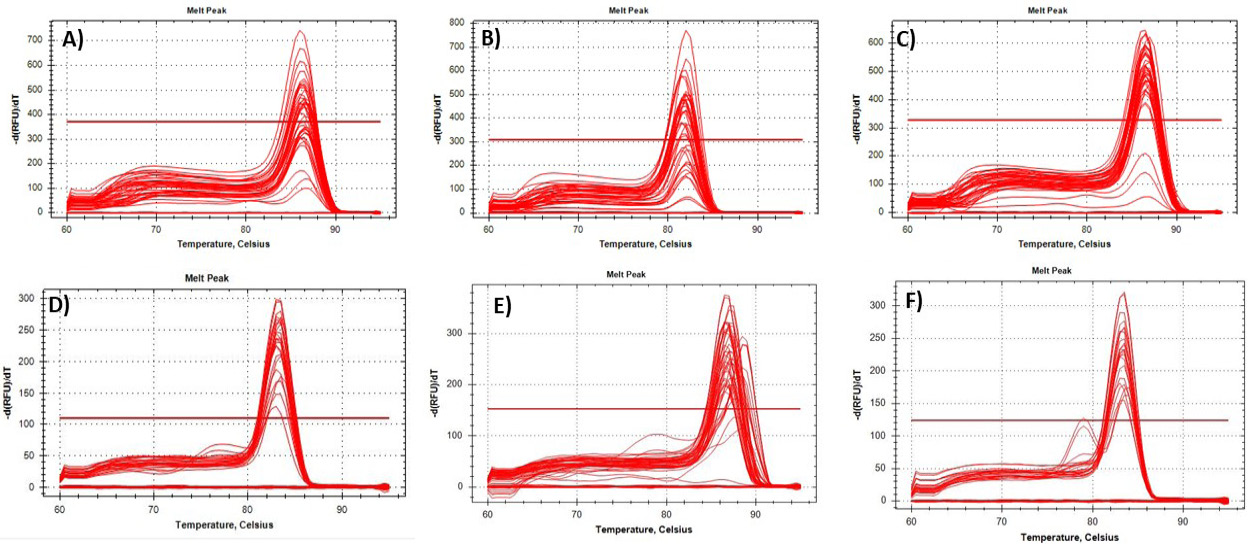
Melting curves of six candidate reference genes of Atractosteus tropicus for qPCR. (A) 18S ribosomal RNA (18S rRNA), (B) Elongation factor 1-alpha (ef1-α), (C) Alpha actin (acta), (D) Beta-actin (actb), (E) Glyceraldehyde-3-phosphate dehydrogenase (gapdh) and (F) Alpha tubulin (α-tubulin).
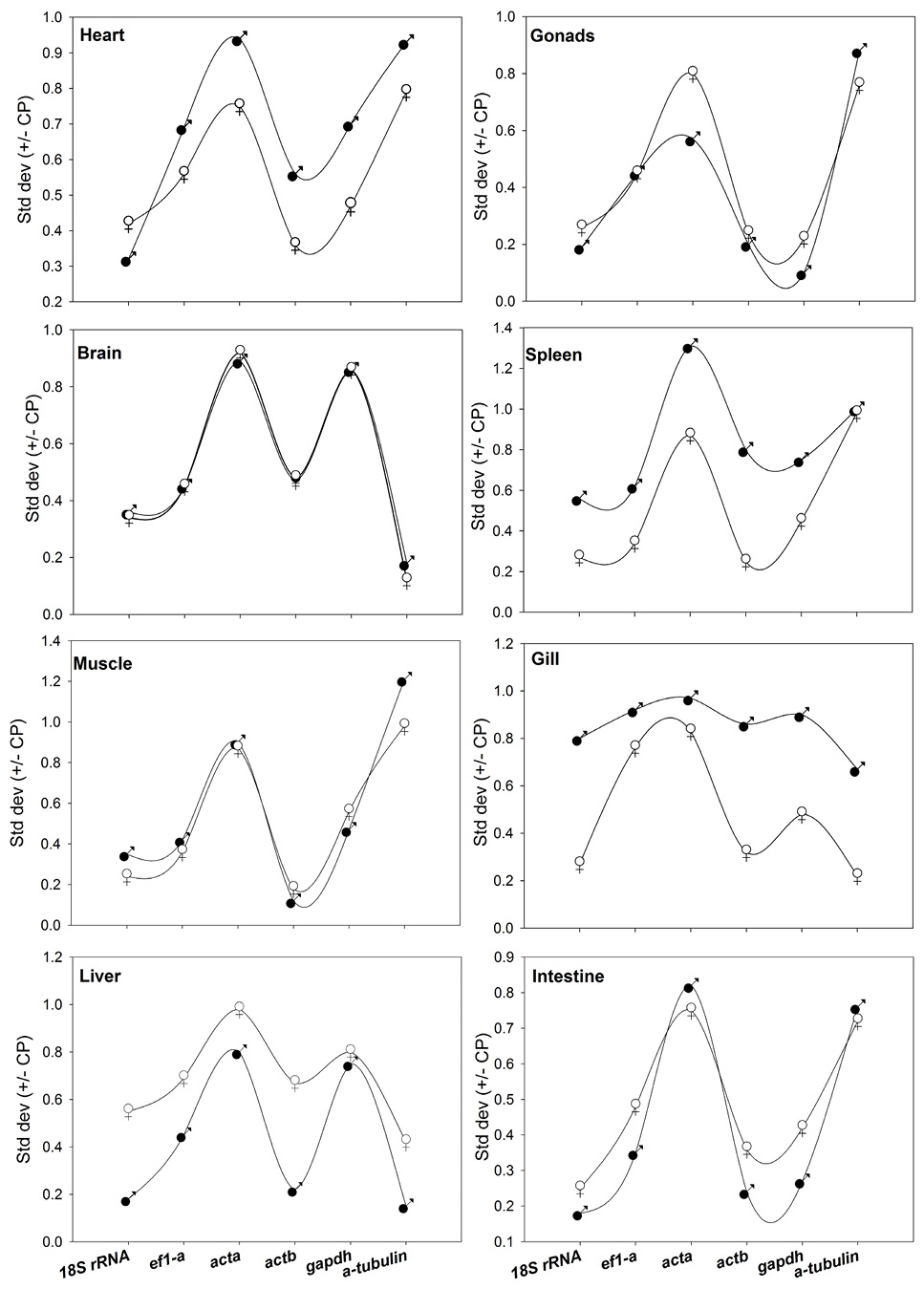
BestKeeper analysis results of six candidate reference genes of Atractosteus tropicus.
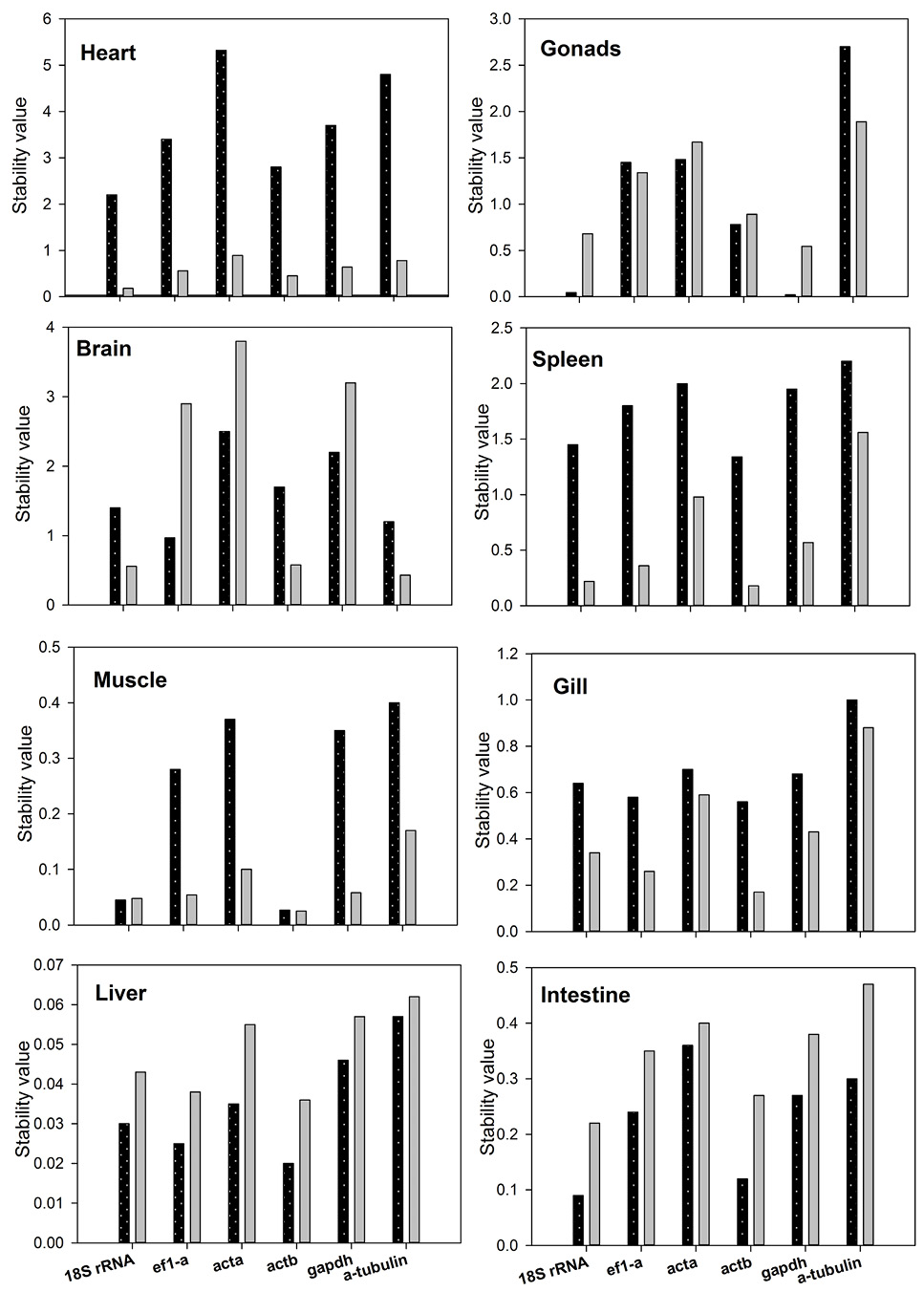
NormFinder analysis results of six candidate reference genes of Atractosteus tropicus.
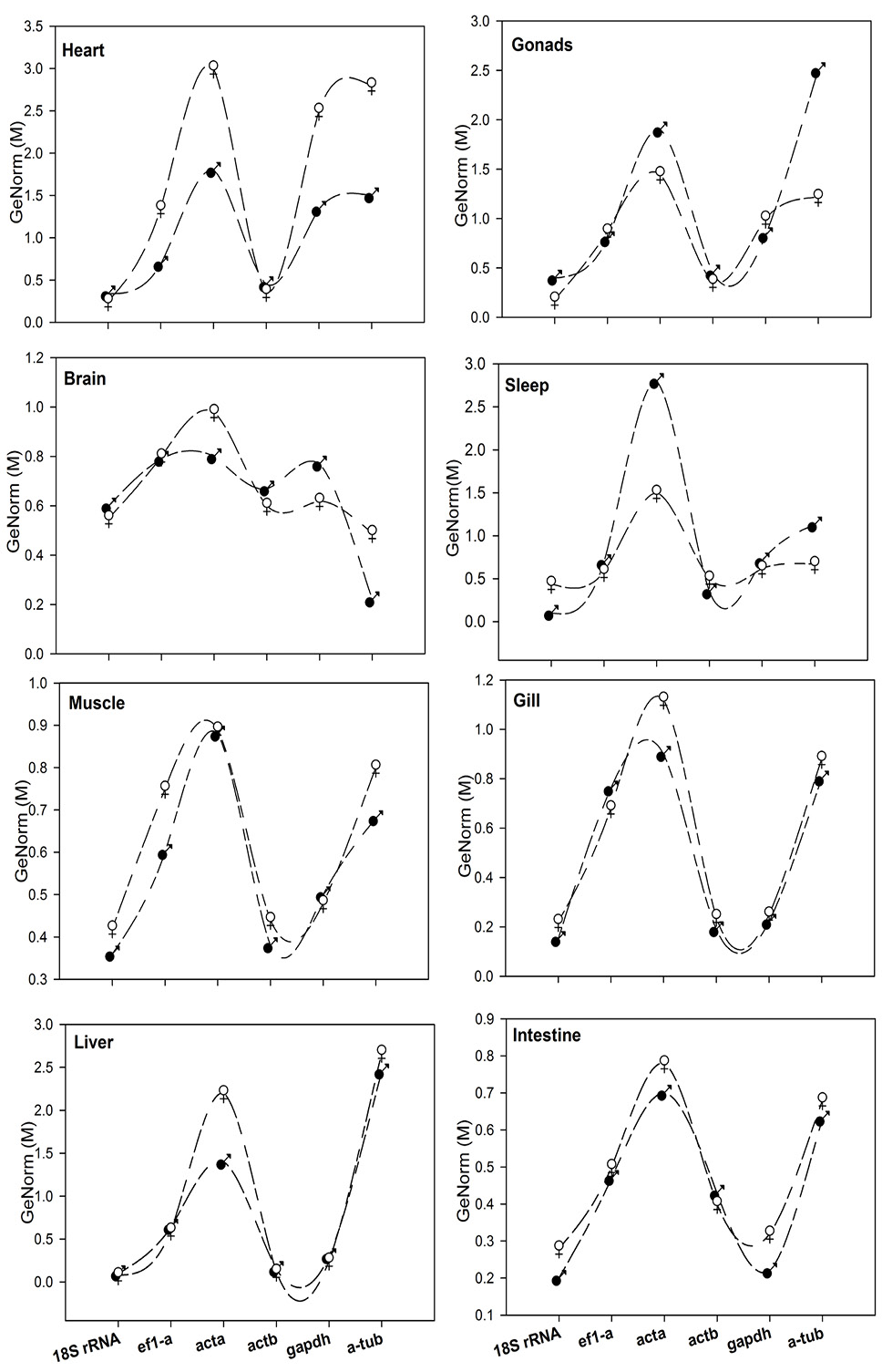
geNorm analysis results of six candidate reference genes of Atractosteus tropicus.
References
- According to the cq obtained from the qpcr using the Bio-Rad CFX-96 Manager thermocycler, the stability of the six candidate reference genes was analyzed using three software packages, including BestKeeper v1 (https://www.gene-quantification.de/bestkeeper.html#download), GeNorm integrated into qBasePlus (https://www.genequantification.de/hkg.html#genorm) and Normfinder v20 (https://www.moma.dk/normfinder-software/). The results from the three software packages were compared and analyzed to determine which gene is the most appropriate reference gene according to the methodology of Li et al. (2019).
Services
Article usage statistics
Loading…