
Yogurt is a healthy food consumed all over the world by people of all groups. It contains bacterial microbiota, which has positive effects on the health of its consumers. For decades yogurt has been prepared traditionally by the method of back-slopping. Recently, it is also prepared commercially by using bacteria in different combinations. In this study, we aimed to detect and identify bacteria present in locally processed yogurt using the advanced next-generation sequencing (NGS) method. Yogurt samples were collected from open-air shops located in different areas of Pakistan. All yogurt samples were mixed to make one composite sample. DNA was extracted from yogurt using the phenol-chloroform (organic) method. Extracted DNA was used to perform NGS/Illumina high-throughput sequencing of hypervariable regions (V3 and V4) of the 16S rRNA gene. In the composite yogurt sample, 100% bacteria were detected with a total count of 40423. The number of phyla was 3, of which proteobacteria showed the highest abundance (89.9%). Four classes of bacterial microbiota were detected in which the proportion of class Gamma proteobacteria was the highest (84.8%). The numbers of orders, families, and genera to which bacteria belonged were 9, 10, and 15, respectively. Genus Stenotrophomonas had the highest relative abundance (48.8%), which was followed by Citrobacter with a relative abundance of 11.2%. The lowest relative abundance (0.1%) was exhibited by 2 genera Tepidimonas and Enterobacter. The relative abundance of 4 detected bacterial species was less than 1%. Three species (Mycobacterium tuberculosis, Pantoea agglomerans, and Raoultella ornithinolytica) belonged to culturable bacteria and one species (Tepidimonas spp.) belonged to nonculturable bacteria. Our data demonstrate the presence of wide diversity of bacterial microbiota in locally processed back-slopped yogurt.
Research Article · Volume 55, Issue 6, 13 October 2023 · Open Access
Assessment of Bacterial Composition of Locally Processed Back-Slopped Yogurt Through Next-Generation Sequencing
· · ·
Affiliations & Notes ⌄
- 1Department of Food Sciences, Faculty of Agricultural Sciences, University of the Punjab, Lahore, Pakistan 2Department of Zoology, University of Gujrat, Gujrat, Pakistan * Corresponding author: shinawar.foodsciences@pu.edu.pk
Article Info ⌄
- Journal:
- Pakistan Journal of Zoology
- Published:
- 13 October 2023

From the article
- Of 15 detected genera from the yogurt, 3 genera with the relative abundance were Stenotrophomonas (48.8%), Citrobacter (11.2%), and Streptococcus (5.1%), respectively.
- Of culturable bacterial species, Mycobacterium tuberculosis exhibited the highest relative abundance (0.6%) followed by Raoultella ornithinolytica (0.3%).
- The relative abundance of nonculturable bacteria (Tepidimonas spp.) was 0.1% (Figs. 1F, 2, Table I).
- Phylum Proteobacteria was found to be relatively abundant and among genera, Stenotrophomonas exhibited the highest relative abundance.
Selected from the article's own text.
Abstract
INTRODUCTION
Yogurt is a milk-based healthy food consumed worldwide by people of all age groups. It is produced by the fermentation process by lactic acid bacteria (LAB), Streptococcus thermophilus and Lactobacillus delbrueckii bulgaricus. The aforementioned species must be present in yogurt, however other LAB such as Leuconostoc mesenteroides and Lactiplantibacillus plantarum can also be present in yogurt, particularly in traditional yogurt (İspirli and Dertli, 2018). Streptococcus thermophilus and Lactobacillus delbrueckii bulgaricus are used as starter cultures for the production of yogurt. They act symbiotically and produce lactic acid rapidly. In the dairy industry, along with the above-mentioned bacteria, other LAB are also employed in different combinations to produce yogurt of desirable characteristics . The use of probiotic bacteria in dairy products including yogurt can have a healthy impact on the health of consumers as (1) these bacteria provide vitamins, minerals, and proteins ; , (2) beneficial bacteria are retained in gut and stomach and thus gastrointestinal disorders such as diarrhea and dysentery are reduced, (3) they strengthen the immune system . Moreover, yogurt consumption has also been linked with the activity of lactase in people who are lactose-intolerant, lower type 2 diabetes risk, improved production of proinflammatory cytokines, and reduction in risk for respiratory allergies and cardiovascular diseases (Freitas et al., 2014; .
For decades, milk-based products have been prepared by spontaneous fermentation and back-slopping methods without affecting nutritive quality . Currently, these products have gained popularity because of an increase in awareness among people about healthy nutrition. Naturally fermented products having diverse bacterial fauna may provide better palatability and extra health benefits to consumers . Microorganisms present in fermented milk products such as yogurt contribute to flavor, taste, and nutritional properties ; . Yogurt consumption is linked with an increase in bacteria including Firmicutes and Bacillus lactis. Firmicutes are associated with the reduction of inflammation and the improvement of lipid metabolism . Bacillus lactis is associated with the production of metabolites such as 3-hydroxyoctanoic acid, which regulates gut inflammation . Probiotic bacteria like Limosilactobacillus reuteri present in yogurt synthesize reuterin, which is a potent antifungal, antibacterial, antiprotozoal, and antiviral peptide . Moreover, the lab cause the production of lactate and acetate, which inhibit the growth of pathogenic organisms .
It is of significant value to know the composition of microbiota present in fermented foods such as yogurt. Advanced techniques like real-time quantitative PCR and conventional methods like the plate count method using selective media are employed to count bacteria ; . Recently, advanced molecular techniques like random amplified polymorphic DNA (RAPD)-polymerase chain reaction (PCR) , 16S rRNA gene sequences , and RAPD-PCR followed by 16S rDNA gene sequencing are used for the identification of bacteria. Next-generation sequencing (NGS) or high-throughput sequencing is an advanced technique, which is employed to sequence nucleotides present in a gene . Microbial analysis of samples like raw milk , water (Chao et al., 2009), and clinical samples can be carried out using this technique. Methicillin-resistant strain Staphylococcus aureus was detected using NGS . Infection in the central nervous system and acute respiratory syndrome can be detected using NGS. Psittacosis pneumonia caused by Chlamydia psittaci was early diagnosed using NGS . Besides the comparative assessment of the relative abundance of microorganisms, metagenomics also provides species-level identification of the microorganisms .
Yogurt may have a large number of nonculturable bacteria in addition to culturable bacteria. Thus, there is a possibility that nonculturable bacteria present in yogurt may have a role in the formation of yogurt or the improvement of its quality. Thus, the attractive and potential use of 16S rRNA NGS is to identify nonculturable bacteria and understand the profiling of microbiota . In this study, we aim to employ the 16S rRNA gene NGS technique to provide information about the diversity and relative abundance of bacteria present in back-slopped yogurt sold in open-air shops in different areas of Pakistan. To the best of our knowledge, this is the first study conducted in Pakistan to investigate the diversity of bacteria present in yogurt using the NGS technique.
MATERIALS AND METHODS
Collection of samples
One hundred and thirty-five yogurt samples were obtained in sterilized flasks from open-air shops located in different areas of Gujranwala, Lahore, and Rawalpindi divisions of Pakistan. They were packed with ice bags during their transport to the laboratory. One composite sample was prepared while mixing all collected samples in a 50 ml falcon tube. Yogurt obtained was prepared by shopkeepers using the back-slopping technique. In this method, milk was boiled first and cooled to fermentation temperature. For fermentation, it was mixed with a previously produced yogurt, which was the starter culture. Pots were kept in a place where they remained warm. After 7-9 h, the texture of the yogurt was checked and the process of fermentation was stopped. This was the traditional way of making yogurt as seen by the ancestors.
DNA extraction
DNA from a composite sample of yogurt was extracted by the phenol-chloroform (organic) method . Yogurt (200 µl) was mixed with 700 µl of lysis buffer containing 10 mM Tris (pH 7.5), 0.32 mM sucrose, 1% triton, and 5 mM MgCl2 and incubated at 70 oC for 10 min. Centrifugation of samples was performed at 13000 RPM for 1 min. The supernatant was discarded and 500 µl lysis buffer was added to the tube containing the pellet. After mixing, samples were centrifuged at 13000 RPM for 1 min. After discarding the supernatant, the pellet was dissolved in 500 µl lysis buffer (10 mM Tris, 400 mM NaCl, 2 mM EDTA) and mixed. Incubation of samples at 60 oC for 30 min was performed. Then, 15 µl proteinase K and 75 µl 20% SDS were added and samples were incubated at 55 oC for overnight. Next, samples were treated with 500 µl phenol, chloroform, and isoamyl alcohol and centrifuged at 13000 RPM for 10 min. A layer of the aqueous solution was shifted to another 1.5 ml tube and mixed with 500 µl of chloroform and isoamyl alcohol. The solution was centrifuged at 13000 RPM for 10 min. The aqueous layer was transferred to another 1.5 ml Eppendorf tube and treated with 55 µl of sodium acetate solution, then 500 µl chilled isopropanol was added. Samples were placed at -20 oC for 45 min. Then, centrifugation was performed at 13000 rpm for 10 min. After discarding the supernatant, 500 µl of 70% ethanol was added to the tube, and the pellet was mixed well. Again centrifugation was performed at 7500 RPM for 5 min. The supernatant was discarded and the pellet was air-dried. TE (Tris EDTA) buffer was added to the DNA pellet. Extracted DNA was stored at -4 oC until further use.
Next-generation sequencing (NGS)
NGS/Illumina high-throughput sequencing of hypervariable regions (V3 and V4) of 16S rRNA gene was performed using universal primers; forward (F) primer, 5′-TCGTCGGCAGCGTCAGATGTGTATAAGAGACAGCCTACGGGNGGCWGCAG-3′ and 16S reverse (R) primer, 5′-GTCTCGTGGGCTCGGAGATGTGTATAAGAGACAGGACTACHVGGGTATCTAATCC-3′. For making a fragment library, the method of paired-end was used for sequencing of paired-end. The metagenomic analysis tool, software QIIME2 V 2021.4, was employed for raw paired-end reads (FASTQ) obtained from DNA fragments. To import paired-end reads, the manifest file technique was used. The technique of DADA2 denoising was employed for denoising, quality filtering, and removal of chimeric sequences. Method, read truncation, was used for constant read length for all reads.
VSEARCH tool was used for operational taxonomic units (OTU) clustering based on closely related references. QIIME2 data type with the feature data (Sequence) was used for the FASTA file with the sequences to use as reference. SILVA (https://www.arb-silva.de/download/archive/qiime) was taken as the reference database for the 16S rRNA gene. The classifiers, Q2 feature and Naive Bayes, were employed for assigning likely taxonomies to reads obtained. Krona charts were constructed using taxonomic data .
RESULTS
For sequencing analysis and identification of microbial community present in locally processed back-slopped yogurt samples, NGS of V3 and V4 regions of 16S rRNA gene was carried. In our composite sample of yogurt, no organism other than bacteria was detected and the total count of bacteria was 40423. Three types of phyla were identified from the composite yogurt sample. The predominant phylum was Proteobacteria with the highest abundance (89.9%). The other two phyla included Actinobacteria and Firmicutes with a relative abundance of 0.6% and 9.5%, respectively (Fig. 1A).
The predominant taxon at the class level with the relatively highest abundance was Gammaproteobacteria (84.8%). The second-highest relative abundance was of Alphaproteobacteria (9.5%). The other two classes included Actinobacteria and Bacilli with a relative abundance of 0.6% and 5%, respectively (Fig. 1B). The number of orders to which bacteria belonged was 9. Among these, Xanthomonadales had maximum relative abundance (48.8%) and Propionibacteriales had minimum relative abundance (0.1%) (Fig. 1C). Total 10 families were detected from the yogurt sample. The predominant family was Xanthomonadaceae with the highest relative abundance (48.8%). Family Enterobacteriaceae occupied the second position with respect to relative abundance (33.3%). The least abundant family was Propionibacteriaceae (0.1%) (Fig. 1D).
Of 15 detected genera from the yogurt, 3 genera with the relative abundance were Stenotrophomonas (48.8%), Citrobacter (11.2%), and Streptococcus (5.1%), respectively. Two genera, Lactobacillus and Raoultella displayed relatively lower bacteria proportions i.e., 0.3% each. The relatively lowest generic abundance was exhibited by 2 genera, Tepidimonas and Enterobacter, 0.1% each (Fig. 1E). At the species level, 4 species were detectable. Three species (Mycobacterium tuberculosis, Pantoea agglomerans, and Raoultella ornithinolytica) belonged to culturable bacteria and one species (Tepidimonas spp.) belonged to nonculturable bacteria. Of culturable bacterial species, Mycobacterium tuberculosis exhibited the highest relative abundance (0.6%) followed by Raoultella ornithinolytica (0.3%). Pantoea agglomerans had the lowest relative abundance (0.02%). The relative abundance of nonculturable bacteria (Tepidimonas spp.) was 0.1% (Figs. 1F, 2, Table I).
DISCUSSION
In this study, the 16S rRNA genome was targeted for comprehensive evaluation of the diversity of microbiota present in locally processed back-slopped yogurt. Different methods have been employed for the detection and identification of microbiota present in dairy food products. However, recently, advanced molecular techniques such as high-throughput NGS and whole genome sequencing are being used to identify microbial populations from food products ; . The latest techniques can identify both culturable and nonculturable bacteria, thus application of culture-independent techniques could play a significant role in the identification of all types of bacteria .
Table I. Diversity of bacteria present in yogurt determined by NGS.
| Taxon | Number (%) |
| Kingdom | |
| Bacteria | 40423 (100.00) |
| Phylum | |
| Actinobacteria | 260 (0.64) |
| Firmicutes | 3842 (9.50) |
| Proteobacteria | 36321 (89.85) |
| Class | |
| Actinobacteria | 260 (0.64) |
| Bacilli | 3842 (9.50) |
| Alphaproteobacteria | 2025 (5.01) |
| Gammaproteobacteria | 34296 (84.84) |
| Order | |
| Corynebacteriales | 237 (0.59) |
| Propionibacteriales | 23 (0.06) |
| Lactobacillales | 3842 (9.50) |
| Caulobacterales | 150 (0.37) |
| Rhizobiales | 1875 (4.64) |
| Betaproteobacteriales | 413 (1.02) |
| Enterobacteriales | 13473 (33.33) |
| Pseudomonadales | 698 (1.73) |
| Xanthomonadales | 19712 (48.76) |
| Family | |
| Mycobacteriaceae | 237 (0.59) |
| Propionibacteriaceae | 23 (0.06) |
| Enterococcaceae | 85 (0.21) |
| Taxon | Number (%) |
| Lactobacillaceae | 114 (0.28) |
| Streptococcaceae | 3643 (9.01) |
| Caulobacteraceae | 150 (0.37) |
| Rhizobiaceae | 1875 (4.64) |
| Burkholderiaceae | 413 (1.02) |
| Enterobacteriaceae | 13473 (33.33) |
| Moraxellaceae | 698 (1.73) |
| Xanthomonadaceae | 19712 (48.76) |
| Genus | |
| Mycobacterium | 237 (0.59) |
| Cutibacterium | 23 (0.06) |
| Lactobacillus | 114 (0.28) |
| Lactococcus | 1600 (3.96) |
| Streptococcus | 2043 (5.05) |
| Brevundimonas | 150 (0.37) |
| Rhizobium | 1875 (4.64) |
| Achromobacter | 389 (0.96) |
| Tepidimonas | 24 (0.06) |
| Citrobacter | 4541 (11.23) |
| Enterobacter | 29 (0.07) |
| Pantoea | 1767 (4.37) |
| Raoultella | 127 (0.31) |
| Acinetobacter | 698 (1.73) |
| Stenotrophomonas | 19712 (48.76) |
| Remainder | 7094 (17.55) |
| Species | |
| Mycobacterium tuberculosis | 237 (0.59) |
| Tepidimonas spp. | 24 (0.06) |
| Pantoea agglomerans | 7 (0.02) |
| Raoultella ornithinolytica | 127 (0.31) |
Although the Sanger sequencing method is used for the molecular identification of bacteria, however, nonculturable bacteria are not identified by this method . We employed a high-throughput NGS technique for the identification of bacteria, which had the advantage that not only culturable but also nonculturable bacteria could be detected from complex samples. In our study, in addition to culturable bacteria, nonculturable bacteria (Tepidimonas spp.) were detected from locally processed yogurt. In an evaluation of human milk biota using the 16S rRNA NGS method, 3 phyla including Firmicutes, Proteobacteria, and Actinobacteria and 14 genera were detected . High-throughput sequencing revealed the presence of Firmicutes and Proteobacteria phyla and Lactococcus lactis and Lactobacillus helveticus species in milk-related products . In another study, a wide diversity of bacteria including pathogenic bacteria was demonstrated in fermented mare’s milk using NGS .
In this study, only bacteria, which belonged to 3 phyla (Proteobacteria, Actinobacteria, and Firmicutes) were detected from the yogurt sample. The predominant taxon at the level of phylum was Proteobacteria, which accounted for 89.9% relative abundance. The detection of 3 phyla from yogurt is partially in accordance with the previous studies. In a recent study conducted in Turkey, 3 phyla including Bacteriodetes (3.94–11.64%), Firmicutes (79.08–94.96%), and Proteobacteria (0.91–8.79%) were reported. Two phyla were similar to our study, however, Proteobacteria exhibited the least abundance. Moreover, the Firmicutes phylum has a much higher proportion (79.08–94.96%) as compared to our study (9.5%), which is not in line with our study. In another study conducted in Xinjiang, 4 phyla including Firmicutes, Proteobacteria, Bacteriodetes, and Actinobacteria were reported from homemade yogurts. Firmicutes phylum was found relatively abundant followed by Proteobacteria and Bacteriodetes. Phylum Actinobacteria had the least relative abundance. In another study in which artisanal yogurts were collected from different areas of three countries, which included Russia, Mongolia, and China, and analyzed for bacterial microbiota. Four major phyla were demonstrated in that study. Among these, Firmicutes, Bacteroidetes, Proteobacteria, and Actinobacteria represent 99% relevant abundance together.
In our study, of 15 detected genera, genus Stenotrophomonas exhibited the highest relative abundance (48.8%) followed by Citrobacter (11.2%) and Streptococcus (5.1%), respectively. A recent study in which back-slopped homemade yogurt was used to investigate the diversity of bacterial microbiota employing NGS demonstrated the highest relative abundance (78.25%) of genus Lactobacillus followed by Streptococcus with a relative abundance of 7.86%. Our results concerning the abundance of genera are contradictory to this study , however, 4 genera Acinetobacter, Lactobacillus, Citrobacter, and Streptococcus were commonly detected in both studies. In another study conducted by using yogurt, the prevalent genus was Lactobacillus with a relative abundance of 64.69% followed by Lactococcus, Streptococcus, Acetobacter, and Acinetobacter with a relative abundance of 14.62%, 10.29%, 4.78%, and 1.36%, respectively. Some of the genera reported in this previous study such as Lactobacillus, Lactococcus, Streptococcus, and Acinetobacter were similar to the genera detected in our research work. However, their relative abundance contradicted with the relative abundance of genera as reported by our study. Similarly, another recent study demonstrated the presence of genera Streptococcus, Lactobacillus, and Lactococcus with a relative abundance of 67–98%, 1–8%, and 0–27%, respectively in drinkable yogurts. All the aforementioned genera were also detected in our study, however, their relative abundance varied. Xu et al. (2015) also detected two genera Lactobacillus and Streptococcus with the highest relative abundance from homemade yogurts collected from Xinjiang (China), which was in line with our study as the presence of the same genera was also indicated in our study. According to our data, Stenotrophomonas showed the highest relative abundance followed by Citrobacter. The genus Stenotrophomonas was first reported as the predominant genus amongst genera detected in locally processed back-slopped yogurt using the NGS technique in our present study. Variations regarding the relative abundance of genera in different locally processed yogurts across the world can be attributed to different geographical areas, sanitation, the microbiota of milk, environmental conditions such as altitude and temperature, and differences in the traditional methods of preparing yogurt .
In this study, we detected both culturable species (Mycobacterium tuberculosis, Pantoea agglomerans, and Raoultella ornithinolytica) and nonculturable species (Tepidimonas spp.) of bacteria. The relative abundance of all detected bacterial species was less than 1%. In the latest research work carried out using yogurt, L. delbrueckii was reported as a predominant species with a relative abundance of 52.45–93.66%. The same species was also found to be relatively abundant in Bulgarian yogurt . In addition, other relevant abundant bacterial species found in yogurt were L. helveticus, Prevotella copri, Faecalibacterium prausnitzii, Bacteroides vulgatus, and Bacteroides dorei . Thus, our findings are contradictory to the results of the above-mentioned studies. In our study, bacteria were detected and identified remarkably to the level of the genus. However, at the species level, only 4 bacteria were identified as the difference between species with respect to their identification was not significant. In previous studies, it has been demonstrated that if bacteria belong to closely related genera their identification at the species level will be difficult ; . In this research work, we aimed to explore the diversity of microbiota present in yogurt available in Pakistan. Thus, we collected yogurt samples from different regions of Pakistan and mixed them to make one composite sample and analyzed the diversity of bacteria. This was the reason that we did not perform NGS separately with yogurt samples collected from different areas.
Unfortunately, in our study, instead of yogurt forming LAB, pathogenic bacterial species were detectable. For instance, Mycobacterium tuberculosis is associated with tuberculosis , Pantoea agglomerans is an opportunistic causative agent of human infections , and Raoultella ornithinolytica can also cause infections in immunocompromised children . In other studies, pathogenic/spoilage bacteria had also been reported in milk products including yogurt. For example, Acinetobacter spp. and Chryseobacterium spp., food spoilage species, were found in yogurt ; . The presence of food spoilage bacteria in yogurt can be attributed to several factors including storage, processing conditions of raw milk, and farming. In addition, soil, forage, pasture, storage tanks, milking equipment, and transportation could also be the source of contamination of milk by bacterial microbiota. All these conditions could be considered responsible for differences in the bacterial composition of milk and dairy products . Moreover, our yogurt sample was obtained from open-air shops, where the same vendor dealt with currency notes and yogurt selling. Thus, currency notes could also be a source of bacterial contamination .
CONCLUSION
To the best of our knowledge, this is the first study conducted in Pakistan to explore bacterial microbiota in locally processed back-slopped yogurt sold in open-air shops. Phylum Proteobacteria was found to be relatively abundant and among genera, Stenotrophomonas exhibited the highest relative abundance. This study demonstrated the presence of a significant number of genera in yogurt. Moreover, nonculturable bacteria were also detected.
Acknowledgement
The authors are thankful to the local shopkeepers for providing them yogurt samples.
Funding
No funding was received for this study from any agency.
IRB approval
This work was approved by the Advanced Studies and Research Board (ASRB), University of the Punjab, Lahore, Pakistan (Ref: No. D/1044/Acad.).
Ethical statement
As study did not involve live subjects (human or animals), thus approval for this study was not obtained/required from the ethical committee of the institute.
Statement of conflict of interest
The authors have declared no conflict of interest.
Figures
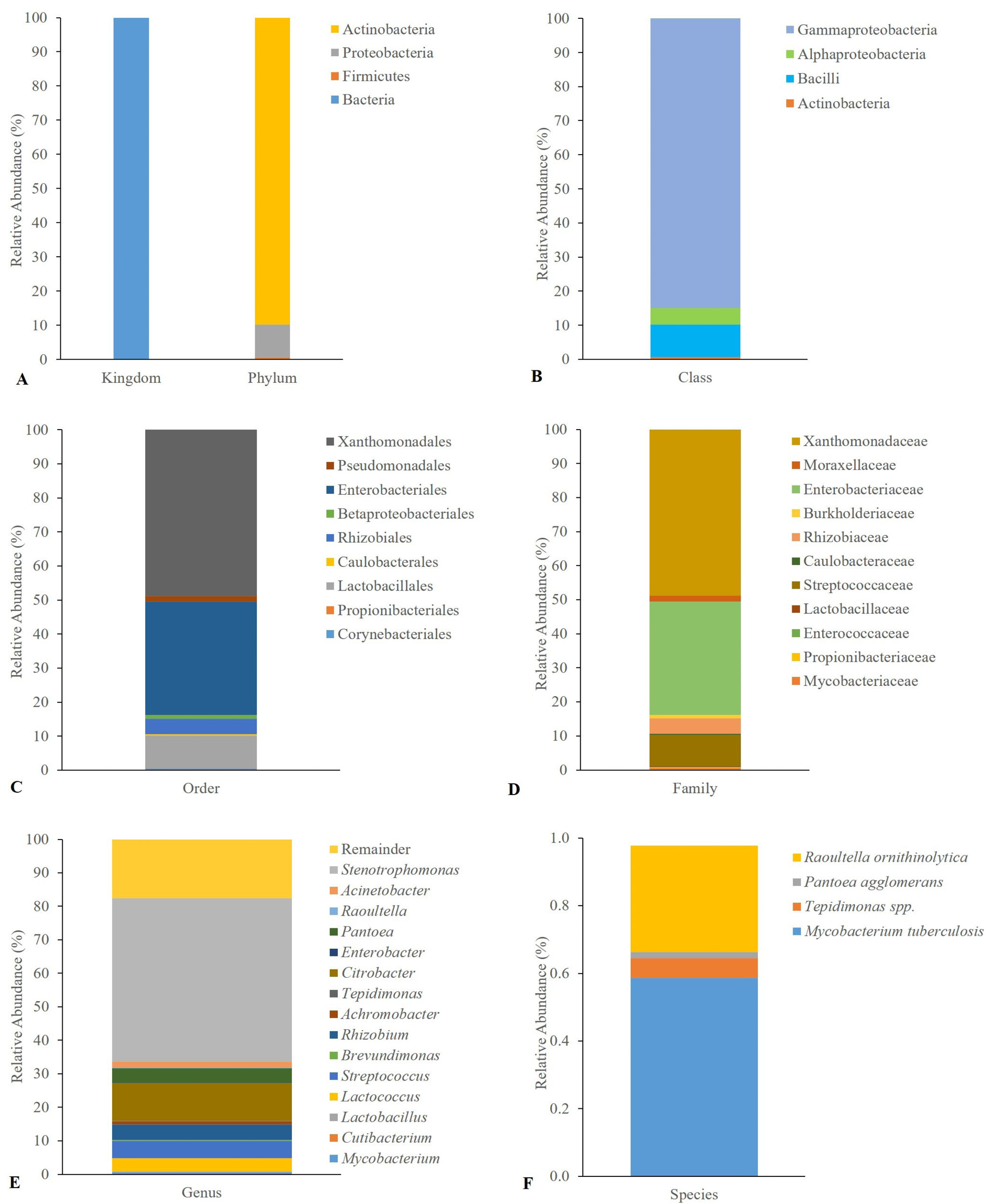
Relative abundance of kingdoms and phyla (A), classes (B), orders (C), families (D), genera (E), and species (F) of bacteria present in yogurt determined by NGS.
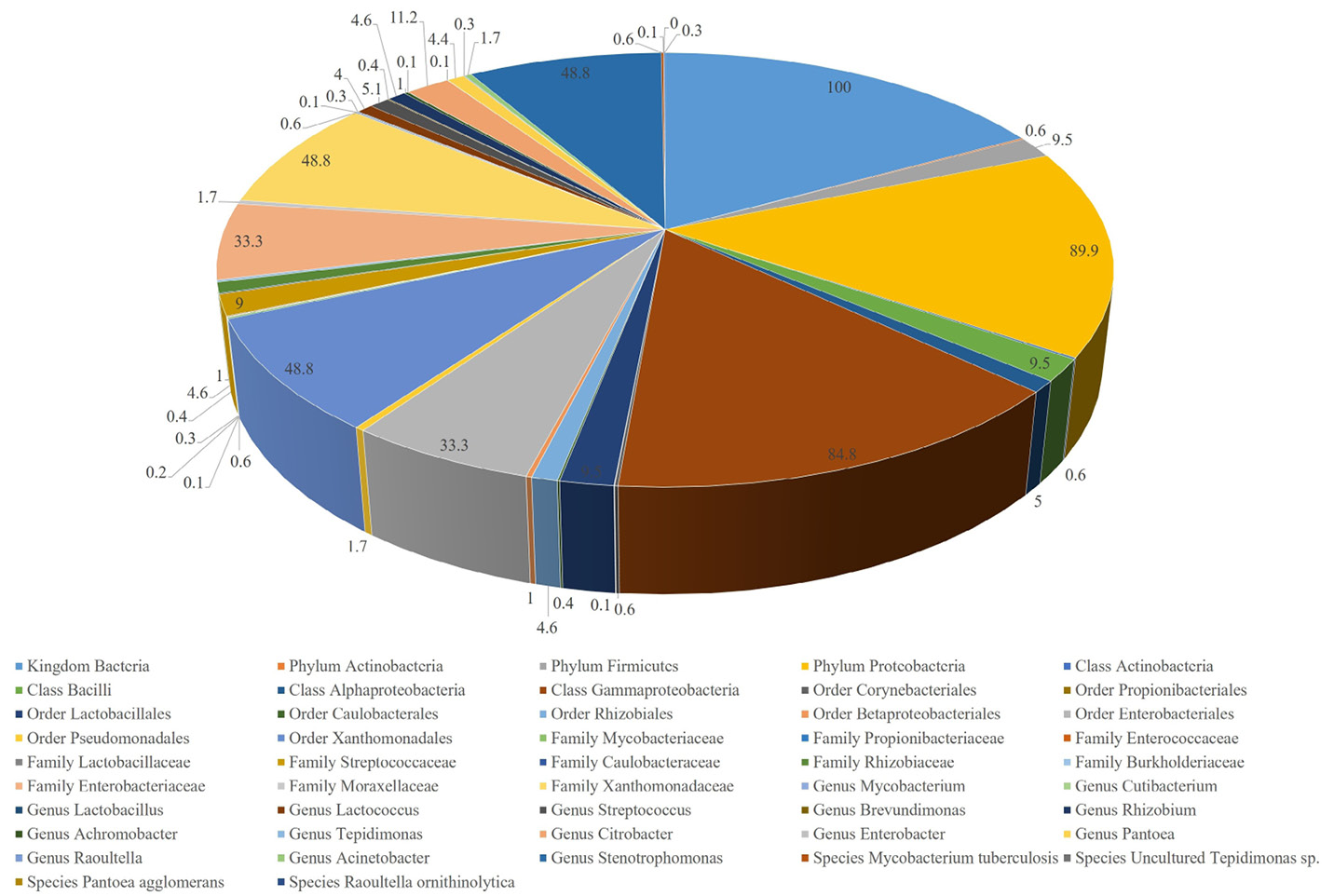
Relative abundance of different groups of bacteria present in yogurt determined by NGS.
References
- Akoachere, J.F.T.K., Gaelle, N., Dilonga, H.M., and Nkuo-Akenji, T.K., 2014. Public health implications of contamination of Franc CFA (XAF) circulating in Buea (Cameroon) with drug resistant pathogens. BMC Res. Notes, 7: 1-13. https://doi.org/10.1186/1756-0500-7-16[CrossRef]
- Alnajar, S., and Gupta, R.S., 2017. Phylogenomics and comparative genomic studies delineate six main clades within the family Enterobacteriaceae and support the reclassification of several polyphyletic members of the family. Infect. Genet. Evol., 54: 108-127. https://doi.org/10.1016/j.meegid.2017.06.024[CrossRef]
- Assam, J.P.A., Beng, V.P., Cho-Ngwa, F., Toukam, M., Ngoh, A.A.I., Kitavi, M., Nzuki, I., Nyonka, J.N., Tata, E., Tedom, J.C., Skilton, R.A., and Titanji, V.P., 2013. Mycobacterium tuberculosis is the causative agent of tuberculosis in the southern ecological zones of Cameroon, as shown by genetic analysis. BMC Infect. Dis., 13: 1-12. https://doi.org/10.1186/1471-2334-13-431[CrossRef]
- Athar, I.H., 1986. Preparation of cheese and yoghurt (dahi) at household level. Pakistan Agriculture Research Council, Islamabad.
- Büyükcam, A., Tuncer, Ö., Gür, D., Sancak, B., Ceyhan, M., Cengiz, A.B., and Kara, A., 2018. Clinical and microbiological characteristics of Pantoea agglomerans infection in children. J. Infect. Publ. Hlth., 11: 304-309. https://doi.org/10.1016/j.jiph.2017.07.020[CrossRef]
- Cao, Y., Fanning, S., Proos, S., Jordan, K., and Srikumar, S., 2017. A review on the applications of next generation sequencing technologies as applied to food-related microbiome studies. [Review]. Front. Microbiol., 8: 1-16. https://doi.org/10.3389/fmicb.2017.01829[CrossRef]
- Chao, S.H., Wu, R.J., Watanabe, K., and Tsai, Y.C., 2009. Diversity of lactic acid bacteria in suan-tsai and fu-tsai, traditional fermented mustard products of Taiwan. Int. J. Fd. Microbiol., 135: 203-210. https://doi.org/10.1016/j.ijfoodmicro.2009.07.032[CrossRef]
- Chen, X., Cao, K., Wei, Y., Qian, Y., Liang, J., Dong, D., Tang, J., Zhu, Z., Gu, Q., and Yu, W., 2020. Metagenomic next-generation sequencing in the diagnosis of severe pneumonias caused by Chlamydia psittaci. Infection, 48: 535-542. https://doi.org/10.1007/s15010-020-01429-0[CrossRef]
- Chen, Y., Feng, R., Yang, X., Dai, J., Huang, M., Ji, X., Li, Y., Okekunle, A.P., Gao, G., Onwuka, J.U., and Pang, X., 2019. Yogurt improves insulin resistance and liver fat in obese women with nonalcoholic fatty liver disease and metabolic syndrome: A randomized controlled trial. Am. J. Clin. Nutr., 109: 1611-1619. https://doi.org/10.1093/ajcn/nqy358[CrossRef]
- Chiu, R.W., Chan, K.A., Gao, Y., Lau, V.Y., Zheng, W., Leung, T.Y., Foo, C.H., Xie, B., Tsui, N.B., Lun, F.M., and Lo, Y.D., 2008. Noninvasive prenatal diagnosis of fetal chromosomal aneuploidy by massively parallel genomic sequencing of DNA in maternal plasma. Proc. natl. Acad. Sci., 105: 20458-20463. https://doi.org/10.1073/pnas.0810641105[CrossRef]
- Cummings, L.A., Kurosawa, K., Hoogestraat, D.R., SenGupta, D.J., Candra, F., Doyle, M., Thielges, S., Land, T.A., Rosenthal, C.A., Hoffman, N.G., Salipante, S.J., and Cookson, B.T., 2016. Clinical next generation sequencing outperforms standard microbiological culture for characterizing polymicrobial samples. Clin. Chem., 62: 1465-1473. https://doi.org/10.1373/clinchem.2016.258806[CrossRef]
- De Filippis, F., Genovese, A., Ferranti, P., Gilbert, J.A., and Ercolini, D., 2016. Metatranscriptomics reveals temperature-driven functional changes in microbiome impacting cheese maturation rate. Sci. Rep., 6: 1-11. https://doi.org/10.1038/srep21871[CrossRef]
- De Petris, L., and Ruffini, E., 2018. Roultella ornithinolytica infection in infancy: A case of febrile urinary tract infection. CEN Case Rep., 7: 234-236. https://doi.org/10.1007/s13730-018-0333-2[CrossRef]
- Demirci, T., Akın, N., Öztürk, H.İ., and Oğul, A., 2022. A metagenomic approach to homemade back-slopped yogurts produced in mountainous villages of Turkey with the potential next-generation probiotics. LWT Fd. Sci. Technol., 154: 112860. https://doi.org/10.1016/j.lwt.2021.112860[CrossRef]
- Freitas, F., Machado, E., Ribeiro, T.G., Novais, Â., and Peixe, L., 2014. Long-term dissemination of acquired AmpC β-lactamases among Klebsiella spp. and Escherichia coli in Portuguese clinical settings. Eur. J. Clin. Microbiol. Infect. Dis., 33: 551-558.
- Furet, J. P., Quénée, P., and Tailliez, P., 2004. Molecular quantification of lactic acid bacteria in fermented milk products using real-time quantitative PCR. Int. J. Fd. Microbiol., 97: 197-207. https://doi.org/10.1016/j.ijfoodmicro.2004.04.020[CrossRef]
- Galanis, A., Kourkoutas, Y., Tassou, C.C., and Chorianopoulos, N., 2015. Detection and identification of probiotic Lactobacillus plantarum strains by multiplex PCR using RAPD-derived primers. Int. J. Mol. Sci., 16: 25141-25153. https://doi.org/10.3390/ijms161025141[CrossRef]
- Ghadge, P.N., Prasad, K., and Kadam, P.S., 2008. Effect of fortification on the physico-chemical and sensory properties of buffalo milk yoghurt. Elec. J. Env. Agric. Fd. Chem., 7: 2890-2899.
- He, T., Priebe, M.G., Zhong, Y., Huang, C., Harmsen, H.J.M., Raangs, G.C., Antoine, J.M., and Welling, G.W., 2008. Effects of yogurt and bifidobacteria supplementation on the colonic microbiota in lactose-intolerant subjects. J. appl. Microbiol., 104: 595-604.
- Herbel, S.R., Vahjen, W., Wieler, L.H., and Guenther, S., 2013. Timely approaches to identify probiotic species of the genus Lactobacillus. Gut. Pathog., 5: 1-13. https://doi.org/10.1186/1757-4749-5-27[CrossRef]
- Ispirli, H., and Dertli, E., 2018. Isolation and identification of exopolysaccharide producer lactic acid bacteria from Turkish yogurt. J. Fd. Process. Preserv., 42: 1-8. https://doi.org/10.1111/jfpp.13351[CrossRef]
- Ivanov, I., Petrov, K., Lozanov, V., Hristov, I., Wu, Z., Liu, Z., and Petrova, P., 2021. Bioactive compounds produced by the accompanying microflora in Bulgarian yoghurt. Processes, 9: 114. https://doi.org/10.3390/pr9010114[CrossRef]
- Jatmiko, Y.D., Mustafa, I., and Ardyati, T., 2019. Profile of microbial community of naturally fermented Sumbawa mare’s milk using next-generation sequencing. Berk. Penelit. Hayati, 24: 65-69. https://doi.org/10.23869/bphjbr.24.2.20191[CrossRef]
- Köchl, S., Niederstätter, H., and Parson, W., 2005. DNA extraction and quantitation of forensic samples using the phenol-chloroform method and real-time PCR. Methods Mol. Biol., 297: 13-30.
- Le Roy, C.I., Kurilshikov, A., Leeming, E.R., Visconti, A., Bowyer, R.C., Menni, C., Fachi, M., Koutnikova, H., Veiga, P., Zhernakova, A., and Derrien, M., 2022. Yoghurt consumption is associated with changes in the composition of the human gut microbiome and metabolome. BMC Microbiol., 22: 1-12. https://doi.org/10.1186/s12866-021-02364-2[CrossRef]
- Marco, M.L., Heeney, D., Binda, S., Cifelli, C.J., Cotter, P.D., Folign´e, B., Gänzle, M., Kort, R., Pasin, G., Pihlanto, A., and Smid, E.J., 2017. Health benefits of fermented foods: Microbiota and beyond. Curr. Opin. Biotechnol., 44: 94-102. https://doi.org/10.1016/j.copbio.2016.11.010[CrossRef]
- Mayo, B., Rachid, T.C.C., Alegría, Á., Leite, M.O.A., Peixoto, S.R., and Delgado, S., 2014. Impact of next generation sequencing techniques in food microbiology. Curr. Genom., 15: 293-309. https://doi.org/10.2174/1389202915666140616233211[CrossRef]
- Mckinley, M.C., 2005. The nutrition and health benefits of yoghurt. Int. J. Dairy Technol., 58: 1-12. https://doi.org/10.1111/j.1471-0307.2005.00180.x[CrossRef]
- Nair, M.R., Chouhan, D., Gupta, S., and Chattopadhyay, S., 2016. Fermented foods: are they tasty medicines for Helicobacter pylori associated peptic ulcer and gastric cancer? Front. Microbiol., 7: 1148. https://doi.org/10.3389/fmicb.2016.01148[CrossRef]
- Ondov, B.D., Bergman, N.H., and Phillippy, A.M., 2011. Interactive metagenomic visualization in a Web browser. BMC Bioinform., 12: 1-10. https://doi.org/10.1186/1471-2105-12-385[CrossRef]
- Özen, A.I., and Ussery, D.W., 2012. Defining the Pseudomonas genus: Where do we draw the line with Azotobacter? Microb. Ecol., 63: 239-248. https://doi.org/10.1007/s00248-011-9914-8[CrossRef]
- Parente, E., Ricciardi, A., and Zotta, T., 2020. The microbiota of dairy milk: A review. Int. Dairy J., 107: 104714. https://doi.org/10.1016/j.idairyj.2020.104714[CrossRef]
- Pasquaroli, S., Zandri, G., Vignaroli, C., Vuotto, C., Donelli, G., and Biavasco, F., 2013. Antibiotic pressure can induce the viable but non-culturable state in Staphylococcus aureus growing in biofilms. J. Antimicrob. Chemother., 68: 1812-1817. https://doi.org/10.1093/jac/dkt086[CrossRef]
- Qu, C., Chen, Y., Ouyang, Y., Huang, W., Liu, F., Yan, L., Lu, R., Zeng, Y., and Liu, Z., 2022. Metagenomics next-generation sequencing for the diagnosis of central nervous system infection: A systematic review and meta-analysis. Front. Neurol., 13: 989280. https://doi.org/10.3389/fneur.2022.989280[CrossRef]
- Quigley, L., O’Sullivan, O., Stanton, C., Beresford, T.P., Ross, R.P., Fitzgerald, G.F., and Cotter, P.D., 2013. The complex microbiota of raw milk. FEMS Microbiol. Rev., 37: 664-698. https://doi.org/10.1111/1574-6976.12030[CrossRef]
- Schmidt, R.J., Emara, M.G., and Kung, Jr, L., 2008. The use of a quantitative real-time polymerase chain reaction assay for identification and enumeration of Lactobacillus buchneri in silage. J. appl. Microbiol., 105: 920-929. https://doi.org/10.1111/j.1365-2672.2008.03834.x[CrossRef]
- Shangpliang, H., Rai, R., Keisam, S., Jeyaram, K., and Tamang, J.P., 2018. Bacterial community in naturally fermented milk products of Arunachal Pradesh and Sikkim of India analysed by high-throughput amplicon sequencing. Sci. Rep., 8: 1-10. https://doi.org/10.1038/s41598-018-19524-6[CrossRef]
- Skoda, S.R., Figarola, J.L., Pornkulwat, S., and Foster, J.E., 2013. Inter-and intraspecific identification of the screw worm, Cochliomyia hominivorax, using random amplified polymorphic DNA-polymerase chain reaction. J. Insect Sci., 13: 76. https://doi.org/10.1673/031.013.7601[CrossRef]
- Slatko, B.E., Gardner, A.F., and Ausubel, F.M., 2018. Overview of next-generation sequencing technologies. Curr. Prot. Mol. Biol., 122: e59. https://doi.org/10.1002/cpmb.59[CrossRef]
- Spinler, J.K., Taweechotipatr, M., Rognerud, C.L., Ou, C.N., Tumwasorn, S., and Versalovic, J., 2008. Human-derived probiotic Lactobacillus reuteri demonstrate antimicrobial activities targeting diverse enteric bacterial pathogens. Anaerobe, 14: 166-171. https://doi.org/10.1016/j.anaerobe.2008.02.001[CrossRef]
- Suh, S.H., and Kim, M.K., 2021. Microbial communities related to sensory characteristics of commercial drinkable yogurt products in Korea. Innov. Fd. Sci. Emerg. Technol., 67: 102565. https://doi.org/10.1016/j.ifset.2020.102565[CrossRef]
- Tachedjian, G., Aldunate, M., Bradshaw, C.S., and Cone, R.A., 2017. The role of lactic acid production by probiotic Lactobacillus species in vaginal health. Res. Microbiol., 168: 782-792. https://doi.org/10.1016/j.resmic.2017.04.001[CrossRef]
- Treven, P., Mahnič, A., Rupnik, M., Golob, M., Pirš, T., Matijašić, B.B., and Lorbeg, P.M., 2019. Evaluation of human milk microbiota by 16S rRNA gene Next-Generation Sequencing (NGS) and cultivation/MALDI-TOF mass spectrometry identification. Front. Microbiol., 10: 2612. https://doi.org/10.3389/fmicb.2019.02612[CrossRef]
- Wang, R., Feng, R., Xia, C., Ruan, F., Luo, P., and Guo, J., 2022. Early detection of Gram-negative bacteria using metagenomic next-generation sequencing in acute respiratory distress syndrome: A case report. Exp. Ther. Med., 24: 1-7. https://doi.org/10.3892/etm.2022.11510[CrossRef]
- Winand, R., Bogaerts, B., Hoffman, S., Lefevre, L., Delvoye, M., Van Braekel, J., Fu, Q., Roosens, N.H., De Keersmaecker, S.C., Vanneste, K., and Vanneste, K., 2020. Targeting the 16s rRNA gene for bacterial identification in complex mixed samples: Comparative evaluation of second (illumina) and third (oxford nanopore technologies) generation sequencing technologies. Int. J. Mol. Sci., 21: 298. https://doi.org/10.3390/ijms21010298[CrossRef]
- Xu, H., Liu, W., Gesudu, Q., Sun, Z., Zhang, J., Guo, Z., Zheng, Y., Hou, Q., Yu, J., Qing, Y., Kwok, L.Y., and Zhang, H., 2015. Assessment of the bacterial and fungal diversity in home-made yoghurts of Xinjiang, China by pyrosequencing. J. Sci. Fd. Agric., 95: 2007-2015. https://doi.org/10.1002/jsfa.6912[CrossRef]
- Zhong, Z., Hou, Q., Kwok, L., Yu, Z., Zheng, Y., Sun, Z., Menghe, B., and Zhang, H., 2016. Bacterial microbiota compositions of naturally fermented milk are shaped by both geographic origin and sample type. Int. J. Dairy Sci., 99: 7832-7841. https://doi.org/10.3168/jds.2015-10825[CrossRef]
Services
Article usage statistics
Loading…