
Hepatitis C Virus (HCV) is one of the major cause of morbidity and mortality which imparts serious threats to people around the world. The principal causes of hepatitis C disease transmission in Pakistan, a developing country with a high incidence rate, are unscreened blood transfusions, unsterilized surgical instruments, and unsafe injections. Globally a total of about 170 million people have been afflicted with this malady per year and affects approximately (6%) of Pakistan’s population. HCV is RNA virus and there are seven primary genotypes and 67 subtypes in it. Determination of genotype is important for treatment and medication response. This study aimed to calculate the frequency of HCV infection and pattern of genotype distribution in suspected individuals of Pakistan. Samples were gathered in between 2018 to 2021 from three different biomedical laboratories for this study. A total of 4827 suspected individuals were tested, with 2088 (43.2%) of them tested positive for HCV antibodies. Samples were tested against anti-HCV antibodies through PCR and genotype is identified through genotyping method. In the HCV positive sample, genotype 3a was the most common genotype, accounting for 652 (76.3%) of the infected people. Given the enormous morbidity and mortality caused by HCV, having precise detection methods that allow for early diagnosis and care for better outcomes is critical.
Research Article · Volume 55, Issue 6, 13 October 2023 · Open Access
Frequency and Genotype Distribution of Hepatitis C Virus in Pakistan
· · · · ·
Affiliations & Notes ⌄
- 1Department of Biosciences, COMSATS University, Islamabad, Pakistan * Corresponding author: drnaseeralishah@gmail.com
Article Info ⌄
- Journal:
- Pakistan Journal of Zoology
- Published:
- 13 October 2023

From the article
- The results show the frequency of HCV among suspected individuals in different years, age groups and gender in Pakistan.
- HCV the blood-borne virus imposes the second largest disease burden in Pakistan with a 6% of prevalence rate.
- The result of this retrospective study concludes that a significant number of suspected individuals (43.2%) are suffering from hepatitis C viral infection.
- As a result, the focus must be on creating a powerful HCV vaccine that can drastically lower its prevalence to even though Pakistan has taken steps to combat viral hepatitis, there is still much more to be done to meet WHO’s global goal of eliminating HCV infection by 2030.
Selected from the article's own text.
Abstract
INTRODUCTION
Hepatitis C Virus (HCV) possesses as a major public health issue around the globe and causes serious liver-related diseases, resulting in high morbidity and mortality rate . HCV is a blood-borne pathogen that belongs to the family Flavirividae and contains a positive sense, single-stranded RNA genome. HCV was identified in 1989 which progresses with two types of virological responses as an acute infection and sometimes due to viral persistence in host causes life-threatening chronic infections . Untreated acute infections lead to liver fibrosis, liver cirrhosis, hepatocellular carcinoma (HCC) and these pathological complications ultimately leads to liver failure . According to the estimates of the World Health Organization (WHO) around 71 million people are living with this malady worldwide. Nearly; 400,000 people die each year as a result of liver cirrhosis and hepatocellular cancer. Around the world, 30% of HCV positive patients develop liver cirrhosis .
In Pakistan, almost 6% of the population is infected with Hepatitis C viral disease which relays a huge disease burden ; . Some of the major risk factors that contribute to disease burden in Pakistan are unsafe medical practice, un-screening of blood products, drug abuse, underreporting of infected regions, excessive and reuse of syringes, etc. ; . To eliminate the burden of HCV from Pakistan, the treatment and prevention of HCV must become a national priority.
Currently, about eight major genotypes of HCV have been identified with 87 subtypes in total . The genotypic distribution pattern of HCV varies in different geographical areas but according to some studies genotype 1 and 3 are the most prevalent genotypes . Due to this vast heterogeneity of HCV, it is very difficult to develop an effective vaccine against it but there are some potential treatments such as direct-acting antivirals (DAAs) therapies which may provide a possibility to eliminate HCV propagation . Each genotype has its therapeutic regimen because each genotype’s response to treatment differs . The pattern of HCV heterogeneity varies in different geographical regions of Pakistan. In Pakistan, genotype 3a is reported to be the most prevalent genotype, followed by untypeable and coinfection of 3a/3b .
HCV screening and diagnosis usually involves serological, molecular and genotypic assays. Qualitative and quantitative screening by PCR plays an important role in the diagnosis of HCV, followed by detection of anti HCV antibodies through ELISA and viral genotyping . Early detection of HCV is very challenging because 60-70% of HCV infections are asymptomatic . For the proper diagnosis and treatment, careful detection of viral genotype is the main target. To meet WHO targets to eliminate hepatitis C by 2030 involves easy access to the availability of affordable point-of-care diagnostics and direct-acting antiviral treatment, as well as managing chronic hepatitis C sequelae, which are of critical considerations .
Pakistan has the second-largest hepatitis C infection load globally ; ; ). The current research identifies not only the frequency of HCV infection in suspected patients but also determines the geographical pattern of HCV genotypes in different geographical regions of Pakistan.
MATERIALS AND METHODS
Ethical approval
Ethical approval was taken from the heads of biomedical labs.
Study design
A retrospective study was conducted including suspected individuals from Pakistan in order to find out the frequency and genotypes of HCV in suspected individuals.
Study area
Pakistan is a country that lies in South Asia with a population of around 225.2 million people. Pakistan is the world’s fifth-largest populous country and has an area of 881,913 square kilometers, making it the 33rd largest country in the world. Data included in our study was collected from biomedical labs located in Rawalpindi.
Study duration
From April 2020 to April 2021, 4827 samples data were collected from the Accurate Lab, Alpha Lab, and Biotech Lab. During this period from respective biomedical labs, data on suspected individuals were obtained in which blood samples were collected and diagnostics tests were performed.
Sampling population
Suspected individuals to all risk groups in reach were included in this study. Sampling was done by collecting data on HCV from biomedical laboratories. Our data was stratified according to different age groups (<15 - 75 and above) and gender (male, female) that were tested for HCV.
Sample collection and storage
Suspected individuals were screened for the detection of HCV by molecular techniques. The last four years of data were generated against HCV from 2018-2021. Blood samples were collected from suspected individuals. Samples were processed and stored for HCV PCR at −4°C. All serum samples were tested for anti-HCV by the Healgen kit.
Genetic/ molecular analysis
The detection of the virus was done by molecular analyses. All the samples were diagnosed for anti HCV antibodies using real-time PCR by Healgen kit according to manufacturer’s protocol followed by genotyping of suspected patients. The viral genotype was determined for positive HCV RNA by amplifying and sequencing the HCV genome’s core region, as described previously .
Statistical analysis
IBM SPSS statistical version 24.0 was used to examine the data. Pearson chi square test was applied on different variables (year, gender, age groups and genotype with prevalence rate) with a significant level of p <0 .05.
RESULTS
The results show the frequency of HCV among suspected individuals in different years, age groups and gender in Pakistan. Out of 4827 samples, 2739 (56.7%) were tested negative and 43.2% were observed positive results. Out of 2739 samples, 854 were screened for the genotype of HCV.
Frequency of HCV infection in suspected individuals of Pakistan
Frequency of HCV varies in different regions of Pakistan. The overall HCV frequency in the suspected population was observed to be 43.2%. According to our findings, regional HCV frequency estimate was highest in Balochistan (94.9%) followed by Azad Kashmir (55.4%). KP showed a frequency rate of (40.5%). In Punjab, the recorded frequency rate was (39.5%) and in Sindh, it was recorded to be (34.2%). The frequency of HCV varied significantly among the provinces of Pakistan. A detailed summary of results is shown in Table I and Figure 1.
Year-wise frequency of HCV infection in suspected male and females
According to year-by-year data analysis, the frequency of HCV in both sexes varies. Table I shows the seroprevalence of suspected males and females from the year 2018-2021. According to our data, a significant difference was observed in in comparing the data year wise. A high frequency of HCV infection rate (94.4%) in both males and females were observed in 2018 and a subsequent drop in the infection rate was observed (Table II).
Table I. Frequency of HCV in different regions of Pakistan.
| Province | Total | HCV positive | HCV prevalence (%) | Chi square test (X2) |
| Azad Kashmir | 83 | 46 | 55.4 | X2 = 408.752a df = 5 P < 0.001 |
| Balochistan | 334 | 317 | 94.9 | |
| KP | 333 | 135 | 40.5 | |
| Punjab | 3837 | 1519 | 39.5 | |
| Sindh | 35 | 12 | 34.2 | |
| Missing | 205 | 59 | 28.8 | |
| Total | 4827 | 2088 | 43.2 |
Frequency of HCV in suspected males and females
A small variation was observed between the frequencies of HCV in the gender-based analysis as shown in Table III. Out of 2685, 1167 (43.5%) females were positive and 1518 (56.5%) were tested negative. Total suspected male individuals were n=2142, out of which 921 (42.9%) were tested positive and 1221 (57.0%) were reported to be negative.
Table II. Analysis of HCV frequency in respective years.
| Year | Total | HCV positive | HCV prevalence (%) | Chi square test (X2) |
| 2018 | 409 | 386 | 94.4 | X2= 549.574a df =3 P < 0.001 |
| 2019 | 1564 | 729 | 46.6 | |
| 2020 | 1861 | 596 | 32.0 | |
| 2021 | 993 | 377 | 37.9 | |
| Total | 4827 | 2088 | 43.2 |
Table III. Frequency of HCV in suspected males and females and its chi square.
| Gender | Total | HCV positive | HCV prevalence (%) | Chi square test (X2) |
| Female | 2685 | 1167 | 43.5 | X2 =0.106a df=1 P < 0.745 |
| Male | 2142 | 921 | 42.9 | |
| Total | 4827 | 2088 | 43.2 |
Frequency of hepatitis C virus among different age groups
In the present study, participants were divided into six age groups ranging from a minimum of under 15 and a maximum of 76 years and older (Table IV). All individuals went through diagnostic methods such as serology, PCR and genotyping. Substantial differences were observed in different age groups as, the high infection rate was observed in the age group 61-75 that was (42.9%), followed by a slight difference in the age group 76 and older that was recorded as (42.5%), <15 years showed positivity rate of (40.0%). The middle age group from 16-30 showed an infection rate of (33.2%) slightly less than that found for the 31-45 age group to be (38.3%). However, the results were statistically significant.
Table IV. Frequency of HCV in different age groups.
| Age groups | Total | HCV positive | HCV prevalence (%) | Chi Square test (X2) |
| <15 | 25 | 10 | 40.0 | X2= 19.402a df = 5 P < 0.002 |
| 16-30 | 691 | 230 | 33.2 | |
| 31-45 | 1330 | 510 | 38.3 | |
| 46-60 | 1310 | 558 | 42.6 | |
| 61-75 | 401 | 172 | 42.9 | |
| 76 and older | 80 | 34 | 42.5 | |
| Total | 3837 | 1514 | 39.4 |
Genotypic distribution of HCV in Pakistan
From total pooled of suspected individuals, 1938 (43.2%) of individuals had an active HCV infection, and out of which 854 people responded to genotyping HCV.
Table V. HCV genotype distribution in Pakistan.
| Province | Total | Genotype (%) | Chi square test (X2) | ||||
| 3a | 3a,3b mix genotype | 3b | Not detected | Untypable | |||
| Azad Kashmir | 35 | 71.4 | 0 | 2.8 | 8.6 | 17.1 | X2 = 29.907a df = 16 P < 0.018 |
| Balochistan | 299 | 74.2 | 1.7 | 1.7 | 0.6 | 21.7 | |
| KP | 45 | 82.2 | 0 | 2.2 | 2.2 | 13.3 | |
| Missing | 5 | 80.0 | 0 | 0 | 0 | 20.0 | |
| Punjab | 470 | 77.4 | 0.8 | 0.2 | 6.2 | 15.3 | |
| Total | 854 | 76.3 | 1.05 | 0.9 | 4.1 | 17.5 | |
According to our results Genotype, 3a was a profound genotype in our sample population (n=652, 76.3%). In our data interpretation, the next significantly increasing genotype was untypeable (n=150, 17.5%), followed by genotype 3b (n=8, 0.9%) and some traces of mix genotype 3a/3b was found (n=9, 1.05%). However, genotypes of n=35, 41% individuals were not detected as shown in the table. The most important finding of our study was that all areas of Pakistan were highly infected by genotype 3a in a suspected population sample. The frequency of HCV was non-significant amongst Pakistani provinces (Table V).
Association between age/gender/HCV
Table VI shows the association between age and gender regarding HCV frequency. In bivariant analysis, the age group with highest seroprevalence in females was found to be in 61-75 years (44.9%) and 46-60 year (42.6%). However, in males the highest prevalence was found in age group 76 and older (46.8%) followed by age group 46-60 years (42.6%). Our study was statistically significant in terms of females, but not in terms of males.
Association between age/gender/genotypes
Genotyping analysis in different age groups and gender resulted in distribution as genotype 3a was frequent in both gender and in all age groups. In males, all ages were most affected by genotype 3a with a frequency rate of 76.9%, followed by untypeable (14.6%). According to analysis, age group 46 - 60 showed high frequency of un-typeable to be 19.2 percent. However, age group 61-75 was reported by mix infection of 3a/3b with a frequency of 4.3 percent, followed by group 31-45 with 2.2%. The results were shown to be negligible by statistical analysis, and there was no correlation between categorical variables.
Whereas in female’s all age groups showed high frequency of genotype 3a (76.9%), followed by untypeable (11.3%), age group 61-75 showed high infection rate by untypeable genotype. Age group 46-60 showed 1.3% frequency of infection by genotype 3b and mix genotype 3a/3b. The results were statistically significant when compared to males. Detailed summary of results is shown in Table VII.
Table VI. Age and gender specific HCV frequency.
| Gender | Age | Total | HCV positive | HCV prevalence (%) | Chi square test (X2) |
| Female | <15 | 6 | 2 | 33.3 | X2 = 19.247b df = 5 P < 0.002 |
| 16-30 | 365 | 111 | 30.4 | ||
| 31-45 | 759 | 285 | 37.5 | ||
| 46-60 | 741 | 316 | 42.6 | ||
| 61-75 | 198 | 89 | 44.9 | ||
| 76 and older | 33 | 12 | 36.3 | ||
| Total | 2102 | 815 | 38.7 | ||
| Male | <15 | 19 | 8 | 42.1 | X2 = 4.203c df = 5 P < 0.521 |
| 16-30 | 326 | 119 | 36.5 | ||
| 31-45 | 571 | 225 | 39.4 | ||
| 46-60 | 569 | 242 | 42.5 | ||
| 61-75 | 203 | 83 | 40.8 | ||
| 76 and older | 47 | 22 | 46.8 | ||
| Total | 1735 | 699 | 40.3 | ||
| Total | <15 | 25 | 10 | 40.0 | X2 = 19.402a df =5 P < 0.002 |
| 16-30 | 691 | 230 | 33.3 | ||
| 31-45 | 1330 | 510 | 38.3 | ||
| 46-60 | 1310 | 558 | 42.6 | ||
| 61-75 | 401 | 172 | 42.9 | ||
| 76 and older | 80 | 34 | 4.25 | ||
| Total | 3837 | 1514 | 39.5 |
DISCUSSION
Hepatitis C viral infection is a major cause of mortality and morbidity around the world. It is a leading source of chronic liver failure. Globally, around 71 million people are expected to be infected with HCV according to a WHO report. HCV related liver failure cause around
Table VII. Age and gender specific distribution of HCV genotypes.
| Gender | Age | Genotype (%) | Total | Chi Square Test (X2) | ||||
| 3a | 3a, 3b mix genotype | 3b | Not detected | Untypeable | ||||
| Female | 16-30 | 75.6 | 0 | 0 | 21.9 | 2.4 | 41 | X2= 37.512b df=16 P < 0.002 |
| 31-45 | 70.3 | 2.2 | 1.2 | 9.9 | 16.5 | 91 | ||
| 46-60 | 80.7 | 0 | 0 | 0 | 19.2 | 104 | ||
| 61-75 | 86.9 | 4.3 | 0 | 0 | 8.7 | 23 | ||
| 76 and older | 100 | 0 | 0 | 0 | 0 | 1 | ||
| Total | 76.9 | 1.1 | 0.4 | 6.9 | 14.6 | 260 | ||
| Male | <15 | 66.6 | 0 | 0 | 33.3 | 0 | 3 | X2= 30.183c df=20 P < 0.067 |
| 16-30 | 73.9 | 0 | 0 | 4.3 | 0 | 23 | ||
| 31-45 | 71.2 | 0 | 1.5 | 15.1 | 12.1 | 66 | ||
| 46-60 | 82.8 | 1.3 | 1.3 | 0 | 14.4 | 76 | ||
| 61-75 | 91.3 | 0 | 0 | 0 | 47.8 | 23 | ||
| 76 and older | 75.0 | 0 | 0 | 0 | 25.0 | 4 | ||
| Total | 78.4 | 0.5 | 1.02 | 8.7 | 11.3 | 195 | ||
| Total | <15 | 66.6 | 0 | 0 | 33.3 | 0 | 3 | X2= 61.190a df=20 P < 0.001 |
| 16-30 | 75.0 | 0 | 0 | 23.4 | 1.5 | 64 | ||
| 31-45 | 70.7 | 1.3 | 1.3 | 12.1 | 14.6 | 157 | ||
| 46-60 | 81.6 | 0.5 | 0.5 | 0 | 17.2 | 180 | ||
| 61-75 | 89.1 | 2.2 | 0 | 0 | 8.7 | 46 | ||
| 76 and older | 80.0 | 0 | 0 | 0 | 20.0 | 5 | ||
| Total | 77.6 | 0.8 | 0.6 | 7.7 | 13.2 | 455 | ||
350,000 deaths worldwide (Khaliq et al., 2018; . The prevalence of HCV and its geographical distribution of genotypes are critical for the management of the growing incidence of HCV. Due to the lack of a viable vaccine, HCV eradication requires thorough screening programs and other potential treatments. However, due to the high incidence of infection, risk behaviors, and inadequate linkage to care, reaching this target will be difficult, and efforts should be focused on vulnerable people .
Pakistan has the second-highest hepatitis C load in the world . In Pakistan, the HCV disease burden is quickly increasing, with over 6% (10 million) of the population is infected . Pakistan must set diagnosis and treatment targets for hepatitis C elimination to meet the WHO’s ambitious goal. To meet this lofty target, 90% of all hepatitis C patients must be diagnosed promptly, and approximately 80% of all eligible patients must be treated with direct-acting antivirals .
The prevalence of HCV varies from province to province as a result of topographical factors which are different in different regions. According to our analysis frequency of HCV in the suspected population of Pakistan was 43.2%. in this current study high frequency of HCV was found in Balochistan (94.95%), however, a previous study of 2017 shows similar results in which Balochistan had a high-frequency rate of 25.77% . Followed by Balochistan, Azad Kashmir showed a high infection rate of HCV (55.4%). A similar study shows a prevalence rate of 5.8% in both Azad Kashmir and Balochistan. According to high prevalence rate was observed in Sindh (7.0%) comparing to our study was (34.2%). Our study population of Khyber Pakhtunkhwa showed a prevalence rate of (40.5%) and Punjab (39.5%) comparing to the study of Khyber Pakhtunkhwa showed (6.6%) and prevalence rate of Punjab at (5.6%) respectively. Differences in prevalence rate might be due to the differences in sample size.
Hepatitis C was more widespread until 2018 with a frequency rate of 94.4% in both males and females, after that a proportionate drop in HCV infection rate was observed. Overall frequency of HCV was observed to be 43.5 percent. The difference in frequency might be due to sample size. In comparison to a meta- analysis from Pakistan which included studies from 1995-2019 found 29.79%, 32.33% and 54.4 percent pooled prevalence of HCV .
We found statistical association between age and HCV prevalence. According to the current study, the incidence varied by age, but only in a gender-specific way. In our population-based study sex-wise distribution of HCV was found greater in females (43.5%) as compared to males (42.9%). Similar observations were reported by previous studies ; and neighboring countries like India , China . In contrast, some studies supported the evidence that it is more common in males than in females because of the fact that males and females have varied levels of exposure to HCV risk factors.
The current study states that the old age group of people 46years and older showed a high frequency of HCV infection. Or analysis was supported by some previous studies ; ; . The prevalence of instances in this age range may be because old age has implications such as a reduced immune system, making the individual more susceptible to infections . In contrast (Khurram et al., 2021; Qureshi et al., 2010) found a significant frequency of HCV among the age group between 20-49 years. Contributing elements in this regard, however, are still unknown because different age groups are subjected to many different risk factors that are linked with the frequency of HCV infection in Pakistan.
Ahsan et al. (2019) shows high prevalence in females with age group 51-60 years old and in males high frequency was found in age group 51-60 and 61-70 above. In neighboring country, China had high frequency in males of age group 10–49 and 80–100 years whereas, females of age group 0–9 and 50–79 years showed high infection rate . However, in contrast with some previous studies showed prevalence in middle age group of 20-40 years in both males and females .
Genotype 1 and 3 are most prevalent genotypes around the world . Overall, our analysis showed that the patients’ age and gender composition did not differ significantly (P > 0.05) according to genotype. Our results showed predominance of genotype 3a in both genders and in all age groups, however, genotype 1 was not included in our study. A study in Pakistan Punjab province supported the fact genotype 3a is more prevalent and affects all ages of both gender ; . Studies from countries like India also support our findings ; , Turkey . In contrast, according to ; genotype 3a and 1a was predominant in males and 1b was higher in females. A similar study showed high prevalence of genotype 1 in age group of 50 above patients and genotype 3 in younger patients . The findings of this study contradicted those of a study conducted in Luxembourg in which genotype 3a was predominant in males and genotype 2 was more frequent in females .
In the present study, 856 HCV-suspected patients from different regions of Pakistan were genotyped. According to this research and earlier studies, HCV genotype 3a is the most common in Pakistan, followed by untypeable, 3b and mix genotype 3a/3b. Using data acquired and pooled from past publications about the HCV distribution pattern in Pakistan from 2010 to 2021, we were able to display the pattern of HCV genotype infections. Genotype 3a was seen to be more frequent in this study and prior investigations from Pakistan ; ; . Geographical location is the most important factor influencing HCV genotype distribution. observed that genotype 3a is most common in Afghanistan, Iran and Pakistan as compared to other countries and was associated with injecting drug abuse. However, studies from other neighboring countries show high prevalence of genotype 1 followed by genotype 3 ; ; . The probability of all HCV genotypes was estimated for each province as shown in Table V.
According to our analysis, Azad Kashmir showed a significantly high prevalence of genotype 3a (71.4%) which is close to a previous study in which genotype 3a was the most prevalent form (50%) in females and (40%) in positive male patients. By a recent study , HCV genotype 3a is the most common in Azad Jammu and Kashmir (AJK), accounting for 59% of cases. Only 4% of people had an unidentified genotype.
The significant predominance of genotype 3a was observed in Balochistan with a frequency rate of 74.2% followed by an untypeable 21.7%. The findings of this study were close to a study conducted in 2019 which also shows the high infectivity of genotype 3a in the Balochi population. However, a 2009 report from Balochistan was included to provide a clearer overview of HCV genotype frequency distribution in Pakistan, which agrees with our study and stated that genotype 3a was the most profound genotype in the province . Similarly, a study conducted in 2019 contradicts as it shows the high prevalence of genotype 1 (31.5%) in Balochistan .
The high frequency of genotype 3a was found in our study which is 82.2% followed by an untypeable 13.3% and a very small proportion of genotype 3b, 2.2% was found among the KP population. Previous investigations have found a substantially greater frequency of HCV 3a in both KP and Pakistan (ranging from 70 to 90%) . However, a study demonstrates the high occurrence of genotype 1b (11.6%) after genotype 3a (45.50%) . Similarly, a recent study from 2020 also shows that genotype 3a is most prevalent in KP . Our findings also corroborate with some previous studies ; , who found that (59.9%) and (45.5%) of the participants were infected with genotype 3a.
According to our results genotype, 3a was the most frequent genotype in Punjab as compared to others, and all previous studies agree with our analysis . As indicated in table 4, our study indicates the high incidence of HCV genotype 3a (77.4%) followed by untypeable (15.3%) in suspected patients of Punjab, as study from 2020 and 2019 states the high infection rate by genotype 3a followed by genotype 1 in Punjab (Khan et al., 2020; . Our study is consistent with a previous study of who found 88.1% of genotype 3a frequency in Punjab. Similar investigations were reported by Bostan et al. (.
There was no data on genotypes from Gilgit and Sindh Province. Because of the disparity in results, which could be attributable to a difference in sample size, Pakistan needs to do more comprehensive and synchronous genotyping in these areas.
Elimination of HCV is a global challenge. Liver diseases related to HCV imposes huge disease burden in developing countries with limited resources like Pakistan. Hepatitis prevention and control has been remained a low political precedence in Pakistan, with inadequate implementation of standardized health related policies devised by WHO and poor regulation of government-sponsored treatment regimens by deputed provincial health ministries. HCV elimination necessitates a strong political will to devise such strategies in order to eliminate hepatitis C virus from Pakistan and also requires funding from local government sectors and other commercial groups.
CONCLUSION
HCV the blood-borne virus imposes the second largest disease burden in Pakistan with a 6% of prevalence rate. The result of this retrospective study concludes that a significant number of suspected individuals (43.2%) are suffering from hepatitis C viral infection. In Pakistan, genotype 3a is the most prevalent genotype and has an infection rate of 76.3%, with only a small variation in the distribution pattern of genotypes. It is clear from the previous investigations that the lack of an effective vaccine has a significant role in the rise of HCV infection worldwide. Furthermore, unidentified genotypes are found in a significant percentage of the Pakistani population, and it is a significant problem for Pakistani researchers to discover the whole genome sequence(s) of these genotypes and enhance processes for the early detection of associated infection because if HCV illness is progressed, the treatment regimens employed to control or cure becomes less efficient. As a result, the focus must be on creating a powerful HCV vaccine that can drastically lower its prevalence to even though Pakistan has taken steps to combat viral hepatitis, there is still much more to be done to meet WHO’s global goal of eliminating HCV infection by 2030.
ACKNOWLEDGEMENT
The authors thank the department of Biosciences, COMSATS University, Islamabad. This research did not receive any specific grant from funding agencies in the public, commercial, or not-to-profit sectors.
Figures
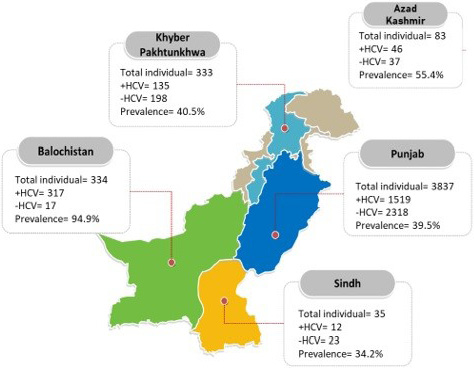
Area wise distribution of HCV positive and negative cases.
References
- Afridi, S., Naeem, M., Hussain, A., Kakar, N., Babar, M.E., and Ahmad, J., 2009. Prevalence of hepatitis C virus (HCV) genotypes in Balochistan. Mol. Biol. Rep., 36: 1511–1514. https://doi.org/10.1007/s11033-008-9342-0[CrossRef]
- Afzal, M.S., Ahmad, T., and Ahmed, H., 2015. Hepatitis C virus infection in Iran; viral spread routes in general population and safety measures. Hepatatis Monthly, 15: e17343. https://doi.org/10.5812/hepatmon.17343[CrossRef]
- Ahmad, W., Ijaz, B., Javed, F.T., Jahan, S., Shahid, I., Khan, F.M., and Hassan, S., 2010. HCV genotype distribution and possible transmission risks in Lahore, Pakistan. World J. Gastroenterol., 16: 4321–4328. https://doi.org/10.3748/wjg.v16.i34.4321[CrossRef]
- Ahsan, A., Khan, A.Z., Javed, H., Mirza, S., Chaudhary, S.U., and Shahzad-ul-Hussan, S., 2019. Estimation of hepatitis C prevalence in the Punjab province of Pakistan: A retrospective study on general population. PLoS One, 14: 1–12. https://doi.org/10.1371/journal.pone.0214435[CrossRef]
- Ali, S.A., Donahue, R.M.J., Qureshi, H., and Vermund, S.H., 2009. Hepatitis B and hepatitis C in Pakistan: prevalence and risk factors. Int. J. Infect. Dis., 13: 9–19. https://doi.org/10.1016/j.ijid.2008.06.019[CrossRef]
- Arshad, A., and Ashfaq, U.A., 2017. Epidemiology of hepatitis c infection in Pakistan: Current estimate and major risk factors. Crit. Rev. Eukary. Gene Expr., 27: 63–77. https://doi.org/10.1615/CritRevEukaryotGeneExpr.2017018953[CrossRef]
- Attaullah, S., Khan, S., and Ali, I., 2011. Hepatitis C virus genotypes in Pakistan: A systemic review. Virol. J., 8: 2–7. https://doi.org/10.1186/1743-422X-8-433[CrossRef]
- Aziz, H., Raza, A., Murtaza, S., Waheed, Y., Khalid, A., Irfan, J., Samra, Z., and Athar, M.A., 2013. Molecular epidemiology of hepatitis C virus genotypes in different geographical regions of Punjab Province in Pakistan and a phylogenetic analysis. Int. J. Infect. Dis., 17: e247–e253. https://doi.org/10.1016/j.ijid.2012.09.017[CrossRef]
- Barman, B., Bora, K., Lynrah, K., Lyngdoh, W., and Jamil, M., 2018. Hepatitis C virus and its genotypes in chronic liver disease patients from Meghalaya, Northeast India. Indian J. med. Microbiol., 36: 376–380. https://doi.org/10.4103/ijmm.IJMM_17_371[CrossRef]
- Brain, D., Mitchell, J., and O’Beirne, J., 2020. Cost-effectiveness analysis of an outreach model of Hepatitis C Virus (HCV) assessment to facilitate HCV treatment in primary care. PLoS One, 15: 1–13. https://doi.org/10.1371/journal.pone.0234577[CrossRef]
- Bostan, N., Naeem, M., Mustafa, I., Khan, A.A., Haider, W., Asif, S., Khan, M.R., Ahmad, S.S., Afzal, M.S., Ali, S., and Ahmed, H., 2016. Sero-prevalence of hepatitis B and C virus from rural areas of northern Punjab (Sargodha district), Pakistan. Trop. Biomed., 33: 1–9.
- Bulut, M.E., 2020. HCV genotype distribution of patients with chronic hepatitis C in Istanbul. Med. Bull. Sisli Hosp., 55: 86–92. https://doi.org/10.14744/SEMB.2020.66990[CrossRef]
- Chevaliez, S., 2019. Strategies for the improvement of HCV testing and diagnosis. Exp. Rev. Anti-Infect. Ther., 17: 341–347. https://doi.org/10.1080/14787210.2019.1604221[CrossRef]
- Duncan, J.D., Urbanowicz, R.A., Tarr, A.W., and Ball, J.K., 2020. Hepatitis C virus vaccine: Challenges and prospects. Vaccines, 8: 1–23. https://doi.org/10.3390/vaccines8010090[CrossRef]
- Gomaa, S.H., Abaza, M.M., Elattar, H.A., Amin, G.A., and Elshahawy, D.M., 2020. Soluble cluster of differentiation 26/soluble dipeptidyl peptidase-4 and glypican-3 are promising serum biomarkers for the early detection of Hepatitis C virus related hepatocellular carcinoma in Egyptians. Arab J. Gastroenterol., 21: 224–232. https://doi.org/10.1016/j.ajg.2020.04.016[CrossRef]
- Gul, A., Ahmed, J., Zahir, F., Khan, A.I., and Ali, I., 2016. New patterns of HCV subtypes distribution in the Khyber Pakhtunkhwa province of Pakistan. Braz. J. Infect. Dis., 20: 107–108. https://doi.org/10.1016/j.bjid.2015.09.007[CrossRef]
- Haqqi, A., Munir, R., Khalid, M., Khurram, M., Zaid, M., Ali, M., Shah, Z. H., Ahmed, H., and Afzal, M.S., 2019. Prevalence of hepatitis C virus genotypes in Pakistan: Current scenario and review of literature. Viral Immunol., 32: 402–413. https://doi.org/10.1089/vim.2019.0058[CrossRef]
- Hedskog, C., Parhy, B., Chang, S., Zeuzem, S., Moreno, C., Shafran, S.D., Borgia, S.M., Asselah, T., Alric, L., Abergel, A., Chen, J.J., Collier, J., Kapoor, D., Hyland, R.H., Simmonds, P., Mo, H., and Svarovskaia, E.S., 2019. Identification of 19 novel hepatitis C virus subtypes-further expanding HCV classification. Open Forum Infect. Dis., 6: 1–9. https://doi.org/10.1093/ofid/ofz076[CrossRef]
- Hussain, N., Bungau, S., Behl, T., Sehgal, A., Mahmood, M., Manzoor, S., Qayyum, M.A., Khan, M.I., Moleriu, L.C., and Bilal, M., 2021. Distribution of hepatitis C virus genotypes in Punjab region, Pakistan, based on a study of 4177 specimens. Infect. Genet. Evol., 91: 104811. https://doi.org/10.1016/j.meegid.2021.104811[CrossRef]
- Inamullah, Idrees, M., Ahmed, H., Sajid-Ul-Ghafoor, Ali, M., Ali, L., and Ahmed, A., 2011. Hepatitis C virus genotypes circulating in district Swat of Khyber Pakhtoonkhaw, Pakistan. Virol. J., 8: 20–22. https://doi.org/10.1186/1743-422X-8-16[CrossRef]
- Jamil, Z., Waheed, Y., Ahsan, O., Najmi, M. H., and Yousuf, H., 2020. Familial clustering of hepatitis C virus in a Pakistani population. J. med. Virol., 92: 3499–3506. https://doi.org/10.1002/jmv.25926[CrossRef]
- Kamani, L., Ahmad, B.S., and Kalwar, H.A., 2020. Hepatitis-c infection: Are we really committed to eliminate? Could it become the second polio for Pakistan? Pak. J. med. Sci., 36:1742–1744. https://doi.org/10.12669/pjms.36.7.2804[CrossRef]
- Kar, S.K., Sabat, J., Ho, L.M., Arora, R., and Dwibedi, B., 2019. High prevalence of hepatitis C virus infection in primitive tribes of eastern India and associated sociobehavioral risks for transmission: A retrospective analysis. Hlth. Equity, 3: 567–572. https://doi.org/10.1089/heq.2019.0005[CrossRef]
- Khan, S., Ali, I., Badshah, M., Khan, Q.M., Haider, Z.N., Ali, S., Khan, I.A., and Ullah, A., 2019. Molecular epidemiology of hepatitis c virus genotypes among chronically infected patients in Pakistan. Jundishapur J. Microbiol., 12: e86428. https://doi.org/10.5812/jjm.86428[CrossRef]
- Kichatova, V.S., Kyuregyan, K.K., Soboleva, N.V, Karlsen, A.A., Isaeva, O.V., Isaguliants, M.G., and Mikhailov, M.I., 2018. Frequency of interferon-resistance conferring substitutions in amino acid positions 70 and 91 of core protein of the Russian HCV 1b isolates analyzed in the T-cell epitopic context. 2018. https://doi.org/10.1155/2018/7685371[CrossRef]
- Kumar, T., Ahmad, N., Hayat, M.K., Gao, B.X., Faisal, S., Ilahi, N., Ali, B., Zada, S., and Sajjad, W., 2017. Prevalence and Genotypic Distribution of Hepatitis C Virus in Peshawar KPK, Pakistan. Hayati J. Biosci., 24: 22–25. https://doi.org/10.1016/j.hjb.2017.04.002[CrossRef]
- Kuna, L., Jakab, J., Smolic, R., Wu, G.Y., and Smolic, M., 2019. HCV extrahepatic manifestations. J. clin. Transl. Hepatol., 7: 172. https://doi.org/10.14218/JCTH.2018.00049[CrossRef]
- Khurram, M., Irshad, A., Alamgir, M., Awan, A.U., Syed, A. and Sadia, H., 2021. Epidemiological survey of the prevalence of HCV and HBV among the factory workers in the periphery of Lahore. BioSci Rev., 3: 25-33. https://doi.org/10.32350/BSR.0301.03[CrossRef]
- Lin, D., Reddy, V., Osman, H., Lopez, A., Koksal, A.R., Rhadhi, S.M., Dash, S., and Aydin, Y., 2021. Additional inhibition of Wnt/β-catenin signaling by metformin in DAA treatments as a novel therapeutic strategy for HCV-infected patients. Cells, 10: 270-276. https://doi.org/10.3390/cells10040790[CrossRef]
- Madewell, Z.J., Yang, Y.J.I.M.L., Halloran, M.E., and Dean, N.E., 2020. Note: This preprint reports new research that has not been certified by peer review and should not be used to guide clinical practice. 1. MedRxiv, 6: 1–13.
- Mahmud, S., Chemaitelly, H.S., Kouyoumjian, S.P., Al-Kanaani, Z., and Abu-Raddad, L.J., 2020. Key associations for hepatitis C virus genotypes in the Middle East and North Africa. J. med. Virol., 92: 386–393. https://doi.org/10.1002/jmv.25614[CrossRef]
- Mahmud, S., Kanaani, Z.A., and Abu-Raddad, L.J., 2019. Characterization of the hepatitis C virus epidemic in Pakistan. pp. 1–11. https://doi.org/10.1186/s12879-019-4403-7[CrossRef]
- Martínez, I., Ryan, P., Valencia, J., and Resino, S., 2021. The challenging road to hepatitis C virus eradication. J. clin. Med., 10: 611. https://doi.org/10.3390/jcm10040611[CrossRef]
- Mumtaz, S., Ahmed, J., Gul, A., Tariq, S.A., Siraj, S., and Sarwar, T., 2020. Genetic diversity of hepatitis c virus genotype 3A based on complete core protein in Peshawar, Pakistan. Jundishapur J. Microbiol., 13: e98942. https://doi.org/10.5812/jjm.98942[CrossRef]
- Niu, Z.L., Zhang, P.A., and Tong, Y.Q., 2016. Age and gender distribution of Hepatitis C virus prevalence and genotypes of individuals of physical examination in WuHan, Central China. Springer Plus, 5: 1557. https://doi.org/10.1186/s40064-016-3224-z[CrossRef]
- Petruzziello, A., Sabatino, R., Loquercio, G., Guzzo, A., Di Capua, L., Labonia, F., Cozzolino, A., Azzaro, R., and Botti, G., 2019. Correction: Nine-year distribution pattern of hepatitis C virus (HCV) genotypes in Southern Italy. PLoS One, 14: 1–16. https://doi.org/10.1371/journal.pone.0215559[CrossRef]
- Qamar, Z., Anwar, F., Ahmad, R., Haq, I., haq, M., Kashif Khan, A.M., Hussain, R., ullah, A., Shahzad, Z., Ahmad, I., Munir Malik, M.S., Kamran, K.M., and Khan, J., 2021. Prevalence of hepatitis C virus and determination of its genotypes in subjects of Tehsil Daggar District Buner, KP, Pakistan. Clin. Epidemiol. Glob. Hlth., 12: 100809. https://doi.org/10.1016/j.cegh.2021.100809[CrossRef]
- Qu, L.-X., Shi, Y., Chen, K.Y., Lu, Y.H., and Ren, H., 2021. The distribution of hepatitis C virus infection in Shanghai, China: A time-spatial study. BMC Infect. Dis., 21: 1–11. https://doi.org/10.1186/s12879-021-06577-8[CrossRef]
- Rana, N., Munir, B., Hussain, N., Imtiaz, N., Gondal, A., and Parvaiz, F., 2020. Seroprevalence, biochemical investigation and risk factor assessment for HBV and HCV infection in hospital based patients of Islamabad, Pakistan. J. Bioresour. Manage., 7: 10–18. https://doi.org/10.35691/JBM.0202.0127[CrossRef]
- Rao, J.R., Rafique, S., Ali, A., Rehman, G., Ilyas, M., and Idrees, M., 2021. Next-generation sequencing studies on the E1-HVR1 region of hepatitis C virus (HCV) from non-high-risk HCV patients living in Punjab and Khyber Pakhtunkhwa, Pakistan. Arch. Virol., pp. 0123456789. https://doi.org/10.1007/s00705-021-05203-x[CrossRef]
- Rauf, A., Nadeem, M.S., Arshad, M., Riaz, H., Latif, M.M. and Iqbal, M., 2013. Prevalence of hepatitis B and C virus in the general population of Hill Surang area, Azad Jammu and Kashmir, Pakistan.Pakistan J. Zool., 45: 543-548.
- Roman, F., Hawotte, K., Struck, D., Ternes, A.M., Servais, J.Y., Arendt, V., Hoffman, P., Hemmer, R., Staub, T., Seguin-Devaux, C., and Schmit, J.C., 2008. Hepatitis C virus genotypes distribution and transmission risk factors in Luxembourg from 1991 to 2006. World J. Gastroenterol., 14: 1237–1243. https://doi.org/10.3748/wjg.14.1237[CrossRef]
- Shah, R., Ahovegbe, L., Niebel, M., Shepherd, J., and Thomson, E.C., 2021. Non-epidemic HCV genotypes in low- and middle-income countries and the risk of resistance to current direct-acting antiviral regimens. J. Hepatol., 75: 462–473. https://doi.org/10.1016/j.jhep.2021.04.045[CrossRef]
- Shayan, S.J., Nazari, R., and Kiwanuka, F., 2021. Prevalence of HIV and HCV among injecting drug users in three selected WHO-EMRO countries: A meta-analysis. Harm Reduc. J., 18: 1–13. https://doi.org/10.1186/s12954-021-00505-4[CrossRef]
- Siddique, M., Shafique, M., Mateen, A., Shahzad, N., Aslam, B., Ahmad, N., and Qamar, M.U., 2020. Prevalence and genotypic analysis of hepatitis C virus isolated from liver center, Faisalabad, Pakistan. Pakistan J. Zool., 52: 313–319. https://doi.org/10.17582/journal.pjz/2020.52.1.313.319[Full text][CrossRef]
- Sood, A., Suryaprasad, A., Trickey, A., Kanchi, S., Midha, V., Foster, M.A., Bennett, E., Kamili, S., Alvarez-Bognar, F., Shadaker, S., Surlikar, V., Garg, R., Mittal, P., Sharma, S., May, M.T., Vickerman, P., and Averhoff, F., 2018. The burden of hepatitis C virus infection in Punjab, India: A population-based serosurvey. PLoS One, 13: 1–18. https://doi.org/10.1371/journal.pone.0200461[CrossRef]
- Tüzüner, U., Saran Gülcen, B., Özdemir, M., Feyzioğlu, B., And Baykan, M., 2018. Seven-year genotype distribution among hepatitis C patients in a city in the Central Anatolia Region of Turkey. Viral Hepatit. Dergisi, 24: 12–17. https://doi.org/10.4274/vhd.0013[CrossRef]
- Ullah, N., Kakakhel, M.A., Bai, Y., Xi, L., Khan, I., Kalra, B.S., Kumar, T., Ahmad, H., Shah, M., Guanlan, L., and Zhang, C., 2021. Prevalence of active HCV infection and genotypic distribution among the general population of district Mardan, Pakistan. Braz. J. Biol., 83: e244977. https://doi.org/10.1590/1519-6984.244977[CrossRef]
- Umer, M., and Iqbal, M., 2016. Hepatitis C virus prevalence and genotype distribution in Pakistan: Comprehensive review of recent data. World J. Gastroenterol., 22: 1684–1700. https://doi.org/10.3748/wjg.v22.i4.1684[CrossRef]
- Wu, G.H.M., Yang, W.W., Liu, C.L., Pwu, R.F., Chien, R.N., Lee, P.C., Chen, S.C., Chen, D.S., and Lu, S.N. 2021. The epidemiological profile of chronic hepatitis C with advanced hepatic fibrosis regarding virus genotype in Taiwan: A nationwide study. J. Formosan med. Assoc., 120: 1444–1451. https://doi.org/10.1016/j.jfma.2021.01.005[CrossRef]
- Yousaf, A., Ghafoor, A., Fatima, N., and Danish, M., 2021. Gender-specific frequency distribution of hepatitis C virus genotypes in Punjab province, Pakistan: A clinically significant descriptive cross-sectional study. Cureus, 13: 4–10. https://doi.org/10.7759/cureus.17480[CrossRef]
Services
Article usage statistics
Loading…