Research Article · Volume 37, Issue 1, 17 March 2022 · Open Access
An Overview of Sericulture and Enhanced Silk Production in Bombyx mori L. (Lepidoptera: Bombycidae) Through Artificial Diet Supplementation
· · · · · ·
Affiliations & Notes ⌄
- 1Department of Zoology, Government College University Lahore, Pakistan 2Sericulture Wing, Punjab Forest Department, Lahore, Pakistan 3Department of Zoology, University of Sargodha, Sargodha, Pakistan 4Abdul Khaliq, Cotton Research Institute Khanpur, Rahim Yar Khan, Pakistan Corresponding author: Hafiz Muhammad Tahir hafiztahirpk1@yahoo.com, dr.hafiztahir@gcu.edu.pk
Article Info ⌄
- Journal:
- Punjab University Journal of Zoology
- Published:
- 17 March 2022

Abstract
Introduction
The silkworm, Bombyx mori L. (Lepidoptera: Bombycidae) is a domesticated, monophagous and economically important insect. Its primary food source is fresh mulberry leaves ; enriched with carbohydrates, lipids, proteins, moisture and inorganic matter ; . Moreover, silkworm is well-known to humans for thousands of years due to fabrication of natural silk as well as for its significant role in rural agro-industry of subtropical and tropical regions of the world ; . Silk (a natural fiber) is produced by different arthropods including scorpions, silkworms, bees, spiders and mites with variations and similarities in properties and compositions ; . Silk mainly consists of two proteins (sericin and fibroin) which are synthesized by the silkworms in their foremost silk gland and ejected by spinnerets during final stage of the larval development (5th instar) ; . Enormously nutritious mulberry leaves make the silkworms more resistant to ailments as well as enabled them to elevate silk productivity . Optimum environmental conditions like moderate relative humidity (RH) (60-75%) and temperature (25-28°C) are necessary for the larval growth and development, adult emergence and mass production of silk. On the other hand, unfavorable conditions like high temperature and RH affect the mechanical (strength, rigidity) and morphological (coloration) properties of the cocoons which ultimately altered the spinning behavior and sericin curative properties ; . In addition, these two environmental factors also have a reflective impact on protein and carbohydrate profile of the insects, egg hatch ability, larval mortality, pupation and overall performance of the silkworm lines ; .
In the last few years, significant and novel innovations have been made in sericulture through enriching the mulberry leaves with exclusive food components such as horse gram flour, ascorbic acid, probiotics, bovine milk, white hen’s egg, honey and Amway protein ; ; ; ; ; for better silk quantity and quality along with enhanced silkworm’s growth. Keeping this information in view, we are urged to explore the excellent, easily available and cost less dietary supplements to enhance the silk production and quality by the silkworm.
Sericulture
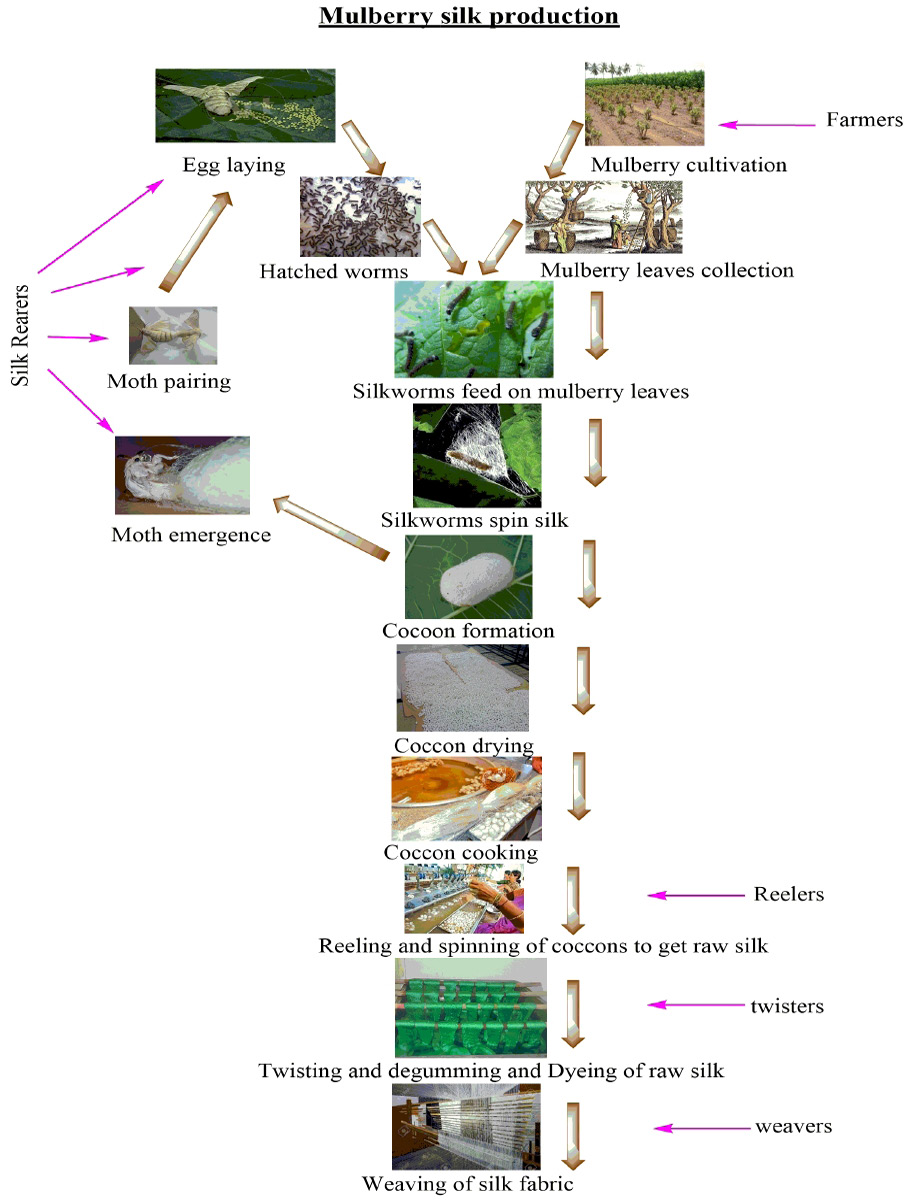
Sericulture is the great invention of the ancient Chinese ; which entails cultivation of mulberry plants, development of silkworm, collecting, reeling and weaving of silk ; as demonstrated in Figure 1. It is a short gestated (about 40 days), least resource intensive and commercially alluring financial activity (very low investment leads to high returns), additionally does not longer require high education and thought to be a promising strategy to alleviate the poverty in the rural areas ; ; . It is being practiced at monetary scale in more than 25 countries all over the world and provides employment for 30 million households of distinctive international locations like China, Korea, India, Thailand, Vietnam, Brazil and Bulgaria. In Pakistan, sericulture had been brought underneath the Forest Department since 1975 in specifically province Punjab . Several studies have indicated that sericulture industry in Pakistan was once a remunerative occupation but due to several reasons and with the passage of time, this industry is near to demise. The main reasons behind the deterioration of this industry include lack of interest and attention of state, less and old productive silk seeds, unavailability of standardized conditions and infrastructure, inappropriate rearing sheds and scarcity of advancement in research, policies and technology . Besides the fundamental products (silk cocoon and natural silk fiber which are the two most important assets for the income of serial culturists) of the sericulture, a number of secondary products have also exceptional commercial value . Accordingly, effective utilization of the bye merchandise of sericulture like moths, pupae, sericin, silk fiber waste, silkworm excreta, fruits, roots and mulberry leaves, for value addition is must for putting sericulture on sound footing . Furthermore, there are innovative commercial products that have been obtained from the sericulture waste with widespread fascinating destination for cosmetics (skin and hair products), pharmaceutical (antibacterial, anti-viral, anti-diabetic, hypotensive, antivirus and hypoglycemic products), foodstuffs (juice, vinegar, marmalade, wine, oil, fruit distillate, natural coloring and dried fruit powder), zootechnic (fodder for swine, goats, rabbits, poultry, fur animals and sheep) and ecological (landscape and phytoremediation) importance ; ; .
Silkworm (Bombyx mori) silk
Silk has long been known as ‘Queen of Textiles’ owing to its elegance, luxurious grandeur and comfort properties . B. mori silkworm belongs to the family Bombycidae, also known as mulberry silkworm, is well characterized, renowned and employed silk; Conversely, Saturniidae (Antheraea mylitta) fabricates the non-mulberry silk. Although spider silk is no longer usually employed on account of dearth of commercially established supply chains due to wilder nature and smaller yield in contrast to silk of B.mori . Chinese have been attributed for invention of the silk with a record which could be traced back to more than 380 million years . A well-known raw silk is being produced and exported by Brazil, Italy and China whilst imported by Italy, Japan and India. Bulgaria is the pinnacle producer of raw silk and fresh cocoons in Europe. Largest fresh cocoons producer around the world is China and engender about 84 % of the global raw silk. However, India is categorized 2nd, contributing about 15% to the world raw silk production .
Composition of silk
The silk cocoons of B. mori are comprised of two major proteins, namely fibroin and sericin, intimately linked but unique in terms of properties and structure ; ; ; ; . Generally, the proportion of silk sericin is about 15–35% while silk fibroin ranges from 65% to 85% ; ; . Moreover, a non-sericin like part made of mineral, salts, wax, sugars, other impurities and pigments is additionally present . The central structural protein of the silk fiber is silk fibroin and being biocompatible protein has appropriate characteristics for pharmaceuticals ceasing and remarkable drug release properties . Furthermore, silk fibroin has also been extensively used as a biomaterial for regeneration and tissue engineering purposes ; , 2017; . Exclusively, silk fibroin supported the adhesion, proliferation and differentiation of a number of cell types, including osteoblasts, endothelial cells, epithelial cells, glial cells, keratinocyte and fibroblast ; . Sericin is typically adhesive protein, wrapped around the fibroin to keeps the integrity of silk fibers and being separated by using thermo-chemical treatment (degumming) ; ; .
Silk sericin
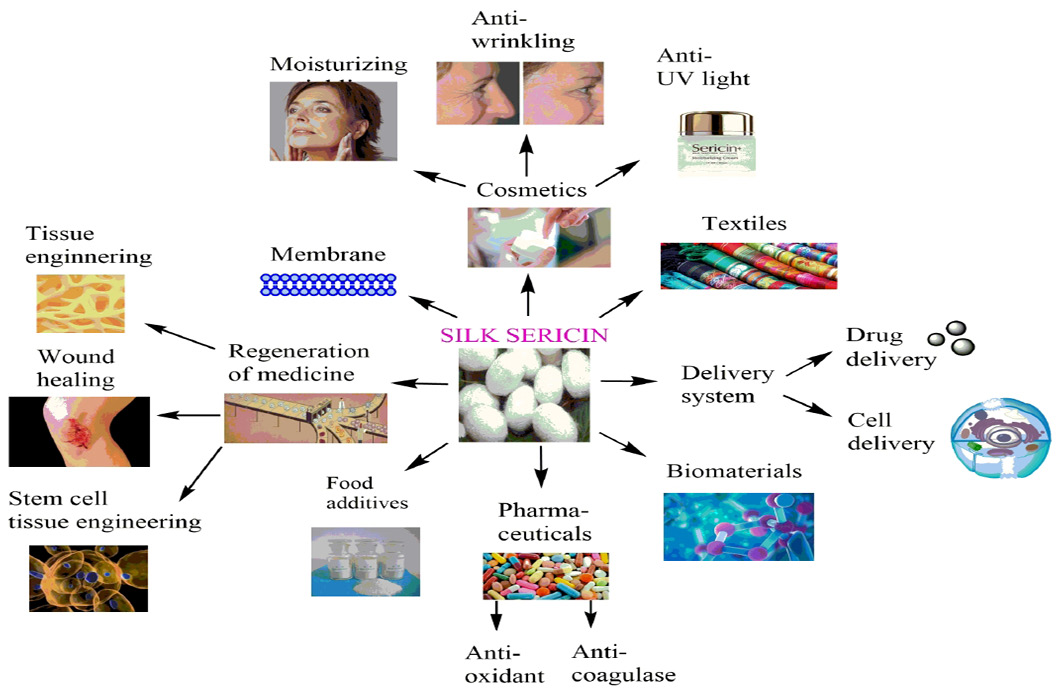
Noteworthy silk sericin protein is especially hydrophilic component of silk with molecular weight ranging from 20 to 400 kDa and incorporates 18 different amino acids with predominantly polar amino acid inclusive of threonine (6%), glutamic acid (5 %), serine (25 %) and aspartic acid (17 %) ; ; ; . Polar groups (amino, hydroxyl and carboxyl) of the side chains of amino acids, their structural organization, organic composition and solubility make viable co-polymerization, cross-linking and combinations of sericin with other polymers. All collectively express unique properties of the sericin as an antioxidant, moisturizing, healing, antibacterial and antitumor/anticancer as well as provides defense against ultraviolet radiation . Beside these, sericin solution (0.05 wt. %) absorbs UV radiations ranging from 223 to 300 nm, resist to free radicals, stimulate cell proliferation, inhibit tyrosinase activity and retain water capacity as well as being used as a vital ingredient for tissue engineering and skin repair . Sericin protein can be utilized in food industry because of its beneficial properties to the development of variety of new products owing to its metallic ion-chelating and antioxidant properties ; . It is predictable that 50,000 tons of unused sericin is thrown away each year in the degumming waste water worldwide. Lately, there has been an eminent attention for reuse and retrieval of sericin which in turns minimizes the environmental issues and has significant commercial and scientific value . Sericin has also been investigated for the biological effects and also has therapeutic consequences in diabetes . A number of researchers have found that because of anti-elastase and mitogenic properties, sericin has various potential applications in biomedical field (Figure 2).
Silk fibroin
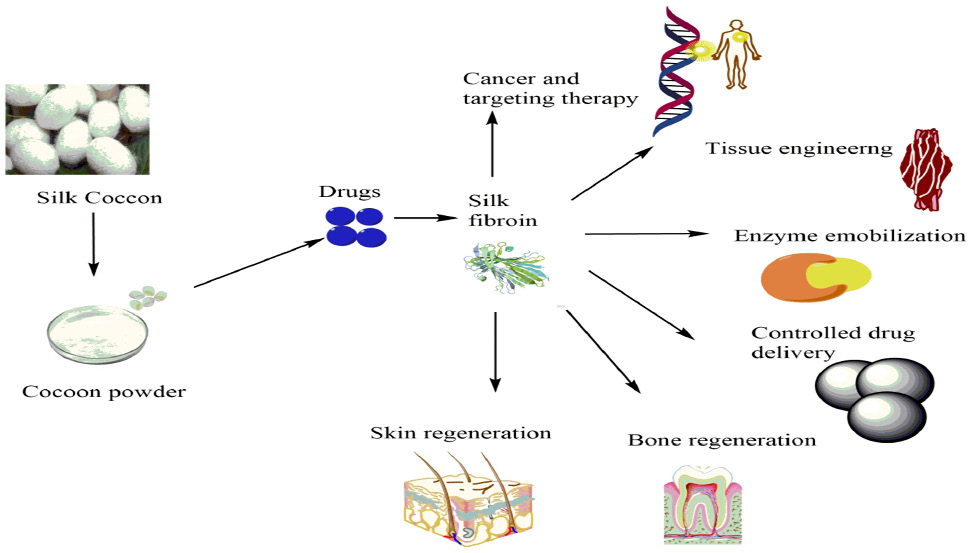
The fibroin fiber is enveloped by sericin with subsequent gummy layers which ensures the uniformity of cocoon via cementing the bunch of silk threads, all collectively for the aim of defending the developing silkworm . Among the most explored silk-based materials for the tissue engineering is silk fibroin. It has potential to release and transport the insulin in sustained manner, which is a powerful strategy for the cure of corneal injury . Consequently, the requirement for water vapor permeability, biodegradability, elevated mechanical resistance and biocompatible materials displays the rising interest of silk fibroin in biomedical field ; ; ; ; . Silk fibroin supports cell proliferation and cell attachment for different kinds of cell types . The biomaterials based totally on silk have determined to be appropriated for diverse applications, such as skin wound dressing, bone tissue scaffold, vascular tissue regeneration and drug delivery (Figure 3).
Fortification of the mulberry leaves with supplementing/exogenous nutrients
Earlier studies has confirmed that sustenance of silkworm is a merely factor which augments quantity and high-quality of silk . The consequences of distinctive dietary supplements on the silkworm have been extensively studied (Tantray, 2016). Better volume and high-quality of the cocoon and silk production can be executed through the fortification of mulberry leaves with additional nutrients . Secondary metabolites can be recommended as leaf nutrient for increasing the farmer’s earnings . A complete detail about the impact of different food additives/exogenous nutrients on silkworm’s growth and economic parameters of sericulture is described in Table 1.
Probiotics
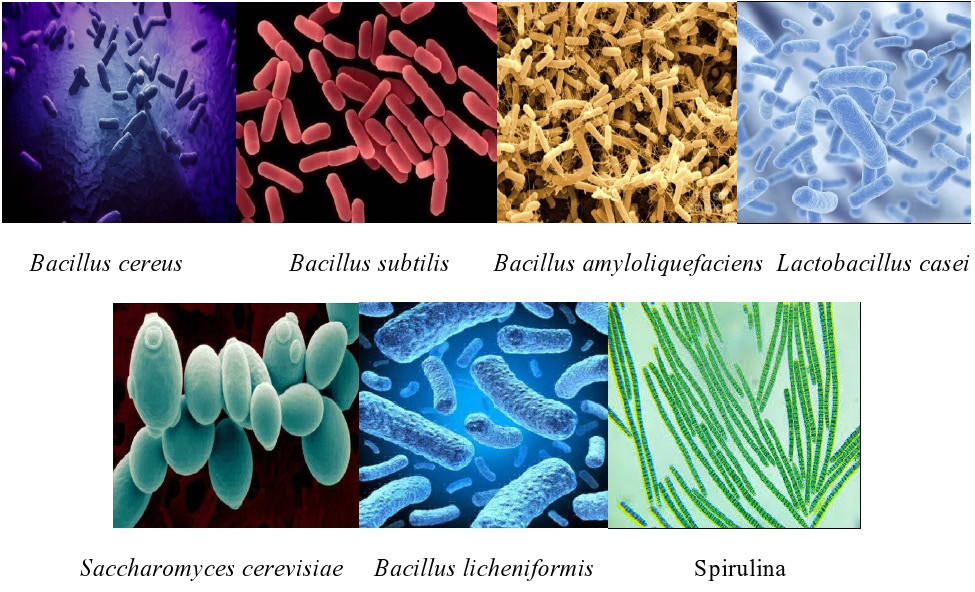
Gururaj et al. (1999) reported that microbial infections due to pathogens on silkworm prompt a shift in the metabolic profile and the activities of distinct enzymes including invertase, amylase, protease and trehalose. Enrichment of mulberry leaves with the probiotic microorganisms like Saccharomyces cerevisiae Meyen ex E.C. Hansen (Saccharomycetales: Saccharomycetaceae) has influenced the enzymatic profiles (elevation of amylase and invertase activity which are essential for better food utilization with increased larval growth) and prompt disease resistance with improved quantitative economic parameters of the silkworm . Subsequently, probiotics elevate the manufacturing of nutritional vitamins and improve the host resistance as well as enable the silkworms to compete with pathogens (bacteria) by synthesizing the organic and antibiotic substances . Another study has evaluated that the supplementation of Bacillus licheniformis (Weigmann) Chester (Bacillales: Bacillaceae) resulted in maximum larval weight, effective rearing rate, cocoon mass, weight of shell and pupae, shell ratio, silk productivity and filament length. It additionally reduces the larval mortality by disease prevalence and fiber denier as well as being used for the commercial rearing of the silkworms . It was also found that S. cerevisiae (Yeast) serves as an immune modulating agent. Consequently, energy budget, level of protein content and the commercial characteristics of silkworm were enhanced at a higher rate . Spirulina (blue-green micro algae) has attracted more attention recently due to its interesting composition including 18 amino acids and different vitamins including the tocopherol, vitamin B12, thiamine, biotin, folic acid riboflavin, beta-carotene, niacin, pyrodozoic acid, carbohydrates (mucopolysaccharides, glycogen and rhamnose etc.), 50 vital minerals, trace elements, chlorophyll and GLA omega-3 fatty acid . Mulberry leaves supplemented with Spirulina (blue green algae) as a feed to silkworm proved to be very effective in revamping the larval and cocoon characteristics ; . Previous studies confirmed that blue green algae (Spirulina) and S. cerevisiae (yeast) yielded better fibroin content indicating the good high-quality silk when compared to Lactobacillus acidophilus (Moro) Hansen and Mocquot and L. sporogenes Horowitz-Wlassowa and Nowotelnow (Lactobacillales: Lactobacillaceae) . In addition, a list of commonly used probiotics for improved silk production in silkworm is given in Figure 4.
Amway nutrilite
Amway nutrilite is a fat-free and protein rich commercial nutrient, widely used as a supplemental diet. The enhanced larval growth and silk production could be augmented with the supplementation of nutrilite . Notably, it becomes enriched in soya protein (80%) (Chief ingredient of nutrilite) and performs a crucial role in the growth and development of the silkworm as well as improves the economic traits of the sericulture. It also contains 9 crucial amino acids (lysine (544 mg), isoluecine (408 mg), leucine (696 mg), tryptophan (104mg), threonine (320mg), histidine (216 mg) and valine (432 mg), phenylalanine and tyrosine (722mg),
Table 1: Different Food supplements /Food additives and their economic and biological effects on silk and silkworm.
| Reference |
| . |
|
| Consequences | Elevate economic parameters and protein content of silk gland, fat body and muscle | Improve the economic traits and the nutrient efficacy in silkworm | Augment the larval, cocoon and pupal weights in silkworm |
| Duration | 4 times per day till the formation of cocoon | ||
| Dose | 1% and 2% | 300ppm AgNPs | 0.5gms-dried powder per 20ml-distilled water |
| Larval stages in Bombyx mori | 1st instar | 3rd instar | fourth instar till spinning |
| Food supplements | Ascorbic acid | AgNPs and spirulina | Royal jelly |
| Reference | . | ||
| Consequences | Responsible for higher shell ratio, cocoon and shell weight along with improved renditta and reelability. | Vitamin C yield better result in concentration of silk gland protein in comparison to vitamin E. Furthermore, vitamins C facilitate the metabolism in the silkworms and also influences on its larval growth and development throughout metamorphosis. | Ascorbic acid is responsible for better growth and economic parameters of silkworm. Lemon juice enhances the shell weight, shell protein and denier. |
| Duration | 4 times a day | 7th days till the formation of cocoon | Once in a day |
| Dose | 1% | 1% | |
| Larval stages in Bombyx mori | All larval instars | 5th instar | 4th and 5th instars |
| Food supplements | Secondary metabolites (phenols flavonoids, phenols total amino acids and proline) | Vitamin C and E | Ascorbic acid + Lemon juice |
| Reference | ; | ||
| Consequences | Spermidine raise better growth and silk production in silkworm | Enhance silk length, silk weight as well as improve the digestion of food and elevate the quantity of silk | |
| Duration | 3 times in a day | 5 times in a day | |
| Dose | 25µM-75µM | 7.5% | |
| Larval stages in Bombyx mori | 5th instar | 3rd to 5th instars | |
| Food supplements | Spermidine | Cowpea seeds powder | |
responsible to modulate the silk coding gene expression and silk protein synthesis in silkworm. Profitable gains in the different economic traits of sericulture, under the influence of Amway nutrilite (1% in distilled water to the fourth larval instar till it begin to spinning), are executed through its significant growth stimulating effects on silkworm, more predominantly with reference to the reinforcing silk protein synthesis in silk gland. Simultaneously, the nutrilite could possibly retard the synthesis of floss in sericulture . In addition, Amway nutrilite (10%), protein enrichment with the mulberry leaves had been traced and found significant enhancement on the energy budget (Relative Growth Rate (RGR), weight gain, Relative Consumption Rate (RCR), Efficiency of Conversion of Digested Food (ECD), Approximate Digestibility (AD), Efficiency of Conversion of Ingested Food (ECI) and economic characters (cocoon and shell mass, larval weight, shell ratio, filament length, filament width, denier, filament width sericin and fibroin content) of the silkworm . Even though, the cause for growth stimulating effect of Amway nutrilite has not been evaluated so far ; , 2015).
Honey
Honey being multifactorial nutrient comprises of metals (Co, Cr, Cu, Mn, Zn and Fe), enzymes (Diastase, invertase, catalase, glucose oxidase etc.), a variety of sugars carbohydrates (82%), proteins, minerals and vitamins (B and C). It is a natural sweetener, produced with the aid of honey bees from nectar of the flora along with fascinating characteristics and chemical composition which vary relying on its environmental, botanical and geographical origin ; ; Garcia et al., 2005). Moreover, honey has been exploited as an ingredient of veterinary and human medicines owing to its significant healing, prophylactic and nourishing properties ; ; . Honey is a profitable supplementary diet. An earlier study has reported that mulberry leaves treated with 2% aqueous honey were offered to fifth instar larvae, which in turn modulated larval growth and metabolism, reduced floss output (sericulture waste) and elevated silk production and quality ; . Accordingly, honey being cost effective and easily accessible food additive not solely stimulates the silk protein synthesis in silk gland but also mobilizes the protein reserves from body and improves the economic parameter of sericulture ; .
Milk
Milk is a multifaceted liquid that simultaneously offers bioactive compounds in the form of minerals, proteins, fatty acids, carbohydrates and other nutrients that facilitate crucial growth and development of silkworms. It additionally contains many polyamines, enzymes and peptides which plays a pivotal role to modulate the various regulatory processes . Likewise, transforming growth factor (TGFβ, a bioactive compound) has been identified in bovine milk and human, which assist differentiation, growth, and immune response and influenced tremendous impacts on body and cocoon weights of silkworm . Subsequently, few researchers has reported that mulberry leave enriched with bovine milk were consumed by the fifth larval instar up to the spinning of cocoon, prompted the highest lipid in the haemolymph of larvae which improved growth rate and silk production ; .
Egg white
Beside other food supplements, egg white is an excellent source of selenium and riboflavin as well as affluent in fundamental vitamins and amino acids which are requisite for optimal growth of an insect . Regarding the biochemical traits, white hen’s eggs provide the highest total protein content in the haemolymph of the 5th larval instar. Helaly (2018) studied that rearing of silkworm on the mulberry leaves enriched with the white hen’s eggs, given at odd days during fifth instar until the cocoon formation, induced noteworthy increase in the weight of silk gland, full-grown larva, female pupa, cocooning percentage, cocoon shell, weights of fresh cocoon, silk filament length, silk size and silk weight.
Conclusion and future perspective
We have outlined in this assessment compelling evidence regarding the impact of natural food supplements (bovine milk, Amway protein, honey, white hen’s egg, probiotics and sericin) on growth, survival, economical parameters (larval weight, cocoon weight, pupal weight, cocoon weight, filament length, shell weight, cocoon width, denier, fibroin and sericin content) and biological characters (fresh weights of each of larva, silk gland, pupa and moth) of silkworms. We are urged to explore the remarkable and economical food additives that will help us to improve the silk quality and quantity in silkworms which in turn improve the economy of our country. We strongly recommended the proper utilization of natural food supplements and maintenance of optimum conditions for the rearing of silkworms to boost up the silk industry.
Acknowledgements
We are really thankful to Punjab Higher Education Commission (PHEC) to provide funds for our project to perform experiments to enhance silkworm’s economic and biological traits through diet supplementation.
Conflict of interest
The authors have declared no conflict of interest.
Figures

Phases of mulberry silk production and processing.

Application of silk sericin.

Applications of silk fibroin.

Common probiotics used commonly as food additives for improved silk production in silkworm.
References
- Ageitos, J.M., Pulgar, A., Csaba, N. and Garcia-Fuentes, M., 2019. Study of nanostructured fibroin/dextran matrixes for controlled protein release. Eur. Polym. J., 114: 197-205. https://doi.org/10.1016/j.eurpolymj.2019.02.028[CrossRef]
- Altman, G.H., Diaz, F., Jakuba, C., Calabro, T., Horan, R.L., Chen, J., Lu, H., Richmond, J. and Kaplan, D.L., 2003. Silk-based biomaterials. Biomater., 24: 401-416. https://doi.org/10.1016/S0142-9612(02)00353-8[CrossRef]
- Amala, R.G. and Ranjith, S.A., 2011. Probiotic supplementations to improve commercial characteristics, disease resistance and protein in the silkworm. World J. Biol. Res., 4: 12-25.
- Aramwit, P., Kanokpanont, S., De-Eknamkul, W. and Srichana, T., 2009. Monitoring of inflammatory mediators induced by silk sericin. J. Biosci. Bioeng., 107: 556-561. https://doi.org/10.1016/j.jbiosc.2008.12.012[CrossRef]
- Ball, D.W., 2007. The chemical composition of honey. J. Chem. Educ., 84: 1643-1646. https://doi.org/10.1021/ed084p1643[CrossRef]
- Basu, A., 2015. Advances in silk science and technology. 1st Ed. Woodhead Publishing. pp. 298.
- Bhatti, M.F., Shahzadi, N., Tahir, H.M., Ali, S., Zahid, M.T. and Khurshid, R., 2019. Effect of honey (Apis dorsata [Hymenoptera: Apidae]) on larval growth and silk cocoon yield of Bombyx mori (Lepidoptera: Bombycidae). J. Insect Sci., 19: 11. https://doi.org/10.1093/jisesa/iez108[CrossRef]
- Brahma, U.R., Pattnaik, S. and Barik, B.P., 2018. Impact of vitamin C and E supplementations on 5th instar larvae of CSR2xCSR4 silkworm Bombyx mori L. Life. Sci. Inform. Publ., 4: 408-414.
- Buhroo, Z.I., Bhat, M.A., Kamili, A.S., Ganai, N.A., Bali, G.K., Khan, I.L. and Aziz, A., 2018. Trends in development and utilization of sericulture resources for diversification and value addition. J. Entomol. Zool. Stud., 6: 601-615. https://doi.org/10.33687/entomol.006.01.2069[CrossRef]
- Cao, T.T. and Zhang, Y.Q., 2016. Processing and characterization of silk sericin from Bombyx mori and its application in biomaterials and biomedicines. Mater. Sci. Eng. C, 61: 940–952. https://doi.org/10.1016/j.msec.2015.12.082[CrossRef]
- Cooper, R.A., Molan, P.C. and Harding, K.G., 2002. The sensitivity to honey of Gram-positive cocci of clinical significance isolated from wounds. J. Appl. Microbial., 93: 857-863. https://doi.org/10.1046/j.1365-2672.2002.01761.x[CrossRef]
- Council, E.U., 2002. Council directive 2001/110/EC of 20 December 2001 relating to honey. Off. J. Eur. Comm. L., 10: 47-52.
- Cubayachi, C., Lemos, C.N., Pereira, F., Dias, K., Herculano, R.D., de Freitas, O. and Lopez, R.F.V., 2019. Silk fibroin films stabilizes and releases bioactive insulin for the treatment of corneal wounds. Eur. Polym. J., 118: 502–513. https://doi.org/10.1016/j.eurpolymj.2019.06.022[CrossRef]
- Dong, H.L., Zhang, S.X., Tao, H., Chen, Z.H., Li, X., Qiu, J.F., Cui, W., Sima, Y.H., Cui, W.Z. and Xu, S.Q., 2017. Metabolomics differences between silkworms (Bombyx mori) reared on fresh mulberry (Morus) leaves or artificial diets. Sci. Rep., 7: 1-16. https://doi.org/10.1038/s41598-017-11592-4[CrossRef]
- Donnet-Hughes, A., Duc, N., Serrant, P., Vidal, K. and Schiffrin, E.J., 2000. Bioactive molecules in milk and their role in health and disease: The role of transforming growth factor β. Immunol. Cell. Biol., 78: 74-79. https://doi.org/10.1046/j.1440-1711.2000.00882.x[CrossRef]
- Esaivani, C., Vasanthi, K., Bharathi, R. and Chairman, K., 2014. Impact of probiotic Saccharomyces cerevisiae on the enzymatic profile and the economic parameters of Silkworm Bombyx mori L. Adv. Biol. BioMed., 1: 1-7.
- Falco, G., Gomez-Catalan, J., Llobet, J.M. and Domingo, J.L., 2003. Contribution of medicinal plants to the daily intake of various toxic elements in Catalonia, Spain. Trace. Elem. Electrol., 20: 120-124. https://doi.org/10.5414/TEP20120[CrossRef]
- Fuchs, S., Motta, A., Migliaresi, C. and Kirkpatrick, C.J., 2006. Outgrowth endothelial cells isolated and expanded from human peripheral blood progenitor cells as a potential source of autologous cells for endothelialization of silk fibroin biomaterials. Biomaterial, 27: 5399-5408. https://doi.org/10.1016/j.biomaterials.2006.06.015[CrossRef]
- Garcıa, J.R., Garcıa, J.B., Latorre, C.H., Martın, S.G. and Crecente, R.P., 2005. Comparison of palladium–magnesium nitrate and ammonium dihydrogenphosphate modifiers for lead determination in honey by electrothermal atomic absorption spectrometry. Food Chem., 91: 435-442. https://doi.org/10.1016/j.foodchem.2004.06.024[CrossRef]
- Gimenes, M.L., Silva, V.R., Vieira, M.G., Silva, M.G. and Scheer, A.P., 2014. High molecular sericin from Bombyx mori cocoons: extraction and recovering by ultrafiltration. Int. J. Chem. Eng. Appl., 5: 266-271. https://doi.org/10.7763/IJCEA.2014.V5.391[CrossRef]
- Goswami, C. and Bhattacharya, M., 2013. Contribution of sericulture to women’s income in assam-a case study in Goalpara District of Assam, India. Int. J. Sci. Res. Publ., 3: 1-6.
- Gupta, M.K., Khokhar, S.K., Phillips, D.M., Sowards, L.A., Drummy, L.F., Kadakia, M.P. and Naik, R.R., 2007. Patterned silk films cast from ionic liquid solubilized fibroin as scaffolds for cell growth. Langmuir, 23: 1315-1319. https://doi.org/10.1021/la062047p[CrossRef]
- Gururaj, C.S., Sekharappa, B.M. and Sarangi, S.K., 1999. Effect of BmNPV infection on the digestive enzyme activity in the silkworm, Bombyx mori L. Indian J. Ser., 38: 102-106.
- Hardy, J.G. and Scheibel, T.R., 2009. Silk-inspired polymers and proteins. Biochem. Soc. Trans., 37: 677-681. https://doi.org/10.1042/BST0370677[CrossRef]
- Haug, A., Høstmark, A.T. and Harstad, O.M., 2007. Bovine milk in human nutrition. A review. Lipids Hlth. Dis., 6: 25. https://doi.org/10.1186/1476-511X-6-25[CrossRef]
- Helaly, W.M.M.Y., 2018. Evaluation of two food additives on Bombyx mori L. characters. J. Entomol. Zool. Stud., 6: 3119-3123.
- Hossain, M.S., Uddin, M.A., Islam, M.S. and Alim, M.A., 2015. Effect of Cow Milk on the Growth and Economic Traits of Silkworm (Bombyx mori L.). Int. J. Sci. Eng. Res., 6: 517-520.
- Hussain, M., Naeem, M., Khan, S.A., Bhatti, M.F. and Munawar, M., 2011. Studies on the influence of temperature and humidity on biological traits of silkworm (Bombyx mori L.; Bombycidae). Afr. J. Biotechnol., 10: 12368-12375.
- Iglesias, M.T., de Lorenzo, C., Polo, M.D.C., Martín-Álvarez, P.J. and Pueyo, E., 2004. Usefulness of amino acid composition to discriminate between honeydew and floral honeys. Application to honeys from a small geographic area. J. Agric. Fd. Chem., 52: 84-89. https://doi.org/10.1021/jf030454q[CrossRef]
- Inoue, S., Tanaka, K., Arisaka, F., Kimura, S., Ohtomo, K. and Mizuno, S., 2000. Silk fibroin of Bombyx mori is secreted, assembling a high molecular mass elementary unit consisting of H-chain, L-chain, and P25, with a 6: 6: 1 molar ratio. J. Biol. Chem., 275: 40517-40528. https://doi.org/10.1074/jbc.M006897200[CrossRef]
- Jena, K., Pandey, J.P., Kumari, R., Sinha, A.K., Gupta, V.P. and Singh, G.P., 2018. Tasar silk fiber waste sericin: new source for anti-elastase, anti-tyrosinase and anti-oxidant compounds. Int. J. Biol. Macromol., 114: 1102-1108. https://doi.org/10.1016/j.ijbiomac.2018.03.058[CrossRef]
- Jiang, P., Liu, H., Wang, C., Wu, L., Huang, J. and Guo, C., 2006. Tensile behavior and morphology of differently degummed silkworm (Bombyx mori) cocoon silk fibres. Mater. Lett., 60: 919-925. https://doi.org/10.1016/j.matlet.2005.10.056[CrossRef]
- Jin, H.J., Chen, J., Karageorgiou, V., Altman, G.H. and Kaplan, D.L., 2004. Human bone marrow stromal cell responses on electrospun silk fibroin mats. Biomaterial, 25: 1039-1047. https://doi.org/10.1016/S0142-9612(03)00609-4[CrossRef]
- Ju, H.W., Lee, O.J., Lee, J.M., Moon, B.M., Park, H.J., Park, Y.R., Lee, M.C., Kim, S.H., Chao, J.R., Ki, C.S. and Park, C.H., 2016. Wound healing effect of electrospun silk fibroin nanomatrix in burn-model. Int. J. Boil. Macromol., 85: 29-39. https://doi.org/10.1016/j.ijbiomac.2015.12.055[CrossRef]
- Kaur, J., Rajkhowa, R., Tsuzuki, T., Millington, K., Zhang, J. and Wang, X., 2013. Photoprotection by silk cocoons. Biomacromolecules, 14: 3660-3667. https://doi.org/10.1021/bm401023h[CrossRef]
- Kawade, R., Sadalage, J., Shastri, R. and Deosarkar, S.B., 2014. Automatic silkworm egg counting mechanism for sericulture. Proceedings of International Conference on Internet Computing and Information Communications, Springer, New Delhi. pp. 121-128. https://doi.org/10.1007/978-81-322-1299-7_12[CrossRef]
- Khyade, V.B. and Gosavi, A.A., 2016. Utilization of mulberry leaves treated with seed powder cowpea, Vigna unguiculata (L) for feeding the fifth instar larvae of silkworm, Bombyx mori (L) (Race: PM x CSR2). World Sci. News, 40: 147-162.
- Khyade, V.B. and Yamanaka, S., 2018. Sericin from the cocoons of Silkworm, Antheraea mylitta (L) and Bombyx mori (L) for the reduction in hydrogen peroxide induced oxidative stress in feline fibroblasts. Int. J. Sci. Res. Chem., 3: 1-16.
- Kim, C.E., Lee, J.H., Yeon, Y.K., Park, C.H. and Yang, J., 2017. Effects of silk fibroin in murine dry eye. Sci. Rep., 7: 1-9. https://doi.org/10.1038/srep44364[CrossRef]
- Kim, J.H., Kim, D.K., Lee, O.J., Ju, H.W., Lee, J.M., Moon, B.M., Park, H.J., Kim, D.W., Lee, J.H. and Park, C.H., 2016. Osteoinductive silk fibroin/titanium dioxide/hydroxyapatite hybrid scaffold for bone tissue engineering. Int. J. Boil. Macromol., 82: 160-167. https://doi.org/10.1016/j.ijbiomac.2015.08.001[CrossRef]
- Kim, K.Y., Kang, P.D., Lee, K.G., Oh, H.K., Kim, M.J., Kim, K.H., Park, S.W., Lee, S.J., Jin, B.R. and Kim, I., 2010. Microsatellite analysis of the silkworm strains (Bombyx mori): High variability and potential markers for strain identification. Genes Genom., 32: 532-543. https://doi.org/10.1007/s13258-010-0066-x[CrossRef]
- Koh, L.D., Cheng, Y., Teng, C.P., Khin, Y.W., Loh, X.J., Tee, S.Y., Low, M., Ye, E., Yu, H.D., Zhang, Y.W. and Han, M.Y., 2015. Structures, mechanical properties and applications of silk fibroin materials. Prog. Polym. Sci., 46: 86-110. https://doi.org/10.1016/j.progpolymsci.2015.02.001[CrossRef]
- Konala, N., Abburi, P., Bovilla, V.R., and Mamillapalli, A., 2013. The effect of bovine milk on the growth of Bombyx mori. J. Insect Sci., 13: 1-7. https://doi.org/10.1673/031.013.9801[CrossRef]
- Kumar, D., Pandey, J.P., Sinha, A.K. and Prasad, B.C., 2012. Temperature discerns fate of Antheraea mylitta Drury eggs during embryonic development. J. Entomol., 9: 220-230. https://doi.org/10.3923/je.2012.220.230[CrossRef]
- Lamboni, L., Gauthier, M., Yang, G. and Wang, Q., 2015. Silk sericin: A versatile material for tissue engineering and drug delivery. Biotechnol. Adv., 33: 1855-1867. https://doi.org/10.1016/j.biotechadv.2015.10.014[CrossRef]
- Lattala, G.M., Kandukuru, K., Gangupantula, S. and Mamillapalli, A., 2014. Spermidine enhances the silk production by mulberry silkworm. J. Insect Sci., 14: 1-4. https://doi.org/10.1093/jisesa/ieu069[CrossRef]
- Liu, Y., Li, Y., Li, X. and Qin, L., 2010. The origin and dispersal of the domesticated Chinese oak silkworm, Antheraea pernyi, in China: A reconstruction based on ancient texts. J. Insect Sci., 10: 1-10. https://doi.org/10.1673/031.010.14140[CrossRef]
- Manjula, S., Sabhanayakam, S., Mathivanan, V. and Saravanan, N., 2011. Studies on the nutritional supplement of mulberry leaves with Cowpeas (Vigna unguiculata) to the silk worm Bombyx mori (L) (Lepidoptera: Bombycidae) upon the activities of midgut digestive enzymes. Int. J. Nutr. Pharmacol. Neurol. Dis., 1: 157-162. https://doi.org/10.4103/2231-0738.84207[CrossRef]
- Martínez-Mora, C., Mrowiec, A., García-Vizcaíno, E.M., Alcaraz, A., Cenis, J.L. and Nicolás, F.J., 2012. Fibroin and sericin from Bombyx mori silk stimulate cell migration through upregulation and phosphorylation of c-Jun. PLoS One, 7: 1-13. https://doi.org/10.1371/journal.pone.0042271[CrossRef]
- Masthan, K., Kumar, T.R. and Murthy, C.V., 2017. Effect of different probiotics on the efficiency of food conversion in silkworms. Indian J. Sci. Res., 8: 7-10.
- Mubin, S., Ahmed, M., Mubin, G. and Majeed, M.A., 2013. Impact evaluation of development projects-a case study of project development of sericulture activities in Punjab. Pak. J. Sci., 65: 263-268.
- Nguku, E.K., Mulie, M. and Raina, S.K., 2007. Larvae, cocoon and post-cocoon characteristics of Bombyx mori L. (Lepidoptera: Bombycidae) fed on mulberry leaves fortified with Kenyan royal elly. J. Appl. Sci. Environ. Manage., 11: 85-89.
- Offord, C., Vollrath, F. and Holland, C., 2016. Environmental effects on the construction and physical properties of Bombyx mori cocoons. J. Mater. Sci., 51: 10863-10872. https://doi.org/10.1007/s10853-016-0298-5[CrossRef]
- Padamwar, M.N. and Pawar, A.P., 2004. Silk sericin and its applications: A review. J. Sci. Ind. Res., 63: 323-329.
- Popescu, A.A., 2013. Trends in world silk cocoons and silk production and trade, 2007-2010. Sci. Pap. Anim. Sci. Biotechnol., 46: 418-423.
- Porter, D. and Vollrath, F., 2009. Silk as a biomimetic ideal for structural polymers. Adv. Mater., 21: 487-492. https://doi.org/10.1002/adma.200801332[CrossRef]
- Prasad, N.R., 1999. Silkworm disease management and its limitations. Indian Silk, 39: 7-9.
- Qi, Y., Wang, H., Wei, K., Yang, Y., Zheng, R.Y., Kim, I.S. and Zhang, K.Q., 2017. A review of structure construction of silk fibroin biomaterials from single structures to multi-level structures. Int. J. Mol. Sci., 18: 1-21. https://doi.org/10.3390/ijms18030237[CrossRef]
- Quraiza, M.T.F., Rathi, C.R., Muthu, P.T., Das, S.M. and Bai, M.R., 2008. A study on the effect of ascorbic acid in modifying Tissue protein content and economic traits of Bombyx mori L. J. Basic Appl. Biol., 2: 32-35.
- Rahim, M.F., and Hyder, M.F., 2017. Analysis of Pakistan’s sericulture industry in historical prospective. Sci. Pap. Ser. Manage. Econ. Eng. Agric. Rural Dev., 17: 347-356.
- Rahmathulla, V.K., 2012. Management of climatic factors for successful silkworm (Bombyx mori L.) crop and higher silk production: A review. Psyche. J. Entomol., 2012: 1-12. https://doi.org/10.1155/2012/121234[CrossRef]
- Ramachandra, Y., Bali, G. and Rai, S.P., 2001. Effect of temperature and relative humidity on spinning behaviour of silkworm (Bombyx mori L). Indian J. Exp. Biol., 39: 87-89.
- Raman, C., Manohar, S.L., Xavier, N., and Krishnan, M., 2007. Expression of silk gene in response to P-soyatose (hydrolyzed soy bean protein) supplementation in the fifth instar male larvae of Bombyx mori. J. Mol. Cell. Biol., 6: 163-174.
- Rani, G.A., Padmalatha, C., Raj, R.S. and Singh, A.J.A.R., 2011. Impact of supplementation of amway protein on the economic characters and energy budget of silkworm Bombyx mori L. Asian J. Anim. Sci., 5: 190-195. https://doi.org/10.3923/ajas.2011.190.195[CrossRef]
- Ruiz, X. and Almanza, M., 2018. Implications of genetic diversity in the improvement of silkworm Bombyx mori L. Chil. J. Agric. Res., 78: 569-579. https://doi.org/10.4067/S0718-58392018000400569[CrossRef]
- Sasaki, M., Yamada, H. and Kato, N., 2000. Consumption of silk protein, sericin elevates intestinal absorption of zinc, iron, magnesium and calcium in rats. Nutr. Res., 20: 1505-1511. https://doi.org/10.1016/S0271-5317(00)80031-7[CrossRef]
- Sekar, P., Kalpana, S., Ganga, S., George, J., and Kannadasan, N., 2016. Effect on the probionts to the enhancement of silk proteins (Sericin and Fibroin) in the Silk Gland and Cocoons of Silkworm (L× CSR2) Bombyx mori (L.). Int. J. Pharm. Biol. Sci., 11: 19-25.
- Servoli, E., Maniglio, D., Motta, A., Predazzer, R. and Migliaresi, C., 2005. Surface properties of silk fibroin films and their interaction with fibroblasts. Macromol. Biosci., 5: 1175-1183. https://doi.org/10.1002/mabi.200500137[CrossRef]
- Shera, S.S., Kulhar, N. and Banik, R.M., 2019. Silk and silk fibroin-based biopolymeric composites and their biomedical applications. Mater. Biomed. Eng., pp. 339–374. https://doi.org/10.1016/B978-0-12-816872-1.00012-1[CrossRef]
- Singh, K.K., Chauhan, R.M., Pande, A.B., Gokhale, S.B. and Hegde, N.G., 2005. Effect of use of Lactobacillus plantarum as a probiotics to improve cocoon production of mulberry silkworm, Bombyx mori (L.). J. Basic Appl. Sci., 1: 1-8.
- Sivakumari, P., Obulapathi, M. and Thimmanaik, S., 2019. Enhancement of Economic Cocoon Characters with Secondary Metabolites of Mulberry Leaves. Life Sci. Res., pp. 1-4.
- Sivaprasad, S. and Thulasi, N., 2014. Determination of minimum effective concentration of honey for optimal growth, metabolism and silk production in the silkworm, Bombyx mori. Ind. J. Appl. Res., 4: 542-545.
- Soumya, M., Reddy, H., Nageswari, G. and Venkatappa, B., 2017. Silkworm (Bombyx mori) and its constituents: A fascinating insect in science and research. J. Entomol. Zool. Stud., 5: 1701-1705.
- Su, D., Ding, S., Shi, W., Huang, X. and Jiang, L., 2019. Bombyx mori silk-based materials with implication in skin repair: Sericin versus regenerated silk fibroin. J. Biomater. Appl., 34: 1-11. https://doi.org/10.1177/0885328219844978[CrossRef]
- Szalay, J., 2015. Egg whites. Health benefits and nutrition facts. Ed. 4. Live Science Contributor, USA, 2: 223-255.
- Takechi, T., Wada, R., Fukuda, T., Harada, K. and Takamura, H., 2014. Antioxidant activities of two sericin proteins extracted from cocoon of silkworm (Bombyx mori) measured by DPPH, chemiluminescence, ORAC and ESR methods. Biomed. Rep., 2: 364-369. https://doi.org/10.3892/br.2014.244[CrossRef]
- Tantray, A.K., 2016. A review on attributes of vitamin C with particular reference to the silkworm, Bombyx Mori Linn. Int. J. Zool. Stud., 1: 45-49.
- Taormina, P.J., Niemira, B.A. and Beuchat, L.R., 2001. Inhibitory activity of honey against foodborne pathogens as influenced by the presence of hydrogen peroxide and level of antioxidant power. Int. J. Food Microbiol., 69: 217-225. https://doi.org/10.1016/S0168-1605(01)00505-0[CrossRef]
- Thangapandiyan, S., and Dharanipriya, R., 2019. Comparative study of nutritional and economical parameters of silkworm (Bombyx mori) treated with silver nanoparticles and Spirulina. J. Basic Appl. Zool., 80: 1-12. https://doi.org/10.1186/s41936-019-0096-0[CrossRef]
- Thulasi, N. and Sivaprasad, S., 2013. Synergetic effect of ascorbic acid and lemon juice on the growth and protein synthesis in the silkworm, Bombyx mori and its influence on economic traits of sericulture. J. Biol. Innov., 2: 168-183.
- Thulasi, N., and Sivaprasad, S., 2015. Larval growth, silk production and economic traits of Bombyx mori under the influence of honey-enriched mulberry diet. J. Appl. Nat. Sci., 7: 286–292. https://doi.org/10.31018/jans.v7i1.603[CrossRef]
- Thulasi, N., Madhavi, E.B. and Sivaprasad, S., 2015. Larval growth, silk production and economic traits of Bombyx mori under the influence of Nutrilite enriched mulberry diet. Int. J. Adv. Pharm. Biol. Chem., 4: 536-543.
- Venkataramana, P., Rao, T.V.S.S., Reddy, P.S. and Suryanarayana, N., 2003. Effect of spirulina on the larval and cocoon characters of the silkworm, Bombyx mori L. Proc. Natl. Acad. Sci. India Sect. B., 73: 89-94.
- Venkatesh, K.R., Kumar, D., Kumar, A. and Dhami, S.S., 2009. Effect of blue green micro algae (Spirulina) on cocoon quantitative parameters of silkworm (Bombyx mori L.). ARPN J. Agric. Biol. Sci., 4: 50-53.
- Vijila, N.M.K., 2018. Beneficial effects of Bacillus licheniformis and Bacillus niabensis on growth and economic characteristics of silkworm, Bombyx mori L. Int. J. Chem. Stud., 6: 750-1754.
- Wang, Y., Kim, H.J., Vunjak-Novakovic, G. and Kaplan, D.L., 2006. Stem cell-based tissue engineering with silk biomaterials. Biomater., 27: 6064-6082. https://doi.org/10.1016/j.biomaterials.2006.07.008[CrossRef]
- Wenk, E., Merkle, H.P. and Meinel, L., 2011. Silk fibroin as a vehicle for drug delivery applications. J. Contr. Release, 150: 128-141. https://doi.org/10.1016/j.jconrel.2010.11.007[CrossRef]
- Wu, J.H., Wang, Z. and Xu, S.Y., 2007. Preparation and characterization of sericin powder extracted from silk industry wastewater. Food Chem., 103: 1255-1262. https://doi.org/10.1016/j.foodchem.2006.10.042[CrossRef]
- Wu, J.H., Wang, Z. and Xu, S.Y., 2008. Enzymatic production of bioactive peptides from sericin recovered from silk industry wastewater. Process. Biochem., 43: 480-487. https://doi.org/10.1016/j.procbio.2007.11.018[CrossRef]
- Xu, J., Dong, Q., Yu, Y., Niu, B., Ji, D., Li, M., Huang, Y., Chen, X. and Tan, A., 2018. Mass spider silk production through targeted gene replacement in Bombyx mori. Proc. Natl. Acad. Sci., 115: 8757-8762. https://doi.org/10.1073/pnas.1806805115[CrossRef]
- Yamada, H., Igarashi, Y., Takasu, Y., Saito, H. and Tsubouchi, K., 2004. Identification of fibroin-derived peptides enhancing the proliferation of cultured human skin fibroblasts. Biomater., 25: 467-472. https://doi.org/10.1016/S0142-9612(03)00540-4[CrossRef]
- Yang, H.X., Zhu, X.R. and Fang, Z.M., 2002. Research progress of the exploitation and utilization of the silkworm’s excreation. Bull. Seric., 3: 9-13.
- Yilmaz, O., Erturk, Y.E., Coskun, F., Wilson, R.T. and Ertugrul, M., 2015. History of sericulture in Turkey. Asian J. Sci. Food Agric., 3: 2321–1571.
- Yusoff, N.I.S.M., Wahit, M.U., Jaafar, J. and Wong, T.W., 2019. Structural and characterization studies of insoluble thai Bombyx mori silk fibroin films. Mal. J. Fund. Appl. Sci., 15: 18-22. https://doi.org/10.11113/mjfas.v15n2019.1223[CrossRef]
- Zhang, Z.J., Zhang, S.S., Niu, B.L., Ji, D.F., Liu, X.J., Li, M.W., Bai, H., Palli, S.R., Wang, C.Z. and Tan, A.J., 2019. A determining factor for insect feeding preference in the silkworm, Bombyx mori. PLoS Boil., 17: 1-17. https://doi.org/10.1371/journal.pbio.3000162[CrossRef]
- Zhao, Z., Li, Y. and Xie, M.B., 2015. Silk fibroin-based nanoparticles for drug delivery. Int. J. Mol. Sci., 16: 4880-4903. https://doi.org/10.3390/ijms16034880[CrossRef]
- Zhou, L., Li, H., Hao, F., Li, N., Liu, X., Wang, G., Wang, Y. and Tang, H., 2015. Developmental changes for the hemolymph metabolome of silkworm (Bombyx mori L.). J. Proteome Res., 14: 2331-2347. https://doi.org/10.1021/acs.jproteome.5b00159[CrossRef]
Services
Article usage statistics
Loading…