Research Article · Volume 37, Issue 1, 14 January 2022 · Open Access
Prevalence of Hepatitis B and C Infections in District Swabi, Khyber Pakhtunkhwa, Pakistan
· · ·
Affiliations & Notes ⌄
1Department of Microbiology, University of Swabi, Khyber Pakhtunkhwa, Pakistan 2Center of Biotechnology and Microbiology, University of Peshawar, Khyber Pakhtunkhwa , Pakistan 3Department of Zoology, Hazara University Sub-Campus Battagram Khyber Pakhtunkhwa Pakistan Corresponding author email: Atif Muhammad atifmuhammad344@gmail.com
The current study revealed that Hepatitis B was found in more patients than Hepatitis C. In addition, Hepatitis was found mostly in females than the male with a slight difference.
Different factors affect the frequency and occurrence of hepatitis B and C with different degrees of effectiveness.
It is suggested to implement high care on the occasion of surgery, injection, and blood transfusion.
Furthermore, many awareness campaigns are needed to aware the population of the risk and transmission of Hepatitis B and C infections.
Selected from the article's own text.
Abstract
Abstract | The liver diseases like cirrhosis and hepatocellular carcinoma are mainly caused by the Hepatitis B and hepatitis C viruses. The present study is designed to assess the frequency and transmission of (HBV) and (HCV) among the local population of district Swabi. A preliminary study was conducted from 1st January to 31st May 2016. The study revealed that the ratio of Hepatitis B and C in the local population was found 103 (34 %) and 199 (66 %) respectively. Out of 143 males, 37 (26 %) were infected by HBV while the remaining 106 (74%) were infected by HCV. 66 (42%), out of 159 infected females were infected by HBV while the remaining 93 (58%) were infected by HCV. In the local population, the transfusion of blood from an infected person and unhygienic practices during surgery and medical treatment are the main causes of hepatitis. It is suggested to implement high care on the occasion of surgery, injection, and blood transfusion. Furthermore, awareness campaigns regarding blood transmission and health hazards of Hepatitis should be launched for the population.
Novelty Statement | The study indicates first observations of Hepatitis B and C infections from District Swabi. It represented that the rate of disease is quite high in the district and proper control is required for the prevention.
Introduction
Hepatitis C virus (HCV) and Hepatitis B virus (HBV) are the main causative agents of liver diseases including cirrhosis and hepatocellular carcinoma . Hepatitis B virus (HBV) is a species that belongs to the genus Orthohepadna virus and family Hepadnaviridae. It causes the disease hepatitis B. HBV can cause acute liver disease that may lead to hepatocellular carcinoma or liver failure. The vaccine has been predominantly significant for countries where the frequency of HBV-related hepatocellular carcinoma is high. In the case of long-term infection, the impact of HCV infection is extremely inconsistent, i.e. from negligible changes to chronic hepatitis, extensive fibrosis, cirrhosis with or without hepatocellular carcinoma (HCC). The number of chronically infected persons may exceed 200 million Worldwide, but the majority is unaware of their illness or of ensuring hepatic situation. For HCV-related liver disease patients, clinical care has developed significantly during the last twenty years, due to the rising knowledge about the mechanisms of disease, an extraordinary development in diagnostic procedures, and development in curative and defensive approaches. So far diverse aspects are not completely resolved .
Hepatitis C virus (HCV) is an enveloped virus containing a 9.6 kb single-stranded RNA genome and a diameter of 40-50 nm a member of the Flaviviridae family and genus hepacivirus . HCV core protein produces the capsid, surrounded by a lipid bilayer containing the envelope glycoproteins, E1 and E2 on the exterior face In developing countries the major mode of transmission of HCV and B is injections in the health care centers The accumulated epidemiological confirmation state that HCV can be transmitted by sex from an infected partner, most probably by mucosal exposure to infectious blood or fluid derived from serum. However, the transmission of HCV through sexual activity is much lesser than other blood-borne sexually transmitted viruses, e.g. HIV and HBV .
Earlier than 1991 before the viral inactivation of blood or blood products and selection of blood for anti-HCV, blood transfusion, and organ transplant was the main cause of HCV ; In about 30–40% of cases the way of transmission of HCV is mysterious . About 20% of the HCV cases are due to traditional risk issues, e.g. injection drug use (IDU) or other parenteral exposure . In hospitalized positions, the HCV is transferred from patient to patient through disturbing procedures, e.g. colonoscopy, surgical depiction, the inclusion of an intravascular catheter, partaking of multi-dose ampoules, and partaking of dialysis contrivance . Due to accidental single needle stick transmission of HCV in the medical personnel range from 4% to 10% . According to the report published by World Health Organization (WHO) worldwide about 170 million people are with chronic HCV while 350 million people are with prolonged HBV infection ; WHO, 2008).
In Pakistan, few of the seroepidemiological surveys accompanied in various locations reported that the frequency of HCV is around 8–10% ; . A study reported that the prevalence of hepatitis C in Punjab is 6.7%, in Sindh 5%, Khyber Pakhtunkhwa 1.1%, and Baluchistan 1.5%, while the prevalence of hepatitis B in Punjab is 2.4%, Sindh 2.55%, Khyber Pakhtunkhwa 1.31 % and Baluchistan is 4.3% .
So for interferon alfa was the only available therapy for hepatitis C patients. It was found in a research that after 48 weeks only 15 to 20 percent of the patient’s serum HCV RNA levels were undetectable . The relapsed patients of hepatitis C suggest that combining treatment of interferon with ribavirin is more effective than using it alone ; . For preventing the infection of hepatitis B the vaccine is an effective means by producing enough quantity of antibodies in about 95% of recipients. HBV envelope gene synthesizes three proteins of different lengths; the two larger proteins are pre S1 and pre S2 while the smaller is S protein. The hepatitis B vaccine available on a commercial level is recombinant surface antigen derived from the yeast of the small S protein alone. The hepatitis B vaccine produces antibodies that target the “a” determinant of surface antigen .
Materials and Methods
The present study is a descriptive-analytical survey about the prevalence of Hepatitis in selected areas. The current prevalence study was conducted at various locations of District Swabi (e.g. Anbar, Zaida, Khunda, Swabi city, Mal Lara, Tandkoi, and ChotaLahoor). The study was conducted during January-May 2016. A descriptive analysis of the study was done. The different parameters of research were analyzed based on statistical results.
Results and Discussion
This was the first study conducted in district Swabi regarding the prevalence of hepatitis B and C. Most peoples of this area are farmers and the main crops of the said area are tobacco, maize, wheat, sugarcane, vegetables (tomatoes, spinach, potatoes, and cabbage), and fruits (plums, citrus, and apricots).
Demographical distribution of hepatitis B and C
Gender wise distribution
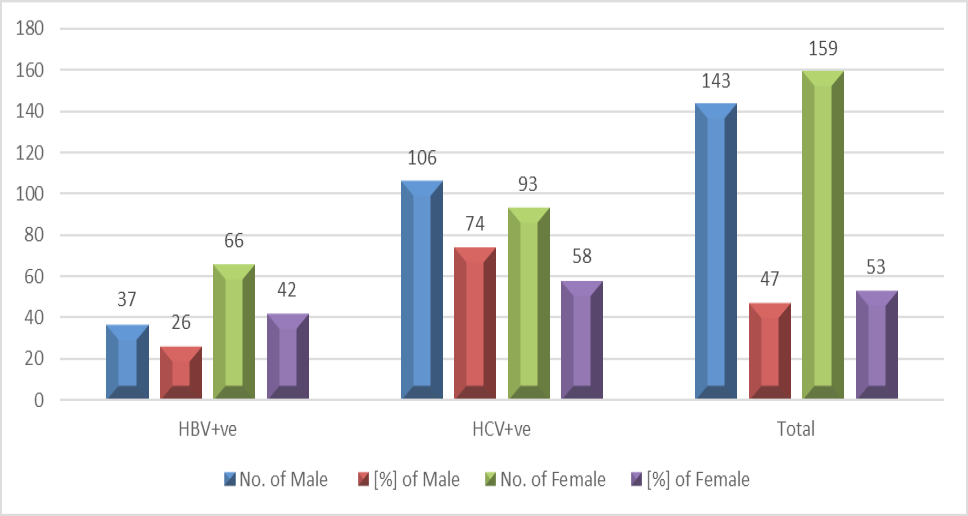
In the current study, a total of 302 hepatitis patients were investigated having a ratio of 143 (47 %) male and 159 (53%) females. Out of 143 males, 37 (26 %) were infected by HBV while the remaining 106 (74%) were infected by HCV. 66 (42%) of the 159 infected females were infected by HBV while the remaining 93 (58%) were infected by HCV, Figure 1.
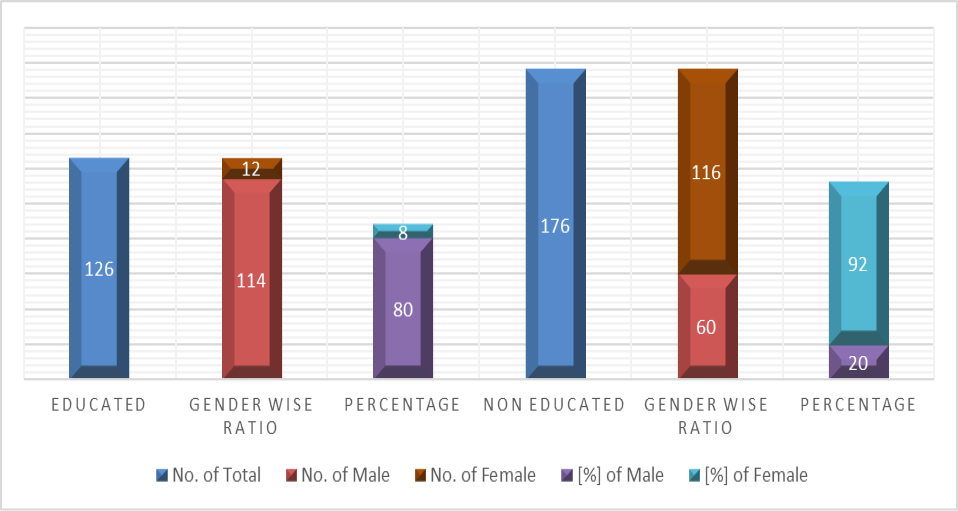
The number of HCV+ve patients was more than HBV+ve patients, i.e. 199 (66%) and 103 (34%), respectively. If we consider the patients based on education 114 (80 %) of 143 males were educated while the remaining 60 (20 %) were found uneducated, furthermore 12 (8 %) of 159 females were educated while the left behind 116 (92 %) was found uneducated, Figure 2.
Age-wise distribution
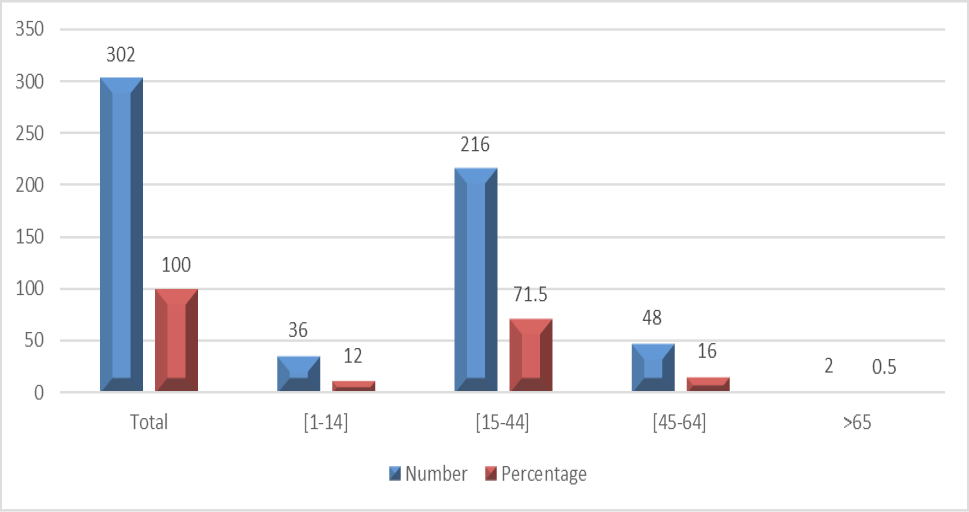
For age-wise distribution the hepatitis patients were divided into four groups, including group 1: 1-14 years, group 2: 15-44 years, group 3: 45-64, and group 4: >65 years. The age-wise distribution shows that the maximum number of cases 216 (71.5%) were recorded in age group 2: 15-44 years followed by 48 (16 %) in age group 3: 45-64 years while in age group 1: 0-14 and 4: >65 years the number of cases were36 (12 %) and 2 (0.5 %), respectively, Figure 3.
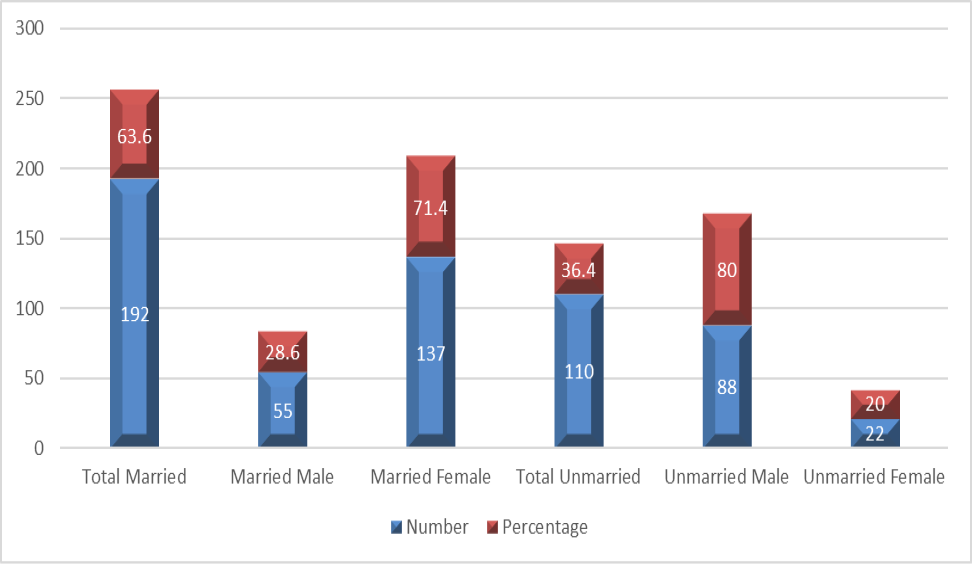
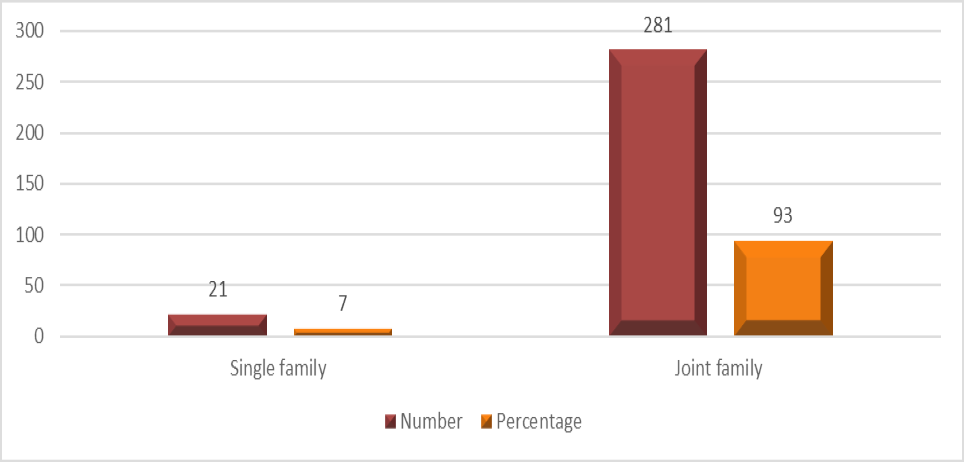
The marital status of patients was also evaluated and found that out of 302, 192 (63.6 %) patients including 55(28.6%) male and137(71.4) female were found married while the remaining 103 (36.4%) patients including 88(80%) male and 22(20%)female were unmarried Figure 4. Based on family status 21 (7%) patients were belonging to single-family while all the remaining 281 (93 %) were belonging to the joint family systems, Figure 5.
Specific categories of hepatitis B and hepatitis C
Considering the 126 educated patients for education categories, they were categorized into metric, intermediate, graduate, and master and analyzed that it was 78 (61.5 %), 41 (32.5%), 6 (5%), and 1 (1%), respectively. The travel history was also questioned by the patients, only 5 (2%) of 302 patients described while all the remaining 297 (98%) were unaware of their travel history.
Based on occupation it was investigated that out of 302 patients the number of housewife female were 130 (43%), while 10 (3%) including 4 male and 6 female were teachers, 134 (44%) were male farmers, 11 (3%) were male students and the remaining 17 (6%) were private male. The physical illness and symptoms that determine the Hepatitiswas thoroughly examined and related to confirmation of the disease is suspected persons. The risk factors of their disease were determined and found that the highest number of risk factors in patients were 127 (42%) from unknown reasons, 61 (20%) from a blood transfusion, 47 (16 %) from surgery, 33 (11 %) from any contact with an infected person, 21 (7 %) from by birth and 13 (4 %) from hemodialysis, Table 1.
Factors wise distribution of hepatitis B and C patients
During the current cross-sectional study 1 (0.3%) patient was found with having post-vaccination while the remaining entire 301 (99.7%) patients were found with no post-vaccination. During the study the drinking water status was questioned and found that the highest number, 251 (83%) were for drinking well water, 45 (15%) for tap water, 6 (2%) for the stream, and no other patient was found as drinking water from any other sources. The sewage system of their houses was such that for 193 (64%) patients houses it was poor, for 88 (29%) developed and for 21 (7%) found very poor. Based on the monthly income it was found that the highest 187 (62%) patients belonging to families having monthly income 10000, 85 (28%) having 11000-25000 and the remaining 30 (10%) had a monthly income above 25000, Table 2.
From the current study, it was found that the number of hepatitis C patients 199 (66%) were more than hepatitis B 103 (34%). Our study is correlated with another study that reported that out of 88 hepatitis patients 76 (84%) were infected by HCV while the remaining 12 (16 %) were infected by HBV . Similarly, literature also reported that hepatitis C was more prevalent than hepatitis B (Gul et al., 2009).
It was found in the present study that the number of married patients was more than unmarried patients, i.e. 199 (66% including 138 males and 61 females) and 103 (34% including 90 males and 13 females), respectively. About same results were found in another study that recorded married and unmarried patients with a ratio of 104 (72%) and 40 (28%), respectively .
In the current study, it was surprisingly found that females were more infected than males with a slight difference, i.e. 159 and 143, respectively. In most of the studies, the finding stated that males are more infecting than females . The reason for our unexpected result may be that, as blood transfusion and surgery were found the main cause of hepatitis in the mentioned area so females are mostly greatly exposed to the said risk factors by baby birth factors, etc.
In the present study, it was found that hepatitis was mostly found in age group 2: 15-44 years which was 216 (71.5%). Our result coincides with the findings of (Rey–Cuille et al., 2012; Abdel–Hady and Kelly, 2013) who reported that the chances of hepatitis are increasing in age 30-40 (Rey–Cuille et al., 2012; Abdel–Hady and Kelly, 2013).
The socio-economic activities can enhance the risk of disease and that is the reason for having more patients in the married category. In the current study same findings were found regarding the prevalence of hepatitis B and C in married and unmarried, i.e. 199 (66%) and 103 (34%) respectively. The reason might be due to lack of awareness in people that have pre-exposure before marriage which is then transmitted to his or her partner.
During the current study, it was found that uneducated peoples were more infected than educated, i.e. 176 (58%) and 126 (42%), respectively. Also, it is analyzed from the questioner of the current study that only 5 of 302 patients were aware regarding their travel history whereas all the remaining 297 were unaware. The reason might be that uneducated peoples are mostly unaware of the risk factors of hepatitis, that’s why most of them were unaware of the travel history of their disease. Based on occupation it was found that out of 302 patients mostly housewife females were infected, i.e. 130 (43%).
Table 1: Effects of different factors on the distribution of hepatitis B and C.
Education categories
Travel history
Metric
Intermediate
Graduate
Master
Yes
No
78
41
6
1
5
297
Occupation
Total
Housewife females
Teachers
Farmer males
Students male
Private male
Male
Female
302
130
4
6
134
11
17
Symptoms
Fatigue
weight loss
Pain
Anorexia
Anoxia
100%
100%
100%
100%
100%
Risk factor
Blood Transfusion
Surgery
Hemodialysis
Any contact with infected person
By birth
Unknown
61
47
13
33
21
127
Table 2: Post-vaccination, drinking water, sewage system, and monthly income-wise distribution of hepatitis B and C patients.
Post vaccination
Drinking water
Yes
No
Tap water
Well water
Streams
Other sources
1
301
45
251
6
0
Sewage system
Monthly income
Developed
Poor
Very poor
10000
11000-25000
Above 25000
88
193
21
187
85
30
As the districtSwabi belongs to rural areas so the peoples of this area are unaware of the post-vaccination of hepatitis. During the study, the drinking water status was questioned, and found that the highest number, 251 (83%) were for well water. The sewage system of their houses was such that for 193 (64%) patients’ houses it was poor. Based on the monthly income it was found that the highest 187 (62%) patients were belonging to families having a monthly income of 10000. As well water is suitable for drinking but the highest ratio of poor sewage system and the low-income status of the mentioned area indicated that these peoples are mostly poor and uneducated so they are not fully aware regarding the cause, transmission, spread and protection of the said infections.
Conclusions and Recommendations
The current study revealed that Hepatitis B was found in more patients than Hepatitis C. In addition, Hepatitis was found mostly in females than the male with a slight difference. Different factors affect the frequency and occurrence of hepatitis B and C with different degrees of effectiveness. It is suggested to implement high care on the occasion of surgery, injection, and blood transfusion. Furthermore, many awareness campaigns are needed to aware the population of the risk and transmission of Hepatitis B and C infections.
Conflict of interest
The authors have declared no conflict of interest.
Figures
Figure 1:.
Gender wise distribution of Hepatitis B and C.
Figure 2:.
Education-wise distribution of Hepatitis B and C.
Figure 3:.
Age-wise distribution of Hepatitis B and C.
Figure 4:.
Marital status wise distribution of Hepatitis B and C.
Figure 5:.
Family status wise distribution of Hepatitis B and C.
References
Abdel-Hady, M., and Kelly, D., 2013. Chronic hepatitis B in children and adolescents: Epidemiology and management. Pediatr. Drugs, 15: 311–317. https://doi.org/10.1007/s40272-013-0010-z[CrossRef]
Bronowicki, J.P., Venard, V., and Bott, C., 1997. Patient-to-patient transmission of hepatitis C virus during colonoscopy. N. Eng. J. Med., 337: 237-240. https://doi.org/10.1056/NEJM199707243370404[CrossRef]
Choo, Q.L., Kuo, G., wasiner, A.J., Overby, L.R., Bradley, D.W., and Houghton, M., 1989. Isolation of a cDNA clone derived from a blood-borne non-A, non-B viral hepatitis genome. Science, 244: 359–362. https://doi.org/10.1126/science.2523562[CrossRef]
Clements, J., Coghlan, B., Creati, M., Locarnini, S., Tedderd, R.S., and Torresie, J., 2010. Global control of hepatitis B virus: does treatment-induced antigenic change affect immunization? Bull. World Hlth. Organ., 88: 66–73. https://doi.org/10.2471/BLT.08.065722[CrossRef]
Flisiak, P., Xavier, F., and Mario, M., 2011. EASL clinical practice guidelines: Management of hepatitis C virus infection. J. Hepatol., 55: 245–264. https://doi.org/10.1016/j.jhep.2011.02.023[CrossRef]
Gul-e-Atif, Jamal, N., and Abbas, H., 2009. Seropositivity of Hbs Ag and Anti HCV in Rawalpindi and Islamabad and analysis of risk factors. Ann. Inst. Med. Sci., 5: 242–244.
Hauri, A.M., Armstrong, G.L. and Hutin, Y.J., 2004. The global burden of disease attributable to contaminated injections given in health care settings. Int. J. STD AIDS, 15: 7-16. https://doi.org/10.1258/095646204322637182[CrossRef]
Hoofnagle, J.H., and Di Bisceglie, A.M., 1997. The treatment of chronic viral hepatitis. N. Engl. J. Med., 336: 347-356. https://doi.org/10.1056/NEJM199701303360507[CrossRef]
Jutavijittum, P., Yousukh, A., Samountry, B., Samountry, K., Ounavong, A., Thammavong, T. and Toriyama, K. 2007. Seroprevalence of hepatitis B and C virus infections among Lao blood donors. Southeast Asian J. Trop. Med. Publ. Health, 38(4): 674.
Khokhar, N., Gill, M.L., and Malik, G.J., 2004. General sero-prevalence ofhepatitis C and hepatitis B virus infections in population. J. Coll. Phys. Surg. Pak., 14: 534–536.
Muhammad, N., and Jan, M.A., 2005. Frequency of hepatitis C in Buner, NWFP. J. Coll. Phys. Surg. Pak., 15: 11-14.
Mujeeb, S.A., Shahab, S., and Hyder, A.A., 2000. Geographical display of health information: Study of hepatitis C infection in Karachi. Pak. Publ. Hlth., 114: 413–415. https://doi.org/10.1016/S0033-3506(00)00375-9[CrossRef]
Nafeh, M.A., Medhat, A., Shehata, M., Mikhail, N.N., Swifee, Y., Abdel–Hamid, M., Watts, S., Fix, A.D., Strickland, G.T., Anwar, W., and Sallam. 2000. Hepatitis C in a community in upper Egypt: Cross sectional survey. Am. J. Trop. Med. Hyg., 63: 236-241. https://doi.org/10.4269/ajtmh.2000.63.236[CrossRef]
Perz, J.F., Armstrong, G.L., Farrington, L.A., Hutin, Y.J., and Bell, B.P., 2006. The contributions of hepatitis B virus and hepatitis C virus infections to cirrhosis and primary liver cancer worldwide. J. Hepatol., 45: 529. https://doi.org/10.1016/j.jhep.2006.05.013[CrossRef]
Previsani, N., Lavanchy, D. and Hepatitis, B., 2002. WHO/CDS/CSR/LYO/2002. 2: Hepatitis B. Geneva: World Health Organization.
Rahimullah, Islam, S.U., Bahadar, S., Hayat, A., Daud, M., Hassan, A., Ahmad, A., Ali, F., Khan, M.I. and Rehman, M.U., 2015. Prevalence of hepatitis B and C infection in district Dir, Khyber Paktunkhwa, Pakistan. World J. Zool., 10: 142-146.
Rania, A., Tohme, and Holmberg, S.D., 2012. Transmission of hepatitis C virus infection through tattooing and piercing: A critical review. Clin. Infect. Dis., 54: 1167–1178. https://doi.org/10.1093/cid/cir991[CrossRef]
Rey-Cuille, M.A., Seck, A., Njouom, R., Chartier, L., Sow, H.D., Njankouo, M., Rousset, D. and Giles–Vernick, T., 2012. Low immune response to hepatitis B vaccine among children in Dakar, Senegal. PLoS One, 7: 15–18. https://doi.org/10.1371/journal.pone.0038153[CrossRef]
Ross, R.S., Viazov, S. and Gross, T., 2000. Transmission of hepatitis C virus from a patient to an anesthesiology assistant to five patients. N. Engl. J. Med., 343: 1851–1854. https://doi.org/10.1056/NEJM200012213432505[CrossRef]
Schalm, S.W., Hansen, B.E., and Chemello, L., 1997. Ribavirin enhances the efficacy but not the adverse effects of interferon in chronic hepatitis C: Metaanalysis of individual patient data from European centers. J. Hepatol., 26: 961-966. https://doi.org/10.1016/S0168-8278(97)80103-1[CrossRef]
Schvarcz, R., Yun, Z.B., Sonnerborg, A., and O, It wasiland. 1995. Combined treatment with interferon alpha-2b and ribavirin for chronic hepatitis C in patients with a previous non-response or non-sustained response to interferon alone. J. Med. Virol., 46: 43-47. https://doi.org/10.1002/jmv.1890460110[CrossRef]
Siddique, K.M., and Sohag, A.A., 2010. Hepatitis B and C, share of young rural populace of Sindh. Med. Chem., 16: 215-218.
Skidmore, S.J., Pasi, K.J., and Mawson, S.J., 1990. Serological evidence that dry heating of clotting factor concentrates prevents transmission of non-A, non-B hepatitis. J. Med. Virol., 30: 50–52. https://doi.org/10.1002/jmv.1890300111[CrossRef]
Terrault, N.A., 2002. Sexual activity as a risk factor for hepatitis C. Hepatology, 36: 99-105. https://doi.org/10.1053/jhep.2002.36797[CrossRef]
World Health Organization fact sheets, 2000. Hepatitis C, Geneva: World Health Organization, 2000. Available at: http://www.who.int/mediacentre/factsheets/fs164/en/ (accessed August 2008).