
Articles
185 open-access articles · page 9 of 10
 Commentary
Skeletal Muscle in Influenza Virus Infection- a Key Player or a Bystander?
Suresh V Kuchipudi, Kin-Chow Chang
Skeletal muscle constitutes the largest soft tissue mass in the body whose principal roles are postural maintenance and locomotion. Comprising heterogeneous multi-nucleated fibres, skeletal muscle is one of more astounding and unusual tissues in the body in it…
11 Mar 2015- Commentary
Have we found an Optimal Insertion Site in a Newcastle Disease Virus Vector to Express a Foreign Gene for Vaccine and Gene Therapy Purposes?
Qingzhong Yu
Different approaches have been used to investigate the most suitable insertion site for optimal expression of a foreign gene without compromising the replication of the Newcastle disease virus. Recently, inserting a green fluorescent protein (GFP) gene upstrea…
11 Mar 2015 - Commentary
Multiplex Detection of Citrus Viroids: Advances and Future Application
Chun-Yi Lin, Meng-Ling Wu, Tang-Long Shen, Hsin-Hung Yeh, Ting-Hsuan Hung
Two citrus viroids, Citrus exocortis viroid (CEVd) and Hop stunt viroid (HSVd), have been reported decades ago without further pathological and genetic researches in Taiwan. Here, bioassay, multiplex RT-PCR and multiplex real-time RT-PCR were used to detect th…
3 Mar 2015 - Preview
Clinical Overview of Hepatitis C Patients with Terminal Renal Disease
Nayle Maria Oliveira da Silva, Ricardo do Carmo Zanella
Hepatitis C virus (HCV) is a serious public health issue, and it is estimated that 3% of the world’s population is infected with the virus. Patients in hemodialysis units have an increased risk for contracting HCV, and high prevalence rates have been fou…
2 Mar 2015 - Review
RNAi-Based Treatment for Rabies: Current Achievements and Insights Towards a Cure
Paulo Eduardo Brandao
Due to the lack of success of antivirals in inhibiting rabies virus intracellular cycle both in vitro and in vivo, and the high failure rate of this treatment in human patients, the use of RNA interference (RNAi) for Post-transcriptional Gene Silencing (PTGS)…
25 Jan 2015 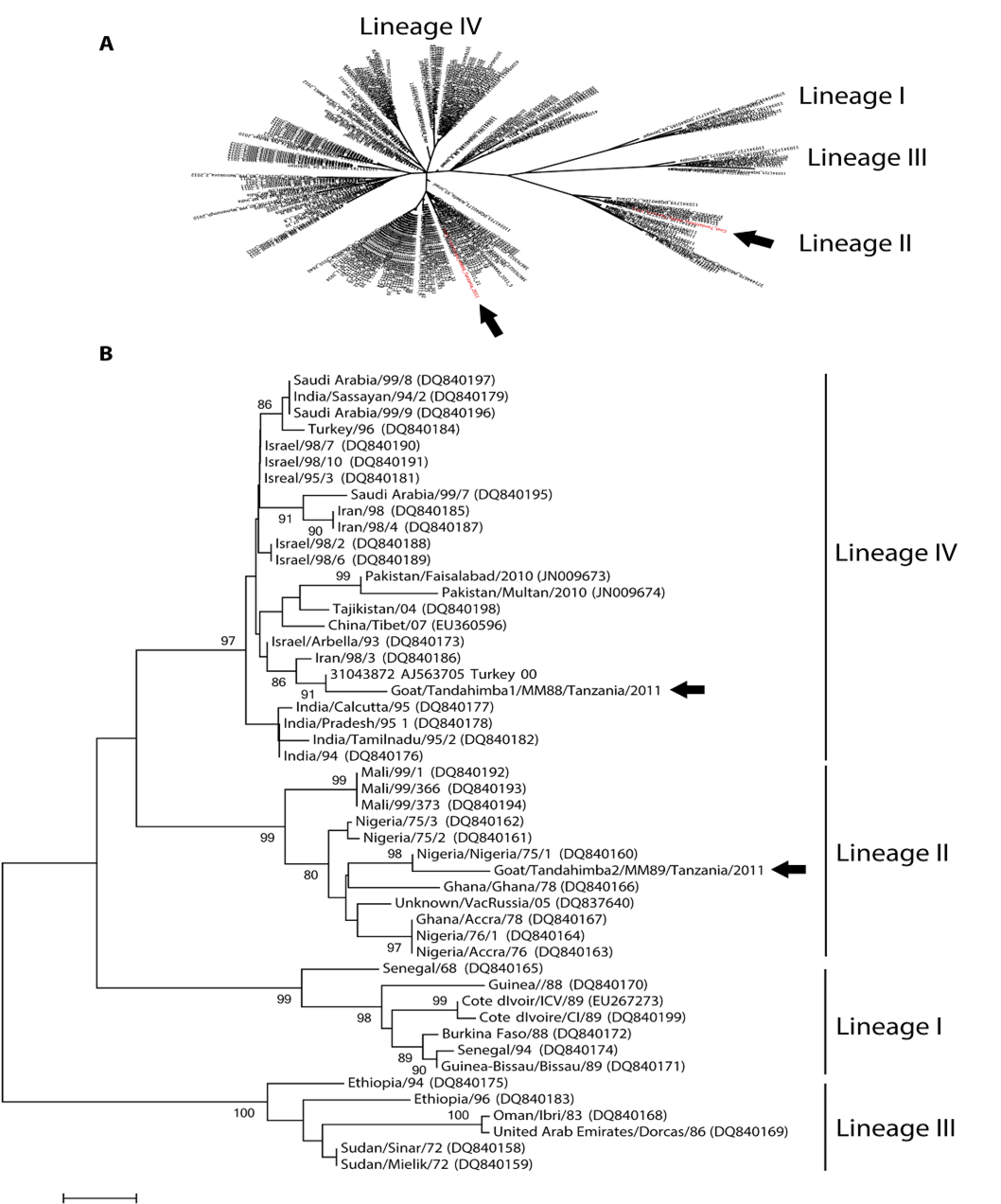 Short Communication
Peste des Petits Ruminants Virus Lineage II and IV From Goats in Southern Tanzania During an Outbreak in 2011
Gerald Misinzo, Tebogo Kgotlele, Epaphras A. Muse, Jan Van Doorsselaere, Mikael Berg, Muhammad Munir
Peste des petits ruminants virus (PPRV) causes a highly contagious disease in both domestic and wild small ruminants, and in camels. Based on sequence analysis of the nucleoprotein (N) gene, the PPRV has been classified into four lineages. Serological investig…
24 Jan 2015- Mini-Review
Biological Relevance of C-terminal Elongation of the NS1 Protein of Influenza A Viruses
Weili Kong, Guangpeng Ma, Jinhua Liu
The non-structural 1 (NS1) protein plays a crucial role in moderating the virulence of influenza virus by multiple mechanisms. Due to C-terminal ‘tail’ (CTT) truncation of NS1, there are length variation types of NS1 in different subtype influenza…
8 Dec 2014 - Commentary
Antigenic Domains of Avian HEV: Bases for Serological Diagnosis of HEV in Avian, Swine and Human
Qin Zhao, Yani Sun, Gaiping Zhang, Frederik Widen, En-Min Zhou, zhouem@nwsuaf.edu.cn
Avian HEV capsid protein contains immunodominant epitopes and is responsible for the induction of the protective humoral immune response. Six antigenic domains in the capsid protein have been identified. The fragmented proteins in these domains are analyzed fo…
22 Nov 2014 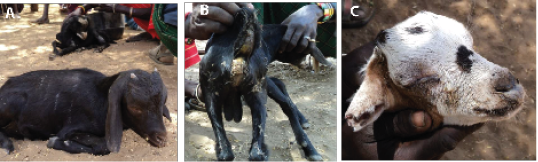 Case Reports
Clinical, Pathological and Molecular Investigations of Peste des Petits Ruminants Virus Infection in Goats from Turkana County in Kenya
Simon Mwangi Kihu, George Chege Gitao, Lily Caroline Bebora, Njenga Munene John, Gidraph Gachunga Wairire, Ndichu Maingi et al.
Peste des petits ruminants (PPR), an economically important morbillivirus infection of sheep and goats, is widely distributed in Middle East, Central and South Asia, China and Africa. Whereas PPR antibodies were first reported in Kenyan small stock as early as…
22 Nov 2014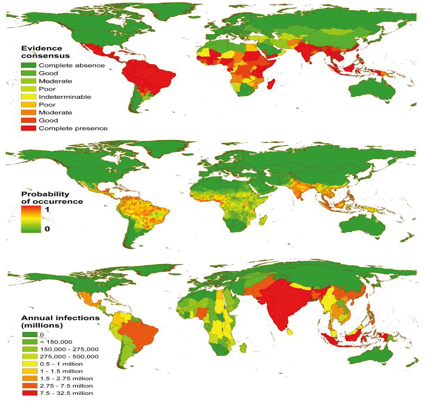 Mini-Review
Dengue Virus in Nigeria: Current Status and Future Perspective
James Ayukepi Ayukekbong, E-mail | james.ayukekbong@microbio.gu.se
Dengue is regarded globally as the most important mosquito-borne viral disease but there are currently no licensed vaccines or specific therapeutics. The virus and its vector are widely distributed throughout the tropics and subtropics regions of the world. De…
22 Nov 2014- Mini-Review
Neonatal Gnotobiotic Pig Models for Studying Viral Pathogenesis, Immune Responses, and for Vaccine Evaluation
Xingdong Yang, Lijuan Yuan
The definition of gnotobiotic pig is a pig in which only certain known strains of virus or bacterium are present through deliberate inoculation with a particular virus strain or bacterial species and being maintained free of unwanted microbiota in sterile isol…
21 Nov 2014 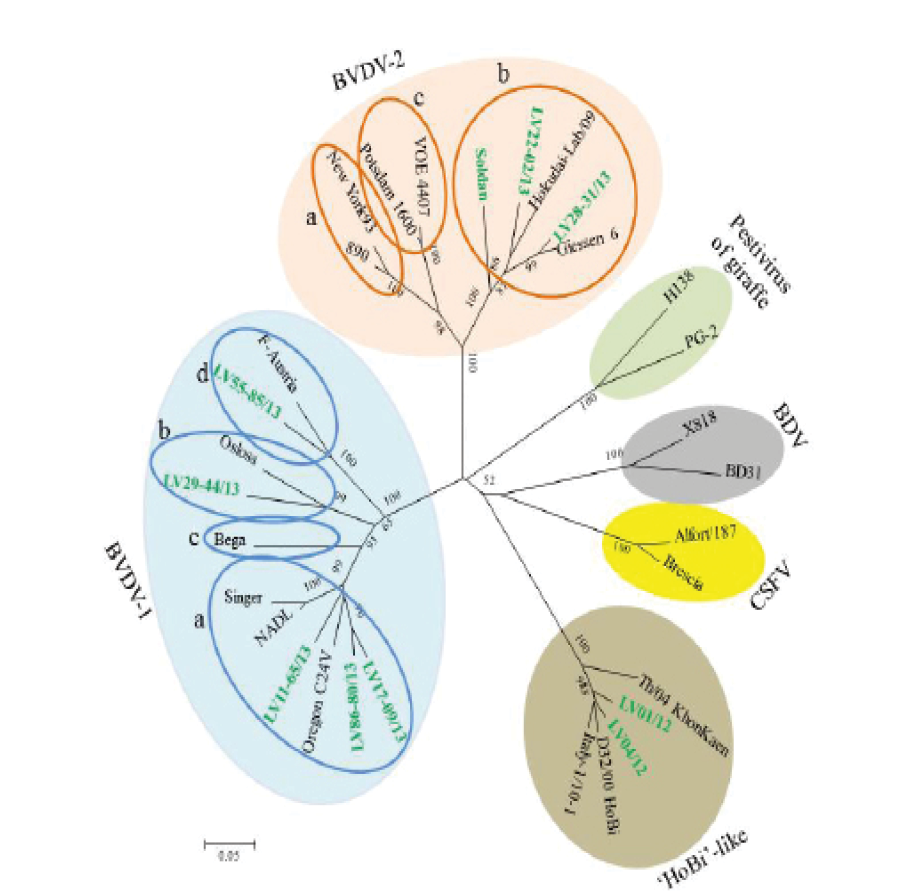 Commentary
Bovine Viral Diarrhea in Brazil: Current Status and Future Perspectives
Matheus Nunes Weber, Simone Silveira, André Felipe Streck, Luís Gustavo Corbellini, Cláudio Wageck Canal
Bovine viral diarrhea is a disease caused by viruses of the genus Pestivirus in cattle worldwide. Herein, we present the current status of the disease in Brazil showing its nation-wide distribution. In Brazil, BVDV-1, BVDV-2 and ‘HoBi’-like viruses…
21 Nov 2014- Commentary
Interference in Innate Immunity: Another Dimension in ICP0 Multi-functionality
Kathryne E. Taylor, Karen L. Mossman
The literature regarding the ICP0 protein from herpes simplex virus is complex and frequently contradictory, meaning that although this protein has been implicated in a wide variety of diverse functions, the mechanisms through which it produces these effects c…
21 Nov 2014 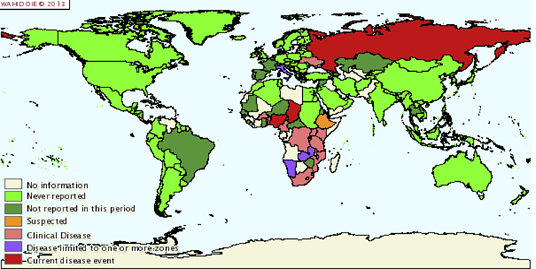 Mini-Review
African Swine Fever: An Epidemiological Overview
Muhangi Denis
African swine fever is a highly infectious, viral disease affecting domestic pigs with mortalities approaching 100%. The disease severely impacts on the socio-economic status of farmers. The disease is endemic in a number of countries in sub-Saharan Africa, in…
25 Aug 2014- Review
H9N2 Subtype Avian Influenza Viruses in China: Current Advances and Future Perspectives
Hanqin Shen, Boliang Wu, Guangwei Li, Feng Chen, Qingbin Luo, Yimin Chen et al.
The H9N2 subtype avian influenza virus (H9N2 AIV), which has been in circulation for two decades, has become the predominant subtype in China, attracting considerable attention due to human infections and the contribution of internal genes to H5N1 and H7N9 inf…
25 Aug 2014 - Research Article
In Silico Docking of Influenza-Interleukin 6 Interactions and the Role of HDAC-6 in its Modelling
Sandeep Satapathy, Rupam Ghosh
Influenza virus infections have been seen to be persistent throughout the year seasonally claiming several lives. IL-6/IL-2 receptors have been identified as crucial mediators for clearance of influenza by up regulating several intracellular defense mechanisms…
25 Aug 2014 - Review
HIV Tat Regulates the Immune Responses Induced by Vaccines
Ye Liu, Yulong Cong, Yiming Shao
As the crucial transcription activator of HIV, Tat has been considered as an important immunogen for HIV vaccine candidates for a long time. However, HIV Tat also plays immunoregulation roles in improving immune responses of vaccines. Herein, we review recent…
25 Aug 2014 - Review
Genetic Diversity of Canine Distemper Virus in South America
Yanina Panzera, Nicolas Sarute, Lucia Carrau, Jaime Aldaz, Ruben Perez
Canine Distemper virus is the etiological agent of “Distemper”, the most significant infectious disease among carnivores worldwide. Herein, we present the state of the art of CDV dynamics in South America, by means of a detailed analysis of the gen…
25 Aug 2014 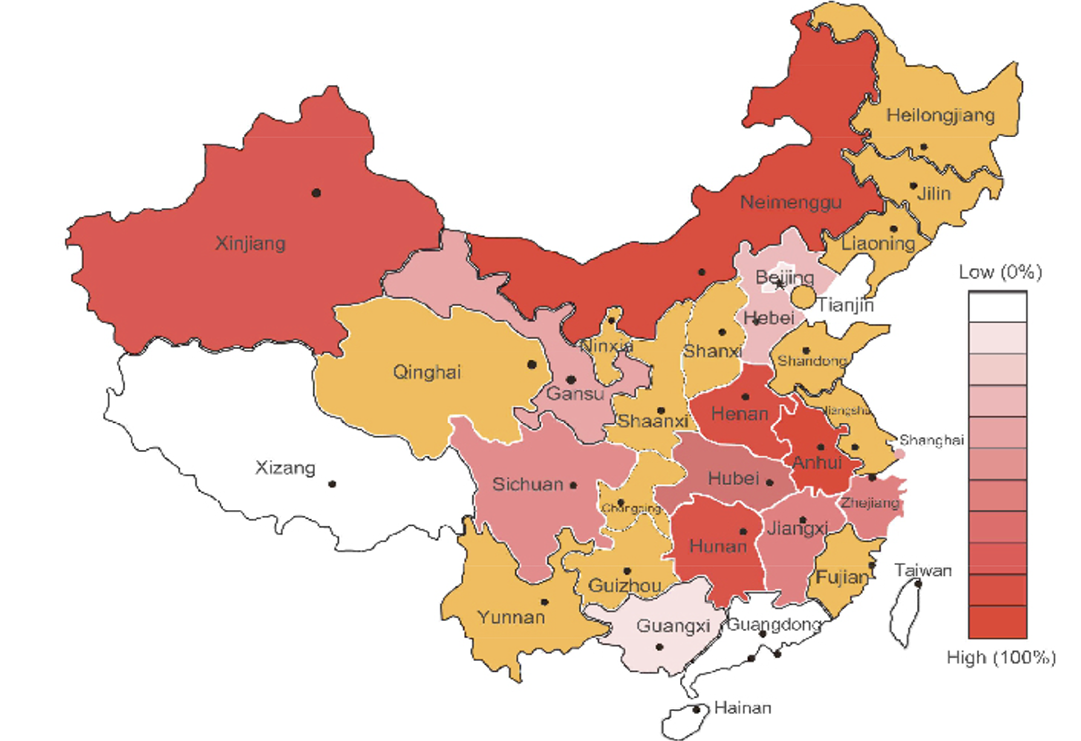 Review
Molecular Genetics of Aichivirus C (Porcine Kobuvirus) in China
Lei Chen, Ling Zhu, Zhi-Wen Xu, Wan-Zhu Guo
Aichivirus C is a member of the Kobuvirus genus within the Picornaviridae family and is widely distributed in both healthy and diarrheic pigs from China. Due to the high detection rate in the severe diarrhea in China, Aichivirus C is thought to be a potential…
11 May 2014- Mini-Review
Avian Influenza H5N1 in Egypt: What we Know and What we have to Know?
El-Sayed M. Abdelwhab, Jutta Veits, Thomas C. Mettenleiter
Egypt has experienced endemic outbreaks of avian influenza viruses (AIV) of subtype H5N1 in poultry since 2008. Since then, these viruses continue to evolve. In 2006-2008, outbreaks were reported mostly during the winter season, but in 2009-2012 they occurred…
11 May 2014