Various Thawing Methods of Frozen Bull Semen for Quality Parameters and Fertility of Spermatozoa: Current Situation and Future Perspectives
· · · ·
Affiliations & Notes ⌄
1Faculty of Veterinary and Animal Science, HUTECH University, Ho Chi Minh City, Vietnam
2Faculty of Animal Science and Veterinary Medicine, Nong Lam University, Ho Chi Minh City, Vietnam
3Faculty of Animal Science and Veterinary Medicine, University of Agriculture and Forestry, Hue University, Hue City, Vietnam. *Correspondence | Hai Thanh Nguyen, Department of Animal Production, Faculty of Animal Science and Veterinary Medicine, Nong Lam University, Ho Chi Minh City, Vietnam
The current review aims to summarize recent advances of post-thaw quality characteristics of frozen bull spermatozoa associated with the different thawing protocols. We will also further discuss the elevance of these procedures to the critical mechanisms of how to minimize the adverse effects during thawing on bull spermatozoa, and further necessary investigations for definite conclusion. Although the conventional thawing methods at around body temperatures are currently recommended for artificial insemination (AI) in cattle husbandry, very slow thawing ways of spermatozoa seem to induce deleterious events during thawing and consequently trigger injury to plasma membrane and/or biological membrane of organelles. Rapid thawing at higher temperatures for shorter durations (RT) or rapid transient thawing (RTT) followed by subsequent stabilization (SS) at around physiological temperatures for a while can appear to overcome these disadvantages, thus improving not only numerous important quality parameters but also fertility due to shorter exposure to temperatures outside the physiological range, despite several contradictory results. Although no clear recommendation for the ideal thawing procedure of frozen bull semen straws can be made, it is quite clear that overall positive effects of RT or RTT followed by SS seem to be predominant than the currently conventional thawing protocols. Our current knowledge of the application possibility of various thawing protocols continues to change since we gain a greater understanding of the critical mechanism for less damage to the organelles and biological membranes in frozen-thawed bull spermatozoa during thawing. The novel insight into critical mechanisms during thawing under various procedures from this review provides a new strategy for enhancing AI effectiveness.
Thawing is an important process in cryopreservation responsible for returning sperm cells from the inactive frozen state to the physiological temperature by which reactivating metabolic processes necessary for normal physiological functions ; . It has been demonstrated that the freezing-thawing processes could detrimentally alter the status of biological membranes and the expression of important proteins of spermatozoa , consequently affecting sperm quality and fertility . In fact, many spermatozoa can die through the cryopreservation and subsequent significant reduction in post-thawed motility and/or viability ; , although it provides several valuable advantages for the cattle industry from the technology of frozen-thawed spermatozoa ; ; . Viability and motility of bull spermatozoa are popular crucial factors for evaluation of successful artificial insemination (AI) and fertility ; ; , since a significant correlation between these post-thawed parameters and fertility has been demonstrated ; ; ; . In addition to the viability and motility, other important parameters, such as mitochondrial activity and oxidative stress are needed to use for evaluating the fertilizability of frozen-thawed spermatozoa .
In recent decades, fertility issues have been identified as major problems in the cattle industry. Thus, current low conception and pregnancy rates of frozen-thawed spermatozoa following AI ; appear to be main concerns in cattle production and reproduction . Recently, numerous investigations on various thawing methods with different temperatures and osmotic pressures have been conducted to determine the optimal thawing protocols and to maintain the potential fertility spermatozoa not only in bulls (more details in the following parts) but also in other species, such as buffaloes ; ; ; ; , boars ;; ; , stallions ; , sheep ; , dogs ; or cats . Furthermore, it has been reported that appropriate thawing rates for frozen bull spermatozoa are dependent upon other numerous factors in the cryopreservation, including extenders, glycerol concentration, equilibration time, packaging method, and freezing rate ; ; ; . However, the definitive conclusion on the optimum thawing temperature and duration with frozen bull spermatozoa has not been obtained yet due to inconsistent results among the in vitro studies and limited assessment from in vivo fertility under practical field, as well as there is no comprehensively systematic overview of all existing findings on this issue.
Therefore, we have, in the present systematic review of all available literature, covered and comprehensively discussed the efficacy and application possibility of different thawing procedures on post-thawed quality and fertility of frozen bull spermatozoa. We will further provide insight into the critical mechanisms of how the ultrastructural, biochemical, and functional damages of frozen bull sperm would be suffered during thawing, which may be minimized and/or avoided to overcome currently low quality and fertilizability of frozen-thawed spermatozoa, as well as consequently, bull fertility.
The Freezing-Thawing Procedures for Spermatozoa
Cryopreservation is a widely used technique used to preserve live cells for long-time storage at very low temperatures in liquid nitrogen . This approach is effective and convenient since frozen semen can be transported over far distances, safely quarantined and as a useful genetic bank for desirable traits from good sires . In bull spermatozoa, it is a complex process with many steps, including a reduction in temperature, dehydration, freezing in subzero temperatures and storage in liquid nitrogen for many years as frozen straws, by which stop all biological metabolism activities ; . The freeze-thawing process still induces injury to subcellular organelles associated with the integrity of spermatozoa due to the negative changes in the membrane structures and metabolism even though sperm cells are thought to be less susceptible to cryodamage or oxidative stress due to low water content and high membrane fluidity . Indeed, these alterations during the cryopreservation could inevitably cause ultra-structural, biochemical, and functional damages as well as deleteriously alter the status of plasma and biological membranes of spermatozoa, and consequently may reduce sperm motility and viability ; . During freezing, spermatozoa are very sensitive to the deleterious events of the formation of ice crystals, hyper-osmolarity, volume alterations and protein denaturation . Therefore, the freezing process negatively affects the quality parameters of post-thawed bull spermatozoa such as all motility indicators , 2005; .
Artificial insemination (AI) using frozen-thawed spermatozoa from the cryopreservation is the popular technique in modern animal reproduction first introduced and applied in the 1950s , especially in the dairy and beef production. Today, frozen-thawed semen is the majority for AI application in cattle production, about 95% ; , although it is collectively recognized that post-thawed spermatozoa are more sensitive than fresh spermatozoa due to inevitable damages from the freezing and/or thawing processes . At present, bull frozen semen can be kept in liquid nitrogen at -196°C in the most popular straws of either 0.25 or 0.5 mL before AI. It has been demonstrated that AI has much more advantages than the direct mating service by males ; ; , contributing to the significant genetic progression with efficient reproduction and profitable improvement for decades in the cattle industry ; .
Recently, reproduction has been thought to be one of the most important components and plays a central role in the economic efficiency of cattle husbandry , besides milk or growth productivity . However, the current low conception and pregnancy rates with AI from frozen bull spermatozoa ; are still the main concerns in cattle production ; . The concerns are originated from many factors and aspects , such as sperm concentration, individual differences ; , glycerol concentration, type of extenders and cryoprotectants (permeable and non-permeable ones) ; ; , packaging system ; , the duration of equilibration , the cooling rate , the freezing and thawing rates ; ; ; ; ; ; . A large number of investigations have been conducted to determine the effects of these factors on the post-thawed quality parameters and fertility of bull spermatozoa, but there is still a lack of a comprehensive overview from all previous studies under various thawing methods to achieve the final conclusion for practical bull production.
In addition to the freezing process of fresh spermatozoa, thawing process for frozen spermatozoa is also crucial due to its remarkable effect on the post-thawed semen quality and bull fertility ; ; ; , consequently on the reproductive performance of cattle herds . Thawing process is widely applied to bring back the frozen spermatozoa under the inactive status to life and the active state for reactivating their metabolism at the physiological temperature range ; . Of course, these changes inevitably lead to negative effects on sperm cells ; ; ; ; and harmfully change the status of plasma and biological membranes or expression of pivotal proteins of spermatozoa, consequently may decrease sperm quality (such as motility and viability) . Currently, although temperatures around body temperature range have been recommended as the conventional temperatures for thawing the frozen spermatozoa straws of bull semen at AI for decades ; , slow thawing methods appear to trigger recrystallization of intracellular ice and rehydration, consequently leading to some injuries to sperm organelles ; . However, results from various thawing methods under different temperatures and osmotic pressures have indicated that thawing needs to be at maximum speed to minimize the possible damage even though optimal thawing rate not only depends on temperatures but also on glycerol concentration and equilibration exposure time ; ; . The effectiveness under various thawing procedures at critical mechanisms and field applicability on the multiple quality parameters and fertility of frozen bull spermatozoa will be discussed below in more detail.
Occurrence of Critical Events during Thawing Process
By using a digital recording thermometer to monitor temperature levels inside frozen semen straws every 2 seconds during thawing, it has been indicated that there are two different phases in the temperature change inside the straw before and after 0°C (the melting point) ; ; . Indeed, the temperature alteration has been very fast before the melting point (known as the solid phase), whereas it has been relatively slower after this point (the liquid phase). During thawing, the injurious temperature range for spermatozoa inside the frozen straws often occurs seriously, due to the high risk of the detrimental recrystallization of intracellular ice and rehydration, from -60 to 0°C ; . These temperature changes seem to make lipid peroxidation and subsequent membrane damage for the frozen-thawed semen, and negatively affect the survival and motility of spermatozoa ; . It has been demonstrated that lipid membrane peroxidation appears to trigger negative changes in membrane permeability and fluidity, causing irreversible loss of movement, viability, intracellular enzyme leakage and DNA damage of spermatozoa, consequently resulting in subsequent subfertility (defects in oocyte penetrability and oocyte binding capacity) ; ; . Furthermore, membrane protein denaturation may occur during the thawing procedure due to mechanical and osmotic stress, leading to disrupted membrane integrity and impaired quality of spermatozoa . In fact, protein denaturation occurs at a temperature range of -20 to 0°C during freezing/thawing, which can lead to protease leaks from liposomes in the acrosome and membrane integrity loss of spermatozoa . It has also been reported that intracellular ice crystals often appear and can grow to become recrystallized to cause damage to sperm plasma membrane and cell organelles under slow thawing methods ; . In contrast, rapid passage through the dangerous temperature zone under the optimal thawing speed can directly switch spermatozoa in the frozen semen straw from the glassy to liquid state and ice crystals also do not have enough time to be formed ; ; to maintain the membrane integrity, cytoplasm and potential fertility at the highest level possible due to less harmful effects of recrystallization and hydration . It is crucial to switch between these critical temperature intervals as soon as possible during thawing since the main disadvantage of longer duration at the slow thawing method are more osmotic pressure changes and membrane integrity loss as well as more morphological defects .
Furthermore, low temperatures outside the physiological range, especially from the melting point to below 15°C, are critical to the frozen spermatozoa during thawing and are called the detrimental warm shock temperature zone ; . In fact, mammalian spermatozoa such as bulls ; and boars have been demonstrated to be susceptible to dangerous shock temperature ranges (<15°C) . It has been indicated that the temperature change inside the frozen bull semen straws to 32°C by thawing at warm water (32-35°C) for 30 seconds further improves fertility than the final temperature inside the frozen straws of 0°C after thawing at warm water for only 12 seconds .
Recently, several investigators have revealed that temperature change and warming rate inside the frozen straws are significant differences among different thawing methods. The temperature change and warming rates inside the frozen bull semen straws are significantly faster under thawing at higher temperatures for shorter durations compared with thawing at around physiological temperatures such as 37°C and 39°C or thawing in the palm of hands of the AI technician , similar to the previous finding in frozen boar semen . It has also been reported that frozen spermatozoa thawed at faster speeds have shorter exposure to concentrated solutes and cryoprotectants (such as glycerol), as well as the recovery of intracellular and extracellular equilibrium occurs more rapidly at faster thawing speeds, as compared with slow thawing rates ; Holt, 2000; .
Therefore, it is hypothesized that the thawing process must be carried out fast to pass through not only the critically harmful temperature range (-60 to 0°C) but also the detrimental warm shock temperature zone (<15°C) as soon as possible, and consequently minimize the damage to spermatozoa ; ; . Terminology of rapid thawing appears to reduce the deleterious effects of processes of recrystallization and rehydration, thus preventing injury to the membranes and cytoplasm of spermatozoa.
Existing Potential Thawing Methods of Frozen Bull Semen Straws
Thawing technique of frozen bull semen straws for AI plays an important role in the post-thawed quality and potential fertility of spermatozoa, and thus on the reproductive efficiency of cattle industry ; ; ; . Until now, numerous different methods for thawing bull semen frozen in straws have been investigated to achieve the general recommendation, such as thawing in the water bath at various temperatures for different periods, in the shirt pocket, in the palms of the hands, in the cow, and etc. For last decades, although the warm-water bath at around body temperatures has been popularly applied for thawing the frozen bull semen on farms, the recommendation for thawing methods has been varied and clear data assessing their effects on the post-thawed conventional quality parameters are contradictory while other crucial quality parameters or the potential fertility under field studies have still been limited so far. Furthermore, the general recommendations from AI organizations vary across different countries ; .
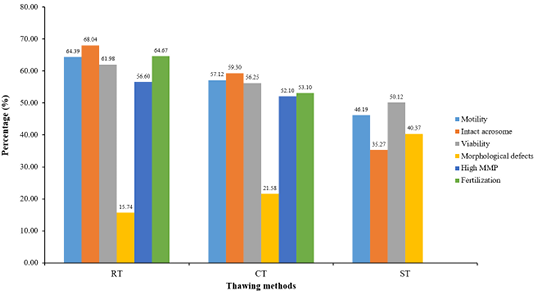
Although there has been a consensus among researchers from previous studies that thawing of frozen sperm should be at the optimal thawing rates for enabling spermatozoa to move faster through the serious critical temperature zones during thawing to minimize the loss of the initial post-thawed quality parameters, and maximum the longer vitality and subsequent fertility, the definitive conclusion of the thawing temperatures and durations for appropriate thawing speed has not been obtained yet and is still under discussion (Figure 1, Table 1 and Table 2). All aspects of the pros and cons of each thawing method will be discussed in more detail in the following parts to have the predominant potential protocols for the practical cattle industry or continue further in-depth investigations for a definitive conclusion.
Thawing in the palm of hand or a shirt pocket: For several decades, thawing the frozen bull semen straws in the palm of the hand of AI technician (termed as hand-thawing method, including just keeping frozen straws in the palm of the hand for a while or rolling straw between the palms of the hands) or in a shirt pocket (pocket-thawing method) is still popular in practical application on the household cattle farms. Pocket-thawing method is defined as placing the frozen straw into folded paper towel and placing it into the shirt pocket of the AI technician or into a thermally protected pocket for 2-3 minutes before preparing the AI gun . These methods can minimize the risk of injurious thermal stress under routine field conditions and avoid the risk of inaccurate thawing temperatures. Moreover, other potential advantages under these thawing methods are the easy applicability, convenience and flexibility under the farm conditions . A previous survey conducted at local cattle farms in Afghanistan indicate about 56-68% of the AI technicians applied the hand thawing method for thawing the frozen bull straws .
However, post-thawed quality of bull semen thawed by rolling straws between the palms of the hands for 50 seconds is significantly lower than that of rapid thawing at 75°C for 7 seconds at 0, 1 and 2 hours of incubation at 38°C after thawing, but similar with that of thawing in iced water for 3 min since rolling sperm in straws at the glassy status probably make more injuries to spermatozoa. Furthermore, the post-thawed progressive motility of spermatozoa under thawing by the hand surface temperature is very low (just about 10%) and remarkedly lower than that of other thawing procedures . The post-thawed quality parameters (motility, viability and acrosome integrity) at 0 and 2 hours of frozen bull semen thawed in a shirt pocket are significantly lower than those of thawing in 35°C water , while the probability of conception rate of frozen-thawed semen is not different between the pocket and warm-water thaw methods . In contrast, the motility of bull semen thawed by using hands is significantly lower than that of thawing at 37°C for 30 seconds ; while the pregnancy rate from frozen bull semen under the pocket thawing method is also significantly lower than that of rapid thawing . Specialists and researchers in cattle reproduction and AI areas have recognized that it is typically not recommended to thaw the frozen bull semen straws in the pocket ; ; or in the hand ; , since the thawing speeds are too slow, then significantly decrease the number of viable spermatozoa, and seriously damage the fertility ; ; .
Therefore, it has been concluded that although it is possible to achieve comparable conception rates when sperm dosage is abundant to maintain above threshold sperm numbers, slow thawing rates under these methods usually lead to reduction in sperm motility and viability, of course, are unacceptable in practice ; ; ; ; .
Thawing in iced water, low or ambient temperature water: At present, thawing in iced water (1-5°C), low or ambient temperature water is still not recommended to apply in the practical cattle farms ; ; due to the inappropriate thawing rates. Iced water or low-temperature water will not provide as satisfactory a thawing rate as desired, whereas ambient temperature water often varies significantly through the year, and of course, has a noticeable varied effect on the post-thawed sperm quality. Indeed, thawing at ambient temperature above 23°C may not affect the viability, motility and acrosomal change of post-thawed spermatozoa while the quality parameters are significantly reduced under thawing at less 20°C ; ; . It is important to note that more osmotic pressure changes are the main problem of slow thawing protocols ; . A majority of previous studies have indicated that thawing at low temperatures gives significantly lower percentages in post-thawed sperm quality parameters ; ; ; ; ; ; and fertility ; ; ; , rather than thawing at
Table 1: Summary of all previous existing investigations about potential thawing methods for frozen bull spermatozoa.
Kinds
General results
Authors and year
Temperatures
Better under rapid thawing at higher temperatures
Aamdal and Andersen, 1968; Almquist and Wiggin, 1973; Rodriguez et al., 1975; Wiggin and Almquist, 1975; Ennen et al., 1976; Robbins et al., 1976; Gilbert and Almquist, 1978; Chandler et al., 1984; Danasouri, 1988; Dhami et al., 1992; Nur et al 2003; Muino et al., 2008; Al-Badry, 2012; Lysahenko, 2015; Doležalová et al., 2017; Jameel, 2020; Esin et al., 2022; Nguyen et al., 2023; Nguyen, 2023
Better under conventional thawing at around body temperatures
Pace et al., 1981; Barth and Bowman, 1988; Correa et al., 1996; DeJarnette and Marshall, 2005; Chaiprasa et al., 2006; Borah et al., 2015
No significantly overall difference among various thawing temperatures
Rugg et al., 1977; Hayashi and Isobe, 2005; Faezah et al., 2012; Akmal et al., 2015; Yilmaz et al., 2019
Other
Drying thawing device
Selçuk et al., 2020
In the palm of the hand
Ennen et al., 1976; Chaiprasat et al., 2006; Jameel, 2020
In a shirt pocket
Rugg et al., 1977; Barth and Bowman, 1988; Kaproth et al., 2005
Air-thawing method
DeJarnette and Marshall, 2005
The thaw-in-the-cow method
Rugg et al., 1977; Kaczyk, 2011; Koch et al., 2022
Table 2: Summary of thawing methods and their effects on frozen bull spermatozoa.
around body temperatures or high temperatures (Figure 1 and Table 2). Furthermore, thawing methods at 5 or 20°C have adverse effects on livability of spermatozoa until 2 or 4 hours of incubation at 37°C after thawing ; .
Therefore, these thawing conditions appear to be unsuitable, since they can cause more damage to the plasma membrane, acrosomal integrity and subcellular organelles and then decrease the viability and motility of frozen spermatozoa, as well as subsequent reduction in potential fertility ; ; ; . In this case, intracellular ice crystals can have adequate time to form, grow and become recrystallized due to too long movement period through the dangerous temperature zone under inappropriate thawing rates .
Thawing in the genital tract of female cows (the thaw-in-the-cow method): Recently, thawing technique of frozen semen in the reproductive tract of female cows, an abbreviation terminology of the thaw-in-the-cow method, appears in the literature for cattle reproduction . This technique means that frozen semen straw from the liquid nitrogen container is placed into the AI gun and then inserted directly into the cervix of cow for thawing and inseminating in the genital tract. It is considered as an effective and time-saving alternative for the previously traditional thawing procedures .
However, the success of this method is also impacted by several potential factors from an uncontrollable big variation of ambient environmental temperatures and duration before insemination , so it has been concluded that frozen bull semen straws should not be thawed in the cow ; . In fact, the success of AI from frozen bull semen thawed in the cow is not different from that of thawing in 38°C water ; , although the pregnancy rate of cow from frozen bull semen thawed in the cow is significantly lower than that of thawing at 75°C for 7 seconds . Therefore, despite no clear definitive conclusion from the previous investigations, the thaw-in-the-cow method seems to be unacceptable in the practical conditions for cattle industry.
Thawing in warm water at around body temperatures: For long decades, thawing of the frozen bull semen straws in warm water at around the physiological temperature range for at least 30 seconds has been recommended by most commercial AI breeding organizations. In fact, there have been large variations in around body temperatures applied popularly infield practice or experiments, such as 32-35°C ; ; ; , 35°C ; ; ; , 35-37°C ; ; , 37°C ; ; ; ; ; , or 38-40°C ; ; . Currently, the recommendations for thawing in AI breeding centers are still varied among different countries, such as the predominance in US from 35-38°C for at minimum 30 seconds and the popularity in Germany from 37.5-38.5°C for 10-12 seconds , or in Ukraine at 35°C for 20 seconds . Recently, it has been demonstrated that the post-thawed quality parameters of frozen bull semen are not different among various thawing protocols at around body temperatures, such as between 35°C and 37°C , a range of 36-40°C , between 37 and 39°C , or 37°C and 40°C , while significant differences are still found among at 36, 38 and 40°C for 30 seconds , or at 35, 37 and 40°C for 30-40 seconds .
In this case, the temperature range around the body temperatures has been popularly applied to thaw the frozen bull semen in the field conditions due to the easy application, manipulation on the farms and good protection of spermatozoa from excessive harmful heating ; ; ; ; . The findings from numerous studies have indicated that the quality parameters (motility, viability and acrosomal integrity) and potential fertility of frozen bull semen are significantly superior under conventional thawing at around physiological temperatures (35-39°C) as compared to thawing in ice water, low-temperature water, ambient temperature, the palm of the hand, or the shirt pocket or the reproductive tract of cows ; ; ; ; ; (Figure 1 and Table 2) whereas no significant differences are found among various thawing temperatures, such as between at 37-40°C and 60°C , or 37°C and 23°C (local ambient temperature) . In contrast, not only the sperm motility ; but also the viability and acrosomal retention ; of frozen bull semen are significantly lower under conventional thawing protocols in warm water at 35-38.5°C as compared with other thawing conditions. Intriguingly, thawing at 35-37°C for 30-60 seconds makes lower percentage of acrosome changes and extracellular aspartate aminotransferase release although lower sperm motility and no significant difference in viability compared to rapid thawing at 75°C for 9 seconds .
Furthermore, the post-thawed sperm quality and fertility in the field are significantly superior under thawing at 37°C than those of very low thawing temperatures , while conception rate is not different between thawing in 38°C water and in the cow . Livability, motility and abnormality of bull spermatozoa immediately after thawing are significantly better under thawing at 37°C than those of very slow thawing rates at 5°C and are similar to those of rapid thawing at 60°C, however, after 4 hours of incubation at 37°C, the livability of sperm under thawing at 37°C is considerably lower than that of rapid thawing but still markedly higher than that of low thawing temperatures . It has also been demonstrated that the quality sperm characteristics are more stable and less decline during the incubation until 2 hours at 38°C after thawing .
Moreover, the thawing time is also a crucial factor during thawing. It has been reported that the quality parameters (motility, viability and intact acrosome at 0, 2 and 4 hours after thawing) and fertility of frozen bull semen can significantly improve by longer exposure (30-40 seconds) in warm water from 32-37°C rather shorter thawing intervals (9-20 seconds) , 1982; , while conception rate of cows is not different between 11 and 35 seconds in the same temperature water at 38°C . Besides, the temperature inside the frozen bull straws just reaches to around 0°C in 12 seconds or to 32°C in 30 seconds when frozen semen is thawed at 32-35°C , 1982), while the estimated average time for temperature inside the straw to reach from -196 to 15°C needs at least 13.0-14.6 in the warm water at 37-39°C ; . The frozen-thawed spermatozoa inside the straws are very susceptible to temperatures outside the physiological range, including the critical dangerous temperature zone (<0°C) and the low shock temperature (<15°C) ; . Therefore, the thawing time must be enough for spermatozoa inside the frozen semen to reach to the safe temperature range with normal physiological activities and functions ; ; ; . Overall, it tends to indicate that when specific recommendations are not given, or detailed information of the diluent type, extender type, cooling rate and freezing procedures are not taken in account ; ; ; ; , thawing the bull semen frozen in straws in the warm water around body temperatures from 33-39°C for at least 30 seconds is a sufficient thawing rate for attaining the stable post-thawed sperm quality and fertility under farm conditions.
However, it has been demonstrated that slow thawing methods under suboptimal thawing rates seem to promote recrystallization and rehydration, or occurrence of more osmotic pressure changes, consequently induce more severe latent and harmful damages to the organelles in frozen spermatozoa ; . In contrast, it is believed that thawing rates must be as maximum as possible. Although the application of such higher temperatures is a limiting factor and far from being a practical procedure for thawing the frozen bull straws at the farm fields, it appears to minimize the degree of cellular injury by the shorter exposure to the dangerous temperatures from potential ice crystal formation and osmotic damage ; ; ; ; .
Rapid thawing at high temperatures:
Due to the severe deleterious temperature ranges during thawing, especially in traditional slow thawing procedures ; ; , it is thought that thawing rates should be maximum to prevent the osmotic damage to spermatozoa ; . Average temperature changes and warming rates inside the straws are significantly faster when frozen semen is thawed at rapid thawing procedures, so the average time it took for the temperature inside the frozen semen straw to warm up to 15°C is approximately twice as faster under high-temperature thawing (60-80°C) as compared with conventional thawing at 37-40°C ; ; or with thawing in the palm of the hand .
Rapid thawing of frozen bull spermatozoa by exposure to higher temperatures for shorter duration appears to be effective in reducing the dangerous effects of recrystallization and rehydration, thus resulting in minimizing and/or avoiding the severe latent damages to sperm membrane and cytoplasm ; ; ; . Indeed, the fast movement through the critical detrimental temperature range and warm shock zone during thawing is a crucial potential mechanism to prevent the formation of dangerously intracellular ice crystals due to insufficient time ; ; . Frozen spermatozoa thawed at faster thawing rates also have shorter intervals to the concentrated solute and cryoprotectants, thus the recovery of intracellular and extracellular equilibrium seems to be better than slow thawing ; ; .
A majority of the existing studies have proven that the post-thawed quality parameters (motility, viability and acrosome integrity) of bull spermatozoa increase as the thawing rates increase, especially at 60-80°C ; ; ; ; ; ; ; ; ; ; ; ; ; (Table 1), although the limited overall improvements in the post-thawed sperm quality and fertility under rapid thawing procedures are still reported in other ones ; ; ; . These inconsistent findings across recent studies could be due to different interacting factors associated with thawing rate ; , including cows (breed, individuality, age) or semen processing (extenders, cryoprotectants, glycerol concentrations, concentration, packaging, equilibration time, freezing rate) ; ; ; ; .
Similarly, better quality parameters are also observed under rapid thawing procedures in other species such as buffaloes ; ; , pigs ; ; , horses ; , sheep ; , cats or dogs ; . Interestingly, a higher thawing rate at 75°C for 9 seconds results in higher percentages of sperm motility, acrosome changes and extracellular aspartate aminotransferase release, but similar proportion of sperm survival as compared to thawing at 35 or 37°C , whereas not only motility but also viability, injured acrosome and morphological defects can be noticeably improved under rapid thawing at 70°C for 5 seconds rather than at 37 or 50°C .
Percentages of viability, membrane integrity, head defect, tail defect, total abnormal morphology, normal chromatin condensation and chromatin decondensation of spermatozoa are also significantly improved after thawing at 70°C for 6 seconds rather than at 37°C for 30 seconds . In addition to these conventional quality parameters, mitochondrial health of frozen bull semen such as mitochondrial membrane potential (MMP) and intracellular reactive oxygen species (ROS) could be further improved under rapid thawing rather than traditional thawing at around body temperatures ; ; , which is line with previous one in other species . As data in Table 3 demonstrated that rapid thawing method may induce less oxidative stress associated with ROS production and less damage of biological membrane related to mitochondrial health in spermatozoa, and consequently higher motility and viability of post-thaw spermatozoa ; . It has been demonstrated that not only more osmotic pressure changes and membrane integrity loss but also higher levels of oxidative stress in spermatozoa after slow freezing-thawing process due to more adverse effects during thawing ; ; . Therefore, better improvement in MMP and ROS of spermatozoa after the rapid thawing method (Table 3) probably comes from less oxidative stress during thawing, since a strong correlation of MMP with ROS production and oxidative stress ; ; , 2025; .
Table 3: Mitochondrial health and oxidative stress of post-thaw bull spermatozoa among different thawing protocols.
Thawing temperature and period
Percentage of spermatozoa after thawing with:
High MMP
High ROS level
Motility
Viability
37°C for 46 second and then 39°C for 14 second
44.5 ± 1.2b
44.3 ± 2.7b
45.1 ± 1.6b
61.8 ± 0.5b
39°C for 60 second
46.7 ± 0.9b
44.0 ± 2.8b
45.5 ± 1.6b
62.6 ± 1.0b
70°C for 8 second and then 39°C for 52 second
51.9 ± 1.8a
35.0 ± 2.7a
52.5 ± 1.5a
67.0 ± 1.7a
Note: Different superscripts indicate a significant difference (p<0.05) in the parameter within the same column. MMP: mitochondrial membrane potential; ROS: reactive oxygen species. Data adapted from Nguyen (2023).
Furthermore, rapid thawing at higher temperatures (60-70°C) for shorter durations can lead to better improvement not only in initial post-thawed sperm quality parameters, but also in longer vitality of spermatozoa until 4-5 hours or even longer after thawing as compared to slower thawing procedures ; ; ; ; (Table 2). Interestingly, sperm motility and dynamics of frozen bull semen thawed at higher temperatures are significantly better than slower thawing at physiological temperatures of 38.5°C, but these significant differences are disappeared after 2 hours of incubation at 38°C . In contrast, another study has revealed that no differences in post-thawed quality parameters are observed at just after thawing among three different thawing temperatures, but significantly better quality is found after 2 hours of incubation at 37°C under high thawing rates . The motility of post-thawed bull sperm is significantly higher under rapid thawing while the incidence of acrosomal changes and extracellular release of aspartate aminotransferase are significantly lower under thawing in warm water at 35-37°C . On the contrary, no significant differences in the post-thaw bull sperm motility and membrane integrity, including the plasma and acrosomal membranes at 0 hour after thawing are found between thawing in 35°C water and rapid thawing temperature at 50 or 70°C, but these quality parameters are significantly better after 2 hours of incubation at 37°C in fast thawing procedures . Therefore, these temperatures can be conveniently applied as optimal thawing temperatures for bull semen frozen in straws even under field conditions for maximum post-thawed quality characteristics and successful conception rate, while temperature over 80°C is not recommended for routine use due to its difficult control of overheating, especially for technicians AI technicians .
Findings from one newest study with AI under various thawing procedures have demonstrated that thawing at 65-70°C for 6-7 seconds is the optimum thawing procedure, since motility parameters and viability at 0, 1, 3 and 5 hours of incubation at 38°C after thawing are significantly improved, as well as the fertilization rate of cows after AI is also increased by 11.6% compared to conventional thawing at 35°C for 20 seconds , which is coincident with a farm study published a long time ago . In fact, the post-thawed quality parameters and potential fertility of frozen semen are largely affected by not only the thawing process but also other potentially dependent important variables, such as individuality, semen processing and sperm concentration ; ; . Recently, results from a comprehensive experimental design with two variables have indicated that rapid thawing provides significant differences in numerous important quality parameters of frozen bull spermatozoa rather than conventional thawing condition although they are also significantly different among bulls . Besides, other potential factors such as diluent type, extender, cryoprotectant, glycerol concentration, semen packing, cooling rate and programmable freezing, are demonstrated to variably interact with thawing protocols for final effectiveness ; ; ; . Different kinds of straw (0.25 or 0.5mL) also have different vulnerabilities to the thawing temperatures due to the different surface-to-volume ratio . In general, the various and inconsistent results from different studies can be explained by these accompanied factors ; .
It is universally acknowledged that the major problem of slow thawing protocols comes from formation of dangerous recrystallization and occurrence of more osmotic pressure changes and subsequent injury to subcellular organelles, but too high thawing rates can lead to unequal rates of egress of the cryoprotective agents (such as glycerol) from and influx of water into sperm cells ; ; . Although rapid thawing seems to be a good protocol for overcoming the disadvantages under previously traditional thawing procedures, it should be borne in mind that exposure time of frozen straws to such high temperatures is very crucial since it is very little room for error unlike the lower thawing conditions. Indeed, if frozen straws are left in the high water for longer intervals, it may negatively lead to pH fluctuation and protein denaturation as temperatures inside the straws over 41°C, consequently induce sperm death and reproductive failure ; . However, few farm studies have been demonstrated that the conception rate of cows following AI under rapid thawing at 65-70°C for 6-7 seconds or even 75°C is better and considered as the optimal thawing temperature and exposure for the practical conditions ; , even although several researchers think these techniques seem to be not suitable on the routine farm practice due to its danger of overheating ; ; . Probably, it can overcome the concerns of the overheating under high thawing temperatures by carefulness or high skill from AI technicians during thawing. Based on the existing data, however, it needs to further evaluate the comprehensive effectiveness of rapid thawing at higher temperatures (60-70°C for 5-8 seconds) on the practical conditions with the large scale of animal population to achieve the definitive conclusion about optimal thawing procedure for bull semen frozen in straws. Of course, a small water bath to control the temperature during thawing and a timer to manage the thawing duration, which are convenient and portable for on-farm use, should be prepared to avoid the risk of overheating.
Rapid transient temperature followed by subsequent stabilization: Recently, it has been mentioned that the subsequent stabilization at around physiological temperatures for a while immediately after the rapid transient thawing at higher temperatures for shorter intervals could be an ideal condition to support the recovery of sperm functions, such as MMP, ROS production and penetrability ; . In fact, a subsequent stabilization at 39°C following the rapid transient thawing at 60-70°C for 7-8 seconds can result in better mitochondrial health besides the conventional parameters at just after thawing or until several hours ; ; although no considerable differences in acrosomal integrity and distribution of phospholipase C zeta1 (PLCZ1) are found among various thawing procedures ; . There have been many studies indicating that faster thawing at 60-80°C does maintain better membrane and acrosome integrity, which contains many key proteins significantly associated with the function and fertility of spermatozoa ; ; ; . PLCZ1 is one of the PLC family members ; , universally recognized as a strong potential candidate responsible for resumption of the meiosis of oocytes, through inducing intracellular free calcium ([Ca2+]i) oscillations at fertilization ; ; . It has been demonstrated that cryopreservation appears to affect the presence and distribution of PLCZ1 significantly ; ; and consequently the fertility in humans ; ; ; ; . However, the thawing rates seem to have no considerable effect on PLCZ1 ; .
Similarly, rapid thawing at 60-80°C just significantly improves the viability, motility and acrosome integrity of frozen boar spermatozoa without a difference in MMP, while a subsequent stabilization at 39°C after rapid thawing can remarkedly improve the high MMP and penetrability besides these parameters as compared to the conventional thawing at 39°C . Therefore, it seems that greater thawing rates could enable spermatozoa inside the straw to move faster through critically dangerous zones during thawing, while immediately subsequent stabilization process may give optimal chances to restore sperm functions after thawing, thus taking together leading noticeable improvements in multiple post-thawed quality characteristics. However, it also needs to reconfirm the efficacy of the combined method of rapid transient thawing at higher temperatures and subsequent stabilization for a while in the practical studies to have a complete evaluation of AI results using frozen-thawed bull semen.
Other thawing methods: Recently, it has been found that a dry thawing system is a newly developed device, an effective alternative and has some potential advantages compared to the warm-water thawing bath . Thawing by a dry device seems to be more practical than in a water bath due to less risk of mixing sperm with water or less difficulty of stable water temperature control in cold ambient weather. The dry thawing system also appears to be more convenient due to its portability and easy use at anywhere in the farms as well as no necessity for wiping water outside of frozen-thawed semen straws. In contrast, the main disadvantage of the drying thawing device may come from the high cost of initial investment and maintenance of the heating tools during use. However, no significant differences in post-thawed sperm motility and viability are found between thawing in a warm-water bath and dry thawing system although some sperm dynamics (such as straightness and amplitude of lateral head displacement), acrosomal defects and total abnormal rates are remarkably better under the drying device . Similarly, there was a unclear improved trend in some parameters (such as total motility, progressive motility, straightness, linearity, wobbling) of buffalo spermatozoa after thawing in watery system, as compared to the dry thawing system . Therefore, it seems to conclude that thawing in a drying device is probably an effective alternative to the warm-water bath and useful for cattle farms with frozen-thawed bull semen ; . However, there is still a limitation with the results from the in vivo evaluation for the complete conclusion of conception rates in cattle because of no farmed-animal studies so far, so it needs further in vivo studies to evaluate the true efficiency of this method under farm conditions.
On the other hand, an air-thawing method has been tried for frozen bull semen straws as a convenient alternative as compared to the warm-water thawing bath ; . Although the air-thawing technique is initially thought to be a potential and convenient alternative for the warm-water thawing bath, a previous study has indicated that not only lesser post-thawed sperm quality parameters (such as motility or viability) but also the reduced conception rate of cows are associated with the air-thawing method, rather than the warm-water thawing bath . Therefore, this method seems to be unsuitable for the practice of cattle husbandry.
Bull Fertility Associated with Various Thawing Methods
Bull fertility is a critically important factor in cattle husbandry and a great crucial economic value in the dairy and beef industry ; ; . It has been demonstrated that good quality parameters, such as viability, motility and acrosome integrity, of frozen-thawed bull semen are much important factors for high conception and pregnancy rates following AI, since sperm quality characteristics are found to have significant correlations with bull fertility ; ; ; . There has been a consensus about the significant effects of different thawing methods on the post-thawed sperm quality parameters and subsequent fertilization ability ; ; ; .
However, until now, there has not been a final conclusion on optimum thawing rate and duration due to the inconsistent results of thawing methods on post-thawed semen quality and limited evaluations on the farm conditions even though it is universally acknowledged that thawing of frozen bull semen should be at maximum speed. The current opposite findings can come from numerous potential factors ; , such as from cows (breed, individuality, age) or from the semen processing (extenders, cryoprotectants, glycerol concentrations, sperm concentration, packaging, equilibration time, freezing rate, and interactions between equilibration time and freezing rate) ; ; ; ; . Results from a majority of in vitro studies have been demonstrated that thawing at higher temperatures for shorter durations can overcome a low quality of post-thaw spermatozoa including not only the motility, dynamics and viability but also MMP, ROS production or acrosome integrity ; ; ; ; ; ; ; , due to the remarkable decrease in morphological, biological and functional damages, rather other current thawing protocols (Table 2).
Furthermore, longer vitality of the frozen-thawed bull spermatozoa can also achieved under rapid thawing ; ; ; . In fact, damage of the plasma and biological membranes or organelles of spermatozoa has been demonstrated to easily occur during slow thawing . In contrast, there have still been reports that rapid thawing could not significantly improve the quality of frozen bull semen ; ; . Besides, only few field studies of the success rate following AI has been reported that bull fertility can be higher under rapid thawing ; .
Interestingly, the findings in Figure 1 by the meta-analysis from published data in all scientific papers associated with three popular thawing methods on frozen bull spermatozoa indicated that rapid thawing at 60-70oC seems to be the most effective method due to better not only the in intro quality parameters but also the in vivo fertilization, as compared with conventional thawing at 35-39oC or slow thawing in iced water at 1-5oC. In particular, the percentages of frozen bull spermatozoa after thawing with motility, intact acrosome, viability, high MMP and also fertilization were higher under the rapid thawing at 60-70oC rather than the conventional thawing at 35-39oC or slow thawing in iced water at 1-5oC, while there was an opposite trend in the level of morphological defects (Figure 1).
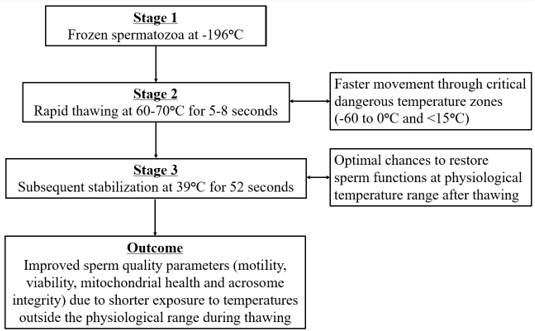
In general, all existing data on thawing procedures indicate that the effectiveness of rapid thawing at higher temperatures for shorter durations or a combination of rapid transient thawing followed by subsequent stabilization are such predominant than the other thawing methods, resulting in better initial post-thawed quality parameters and longer vitality until several hours in numerous laboratory investigations or even higher fertility rate in only few farm studies. In the last 2 decades, especially, frozen bull spermatozoa thawed at 60-70°C for 5-8 seconds ; ; ; ; , or at 70°C for 8 seconds followed by subsequent stabilization at 39°C for 52 seconds ; , seems to be the optimal thawing temperatures and exposures for higher quality and fertilizability of frozen bull spermatozoa, probably due to less susceptible to critical dangerous zone and osmotic shock during thawing, similar with results in frozen semen of other mammalian species ; ; ; .
On the other hand, it has been demonstrated that the freezing-thawing process could alter the expression of crucial proteins of spermatozoa , in addition to the conventional quality parameters, consequently affect sperm fertility . In fact, it could induce the substantial alteration of proteomes associated with key structural and functional roles for sperm fertilizability ; ; ; at any stages of cryopreservation . Especially, membrane lipids of frozen spermatozoa are damaged, leading to instability of the membrane and large reduction of multiple proteins during the freezing-thawing process . Only one recent study, however, provides the data of protein expression, PLCZ1, under different thawing protocols , so it is needed to evaluate the effectiveness of different thawing protocols on the expression and activity of numerous important proteins associated with semen quality and sperm fertilizability.
Therefore, not only the frozen bull semen quality but also the subsequent fertility of spermatozoa can further improve under the optimal thawing techniques with appropriate thawing temperature and duration.
CONCLUSIONS AND RECOMMENDATIONS
The review summarizes major advances made in several previous decades and unresolved questions about the efficacy and application possibility of different thawing procedures on post-thawed quality and fertility of frozen bull spermatozoa. This review also further provides insight into the critical mechanisms of how the ultrastructural, biochemical and functional damages of frozen bull sperm would be suffered during thawing, which may be minimized and/or avoided to overcome the low quality and fertilizability of frozen spermatozoa and consequently conception rate following AI.
Based on the existing data from multiple previous studies, although no clear recommendation for the ideal thawing procedure of the frozen bull semen straws can be made, rapid thawing at higher temperatures for shorter exposure or a combination of rapid transient thawing followed by subsequent stabilization at around physiological temperatures appear to be further improvements of numerous important post-thawed sperm quality parameters and bull fertility due to shorter exposure to temperatures outside the physiological range. However, there is still the limitation of their clear effectiveness under in vivo studies in the field, so further investigations of the effects of thawing protocols (rapid thawing at 60-70°C for 5-8 seconds or a combined method of this rapid transient thawing followed by subsequent stabilization at 39°C for 52-55 seconds; Figure 2) on the success rate of AI with conception and pregnancy rates under the practical conditions for the comprehensively definitive conclusion. It is also needed to evaluate the expression of important proteins under in vitro conditions and their related mechanisms for better semen quality and sperm fertilizability in next studies.
ACKNOWLEDGEMENTS
Authors acknowledge Prof. Hiroaki Funahashi and Laboratory of Animal Development and Reproductive Biotechnology, Department of Animal Science, Graduate School of Environmental and Life Science, Okayama University, Japan, to Hai Thanh Nguyen for his significantly increased knowledge associated with this work during for his Ph.D. study.
NOVELTY STATEMENT
Systematic review under comprehensive discussion within all aspects and mechanisms associated with of how to minimize the adverse effects during thawing on bull spermatozoa.
AUTHOR’S CONTRIBUTIONS
Loan Hong Thuy Vu Nguyen and Hai Thanh Nguyen: responsible for the concept, manuscript preparation and edition.
Anh Ngoc Thi Dang, Thuong Thi Nguyen and Phong Ngoc Van: contributed to improvement and brushing up on the quality of this review.
All authors have read and approved the finally completed version of the manuscript.
Conflict of Interest
The authors declare no conflict of interest.
Figures
Figure 1:.
Comparison of acquired data under three popular thawing methods on frozen bull spermatozoa. This figure was analyzed by the meta-analysis of published data from previous papers (Robbins et al., 1976; Senger et al., 1976; Gilbert and Almquist, 1978; Sender, 1980; Pace et al., 1981; Barth and Bowman, 1988; Correa et al., 1996; DeJamette et al., 2000; Nur et al., 2003; Muino et al., 2008; Al-Badry, 2012; Faezah et al., 2012; Rastegarnia et al., 2013; Akmal et al., 2015; Lyashenko, 2015; Doležalová et al., 2017; Yilmaz et al., 2019; Esin et al., 2022; Nguyen et al., 2023a; Nguyen, 2023). Notes: RT: Rapid thawing at 60-70oC; CT: Conventional thawing at 35-39oC; ST: Slow thawing in iced water at 1-5oC; MMP: mitochondrial membrane potential.
Figure 2:.
Schematic diagram of thawing process.
References
Aamdal J, Andersen K (1968). Fast thawing of semen frozen in straws. Reprod. Domest. Anim., 3(1): 22-24. https://doi.org/10.1111/j.1439-0531.1968.tb00041.x[CrossRef]
Abdollahi-Arpanahi R, Morota G, Peñagaricano F (2017). Predicting bull fertility using genomic data and biological information. J. Dairy Sci., 100(12): 9656-9666. https://doi.org/10.3168/jds.2017-13288[CrossRef]
Ahmad K (1984). Effect of thaw rates on survival of buffalo spermatozoa frozen in straws. J. Dairy Sci., 67(7): 1535-1538. https://doi.org/10.3168/jds.S0022-0302(84)81473-3[CrossRef]
Akal E, Selçuk M, Esin B, Akar M, Kaya C (2021). Comparison of the effects of different thawing methods on post-thaw sperm characteristics of buffalo bull semen. Thai J. Vet. Med., 51(4): 697-704. https://doi.org/10.56808/2985-1130.3168[CrossRef]
Al-Badry KI (2012). Effect of various thawing times and temperatures on frozen semen quality of Friesian bulls in Iraq. Int. J. Anim. Vet. Adv., 4(6): 384-388.
Almquist J, Wiggin HB (1973). Survival of bull spermatozoa frozen and thawed by different methods in plastic straws. Artif. Insemin. Dig., 21: 12-15.
Almquist JO, Grube KE, Rosenberger JL (1982). Effect of thawing time on fertility of bovine spermatozoa in french straws. J. Dairy Sci., 65(5): 824-827. https://doi.org/10.3168/jds.S0022-0302(82)82271-6[CrossRef]
Almquist JO, Rosenberger JL, Branas RJ (1979). Effect of thawing time in warm water on fertility of bovine spermatozoa in plastic straws. J. Dairy Sci., 62: 772-775. https://doi.org/10.3168/jds.S0022-0302(79)83322-6[CrossRef]
Anchordoquy JP, Anchordoquy JM, Pascua AM, Nikoloff N, Peral-García P, Furnus CC (2017). The copper transporter (SLC31A1/CTR1) is expressed in bovine spermatozoa and oocytes: Copper in IVF medium improves sperm quality. Theriogenology, 97: 124-133. https://doi.org/10.1016/j.theriogenology.2017.04.037[CrossRef]
Andrabi SMH (2007). Fundamental principles of cryopreservation of Bos taurus and Bos indicus bull spermatozoa. Int. J. Agric. Biol., 9: 367-369.
Ansari MS, Rakha BA, Andrabi SMH, Akhter S (2011). Effect of straw size and thawing time on quality of cryopreserved buffalo (Bubalus bubalis) semen. Reprod. Biol., 11(1): 49-54 https://doi.org/10.1016/S1642-431X(12)60063-1.[CrossRef]
Athurupana R, Ioki S, Funahashi H (2015a). Rapid thawing and stabilizing procedure improve postthaw survival and in vitro penetrability of boar spermatozoa cryopreserved with a glycerol-free trehalose-based extender. Theriogenology, 84(6): 940-947. https://doi.org/10.1016/j.theriogenology.2015.05.033[CrossRef]
Athurupana R, Takahashi D, Ioki S, Funahashi H (2015b). Trehalose in glycerol-free freezing extender enhances post-thaw survival of boar spermatozoa. J. Reprod. Dev., 61(3): 205-2010. https://doi.org/10.1262/jrd.2014-152[CrossRef]
Bamba K, Cran DG (1988). Further studies on rapid dilution and warming of boar semen. J. Reprod. Fertil., 82(2):509-518. https://doi.org/10.1530/jrf.0.0820509[CrossRef]
Barth AD, Bowman PA (1988). Determination of the best practical method of thawing bovine semen. Can. Vet. J., 29(4): 366-369
Baruselli PS, Ferreira RM, Colli MHA, Elliff FM, Sá Filho MF, Vieira L, de Freitas BG (2017). Timed artificial insemination: Current challenges and recent advances in reproductive efficiency in beef and dairy herds in Brazil. Anim. Reprod., 14(n3): 558-571. https://doi.org/10.21451/1984-3143-AR999[CrossRef]
Bedford-Guaus SJ, McPartlin LA, Xie J, Westmiller SL, Buffone MG, Roberson MS (2011). Molecular cloning and characterization of phospholipase C zeta in equine sperm and testis reveals species-specific differences in expression of catalytically active protein. Biol. Reprod., 85(1): 78-88. https://doi.org/10.1095/biolreprod.110.089466[CrossRef]
Beran J, Stádník L, Ducháček J, Toušová R, Louda F, Štolc L (2011). Effect of bulls’ breed, age and body condition score on quantitative and qualitative traits of their semen. Acta Univ. Agric. Silvic. Mendelianae Brun., 59(6): 37-44. https://doi.org/10.11118/actaun201159060037[CrossRef]
Berndtson WE, Pickett BW, Rugg CD (1976). Procedures for field handling of bovine semen in plastic straws. Proceedings of Technical Conference on Artificial Insemination and Reproduction, Milwaukee, WI, USA. pp. 20–21.
Bogle OA, Kumar K, Attardo-Parrinello C, Lewis SEM, Estanyol JM, Ballescà JL, Oliva R (2016). Identification of protein changes in human spermatozoa throughout the cryopreservation process. Andrology, 5(1): 10-22. https://doi.org/10.1111/andr.12279[CrossRef]
Borah BKD, Deka BC, Biswas RK, Chakravarty P, Deori S, Sinha S, Ahmed K (2015). Effect of thawing methods on frozen semen quality of yak (Poephagus grunniens L.) bulls. Vet. World, 8(7): 831-834. https://doi.org/10.14202/vetworld.2015.831-834[CrossRef]
Celeghini ECC, de Arruda RP, de Andrade AFC, Nascimento J, Raphael CF, Rodrigues PHM (2008). Effects that bovine sperm cryopreservation using two different extenders has on sperm membranes and chromatin. Anim. Reprod. Sci., 104(2-4): 119-131. https://doi.org/10.1016/j.anireprosci.2007.02.001[CrossRef]
Chaiprasat S, Benjakul W, Chartchue A (2006). Effect of bull semen thawing methods on sperm progressive motility. Chiang Mai Vet. J., 4(9): 25-29.
Chandler JE, Adkinson RW, Nebel RL (1984). Thawing optimums for bovine spermatozoa processed by three methods and packaged in continental and french straws. J. Dairy Sci., 67(2): 398-404. https://doi.org/10.3168/jds.S0022-0302(84)81315-6[CrossRef]
Chatdarong K, Thuwanut P, Manee-in S, Lohachit C, Axnér E (2010). Effects of thawing temperature and post-thaw dilution on the quality of cat spermatozoa. Reprod. Domest. Anim., 45(2): 221-227. https://doi.org/10.1111/j.1439-0531.2008.01218.x[CrossRef]
Chatterjee S, Lamirande ED, Gagnon C (2001). Cryopreservation alters membrane sulfhydryl status of bull spermatozoa: Protection by oxidized glutathione. Mol. Reprod. Dev., 60(4): 498-506. https://doi.org/10.1002/mrd.1115[CrossRef]
Chupin D, Schuh H (1995). Survey of present status of the use of artificial insemination in developed countries. World Anim. Rev., 82(3): 58-68.
Cooney MA, Malcuit C, Cheon B, Holland MK, Fissore RA, D’Cruz NT (2010). Species-specific differences in the activity and nuclear localization of murine and bovine phospholipase C zeta 1. Biol. Reprod., 83(1): 92-101. https://doi.org/10.1095/biolreprod.109.079814[CrossRef]
Córdova-Izquierdo A, Oliva JH, Lleó B, García-Artiga C, Corcuera BD, Pérez-Gutiérrez JF (2006). Effect of different thawing temperatures on the viability, in vitro fertilizing capacity and chromatin condensation of frozen boar semen packaged in 5 ml straws. Anim. Reprod. Sci., 92(1-2): 145-154. https://doi.org/10.1016/j.anireprosci.2005.05.011[CrossRef]
Correa JR, Pace MM, Zavos PM (1997). Relationships among frozen-thawed sperm characteristics assessed via the routine semen analysis, sperm functional tests and fertility of bulls in an artificial insemination program. Theriogenology, 48(5): 721-731. https://doi.org/10.1016/S0093-691X(97)00296-3[CrossRef]
Correa JR, Rodriguez MC, Patterson DJ, Zavos PM (1996). Thawing and processing of cryopreserved bovine spermatozoa at various temperatures and their effects on sperm viability, osmotic shock and sperm membrane functional integrity. Theriogenology, 46(3): 413-420. https://doi.org/10.1016/0093-691X(96)00163-X[CrossRef]
Curry MR, Watson PF (1994). Osmotic effects on ram and human sperm membranes in relation to thawing injury. Cryobiology, 31(1): 39-46. https://doi.org/10.1006/cryo.1994.1005[CrossRef]
Dai J, Dai C, Guo J, Zheng W, Zhang T, Li Y, Lu C, Gong F, Lu G, Lin G (2019). Novel homozygous variations in PLCZ1 lead to poor or failed fertilization characterized by abnormal localization patterns of PLCζ in sperm. Clin. Genet., 97(2): 347-351. https://doi.org/10.1111/cge.13636[CrossRef]
Danasouri IEl (1988). Effect of thawing temperature on the loss of acrosin and hyaluronidase enzymes from bovine spermatozoa. Theriogenology, 29(6): 1343-1346. https://doi.org/10.1016/0093-691X(88)90014-3[CrossRef]
Defoin L, Granados A, Donnay I (2008). Analysing motility parameters on fresh bull semen could help to predict resistance to freezing: A preliminary study. Reprod. Domest. Anim., 43(5): 606-611. https://doi.org/10.1111/j.1439-0531.2007.00964.x[CrossRef]
DeJarnette JM, Barnes DA, Marshall CE (2000). Effects of pre- and post-thaw thermal insults on viability characteristics of cryopreserved bovine semen. Theriogenology, 53(6): 1225-1238. https://doi.org/10.1016/S0093-691X(00)00267-3[CrossRef]
DeJarnette JM, Marshall CE (2005). Straw-thawing method interacts with sire and extender to influence sperm motility and conception rates of dairy cows. J. Dairy Sci., 88(11): 3868-3875. https://doi.org/10.3168/jds.S0022-0302(05)73072-1[CrossRef]
Dhami AJ, Sahni KL, Mohan G (1992). Effect of various cooling rates (from 30°C to 5°C) and thawing temperatures on the deep-freezing of Bos Taurus and Bos Bubalis semen. Theriogenology, 38(3): 565-574. https://doi.org/10.1016/0093-691X(92)90076-4[CrossRef]
Dhami AJ, Sahni KL, Mohan G, Jani VR (1996). Effects of different variables on the freezability, post-thaw longevity and fertility of buffalo spermatozoa in the tropics. Theriogenology, 46(1): 109-120. https://doi.org/10.1016/0093-691X(96)00146-X[CrossRef]
Diskin MG (2018). Review: Semen handling, time of insemination and insemination technique in cattle. Animal, 12(s1):75-84. https://doi.org/10.1017/S1751731118000952[CrossRef]
Dogan S, Vargovic P, Oliveira R, Belser LE, Kaya A, Moura A, Sutovsky P, Parrish J, Topper E, Memili E (2015). Sperm protamine-status correlates to the fertility of breeding bulls. Biol. Reprod., 92(4): 1-9. https://doi.org/10.1095/biolreprod.114.124255[CrossRef]
Doležalová M, Ptáček M, Stádník L, Ducháček J (2017). Effect of different thawing methods on bull’s semen characteristics. Acta Univ. Agric. Silvic. Mendelianae Brun., 65(3): 815-822. https://doi.org/10.11118/actaun201765030815[CrossRef]
Doležalová M, Stádník L, Biniová Z, Ducháček J, Beran J (2015). The effect of the freezing curve type on bull spermatozoa motility after thawing. Acta Vet. Brno., 84(4): 383-391. https://doi.org/10.2754/avb201584040383[CrossRef]
Doležalová M, Stádník L, Biniová Z, Ducháček J, Stupka R (2016). Equilibration and freezing interactions affecting bull sperm characteristics after thawing. Czech J. Anim. Sci., 61(11): 515-525. https://doi.org/10.17221/23/2016-CJAS[CrossRef]
DuPonte MW (2007). Proper semen handling during an artificial insemination program. Dep. Hum. Nutr. Food Anim. Sci., 16: 1-3.
Ennen BD, Berndtson WE, Mortimer RG, Pickett BW (1976). Effect of thawing procedures on fertility of bovine spermatozoa frozen in .25-ml straws. J. Anim. Sci., 43(2): 651-656. https://doi.org/10.2527/jas1976.433651x[CrossRef]
Eriksson BM, Rodriguez-Martinez H (2000). Effect of freezing and thawing rates on the post-thaw viability of boar spermatozoa frozen in FlatPacks and Maxi-straws. Anim. Reprod. Sci., 63(3-4): 205-220. https://doi.org/10.1016/S0378-4320(00)00171-8[CrossRef]
Esin B, Akar M, Tağrikulu MD, Kaya C, Çevik M (2022). The effects of fast and slow thawing on spermatological parameters and detect of chromatin condensation by toluidine blue staining in frozen-th awed bull sperm. Kafkas Univ. Vet. Fak. Derg., 28 (3): 307-313.
Faezah SSM, Zuraina FMY, Farah JHF, Khairul O, Hilwani NI, Iswadi MI, Fang CN, Zawawi I, Abas OM, Fatimah SI (2012). The effects of magnetic separation on cryopreserved bovine spermatozoa motility, viability and cryo-capacitation status. Zygote, 22(3): 378-386. https://doi.org/10.1017/S0967199412000597[CrossRef]
Firk R, Stamer E, Junge W, Krieter J (2002). Automation of oestrus detection in dairy cows: A review. Livest. Prod. Sci., 75(3): 219-232. https://doi.org/10.1016/S0301-6226(01)00323-2[CrossRef]
Fiser P, Ainsworth L, Fairfull R (1987). Evaluation of a new diluent and different processing procedures for cryopreservation of ram semen. Theriogenology, 28 (5): 599-607. https://doi.org/10.1016/0093-691X(87)90276-7[CrossRef]
Funahashi H, Nguyen HT, Wakai T (2024). Sperm mitochondria: Quantitative regulation and its impact on sperm quality. Springer, Cham, Switzerland. pp. 349-367. https://doi.org/10.1007/978-3-031-73079-5_12[CrossRef]
Gaillard C, Kupferschmied H (1982). Thawing time and nonreturn rate of bovine semen frozen in fine French straws. Theriogenology, 18(4): 487-495. https://doi.org/10.1016/0093-691X(82)90170-4[CrossRef]
Gao D, Critser JK (2000). Mechanisms of cryoinjury in living cells. ILAR J., 41(4): 187-96. https://doi.org/10.1093/ilar.41.4.187[CrossRef]
Gilbert GR, Almquist JO (1978). Effects on processing procedures on post-thaw acrosomal retention and motility of bovine spermatozoa packaged in 3-ml straws at room temperature. J. Anim. Sci., 46(1): 225-231. https://doi.org/10.2527/jas1978.461225x[CrossRef]
Gonzalez-Castro RA, Amoroso-Sanches F, Stokes JE, Graham JK, Carnevale EM (2019). Localisation of phospholipase Cζ1 (PLCZ1) and postacrosomal WW-binding protein (WBP2 N-terminal like) on equine spermatozoa and flow cytometry quantification of PLCZ1 and association with cleavage in vitro. Reprod. Fertil. Dev., 31(1): 1778-1792. https://doi.org/10.1071/RD19217[CrossRef]
Goshme S, Asfaw T, Demiss C, Besufekad S (2021). Evaluation of motility and morphology of frozen bull semen under different thawing methods used for artificial insemination in North Shewa zone. Ethiopia. Heliyon, 7(1): e08183. https://doi.org/10.1016/j.heliyon.2021.e08183[CrossRef]
Gürler H, Malama E, Heppelmann M, Calisici O, Leiding C, Kastelic JP, Bollwein H (2016). Effects of cryopreservation on sperm viability, synthesis of reactive oxygen species, and DNA damage of bovine sperm. Theriogenology, 86(2): 562-571. https://doi.org/10.1016/j.theriogenology.2016.02.007[CrossRef]
Hammerstedt RH, Graham JK, Nolan JP (1990). Cryopreservation of mammalian sperm: What we ask them to survive. J. Androl., 11(1): 73-88. https://doi.org/10.1002/j.1939-4640.1990.tb01583.x[CrossRef]
Härtlová H, Rajmon R, Krontorádová I, Mamica J, Zita J, Klabanová P, Černocký A (2013). Semen quality, lipid peroxidation, and seminal plasma antioxidant status in horses with different intensities of physical exercise. Acta Vet. Brno., 82(1): 31-35. https://doi.org/10.2754/avb201382010031[CrossRef]
Hayashi Y, Isobe N (2005). Characteristics of cryopreserved spermatozoa from a Holstein-Friesian bull thawed at different temperature. J. Int. Dev. Coop., 12(1): 107-110
Hernández M, Roca J, Gil MA, Vázquez JM, Martínez EA (2007). Adjustments on the cryopreservation conditions reduce the incidence of boar ejaculates with poor sperm freezability. Theriogenology, 67(9): 1436-1445. https://doi.org/10.1016/j.theriogenology.2007.02.012[CrossRef]
Heytens E, Parrington J, Coward K, Young C, Lambrecht S, Yoon SY, Fissore RA, Hamer R, Deane CM, Ruas M, Grasa P, Soleimani R, Cuvelier CA, Gerris J, Dhont M, Deforce D, Leybaert L, De Sutter P (2009). Reduced amounts and abnormal forms of phospholipase C zeta (PLCζ) in spermatozoa from infertile men. Hum. Reprod., 24(10): 2417-2428. https://doi.org/10.1093/humrep/dep207[CrossRef]
Hezavehei M, Sharafi M, Fathi R, Shahverdi A, Gilani MAS (2021). Membrane lipid replacement with nano-micelles in human sperm cryopreservation improves post-thaw function and acrosome protein integrity. Reprod. Biomed. Online, 43(2): 257-268. https://doi.org/10.1016/j.rbmo.2021.05.005[CrossRef]
Holt WV (2000). Basic aspects of frozen storage of semen. Anim. Reprod. Sci., 62(1-2): 3-22. https://doi.org/10.1016/S0378-4320(00)00152-4[CrossRef]
Jameel Z (2020). Effect of thawing rate on the motility, viability, and mitochondrial membrane potential of bull spermatozoa. Master thesis, Okayama University, Okayama, Japan. 35.
Jang TH, Park SC, Yang JH, Kim JY, Seok JH, Park US, Choi CW, Lee SR, Han J (2017). Cryopreservation and its clinical applications. Integr. Med. Res., 6(1): 12-18. https://doi.org/10.1016/j.imr.2016.12.001[CrossRef]
Januskauskas A, Gil J, Soderquist, Haard M, Haard Mc, Johannisson A, Rodríguez-Martinez H (1999). Effect of cooling rates on post-thaw sperm motility, membrane integrity, capacitation status and fertility of dairy bull semen used for artificial insemination in Sweden. Theriogenology 52(4): 641-658. https://doi.org/10.1016/S0093-691X(99)00159-4[CrossRef]
Januskauskas A, Johannisson A, Rodriguez-Martinez H (2003). Subtle membrane changes in cryopreserved bull semen in relation with sperm viability, chromatin structure, and field fertility. Theriogenology, 60(4): 743-758. https://doi.org/10.1016/S0093-691X(03)00050-5[CrossRef]
Januskauskas A, Lukoseviciute K, Nagy S, Johannisson A, Rodriguez-Martinez H (2005). Assessment of the efficacy of Sephadex G-15 filtration of bovine spermatozoa for cryopreservation. Theriogenology, 63(1): 160-178. https://doi.org/10.1016/j.theriogenology.2004.04.002[CrossRef]
Jing J, Peng Y, Fan W, Han S, Peng Q, Xue C, Qin X, Liu Y, Ding Z (2023). Obesity-induced oxidative stress and mitochondrial dysfunction negatively affect sperm quality. FEBS Open Bio., 13(4): 763-778. https://doi.org/10.1002/2211-5463.13589[CrossRef]
Kaczyk BL (2011). A comparison of semen thawing for artificial insemination in cattle. Master thesis, Angelo State University, San Angelo, Texas, United States. 21 Pages.
Kadirve G, Kumar S, Ghosh SK, Perumal P (2014). Activity of antioxidative enzymes in fresh and frozen thawed buffalo (Bubalus bubalis) spermatozoa in relation to lipid peroxidation and semen quality. Asian Pacific J. Reprod., 3(3): 210-217. https://doi.org/10.1016/S2305-0500(14)60028-2[CrossRef]
Kadirvel G, Kumar S, Kumaresan A (2009). Lipid peroxidation, mitochondrial membrane potential and DNA integrity of spermatozoa in relation to intracellular reactive oxygen species in liquid and frozen-thawed buffalo semen. Anim. Reprod. Sci., 114(1-3): 125-134. https://doi.org/10.1016/j.anireprosci.2008.10.002[CrossRef]
Kaproth MT, Rycroft HE, Gilbert GR, Abdel-Azim G, Putnam BF, Schnell SA, Everett RW, Parks JE (2005). Effect of semen thaw method on conception rate in four large commercial dairy heifer herds. Theriogenology, 63(9): 2535-2549. https://doi.org/10.1016/j.theriogenology.2004.11.001[CrossRef]
Kashir J, Heynen A, Jones C, Durrans C, Craig J, Gadea J, Turner K, Parrington J, Coward K (2011). Effects of cryopreservation and density-gradient washing on phospholipase C zeta concentrations in human spermatozoa. Reprod. Biomed. Online, 23(2): 263-267. https://doi.org/10.1016/j.rbmo.2011.04.006[CrossRef]
Kebede A (2018). Review on factors affecting success of artificial insemination. Int. J. Curr. Res. Acad. Rev., 6(5): 42-49. https://doi.org/10.20546/ijcrar.2018.605.008[CrossRef]
Khalil WA, El-Harairy MA, Zeidan AEB, Hassan MAE, Mohey-Elsaeed O (2018). Evaluation of bull spermatozoa during and after cryopreservation: Structural and ultrastructural insights. Int. J. Vet. Sci. Med., 6: 49-56. https://doi.org/10.1016/j.ijvsm.2017.11.001[CrossRef]
Kim S, Yu DH, Kang TW, Kim YJ (2011). Effect of thawing rate on the function of cryopreserved canine sperm. J. Vet. Clin., 28(6): 571-575.
Koch J, Weber LP, Heppelmann M, Freise F, Klingelmann M, Bachmann L (2022). Effect of different thawing methods for frozen bull semen and additional factors on the conception rate of dairy cows in artificial insemination. Animals, 12(18): 1-17. https://doi.org/10.3390/ani12182330[CrossRef]
Krymowski J (2019). Semen Handling for Maximum Fertility. American Dairymen: 1-3. https://www.americandairymen.com/articles/semen-handling-maximum-fertility
Kumaresan A, Johannisson A, Al-Essawe EM, Morrell JM (2017). Sperm viability, reactive oxygen species, and DNA fragmentation index combined can discriminate between above- and below-average fertility bulls. J. Dairy Sci., 100(7): 5824-5836. https://doi.org/10.3168/jds.2016-12484[CrossRef]
Lamb GC, Mercadante VRG (2016). Synchronization and artificial insemination strategies in beef cattle. Vet. Clin. North Am. Food Anim. Pract., 32(2): 335-347. https://doi.org/10.1016/j.cvfa.2016.01.006[CrossRef]
Larson-Cook KL, Brannian JD, Hansen KA, Kasperson KM, Aamold ET, Evenson DP (2003). Relationship between the outcomes of assisted reproductive techniques and sperm DNA fragmentation as measured by the sperm chromatin structure assay. Fertil. Steril., 80(4): 895-902. https://doi.org/10.1016/S0015-0282(03)01116-6[CrossRef]
Li G, Saenz J, Godke RA, Devireddy RV (2006). Effect of glycerol and cholesterol-loaded cyclodextrin on freezing-induced water loss in bovine spermatozoa. Reproduction, 131(5): 875-886. https://doi.org/10.1530/rep.1.00995[CrossRef]
Lima FS, De Vries A, Risco CA, Santos JEP, Thatcher WW (2010). Economic comparison of natural service and timed artificial insemination breeding programs in dairy cattle. J. Dairy Sci., 93(9): 4404-4413. https://doi.org/10.3168/jds.2009-2789[CrossRef]
Looper M (2000). Proper Semen Handling Improves Conception Rates of Dairy Cows. D-303: 1-4. https://americandairymen.com/articles/
López-Gatius F (2003). Is fertility declining in dairy cattle? A retrospective study in northeastern Spain. Theriogenology, 60(1): 89-99. https://doi.org/10.1016/S0093-691X(02)01359-6[CrossRef]
López-Gatius F (2012). Factors of a noninfectious nature affecting fertility after artificial insemination in lactating dairy cows. A review. Theriogenology, 77(6): 1029-1041. https://doi.org/10.1016/j.theriogenology.2011.10.014[CrossRef]
Lyashenko A (2015). Effect of different thawing procedures on the quality and fertility of the bull spermatozoa. Asian Pacific J. Reprod., 46(1): 17-21. https://doi.org/10.1016/S2305-0500(14)60051-8[CrossRef]
Marshall CE (1984). Considerations for cryopreservation of semen. Zoo Biol., 3(4): 343-356. https://doi.org/10.1002/zoo.1430030408[CrossRef]
Mazur P (1984). Freezing of living cells: mechanisms and implications. Am. J. Physiol., 247(3): 125-142. https://doi.org/10.1152/ajpcell.1984.247.3.C125[CrossRef]
Meyers SA (2005). Spermatozoal response to osmotic stress. Anim. Reprod. Sci., 89(1-4): 57-64. https://doi.org/10.1016/j.anireprosci.2005.06.026[CrossRef]
Mohammed A (2018). Artificial insemination and its economical significancy in dairy cattle: Review. Int. J. Res. Stud. Microbiol. Biotechnol., 4(1): 30-43. https://doi.org/10.20431/2454-9428.0401005[CrossRef]
Moore AI, Squires EL, Bruemmer JE, Graham JK (2006). Effect of cooling rate and cryoprotectant on the cryosurvival of equine spermatozoa. J. Equine Vet. Sci., 26(6): 215-218. https://doi.org/10.1016/j.jevs.2006.03.003[CrossRef]
Moreau J, Fargeon S, Gatimel N, Parinaud J, Léandri RD (2019). Expression of phospholipase PLC Zeta in human spermatozoa: impact of cryopreservation. Andrology, 7(3): 315-318. https://doi.org/10.1111/andr.12593[CrossRef]
Mortimer ST (2000). CASA - Practical aspects. J. Androl., 21(4): 515-524. https://doi.org/10.1002/j.1939-4640.2000.tb02116.x[CrossRef]
Muiño R, Rivera MM, Rigau T, Rodriguez-Gil JE, Peña AI (2008). Effect of different thawing rates on post-thaw sperm viability, kinematic parameters and motile sperm subpopulations structure of bull semen. Anim. Reprod. Sci., 109(1-4): 50-64. https://doi.org/10.1016/j.anireprosci.2007.11.028[CrossRef]
Narasimha AVR, Haranath GB, Sekharam GS, Rao JR (1986). Effect of thaw rates on motility, survival and acrosomal integrity of buffalo spermatozoa frozen in medium French straws. Anim. Reprod. Sci., 12(2): 123-129. https://doi.org/10.1016/0378-4320(86)90052-7[CrossRef]
Nema SP, Dnami AJ, Kavani SF (2009). Effect of thawing regime on post-thaw quality of ram semen frozen in tris, citrate and phosphate based diluents. Indian Vet. J., 86(5): 478-480.
Nguyen HT (2023). Assessment of factors affecting the motility and viability of frozen-thawed bull spermatozoa. PhD dissertation, Okayama University, Okayama, Japan. 110 Pages.
Nguyen HT, Do SQ, Athurupana R, Wakai T, Funahashi H (2023a). Rapid thawing of frozen bull spermatozoa by transient exposure to 70 °C improves the viability, motility and mitochondrial health. Anim. Reprod., 20(3): e20220127. https://doi.org/10.1590/1984-3143-ar2022-0127[CrossRef]
Nguyen HT, Do SQ, Wakai T, Funahashi H (2025). Mitochondrial content and mtDNA copy number in spermatozoa and penetrability into oocytes. Theriogenology, 234: 125-132. https://doi.org/10.1016/j.theriogenology.2024.12.012[CrossRef]
Nguyen TH, Do QS, Kobayashi H, Wakai T, Funahashi H (2023b). Negative correlations of mitochondrial DNA copy number in commercial frozen bull spermatozoa with the motility parameters after thawing. Theriogenology, 210: 154-161. https://doi.org/10.1016/j.theriogenology.2023.07.027[CrossRef]
Nicolae D, Stela Z, Dragomir C, Hortanse AA (2014). Effect of thawing time and temperature variation on the quality of frozen-thawed ram semen. Rom. Biotechnol. Lett., 19(1): 8935-8940.
Nur Z, Dogan I, Soylu MK, Ak K (2003). Effect of different thawing procedures on the quality of bull semen. Rev. Med. Vet., 154(7): 487-490.
Nur Z, Ileri IK, Ak K (2006). Effects of different temperature treatments applied to deep stored bull semen on post-thaw cold shocked spermatozoa. Bull. Vet. Inst. Pulawy, 50(1): 79-83.
Öztürk AE, Bucak MN, Bodu M, Başpınar N, Çelik İ, Shu Z, Keskin N, Gao D, Öztürk AE, Bucak MN, Bodu M, Başpınar N, Çelik İ, Shu Z, Keskin N, Gao D (2019). Cryobiology and Cryopreservation of Sperm. IntechOpen. 1-42. http://dx.doi.org/10.5772/intechopen.89789[CrossRef]
Pace MM, Sullivan JJ, Elliott FI, Graham EF, Coulter GH (1981). Effects of Thawing Temperature, Number of Spermatozoa and Spermatozoal Quality on Fertility of Bovine Spermatozoa Packaged in .5-ml French Straws. J. Anim. Sci., 53(3): 693-701. https://doi.org/10.2527/jas1981.533693x[CrossRef]
Pagl R, Aurich JE, Müller-Schlösser F, Kankofer M, Aurich C (2006). Comparison of an extender containing defined milk protein fractions with a skim milk-based extender for storage of equine semen at 5 °C. Theriogenology, 66(5): 1115-1122. https://doi.org/10.1016/j.theriogenology.2006.03.006[CrossRef]
Panyaboriban S, Pukazhenthi B, Brown ME, Crowe C, Lynch W, Singh RP, Techakumphu M, Songsasen N (2016). Influence of cooling and thawing conditions and cryoprotectant concentration on frozen-thawed survival of white-naped crane (Antigone vipio) spermatozoa. Cryobiology, 73(2): 209-215. https://doi.org/10.1016/j.cryobiol.2016.07.009[CrossRef]
Paulenz H, Söderquist L, Ådnøy T, Nordstoga A, Gulbrandsen B, Berg KA (2004). Fertility results after different thawing procedures for ram semen frozen in minitubes and mini straws. Theriogenology, 61(9): 1719-1727. https://doi.org/10.1016/j.theriogenology.2003.10.001[CrossRef]
Peña A, Linde-Forsberg C (2000). Effects of equex, one- or two-step dilution, and two freezing and thawing rates on post-thaw survival of dog spermatozoa. Theriogenology, 54(6): 859-875. https://doi.org/10.1016/S0093-691X(00)00397-6[CrossRef]
Perez-Patiño C, Barranco I, Li J, Padilla L, Martinez EA, Rodriguez-Martinez H, Roca J, Parrilla I (2019). Cryopreservation differentially alters the proteome of epididymal and ejaculated pig spermatozoa. Int. J. Mol. Sci., 20(7): 1791. https://doi.org/10.3390/ijms20071791[CrossRef]
Peris-Frau P, Martín-Maestro A, Iniesta-Cuerda M, Sánchez-Ajofrín I, Mateos-Hernández L, Garde JJ, Villar M, Soler AJ (2019). Freezing-thawing procedures remodel the proteome of ram sperm before and after in vitro capacitation. Int. J. Mol. Sci., 20(18): 4596. https://doi.org/10.3390/ijms20184596[CrossRef]
Pini T, Rickard JP, Leahy T, Crossett B, Druart X, de Graaf SP (2018). Cryopreservation and egg yolk medium alter the proteome of ram spermatozoa. J. Proteomic., 181: 73-82. https://doi.org/10.1016/j.jprot.2018.04.001[CrossRef]
Pugliesi G, Fürst R, Carvalho GR (2013). Impact of using a fast-freezing technique and different thawing protocols on viability and fertility of frozen equine spermatozoa. Andrologia, 46(9): 1055-1062. https://doi.org/10.1111/and.12205[CrossRef]
Pursel VG, Johnson LA, Schulman LL (1973). Effect of dilution, seminal plasma and incubation period on cold shock susceptibility of boar spermatozoa. J. Anim. Sci., 37(2): 528-531. https://doi.org/10.2527/jas1973.372528x[CrossRef]
Rajbari R, Husma AU, Azam A, Ejaz R, Adalat R, Akhtar S, Farooq MU, Qadeer S (2022). Effects of thawing methods (techniques) on freeze thaw buffalo bull sperm quality. Egypt. J. Vet. Sci., 53(4): 591-597. https://doi.org/10.21608/ejvs.2022.130902.1333[CrossRef]
Rastegarnia A, Shahverdi A, Topraggaleh TR, Ebrahimi B, Shafipour V (2013). Effect of different thawing rates on post-thaw viability, kinematic parameters and chromatin structure of buffalo (Bubalus bubalis) spermatozoa. Cell J., 14(4): 306-313.
Rezaie FS, Hezavehei M, Sharafi M, Shahverdi A (2021). Improving the post-thaw quality of rooster semen using the extender supplemented with resveratrol. Poult. Sci., 100(9): 101290. https://doi.org/10.1016/j.psj.2021.101290[CrossRef]
Robbins RK, Saacke RG, Chandler PT (1976). Influence of freeze rate, thaw rate and glycerol level on acrosomal retention and survival of bovine spermatozoa frozen in French straws. J. Anim. Sci., 42(1): 145-154. https://doi.org/10.2527/jas1976.421145x[CrossRef]
Rodgers JC, Bird SL, Larson JE, Dilorenzo N, Dahlen CR, Dicostanzo A, Lamb GC (2012). An economic evaluation of estrous synchronization and timed artificial insemination in suckled beef cows. J. Anim. Sci., 90(11): 4055-4062. https://doi.org/10.2527/jas.2011-4836[CrossRef]
Rodriguez OL, Berndtson WE, Ennen BD, Pickett BW (1975). Effect of rates of freezing, thawing and level of glycerol on the survival of bovine spermatozoa in straws. J. Anim. Sci., 41(1): 129-136. https://doi.org/10.2527/jas1975.411129x[CrossRef]
Royal MD, Smith RF, Friggens NC (2008). Foreword Fertility in dairy cows: bridging the gaps. Animal, 2(8): 1101-1103. https://doi.org/10.1017/S1751731108002693[CrossRef]
Rugg CD, Berndtson WE, Mortimer RG, Pickett BW (1977). Effect of thawing procedures on fertility of bovine spermatozoa frozen in .25-ml straws. J. Anim. Sci., 44(2): 266-270. https://doi.org/10.2527/jas1977.442266x[CrossRef]
Selçuk M, Akal E, Esin B, Ni̇Zam MY, Genç MD (2020). Comparative evaluation of the effects of different thawing methods on bull sperm characteristics with computer-assisted semen analysis. Turkish J. Vet. Anim. Sci., 44(6): 1316-1321. https://doi.org/10.3906/vet-2007-12[CrossRef]
Sellem E, Broekhuijse MLWJ, Chevrier L, Camugli S, Schmitt E, Schibler L, Koenen EPC (2015). Use of combinations of in vitro quality assessments to predict fertility of bovine semen. Theriogenology, 84(9): 1447-1454. https://doi.org/10.1016/j.theriogenology.2015.07.035[CrossRef]
Senger PL (1980). Handling frozen bovine semen - Factors which influence viability and fertility. Theriogenology, 13(1): 51-62. https://doi.org/10.1016/0093-691X(80)90014-X[CrossRef]
Senger PL, Becker WC, Hillers JK (1976). Effect of thawing rate and post-thaw temperature on motility and acrosomal-maintenance in bovine semen frozen in plastic straws. J. Anim. Sci., 42(4): 932-936. https://doi.org/10.2527/jas1976.424932x[CrossRef]
Sharafi M, Borghei-Rad SM, Hezavehei M, Shahverdi A, Benson JD (2022). Cryopreservation of semen in domestic animals: A Review of current challenges, applications, and prospective strategies. Animals, 12(23): 3271. https://doi.org/10.3390/ani12233271[CrossRef]
Sharma RK, Agarwal A (1996). Role of reactive oxygen species in male infertility. Urology 48(6): 835-850. https://doi.org/10.1016/S0090-4295(96)00313-5[CrossRef]
Snoeck PPN, Cottorello ACP, Henry M (2012). Viability and fertility of stallion semen frozen with ethylene glycol and acetamide as a cryogenic agent. Anim. Reprod. Sci., 9(1): 33-39.
Städník L, Rajmon R, Beran J, Šimoník O, Doležalovä M, Šichtař J, Stupka R, Folkovä P (2015). Influence of selected factors on bovine spermatozoa cold shock resistance. Acta Vet. Brno., 84(2): 125-131. https://doi.org/10.2754/avb201584020125[CrossRef]
Tomás C, Gómez-Fernández J, Gómez-Izquierdo E, Mercado ED (2014). Effect of the holding time at 15°C prior to cryopreservation, the thawing rate and the post-thaw incubation temperature on the boar sperm quality after cryopreservation. Anim. Reprod. Sci., 144(3-4): 115-121. https://doi.org/10.1016/j.anireprosci.2013.12.011[CrossRef]
Torra-Massana M, Cornet-Bartolomé D, Barragán M, Durban M, Ferrer-Vaquer A, Zambelli F, Rodriguez A, Oliva R, Vassena R (2019). Novel phospholipase C zeta 1 mutations associated with fertilization failures after ICSI. Hum. Reprod., 34(8): 1494-1504. https://doi.org/10.1093/humrep/dez094[CrossRef]
Tran M, Uriondo H, Nodar F, Sedó CA (2018). Cryopreservation promotes sperm DNA damage through oxidative stress [38N]. Obstet. Gynecol., 131: 162S. https://doi.org/10.1097/01.AOG.0000533134.61739.52[CrossRef]
Trenkle A, Willham RL (1977). Beef Production Efficiency. Science, 198(4321): 1009-1015. https://doi.org/10.1126/science.198.4321.1009[CrossRef]
Ugur MR, Abdelrahman AS, Evans HC, Gilmore AA, Hitit M, Arifiantini RI, Purwantara B, Kaya A, Memili E (2019). Advances in Cryopreservation of Bull Sperm. Front. Vet. Sci., 6: 1-15. https://doi.org/10.3389/fvets.2019.00268[CrossRef]
Upadhyay VR, Ramesh V, Dewry RK, Kumar G, Raval K, Patoliya P (2021). Implications of cryopreservation on structural and functional attributes of bovine spermatozoa: An overview. Andrologia, 53(8): 1-16. https://doi.org/10.1111/and.14154[CrossRef]
Vartia K, Taponen J, Heikkinen J, Lindeberg H (2017). Effect of education on ability of AI professionals and herd-owner inseminators to detect cows not in oestrus and its relation with progesterone concentration on day of re-insemination. Theriogenology, 102: 23-28. https://doi.org/10.1016/j.theriogenology.2017.07.007[CrossRef]
Vishwanath R (2003). Artificial insemination: The state of the art. Theriogenology, 59(2): 571-584. https://doi.org/10.1016/S0093-691X(02)01241-4[CrossRef]
Vishwanath R, Shannon P (2000). Storage of bovine semen in liquid and frozen state. Anim. Reprod. Sci., 62(1-3): 23-53. https://doi.org/10.1016/S0378-4320(00)00153-6[CrossRef]
Wang F, Zhang J, Kong S, Li C, Zhang Z, He X, Wu H, Tang D, Zha X, Tan Q, Duan Z, Cao Y, Zhu F (2020). A homozygous nonsense mutation of PLCZ1 cause male infertility with oocyte activation deficiency. J. Assist. Reprod. Genet., 37(4): 821-828. https://doi.org/10.1007/s10815-020-01719-4[CrossRef]
Watson PF (1995). Recent developments and concepts in the cryopreservation of spermatozoa and the assessment of their post-thawing function. Reprod. Fertil. Dev., 7(4): 871-891. https://doi.org/10.1071/RD9950871[CrossRef]
Westfalewicz B, Dietrich MA, Ciereszko A (2015). Impact of cryopreservation on bull (Bos taurus) semen proteome. J. Anim. Sci., 93(11): 5240-5253. https://doi.org/10.2527/jas.2015-9237[CrossRef]
Wiggin HB, Almquist JO (1975). Effect of glycerol equilibration time and thawing rate upon acrosomal maintenance and motility of bull spermatozoa frozen in plastic straws. J. Anim. Sci., 40(2): 302-305. https://doi.org/10.2527/jas1975.402302x[CrossRef]
Yilmaz E, Ak K, Baran A (2019). Effect of different thawing time and high temperature on frozen thawed bull semen traits. J. Anim. Vet. Adv., 18(7): 239-245. https://doi.org/10.36478/javaa.2019.239.245[CrossRef]
Zamani M, Zafari F, Najafzadeh V, Rajaei FF, Kamranjam M, Hosseini A (2023). Effect of antioxidant on sperm freezing. J. Inflamm. Dis., 26(4): 217-226. https://doi.org/10.32598/JID.26.4.7[CrossRef]
Zenteno ES, Rojano B, Betancur GR (2023). Influence of thawing temperature on sperm motility, structure, and metabolism of frozen bovine semen. Anim. Reprod., 53(3): e20210731. https://doi.org/10.1590/0103-8478cr20210731[CrossRef]
Various Thawing Methods of Frozen Bull Semen for Quality Parameters and Fertility of Spermatozoa: Current Situation and Future Perspectives · ResearchersLinks