
The thawing method is a crucial factor affecting frozen semen quality. This study evaluated the effect of different thawing methods on the post-thaw quality of frozen Simmental semen. The study was conducted at the Laboratory of Animal Physiology and Reproduction, Faculty of Animal Science, and the Integrated Research Laboratory, Faculty of Medicine, Universitas Gadjah Mada. This study used frozen semen straws from a superior bull with same production date, produced by the Center for Artificial Insemination (BBIB) Singosari. A total of ninety straws were divided into three groups with different thawing methods such as; 28°C for 30 seconds (T1), 28°C for 45 seconds (T2), and 37°C for 15 seconds (T3). Motility was evaluated by observing spermatozoa movement. Viability and abnormalities were analyzed using eosin-nigrosin staining. Plasma membrane integrity was assessed using the hypoosmotic swelling test (HOS-test), and DNA damage was evaluated using the Halomax® kit. The results showed that the thawing method significantly affected motility, abnormalities, and plasma membrane integrity (p<0.05). The average motility in T1, T2, and T3 was 44.03±3.47%, 42.13±2.99%, and 42.30±2.56%, respectively. Abnormalities were 10.30±2.16%, 12.25±2.85%, and 12.77±3.14%, respectively. Therefore, plasma membrane integrity was 75.70±3.23%, 73.98±4.30%, and 70.40±3.87%, respectively. However, the thawing method did not significantly affect viability and DNA damage (p>0.05). It can be concluded that, the thawing method affects the post-thaw quality of Simmental spermatozoa, specifically motility, abnormalities, and plasma membrane integrity. Among the methods tested, 28°C tap water for 30 seconds was the best thawing method under field conditions.
Research Article · Volume 38, Issue 1, 10 April 2025 · Open Access
Effect of Different Thawing Methods on Frozen Semen Characteristics and DNA Damage of Indonesian Simmental Bull
· · · · · ·
Affiliations & Notes ⌄
- 1Graduate Program in Animal Science, Faculty of Animal Science, Universitas Gadjah Mada, Yogyakarta, 55281, Indonesia
- 2Departement of Animal Breeding and Reproduction, Faculty of Animal Science, Universitas Gadjah Mada, Yogyakarta, 55281, Indonesia. *Correspondence | Diah Tri Widayati, Department of Animal Breeding and Reproduction, Faculty of Animal Science, Universitas Gadjah Mada, Yogyakarta, 55281, Indonesia
- 3Email: widayati@ugm.ac.id
Article Info ⌄
- Journal:
- Pakistan Journal of Agricultural Research
- Published:
- 10 April 2025
From the article
- The optimum thawing was obtained at 28°C for 30 seconds, with plasma membrane integrity (75.70±3.23%) and DNA damage (3.77±2.03%).
- The thawing method significantly affected motility, abnormalities, and plasma membrane integrity spermatozoa of Simmental bull.
Selected from the article's own text.
Abstract
Introduction
Artificial insemination (AI) is a reproductive technology aim to increase livestock populations and enhancing genetic quality. A series of AI processes include selecting superior bull, maintaining superior bull, collecting semen from superior bull, evaluating semen, processing semen, storing semen, and carrying out artificial insemination . The livestock breeding program using AI has been widely implemented and prioritized not only for genetic improvement but also for cost savings on bull in population expansion efforts, disease prevention, and reduction of inbreeding risks ; . This also contributes to efforts to increase the Simmental cattle population in Indonesia. The Simmental cattle are one of the superior cattle breeds widely used by local breeders, especially for AI program . Simmental bull have a fast growth rate and the high carcass percentage makes them suitable for beef cattle . It is further explained that Simmental bulls have the advantage of an adult body weight . Simmental cattle also have good adaptability in Indonesia and high-quality meat . In addition, Simmental cattle are favored by farmers due to their advantages, such as relatively fast body growth, high fertility, and ease to calf. These advantages can be disseminated through the implementation of AI ; .
The Ministry of Agriculture through the Directorate General of Livestock and Animal Health stated that the development of AI has been successful since 2015. Through the “Upaya Khusus Sapi Indukan Wajib Bunting (Upsus Siwab)” program, which is currently called the “Sapi Kerbau Komoditi Andalan Negeri (Sikomandan)” program, has successfully accelerated the population growth of cattle and buffalo. From 2017 to 2020, there were 12,718.847 AI services for 11,550.505 recipients. The implementation of AI was carried out simultaneously in all regions of Indonesia, indicating, indicating that AI is accepted by farmers, both in intensive, semi-intensive and extensive development areas as indicated by the achievement of AI services of 127.18% and the achievement of acceptors served reached 115.50%. Implementation of AI using frozen semen has been applied because it has a longer storage period and allows accelerated distribution of superior genetics to all regions of Indonesia . Successful AI implementation influenced by four factors such as; selection of acceptor cows, semen quality, accurate estrus detection by farmers, and inseminator skill. Inseminators and farmers play vital roles in the success of the AI program in the field .
While sperm quality is essential for successful AI, the thawing method is critical for preserving the quality of frozen semen. Factors that must be considered in the thawing process is the temperature used, as temperature changes can affect the survival of beef bull sperm . The principle of thawing is the gradual increase in the temperature of the semen. Thawing will reactivate spermatozoa so that to reach an ideal temperature, the enzymatic reaction activities that occur during cellular metabolism can occur optimally, as well as the utilization and formation of energy for the motility of spermatozoa proceeds effectively . The structural changes that are produced by the spermatozoa membrane after thawing are primarily related to the ability to change energy sources, which affects cellular metabolism and the function of spermatozoa ; . Sudden temperature changes will cause spermatozoa death , and the use of inappropriate thawing methods will lead to damage to the spermatozoa membrane, which can reduce spermatozoa quality . Because the thawing method significantly affects sperm quality, necessitating careful consideration of the method used.
According to the Indonesian National Standard, thawing involves using water at 37 to 38°C for 15 to 30 seconds (National Standardization Agency of Indonesia, 2021). Meanwhile, AI technicians in the field typically thaw semen using tap water or fresh water at 28°C rather than warm water at 37°C, the reason for using tap water as a thawing medium that it is more effective and efficient . As described earlier, optimal spermatozoa quality is essential for successful AI, and proper thawing is crucial for maintaining the quality. This study investigates the effect of thawing frozen semen from Simmental bulls using tap water or fresh water at 28°C on post-thaw sperm quality, assessed by motility, viability, abnormalities, plasma membrane integrity, and deoxyribonucleic acid (DNA) damage. The aim is to determine the optimal semen thawing method for Simmental bulls to improve semen quality and address challenges encountered during field AI, thereby enhancing AI technician compliance and improving conception rates.
Materials and Methods
Research design and location
This study used frozen semen from one superior Simmental bull, produced at the Center for Artificial Insemination (BBIB) Singosari, Malang, East Java, Indonesia. The bull is fed forage and concentrate, and raised under veterinary supervision adhered to all animal welfare principles, and according to standard operating procedures (SNI ISO 9001:2015 and ISO 37001:2016). Three different thawing methods were used 30 and 45 seconds at 28°C , and for 15 seconds at 37°C . Each method was replicated 30 times. This study was carried out from July 2023 to January 2024 at the Laboratory of Animal Physiology and Reproduction, Faculty of Animal Science, for observation of motility, viability, abnormalities, and integrity of plasma membranes. Meanwhile, DNA damage is observed in the Integrated Research Laboratory, Faculty of Medicine, Universitas Gadjah Mada, Yogyakarta.
Frozen thawed semen
The frozen semen designated for use was kept in a container with liquid nitrogen at -196°C. The straws of frozen semen were taken used tweezers, then thawed according to each different thawing method then expelled into a microtube. Observation was made on motility, viability, abnormalities, plasma membrane integrity of spermatozoa and DNA damage. The observation carried out using light microscope with magnification 10x10 and 10x40.
Motility analysis
Thawed semen (10µL) was dropped glass slides and covered with a cover glass. Motility was observed under light microscope connected with advance observer (OptiLab, Miconos, Indonesia). Motility rate was calculated as percentages around 0 to 100% with a scale of 5% ; , 2022).
Viability and abnormalities analysis
Viability is observed using the eosin-nigrosin stain . Semen (50 µL) were mixed with 10 µL of eosin-nigrosin then dropped onto the object glass, and the smear preparation using other slides and fixation using a bunsen burner. Live and dead sperm (200 total) were observed using a light microscope at 10×40 magnification. Viable spermatozoa do not absorb the eosin-nigrosin stain and non-viable (or dead) spermatozoa absorb the eosin-nigrosin stain. Observation of spermatozoa abnormalities is the same as the method used for assessing viability. Observation of abnormalities morphological shapes of spermatozoa that exhibited primary and secondary abnormalities ; .
Plasma membrane integrity analysis
Plasma membrane integrity was assessed using the hypoosmotic swelling test (HOS-test) based from previous study (Prihantoko et al., 2020). The HOS-test solution was prepared by dissolving 0.9 g fructose and 0.49 g sodium citrate in 100 mL of distilled water. Furthermore, 200 µL of HOS-test solution was added to 20 µL of post-thawed semen and incubated for 60 minutes at 37ºC. After the incubation, 50 µL of solution was taken using a micropipette and placed on an object glass. A smear was then prepared on the object glass. The slides were fixed in methanol for 10 minutes, rinsed with running water, and then air-dried in the room temperature (27 to 28°C). A total of 200 spermatozoa were observed using a light microscope with a magnification of 10x40. Spermatozoa with intact membranes exhibited swollen heads and circular or bubbling tails, whereas those with damaged membranes had straight tails.
Spermatozoa DNA damage analysis
The DNA fragmentation was evaluated using Halomax® kit (Halotech DNA, USA). Intact spermatozoa DNA is marked by halo-shaped fluorescence resulting from chromatin shedding that occurs in the head region of the spermatozoa cells. Observation of DNA damage was conducted by following the procedures, provided by the company (Halotech DNA, USA). Thawed semen was diluted by adding phosphate-buffered saline (PBS) with a ratio of 1:1.75. The agarose was melted in water at 93°C for 5 minutes, then incubated in 37°C for 5 minutes. Moreover, 20 μL semen and 40 μL agarose in a micro-tube were mixed gently. The mixture was dropped on the Halomax® slide were prepared and covered with a cover glass. The slides were placed on a metal surface in a refrigerator for 8 minutes to allow the sample to solidify. The cover glass was then carefully removed and lysis solution (LS) was added to completely cover the agarose. The slides were incubated at room temperature (27 to 28°C) for 5 minutes. This was followed by fixation in distilled water for 5 minutes, then 70% ethanol and 100% ethanol for 2 minutes each. Furthermore, the samples were stained using 1:1 ratio of fluorochrome green reagent (Halotech DNA, USA), 10 μL of the suspension was placed on a slide, and covered using cover glass. The last step, DNA damage was evaluated using an LSM-800 confocal microscope (Zeiss, Germany) at 10x40 magnification with a 300 nm green filter.
Statistical analysis
The observation was made on motility, viability, abnormalities, plasma membrane integrity and DNA damage. Data were analyzed using one-way analysis of variance (ANOVA) using the statistical package for the social sciences (SPSS) version 25 software, with 5% probability value (p-value). The results are presented as mean±standard deviation.
Results
The influence of thawing methods on sperm motility, viability, and abnormalities is presented in Table 1. The optimum results were found with the method obtained at 28°C for 30 seconds with motility (44.03 ± 3.47%), viability (67.21 ± 4.09%), and abnormalities (10.30±2.16%). The influence of thawing methods on intracellular quality, including plasma membrane integrity and DNA damage, are presented in Table 2. The optimum thawing was obtained at 28°C for 30 seconds, with plasma membrane integrity (75.70±3.23%) and DNA damage (3.77±2.03%). The thawing method significantly affected motility, abnormalities, and plasma membrane integrity of spermatozoa (p<0.05). However, the thawing method did not significantly affect the viability and DNA damage (p>0.05).
Table 1: The average values of motility, viability, and abnormalities of frozen semen post-thaw of Indonesian Simmental bull using different thawing methods.
| Thawing methods (Temp. ºC, time) | Variables (%) | ||
| Motility | Viability | Abnormalities | |
| 28 ºC, 30’ | 44,03±3,47b | 67.21±4.09 | 10.30±2.16a |
| 28 ºC, 45’ | 42.13±2,99a | 65.78±4.22 | 12.25±2.85b |
| 37 ºC, 15’ | 42.30±2,56a | 66.76±4.01 | 12.77±3.14b |
a,b Different superscript on the same column indicate significant differences (p<0.05).
Discussion
The thawing method can influence the motility of spermatozoa, it is suspected that temperature differences can cause enzymatic reactions to occur optimally during the metabolic processes of cells. It is supported by , who stated that, the appropriate combination of temperature and thawing duration prevents damage to the spermatozoa membrane, thus not interfering with its ability to fertilize the ovum. The motility of spermatozoa highly depends on the oxidative phosphorylation which produces adenosine triphosphate in the mitochondrial sheath ; . Spermatozoa require energy for the flagella to move progressively forward to reach the oviduct during fertilization . The oxidative phosphorylation (OXPHOS) and glycolysis mechanism produced adenosine triphosphate (ATP) in microtubules which is the energy needed for spermatozoa movement. Oxidative phosphorylation (OXPHOS) is the process of ATP production in the mitochondria through electron transportation, and the process of glycolysis, which is the production of ATP in cytosol through the sugar breakdown . The mitochondrial organelles play a role in cellular respiration and cellular biochemistry for energy production in ATP formation, thus affecting the rate of spermatozoa motility. The mitochondrial integrity played important roles in the energy production required by sperm for the movement of the flagella to reach the fertilization site and penetrate the pellucida zone ; .
Table 2: The average values of intracellular damage frozen semen post-thaw of Indonesian Simmental bull using different thawing methods.
| Thawing methods (Temperature ºC, time) | Variables (%) | |
| Plasma membrane integrity | DNA damage | |
| 28 ºC, 30’ | 75.70±3.23b | 3.77±2.03 |
| 28 ºC, 45’ | 73.98±4.30b | 4.00±2.00 |
| 37 ºC, 15’ | 70.40±3.87a | 4.77±1.95 |
a,b Different superscript in the same column indicate significant differences (p<0.05).
In the present study, a value motility of sperm post-thaw Simmental bull as much as 40%, indicates that the motility is within the standard, having a value of no less than 40% according to the Indonesian National Standard and suitable for AI . This study confirms the findings of that the thawing method affects spermatozoa quality in Ongole crossbred. The spermatozoa motility percentages of Ongole crossbred bull semen, using different thawing methods, ranged from 43.80 to 49.90%. Improper thawing method can affect the decreased motility of spermatozoa. High temperatures and prolonged thawing duration can cause a massive increase in metabolic activity, increased lactic acid production, and affect the toxic concentration of spermatozoa . Consequently, sperm motility was low, and many spermatozoa were dead. In addition, the low motility percentage can be an indicator of spermatozoa plasma membrane damage. It is supported by , that the low temperatures will cause vital substances in spermatozoa to leak, thus intracellular enzymes, lipoproteins, ATP, potassium, intracellular, and decreased phospholipids, as well as cause damage to spermatozoa plasma membrane. Plasma membrane has a role in protecting organelles and transporting electrolytes, if there is damage to spermatozoa membranes, it will caused disruption of metabolic processes and physiological processes, thus leading to the death of spermatozoa which affects spermatozoa motility.
The thawing method did not significantly affect the viability of Simmental bull sperm. This may be because the variations in thawing temperature and duration used did not induce extreme osmotic pressure changes, thus maintaining stable and unimpaired sperm membrane permeability . Consequently, post-thaw frozen semen viability remained relatively constant. This consistent viability may also be attributed to the use of Simmental bulls from the same stud, maintained under uniform environmental conditions. These bulls likely share similar genetic, physiological, and adaptive characteristics. This uniformity reflects stable biological conditions, including consistent feed management, nutrient fulfillment, and environmental control during semen collection and processing . Internal and external factors influence the viability of spermatozoa; internal factors include age, breed, and genetics, while external factors are influenced by feed, environment, and the diluent used .
In this study, a post-thaw sperm viability of 67% was observed in Simmental bulls. This result suggests good quality and suitability for AI, as it exceeds the established minimum of 50%. Consistent with , thawed semen viability in their study ranged from 40 to 50%. Spermatozoa with high percentages of viability indicate that the physically intact plasma membrane can protect spermatozoa organelles, nutrients and ions needed for metabolic processes are available. Metabolism will proceed well if the plasma membrane is intact, thus effectively regulated the traffic of substrates and electrolytes in and out . Live sperm are shown with a head that is white or transparent, and dead sperm are shown with reddish-purple heads. The difference between live and dead spermatozoa is shown in Figure 1. Viable spermatozoa and dead spermatozoa can be distinguishable by their reaction to certain colors ; . Viable spermatozoa have an intact and compact membrane structure, thus the dye cannot enter or stain the head of the spermatozoa, whereas membrane dysfunction in dead spermatozoa causes the spermatozoa cells to absorb the dye or allow it to enter the spermatozoa membrane , 2022).
The thawing method significantly affected the abnormalities of post-thaw Simmental bull, indicated that different temperatures and thawing duration can cause damage to spermatozoa membrane during the thawing process due to heat stress and contact with oxygen . Additionally, cell shrinkage occurs due to cell permeability. Cell occurs due to plasma membrane damage and excessive release of intracellular water is one of the factors that cause abnormal spermatozoa morphology that looks like headless spermatozoa when viewed under a microscope . Furthermore, the abnormalities are suspected to occur due to the spermatozoa membrane, which causes cell membrane instability because of semen processing starting from the collection process, dilution, storage, and thawing ; .
In the present study, a value of abnormalities sperm post-thaw Simmental bull as much as 10%, indicates good condition and is feasible for use for having abnormalities values less than 20%, in accordance to Ministerial Regulation of Agriculture (No. 10/Permentan/PK.210/2/2016). The percentage of abnormalities spermatozoa as much as 30 to 35% indicates infertility . This study, consistent with , that the abnormalities rate of Ongole crossbred bull frozen semen as much as 4.04 to 8.40%. Large number of abnormalities in post-thawed frozen semen that will be used for artificial insemination, the sperm cannot reach the site of fertilization, fertilizing an egg or sustain early embryonic development, and abnormal head conditions in sperm can disrupt the physiological functions of spermatozoa ; . Spermatozoa abnormalities are divided into two parts: Primary abnormality and secondary abnormality . Primary abnormality is those that occur during spermatogenesis in the seminiferous tubules, such as; macrocephalic (large head), microcephalic (small head), two tails, and coiled tails. Meanwhile, secondary abnormality occurs after the sperm leave the seminiferous tubules, during their journey through the epididymis, ejaculation, and other factors (high temperature, unclean storage, et cetera); drop-out tails or heads, and cytoplasmic droplets . Sperm abnormalities are shown in Figure 2.
The thawing method significantly affected the plasma membrane integrity of Simmental bull, it is suspected to be due to differences in temperature and duration thawing. This cause extreme osmotic pressure on the spermatozoa membrane, thus intact permeability and not disrupted which can guarantee fluidity as well as the homeostatic balance of the cell membrane due to the normal exchange of compounds. Semen can pass through its critical period quickly because the animals body temperature is almost the same as the simulated in vivo environment . Improper thawing processes can result in damage due to thermal stress and contact with oxygen. Membrane damage leads to instability in fluid absorption when spermatozoa are placed in a medium with low osmotic pressure .
In this study, the post-thaw plasma membrane integrity of Simmental bull spermatozoa was 75%, indicating optimal quality and suitability for AI. The findings of the present study are consistent with those reported by , who observed a plasma membrane integrity of 74.82 ± 2.43%. The high percentage of intact plasma membranes in post-thaw frozen semen may be attributed to reduced oxidative stress during the freezing process ; . Oxidative stress can damage the membrane and spermatozoa DNA. The high percentage of plasma membrane intact in the research is due to the management of the selection of male breeders, storage, thawing, and evaluation of semen quality at the Center for Artificial Insemination (BBIB) Singosari, as well as the precise use of the incubation time of the hypo-osmotic solution . The appropriate incubation time is crucial for ensuring that the response of spermatozoa cells to the given solution is optimal. These results are consistent with those reported by , who stated that incubating frozen semen for 60 minutes results in better membrane integrity.
In this research, plasma membrane integrity spermatozoa were observed by the HOS-test ; , 2022). In principle, spermatozoa with intact membranes when placed in a hypoosmotic medium will attempt to increase the volume of water inside their bodies to maintain a balance between the fluid inside and outside the spermatozoa. This effort causes a constriction in the membrane covering the tail, thus forcing the spermatozoa tail to curl inside the spermatozoa membrane as shown in Figure 3. The physical integrity plasma membrane has roles in maintaining spermatozoa organelles from external environmental influences, fulfill nutritional needs and metabolic activity needs ion in generating energy ; . Membrane damage to the head precisely at the acrosome region, causes spermatozoa to lose enzymes that facilitate sperm penetration, including the enzyme hyaluronidase which can dissolve hyaluronic in the corona radiata, and the acrosin enzyme which can break down glycoproteins in the pellucid zone. Meanwhile, damage to the plasma membrane in the tail section will result in the loss of aspartate aminotransferase (AspAT) enzymes, which are located in the middle of the tail section exactly in the mitochondrial sheath. The function of the AspAT enzyme is to convert adenosine triphosphate (ATP) to adenosine monophosphate (AMP) via adenosine diphosphate (ADP) . As a result, the energy production process needed for spermatozoa will not occur, and spermatozoa will lose their ability to move .
The detection of DNA spermatozoa damage is used as a consideration in evaluating the quality of thawed frozen semen before it is distributed and applied in the implementation of AI . Intact DNA will form a “halo” or show fluorescence in the head of the spermatozoa. Damaged DNA will not show a “halo” or will show an absence of fluorescence in the head of the spermatozoa, as shown in Figure 4. In this study, a DNA damage value of 3.77% in post-thaw Simmental bull sperm suggests acceptable quality for AI ; . It is suspected that excessive level production of reactive oxygen species (ROS) can be reduced if there is good protaminase ability in spermatozoa so that spermatozoa DNA fragmentation is protected from toxicity effects . Reactive oxygen species can directly damage sperm DNA by targeting purine and pyrimidine bases, resulting in the disruption of DNA molecule stability . According to this research, DNA is not significantly affected by different thawing methods, this is because DNA of spermatozoa cells has stable chromatin, compact, and solid. During the maturation process spermatozoa undergoing condensation of chromatin, presence of protamine and histone proteins can maintain the integrity of DNA with a dense structure ; .
Priyanto et al. (2019) and Prabowo et al. (2023) stated that DNA damage sperm occurs due to disruptions in the processes of spermatogenesis, spermiogenesis, a lack of protamine, and excessive or high production of ROS. The explanation followed that protamine is a major protein within the spermatozoa nucleus that binds DNA. Disruptions of the spermiogenesis phase during spermatozoa maturation inside the epididymis has the potential to influence the spermatozoa capability to create a dense structure of chromatin. Oxidative stress exposure resulting from activities metabolic and oxygen exposure that can damage spermatozoa DNA . High levels of unsaturated fatty acids in the spermatozoa membranes causes spermatozoa vulnerable to ROS. High production of ROS can interfere with spermatozoa function, increase abnormalities of spermatozoa, and cause DNA damage sperm . The condition of oxidative stress can cause damage to spermatozoa membrane ; .
Damage to spermatozoa DNA does not directly influence the ability of spermatozoa to fertilize an egg cell, but it will disrupt embryo development. It is supported by Priyanto et al. (2019), who stated that DNA damage can affect spermatozoa quality, fertilization rates, embryo development, and preimplantation development. The impact of DNA damage sperm on embryo development occurs when the embryo genome is activated in the morula stage due to errors in the transcription of the male genome. The higher the DNA damage spermatozoa the lower the success rate of fertilization. This is related to the fertilization process; when spermatozoa DNA is damaged, it can lead to early embryo death, abortion, or even failure to achieve pregnancy . This is also known that, DNA damage in sperm can negatively impact pregnancy outcomes, including early embryo death, abortion, and failure of pregnancy rate of 6.9% . The head of spermatozoa contains a nucleus DNA, which is a crucial element in the process of fertilization. This DNA holds all genetics information to be inherited from one generation to another, the DNA strands located within the nucleus of the spermatozoa. Sperm DNA damage is also known to be an important parameter ; ; ; .
In this study, straws thawed at higher temperatures and a longer time resulted in low spermatozoa quality, this was caused by spermatozoa being damaged or dead due to heat shock that occurred during the thawing process. Lower thawing temperatures and shorter thawing durations may negatively affect sperm quality. This is caused by spermatozoa being unable to perform yet optimal metabolism due to the crystals that have not fully melted, thus inhibiting ATP production and decreasing sperm motility. Ideally, when using high thawing temperatures, the duration should not be too long, and when using low temperatures, the duration should not be too short, thus yielding higher spermatozoa quality. In addition, the use of an appropriate thawing method is expected to reduce the service per conception (S/C), thus impact of increasing the success of AI programs and increase the population of Simmental cattle in tropical regions.
Conclusion and Recommendations
The thawing method significantly affected motility, abnormalities, and plasma membrane integrity spermatozoa of Simmental bull. However, did not significantly affected viability and DNA damage. The thawing method at 28ºC for 30 seconds yields the best quality of thawed frozen semen under field conditions. However, further study followed by the implementation of AI is needed to define the effect of different thawing methods.
Acknowledgments
The authors are very thankful to the Ministry of Finance provided a fully funded scholarship for the Master’s Program through Indonesia Endowment Funds for Education (LPDP) . The authors are also grateful to Universitas Gadjah Mada for partially sponsoring this study through the Rekognisi Tugas Akhir (RTA) Program (No. 2338/UN1/DITLIT/Dit-Lit/PT.01.00/2023).
Novelty Statement
This study examines the effect of different thawing methods of post-thawed Simmental semen, consist of spermatozoa motility, viability, abnormalities, plasma membrane integrity spermatozoa, and especially on spermatozoa DNA damage which has not been done in previous research, and focusing on overcoming challenges of applying thawing methods in the field during artificial insemination.
Author’s Contribution
Syalsa Bella Fitriana: Designed the study, conducted the research, data collection, statistical analysis, literature search, and drafted the manuscript.
Noni Ashri Maghfiroh and Atikah Nur Baity: Conducted the study, data collection, and statistical analysis.
Dio Fico Felsidan Diatmono: Performed literature search, data interpretation, and edited the manuscript.
Kurniawan Dwi Prihantoko: Supervised the study, data collection, statistical analysis, and manuscript preparation.
Sigit Bintara: Designed and supervised the study, and reviewed the manuscript.
Diah Tri Widayati: Designed and supervised the study, performed statistical analysis and data interpretation, manuscript preparation, and reviewed the manuscript.
Conflict of interest
The authors have declared no conflict of interest.
Figures
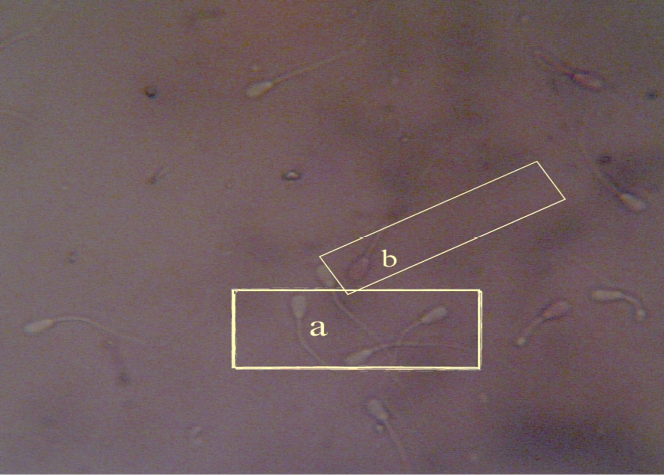
Viability of Simmental bull spermatozoa assessed by eosin-nigrosin staining (10x40 magnification); a white-colored head characterizes live sperm (a) and a reddish-purple-colored head characterizes dead sperm (b).
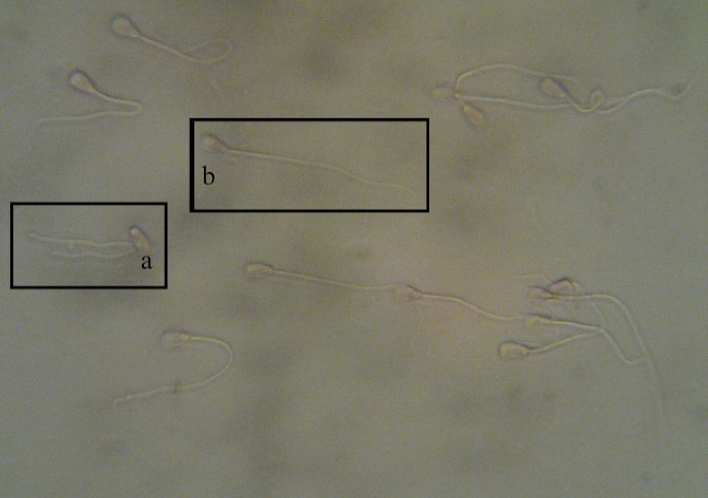
Abnormalities of spermatozoa were assessed using eosin-nigroin (10x40 magnification); head detached and tail detached (a) and sperm with normal morphology (b).
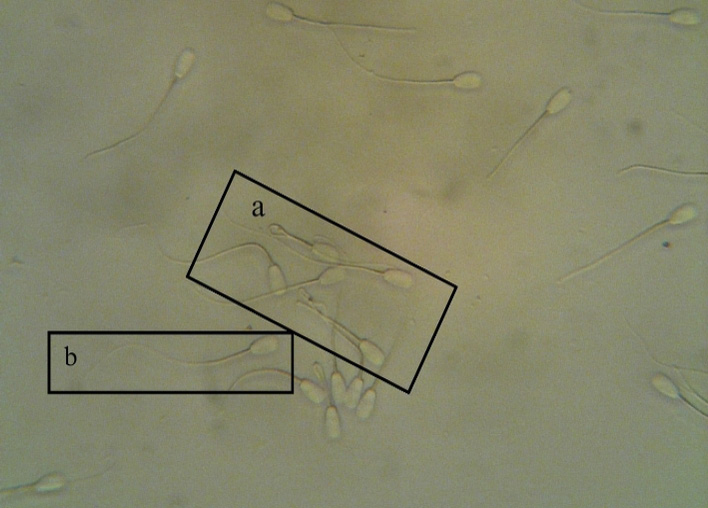
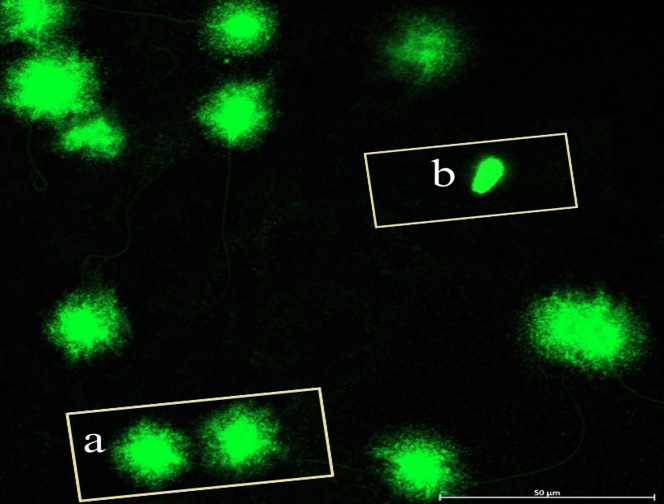
Sperm DNA fragmentation assessed using Halomax® kit (10x40 magnification). sperm with a halo-shape in the head area indicates intact sperm DNA (a) and sperm without a halo-shape in the head area indicates sperm DNA damage (b).
References
- Agarwal, A., A. Majzoub., S.C. Esteves., E. Ko., R. Ramasamy and A. Zini. 2016. Clinical utility of sperm DNA fragmentation testing: Practice recommendations based on clinical scenarios. Trans. Androl. Urol., 5(6): 935-950. https://doi.org/10.21037/tau.2016.10.03[CrossRef]
- Alahmar, A.T., 2019. Role of oxidative stress in male infertility: An update review. J. Hum. Reprod. Sci., 12(1): 4-18. https://doi.org/10.4103/jhrs.JHRS_150_18[CrossRef]
- Amidia, L., F. Hoesni and B. Rosadi. 2021. Analisis keberhasilan inseminasi buatan (IB) ternak sapi berdasarkan karakteristik inseminator di Kabupaten Kerinci. J. Ilm. Univ. Batanghari Jambi, 21(2): 467-476. https://doi.org/10.33087/jiubj.v21i2.1481[CrossRef]
- Aprilina, N., S. Suharyati and P.E. Santosa. 2014. The effect temperature and duration of thawing in lowlands of frozen Simmental semen’s quality. J. Ilmiah Petern. Terpadu, 2(3): 96-102.
- Ardhani, F., H. Mufidah, R. Samsuriati and H.P. Putra. 2020. Efek lama penyimpanan semen sapi Bali pada pos inseminasi buatan terhadap membran plasma, tudung akrosom utuh, dan DNA spermatozoa. J. Ilmu Petern. Terapan., 3(2): 58-66. Available at https://publikasi.polije.ac.id/jipt/article/view/1950, https://doi.org/10.25047/jipt.v3i2.1950[CrossRef]
- Aulanni’am, M. Akmal, M.A. Widodo, S.B. Sumitro and B.B. Purnomo. 2011. Inhibition of inhibin B on protamine P2 molecule expression in head of rat (Rattus norvegicus) sperm. J. Kedokt. Hewan, 5(2): 78-83. https://doi.org/10.21157/j.ked.hewan.v5i2.365[CrossRef]
- Baiee, F.H., H. Wahid, Y. Rosnina, O.M. Ariff, N. Yimer, H. Salman, A.A. Tarig and A.M. Khumran. 2017. Hypo-osmotic swelling test modification to enhance cell membrane integrity evaluation in cryopreserved bull semen. Pertanika J. Trop. Agric. Sci., 40(2): 257-268. Available at http://www.pertanika.upm.edu.my/
- Baity, A.N., N.A. Maghfiroh, S.B. Fitriana, K.D. Prihantoko, D. Maharani and D.T. Widayati. 2024. Effect of storage periods on DNA fragmentation of post-thawed Bali bull sperm. Adv. Anim. Vet. Sci., 12(8): 1456-1464. https://doi.org/10.17582/journal.aavs/2024/12.8.1456.1464[Full text][CrossRef]
- Berridge, M.V., P.M. Herst and C. Prata. 2023. Cellular reductive stress: Is plasma membrane electron transport an evolutionarily-conserved safety valve? Redox Biochem. Chem., 5-6: 1-9. https://doi.org/10.1016/j.rbc.2023.100016[CrossRef]
- Bollwein, H. and E. Malama. 2023. Review: Evaluation of bull fertility. Functional and molecular approaches. Animal, 17: 1-15. https://doi.org/10.1016/j.animal.2023.100795[CrossRef]
- Buonaiuto, G., N. Lopez-Villalobos, A. Costa, G. Niero, L. Degano, L.M.E. Mammi, D. Cavallini, A. Palmonari, A. Formigoni and G. Visentin. 2023. Stayability in Simmental cattle as affected by muscularity and body condition score between calvings. Front. Vet. Sci., 10(1): 1-12. https://doi.org/10.3389/fvets.2023.1141286[CrossRef]
- Bustani, G.S. and F.H. Baiee. 2021. Semen extenders: An evaluative overview of preservative mechanisms of semen and semen extenders. Vet. World, 14(5): 1220-1233. https://doi.org/10.14202/vetworld.2021.1220-1233[CrossRef]
- Costa, J., P.C. Braga, I. Rebelo, P.F. Oliveira and M.G. Alves. 2023. Mitochondria quality control and male fertility. Biologi, 12(6): 1-22. https://doi.org/10.3390/biology12060827[CrossRef]
- de Hoek, M.V., J.P. Rickard and S.P. de Graaf. 2022. Motility assessment of ram spermatozoa. Biology, 11(12): 1-26. https://doi.org/10.3390/biology11121715[CrossRef]
- Diskin, M.G., 2018. Review: Semen handling, time of insemination and insemination technique in cattle. Animal, 12(51): 75-84. https://doi.org/10.1017/S1751731118000952[CrossRef]
- du Plessis, S.S., A. Agarwal, G. Mohanty and M. van der Linde. 2015. Oxidative phosphorylation versus glycolysis: what fuel do spermatozoa use? Asian J. Androl., 17(2): 230-235. https://doi.org/10.4103/1008-682X.135123[CrossRef]
- Dutta, S., A. Majzoub and A. Agarwal. 2019. Oxidative stress and sperm function: A systematic review on evaluation and management. Arab J. Urol., 17(2): 87-97. https://doi.org/10.1080/2090598X.2019.1599624[CrossRef]
- Fafo, M., T.M. Hine and W.M. Nalley. 2016. Pengujian efektivitas ekstrak daun Kelor dalam pengencer sitrat-kuning telur terhadap kualitas semen cair babi Landrace. J. Nukleus Peternakan, 3(2): 184-195.
- Fazrien, W.A., E. Herwijanti and N. Isnaini. 2020. Pengaruh perbedaan individu terhadap kualitas semen segar dan beku pejantan unggul sapi Bali. Sains Peternakan. 18(1): 60-65. https://doi.org/10.20961/sainspet.v18i1.37986[CrossRef]
- Febretrisiana, A., Anwar and S. Sinulingga. 2016. Relationship of extender and packaging system an the length of preservation and the quality of chilled semen of Boer goat. J. Ilmu Ternak dan Vet., 21(1): 49-54. https://doi.org/10.14334/jitv.v21i1.1350[CrossRef]
- Ismail, A.A., A.K.E. Abdel-Khalek., W.A. Khalil., A.I. Yousif., I.M. Saadeldin., M.M. Abomughaid and M.A. El-Harairy. 2020. Effects of mint, thyme, and curcumin extract nanoformulations on the sperm quality, apoptosis, chromatin decondensation, enzyme activity, and oxidative status of cryopreserved goat semen. Cryobiology, 97: 144-152. https://doi.org/10.1016/j.cryobiol.2020.09.002[CrossRef]
- Kaiin, E.M., M. Gunawan and T. Maulana. 2017. Morphometry and abnormality evaluation of sex-sorted sperm of spotted buffalo (Tedong bonga). Nusantara Biosci., 9(2): 175-180. https://doi.org/10.13057/nusbiosci/n090212[CrossRef]
- Magdanz, V., S. Boryshpolets., C. Ridzewski., B. Eckel and K. Reinhardt. 2019. The motility-based swim-up technique separates bull sperm based on differences in metabolic rates and tail length. PLoS One, 14(10): 1-16. https://doi.org/10.1371/journal.pone.0223576[CrossRef]
- Musriati., A. Setiadi and D. Samsudewa. 2024. Analysis of factors affecting the success of beef cattle artificial insemination (AI) in Jepon District, Blora Regency. IOP Conf. Ser. Earth Environ. Sci., 1364(1): 1-7. https://doi.org/10.1088/1755-1315/1364/1/012038[CrossRef]
- National Standarization Agency of Indonesia, 2021. Frozen Semen- Part 1: Cattle. Available at https://pesta.bsn.go.id/produk/detail/13284-sni4869-12021
- Ozimic, S., H. Ban-Frangez and M. Stimpfel. 2023. Sperm cryopreservation today: Approaches, efficiency, and pitfalls. Curr. Issues Mol. Biol., 45(6): 4716-4734. https://doi.org/10.3390/cimb45060300[CrossRef]
- Peng, L-F., 2023. Sperm genetic abnormality testing in recurrent pregnancy loss cases: A narrative review. Middle East Fertil. Soc. J., 28(1): 1-6. https://doi.org/10.1186/s43043-023-00149-3[CrossRef]
- Prabowo, T.A., S. Bintara., L.M. Yusiati., P.I. Sitaresmi and D.T. Widayati. 2023. Evaluation deoxyribonucleic acid (DNA) fragmentation of local Indonesian cattle frozen sperm using Halomax® method. Biodiversitas, 24(4): 2225-2230. https://doi.org/10.13057/biodiv/d240435[CrossRef]
- Pratama, J.W.A., D.A.K. Sari and M. Sigit. 2018. The effect of some thawing methods on the quality of Simental cow frozen cements. J. Ilm. Fillia. Cend., 3(2): 39-45. https://doi.org/10.32503/fillia.v3i2.254[CrossRef]
- Prihantoko, K.D., A. Kusumawati., D.T. Widayati and M. Pangestu. 2020. Effects of storage duration on mitochondrial activity and DNA fragmentation of post-thawed spermatozoa from several Ongole grade bull in Indonesia. Vet. Practitioner, 21(2): 264-268. Available at http://www.vetpract.in/contents/
- Prihantoko, K.D., M. Arif., A. Kusumawati., D.T. Widayati and A. Budiyanto. 2022. Evaluation of sperm DNA fragmentation using TUNEL assay in different animal species. Adv. Anim. Vet. Sci., 10(1): 14-19. https://doi.org/10.17582/journal.aavs/2022/10.1.14.19[Full text][CrossRef]
- Priyanto, L., A. Budiyanto., A. Kusumawati and Kurniasih. 2019. Kerusakan deoxyribonucleic acid (DNA) spermatozoa memengaruhi tingkat kebuntingan sapi Brahman. J. Vet., 20(1): 119-124. https://doi.org/10.19087/jveteriner.2019.20.1.119[CrossRef]
- Ramadhani, N., A. Rachmawati., A.B. Purnawan., T. Susilawati and A.P.A. Yekti. 2022. Pengaruh lama thawing dengan air dingin pada semen beku sapi Peranakan Ongole terhadap kualitas semen. Livest. Anim. Res., 20(3): 321-329. https://doi.org/10.20961/lar.v20i3.63170[CrossRef]
- Rastosari, A., T. Afriyani., N.Y. Chaniago., J. Hellyward., T. Edwin., Y. Utami and Syahrial. 2024. The potential of Indonesian Simmental cattle in Nagari Balai Panjang, Lareh Sago Halaban District, Limapuluh Kota Regency, Sumatera Barat Province, Indonesia. IOP Conf. Ser. Earth Environ. Sci., 1341(1): 1-9. https://doi.org/10.1088/1755-1315/1341/1/012019[CrossRef]
- Sari, R.P., C.D. Nugraha and Suyadi. 2024. Effect of thawing on semen quality of boer goats with tris-aminomethane diluent supplemented with antioxidant quercetin. J. Sain Peternak. Indones., 19(1): 11-20.
- Sellami, A., N. Chakroun., S.B. Zarrouk., H. Sellami., S. Kebaili., T. Rebai and L. Keskes. 2013. Assessment of chromatin maturity in human spermatozoa: Useful aniline blue assay for routine diagnosis of male infertility. Adv. Urol., pp. 1-8. https://doi.org/10.1155/2013/578631[CrossRef]
- Sharafi, M., S.M. Borghei-Rad., M. Hezavehei., A. Shahverdi and J.D. Benson. 2022. Cryopreservation of semen in domestic animals: A review of current challenges, applications, and prospective atrategies. Animals, 12(23): 1-24. https://doi.org/10.3390/ani12233271[CrossRef]
- Solís, J.M., F. Sevilla., M.A. Silvestre., I. Araya-Zúñiga., E.R.S. Roldan., A. Saborío-Montero and A. Valverde. 2024. Effect of thawing procedure and thermo-resistance test on sperm motility and kinematics patterns in two bovine breeds. Animals, 14(19): 1-16. https://doi.org/10.3390/ani14192768[CrossRef]
- Surjamah., R. Somanjaya and D. Widianingrum. 2024. Spermatozoa quality of Pasundan cattle frozen semen at various thawing temperatures and durations. J. Sain Peternak. Indones., 19(3): 132-138. https://doi.org/10.31186/jspi.id.19.3.132-138[CrossRef]
- Wagner, H., J.W. Cheng and E.Y. Ko. 2018. Role of reactive oxygen species in male infertility: An updated review of literature. Arab J. Urol., 16(1): 35-43. https://doi.org/10.1016/j.aju.2017.11.001[CrossRef]
- Warman, A.T., Panjono., T.S.M. Widi., S. Bintara., B.A. Atmoko and E. Baliarti. 2024. Factors affecting bull breed choices of smallholder farmers in Lombok Tengah Regency, West Nusa Tenggara Province, Indonesia. Adv. Anim. Vet. Sci., 12(12): 2326-2334. https://doi.org/10.17582/journal.aavs/2024/12.12.2326.2334[Full text][CrossRef]
- Watson, P.F., 2000. The causes of reduced fertility with cryopreserved semen. Anim. Reprod. Sci., 60-61: 481-492. https://doi.org/10.1016/S0378-4320(00)00099-3[CrossRef]
- Widayati, D.T., 2023. Reproduksi ternak. Lintang Pustaka Utama, Yogyakarta, Indonesia.
- Widayati, D.T. and M. Pangestu. 2020. Effect of follicle-stimulating hormone on Bligon goat oocyte maturation and embryonic development post in vitro fertilization. Vet. World, 13(11): 2443-2446. https://doi.org/10.14202/vetworld.2020.2443-2446[CrossRef]
- Wulandari, I.A. and S.A. Prihatno. 2014. Pengaruh berbagai temperatur thawing semen beku terhadap keberhasilan inseminasi buatan pada sapi potong. J. Sain Vet., 32(1): 40-45.
- Zelpina, E., B. Rosadi and T. Sumarsono. 2012. Kualitas spermatozoa post thawing dari semen beku sapi perah. J. Ilm. Ilmu-Ilmu Peternak., 15(2): 94-102. https://doi.org/10.22437/jiiip.v15i2.1796[CrossRef]
- Zenteno, E.S., B. Rojano and G.R. Betancur. 2023. Influence of thawing temperature on sperm motility, structure, and metabolism of frozen bovine semen. Ciênc. Rural. 53(3): 1-8. https://doi.org/10.1590/0103-8478cr20210731[CrossRef]
Cited by 2 articles
In journals published by ResearchersLinks.
- Effect of Body Condition Score on the Success of Artificial Insemination in Sumba Ongole Cattle under Smallholder FarmsJournal of Animal Health and Production · 2026
- Sungkai Leaf (Peronema canescens Jack) Extract as a Natural Antioxidant for Mitigating Cryo-Injury in Bali Bull SpermatozoaAdvances in Animal and Veterinary Sciences · 2025
Services
Article usage statistics
Loading…