
Fraxinus xanthoxyloides is a plant with several pharmacological and biological properties. It is commonly termed “Afghan ash”. It is distributed in Afghanistan, Morocco, Algeria, India, the Hindu Kush, and the Himalayan mountains of Pakistan. Building on earlier Fraxinus-genus reviews, the present review is the first to integrate multi-organ ethnobotanical use with a comparative phytochemical and pharmacological profile specific to F. xanthoxyloides, and to identify concrete gaps- dose standardization, mechanism of action, and field-scale validation- that have not been consolidated elsewhere. Different parts of F. xanthoxyloides are used to treat different ailments such as root bark (malaria, pneumonia and jaundice), stem bark (labor pain, internal injuries, typhoid fever, trauma, premature birth, expulsion of infant and pneumonia), stem (bone fractures and wounds in cattle), wood (bone fractures, tool handles, walking sticks, fuel, furniture), foliage (fodder), and leaves (malaria, pneumonia, jaundice, anti-inflammatory and analgesic effects). We summarize a total of 30 different compounds (coumarins, cichoriin, fraxin, pyranocoumarins, furanocoumarins, chromones, dimeric coumarins, isofraxisecoside, fraxisecoside, rutin, quercetin, gallic acid, caffeic acid, kaempferol, catechins, myricetin, nummularic acid, cisplatin, ligstroside, oleuropein, esculetin, nicotiflorin, 2-(3, 4-dihydroxy)phenylethyl-O-β-D-glucopyranoside, salidroside, osmanthuside, calceolarioside B, coniferin, syringin, 8-hydroxypinoresinol-4′-O-β-D-glucoside and 8-acetoxypinoresinol-4-O-β-D-glucoside). The proximate and elemental composition of F. xanthoxyloides has been reported to include organic matter, moisture, ash, crude protein, crude fiber, crude fats, and nitrogen-free extract, while elements such as phosphorus, potassium, calcium, magnesium, iron, manganese, cadmium, and zinc are also major constituents of this plant. Different studies have also reported the presence of different biological activities (anti-leishmanial, insecticidal, and cytotoxic). However, most pharmacological evidence to date is limited to in vitro and short-term in vivo assays, and standardized dose–response data are still lacking; these gaps are addressed explicitly in the roadmap presented here.
Review · Volume 32, Issue 3, 2 October 2026 · Open Access
Traditional Uses, Phytochemistry, and Pharmacological Activities of Fraxinus xanthoxyloides (G. Don) DC. (Oleaceae): A Review
· · · · · ·
Affiliations & Notes ⌄
- 1Department of Chemistry, Bacha Khan University, Charsadda, Khyber Pakhtunkhwa, Pakistan
- 2Department of Botany, University of Bunir, Sowari, Pakistan
- 3Department of Zoology, University of Mianwali, Punjab, Pakistan
- 4Department of Pharmaceutical Botany, Faculty of Pharmacy, Dicle University, 21200 Diyarbakır, Turkey
- 5Department of Botany, University of Chakwal, Punjab, Pakistan
- 6Department of Plant Sciences, Quaid-i-Azam University, Islamabad 45320, Pakistan
- 7Department of Botany, University of Malakand, Khyber Pakhtunkhwa, Pakistan. *Correspondence | Muhammad Nauman Khan, Department of Chemistry, Bacha Khan University, Charsadda, Khyber Pakhtunkhwa, Pakistan
- 8Email: nomiflora@uop.edu.pk
Article Info ⌄
- Journal:
- Pakistan Journal of Weed Science Research
- Published:
- 2 October 2026
From the article
- The current review concluded that F. xanthoxyloides has strong evidence of several pharmacological and biological activities.
- Different parts (root bark, stem bark, stem, wood, foliage, and leaves) of F. xanthoxyloides are used to treat different ailments (malaria, pneumonia, jaundice, labor pain, internal injuries, typhoid fever, trauma, premature birth expulsion of infants, bone fractures, and wounds in cattle).
- In total, 30 different compounds were studied in this plant for proximate and elemental composition, as well as different biological activities (anti-leishmanial, insecticidal, and cytotoxic).
Selected from the article's own text.
Abstract
Introduction
The Oleaceae family comprises dicotyledonous flowering plants widely distributed in tropical and temperate regions. Globally, it includes approximately 25 genera and nearly 688 species . In Pakistan, eight genera and roughly 30 species are recorded, of which around 22 are cultivated . The distribution of this family extends to Afghanistan, India, Morocco, Algeria, and throughout the Hindu Kush and Himalayan ranges. Within Pakistan, Oleaceae representatives are commonly observed in areas such as Takht-i-Suleiman, the Toba Kakkar Range, Zhob (formerly Fort Sandeman), the western boundary of Waziristan, Safed Koh, Chitral, Malakand, Swat, Punjab, and Baluchistan, usually inhabiting temperate valleys between 1000 and 2500 meters in elevation (Ali and Nasir, 1989-1992; ; Ali and Qaiser, 1993-2007 , Outside South Asia, species of Oleaceae are also distributed in northeast Asia, China, North America, and parts of France .
Fraxinus is a prominent genus within the subtribe Fraxininae and shares a close evolutionary relationship with the subtribe Oleinae of the tribe Oleeae . The genus was initially classified by Linnaeus in 1753, who described over 450 taxa, many of which are now considered synonyms. According to the most extensive monograph available, 64 species are currently recognized as valid, although additional species have been reported . Within the Oleaceae family, Fraxinus is regarded as monophyletic and is characterized by relatively large imparipinnate leaves and one-seeded samaras.
Most Fraxinus species are medium-to large-sized trees, but some have adapted to arid environments as shrubs. Their leaves show remarkable variability, including differences in shape, texture, number of leaflets, margin type, petiolule length, hairiness, epidermal papillae, and the presence of rachis wings. Many synonyms in the genus arise from intraspecific variation. The flowers are generally small, with a single pistil and two stamens, consistent with other Oleaceae members. The corolla may be absent or composed of four (occasionally two) free, linear, white petals that are rarely fused. The calyx is usually small, synsepalous, dentate, and occasionally absent. The genus exhibits both insect-pollinated, petaliferous flowers that grow in large ornamental panicles from terminal buds alongside the leaves and apetalous, wind-pollinated flowers that develop in lateral or terminal inflorescences, usually preceding leaf expansion. The ovary is syncarpous with four ovules (two per locule), although typically only a single ovule develops into a one-seeded samara , .
F. xanthoxyloides (Figure 1), commonly known as Afghan ash, is a small tree native to dry hills. It is characterized by 5–11 ovate-lanceolate, toothed leaflets with a winged rachis, and flowers that occur in dense clusters. Although the genus Fraxinus has been studied globally, F. xanthoxyloides remains underexplored despite its ecological resilience in arid regions. This review differs from previous studies by providing the first integrated synthesis of its multi-organ ethnobotany, together with a comparative analysis of its secoiridoid and coumarin profiles.
Ethnobotany
Scientific literature indicates that F. xanthoxyloides has long been valued in traditional and folk medicine for addressing a wide spectrum of health conditions, such as malaria, pneumonia, jaundice, typhoid, bone fractures, traumatic injuries, internal wounds, and complications related to premature delivery. The use of plants as therapeutic agents dates back millennia, and according to the World Health Organization (WHO), nearly four-fifths of the world’s population continues to depend on traditional remedies for primary health care needs. Ethnobotanical investigations play a crucial role in recording indigenous medicinal practices . Research conducted in northern Pakistan shows that the root bark and leaves of F. xanthoxyloides are traditionally used to treat malaria, pneumonia, and jaundice, and its leaves also serve as animal fodder (Younis, 2017; . Additionally, an infusion prepared from 2-3 g of the stem bark is administered to ease labor pain . Reports further highlight the use of the stem bark in managing typhoid fever and pneumonia , traumatic injuries, and premature infant expulsion . The wood of the plant is widely used for bone fracture healing, tool handles, and walking sticks . It is also a major source of fuel . Moreover, a bark concoction is used to manage internal injuries and to facilitate the expulsion of a deceased premature infant . Additionally, a stem decoction is administered for bone fractures and wounds in cattle , while the foliage serves as animal fodder . Beyond ethnomedicinal uses, leaves and their fractions have been reported to exhibit significant anti-inflammatory and analgesic properties .
Table 1: Traditional uses of Fraxinus xanthoxyloides (G. Don) DC.
|
Botanical name |
Part used |
Traditional uses |
References |
|
Fraxinus xanthoxyloides (G. Don) DC. |
Root bark |
Malaria, Pneumonia and Jaundice |
(K. |
|
Stem bark |
Labor pain, Internal injuries, typhoid fever, traumas, premature birth expulsion of infant and pneumonia |
(S. M. ; ; (S. W. ; |
|
|
Stem |
Bone fractures and wounds in cattle |
||
|
Wood |
Bone fracture, tool handles, walking sticks, fuel, furniture |
(Afzal et al., 2009); ; (S. W. |
|
|
Foliage |
Fodder |
(Afzal et al., 2009); |
|
|
Leaves |
Malaria, Pneumonia, Jaundice, Anti-inflammatory and analgesic effects |
; (K. |
Traditional practitioners in the Hindu Kush region use various plant organs with high specificity. Nonetheless, the ethnobotanical record for this species is almost entirely descriptive: reported uses are rarely accompanied by a stated dose, preparation ratio, or duration of treatment, and no two sources employ a consistent unit of measurement. Although several reports describe its use for malaria and pneumonia, there is a lack of clinical validation for dose standardization in folk medicine (Table 1). In our view, this absence of standardized dosing is the single greatest obstacle to translating the ethnobotanical record into a testable pharmacological hypothesis.
Phytochemistry
One of the notable characteristics of plant physiology and phytochemistry is the determination of plant metabolites using sophisticated analytical methods. The initial step in establishing a comprehensive database that will be used to ensure quality evaluation and validation of herbal medicaments is phytochemical screening. It can also be used to predict potential biological effects and identify appropriate marker compounds .
Over the last five years, the genus Fraxinus has received increased attention from researchers worldwide. One such species is F. xanthoxyloides, which is widely distributed and abundant in nature and has attracted significant phytochemical interest. According to the findings of these studies, the plant contains numerous bioactive compounds, including coumarins and secoiridoids , as well as rutin, quercetin, gallic acid, caffeic acid, kaempferol, catechins, and myricetin .
The presence of coumarins (such as cichoriin and fraxin) and secoiridoids (such as isofraxisecoside) is considered a characteristic feature of F. xanthoxyloides. These secoiridoids occur either as glucosides or as phenyl hydroxyphenolethylglycosesesters. In addition, lignans, flavonoids, and simple phenolic compounds are present, although their levels appear to be quite low .A summary of all reported compounds is presented in Table 2.
Coumarins
Coumarins have been observed in F. xanthoxyloides in both glucosidic and free forms. Several species of this genus are known to be valuable natural sources of coumarins for commercial production. Several analytical techniques have been designed to study coumarin concentrations in plant extracts and fractions, both quantitatively in a quantitative and qualitative manner to facilitate this research ; ; . Younis et al. (2016) stated that the plant itself contains simple coumarins, furanocoumarins, pyranocoumarins, chromones, and even dimeric coumarins. Moreover, isoferraxin was successfully extracted from the stem bark of F. xanthoxyloides (G. Don) Wall. ex . Previous phytochemical studies have also validated the existence of coumarins, secoiridoid glucosides (oleoside type), phenylethanoid glycosides, and other phenolic compounds in the bark of this plant .
Secoiridoids
Secoiridoid glucosides are among the most common phytochemical classes . These are monoterpene derivatives (cyclopentane) biosynthesized by the cleavage of cyclomethene oxime structures at the C-7 and C-8 positions. These metabolites are notorious for their highly diverse pharmacological activities, such as anti-diabetic, anti-inflammatory, immunosuppressive, neuroprotective, anti-cancer, and anti-obesity effects. A new secoiridoid, iso-fraxitelesecoside, was extracted from the stem bark of F. xanthoxyloides .
Rutin
Rutin is a flavone derivative and a naturally occurring product that was first extracted from buckwheat in the 19th century. This low-molecular-weight polyphenolic compound is very common in fruits and vegetables, and
Table 2: Different compounds found in Fraxinus xanthoxyloides (G. Don) DC.
|
Plant Source |
Compound name |
References |
|
Fraxinus xanthoxyloides (G. Don) DC. |
1. Coumarins |
; |
|
2. Cichoriin |
||
|
3. Fraxin |
||
|
4. Pyranocoumarins |
||
|
5. Furanocoumarins |
||
|
6. Chromones |
||
|
7. Dimeric coumarins |
||
|
8. Isofraxisecoside |
; (Y.L. |
|
|
9. Fraxisecoside |
Hadroug, 2018 |
|
|
10. Rutin |
||
|
11. Quercetin |
||
|
12. Gallic acid |
||
|
13. Caffeic acid |
||
|
14. Kaempferol |
||
|
15. Catechins |
||
|
16. Myricetin |
||
|
17. Nummularic acid |
||
|
18. Cisplatin |
||
|
19. Ligstroside |
Hadroug, (2018) |
|
|
20. Oleuropein |
||
|
21. Esculetin |
||
|
22. Nicotiflorin |
||
|
23. 2-(3, 4-dihydroxy)phenylethyl-O-β-D-glucopyranoside |
||
|
24. Salidroside |
||
|
25. Osmanthuside |
||
|
26. Calceolarioside B |
||
|
27. Coniferin |
||
|
28. Syringin |
||
|
29. 8-Hydroxypinoresinol-4′-O-β-D-glucoside |
||
|
30. 8-Acetoxypinoresinol-4-O-β-D-glucoside |
buckwheat is one of the major dietary sources of this compound. Rutin, a flavonoid glycoside also known as Vitamin P, has various biological effects, such as anti-platelet, antiviral, and antihypertensive effects and it can reinforce capillary walls. These effects are mainly due to its strong antioxidant and radical-scavenging characteristics . Besides, rutin has been linked with several pharmacological properties, including anti-inflammatory, anti-allergic, anti-bacterial, antiprotozoal, vasoprotective, antitumor, hypolipidemic, cytoprotective, antispasmodic and anticarcinogenic effects . It has been confirmed in extracts of F. xanthoxyloides by high-performance liquid chromatography (HPLC) analysis .
Quercetin
The most common plant flavonoid is quercetin, which can be found in tea and onions and is well known as a powerful antioxidant. The name quercetin name derives from the Latin quercetum (oak). It has a variety of pharmacological effects, such as anti-allergic, anti-inflammatory, anticancer, cardioprotective, antitumor, antiviral, anti-diabetic, immunomodulatory, antihypertensive, and gastroprotective activities. Besides its medicinal significance, quercetin is essential in plant physiology, including seed germination, pollen development, antioxidant defense mechanisms, and photosynthesis, which contribute to overall plant growth and development. It is also a powerful antioxidant that increases plant resistance to various biotic and abiotic stress factors . Quercetin has been recognized and confirmed in F. xanthoxyloides by HPLC profiling .
Gallic acid
Gallic acid, or 3,4,5-trihydroxybenzoic acid is a trihydroxybenzoic acid commonly found in plants worldwide. It has documented antioxidant properties and potential applications as an anticancer agent. Notably, gallic acid has been shown to induce cytotoxicity in specific types of cancerous cells without harming normal, healthy cells . In the same context, Younis et al., (2020) used HPLC to determine the gallic acid content of F. xanthoxyloides.
Caffeic acid
Caffeic acid, chemically known as 3,4-dihydroxycinnamic acid, is a phenylpropanoid. It is one of the main derivatives of cinnamic acid and is found in plants . Multiple studies have demonstrated its wide range of biological activities, such as antioxidant, antiviral, anticancer, and anti-inflammatory effects . Similarly, Younis et al. (2020) reported the presence of caffeic acid through F. xanthoxyloides HPLC analysis.
Kaempferol
Kaempferol is a type of flavonoid belonging to the flavonol subclass, which is rarely found in a wide range of food plants. Due to its powerful antioxidant and anti-inflammatory actions, kaempferol has attracted considerable academic attention, especially regarding its molecular mechanisms and potential in the treatment of inflammatory diseases . Kaempferol has been determined in F.xanthoxyloides by HPLC profiling .
Catechins
Catechins are defined as a category of polyphenolic metabolites belonging to the flavonoid family that often exist in large quantities in a variety of fruits, vegetables, as well as plant-derived beverages. They belong to the flavanol group . These compounds have been demonstrated to protect against a variety of degenerative diseases and to have antitumor and immune-modulating effects, especially in states of immune dysfunction . Research also indicates that catechins have a higher ability to act as antibacterial agents against gram-positive bacteria than Gram-negative bacteria . Younis et al. (2020) have carried out widespread research on catechins in F. xanthoxyloides.
Myricetin
Myricetin is a naturally occurring bioflavonoid that is widely found in plant species. It has been known to possess good anticarcinogenic and antimutagenic effects, but ironically, it has also shown mutagenic effects in Ames test assays . Younis et al., (2020) used HPLC to demonstrate the presence of myricetin in F. xanthoxyloides.
Nummularic acid (NA)
Nummularic acid (NA), chemically designated as (19S) 3β-hydroxy-urs-12-en-29β-oic acid, is a pentacyclic triterpenoid with the molecular formula C₃₀H₄₈O₃. It was first isolated in 2007 from Evolvulus nummularius ; . Subsequent investigations by Younis and colleagues (2018) identified this compound as a key phytochemical constituent of F. xanthoxyloides, a species valued in traditional medicine for more than a hundred years. In addition, nummularic acid has been recognized for its notable anticancer potential.
Cisplatin
Cisplatin is a highly effective chemotherapeutic drug, extensively employed in the treatment of testicular tumors. However, its clinical application is limited by a major drawback: the induction of oxidative stress, which leads to alterations in tissue physiology and biochemical composition . In this context, Ijaz et al. (2020) investigated the therapeutic potential of F. xanthoxyloides extract in mitigating cisplatin-induced testicular damage in albino rats.
Fraxisecoside
The molecules consist of a coumarin glucoside and a secoiridoid glucoside, connected through the glucose moiety of the coumarin and the carboxyl group at the C-7 position of the secoiridoid . Earlier phytochemical investigations on the bark of Fraxinus rhynchophylla Hance led to the identification of several coumarins, including fraxidin, fraxin, and fraxisecoside . The occurrence of fraxisecoside in F. xanthoxyloides was likewise confirmed by Hadroug et al. (2019).
Ligstroside
The compound ligstroside was first identified in Ligustrum obtusifolium Sieb. et Zucc. . Subsequently, two new secoiridoid diglucosides (angustifolioside A and B) were obtained from the methanolic leaf extract of Fraxinus angustifolia, along with the previously recognized secoiridoid glucosides ligstroside and oleuropein (Calis et al., 1993). Consistent with these findings, Hadroug (2019) also confirmed the occurrence of ligstroside in F. xanthoxyloides.
Oleuropein
The presence of oleuropein in F. xanthoxyloides was further verified by ; ; .
Esculetin (6, 7-dihydroxycoumarin)
Esculetin is a naturally occurring compound widely distributed in medicinal plants such as Artemisia capillaries Miq., Artemisia scoparia Waldst. & Kitam., Citrus limonia Osbeck, and Ceratostigma willmottianum Stapf. It has been shown to possess multiple pharmacological properties, particularly anti-proliferative and antioxidant activities ; . The presence of esculetin in F. xanthoxyloides was also confirmed by Hadroug et al. (2019).
Nicotiflorin
Nicotiflorin is a naturally occurring flavonol glycoside that has been isolated from multiple plant species . It is associated with diverse pharmacological properties, including reduction of arterial blood pressure and heart rate, hepatoprotection against CCl₄-induced liver injury, as well as pronounced antioxidant, anti-inflammatory, antinociceptive, antihypertensive, and antianaphylactic activities. In addition, nicotiflorin has shown neuroprotective potential by mitigating cerebral ischemic damage, memory impairment, and oxidative stress in multi-infarct dementia model rats ; ; . Its occurrence in F. xanthoxyloides has also been validated by Hadroug et al. (2019).
2-(3,4-dihydroxy) phenylethyl-O-β-D-glucopyranoside
Hadroug et al. (2019) also found the existence of 2-(3, 4-dihydroxy) phenylethyl-O-β-D-glucopyranoside in F. xanthoxyloides.
Salidroside
Salidroside is a principal bioactive compound in several medicinal plants and is recognized for a broad spectrum of pharmacological effects, including anti-aging, anti-fatigue, antioxidant, antiviral, and anti-inflammatory activities, along with notable neuroprotective and cardioprotective roles ; ; ; ; . More recently, salidroside has been shown to inhibit cell proliferation and trigger apoptosis in various cancer cell lines, such as lung, bladder, neuroblastoma, and glioma, although its full anticancer mechanisms remain to be fully elucidated . The detection of salidroside in F. xanthoxyloides was also confirmed by Hadrouget al. (2019).
Osmanthuside H
Osmanthuside has previously been isolated from plants such as Tabebuia impetiginosa (Mart. ex DC.) Standl. and F. sieboldiana Blume , later Hadroug et al. (2019) identified this compound in F. xanthoxyloides.
Table 3: Proximate and Elemental composition of Fraxinus xanthoxyloides (G. Don) DC. .
|
Botanical name |
Proximate composition (%) |
References |
|
Fraxinus xanthoxyloides (G. Don) DC. |
Organic matter |
|
|
Moisture |
||
|
Ash |
||
|
Crude protein |
||
|
Crude fiber |
||
|
Crude fats |
||
|
Nitrogen free extract |
||
|
Elemental Composition (%) |
||
|
P |
||
|
K |
||
|
Ca |
||
|
Mg |
||
|
Fe |
||
|
Mn |
||
|
Cd |
||
|
Zn |
Calceolarioside B
Calceolarioside B has demonstrated significant antiproliferative activity against a range of tumor cell lines, including prostate cancer, human bladder carcinoma (T-24), human gastric adenocarcinoma, uterine carcinoma, and murine melanoma . Amorim et al. (2017) identified calceolarioside B from Sinningia hatschbachii Chautems through spectroscopic techniques, Verdan et al. (2015) identified it from Sinningia aggregate (Ker Gawl.) Wiehler. Similarly, Hadroug et al. (2018) identified calceolarioside B from F. xanthoxyloides.
Coniferin
Coniferin is a glucoside of coniferyl alcohol . Coniferin, a coniferyl alcohol glucoside, has been detected in the cambial sap of many tree species . Coniferin has also been detected, though not quantified, in various foods including lemons, asparagus, soft-neck garlic, black salsify, and red beetroot. Consequently, it may serve as a potential biomarker for the dietary intake of these foods ; . Similarly, Hadroug et al. (2019) studied coniferin in F. xanthoxyloides.
Syringin
Syringin is a phenolic glycoside isolated from several medicinal plants, including Magnolia sieboldii K. Koch and Tinospora cordifolia (Willd.) Hook. f. & Thomson, although its biological activities have been described in only a limited number of studies ; . Syringin was isolated and characterized from Musa x paradisiaca L. tepal extract (MPTE) by Krishnan et al., (2014). Another plant from which syringin was extracted is Ilex rotunda Thumb . Similarly Hadroug et al. (2018) also analyzed syringin from F. xanthoxyloides.
8-Hydroxypinoresinol-4′-O-β-D-glucoside
8-Hydroxypinoresinol-4-O-β-D-glucoside is an active compound reported to possess antiarrhythmic properties in Valeriana officinalis L. and antioxidant activity in Valeriana prionophylla Standl. , Additionally, 8-hydroxypinoresinol-4′-O-β-D-glucoside has been isolated from F. xanthoxyloides (Hadroug et al. 2018).
8-Acetoxypinoresinol-4-O-β-D-glucoside
8-Acetoxypinoresinol-4-O-β-D-glucoside is a lignan glycoside, a class of aromatic polycyclic compounds in which a lignan moiety is glycosidically linked to a carbohydrate unit . Consistent with our findings, Hadroug et al. (2019) also reported the isolation of 8-Acetoxypinoresinol-4-O-β-D-glucoside from F. xanthoxyloides.
Proximate and elemental composition
Plants not only provide essential nutrients such as fats, proteins, and carbohydrates, but also contain phytochemicals that play vital medicinal roles . Proximate analysis involves classifying plant components into categories such as moisture, ash, crude protein, lipids, fiber, and nitrogen-free extract (AOAC, 1990). Living organisms require approximately 40 macro- and microelements to survive, and an element is deemed essential when its deficiency leads to a decline in physiological processes . Zaman (2021) studied organic matter, moisture, ash, crude protein, fiber, fats, and nitrogen-free extract, along with eight elements (phosphorus, potassium, calcium, magnesium, iron, manganese, cadmium, and zinc) in F. xanthoxyloides from the Terich Valley, Hindukush range (Figure 1 and Table 3). The analysis revealed significant concentrations of calcium and magnesium, supporting the plant’s nutritional and medicinal potential. However, the presence of cadmium, even in trace amounts, suggests that the plant may act as a bio-accumulator. This poses a potential risk for long-term medicinal use, indicating that toxic elemental levels must be monitored in traditional remedies to ensure safety.
Pharmacology
Anti-Leishmanial activity
Leishmaniasis refers to a group of diseases caused by various species of Leishmania, each associated with distinct clinical manifestations. It is considered the third most prevalent vector-borne disease worldwide, after malaria and filariasis . In 1960 leishmaniasis was initially reported in Pakistan in the north countries. The disease was once limited to these regions but has since spread across the nation. Both cutaneous and visceral leishmaniasis are health-threatening, and mucocutaneous leishmaniasis is infrequently reported ; . The therapeutic efficacy of plant extracts against these infections can be attributed to their various bioactive substances in them, which include essential oils, phenolic compounds, and aldehydes. Methanolic leaf powder extract of F. xanthoxyloides has been investigated for its strong anti-leishmanial activity against Leishmania tropica in the promastigote stage
The chloroform extract of F. xanthoxyloides (FXC) showed significant anti-leishmanial activity, with an LD50 of 15.23 ± 0.9 µg/mL compared with the reference drug glucantime, which had an LD50 of 5.6 ±0.4 µg/mL (Table 4). These findings suggest that the chloroform fraction of F. xanthoxyloides can be regarded as a viable source of anti-leishmanial compounds and further studies are needed to identify and characterize its bioactive components. The mechanism underlying this activity-whether via induction of oxidative stress in the parasite or disruption of the mitochondrial membrane-remains unresolved, and we note that an LD50 roughly three-fold higher than that of glucantime indicates that the extract is markedly less potent than the reference drug, not simply “promising” in absolute terms.
Insecticidal Activity
Plants are potential replacements for traditional insecticides and acaricides, serving as sources of bioactive substances that tend to act on a narrower range of target arthropods, biodegrade into non-toxic compounds, and are therefore considered greener; their compatibility with integrated pest management further supports sustainable use . The brine shrimp lethality assay was used to test the insecticidal activity of the methanolic leaf extract of F. xanthoxyloides. The chloroform fraction (FXC) was the most active, with an LD₅₀ of 28.15 ± 1.8 µg/mL, followed by the n-hexane fraction (FXH) at 67.59 ± 2.3 µg/mL; the remaining fractions showed relatively low activity. Correlation analysis indicated no significant relationship (p> 0.05) with insecticidal activity (Table 4). These LD50 values were not benchmarked against a standard insecticide in the source study, so their practical significance for pest control cannot yet be assessed.
Table 4: Different biological activities of Fraxinus xanthoxyloides
|
Plant Source |
Biological assay |
Reference |
|
Fraxinus xanthoxyloides (G. Don) DC. |
Anti-Leishmanial Activity |
|
|
Insecticidal Activity |
||
|
Cytotoxic Activity |
Cytotoxic activity
Cytotoxicity is the capacity of a substance to cause toxicity in living cells . The methanolic leaf extract of F. xanthoxyloides was evaluated for its anti-cytotoxic potential . Assessment of the extract/fractions was carried out using the sulforhodamine B (SRB) assay described by You et al. (1995). Results from Younis et al. (2016) demonstrated that F. xanthoxyloides exhibited no cytotoxic effects at a concentration of 20 µg/mL.
Future perspectives and roadmap for research
- Molecular target discovery: Investigate the specific pathways (e.g., mitochondrial disruption) through which F. xanthoxyloides secoiridoids exert anti-leishmanial effects.
- Standardization: Establish HPTLC fingerprints to reconcile the varying doses (2–3g) reported in ethnobotanical surveys into a pharmaceutical standard.
- Toxicity monitoring: Given the plant’s potential as a bio-accumulator, long-term studies must assess the safety of trace cadmium levels found in traditional preparations.
Conclusions and Recommendations
The current review concluded that F. xanthoxyloides has strong evidence of several pharmacological and biological activities. Different parts (root bark, stem bark, stem, wood, foliage, and leaves) of F. xanthoxyloides are used to treat different ailments (malaria, pneumonia, jaundice, labor pain, internal injuries, typhoid fever, trauma, premature birth expulsion of infants, bone fractures, and wounds in cattle). In total, 30 different compounds were studied in this plant for proximate and elemental composition, as well as different biological activities (anti-leishmanial, insecticidal, and cytotoxic). Considering its significant economic value and contribution to the germplasm resources of cultivated plants in Pakistan, it is imperative to acknowledge that northern Pakistan is a vital component of the Central Asian Center of Diversity.
Novelty Statement
The present study is a piece of research that synthesizes current work and establishes a new perspective.
Authors Contribution
Muhammad Adnan: Conceptualization, Data Curation, Formal analysis, Investigation.
Muhammad Nauman Khan: Conceptualization, administration and original draft writing, Investigation, Methodology, Resources, Project administration and original draft writing.
Akhtar Zaman: Conceptualization, Data Curation
Hansa Gul: Data Curation, Formal Analysis and Investigation, Software, validation, visualization.
Alevcan Kaplan: Formal Analysis and Investigation, Software, Validation, Visualization.
Sana Wahab: Investigation, Methodology, Resources, Writing review and editing.
Maryam Bibi: Writing review and editing.
Declaration Statements
Ethics approval and consent to participate
Not applicable
Consent for publication
Not applicable
Availability of data and materials
All data generated or analyzed during this study are included in this published article.
Generative AI and AI-assisted technology statement
The authors declare that no generative AI and AI assisted technology was used in the creation of this manuscript.
Competing Interests
The authors declare no conflicts of interest.
Funding
Not Applicable
Figures
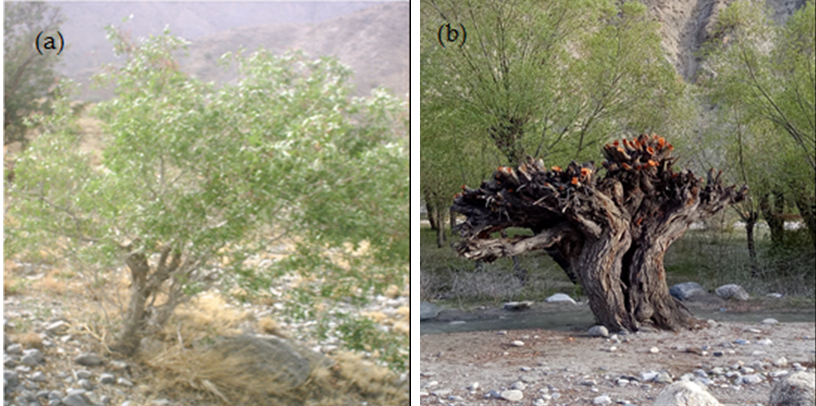
(a) Fraxinus xanthxyloides tree with leaves, (b). Plant due to overcutting of branches for fuel and fodder
References
- Ali, S.I. and Y.J. Nasir. (Eds.). 1989-1992. Flora of Pakistan. Nos. 191-204. Islamabad, Karachi.
- Ali, S.I. and M. Qaiser. (Eds.). 1993-2007. Flora of Pakistan. No. 191-215. Islamabad, Karachi.
- Ali, S.I., S. Omer & M. Qaiser. 2001. Flora of Pakistan. In: Natural History Research in Pakistan. (Eds.): M. Afzal, S.A. Mufti, PASTIC, Islamabad.
- Amorim, M. S., Serain, A. F., Salvador, M. J., and Stefanello, M. E. A. (2017). Chemical constituents of Sinningia hatschbachii. Natural Product Communications, 12(11), 1934578X1701201128.
- AOAC (2000). 17th edition. Association of official analytical chemists, Gaithersburg, MD, USA, pp. 87.
- Bhutto, A.M., F.R. Soomro, and K. Katakura. 2016. Leishmaniasis in Sindh, Pakistan: outbreak and review of the literature. https://doi.org/10.66344/jpad.v18i4.598[CrossRef]
- Boyer, J. and R.H. Liu. 2004. Apple phytochemicals and their health benefits. Nutrit. J., 3(1): 5. https://doi.org/10.1186/1475-2891-3-5[CrossRef]
- Ca̧liş, I., M. Hosny, T. Khalifa, and S. Nishibe. 1993. Secoiridoids from Fraxinusangustifolia. Phytochem., 33(6): 1453-1456. https://doi.org/10.1016/0031-9422(93)85109-5[CrossRef]
- Chen, X., Q. Zhang, Q. Cheng, and F. Ding.2009. Protective effect of salidroside against H2O2-induced cell apoptosis in primary culture of rat hippocampal neurons. Molecul. Cellul. Biochem., 332(1): 85-93. https://doi.org/10.1007/s11010-009-0177-3[CrossRef]
- Cho, J. Y., K.H. Nam, A.R. Kim, J. Park, E.S. Yoo, K.U. Baik, Y.H. Yu, and M.H. Park. 2001. In‐vitro and in-vivo immunomodulatory effects of syringin. J. Pharm. Pharmacol., 53(9): 1287-1294. https://doi.org/10.1211/0022357011776577[CrossRef]
- Dehaghani, Z.A., G. Asghari, and M.S. Dinani. 2017. Isolation and identification of nicotiflorin and narcissin from the aerial parts of Peucedanum aucheri Boiss. J. Agric. Sci. Technol. A, 7: 45-51. https://doi.org/10.17265/2161-6256/2017.01.007[CrossRef]
- Derosa, G., P. Maffioli, A. D’Angelo, & F. Di Pierro. 2021. A role for quercetin in coronavirus disease 2019 (COVID‐19). Phytother. Res., 35(3): 1230-1236. https://doi.org/10.1002/ptr.6887[CrossRef]
- Dinda, B., B. Ghosh, S. Arima, N. Sato, & Y. Harigaya. 2007. Chemical constituents of Evolvulus nummularius. Ind. J. Chem. Sect. 46(3): 492. https://doi.org/10.1002/chin.200729163[CrossRef]
- Duke, J.A. 1994. Dr. Duke’s phytochemical and ethnobotanical databases.
- Farrukh Hussain, F.H., S.M. Shah, and H.S. Hasan Sher. 2007. Traditional resource evaluation of some plants of Mastuj, District Chitral, Pakistan.
- Gadkari, P.V. and M. Balaraman. 2015. Catechins: Sources, extraction and encapsulation: A review. Food Bioprod. Proc., 93: 122-138. https://doi.org/10.1016/j.fbp.2013.12.004[CrossRef]
- Gamal-Eldeen, A., S. Kawashty, L. Ibrahim, M. Shabana, and S. El-Negoumy. 2004. Evaluation of antioxidant, anti-inflammatory, and antinociceptive properties of aerial parts of Vicia sativa and its flavonoids. J. Natural Remed., 4(1): 81-96.
- Grohmann, F. (1974). Oleaceae, No. 59. In. Flora of Pakistan. E. Nasir and S. I. Ali (Eds.). Stewart Herbarium,
- Gordon College, Rawalpindi and Dept. Bot. Karachi University.
- Guo, R., P. Wei, and W. Liu, 2007. Combined antioxidant effects of rutin and Vitamin C in Triton X-100 micelles. J. Pharmaceut. Biomed. Analy., 43(4): 1580-1586. https://doi.org/10.1016/j.jpba.2006.11.029[CrossRef]
- Hegnauer R. 1969. Chemotaxonomic der pflanzen. V. Basel und Stuttgart, vol. 5. BirkhäuserVerlag; 1969. p. 237 https://doi.org/10.1007/978-3-0348-7985-9.[CrossRef]
- Hadroug, A., R. Belhattab, K. Alipieva, and P.T. Nedialkov. 2019. Isofraxisecoside, a new coumarin-secoiridoid from the stem bark of Fraxinus xanthoxyloides. Natur. Prod. Res., 33(9): 1334-1339. https://doi.org/10.1080/14786419.2018.1475379[CrossRef]
- Huang, J.L., S.T. Fu, Y.Y. Jiang, Y.B. Cao, M.L. Guo, Y. Wang, and Z. Xu. 2007. Protective effects of Nicotiflorin on reducing memory dysfunction, energy metabolism failure and oxidative stress in multi-infarct dementia model rats. Pharmacol. Biochem. Behav., 86(4): 741-748. https://doi.org/10.1016/j.pbb.2007.03.003[CrossRef]
- Huang, Y.L., M.B. Oppong, Y. Guo, L.Z. Wang, S.M. Fang, Y.R. Deng, & X.M. Gao. 2019. The Oleaceae family: A source of secoiridoids with multiple biological activities. Fitoterapia, 136: 104155. https://doi.org/10.1016/j.fitote.2019.04.010[CrossRef]
- Idu, M., G. Obaruyi, and J. Erhabor. 2008. Ethnobotanical uses of plants among the binis in the treatment of ophthalmic and ENT (ear, nose and throat) ailments. Ethnobotan. leaf., 2009(4): 9.
- Ijaz, M.U., M.A. Khan, S. Yousaf, S. Nasir, H. Naz, H. Anwar, T. Younis, and A. Samad. 2020. Methanolic extract of Fraxinus xanthoxyloides attenuates cisplatin-induced reproductive toxicity in male albino rats. Pak. Veterin. J., 40(4): 489-493.
- Ikigai, H., T. Nakae, Y. Hara, and T. Shimamura. 1993. Bactericidal catechins damage the lipid bilayer. Biochimica et Biophysica Acta (BBA)-Biomembran., 1147(1): 132-136. https://doi.org/10.1016/0005-2736(93)90323-R[CrossRef]
- Iossifova, T., B. Vogler, and I. Kostova. 2002. Escuside, a new coumarin-secoiridoid from Fraxinus ornus bark. Fitoterapia., 73(5): 386-389. https://doi.org/10.1016/S0367-326X(02)00132-6[CrossRef]
- Iossifova, T., B. Vogler, & I. Kostova. 2002. Escuside, a new coumarin-secoiridoid from Fraxinusornus bark. Fitoterapia, 73(5): 386-389. https://doi.org/10.1016/S0367-326X(02)00132-6[CrossRef]
- Jin, L., J. Sun, M. Jin, C. Jin, S. Diao, W. Zhou, and G. Li. 2020. Chemical constituents from Syringa reticulata (Bl.) Hara. Biochem. Systemat. Ecol., 89: 103986. https://doi.org/10.1016/j.bse.2019.103986[CrossRef]
- Jaina, R., S.C. Jain, T. Bhagchandani, and N. Yadav. 2013. New furanocoumarins and other chemical constituents from Ficus carica root heartwood. Zeitschrift für Naturforschung C, 68(1-2): 3-7. https://doi.org/10.1515/znc-2013-1-201[CrossRef]
- Jensen, S.R., H. Franzyk, and E. Wallander. 2002. Chemotaxonomy of the Oleaceae: iridoids as taxonomic markers. Phytochem., 60(3): 213-231. https://doi.org/10.1016/S0031-9422(02)00102-4[CrossRef]
- Jin, L., J. Sun, M. Jin, C. Jin, S. Diao, W. Zhou, and G. Li. 2020. Chemical constituents from Syringa reticulata (Bl.) hara. Biochem. Systema. Ecol., 89: 103986. https://doi.org/10.1016/j.bse.2019.103986[CrossRef]
- Khan, K., E.A. Alamgeer, B. Ahmad, M. Akram, M. Aarshad, and S.U. Junaid. 2009. Ethnobotanical studies from northern areas of Pakistan. Pharmacol. Online, 1: 328-354.
- Khan, M.N., S. Ali, T. Yaseen, M. Adnan, S. Ullah, A. Zaman, M. Iqbal, S.N. Shah, A. Ali, and A. Razzaq. 2020. Assessment of proximate and nutritional contents in selected weedy grasses for potential use as fodder in District Charsadda, KP: Assessment of proximate and nutritional contents in selected weedy grasses. Proceed. Pak. Acad. Sci: B. Life Environ. Sci., 57(2): 83-94.
- Khan, S.W. & S. Khatoon. 2007. Ethnobotanical studies on useful trees and shrubs of Haramosh and Bugrote valleys in Gilgit northern areas of Pakistan. Pak J Bot., 39(3): 699-710.
- Khong, D.T. and Z.M. Judeh. 2017. Short synthesis of phenylpropanoid glycosides calceolarioside-B and eutigoside-A. Tetrahedron Letter., 58(1): 109-111. https://doi.org/10.1016/j.tetlet.2016.11.116[CrossRef]
- Kim, C.S., J. Kim, Y.M. Lee, E. Sohn, and J.S. Kim. 2016. Esculetin, a coumarin derivative, inhibits aldose reductase activity in vitro and cataractogenesis in galactose-fed rats. Biomolecul. Therapeut., 24(2): 178. https://doi.org/10.4062/biomolther.2015.101[CrossRef]
- Krishnan SSC, Subramanian IP, Subramanian SP (2014) Isolation, characterization of syringin, phenylpropanoid glycoside from Musa paradisiaca tepal extract and evaluation of its antidiabetic effect in streptozotocininduced diabetic rats. Biomed Prev Nutr 4:105–111
- Kok, S.H., C.C. Yeh, M.L. Chen, and M.Y.P. Kuo. 2009. Esculetin enhances TRAIL-induced apoptosis through DR5 upregulation in human oral cancer SAS cells. Oral oncol., 45(12): 1067-1072. https://doi.org/10.1016/j.oraloncology.2009.07.018[CrossRef]
- Kostova, I. and T. Iossifova. 2007. Chemical components of Fraxinus species. Fitoterapia, 78(2): 85-106. https://doi.org/10.1016/j.fitote.2006.08.002[CrossRef]
- Lemmich, J., S. Havelund, and O. Thastrup. 1983. Dihydrofurocoumarin glucosides from Angelica archangelica and Angelica silvestris. Phytochem., 22(2): 553-555. https://doi.org/10.1016/0031-9422(83)83044-1[CrossRef]
- Li, J., X. Li, C. Wang, M. Zhang, M. Ye, and Q. Wang. 2022. The potential of Valeriana as a traditional Chinese medicine: traditional clinical applications, bioactivities, and phytochemistry. Front. Pharmacol., 13: 973138 https://doi.org/10.3389/fphar.2022.973138.[CrossRef]
- Lin, S., M. Liu, S. Wang, S. Li, Y. Yang, and J. Shi. 2010. Phenolic and phenylethanoidal glycosides from branch of Fraxinus sieboldiana. Zhongguo Zhong yao za zhi= Zhongguo Zhongyao Zazhi= China Journal of Chinese Materia Medica, 35(8): 992-996. https://doi.org/10.4268/cjcmm20100811[CrossRef]
- Lin, Y. and Y. Yan. 2012. Biosynthesis of caffeic acid in Escherichia coli using its endogenous hydroxylase complex. Microbial. cell Factor., 11(1): 42. https://doi.org/10.1186/1475-2859-11-42[CrossRef]
- Liu, C., H. Xu, P. Wang, Y. Li, X. Yi, & Y. Tu. 2025. Syringin: Plant Source, Traditional Uses, Anti‐Cancer, Brain Protection, and Related Pharmacological Properties. Chem. Biodivers., 22(4): e202402272. https://doi.org/10.1002/cbdv.202402272[CrossRef]
- Liu, X., X. Duan, H. Fan, H. Wang, X. Jiang, Y. Fang, Q. Tang, J. Xiao, and Q. Li. 2021. 8-hydroxypinoresinol-4-O-β-D-glucoside from Valeriana officinalis L. is a Novel Kv1. 5 channel blocker. J. Ethnopharmacol., 276: 114168. https://doi.org/10.1016/j.jep.2021.114168[CrossRef]
- Murray R.D.H., J. Mendez S.A. 1982. Braun The natural coumarins. Chichester: John Wiley and Sons; 1982. p. 513.
- Mukerji, K.G. 2006. Current concepts in Botany. IK International Pvt Ltd.
- Omar, S.H. 2010. Oleuropein in olive and its pharmacological effects. Scient. Pharmaceut., 78(2): 133. https://doi.org/10.3797/scipharm.0912-18[CrossRef]
- Ong, K.C. and H.E. Khoo. 1997. Biological effects of myricetin. General pharmacology: Vascul. Syst., 29(2): 121-126. https://doi.org/10.1016/S0306-3623(96)00421-1[CrossRef]
- Park, K.S., Y. Chong, and M.K. Kim. 2016. Myricetin: biological activity related to human health. Appl. Biol. Chem., 59(2): 259-269. https://doi.org/10.1007/s13765-016-0150-2[CrossRef]
- Piroddi, M., A. Albini, R. Fabiani, L. Giovannelli, C. Luceri, F. Natella, P. Rosignoli, T. Rossi, A. Taticchi, and M. Servili. 2017. Nutrigenomics of extra-virgin olive oil: A review. Biofact., 43(1): 17-41. https://doi.org/10.1002/biof.1318[CrossRef]
- Rajendran, P., T. Rengarajan, N. Nandakumar, R. Palaniswami, Y. Nishigaki, and I. Nishigaki. 2014. Kaempferol, a potential cytostatic and cure for inflammatory disorders. Europ. J. Med. Chem., 86: 103-112. https://doi.org/10.1016/j.ejmech.2014.08.011[CrossRef]
- Riaz, U., M.A. Kharal, G. Murtaza, Q. uz Zaman, S. Javaid, H.A. Malik, H. Aziz, and Z. Abbas. 2019. Prospective roles and mechanisms of caffeic acid in counter plant stress: A mini review. Pak. J. Agric. Res., 32(1): 8. https://doi.org/10.17582/journal.pjar/2019/32.1.8.19[Full text][CrossRef]
- Riss, T.L. and R.A. Moravec. 2004. Use of multiple assay endpoints to investigate the effects of incubation time, dose of toxin, and plating density in cell-based cytotoxicity assays. Ass. Drug Develop. Technol., 2(1): 51-62. https://doi.org/10.1089/154065804322966315[CrossRef]
- Si, C.L., Y. Zhang, Z.Y. Zhu, J. Xu, J.K. Kim, and Y.S. Bae. 2009. Isolation and structure elucidation of secoiridoid glucosides from Fraxinusrhynchophylla leaves. Chem. Natur. Compound., 45(6): 814-816. https://doi.org/10.1007/s10600-010-9498-4[CrossRef]
- Sahreen, S., M.R. Khan, R.A. Khan, and N.A. Shah. 2013. Estimation of flavoniods, antimicrobial, antitumor and anticancer activity of Carissa opaca fruits. BMC Complement. Alternat. Med., 13(1): 372. https://doi.org/10.1186/1472-6882-13-372[CrossRef]
- Sarangzai, A.M., A. Ahmed, and S.K. Laghari. 2013. Traditional uses of some useful medicinal plants of Ziarat District Balochistan, Pakistan. FUUAST J. Biol., 3(1): 101.
- Sarfraz, I., A. Rasul, F. Jabeen, T. Younis, M.K. Zahoor, M. Arshad, and M. Ali. 2017. Fraxinus: a plant with versatile pharmacological and biological activities. Evidence-Based Complement. Alternat. Med., 2017(1): 4269868. https://doi.org/10.1155/2017/4269868[CrossRef]
- Sarwar, R., B. Ahmad, S.S. Shah, S. Hassan, and A. Ullah. 2025. Pharmacological Potential of Fraxinus hookeri and Its Essential Oil: An Integrated In Vitro and In Silico Investigation of Antioxidant, DNA-Protective and Cytotoxic Effects. J. Computat. Biophys. Chem., 24(09): 1147-1167. https://doi.org/10.1142/S2737416525500140[CrossRef]
- Shah, N.A., M.R. Khan, and A. Nadhman. 2014. Antileishmanial, toxicity, and phytochemical evaluation of medicinal plants collected from Pakistan. Bio. Med. Res. Int., 2014(1): 384204 https://doi.org/10.1155/2014/384204.[CrossRef]
- Shah, S.M. and F. Hussain. 2012. Ethnomedicinal plant wealth of Mastuj valley, Hindukush range, district Chitral, Pakistan. J. Med. Plant Res., 6(26): 4328-4337. https://doi.org/10.5897/JMPR12.527[CrossRef]
- Shinbo, Y., Y. Nakamura, M. Altaf-Ul-Amin, H. Asahi, K. Kurokawa, M. Arita, K. Saito, D. Ohta, D. Shibata, & S. Kanaya. 2006. KNApSAcK: a comprehensive species-metabolite relationship database. In Plant metabolomics (pp. 165-181). Springer. https://doi.org/10.1007/3-540-29782-0_13[CrossRef]
- Singh, K.N. 2012. Traditional knowledge on ethnobotanical uses of plant biodiversity: a detailed study from the Indian western Himalaya. Biodiversity: Res. Conserv., 28: 63-77. https://doi.org/10.2478/v10119-012-0028-z[CrossRef]
- Solano-Gallego, L., A. Koutinas, G. Miró, L. Cardoso, M.G. Pennisi, L. Ferrer, P. Bourdeau, G. Oliva, and G. Baneth. 2009. Directions for the diagnosis, clinical staging, treatment and prevention of canine leishmaniosis. Veterin. Parasitol., 165(1-2): 1-18. https://doi.org/10.1016/j.vetpar.2009.05.022[CrossRef]
- Tsuyama, T., R. Kawai, N. Shitan, T. Matoh, J. Sugiyama, A. Yoshinaga, K. Takabe, M. Fujita, and K. Yazaki. 2013. Proton-dependent coniferin transport, a common major transport event in differentiating xylem tissue of woody plants. Plant physiol., 162(2): 918-926. https://doi.org/10.1104/pp.113.214957[CrossRef]
- Tan, C.B., M. Gao, W.R. Xu, X.Y. Yang, X.M. Zhu, & G.H. Du. 2009. Protective effects of salidroside on endothelial cell apoptosis induced by cobalt chloride. Biol. Pharmaceut. Bullet., 32(8): 1359-1363. https://doi.org/10.1248/bpb.32.1359[CrossRef]
- Verdan, M. H., Mera de Souza, L., Ernesto de Carvalho, J., Vendramini Costa, D. B., Salvador, M. J., Barison, A., and Alves Stefanello, M. E. (2015). Two new hydronaphthoquinones from Sinningia aggregata (Gesneriaceae) and cytotoxic activity of aggregatin D. Chemistry and Biodiversity, 12(1), 148-152.
- Wallander, E. 2008. Systematics of Fraxinus (Oleaceae) and evolution of dioecy. Plant Systemat. Evolut., 273(1): 25-49. https://doi.org/10.1007/s00606-008-0005-3[CrossRef]
- Wallander, E. and V.A. Albert. 2000. Phylogeny and classification of Oleaceae based on rps16 and trnL‐F sequence data. Americ. J. botany., 87(12): 1827-1841. https://doi.org/10.2307/2656836[CrossRef]
- Wang, J.X., Y.Y. Zhang, X.N. Jia, and Y.Z. Yang. 2008. HPLC determination of syringin in Ilex rotunda Thunb. Chinese J. Pharmaceut. Analys., 28(5): 788-789.
- Wang, Y., C. Tang, and H. Zhang. 2015. Hepatoprotective effects of kaempferol 3-O-rutinoside and kaempferol 3-O-glucoside from Carthamus tinctorius L. on CCl4-induced oxidative liver injury in mice. J. Food Drug Analy., 23(2): 310-317. https://doi.org/10.1016/j.jfda.2014.10.002[CrossRef]
- Warashina, T., Y. Nagatani, and T. Noro. 2006. Constituents from the bark of Tabebuia impetiginosa. Chem. Pharmaceut. Bullet., 54(1): 14-20. https://doi.org/10.1248/cpb.54.14[CrossRef]
- Xu, M.C., H.M. Shi, H. Wang, and X.F. Gao. 2013. Salidroside protects against hydrogen peroxide-induced injury in HUVECs via the regulation of REDD1 and mTOR activation. Molecul. Med. Repor., 8(1): 147-153. https://doi.org/10.3892/mmr.2013.1468[CrossRef]
- Yang, J., J. Guo, and J. Yuan. 2008. In vitro antioxidant properties of rutin. LWT-Food Sci. Technol., 41(6): 1060-1066. https://doi.org/10.1016/j.lwt.2007.06.010[CrossRef]
- Yannai, S. 2012. Dictionary of food compounds with CD-ROM. Crc Press. https://doi.org/10.1201/b12964[CrossRef]
- You M, Wickramaratne DB, Silva GL, Chai H, Chagwedera TE, Farnsworth NR. 1995. Roemerine, an aporphine alkaloid from Annona senegalensis that reverses the multidrug-resistance phenotype with cultured cells. J Nat Prod. 1995;58:598–604.
- Younis, T., F. Jabeen, L. Jafri, A. Rasul, M. Manzoor, M. Shaheen, and A. Riaz. 2020. The protective potential of a Fraxinus xanthoxyloides ethyl acetate fraction against CCl 4-induced oxidative stress in the cardiac tissue of rats. RSC Advan., 10(17): 10221-10231. https://doi.org/10.1039/C9RA08729J[CrossRef]
- Younis, T., M.I. Khan, M.R. Khan, A. Rasul, M. Majid, V.M. Adhami, and H. Mukhtar. 2018. Nummularic acid, a triterpenoid, from the medicinal plant Fraxinus xanthoxyloides, induces energy crisis to suppress growth of prostate cancer cells. Molecul. Carcinogen., 57(10): 1267-1277. https://doi.org/10.1002/mc.22841[CrossRef]
- Younis, T., M.R. Khan, N.A. Shah, J.A. Zai, and H. Khan. 2016. Anti-Leishmanial Evaluation of Fraxinus xanthoxyloides (G. Don) DC. Collected from District Islamabad. J. Chem. Soc. Pak., 38(5).
- Younis, T., A. Rasul, F. Jabeen, G. Hussain, J. Altaf, L. Jafri, R. Rani, M.R. Khan, I. Sarfraz, and M. Ali. 2018. Ameliorating role of methanolic leaves extract of Fraxinus xanthoxyloides against CCl 4-challanged nephrotoxicity in rats. Pak. J. Pharmaceut. Sci., 31.
- Yuan, Y., S.J. Wu, X. Liu, and L.L. Zhang. 2013. Antioxidant effect of salidroside and its protective effect against furan-induced hepatocyte damage in mice. Food Funct., 4(5): 763-769. https://doi.org/10.1039/c3fo00013c[CrossRef]
- Yucel, C., F.D. Arslan, S. Ekmekci, V. Ulker, E. Kisa, E.E Yucel,. M. Ucar, Y.O. Ilbey, O. Celik, and B.I. Basok. 2019. Protective effect of all-trans retinoic acid in cisplatin-induced testicular damage in rats. The world journal of men’s health, 37(2): 249. https://doi.org/10.5534/wjmh.180105[CrossRef]
- Zaman, A. and L. Badshah. 2021. Floristic diversity and chorotype analysis of terich valley chitral: a contribution to the flora of hindukush range, northern Pakistan. JAPS: J. Anim. Plant Sc., 31(6). https://doi.org/10.36899/JAPS.2021.6.0376[CrossRef]
- Zhao, B. and M. Hu. 2013. Gallic acid reduces cell viability, proliferation, invasion and angiogenesis in human cervical cancer cells. Oncol. lett., 6(6): 1749-1755. https://doi.org/10.3892/ol.2013.1632[CrossRef]
- Zhao, G., A. Shi, Z. Fan, and Y. Du. 2015. Salidroside inhibits the growth of human breast cancer in vitro and in vivo. Oncol. Repor., 33(5): 2553-2560.
- Zhu, Y., Y.P. Shi, D. Wu, J. Ji, Y. J. X. Wang, H.L. Chen, S.S. Wu, D.J. Huang, and W. Jiang. 2011. Salidroside protects against hydrogen peroxide-induced injury in cardiac H9c2 cells via PI3K-Akt dependent pathway. DNA Cell Biol., 30(10): 809-819. https://doi.org/10.1089/dna.2010.1183[CrossRef]
Services
Article usage statistics
Loading…