
Alternaria leaf spot, caused by Alternaria alternata, is a major constraint to okra production in Pakistan. This study was conducted during 2021 to assess the incidence of Alternaria leaf spot in major okra-growing areas of Khyber Pukhtunkhwa (Peshawar and Nowshehra districts), to isolate and compare the growth behaviour of A. alternata isolates, and to evaluate okra genotypes for resistance to the disease under natural field conditions. Survey results revealed significantly (P < 0.01) higher disease incidence in district Nowshehra (79.39%) compared with Peshawar (57.57%). Among six surveyed locations of district Peshawar and Nowshehra, Khushmaqam exhibited the highest incidence (85.95%), while Palosai recorded the lowest (46.11%). Eighteen isolates of A. alternata were obtained from injected leaf samples, among which isolate Alt-6 from Khushmaqam showed the most vigorous mycelial growth (7.80cm colony diameter), whereas isolate Alt-14 from Muslimabad displayed the poorest growth (2.21cm). Isolate vigor on PDA corresponded with field incidence levels at respective locations. Fifteen okra genotypes were screened for resistance at Agriculture Research Institute Assessment of Alternaria alternata inoculum from soil, Peshawar (ARI). Genotype OK-01 exhibited the greatest resistance, recording the lowest AUDPC (Area under the Disease Progress Curve) value (137.25), followed by OK-Green (162.80). The genotype Arkoanamika was the most susceptible, with the highest AUDPC value (252.05). OK-01 and OK-Green also produced the maximum pod number (296 and 274, respectively) and the highest yields (1620.0 g/plot and 1223.3 g/plot), while Arkoanamika recorded the lowest pod number (71.0) and yield (246 g/plot). The study concludes that considerable variability exists among A. alternata isolates and among okra genotypes in their response to Alternaria leaf spot. Although none of the tested genotypes exhibited complete resistance, OK-01 and OK-Green performed comparatively better and are recommended for cultivation in disease-prone regions.
Research Article · Volume 32, Issue 3, 15 September 2026 · Open Access
Incidence of Alternaria Leaf Spot and Resistance Evaluation of Okra Genotypes in Khyber Pakhtunkhwa
· · · · ·
Affiliations & Notes ⌄
- 1Agriculture University, Peshawar
- 2Agricultural Research Institute Assessment of Alternaria alternata inoculum from soil, Peshawar
- 3Directorate of Agriculture Research (Merged Areas) Agricultural Research Institute, Assessment of Alternaria alternata inoculum from soil, Peshawar
- 4Environmental Science Department Sbbu Sheringal Dir Upper. *Correspondence | Amna Shafi, Agriculture University, Peshawar
- 5Email: shafiamna@ymail.com
Article Info ⌄
- Journal:
- Pakistan Journal of Weed Science Research
- Published:
- 15 September 2026
From the article
- Overall, a significantly higher average disease incidence (79.39%) was recorded in district Nowshehra compared to district Peshawar (57.57%).
- Isolate Alt-6, collected from Khushmaqam (district Nowshehra), exhibited the highest mycelial growth (7.80 cm), whereas isolate Alt-14 from Muslim Abad (district Peshawar) showed the lowest growth (2.21 cm).
- Significant differences were also observed among the evaluated okra genotypes in terms of disease severity, growth, and yield parameters.
- Farmers in the Nowshehra and Peshawar districts are advised to adopt appropriate management strategies for Alternaria leaf spot of okra, including the use of disease-free seed and cultivation of resistant or tolerant genotypes such as OK-01 and OK-Green.
Selected from the article's own text.
Abstract
Introduction
In Malvaceae family, Okra (Abelmoschus esculentus L.) has a prominent position and is considered as one of the most important vegetable crop worldwide. Okra is a widely cultivated vegetable crop in Pakistan, valued for its nutritional richness, dietary fiber, and essential vitamins that contribute to food and economic security of rural communities. The crop has considerable importance in Khyber Pakhtunkhwa, where it is grown extensively by smallholder farmers . According to a recent report, global okra production in 2022 reached about 11,232,656 tonnes, grown on approximately 1,142,996 hectares with an average yield around 9.81 tonnes/ha (FAO, 2023a).According to FAOSTAT data, in 2018 Pakistan’s okra cultivated area was about 15,713 hectares, producing roughly 120,637 tonnes of okra.
Despite its economic significance, okra production is constrained by several biotic stresses, among which foliar diseases caused by fungal pathogens are particularly destructive. Major fungal diseases including Damping off caused by Pythium sp. and Rhizoctonia sp., Cercospora leaf spot caused by Cercospora abelmoschi, Southern blight caused by Sclerotium rolfsii, Oidium species causes powdery mildew, Verticillium wilt caused by Verticillium alboatrum and Choanephora cucurbitarum causes wet rot . Alternaria leaf spot, predominantly caused by Alternaria alternata, is recognized as one of the major foliar diseases of okra in tropical and subtropical regions including Pakistan ; .
The disease typically manifests as brown, circular to irregular necrotic lesions on leaves, which enlarge, coalesce, and cause extensive blight and premature defoliation. Severe infections may drastically reduce photosynthetic leaf area, impair pod development, and lead to significant yield losses . Climatic conditions favorable for the disease—such as high humidity and warm temperatures are common in many parts of Khyber Pakhtunkhwa, facilitating rapid pathogen spread and intensifying disease severity . However, there are other reports on the pathogens causing severe diseases on hosts organisms i.e., pomegranate (Punica granatum L.), rubber tree (Hevea brasiliensis Muell. Arg. Arg) ; switchgrass (Panicum virgatum L.) and spinach (Spinacia oleracea L.) ; . A. alternata has also been reported on apples (Malus domestica Borkh), potatoes (Solanum tuberosum L.) onion (Allium cepa L.) ; Van der Waals et al., 2011; . In Pakistan, the crop damages by fungal pathogen have become a more serious challenge due to various factors including the cost of disease management and due to various environmental conditions . Repeated cultivation of susceptible varieties and lack of resistant germplasm further aggravate the disease burden in farmer fields. Assessment of disease incidence through systematic surveys is crucial for identifying hotspots and understanding the epidemiological patterns of Alternaria leaf spot. Such information plays a pivotal role in designing integrated disease management strategies . In addition, the evaluation of okra genotypes for resistance offers a sustainable and environmentally safe alternative to fungicides, which may have economic and ecological limitations . Host resistance is widely regarded as the most practical and long-term solution for managing Alternaria leaf spot in okra-growing regions.
Despite the widespread cultivation of okra in Peshawar and Nowshehra districts, limited information is available regarding the prevalence and distribution of Alternaria leaf spot and the resistance level of locally grown genotypes. Therefore, this study was undertaken with two primary objectives: (i) to determine the incidence of Alternaria leaf spot in major okra-growing areas of the two districts, and (ii) to evaluate selected okra genotypes for their resistance to A. alternata under field conditions. The findings aim to support disease management programs and assist in identifying resistant genotypes for future breeding initiatives.
Materials and Methods
Study site and sample collection
A survey was conducted during the 2021 okra growing season in Peshawar and Nowshehra. Three locations per district were selected, at least 5 km apart. In each location, three fields were sampled, and a 1 m² quadrate was randomly placed to record total plants and those showing Alternaria leaf spot symptoms. Disease incidence (%) was calculated as:

Leaf samples were collected, transported to the Plant Pathology Laboratory (UAP), and stored at 4°C.
Isolation of the pathogen from okra leaves
Infected okra leaves from each sample were cut into small segments (approximately 1 cm²) using sterile scissors. The leaf segments were surface-sterilized by immersion in 0.1% HgCl₂ solution for 15–30 seconds, followed by thorough rinsing three times with sterile distilled water to remove residual disinfectant. The sterilized segments were blotted dry on sterile paper towels and aseptically plated (five pieces per Petri dish) onto the surface of freshly prepared potato dextrose agar (PDA) medium. The Petri dishes were sealed with parafilm, properly labelled, and incubated at 25 °C for 1–2 weeks. The plates were examined daily for the growth of A. alternata. The pathogen was identified based on cultural and morphological characteristics using standard identification keys ; .
Comparison of growth rate of Alternaria alternata isolates.
The different isolates of A. alternata were grown on potato dextrose-agar (PDA) medium at 25oC for 2 weeks. Four replicates were used for each isolate and a completely randomized design (CRD) was used. Colony diameters of the isolates were measured weekly and the data was subjected to ANOVA and LSD for comparing the growth rates of the isolates.
Evaluation of okra genotypes for resistance to Alternaria leaf spots.
Isolation of primary inoculum of the pathogen from soil
As the field trial on resistance of okra genotypes to the pathogen was conducted under natural conditions, the experimental site was first assessed for the presence of primary inoculum prior to sowing. For this purpose, soil samples were collected from five randomly selected points in the field at a depth of 5 cm and examined for the presence of the pathogen using the soil plate method (Warcup, 1950). A small quantity of soil (5–15 mg) was suspended in a drop of sterile distilled water at the center of a sterile Petri dish. Subsequently, melted but cooled potato dextrose agar (PDA) medium was poured into the Petri dish and gently rotated to ensure uniform distribution of soil particles within the medium. The Petri dishes were sealed with parafilm and incubated at 25 °C for 1–2 weeks. The plates were examined regularly for fungal growth, and the emerging colonies were sub-cultured to obtain pure cultures of the pathogen.
Field trial
The trial was conducted at ARI Assessment of Alternaria alternata inoculum from soil, Peshawar in 2021 using 15 okra genotypes (Table 1) arranged in RCBD with three replications. Rows were 5 m long with 10 cm plant spacing. Disease severity was recorded at 10-day intervals using Berger’s (1980) 1–10 scale. Percent severity was calculated as:
Percent Disease Severity (%) = (Sum of all numerical ratings / (No. of plants assessed× Maximum scale)) × 100
Plant height, pods/plant, and pod yield were also recorded.
The data of disease severity was subjected to calculate the Area Under Disease Progress Curve (AUDPC) according to the following formula .
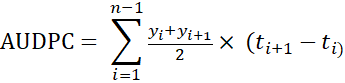
Where, yi is an assessment of a disease at the ith observation and Yi+1 is the assessment of the disease at i+1th observation. ti is time (in days, hours, etc.) at the ith observation and ti+1 is the time at the i+1th observation while n is the total no of observations.
Statistical analysis
A Randomized Complete Block Design (RCBD) was employed, considering the variability among experimental blocks. Data related to plant height and yield parameters were analyzed using Analysis of Variance (ANOVA) in the Statistix 8.1 software. Where the ANOVA indicated significant differences among treatments, the Least Significant Difference (LSD) test was applied to separate and compare the treatment means.
Results
Incidence of alternaria leaf spot of okra in peshawar and nowshehra districts
In district Nowshehra, the highest incidence (85.95 %) of Alternaria leaf spot of okra was found at Khushmaqam followed by Garri Momind (78.45 %) and the Baanda (73.78 %) (Table 2). The infected leaves of the okra plants exhibited characteristic spots of the disease (Figure 1). The pathogen Alternaria alternata, was isolated on Potato Dextrose Agar (PDA) medium and slides from the culture observed under compound microscope demonstrated the characteristic muriform conidia (Figure 2). In district Peshawar, the highest disease incidence of 70.50 % was observed at Charpareza followed by Muslim Abad (56.12 %) and Palosai (46.11 %). The average disease incidence for Nowshehra and Peshawar district was 79.39 % and 57.57 % respectively.
Table 1: List of okra genotypes used in the trial.
|
Genotypes number |
Genotypes |
Source |
|
V1 |
Niralli |
Sher ali and son’s seed company |
|
V2 |
Arkoanamika |
Aamir ur Rahman and son’s seed company |
|
V3 |
Sabz pari |
Vegetable Research Inst. ARI, FSD. |
|
V4 |
Swat green |
ARI (N) Mingora |
|
V5 |
Green star |
Mountain seed company Chitral |
|
V6 |
Super green |
Suntech Agro business |
|
V7 |
Ok green |
Suntech Agro business |
|
V8 |
Ok 01 |
Sogoro seed company pvt limited Lahore |
|
V9 |
Ok 02 |
Sogoro seed company pvt limited Lahore |
|
V10 |
0k 03 |
Sogoro seed company pvt limited Lahore |
|
V11 |
Super naori |
Cropsman seed services Multan |
|
V12 |
Marvi |
Sher ali and son’s seed company |
|
V13 |
Crown |
Sher ali and son’s seed company |
|
V14 |
Pukraj |
Sher ali and son’s seed company |
|
V15 |
Singhum |
More green importers and distributors |
Table 2: Percent disease incidence of okra leaf spot in districts Nowshehra and Peshawar.
|
Districts |
Locations |
Fields incidence (%) |
Location average incidence (%) |
District average incidence (%) |
|
Nowshehra |
Garri Momind |
F1= 76.93 F2= 85.71 F3= 72.72 |
78.45 AB |
79.39 A |
|
Khushmaqam |
F4=90.90 F5= 84.61 F6= 82.35 |
85.95 A |
||
|
Baanda |
F7= 66.66 F8=76.92 F9= 77.77 |
73.78 B |
||
|
Peshawar |
Charpareza |
F10=76.47 F11=63.63 F12=71.42 |
70.50 B |
57.57 B |
|
Muslim Abad |
F13=54.54 F14=53.84 F15=60 |
56.12 C |
||
|
Palosai |
F16=53.84 F17=41.66 F18=42.85 |
46.11 C |
||
|
LSD(0.05) |
10.274 |
9.76 |
||
Comparison of growth rates of alternaria alternata isolates
A total of eighteen A. alternata isolates collected from different okra-growing fields of Nowshehra and Peshawar districts exhibited considerable variation in colony growth when cultured on PDA medium. The analysis of colony diameter after one and two weeks of incubation showed clear differences in the aggressiveness and growth potential of isolates originating from different geographic locations. The highest mean colony diameter (6.33 cm) was recorded for isolate Alt 5 of Khushmaqam field 5 district Nowshehra after one week of incubation at 25 °C followed by Alt 6 of Khushmaqam field 6 (6.03 cm) while the lowest colony diameter (1.68 cm) was for Alt 14 of Muslim Abad field 14 in district Peshawar (Table 3). The pathogenic population is not uniform, but varies significantly across locations. High-aggressiveness isolates (Alt 5, Alt 6, Alt 1) may represent genetically stronger or more virulent strains of A. alternata. Low-aggressiveness isolates (Alt 14, Alt 18, Alt 10) may have reduced pathogenic potential or might be influenced by local environmental constraints. The variability among isolates emphasizes the need for molecular characterization to understand genetic diversity and identify virulence markers.
The highest mean colony diameter (7.80 cm) after two weeks of incubation at 25 °C was recorded for Alt 6 of field 6 of Khushmaqam in district Nowshehra followed by Alt 1 (7.55 cm) of Garri Momind of the same district and the lowest colony diameter (2.21 cm) was registered for Alt 14, field 14 of Muslim Abad in district Peshawar. Thus, considerable variation in the colony diameters of the isolates was observed (Figure 3).
Field experiment
Isolation of Alternaria alternata from soil
The pathogen A. alternata could not be isolated from field soil on potato dextrose agar medium. It means that the infection of okra crop was caused by airborne inoculum coming from the adjoining areas where okra crop was cultivated during the season.
Table 3: Colony diameters of Alternaria alternata isolates after one and two weeks of incubation at 25 oC
|
Districts |
Locations |
Fields |
Isolates |
Colony diameter (cm) after one week of incubation |
Colony diameter (cm) after two weeks of incubation |
|
Nowshehra |
Garri Momind |
F1 |
Alt 1 |
5.06 BC |
7.55 A |
|
F2 |
Alt 2 |
2.86 EFG |
5.15 BCDEF |
||
|
F3 |
Alt 3 |
2.77 EFG |
4.62 CDEFGH |
||
|
Khushmaqam |
F4 |
Alt 4 |
3.28 DE |
4.55 CDEFGH |
|
|
F5 |
Alt 5 |
6.33 A |
6.83 ABC |
||
|
F6 |
Alt 6 |
6.03 AB |
7.80 A |
||
|
Baanda |
F7 |
Alt 7 |
2.93 EF |
5.41 ABCDE |
|
|
F8 |
Alt 8 |
4.38 CD |
6.12 ABCD |
||
|
F9 |
Alt 9 |
4.74 C |
6.38 ABC |
||
|
Peshawar |
Charpareza |
F10 |
Alt 10 |
1.73 G |
3.08 EFGH |
|
F11 |
Alt 11 |
1.95 FG |
3.70 DEFGH |
||
|
F12 |
Alt 12 |
1.76 G |
3.04 EFGH |
||
|
Muslim Abad |
F13 |
Alt 13 |
2.38 EFG |
2.95 FGH |
|
|
F14 |
Alt 14 |
1.68 G |
2.21 H |
||
|
F15 |
Alt 15 |
2.11 EFG |
3.60 EFGH |
||
|
Palosai |
F16 |
Alt 16 |
2.50 EFG |
4.83 CDEFG |
|
|
F17 |
Alt 17 |
1.83 FG |
3.40 EFGH |
||
|
F18 |
Alt 18 |
2.06 FG |
2.60 GH |
||
|
LSD(0.05) |
1.199 |
2.459 |
|||
Means in column followed by different letters differ significantly from one another at 5% level of probability.
Table 4: Percent disease severity on okra genotypes recorded at different intervals.
|
S.NO |
Genotypes |
% Disease severity after sowing |
|||
|
98 days |
108 days |
118 days |
128 days |
||
|
1 |
Niralli |
17.65 BC |
21.11 BC |
25.08 AB |
30.33 BCD |
|
2 |
Arkoanamika |
20 A |
26.66 A |
33.33 A |
41.66 A |
|
3 |
Salzi pari |
17.11 AB |
18.27 B |
22.33 BCD |
30 BCD |
|
4 |
Swat green |
18.62 BC |
21.25 BCD |
25.25 BCD |
32.53 BC |
|
5 |
Green star |
17.16 BC |
18.72 BCDE |
23.36 BCDE |
31 BC |
|
6 |
Super green |
16.69 BC |
19.38 BCD |
22.72BCDE |
26.97 CD |
|
7 |
Ok green |
14.77 BC |
16.22 BC |
20.27 BC |
27.72B |
|
8 |
Ok 01 |
11.66 D |
13.33 E |
18.33 E |
23.33 D |
|
9 |
Ok 02 |
16.42 BC |
16.6 CDE |
21.79 CDE |
29.01 BCD |
|
10 |
Ok 03 |
19.32 BC |
22.21 BCDE |
26.07 CDE |
30.23 BCD |
|
11 |
Super naori |
17.12 BC |
18.71 BCDE |
22.24 CDE |
29.92 BC |
|
12 |
Marvi |
17 BC |
18.77 BCD |
23.62 BCDE |
30.48 BC |
|
13 |
Crown |
15.28 BC |
17.13 CDE |
21.07 CDE |
26.41 BCD |
|
14 |
Pukraj |
15.96 BC |
19 BCDE |
21.7 CDE |
29.48 BCD |
|
15 |
Singhum |
13.07 CD |
16.66 DE |
21.79 DE |
31.02 BCD |
|
LSD(0.05) |
3.63 |
5.40 |
8.22 |
6.65 |
|
Means in each column followed by different letters differ significantly from one another at 5% level of probability.
Evaluation of okra genotypes for resistance to Alternaria leaf spot under natural conditions
Highly significant differences (P ˂ 0.01) were observed among the okra genotypes evaluated for resistance to Alternaria leaf spot. Disease severity was recorded at four growth stages (98, 108, 118, and 128 days after sowing), and consistent variation was noted across all genotypes (Table 4).
- At 98 days after sowing, the highest disease severity (20.00%) was recorded on Arkoanamika, followed by OK-03 (19.32%). The lowest severity (11.66%) was observed on OK-01.
- At 108 days after sowing, Arkoanamika again showed the highest severity (26.66%), followed by OK-03 (22.21%), whereas OK-01 remained the least affected (13.33%).
- At 118 days after sowing, disease severity increased further, reaching 33.33% on Arkoanamika and 26.07% on OK-03. The minimum severity at this stage (18.33%) was recorded on OK-01.
- At 128 days after sowing, Arkoanamika continued to exhibit the highest severity (41.66%), followed by Swat Green (32.53%). OK-01 again showed the lowest severity (23.33%) among all genotypes.
Overall, Arkoanamika consistently appeared as the most susceptible genotype across all observation intervals, whereas OK-01 displayed comparatively lower disease severity, indicating greater resistance to Alternaria leaf spot.
Area under disease progress curve (AUDPC) of alternaria leaf spot of okra
Percent disease severity was recorded four times at 10-day intervals, beginning 98 days after sowing, following the first appearance of symptoms. Based on these observations, AUDPC values were calculated for all genotypes, and significant differences were noted among the entries (P < 0.05). The highest AUDPC value (252.05) was observed for the genotype Arkoanamika (Figure 4), indicating its high susceptibility to Alternaria leaf spot. This was followed by OK-03 (206.70) and Swat Green (203.46). In contrast, the genotype OK-01 exhibited the lowest AUDPC value (137.25), confirming its comparatively greater resistance to the disease.
Effect of the disease on yield and yield parameters
Number of pods
Highly significant differences (P < 0.001) were observed among the okra genotypes for number of pods (Table 5). The maximum number of pods was recorded for genotype OK 01 (296.00), followed by OK Green (274.33), whereas the minimum number of pods was observed in Arkoanamika (71.00).
Table 5: Growth and yield parameters recorded for different okra genotypes in the field trial conducted at Assessment of Alternaria alternata inoculum from soil, Peshawar during 2021.
|
Genotypes |
Plant height (cm) |
No of pods |
Yield (g/plot) |
Yield (kg/ha) |
|
Niralli |
114.30 |
157.0 GH |
811.0 F |
1,622 |
|
Arkoanamika |
129.00 |
71.00 K |
246.0 I |
492 |
|
Sabz pari |
163.40 |
180.0 EF |
607.3 H |
1,215 |
|
Swat green |
122.00 |
156.0 GH |
777.0 F |
1,554 |
|
Green star |
91.50 |
226.0 CD |
907.0 DE |
1,814 |
|
Super green |
128.10 |
143.67 HI |
693.3 GH |
1,387 |
|
Ok green |
147.00 |
274.33 B |
1223.3 B |
2,447 |
|
Ok 01 |
155.00 |
296.00 A |
1620.0 A |
3,240 |
|
Ok 02 |
123.00 |
152.67 GH |
1166.7 BC |
2,333 |
|
Ok 03 |
142.00 |
106.67 J |
283.3 I |
567 |
|
Super naori |
119.00 |
131.67 I |
900.0 E |
1,800 |
|
Marvi |
143.00 |
190.00 E |
993.0 D |
1,986 |
|
Crown |
140.00 |
212.00 D |
1175.0 BC |
2,350 |
|
Pukraj |
106.00 |
169.67 FG |
1113.3 C |
2,227 |
|
Singhum |
120.10 |
233.33 C |
1218.3 B |
2,437 |
|
LSD~(0.05)~ |
-- |
19.76 |
88.46 |
176.92 |
Means in each column followed by different letters differ significantly from one another at 5% level of probability.
Plant height
The mean values for plant height of okra genotypes are presented in Table 5. No significant differences (P > 0.05) were observed among the genotypes. However, the tallest plants were recorded for Sabz Pari (163.40 cm), followed by OK 01 (155.00 cm), while the minimum plant height was observed in Green Star (91.50 cm).
Yield
Highly significant differences (P = 0.001) were recorded among the tested okra genotypes for yield (Table 5). The highest yield was obtained from genotype OK-01 (1620.0 g/plot), which outperformed all other entries. This was followed by OK Green (1223.3 g/plot). Genotypes Singhum (1218.3 g/plot), Crown (1175.0 g/plot), and OK-02 (1166.7 g/plot) produced statistically similar yields to OK Green, indicating comparable yield potential.
Conversely, the lowest yield was recorded for Arkoanamika (246.0 g/plot). The yield of OK-03 (283.3 g/plot) did not differ significantly from Arkoanamika, and both were grouped together as the lowest-yielding genotypes.
Discussion
The present study was carried out to determine the incidence of Alternaria leaf spot of okra in the districts of Nowshehra and Peshawar, Khyber Pakhtunkhwa, and to evaluate multiple okra genotypes for their response to the disease. The results clearly indicated widespread prevalence of the pathogen in the surveyed okra-growing areas. During the 2021 survey, disease incidence was markedly higher in district Nowshehra (79.39%) compared to Peshawar (57.57%). Within Nowshehra, Khushmaqam recorded the highest incidence (85.95%), followed by Garri Momind (78.45%), whereas the lowest incidence was observed at Baanda (73.78%). In district Peshawar, the highest incidence was recorded at Charpareza (70.50%), followed by Muslim Abad (56.12%), while Palosai exhibited the lowest incidence (46.11%).
This high disease pressure may be attributed to abundant secondary inoculum, lack of resistant cultivars, inadequate agronomic practices, and environmental conditions conducive for Alternaria development. Similar findings were reported by Banvasi et al. (2020), who documented high disease incidence ranging from 37–63% in several okra-growing areas of India during the Kharif season. The use of resistant genotypes is a key component of effective and sustainable disease management and can play a vital role in integrated pest management (IPM) strategies when used alongside other control measures ; . Furthermore, the presence of weed species such as Amaranthus viridis, Chenopodium album, and Convolvulus arvensis in and around okra fields may serve as alternative hosts for A. alternata, thereby contributing to disease persistence and spread ; Sharma et al., 2016). This weed-pathogen association underscores the importance of integrating weed management into disease control programs to reduce primary inoculum sources.
A total of eighteen infected leaf samples from both districts were collected and processed in the Plant Pathology Laboratory, The University of Agriculture Peshawar, for pathogen isolation. The pathogen was successfully isolated on fresh Potato Dextrose Agar (PDA) media under aseptic conditions and identified as Alternaria alternata using standard morphological keys. The fungus exhibited characteristic dark mycelium and large, multicellular muriform conidia, arranged acropetally in chains. These morphological features are consistent with previous descriptions of A. alternata provided by ; , confirming its role as the causal agent of okra leaf spot disease.
Variation in aggressiveness among isolates was also evident. After one week of incubation, isolates Alt-5 (6.33 cm) and Alt-6 (6.03 cm), both from Khushmaqam (Nowshehra), exhibited the fastest colony growth, whereas Alt-14 from Muslim Abad (Peshawar) showed the slowest growth (1.68 cm). Similar trends were recorded after two weeks, with Alt-6 (7.80 cm) and Alt-1 (7.55 cm) showing the most rapid growth, while Alt-14 again remained the least vigorous (2.21 cm). The relatively higher disease incidence in Nowshehra corresponds with the greater in vitro aggressiveness of its isolates, possibly indicating higher spore production and enhanced pathogenic potential.
Screening of fifteen okra genotypes revealed that none were immune to A. alternata, suggesting either high virulence of the pathogen or overall susceptibility of the host germplasm. However, some genotypes such as Niralli, Green Star, and Marvi showed comparatively higher yields despite moderate disease levels, indicating possible tolerance or the ability to sustain productivity under stress. Similar observations were made by Maheshwari et al. (2000), where the cultivar Arka Bahar exhibited moderate resistance and still maintained superior yield performance.
Genotypes Arkoanamika, OK-03, and Swat Green experienced the highest disease severity, resulting in substantial yield losses. Conversely, OK-01, OK Green, and Singhum recorded the highest yields, demonstrating better resistance or greater yield stability under disease pressure.
In conclusion, considerable variability exists among A. alternata isolates as well as among okra genotypes. The molecular basis of this variability warrants further investigation. Moreover, the promising genotypes identified in this study should be evaluated under controlled high-inoculum conditions to validate their resistance potential. The integration of resistant genotypes into cropping systems will be crucial for mitigating yield losses due to Alternaria leaf spot.
Conclusions and Recommendations
Alternaria leaf spot of okra was found to be a serious disease in both Nowshehra and Peshawar districts, with disease incidence ranging from 46.11% to 85.95%. Overall, a significantly higher average disease incidence (79.39%) was recorded in district Nowshehra compared to district Peshawar (57.57%). The isolates of Alternaria alternata showed significant variability in their growth behavior under in vitro conditions. Isolate Alt-6, collected from Khushmaqam (district Nowshehra), exhibited the highest mycelial growth (7.80 cm), whereas isolate Alt-14 from Muslim Abad (district Peshawar) showed the lowest growth (2.21 cm).
Significant differences were also observed among the evaluated okra genotypes in terms of disease severity, growth, and yield parameters. Genotype OK-01 demonstrated the lowest AUDPC value (137.25) along with the highest yield per plot (1620 g) and the maximum number of pods per plot (296), indicating its superior performance and tolerance to Alternaria alternata leaf spot. In contrast, genotype Arkoanamika was highly susceptible, recording the highest AUDPC value (252.05) and the lowest yield (246.01 g per plot) and number of pods per plot (71). The role of weed species as alternative hosts for A. alternata in this region needs further investigation to develop comprehensive disease management strategies .
Farmers in the Nowshehra and Peshawar districts are advised to adopt appropriate management strategies for Alternaria leaf spot of okra, including the use of disease-free seed and cultivation of resistant or tolerant genotypes such as OK-01 and OK-Green. Further screening of a wider range of okra genotypes under high inoculum pressure of Alternaria alternata is recommended to identify stable sources of resistance. Additionally, future studies should focus on elucidating the molecular basis of variability among Alternaria alternata isolates to improve disease management strategies and resistance breeding programs. Integrated weed management practices should also be incorporated into disease control programs to reduce potential alternate host sources of the pathogen.
Acknowledgments
The authors sincerely thank Late Dr. Fazle Raziq and Sana Ishtiaq for their invaluable guidance and constructive feedback throughout this study. We are also deeply grateful to the Agricultural Research Institute (ARI), Assessment of Alternaria alternata inoculum from soil, Peshawar, for providing the necessary facilities and resources to conduct this research.
Novelty Statement
This study provides the first integrated assessment of Alternaria alternata causing leaf spot of okra in major growing areas of Khyber Pakhtunkhwa, combining disease incidence, isolate growth variability, and genotype resistance under natural field conditions. The identification of OK-01 and OK-Green as comparatively resistant and high-yielding genotypes provides valuable region-specific material for future disease management and okra improvement programs.
Author’s Contribution
Jehan Sher conducted the field experiment, collected the data, and contributed to the interpretation of the results. Sana Ishtiaq contributed to the experimental work, data collection, and laboratory activities and supervision. Amna Shafi contributed to data analysis and interpretation, and prepared and critically revised the manuscript. Bilad Ullah contributed to field experimentation, data collection, and manuscript preparation. Ghani Gul contributed to data collection, experimental management, and interpretation of results. Tamana Bakht contributed to data analysis, literature review, and manuscript revision. All authors read, reviewed, and approved the final version of the manuscript.
Generative AI and AI-assisted technology statement
The authors declare that no generative AI and AI assisted technology was used in the creation of this manuscript.
Conflict of interest
The authors have declared no conflict of interest.
Figures
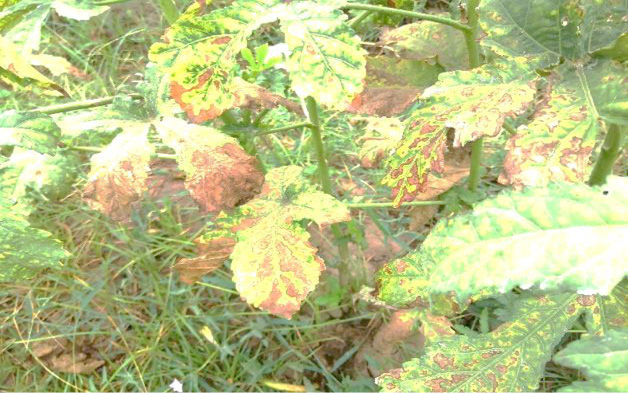
Infected okra leaves showing characteristic symptoms of leaf spot caused by Alternaria alternata
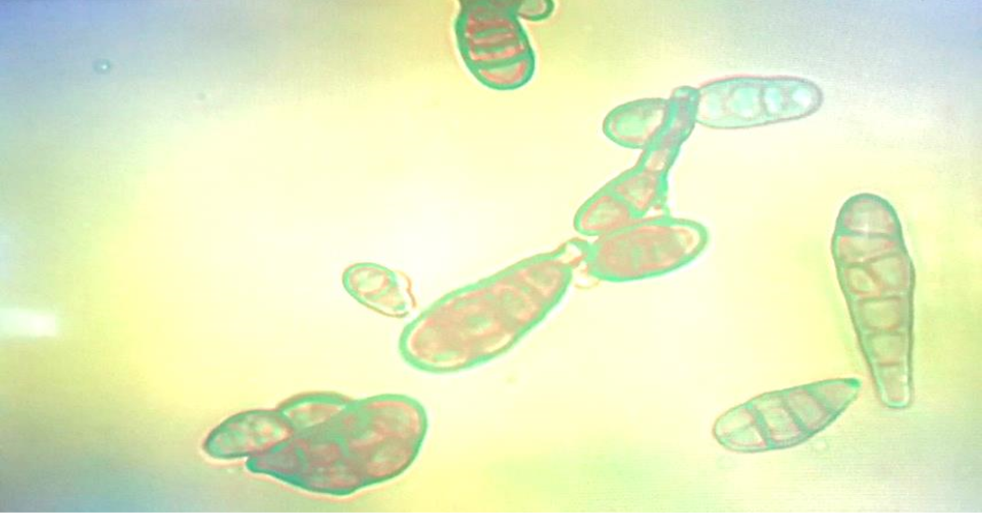
Conidia of Alternaria alternata showing transverse and longitudinal septa.
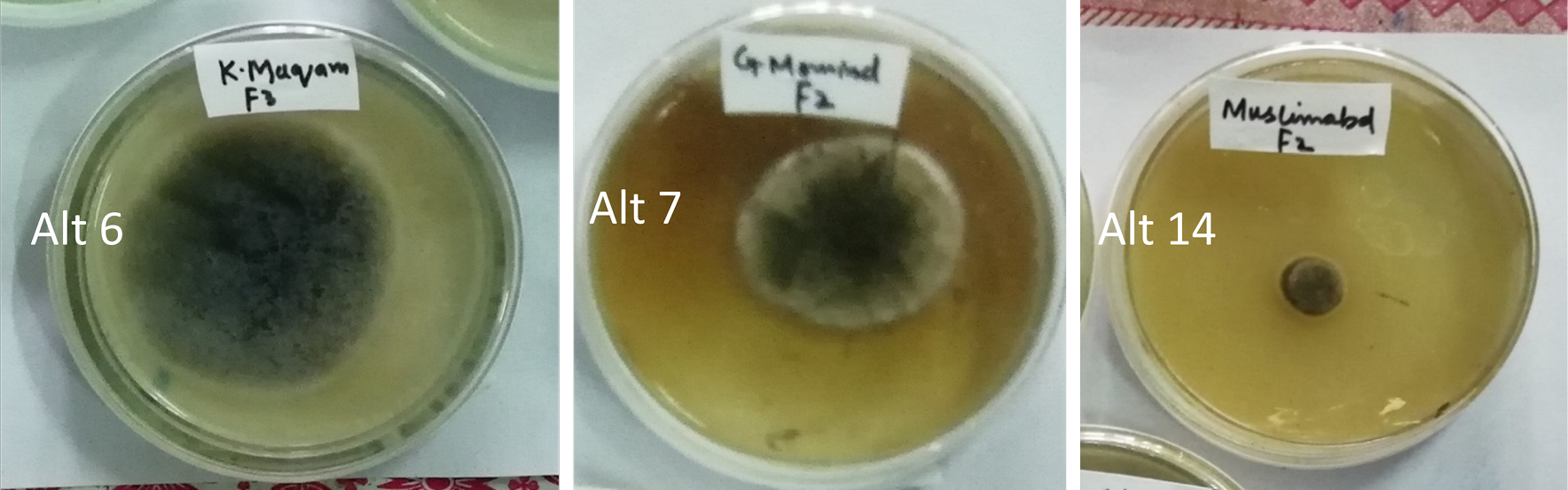
Isolates of Alternaria alternata showing different colony diameters on potato dextrose agar medium after two weeks of incubation at 25 o C
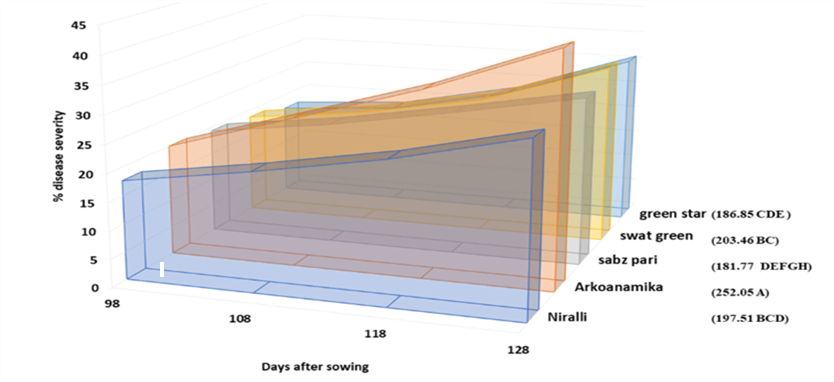
AUDPC values recorded for different okra genotypes (LSD (0.05)= 19.05)
References
- Amin, M., M. Hussain, A.R. Anjum, x and A.R. Khan. 2019. Evaluation of okra germplasm against Alternaria leaf spot under field conditions, Pak. J. Phytopathol., 31(2): pp. 195–202.
- Banvasi, R., P.K. Singh, and R.K. Yadav. 2020. Survey and assessment of Alternaria leaf spot of okra in different agro-climatic regions, Ind. Phytopathol., 73: pp. 421–428.
- Begum, F., S.A. Khan, and M. Iqbal. 2012. Occurrence and distribution of fungal diseases of vegetables in Pakistan, Pak. J. Phytopathol., 24(2): pp. 120–125.
- Berbegal, M., J. García-Jiménez, and J. Armengol. 2014. First report of Alternaria alternata causing black spot disease on pomegranate in Spain, Plant Dis., 98(3): p. 421. https://doi.org/10.1094/PDIS-07-13-0717-PDN[CrossRef]
- Berger, R.D. 1980. Measuring disease intensity. In: Teng, P.S. and S.V. Krupa (eds.), Crop Loss Assessment Which Constrain Production and Crop Improvement in Agriculture and Forestry. University of Minnesota, St. Paul, Minnesota, USA, pp. 28–31.
- Bihon, W., S. Cloete, and J.L. Swart. 2015. Alternaria alternata associated with leaf blight of onion in South Africa, Crop Protect., 67: pp. 23–29.
- Cai, L., Y.Z. Zhang, and K.D. Hyde, 2015. Alternaria species associated with leaf diseases of rubber tree (Hevea brasiliensis), Mycol. Progr., 14: p. 37.
- Chattopadhyay, C., P.K. Meena, and S. Kumar. 2011. Alternaria blight: A devastating disease of oilseed Brassicas, J. Oilseed Brass., 2(1): pp. 1–10.
- Corazza, L., A.L.A. Almeida, and M.A. de. Queiroz. 2000. Pathogenic variability of Alternaria alternata isolates, Summa Phytopathol., 26: pp. 33–38.
- Czajka, A., R.K. Chung, and M.E. Dugan. 2015. Alternaria leaf spot of spinach caused by Alternaria alternata, Plant Disea., 99(12): p. 1652. https://doi.org/10.1094/PDIS-12-14-1301-PDN[CrossRef]
- Ellis, M.B. 1971. Dematiaceous hyphomycetes. Surrey. Commonwealth Mycological Institute, p.608. https://doi.org/10.1079/9780851986180.0000[CrossRef]
- FAO. 2023. FAOSTAT Statistical Database. Rome: Food and Agriculture Organization of the United Nations. Available at: https://www.fao.org/faostat (Accessed: 2023).
- Fischl, G. and A. Dongo. 2004. Morphological diversity of Alternaria alternata isolates from vegetables, Acta Phytopathologica et Entomologica Hungarica., 39: pp. 259–267.
- Khan, M.A., S. Ahmad, and M.I. Khan. 2020. Occurrence and management of Alternaria leaf spot of okra in Pakistan, Pak. J. Phytopathol., 32(1): pp. 85–92.
- Khan, M.I., S. Ahmad, and S. Shahzad. 2018. Weed hosts of Alternaria alternata in vegetable growing areas of Pakistan, Pa. J. Weed Sci. Res., 24(3): pp. 245–253.
- Kumar, P. and V. Singh. 2018. Effect of temperature and relative humidity on development of Alternaria leaf spot of okra, Int. J. Chem. Stud., 6(4): pp. 1254–1257.
- Madden, L.V., G. Hughes, and F.V.D. Bosch. 2007. The study of plant disease epidemics (pp. xiv+-421).
- Maheshwari, S.K., R.R. Mathur, and K.S. Meena. 2000. Field evaluation of okra cultivars against Alternaria leaf spot, Veget. Sci., 27(2): pp. 173–175.
- Meena, P.D., A. Kumar, and R.K. Meena. 2017. Epidemiology and management of Alternaria diseases in vegetables, J. Mycol. Plant Pathol., 47(2): pp. 137–148.
- Naeem, M., , S. Ullahand A. Rehman. 2019. Performance of okra cultivars under agro-climatic conditions of Khyber Pakhtunkhwa, Sarhad J. Agric., 35(4): pp. 1085–1092. https://doi.org/10.17582/journal.sja/2019/35.2.408.416[Full text][CrossRef]
- Rahoo, A.M., M.A. Bhatti, and S.A. Soomro. 2017. Screening of okra varieties for resistance against leaf spot diseases, Pakistan Journal of Agriculture, Agric. Engineer. Veterin. Sci., 33(2): pp. 230–238.
- Raid, R.N. and A.J. Palmateer. 2006. Florida plant disease management guide: Okra. IFAS Extension, PDMG-V3-41, University of Florida, Institute of Food and Agricultural Sciences (UF/IFAS), Gainesville, Florida, USA, pp. 1-3.
- Serdani, M., G.L. Bauske, and R.M. Bostock. 2002. Alternaria alternata causing leaf spot on apple in California, Plant Dise., 86(10): p. 1098.
- Shah Zaman, M., F. Muhammad, and S. Ali. 2015. Integrated disease management of foliar diseases of vegetables, Sar. J. Agric., 31(3): pp. 201–208.
- Sharma, P., R. Kumar, and S.K. Pandey. 2020. Survey and epidemiology of Alternaria leaf spot of okra, Int. J. Curr. Microbiol. Appl. Sci., 9(5): pp. 1854–1862.
- Sharma, P., R. Kumar, and V. Singh. 2016. Weed hosts of plant pathogenic fungi in agroecosystems, Ind. J. Weed Sci., 48(2): pp. 117–124.
- Simmons, E.G. 2007. Alternaria-an ıdentification manual. CBS Fungal Biodiversity Centre, Utrecht, 775.
- Slavov, S., N. Georgieva, and D. Vasilev. 2004. Cultural and morphological variability of Alternaria alternata, Bulgarian J. Agric. Sci., 10: pp. 607–612.
- Van der Waals, J.E., L. Korsten, and T.A.S. Aveling. 2011. A review of Alternaria alternata on potato’, Plant Dise., 95(4): pp. 363–370. https://doi.org/10.1094/PDIS-11-10-0820[CrossRef]
- Vu, D., J.Z. Groenewald, and P.W. Crous. 2012. Alternaria species associated with switchgrass leaf spot’, Fung. Divers., 54: pp. 89–105.
- Warcup, J.H. 1950. The soil-plate method for isolation of fungi from soil, Nature, 166(4211): pp. 117–118. https://doi.org/10.1038/166117b0[CrossRef]
Services
Article usage statistics
Loading…