
The ecological exploration of weed of wheat (Triticum aestivum L.), maize (Zea mays L.) and rice (Oryza sativa L.) was conducted in Batkhela region, District Malakand. The data were collected about the weed diversity and morphological characteristics through field visits in Dheri, Julagram, Khar, Matkanai, Trai and Totakan. The study revealed 131 species. Among these 97 plants species were weed of wheat crop, 41 plants species were weed in maize crop and 39 plant species occurred in rice crop. Plants belonged to 43 families and 106 genera. There were 3 (2.2%) pteridophytes and 128 angiosperms. Out of angiosperm, 112 (85.4%) species were dicots and 16 were monocot (13.7%). Poaceae was dominant monocot family with 15 (11.5%) species. In dicot leading family was Asteraceae contained 19 plant species (14.5%) followed by Amaranthaceae, Lamiaceae, Papilionaceae (Sub family of Fabaceae) and Polygonaceae with 8 (6.1%) species. Chenopodiaceae and Euphorbiacae each had 5 (3.8%) species. Apiaceae, Brassicaceae and Solanaceae possessed 4 (3.05%) plant species each. Ecological evaluation indicated 102 (77.8%) species were Therophytes, 18 (13.7%) species were Geophytes, 9 (6.8%) species were Hemicryptophytes, and 2 (1.52%) species were Chamaephytes. In leaf size class the leading category was mesophyll with 51 (38.93%). Of these 86 (65.6%) species were indigenous to study area and 45 (34.3%) were exotic. During the study 95 (72.5%) plants were found in reproductive stage S2, 27 (20.61%) at pre-reproductive stage S1 and 9 (6.8%) occurred at post reproductive stage S3. In leaf shapes 79 (60.3%) species had simple leaves, 52 (39.6%) contained dentate and 1 (0.07%) species was aphyllous. 17 (12.98.%) species were spiny SP and 114 (87.02%) species were non-spiny NS. The study concludes that Therophytes dominate the weed flora of Batkhela, indicating disturbance in cereal crops. It is recommended to adopt integrated weed management practices to control dominant species and conserve indigenous flora.
Research Article · Volume 32, Issue 3, 6 October 2026 · Open Access
Identification and Morphological Characteristics of Weed Flora Associated with Wheat, Rice and Maize crops in Batkhela, District Malakand, Khyber Pakhtunkhwa, Pakistan
·
Affiliations & Notes ⌄
- 1Centre of Plant Biodiversity, University of Peshawar, Pakistan. *Correspondence | Bibi Maryam, Centre of Plant Biodiversity, University of Peshawar, Pakistan
- 2Email: maryamghaffar62744@gmail.com
Article Info ⌄
- Journal:
- Pakistan Journal of Weed Science Research
- Published:
- 6 October 2026
From the article
- The present research reported 131 weeds species distributed in cereal crops of the study area.
- Wheat showed the highest weed diversity (97 spp.) followed by maize (41 spp.) and rice (39 spp.) crops.
- Future studies focusing on management trials and ethnobotanical uses of these species are recommended.
Selected from the article's own text.
Abstract
Introduction
Plant ecology deals with the effect of environmental factors on the distribution and abundance of plant species . Plants have critical relationship with its environment. Their adoptability, growth and interaction are submissive to area they dwell. Plants depends on all conditions for existence in environment . The physiological and morphological adaptation is important for plants species. The interrelations between plant physiology and synecology are very close . Ecological features of plants change with altitude, edaphic, climatic and anthropogenic factors .
A soil all over the world is basic contributor for continuous existence of life. Soil is the combination of organic and inorganic materials. Soil provides medium for the germination, growth and development of plants species . The physicochemical features of soil include soil texture, color, structure, pH, electrical conductivity, TSS and NPK . Plants survival has direct relation to soil it anchors, the constituents it possesses, aeration it favors, water it retains and microorganism it hosts. So, study of plant is meaning less without systematic study of soil .
Ecological characteristics of weed will help to understand the prevailing environmental condition of the area and better future planning for sustainable and improved weed control practices . The weed flora of the area is unexplored previously and this is the first ever study on weed diversity in this area. Study was conducted in Batkhela, District Malakand, Khyber Pakhtunkhwa, Pakistan. The areas have a subtropical climate and supports irrigated cereal cultivation, including wheat, rice and maize. Its diverse ecological conditions make it suitable for investigate weed flora and their morphological characteristics’ . Therefore, the present study was conducted with the objective to document the weed flora and their association with wheat, rice and maize crops in the study area .
Materials and Methods
Field visit
Crops cultivated localities with altitudinal variation and topography were selected for the collection of plants. Various localities include Dheri, Julagram, Khar, Matkanai, Trai and Totakan were visited. Field surveys were conducted during 2017-2018 covering both Rabi and Kharif seasons. A total of 10-15 field visits were made to each locality at vegetative, flowering and harvesting stages of the crops. In each crop field weeds were collected using random quadrate sampling method. Five quadrates of 1m ×1m were randomly placed in each wheat, rice and maize field. Weeds growing within the crop field and within 5m radius of crops plants were recorded as associated with wheat, rice and maize crops. The specimens after drying were mounted on herbarium sheets and identified following Flora of Pakistan and available literature on weed plants (Nasir and Ali, 1970-1989; Ali and Nasir, 1989-1991; Ali and Qaiser 1993-2017). The identified plants were submitted in the herbarium Centre of Plant Biodiversity University of Peshawar for future research.
Ecological evaluation
The biological spectra including life forms and leaf size were known after Raunkiaer (1934), Hussain (1989), Shah et al. (2021), Khan et al. (2022) and Ain et al. (2026). Phenologically, weeds were classified into S1= Vegetative/ Pre-reproductive, S2= Reproductive and S3= post-reproductive stages. Leaf shapes, spinniness NS = Non spiny, SP = Spiny and biogeographic status of weed were also recorded.
Results and Discussion
Floristic diversity
The Study revealed 131 plant species were typical weed in the research area. 97 plants were weed of wheat crop, 41 species were weed in maize crop and 39 species were found in rice crop.
The plant species belonged to 43 families and 106 genera (Table 1, Figure 7).
A total of 3 Pteridophytic species were recorded. Family Equistaceae was represented by 1 species and family Pteridaceae was represented by 2 species. Angiosperms were represented by 128 species in which dicots had 112 species (85.4%) and monocots were represented by 16 species (13.7%). The leading monocot family was Poaceae with 15 (11.5%) species, followed by Asparagaceae, Cyperaceae and Iridaceae with 1 (0.76%) species each. Among dicots, Asteraceae was the dominant dicot family with nineteen (14.5%) species, followed by Amaranthaceae, Lamiaceae. Papilionaceae (Sub family of Fabaceae) and Polygonaceae each with 8 (6.1%) species, Chenopodiaceae and Euphorbiaceae had 5 (3.8%) species. Apiaceae, Brassicaceae and Solanaceae possessed 4 (3%) species each, Boraginaceae and Convolvulaceae were represented by 3 (2.2%) species. Acanthaceae, Caryophyllaceae, Malvaceae,
Table 1: Ecological characteristics and biogeographic status of weeds of cereal crops in batkhela, pakistan.
|
S. No |
Plant species |
Life form |
Leaf size |
Leaf shape |
Phenology |
Spinescence |
Biogeographic status |
|
A. |
Pteridophyte |
||||||
|
1. |
Equisetaceae |
||||||
|
1. |
Equisetum arvense L. |
G |
L |
S |
S1 |
NS |
Exo |
|
2. |
Pteridaceae |
||||||
|
2. |
Adintum capillus- veneris L. |
G |
N |
D |
S1 |
NS |
Exo |
|
3. |
Pteris vittata L. |
G |
Mic |
D |
S1 |
NS |
Exo |
|
B. |
Angiosperms |
||||||
|
a. |
Monocots |
||||||
|
3. |
Asparagaceae |
||||||
|
4. |
Asparagus officinalis L. |
Ch |
N |
S |
S2 |
SP |
Exo |
|
4. |
Cyperaceae |
||||||
|
5. |
Cyperus rotundus L. |
G |
Mic |
S |
S2 |
NS |
Ind |
|
5. |
Iridaceae |
||||||
|
6. |
Iris reticulata M.Bieb. |
G |
Mic |
S |
S2 |
NS |
Exo |
|
6. |
Poaceae |
||||||
|
7. |
Brachiaria ramosa L. |
Th |
Mic |
S |
S2 |
NS |
Ind |
|
8. |
Brachiaria latifolia L. |
Th |
Mic |
S |
S2 |
NS |
Ind |
|
9. |
Cynodon dactylon (L.) Pers. |
H |
Mic |
S |
S2 |
NS |
Ind |
|
10. |
Desmostachya bipinnata (L.) Stapf |
H |
Mes |
S |
S2 |
NS |
Ind |
|
11. |
Dichantium annulatum (Forssk.) Stapf |
H |
Mic |
S |
S2 |
NS |
Ind |
|
12. |
Digitaria ciliaris (Retz.) Koel. Descr. Gram |
H |
Mes |
S |
S2 |
NS |
Ind |
|
13. |
Eragrostis minor Host. |
Th |
N |
S |
S2 |
NS |
Ind |
|
14. |
Paspalum paspalodes Michx.) Scribn. |
Th |
N |
S |
S2 |
NS |
Exo |
|
15. |
Poa annua L. |
Th |
N |
S |
S2 |
NS |
Ind |
|
16. |
Poa bulbosa L. |
Th |
Mes |
S |
S2 |
NS |
Ind |
|
17. |
Rostraria cristata (L.) Tzvelev |
Th |
Mes |
S |
S2 |
NS |
Ind |
|
18. |
Saccharum officinarum L. |
H |
Mes |
S |
S2 |
NS |
|
|
19. |
Setaria pumila (Poir.) Roem. & Schult. |
H |
Mes |
D |
S2 |
NS |
|
|
20. |
Echinochloa crus-galli (L.) P.Beauv. |
Th |
Mes |
S |
S2 |
NS |
|
|
21. |
Urochloa panicoidea P.Beauv. |
G |
Mes |
S |
S2 |
SP |
Ind |
|
b. |
Dicots |
||||||
|
7. |
Asteraceae |
||||||
|
22. |
Anaphalis margaritacea (L.) Benth. |
Th |
Mes |
S |
S2 |
NS |
Exo |
|
23. |
Artemisia maritima L. |
H |
N |
S |
S2 |
NS |
Ind |
|
24. |
Artemisia vulgaris L. |
H |
Mes |
D |
S2 |
NS |
Exo |
|
25. |
Bidens pilosa L. |
Th |
Mes |
S |
S2 |
NS |
Exo |
|
26. |
Calendula arvensis (Vaill.) L. |
Th |
Mic |
S |
S2 |
NS |
Ind |
|
27. |
Carthamus oxyacantha M.Bieb. |
Th |
Mes |
D |
S2 |
SP |
Ind |
|
28. |
Centaurea benedicta (L.) |
Th |
Mac |
D |
S2 |
SP |
Ind |
|
29. |
Cirsium arvense L. |
Th |
Mac |
D |
S2 |
SP |
Exo |
|
30. |
Conyza bonariensis L. |
Th |
Mic |
S |
S2 |
NS |
Exo |
|
31. |
Conyza canadensis L. |
Th |
Mic |
S |
S2 |
NS |
Exo |
|
32. |
Eclipta alba L. |
Th |
Mic |
S |
S1 |
NS |
Exo |
|
33. |
Lactuca biennis Willd. |
Th |
Mac |
D |
S1 |
NS |
Exo |
|
34. |
Lactuca viminea L. |
Th |
Mes |
D |
S1 |
SP |
Ind |
|
35. |
Launaea secunda (Frossk.) Muschl. |
Th |
Mes |
D |
S1 |
NS |
Exo |
|
36. |
Parthenium hysterophorus L. |
Th |
Mes |
D |
S1 |
NS |
Exo |
|
37. |
Sonchus arvensis L. |
Th |
Mes |
D |
S2 |
NS |
Ind |
|
38. |
Sonchus asper (L.) Hill |
Th |
Mes |
D |
S2 |
NS |
Ind |
|
39. |
Sonchus oleraceus L. |
Th |
Mac |
D |
S2 |
NS |
Exo |
|
40. |
Xanthium strumarium L. |
Th |
Mac |
D |
S2 |
SP |
Ind |
|
8. |
Acanthaceae |
||||||
|
41. |
Barleria cristata L. |
Th |
Mes |
S |
S1 |
NS |
Exo |
|
9. |
Amaranthaceae |
||||||
|
42. |
Amaranthus viridis L. |
Th |
Mic |
S |
S2 |
NS |
Ind |
|
43. |
Achyranthes bidentata L. |
Th |
Mes |
S |
S2 |
SP |
Exo |
|
44. |
Amaranthus hypochondriacus L. |
Th |
Mac |
S |
S2 |
NS |
Exo |
|
45. |
Amaranthus spinosus L. |
Th |
Mes |
D |
S2 |
SP |
Exo |
|
46. |
Aerva javanica (Burm. f.) Juss. Ex J.A. Schult. |
Th |
Mes |
S |
S1 |
NS |
Exo |
|
47. |
Aerva lanata L. |
Th |
Mic |
S |
S2 |
NS |
Exo |
|
48. |
Alternanthera pungens Kunth |
Th |
N |
S |
S1 |
SP |
Exo |
|
10. |
Apiaceae |
||||||
|
49. |
Eryngium maritimum L. |
Th |
Mic |
D |
S2 |
SP |
Exo |
|
50. |
Pimpinella diversifolia DC. |
G |
Mic |
D |
S2 |
NS |
Ind |
|
51. |
Scandix pecten-veneris L. |
Th |
Mic |
D |
S2 |
NS |
Exo |
|
52. |
Torilis arvensis (Huds.) Link. |
Th |
Mes |
D |
S2 |
NS |
Exo |
|
11. |
Boraginaceae |
||||||
|
53. |
Arnebia euchroma (Royle ex Benth.) I.M.Johnst. |
Th |
Mic |
S |
S2 |
SP |
Ind |
|
54. |
Cynoglossum lanceolatum Frossk. |
Th |
Mic |
S |
S2 |
NS |
Ind |
|
55. |
Onosma hispida Wall. |
Th |
Mic |
S |
S2 |
NS |
Ind |
|
12. |
Brassicaceae |
||||||
|
56. |
Capsella bursa-pastoris (L.) Medik. |
Th |
Mic |
D |
S2 |
NS |
Ind |
|
57. |
Coronopus didymus (L.) Sm. |
Th |
N |
D |
S3 |
NS |
Exo |
|
58. |
Malcolmia africana var. africana (L.) R.Br. |
Th |
Mes |
D |
S3 |
NS |
Ind |
|
59. |
Sisymbrium irio L. |
Th |
Mes |
D |
S3 |
NS |
Ind |
|
13. |
Cannabaceae |
||||||
|
60. |
Cannabis sativa L. |
Th |
Mes |
D |
S2 |
NS |
Ind |
|
14. |
Capparidaceae |
||||||
|
61. |
Cleome viscosa L. |
Th |
N |
D |
S1 |
NS |
Ind |
|
15. |
Caryophyllaceae |
||||||
|
62. |
Arenaria serpyllifolia L. |
Th |
L |
S |
S3 |
NS |
Exo |
|
63. |
Silene conoidea L. |
Th |
N |
S |
S3 |
NS |
Exo |
|
16. |
Chenopodiaceae |
||||||
|
64. |
Chenopodium album L. |
Th |
Mic |
S |
S2 |
NS |
Ind |
|
65. |
Chenopodium ambrosioides L. |
Th |
Mes |
D |
S2 |
NS |
Exo |
|
66. |
Chenopodium murale L. |
Th |
Mes |
D |
S1 |
NS |
Exo |
|
67. |
Chenopodium botrys L. |
Th |
N |
D |
S2 |
NS |
Exo |
|
68 |
Kochia indica L. |
Th |
Mic |
S |
S1 |
NS |
Exo |
|
17. |
Convolvulaceae |
||||||
|
69. |
Convolvulus arvensis L. |
Th |
Mic |
D |
S2 |
NS |
Ind |
|
70. |
Ipomoea purpurea L. |
Th |
Mes |
D |
S3 |
NS |
Ind |
|
71. |
Ipomoea eriocarpa R.Br. |
G |
Mes |
D |
S2 |
NS |
Exo |
|
18. |
Commelinaceae |
||||||
|
72. |
Commelina benghalensi L. |
Th |
N |
S |
S2 |
NS |
Exo |
|
19. |
Cuscutaceae |
||||||
|
73. |
Cuscuta reflexa L. |
Th |
AP |
S |
S2 |
NS |
Exo |
|
20. |
Cucurbitaceae |
||||||
|
74. |
Citrullus colocynthis L. |
Th |
Mic |
D |
S1 |
NS |
Exo |
|
21. |
Euphorbiaceae |
||||||
|
75. |
Euphorbia granulate Frossk. |
Th |
L |
S |
S2 |
NS |
Exo |
|
76. |
Euphorbia helioscopia L. |
Th |
N |
S |
S2 |
NS |
Ind |
|
77. |
Euphorbia indica Lam. |
Th |
Mic |
S |
S2 |
NS |
Ind |
|
78. |
Euphorbia peplus L. |
Th |
N |
S |
S2 |
NS |
Exo |
|
79. |
Phyllanthus niruri Sensu L. |
Th |
N |
S |
S1 |
NS |
Ind |
|
22. |
Fumariaceae |
||||||
|
80. |
Fumaria indica (Hausskn.) Pugsley |
Th |
Mes |
D |
S2 |
NS |
Indo |
|
23. |
Geraniaceae |
||||||
|
81. |
Geranium wallichianum D.Don |
Th |
Mic |
D |
S2 |
NS |
Ind |
|
24. |
Lamiaceae |
||||||
|
82. |
Ajuga bracteosa Wall. |
Th |
N |
D |
S2 |
NS |
Ind |
|
83. |
Origanum vulgare L. |
Th |
Mic |
S |
S2 |
NS |
Exo |
|
84. |
Micromia biflora (Buch-Ham. Ex D.Don) Benth |
Th |
Mes |
D |
S2 |
NS |
Exo |
|
85. |
Mentha longifolia (L.) Pers |
G |
Mic |
D |
S2 |
NS |
Ind |
|
86. |
Oenanthe javanica (Blume) DC. |
Th |
Mic |
D |
S2 |
NS |
Ind |
|
87. |
Salvia moorcroftiana Wall. |
G |
Mac |
S |
S2 |
NS |
Ind |
|
88. |
Salvia plebeia R. Br. |
Th |
Mes |
D |
S2 |
NS |
Ind |
|
89. |
Thymus linearis Benth. |
Th |
Mes |
S |
S3 |
NS |
Ind |
|
25. |
Lythraceae |
||||||
|
90. |
Ammannia auriculata Willd. |
Th |
Mic |
D |
S3 |
NS |
Ind |
|
26. |
Menispermaceae |
||||||
|
91. |
Cissampelos pareira L. |
Th |
Mes |
S |
S2 |
NS |
Ind |
|
27. |
Malvaceae |
||||||
|
92. |
Malva parviflora L. |
Th |
Mac |
D |
S2 |
NS |
Ind |
|
93. |
Malvastrum coromandelianum (L.) Garcke. |
Th |
Mes |
S |
S2 |
NS |
Ind |
|
28. |
Oenotheraceae |
||||||
|
94. |
Oenothera rosea L. Her. Ex Aiton |
Th |
Mes |
S |
S2 |
NS |
Ind |
|
29. |
Oxalidaceae |
||||||
|
95 |
Oxalis corniculata L. |
Th |
L |
D |
S1 |
NS |
Ind |
|
30. |
Papilionaceae |
||||||
|
96. |
Astragalus amherstianus Benth. |
Th |
N |
S |
S2 |
NS |
Ind |
|
97. |
Lathyrus aphaca L. |
Th |
Mes |
D |
S2 |
NS |
Ind |
|
98. |
Lotus corniculatus L. |
Th |
L |
S |
S2 |
NS |
Ind |
|
99. |
Medicago polymorpha L. |
G |
N |
S |
S2 |
NS |
Ind |
|
100. |
Melilotus officinalis (L.) Pall. |
Th |
N |
S |
S2 |
NS |
Ind |
|
101. |
Sesbania sesban (L.) Merr. |
Th |
N |
S |
S2 |
NS |
Ind |
|
102. |
Trifolium repens L. |
G |
N |
S |
S2 |
NS |
Ind |
|
103. |
Trifolium resupinatum L. |
G |
N |
S |
S2 |
NS |
Ind |
|
31. |
Papaveraceae |
||||||
|
104. |
Papaver somniferum L. |
Th |
Mes |
S |
S2 |
NS |
Ind |
|
32. |
Polygonaceae |
||||||
|
105. |
Emex spinosus (L.) Campd. |
Th |
Mes |
S |
S2 |
SP |
Ind |
|
106. |
Persicaria glabra (Wild.) M.O.Delgado |
Th |
Mic |
S |
S2 |
NS |
Ind |
|
107. |
Persicaria maculosa (Raf.) Gay. |
Th |
Mic |
S |
S2 |
NS |
Ind |
|
108. |
Polygonum aviculare L. |
G |
Mic |
S |
S2 |
NS |
Ind |
|
109. |
Polygonum plebeium R.Br. |
Th |
L |
S |
S2 |
NS |
Ind |
|
110. |
Polygonum recumbens R.Br. |
Th |
N |
S |
S2 |
NS |
Ind |
|
111. |
Rumex hastatus D.Don. |
Th |
Mes |
D |
S2 |
NS |
Ind |
|
112. |
Rumex dentatus L. |
Th |
Mes |
S |
S2 |
NS |
Ind |
|
33. |
Pontederiaceae |
||||||
|
113. |
Eichhornia crassipes (Mart.) Solms |
G |
Mes |
S |
S2 |
NS |
Ind |
|
34. |
Plantaginaceae |
||||||
|
114. |
Plantago lanceolata L. |
Th |
Mes |
S |
S2 |
NS |
Ind |
|
115. |
Veronica anagallis-aquatica L. |
Th |
N |
S |
S1 |
NS |
Ind |
|
35. |
Portulacaceae |
||||||
|
116. |
Portulaca oleracea L. |
Th |
Mes |
D |
S1 |
NS |
Ind |
|
36. |
Ranunculaceae |
||||||
|
117. |
Ranunculus muricatus L. |
G |
Mes |
S |
S1 |
NS |
Ind |
|
37. |
Rubiaceae |
||||||
|
118. |
Galium aparine L. |
Th |
N |
S |
S3 |
SP |
Exo |
|
38. |
Scrophulariaceae |
||||||
|
119. |
Verbascum thapsus L. |
G |
Mes |
S |
S1 |
NS |
Ind |
|
39. |
Solanaceae |
||||||
|
120. |
Datura stramonium L. |
Th |
Mes |
D |
S1 |
SP |
Ind |
|
121. |
Solanum surattense Burm.f. |
Th |
Mac |
D |
S1 |
SP |
Ind |
|
122. |
Solanum nigrum L. |
Th |
Mic |
D |
S1 |
NS |
Ind |
|
123. |
Withania somnifera L. |
Ch |
Mes |
S |
S2 |
NS |
Ind |
|
40. |
Urticaceae |
||||||
|
124. |
Pilea peperomioides Diels. |
Th |
Mic |
S |
S2 |
NS |
Ind |
|
125. |
Urtica dioica L. |
Th |
Mes |
D |
S1 |
SP |
Ind |
|
41. |
Violaceae |
||||||
|
126. |
Viola serpens W. Becker. |
G |
Mic |
D |
S1 |
NS |
Ind |
|
127. |
Viola stocksii Boiss. |
Th |
Mes |
S |
S1 |
NS |
Ind |
|
42. |
Verbenaceae |
||||||
|
128. |
Phyla nudiflora L. |
Th |
Mes |
S |
S2 |
NS |
Ind |
|
129. |
Verbena officinalis L. |
Th |
Mic |
D |
S2 |
NS |
Ind |
|
43. |
Zygophyllaceae |
||||||
|
130. |
Peganum harmala L. |
H |
N |
S |
S2 |
NS |
Ind |
|
131. |
Tribulus terrestris L. |
Th |
N |
S |
S2 |
SP |
Exo |
Keys: Therophyte= Th, Geophyte= G, Hemicryptophyte= H, Chamaephyte=Ch, Mesophyte= Mes, Microphyll=Mic, Nanophyll=N, Macrophyll= Mac, Leptophyll= L, Smooth= S, Denta
Plantaginaceae, Urticaceae, Violaceae, Verbenaceae, Zygophyllaceae had 2 species each, Commelinaceae, Cannabaceae, Capparidaceae, Cuscutaceae, Lythraceae, Menisperaceae, Cucurbitaceae. Oenetheraceae, Fumariaceae, Oxalidaceae, Geraniaceae. Papaveraceae, Pontederiaceae, Portulacaceae, Ranunculaceae, Rubiaceae and Scrophulariaceae had 1 species each (0.76%).
Weed in wheat (Triticum aestivum L.)
Total 97 plant species were found as weed in wheat crop (Table 1). The leading family was Asteraceae with 19 species (14.5%), Poaceae was represented by 9 species (6.8%), Lamiaceae and Polygonaceae each with 7 (5.34%) species. Boraginaceae and Amaranthaceae was had 6 species each Chenopodiaceae and Euphorbiaceae each possessed 5 species each, Papilionaceae (Sub family of Fabaceae) contained 4 species. Apiaceae, Boraginaceae, Convolvulaceae, Acanthaceae, Caryophyllaceae, Malvaceae, Plantaginaceae, Urticaceae, Violaceae, Verbenaceae, Zygophyllaceae, Cannabaceae, Capparidaceae, Commelinaceae, Cuscutaceae, Cucurbitaceae, Fumariaceae, Gereniaceae, Lytheraceae, Menisperaceae, Oenetheraceae, Oxalidaceae, Papaveraceae, Pontederiaceae, Portulacaceae, Ranunculaceae, Rubiaceae and Scrophulariaceae had less than 3 species.
Table 2: Summary of ecological characteristics of weeds of cereal crops in Batkhela, Pakistan.
|
S. No |
Ecological Parameters |
No of species |
Percentage |
|
A. |
Life Forms |
||
|
1. |
Therophyte |
102 |
77.86% |
|
2. |
Geophyte |
18 |
13.7% |
|
3. |
Hemicryptophyte |
09 |
6.8% |
|
4. |
Chamaephyte |
02 |
1.5% |
|
Total |
131 |
100% |
|
|
B. |
Leaf size classes |
||
|
1. |
Mesophyll |
51 |
38.93% |
|
2. |
Microphyll |
37 |
28.2% |
|
3. |
Nanophyll |
27 |
20.6% |
|
4. |
Macrophyll |
09 |
6.8% |
|
5. |
Leptophyll |
06 |
4.5% |
|
6. |
Aphyllous |
01 |
0.76% |
|
Total |
131 |
100% |
|
|
C. |
Leaf shape |
||
|
1. |
Smooth |
79 |
60.3% |
|
2. |
Dentate |
52 |
39.6% |
|
Total |
131 |
100% |
|
|
D. |
Phenological stages |
||
|
1. |
Reproductive stage (S2) |
95 |
72.52% |
|
2. |
Pre-reproductive (S1) |
27 |
20.6% |
|
3 |
Post reproductive stage (S3) |
09 |
6.8% |
|
Total |
131 |
100% |
|
|
E. |
Spinniness |
||
|
1. |
Spiny (SP) |
17 |
12.98% |
|
2. |
Non-spiny (NS) |
114 |
87.02% |
|
Total |
131 |
100 |
|
|
F. |
Invasiveness |
||
|
1. |
Indigenous |
86 |
65.65% |
|
2. |
Exotic |
45 |
34.3% |
|
Total |
131 |
100% |
|
Weed in maize (Zea mays L.)
41 species belonging to 22 families and 37 genera were present in maize field (Table 2). In maize leading families were Poaceae 7 (5.34%) species, Asteraceae 6 (4.58%) species, Chenopodiaceae and Convolvulaceae with 3 (2.29%) species.
Weed in rice (Oryza sativa L.)
39 species were found in rice field belonging to 21 families and 35 genera (Table 1). In rice crop the leading family was Asteraceae with 6 (4.5%) species followed by Papilionaceae (Sub family of Fabaceae) 4 (3.05%) species and poaceae was 3 (2.29) number of species. Other families had a smaller number of species.
Ecological characteristics
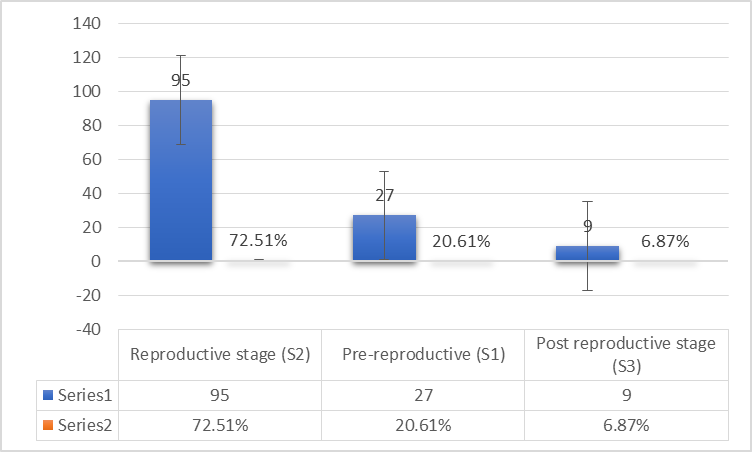
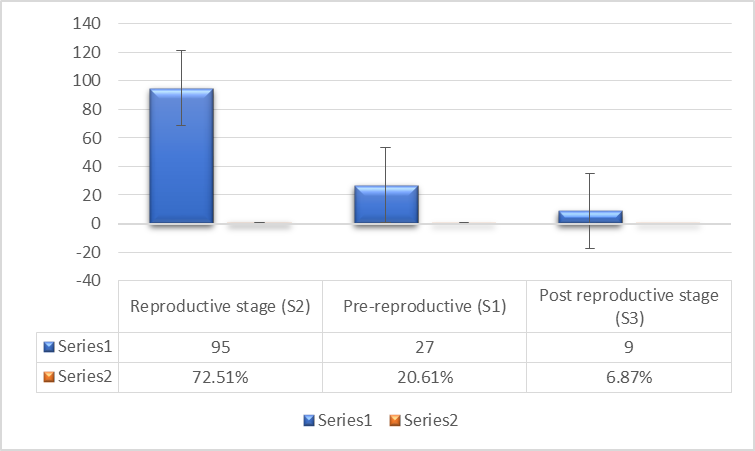
Biological spectra indicated that the major life form class among the weed flora was therophytes with 102 species (77.8%) followed by geophytes with 18 (13.74%) species, Hemicryptophytes were 9 (7.63%) species and 2 (1.52%) species were Chamaephytes (Table 2; Figure 1). Most common category regarding leaf size class was mesophyll with 51 (38.93%) species followed by microphyll with 37 (28.24%) species, Nanophyll were next to it with 27 (19.84%) species, Macrophyll had 9 (6.87%) species and Leptophyll consisted of 6 (5.34%) species and Aphyllous had 1 species (0.76%) (Table 2; Figure 2). Regarding biogeographic status 86 (65.6%) species were indigenous to study area and 45 (34.3%) were exotic (Table 2; Figure 3). During the study 95 (72.5%) plants were found at reproductive stage S2, 27 (20.61%) at pre-reproductive stage S1 and 9 (6.8%) were at post reproductive stage S3 (Table 2; Figure 4). In leaf shapes, 79 (60.3%) species had simple leaves, 52 (39.6%) possessed were dentate leaves (Table 2; Figure 5). In spinniness 114 (87.02%) were non spiny NS and 17 (12.98%) species were spiny (Table 2; Figure 6).
Weed plants are reported to compete with crops for resources for space, water and nutrients Ehtesham-Ul-Haq et al. (2025). They grow in wild in crop fields Tahir et al. (2022). The weed possesses great competing quality with crops in term of adoptability and growth rate. Further studies are needed to assess allelopathic effects and nativity impact Luqman et al. (2022). During this study on ecological evaluation and management of weed diversity in cereal crops of the study area it was revealed 131 plant species were typical weed in the research area. 97 plants were weed of wheat crop, 41 species were weed in maize crop and 39 species were found in rice crop.
In our study 97 plant species were found as weed in wheat crop and 39 species were found in rice field belonging to 21 families and 35 genera. Similarly, 41 species belonging 22 families and 37 genera were present in maize field Ali et al. (2026). These weeds were found to be in competition with cultivated crops for space, water and nutrients Ain et al. (2026). Ahmad et al. (2020) reported role of edaphic variables. Our study is quite similar to previous studies conducted
Table 3: Distribution of weeds plants growing in cereal crops in Batkhela, Pakistan
|
S. No |
Botanical Names |
Cereal Crops |
||
|
Wheat (Triticum aestivum L.) |
Maize (Zea mays L.) |
Rice (Oryza sativa L.) |
||
|
A. |
Pteridophyte |
|||
|
1. |
Equisetacease |
|||
|
1. |
Equisetum arvense L. |
- |
- |
+ |
|
2. |
Pteridaceae |
|||
|
2. |
Adintum capillus- veneris L. |
+ |
- |
- |
|
3. |
Pteris vittata L. |
- |
- |
+ |
|
B. |
Angiosperms |
|||
|
a. |
Monocots |
|||
|
3. |
Asparagaceae |
|||
|
4. |
Asparagus officinalis L. |
+ |
- |
- |
|
4. |
Cyperaceae |
|||
|
5. |
Cyperus rotundus L. |
- |
- |
+ |
|
5. |
Iridaceae |
|||
|
6. |
Iris reticulata M.Bieb |
+ |
- |
- |
|
6. |
Poaceae |
|||
|
7. |
Brachiaria ramosa L. |
+ |
- |
- |
|
8. |
Brachiaria latifolia L. |
+ |
- |
- |
|
9. |
Cynodon dactylon (L.) Pers. |
- |
- |
+ |
|
10. |
Desmostachya bipinnata (L.) Stapf |
+ |
- |
- |
|
11. |
Dichantium annulatum (Forssk) Stapf |
+ |
- |
- |
|
12. |
Digitaria ciliaris (Retz.) Koeler. |
+ |
- |
- |
|
13. |
Eragrostis minor Host |
- |
- |
+ |
|
14. |
Paspalum paspalodes (Michx.) Scribn. |
- |
+ |
- |
|
15. |
Poa annua L. |
+ |
- |
- |
|
16. |
Poa bulbosa L. |
+ |
+ |
- |
|
17. |
Rostraria cristata (L.) Tzvelev |
- |
+ |
+ |
|
18. |
Saccharum officinarum L. |
+ |
- |
- |
|
19. |
Setaria pumila (Poir.) Roem. & Schult. |
+ |
+ |
- |
|
20. |
Echinochloa cruz-galli (L.) P.Beauv |
- |
+ |
- |
|
21. |
Urochloa panicoidea P. Beauv. |
- |
+ |
- |
|
b. |
Dicots |
|||
|
7. |
Asteraceae |
|||
|
22. |
Anaphalis margaritacea (L.) Benth. |
+ |
- |
- |
|
23. |
Artemisia maritima L. |
- |
- |
+ |
|
24. |
Artemisia vulgaris L. |
+ |
- |
- |
|
25. |
Bidens pilosa L. |
+ |
- |
- |
|
26. |
Calendula arvensis Vaill. |
+ |
- |
- |
|
27. |
Carthamus oxyacantha M.Bieb. |
+ |
- |
- |
|
28. |
Centaurea benedicta L. |
+ |
- |
- |
|
29. |
Cirsium arvense L. |
+ |
- |
- |
|
30. |
Conyza bonariensis L. |
- |
+ |
+ |
|
31. |
Conyza canadensis L. |
- |
+ |
+ |
|
32. |
Eclipta alba L. |
- |
+ |
- |
|
33. |
Lactuca biennis Willd. |
+ |
+ |
- |
|
34. |
Lactuca viminea L. |
- |
- |
+ |
|
35. |
Launaea secunda (Frosk.) Muschl. |
- |
- |
+ |
|
36. |
Parthenium hysterophorus L. |
+ |
+ |
- |
|
37. |
Sonchus arvensis L. |
+ |
- |
- |
|
38. |
Sonchus asper (L.) Hill |
+ |
+ |
- |
|
39. |
Sonchus oleraceus L. |
- |
- |
+ |
|
40. |
Xanthium strumarium L. |
+ |
- |
- |
|
8. |
Acanthaceae |
|||
|
41. |
Barleria cristata L. |
+ |
- |
- |
|
9. |
Amaranthaceae |
|||
|
42. |
Amaranthus viridis L. |
+ |
- |
- |
|
43. |
Achyranthes bidentata L. |
+ |
- |
- |
|
44. |
Amaranthus hypochondriacus L. |
+ |
- |
- |
|
45. |
Amaranthus spinosus L. |
+ |
+ |
- |
|
46. |
Aerva javanica (Burm. f.) Juss. ex. J.A.Schult. |
+ |
+ |
- |
|
47. |
Aerva lanata L. |
- |
+ |
+ |
|
48. |
Alternanthera pungens Kunth |
+ |
+ |
- |
|
10. |
Apiaceae |
|||
|
49. |
Eryngium maritimum L. |
- |
- |
+ |
|
50. |
Pimpinella diversifolia DC. |
+ |
+ |
+ |
|
51. |
Scandix pecten veneris L. |
+ |
+ |
- |
|
52. |
Torilis arvensis (Huds.) Link |
+ |
+ |
- |
|
11. |
Boraginaceae |
|||
|
53. |
Arnebia euchroma (Royle ex Benth.) I.M.Johnst. |
+ |
+ |
- |
|
54. |
Cynoglossum lanceolatum Frosk. |
- |
+ |
- |
|
55. |
Onosma hispida Wall. |
+ |
+ |
- |
|
12. |
Brassicaceae |
|||
|
56. |
Capsella burs-pastoris (L.) Medik. |
+ |
+ |
- |
|
57. |
Coronopus didymus (L.) Sm. |
+ |
+ |
- |
|
58. |
Malcolmia africana var. Africana (L.) R.Br. |
+ |
- |
- |
|
59. |
Sisymbrium irio L. |
+ |
+ |
- |
|
13. |
Cannabaceae |
|||
|
60. |
Cannabis sativa L. |
+ |
- |
+ |
|
14. |
Capparidaceae |
|||
|
61. |
Cleome viscosa L. |
+ |
- |
- |
|
15. |
Caryophyllaceae |
|||
|
62. |
Arenaria serpyllifolia L. |
+ |
- |
- |
|
63. |
Silene conoidea L. |
+ |
- |
- |
|
16. |
Chenopodiaceae |
|||
|
64. |
Chenopodium album L. |
+ |
+ |
- |
|
65. |
Chenopodium ambrosioides L. |
+ |
+ |
- |
|
66. |
Chenopodium murale L. |
+ |
- |
- |
|
67. |
Chenopodium botrys L. |
+ |
+ |
- |
|
68 |
Kochia indica L. |
+ |
- |
- |
|
17. |
Convolvulaceae |
|||
|
69. |
Convolvulus arvensis L. |
+ |
+ |
+ |
|
70. |
Ipomoea purpurea L. |
+ |
+ |
- |
|
71. |
Ipomoea eriocarpa R.Br. |
+ |
+ |
+ |
|
18. |
Commelinaceae |
|||
|
72. |
Commelina benghalensis L. |
+ |
- |
+ |
|
19. |
Cuscutaceae |
|||
|
73. |
Cuscuta reflexa L. |
+ |
- |
- |
|
20. |
Cucurbitaceae |
|||
|
74. |
Citrullus colocynthis L. |
+ |
+ |
+ |
|
21. |
Euphorbiaceae |
|||
|
75. |
Euphorbia granulate Frosk. |
+ |
- |
+ |
|
76. |
Euphorbia helioscopia L. |
+ |
- |
- |
|
77. |
Euphorbia indica Lam. |
+ |
+ |
- |
|
78. |
Euphorbia peplus L. |
+ |
- |
- |
|
79. |
Phyllanthus niruri L. |
+ |
- |
- |
|
22. |
Fumariaceae |
|||
|
80. |
Fumaria indica (Hausskn.) Pugsley |
+ |
- |
- |
|
23. |
Geraniaceae |
|||
|
81. |
Geranium rotundifolium L. |
+ |
- |
- |
|
24. |
Lamiaceae |
|||
|
82. |
Ajuga bracteosa Wall. |
+ |
- |
- |
|
83. |
Origanum vulgare L. |
+ |
+ |
- |
|
84. |
MicromIa biflora (Buch.-Ham. ex D. Don) Benth |
+ |
+ |
- |
|
85. |
Mentha longifolia (L.) Pers |
+ |
- |
- |
|
86. |
Oenanthe javanica (Blume) DC., Prod |
- |
+ |
+ |
|
87. |
Salvia moorcroftiana Wall. ex.Benth. |
+ |
- |
- |
|
88. |
Salvia plebeia R.Br. |
+ |
- |
- |
|
89. |
Thymus sinensis L. |
+ |
- |
- |
|
25. |
Lythariaceae |
|||
|
90. |
Ammannia auriculata Willd., Enum |
+ |
- |
- |
|
26. |
Menispermaceae |
|||
|
91. |
Cissampelos pareira L. |
- |
+ |
- |
|
27. |
Malvaceae |
|||
|
92. |
Malva parviflora L. |
+ |
- |
- |
|
93. |
Malvastrum coromandelianum (L). Garcke. |
+ |
- |
+ |
|
28. |
Oenotheraceae |
|||
|
94. |
Oenothera rosea L.Her. |
+ |
+ |
- |
|
29. |
Oxalidaceae |
|||
|
95 |
Oxalis corniculata L. |
+ |
+ |
- |
|
30. |
Papilionaceae |
|||
|
96. |
Astragalus amherstianus L. |
+ |
- |
- |
|
97. |
Lathyrus aphaca L. |
+ |
- |
- |
|
98. |
Lotus corniculatus L. |
+ |
- |
- |
|
99. |
Medicago polymorpha L. |
- |
- |
+ |
|
100. |
Melilotus officinalis (L.) Pall. |
- |
- |
+ |
|
101. |
Sesbania sesban (L.) Merrill. |
- |
- |
+ |
|
102. |
Trifolium repens L. |
- |
- |
+ |
|
103. |
Trifolium resupinatum L. |
+ |
+ |
+ |
|
31. |
Papaveraceae |
|||
|
104. |
Papaver somniferum L. |
+ |
- |
- |
|
32. |
Polygonaceae |
|||
|
105. |
Emex spinosus (L.) Campd. |
+ |
- |
- |
|
106. |
Persicaria glabra (Wild) M.O.Delgado |
+ |
- |
- |
|
107. |
Persicaria maculosa S.F.Gay. |
+ |
- |
- |
|
108. |
Polygonium aviculare L. |
+ |
- |
+ |
|
109. |
Polygonum plebeium R.Br. |
+ |
+ |
+ |
|
110. |
Polygonum recumbens R.Br. |
- |
+ |
+ |
|
111. |
Rumex hastatus D.Don. |
+ |
- |
+ |
|
112. |
Rumex halepensis Mill. |
+ |
- |
- |
|
33. |
Pontederiaceae |
|||
|
113. |
Eichornia crassipes (Mart.) Solms |
- |
- |
+ |
|
34. |
Plantaginaceae |
|||
|
114. |
Plantago lanceolata L. |
+ |
- |
- |
|
115. |
Veronica anagallis-aquatica L. |
- |
- |
+ |
|
35. |
Portulacaceae |
|||
|
116. |
Portulaca oleracea L. |
+ |
- |
- |
|
36. |
Ranunculaceae |
|||
|
117. |
Ranunculus muricatus L. |
+ |
+ |
- |
|
37. |
Rubiaceae |
|||
|
118. |
Galium aparine L. |
+ |
- |
- |
|
38. |
Scrophulariaceae |
|||
|
119. |
Verbascum thapsus L. |
+ |
- |
+ |
|
39. |
Solanaceae |
|||
|
120. |
Datura stramonium L. |
- |
- |
+ |
|
121. |
Solanum surattense Burm.f. |
+ |
+ |
- |
|
122. |
Solanum nigrum L. |
- |
- |
+ |
|
123. |
Withania somnifera L. |
+ |
- |
- |
|
40. |
Urticaceae |
|||
|
124. |
Pilea peperomioides Diels. |
+ |
- |
- |
|
125. |
Urtica dioica L. |
+ |
- |
- |
|
41. |
Violaceae |
|||
|
126. |
Viola serpens Wall. ex Roxb. |
+ |
- |
- |
|
127. |
Viola stocksii Boiss. |
+ |
- |
- |
|
42. |
Verbenaceae |
|||
|
128. |
Phyla nudiflora L. Greene |
- |
+ |
- |
|
129. |
Verbena officinalis L. |
+ |
- |
+ |
|
43. |
Zygophyllaceae |
|||
|
130. |
Peganum harmala L. |
- |
+ |
- |
|
131. |
Tribulus terrestris L. |
- |
+ |
+ |
|
Total |
131 |
97 |
41 |
39 |
|
Percentage % |
74.04% |
31.2% |
29.7% |
|
in other areas Mandal et al. (2019). Some notable research work including ; and agree with our findings.
The present study agrees with Shah et al. (2021) who described the ecological parameters of weed in wheat crop fields of Chitral. They reported life-forms including Therophytes, Geophytes and Hemicryptophytes. Similarly, in leaf-sizes Mesophyllous, Microphyllous, Macrophyllous, Nanophyllous, Megaphyllous, Leptophyllous and Aphyllous species were reported. Same results were also presented by Naila et al. (2017). Shah et al. (2021) who reported most common families were Asteraceae, Polygonaceae, Brassicaceae, Caryophyllaceae, Chenopodiaceae, Papilionaceae (Sub family of Fabaceae) and Poaceae in their study discussed by Khan et al (2018) and showed that Asteraceae, Fabaceae, Poaceae and Ra Ranunculaceae as dominant families of weeds. Khan et al. (2017) showed Emex spinosus, Cannabis sativa, Oxalis corniculata. Chenopodium and Euphorbia helioscopia were most common weeds. These species also reported in the present research. Ahamd et al. (2022) elaborated that the edaphic variables had higher concentration of Potassium, organic matter and sandy nature of soil which is in favour of the present research. Invasiveness of weed was studied by El–Metwally et al. (2022) and Abidin et al., (2021) with similar results. Weed species composition and distribution pattern in the maize crop under the influence of edaphic factors and farming practices was studied by Naeem et al. (2021) and reported similar results. Study of Shahzad et al. (2021) showed elemental composition in leaf, stem and roots of weed with similar outcome.
Conclusions and Recommendations
The present research reported 131 weeds species distributed in cereal crops of the study area. Therophytes followed by geophytes and hemicryptophytes were dominant while Mesophyllous, Microphyllous and Nanophylolus leaf sizes were more prevalent. Wheat showed the highest weed diversity (97 spp.) followed by maize (41 spp.) and rice (39 spp.) crops. The dominance of Asteraceae and Poaceae families is consisted with regional flora. The present research provides baseline data on weed diversity in cereal crops of the study area. Dominance of therophytes and mesophylls indicates adaptation to the local climates. Future studies focusing on management trials and ethnobotanical uses of these species are recommended.
Acknowledgments
The author would like to thank the Department Centre of Plant Biodiversity, University of Peshawar.
Novelty Statement
This study provides a comprehensive field-based assessment of weed flora associated with wheat, rice and maize crops in Batkhela, District Malakand, documenting 131 weed species and their taxonomic, life-form, morphological and ecological characteristics. It also identifies crop-associated weed patterns and dominant life forms, providing baseline information for integrated weed management and conservation of indigenous flora.
Author’s Contribution
Bibi Mayam: Field surway, data colletion, identification of weed species, morpological characterization, ecological evaluation, data analysis, and manuscript preparation/writing.
Syed Mukarram Shah: Supervision, research guidance, review and critical revision of the manuscript.
Funding
The author received no specific funding for this project
Generative AI and AI-assisted technology statement
The authors declare that no generative AI and AI assisted technology was used in the creation of this manuscript.
Conflict of interest
The author declares no conflict of interest.
Figures
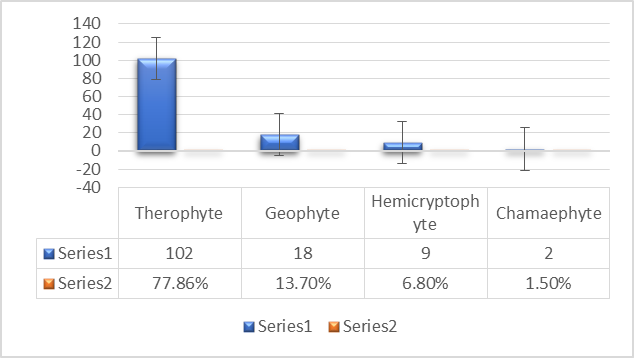
Distribution of life form classes of weed species in Batkhela, Pakistan.
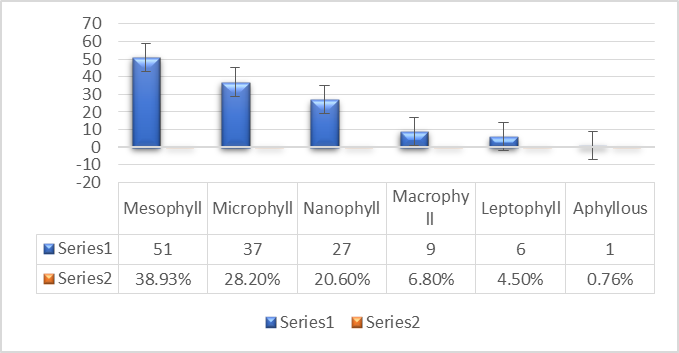
Distribution of leaf size classes of weed species in Batkhela, Pakistan.
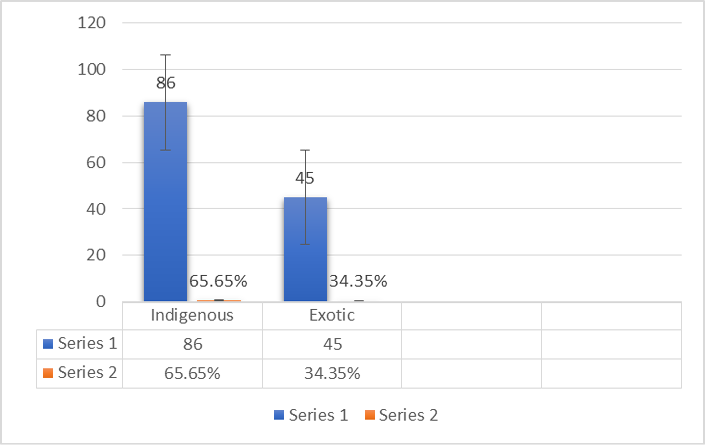
Distribution of indigenous and exotic species of weed species in Batkhela, Pakistan
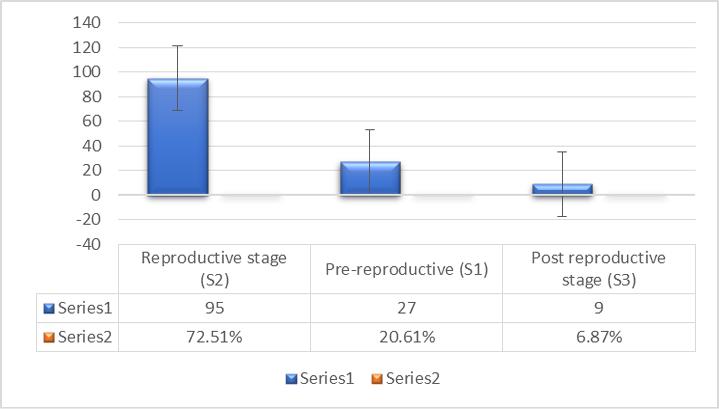
Distribution of Phenological stages of weed species in Batkhela, Pakistan.
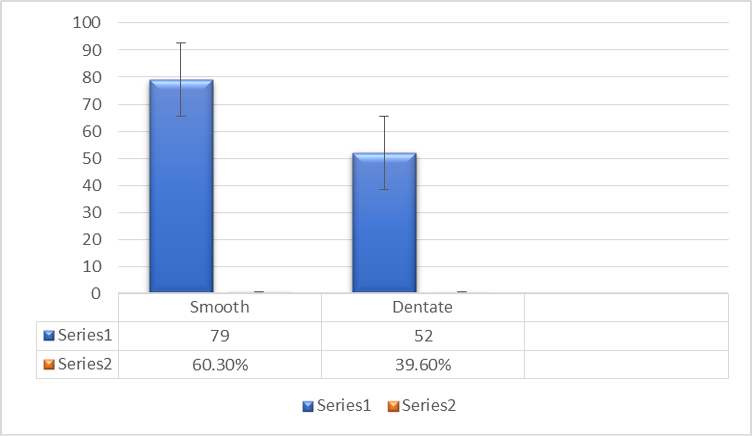
Distribution of leaf shapes classes of weed species in Batkhela, Pakistan.
Distribution of spiny and non-spiny species of weed species in Batkhela, Pakistan.
Distribution of weed of cereal crops of weed species in Batkhela, Pakistan.
References
- Abidin, S.Z.U., A. Munem, R. Khan, G.E.S. Batiha, M. Amhad, M. Zafar, & M.Z. Bhatti. 2021. Ethnoveterinary botanical survey of medicinal plants used in Pashto, Punjabi and Saraiki communities of Southwest Pakistan. Veterin. Med. Sci., 7(5): 2068-2085. https://doi.org/10.1002/vms3.582[CrossRef]
- Ahmad, Z., M. Hussain, M. Iqbal, S. Khalid, H. Ahmad, and S.M. Khan. 2022. Weed Vegetation in Maize Crop of the Shahbaz Garhi, District Mardan; Gradient of Diversity and Species Composition. In Biodiversity, Conservation and Sustainability in Asia (pp. 657-679). Springer, Cham. https://doi.org/10.1007/978-3-030-73943-0_36[CrossRef]
- Ahmad, I., S.M. Khan, A.H. Shah, and I.U. Rahman. 2020. Floristic chomposition, biological spectrum and ecological characteristics of weed in wheat crop of district Dir Lower, Pakistan. Acta Ecol. Sin., 40 (5): 377-384.
- Ali, S.I. and M. Qaiser. 2009. Flora of Pakistan. Pak. J. Bot., 41(4): 1559-1566.
- Ain, Q.U., M. Shah, U. Ejaz, S. Jehangir, Z. Ahmad, S. Ali, and S.M. Khan. 2026. Influence of natural and anthropogenic factors on weed diversity that affects the wheat crop. Agron. J., 118(2): e70346. https://doi.org/10.1002/agj2.70346[CrossRef]
- Ali, F. and I. Afzal. 2026. Sustainable weed control in the rice–wheat cropping system: challenges and ecological insights. Weed Sci., 74(1): 1-12 https://doi.org/10.1017/wsc.2025.10076.[CrossRef]
- Ali, H. and M. Qaiser. 2009. The ethnobotany of Chitral Valley, Pakistan with particular reference to medicinal plants. Pak J. Bot., 41(4): 2009-2041.
- Ali, S. 1. and M. Qaiser (Eds.). 1993-2017. Flora of Pakistan. Nos. 194-221. Department of Botany, University of Karachi, Karachi.
- Ali, S. I. and Y. J. Nasir (Eds.). 1989-1991. Flora of Pakistan. Nos 191-193. Department of Botany, University of Karachi, Karachi Pakistan.
- Anwar, M., S. Khalid, and N. Akhtar. 2021. Citation: Anwar, M.; S. Khalid and N. Akhtar. 2021. Comparative Evaluation of Diversity and Homogeneity of Weed Communities of Wheat Crop in Tehsil Razar District Swabi, Pakistan, Pakistan. Pak. J. Weed Sci. Res., 27(3): 297-305. Pak. J. Weed Sci. Res., 27(3). https://doi.org/10.28941/pjwsr.v27i3.943[CrossRef]
- Ehtesham-Ul-Haq, Z., I. Hussain, S.A. Jatoi, and M.J. Nazir. 2025. Sustainable weed management in wheat farming: a comparison of cultural cross-drill strategy and chemical methods.
- El–Metwally, I., L. Geries, and H. Saudy. 2022. Interactive effect of soil mulching and irrigation regime on yield, irrigation water use efficiency and weeds of trickle–irrigated onion. Arch. Agron. Soil Sci., 68(8): 1103-1116. https://doi.org/10.1080/03650340.2020.1869723[CrossRef]
- Gop. 1998. District Census Report of District Malakand; Population Census Organization Statistic Division Government of Pakistan: Islamabad. 76: 1-3.
- Haq, S.M., M. Waheed, R.W. Bussmann, & M. Kumar. 2024. Trouble in the rice field: distribution ecology and indicator value of weed species in the rice fields of himalayan region. Ecol. Front., 44(3): 507-516. https://doi.org/10.1016/j.chnaes.2023.07.012[CrossRef]
- Hassan, M.S., N. Naz, H.R. Javeed, S. Zafar, L. Kanwal, S. Mariyum,... & M.I. Atta. 2024. Biodiversity Assessment of Weed Communities in Tube-Well Irrigated Wheat Fields in District Layyah, Punjab, Pakistan. Pak. J. Weed Sci. Res., 30(2): 55.
- Hussain, F. 1989. Field and Laboratory Mannual of Plant Ecology. UGC, Islamabad.
- Khan, M.N., S. Ali, S.A. Razak, A. Zaman, M. Iqbal, & S.N. Shah. 2022. Assessment of floristic diversity in the mountain ecosystem of Marghazar Valley, Hindukush Range, Swat, Pakistan. Biodivers. J. Biol. Divers., 23(2). https://doi.org/10.13057/biodiv/d230243[CrossRef]
- Khan, M.N., F. Hadi, A. Razaq and S. M. Shah. 2017. Utilitarian aspects of weeds and their ecological Characteristics in Ochawala Valley, District Charsadda. Pakistan. ARPN, J. Agr. Bio. Sci., 12(5): 182-189.
- Khan, M., A. Razzaq, F. Hadi, N. Khan, A. Basit, U. Farman and A. Nasir. 2018. Open Access Ethnobotanical Profile of Weed Flora of District Charsadda, Khyber Pakhtunkhwa. 9: 14-23. https://doi.org/10.37962/jbas.v9i1.117[CrossRef]
- Khan, S.M., R.A. Kashif, Z.U. Haq, Z. Ahmad, A.U. Haq, and M.A. Haq. 2021. Ethnobotanical appraisal of medicinal plants from Bajaur; A remote area of the Khyber Pakhtunkhwa province of Pakistan. In Ethnobiology of Mountain Communities in Asia (pp. 277-293). Springer, Cham. https://doi.org/10.1007/978-3-030-55494-1_15[CrossRef]
- Luqman, M., S.M. Khan, Z. Ullah, and H. Ahmad. 2022. Diversity, distribution and ecological characteristics of weed flora in wheat crop of Distric Lakki Marwat, Khyber Pakhunkhwa, Pakistan. Biodiver. J. Biol. Divers., 23(4): 1987-1996.
- Mandal, S.K., S.K. Dutta, S. Pramanik, and R.K. Kole. 2019. Assessment of river water quality for agricultural irrigation. Int. J. Environ. Sci. Technol., 16(1): 451-462. https://doi.org/10.1007/s13762-018-1657-3[CrossRef]
- Naeem, M., M. Hussain, M. Farooq, and S. Farooq. 2021. Weed flora composition of different barley-based cropping systems under conventional and conservation tillage practices. Phytoparas., 49(4): 751-769. https://doi.org/10.1007/s12600-021-00900-4[CrossRef]
- Naila, S., A.U. Rehman and S.M. Shah. 2017. Ecology of weeds of garlic crop at botanical garden, University of Peshawar, Pakistan. Pak. J. Weed Sci. Res., 23 (4): 409-416. https://doi.org/10.28941/23-4(2017)-4[CrossRef]
- Nasir, E. and S.I. Ali (Eds.). 1970- 1989. Flora of Pakistan, Nos. 1-190. Pakistan Agriculture Research Council, Islamabad.
- Nathalie, C., N. Munier-Jolain, F. Dugué, A. Gardarin, F. Strbik and D. Moreau. 2020. The response of weed and crop species to shading. How to predict their morphology and plasticity from species traits and ecological indexes?. Europ. J. Agron., 121, 126158. https://doi.org/10.1016/j.eja.2020.126158[CrossRef]
- Ning, L., W. Jiayao, and Q. Fen. 2020. The improvement of ecological environment index model RSEI. Arab. J. Geosci., 13(11): 1-14. https://doi.org/10.1007/s12517-020-05414-7[CrossRef]
- Raunkiaer, C. 1934. The life-form of plants and statistical plant geography. Clarendon press, oxford. Scientific Research (Online) https://www.scirp.org
- Shah, S.M., and F. Hussain. 2021. 45. Weed diversity in Maize fields of Mastuj valley, Hindukush range, Pakistan. Pure and Appl. Biol., (PAB), 5(4): 1044-1050. https://doi.org/10.19045/bspab.2016.50129[CrossRef]
- Shah, S.M., A.A. Shah, M. Muhammad, M. Abdussalam, K.U. Rehman, and H. Khan. 2021. phytodiversity and ecological features of weed species of sufaid sung, peshawar. Pak. J. Weed Sci.Res., 27(2). https://doi.org/10.28941/pjwsr.v27i2.950[Full text][CrossRef]
- Shahzad, M., K. Jabran, M. Hussain, M.A.S. Raza, L. Wijaya, M.A. El-Sheikh, and M.N. Alyemeni. 2021. The impact of different weed management strategies on weed flora of wheat-based cropping systems. Plos One., 16(2): 0247137. https://doi.org/10.1371/journal.pone.0247137[CrossRef]
- Tahir, M., A. Ullah, L. Khan, and B. Ahmad. 2022. Weeds flora of agriculture research farm, the university of agriculture, prshawar. Pak. J. Weed Sci. Res., 28(3): 191-197.
- Ullah, I., Z. Ullah, and A.U. Rehman. 2022. ethno-veterinary and medicianal purpose usages of some useful plant’s species in district peshawar, pakistan. Proceed. Book., 256.
Services
Article usage statistics
Loading…