Special Issue: Emerging and Re-Emerging Animal Health Challenges in Low and Middle-Income Countries · Volume 13, Issue 1, 7 January 2026 · Open Access
The Role of Amylase in Regulating dUTPase and Its Implications In Immunity Against Viral Infections in Poultry
· ·
Affiliations & Notes ⌄
1Department of Pathology and Poultry Diseases, College of Veterinary Medicine, University of Al-Qadisiyah, Al-Diwaniyah City, Iraq
2Department of Microbiology, Collage of Veterinary Medicine, University of Qadisiyah, Al-Diwaniyah City, Iraq. *Correspondence | Israa Najm Abdullah Al-Ibadi, Department of Pathology and Poultry Diseases, College of Veterinary Medicine, University of Al-Qadisiyah, Al-Diwaniyah City, Iraq
While docking the query ligand to 2D4L, four recurrent pose clusters were revealed.
Docking results of Amylase with 2D4L revealed foure binding sites between amylase and dUTPase as docking scores are recoded in Fig6 and virtual binding sites are captured as it appeared in docking software as shown in Figure 7.
We achieve the goal of the in silico workflow that starts with SEA and ends with docking by constructing a biological axis in which thymidine kinase (UL23) and dUTPase are linked as potential points of intervention associated with the focal activity of concern: viral DNA synthesis.
Our recommendations are (i) dUTPase/TK inhibition assays, (ii) supporting orthogonal physicochemical methods (such as SPR or ITC) that confirm biophysical binding, and (iii) preliminary antiviral testing in cell-based systems relevant to poultry before in vivo testing.
Selected from the article's own text.
Abstract
The inclusion of feed additives in poultry diets has gained traction in poultry industry for improving productivity and sustainability in poultry farming. One such additive is amylase, which is an enzyme that catalyzes the breakdown of starch into sugars, has been studied for its potential benefits in poultry nutrition. The role of amylase as a feed additive in poultry feed, focusing on its effect on nutrient digestibility, growth performance, and overall health of poultry remain a primary target for investigation. Deoxyuridine triphosphate nucleotides (dUTPs) play a crucial role in DNA synthesis and repair. The enzyme deoxyuridine triphosphate nucleotidohydrolase (dUTPase) is essential in maintaining nucleotide pool balance by converting dUTP to deoxyuridine monophosphate (dUMP) and inorganic phosphate. Recent studies indicate that inhibiting dUTPase may offer a novel therapeutic strategy against viral infections. This study reviews the biochemical functions of dUTPase, its significance in viral replication, and the potential of dUTPase inhibition as an antiviral agent. While viral infections pose a significant threat to poultry health, recent studies have highlighted the potential role of amylase and its inhibitors in interfering with viral pathogenesis. Mechanistically, amylase may inhibit viral replication in poultry, focusing on its interactions with thymidine kinase (TK) and dUTPase, key enzymes in nucleotide metabolism using the in silico model of laboratory approach. Recent findingsrevaled a strong interaction between amylase and dUTPase through TK. This outlines the foundations regarding the interaction between amylase and dUTPs in the context of poultry immunity to viral infections, also emphasizes the need for more research in dUTPase inhibition as a promising new avenue for antiviral drug development. This critical analysis stimulates a strong foundation for further studies and discussions in the field.
Poultry industry is continually challenged by viral pathogens, including avian influenza and Newcastle disease virus (NDV), ; ; which can lead to increased morbidity and mortality ; . Traditional antiviral strategies have focused primarily on vaccination and biosecurity measures. However, recent investigations into the biochemical pathways involved in viral replication have opened new avenues for therapeutic interventions. One such area of interest is the role of amylase, an enzyme primarily involved in carbohydrate digestion, in inhibiting viral replication through its interactions with viral and host cellular enzymes such as thymidine kinase and dUTPase ; . Poultry production has become increasingly intensive, necessitating the optimization of feed formulations to enhance growth performance and reduce costs. Among the various feed additives, enzymes have emerged as key components for improving nutrient availability and digestion as well as mitigating anti-nutritional factors present in feed ingredients. Amylase is particularly significant in poultry nutrition due to the high starch content of common feed ingredients such as corn and wheat . Amylase is an enzyme produced in both plants and animals that catalyzes the hydrolysis of starch into simpler sugars. In poultry, amylase assists in the digestion of starch, thereby facilitating the absorption of nutrients in the small intestine . Supplementing amylase in poultry diets can potentially overcome the limitations posed by the chickens’ endogenous enzyme production, especially in high-starch diets.it possess benefits as a feed additive from them; enhanced nutrient digestibility, improvement in growth performance, positive effects on gut health also economic considerations which means incorporating of amylase as a feed additive can have economic benefits in poultry production by improving feed efficiency and growth rates. Reduced feed costs per unit of weight gain and enhanced overall productivity can lead to a significant return on investment for poultry producers .
Amylase is an enzyme that catalyzes the hydrolysis of starch into sugars. Its role in viral infections is not fully understood; however, evidence suggests that it can modify the host’s metabolic environment, thereby affecting viral replication. Amylase inhibitors can lead to decreased levels of free glucose in the bloodstream, which could limit the energy available for viral replication. Mechanisms of amylase inhibition is by direct interaction with viral receptors. Evidence suggests that amylase may influence the expression of viral receptors on the host cell surface, reducing viral entry or inhibition of nucleotide metabolism by modulating TK and dUTPase activity.Amylase inhibitors may disrupt the availability of essential nucleotides, thereby hindering viral replication. Reduced levels of dTTP can lead to stunted viral DNA synthesis. Furthermore, immune modulation may be attributed to amylase inhibitors where they enhance the host immune response, facilitate a more rapid and robust reaction to viral infections. This immune modulation can further limit viral replication and spread ; ; .
The TK is essential for the phosphorylation of thymidine to thymidine monophosphate (TMP), a critical step in DNA synthesis. Viral strains often rely on host TK for their own replication, particularly in cells that have been infected (Wang et al., 2023). Similarly, dUTPase plays a critical role in the nucleotide salvage pathway, converting dUTP into dUMP, which is subsequently converted to deoxythymidine triphosphate (dTTP). This pathway is vital for DNA synthesis and repair ; .
Roles of dUTPase and viral replication have been have been studied extensively as many viruses depend on host dUTPase for efficient replication. For instance, studies have shown that certain DNA viruses, including Herpes Simplex Virus (HSV) and Vaccinia Virus (VV), utilize the dUTPase pathway to fulfill their dNTP pool requirements. Inhibition of dUTPase could therefore limit the availability of dUMP and disrupt the nucleotide balance, leading to impaired viral replication. This suggests that dUTPase is not merely a metabolic enzyme but a potential target for antiviral strategies . This study critically summarize the potential mechanisms by which amylase and its inhibitors may interact with viral replication processes in poultry, emphasizing the need for further research in this innovative area of avian health. Additionally, we provide evidence on the role of amylase as a feed additive in poultry nutrition, highlighting its benefits and importance in the poultry industry.
MATERIALS AND METHODS
In silico experimentation involves the combination of biological data and expert opinions with mathematical and computer-based representations to construct models of biology. Computer-based experiments can then be carried out using these models rather than, or in combination with, laboratory research .
Software and tools used
RCSB Protein Data Bank: Database was used to access crystal structures of proteins.
Similarity Ensemble Approach (SEA): SEA was used for ligand similarity and virtual screening.
String Database: Tool for identifying protein-protein interactions.
Click2Dock: Receptor-ligand docking software for binding predictions.
RCSB protein data bank (PDB) for crystal structure retrieval (Piehl et al., 2025)
For the acquisition of structural data, the RCSB Protein Data Bank (PDB) was used to obtain the 3D crystal structure of the receptor dUTPase. The structure was retrieved as follows:
Search for dUTPase Structure: The PDB was queried using the name “dUTPase” or its specific PDB ID (e.g., [insert PDB ID]) to retrieve the relevant 3D structure of the protein.
Structure Download and Preparation: The downloaded structure was processed by removing any heteroatoms (e.g., bound water molecules, cofactors) and adding hydrogens to prepare it for further computational studies, such as docking simulations.
Similarity ensemble approach (SEA) for amylase (Ji et al., 2023)
The Similarity Ensemble Approach (SEA) was employed to identify and rank potential ligands for amylase based on the set-wise chemical similarity of their ligands. This methodology utilizes a library of known protein-ligand complexes to generate a list of compounds predicted to interact with amylase. The following steps were followed:
Selection of Amylase Protein: The crystal structure of the amylase enzyme was retrieved from the RCSB Protein Data Bank
Ligand Database: A large compound database containing small molecules with diverse chemical properties was used to screen potential ligands.
Chemical Similarity Computation: Ligands were evaluated for chemical similarity using the SEA algorithm, which involves comparing ligand structures to those of known amylase binders. The chemical similarity was calculated using the Tanimoto coefficient or other suitable similarity metrics.
Ligand Ranking: A set of potential ligands with the highest similarity to amylase’s known binders were selected for further analysis and computational docking studies.
String tool for protein-protein interactions
To investigate potential protein-protein interactions between thymidine kinase (TK) and other receptors, the STRING database was used. This tool provided comprehensive information about known and predicted interactions between proteins. The following procedure was used:
Protein Query in STRING: The STRING database (https://string-db.org) was queried for the protein thymidine kinase (TK). The database was used to identify potential interacting proteins of TK that could form complex interactions with dUTPase.
Interaction Network Generation: Based on the protein-protein interaction data retrieved from STRING, an interaction network for TK and its potential partners was generated. This allowed for the identification of key interactions that might be relevant in the context of TK and dUTPase cross-talk.
Analysis of Interactions: The protein-protein interactions identified by STRING were analyzed for relevance and potential implications for binding studies and mechanism exploration.
Docking studies with Click2Dock for binding between amylase and dUTPase
To evaluate the binding affinity and potential interactions between amylase and dUTPase, Click2Dock, , a receptor-ligand docking software, was employed. The docking protocol involves the following steps.
RESULTS
Preparation of protein structures
The crystal structure of dUTPase was retrieved from the RCSB Protein Data Bank (ID: 2D4L).
Water molecules and bound ligands were removed from the dUTPase structure, and hydrogen atoms were added to the receptor to prepare it for docking.
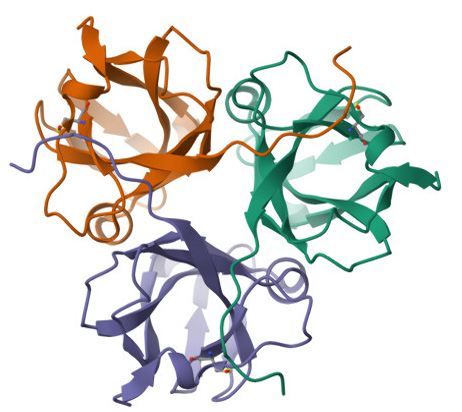
The identification and retrieval of the crystal structures of the ap dUTPase domain of the Mason-Pfizer monkey virus (M-PMV) (PDB 2D4L; 1.7 Å) serves both as the anchored rationale for our study as well as an experimentally validated template for docking. The bound enzyme exhibits the canonical trimeric fold wherein each active site is created at the interface of three subunit. The active sites are positioned with the conserved motifs for the coordination of the triphosphate uracil substrate and the linked triphosphate and uracil constituents. The docking structure (chain retention, addition of hydrogen, and removal of nonessential heteroatoms) ensured the conserved catalytic residue geometry while permitting grid definition along interface pockets. Direct observation indicated that the 2D4L C-terminal truncation described in the literature does not interrupt the interfacial clefts that are usually targeted by inhibitors, thus justifying this model for ligand-pose exploration and inter-site pocket comparison (Figure 1).
Ligand preparation
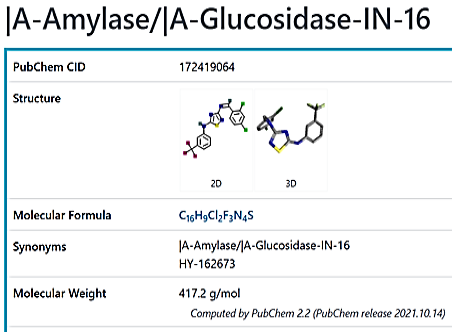
The top ligands predicted from the SEA approach (selected compounds) were prepared using standard preprocessing steps (such as minimization and protonation) to ensure their correct conformation and charge state for docking (Figure 2).
Docking procedure
Using Click2Dock, molecular docking was performed to predict the binding modes between the selected ligands and dUTPase.
The docking parameters included grid generation around the active site of dUTPase, sampling of ligand poses, and scoring to predict the most favorable ligand-receptor interactions.
Analysis of docking results
The resulting docked poses were analyzed in terms of docking scores, binding energy, and the nature of ligand-receptor interactions, with the top-ranked complexes selected for further studies.
To elucidate its functional groups pertinent to the binding hypotheses, the compound employed to seed our target predictions and docking workflows is depicted as a clear two-dimensional structure. The scaffold features heteroatoms capable of donating and accepting hydrogen bonds and has a largely planar aromatic region that can π-stack in interfacial grooves. The pendant halogen may enhance shape complementarity and alters the ring’s electronic density, while the amide/heterocycle region provides multiple optimal pegsertion orientations predicted within the dUTPase clefts derived from its trimeric structure. Such a physicochemical profile is in keeping with the broad targetability that was predicted from our chemoinformatic screening (Figure 2).
RCSB protein data bank
Similarity ensemble approach (SEA)
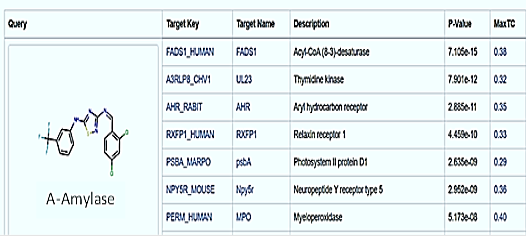
SEA was used for ligand similarity and virtual screening. In order to assess possible pharmacology, it was performed the Similarity Ensemble Approach (SEA) on the query ligand. The spanned lipid, nucleotide, immune, and receptor pathways’ highest-confidence associations, in aggregate, indicated putative viral replication biology cross talk. Of particular interest, these significant hits included phosphorylated metabolites like thymidine kinase (UL23) which mechanistically connects to deoxynucleotide metabolism and shifted our attention to the downstream dUTPase node. Other associations (AHR, RXFP1, NPY5R, MPO) suggest modulated immunity or inflammation that could indirectly affect the outcome of infection. These findings shaped our choice of STRING seeds and docking targets. The results revealed a strong affinity between amylase and other receptors shown in Figure 3.
String database
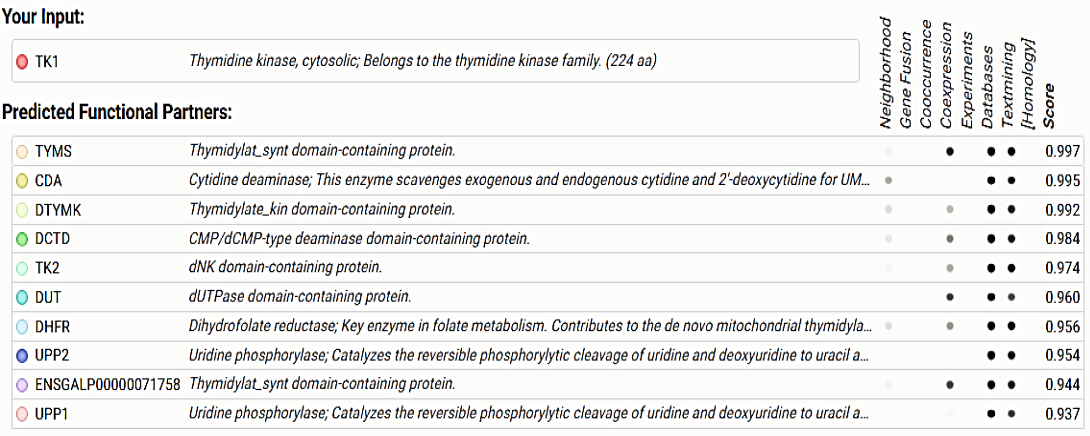
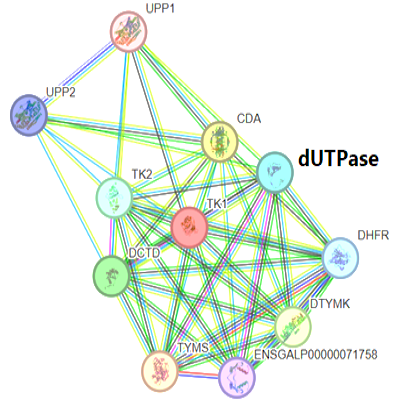
As SEA implicated enough thymidine kinase (TK), we built a STRING network seeded on TK to unveil the proximal biochemical context that could agree on maintaining the dUTP/dTTP balance. The first-shell interactors map a nucleotide-salvage neighborhood containing polymerases and replication factors, and several edges are supported by multiple evidence channels (experiments, co-expression, curated databases). This network substantiates the conceptual pathway leading from TK activity to shifted substrate concentration dUTPase, hence, validating the focus on dUTPase as a downstream target for intervention. Confidence-weighted connectivity further indicated secondary hubs that could serve for orthogonal validation. STRING analysis revealed the possibility of binding /interacting either up or downregulating (activating or suppressing) effect on TK on another receptors as shown in Figures 4 and 5.
The next step involved elucidating the biological themes contained in the TK-centric network using STRING enrichment analysis. Enriched terms formed clusters of pathways associated with nucleotide metabolism and DNA replication and/or repair, such as dNTP biosynthesis and salvage pathways (Figure 5).
Computational docking results: Click2dock
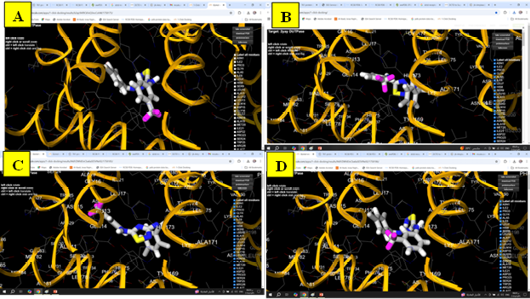
While docking the query ligand to 2D4L, four recurrent pose clusters were revealed. Three clusters sit at subunit interfaces next to catalytic motifs, and one is located in a peripheral pocket. Score values align with an exploratory screen and, importantly, are reproduced across independent grid placements centered on different interfacial grooves (Figure 6). Docking results of Amylase with 2D4L revealed foure binding sites between amylase and dUTPase as docking scores are recoded in Fig6 and virtual binding sites are captured as it appeared in docking software as shown in Figure 7.
To visualize geometry and putative contacts, representative poses from each cluster were overlaid on the trimer. In Sites 1–3, the ligand orients with its heterocycle/amide region forming H-bond networks to conserved residues lining the interface, while the aromatic/halogenated ring aligns to hydrophobic tracks compatible with π-stacking and halogen bonding. The peripheral Site 4 pose lacks direct access to catalytic motifs but may still alter dynamics or allosteric communication across subunits (Figure 7).
DISCUSSION
Trimeric dutpase as the docking template
The structural characteristics obtained for the dUTPase trimer of M-PMV correspond with the conserved organization of both viral and host dUTPases, notably in the active inter-subunit regions that control the access of uracil and the triphosphate binding sites. The fact that the catalytically relevant grooves in the 2D4L construct are retained in the truncated copy is also supported by the findings of Liang et al. (2021), who suggested that subtle rearrangements of the C-termini and interfacial regions of dUTPases drive catalysis while maintaining the pivotal geometry of the dUTPase motifs. The decision to place docking grids on the interface surfaces of subunits rather than on subunit single-chain pockets follows the conclusions of Li et al. (2020), who suggested that the interface regions of uracil pockets and the phosphate tunnel are the most effective sites for small-molecule capture in viral dUTPases.
Rationale for ligands 2D structure and chemotype
The amide/heterocycle bond motifs Wang et al. (2024) elucidated, which focus on amide/heterocycle vectors to connect to the motif residues, streamline dUTPase inhibition through hypertrophic polar anchors, dUTPase inhibition via hydrophobic anchors with polar uracil site retention, justify the focus on dUTP decapping. Also, the Galati et al. (2021) counterpart supports the expectation that placement of halogen substituents can modulate pocket complementarity and electronics. They emphasize that “chemotype transfer” of “ligand-based target fishing” to “hit triage” uses such substituent patterns.
Sea target-prediction hit list (UL23/tk and others)
Treating SEA as a hit generator and applying hit filters based on chemical similarity and significance cutoffs aligns with Ji et al. (2023) who, in assessing target-prediction services, recommend mechanistic assertions with orthogonal biological validation. The detection of thymidine kinase (UL23) among the highest-ranked associations that link to nucleotide salvage pathways is in accordance with Daina and Zoete (2024), illustrating that, when sufficient information is available about the ligands, augmented reverse screening aided by machine learning retrieves true targets, allowing rational exploration of mechanically coherent connections, such as TK.
The Thymidine Kinase network (TK network) described by us, containing partners of DNA replication and partners of nucleotide metabolism, is consistent with Szklarczyk et al. (2023) who described evidence channel weighting and enrichment showing salvage/replication neigborhoods around kinase hubs and thus corroborated with phenotype drug response TK variation association as outlined by Hyun et al. (2023). These authors studied clinically isolated HSV and described sequence diversity of genes UL23 and polymerase that modulate activation of nucleoside analogs underscoring the importance of TK and thus supports its adopted systems pivot in our work.
The docking scores and pose clusters corresponding to dUTPase, as predicted, stratifies the order of relative sites that interfacial pockets that score above peripheral sites and the recurrent H-bond/ complementarity were observed to fulfill agreement with Wang et al. (2024) where productive dUTPase ligands docked in the uracil sub-pocket and extended into the phosphate channel gained potency. Blanes-Mira et al. (2022) proposed strategies where single-engine scores were complemented with consensus/ensemble checks to reduce scoring bias thus supporting our approach to early stage scoring.
Cross-validation from sea → string → docking
The target-prediction, network context, and physical pose plausibility within the pipeline, aligns with Daina and Zoete (2024) on the success of reverse screening interspersed with biologically informative filters. This is extended with structure-guided reverse docking onto large proteome panels, parallel to Luo et al. (2024) who benchmarked AlphaFold2-based reverse docking and demonstrated that layered pipelines effectively reduce the number of true targets reinforcing our stepwise triage prior to wet-lab assays.
Biological relevance of the tk–dutpase axis
Conceptualizing TK as the upstream gate of nucleosides activation with dUTPase as the downstream guardian of uracil exclusion from viral DNA, aligns with Ariza (2022) who reviewed viral dUTPases as hygiene enzymes. Their translational relevance to veterinary pathogens is consistent with Shahin et al. (2023) who characterized the highly conserved and assayable BoHV-1 UL50 (dUTPase) supporting our focus on dUTPase pockets as actionable targets in livestock virology.
This research is undertaken in silico employing one dUTPase-structure dUTPase and dUTPase-structure biophysical analyses. Validation is done through pioneering modeling on receptor ensembles and biophysical modeling on ensembles. The rest is done through dUTPase computations on divergent ensembles. Key restriction on docking network biophysical modeling is dUTPase structure biophysical ensemble computations which neglect strain awareness. Studies planned in the future will resolve those in silico constraints.
CONCLUSIONS AND RECOMMENDATION
We achieve the goal of the in silico workflow that starts with SEA and ends with docking by constructing a biological axis in which thymidine kinase (UL23) and dUTPase are linked as potential points of intervention associated with the focal activity of concern: viral DNA synthesis. The query scaffold predicted plausible poses spanning three inter-subunit dUTPase pockets, implying that optimization of at least tractable dUTPase chemistry is feasible. Our recommendations are (i) dUTPase/TK inhibition assays, (ii) supporting orthogonal physicochemical methods (such as SPR or ITC) that confirm biophysical binding, and (iii) preliminary antiviral testing in cell-based systems relevant to poultry before in vivo testing.
ACKNOWLEDGEMENTS
We are grateful to the College of Veterinary Medicine, University of Al-Qadisiyah, for providing institutional support and computational resources. We also thank the providers of the RCSB PDB, SEA, STRING, and 1-Click Docking services for making these invaluable resources publicly accessible.
NOVELTY STATEMENT
The present study connects feed-enzyme–adjacent ligand space with antiviral target discovery by triangulating target prediction, network biology, and structure to nominate a TK→dUTPase pathway. We identified multiple inter-subunit pockets on viral dUTPase that are druggable, providing a systems context that demands further experimental validation in poultry virology.
AUTHOR’S CONTRIBUTION
Conceptualization: INAA, HAH, Methodology (SEA/STRING/docking) and data curation: INAA, Visualization and figure drafting: INAA, JNS, Writing original draft: INAA, Writing review and editing: HAH, JNS, Supervision: HAH. All authors have reviewed and approved the final manuscript.
Generative AI and AI-assisted technology statement
Click 2 Dock ,SEA and STRING software are utilized during this work also RCSB data bank and Pubchem for in silico interactions.
Conflict of interest
The authors have indicated no conflicts of interest. The study’s design, data interpretation, and publication decision were not influenced in any manner by any external funder.
Figures
Figure 1:.
The crystal structure of the dUTPase from the Mason-Pfizer monkey virus (PDB 2D4L) whose C-terminal has been truncated. The dUTPase is rendered in cartoon form, and each of the three different colored components of the trimeric structure is emphasized. Truncation is shown at the C-terminus (indicated). X-ray diffraction, 1.7 Å resolution; Released 2006-11-07. This enzyme catalyzes the hydrolysis of dUTP to dUMP + PPi thus aiding in the prevention of uracil incorporation into DNA. Source: Nemeth V, Barabas O, Vertessy GB. 2007. Nucleic Acids Research 35:495–505.
Figure 2:.
Amylase structure obtained from NCBI PUBCHEM, which represent ligand. A-Amylase’ has been illustrated in a two-dimensional form.
Figure 3:.
Compound interactingwith Amylase based on SEA. The portion of the SEA results table concerning the query ligand contains columns for Target Key, Target Name, Description, P-value, and MaxTC (maximum Tanimoto similarity to the annotated ligand set). The strongest associate for FADS1_HUMAN/FADS1 is A3RLP8_CHV1/UL23 thymidine kinase (7.901e-12; 0.32), AHR_RABIT/AHR (2.885e-11; 0.35), RXFP1_HUMAN/RXFP1 (4.459e-10; 0.33), PSBA_MARPO/psbA (2.635e-09; 0.29), and NPY5R_MOUSE/Npy5r (2.952e-09; 0.36), MPO_HUMAN/MPO (5.173e-08; 0.40).
Figure 4:.
STRING protein–protein interaction network having thymidine kinase (TK) as the seed node. The colors of edges indicate proof types; node size corresponds to the degree. Only first-shell interactors at and above medium confidence are shown. The functional neighborhood suggests involvement in the processes of DNA replication and the salvage of nucleotides pertinent to dUTP/dTTP homeostasis.
Figure 5:.
String results. The enriched GO/Pathway terms at the nodes presented in Figure 4 are summarized on the bars (or table) along with the most significantly enriched terms with false-discovery–rate-adjusted P–values. The predominant terms describe salvage pathways of nucleotides, along with replication and repair of DNA, further reinforcing a TK→dUTPase mechanistic axis.
Figure 6:.
Docking scores. A bar graph from the application of 1-Click Docking (Click2Dock) for docking against dUTPase (2D4L) with the reported best scores comprising of: Site-1: 7.7, Site-2: 7.6, Site-3: 7.5, Site-4: 6.6. Sites 1-3 interface with the inter-subunit catalytic regions, and Site 4 is located peripherally.
Figure 7:.
Docking results: 1 represents binding site between amylase and DUT receptor of score 7.7, 2 represents binding site of score 7.6 and 3 represents binding site of score 7.5, 4 represents binding site of score 6.6. Date were validated using 1-click docking https://mcule.com/apps/1-click-docking/
References
Ariza ME, Cox B, Martinez B, Mena-Palomo I, Zarate GJ, Williams MV. (2022). Viral dUTPases: Modulators of Innate Immunity. Biomolecules. 2022 Jan 28;12(2):227. doi: 10.3390/biom12020227. PMID: 35204728; PMCID: PMC8961515.[CrossRef]
Bicakcioglu T, Mustak HK, Ince SS, Yoruk S, Unal G (2024). Molecular epidemiology of fowl aviadenoviruses in broiler chickens from vaccinated and nonvaccinated breeders. Avian Dis., 68(3): 209–216. https://doi.org/10.1637/aviandiseases-D-24-00017[CrossRef]
Biterge Sut B (2025). Functional evaluation of neural tube defect-related missense mutations using in silico methods. Birth Defects Res., 117(2): e2453. https://doi.org/10.1002/bdr2.2453[CrossRef]
Blanes-Mira C, Vidal D, Pastor M (2022). Comprehensive survey of consensus docking for high-throughput virtual screening. Int. J. Mol. Sci., 23(1): 512. https://doi.org/10.3390/molecules28010175[CrossRef]
Chai Y, Jin Q, Zhu R, Guo Z, Lu Q, Chai S, Zhang G (2024). Precise location of three novel linear epitopes using the generated monoclonal antibodies against the knob domain of FAdV-4 surface structural protein, fiber1. Front. Cell Infect. Microbiol., 14: 1468428. https://doi.org/10.3389/fcimb.2024.1468428[CrossRef]
Chen C, Yang H, Ji X, Li C, Yang M, Ge L, Sun M (2025). Optimization of antigen preparation for hemagglutination inhibition assay of Newcastle disease virus serology. J. Vis. Exp., 215: e67256. https://doi.org/10.3791/67256[CrossRef]
Chen S, Chen C, Zhang M, Chen Y, Zhang W, Fu H (2024). Detection and differentiation of fowl adenovirus serotype 4 and duck adenovirus 3 using high-resolution melting curve assay. Poult. Sci., 103(12): 104426. https://doi.org/10.1016/j.psj.2024.104426[CrossRef]
Daina A, Zoete V (2024). Testing the predictive power of reverse screening to infer drug targets, with the help of machine learning. Commun. Chem., 7: 105. https://doi.org/10.1038/s42004-024-01179-2[CrossRef]
De Luca C, Hess M (2025). Vaccination strategies to protect chickens from fowl adenovirus (FAdV)-induced diseases: A comprehensive review. Vaccine, 43(Pt 1): 126496. https://doi.org/10.1016/j.vaccine.2024.126496[CrossRef]
Ekiri AB, Wakawa A, Reid SM, James J, Ross C, Byrne AMP, et al. (2025). Evaluating the impact of avian paramyxovirus type 1 infection in poultry at live bird markets in Nigeria: Defining hurdles to sustainable agriculture. BMC Vet. Res., 21(1): 62. https://doi.org/10.1186/s12917-025-04508-2[CrossRef]
Fuchs W, Fichtner D, Bergmann SM, Mettenleiter TC (2011). Generation and characterization of koi herpesvirus recombinants lacking viral enzymes of nucleotide metabolism. Arch. Virol., 156(6): 1059–1063. https://doi.org/10.1007/s00705-011-0953-8[CrossRef]
Galati S, D’Alessandro N, Carrozzini B, Nicolotti O (2021). Recent advances in in silico target fishing. Molecules, 26(17): 5124. https://doi.org/10.3390/molecules26175124[CrossRef]
Heidari R, Assadollahi V, Marashi SN, Elahian F, Mirzaei SA (2025). Identification of novel lncRNAs related to colorectal cancer through bioinformatics analysis. Biomed. Res. Int., 2025: 5538575. https://doi.org/10.1155/bmri/5538575[CrossRef]
Hyun J, Park H, Ahn Y (2023). Variant analysis of the thymidine kinase and DNA polymerase genes of herpes simplex viruses from clinical isolates. Microbiol. Spectr., 11(5): e03091-23.
Jerrells TR, Chapman N, Clemens DL (2003). Animal model of alcoholic pancreatitis: Role of viral infections. Pancreas, 27(4): 301–304. https://doi.org/10.1097/00006676-200311000-00005[CrossRef]
Ji H, Wang Y, Song Q (2023a). Comprehensive assessment of nine target prediction web services: which should we choose for target fishing? Brief. Bioinf., 24(5): bbad245. https://doi.org/10.1093/bib/bbad014[CrossRef]
Ji KY, Liu C, Liu ZQ, Deng YF, Hou TJ, Cao DS (2023b). Comprehensive assessment of nine target prediction web services: Which should we choose for target fishing? Brief. Bioinf., 24(2): bbad014. https://doi.org/10.1093/bib/bbad014[CrossRef]
Kang X, Li XD, Luo CY, Xin WG, Zhou HY, Wang F, Lin LB (2023). Effects of dietary supplementation of Lacticaseibacillus chiayiensis AACE3 on hepatic antioxidant capacity, immune factors and gut microbiology in Nandan Yao chicks. Antibiotics (Basel), 12(9): 1356. https://doi.org/10.3390/antibiotics12091356[CrossRef]
Li G, Liang R, Wang G, Zhang D, Wang S, Peng G (2020). Structural insight into African swine fever virus dUTPase reveals unique active site features for inhibitor design. Sci. Rep., 10: 1532. https://doi.org/10.2210/pdb6ljo/pdb[CrossRef]
Li Y, Wu J, You Y, Miao M, Yu W (2025). Overexpression of acetylation-defective heat shock protein 60 inhibits the proliferation of nucleopolyhedrovirus in Bombyx mori. Arch. Insect Biochem. Physiol., 118(2): e70038. https://doi.org/10.1002/arch.70038[CrossRef]
Liang R, Yuan J, Sun J, Peng GQ (2021). Structural comparisons of host and African swine fever virus dUTPases reveal new clues for inhibitor development. J. Biol. Chem., 296: 100119. https://doi.org/10.1074/jbc.RA120.014005.[CrossRef]
Luo Q, Guo J, Zhou J (2024). Benchmarking reverse docking through AlphaFold2 human targets. Proteins, 92(12): 1905-1920. https://doi.org/10.1101/2023.12.16.572027[CrossRef]
Moustapha A, Talaki E, Akourki A, Gagara H (2023). Impact and prevalence of Newcastle disease and associated risk factors in village chickens in southern Niger. Online J. Anim. Feed Res., 13(3): 209–216. https://doi.org/10.51227/ojafr.2023.32[CrossRef]
Nazir U, Fu Z, Zheng X, Zafar MH, Chen Y, Yang Z (2024). Effects of alanyl-glutamine dipeptide supplementation on growth performance, nutrient digestibility, digestive enzyme activity, immunity, and antioxidant status in growing laying hens. Animals (Basel), 14(20): 2934. https://doi.org/10.3390/ani14202934[CrossRef]
Piehl DW, Vallat B, Truong I, Morsy H, Bhatt R, Blaumann S (2025). rcsb-api: Python toolkit for streamlining access to RCSB Protein Data Bank APIs. J. Mol. Biol., 168970. https://doi.org/10.1016/j.jmb.2025.168970[CrossRef]
Reda FM, Alagawany M, Alsolami AM, Mahmoud HK, Salah AS, Momenah MA (2024). The incorporation of sumac seed powder (Rhus coriaria L.) into the diet of quail breeders as a novel feed additive. Poult. Sci., 103(5): 103593. https://doi.org/10.1016/j.psj.2024.103593[CrossRef]
Ruan Y, Okamoto Y, Matsuzaki Z, Endo S, Matsuoka T, Kohno T, Saito I (2001). Suppressive effect of locally produced interleukin-10 on respiratory syncytial virus infection. Immunology, 104(3): 355–360. https://doi.org/10.1046/j.1365-2567.2001.01318.x[CrossRef]
Schroder L, Klafack S, Bergmann SM, Fichtner D, Jin Y, Lee PY (2019). Generation of a potential koi herpesvirus live vaccine by simultaneous deletion of the viral thymidine kinase and dUTPase genes. J. Gen. Virol., 100(4): 642–655. https://doi.org/10.1099/jgv.0.001148[CrossRef]
Shahin F, Raza S, Chen X, Hu C, Chen Y, Chen H, Guo A (2023). Molecular characterization of UL50 (dUTPase) gene of bovine herpes virus 1. Animals (Basel), 13(16): 2623. https://doi.org/10.3390/ani13162607.[CrossRef]
Shahin F, Raza S, Munro KJ (2023). Molecular characterization of UL50 (dUTPase) gene of bovine herpesvirus-1. Animals, 13(16): 2607. https://doi.org/10.3390/ani13162607[CrossRef]
Smith KR, Paul S, Dong Q, Anannya O, Oldenburg DG, Forrest JC (2023). Uracil-DNA glycosylase of murine gammaherpesvirus 68 binds cognate viral replication factors independently of its catalytic residues. bioRxiv, preprint: 2023.05.19.541466. https://doi.org/10.1101/2023.05.19.541466[CrossRef]
Soboleva SE, Sedykh SE, Alinovskaya LI, Buneva VN, Nevinsky GA (2019). Cow milk lactoferrin possesses several catalytic activities. Biomolecules, 9(6): 208. https://doi.org/10.3390/biom9060208[CrossRef]
Subedi D, Farhan MHR, Niraula A, Shrestha P, Chandran D, Acharya KP, Ahmad M (2024). Avian influenza in low and middle-income countries (LMICs): Outbreaks, vaccination challenges and economic impact. Pakistan Vet. J., 44(1): 9–17.
Szklarczyk D, Kirsch R, Koutrouli M (2023). The STRING database in 2023: protein-protein association networks and functional enrichment analyses for any sequenced genome. Nucleic Acids Res., 51(D1): D638-D646. https://doi.org/10.1093/nar/gkac1000[CrossRef]
Tai YC, Hu GM, Chen CM (2025). Phylogenetic network of infectious bronchitis virus: Exploring the impact of migratory birds on viral clustering, evolution, and recombination. Vet. Q., 45(1): 1–14. https://doi.org/10.1080/01652176.2025.2465570[CrossRef]
Thachamvally R, Chander Y, Kumar R, Kumar G, Khandelwal N, G A (2024). First isolation and genetic characterization of avian nephritis virus 4 from commercial poultry in India. Avian Dis., 68(3): 202–208. https://doi.org/10.1637/aviandiseases-D-23-00053[CrossRef]
Wang W, He L, Lin T, Xiang F, Wu Y, Zhou F, He Y (2025). Homoharringtonine: Mechanisms, clinical applications and research progress. Front. Oncol., 15: 1522273. https://doi.org/10.3389/fonc.2025.1522273[CrossRef]
Wang ZZ, Luo Z, Zhang W (2024). Structure-guided discovery of novel dUTPase inhibitors with anti-Nocardia activity by computational design. Comput. Struct. Biotechnol. J., 22: 3837-3849.
Waseem HB, Shakeel M, Hassan FU, Yaqoob A, Iqbal A, Khalid A (2025). In silico identification and computational screening of potential AFP inhibitors against liver cancer. Med. Chem., in press. https://doi.org/10.2174/0115734064330103250106034126[CrossRef]
Zhang Y, Xu H, Tian Y, Tang J, Lin H, Sun Y, Liu B (2025). Coinfection of avian hepatitis E virus and different serotypes of fowl adenovirus in chicken flocks in Shaanxi, China. Microbiol. Spectr., 13(2): e01338-24. https://doi.org/10.1128/spectrum.01338-24[CrossRef]