
Toll like receptors (TLRs) especially TLR2 play an important role in host immune response against viral infections. Altered TLR2 response may lead to cancer cell immune evasion. Several studies have shown association of TLR2 polymorphisms with risk of different cancers. The objective of this study was to investigate association between TLR2 -196 to -174del/ins polymorphism and hepatocellular carcinoma in chronic hepatitis C patients. Study population of this genetic association study comprised of 131 cases of HCV-associated HCC, 158 cases of HCV infection and 176 healthy controls. The TLR2 genotyping was performed by melting curve analysis using real time PCR. Viral loads were determined by real time PCR. HCV genotyping was determined by nested PCR. The frequency of TLR2 -196 to -174 homozygous deletion and heterozygous genotypes was significantly increased in HCC patients than controls (8.4% vs. 2.84% and 31.3% vs. 26.13%. Similarly, frequency was significantly increased in homologous deletion and heterozygous genotypes in HCC patients as compared to HCV patients (8.4% vs. 3.79% and 31.3% vs. 26.58%). No difference in frequency distribution of TLR2 -196 to -174 deletion allele was observed in chronic HCV infected individuals and controls. Significantly higher viral loads were observed in HCV patients carrying TLR2 -196 to -174 deletion genotype than insertion genotype (2,756,400± 3,537,800 IU/ml vs. 1,955,700± 2,724,300 IU/ml). HCV genotype 3 was the main genotype in both HCV and HCC cases. Our data suggested that TLR2 -196 to -174 deletion polymorphism, high viral loads and HCV genotype 3 may increase risk of HCC in Pakistani population.
Research Article · Volume 58, Issue 6, 30 September 2026 · Open Access
The Risk Association Between TLR2 Polymorphism and Hepatocellular Carcinoma in Chronic HCV Infection
· · ·
Affiliations & Notes ⌄
- 1Institute of Microbiology, University of Agriculture, Faisalabad, Pakistan 2Department of Biochemistry, University of Agriculture, Faisalabad, Pakistan * Corresponding author: mahmadshah@gmail.com
Article Info ⌄
- Journal:
- Pakistan Journal of Zoology
- Published:
- 30 September 2026

From the article
- However, the frequency of TLR2 -196 to -174 homozygous deletion (del/del), heterozygous (del/ins) genotypes was significantly higher in patients with HCV-related HCC than controls and patients with HCV infection only.
- We also noted that frequency of deletion allele was significantly higher in individuals with HCV-associated HCC as compared to insertion allele in controls and HCV patients.
- We conclude that TLR2 -196 to -174 deletion polymorphism is associated with significant risk of HCC in healthy controls and HCV infected individuals.
- Moreover, HCV genotype 3 and high viral loads may increase risk of HCC.
Selected from the article's own text.
Abstract
Introduction
Hepatocellular carcinoma (HCC) is a major global health problem. It is the 5th most common solid malignant neoplasm and 2nd leading cause of death. It accounts for about 0.75 million new cases and almost same number of deaths each year . The annual incidence of HCC in Pakistan is 7.6 and 2.6 per 100,000 in males and females, respectively. Most of HCC cases in Pakistan are associated with chronic hepatitis C infection ; Abbas, 2013). About 185 million (2.8%) world population is infected with hepatitis C virus (HCV) (Mohd Hanafiah et al., 2013). Approximately 10 million people of Pakistan are infected with this deadly virus. Although overall prevalence of HCV in Pakistan is 4.8% it is particularly high (8.5%) in study area . Unfortunately, no vaccine is available for HCV prophylaxis. Spontaneous resolution of HCV infection occurs in only 15-30% cases. Chronic hepatitis develops in 70-85% of infected individuals and about 15-35% of them develop cirrhosis over a time span of 25 to 30 years. After development of cirrhosis, HCC develops at annual rate of 1–4%. However, incidence rate of 8% had been reported from Japan .
The exact mechanism of hepatocarcinogenesis is still not known. The viral, environmental and host genetic factors are implicated in pathogenesis of HCC. The occurrence of HCC in fraction of HCV infected individuals suggests involvement of host genetic factors in liver carcinogenesis. Polymorphisms in genes related to inflammatory immune response play key role in susceptibility to cancers. Host innate immune response is initiated by pathogen recognition receptors (PRRs) which can identify particular molecular structures associated with pathogens (PAMPs). Among PRRs, Toll like receptors (TLRs) were identified first and extensively studied. To date, thirteen TLRs are identified, ten in human (TLR 1-10) and twelve in mouse (except TLR10). Almost all the TLRs are expressed in healthy liver. Hepatocytes show reduced expression of TLR2 and TLR4 and illicit weak immune response upon stimulation . However, TLR2 expression in hepatocytes is increased upon exposure to LPS or TNF-α indicating that hepatocytes sensitivity is increased during inflammation. HCV proteins core and NS3, are recognized by TLR2/TLR6 heterodimer while HCV RNA is sensed by cytosolic TLRs (TLR3, TLR7 and TLR8). Recognition of HCV by TLR2 activates monocytes and macrophages and results in production of TNF-α and IL-10, however it inhibits dendritic cell function and differentiation induced by macrophages . HCV recognition by TLR2 is associated with increased expression of TLR2 in PBMC and high circulating levels of TNF-α and persistent necroinflammatory activity in chronic HCV infection .
Activation of TLR by specific ligand triggers intracellular signaling pathways which activate nuclear factor-kappa-B (NF-κB) and Mitogen associated protein kinase (MAPK). NF-kB induces transcription of several proinflammatory cytokines and chemokines leading to activation of innate immune response and priming of adaptive immunity Levels of proinflammatory cytokines such as TNF-α, IL-1 and IL-6 levels are increased in HCV infected individuals . Hepatitis C virus is RNA virus and belongs to Hepacvirus genus of Flavivirdae family. It has cytoplasmic life cycle and no potential for integration into host genome. Chronic inflammation and direct carcinogenicity of HCV proteins are suggested to play important role in pathogenesis of HCC. However, HCC can develop in the absence of inflammation. Development of HCC in transgenic mice expressing HCV proteins has highlighted oncogenic potential of HCV proteins (core, NS3, NS4B and NS5A) . The chronic liver inflammation invokes oxidative stress which results in production of reactive oxygen species, chromosomal instability, DNA damage and progression to HCC . Gastric carcinoma in Helicobacter pylori infection is the best example of inflammation associated malignancies (Houghton and Wang, 2006).
TLR2 -196 to 174del/ins polymorphism is present in promoter region and may effect TLR2 expression and activity. Several studies have reported its association with cancers such as gastric cancer , cervical cancer in females and liver cancer . According to our knowledge this is the 1st study on TLR -196 to -174del/ins polymorphism and risk of HCC in Pakistani population. Pakistan is among countries with high prevalence of HCV and HCV-associated HCC. This study was performed in the light of strong biological support for TLR2 -196 to -174 deletion polymorphism and risk of cancers. In this study we analyzed risk association between TLR2 -196 to -174 del/ins gene polymorphism and HCC in individuals chronically infected with hepatitis C virus and susceptibility to chronic hepatitis C in carriers of TLR2 -196 to -174 del/ins polymorphism in healthy Pakistanis.
MATERIALS AND METHODS
Collection of samples
The study population comprised of 3 groups, HCC, HCV and healthy controls. Blood samples of 131 HCC cases, 158 HCV cases and 176 healthy controls were collected for determining risk association between TLR2 -196 to -174del/ins polymorphism and Hepatocellular carcinoma. The individuals with no history of liver disease and negative serology for Hepatitis B and C virus, were randomly selected as controls. Only HCV ELISA positive patients with evidence of HCV RNA in blood were included in HCV group. The subject with evidence of liver disease, coinfection with HBV and HCV and history of cancer were excluded. The HCC was diagnosed by alpha fetoprotein levels > 400 ng/ml and evidence of liver mass by the imaging techniques (Tri-phasic CT scan or MRI). The HCC cases with positive HCV serology and HCV RNA were included in HCC study group. The HCC cases with HBV infection or coinfection (HBV and HCV) and other cancer were excluded from study. The blood samples were collected for HCV and HCC groups from patients attending local hospitals and clinics. Samples of control group were randomly collected from healthy blood donors attending the blood bank of Allied Hospital Faisalabad. Ten ml of venous blood was collected from all study subjects. All blood samples were stored at -30 oC for subsequent analysis. Written informed consent was obtained from all the subjects included in the study.
Diagnosis of HCV infection and HCC
The HCV antibody status was determined by ELISA. HCV RNA and viral loads were determined by real time PCR using viral RNA extraction and amplification kits (aj. ROBOSCREEN, analytikgena AG Germany). While, HCC was diagnosed by combination of alpha fetoprotein (AFP) test by ELISA kit (Monobind-Italy) and imaging techniques like MRI or triphasic computed tomography (CT scan).
HCV genotyping
HCV RNA was extracted by commercial RNA extraction kit (aj. ROBOSCREEN, analytikgena AG Germany. HCV RNA was identified by RT PCR. HCV genotyping was performed by nested PCR technique and amplicon was visualized on 1.5% agarose gel under UV light by gel documentation system (BIORAD USA).
DNA extraction and quantitation
The genomic DNA was extracted from 200 µl of EDTA blood by using blood DNA extraction kit (innuPREP Blood DNA Mini) as described by manufacturer (aj.ROBOSCREEN, analytikgena AG Germany). The extracted DNA was quantified by using Nanodrop ND-1000 (Nanodrop technologies; Washington USA). The quality of DNA was determined by using the 260/280 ratio. The samples having ratio of 1.6-2.0 were inferred to be of good quality. The extracted DNA was stored at temperature below -30 oC for subsequent genotyping.
Primers for DNA amplification
The primers specific to TLR2 -196 to 174del/ins polymorphism were used for amplification of genomic DNA as described by Nischalke et al. (2012). The primers were designed from Ms. Gene Link USA. These primers were designed to amplify insertion allele of 77-bp and deletion allele of 54-bp PCR product.
Forward primer 5’-CTC GAA GGC AGC GAG AAA-3’
Reverse primer 5’-TAC CTG GGA GAA CTC CGA-3’
Genotyping technique for TLR2 gene polymorphism
TLR2 -196 to -174 del/ins genotyping was determined by melting curve analysis technique on real time PCR analyzer (CFC connect BIORAD USA) as described by Nischalke et al. (2012). In brief, PCR was carried out in final reaction volume of 25 µl containing 60 ng/µl of DNA solution, 12.5 µl IQ SYBER Green Supermix (BIORAD USA) and 0.25µl of each primer and final volume was achieved by adding water. Genotyping of amplification product was performed by melting curve analysis by denaturation of DNA at 95 oC for 5 sec, holding the sample at 70 oC for 10 sec and then slowly heating the sample to 95 oC with 0.5 oC increment 2 sec/step as well as continuous fluorescence acquisition.
Statistical analysis
Χ2-analysis was used to examine genotype distribution in cases and controls at 5% level of significance. The genotype frequencies of TLR polymorphism were examined for consistency with Hardy-Weinberg equilibrium. Logistic regression analysis technique was used to determine odd ratios (ORs) and 95% confidence intervals (CI) adjusted for sex and age (<55 or ≥ 55 years) cases and controls to estimate risk of HCC in carriers of TLR2 -196 to -174 del/ins polymorphism. In order to investigate the role of gender in HCC development study population was stratified into males and females. The data analysis of study was performed by SPSS statistical software version 20.
RESULTS
In this genetic association study, we analysed a total number of 465 subjects. The demographic features of the study population are summarized in Table I. The mean age was 59.35± 6.45 (40-73), 57.45± 8.10 (24-70) and 61.89±7.58 (42-76) years for controls, HCV and HCC groups, respectively. The mean age and gender distribution showed no significant differences among cases and controls. HCV genotyping analysis revealed, genotypes 3 as predominant genotype accounting for 70% of HCC cases followed by type 2 (11%) type 1 (8%) type 4 (7%) type 5(2%) and type 6 (2%). Similarly, HCV genotype 3 (74%) was predominant genotype in HCV patients followed by type 1 (11%) type 2 (9%) type 4 (4%) and type 5 (1%) and type 6 (1%).
Melt curves by real time PCR showed two peaks one at 88oC and 2nd at 84 oC corresponding to homozygous insertion and deletion, respectively. While in case of heterozygous genotype double peak was observed. The melt peaks and curves are shown in Figures 1 and 2. The results of melt curve analysis were verified on 2% agarose gel electrophoresis in 10% of cases and controls (Fig. 3).
The TLR2 -196 to -174del/ins genotypes were determined in all the subjects. The distribution of TLR2 -196 to -174 del/ins genotypes and allelic frequencies in cases and controls are shown in Table II. The observed frequencies of TLR2 genotypes and alleles among cases and controls were in accordance with the Hardy-Weinberg-Equilibrium with p-values of 0.7585, 0.4364 and 0.1013 in controls, HCV and HCC cases, respectively.
Table I. Complete description of the all the groups in the study.
|
Characteristics |
Controls (n=176) |
HCV (n=158) |
HCC (n=131) |
|
Mean age years, Intervals |
59.35(40-73) |
57.45(24-70) |
61.89 (42-76) |
|
Age (years) |
|||
|
≤ 55 |
41 (23%) |
41 (26%) |
25 (19%) |
|
> 55 |
135 (77%) |
117 (74%) |
106 (81%) |
|
Gender |
|||
|
Male |
93 (53%) |
81 (51%) |
75 (57%) |
|
Female |
83 (47%) |
77 (49%) |
56 (43%) |
|
AFP level |
|||
|
>400 ng/ml |
51 (39%) |
||
|
<400 ng/ml |
80 (61%) |
||
|
AST ±SD |
9-36 |
57.83±104.44 |
116.11±168.01 |
|
ALT ±SD |
9-41 |
70.07±87.21 |
98.78± 52.39 |
|
Mean HCV viral load IU/ml ±SD |
-- |
2,756,400± 3,537,800 |
1,955,700± 2,724,300 |
HCV, Hepatitis C virus; HCC, Hepatocellular carcinoma; ALT, Alanine transaminase; AST, Aspartate transaminase; AFP, Alpha fetoprotein; SD, Standard deviation.
The frequencies of TLR2 -196 to -174 alleles and genotypes were compared in cases and controls to determine risk for HCC and chronic hepatitis C. First comparison of TLR2 -196 to -174del/ins genotypes was made between HCC patients and controls to determine susceptibility to HCC adjusted for age and gender as presented in Table III. It was noted that carriers of homozygous deletion (del/del) had about 3 folds higher risk of HCC than carriers of homozygous insertion (ins/ins) genotype with p-value 0.010. Similarly, carriers of heterozygous (del/ins) genotype had significantly higher risk of HCC as compared to controls with homozygous (ins/ins) genotype with p-value 0.014.
Table II. Hardy weinberg equilibrium among controls, HCV and HCC cases.
|
I/I |
I/D |
D/D |
I allele frequency |
D allele frequency |
p-value |
Chi-square test |
|
|
Controls n=176 |
125 (71%) |
46(26.13%) |
5(2.84%) |
84% |
16% |
0.7585 |
d.f.=1, χ2 = 0.0944 |
|
HCV n=158 |
110 (69.62%) |
42(26.58%) |
6(3.79%) |
83% |
17% |
0.4364 |
d.f.=1, χ2 = 0.6057 |
|
HCC n=131 |
79 (60.3%) |
41(31.3%) |
11(8.4%) |
76% |
24% |
0.1013 |
d.f. 1, χ2 =2.6854 |
I/I, insertion/insertion; I/D, insertion/deletion; D/D, deletion/deletion; χ2, chi-square value; d.f., degree of freedom (If p-value < 0.05 not consistent with HWE). (Hardy Weinberg Equilibrium calculator. emerald.tufts.edu/~mcourt).
Table III. TLR2 -196 to -174del/ins polymorphism and risk of HCC compared to controls.
|
Genotypes/ alleles |
Controls (n=176) |
HCC (n=131) |
*OR (95%CI) |
P value |
|
Ins/ins |
125(71%) |
79(60.3%) |
--- |
--- |
|
Ins/del |
46(26.13%) |
41(31.3%) |
2.99(1.30-6.88) |
0.014 |
|
Del/del |
5(2.84%) |
11(8.4%) |
4.31(3.07-12.49) |
0.010 |
|
Deletion allele |
16% |
24% |
2.18(2.85– 9.80) |
0.015 |
* Adjusted for age and gender in logistic regression analysis. HCV, Hepatitis C virus; OR, Odd ratio; CI, Confidence interval; HCC, Hepatocellular carcinoma.
Table IV. TLR2 -196 to -174del/ins polymorphism and risk of HCC compared to HCV.
|
Genotypes/alleles |
HCV (n=158) |
HCC (n=131) |
*OR (95%CI) |
P value |
|
Ins/ins |
110(69.62%) |
79(60.3%) |
--- |
--- |
|
Ins/del |
42(26.58%) |
41(31.3%) |
1.73(1.54–5.50) |
0.021 |
|
Del/del |
6(3.79%) |
11(8.4%) |
1.93(1.07–3.47) |
0.029 |
|
Deletion allele |
17% |
24 |
1.98(1.45–7.54) |
0.011 |
*Adjusted for age and gender in logistic regression analysis. For abbreviation, see Table III.
Next comparison of TLR2 -196 to -174 del/ins alleles and genotypes was made among HCC and HCV patients as shown in Table IV. It was observed that HCV patients carrying homozygous deletion (del/del) genotype had 1.2 times higher risk of HCC than carriers of homozygous insertion genotype p-value = 0.029. Moreover, HCV patients carrying TLR2 -196 to -174del/ins genotype had significant risk of HCC p-value= 0.021. No significant differences in genotype frequencies were observed in HCV infected individuals and controls carriers of TLR2 -196 to -174 del/ins genotypes as shown in Table V. The comparison of allelic frequencies disclosed that frequency of TLR2 -196 to -174 deletion allele was significantly higher in HCC cases compared to controls, p-value 0.015 and HCV patients, p-value = 0.011 (Table III and IV).
We also studied the impact of TLR2 -196 to -174 del/ins genotypes on liver parameters (ALT and AST) and found no significant association for risk of HCC. The viral loads were determined for assessment of susceptibility to HCC in carriers of TLR2 -196 to -174 del/ins genotypes. Significantly high levels of HCV RNA were observed in HCV patients carrying TLR2 -196 to -174 homozygous deletion genotype as compared to homozygous insertion genotype p = 0.027 as shown in Table I.
Table V. TLR2 -196 to -174del/ins polymorphism and risk of HCV compared to controls.
|
Genotypes/ allele |
Controls (n=176) |
HCV (n=158) |
*OR (95%CI) |
P value |
|
Ins/ins |
125(71%) |
110(69.62%) |
--- |
--- |
|
Ins/del |
46(26.13%) |
42(26.58%) |
1.93(1.07-3.47) |
0.354 |
|
Del/del |
5(2.84%) |
6(3.79%) |
1.18(1.05-4.53) |
0.124 |
|
Deletion allele |
16% |
17% |
1.05(1.32-5.26) |
0.213 |
*Adjusted for age and gender in logistic regression analysis. For abbreviation, see Table III.
DISCUSSION
Accumulating evidence, suggests critical role of host immune response and genetic factors in HCC pathogenesis. Genetic variations in coding and regulatory regions of TLR gene may affect level of gene expression and activity. TLR2 -196 to -174del/ins gene polymorphism comprises of a 22 base pair deletion in the 5´ untranslated (promoter) region. Previous studies have shown that this polymorphism is associated with reduced TLR2 activity . Therefore, it was hypothesized that determination of TLR2 -196 to -174del/ins polymorphism may predict risk of HCC.
In present study, no significant association between TLR2 -196 to -174del/ins polymorphism and risk of chronic hepatitis C development was observed. However, the frequency of TLR2 -196 to -174 homozygous deletion (del/del), heterozygous (del/ins) genotypes was significantly higher in patients with HCV-related HCC than controls and patients with HCV infection only. We also noted that frequency of deletion allele was significantly higher in individuals with HCV-associated HCC as compared to insertion allele in controls and HCV patients. These observations were supported by another study from Germany by Nischalke et al. (2012). which showed that frequency of TLR2 -196 to -174 deletion allele was significantly increased in patients with HCV-related HCC compared to controls with ins/ins genotype, p= 0.003 and HCV patients, p=0.016). This was the first study which confirmed that TLR2 -196 to -174 deletion polymorphism was associated with significant risk of HCC in patients with hepatitis C. In addition they determined functional impact of TLR2 -196 to -174 deletion genotype on TLR2 activity. The results revealed that stimulation of peripheral blood monocytes resulted in lower level of TLR2 gene expression and IL-8 production in carriers of TLR2 -196 to -174 deletion allele than in carriers of TLR2 -196 to -174 homozygous insertion genotype (p=0.031).
Nischalke et al. (2012) have reported association of TLR2 -196 to -174del/ins gene polymorphism and risk of HCC in chronic hepatitis C disease from Germany. However, the relationship between TLR2 -196 to -174 deletion polymorphism and risk of non-liver cancers was analysed by several investigators. Although risk association was observed in most of studies, conflicting results were reported by some investigators. In a Japanese study, frequency of TLR2 -196 to -174 homozygous deletion genotype was found significantly higher in subjects with non-cardiac gastric carcinoma than controls . No risk association for gastric cancer was reported in carriers of TLR2 -196 to -174del/ins polymorphism in another study from Japan . According to investigator the significant results shown by previous study may be due to small sample size or bias in study. Increased risk of Gall bladder cancer was observed in deletion allele carriers of TLR2 -196 to -174 polymorphism in individuals from Northern India . Further evidence about TLR2 -196 to -174 del/ins and risk of cancer was provided by a recent meta-analysis by Zhu et al. (2013). Ten studies on TLR2 -196 to -176 del/ins polymorphism were analysed for risk of cancer which included studies on gastric, prostate, breast, gall balder, cervical and liver cancers. The meta-analysis showed that TLR2 -196 to -174 deletion polymorphism was associated with significant risk of all cancers with cumulated OR 1.6, 95% CI: 1.09–2.43, and p-value 0.001.
Past studies have reported association of HCV genotypes and HCC. To date, there are 7 HCV genotypes and 67 subtypes . Global variations in HCV genotype distribution have been reported. Several studies reported association of HCV genotypes with risk of hepatocellular carcinoma. However conflicting results were reported from different geographical regions. Most of earlier studies have reported high risk of HCC with HCV genotype 1 (Bruno et al., 2007; while others found greater risk of HCC with HCV genotype 3 ; Waqar et al., 2015). However, some recent studies have disclosed higher risk association with HCV genotype 3 than genotype 1 ; . The divergent results may be explained by the fact that HCV genotype 1 is the most prevalent genotype in the world and that most of earlier studies were reported from HCV genotype 1 prevalent areas. The high risk of HCC with HCV genotype 3 is attributed to its ability to induce steatosis (accumulation of fat in hepatocytes). The steatosis is stated to induce greater degree of fibrosis and cirrhosis and most cases of HCC develop in setting of cirrhosis. A recent study reported that HCV genotype 3 induces steatosis by post transcriptional down regulation of PTEN (Phosphatase and Tensin homolog deleted on chromosome 10), PTEN is a tumor suppressor and its down regulation may play role in HCV-associated HCC . We also determined HCV genotyping and risk of HCC. Results of our study showed that HCV genotype 3 was significantly associated with HCC. Thus, we conclude that HCV genotype 3 is significant risk factor for HCC. HCV viral loads were determined in HCV and HCC patients. We found significantly high levels of HCV RNA in carriers of TLR2 -196 to -174 homozygous deletion genotype as compared to homozygous insertion genotype in patients with chronic hepatitis C. Our results were supported by findings of Nischalke et al. (2012) that high viral loads are associated with significant risk of HCC. Thus, our results suggest that high viral loads may be significant risk factor for HCC. High viral loads most likely result from altered TLR2 activity and defective immune response leading to increased viral replication.
Melting curve analysis technique was employed for SNP genotyping. The main advantages of this technique are cost effectiveness, less labour compared to conventional RFLP technique and ability of analysing large number of samples in short time. However, specificity and primer dimer formation are problems. Specificity problem needs confirmation of the results by conventional agarose gel or new sequencing techniques. Primer dimer formation can be avoided by using specific primers. Although sequencing techniques are more specific however high cost and availability of this facility are limiting factor.
CONCLUSION
We conclude that TLR2 -196 to -174 deletion polymorphism is associated with significant risk of HCC in healthy controls and HCV infected individuals. Moreover, HCV genotype 3 and high viral loads may increase risk of HCC. The findings of our study can be used for prophylactic purpose. Genetic variations associated with cancers can improve our understanding of carcinogenesis, enhance cancer risk prediction and may help in development of personalized treatment of cancer patients. The modest sample size of our study population suggests further replication studies with large sample size and multi-ethnic population to further validate findings of our findings.
Declarations
Acknowledgement
Authors are grateful to the staff of Institute of Microbiology, University of Agriculture, Faisalabad, Pakistan for the assistance with data collection and laboratory work.
Funding
The study was funded by institutional resources.
Ethical statement
Study plan was ethically approved by Institutional Biosafety committee (IRB) University of Agriculture, Faisalabad vide letter no. 3432/ORIC dated 2/12/ 2015
Generative AI and AI-assisted technology statement
It is submitted that generative AI and AI assisted technology has not used in preparation of manuscript.
Statement of conflict of interest
The authors have declared no conflict of interest.
Figures
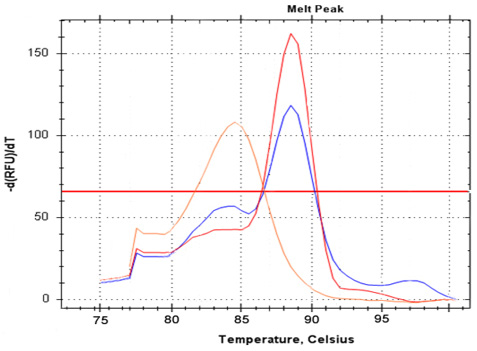
Melt peak genotypes: The graph of the negative first derivative of the melting-curve of TLR2 -196 to 174 del/ins genotypes by Real time PCR revealed two peaks one at 89 oC and 2nd at 84 oC corresponding to homozygous insertion(red) and deletion (pink) respectively, while a third peak (pink) represents heterozygous genotype.
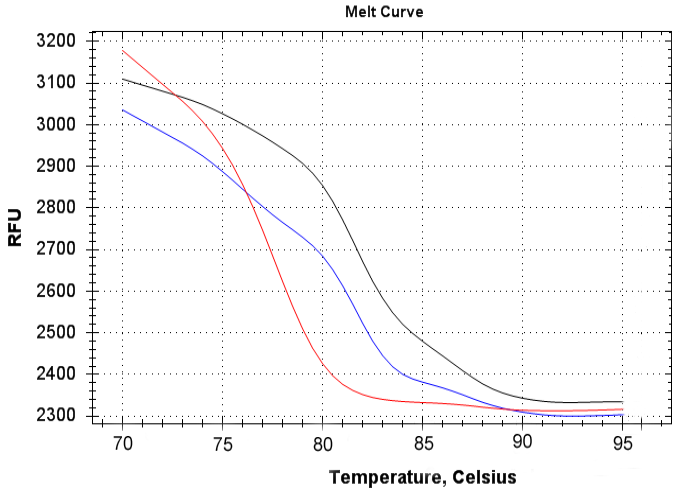
Melt curves relative fluorescence unit (RFU) verses temperature showing TLR2 -196 to -174 homozygous insertion (brown), heterozygous (blue) and homozygous deletion (red) genotypes
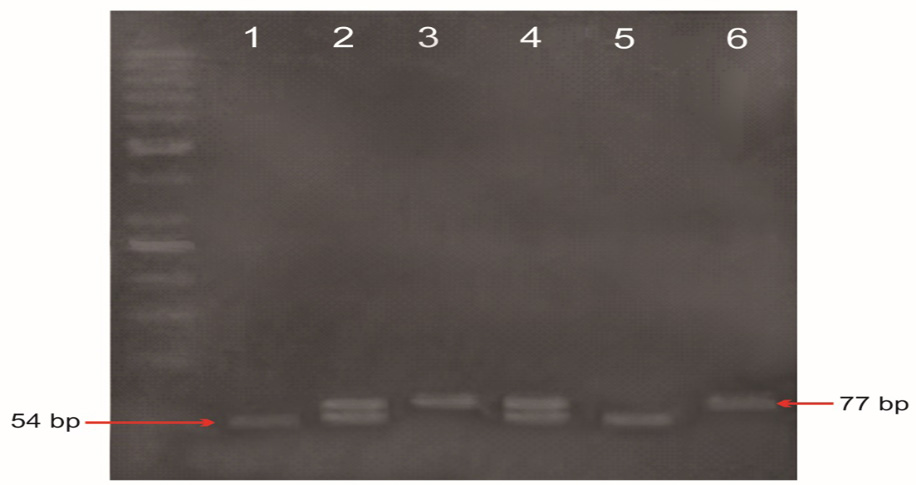
Toll-like receptor 2 -196 to -174 deletion/insertion genotypes. Left lane 50 bps ladder; Lane 1 and 5: homozygous deletion (54 bps); Lane 2 and 4: heterozygous (77/54 bps); Lane 3 and 6: homozygous insertion (77 bps).
References
- Abbas, Z., 2013. Hepatocellular carcinoma in Pakistan. Guidelines J. Coll. Phys. Surg. Pak., 23: 769-770.
- Banerjee, A., Ray, R.B. and Ray, R., 2010. Oncogenic potential of hepatitis C virus proteins. Viruses, 2: 2108-2133. https://doi.org/10.3390/v2092108[CrossRef]
- Bruno, S., Crosignani, A., Maisonneuve, P., Rossi, S., Silini, E. and Mondelli, M.U., 2007. Hepatitis C genotype 1b as major risk factor associated with hepatocellular carcinoma in patients with cirrhosis: A seventeen-year prospective cohort study. Hepatology, 46: 1350-1356. https://doi.org/10.1002/hep.21826[CrossRef]
- Butt, A.S., Abbas, Z. and Jafri, W., 2012. Hepatocellular carcinoma in Pakistan: Where do we stand? Hepat. Mon., 12: e 6023. https://doi.org/10.5812/hepatmon.6023[CrossRef]
- Chang, S., Dolganiuc, A. and Szabo, G., 2007. Toll-like receptors 1 and 6 are involved in TLR2 mediated macrophage activation by hepatitis C virus core and NS3 proteins. J. Leukoc. Biol., 82: 479–487. https://doi.org/10.1189/jlb.0207128[CrossRef]
- Chung, H., Watanabe, T., Kudo, M. and Chiba, T., 2011. Correlation between hypo-responsiveness to toll-like receptor ligands and liver dysfunction in patients with chronic hepatitis C virus infection. J. Viral Hepat., 18: e561–e567. https://doi.org/10.1111/j.1365-2893.2011.01478.x[CrossRef]
- Clement, S., Peyrou, M., Sanchez-Pareja, A., Bourgoin, L., Ramadori, P., Suter, D., Vinciguerra, M., Guilloux, K., Pascarella, S., Rubbia-Brandt, L., Negro, F. and Foti, M., 2011. Down-regulation of phosphatase and tensin homolog by hepatitis C virus core 3a in hepatocytes triggers the formation of large lipid droplets. Hepatology, 11: 38-49. https://doi.org/10.1002/hep.24340[CrossRef]
- Dolganiuc, A., Oak, S., Kodys, K., Golenbock, D.T., Finberg, R.W., Kurt-Jones, E. and Szabo, G., 2004. HCV core and nonstructural 3 proteins trigger toll-like receptor-2 mediated pathways and inflammatory activation. Gastroenterology, 12: 1513–1524. https://doi.org/10.1053/j.gastro.2004.08.067[CrossRef]
- Donald, B.S., Bukh, J., Kuiken, C., Muerhoff, A.S., Rice, M.C., Stapleton, J.T. and Simmonds, P., 2014. Expanded classification of hepatitis C virus into 7 genotypes and 67 subtypes. Hepatology, 59: 318-327. https://doi.org/10.1002/hep.26744[CrossRef]
- Ferlay, J., Soerjomataram, H.D. and Dikshit, R., 2015. Cancer incidence and mortality worldwide: Sources, methods and major patterns in GLOBOCAN 2012. Int. J. Cancer, 136: E359-E386. https://doi.org/10.1002/ijc.29210[CrossRef]
- Freeman, A.J, Dore, G.J., Law, M.G., Thrope, M., von Overbeck, J., Loyd, A.R., Marinos, G., Kaldor, M., 2001. Estimating progression to cirrhosis in chronic hepatitis C virus infection. Hepatology, 34: 809–816. https://doi.org/10.1053/jhep.2001.27831[CrossRef]
- Hishida, A., Matsuo, K., Goto, Y., Naito, M., Wakai, K., Tajima, K. and Hamajima, N., 2010. No associations of Toll-like receptor 2 (TLR2) -196 to -174del polymorphism with the risk of Helicobacter pylori sero-positivity, gastric atrophy, and gastric cancer in Japanese. Gastric Cancer, 13: 251–257. https://doi.org/10.1007/s10120-010-0567-y[CrossRef]
- Houghton, J. and Wang, T.C., 2005. Helicobacter pylori and gastric cancer: A new paradigm for inflammation associated epithelial cancers. Gastroenterology, 128: 1567-1578. https://doi.org/10.1053/j.gastro.2005.03.037[CrossRef]
- Idrees, M., 2008. Development of an improved genotyping assay for the detection of hepatitis C virus genotypes and subtypes in Pakistan. J. Virol. Methods, 150: 50–56. https://doi.org/10.1016/j.jviromet.2008.03.001[CrossRef]
- Idrees, M., Rafique, S., Rehman, I., Akbar, H., Yousaf, M.Z., Butt, S., Awan, Z., Manzoor, S., Akram, M., Aftab, M., Khubaib, B. and Riazuddin, S., 2009. Hepatitis C virus genotype 3a infection and hepatocellular carcinoma: Pakistan experience. World J. Gastroenterol., 15: 5080-5085. https://doi.org/10.3748/wjg.15.5080[CrossRef]
- Kanwal, F., Krame, J.R., Ilyas, J., Duan, Z. and El-Serag, H.B., 2014. HCV genotype 3 is associated with an increased risk of cirrhosis and hepatocellular cancer in a national sample of U.S. Veterans with HCV. Hepatology, 60: 98–105. https://doi.org/10.1002/hep.27095[CrossRef]
- Kawai, T. and Akira, S., 2011. Toll-like receptors and their crosstalk with other innate receptors in infection and immunity. Immunity, 34: 637–650. https://doi.org/10.1016/j.immuni.2011.05.006[CrossRef]
- McGivern, D.R. and Lemon, S.M., 2009. Tumor suppressors, chromosomal instability and hepatitis C virus-associated liver cancer. Annu. Rev. Pathol., 4: 399–415. https://doi.org/10.1146/annurev.pathol.4.110807.092202[CrossRef]
- Mohd-Hanafiah, K., Groeger, J., Flaxman, A.D. and Wiersma, S.T., 2013. Global epidemiology of hepatitis C virus infection: New estimates of age-specific antibody to HCV seroprevalence. Hepatology, 57: 1333-1342. https://doi.org/10.1002/hep.26141[CrossRef]
- Nischalke, H.D., Coenen, M., Berger, C., Aldenhoff, K., Muller, T., Berg, T., Krämer, B., Körner, C., Odenthal, M., Schulze, F., Grünhage, F., Nattermann, J., Sauerbruch, T. and Spengler, U., 2012. The toll-like receptor 2 (TLR2) -196 to -174 del/ins polymorphism affects viral loads and susceptibility to hepatocellular carcinoma in chronic hepatitis C. Int. J. Cancer, 130: 1470–1475. https://doi.org/10.1002/ijc.26143[CrossRef]
- Nkontchou, G., Ziol, M., Aout, M., Lhabadie, M., Baazi, Y., Mahmoudi, A., Roulot, D., Ganne-Carrie, N., Grando-Lemaire, V., Trinchet, J.C., Gordien, E., Vicaut, E., Baghad, I. and Beaugrand M., 2011. HCV genotype 3 is associated with a higher hepatocellular carcinoma incidence in patients with ongoing viral C cirrhosis. J. Viral Hepat., 18: 516-522. https://doi.org/10.1111/j.1365-2893.2011.01441.x[CrossRef]
- Noguchi, E., Nishimura, F., Fukai, H., Kim, J., Ichikawa, K., Shibasaki, M. and Arinami, T., 2004. An association study of asthma and total serum immunoglobin E levels for Toll-like receptor polymorphisms in a Japanese population. Clin. Exp. Allergy, 34: 177-183. https://doi.org/10.1111/j.1365-2222.2004.01839.x[CrossRef]
- Pandey, S., Mittal, R.D., Srivastava, M., Srivastava, K., Singh, S., Srivastava, S. and Mittal, B., 2009. Impact of toll-like receptor (TLR) 2 (-196 to -174del/ins) and TLR4 (Asp299Gly, Thr399Ile in cervical cancer susceptibility in North Indian women. Gynecol. Oncol., 114: 501-505. https://doi.org/10.1016/j.ygyno.2009.05.032[CrossRef]
- Qureshi, H., Bile, K.M., Jooma, R., Alam, S.E. and Afridi, H.U., 2010. Prevalence of hepatitis B and C viral infections in Pakistan: Findings of a national survey appealing for effective prevention and control measures. East. Mediterr. Hlth. J., 16 (suppl): 15-23. https://doi.org/10.26719/2010.16.Supp.15[CrossRef]
- Raimondi, S., Bruno, S., Mondelli, M.U. and Maisonneuve, P., 2009. Hepatitis C virus genotype 1b as a risk factor for hepatocellular carcinoma development: A meta-analysis. J. Hepatol., 50: 1142–1154. https://doi.org/10.1016/j.jhep.2009.01.019[CrossRef]
- Srivastava, K., Srivastava, A., Kumar, A. and Mittal, B., 2010. Significant association between toll-like receptor gene polymorphisms and gallbladder cancer. Liver Int., 30: 1067-1072. https://doi.org/10.1111/j.1478-3231.2010.02268.x[CrossRef]
- Tahara, T., Arisawa, T., Wang, F., Shibata, T., Nakamura, M., Sakata, M., Hirata, I. and Nikano, H., 2007. Toll-like receptors 2 -196 to -174del polymorphism influences the susceptibility of Japanese people to gastric carcinoma. Cancer Sci., 98: 1790-1794. https://doi.org/10.1111/j.1349-7006.2007.00590.x[CrossRef]
- Wang, R.F., Miyahara, Y. and Wang, Y.H., 2008. Toll-like receptors and immune regulation: Implications for cancer therapy. Oncogene, 27: 181-189. https://doi.org/10.1038/sj.onc.1210906[CrossRef]
- Waqar, M., Khan, A.U., Rehman. H.U., Idrees, M., Wasim, M., Ali, A., Niaz, Z., Ismail, Z., Rehman, M.U., Tariq, M., Shah, M. and Murtaza, B.N., 2014. Determination of hepatitis C virus genotypes circulating in different districts of Punjab (Pakistan). Eur. J. Gastroenterol. Hepatol., 26: 59-64. https://doi.org/10.1097/MEG.0b013e328362dc3f[CrossRef]
- Zhu, L., Yuan, H., Jiang, T., Wang, R., Ma, H. and Zhang, H., 2013. Association of TLR2 and TLR4 polymorphisms with risk of cancer: A meta-analysis. PLoS One, 8: e82858. https://doi.org/10.1371/journal.pone.0082858[CrossRef]
Services
Article usage statistics
Loading…