
Soil levelling plays a vital role in regulating plant growth and ensuring uniform moisture distribution, which in turn helps conserve water by delivering water at a consistent level to all parts of the field, particularly in the root zone. Also, selecting the optimal varieties for the growing conditions is extremely important. So this study aimed to evaluate the effects of different maize varieties and levelling machines on maize growth and yield under an automated sensor-based subsurface drip irrigation system. A field experiment (2025) was conducted in a farmer’s field in Al-Hashimia. The experimental design was a split-plot RCBD with three replicates. The main plots consisted of four maize varieties (Furat FU, ZP ,Marvel MA, and Saginto SA ), and sub-plots consisted of three levelling machines (Laser , Tablet, and Grader) for the An AI-driven system controlled water and fertilizer delivery, the results demonstrated that the SA variety also surpassed FU,ZP and MA in all growth and yield parameters : Plant height (PH; 193.16 cm), leaf area (LA; 614.8 cm2) , chlorophyll index in leaves (CIL; 50.19%), grains number in the ear (GNE; 495.1gain ear-1), 500 grains weight (500GW; 139.66 g),grains Yield (GY: 7.298 tha-1)and biological yield (BY; 19.200 tha-1) . The Laser levelling machine significantly outperformed Tablet, and Grader across all measured traits. Optimal results were achieved with the interaction of Laser levelling machine and SA variety, highlighting this combination as the most effective for enhancing maize productivity under the studied conditions.
Research Article · Volume 39, Issue 3, 8 September 2026 · Open Access
Technical Applications of Levelling Machines in Some Maize Varieties Productivity
· · ·
Affiliations & Notes ⌄
- 1Al-Hashimia Agriculture Directorate Iraq
- 2Department of Field Crops, Al-Qasim Green University, Iraq
- 3Department of Agricultural Machinery, Al-Qasim Green University, Iraq. *Correspondence | Salih K. Alwan Alsharif, Department of Agricultural Machinery, Al-Qasim Green University, Iraq
- 4Email: salih@agre.uoqasim.edu.iq
Article Info ⌄
- Journal:
- Pakistan Journal of Agricultural Research
- Published:
- 8 September 2026
From the article
- The study demonstrated that a planting distance of SA variety significantly outperformed FU, ZP and MA across all measured growth and yield parameters.
- Among levelling treatments, the LLM showed superior results compared to TLM and GLM .
- The high effect of Laser levelling machine with SA variety produced optimal execution, proposition this incorporation as the most effective management strategy for ,maize cultivation under similar conditions.
Selected from the article's own text.
Abstract
Introduction
Yellow maize (Zea mays L.) crop is considered an important strategic crop and ranks third after wheat and rice, it serves as a basic ingredient for human food worldwide, in addition to its great importance in feeding animals as dry and green fodder (Aljibouri and Alsharifi., 2019; . The yellow corn crop is distinguished by its abundant production, its cultivation in two spring and fall seasons, and its adaptation to environmental conditions in Iraq. The Agriculture Ministry has taken it upon itself to encourage farmers to grow the corn crop according to scientific principles by adopting modern irrigation methods, because the leaves of this crop are used in the paper manufacture, while grains its, extracted from it the finest types of starch, dextrin, and oils ,This calls for thinking about using modern scientific methods to improve the yield of yellow maize by following settlement methods and fertilizers, method is one of the basic outcomes in increasing the characteristics of vegetative growth and yield (Alaamer et al., 2023a). The leveling process is one of the most important methods used to improve the soil characteristics and mix it, to achieve the best nutrients absorption through a homogeneous distribution of water (Shathar and Alsharifi., 2023). Among the most important measures that farmers should consider is modifying their crop varieties to increase their productivity per unit area by carrying out all the agricultural operations required by the plant during the growing season ; . Economic crops, such as corn, need a balance of the major nutrients necessary for the growth and development of the plant, especially the most important, which the plant needs in relatively large quantities, and their deficiency creates a significant impact on growth and productivity, the focus is on such elements due to their depletion by the plant, their fixation in the soil, or their leaching in the root area. Therefore, they must be added to the soil to create nutritional balances aimed at improving the plant vegetative growth and increasing the final yield, for the selected variety ; .
Study conducted by Miao et al. (2021) showed that applying added nutrients to maize crops led to improved grain quality. On the other hand, Kodua et al. (2022) benefited that increases crop yield when combined with other agricultural practices such as tillage and leveling. ; Racz et al. (2021), it been proven that fertilization reduces the environmental stress that plants experience during their growth period, and it has been confirmed that the fertilizers application is concentrated when the soil is under water stress. Foliar spraying plays a vital role in promoting the growth and corn varieties productivity when used in conjunction with appropriate leveling methods, leads to an increase in vegetative growth indicators. Plant height and chlorophyll ratio. Jing et al. (2022); Mueen et al. (2025), numerous studies have confirmed the synergy between selected variety and modern leveling processes, opening up prospects for sustainably improving plant productivity by exploiting the characteristics for each variety. Alaamer and Alsharifi, (2020); Singh et al. (2021). Increasing grain productivity and improving its quality is achieved by selecting varieties that give the highest yield to ensure food security in line with the increasing population. Anang et al. (2022); Guevara et al. (2022), soil leveling is an important agricultural practice for uniform water distribution across the soil surface and achieving field capacity. Khngura et al. (2023). Increasing crop yield, ensuring water availability, and achieving uniform water distribution across the soil requires achieving a 0-2% slope using a laser leveling machine. Chen et al. (2024). Laser leveling has improved water use efficiency and enhanced growth characteristics and grain yield.
The economic return of any agricultural crop is affected by the genetic aspect for the selected variety, in addition to the environmental aspect represented by temperature, humidity, and the exposure length to light, which play an effective and fundamental role in increasing growth characteristics and productivity , Despite increasing awareness of advanced technologies, technological gaps remain, current studies often focus on these gaps without fully evaluating the application of technology across the corn production cycle. New technologies have a significant impact on growth stages, leading to increased final yields and ensuring food security, corn production a key factor . Laser leveling achieved the highest overall rice yield compared to unleveled land, due to the water abundance and its uniform distribution within the root zone . Varieties can contribute to tolerance of all stress factors such as drought and heat, as well as facilitating their management and shortening their growth cycles ; , several factors affect crop yields, including failure to follow scientific principles, high seed prices, and the undesirable characteristics for selected varieties to cultivation . Soil leveling improved the fertilizers efficiency and water, ultimately leading to increased crop yield and higher economic returns. This is attributed to the water abundance in the root zone . The soil physical properties, such as density and porosity, were affected as a result of the increased load on the soil surface, leading to compaction, deterioration of its condition, and decreased fertility. This is attributed to the heavy equipment use, that passes over the soil surface and compacts the topsoil. This increases soil density, decreases porosity, deteriorates plant growth, and reduces the final yield ; , Increase in chlorophyll index in the leaves may be due to the increased concentration of nitrogen and potassium in the leaves, which led to an increase in the accumulation of nitrogen and potassium in the plant and then an increase in the permeability of nutrients in the plant and an improvement in the carbon representation process, which results in an increase in the content of chlorophyll in the leaves. , Crop productivity increases through the adoption of improved varieties IMV, as these varieties prove effective in improving agricultural performance and efficiency, ultimately contributing to improved livelihoods for farmers, increased profits, and enhanced food security., most farmers suffer from limited resources, so the focus is on special measures for soil and crop management by selecting the variety that gives the highest productivity under the growing conditions. Soil leveling, which works distributes water with minimal loss and high efficiency, is one of the most important factors for modernizing agriculture, the main purpose of soil leveling is to maximize the use of water resources in a scientifically sound manner and to increase the cultivated area from uncultivated land. Therefore, the current study aimed to determine soil leveling and its effect on the growth characteristics and productivity some maize varieties.
Material and Methods
Study site
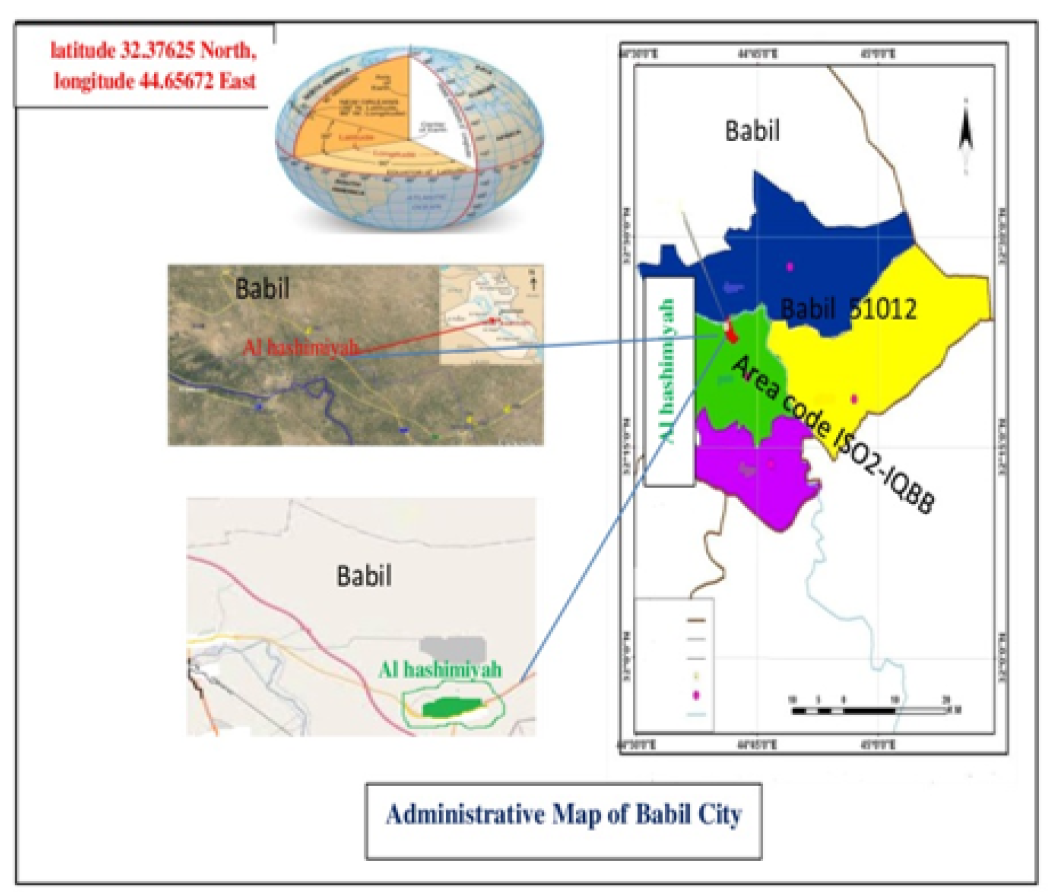
Al-Hashimiyah City, the district center of Babylon Governorate, is situated in the Middle Euphrates region, approximately 130 km south of Baghdad. Known for its fertile agricultural lands, the area is renowned for its orchards and cultivation of strategic crops such as wheat (Triticum aestivum L.), barley (Hordeum vulgare L.), and corn (Zea mays L.) (Figure 1).
A field experiment was conducted during the 2025 summer growing season in a farmer’s field under the Al-Hashimiyah Agriculture Directorate, Babylon Governorate, to evaluate yellow corn (Zea mays L.) production under specified experimental conditions.
Field soil preparation
Prior to planting, soil samples were collected from nine randomly selected locations (0-20 cm depth) with three replicates each for comprehensive physicochemical analysis. The sampling area was determined based on experimental requirements, with results presented in Table 1.
Table 1: Analysis of soil physical and chemical characteristics
|
Depth |
Texture % |
|||
|
0-20 (cm) |
Clay |
Silt |
Sand |
|
|
66 |
19 |
15 |
Clay |
|
|
Soil physical properties |
||||
|
Pb (Mg m-3) |
TSP (%) |
SPR (Kpa ) |
||
|
1.22 |
1455.09 |
field capacity % |
||
|
1.26 |
1567.82 |
33.12 |
||
|
1.30 |
1605.44 |
32.43 |
||
|
VA |
||||
|
0-20 |
Soil chemical properties |
|||
|
E.C (ds\cm3) |
HP |
True density (Mg.m-3) |
||
|
2.34 |
7.42 |
2.55 |
||
|
Soluble cation meq\I |
||||
|
Na |
K |
Ca+Mg |
||
|
8.21 |
12.16 |
55.15 |
||
|
O.C (%) |
CEC Meq\100 g) |
CaCo3 (%) |
O.M (%) |
|
|
0.55 |
31.88 |
4 |
0.65 |
|
The soil was prepared by plowing using a moldboard plow and the tiller was set to a depth of 20 cm to stir the soil, the soil was smoothed using double disc combs. The soil was leveled using leveling equipment arranged according to a randomized complete block design arranged in split plot with three replications. The field is then divided into several experimental plots with 36 experimental units measuring 3x3.5 m2, with a distance of 75 cm between the experimental units and 1 m between the sectors, 20 cm between one hole. A locally developed fertilizer application machine is used to apply a triple phosphate fertilizer at a rate of 120 kg ha-1 at a time and to a depth of 8 cm before planting ; . The planter type sowing machine, was set at 100 kg ha-1 for the FU variety with a leveling machines LlM , GLM and TLM, then the same process was repeated for the SA, ZP and MA varieties.
Experimental field topography
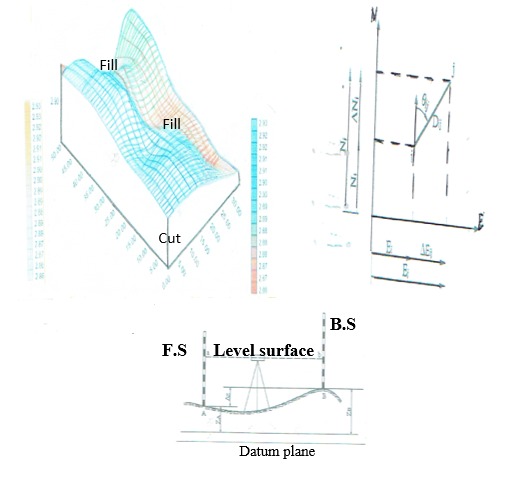
Topography directly influences soil formation through slope, as there is a direct relationship between surface slope and water flow velocity. This affects the water infiltration amount, soil dryness, vegetation density, and organic matter content. Soils in sloping areas are also characterized by their shallowness and limited depth. Soil topography has a significant impact on the crops nutrient content. Also soil slope and inclination affect the nutrient content; therefore, leveling the soil increases crop growth rate.(Shathar et al., 2024). The selected experimental soil consisted of scattered clumps at heights that affected both seed distribution and water level (Figure 2).
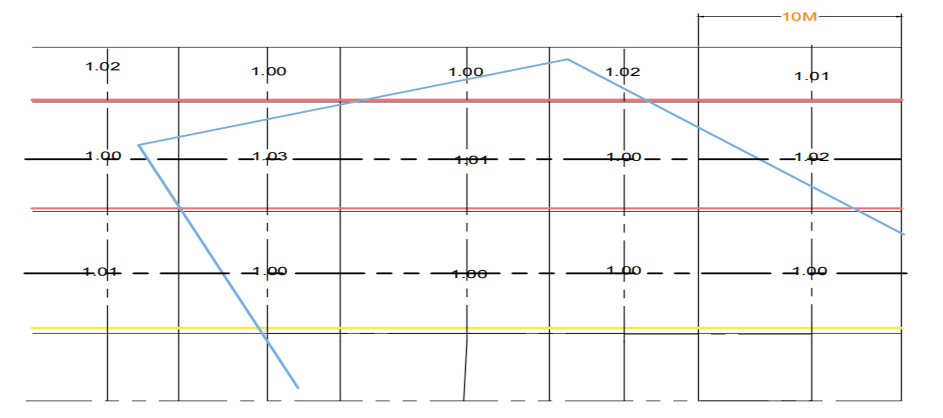
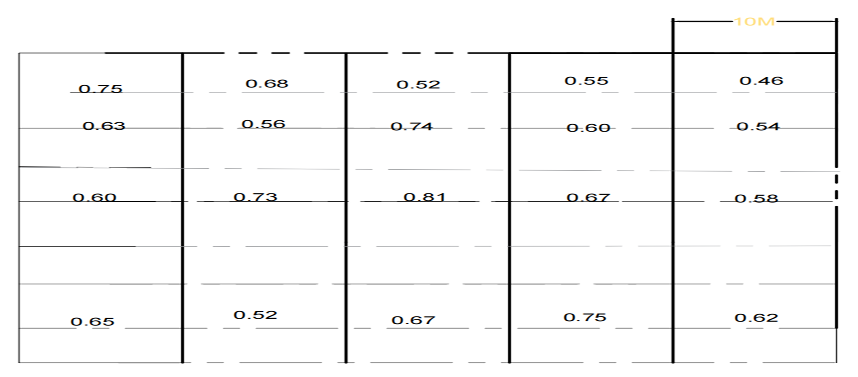
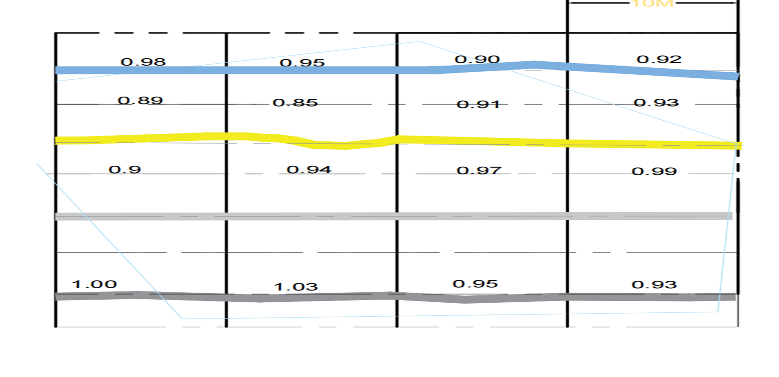
The readings obtained using a level device (Figure 3, (difference between front (F.S) and back (B.S) readings.
Topographic surveying
Points identified and readings taken, using the theodolite (Transit), Figure 3
LTU = L × Cos Bearing
DPU = L × Sin Bearing
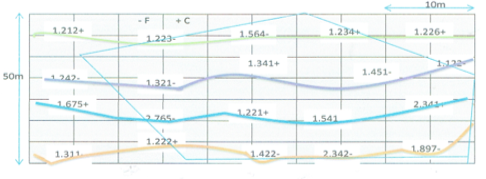
The leveling device was attached on the MF- 285S tractor. The field was surveyed to determine elevations, depressions, and field characteristics using a MAST (This device consists of a graduated rod for measuring elevation and depressions via a hydraulic piston that controls the raising and lowering of the receiver as needed by connecting the hydraulic device to a P.T.O unit for tractor ). Therefore, a virtual field diagram or network is created (Figure 3), showing the rises and falls by setting the zero level in the transmitter and determining the tractor path.
The experiment includes two factors
i) The first factor comprising of four different maize varieties. Those are Furat, ZP, Marvel and saginto Furat (FU)
The Furat maize variety, Dutch hybrid approved by the Iraqi Agriculture Ministry, exceedingly cultivated in focal and southern Iraq, is describe by its discriminatory long and plump cob morphology. This variety has show freaked agronomic execution under Iraqi growing provision, specifically in semi-arid climates, combining high yield possibility with notable drought tolerance .Purity ratio 99% and germination ratio 93%.
ZP
This variety is characterized by its medium-length cob and average productivity. It also tolerates drought and salinity. Serbian hybrid, the growing conditions for this variety are limited to protected areas, but thanks to breeding and improvement, it has become possible to cultivate it in temperate regions. Purity ratio 99% and germination ratio 92%.
Marvel (MA)
This variety is characterized by its medium-length cob and average productivity, it has become possible to cultivate it in temperate regions. Purity ratio 99% and germination ratio 91%.
Saginto (SA)
The Saginto maize variety, a German hybrid approved by the Iraqi Ministry of Agriculture. It is characterized by its long, thick cop and high yield. Its cultivation is concentrated in central and southern Iraq, and it has proven tolerant of all the region’s climatic conditions. Purity ratio 99% and germination ratio 94%.
Levelling machines
Levelling is a necessary and complementary process to preparing the soil for planting. It contributes to the water regular distribution , saves watering time, ensures uniform distribution for fertilizers, and guarantees that water reaches field parts all with equally
Table 2: Specifications( Laser leveling machine)
|
Parameter |
|
|
Display |
Seven Segment LED, Visible in Day Light, Adjustable in Brightness |
|
Switch |
Tour Sensor Switch Suitable for Dusty Condition |
|
System Accuracy |
±5 mm |
|
Control |
Programmable |
|
Working Mode: |
10 User Modes Programmable |
|
Indications: |
Working Channel, Time & Errors (LED for Up, Down, Link & Auto) |
|
Protection: IP65 |
|
|
Connectors: |
Silver coated, Chroe plated atll weather bend proof |
|
Laser Guided Land Leveller Pro-12000 Capacity 6m Weight 4300kg Dimensions 2500 x 3200 x 6600 |
|
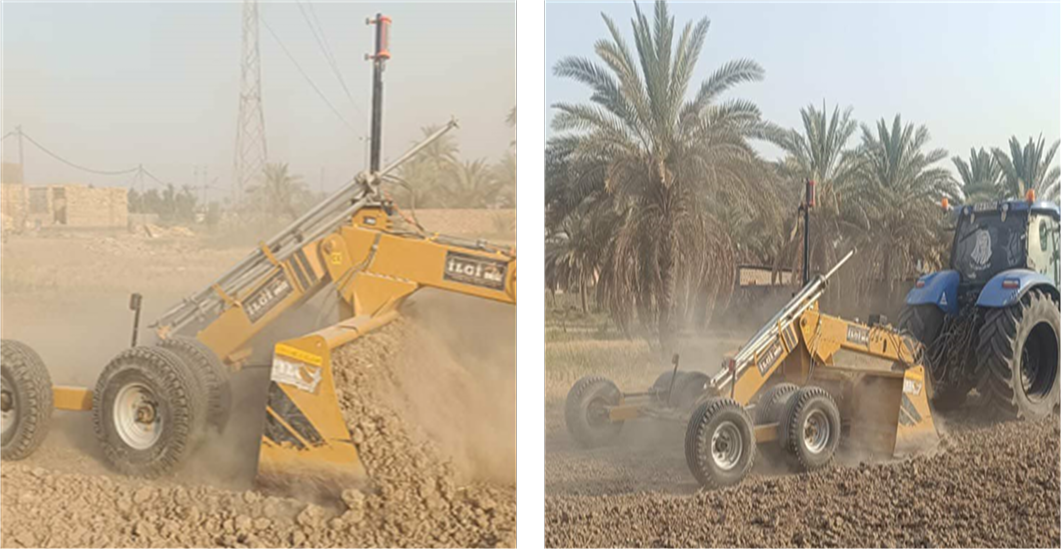
Laser levelling machine
Laser leveling is performed using a transmitter that emits a laser beam to the area surrounding the leveling machine up to a distance of 300 meters. A control box, positioned in front of the driver, operates automatically in conjunction with the other components of the leveling machine. A receiver is mounted on the cutting blade holder. A hydraulic unit, connected to the machine’s hydraulic and the control box, for controls the raising and lowering of the cutting blade via laser beam (Figure 4).
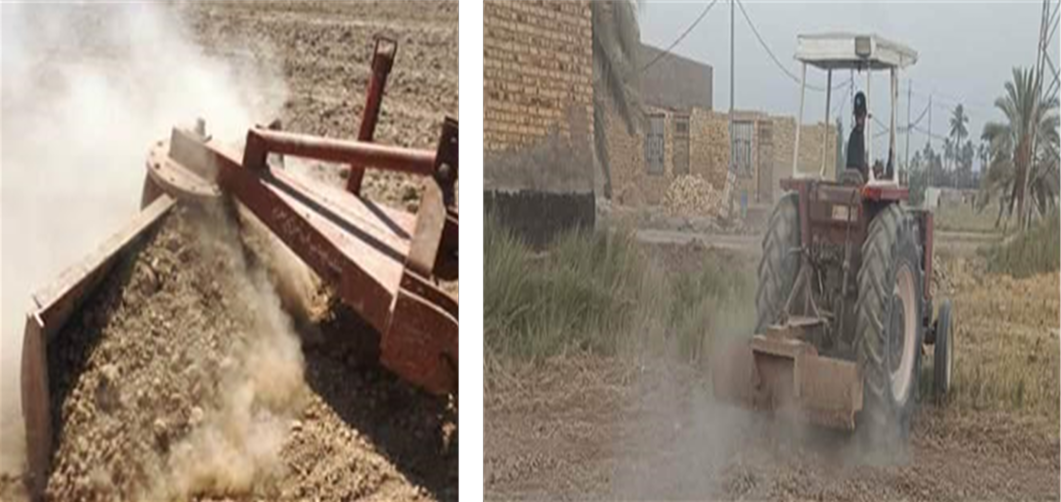
Tablet levelling machine
This device is attached to the tractor’s hydraulic lifting device and its depth is calibrated according to the elevation and depression readings in the test field, predetermined by MAST (Figure 6).
Table 3: Specifications(Tablet leveling machine)
|
Parameter |
|
|
local manufacturing machine |
Iraq |
|
hanging type |
Back tractor |
|
Width |
2.76m |
|
Weight |
256 kg |
Grader levelling machine
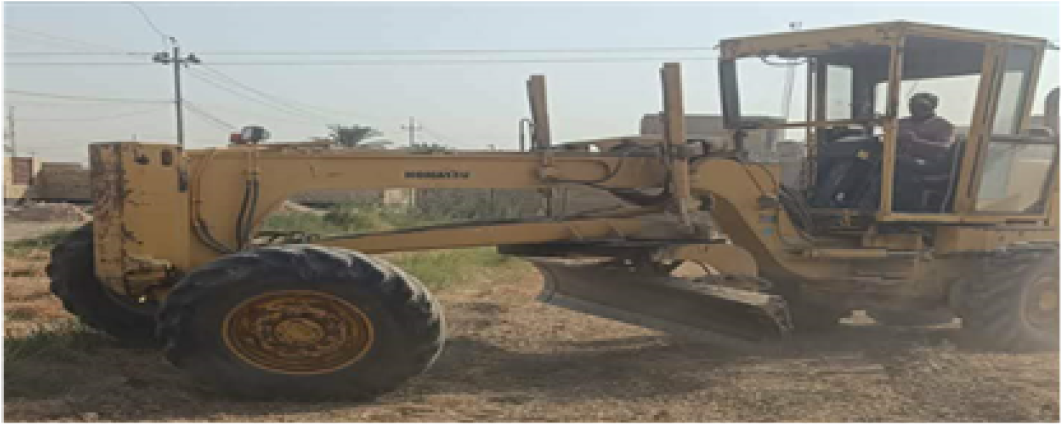
A levelling machine equipped with a cutting knife
in the middle , hydraulically controlled according to the readings specified by the MAST method for the height and depth.(Figure 8)
Table 4: Specifications(Grader leveling machine)
|
Parameter |
Parameter |
||
|
Total length |
8310 mm |
Model |
3306 |
|
Height to top of cab |
3360mm |
Maximum power |
150ph |
|
Width over tyres |
2440mm |
Number of cylinders |
6 |
|
Blade base |
2570mm |
Displacement |
10.5L |
|
Wheelbase |
5920mm |
Operating voltage |
24 v |
|
Tandem axle wheelbase |
1520mm |
Type |
Direct drive, power shift |
|
Standard operational weight |
12620 Kg |
Ground clearance |
610 mm |
|
Tyre size |
14×24 10PR |
Wheel lean |
18 degrees |
|
Maximum forward speed |
41 kmhr-1 |
Total oscillation |
32 degrees |
|
Maximum reverse speed |
41 kmhr-1 |
Moldboard height |
610mm |
|
Moldboard thickness |
22mm |
Moldboard width |
3660mm |
|
Maximum depth of cut |
438mm |
Rotation |
360 degrees |
|
Side shift left and right |
660mm |
Diameter |
1530mm |
|
Shift right |
520mm |
Shift left |
650mm |
|
Maximum reach outside tyres – right |
1830mm |
Maximum lift above ground |
464mm |
Studied characteristics
Vegetative growth characteristics
Plant height (PH)
It was measured after the plant reached the flowering stage (100%), using an Invar strip measurements were taken from the soil surface to the flag leaf base for ten randomly selected plants from the midlines for each experimental unit, with three replicates (Alaamer et al., 2023a).
Leaf area (LA)
It was calculated according to the Eq.3, approved by ; Shathar et al., 2024).
LA = FL×FW×0.74
Where:
LA; Leaf area cm2, FL; Leaf length cm, FW Leaf width cm.
Chlorophyll index in leaves (CIL)
It was calculated using a manual digital scaling device SPAD-502-meter and awarding to the method by ( ; .
Yield characteristics
Grains number in the ear (GNE)
After the plant reached physiological maturity, ten ears were taken from the midlines for each experimental unit (three replicates) and placed in husking and counting machine (Satak type), (Alsharifi et al., 2025).
50٠ grains weight (500GW)
The 500-grain weight was specified by first classifing grains awarding to size and ejecting broken kernels using a Satake testing device (Alsharifi et al., 202١). robust grains were then scaled using a precision electronic balance (accuracy ±0.01 g)
Grains Yield (GY)
was calculated using the Eq.4, ; :
GY = GP × PD
where:
GY = Grain yield (t·ha-¹), GP = Grain weight per plant (kg·plant-¹(, PD = Plant density (plants·ha-¹)
Biological yield (BY)
It was calculated using the Eq.5, after drying the sample in the oven at 70 °C until the weight stabilized.
BY-PDW+ PD
Where; BY; biological yield t.ha-1,PDW; plant dry weight (kg) , PD; plant density ( ha -1)
Statistical analysis
The experimental data were analyzed using GenStat 18th edition (VSN International) with a split-plot arrangement in a randomized complete block design (RCBD). Treatment means were compared using Least Significant Difference (LSD) test at α = 0.05 significance level.
Results and Discussion
Vegetative growth characteristics
Table ٥ demonstrate significant effects (p < 0.05) of maize varieties , levelling machines, and their interaction on maize vegetative growth. High effects were observed with laser levelling machine + maize variety saginto, achieving peak values (197.14 cm, 625.4 cm2, 53.10%). This supports with recognized levelling machines and maize varieties dynamics: balanced levelling and soil moisture availability promotes root expansion and homogeneous nutrient uptake, thereby supporting vegetative development
Table ٥: Effect of levelling machines on the vegetative growth parameters for four maize varieties
|
Varieties |
Levelling machines |
Vegetative growth characteristics |
||
|
PH |
LA |
CIL |
||
|
FU |
LLM |
180.67 |
511.6 |
42.85 |
|
TLM |
171.81 |
346.9 |
37.96 |
|
|
GLM |
177.36 |
422.1 |
40.49 |
|
|
ZP |
LLM |
186.64 |
604.2 |
47.17 |
|
TLM |
181.42 |
566.5 |
40.85 |
|
|
GLM |
183.28 |
588.4 |
43.25 |
|
|
MA |
LLM |
191.25 |
621.9 |
50.68 |
|
TLM |
182.95 |
567.5 |
45.58 |
|
|
GLM |
185.11 |
606.2 |
46.10 |
|
|
SA |
LLM |
197.14 |
625.4 |
53.10 |
|
TLM |
189.46 |
601.1 |
46.79 |
|
|
GLM |
192.87 |
617.9 |
50.68 |
|
|
V |
FU |
176.62 |
426.8 |
40.43 |
|
ZP |
183.78 |
586.4 |
43.76 |
|
|
MA |
186.44 |
598.5 |
47.45 |
|
|
SA |
193.16 |
614.8 |
50.19 |
|
|
LM |
LLM |
188.93 |
590.8 |
48.45 |
|
TLM |
181.41 |
520.5 |
42.79 |
|
|
GLM |
184.65 |
558.6 |
45.13 |
|
|
LSD= 0.05 |
V |
0.971 |
14.30 |
1.041 |
|
LM |
0.504 |
19.66 |
0.813 |
|
|
V*LM |
1.494 |
25.97 |
N.S |
|
Maize variety Furat ;FU, maize variety ZP ;ZP, maize variety Marvel ;MA, maize variety Saginto ;SA, laser levelling machine; LLM, Tablet levelling machine; TLM, Grader levelling machine; GLM, plant height ;PH, leaf area ;LA, chlorophyll index in leaves ;CIL.
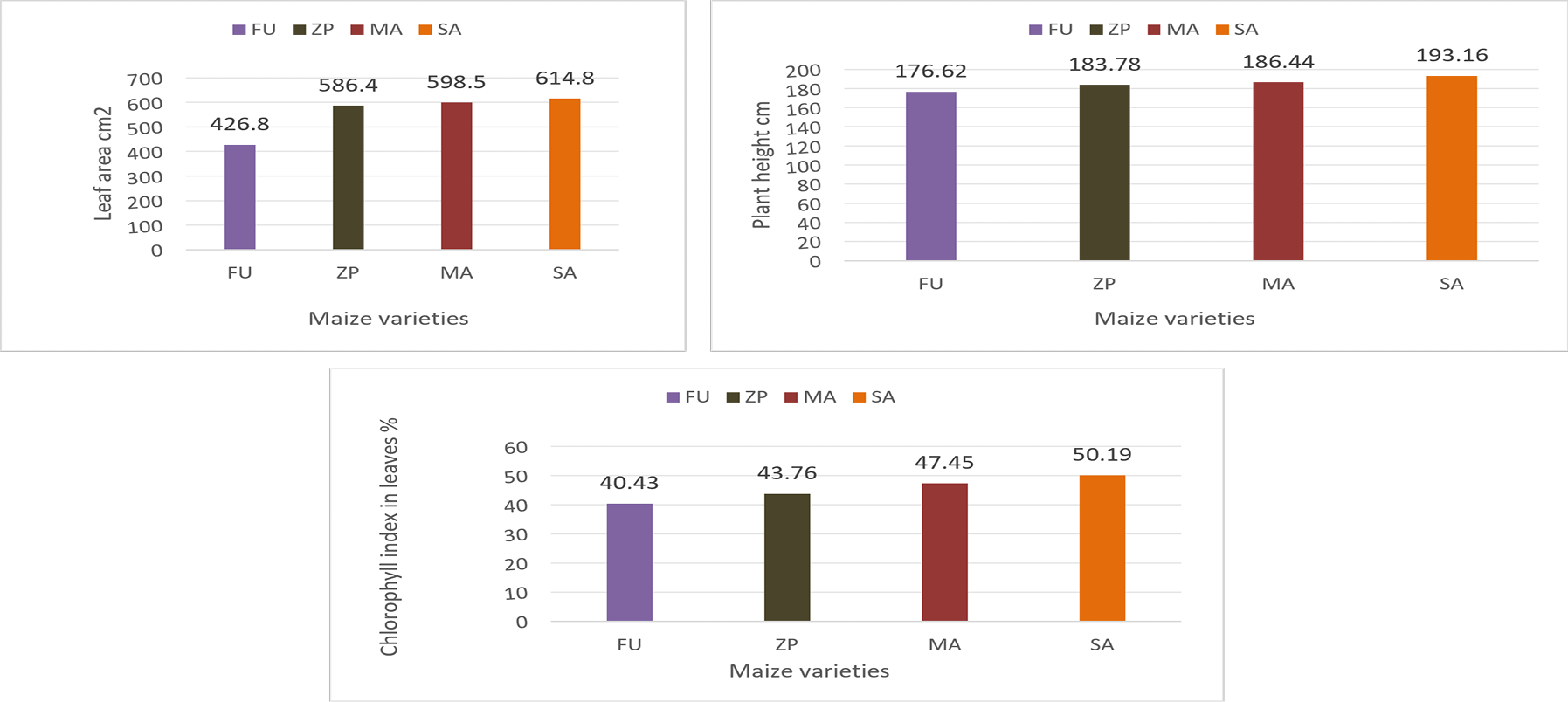
Figure 10. The SA variety produced superior growth metrics (plant height: 193.16 cm; leaf area: 614.8 cm2; chlorophyll index in leaves 50.19 %) surpassing FU
(176.62 cm,426.8cm2,and 40.43%), ZP ( 183.78cm, 586.4 cm2 and43.76%), and MA (186.44 cm, 598.5 cm2, and 47.45%). This enhancement is attributed to This relates to genetic makeup and certain genes responsible for growth . This is what was indicated by ; , who found that the variation in growth duration depends on the plant’s ability to manage enzyme activity and provide the energy necessary for photosynthesis, leaf growth, increased leaf area, and reduced senescence.
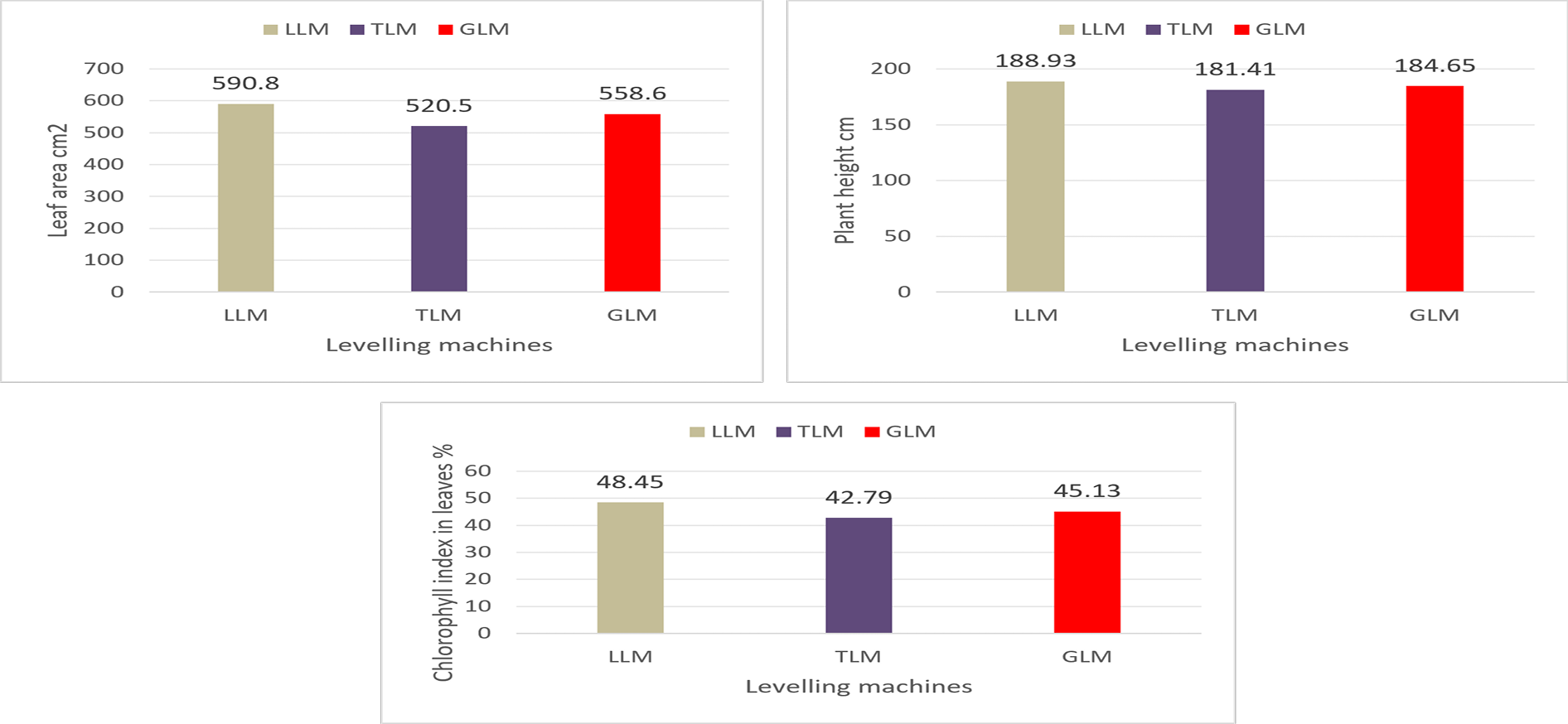
Figure 11. The LLM treatment increased vegetative growth (188.93 cm, 590.8 cm2, 48.45%), TLM (181.41 cm, 520.5 cm2, 42.79%) and GLM (184.65 cm, 558.6 cm2, 45.13%). This is due to the levelling machine effect on the soil by levelling its surface, improving aeration, and reducing moisture loss, which leads to increased root spread and more uniform distribution of water and fertilizers. This, in turn, results in increased vegetative growth ). This is (Shathar and Alsharifi., 2023) confirmed, that the leveling process plays a vital role in regulating plant growth and maintaining soil moisture, which in turn improves the plant’s vegetative condition during the growing season.
Yield parameters
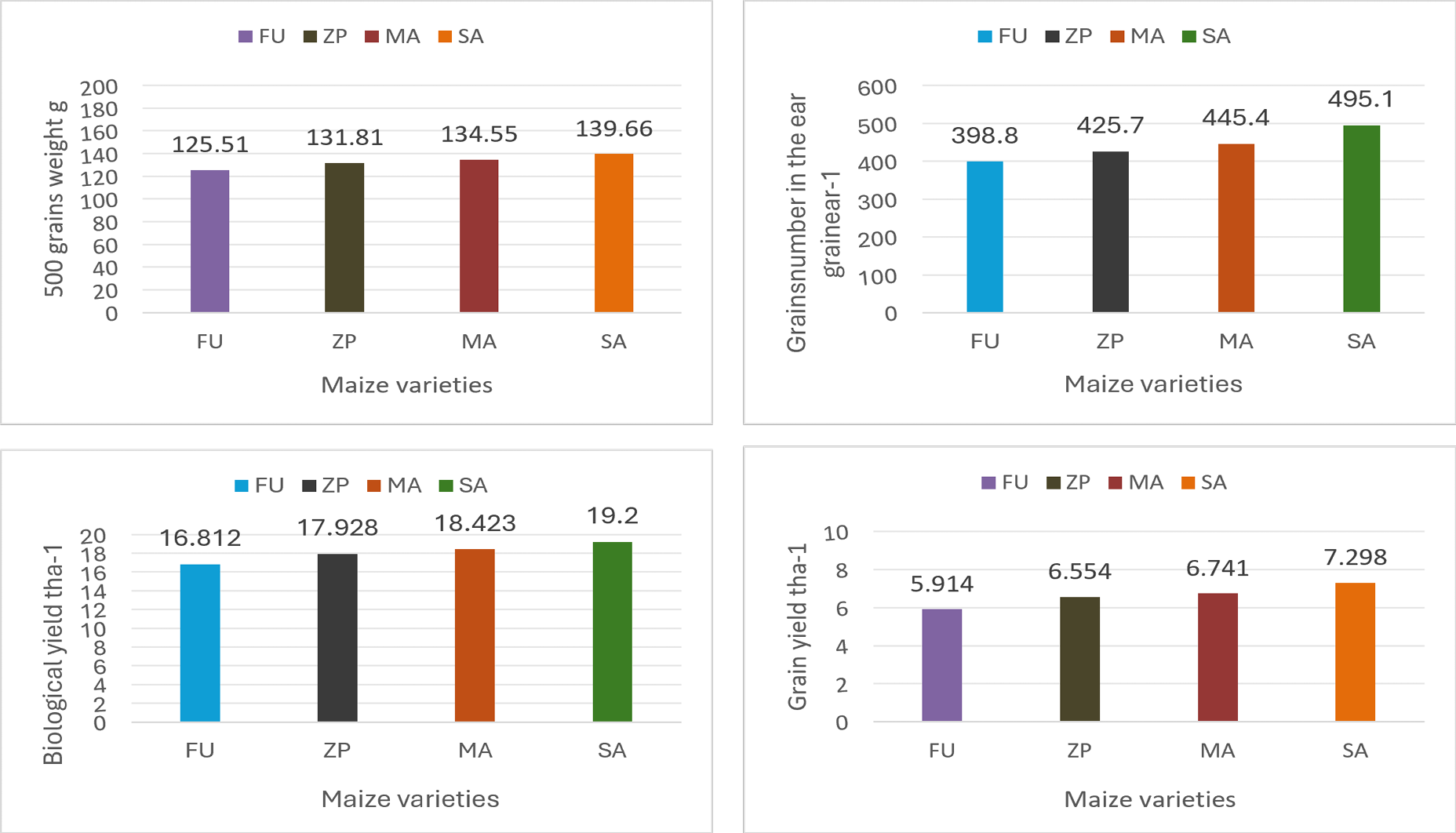
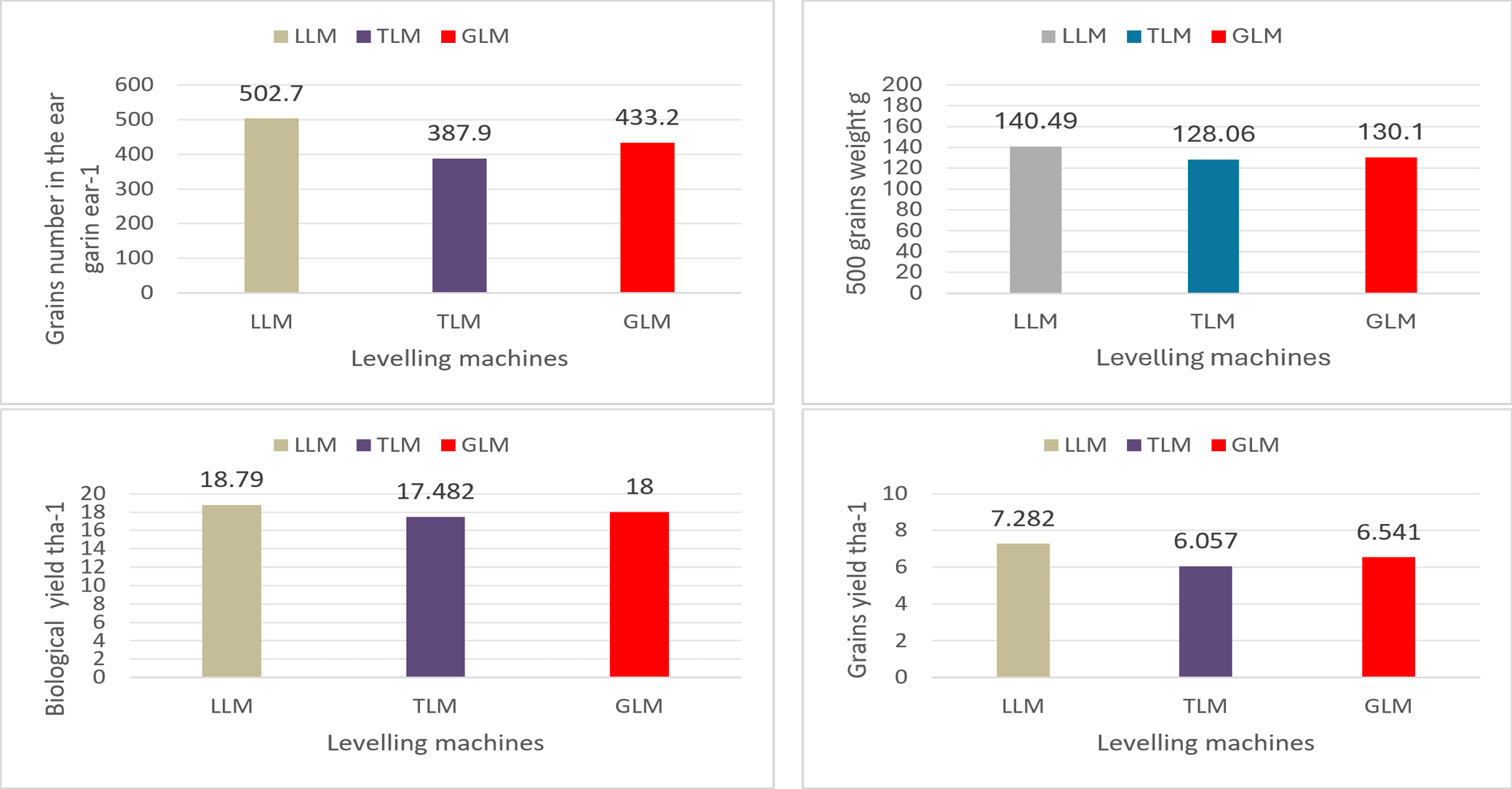
Table 6, demonstrate significant effects (p < 0.05) of maize varieties , levelling machines, and their interaction on maize yield parameters. The optimal treatment combined levelling machine LLM type with SA variety, achieving record values (568.9 grain ear-1, 139.66149.77 g, 8.268 t·ha-¹, 20.093 tha-1), demonstrating synergistic effects between levelling management and nutrient availability.
Table 6: Effect of levelling machines on the yield parameters for four maize varieties.
|
Varieties |
Levelling machines |
Yield characteristics |
|||
|
GNE |
500 GW5 |
GY |
BY |
||
|
FU |
LLM |
449.1 |
133.26 |
6.166 |
17.263 |
|
TLM |
349.1 |
120.60 |
5.458 |
16.300 |
|
|
GLM |
397.8 |
122.69 |
6.119 |
16.873 |
|
|
ZP |
LLM |
491.8 |
138.42 |
7.733 |
18.500 |
|
TLM |
374.6 |
127.79 |
6.007 |
17.383 |
|
|
GLM |
410.7 |
129.21 |
6.484 |
17.900 |
|
|
MA |
LLM |
500.5 |
140.50 |
6.962 |
19.303 |
|
TLM |
401.7 |
130.77 |
6.219 |
17.983 |
|
|
GLM |
434.0 |
132.37 |
6.480 |
17.984 |
|
|
SA |
LLM |
568.9 |
149.77 |
8.268 |
20.093 |
|
TLM |
426.3 |
133.09 |
6.545 |
18.263 |
|
|
GLM |
490.1 |
136.12 |
7.082 |
19.243 |
|
|
V |
FU |
398.8 |
125.51 |
5.914 |
16.812 |
|
ZP |
425.7 |
131.81 |
6.741 |
17.928 |
|
|
MA |
445.4 |
134.55 |
6.554 |
18.423 |
|
|
SA |
495.1 |
139.66 |
7.298 |
19.200 |
|
|
LM |
LLM |
502.7 |
140.49 |
7.282 |
18.790 |
|
TLM |
387.9 |
128.06 |
6.057 |
17.482 |
|
|
GLM |
433.2 |
130.10 |
6.541 |
18.00 |
|
|
LSD= 0.05 |
V |
10.23 |
1.137 |
0.141 |
0.135 |
|
LM |
9.69 |
1.010 |
0.164 |
0.181 |
|
|
V*LM |
16.78 |
1.845 |
0.243 |
0.243 |
|
Grains number in the ear ;GNE, 500 grains weight; 500GW, grains yield;GY, biological yield ; BY.
Figure 12. The LLM treatment increased yield parameters (grains number in the ear; 502.7grain ear-1,500 grains weight; 140.49 g, grains yield; 7.282 tha-1,biological yield; 18.790tha-1), TLM (387.9grain ear-1, 128.06 g, 6.057 tha-1, 17.482 tha-1) and GLM (433.2grain ear-1, 130.10 g, 6.541 tha-1, 18.00 tha-1). Soil leveling results in optimal water distribution, delivering it evenly to all parts of the field. This improves plant health by allowing for the uncompromised absorption of all nutrients, enhancing photosynthesis, and promoting more uniform crop growth due to the consistent and limited water supply, thus increasing plant productivity ; .
Figure 13. Among maize varieties treatments, the SA variety greatest performance, producing 495.1 grain ear-1, 139.66 g, 7.298 t·ha-¹, 19.200 tha-1, significantly exceeding FU (398.8 grain ear-1, 125.51 g, 5.914 t·ha-¹, 16.812 tha-1), ZP (425.7 grain ear-1, 131.81 g, 6.741 t·ha-¹, 17.928 tha-1 and MA (445.4 grain ear-1, 134.55 g, 6.554 t·ha-¹, 18.423 tha-1). Increased in yield parameters is due to genetic differences among corn varieties ; .
Conclusions and Recommendations
The study demonstrated that a planting distance of SA variety significantly outperformed FU, ZP and MA across all measured growth and yield parameters.
Table 7: Variance analysis for vegetative growth and yield traits
|
Source |
df |
Plant heigh/t |
Leaf area |
Chlorophyll Index in .leaves |
Grain number.in the ear |
500 grains weight |
Grain. yield |
Biological yield |
|
C.Varieties |
3 |
863.20** |
49.40** |
188.35** |
547.96** |
670.73** |
217.16** |
202.58** |
|
L.Machines |
2 |
438.44** |
329.20** |
147.96** |
139.51** |
236.96** |
142.80** |
484.88** |
|
C.V*L.M |
6 |
13.71** |
15.07** |
N.S |
3.75* |
6.00** |
16.97** |
12.50 |
|
C.V:- Corpse Varieties L.M:- Levelling machines |
||||||||
Among levelling treatments, the LLM showed superior results compared to TLM and GLM . The high effect of Laser levelling machine with SA variety produced optimal execution, proposition this incorporation as the most effective management strategy for ,maize cultivation under similar conditions.
Acknowledgments
The researchers extend their thanks and appreciation to the professors of the Field Crops Department at AlQasim Green University for their valuable feedback and follow-up in completing this study.
Novelty Statement
Leveling methods are a crucial procedure for corn crops; they ensure the irrigation water even distribution, increased fertilizer efficiency, improve water use efficiency, and enhance growth characteristics and final yield.
Authors Contributions
Alaa K, Hussein: Writing - Following up on the proposed research and data collection, in addition to conducting all steps of the proposed experiment.
Mohammed. Y. Merhij Alsharifi: Validation; Writing – Review and Editing; Visualization; Validation.
Salih K. Alwan Alsharif: Proposed the research and finalizing the manuscript and analysis and drafted the manuscript.
All authors provided critical feedback and helped to shape the manuscript.
Generative AI or AI assisted technology statement
The author’s declare that no Gen AI was used in the creation of this manuscript.
Conflict of interest
The authors declares that there is no conflict of interests regarding the publication of this article .
Figures
Study site
Soil topography, and readings taking method Topographic surveying
Network diagram for MAST before making leveling process.
Laser leveling machine
Readings obtained using levelling machine ( Laser type)
Tablet leveling machine
Readings obtained using levelling machine ( Tablet type)
Grader leveling machine
Readings obtained using levelling machine ( Grader type)
Effect of maize varieties on the maize vegetative growth
Effect of levelling machines on the maize vegetative growth
Effect of maize varieties on the maize yield parameters
Effect of levelling machines on the maize yield parameters
References
- Alaamer.S.A. and Alsharifi. S.A. (2020). Affecting mechanical on some growth characteristics for maize , SYN5018 variety .Plant Archives 20(2); 1150-1155 .
- Alaamer. S, Saldani. S.M, Alsharifi S.K. (2026). Technical applications of fertilizer combinations in cotton productivity through automated sensor-based subsurface drip irrigation system. Forest Science and Technology.2026. doi;10.1080/21580103.2026.2633235
- Amer, K.Z., A. Azawi, H.A. Jabur, A.A.G. Al-Shammary, S.K. Alsharifi. 2025. The impact and analysis of mechanical factors of the mechanized unit on the production of “Vigna radiata L.” crop. Nat. Eng. Sci., 10(1): 418- 424. http://doi:10.28978/nesciences.1651195.[CrossRef]
- Amer, K.Z., H.A. Jebur, K. AL-Halfi. 2021. Evaluating performance indicators of mechanized unit and maize production. Ind. J. Ecol., 48 Special Issue (17): 297-300.
- Anang, B.T., E.O. Dokyi, B.O. Asante, S.A. Donkoh. 2022. Technical efficiency of resource-poor maize farmers in northern Ghana. Open Agricult., 2022: 7(1):69–78. http:// doi: 10.1515/opag-2022-0075[CrossRef]
- Alaamer, S.A., S.K. Alsharifi, A.H. Khalil. 2023b. Sustainable use of sub-surface drip irrigation system for corn growth and productivity. AIP Confer. Proceed., 2776: 040015; https://doi.org/10.1063/5.0135994.[CrossRef]
- Alaamer, A., S.k. Alsharifi, A.T. Al-Sultani. 2023a. Effect of Subsurface Drip Irrigation System and Two Levels Nitrogen Fertilizer on Corn Growth and Yield. IOP Confer. Series: Earth Environ. Sci., 1158(6): 062010. https://doi 10.1088/1755-1315/1158/6/062010.
- Alaamer, S.A., S.K.A. Alsharifi, N. Shtewy. 2022. Wheat parameters under influence of the depths and cultivation machinery. IOP Conf. Ser. Earth Environ. Sci., 1060(1): 012131. http://doi:10.1088/1755 1315/1060/1/012131.2022.[CrossRef]
- Alaamer, S., S.K. Alsharifi, N. Shtewy. 2024. Productivity of some beard wheat cultivars under the influence of irrigation methods. IOP Confer. Series: Earth Environ. Sci., 1371(3): 032012. http://doi:10.1088/1755 1315/1371/3/032012.2024[CrossRef]
- Aljibouri, M.A., S.K. Alsharifi, and S.A. Alaamer. 2022. A test of the threshing machine (LMS type) at different feed rates and speeds on some corn properties. IOP Confer. Ser. Earth Environ, Sci., 1060(1): 012133. doi: http://doi: 10.1088/1755-1315/1060/1/012133[CrossRef]
- Aljibouri, M.A. and S.K. Alsharifi. 2019. Evaluation of Local Design Machine for Corn Threshing. Ind. J. Ecol., 46(4): 913-920 .
- Alsharifi, S.K.A., S.A. Alaamer, A.H. Almushidy. 2022. Performance evaluation of local design machine LDSM Type on productivity and growth of wheat. IOP Confer. Ser. Earth Environ. Sci., 1060(1): 012132. http:// doi:10.1088/1755-1315/1060/1/012132.[CrossRef]
- Al-Sharifi, S.K., A. Alaamer, S.M.K. Saldani, 2025. Wheat crop productivity requirements using modern irrigation technology. CIGR J., 27(3): 136 – 149.
- Alsharifi, S.K.A., N. Shtewy, S.A. Alaamer. 2021. Affecting mechanical on some growth properties for corn, MAHA cultivar. IOP Conf. Seri.: Earth Environ. Sci., 735(1): 012009. http://doi. 10.1088/1755-1315/735/1/012009
- Chen, G., L. Hu, X. Xiwen Luo, P. Wang, J. He, P. Huang, R. Zhao, D. Feng. T. Tu. 2024. A review of global precision land-leveling technologies and implements: Current status, challenges and future trends Author links open overlay panel. Comput. Electron. Agric., 220: 108901. https://doi.org/10.1016/j.compag.2024.108901[CrossRef]
- Das, A., M.D. Lad and A.L. Chalodia. 2018. Effect of laser land leveling on nutrient uptake and yield of wheat, water saving and water productivity. J. Pharmacog. Phytochem., 7(2): 73-78.
- Guevara, M.D., R.A. Armindo, L.C. Timm, L.C. Faria. 2022. Examining the land leveling impacts on the physical quality of lowland soils in Southern Brazil. Soil Tillage Res., 215(5): 105217. doi: http://doi: 10.1016/j.still.2021.105217[CrossRef]
- Ivanova, A.M., D. Plamenov, P. Naskova, P. Yankova. 2023. Research on the effect of different types of fertilization on the maize (Zea mays L.). Annu. J. Tech. Univ. Varna. Bulg., 2023, 7: 44–51. https://doi:10.29114/ajtuv.vol7.iss1.282[CrossRef]
- Januszkiewicz, R., G. Kulczycki, E. Sacała, C. Kabała. 2025. Effect of Nutrient Forms in Foliar Fertilizers on the Growth and Biofortification of Maize on Different Soil Types. Agron., 15(6): 1482. https://doi.org/10.3390/agronomy15061482[CrossRef]
- Jing Y., C. Luo G. Liu. 2022. Multiobjective path optimization for autonomous land levelling operations based on an improved MOEA/D-ACO. Computers and Electron. Agric., 197: 2022, 106995. https://doi.org/10.1016/j.compag.2022.106995[CrossRef]
- Khangura. R., D. Ferris W. Wagg J. Bowyer. 2023. Regenerative Agriculture—A Literature Review on the Practices and Mechanisms Used to Improve Soil Health. Sustain., 2023, 15(3): 2338; https://doi.org/10.3390/su15032338[CrossRef]
- Kodua, T.T., E.E. Onumah, A. Mensah-Bonsu. 2022. Technical efficiency of improved and local variety seed maize farms in Ghana: a meta-frontier analysis. Cogent Econ Finan., 10(1): 2022858. doi: http://doi: 10.1080/23322039.2021.2022858.[CrossRef]
- Kumari, R., P. Kumari, B. Sharma. 2025. Laser land levelling and double row planting improves productivity, water use efficiency and profitability of post monsoon sorghum in black soils. Ind. J. Soil Conserv., 53(1):83-88. http://doi:10.53550/ijsc.v53.i1.192[CrossRef]
- Lamichhane, P., M. Hadjikakou, K.K. Miller, and B.A. Bryan. 2022. Climate change adaptation in smallholder agriculture: Adoption, barriers, determinants, and policy implications. Mitigat. Adaptat. Strateg. Glob. Chan., 27(6): 32 http://doi:10.1007/s11027-022-10010-z[CrossRef]
- Martey, E., P.M. Etwire, and J.K. Kuwornu. 2020. Economic impacts of smallholder farmers’ adoption of drought-tolerant maize varieties. Land Use Poli., 94(1): 1-12. http://doi 10.1016/j.landusepol.2020.104524
- Majebele, J.J., M. Yang M. Mateen, A.A. Tola. 2025. Mechanization and maize productivity in tanzania’s ruvuma region: a python-based analysis on adoption and yield Iimpact. Agric., 15(13): 1412; https://doi.org/10.3390/agriculture15131412[CrossRef]
- Mdoda, L., N. Tamako, S. Lungile, L.S. Gidi, and D. Naidoo. 2025. Evaluating the impact of improved maize varieties on agricultural productivity and technical efficiency among smallholder farmers in the Eastern Cape, South Africa: an empirical analysis. Biotechnol. Agric. Food Chain., 16(1): 272-304. https://doi.org/10.1080/21645698.2025.2476667[CrossRef]
- Merza N.A.R., H.A. Atab, Z.H. Al-Fatlawi, S.K.A. Alsharifi. 2023. Effect of irrigation systems on rice productivity. SABRAO. J. Breed. Genet., 55(2): 587-597. http://doi.org/10.54910/sabrao2023.55.2.30[CrossRef]
- Mohammed, Y., H.A. Atab, S.K.A. Alsharifi. 2022. Response of corn at different levels of nitrogen fertilizer and cultivation distances. IOP Conf. Ser.: Earth Environ. Sci., 1060(1): 012134. http://doi:10.1088/1755-1315/1060/1/012134.[CrossRef]
- Miao, Q., J.M. Gonçalves, R. Li, D. Gonçalves, T. Levita, H. Shi. 2021. Assessment of precise land levelling on Ssurface irrigation Ddevelopment. Impact. Maize Water Product. Econ. Sustain., 13: 1191. https://doi.org/10.3390/su13031191[CrossRef]
- Moi, S. and G. Dutta. 2020. Optimization of potassium fertilization for maize (Zea mays L.) in new alluvial zone of West Bengal. Int. J. Curr. Microbiol. App. Sci., 9(7): 1518-1523. http:// doi 10.20546/ijcmas.2020.907.175
- Mankhi, A.A. and H.A. Jebur. 2022. A study some technical indicators under Impact tillage depth and disk harrow angle of the compound machine. IOP Conf. Series: Earth Environ. Sci. IOP Conf. Series: Earth Environ. Sci., 1060(1): 012137. http://doi: 10.1088/1755-1315/1060/1/012137[CrossRef]
- Munialo, S., A.S. Dahlin, M.C. Onyango, W. Oluoch-Kosura, H. Marstorp, and I. Öborn. 2020. Soil and management-related factors contributing to maize yield gaps in western Kenya. Food Ener. Secur., 9: e189. http:// doi: 10.1002/fes3.189[CrossRef]
- Mueen, A.S., Alaamer, A.I. Sh. and S.K.A. Alsharifi. 2025. Effect of Agaricus mushroom spent residues on maize production under a drip irrigation system. Bulgar. J. Agric. Sci., 31(6): 1098–1110.
- Nanganoa L.T, Ngome F.A, Suh .C, Basga S.D, (2020) Assessing soil nutrients variability and adequacy for the cultivation of maize, cassava, and sorghum in selected agroecological zones of Cameroon. Int J Agronom 4:1–20. https://doi.org/10.1155/2020/8887318[CrossRef]
- Nawaz, M., J. Sun, S. Shabbir, W.A. Khattak, G. Ren, X. Nie, Y. Bo, Q. Javed, D. Du, and C. Sonne. 2023. A review of plants strategies to resist biotic and abiotic environmental stressors. Sci. Tot. Environ., 900: 165832. https://doi.org/10.1016/j.scitotenv.2023.165832[CrossRef]
- Nayyef, H.R. and H.S. Al-Laghawi. 2024. The Effect of the distance between drippers and drainage on the productivity and growth of tomatoes inside greenhouses. In IOP Confer. Ser.: Earth Environ. Sci., 1371(8): 082032. http://doi: 10.1088/1755-1315/1371/8/082032[CrossRef]
- Prasanna, B.M., J.E. Cairns, P. Zaidi, Y. Beyene, D. Makumbi, M. Gowda, C. Magorokosho, M. Zaman-Allah, M. Olsen, and A. Das. 2021. Beat the stress: Breeding for climate resilience in maize for the tropical rainfed environments. Theoret. Appl. Genet., 134(6): 1729–1752. http://doi 10.1007/s00122-021-03773-7
- Rácz, D., L. Sz˝oke, B. Tóth, B. Kovács, É. Horváth, P. Zagyi, L. Duzs, A. Széles. 2021. Examination of the productivity and physiological responses of maize (Zea mays L.) to nitrapyrin and foliar fertilizer treatments. Plant., 10(11): 2426. https://doi.org/10.3390/plants10112426[CrossRef]
- Ramya, S.M.S., N. Mahesh, P. Revathi, B. Raju. 2022. Effect of laser land levelling and establishment methods on economics and water productivity of rice. Environ. Ecol., 40(1): 1-5.
- Shather, A., Shtewy, N. Alsharifi, S.K. Alwan. 2024. Wheat response to the nitrogen fertilizers in productivity. SABRAO J. Breed. Genet., 56(6): 1-12. http://doi.org/10.54910/sabrao2024.56.6.[CrossRef]
- Shathar, A.A., S.K.A. Alsharifi. 2023. Levelling machines and its effect on the growth characteristics and productivity for two corn cultivars. Bulg. J. Agric. Sci., 29(3): 552–563
- Shtewy. N, Ibrahim. J.H, Alsharifi. S.K. (2020). Effect of mechanical properties on some growth characteristics for wheat crop .Plant Archives,. 20 (1); 3141-3148.
- Singh, Y.P., S.T. Sandeep, S. Singh. 2021. Effect of precise levelling, tillage and seed sowing methods of pearlmillet based cropping systems on productivity and soil quality in dryland area. Soil Tillage Res., 212: 105069. https://doi.org/10.1016/j.still.2021.105069[CrossRef]
- Tas, T. and A. Mutlu. 2021. Morpho-physiological effects of environmental stress on yield and quality of sweet corn varieties (Zea mays L.). Peer J., 9: 1-22.
- Vanisree, S., Anjali K. Ch, D. Raju, S. Rajaand, M. Sreedhar. 2013.Variability, Heritability and association analysis in scented rice. J. Biol. Scient. Opin., 1(4): 347 -352. http://doi: 10.7897/2321-6328.01414.
- Zabel, F., C. Müller, J. Elliott, S. Minoli, J. Jägermeyr, J.M. Schneider, J.A. Franke, E. Moyer, M. Dury, and L. Francois. 2021. Large potential for crop production adaptation depends on available future varieties. Glob. Chan. Biol., 27(16): 3870–3882. http://doi:10.1111/gcb.15649[CrossRef]
- Zapałowska, A. and W. Jarecki. 2024. The impact of using different types of compost on the growth and yield of corn. Sustain., 16(12): 511. https://doi.org/10.3390/su16020511[CrossRef]
Services
Article usage statistics
Loading…