Research Article · Volume 14, Issue 1, 8 January 2026 · Open Access
Resveratrol Attenuates the Endometriosis-Mediated Inflammatory and Oxidative Stress Responses
·
Affiliations & Notes ⌄
1Department of Physiology, Biochemistry and Pharmacology, College of Veterinary Medicine, University of Baghdad, Bagdad, Iraq
2Department of Agriculture in Babylon, Veterinary Affairs Administration, Ministry of Agriculture, Babylon, Iraq. *Correspondence | Hasan Alghetaa, Department of Physiology, Biochemistry and Pharmacology, College of Veterinary Medicine, University of Baghdad, Bagdad, Iraq
The present study demonstrated that resveratrol (RES), a natural AhR agonist, it was upregulated Ahr expression in splenocytes, reduced systemic and peritoneal interleukin-1 beta (IL-1β) levels, decreased oxidative stress marker (MDA), enhanced total antioxidant capacity, and normalized WBC and lymphocyte counts.
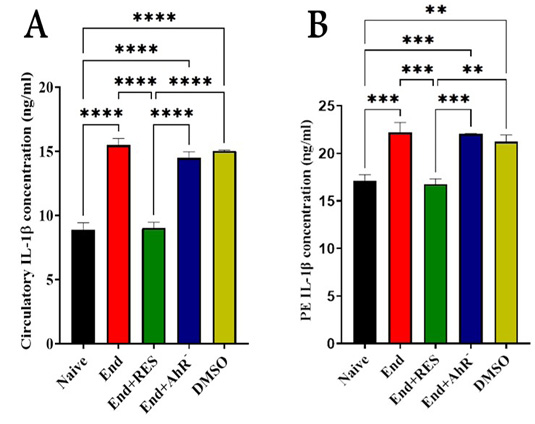
In our study, IL-1β was significantly increased in both serum and peritoneal exudate of END, END+AhR‾, and END+DMSO rats, indicating a sustained pro-inflammatory state.
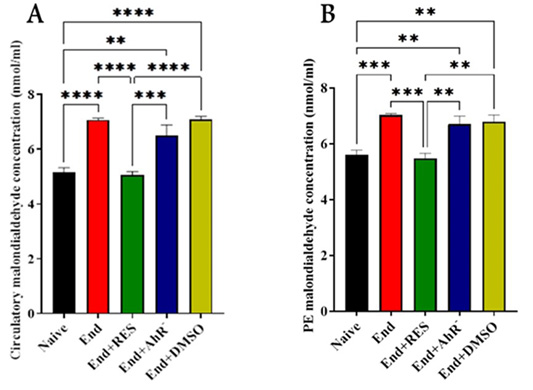
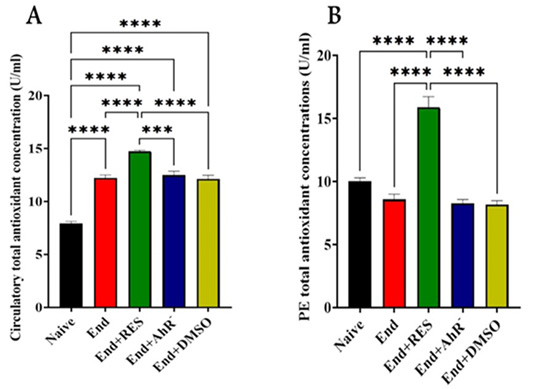
The present study indicated significantly increased of MDA levels in the END, END+AhR‾, and END+DMSO groups, while RES restored MDA to near-normal levels and enhanced total antioxidant capacity in both serum and peritoneal compartments.
Our findings indicates that resveratrol may serve as a promising therapeutic agent for mitigating inflammation and oxidative stress associated with induced endometriosis in a rat model by upregulating AhR expression.
Selected from the article's own text.
Abstract
Endometriosis (END) is a long-term gynecological illness that is marked by the implantation of endometrial tissue in extra-pelvic sites. It is commonly accompanied by pelvic inflammation, oxidative stress, immunological dysregulation, and infertility. Emerging evidence implicates the aryl hydrocarbon receptor (AhR), a ligand-activated transcription factor, in the regulation of immune and inflammatory pathways in various diseases, including END. Resveratrol (RES), a natural AhR modulator, has demonstrated anti-inflammatory and antioxidant properties that may be therapeutically relevant in this context. This study aimed to evaluate the impact of AhR modulation by RES and the AhR antagonist CH223191 on inflammatory status, redox system balance, and selected hematological parameters in a rat model of induced endometriosis. To this point, adult female rats were allocated into five groups as follows; Naïve (control) received no treatment. END, endometriotic rats without treatment. END+RES, endometriotic rats received RES. END+AhR‾, endometriotic rats received CH223191. END+DMSO, endometriotic rats received vehicle. Serum and peritoneal exudate (PE) samples were collected for downstream analysis. Splenic Ahr gene expression was assessed by qPCR. Data were analyzed using One-way ANOVA fallowed by Tukey’s multiple comparisons test to compare group means. The results showed that resveratrol treatment significantly (P<0.01) upregulated Ahr gene expression in splenocytes, whereas CH223191 significantly (P<0.05) downregulated it. Rats in the END, END+AhR‾, and END+DMSO groups revealed significantly (P<0.01) elevated levels of interleukin-1beta (IL-1β) and Malondialdehyde (MDA) in serum and PE along with significant (P<0.01) increase in circulating WBC and lymphocyte counts compared with the Naïve and END+RES groups. Altogether, this study concludes that AhR modulates the inflammatory response in endometriosis and that RES might have a potential novel therapeutic effect in endometriosis through AhR pathway.
Keywords | Endometriosis, Resveratrol, Aryl hydrocarbon receptor, CH223191, Inflammation, Oxidative stress, Rat model
Introduction
Aryl Hydrocarbon receptor (AhR) is a ligand-dependent transcription factor that belongs to the basic helix-loop-helix/Per-ARNT-Sim protein family . It is widely expressed in multiple tissues throughout the body . In its dormant state, AhR localizes in the cytoplasm in association with chaperone proteins, including heat shock protein 90, P23, and AhR interacting protein. After interacting with exogenous or endogenous ligands, AhR migrates into the nucleus and forms a heterodimer with AhR nuclear translocator. This heterodimer then binds to xenobiotic response elements in the promoter regions of target genes, leading to the transcriptional activation of genes that participate in xenobiotic metabolism . In addition to its traditional contribution to xenobiotic metabolism, AhR is now recognized as a key mediator of various physiological processes, such as cell differentiation, immune response, and reproduction ; . Dysregulation of AhR signaling may contribute to hormonal imbalance and immunological and inflammatory disorders linked with the pathogenesis of several conditions, including autoimmune disorders, cancers, and reproductive illnesses, including endometriosis ; ; ; . Also, it can contribute to the development of gut dysbiosis and disruption of the estrobolome, which can disrupt estrogen metabolization and trigger inflammation and immune modulation, leading to increased endometriosis severity , 2023b).
Endometriosis (END) is a chronic gynecological disease marked by abnormal localization of endometrial-like tissue, typically on pelvic structures, leading to chronic pelvic pain, infertility, and impairment in quality of life . The pathogenesis is complex, encompassing genetic, epigenetic, immunological, and molecular factors ; . Several theories have been proposed to explain the development of endometriotic lesions. Retrograde menstruation suggests that menstrual blood flows backward into the pelvic cavity, allowing endometrial cells to implant. coelomic metaplasia proposes that peritoneal cells can transform into endometrial-like cells. Meanwhile, the stem cell recruitment hypothesis suggests that stem cells from the bone marrow or endometrium migrate to ectopic sites and contribute to lesion formation . The molecular pathways involve PI3K/AKT, NF-κB, Wnt/β-catenin, and TGF-β that induce endometrial lesion proliferation, angiogenesis, and apoptosis resistance ; . It remains a disease without definitive cure, and the current therapeutic strategies are directed exclusively on symptomatology . Conventional approaches include hormonal treatments, analgesics, and surgical interventions are the main steps to relieve pain, reduce lesion progression, and improve fertility ; . However, these options are often associated with significant limitations, including adverse side effects, therapeutic resistance, and high recurrence rate . In an attempt to achieve these challenges, increasing attention has been directed toward the use of natural compounds as complementary or alternative therapeutic options. These compounds, such as curcumin, naringenin, apigenin, genistein, butyrate, quercetin, and resveratrol, show diverse biological effects that are related to the pathophysiology of endometriosis. They exhibit anti-inflammatory, antioxidant, anti-angiogenic, anti-proliferative, pro-apoptotic activities, and phytoestrogenic effects ; ; , together resulting in lesion suppression, regulation of immune responses, and alleviation of pelvic pain.
Resveratrol (RES), a polyphenolic molecule with the ability to modulate AhR, is naturally found in multiple dietary sources, including grapes, peanuts, berries, and red wine . Comprehensive studies have shown that RES exhibits a variety of biological activities, such as anti-cancer effects, cardio-protection, neuroprotection, vasorelaxation, phytoestrogenic properties, alleviation of pulmonary inflammation, bone health and improvement of reproductive health ; ; ; ; . RES is evolving as a prospective therapeutic agent for END due to its ability to regulate essential pathogenic mechanisms including, anti-inflammatory and antioxidant properties, reducing cellular proliferation and angiogenesis, inducing apoptosis of ectopic endometrial cells, and regulating estrogen receptor signaling ; . Through these multi-pathways, RES offers a promising approach for managing the intricate pathophysiology of endometriosis, suggesting it’s a complementary or alternative therapeutic approach ; .
Materials and Methods
Experimental animals
This research was conducted in the laboratory and animal facility of the College of Veterinary Medicine at the University of Baghdad. Eighty-four adult female rats (Rattus norvegicus), aged 8 to 10 weeks and weighing roughly 180 to 220 grams, were employed. All animals were housed in a specialized pathogen-free environment with regulated conditions (22±2ºC, 12-hour light/dark cycle), with unrestricted access to standard food and water. Before research, all rats experienced a two-week acclimation phase. The animal protocols received approval from the Institutional Animal Care and Use Committee at the College of Veterinary Medicine, University of Baghdad, obtaining ethical clearance (AUP# P.G.407) in compliance with international standards for the care and use of laboratory animals.
Induction of endometriosis lesion
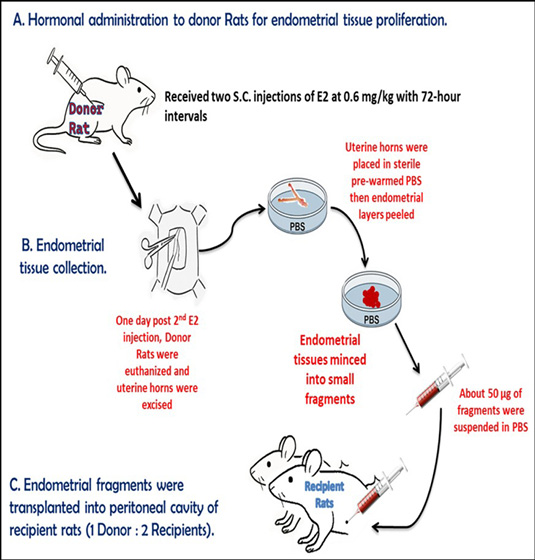
Figure 1 illustrates the induction of experimental endometriosis. Briefly, experimental rats were randomly assigned to the subsequent groups; Naïve group (n=12): served as a non-endometriotic, untreated control group. Donor group (n=24); euthanized to provide endometrial tissue for transplantation. Recipient group (n=48): underwent to experimental induction of endometriosis. Endometriosis (END) was induced in recipient rats according to the methodology established by ; ; , with certain alterations. Donor rats received two subcutaneous injections of 0.6 mg/kg estradiol benzoate (E2) at three-day intervals to stimulate endometrial growth . One day after the final injection, donor rats were deeply anesthetized with a ketamine and xylazine combination (75mg/kg and 10mg/kg, respectively, administered intraperitoneally) and euthanized with cervical dislocation upon complete loss of reflexes . A midline laparotomy was conducted to excise the uterine horns, which were subsequently immersed in sterile, pre-warmed phosphate-buffered saline (PBS). The horns were longitudinally incised with precision scissors, and the endometrial layer was meticulously dissected with tiny forceps. The endometrium was minced into ̴ 1mm² fragments using a fine scalpel and suspended in sterile PBS. Approximately 50 µg of endometrial tissue was injected into the peritoneal cavity of each recipient rat using a sterile syringe .
One donor rat was employed to prepare transplants for two recipient rats. All rats with endometrial transplants were administered AhR modulation substances the next day after transplantation, in accordance with the experimental design, which will be explained next. Naïve rats received a 500 µL intraperitoneal injection of PBS.
Treatments preparation
Resveratrol (purity ≥ 98%) and CH223191 (purity ≥ 95%) powders were purchased from Hebei Guanlang Biotechnology, China. Both compounds were initially dissolved in DMSO and subsequently diluted with distilled water to create the working solutions at the appropriate concentration, as described in previous studies .
The Endometriotic Rats (n=48) were randomly divided into four subgroups (n=12), as follows: END; endometriotic rats that received no treatment, serving as control group. END+RES; endometriotic rats were given resveratrol (RES) orally at a dose of 100mg/kg/day for four weeks . END+AhR‾, endometriotic rats received intraperitoneal injections of CH223191, an Aryl hydrocarbon receptor antagonist (AhR‾), at a dose of 10mg/kg (0.1ml/100g) every three days for four weeks . END+DMSO; endometriotic rats administered dimethyl sulfoxide (DMSO), the vehicle for AhR‾, via intraperitoneal injection at a volume of 0.1ml/100g body weight every three days for four weeks ; to match the volume used in the END+AhR‾ group to normalize any biological effects of the vehicle.
Sample collection and analysis
At the end of the experiments, five rats from each group were euthanized under deep anesthesia (xylazine-ketamine overdose) and the following samples were collected; blood samples were obtained via cardiac puncture and processed for complete blood count (CBC) using an automated blood analyzer (Genix, USA) as well as for evaluating the serum concentrations of IL-1β, Malondialdehyde (MDA), and total antioxidant (TAO) levels using ELISA kits (BT LAB, China). Peritoneal exudates have been collected aseptically and analyzed for IL-1β, MDA, and TAO concentrations using ELISA kits (BT LAB, China). Approximately 10mg of spleen tissue was collected, mechanically homogenized, and preserved in 3ml of RNAlaterTM solution (Ambion, Austin, USA) and stored at -20°C until RNA extraction . Total RNA was reverse transcribed into cDNA using a One-Step RT-PCR Premix Kit (Bio-Rad, Hercules, CA, USA). The resulting cDNA was used for quantitative PCR (qPCR) to assess gene expression. Gapdh was employed as the housekeeping gene, and relative expression levels were calculated using the 2-ΔΔCt method. Primer sequences are listed in Table 1.
Table 1: Aryl hydrocarbon receptor (Ahr), and glyceraldehyde-3-phosphate dehydrogenase (Gapdh) primers with their reference IDs from NCBI database.
Gene
Primer 5`-3`
Reverse 5`-3`
NCBI accession No.
Ahr
GTC AGC CAT GGT CAG TCC TCA G
GCT CGG ACT CTG AAA CTT GCT T
NM_013149.3
Gapdh
AGA GAC AGC CGC ATC TTC TT
ATG AAG GGG TCG TTG ATG GC
NM_021578.2
Statistical analysis
All data were analyzed using GraphPad Prism software (Version 10, 2024; San Diego, CA, USA; https://www.graphpad.com). One-way analysis of variance (ANOVA) was employed to evaluate statistical differences among multiple groups under various experimental conditions and treatments. Tukey’s multiple comparisons test was used to compare group means. The probability level less than 0.05 was considered statistically significant. Statistical differences among groups were marked as follows: *P<0.05, **P<0.01, ***P<0.001 and ****P<0.0001.
Results
Expression of Ahr gene in splenocytes
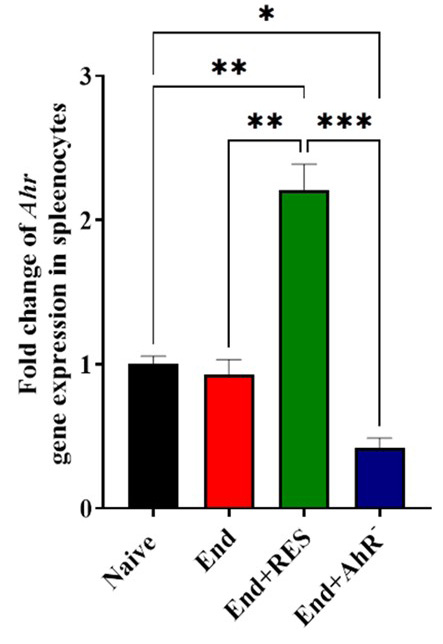
Analysis of Ahr gene expression in endometriotic rats revealed significant differences among the experimental groups (Figure 2). Statistical significance (P<0.05) upregulation of Ahr expression was observed in the END+RES group in comparison among the experimental groups, while treatment with the AhR antagonist CH223191 significantly (P<0.05) downregulated Ahr expression in the END+AhR‾ group compared with other experimental groups.
Interleukin-1beta (IL-1β) levels in circulation and peritoneal exudate (PE)
The concentrations of IL-1β (ng/ml) in the circulation and PE among the experimental groups are illustrated in Figure 3A, B, respectively. Statistical analysis indicated a significant (P<0.05) increase of IL-1β in the END, END+AhR‾, and END+DMSO groups compared to the Naïve and END+RES groups. No significant distinction was observed between the Naïve and END+RES groups or among the END, END+AhR‾, and END+DMSO groups.
Malondialdehyde (MDA) Levels in circulation and PE
The concentrations of MDA (nmol/ml) in the circulation and PE of the experimental groups are illustrated in Figure 4A, B, respectively. MDA levels were significantly (P<0.05) increased in the END, END+AhR‾, and END+DMSO groups in comparison with the Naïve and END+RES groups. However, no significant differences were detected between the Naïve and END+RES groups or among the END, END+AhR‾, and END+DMSO groups in either compartment.
Total antioxidant (TAO) levels in circulation and PE
The concentrations of TAO (U/ml) in the circulation and PE across the experimental groups are presented in Figure 5A, B, respectively. A significant (P<0.05) elevation in TAO levels was observed in both the circulation and PE of the END+RES group compared to all other experimental groups. In the circulation, TAO levels were significantly (P<0.05) elevated in the END, END+AhR‾, and END+DMSO compared to the Naïve group; however, no significant variations were detected among END, END+AhR‾, and END+DMSO groups. In the PE, TAO levels exhibited no significant variations among the Naïve, END, END+AhR‾, and END+DMSO groups.
Circulatory system counts of white blood cell (WBC) and lymphocyte
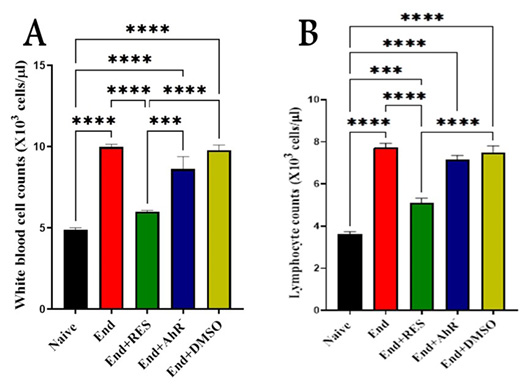
Figure 6A, B illustrates the counts of WBC (X 103 cells/µl) and lymphocyte (X 103 cells/µl), respectively. Significant increases (P< 0.05) in WBC and lymphocyte counts were observed in the ENDand END+DMSO groups compared to the Naïve and END+RES groups. No significant variations were detected in WBC counts between the Naïve and END+RES groups. However, the lymphocyte counts were significantly higher (P<0.05) in the END+RES group compared to the Naïve group. No significant differences were found among the END, END+AhR‾, and END+DMSO groups for any measured parameters.
Discussion
Endometriosis is recognized as a hormone-dependent, immuno-inflammatory, and oxidative condition with systemic implications. Recent interest has been given to the aryl hydrocarbon receptor (AhR), a ligand-activated transcription factor that normalizes xenobiotic metabolism, immunological responses, and oxidative stress pathways . The present study demonstrated that resveratrol (RES), a natural AhR agonist, it was upregulated Ahr expression in splenocytes, reduced systemic and peritoneal interleukin-1 beta (IL-1β) levels, decreased oxidative stress marker (MDA), enhanced total antioxidant capacity, and normalized WBC and lymphocyte counts. To further investigate the molecular basis underlying these systemic effects, quantitative PCR analysis was conducted, revealing that Ahr expression was significantly amplified in the splenocytes of resveratrol-treated rats and downregulated in CH223191-treated rats. This differential AhR regulation was correlated with differences in biochemical and hematological parameters, suggesting that a causal relationship between AhR activity and disease modulation ; . A basic feature of endometriosis is chronic inflammation, evidenced by elevated of IL-1β, a pro-inflammatory cytokine that promotes angiogenesis and lesion growth . In our study, IL-1β was significantly increased in both serum and peritoneal exudate of END, END+AhR‾, and END+DMSO rats, indicating a sustained pro-inflammatory state. On the other hand, resveratrol treatment significantly lowered IL-1β concentrations almost to those of naïve. IL-1β stimulates macrophages activation and lymphocyte proliferation . Therefore, the observed reduction in lymphocyte counts in RES-treated rats likely reflects suppression of IL-1β. This is consistent with RES known ability to inhibt NF-κB signaling, thereby reducing pro-inflammatory cytokines production, including IL-1β and TGF-β ; ; ; . Oxidative stress is another key pathogenic factor in endometriosis Elevate reactive oxygen species and lipid peroxidation products such as MDA are well demonstrated in human and animal experimental studies ; ; . The present study indicated significantly increased of MDA levels in the END, END+AhR‾, and END+DMSO groups, while RES restored MDA to near-normal levels and enhanced total antioxidant capacity in both serum and peritoneal compartments. RES effects have been linked to modulation Nrf2 and other redox-regulating pathways ; . Numerous studies confirm that RES improves the activity of important endogenous antioxidant enzymes, such as CAT, GSH-Px, and SOD, and reducing MDA in a dose-dependent manner to protect tissues against oxidative stress and inflammation ; ; ; . Furthermore, endometriotic rats exhibited increased WBC and lymphocyte counts in the END, END+AhR‾, and END+DMSO groups, consistent with systemic inflammation ; . RES normalized WBC counts to Naïve levels and reduced lymphocyte counts compared to untreated END groups. Interestingly, lymphocyte counts in the END+RES group remained slightly higher than naïve controls. This may reflect a partial immune rebalancing rather than full suppression, as RES immunomodulatory effects can downregulate excessive inflammatory lymphocyte activity while preserving baseline adaptive immune function ; . Therefore, the effectiveness of RES as an anti-inflammatory, antioxidant, anti-angiogenic, anti-invasive, anti-adhesive, and pro-apoptotic agent can impede disease progression and avert the spread of endometrial lesions ; ; ; . The strength of this study represented by inducing experimental endometriosis-like status in lab animal model to enable future studies to focus on the pathogenic mechanisms. However, some shortness had limited the potency of the results particularly the pathological investigation due to the difficulty of spotting the exact endometriotic-related lesions in peritoneal cavity as well as in the reproductive system.
Conclusion
This study highlights the crucial role of AhR signaling in the development and regulation of endometriosis. Our findings indicates that resveratrol may serve as a promising therapeutic agent for mitigating inflammation and oxidative stress associated with induced endometriosis in a rat model by upregulating AhR expression. In contrast, the inhibition of AhR via CH223191 did not provide protective effects, indicating the importance of receptor context and ligand-specific dependence in endometriosis. These data collectively offer foundational evidence about the therapeutic potential of AhR-targeted therapies in endometriosis. They also support the further exploration of RES and other natural AhR modulators as promising candidates for non-hormonal treatment approaches. Further investigation is warranted to elucidate the precise molecular pathways implicated in AhR-mediated endometriosis progression.
Acknowledgment
Not applicable.
Novelty Statement
This research article provides deep insight into the mechanistic roles of resveratrol in modulation inflammatory and oxidative stress markers associated with endometriosis.
Author’s Contribution
HA design, conceptualization, review the draft and last version of this manuscript. AA wrote the draft, revised and wrote the last version of this manuscript. Both HA and AA have reviewed and approved the submitted version of the manuscript.
Data availability
The data is available from the corresponding author in reasonable request.
Generative AI and AI-assisted technology statement
Authors disclose that they have not used any generative artificial intelligence or AI-assisted technology in forming this manuscript nor in generating its data.
Conflict of interest
The authors have declared that they have no conflict of interest regarding the publication of this article.
Figures
Figure 1:.
Experimental endometriosis induction in rats.
Figure 2:.
Fold changes in Ahr gene expression in endometrial tissue-transplanted rats in response to resveratrol and CH223191 treatments for 30 days. Naïve group: non-endometriotic rats (negative control). END group: untreated endometriotic rats (positive control). END+RES group: Endometriotic rats were treated with resveratrol (100mg/kg/day, orally). END+AhR‾ group: Endometriotic rats were treated with the AhR antagonist CH223191 (10mg/kg, intraperitoneally, every three days). Statistical analysis was conducted using One-way ANOVA followed by Tukey’s multiple comparisons test. n=3. *P<0.05, **P<0.01, and ***P<0.001.
Figure 3:.
Circulatory and peritoneal exudate (PE) concentrations of interleukin-1beta (IL-1β) following AhR signaling manipulation by using AhR ligands for 30 days in endometrial tissue transplanted rats (n=5). Naïve group: non-endometriotic rats (negative control). END group: untreated endometriotic rats (positive control). END+RES group: Endometriotic rats were treated with resveratrol (100mg/kg/day, orally). END+AhR‾ group: Endometriotic rats were treated with the AhR antagonist CH223191 (10mg/kg, intraperitoneally, every three days). END+DMSO group: Endometriotic rats administered vehicle control (DMSO, 0.1ml/100g body weight, intraperitoneally, every three days). (A) Circulatory IL-1β concentration (ng/ml) and (B) IL-1β concentrations in peritoneal exudate (ng/ml). Statistical analysis was conducted using One-way ANOVA followed by Tukey’s multiple comparisons test. Significant levels are: **P<0.01, ***P<0.001, and ****P<0.0001.
Figure 4:.
Circulatory and peritoneal exudate (PE) concentrations of Malondialdehyde (MDA) following AhR signaling manipulation by using AhR ligands for 30 days in endometrial tissue transplanted rats (n=5). Naïve group: non-endometriotic rats (negative control). END group: Untreated endometriotic rats (positive control). END+RES group: Endometriotic rats were treated with resveratrol (100mg/kg/day, orally). END+AhR‾ group: Endometriotic rats were treated with the AhR antagonist CH223191 (10mg/kg, intraperitoneally, every three days). END+DMSO group: Endometriotic rats administered vehicle control (DMSO, 0.1ml/100g body weight, intraperitoneally, every three days). A) Circulatory MDA concentration (nmol) and B) MDA concentrations in PE (nmol). Statistical analysis was conducted using One-way ANOVA followed by Tukey’s multiple comparisons test. Significant levels are: **P<0.01, ***P<0.001, and ****P<0.0001.
Figure 5:.
Circulatory and peritoneal exudate (PE) concentrations of total antioxidant (TAO) following AhR signaling manipulation by using AhR ligands for 30 days in endometrial tissue transplanted rats (n=5). Naïve group: non-endometriotic rats (negative control). END group: untreated endometriotic rats (positive control). END+RES group: Endometriotic rats were treated with resveratrol (100mg/kg/day, orally). END+AhR‾ group: Endometriotic rats were treated with the AhR antagonist CH223191 (10mg/kg, intraperitoneally, every three days). END+DMSO group: Endometriotic rats administered vehicle control (DMSO, 0.1ml/100g body weight, intraperitoneally, every three days). A) Circulatory MDA concentration (U/ml) and B) MDA concentrations in PE (U/ml). Statistical analysis was conducted using One-way ANOVA followed by Tukey’s multiple comparisons test. Significant levels are: ***P<0.001, and ****P<0.0001.
Figure 6:.
Counts of WBC and Lymphocyte following AhR signaling manipulation by using AhR ligands for 30 days in endometrial tissue transplanted rats (n=5). Naïve group: non-endometriotic rats (negative control). END group: untreated endometriotic rats (positive control). END+RES group: Endometriotic rats were treated with resveratrol (100mg/kg/day, orally). END+AhR‾ group: Endometriotic rats were treated with the AhR antagonist CH223191 (10mg/kg, intraperitoneally, every three days). END+DMSO group: Endometriotic rats administered vehicle control (DMSO, 0.1ml/100g body weight, intraperitoneally, every three days). (A) WBC counts (X 103 cells/µl) and (B) lymphocyte counts (X 103 cells/µl). Statistical analysis was conducted using One-way ANOVA followed by Tukey’s multiple comparisons test. Significant levels are: ***P<0.001, and ****P<0.0001.
References
Abdulla JM, Al-Okaily BN (2022). Histomorphometric and histopathological alterations of rat testis following exposure to hydrogen peroxide: Protective role of resveratrol supplement. Iraqi J. Vet. Med., 46: 17-23. https://doi.org/10.30539/ijvm.v46i1.1313[CrossRef]
Abdulla OA, Neamah W, Sultan M, Alghetaa HK, Singh N, Busbee PB, Nagarkatti M, Nagarkatti P (2021). The ability of AhR ligands to attenuate delayed type hypersensitivity reaction is associated with alterations in the gut microbiota. Front. Immunol., 12. https://doi.org/10.3389/fimmu.2021.684727[CrossRef]
Aggeletopoulou I, Kalafateli M, Tsounis EP, Triantos C (2024). Exploring the role of IL-1β in inflammatory bowel disease pathogenesis. Front. Med., 11: 1307394. https://doi.org/10.3389/fmed.2024.1307394[CrossRef]
Aghetaa HFK, Dawood RA, Aladhami AK (2023). Resveratrol administration ameliorates hepatotoxicity in mercuric chloride-induced liver injury in Rats. Iraqi J. Vet. Med., 47: 1-8. https://doi.org/10.30539/ijvm.v47i2.1482[CrossRef]
Ahmed AA, Mohammed AK, Alghetaa HFK (2022). Study the protective effects of resveratron against deleterious influences of cryopreservation on canine spermatozoa physiological functions. Biochem. Cell. Arch., 22.
Ahmed RM, Mohammed AK (2022). Amelioration of hepatotoxicity by sodium butyrate administration in rats. World’s Vet. J., pp. 323-329. https://doi.org/10.54203/scil.2022.wvj41[CrossRef]
Alghetaa HF, Mohammed A, Nagarkatti M, Nagarkatti P (2018). Gut dysbiosis and immunological profile in endometriosis. J. Immunol., 200: 108.6-108.6. https://doi.org/10.4049/jimmunol.200.Supp.108.6[CrossRef]
Alghetaa H, Mohammed A, Singh NP, Bloomquist RF, Chatzistamou I, Nagarkatti M, Nagarkatti P (2023b). Estrobolome dysregulation is associated with altered immunometabolism in a mouse model of endometriosis. Front. Endocrinol., 14. https://doi.org/10.3389/fendo.2023.1261781[CrossRef]
Alghetaa H, Mohammed A, Singh N, Wilson K, Cai G, Putluri N, Nagarkatti M, Nagarkatti P (2023a). Resveratrol attenuates staphylococcal enterotoxin B-activated immune cell metabolism via upregulation of miR-100 and suppression of mTOR signaling pathway. Front. Pharmacol., 14. https://doi.org/10.3389/fphar.2023.1106733[CrossRef]
Alghetaa H, Mohammed A, Zhou J, Singh N, Nagarkatti M, Nagarkatti P (2021). Resveratrol-mediated attenuation of superantigen-driven acute respiratory distress syndrome is mediated by microbiota in the lungs and gut. Pharmacol. Res., 167. https://doi.org/10.1016/j.phrs.2021.105548[CrossRef]
Alharris E, Mohammed A, Alghetaa H, Zhou J, Nagarkatti M, Nagarkatti P (2022). The ability of resveratrol to attenuate ovalbumin-mediated allergic asthma is associated with changes in microbiota involving the gut-lung axis, enhanced barrier function and decreased inflammation in the lungs. Front. Immunol., 13. https://doi.org/10.3389/fimmu.2022.805770[CrossRef]
Al-Khaqani B, Mohammed A (2024). Ovalbumin-induced asthma in rats is alleviated by resveratrol treatment. J. Anim. Health Prod., 12. https://doi.org/10.17582/journal.jahp/2024/12.2.121.127[Full text][CrossRef]
Al-Khaqani BA, Mohammad AK (2024). The therapeutic responses of resveratrol against ovalbumin-induced asthma influenced via upregulation of forkhead box transcription factor in rats. Iraqi J. Biotechnol., 23.
Allaire C, Bedaiwy MA, Yong PJ (2023). Diagnosis and management of endometriosis. Can. Med. Assoc. J., 195: E363-E371. https://doi.org/10.1503/cmaj.220637[CrossRef]
Al-Salamy A, Alghetaa H (2025). Resveratrol administration reverses the endometriosis-mediated outcomes via Tgfβ signaling in rats. J. Anim. Health Prod., 13(4): 983-1001. https://dx.doi.org/10.17582/journal.jahp/2025/13.4.983.1001[Full text][CrossRef]
Al-Tamemi Z, Al-Okaily B (2024). Effectiveness of sodium thiosulfate and resveratrol in remodeling lung injury and expression of BCL2 in nicotine-stressed rats. Uttar Pradesh J. Zool., 45: 21-37. https://doi.org/10.56557/upjoz/2024/v45i83993[CrossRef]
Al-Tamemi ZS, Al-Okaily BN (2023). Effect of sodium thiosulfate and resveratrol on blood pressure and arterial health in nicotine-exposed rats. Rev. Latinoamericana Hipertension, 18: 522-529.
Ashrafizadeh M, Najafi M, Orouei S, Zabolian A, Saleki H, Azami N, Sharifi N, Hushmandi K, Zarrabi A, Ahn KS (2020). Resveratrol modulates transforming growth factor-beta (TGF-β) signaling pathway for disease therapy: A new insight into its pharmacological activities. Biomedicines, 8. https://doi.org/10.3390/biomedicines8080261[CrossRef]
Bahman F, Choudhry K, Al-Rashed F, Al-Mulla F, Sindhu S, Ahmad R (2024). Aryl hydrocarbon receptor: current perspectives on key signaling partners and immunoregulatory role in inflammatory diseases. Front. Immunol., 15: 1421346. https://doi.org/10.3389/fimmu.2024.1421346[CrossRef]
Bianchi-Smiraglia A, Chaudhry KA (2024). The aryl hydrocarbon receptor (AhR) as a tumor modulator: Mechanisms to therapy. Front. Oncol., 14: 1375905. https://doi.org/10.3389/fonc.2024.1375905[CrossRef]
Bissacotti BF, Da Silveira MV, Assmann CE, Copetti PM, Santos AFD, Fagan SB, Da Rocha JAP, Schetinger MRC, Morsch VMM, Bottari NB (2025). Resveratrol alleviates inflammatory response through P2X7/NLRP3 signaling pathway: In silico and in vitro evidence from activated microglia. Pharmaceuticals, 18: 950. https://doi.org/10.3390/ph18070950[CrossRef]
Blanco LP, Salmeri N, Temkin SM, Shanmugam VK, Stratton P (2025). Endometriosis and autoimmunity. Autoimmun. Rev., 103752. https://doi.org/10.1016/j.autrev.2025.103752[CrossRef]
Brown J, Crawford TJ, Allen C, Hopewell S, Prentice A (2017). Nonsteroidal anti-inflammatory drugs for pain in women with endometriosis. Cochrane database of systematic reviews. https://doi.org/10.1002/14651858.CD004753.pub4[CrossRef]
Bustani GS, Alghetaa H (2025a). Aryl hydrocarbon receptor modulation impacts on the blood-testis barrier integrity via TJP1 function. Iran. J. Vet. Med., 19: 415-426. https://doi.org/10.32598/ijvm.19.3.1005541[CrossRef]
Bustani GS, Alghetaa HFK (2025b). Aryl hydrocarbon receptor signaling in male fertility: Protective role of resveratrol and disruptive effects of CH223191 in adult male rats. Vet. World, 18: 1274. https://doi.org/10.14202/vetworld.2025.1274-1287[CrossRef]
Bustani G, Alghetaa H, Mohammed A, Nagarkatti M, Nagarkatti P (2025). The aryl hydrocarbon receptor: a new frontier in male reproductive system. Reprod. Biol. Endocrinol., 23: 1-25. https://doi.org/10.1186/s12958-025-01401-3[CrossRef]
Bustani G, Al-Humadi N, Alghetaa H (2024). Aryl hydrocarbon receptor modulation and resveratrol influence on Dnah1 expression: Implications for male reproductive health. Iraqi J. Vet. Med., 48: 15-24. https://doi.org/10.30539/p5wv8002[CrossRef]
D’amico R, Impellizzeri D, Cordaro M, Siracusa R, Interdonato L, Crupi R, Gugliandolo E, Macrì F, Di Paola D, Peritore AF (2022). Regulation of apoptosis and oxidative stress by oral boswellia serrata gum resin extract in a rat model of endometriosis. Int. J. Mol. Sci., 23: 15348. https://doi.org/10.3390/ijms232315348[CrossRef]
Dawood RA, Alghetaa HFK (2023). Deleterious effects of mercuric chloride toxicity initiated partially from physiological disorder of kidney, immunocytes and redox system, can be reversed by resveratrol administration. Adv. Anim. Vet. Sci., 11. https://doi.org/10.17582/journal.aavs/2023/11.9.1465.1471[Full text][CrossRef]
Driva TS, Schatz C, Haybaeck J (2023). Endometriosis-associated ovarian carcinomas: How PI3K/AKT/mTOR pathway affects their pathogenesis. Biomolecules, 13. https://doi.org/10.3390/biom13081253[CrossRef]
Farkhondeh T, Folgado SL, Pourbagher-Shahri AM, Ashrafizadeh M, Samarghandian S (2020). The therapeutic effect of resveratrol: Focusing on the Nrf2 signaling pathway. Biomed. Pharmacother., 127: 110234. https://doi.org/10.1016/j.biopha.2020.110234[CrossRef]
Ferreira MRDS, Galvão APO, Valença MM, Martins DBG (2022). Storage and purification adaptations for the isolation of total RNA from the dura mater. Arquivos Neuro-Psiquiatria, 80: 1213-1219. https://doi.org/10.1055/s-0042-1758865[CrossRef]
Gawron I, Wegiel M, Chrzaszcz R, Jach R, Maslanka A (2024). Bioconcentration of polycyclic aromatic hydrocarbons in the adipose tissue of women with pelvic endometriosis and idiopathic infertility: A case-control study. Adv. Med. Sci., 69: 296-302. https://doi.org/10.1016/j.advms.2024.07.002[CrossRef]
Haupt J, Keminer O, Neser C, Windshügel B, Wiltzsch V, Schmidt JR, Pliushcheuskaya P, Künze G, Scholz U, Müller C (2025). Novel aryl hydrocarbon receptor agonists as potential anti-inflammatory therapeutics: Identification and validation through drug repurposing. Biochem. Pharmacol., 117066. https://doi.org/10.1016/j.bcp.2025.117066[CrossRef]
Hu A, Mu Y, Huang G, Wang Z, Zhao S, Xu W, Chen P, Guo X (2025). IDO can improve ovarian function in premature ovarian insufficiency via AhR and regulatory T cells. Biol. Reprod., ioaf102.
Huang L, Shi L, Li M, Yin X, Ji X (2025). Oxidative stress in endometriosis: Sources, mechanisms and therapeutic potential of antioxidants. Int. J. Mol. Med., 55: 72. https://doi.org/10.3892/ijmm.2025.5513[CrossRef]
Huang ZX, He XR, Ding XY, Chen JH, Lei YH, Bai JB, Lin DC, Hong YH, Lan JF, Chen QH (2022). Lipoxin A4 depresses inflammation and promotes autophagy via AhR/mTOR/AKT pathway to suppress endometriosis. Am. J. Reprod. Immunol., 89. https://doi.org/10.1111/aji.13659[CrossRef]
Irwin MR, Curay CM, Choi S, Kiyatkin EA (2023). Basic physiological effects of ketamine-xylazine mixture as a general anesthetic preparation for rodent surgeries. Brain Res., 1804: 148251. https://doi.org/10.1016/j.brainres.2023.148251[CrossRef]
Ispiryan A, Kraujutiene I, Viskelis J (2024). Retaining resveratrol content in berries and berry products with agricultural and processing techniques: Review. Processes, 12. https://doi.org/10.3390/pr12061216[CrossRef]
Kalaitzopoulos DR, Samartzis N, Kolovos GN, Mareti E, Samartzis EP, Eberhard M, Dinas K, Daniilidis A (2021). Treatment of endometriosis: A review with comparison of 8 guidelines. BMC Women’s Health, 21. https://doi.org/10.1186/s12905-021-01545-5[CrossRef]
Khayoon HA, Al-Rekabi FM (2020). Cytotoxic effect of resveratrol on colorectal cancer cell line. Iraqi J. Vet. Med., 44: 68-74. https://doi.org/10.30539/ijvm.v44i1.939[CrossRef]
Khudair NT, Al-Okaily BN (2022). Renal ameliorating effect of resveratrol in hydrogen peroxide induced male rats. Iraqi J. Vet. Sci., 36: 571-577. https://doi.org/10.33899/ijvs.2022.130939.1898[CrossRef]
Kwong HS, Paloni M, Grandvuillemin L, Sirounian S, Ancelin A, Lai-Kee-Him J, Grimaldi M, Carivenc C, Lancey C, Ragan TJ (2024). Structural insights into the activation of human aryl hydrocarbon receptor by the environmental contaminant Benzo [a] pyrene and structurally related compounds. J. Mol. Biol., 436: 168411. https://doi.org/10.1016/j.jmb.2023.168411[CrossRef]
Lamceva J, Uljanovs R, Strumfa I (2023). The main theories on the pathogenesis of endometriosis. Int. J. Mol. Sci., 24. https://doi.org/10.3390/ijms24054254[CrossRef]
Liu K, Huang Y, Xiao W, Liao J, Ouyang S, Liang Y, Fu J (2025). Resveratrol glycoside inhibits NLRP3/IL-1beta/NF-kappaB to alleviate peritoneal fibrosis in peritoneal dialysis. Clin. Exp. Nephrol., pp. 1-11. https://doi.org/10.1007/s10157-025-02707-7[CrossRef]
Malaguarnera L (2019). Influence of resveratrol on the immune response. Nutrients, 11: 946. https://doi.org/10.3390/nu11050946[CrossRef]
Mariadas H, Chen JH, Chen KH (2025). The molecular and cellular mechanisms of endometriosis: From basic pathophysiology to clinical implications. Int. J. Mol. Sci., 26: 2458. https://doi.org/10.3390/ijms26062458[CrossRef]
Mohammed R, Al-Okaily B (2024). Alterations of VEGF expression and ovarian follicles in doxorubicin treated rats: Role of curcumin selenium nanoparticles. Adv. Anim. Vet. Sci., 12: 2185-2194. https://doi.org/10.17582/journal.aavs/2024/12.11.2185.2194[Full text][CrossRef]
Moini A, Ghanaat M, Hosseini R, Rastad H, Hosseini L (2021). Evaluating hematological parameters in women with endometriosis. J. Obstet. Gynaecol., 41: 1151-1156. https://doi.org/10.1080/01443615.2020.1845634[CrossRef]
Mujezin L, Salkić A, Popović M (2024). Effects of curcumin, resveratrol, and quercetin on endometriosis and polycystic ovaries syndrome. A review. Proceedings, MDPI, pp. 394. https://doi.org/10.3390/proceedings2023091394[CrossRef]
Naji TS, Al-Rubae’i SHN, Turki KM (2016). The association between hormonal variation, antioxidant status and oxidative stress in Iraqi women with endometriosis. J. Fac. Med. Baghdad, 58: 192-196. https://doi.org/10.32007/jfacmedbagdad.582242[CrossRef]
Neamah WH, Singh NP, Alghetaa H, Abdulla OA, Chatterjee S, Busbee PB, Nagarkatti M, Nagarkatti P (2019). AhR activation leads to massive mobilization of myeloid-derived suppressor cells with immunosuppressive activity through regulation of CXCR2 and MicroRNA miR-150-5p and miR-543-3p that target anti-inflammatory genes. J. Immunol., 203: 1830-1844. https://doi.org/10.4049/jimmunol.1900291[CrossRef]
Nouri B, Talebian N, Kharaz L, Falah TM (2025). Diagnostic value of serum cancer antigen 125, carcinoembryonic antigen, cancer antigen 19-9, anti müllerian hormone, white blood cell count, platelet count, and neutrophil to lymphocyte ratio in endometriosis: A retrospective study. Int. J. Fertil. Steril., 19: 259-263.
Parmar G, Howard AF, Noga H, Tannock L, Abdulai AF, Allaire C, Lett S, Sutherland J, De Arbina EL, Hummelshoj L (2025). Pelvic pain and endometriosis: The development of a patient-centred e-health resource for those affected by endometriosis-associated dyspareunia. BMC Med. Inf. Decision Making, 25: 79. https://doi.org/10.1186/s12911-025-02907-x[CrossRef]
Paul D, Agrawal R, Iqbal MA (2025). An overview of endometriosis and molecular target-based therapeutic approach. Middle East Fertil. Soc. J., 30: 6. https://doi.org/10.1186/s43043-025-00219-8[CrossRef]
Persoons E, De Clercq K, Van Den Eynde C, Pinto SJPC, Luyten K, Van Bree R, Tomassetti C, Voets T, Vriens J (2020). Mimicking sampson’s retrograde menstrual theory in rats: A new rat model for ongoing endometriosis-associated pain. Int. J. Mol. Sci., 21: 2326. https://doi.org/10.3390/ijms21072326[CrossRef]
Polonio CM, Mchale KA, Sherr DH, Rubenstein D, Quintana FJ (2025). The aryl hydrocarbon receptor: A rehabilitated target for therapeutic immune modulation. Nat. Rev. Drug Discov., 24: 610-630. https://doi.org/10.1038/s41573-025-01172-x[CrossRef]
Sienko A, Cichosz A, Urban A, Smolarczyk R, Czajkowski K, Sienko J (2024). The effect of two anti-inflammatory dietary components, omega-3 and resveratrol, on endometriosis. Ginekol. Polska, 95: 573-583. https://doi.org/10.5603/gpl.97573[CrossRef]
Subhi D, Al-Okaily B (2023). Effectiveness of resveratrol supplement on some biochemical criteria and bone in lead-exposed rats. Int. J. Vet. Sci., 13: 421-426.
Sulentic CEW, Kaplan BLF, Lawrence BP (2025). Using the key characteristics framework to unlock the mysteries of aryl hydrocarbon receptor-mediated effects on the immune system. Annu. Rev. Immunol., 43: 191-218. https://doi.org/10.1146/annurev-immunol-083122-040107[CrossRef]
Terzic M, Aimagambetova G, Kunz J, Bapayeva G, Aitbayeva B, Terzic S, Lagana AS (2021). Molecular Basis of Endometriosis and Endometrial Cancer: Current Knowledge and Future Perspectives. Int. J. Mol. Sci., 22: 9274. https://doi.org/10.3390/ijms22179274[CrossRef]
Wang D, Geng M, Gan D, Han G, Gao G, Xing A, Cui Y, Hu Y (2021). Effect of resveratrol on mouse ovarian vitrification and transplantation. Reprod. Biol. Endocrinol., 19: 1-13. https://doi.org/10.1186/s12958-021-00735-y[CrossRef]
Wang L, Shao M, Jiang W, Huang Y (2022). Resveratrol alleviates bleomycin-induced pulmonary fibrosis by inhibiting epithelial-mesenchymal transition and down-regulating TLR4/NF-kappaB and TGF-beta1/smad3 signalling pathways in rats. Tissue Cell, 79: 101953. https://doi.org/10.1016/j.tice.2022.101953[CrossRef]
Wasan WAH, Maha AAS (2024). Resveratrol as an antiaging drug: A review of articles. Iraqi J. Pharmaceut. Sci., 33: 1-13. https://doi.org/10.31351/vol33iss3pp1-13[CrossRef]
Yin M, Wang J, Zhang X (2024). Immune infiltration related circular RNA, circGLIS2, facilitated progression of endometriosis through miR-4731-5p/IL-1β axis. Int. J. Biol. Macromol., 281: 136318. https://doi.org/10.1016/j.ijbiomac.2024.136318[CrossRef]
Zou W, Wang X, Xia X, Zhang T, Nie M, Xiong J, Fang X (2024). Resveratrol protected against the development of endometriosis by promoting ferroptosis through miR-21-3p/p53/SLC7A11 signaling pathway. Biochem. Biophys. Res. Commun., 692: 149338. https://doi.org/10.1016/j.bbrc.2023.149338[CrossRef]