Research Article · Volume 11, Issue 9, 24 July 2023 · Open Access
Deleterious Effects of Mercuric Chloride Toxicity Initiated Partially from Physiological Disorder of Kidney, Immunocytes and Redox System, can be Reversed by Resveratrol Administration
·
Affiliations & Notes ⌄
1Department of Physiology, Biochemistry and Pharmacology, College of Veterinary Medicine, University of Baghdad, Baghdad, Iraq. *Correspondence | Hasan F.K. Alghetaa, Department of Physiology, Biochemistry and Pharmacology, College of Veterinary Medicine, University of Baghdad. Baghdad, Iraq
Chemical poisoning such as mercuric chloride is a health concern that leads to kidney and liver injury even in small traces.
Resveratrol is well-known as an antioxidant and anti-inflammatory and could be used as protective supplement during the exposure to mercuric contaminants through mentioned properties.
In current study, the supplementation of resveratrol has improved the redox system through increasing the antioxidant yields and suppression of oxidants production.
We may recommend introducing the resveratrol-enriched food to the meals of crews who deal with industrials producing chemicals, particularly HgCl2, as products or waste products.
Selected from the article's own text.
Abstract
Abstract | This study is designed to highlight some of the physiological disorders taken place in the renal function, immunological response as well as the ability of the redox system represented by total antioxidant capacity and malondialdehyde levels to combat the toxic exposure of mercuric chloride (HgCl2) with or without collaboration of resveratrol (RES) supplement. Forty-five adult Sprague Dawley, 8-10 weeks old female rats weighing 170-220 g were randomly grouped as following; control group (C) kept without any medication. Dimethyl sulfoxide (DMSO) used as vehicle to prepare RES treatment was given to D-group. RES administered to R-group. Challenge group of rats (HD) was administered HgCl2. The last group of rats (HR) was given HgCl2 with RES in the same doses mentioned earlier. All treatments lasted for four weeks. At the termination of the experiment, blood samples were collected to evaluate the renal function as well as to evaluate the redox system activity. Furthermore, peritoneal exudate was collected to determine the population of infiltrating cells by using trypan blue dye. Analyzed data revealed that there was renal dysfunction represented by significant (P<0.05) increase in blood urea of HD and HR groups in comparison with control group. Total antioxidants were significantly (P<0.05) higher in the blood of HR group than all others. Moreover, peritoneal exudate showed significant (P<0.05) exacerbation of immunocyte counts in HgCl2-administered groups in comparison with others. However, resveratrol administration to HR group drove the inflammatory cell counts to be significantly (P<0.05) lower than of HD group. Altogether, we can conclude that the resveratrol has the required biological effects to support the body responses against deleterious consequences of mercuric chloride poisoning.
Keywords | Nephrotoxicity, Mercuric chloride toxicity, Peritoneal exudate, Resveratrol, Oxidative stress, Herbal medicine, Antioxidants and biochemical indices
INTRODUCTION
The exponential rise in the use of heavy metals in numerous industries and goods has resulted in a substantial increase in human exposure to them during the past 50 years . Mercury is the most prevalent heavy metal contaminant in the environment. Mercury exists in three different forms: elemental (or metallic), inorganic, and organic . Due to its persistence, toxicity, bioaccumulation, and consumption of contaminated fish (such as swordfish, tuna, or shark), mercury provides a health concern to humans and other organisms despite its low prevalence in nature . Mercury is frequently employed in both industrial and agricultural operations . It is a very persistent substance in the environment, and its gaseous and liquid forms are carried by air and water . The human body’s numerous organs can be affected by inhaling gaseous mercury; after entering the bloodstream and interacting with red blood cells, it eventually builds up in the kidneys most of the deposited mercury in the body accumulated in the proximal tubule, also, the brain and nervous system is potentially affected by mercury intoxication . Mercury found in water and soil can be ingested by plants, animals, and humans through the food chain after being absorbed by them . Mercury and its products contained a wide range of contaminants that cause destruction effects on aquatic environment. This is elemental mercury, an organic substance such as ethyl, Methylmercury and inorganics ; . Due to the susceptibility of renal tissue to mercury poisoning resulted from its high affinity to bind into tubular tissues, the kidney shows insufficiency in its function faster than other tissues such as skin , When compared to the brain and liver . The kidneys store the most mercury and renal toxicity has a long history of research in the literature . A transcriptional factor known as nuclear factor B (NF-kB) that protects cells from apoptotic stimuli and encourages cell survival . One of the most potent thiol-binding compounds, mercury ion Hg++, inhibits DNA binding and NF-kB activation in kidney epithelial cells at low molar M concentrations, causing apoptosis . When kidney function and immunologic markers in chloralkaline employees (The chlor-alkali process is an industrial process for producing caustic soda and chlorine by electrolysis of brine) with long-term low mercury vapor exposure were evaluated, they showed that the exposure had an impact on the kidney’s proximal tubule cells . (P<0.05) increase in HD group in comparison to the control group only Figure 2C.
The best measure for predicting death in people with non-chronic kidney disease illnesses is an elevated uric acid value. In order to provide these patients with a thorough examination and treatment that will enhance their prognosis, uric acid rate can be a valuable guidance.
The blood urea nitrogen and blood creatinine ratio, also known as the urea creatinine ratio (UCR), is a measured laboratory value that aids in the differential diagnosis of kidney disease and affect the egg layer chickens . In turn, this leads to an unbalanced rise in blood urea in comparison to serum creatinine and an elevated UCR . Resveratrol, a polyphenolic substance called RES (3, 5, 4′-trihyroxystilbene) was first discovered in the roots of Veratrum grandiflorum and then in the roots of Polygonum cuspidatum. It has a stilbene structure and comes in both cis and trans isomeric forms . Red grapes, cranberries, blueberries, peanuts, soy, and wine are the top RES dietary sources. especially red grapes the positive effects of RES are well documented; they include anti-inflammatory, antioxidant, antiviral, anti-aging, and life-prolonging activities. It also inhibits cell regulation and the production of pro-inflammatory cytokines, which has immunomodulating characteristics . Resveratrol seems to work Through multiple cells signaling pathways, including induction of cell cycle arrest; stimulation of apoptosis and differentiation, suppression of inflammation and angiogenesis, Adhesions, Infiltration, and metastasis (Khayoon and Al-Rekabi, 2021). This study aimed to evaluate the physiological tolerance of renal system, immune system and redox system against the mercuric chloride toxicity in rats.
MATERIALS AND METHODS
Experimental animals
Eight to ten-week-old female Sprague Dawley adult rats weighing 170-220 g the rats were acclimated for two weeks. Food and drink were ad libitum.
Institutional animal care and use committee statement
Before performing any experiment, the experimental design and protocols used in current study were examined and approved in accordance with the animal welfare ethical measurements by the Scientific Committee of the Department of Physiology, Biochemistry and Pharmacology, College of Veterinary Medicine, University of Baghdad and the Ethics Committee of the College of Veterinary Medicine, University of Baghdad, Baghdad – Iraq (IACUC#: P.G.-1293).
Animal grouping
Forty-five rats divided into 5 groups (n=9); each group treated differently as following:
Group C: Served as control group. Group R: The resveratrol group was given orally at a dose of 100 mg/Kg , 2021, 2023). Group HD: Received mercuric chloride (HgCl2) with i.p. injection at dose 1 mg/kg, ; . Group RH: Received mercuric chloride and Resveratrol (HgCl2+ RES). Group D: Received DMSO orally.
Parameters
A- Kidney function tests: done by Urea, Uric acid, Creatinine
B- Evaluate the protein profile: Albumin, Globulin, Total protein, Total bilirubin .
C- Evaluate the redox system balance: Total antioxidant capacity .
D- Evaluation of peritoneal immunological response (infiltrating cell counts)
Preparation of HGCL2
HgCl2 solution is made in the following way. 100 mg of mercury chloride was dissolved in 100 ml of distilled water and the dose was 1µg.1µl-1/1g of body weight ; .
Preparation of RES
Two capsules of Resveratrol (Now, USA) were dissolved in 1 ml DMSO, followed by adding 9.0 ml distilled water. The dosage was 100 mg per kilogram of body weight .
Blood serum samples
At the endpoint of the experiments, blood samples were taken under general anesthesia with an overdose of 4mg/kg of xylazine and 150mg/kg of ketamine mixture from retro-orbital veins, then the blood was left to clot for few minutes at room temperature. The following step was estimation of biomarkers of kidney function in the serum.
Evaluation of peritoneal immunological status
This was accomplished by euthanizing the animals after being generally anesthetized with intramuscular overdose of xylazine and ketamine , then once the animal been unconscious, toe pinch reflex was tested and when it resulted negative response, the abdominal skin was immediately opened up and separated from the peritoneal sac. Then all experimental animals were injected with 10ml normal saline into the peritoneum, then emptying the fluid into a petri dish, afterward, the peritoneal exudates were collected in centrifuge tube to be spanned down at 3700 rpm for 7 minutes. The cells pellets were then resuspended in 500µl of normal saline and then stained with trypan blue dye and counted by light microscope by using Neubauer hematocytometer chamber with a staining rate of sample to dye as 1:10 .
Statistical analysis
GraphPad Prism (GraphPad Software, San Diego, California USA, www.graphpad.com” Version 8.0) was used to perform different statistical analysis tests on current study data. One-way ANOVA followed by Dunnett’s multiple comparison tests was applied with set of P value less than 0.05 as statistical difference threshold. Statistical differences were depicted as *P<0.05, **P<0.01, ***P<0.001, #P<0.0001.
RESULTS and Discussion
Ameliorative effects of resveratrol treatment on kidney functions
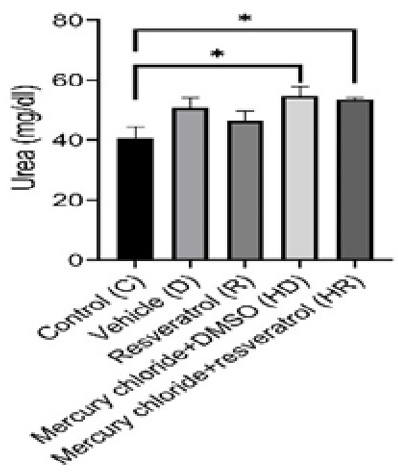
our study results revealed significant (P<0.05) elevation in the serum urea of mercuric chloride intoxicated groups in comparison to control group (Figure 1). While there was no change in the uric acid and creatinine levels in serum of different study groups (not shown).
Ameliorative effects of resveratrol treatment on the protein profile
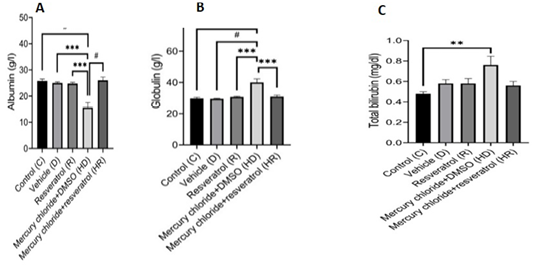
In current study results, the toxicity of HgCl2 has led to significant (P<0.05) reduction of albumin (Figure 2A) accompanied with significant increase (P<0.05) in the serum levels of globulin concentrations in HD group in comparison with the HR group as shown in Figure 2B. In other hand, the mercuric chloride toxicity did not change the total protein concentrations in comparison with the other groups (not shown), while total bilirubin level was significantly.
Ameliorative effects of resveratrol treatment on the redox system
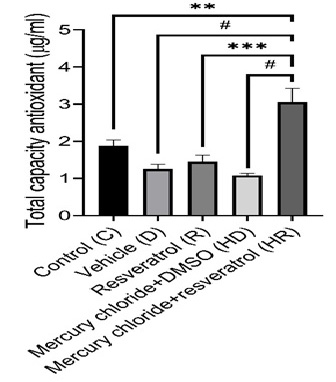
Study results showed that there was a significant decrease in total antioxidant capacity (TAC) concentrations in HD group in comparison with HR group. While TAC was significantly (P<0.05) elevated in HR group in comparison with all other study groups (Figure 3).
Ameliorative effects of resveratrol treatment on the immunological response of mercuric chloride-toxicity in rats
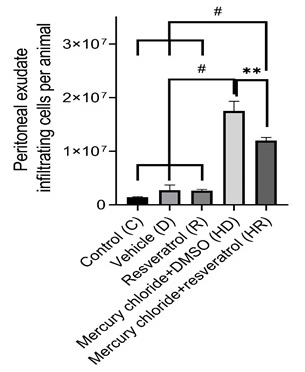
The study results revealed that there was significant (P<0.05) increase in the counts of infiltrating cells into peritoneal exudate of HgCl2-exposed groups in comparison to all non-exposed groups (Figure 4). Interestingly, the resveratrol treatment to HgCl2-intoxicated rats led to significant (P<0.05) reduction in the counts of inflammatory cells in the HR group in comparison to HD group, while administration of DMSO or RES did not drive the immune cells into peritoneal cavity (Figure 4).
During last couple decades, many researchers started to looking for alternative medicine derived from herbal origin to treat most of the modern diseases such as autoimmune diseases, cancers, toxicity and others ; ; ; ; , b). The clinical biochemical parameters Urea, Uric acid, Creatinine are thought to be helpful in determining Kidney toxicity in the Figure 1 we can see the concentration of urea in (HD and RH) group significantly increased than other groups (C, D, R) the considerable increase in serum urea levels after HgCl2 exposure showing its strong nephrotoxic effect, which is thought to be connected to the fact that the kidney collects more mercury than other organs in the body . The concentration of creatinine and uric acid in sera were not significantly changed. Some authors suggested that since plasma concentrations of total protein, albumin, and globulin are indicators of liver function, decreased serum protein may be due to impaired renal excretion or protein synthesis, or to decreased or impaired liver function (Alsafah and Al-Faragi, 2017). Significant reduction of albumin concentration (2-A) in HD group could be due to decrease in synthesis of albumin or due to the affinity of mercury to bind to the albumin and destroy the physiological function in the blood ; . Reduction of albumin concentration in chemical poisoning conditions is highly correlated with increase of mortality rates . However, in our study there was no mortality among the study animals may be due to the low dose of HgCl2 and relative short period of exposure . A significant increase in the concentration of globulin in HD group among other groups (2-B) could be due to increase the body’s defense system reacting to mercury . The onset of the liver damage symptom could be caused by a drop in albumin and elevation of globulin concentrations . In Figure 2C we can see increase in Bilirubin ratio in HD group, a reliable indicator of the hepatotoxicity of toxic materials is an increase in serum bilirubin in intoxicated rats, which is consistent with the findings of ; , b). In the other hand the ratio between urea- albumin and ratio among urea- creatinine there are not change. In the Figure 3 we can see decrease the concentration of Total antioxidant capacity Plasma antioxidants may have decreased TAS in response to increased generation of reactive oxygen species ; . The cell types have been hypothesized to originate, at least in part, from local tissues, even though polymorph nuclei leukocytes, which manifest in the peritoneal cavity in reaction to an irritant, are typically regarded to come directly from circulating blood. According to studies, the endothelium of blood arteries, lymph sinuses, and serous membranes were responsible for some of the loose cells that were discovered in the peritoneal cavity. In Figure 4, the number of the peritoneal exudates cells in (HD) Higher than another group.
CONCLUSIONS AND RECOMMENDATION
Chemical poisoning such as mercuric chloride is a health concern that leads to kidney and liver injury even in small traces. Resveratrol is well-known as an antioxidant and anti-inflammatory and could be used as protective supplement during the exposure to mercuric contaminants through mentioned properties. Resveratrol has potent power in ameliorating the parenchymal damage of hepatic. In current study, the supplementation of resveratrol has improved the redox system through increasing the antioxidant yields and suppression of oxidants production. We may recommend introducing the resveratrol-enriched food to the meals of crews who deal with industrials producing chemicals, particularly HgCl2, as products or waste products.
ACKNOWLEDGMENTS
The authors would like to thank the administrators of College of Veterinary Medicine, University of Baghdad for providing all facilities during the experimental procedures. Also, we would like to thank the Scientific Committee at the Department of Physiology, Biochemistry and Pharmacology for approving the experimental design.
NOVELTY STATEMENT
This work is a part of R.D. thesis. It has highlighted the role of using antioxidants such as resveratrol as daily basis use in supporting the immune system and increase the tolerance of renal tissue in combating the deleterious effects of mercuric chloride-mediated poisoning via increase the efficiency of redox system.
Author’s Contribution
RD performed all the lab work as well animal handling and treatments. HA designed supervised the entire work. RD and HA worked simultaneously to collect data and statistically analyze it.
Data availability
Authors will provide all data at the reasonable request.
Conflict of interest
The authors have declared no conflict of interest.
Figures
Figure 1:.
Effect of resveratrol administration on the kidney function tests represented by blood urea levels. (n=5); *P<0.05.
Figure 2:.
Resveratrol administration reversed the hepatotoxicity status in the experimental rats that were poisoned with mercuric chloride. Biochemical parameters of protein profile (A) Albumin concentration; (B) Globulin concentration; (C) Total Bilirubin. (n=5); *P<0.05, **P<0.01, ***P<0.001, #P<0.0001.
Figure 3:.
Resveratrol treatment alleviated the oxidative stress mediated by mercuric chloride toxicity in TAC. (n=5), **P<0.01, ***P<0.001, #P<0.0001.
Figure 4:.
Effect of resveratrol administration on the Peritoneal exudate infiltrating cells per animal of the study groups. (n=5); **P<0.01, #P<0.0001.
References
Abd El-Rhman A, Shosha N (2021). Antitoxic effects of gum Arabic (Acacia senegal) and Guar gum (Cyamopsis tetragonolobus) against hepatorenal toxicity induced by mercuric chloride in rats. Int. J. Pharm. Sci. Res., 22: 7-9.
Ahmed RM, Mohammed AK (2022a). Role of sodium butyrate supplement on reducing hepatotoxicity induced by lead acetate in rats. Iraqi J. Vet. Med., 46(2): 29-35. https://doi.org/10.30539/ijvm.v46i2.1408[CrossRef]
Ahmed RM, Mohammed AK (2022b). Amelioration of hepatotoxicity by sodium butyrate administration in rats. World Vet. J., 12(3): 323-329. https://doi.org/10.54203/scil.2022.wvj41[CrossRef]
Al-Ameedi AI, Falah MK, Ahmed SJ (2016). Hepatotoxic effect of chronic exposure of Tacrolimus in male Albino rats. Iraqi J. Vet. Med., 40(1): 161–166. https://doi.org/10.30539/iraqijvm.v40i1.155[CrossRef]
Alghetaa H, Mohammed A, Singh N, Wilson K, Cai G, Putluri N, Nagarkatti M, Nagarkatti P (2023). Resveratrol attenuates staphylococcal enterotoxin B-activated immune cell metabolism via upregulation of miR-100 and suppression of mTOR signaling pathway. Front. Pharmacol., 24(14): 1106733. https://doi.org/10.3389/fphar.2023.1106733[CrossRef]
Alghetaa H, Mohammed A, Sultan M, Busbee P, Murphy A, Chatterjee S, Nagarkatti M, Nagarkatti P (2018). Resveratrol protects mice against SEB-induced acute lung injury and mortality by miR-193a modulation that targets TGF-β signaling. J. Cell. Mol. Med., 22(5): 2644-2655. https://doi.org/10.1111/jcmm.13542[CrossRef]
Alghetaa H, Mohammed A, Zhou J, Singh N, Nagarkatti M, Nagarkatti P (2021). Resveratrol-mediated attenuation of superantigen-driven acute respiratory distress syndrome is mediated by microbiota in the lungs and gut. Pharmacol. Res., 167: 105548. https://doi.org/10.1016/j.phrs.2021.105548[CrossRef]
Alharbi KS, Afzal O, Kazmi I, Shaikh MAJ, Thangavelu L, Gulati M M, Singh SK, Jha NK, Gupta PK, Chellappan DK, Oliver BG, Dua K, Gupta G (2022). Nuclear factor-kappa B (NF-κB) inhibition as a therapeutic target for plant nutraceuticals in mitigating inflammatory lung diseases. Chemico-Biol. Interact., 354: 109842. https://doi.org/10.1016/j.cbi.2022.109842[CrossRef]
Alharris E, Alghetaa H, Seth R, Chatterjee S, Singh NP, Nagarkatti M, Nagarkatti P (2018). Resveratrol attenuates allergic asthma and associated inflammation in the lungs through regulation of miRNA-34a that targets FoxP3 in mice. Front. Immunol., 20(9): 2992. https://doi.org/10.3389/fimmu.2018.02992[CrossRef]
Alrudainy AJ (2014). Toxic effects of mercuric chloride on DNA damage, hematological parameters and histopathological changes in common (carp Cyprinuscarpio): Abdulmotalib J. Alrudainy; Sanaa A. Mustafa and Maher A. Abdulaziz. Iraqi J. Vet. Med., 38(2): 87–94. https://doi.org/10.30539/iraqijvm.v38i2.228[CrossRef]
Al-Zwean DH (2014). Effect of using licorice powder (Glycyrrhiza glabra) supplemented with drinking water at two different doses in serum lipid profile and blood proteins of local female rabbit. J. Biol. Agric. Healthc., 4(18):15-21.
Assumaidaee AA, Ali NM, Fadhil AA (2022). Effect of vitamin E as α-tocopherol acetate on mercuric chloride-induced chronic oxidoreductive stress and nephrotoxicity in rats. Iraqi J. Vet. Med., 43(2): 98–108. https://doi.org/10.30539/iraqijvm.v43i2.538[CrossRef]
Chan TY (2011). Inorganic mercury poisoning associated with skin-lightening cosmetic products. Clin. Toxicol., 49(10): 886-891. https://doi.org/10.3109/15563650.2011.626425[CrossRef]
Chunmei D, Cunwei J, Huixiang L, Yuze S, Wei Y, Dan Z (2014). Study of the interaction between mercury (II) and bovine serum albumin by spectroscopic methods. Environ. Toxicol. Pharmacol., 37(2): 870-877. https://doi.org/10.1016/j.etap.2014.01.021[CrossRef]
Domi E, Hoxha M, Kolovani E, Tricarico D, Zappacosta B (2022). The importance of nutraceuticals in COVID-19: What’s the role of resveratrol? Mol. J., 27(8): 2-9. https://doi.org/10.3390/molecules27082376[CrossRef]
Gao Z, Wu N, Du X, Li H, Mei X, Song Y (2022). Toxic nephropathy secondary to chronic mercury poisoning: Clinical characteristics and outcomes. Kidney Int. Rep., 7(6): 1189-1197. https://doi.org/10.1016/j.ekir.2022.03.009[CrossRef]
Ge Y, Liu X, Nan F, Liu Q, Lv J, Feng J, Xie S (2022). Toxicological effects of mercuric chloride exposure on scenedesmus quadricauda. Water J., 14(20): 4-7. https://doi.org/10.3390/w14203228[CrossRef]
Gupta RC, Milatovic D, Lall R, Srivastava A (2018). Mercury. In: Veterinary Toxicology (Third Edition). Academic Press, pp. 455-462. ISBN 9780128114100. https://doi.org/10.1016/B978-0-12-811410-0.00031-3[CrossRef]
Hu XF, Lowe M, Chan HM (2021). Mercury exposure, cardiovascular disease and mortality: A systematic review and dose-response meta-analysis. Environ. Res., 193: 110538. https://doi.org/10.1016/j.envres.2020.110538[CrossRef]
Idrees IR, Taqa GA, Altaaye SK (2023). Effects of amitriptyline and ashwagandha on the oxidative state and acetylcholine esterase enzyme activities in rats. J. Appl. Vet. Sci., 8(2): 104-109. https://doi.org/10.21608/javs.2023.191488.1214[CrossRef]
Khayoon HA, Al-Rekabi FK (2021). Cytotoxic effect of resveratrol on colorectal cancer cell line. Iraqi J. Vet. Med., 44(1): 68–74. https://doi.org/10.30539/ijvm.v44i1.939[CrossRef]
Kshirsagar M, Patil J, Patil A, Ghanwat G, Sontakke A, Ayachit RK (2015). Biochemical effects of lead exposure and toxicity on battery manufacturing workers of Western Maharashtra (India) with respect to liver and kidney function tests. Al-Ameen J. Med. Sci., 8(2): 107-114.
Kuehn B (2020). Mercury poisoning from skin cream. JAMA J., 323(6): 4-9. https://doi.org/10.1001/jama.2020.0292[CrossRef]
Kumar S, Gnanavel A, Lalitha R, Sundarpandian S, Jebakani CF (2022). Nephroprotective effect of smilax China against mercuric chloride intoxication in albino rats-histological study. J. Pharm. Negative Results, pp. 2166-2176.
Lin Y, Genzer J, Dickey MD (2020). Attributes, fabrication, and applications of gallium-based liquid metal particles. Adv. Sci., 7(12): 2000192. https://doi.org/10.1002/advs.202000192[CrossRef]
Lovasova E, Sesztakova E (2009). Total antioxidant status, a possible marker of environmental influences on animal organism. Slovak J. Anim. Sci., 42: 42-45.
Ma Y, Shi Y, Li L, Xie C, Zou X (2018). Toxicological effects of mercury chloride on laying performance, egg quality, serum biochemistry, and histopathology of liver and kidney in laying hens. Biol. Trace Element. Res., 185(2): 465-474. https://doi.org/10.1007/s12011-018-1263-8[CrossRef]
Mahendra MY, Purba RA, Dadi TB, Pertiwi H (2023). Estragole: A review of its pharmacology, effect on animal health and performance, toxicology, and market regulatory issues. Iraqi J. Vet. Sci., 37(2): 537-546. https://doi.org/10.33899/ijvs.2022.135092.2445[CrossRef]
Makena W, Aribiyun YS, Aminu A, Ishaku B, Yohana A, Inemesit EE (2022). Flavonoids fractions of Adansonia digitata L. fruits protects adult Wistar rats from mercury chloride-induced hepatorenal toxicity: Histopathological and biochemical studies. Egypt. J. Basic Appl. Sci., 9(1): 205-215. https://doi.org/10.1080/2314808X.2022.2059140[CrossRef]
Mohammed A, Alghetaa HK, Zhou J, Chatterjee S, Nagarkatti P, Nagarkatti M (2020). Protective effects of Δ9 -tetrahydrocannabinol against enterotoxin-induced acute respiratory distress syndrome are mediated by modulation of microbiota. Br. J. Pharmacol., 177(22): 5078-5095. https://doi.org/10.1111/bph.15226[CrossRef]
Mohammed AK (2010). Ameliorative effect of black seed (Nigella sativa L) on the toxicity of aluminum in rabbits. Iraqi J. Vet. Med., 34(2): 110–116. https://doi.org/10.30539/iraqijvm.v34i2.639[CrossRef]
Mohammed SM, Ibrahim MN, Ahmed MO (2019). Physiological and histological effects of broccoli on lead acetate induced hepatotoxicity in young male albino rats. Iraqi J. Vet. Sci., 33(1). https://doi.org/10.33899/ijvs.2019.125528.1050[CrossRef]
Mustafa SA, Al-Rudainy AJ (2021). Impact of mercury chloride exposure on some of immunological and biochemical assays of common carp, Cyprinus carpio. Iraqi J. Agric. Sci., 52(3): 547-551. https://doi.org/10.36103/ijas.v52i3.1341[CrossRef]
Nandiyanto ABD, Ragadhita R, Al Husaeni DN, Nugraha WC (2023). Research trend on the use of mercury in gold mining: Literature review and bibliometric analysis. Moroccan J. Chem., 11(1): 11-21.
Nofal AE, Fayyad RM (2021). Enhanced effect of resveratrol on hepatocellular carcinoma of rats treated with 5-fluorouracil. Adv. Anim. Vet. Sci., 9(11): 1978-1988. https://doi.org/10.17582/journal.aavs/2021/9.11.1978.1988[Full text][CrossRef]
Noh E, Moon JM, Chun BJ, Cho YS, Ryu S, Kim D (2021). The clinical role of serum albumin in Organophospate poisoning. Basic Clin. Pharmacol. Toxicol., 128: 605–614. https://doi.org/10.1111/bcpt.13546[CrossRef]
Palathoti S, Al-Rawahi M, Mahfud R and Otitolaiye V (2022). Effects of mercury concentration on the health and safety of oil and gas workers. Int. J. Occupat. Saf. Health, 12(3): 152-162. https://doi.org/10.3126/ijosh.v12i3.40325[CrossRef]
Perrone P, Spinelli S, Mantegna G, Notariale R, Straface E, Caruso D, Falliti G, Marino A, Manna C, Remigante A, Morabito R (2023). Mercury chloride affects band 3 protein-mediated anionic transport in red blood cells: Role of oxidative stress and protective effect of olive oil polyphenols. Cells, 12(3): 424. https://doi.org/10.3390/cells12030424[CrossRef]
Said ES, Ahmed RM, Mohammed RA, Morsi EM, Elmahdi MH, Elsayed HS, Mahmoud RH, Nadwa EH (2021). Ameliorating effect of melatonin on mercuric chloride-induced neurotoxicity in rats. Heliyon J., 7(7): e07485. https://doi.org/10.1016/j.heliyon.2021.e07485[CrossRef]
Shalan MG (2022). Amelioration of mercuric chloride-induced physiologic and histopathologic alterations in rats using vitamin E and zinc chloride supplement. Heliyon J., 8(12): 2022. https://doi.org/10.1016/j.heliyon.2022.e12036[CrossRef]
Sheta NM, Boshra SA, Mamdouh MA, Abdel-Haleem KM (2022). Design and optimization of silymarin loaded in lyophilized fast melt tablets to attenuate lung toxicity induced via HgCl2 in rats. Drug Delivery, 29(1): 1299-1311. https://doi.org/10.1080/10717544.2022.2068696[CrossRef]
Sotoudeh N, Namavar MR (2022). Optimization of ketamine-xylazine anaesthetic dose and its association with changes in the dendritic spine of CA1 hippocampus in the young and old male and female Wistar rats. Vet. Med. Sci., 8(6): 2545-2552. https://doi.org/10.1002/vms3.936[CrossRef]
Wei TT, Feng YK, Cao JH, Li JH, Yuan SL, Ding Y, Chai Yr (2021). Dosage effects of resveratrol on thymus involution in D-galactose-treated mice. J. Food Biochem., 45(5): e13709. https://doi.org/10.1111/jfbc.13709[CrossRef]