Research Article · Volume 13, Issue 4, 8 October 2025 · Open Access
Resveratrol Administration Reverses the Endometriosis-Mediated Outcomes via Tgfβ Signaling in Rats
·
Affiliations & Notes ⌄
1Department of Physiology, Biochemistry and Pharmacology, College of Veterinary Medicine, University of Baghdad, Bagdad, Iraq
2Department of Agriculture in Babylon, Veterinary Affairs Administration, Ministry of Agriculture, Babylon, Iraq. *Correspondence | Hasan Alghetaa, Department of Physiology, Biochemistry and Pharmacology, College of Veterinary Medicine, University of Baghdad, Bagdad, Iraq
The findings of this study suggest that TGF-β signaling dysregulation implicated in the progression of endometriosis, as evidenced by increased Tgfβ gene expression and elevated inflammatory markers in END-induced rats.
Additionally, the noted decrease in litter size among END and END+DMSO rats may indicate a considerable influence of systemic inflammation on reproductive outcomes.
Resveratrol administration exhibited effectively reduced Tgfβ gene expression in splenocytes and lowered TGF-β and CA-125 levels in both serum and peritoneal fluid, underscoring its potential attenuated inflammatory, fibrotic, and angiogenic hallmarks of endometriosis.
These results support the concept that focused modulation of AhR activity may be an effective method for controlling endometriosis, especially through agents that exhibit anti-inflammatory, anti-proliferative, and pro-apoptotic characteristics.
Selected from the article's own text.
Abstract
Endometriosis (END) is a chronic inflammatory disorder marked by the existence of endometrial-like tissue in the abnormal sites, resulting in immunological and inflammatory dysregulation. This study was to examine the impact of resveratrol and the AhR antagonist, CH223191, on the modulation of inflammatory and immunological responses in an experimental rat model of endometriosis. Adult female rats and adult male rats were employed in the current study. The female rats were randomly divided into the following: Naïve rats, donor rats for endometrial tissue transplantation, recipient endometriotic rats, and fertile male rats utilized for fertility tests. All endometriotic rats were equally divided into four groups, as follows: END group: Rats in this group served as positive controls and received no treatments; END+RES group: Endometriotic rats received a daily oral dose of resveratrol for four weeks; END+AhR‾ group: Endometriotic rats received intraperitoneal injections of CH223191 every three days for four weeks; END+DMSO group: Endometriotic rats were given dimethyl sulfoxide (DMSO), which was utilized in the preparation of resveratrol and AhR‾ treatments intraperitoneally every three days for four weeks, while Naïve rats served as the negative control group. At the endpoint of the experiments, three female rats from each group were mated with two pre-examined fertile male rats for fertility tests. Additionally, nine female rats from each group were euthanized to collect blood for biochemical assessments, peritoneal exudates (PE) for further analysis, spleens for Tgfβ gene expression, and uterine horns for histopathological examination. Statistical analysis of collected data revealed a significant (P<0.05) reduction in the litter size in all endometriotic rats, except END+RES, in comparison with the control group. Endometriosis in END and END+DMSO rats led to significant (P<0.05) upregulation of Tgfβ gene expression in splenocytes; these conditions significantly (P<0.05) increased TGF-β levels in the circulatory system and PE of these groups. Cancer antigen (CA-125) levels in circulation and PE significantly (P<0.05) increased in all endometriotic rats in comparison with the control, except those that were treated with RES did not show statistical change from controls. Upregulated biomarkers TGF-β and CA-125 resulted in deleterious changes in the uterine histological features. In conclusion, this study found that RES could have protective influences in endometriosis pathophysiology via its canonical pathway to suppress inflammatory responses.
Endometriosis (END) is a persistent, estrogen-dependent inflammatory disorder distinguished by the growth of endometrial-like tissue exterior to the uterine cavity, which comprises active endometrial glands and stroma, leading to chronic pelvic discomfort, dysmenorrhea, and infertility ; . END affects around 10% of women of reproductive age . It has been thoroughly examined in experimental animal models, specifically in rats and mice. Rats are often employed in research due to their larger size compared to mice, which simplifies surgical procedures . Moreover, nonhuman primates, such as baboons, are employed because of their analogous reproductive physiology; although ethical and financial constraints limit their utilization ; . Lesions can be induced by injecting minced endometrial tissue into the peritoneal cavity, closely resembling how lesions form and progress in humans ; . Consequently, animal models provide substantial understanding of the etiology and treatment of endometriosis. Molecular pathophysiology of endometriosis could be initiated through various molecules, for example: Transforming growth factor (TGF-β) is a versatile cytokine from the transforming growth factor superfamily, with three different mammalian isoforms: TGF-β1, TGF-β2, and TGF-β3. All normal cells contain TGF-β and its receptors, which can be synthesized by both normal and malignant cells . Elevated levels of TGF-β, particularly TGF-β1, have regularly been observed in the peritoneal fluid and endometrial tissue of individuals with endometriosis, promoting the development of the disease. It modulates immunological responses by inhibiting natural killer (NK) cell activity, hence compromising the immune system’s ability to eliminate ectopic endometrial cells, facilitating angiogenesis, survival, and implantation of these cells outside the uterine cavity ; ; .
Cancer antigen-125 (CA-125) is a high molecular weight glycoprotein classified within the mucin family. It is mostly expressed on the surface of epithelial cells across several tissues, including the female reproductive, respiratory, and gastrointestinal systems. It is produced by normal cells in adult tissues originating from coelomic and Müllerian epithelia . It is a recognized tumor-associated antigen that serves as a biomarker in clinical contexts, particularly for the diagnosis and monitoring of ovarian cancer or other benign illnesses ; .
Elevated CA-125 levels are observed in individuals with endometriosis, reflecting the inflammatory state and extent of pelvic lesion involvement ; ; . Aryl hydrocarbon receptor (AhR) is a ligand-dependent transcription factor present in various tissues that regulates gene expression in response to a broad spectrum of exogenous or endogenous ligands. It plays a crucial role in regulating immune responses, cellular differentiation, and maintaining physiological homeostasis ; ; . The nature of the ligand is critical, as it determines whether AhR activation promotes detoxification and homeostasis or induces toxicological effects ; ; Alghetaa, 2025). Toxic ligands, such as organochlorine insecticides commonly used in vector control, can provoke dysregulated AhR signaling associated with endocrine disruption, immune dysfunction, neurotoxicity, oxidative stress, and even carcinogenesis ; ; ; ; , b; . In contrast, certain natural ligands such as resveratrol, quercetin, tryptophan-derived metabolites, curcumin, and indole-3-carbinol induce protective responses and are vital for xenobiotic detoxification ; , b; ; ; ; .
In the context of endometriosis, AhR interfaces with several signaling pathways, including hormonal and inflammatory cascades, thereby influencing disease pathophysiology ; ; . Modulating AhR activity through agonist or antagonist molecules may influence key mechanisms underlying disease progression, including inflammation, immune dysregulation, abnormal cell proliferation, and oxidative damage ; ; ; ; . To date, there is no definitive cure for endometriosis; current therapeutic strategies focus primarily on alleviating symptoms and/or its related infertility ; . Resveratrol (3, 5, 4’-trihydroxystilbene) (RES) is a naturally occurring polyphenolic compound belonging to the stilbene family. It is present in diverse dietary sources, including grapes, red wine, peanuts, berries, and particularly in medicinal herbs. RES has garnered considerable interest due to its wide range of biological functions and potential therapeutic applications ; ; ; ; .
In the context of END, resveratrol offers a multifaceted therapeutic approach in dose-dependent fashion by attenuating inflammation, oxidative stress, cellular proliferation, and angiogenesis, while simultaneously enhancing apoptosis and modulating estrogenic activity ; , 2023a, b; ; ; ; . Accordingly, this study aimed to explore the effects of resveratrol and AhR antagonists on inflammatory markers and reproductive outcomes in a rat model of endometriosis.
Materials and Methods
Experimental animals
This study has been conducted in the laboratory and animal house of the College of Veterinary Medicine University of Baghdad. Eighty-four adult female rats along with 10 adult male rats (Rattus norvegicus) both sexes were 8-10 weeks old and weighed about 180-220g at the start point of the experiments. All animals were housed in specific pathogen-free conditions, including a temperature-controlled environment (22±2ºC) and a 12-hour light/dark cycle. The animals have been provided with free access to standard food and water. The experimental design adhered to the ethical guidelines established by the Institutional Animal Care and Use Committee at the College of Veterinary Medicine, University of Baghdad, and received animal ethical approval (AUP# P.G.407), which complies with International Standards for the Care and Use of Laboratory Animals. The animals were randomly divided into the following groups: Naïve group (n=12 rats), donors for endometrial tissue transplantation (n=24 rats), recipients (n=48 rats) endometriotic rats and additional fertility-confirmed male rats (n=10) which were employed for fertility tests. Before any experiment performance, all rats were maintained for a two-week acclimatization period.
Induction of experimental endometriosis
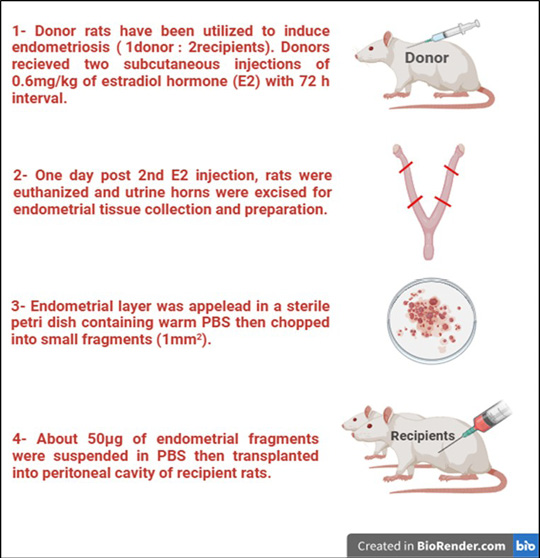
Endometriosis (END) was induced using the methodology outlined by ; ; , with minor modifications (Figure 1). After a period of acclimation, donor rats received two subcutaneous injections of 0.6 mg/kg estradiol benzoate (E2) with a three-day interval to promote the growth and proliferation of endometrial tissue . On the following day of last E2 treatment, the donor rats were anesthetized by intraperitoneal injection of a ketamine-xylazine mixture , then euthanized by cervical dislocation after the toe-pinch reflex confirmation test was applied.
Euthanized donor rats undergo a midline laparotomy to expose and excise the uterine horns, which are subsequently placed in a sterile petri dish containing warm phosphate buffered saline (PBS). The horns were longitudinally incised with fine scissors, and the endometrial layer was gently peeled using fine forceps. The collected layer was subsequently immersed in sterile PBS and chopped into small fragments (about 1 mm2) with a fine scalpel, after which about 50mg of the endometrial tissue fragments were suspended in sterile PBS before being delivered into the peritoneal cavity of recipient rats as demonstrated in Figure 1 .
One donor rat was utilized for every two recipient rats to induce endometriosis in all endometriotic groups. All rats having endometrial transplants were treated with different compounds (AhR agonist and antagonist) in accordance with the experimental design, which will be discussed later, commencing the day following transplantation. However, Naïve rats received only an intraperitoneal injection of 500µL PBS.
Animals grouping
Naïve group: non-endometriotic rats (n=12) served as a negative control group.
Endometriotic groups: endometriosis-induced rats (n=48) were divided into four subgroups, as follows:
END group: These endometriotic rats received no treatments and served as positive control.
END+RES group: Endometriotic rats received a daily oral dose of RES at 100mg/kg for four weeks .
END+AhR‾ group: Endometriotic rats received intraperitoneal injections of CH223191 at a dosage of 10mg/kg in a volume of 0.1ml/100g every three days for four weeks.
END+DMSO group: Endometriotic rats received dimethyl sulfoxide (DMSO) as the vehicle for the AhR antagonist intraperitoneally at a volume of 0.1 ml/100g b.w., the equivalent volume and concentration that was used for preparation of AhR treatment with three-day intervals for four weeks to normalize any biological effects it may cause ; ; .
Preparation of resveratrol (RES) and AhR antagonist, CH223191 (AhR‾)
The current study utilized RES powder with a purity of ≥ 98% and AhR antagonist, CH223191 powder with a purity of ≥ 95%, both purchased from Hebei Guanlang Biotechnology, China. The powders were prepared by dissolving them in DMSO and then diluting the solution with distilled water to achieve the appropriate working concentration ; ; ; .
Litter size (pups/dam) index
For fertility assessment, three females from each experimental group were mated with two fertile males for 7 days. Then the number of offspring per female was recorded ; .
Euthanasia and sample collection
At the end of the experiments, nine rats from each group were euthanized by an overdose of a xylazine-ketamine combination before collection of uterine horn for histopathological examination, blood for biochemical assessments, and peritoneal exudates for further downstream analysis. The spleen was collected as well for gene expression studies.
Gene expression investigation
Spleen tissue was harvested, and approximately 10mg tissue was cut and mechanically smashed and then placed in a tube containing 3ml of RNAlater solution, and then frozen at -20°C until processed to extract the total RNA and evaluate the gene expression of Tgfβ . Utilizing quantitative real-time PCR (qRT-PCR) with specific primers (Table 1) and Gapdh as the housekeeping gene. The levels of normalized gene expression were calculated using the ΔΔCt method.
Biochemical tests
Blood samples were collected via cardiac puncture and kept in gel tubes for serum separation for assessing circulatory levels of transforming growth factor-beta (TGF-β) and cancer antigen-125 (CA-125).
Peritoneal exudate examination
Peritoneal exudate (PE) was collected for evaluating the TGF-β and CA-125 biomarkers. Briefly, the abdominal skin of euthanized animals was removed to expose the peritoneal sac, then approximately ten ml of PBS was intraperitoneally injected, and the animal was thoroughly rolled for several minutes to suspend all the peritoneal exudates. A small surgical incision was made to allow the peritoneal suspension to be leaked out in a petri-dish prior to its transfer to a conical tube for the centrifugation process. Supernatants were isolated in new Eppendorf tubes to be frozen until the analysis of the aforementioned biomarkers .
Enzyme linked immunosorbent analysis (ELISA)
TGF-β (BT-lab kit, China) and CA-125 (BT-lab kit, China) were assessed in the serum and PE of experimental animals at the endpoint of all experiments according to each kit’s manufacturer protocol .
Histopathological findings examination
The left uterine horn was dissected and preserved in 10% neutral-buffered formalin for histopathological assessments .
Statistical analysis
Data were analyzed using GraphPad Prism software (Version 10, 2024; San Diego, CA, USA; https://www.graphpad.com). One-way analysis of variance (ANOVA), Tukey’s multiple comparisons test was employed to compare group means. Furthermore, to assess the equality of variances across the multiple groups in One-way ANOVA, Brown-Forsythe test was used as well. Whilst, to assess the equality of variances among different samples, Bartlett’s test has been employed too. QQ-plots were used to assess the normality of samples distribution. P-value less than 0.05 were considered statistically significant. Statistical significance in the figures is indicated as follows: *P<0.05, **P<0.01, ***P<0.001 and #P<0.0001. For further information about the statistical methodology, Supplementary Tables S1-S6 are available.
Results
Litter size (pups/dam)
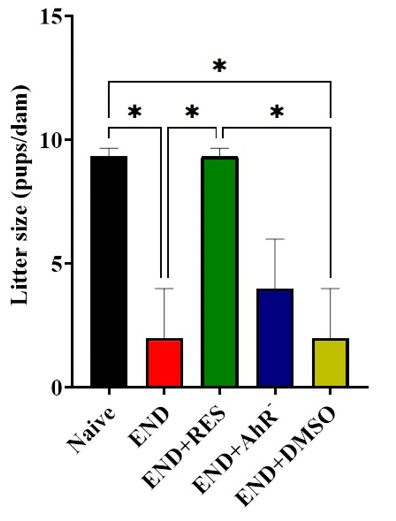
The results of litter size (pups/dam) showed a significant decrease (P<0.05) in the END and END+DMSO groups in comparison with the Naïve, END+RES, and END+AhR‾ groups. No significant differences were observed among the Naïve, END+RES and END+AhR‾ groups, nor among the END, END+AhR‾, and END+DMSO groups, as illustrated in Figure 2.
Expression of transforming growth factor-beta (Tgfβ) in splenocytes and translated protein in circulatory and peritoneal fluids
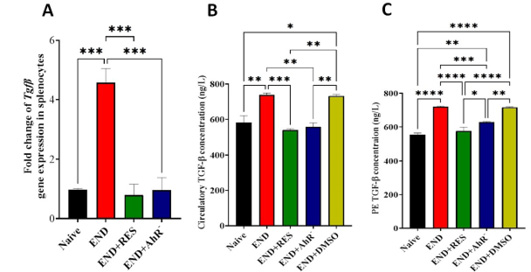
The results of Tgfβ gene expression in splenocytes statistically showed a significant (P<0.05) increase in the END group in comparison to all other groups (Figure 3A). Figure 3B, C illustrate that the circulatory and peritoneal exudate concentration (ng/L) of TGF-β protein across the experimental groups was significantly (P<0.05) elevated in the END and END+DMSO groups in comparison with all other groups. Endometriotic rats treated with RES showed a reduction of circulatory and PE TGF-β levels to nearby Naïve group levels (Figure 3B, C). However, blocking of AhR in the END+AhR‾ group led to significant (P<0.05) upregulation of PE protein in comparison with the Naïve and END+RES groups (Figure 3C) but insignificant changes in circulatory TGF-β in the same compared groups (Figure 3B).
Levels of cancer antigen-125 (CA-125) in serum and PE
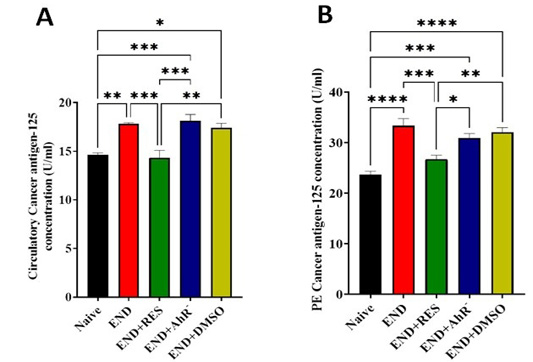
The statistical analysis of CA-125 concentrations (U/ml) in the circulation and peritoneal exudate of the experimental groups is illustrated in (Figure 4A, B). CA-125 showed significant (P<0.05) increases in the END, END+AhR‾, and END+DMSO groups in comparison with the Naïve and END+RES groups. However, neither significant distinctions were observed between the Naïve and END+RES groups nor among the END, END+AhR‾, and END+DMSO groups.
Histopathological investigation of the uterine horn
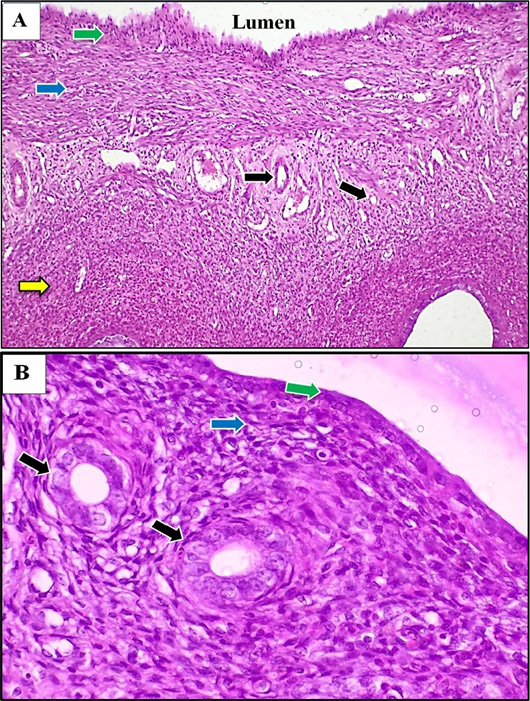
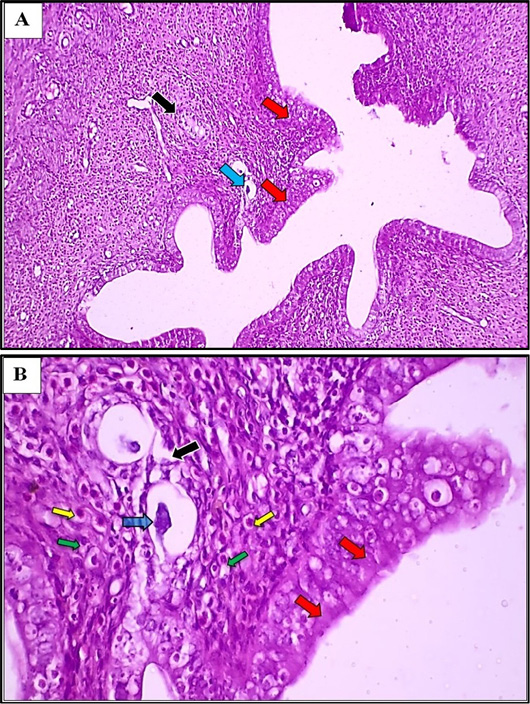
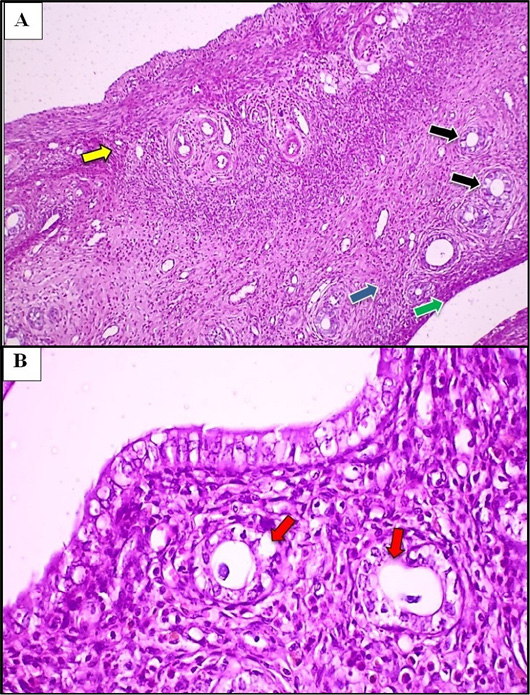
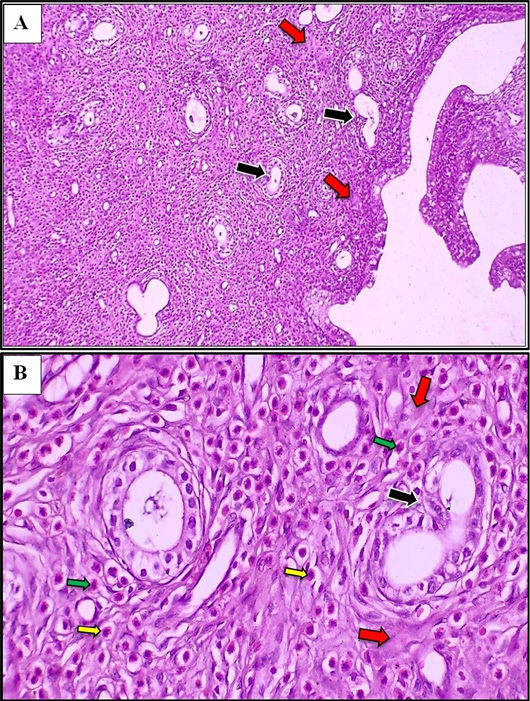
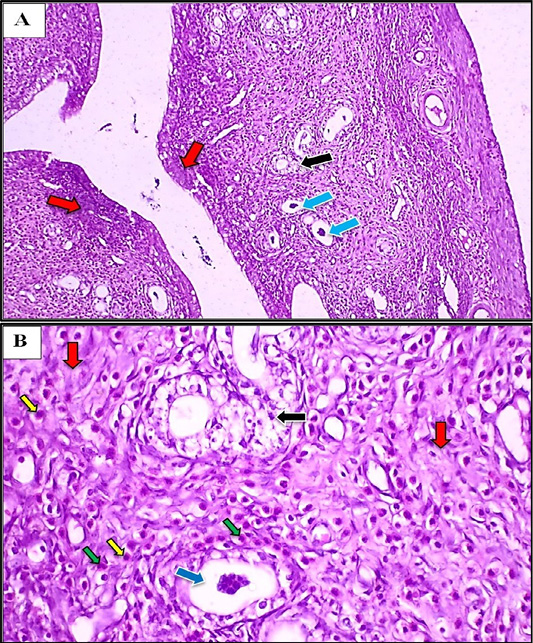
Histopathological examination of uterine horn cross-sections stained with hematoxylin and eosin (H and E) revealed notable pathological alterations in the END, END+AhR‾, and END+DMSO groups (Figures 6, 8, and 9, respectively), in contrast to the Naïve and END+RES groups (Figures 5 and 7, respectively). Observed hyperplasia of endometrial and stromal cells, vacuolar degeneration in several stromal regions, infiltration of inflammatory cells around endometrial glands, and neutrophil aggregation within endometrial glands. These findings are indicative of an inflammatory response and endometrial tissue remodeling, hallmark features of endometriosis in the employed experimental model.
Discussion
Immune-inflammatory dysregulation and aberrant angiogenesis are implicated in the pathogenesis of endometriosis (END), contributing to both reproductive dysfunction and histopathological abnormalities across human and animal models ; ; ; . In our experimental END model, we observed significant impairments in reproductive performance, specifically a reduction in litter size, along with elevated levels of TGF-β and CA-125 in both serum and/or peritoneal exudate (PE), and distinct pathological changes in uterine horn histology. These findings support and extend previous studies reporting a negative correlation between elevated CA-125 and TGF-β levels and fertility in endometriosis patients ; . The observed reproductive dysfunctions in the END, END+AhR‾, and END+DMSO groups is likely a multifactorial outcome of chronic inflammation, oxidative stress, and hormonal imbalance, which are hallmarks of END that adversely affect ovulatory function, endometrial receptivity, and embryo implantation ; ; ; ; Leone Roberti Maggiore et al., 2024).
TGF-β is one of the mediators that is involved, and it is particularly important for promoting immunosuppressive and fibrotic processes in the endometriotic environment. Increased TGF-β levels have repeatedly been associated with survival, invasion, and angiogenesis of ectopic lesions ; ; . In our investigation, the increase correlated with unfavorable histological characteristics, indicating a mechanistic association between TGF-β overexpression and tissue remodeling in the uterine horn. Furthermore, TGF-β, in synergy with IL-6, facilitates the differentiation of naïve CD4+ T cells into Th17 cells, hence enhancing IL-17 production, which is a significant factor in inflammatory amplification and lesion persistence ; ; .
Our findings corroborate previous studies indicating increased IL-17 levels in endometriosis patients, which upregulate the expression of anti-apoptotic genes (e.g., Bcl-2, MCL1), suppress NK cell cytotoxicity, and activate ERK1/2 signaling, hence facilitating ectopic cell survival ; . TGF-β also activates the SMAD pathway and inhibits the tumor suppressor PTEN, thereby increasing EMT markers and adhesion molecules that facilitate lesion invasiveness and fibrogenesis ; ; . Conversely, inhibition of TGF-β and NF-κB signaling has been shown to reduce fibrosis and lesion burden in deep endometriosis, making
these pathways possible targets for treatment . Although cancer antigen 125 (CA-125) exhibits limited sensitivity and specificity and is elevated in multiple disorders, it remains a recognized biomarker. When utilized alongside other diagnostic methods, it assists in differentiating individual with endometriosis from those without the condition ; ; . Our observation of elevated CA-125 in END-related groups, particularly those untreated with resveratrol, supports its continued relevance in preclinical evaluation of disease progression ; . Histological examination revealed marked abnormalities in the END, END+AhR‾, and END+DMSO groups, including vacuolar degeneration, irregular glandular architecture, and pronounced infiltration of inflammatory cells (especially eosinophils and monocytes). These findings reflect the oxidative stress and cytokine-driven inflammation associated with END ; . As well as the histological distortions that may be associated with elevated TGF-β levels, further implicating this cytokine in immune responses and fibrotic remodeling in the tissue of the uterine horn ; . Interestingly, this study showed that the used vehicle, DMSO has no distinct biological effects in endometriotic rats, this streamed with previous studies .
The present study employed CH223191, a selective AhR antagonist (AhR⁻), and resveratrol (RES), a natural polyphenolic compound known to function as AhR agonist, to evaluate the effects of AhR modulation on key pathophysiological parameters associated with endometriosis. The utilization of AhR agonist or antagonist molecules influences several hallmarks of distinct diseases and modifies their progression ; . By disrupting and controlling several critical pathophysiological processes, including immunological responses, inflammation, xenobiotic metabolism, angiogenesis, cell survival, and proliferation
; ; ; . CH223191 binds to the AhR ligand-binding domain, competing with other ligands for AhR binding and also suppressing AhR signaling pathways ; , 2025). By contrast, some research suggests that RES has a high affinity to bind with AhR and compete with other ligands to regulate AhR signaling as well as modulate the effects of AhR activation and offer a protective mechanism against potential detrimental effects ; ; . RES exerted marked protective effects, including reductions in TGF-β and CA-125 levels, histological restoration of uterine horn, and improved reproductive outcomes. These findings are consistent with prior research demonstrating that the RES can inhibit TGF-β signaling to suppress the proliferation and migration of cancer cells . RES can decrease levels of IL-17 and interferon-gamma (IFN-γ) as well as suppress the angiogenesis-related genes such as VEGF and MMP-9, so obstructing the formation of new blood vessels and limiting the growth and proliferation of endometrial cells ; ; ; . Moreover, the efficacy of RES as an anti-inflammatory, anti-oxidative, anti-proliferative, anti-angiogenic, anti-invasive, anti-adhesive, and pro-apoptotic agent can inhibit disease progression and prevent dissemination of endometrial lesions , 2022; . Finally, our findings align with recent evidence indicating that AhR-targeted therapeutics, contingent upon ligand specificity and context, may either worsen or improve disease, highlighting the intricacy of this signaling pathway.
Conclusion
The findings of this study suggest that TGF-β signaling dysregulation implicated in the progression of endometriosis, as evidenced by increased Tgfβ gene expression and elevated inflammatory markers in END-induced rats. Additionally, the noted decrease in litter size among END and END+DMSO rats may indicate a considerable influence of systemic inflammation on reproductive outcomes. Resveratrol administration exhibited effectively reduced Tgfβ gene expression in splenocytes and lowered TGF-β and CA-125 levels in both serum and peritoneal fluid, underscoring its potential attenuated inflammatory, fibrotic, and angiogenic hallmarks of endometriosis. These results support the concept that focused modulation of AhR activity may be an effective method for controlling endometriosis, especially through agents that exhibit anti-inflammatory, anti-proliferative, and pro-apoptotic characteristics. Further investigations are necessary to clarify the molecular relationships between AhR and critical cytokine signaling pathways, as well as to examine the therapeutic applicability of AhR-targeted therapy. Furthermore, the integration of AhR modulators with existing or novel medications may produce synergistic effects that improve disease resolution and reproductive recovery in endometriosis.
Acknowledgment
Not applicable.
Novelty Statement
This research article provides deep insight into the mechanistic roles of resveratrol in modulation of endometriosis pathophysiology.
Author’s Contribution
HA design, conceptualization, review the draft and last version of this manuscript. AA wrote the draft, revised and wrote the last version of this manuscript. Both HA and AA have reviewed and approved the submitted version of the manuscript.
Data availability
The data is available from the corresponding author in reasonable request.
Generative AI and AI-assisted technology statement
Authors disclose that they have not used any generative artificial intelligence or AI-assisted technology in forming this manuscript nor in generating its data.
Conflict of interest
The authors have declared no conflict of interest.
Figures
Figure 1:.
Illustrates the experimental endometriosis induction in rats, created in (http://Biorender.com).
Figure 2:.
Effects of endometriosis and therapeutic interventions on reproductive outcomes in rats, measured by litter size (pups/dam) index. Naïve group: non-endometriotic rats (negative control). END group: untreated endometriotic rats (positive control). END+RES group: Endometriotic rats were treated with resveratrol (100 mg/kg/day, orally) for four weeks. END+AhR‾ group: Endometriotic rats were treated with the AhR antagonist CH223191 (10 mg/kg, intraperitoneally, every three days) for four weeks. END+DMSO group: Endometriotic rats received administered vehicle control (DMSO, 0.1 ml/100g body weight, intraperitoneally, every three days) for four weeks. Statistical analysis was performed using One-way ANOVA followed by Tukey’s multiple comparisons test (Supplementary Table S1). Significant differences depicted as: *P<0.05.
Figure 3:.
Modulation of Tgfβ gene expression and TGF-β protein levels, following AhR signaling manipulation by using AhR ligands for four weeks in endometrial tissue transplanted rats (n=5). Naïve group: non-endometriotic rats (negative control). END group: untreated endometriotic rats (positive control). END+RES group: Endometriotic rats were treated with resveratrol (100 mg/kg/day, orally) for four weeks. END+AhR‾ group: Endometriotic rats were treated with the AhR antagonist CH223191 (10 mg/kg, intraperitoneally, every three days) for four weeks. END+DMSO group: Endometriotic rats received administered vehicle control (DMSO, 0.1 ml/100g body weight, intraperitoneally, every three days) for four weeks. (A) Tgfβ gene expression in splenocytes. (B) circulatory TGF-β concentration (ng/L), and C) TGF-β concentrations in peritoneal exudate (PE, ng/L). Statistical analysis was performed using One-way ANOVA followed by Tukey’s multiple comparisons test (Supplementary Table S2-S4). Significant differences are depicted as: *P<0.05, **P<0.01, ***P<0.001, and ****P<0.0001.
Figure 4:.
Influences of CA-125 protein levels, following AhR signaling manipulation by using AhR ligands for four weeks in endometrial tissue transplanted rats (n=5). Naïve group: non-endometriotic rats (negative control). END group: untreated endometriotic rats (positive control). END+RES group: Endometriotic rats were treated with resveratrol (100 mg/kg/day, orally) for four weeks. END+AhR‾ group: Endometriotic rats were treated with the AhR antagonist CH223191 (10 mg/kg, intraperitoneally, every three days) for four weeks. END+DMSO group: Endometriotic rats received administered vehicle control (DMSO, 0.1 ml/100g body weight, intraperitoneally, every three days) for four weeks. (A) circulatory CA-125 concentration (U/ml), and (B) CA-125 concentrations in peritoneal exudate (PE, U/ml). Statistical analysis was performed using One-way ANOVA followed by Tukey’s multiple comparisons test (Supplementary Table S5, S6). Significant differences are depicted as: *P<0.05, **P<0.01, ***P<0.001, and ****P<0.0001.
Figure 5:.
Photomicrograph section in uterine horn of Naïve rats (A and B). Normal myometrium (yellow arrow), normal endometrial glands (black arrows), normal endometrium (blue arrows), and well-organized luminal epithelium (green arrows). All sections are stained with H and E. A: examined under 100x and B: examined under 400x.
Figure 6:.
Photomicrograph section in uterine horn of END rats (A and B). Vacuolar degeneration in some epithelial cells lining the tubular glands (black arrows), endometrium hyperplasia (red arrows), with inflammatory cells infiltration particularly monocytes (green arrows) and eosinophil (yellow arrows) and aggregation of neutrophils within the lumen of affected glands (blue arrows). All sections are stained with H and E. A: examined under 100x and B: examined under 400x.
Figure 7:.
Photomicrograph sections in uterine horn of END+RES rats (A and B). Normal myometrium (yellow arrow), normal endometrial glands (black arrows), normal endometrium (blue arrow), and well-organized luminal epithelium (green arrow). Mild destruction of some epithelial cells lining uterine glands (red arrows). All sections are stained with H and E. A: examined under 100x and B: examined under 400x.
Figure 8:.
Photomicrograph sections in uterine horn of END+AhR‾ rats (A and B). Irregular dilated endometrial glands (black arrows), endometrial and stromal hyperplasia (red arrows) with highly infiltrated inflammatory cells especially monocytes (green arrows) and eosinophils (yellow arrows). All sections are stained with H and E. A: examined under 100x and B: examined under 400x.
Figure 9:.
Photomicrograph sections in uterine horn of END+DMSO rats (A and B). Vacuolar degeneration in some stromal cells lining the endometrial glands (black arrows), endometrium hyperplasia (red arrows) with inflammatory cells infiltration, particularly monocytes (green arrows) and eosinophil (yellow arrows) and aggregation of neutrophils in the lumen of affected glands (blue arrows). H and E stains. A: Examined under 100x and B: examined under 400x.
References
Abbas W, Shaheed HS (2022). Evaluation of CA-125 and IL-17 in a sample of Iraqi women with endometriosis. Int. J. Drug Deliv. Technol., 12: 383-386.
Abbasi E (2025a). Climate change and vector-borne disease transmission: The role of insect behavioral and physiological adaptations. Integr. Organ. Biol., 7: https://doi.org/10.1093/iob/obaf011[CrossRef]
Abbasi E (2025b). Molecular surveillance of sandfly-borne phleboviruses in Robat Karim County, Tehran. Environ. Challenges, 18: https://doi.org/10.1016/j.envc.2025.101089[CrossRef]
Abbasi E, Daliri S (2024). Knockdown resistance (kdr) associated organochlorine resistance in mosquito-borne diseases (Culex quinquefasciatus): Systematic study of reviews and meta-analysis. PLOS Neglect. Trop. Dis., 18: e0011991. https://doi.org/10.1371/journal.pntd.0011991[CrossRef]
Abbasi E, Daliri S, Yazdani Z, Mohseni S, Mohammadyan G, Seyed Hosseini SN, Haghighi RN (2023). Evaluation of resistance of human head lice to pyrethroid insecticides: A meta-analysis study. Heliyon, 9: https://doi.org/10.1016/j.heliyon.2023.e17219[CrossRef]
Abbasi E, Moemenbellah-Fard MD (2025). Prevalence of chikungunya, dengue, and west Nile arboviruses in Iran based on enzyme-linked immunosorbent assay (ELISA): A systematic review and meta-analysis. Glob. Epidemiol., 9: https://doi.org/10.1016/j.gloepi.2025.100202[CrossRef]
Abdel-Hamid HA, Zenhom NM, Toni ND (2019). Melatonin reduced endometrial hyperplasia induced by estradiol in female albino rats. Gen. Physiol. Biophys., 38: 63-71. https://doi.org/10.4149/gpb_2018035[CrossRef]
Abdulla JM, Al-Okaily BN (2022). Histomorphometric and histopathological alterations of rat testis following exposure to hydrogen peroxide: Protective role of resveratrol supplement. Iraqi J. Vet. Med., 46: 17-23. https://doi.org/10.30539/ijvm.v46i1.1313[CrossRef]
Abdulla OA, Neamah W, Sultan M, Alghetaa HK, Singh N, Busbee PB, Nagarkatti M, Nagarkatti P (2021). The ability of AhR ligands to attenuate delayed type hypersensitivity reaction is associated with alterations in the gut microbiota. Front. Immunol., 12: https://doi.org/10.3389/fimmu.2021.684727[CrossRef]
Adamyan L, Pivazyan L, Murvatova K, Tarlakyan V, Zarova E, Stepanian A, Mailova K (2025). Association between the level of TGF- β expression and endometriosis: A systematic review and meta-analysis. J. Endometr. Uterine Disord., 9: https://doi.org/10.1016/j.jeud.2024.100100[CrossRef]
Ahmed RM, Mohammed AK (2022a). Amelioration of hepatotoxicity by sodium butyrate administration in rats. World’s Vet. J., pp. 323-329. https://doi.org/10.54203/scil.2022.wvj41[CrossRef]
Ahmed RM, Mohammed AK (2022b). Role of sodium butyrate supplement on reducing hepatotoxicity induced by lead acetate in rats. Iraqi J. Vet. Med., 46: 29-35. https://doi.org/10.30539/ijvm.v46i2.1408[CrossRef]
Alabsawy SK, Alghetaa HFK (2025). Resveratrol administration reverses the osteoporotic bone in independent-manner of Ahr-Esr1 axis in rats. J. Neonatal Surg., 14: 1143-1154. https://doi.org/10.63682/jns.v14i15S.3722[CrossRef]
Al-Azawy VS (2017). Levels of tumor necrosis factor alpha and interleukin-17 in fertile and infertile women with endometriosis. Iraqi JMS, 15(2): 159-164.
Alghetaa H, Mohammed A, Singh N, Wilson K, Cai G, Putluri N, Nagarkatti M, Nagarkatti P (2023a). Resveratrol attenuates staphylococcal enterotoxin B-activated immune cell metabolism via upregulation of miR-100 and suppression of mTOR signaling pathway. Front. Pharmacol., 14: 1106733. https://doi.org/10.3389/fphar.2023.1106733[CrossRef]
Alghetaa H, Mohammed A, Singh NP, Bloomquist RF, Chatzistamou I, Nagarkatti M, Nagarkatti P (2023b). Estrobolome dysregulation is associated with altered immunometabolism in a mouse model of endometriosis. Front. Endocrinol., 14: https://doi.org/10.3389/fendo.2023.1261781[CrossRef]
Alghetaa H, Mohammed A, Sultan M, Busbee P, Murphy A, Chatterjee S, Nagarkatti M, Nagarkatti P (2018). Resveratrol protects mice against SEB‐induced acute lung injury and mortality by miR‐193a modulation that targets TGF‐β signalling. J. Cell. Mol. Med., 22: 2644-2655. https://doi.org/10.1111/jcmm.13542[CrossRef]
Alghetaa H, Mohammed A, Zhou J, Singh N, Nagarkatti M, Nagarkatti P (2021). Resveratrol-mediated attenuation of superantigen-driven acute respiratory distress syndrome is mediated by microbiota in the lungs and gut. Pharmacol. Res., 167: https://doi.org/10.1016/j.phrs.2021.105548[CrossRef]
Alharris E, Alghetaa H, Seth R, Chatterjee S, Singh NP, Nagarkatti M, Nagarkatti P (2018). Resveratrol attenuates allergic asthma and associated inflammation in the lungs through regulation of miRNA-34a that targets FoxP3 in mice. Front. Immunol., 9: https://doi.org/10.3389/fimmu.2018.02992[CrossRef]
Alharris E, Mohammed A, Alghetaa H, Zhou J, Nagarkatti M, Nagarkatti P (2022). The ability of resveratrol to attenuate ovalbumin-mediated allergic asthma is associated with changes in microbiota involving the gut-lung axis, enhanced barrier function and decreased inflammation in the lungs. Front. Immunol., 13: https://doi.org/10.3389/fimmu.2022.805770[CrossRef]
Al-Khaqani B, Mohammed A (2024). Ovalbumin-induced asthma in rats is alleviated by resveratrol treatment. J. Anim. Health Prod., 12: https://doi.org/10.17582/journal.jahp/2024/12.2.121.127[Full text][CrossRef]
Allaire C, Bedaiwy MA, Yong PJ (2023). Diagnosis and management of endometriosis. Can. Med. Assoc. J., 195: E363-E371. https://doi.org/10.1503/cmaj.220637[CrossRef]
Al-Okaily BN (2024). Unveiling the mysteries of oxidative stress: An insightful review of recent studies. J. Anim. Health Prod., 12: https://doi.org/10.17582/journal.jahp/2024/12.3.395.412[Full text][CrossRef]
Ansariniya H, Yavari A, Javaheri A, Zare F (2022). Oxidative stress‐related effects on various aspects of endometriosis. Am. J. Reprod. Immunol., 88: https://doi.org/10.22541/au.164145321.16639088/v1[CrossRef]
Apiyo OP, Nyachieo A, Juma AR, Mutai IJ, Mwethera PG, Mecha EO, Omwandho COA, Kiesel L, Götte M, Muteshi C, Obiero JA (2024). A review: Exposure to bisphenol a analogues in non-human primates as a potential cause of endometriosis. J. Endometr. Pelvic Pain Disord., 16: 53-60. https://doi.org/10.1177/22840265241231323[CrossRef]
Ashish K, Rai S, Kumar B, Chaube R, Singh R (2021). Elevated levels of CA-125, Estradiol and cortisol as prominent markers to diagnose various stages of endometriosis. J. Sci. Res., 65: 50-55. https://doi.org/10.37398/JSR.2021.650507[CrossRef]
Ashrafizadeh M, Najafi M, Orouei S, Zabolian A, Saleki H, Azami N, Sharifi N, Hushmandi K, Zarrabi A, Ahn KS (2020). Resveratrol modulates transforming growth factor-beta (TGF-β) signaling pathway for disease therapy: A new insight into its pharmacological activities. Biomedicines, 8: https://doi.org/10.3390/biomedicines8080261[CrossRef]
Azargoonjahromi A, Abutalebian F, Hoseinpour F (2025). The role of resveratrol in neurogenesis: A systematic review. Nutr. Rev., 83: e257-e272. https://doi.org/10.1093/nutrit/nuae025[CrossRef]
Bahman F, Choudhry K, Al-Rashed F, Al-Mulla F, Sindhu S, Ahmad R (2024). Aryl hydrocarbon receptor: Current perspectives on key signaling partners and immunoregulatory role in inflammatory diseases. Front. Immunol., 15: 1421346 https://doi.org/10.3389/fimmu.2024.1421346.[CrossRef]
Bonavina G, Taylor HS (2022). Endometriosis-associated infertility: From pathophysiology to tailored treatment. Front. Endocrinol., 13: https://doi.org/10.3389/fendo.2022.1020827[CrossRef]
Bustani, GS and Alghetaa HF (2025). Aryl hydrocarbon receptor signaling in male fertility: Protective role of resveratrol and disruptive effects of CH223191 in adult male rats. Vet. World, pp. 1274-1287. https://doi.org/10.14202/vetworld.2025.1274-1287[CrossRef]
Bustani G, Alghetaa H, Mohammed A, Nagarkatti M, Nagarkatti P (2025). The aryl hydrocarbon receptor: A new frontier in male reproductive system. Reprod. Biol. Endocrinol., 23: https://doi.org/10.1186/s12958-025-01401-3[CrossRef]
Bustani G, Al-Humadi N, Alghetaa H (2024). Aryl hydrocarbon receptor modulation and resveratrol influence on dnah1 expression: Implications for male reproductive health. Iraqi J. Vet. Med., 48: 15-24. https://doi.org/10.30539/p5wv8002[CrossRef]
Calisir M, Yilmaz O, Kolatan HE, Sezgin AK (2023). Effects of litter size and caging on physical and mental development in rats. Physiol. Behav., 267: https://doi.org/10.1016/j.physbeh.2023.114200[CrossRef]
Collie B, Troisi J, Lombardi M, Symes S, Richards S (2025). The current applications of metabolomics in understanding endometriosis: A systematic review. Metabolites, 15: https://doi.org/10.3390/metabo15010050[CrossRef]
Dawood RA, Alghetaa HFK (2023). Deleterious Effects of mercuric chloride toxicity initiated partially from physiological disorder of kidney, immunocytes and redox system, can be reversed by resveratrol administration. Adv. Anim. Vet. Sci., 11: https://doi.org/10.17582/journal.aavs/2023/11.9.1465.1471[Full text][CrossRef]
Dymanowska-Dyjak I, Frankowska K, Abramiuk M, Polak G (2024). Oxidative imbalance in endometriosis-related infertility. The therapeutic role of antioxidants. Int. J. Mol. Sci., 25: 6298. https://doi.org/10.3390/ijms25126298[CrossRef]
Fattori V, Franklin NS, Gonzalez-Cano R, Peterse D, Ghalali A, Madrian E, Verri Jr WA, Andrews N, Woolf CJ, Rogers MS (2020). Nonsurgical mouse model of endometriosis-associated pain that responds to clinically active drugs. Pain, 161: 1321-1331. https://doi.org/10.1097/j.pain.0000000000001832[CrossRef]
Feduniw S, Pruc M, Ciebiera M, Safiejko K, Bizon M, Szarpak L (2024). Current evidence on CA-125 levels in differentiation between endometriomas and endometriosis-associated ovarian cancer. A systematic review and meta-analysis. J. Endometr. Pelvic Pain Disord., 16: 154-159. https://doi.org/10.1177/22840265241275349[CrossRef]
Ferreira MRdS, Galvão APO, Valença MM, Martins DBG (2022). Storage and purification adaptations for the isolation of total RNA from the dura mater. Arquivos Neuro-Psiquiatria, 80: 1213-1219. https://doi.org/10.1055/s-0042-1758865[CrossRef]
Garcia Garcia JM, Vannuzzi V, Donati C, Bernacchioni C, Bruni P, Petraglia F (2022). Endometriosis: Cellular and molecular mechanisms leading to fibrosis. Reprod. Sci., 30: 1453-1461. https://doi.org/10.1007/s43032-022-01083-x[CrossRef]
Gawron I, Wegiel M, Chrzaszcz R, Jach R, Maslanka A (2024). Bioconcentration of polycyclic aromatic hydrocarbons in the adipose tissue of women with pelvic endometriosis and idiopathic infertility: A case-control study. Adv. Med. Sci., 69: 296-302. https://doi.org/10.1016/j.advms.2024.07.002[CrossRef]
Gica N, Panaitescu AM, Iancu G, Botezatu R, Peltecu G, Gica C (2020). The role of biological markers in predicting infertility associated with non-obstructive endometriosis. Ginekol. Polska, 91: 189-192. https://doi.org/10.5603/GP.2020.0039[CrossRef]
Gołąbek-Grenda A, Juzwa W, Kaczmarek M, Olejnik A (2024). Resveratrol and its natural analogs mitigate immune dysregulation and oxidative imbalance in the endometriosis niche simulated in a co-culture system of endometriotic cells and macrophages. Nutrients, 16: 3483. https://doi.org/10.3390/nu16203483[CrossRef]
Grishanova AY, Klyushova LS, Perepechaeva ML (2023). AhR and Wnt/β-Catenin Signaling Pathways and Their Interplay. Curr. Issues Mol. Biol., 45: 3848-3876. https://doi.org/10.3390/cimb45050248[CrossRef]
Habib KA, Jumaa MG, Hussein MJ (2015). Determination of Serum CA125 and evaluate its efficiency as screening tool for early detection of ovarian tumors. Baghdad Sci. J., 12: 55-62. https://doi.org/10.21123/bsj.2015.12.1.55-62[CrossRef]
Hamilton K, Meyer R, Schneyer R, Levin G, Truong M, Wright K, Siedhoff M, Barnajian M, Nasseri Y (2024). The impact of surgeons’ specialty on surgical outcomes following colorectal resection for endometriosis. Am. J. Obst. Gynecol., 230: S1190-S1191. https://doi.org/10.1016/j.ajog.2024.02.081[CrossRef]
Hirata T, Osuga Y, Yoshino O, Hirota Y, Harada M, Takemura Y, Morimoto C, Koga K, Yano T, Tsutsumi O (2005). Development of an experimental model of endometriosis using mice that ubiquitously express green fluorescent protein. Hum. Reprod., 20: 2092-2096. https://doi.org/10.1093/humrep/dei012[CrossRef]
Hu J, Ding Y, Liu W, Liu S (2023). When AHR signaling pathways meet viral infections. Cell Commun. Signal., 21: https://doi.org/10.1186/s12964-023-01058-8[CrossRef]
Huang ZX, He XR, Ding XY, Chen JH, Lei YH, Bai JB, Lin DC, Hong YH, Lan JF, Chen QH (2022). Lipoxin A4 depresses inflammation and promotes autophagy via AhR/mTOR/AKT pathway to suppress endometriosis. Am. J. Reprod. Immunol., 89: https://doi.org/10.1111/aji.13659[CrossRef]
Ichisaka Y, Yano S, Nishimura K, Niwa T, Shimizu H (2024). Indoxyl sulfate contributes to colorectal cancer cell proliferation and increased EGFR expression by activating AhR and Akt. Biomed. Res., 45: 57-66. https://doi.org/10.2220/biomedres.45.57[CrossRef]
Irungu S, Mavrelos D, Worthington J, Blyuss O, Saridogan E, Timms JF (2019). Discovery of non-invasive biomarkers for the diagnosis of endometriosis. Clin. Proteom., 16: https://doi.org/10.1186/s12014-019-9235-3[CrossRef]
Irwin MR, Curay CM, Choi S, Kiyatkin EA (2023). Basic physiological effects of ketamine-xylazine mixture as a general anesthetic preparation for rodent surgeries. Brain Res., 1804: 148251. https://doi.org/10.1016/j.brainres.2023.148251[CrossRef]
Jiang T, Chen Y, Gu X, Miao M, Hu D, Zhou H, Chen J, Teichmann AT, Yang Y (2023). Review of the potential therapeutic effects and molecular mechanisms of resveratrol on endometriosis. Int. J. Women’s Hlth., 15: 741-763. https://doi.org/10.2147/IJWH.S404660[CrossRef]
Jin Y, Feng M, Ma W, Wei Y, Qi G, Luo J, Xu L, Li X, Li C, Wang Y (2021). A toxicity pathway-oriented approach to develop adverse outcome pathway: AHR activation as a case study. Environ. Pollut., 268: 115733. https://doi.org/10.1016/j.envpol.2020.115733[CrossRef]
Jones GL, Budds K, Taylor F, Musson D, Raymer J, Churchman D, Kennedy SH, Jenkinson C (2024). A systematic review to determine use of the Endometriosis Health Profiles to measure quality of life outcomes in women with endometriosis. Hum. Reprod. Update, 30: 186-214. https://doi.org/10.1093/humupd/dmad029[CrossRef]
K-Aghetaa HF, A Dawood R, K Aladhami A (2023). Resveratrol administration ameliorates hepatotoxicity in mercuric chloride-induced liver injury in rats. Iraqi J. Vet. Med., 47: 1-8. https://doi.org/10.30539/ijvm.v47i2.1482[CrossRef]
Kai K, Joshi NR, Burns GW, Hrbek SM, Vegter EL, Ochoa-Bernal MA, Song Y, Moldovan GE, Sempere LF, Miyadahira EH (2023). MicroRNA-210-3p regulates endometriotic lesion development by targeting IGFBP3 in baboons and women with endometriosis. Reprod. Sci., 30: 2932-2944. https://doi.org/10.1007/s43032-023-01253-5[CrossRef]
Kang YJ, Cho HJ, Lee Y, Park A, Kim MJ, Jeung IC, Jung YW, Jung H, Choi I, Lee HG, Yoon SR (2023). IL-17A and Th17 cells contribute to endometrial cell survival by inhibiting apoptosis and NK cell mediated cytotoxicity of endometrial cells via ERK1/2 pathway. Immune Network, 23: https://doi.org/10.4110/in.2023.23.e14[CrossRef]
Khayoon HA, Al-Rekabi FMK (2020). Cytotoxic effect of resveratrol on colorectal cancer cell line. Iraqi J. Vet. Med., 44: 68-74. https://doi.org/10.30539/ijvm.v44i1.939[CrossRef]
Khudair NT, Al-Okaily BN (2022). Renal ameliorating effect of resveratrol in hydrogen peroxide induced male rats. Iraqi J. Vet. Sci., 36: 571-577. https://doi.org/10.33899/ijvs.2022.130939.1898[CrossRef]
Kim D, Shin D-Y, Liu J, Jeong N-r, Koh Y, Hong J, Huang X, Broxmeyer HE, Yoon SS (2022). Expansion of human megakaryocyte-lineage progeny via aryl hydrocarbon receptor antagonism with CH223191. Stem Cell Rev. Rep., 18: 2982-2994. https://doi.org/10.1007/s12015-022-10386-0[CrossRef]
Kitajima M (2022). Endometriosis and ovarian dysfunction. Immunol. Endomet. Published. Place. pp. 193-201. https://doi.org/10.1016/B978-0-12-820661-4.00017-0[CrossRef]
Kou Z, Dai W (2021). Aryl hydrocarbon receptor: Its roles in physiology. Biochem. Pharmacol., 185: 114428. https://doi.org/10.1016/j.bcp.2021.114428[CrossRef]
Kula H, Ilgen O, Kurt S, Yılmaz F (2024). Patterns of proliferation and fibrosis in a rat model of endometriosis following administration of Allium cepa. Clin. Exp. Reprod. Med., 51: 112-119. https://doi.org/10.5653/cerm.2023.06261[CrossRef]
Lee CH, Kim KW, Lee SM, Kim SY (2020). Dose-dependent effects of resveratrol on cisplatin-induced hearing loss. Int. J. Mol. Sci., 22: https://doi.org/10.3390/ijms22010113[CrossRef]
Leone Roberti Maggiore U, Chiappa V, Ceccaroni M, Roviglione G, Savelli L, Ferrero S, Raspagliesi F, Spanò Bascio L (2024). Epidemiology of infertility in women with endometriosis. Best Pract. Res. Clin. Obst. Gynaecol., 92: https://doi.org/10.1016/j.bpobgyn.2023.102454[CrossRef]
Lima C, Falcão MAP, Rosa JGS, Disner GR, Lopes-Ferreira M (2022). Pesticides and their impairing effects on epithelial barrier integrity, dysbiosis, disruption of the AhR signaling pathway and development of immune-mediated inflammatory diseases. Int. J. Mol. Sci., 23: 12402. https://doi.org/10.3390/ijms232012402[CrossRef]
Lin YH, Chen YH, Chang HY, Au HK, Tzeng CR, Huang YH (2018). Chronic niche inflammation in endometriosis-associated infertility: Current understanding and future therapeutic strategies. Int. J. Mol. Sci., 19: https://doi.org/10.3390/ijms19082385[CrossRef]
Minacori M, Fiorini S, Perugini M, Iannetta A, Meschiari G, Chichiarelli S, Altieri F, Natali PG, Eufemi M (2025). AhR and STAT3: A dangerous duo in chemical carcinogenesis. Int. J. Mol. Sci., 26: 2744. https://doi.org/10.3390/ijms26062744[CrossRef]
Mosa FE, AlRawashdeh S, El-Kadi AO, Barakat K (2024). Investigating the Aryl hydrocarbon receptor agonist/antagonist conformational switch using well-tempered metadynamics simulations. J. Chem. Inf. Model., 64: 2021-2034. https://doi.org/10.1021/acs.jcim.4c00169[CrossRef]
Mukherjee S, Dudley JI, Das DK (2010). Dose-dependency of resveratrol in providing health benefits. Dose-response, 8: https://doi.org/10.2203/dose-response.09-015.Mukherjee[CrossRef]
Nanda AKT, Banerjee P, Dutta M, Wangdi T, Sharma P, Chaudhury K, Jana SK (2020). Cytokines, angiogenesis, and extracellular matrix degradation are augmented by oxidative stress in endometriosis. Ann. Lab. Med., 40: 390-397. https://doi.org/10.3343/alm.2020.40.5.390[CrossRef]
Neamah WH, Busbee PB, Alghetaa H, Abdulla OA, Nagarkatti M, Nagarkatti P (2020). AhR activation leads to alterations in the gut microbiome with consequent effect on induction of myeloid derived suppressor cells in a CXCR2-dependent manner. Int. J. Mol. Sci., 21: https://doi.org/10.3390/ijms21249613[CrossRef]
Neamah WH, Singh NP, Alghetaa H, Abdulla OA, Chatterjee S, Busbee PB, Nagarkatti M, Nagarkatti P (2019). AhR activation leads to massive mobilization of myeloid-derived suppressor cells with immunosuppressive activity through regulation of CXCR2 and MicroRNA miR-150-5p and miR-543-3p that target anti-inflammatory genes. J. Immunol., 203: 1830-1844. https://doi.org/10.4049/jimmunol.1900291[CrossRef]
Omer AN, Taher AM, Aljebory DSH (2017). Effect of metformin treatment on some blood biomarkers in women with endometriosis. Iraqi J. Pharma. Sci., 25: 28-36. https://doi.org/10.31351/vol25iss1pp28-36[CrossRef]
Parmar G, Howard AF, Noga H, Tannock L, Abdulai A-F, Allaire C, Lett S, Sutherland J, de Arbina EL, Hummelshoj L (2025). Pelvic pain and endometriosis: The development of a patient-centred e-health resource for those affected by endometriosis-associated dyspareunia. BMC Med. Inf. Decis. Making, 25: 79. https://doi.org/10.1186/s12911-025-02907-x[CrossRef]
Pinto CJG, Ávila-Gálvez MÁ, Lian Y, Moura-Alves P, Nunes dos Santos C (2023). Targeting the aryl hydrocarbon receptor by gut phenolic metabolites: A strategy towards gut inflammation. Redox Biol., 61: https://doi.org/10.1016/j.redox.2023.102622[CrossRef]
Pourmadadi M, Moammeri A, Shamsabadipour A, Moghaddam YF, Rahdar A, Pandey S (2023). Application of various optical and electrochemical nanobiosensors for detecting cancer antigen 125 (CA-125): A review. Biosensors, 13: 99. https://doi.org/10.3390/bios13010099[CrossRef]
Prakash V, Bose C, Sunilkumar D, Cherian RM, Thomas SS, Nair BG (2024). Resveratrol as a promising nutraceutical: Implications in gut microbiota modulation, inflammatory disorders, and colorectal cancer. Int. J. Mol. Sci., 25: https://doi.org/10.3390/ijms25063370[CrossRef]
Rejano-Gordillo CM, Marín-Díaz B, Ordiales-Talavero A, Merino JM, González-Rico FJ, Fernández-Salguero PM (2022). From nucleus to organs: Insights of aryl hydrocarbon receptor molecular mechanisms. Int. J. Mol. Sci., 23: https://doi.org/10.3390/ijms232314919[CrossRef]
Rosales AAL (2022). Factors causing infertility in women diagnosed with endometriosis. Int. J. Med. Sci. Clin. Res. Stud., 2: https://doi.org/10.47191/ijmscrs/v2-i10-16[CrossRef]
Shi JL, Zheng ZM, Chen M, Shen HH, Li MQ, Shao J (2022). IL-17: An important pathogenic factor in endometriosis. Int. J. Med. Sci., 19: 769-778. https://doi.org/10.7150/ijms.71972[CrossRef]
Shniakat WN, Ekbal H. Al-Khateeb EH, Numan NAM, Manal MA, Shakya A (2023). Cytotoxic evaluation of doxorubicin combination with baicalein and resveratrol against Hct116 and Hepg2 cancer cell lines (Conference Paper). Iraqi J. Pharma. Sci., 31: 92-99. https://doi.org/10.31351/vol31issSuppl.pp92-99[CrossRef]
Sienko A, Cichosz A, Urban A, Smolarczyk R, Czajkowski K, Sienko J (2024). The effect of two anti-inflammatory dietary components, omega-3 and resveratrol, on endometriosis. Ginekol. Polska, 95: 573-583. https://doi.org/10.5603/gpl.97573[CrossRef]
Sisnett DJ, Zutautas KB, Miller JE, Lingegowda H, Ahn SH, McCallion A, Bougie O, Lessey BA, Tayade C (2024). The dysregulated IL-23/TH17 axis in endometriosis pathophysiology. J. Immunol., 212: 1428-1441. https://doi.org/10.4049/jimmunol.2400018[CrossRef]
Sládeková L, Mani S, Dvořák Z (2023). Ligands and agonists of the aryl hydrocarbon receptor AhR: Facts and myths. Biochem. Pharmacol., 213: 115626. https://doi.org/10.1016/j.bcp.2023.115626[CrossRef]
Soni UK, Chadchan SB, Kumar V, Ubba V, Khan MTA, Vinod BSV, Konwar R, Bora HK, Rath SK, Sharma S, Jha RK (2019). A high level of TGF-B1 promotes endometriosis development via cell migration, adhesiveness, colonization, and invasiveness. Biol. Reprod., 100: 917-938. https://doi.org/10.1093/biolre/ioy242[CrossRef]
Stockinger B, Diaz OE, Wincent E (2024). The influence of AHR on immune and tissue biology. EMBO Mol. Med., 16: 2290-2298. https://doi.org/10.1038/s44321-024-00135-w[CrossRef]
Sumera N, Tahir M, Mateen-Ur R, Bushra S, Shahid N, Jan U, Tahir M, Athar RM, Azeem S (2022). The relationship of oxidative stress and inflammatory response in females associated with endometriosis. Pak-Euro J. Med. Life Sci., 5: 345-350. https://doi.org/10.31580/pjmls.v5i2.2523[CrossRef]
Suvarna SK, Layton C, Bancroft JD (2019). Theory and practice of histological techniqueseighth. UK: Elsevier Health Sci.,
Szaefer H, Licznerska B, Baer-Dubowska W (2024). The Aryl hydrocarbon receptor and its crosstalk: A chemopreventive target of naturally occurring and modified phytochemicals. Molecules, 29: https://doi.org/10.3390/molecules29184283[CrossRef]
Szubert M, Rycerz A, Wilczyński JR (2023). How to improve non-invasive diagnosis of endometriosis with advanced statistical methods. Medicina, 59: https://doi.org/10.3390/medicina59030499[CrossRef]
Taniguchi F, Wibisono H, Khine YM, Harada T (2020). Animal models for research on endometriosis. Front. Biosci. Elite, 13: 37-53. https://doi.org/10.2741/871[CrossRef]
Tian Z, Chang XH, Zhao Y, Zhu HL (2020). Current biomarkers for the detection of endometriosis. Chinese Med. J., 133: 2346-2352. https://doi.org/10.1097/CM9.0000000000001063[CrossRef]
Unser AC, Monsivais D (2025). Integral roles of the TGFβ signaling pathway in uterine function and disease. Endocrinology, 166: https://doi.org/10.1210/endocr/bqaf032[CrossRef]
Verhoog NJ, Spies L-ML (2024). The anti-aromatase and anti-estrogenic activity of plant products in the treatment of estrogen receptor-positive breast cancer. J. Steroid Biochem. Mol. Biol., pp. 106581. https://doi.org/10.1016/j.jsbmb.2024.106581[CrossRef]
Viganò P, Caprara F, Giola F, Di Stefano G, Somigliana E, Vercellini P (2024). Is retrograde menstruation a universal, recurrent, physiological phenomenon? A systematic review of the evidence in humans and non-human primates. Hum. Reprod. Open, 2024: https://doi.org/10.1093/hropen/hoae045[CrossRef]
Wahl KJ, Orr NL, Lisonek M, Noga H, Bedaiwy MA, Williams C, Allaire C, Albert AY, Smith KB, Cox S, Yong PJ (2020). Deep dyspareunia, superficial dyspareunia, and infertility concerns among women with endometriosis: A cross-sectional study. Sex. Med., 8: 274-281. https://doi.org/10.1016/j.esxm.2020.01.002[CrossRef]
Young VJ, Ahmad SF, Duncan WC, Horne AW (2017). The role of TGF-β in the pathophysiology of peritoneal endometriosis. Hum. Reprod. Update, 23: 548-559. https://doi.org/10.1093/humupd/dmx016[CrossRef]
Yugesh K, Kumar SKS, Kalaivani P (2023). Diagnostic tests for confirmation of mating in adult female wistar rats: An experimental study. J. Clin. Diagnost. Res., 17: https://doi.org/10.7860/JCDR/2023/63455.18630[CrossRef]
Zamzam YA, Zamzam Y, Elsaka A, Al Fadaly LN, Amer AI (2023). Predictive value of serum YKL-40, interleukin-37, and cancer antigen 125 panel in noninvasive staging of endometriosis. Biomed. Biotechnol. Res. J., 7: 582-589. https://doi.org/10.4103/bbrj.bbrj_212_23[CrossRef]
Zelisko N, Lesyk R, Stoika R (2024). Structure, unique biological properties, and mechanisms of action of transforming growth factor β. Bioorgan. Chem., 150: https://doi.org/10.1016/j.bioorg.2024.107611[CrossRef]
Zeng Y, Hang F, Peng C, Zhao L, Ou S, Luo L, Liu B (2024). Research progress in rodent models of endometriosis. J. Reprod. Immunol., 163: https://doi.org/10.1016/j.jri.2024.104219[CrossRef]
Zhang M, Cheng S, Jin Y, Zhao Y, Wang Y (2021). Roles of CA125 in diagnosis, prediction, and oncogenesis of ovarian cancer. Biochim. Biophys. Acta Rev. Cancer, 1875: 188503. https://doi.org/10.1016/j.bbcan.2021.188503[CrossRef]
Zhou WJ, Yang HL, Shao J, Mei J, Chang KK, Zhu R, Li MQ (2019). Anti-inflammatory cytokines in endometriosis. Cell. Mol. Life Sci., 76: 2111-2132. https://doi.org/10.1007/s00018-019-03056-x[CrossRef]
Zubrzycka A, Migdalska-Sęk M, Jędrzejczyk S, Brzeziańska-Lasota E (2023). The expression of TGF-β1, SMAD3, ILK and miRNA-21 in the ectopic and eutopic endometrium of women with endometriosis. Int. J. Mol. Sci., 24: 2453. https://doi.org/10.3390/ijms24032453[CrossRef]