
Migratory birds undertake vast long distance journeys each year in response to changes in food availability, habitat, and climate, with millions of individuals traversing the globe. Pakistan, situated on a significant Asian flyway, hosts a diverse array of migratory bird species, making it a key stopover destination during the winter season. This study aimed to assess the prevalence of pathogenic bacteria, including Escherichia coli, Salmonella, and Clostridium, in fecal samples collected from various species of migratory birds in Balochistan, Pakistan. A total of 216 fecal samples were screened for the presence of pathogenic bacteria using culture, biochemical tests, and molecular techniques. The study revealed a high prevalence of E. coli (65.80%), Salmonella (23.83%), and Clostridium (10.36%) in migratory birds. Bird species-wise prevalence revealed substantial variation, with waterfowl exhibiting 75.5% E. coli, 34.8% Salmonella, and 15.1% Clostridium. Cranes showed 64.2% E. coli, 16.1% Salmonella, and 8.9% Clostridium prevalence. Conversely, sand grouse and houbara bustard had 41.8% and 25.8% E. coli, 11.6% and 6.45% Salmonella, and 4.6% and 0% Clostridium, respectively. Sequencing and phylogenetic analysis of these bacteria demonstrated genetic diversity within the isolates, with varying degrees of similarity to strains from other countries. These findings indicate a potential risk of bacterial transmission from migratory birds to both livestock and public health. Continued research on the prevalence and transmission of pathogenic bacteria by migratory birds is necessary to develop effective strategies for mitigating the potential spread of these pathogens and safeguarding public health.
Research Article · Volume 58, Issue 4, 24 May 2026 · Open Access
Prevalence of E. coli, Salmonella, and Clostridium in Migratory Birds from Balochistan Province, Pakistan
· · · ·
Affiliations & Notes ⌄
- 1Department of Veterinary Medicine, University of Veterinary and Animal Sciences, Lahore 54000, Pakistan 2Institute of Microbiology, University of Veterinary and Animal Sciences, Lahore 54000, Pakistan 3Department of Parasitology, University of Veterinary and Animal Sciences, Lahore 54000, Pakistan * Corresponding author: dr_mhs@uvas.edu.pk
Article Info ⌄
- Journal:
- Pakistan Journal of Zoology
- Published:
- 24 May 2026

From the article
- The prevalence of Salmonella in migratory birds in previous studies (13.5%) is less than the current study (23.83%).
- The presence of Salmonella in migratory birds has implications for the spread of this bacterial disease.
- These findings suggest that Salmonella, E. coli, and Clostridium are common in migratory birds and may pose a risk to livestock and public health.
- The potential for migratory birds to transmit bacterial pathogens to other animals or humans highlights the importance of monitoring and studying these pathogens in migratory birds.
Selected from the article's own text.
Abstract
INTRODUCTION
Bird migration is the routine seasonal journey undertaken by many species of birds. Birds movement occurs as a response to changes in food availability, habitat, or climate . Annually, the worldwide population of migratory birds soars to an astonishing five billion. This remarkable figure underscores the vast scale of these avian journeys across the globe . Pakistan offers attractive wetlands to a vast number of migratory bird species annually in the winter season. It serves as a middle Asian flying route for migratory birds . Wetland areas from the northern mountains to the southern coast serve as a habitat for water birds arriving from Siberia . It has been estimated that 1 million birds migrate by using International Migratory Bird Route Number 4 covering around 2800 miles (4500 km). There has been a drastic decrease in the number of species making stopovers at water reservoirs in Pakistan . The major species of birds that migrate from Siberia to Pakistan territory include houbara bustards (Chlamydotis undulata), cranes (Grus grus), teals (Anas crecca), pintails (Anas acuta), mallards (Anas platyrhynchos), geese (Anser anser), spoonbills (Platalea leucorodia), waders (Calidris pusilla), and pelicans (Pelecanus occidentalis) .
Migratory birds are known for their ability to cover vast distances during their seasonal migrations and have been found to carry a range of gut-associated microbes with genetic modifications. Studies have shown that these birds can harbor resistant strains in their guts, feathers, and even respiratory systems. The bacteria can survive and remain viable during migration, facilitating their transportation to new geographical locations . Migratory birds have been identified as potential vectors for the spread of bacterial pathogens such as E.coli, Salmonella, and Clostridium . The prevalence of these bacteria in migratory birds varies depending on the species and location. For example, a study conducted in China found that the prevalence of E. coli and Salmonella in migratory birds was 18.8% and 2.6%, respectively . Another study found that the prevalence of Clostridium perfringens, a bacterium belonging to the Clostridium genus, in migratory ducks was 4.8% . The primary concern is the potential transmission of these bacteria to humans and animals, as migratory birds traverse diverse habitats and interact with different populations during their journeys. The primary objectives that guided this study involved first time conducting to find out the prevalence of E. coli, Salmonella, and Clostridium spp. within the population of migratory birds visiting Balochistan, Pakistan.
MATERIALS AND METHODS
Sampling and study area
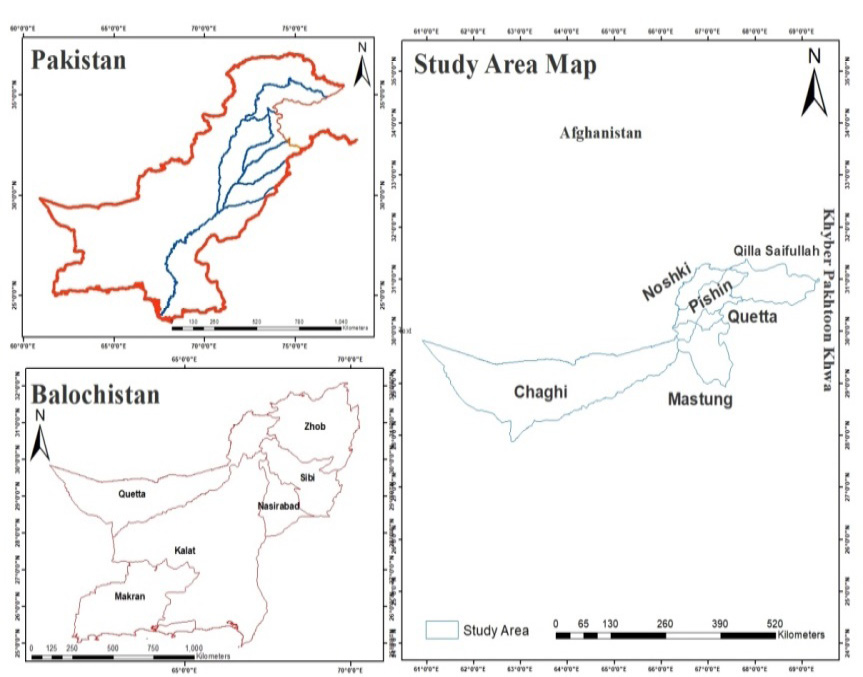
This study was conducted on different species of migratory birds houbara bustard, sand grouse, cranes, and waterfowls irrespective of their age and sex in different districts (Noshki, Chaghi, Mustung, Pishin, Quetta, and Qilla Saifullah) of Balochistan, Pakistan in (Fig. 1). A total of 216 fecal samples from migratory birds were collected through nesting and hunting from different stopovers of migratory birds and studied.
Culturing and identification of E. coli, Salmonella, and Clostridium
Fecal samples were collected using sterilized cotton swabs containing phosphate-buffered saline (Thermo Fisher Scientific Inc., Massachusetts, USA) directly from cloacae and were immediately transferred to the Institute of Microbiology, UVAS, Lahore maintaining a cold chain (4°C). Samples were cultured on nutrient base agar media (Thermo Fisher Scientific Inc., Massachusetts, USA) according to the manufacturer’s instructions labeled, and incubated at 37 ° C for 24 h.
Positive isolates of E. coli, Salmonella, and clostridium from fecal samples cultured on nutrient agar were inoculated on differential media MacConkey agar (Thermos Fisher Scientific Inc., Massachusetts, USA) were incubated at 37 °C. After 24 h suspected pink color colonies of E. coli and white colorless suspected colonies of Salmonella were inoculated on selective media eosin methylene blue (EMB) (Thermo Fisher Scientific Inc., Massachusetts, USA) and Salmonella Shigella (SS) agar (Thermo Fisher Scientific Inc., Massachusetts, USA) to confirm the growth of E. coli and Salmonella. For Clostridium perferingens Clostridium base agar supplemented with egg yolk emulsion (50ml/liter) and D-cycloserine (2 vials/liter) was inoculated with clostridium colonies and incubated at 37°C for 24 h. These purified isolates of E. coli, Salmonella, and Clostridium were further processed for identification considering colony characters, microscopic characters using Gram staining, and biochemical profile through catalase, oxidase, indole production test, methyl red test, Voges-Proskaur’s test and citrate utilization tests following Bergey’s manual of systematics of Archaea and bacteria.
Molecular detection of bacteria
DNA of positive isolates was extracted using DNA extraction kits (Wiz Prep gDNA Mini Kit) as per manufacturer’s directions.Extracted DNA was amplified through PCR using master mix 12.5 µl, template DNA 2.5 µl, nuclease-free water 5 µl and reported forward/reverse primers 2.5 µl each (Table I) with initial denaturation at 95°C for 3 min, 35 cycles each of denaturation at 95°C for 30 sec, annealing at 55°C for 30 sec, extension at 72°C for 1 min and final extension at 72°C for 15 min .
Table I. Primer sets and conditions of PCR used for amplification of 16Sr RNA of different bateria.
| Organism | Primers | Primer sequences 5`→3` | Annealing temp | Product size (bp) | Reference |
| Clostridium perfringens type A | CPAlpha | F GCTAATGTTACTGCCGTTGA R CCTCTGATACATCGTGTAAG | 53oC | 324 | |
| Salmonella | 8FLP XB4 | F AGTTTGATCCTGGCTCAG R GTGTGTACAAGGCCCGGGAAC | 55 oC | 1500 | |
| E. coli | VTcom-u | F GAGCGAAATAATTTATATGTG R TGATGATGGCAATTCAGTAT | 52 oC | 518 |
A total of 2μl PCR product was run through 1.5% agarose gel electrophoresis . The amplification bands were visualized under UV light using a gel documentation system (Bio-Rad, USA).
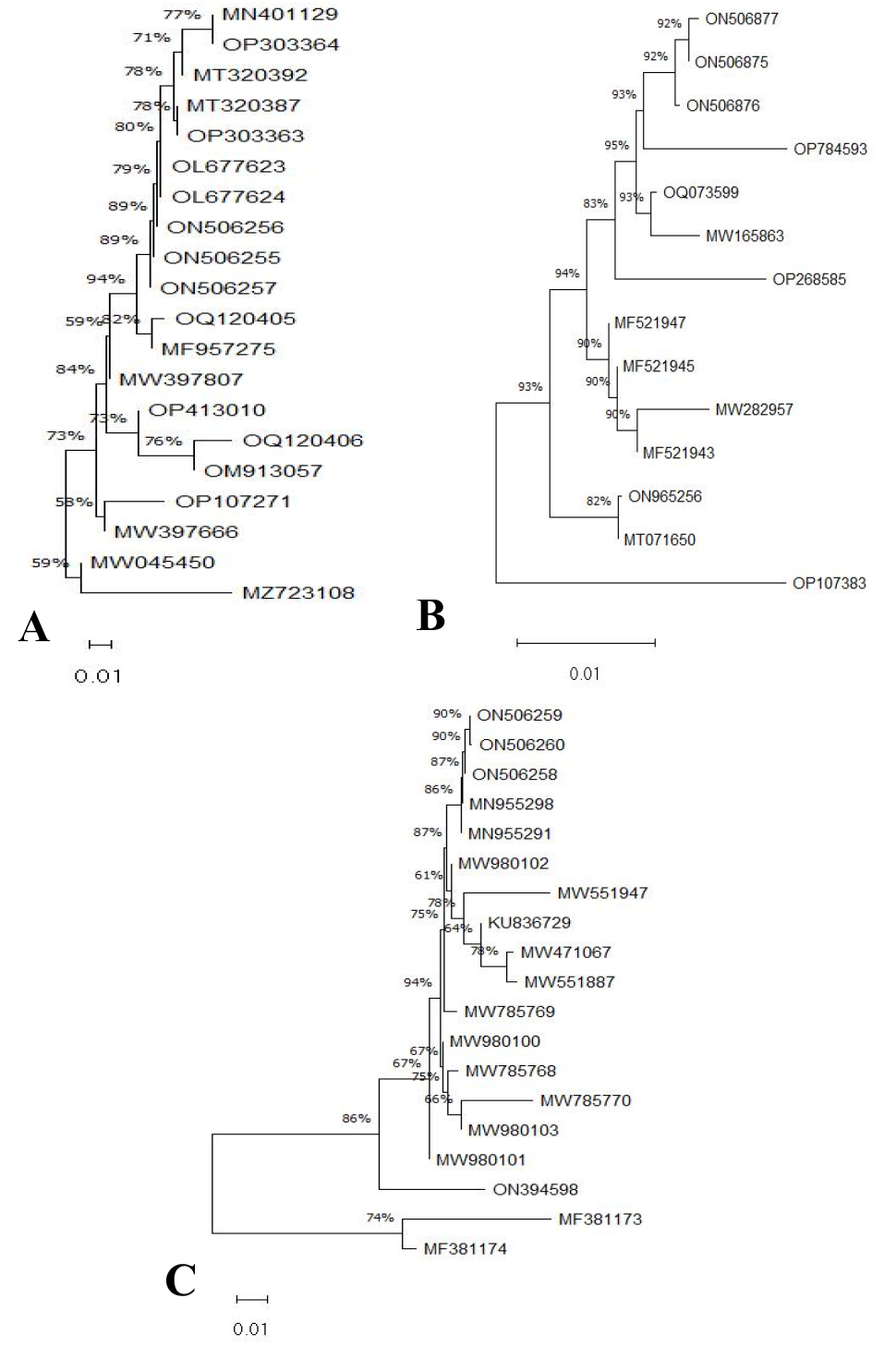
The PCR product was sequenced by the commercial Sanger di-deoxy sequencing analysis (ABI Genetics Lab, Lahore, Pakistan). The accession numbers were then submitted to the NCBI database. The obtained sequences were aligned with those from NCBI through the utilization of Bio-Edit and ClustalW software. Subsequently, the Neighbor-Joining tree for the 16S rRNA gene was constructed using MEGA 11 BLAST software. Phylogenetic analysis was performed using MEGA software ; at Kumar Lab, Pennsylvania State University, USA.
Statistical analysis
Frequency tables were employed for the analysis of descriptive statistics to elucidate the proportions of prevalence. Moreover, a chi-square test was conducted to compare the prevalence of bacteria in migratory birds at a p-value (< 0.05). The analyses were carried out using IBM SPSS Statistics version 25 software, as outlined by .
RESULTS
Prevalance of E. coli, Salmonella, and Clostridium in migratory birds
A total of 216 fecal samples were collected from 31 houbara bustard, 43 sand grouse, 56 cranes, and 86 waterfowls. All the fecal samples were screened for bacteria, and 193 isolates were found positive for bacteria of which 65.80% were of E. coli, 23.83% were of Salmonella, and 10.36% were of Clostridium (Table II).
Table III shows the accession number of DNA frequencies submitted to NCB1.
Phylogenetic analysis
Phylogenetic analysis of E. coli showed 94-89% similarity among our sequences and 80-71% similarity was recorded with other countries’ strains. The Clostridium strains sequences of our study showed 90-87% similarity and 86-61% similarity with other countries. Sequences of the Salmonella strain showed 92% similarity, on the other hand, 93% similarity was observed with other sequences from the database in (Fig. 2).
Table II. Prevalence of E. coli, Salmonella, and Clostridium in different migratory birds in Balochistan, Pakistan.
| Birds | Total samples | E. coli positive (%) | Salmonella positive (%) | Clostridium positive (%) |
| Houbara bustard | 31 | 8 (25.8%) | 2 (6.45%) | 0 (0%) |
| Sand grouse | 43 | 18 (41.8%) | 5 (11.6%) | 2 (4.6%) |
| Cranes | 56 | 36 (64.2%) | 9 (16.1%) | 5 (8.9%) |
| Water fowls | 86 | 65 (75.5%) | 30 (34.8%) | 13 (15.1%) |
| Total | 216 | 127 | 46 | 20 |
Table III. Accession numbers of different genetic sequences of E. coli, Salmonella, and Clostridium submitted to NCBI.
| Organism | ID | Accession number |
| E. coli | eco1 | ON506255 |
| E. coli | eco2 | ON506256 |
| E. coli | eco3 | ON506257 |
| Salmonella | sal1 | ON506875 |
| Salmonella | sal2 | ON506876 |
| Salmonella | sal3 | ON506877 |
| Clostridium | clos1 | ON506258 |
| Clostridium | clos2 | ON506259 |
| Clostridium | clos3 | ON506260 |
Birds and district-wise prevalence of pathogens
Table II shows bird wise prevalence of E. coli (75.5%), Salmonella (34.8%), and Clostridium (15.1%) in waterfowl; and 64.2% of E. coli, 16.1% of Salmonella, and 8.9% of Clostridium in cranes. On the other hand, sand grouse and houbara bustard carried 41.8%, 25.8% of E. coli, 11.6%, 6.45% of Salmonella, and 4.6%, 0% of Clostridium. The data was observed significant (P≤ 0.05).
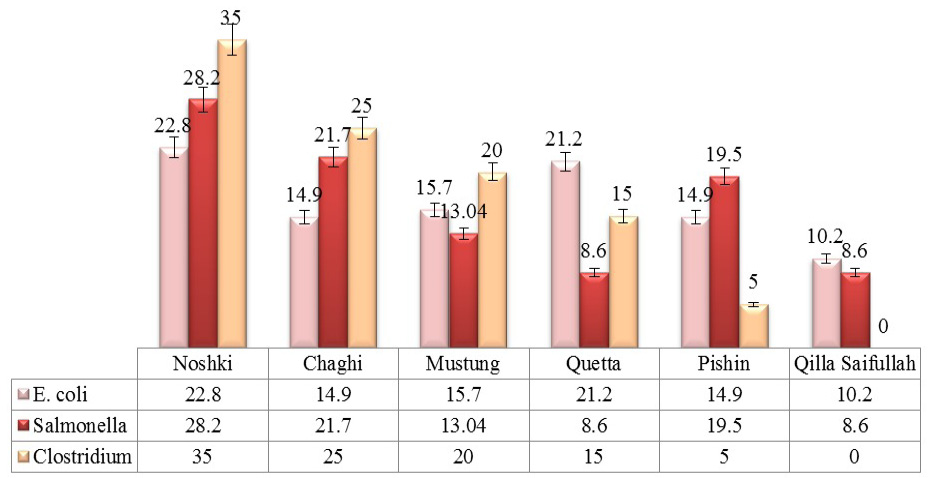
Figure 3 and Table IV show district wise prevalence of E. coli, Salmonella, and Clostridium which varied across different regions. In Noshki the prevulance was 22.8%, 28.2%, and 35%, respectively. In Chaghi, the prevalence for E. coli, Salmonella, and Clostridium was 14.9%, 21.7%, and 25%, respectively. For Mustung and Pishin, the prevalence was 15.7% for E. coli, 14.9% for Salmonella, 13.04% for Salmonella, and 19.5% for Clostridium. Lower prevalence was observed in birds from Qilla Saifullah, with rates of 10.2% for E. coli, 8.6% for Salmonella, and 0% for Clostridium. Statically the data was observed non-significant (P ≤ 0.05) in (Table IV, Fig. 3).
DISCUSSION
Migratory birds have been identified as potential vectors for the spread of bacterial pathogens such as E. coli, Salmonella, and Clostridium . In this study the prevalence of E. coli, Salmonella, and Clostridium in migratory birds was found to be 65.80%, 23.83% and 10.36%, respectively.
One study conducted in Norway found that Salmonella was present in 11.6% of migratory birds tested. Another study in the United States witnessed a prevalence of 16.7% for Salmonella in migratory birds . The prevalence of Salmonella in migratory birds in previous studies (13.5%) is less than the current study (23.83%). The intermittent shedding of Salmonella makes it difficult to identify carriers; Salmonella has been isolated from wild mammals and birds . Although Salmonella may survive for long periods in the environment, it is the carrier state that provides the major source of infection for animals and humans, and various carrier states are recognized . In this case, the spread of the infection was restricted or limited as different species of migratory birds have varying prevalence of different bacteria. Several studies support the finding that Salmonella is present in a significant percentage of migratory birds. Fu et al. (2022) found that 25% of migratory birds sampled in the United States had Salmonella infections coherent with this study. Another study by Smith et al. (2020) reported that 37% of migratory shorebirds in Australia were positive for Salmonella much greater than our study. The presence of Salmonella in migratory birds has implications for the spread of this bacterial disease. Migratory birds can travel long distances and encounter a wide range of habitats and populations, potentially spreading Salmonella to new areas. This is a concern for both human and animal health, as Salmonella infections can cause serious illness in both humans and animals . Overall, these findings highlight the need for further study
Table IV. District-wise prevalence of E. coli, Salmonella, and Clostridium in migratory birds in Balochistan, Pakistan.
| Sampling area | Birds species | E. coli (%) | Salmonella (%) | Clostridium (%) | P-value |
| Noshki | Houbara bustard | 3/29 (10.34) | 1/13 (7.69) | 0/7 (0) | 0.48 |
| Sand grouse | 6/29 (20.68) | 3/13 (23.07) | 1/7 (14.28) | ||
| Cranes | 7/29 (24.13) | 4/13 (30.76) | 2/7 (28.57) | ||
| Water fowls | 13/29 (44.82) | 5/13 (38.46) | 4/7 (57.14) | ||
| Chaghi | Houbara bustard | 2/19 (10.52) | 1/10 (10) | 0/5 (0) | 0.403 |
| Sand grouse | 3/19 (15.78) | 2/10 (20) | 1/5 (20) | ||
| Cranes | 5/19 (26.31) | 1/10 (10) | 1/5 (20) | ||
| Water fowls | 9/19 (47.36) | 6/10 (60) | 3/5 (60) | ||
| Mustung | Houbara bustard | 1/20 (5) | 0/6 (0) | 0/4 (0) | 0.791 |
| Sand grouse | 4/20 (20) | 0/6 (0) | 0/4 (0) | ||
| Cranes | 8/20 (40) | 2/6 (33.33) | 3/4 (75) | ||
| Water fowls | 7/20 (35) | 4/6 (66.66) | 1/4 (25) | ||
| Quetta | Houbara bustard | 0/27 (0) | 0/4 (0) | 0/3 (0) | 0.144 |
| Sand grouse | 2/27 (7.40) | 0/4 (0) | 0/3 (0) | ||
| Cranes | 11/27 (40.74) | 1/4 (25) | 0/3 (0) | ||
| Water fowls | 14/27 (51.85) | 3/4 (75) | 3/3 (100) | ||
| Pishin | Houbara bustard | 2/19 (10.52) | 0/9 (0) | 0/1 (0) | 0.591 |
| Sand grouse | 1/19 (5.26) | 0/9 (0) | 0/1 (0) | ||
| Cranes | 2/19 (10.52) | 1/9 (11.11) | 0/1 (0) | ||
| Water fowls | 14/19 (73.68) | 8/9 (88.88) | 1/1 (100) | ||
| Qilla Saifullah | Houbara bustard | 0/13 (0) | 0/4 (0) | 0/0 (0) | 0.365 |
| Sand grouse | 2/13 (15.38) | 0/4 (0) | 0/0 (0) | ||
| Cranes | 3/13 (23.07) | 0/4 (0) | 0/0 (0) | ||
| Water fowls | 8/13 (61.53) | 4/4 (100) | 0/0 (0) |
on the prevalence and transmission of Salmonella in migratory birds. Further understanding of this issue could inform the development of strategies to mitigate the spread of Salmonella and protect public health.
E. coli was found to be prevalent in 65.80% of the total migratory birds in our study. This doesn’t agree with the percentages (22.8% and 20.4%) reported by ; , respectively. The prevalence rates of pathogenic E. coli (20%) and Salmonella spp. (6.4%) were relatively reduced in wild migratory birds . In another study E. coli (9%), Salmonella spp. (1%) were detected from wild birds . The high prevalence in this study may be due to unhygienic water sources, anthropogenic activities, and poor processing systems. These aspects align with the outcomes of all the cited studies consistent with the observation of the present study. The transmission of E. coli from migratory birds to humans can occur through a variety of pathways. For example, migratory birds may contaminate water sources with their feces, leading to the spread of E. coli to humans who consume the contaminated water. Migratory birds may also transmit E. coli to humans through the contamination of crops or other food sources. It is important for people to be aware of the potential risk of E. coli infections from migratory birds and to take steps to prevent transmission .
The Clostridium was found to be 10.36% in migratory birds in our study aligning with the results (10.3%) of Pennycott (2016) contrary to Martin and Smyth (2009), and Bandelj et al. (2014) who reported 7.5% and 4.6%, respectively, whereas Forti et al. (2020) reported higher positive percentage (15.5%). In contrast, a study in Sweden found a much lower prevalence of Clostridium perfringens in migratory birds, with only 1.4% of birds testing positive for the bacterium . This suggests that the prevalence of C. perfringens in migratory birds may vary depending on the region and the specific migratory bird species. It is important to note that the presence of C. perfringens in migratory birds does not necessarily mean that the bacteria will be transmitted to humans. However, the risk of transmission may increase if proper food handling and hygiene practices are not followed .
In the present study, 16S rRNA gene has been used to find the genetic diversity of E. coli isolates from wild birds. Our findings were compared with a previous study that used the 16S rRNA gene that constitutes a remarkably conserved element within the transcriptional apparatus of all life forms based on DNA and experiences only minimal impact from horizontal gene transfer . Nevertheless, discrepancies persist within specific variable regions. A preceding study highlighted that, aside from these variations, the quantity of 16S rRNA copies could differ among distinct E. coli strains, offering a valuable means to characterize genomic diversity .
However, we confirmed Salmonella using 16S rRNA and compared our results to recent studies. The results of this study were comparable to a similar stduy , that confirmed the presence of Salmonella spp with 16S rRNA. Choi et al. (2021) also confirmed the Salmonella isolated from wild birds using 16S rRNA. In a study performed by Elsohaby et al. (2018) in Saudi Arabia; the author isolated Salmonella from migratory birds and confirmed with 16S rRNA gene. Salmonella chatartiztion from human samples, and 16S rRNA gene library preparation was performed for the typing and phylogenetic analysis ; . Similarly, 16S rRNA was used to confirm Clostridium spp. as performed by Scupham et al. (2008) in domestic and wild turkeys. Some other studies also used this gene to confirm clostridia in different fish species , meat (beef, lamb, and venison) and from skin and fecal samples of wild boars , and from the gut of domestic and wild mallards .
Conclusion
These findings suggest that Salmonella, E. coli, and Clostridium are common in migratory birds and may pose a risk to livestock and public health. The potential for migratory birds to transmit bacterial pathogens to other animals or humans highlights the importance of monitoring and studying these pathogens in migratory birds. This information can help veterinarians and public health officials to identify potential risks and implement measures to prevent the spread of these diseases. For example, migratory birds may be tested for bacterial pathogens to identify and isolate infected birds, or measures may be taken to prevent contact between migratory birds and domestic animals to reduce the risk of disease transmission.
Declarations
Acknowledgments
We highly appreciate the great support of wildlife officers and game watchers affiliated with the Forest and Wildlife Department of Balochistan, Pakistan.
Funding
This study was funded under the project entitled “Capacity building of neglected vector-borne diseases of livestock” by PAK-US science and technology program HEC Pakistan and Aghaz-e-haqooq Balochistan batch IV.
Ethical approval and IRB approval
Ethical approval to work with animals was taken from the Ethical Review Committee, University of Veterinary and Animal Sciences Lahore, Pakistan with No. DR/894 dated 22-8-2017 and no animal was harmed during the study.
Generative AI and AI-assisted technology statement
The authors declare that they have not used generative AI or AI-assisted technologies in this manuscript.
Statement of conflicts of interest
The authors have declared no conflict of interest.
Figures
References
- Al-Atfeehy, N.M., Sorour, H.K. and Nasef, S.A., 2019. Prevalence of some bacterial pathogens in wild birds. Vet. med. J. (Giza), 61: 1-14. https://doi.org/10.21608/vmjg.2015.373651[CrossRef]
- Ali, T., Sarwar, A., Anjum, A.A., Yaqub, T., Zeshan, B., Ali, M.A. and Khubaib, S.M.M., 2022. Activity of plant essential oils against antibiotic-resistant Enterococcus faecalis isolated from diarrheic children. Pak. J. Pharm. Sci., 35: 711-719.
- Au-Lorenz, T.C., 2012. Polymerase chain reaction: Basic protocol plus troubleshooting and optimization strategies. J. Visual. Exp., 63: e3998. https://doi.org/10.3791/3998[CrossRef]
- Bandelj, P., Trilar, T., Blagus, R., Ocepek, M., Rousseau, J., Weese, J.S. and Vengust, M., 2014. Prevalence and molecular characterization of Clostridium difficile isolated from European barn swallows (Hirundo rustica) during migration. BMC Vet. Res., 10: 40. https://doi.org/10.1186/1746-6148-10-40[CrossRef]
- Bengtsson, B. and Greko, C., 2014. Antibiotic resistance consequences for animal health, welfare, and food production. Upsala J. med. Sci., 119: 96-102. https://doi.org/10.3109/03009734.2014.901445[CrossRef]
- Benskin, C.M.H., Wilson, K., Jones, K. and Hartley, I.R., 2009. Bacterial pathogens in wild birds: A review of the frequency and effects of infection. Camb. Phil. Soc., 84: 349-373. https://doi.org/10.1111/j.1469-185X.2008.00076.x[CrossRef]
- Bibi, R., Nisa, N., Komal, S., Qureshi, H., Safdar, M., Jameel, H.H., Gul, S., Saeed, S. and Ullah, I., 2021. To assess the diversity and abundance of seasonal migratory waterbirds at Chashma Lake. Pakistan J. Innov. Sci., 7: 288-295. https://doi.org/10.17582/journal.jis/2021/7.2.288.295[Full text][CrossRef]
- Choi, O.N., Corl, A., Wolfenden, A., Lublin, A., Ishaq, S.L., Turjeman, S., Getz, W.M., Nathan, R., Bowie, R.C. and Kamath, P.L., 2021. High-throughput sequencing for examining Salmonella prevalence and pathogen microbiota relationships in barn swallows. Front. Ecol. Evol., 9: 683183. https://doi.org/10.3389/fevo.2021.683183[CrossRef]
- Clements, K.D., Pasch, I.B., Moran, D. and Turner, S.J., 2007. Clostridia dominate 16S rRNA gene libraries prepared from the hindgut of temperate marine herbivorous fishes. Mar. Biol., 150: 1431-1440. https://doi.org/10.1007/s00227-006-0443-9[CrossRef]
- Cox, M.J., Cookson, W.O. and Moffatt, M.F., 2013. Sequencing the human microbiome in health and disease. Hum. Mol. Genet., 22: R88-R94. https://doi.org/10.1093/hmg/ddt398[CrossRef]
- Daubin, V., Moran, N.A. and Ochman, H., 2003. Phylogenetics and the cohesion of bacterial genomes. Science, 301: 829-832. https://doi.org/10.1126/science.1086568[CrossRef]
- Dorn-In, S., Schwaiger, K., Springer, C., Barta, L., Ulrich, S. and Gareis, M., 2018. Development of a multiplex qPCR for the species identification of Clostridium estertheticum, C. frigoriphilum, C. bowmanii and C. tagluense like from blown pack spoilage (BPS) meats and from wild boars. Int. J. Fd. Microbiol., 286: 162-169. https://doi.org/10.1016/j.ijfoodmicro.2018.08.020[CrossRef]
- Elsohaby, I., Samy, A., Elmoslemany, A., Alorabi, M., Alkafafy, M., Aldoweriej, A., Al-Marri, T., Elbehiry, A. and Fayez, M., 2021. Migratory wild birds as a potential disseminator of antimicrobial-resistant bacteria around Al-Asfar Lake, Eastern Saudi Arabia. Antibiotics, 10: 260. https://doi.org/10.3390/antibiotics10030260[CrossRef]
- Engstrom, B.E., Fermer, C., Lindberg, A., Saarinen, E., Baverud, V. and Gunnarsson, A., 2003. Molecular typing of isolates of Clostridium perfringens from healthy and diseased poultry. Vet. Microbiol., 94: 225-235. https://doi.org/10.1016/S0378-1135(03)00106-8[CrossRef]
- Express Tribune, 2016. Migratory birds day: Conservation efforts needed to protect birds. Retrieved from https://tribune.com.pk/story/1100999/migratory-birdsday-conservation-efforts-needed-to-protect-birds; https://tribune.com.pk/story/460151/guests-fromsiberia-annual-arrival-of-migratory-birds-begins/
- Fadlalla, I.M.T., Hamid, M.E., ARahim, A.G. and Osman, M.A., 2021. The efficacy of partial 16S rRNA gene sequencing for precise determination of phylogenetic relatedness among Salmonellae. Sci. Afr., 14: e01004. https://doi.org/10.1016/j.sciaf.2021.e01004[CrossRef]
- Forti, K., Ferroni, L., Pellegrini, M., Cruciani, D., De Giuseppe, A., Crotti, S., Papa, P., Maresca, C., Severi, G., Marenzoni, M.L. and Cagiola, M., 2020. Molecular characterization of Clostridium perfringens strains isolated in Italy. Toxins (Basel), 12. https://doi.org/10.3390/toxins12100650[CrossRef]
- Fu, Y., Mikanatha, N.M., Lorch, J.M., Blehert, D.S., Berlowski-Zier, B., Whitehouse, C.A., Li, S., Deng, X., Smith, J.C., Shariat, N.W. and Nawrocki, E.M., 2022. Salmonella enterica serovar Typhimurium isolates from wild birds in the united states represent distinct lineages defined by bird type. Appl. environ. Microbiol., 88. https://doi.org/10.1128/aem.01979-21[CrossRef]
- Grenda, T., Jarosz, A., Sapała, M., Grenda, A., Patyra, E. and Kwiatek, K., 2023. Clostridium perfringens - pportunistic foodborne pathogen, its diversity and epidemiological significance. Pathogens, 12: 768. https://doi.org/10.3390/pathogens12060768[CrossRef]
- Guenther, S., Aschenbrenner, K., Stamm, I., Bethe, A., Semmler, T., Stubbe, A., Stubbe, M., Batsajkhan, N., Glupczynski, Y., Wieler, L.H. and Ewers, C., 2012. Comparable high rates of extended-spectrum-beta-lactamase-producing Escherichia coli in birds of prey from Germany and Mongolia. PLoS One, 7: e53039. https://doi.org/10.1371/journal.pone.0053039[CrossRef]
- Gunn, J.S., Marshall, J.M., Baker, S., Dongol, S., Charles, R.C. and Ryan, E.T., 2014. Salmonella chronic carriage: Epidemiology, diagnosis, and gallbladder persistence. Trends Microbiol., 22: 648-655. https://doi.org/10.1016/j.tim.2014.06.007[CrossRef]
- He, Y., Zhang, M., Dai, C. and Yu, L., 2023. Comparison of the gut microbial communities of domestic and wild mallards (Anas platyrhynchos) based on high-throughput sequencing technology. Animals, 13: 2956. https://doi.org/10.20944/preprints202308.0857.v1[CrossRef]
- Hellberg, R.S., Haney, C.J., Shen, Y., Cheng, C.M., Williams-Hill, D.M. and Martin, W.B., 2012. Development of a custom 16S rRNA gene library for the identification and molecular subtyping of Salmonella enterica. J. Microbiol. Methods, 91: 448–458. https://doi.org/10.1016/j.mimet.2012.09.018[CrossRef]
- Islam, M.S., Nayeem, M.M.H., Sobur, M.A., Ievy, S., Islam, M.A., Rahman, S., Kafi, M.A., Ashour, H.M. and Rahman, M.T., 2021. Virulence determinants and multidrug resistance of Escherichia coli isolated from migratory birds. Antibiotics (Basel), 10. https://doi.org/10.3390/antibiotics10020190[CrossRef]
- Kibret, M. and Abera, B., 2011. Antimicrobial susceptibility patterns of E. coli from clinical sources in northeast Ethiopia. Afr. Hlth. Sci., 11: 40-45. https://doi.org/10.4314/ahs.v11i3.70069[CrossRef]
- Lagerstrom, K.M. and Hadly, E.A., 2021. The under-investigated wild side of Escherichia coli: Genetic diversity, pathogenicity, and antimicrobial resistance in wild animals. Proc. biol. Sci., 288: 20210399. https://doi.org/10.1098/rspb.2021.0399[CrossRef]
- Lee, P.Y., Costumbrado, J., Hsu, C.Y. and Kim, Y.H., 2012. Agarose gel electrophoresis for the separation of DNA fragments. J. Visual. Exp., 62. https://doi.org/10.3791/3923-v[CrossRef]
- Lin, Y., Dong, X., Sun, R., Wu, J., Tian, L., Rao, D., Zhang, L. and Yang, K., 2020. Migratory birds-one major source of environmental antibiotic resistance around Qinghai Lake, China. Sci. Total Environ., 739: 139758. https://doi.org/10.1016/j.scitotenv.2020.139758[CrossRef]
- Martin, T.G. and Smyth, J.A., 2009. Prevalence of netB among some clinical isolates of Clostridium perfringens from animals in the United States. Vet. Microbiol., 136: 202-205. https://doi.org/10.1016/j.vetmic.2008.10.026[CrossRef]
- Milton, A.A.P., Agarwal, R.K., Priya, G.B., Athira, C.K., Saminathan, M., Reddy, A., Aravind, M. and Kumar, A., 2018. Occurrence, antimicrobial susceptibility patterns and genotypic relatedness of Salmonella spp. isolates from captive wildlife, their caretakers, feed, and water in India. Epidemiol. Infect., 146: 1543-1549. https://doi.org/10.1017/S0950268818001553[CrossRef]
- Murrad, S., Ali, M., Rabbani, M., Anjum, A., Avais, M., Yaqub, T. and Farooq, Z., 2020. Antibiotic resistance pattern of mastitis causing Escherichia coli toxinotypes. Pak. Vet. J., 40: 264-266. https://doi.org/10.29261/pakvetj/2019.004[CrossRef]
- Navarro, M.A., Li, J., Beingesser, J., McClane, B.A. and Uzal, F.A., 2020. The agr-like quorum-sensing system is important for Clostridium perfringens type A strain ATCC 3624 to cause gas gangrene in a mouse model. mSphere, 5. https://doi.org/10.1128/mSphere.00500-20[CrossRef]
- Pennycott, T.W., 2016. Diseases of wild birds of the orders passeriformes and columbiformes - a review of conditions reported from the United Kingdom and an analysis of results from wild bird disease surveillance in Scotland 1994-2013. DVM thesis.The University of Edinburgh.
- Rajput, S.K., Gururaj, K., Tiwari, U. and Singh, G., 2014. Study of the characterization of E. coli isolates in goat kids. Indian Res. J. Genet. Biotech., 6: 324-329.
- Refsum, T., Handeland, K., Baggesen, D.L., Holstad, G. and Kapperud, G., 2002. Salmonellae in avian wildlife in Norway from 1969 to 2000. Appl. environ. Microbiol., 68: 5595-5599. https://doi.org/10.1128/AEM.68.11.5595-5599.2002[CrossRef]
- Runge, C. and Tulloch, A.I.T., 2018. Solving problems of conservation inadequacy for nomadic birds. Austral. Zool., 39: 280-295. https://doi.org/10.7882/AZ.2016.003[CrossRef]
- Saiful Islam, M., Paul, A., Talukder, M., Roy, K., Abdus Sobur, M., Ievy, S., Nayeem, M.M.H., Rahman, S., Nazir, K.N.H., Hossain, M.T. and Rahman, M.T., 2021. Migratory birds traveling to Bangladesh are potential carriers of multi-drug resistant Enterococcus spp., Salmonella spp., and Vibrio spp. Saudi J. biol. Sci., 28: 5963-5970. https://doi.org/10.1016/j.sjbs.2021.06.053[CrossRef]
- Scupham, J.A., Patton, T.G., Bent, E. and Bayles, D.O., 2008. Comparison of the cecal microbiota of domestic and wild Turkeys. Microbial Ecol., 56: 322-331. https://doi.org/10.1007/s00248-007-9349-4[CrossRef]
- Sheikh, K.M., Kashif, M., 2006. Strategic role of Pakistan wetland resources: Prospects for an effective migratory waterbird conservation network. In: Waterbirds around the world (eds. G.C. Boere, C.A. Galbraith and D.A. Stroad). The Stationary Office, Edinburgh, U.K., pp. 292-293.
- Shobrak, M.Y. and Abo-Amer, A.E., 2014. Role of wild birds as carriers of multi-drug resistant Escherichia coli and Escherichia vulneris. Braz. J. Microbiol., 45: 1199-1209. https://doi.org/10.1590/S1517-83822014000400010[CrossRef]
- Smith, H.G., Bean, D.C., Hawkey, J., Clarke, R.H., Loyn, R., Larkins, J.A., Hassell, C., Valcanis, M., Pitchers, W. and Greenhill, A.R., 2020. Salmonella enterica serovar hvittingfoss in bar-tailed godwits (Limosa lapponica) from Roebuck Bay, Northwestern Australia. Appl. environ. Microbiol., 86: e01312-01320. https://doi.org/10.1128/AEM.01312-20[CrossRef]
- Smith, O.M., Snyder, W.E. and Owen, J.P., 2020. Are we overestimating risk of enteric pathogen spillover from wild birds to humans? Biol. Rev. Cambridge Philos. Soc., 95: 652–679. https://doi.org/10.1111/brv.12581[CrossRef]
- Tamura, K., Stecher, G., Peterson, D., Filipski, A. and Kumar, S., 2013. MEGA6: Molecular evolutionary genetics analysis version 6.0. Mol. Biol. Evol., 30: 2725-2729. https://doi.org/10.1093/molbev/mst197[CrossRef]
- Tizard, I., 2004. Salmonellosis in wild birds. Semin. Avian Exotic Pet Med., 13: 50-66. https://doi.org/10.1053/j.saep.2004.01.008[CrossRef]
- Todd, E., 2020. Food-borne disease prevention and risk assessment. Int. J. Environ. Res. Public Hlth.,17: 5129. https://doi.org/10.3390/ijerph17145129[CrossRef]
- Umar, M., Hussain, M., Murtaza, G., Shaheen, F. and Zafar, F., 2018. Ecological concerns of migratory birds in Pakistan: A review. Punjab Univ. J. Zool., 33: 69-76. https://doi.org/10.17582/pujz/2018.33.1.69.76[CrossRef]
- Vetrovsky, T. and Baldrian, P., 2013. The variability of the 16S rRNA gene in bacterial genomes and its consequences for bacterial community analyses. PLoS One, 8: p.e57923. https://doi.org/10.1371/journal.pone.0057923[CrossRef]
- Yuan, Y., Liang, B., Jiang, B.W., Zhu, L.W., Wang, T.C., Li, Y.G., Liu, J., Guo, X.J., Ji, X. and Sun, Y., 2021. Migratory wild birds carrying multidrug-resistant Escherichia coli as potential transmitters of antimicrobial resistance in China. PLoS One, 16: e0261444. https://doi.org/10.1371/journal.pone.0261444[CrossRef]
Services
Article usage statistics
Loading…