
Birds play a critical role as a reservoir for enteric bacteria Escherichia coli and Salmonella enterica. This study aimed to investigate prevalence of E. coli and S. enterica and occurrence of their antibiotic resistance (ABR) genes in selected wild and captive bird species in Pakistan. E. coli and S. enterica were isolated from fecal samples of birds and identified by phenotypic, biochemical, and molecular characterization of ABR genes by PCR. E. coli colonies appeared circular and dark purple on EMB agar media plates while S. enterica colonies were small, circular, and red on SS agar media plates. E. coli and S. enterica isolates were found resistant to amoxicillin, ciprofloxacin, and sulfamethoxazole, while sensitive against doxycycline, gentamycin, and tetracycline. E. coli isolates showed positive results in catalase, indole, and methyl red tests while S. enterica isolates showed negative in citrate, lactose, and urease tests. E. coli and S. enterica strains were 100% and 99% identical, respectively, to previously isolated E. coli and S. enterica strains. Overall prevalence of E. coli and S. enterica was recorded as 16.55% and 2.7% respectively. Captive pigeons exhibited maximum 19.1% and 3.3% occurrence of blaTEM of E. coli and S. enterica respectively, 18.3% and 2.5% of sul3 respectively in peafowls, and 23.3% and 3.3% of qnrA respectively in captive pigeons. It has been concluded that captive birds in districts with lower elevation levels have a higher prevalence of E. coli and S. enterica at high temperatures compared to wild birds in districts with higher elevation levels.
Research Article · Volume 56, Issue 5, 14 August 2024 · Open Access
Identification of Escherichia coli and Salmonella enterica from Fecal Matter of Selected Birds and Assessment of their Susceptibility Towards Different Antibiotics
· · · ·
Affiliations & Notes ⌄
- 1Department of Wildlife and Ecology, University of Veterinary and Animal Sciences, Lahore, Pakistan 2Department of Wildlife and Forestry, Government of Punjab, Pakistan 3Department of Fisheries and Aquaculture, University of Veterinary and Animal Sciences, Lahore, Pakistan 4Institute of Zoology, University of the Punjab, Lahore, Pakistan * Corresponding author: ali.zool@pu.edu.pk
Article Info ⌄
- Journal:
- Pakistan Journal of Zoology
- Published:
- 14 August 2024

From the article
- Another study accounted 13.89% prevalence of E. coli in pigeons.
- Captive birds have higher prevalence of E. coli and zoonotic S. enterica compared with wild bird species, which can affect human health.
- This ultimately enhances the rate of pathogenicity of E. coli and S. enterica, posing a major potential threat not only to captive but also to wild birds.
Selected from the article's own text.
Abstract
INTRODUCTION
Over 10,000 birds, migrate between different countries and continents ; . Wild birds are known to be a significant source of bacterial diseases which can be transmitted to both humans and animals ; . These diseases also spread to aquatic environments ; and can lead to multiple abnormalities in infected humans, or cause the infected to become carriers . Wild birds transmit these beyond local outbreaks . Pakistan is home to over 650 different bird species found in three distinct zoogeographical zones: Ethiopian, Oriental, and Palearctic. This diversity makes Pakistani birds unique . Wild birds can transmit over 40 different types of diseases to humans and animals . These pathogens can also be transmitted even when the birds appear healthy and show no signs of infection . Due to their mobility, wild birds can transport pathogens over great distances during migration, increasing the potential for disease outbreaks beyond local areas . Wildlife, including wild birds, plays a vital role as a reservoir for enteric bacterial pathogens and zoonotic diseases .
Enteric bacterial pathogens cause gastroenteritis resulting high morbidity and mortality which poses significant public health risks . Environment, water and food specimens are potential sources of such pathogens . These pathogens also include Salmonella and Escherichia. Various studies have revealed multiple antibiotic resistance (MAR) of such pathogens ; . Among the zoonotic pathogens, S. enterica is particularly noteworthy for its high prevalence worldwide, and its ability to infect a wide variety of hosts ; . E. coli and S. enterica are significant enteropathogens that can cause foodborne infections with a significant impact on public health and high mortality rates ; with mortality rates and significant morbidity .
S. enterica and E. coli are the most prevalent pathogens found in wild birds with outbreaks of septicemia and deaths reported in Canada, Norway, United Kingdom, Sweden, and Switzerland ; . Wild birds infected with S. enterica may exhibit specific symptoms such as anorexia, pneumonia, diarrhea, neurological disorders, or sudden death ; . These pathogens are also a significant source of antimicrobial resistance . S. enterica are often present in the digestive tract of animals, birds, and humans and can be spread through feces, leading to contamination of water and food sources . S. enterica is a multidrug-resistant, Gram-negative, facultatively anaerobic or aerobic bacteria that belongs to the Enterobacteriaceae family. Birds can spread S. enterica through fecal shedding, direct contact, and shared environments . E. coli also is a major pathogen found in the digestive tract of humans and birds, and is considered to be an important pathogen in bird microbiota . E. coli is a rod-shaped, Gram-negative bacterium that belongs to the Enterobacteriaceae family. It has the ability to ferment lactose at 44°C, and produces pink colonies on MacConkey agar and dark purple colonies on EMB (eosin methylene blue) agar plates .
The emergence and spread of antibiotic resistance has grown globally and it is considered a significant threat to the public health of wild birds . Wild birds increase the potential for the spread of antibiotic resistance during their migration far distances ; . Prolonged use of antibiotics can lead to the development of antimicrobial resistance in microorganisms, making it difficult to treat infectious diseases caused by these microorganisms (WHO, 2018). The overuse and misuse of antibiotics is a major problem that is currently emerging globally .
The objective of this study was to examine the prevalence, susceptibility to antimicrobial agents, and occurrence of antibiotic resistance genes, of E. coli and S. enterica in eight captive and wild avian species, while considering variations in temperature and altitude.
MATERIALS AND METHODS
Study site and sampling
A total of 480 mature captive birds viz. peafowls (Pavo cristatus), ring-necked pheasants (Phasianus colchicus), turkeys (Meleagris gallopavo), and pigeons (Columba livia domestica), were collected from districts in Punjab (Pakistan) including Bahawalpur, Khanewal, Okara, Kasur, Lahore, Sargodha, Chakwal, and Rawalpindi. Similarly, 480 wild birds such as sparrows (Passer domesticus), crows (Corvus splendens), mynas (Acridotheres tristis), and wild pigeons (Columba livia) were also captured from the same localities. GIS map showing sampling sites (districts), is given in Figure 1.
Fecal sampling and isolation of E. coli and S. enterica
Fecal samples were collected aseptically from sampled birds on a monthly basis using forceps. The samples were immediately preserved in sterile conical tubes with screw caps and transported to the laboratory for further processing. The samples were serially diluted and plated on SS (Salmonella-Shigella) agar media using the streaking method. The plates were incubated at 37 °C for overnight. A single colony from this culture was selected and transferred to EMB (eosin methylene blue) agar media to obtain a pure culture of S. enterica and E. coli isolates. These isolates were saved for further use. A colony from this pure culture was then added to a falcon tube containing nutrient broth, and incubated at 37°C. 10ml of this cultured broth was then transferred to a new falcon tube containing nutrient broth and incubated at 37°C . After incubation, the bacterial growth was examined using Gram’s staining to identify the presence of E. coli and S. enterica .
Morphological identification of bacterial isolates
Freshly cultured E. coli and S. enterica colonies were subjected to morphological characterization and biochemical identification. Phenotypic characteristics of the colonies such as color, size, and edge were recorded .
Molecular identification of bacterial isolates
16S rRNA gene of E. coli and S. enterica was amplified by PCR using universal primers. 1 µl of template DNA was added to a total of 25 µl reaction solution for PCR containing two primers of the 16S rRNA gene; 1 µl of forward primer (27F): AGAGTTTGATCCTGGCTCAG, 1 µl of reverse primer (1492R): CTACGGCTACCTTGTTACGA, 10 µl of water, and 12 µl of GoTaq Green Master Mix (Promega, USA) under the amplification conditions mentioned in Table I . The PCR products were electrophoresed on 1% agarose gel stained with Ethidium Bromide (EtBr) and using a standard sized molecular marker, 1Kb DNA Ladder RTU (ready-to-use, GeneDireX). The PCR products revealing the thickest bands were sequenced using Sanger’s method at BGI Hong Kong Company Limited, China. The obtained sequences were analyzed and compared for taxonomic identification using NCBI BLAST and submitted to the Genbank database. The phylogenetic relationship of E. coli and S. enterica was checked by phylogenetic tree analysis of the 16S rRNA gene of E. coli and S. enterica using the bootstrap method and MEGA 11.0 (Molecular Evolutionary Genetic Analysis) with 1000 bootstrap replications .
Molecular detection of ABR genes of bacterial isolates
DNA was extracted from the pure culture using the Qiagen AllPrep kit (Qiagen, CA). The purity and concentration of the DNA were evaluated by gel electrophoresis on 1% agarose gel stained with Ethidium Bromide (EtBr) and using a standard sized molecular marker, 1Kb DNA Ladder RTU (Ready to use, GeneDireX) . ABR genes (qnrA, blaTEM, and sul3) of E. coli and S. enterica were detected by amplifying them using PCR (Bio-Rad, USA) and species-specific primers (Macrogen, Seoul Korea) . A total of 25 µl PCR reaction solution containing 1 µl of template DNA, 1 µl of F (forward) primer, 1 µl of R (reverse) primer, 10 µl of water, and 12 µl of GoTaq Green Master Mix (Promega, USA) was used in PCR to detect the target ABR genes of E. coli and S. enterica under the amplification conditions mentioned in Table I. The amplified PCR products were analyzed on 1% agarose gel stained with ethidium bromide (EtBr) and using a standard sized molecular marker, 1Kb DNA Ladder RTU (Ready-to-Use, GeneDireX). PCR products revealing the thickest bands, were sequenced using Sanger’s method at BGI Hong Kong Company Limited, China.
Antimicrobial sensitivity testing
The antibiotic susceptibility of E. coli and S. enterica was determined using the Kirby-Bauer disk diffusion method on Mueller-Hinton agar (MHA) plates . 14 different antibiotic discs were applied to MHA plates that had been inoculated with a suspension of E. coli and S. enterica colonies containing 1.5 x 10⁸ cfu/ml. 6 mm discs with varying doses of antibiotics (5-30 μg) sourced from OXOID, UK were placed on the MHA plates and incubated at 37°C for 24 h. The size of the zone of inhibition around each disc was measured to classify the bacteria as resistant, moderately susceptible, or susceptible .
Table I. PCR conditions for amplification of antibiotic resistance genes and 16S rRNA of E. coli and S. enterica.
| Target gene | Primer sequence (5'-3') | Amplified segment (bp) | Annealing | Reference(-s) |
| 16S rRNA gene | F-AGAGTTTGATCCTGGCTCAG | 1503 | 55°C | |
| R- CTACGGCTACCTTGTTACGA | ||||
| blaTEM | F-CGCCGCATACACTATTCTCAGAATGA | 800 | 52°C | |
| R-ACGCTCACCGGCTCCAGATTTAT | ||||
| qnrA | F-ATTTCTCACGCCAGGATTTG | 516 | 58.5°C | |
| R-GCAGATCGGCATAGCTGAAG | ||||
| sul3 | F-CAACGGAAGTGGGCGTTGTGGA | 443 | 54.2°C | |
| R-GCTGCACCAATTCGCTGAACG |
Data analysis
The prevalence of E. coli and S. enterica in selected wild and captive birds was compared using descriptive statistics such as proportion and percentage. Data on prevalence and occurrence of ABR genes of E. coli and S. enterica was collected using spreadsheets (Excel 2010; Microsoft, Redmond, Washington) and analyzed using the chi-square test of independence by SPSS version 21.0 software (IBM, USA).
RESULTS
Bacterial isolates from fecal matter
A total of 159 E. coli isolates (16.6%) were recovered from a sample of 960 captive and wild birds, comprising 17 turkeys, 34 captive pigeons, 26 sparrows, 19 ring-necked pheasants, 31 peafowls, 10 mynas, 13 crows, and 9 wild pigeons. Similarly, a total of 26 S. enterica isolates (2.7%) were recovered from the same sample of 960 captive and wild birds, comprising 4 turkeys, 5 captive pigeons, 2 sparrows, 5 ring-necked pheasants, 4 peafowls, 1 myna, 3 crows, and 2 wild pigeons. These findings demonstrate the prevalence of E. coli and S. enterica among captive and wild birds and provide insight into the distribution of these pathogens among different avian species.
Morphological and biochemical characteristics of bacterial isolates
The colonies of E. coli and S. enterica were observed on SS agar and EMB agar media plates. E. coli colonies appeared as circular, smooth and glossy, and dark purple on EMB agar media while colorless on SS agar media. E. coli were Gram-negative rods (bacilli) and typically 0.5-1.0 µm in width and 1-3 µm in length. E. coli colonies were non-spore-forming and arranged in clusters or chains. S. enterica colonies were small, circular and appeared red on SS agar while dark purple on EMB agar media. The colonies were about 2-3mm in diameter and have a smooth, glossy appearance.
E. coli colonies were characterized as gram-negative, non-spore forming, rod-shaped bacteria with peritrichous flagella. The E. coli isolates were found to be positive for lactose fermentation (indicated by the appearance of pink color), catalase fermentation, indole production, and methyl red tests. However, they were found to be negative for citrate utilization, oxidase, and Vogas-Proskauer tests. Similarly, S. enterica isolates were found to be positive for H2S production and glucose fermentation. However, they were found to be negative for citrate utilization, lactose fermentation, urease, and citrate utilization. These results provide important information on the characteristics and metabolic properties of E. coli and S. enterica isolates, which can aid in the identification and differentiation of these bacterial strains.
Table II. Prevalence of S. enterica and E. coli with respect to bird species.
Table III. Prevalence of S. enterica and E. coli with respect to monthly temperature.
| S. enterica | E. coli | |
| April (26°C) | 1 (0.8%) | 9 (7.5%) |
| May (28°C) | 2 (1.7%) | 17 (14.2%) |
| June (31°C) | 3 (2.5%) | 22 (18.3%) |
| July (39°C) | 6 (5%) | 32 (26.7%) |
| August (37.7°C) | 5 (4.2%) | 24 (20%) |
| September (29°C) | 4 (3.3%) | 19 (15.8%) |
| October (27°C) | 3 (2.5%) | 15 (12.5%) |
| November (25°C) | 1 (0.8%) | 14 (11.7%) |
| December (20°C) | 1 (0.8%) | 7 (5.8%) |
Table IV. Prevalence of S. enterica and E. coli with respect to sampling sites.
| S. enterica | E. coli | |
| Khanewal (128m) | 5 (4.2%) | 34 (28.3%) |
| Okara (180m) | 5 (4.2%) | 29 (24.2%) |
| Bahawalpur (181m) | 4 (3.3%) | 26 (21.7%) |
| Sargodha (190m) | 4 (3.3%) | 22 (18.3%) |
| Kasur (206m) | 3 (2.5%) | 19 (15.8%) |
| Lahore (217m) | 2 (1.7%) | 14 (11.7%) |
| Chakwal (498m) | 2 (1.7%) | 9 (7.5%) |
| Rawalpindi (508m) | 1 (0.8%) | 6 (5%) |
ABR genes of E. coli and S. enterica
Captive pigeons exhibited maximum 19.1% and 3.3% occurrence of blaTEM of E. coli and S. enterica, respectively, 18.3% and 2.5% of sul3, respectively in peafowls, and 23.3% and 3.3% of qnrA, respectively in captive pigeons (Tables V and VI). Accession numbers of ABR genes are given in Table VIII.
Table V. Occurrence of ABR genes of E. coli.
| Bird species | blaTEM | sul3 | qnrA | 16S rRNA |
| Turkeys | 12 (10%) | 11 (9.2%) | 16 (13.3%) | 17 (14.2%) |
| Captive pigeons | 23 (19.1%) | 21 (17.5%) | 28 (23.3%) | 34 (28.3%) |
| Sparrows | 6 (5%) | 6 (5%) | 14 (11.7%) | 26 (21.7%) |
| Ring-necked pheasants | 13 (10. 8%) | 10 (8.3%) | 14 (11.7%) | 19 (15.8%) |
| Peafowls | 9 (7.5%) | 22 (18.3%) | 17 (14.2%) | 31 (25.8%) |
| Mynas | 3 (2.5%) | 2 (1.7%) | 5 (4.2%) | 10 (8.3%) |
| Crows | 2 (1.7%) | 4 (3.3%) | 7 (5.8%) | 13 (10.8%) |
| Wild pigeons | 4 (3.3%) | 2 (1.7%) | 5 (4.2%) | 9 (7.5%) |
Table VI. Occurrence of ABR genes of S. enterica.
| Bird species | blaTEM | sul3 | qnrA | 16S rRNA |
| Turkeys | 2 (1.7%) | 1 (0.8%) | 3 (2.5%) | 4 (3.3%) |
| Captive pigeons | 4 (3.3%) | 3 (2.5%) | 2 (1.7%) | 5 (4.2%) |
| Sparrows | 1 (0.8%) | 2 (1.7%) | 1 (0.8%) | 2 (1.7%) |
| Ring-necked pheasants | 1 (0.8%) | 2 (1.7%) | 3 (2.5%) | 5 (4.2%) |
| Peafowls | 3 (2.5%) | 2 (1.7%) | 4 (3.3%) | 4 (3.3%) |
| Mynas | 0 (0%) | 1 (0.8%) | 1 (0.8%) | 1 (0.8%) |
| Crows | 3 (2.5%) | 1 (0.8%) | 2 (1.7%) | 3 (2.5%) |
| Wild pigeons | 2 (1.7%) | 0 (0%) | 1 (0.8%) | 2 (1.7%) |
Antimicrobial susceptibility of E. coli and S. enterica
The antibiotic resistance profiles of E. coli and S. enterica isolates were evaluated. All E. coli isolates were found to be 100% resistant to ciprofloxacin (CIP), and sulfamethoxazole (SXT) while S. enterica exhibited 75% resistance to ampicillin (AMX) and flumequine (FLU), E. coli isolates showed 75% against cefotaxime (CTX) and norfloxacin (NOR). All E. coli and S. enterica isolates were found to be 100% sensitive to doxycycline (DO), gentamicin (GM), neomycin (N), streptomycin (S), and tetracycline (T). All E. coli and S. enterica isolates were found to be 50% susceptible to chloramphenicol (C) and erythromycin (E) (Table VII).
Phylogenetic tree analysis of E. coli and S. enterica
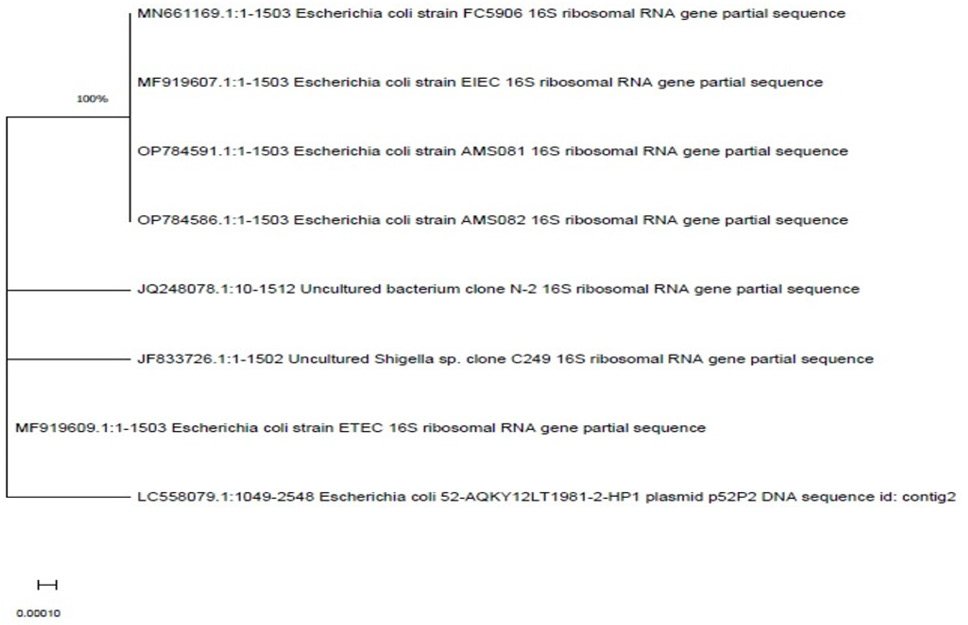
Phylogenetic tree revealed that E. coli strains AMS081 (OP784591) and AMS082 (OP784586) isolated during this study were 100% identical to each other as well as to E. coli strains previously isolated in other studies such as FC5906 (MN661169), EIEC (MF919607), and ETEC (MF919609). Similarly, the S. enterica strains AMS0101 (OP784599), AMS0121 (OP784589), and AMS077 (OP457070) isolated in this study showed 99% similarity among them and with other S. enterica strains that have been previously isolated in other studies such as FC1857 2 (KY776580), CFSAN003959 (CP041184), Sal-1135 (CP045464), and CVM N16S321 (CP049313). This suggests that these strains are closely related and have similar characteristics to those found in previous studies. Phylogenetic tree of E. coli and S. enterica is shown in Figure 2.
Prevalence of E. coli and S. enterica
Bird species and temperature
The prevalence of E. coli and S. enterica were analyzed in relation to temperature, sampling sites, and elevation. The results showed that the highest incidence of E. coli and S. enterica infections were found in captive pigeons, with rates of 28.3% and 4.2%, respectively (Fig. 3).
Table VII. Antimicrobial susceptibility of S. enterica and E. coli isolates.
| Antibiotics | E. coli | S. enterica | MIC50 (μg /ml) | MIC90 (μg /ml) | ||
| Sensitive | Resistant | Sensitive | Resistant | |||
| Amoxicillin (25µg, AMX) | 0 | 100% | 0 | 100% | >64 | >128 |
| Ampicillin (10 μg; AMP) | 0 | 100% | 25% | 75% | >32 | >64 |
| Cefotaxime (5μg; CTX) | 25% | 75% | 0 | 100% | <16 | <32 |
| Chloramphenicol (30 μg, C) | 50% | 50% | 50% | 50% | <16 | <32 |
| Ciprofloxacin (5 μg; CIP) | 0 | 100% | 0 | 100% | >16 | >32 |
| Doxycycline (30 μg; DO) | 100% | 0 | 100% | 0 | 0.5 | 1 |
| Erythromycin (15 μg; E) | 50% | 50% | 50% | 50% | 8 | 16 |
| Flumequine (30 μg; FLU) | 0 | 100% | 25% | 75% | >64 | >128 |
| Gentamicin (10 μg; GM) | 100% | 0 | 100% | 0 | 2 | 4 |
| Neomycin (30 μg; N) | 100% | 0 | 100% | 0 | 0.5 | 1 |
| Norfloxacin (10 μg; NOR) | 25% | 75% | 0 | 100% | >32 | >64 |
| Streptomycin (10 μg; S) | 100% | 0 | 100% | 0 | 2 | 4 |
| Sulfamethoxazole (25 μg; SXT) | 0 | 100% | 0 | 100% | >32 | >64 |
| Tetracycline (10 μg; T) | 100% | 0 | 100% | 0 | <2 | <4 |
Table VIII. Accession numbers of ABR genes and 16S rRNA of S. enterica and E. coli.
| ABR genes | Accession numbers |
| blaTEM | OQ271205 |
| blaTEM | OQ271206 |
| blaTEM | OQ271207 |
| blaTEM | OQ271208 |
| qnrA | OQ657274 |
| qnrA | OQ657275 |
| sul3 | OQ657276 |
| sul3 | OQ657277 |
| 16S rRNA | OP784591 |
| 16S rRNA | OP217978 |
| 16S rRNA | OP784586 |
| 16S rRNA | OP784599 |
| 16S rRNA | OP784589 |
| 16S rRNA | OP457079 |
On the other hand, the lowest infection rates were observed in wild pigeons, at 7.5% for E. coli and 1% in mynas for S. enterica (Table II). The peak of E. coli and S. enterica cases were reported in July at a temperature of 39⁰C, with infection rates of 26.7% and 5%, respectively (Table III). Overall prevalence of both E. coli and S. enterica was recorded as 16.55% and 2.7%, respectively which is depicted in Figure 1. Results of chi-squared test of independence showing P- value and chi-squared value with respect to selected parameters,are shown in Table IX.
Table IX. Results of chi-squared test of independence showing p-value and X2-value with respect to selected parameters
| Parameter | X-value | p-value |
| Bird species | 88 | 0.361 |
| Temperature | 117 | 0.354 |
| Pathogen | 16 | 0.191 |
| Sampling sites | 72 | 0.411 |
| Antibiotic resistance genes | 38 | 0.292 |
Sampling sites and elevation level
Maximum prevalence 28.3% and 4.2% of E. coli and S. enterica respectively was recorded at elevation of 128m in isolates of birds sampled from Khanewal while minimum 5% and 0.8% of E. coli and S. enterica respectively was recorded at elevation of 508m in samples from Rawalpindi (Table IV). GIS map showing prevalence (%) of E. coli and S. enterica with respect to sampling sites (districts) and elevation level, is given in Figure 1.
DISCUSSION
In recent years, there has been an increasing interest in wildlife and natural hosts for detecting pathogens and antibiotic-resistant bacteria . The potential threat of antibiotic-resistant bacterial colonization in wildlife and subsequent contamination of the environment has been widely recognized . Using wild animals and their natural habitats to detect antibiotic-resistant pathogens and bacteria has raised concerns in recent years . The possibility of antibiotic-resistant bacteria colonizing wild animals and polluting their surroundings has increased the potential risk .
Birds transfer pathogenic bacteria in other animals and humans of one locality to other localities . Pigeons have the potential to serve as carriers of zoonotic bacteria that can spread to humans, animals and other birds, thus posing a threat to the food chain . Among the most common zoonotic disease causing agents that can be transmitted by pigeons are E. coli and S. enterica both of which pose significant biological risks to human health . While most strains of E. coli are typically harmless and are found in the digestive tract, certain strains can cause foodborne illnesses and other diseases in birds. According to the results of the current study, a majority of E. coli strains isolated were found to be pathogenic. The distribution of pathogenic and non-pathogenic strains was found to be nearly identical among the pigeons . Phenotypic characterization of E. coli comes in accordance with findings of Aworh et al. (2021) and Batista et al. (2022). Lactose fermentation test helps in rapid identification E. coli and other Enterobacteriaceae . Biochemical identification of E. coli isolates was directly in accordance with Kithar et al. (2016) and Forbes et al. (2007).
We recorded 28.3% prevalence of E. coli in captive pigeons followed by 25.8% in peafowls, 21.7% in sparrows, 15.8% in ring-necked pheasants, 14.2% in turkeys, 10.8% in crows, 8.3% in mynas and 7.5% in mynas. In a previous study by Karim et al. (2020), 40 samples were examined and they found a 52.5% prevalence of E. coli, which was higher than our recorded prevalence. Similarly, in a prior study, 69.64% prevalence of E. coli was reported in healthy pigeons out of examined 112 samples of seemingly healthy pigeons from various locations in the Mymensingh district which was very high than our recorded prevalence in pigeons . Another study accounted 13.89% prevalence of E. coli in pigeons. Differences in these prevalence, sample size and regional variation may have contributed to the variations among the results of various studies. The recorded colony characteristics and properties of E. coli isolates in this study were consistent with findings reported by Dutta et al. (2013). Similarly, another recent study reported overall 49.5% prevalence of E. coli in six bird species while 54.5% in crow, 61.5% in myna, 78.9% in captive pigeon, and 23.5% in sparrow in Pakistan . Major factors such as bacterial strain and environmental factors, such as climate, hygiene practices, and antibiotic use, can impact the prevalence of E. coli.
Bacteria belonging to the Salmonella genus pose a significant risk to both human and animal health. These pathogens are the most common bacteria transmitted from poultry products to humans, and they are also associated with significant economic losses . We recorded 4.2% prevalence of S. enterica in captive pigeons and ring-necked pheasants, 3.3% in peafowls and turkeys, 2.5% in crows, 1.7% in sparrows and wild pigeons, and 0.8% in mynas. In a previous study, prevalence of 27.5% in pigeons was reported in Dhaka . In a previous study on pigeon diseases in Khulna Sadar and surrounding private farms, a prevalence of 20.32% salmonellosis was reported, with more cases detected among younger pigeons aged 30-90 days . Another study reported prevalence of 22.2%, 58.3%, and 27.5% for Salmonella spp. in cloacal swabs, footpads, and feces of pigeons from the Mymensingh district, respectively, with an overall prevalence of 35.71%. This study also reported variable prevalence of 40%, 20%, and 30% of S. enterica in pigeons in markets, farms, and villages, respectively . In a recent study, overall, 0.98% prevalence of S. enterica was reported in bird species in South Korea . Similarly, another recent study reported overall 30.6% prevalence of S. enterica in six bird species while 22.2% in crow, 20% in myna, 36.6% in captive pigeon, and 20% in sparrow in Pakistan . The big difference in the prevalence was due to different geographical location, bacterial strain, nutritional resources, and environmental factors.
In the current study, we identified three antibiotic resistance genes (qnrA, sul3, and blaTEM) in E. coli and S. enterica. Specifically, qnrA of E. coli was identified in 106 (11%) samples, sul3 in 78 (8.1%), and blaTEM in 72 (7.5%) while qnrA of S. enterica was identified in 17 (1.8%) samples, sul3 in 12 (1.2%), and blaTEM in 16 (1.7%). blaTEM and qnrA gene were also identified in pigeon . Similarly, these genes were also identified in E. coli (Le et al., 2020; . In contrast to our findings, higher occurrence of three ABR genes has been reported in E. coli by . As compared to our results, very high rate of occurrence of these ABR genes of S. enterica has been reported .
Our study evaluated antimicrobial resistance of E. coli and S. enterica isolates in fecal birds, and found a relatively high frequency of resistance to commonly used antibiotics bacterial infections . Using one antibiotic can cause resistance to another antibiotic through cross-resistance and co-selection . Amoxicillin and ciprofloxacin have been associated with increased resistance in E. coli, while frequent use causes higher levels of resistance . The connection between antibiotic consumption and resistance is intricate, and recent investigation has revealed both affirmative and adverse correlations of antimicrobial resistance (AMR) in E. coli and S. enterica strains extracted from captive pigeons . Almost all isolates were resistant to at least one antibiotic. Pigeons can acquire pathogens through contaminated food and water, and may contribute to the spread of antibiotic-resistant bacteria. Our findings are consistent with prior research and suggest a need for greater awareness of the human-animal-environment interface in the spread of AMR .
Conclusion
Captive birds have higher prevalence of E. coli and zoonotic S. enterica compared with wild bird species, which can affect human health. Misuse and frequent application of multiple antibiotics in enclosures of captive bird species cause antibiotic resistance and the emergence of ABR gene against each specific antibiotic. This ultimately enhances the rate of pathogenicity of E. coli and S. enterica, posing a major potential threat not only to captive but also to wild birds. The antibiotic resistance pattern of these bacteria causes severe infections in infected birds.
Funding
No funding was received for this study.
IRB approval
The current research work was approved by Departmental Board of Studies of Department of Wildlife and Ecology, University of Veterinary and Animal Sciences, Lahore, Pakistan.
Ethical approval
Not applicable.
Consent to publish
All the authors agreed with the content and gave explicit consent to submit and they obtained consent from the responsible authorities at the institute/organization where the work has been carried out.
Availability of data and materials
These will be provided by the corresponding author on reasonable request.
Statement of conflict of interest
The authors have declared no conflict of interest.
Figures
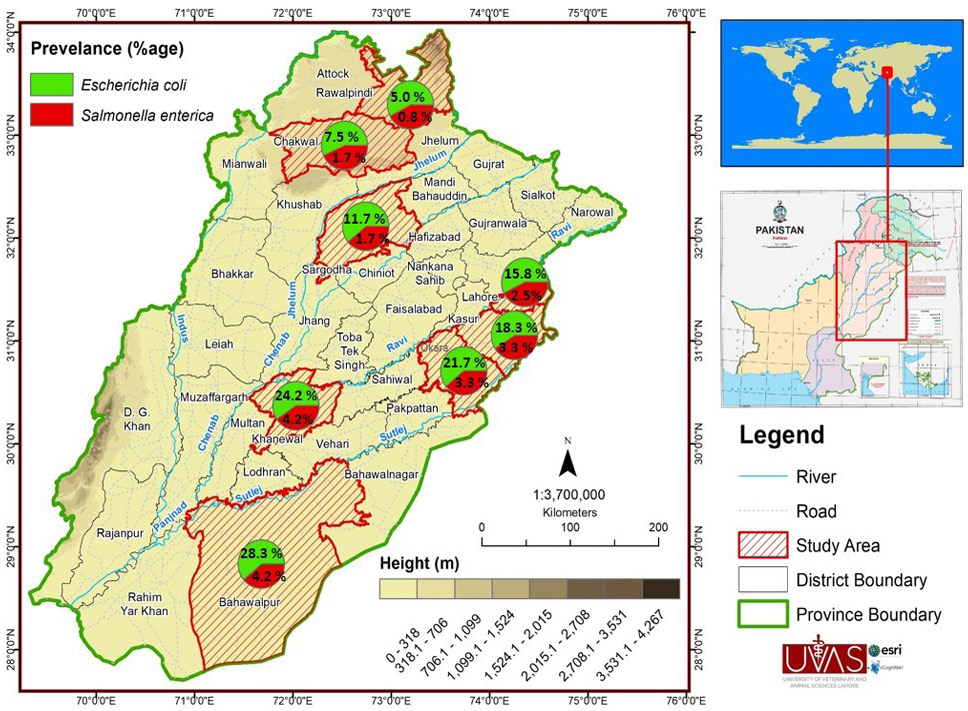
GIS map showing sampling sites (districts).
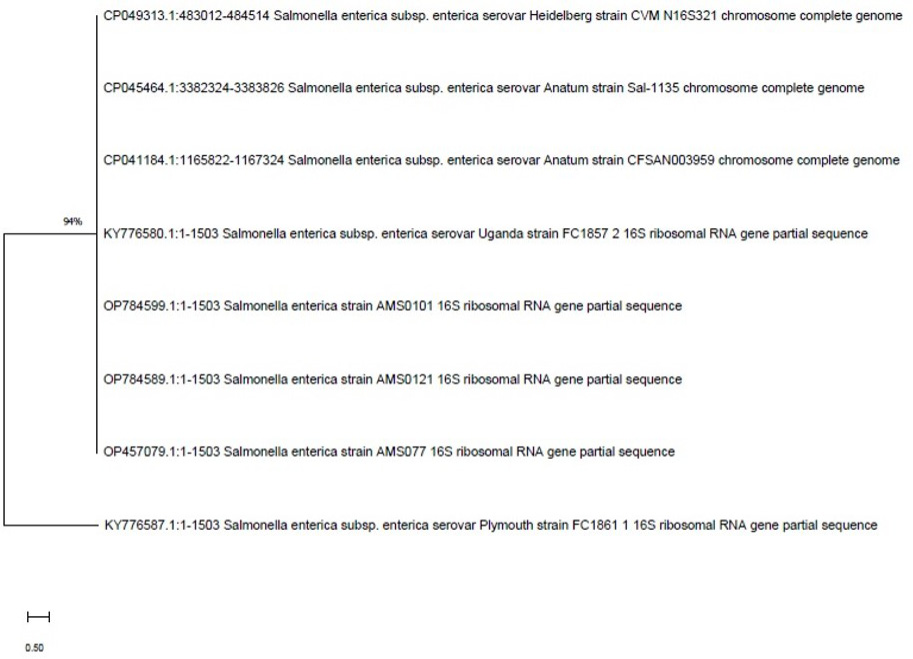
Phylogenetic tree analysis of 16S rRNA gene of E. coli (A) and S. enterica (B).
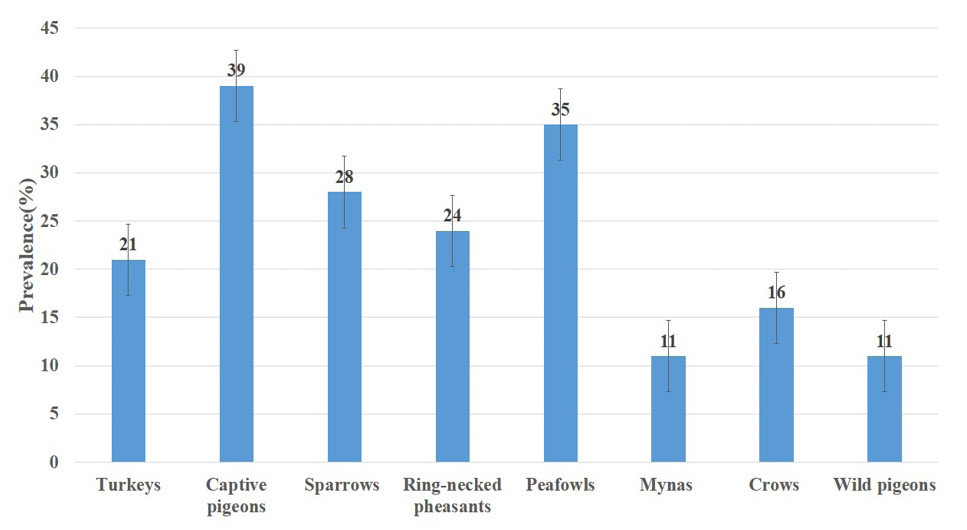
Prevalence (%) of E. coli and S. enterica with respect to bird species
References
- Abulreesh, H.H., 2011. Free living rock pigeon (Columba livia) as an environmental reservoir of enteric bacterial pathogens resistant to antimicrobial drugs in Saudi Arabia. Curr. Res. Bact., 4: 28-33. https://doi.org/10.3923/crb.2011.28.33[CrossRef]
- Ahmed, I., Rabbi, M.B. and Sultana S., 2019. Antibiotic resistance in Bangladesh: A systematic review. Int. J. Infect. Dis., 80: 54-61. https://doi.org/10.1016/j.ijid.2018.12.017[CrossRef]
- Al-Aalim, A.M., 2017. Isolation and identification of Salmonella microorganisms from pigeons and their pathogenicity in broiler chicks. Bas. J. Vet. Res., 16: 333-347.
- Aslantas, O. and Govce, N., 2020. Investigation of antimicrobial resistance in pigeons (Columba livia domestica) using indicator bacteria. J. Hell. Vet. Med. Soc., 71: 2095-106. https://doi.org/10.12681/jhvms.23632[CrossRef]
- Assoumy, M.A., Bedekelabou, A.P., Teko-Agbo, A., Ossebi, W., Akoda, K., Nimbona, F., Zeba, S.H., Zobo, A.A., Tiecoura, R.C., Kallo, V. and Dagnogo, K., 2021. Antibiotic resistance of Escherichia coli and Salmonella spp. strains isolated from healthy poultry farms in the districts of Abidjan and Agnibilekrou (Cote d’Ivoire). Vet. World, 14: 1020. https://doi.org/10.14202/vetworld.2021.1020-1027[CrossRef]
- Aworh, M.K., Kwaga, J.K., Hendriksen, R.S., Okolocha. E.C. and Thakur, S., 2021. Genetic relatedness of multidrug resistant Escherichia coli isolated from humans, chickens and poultry environments. Antimicrob. Resist. Infect. Contr., 10: 1-3. https://doi.org/10.1186/s13756-021-00930-x[CrossRef]
- Barrowclough, G.F., Cracraft, J., Klicka, J. and Zink, R.M., 2016. How many kinds of birds are there and why does it matter? PLoS One, 11: 0166307. https://doi.org/10.1371/journal.pone.0166307[CrossRef]
- Batista, R., Saraiva, M., Lopes, T., Silveira, L., Coelho, A., Furtado, R., Castro, R., Correia, C.B., Rodrigues, D., Henriques, P. and Loio, S., 2022. Genotypic and phenotypic characterization of pathogenic Escherichia coli, Salmonella spp., and Campylobacter spp., in free-living birds in Mainland Portugal. Int. J. environ. Res. Publ. Hlth., 20: 223. https://doi.org/10.3390/ijerph20010223[CrossRef]
- Ben Salem, R., Abbassi, M.S., García, V., García-Fierro, R., Njoud, C., Messadi, L. and Rodicio, M.R., 2016. Detection and molecular characterization of Salmonella enterica serovar Eppendorf circulating in chicken farms in Tunisia. Zoon. Publ. Hlth., 63: 320-327. https://doi.org/10.1111/zph.12234[CrossRef]
- Ben Yahia, H., Chairat, S., Gharsa, H., Alonso, C.A., Ben Sallem, R., Porres-Osante, N., Hamdi, N., Torres, C. and Ben Slama, K., 2020. First report of KPC-2 and KPC-3-producing Enterobacteriaceae in wild birds in Africa. Microb. Ecol., 79: 30-37. https://doi.org/10.1007/s00248-019-01375-x[CrossRef]
- Bhave, S., Kolhe, R., Mahadevaswamy, R., Bhong, C., Jadhav, S., Nalband, S., Gandhale, D. and Muglikar, D., 2019. Phylogrouping and antimicrobial resistance analysis of extraintestinal pathogenic Escherichia coli isolated from poultry species. Turk. J. Vet. Anim. Sci., 43: 117-126. https://doi.org/10.3906/vet-1808-47[CrossRef]
- Cabrera, J.M., Saraiva, M.M., Rodrigues, Alves, L.B., Monte, D.F., Vasconcelos, R.O., Freitas Neto, O.C. and Berchieri Junior, A., 2023. Salmonella enterica serovars in absence of ttr A and pdu A genes enhance the cell immune response during chick infections. Sci. Rep., 13: 595. https://doi.org/10.1038/s41598-023-27741-x[CrossRef]
- Chandran, A. and Mazumder, A., 2014. Occurrence of diarrheagenic virulence genes and genetic diversity in Escherichia coli isolates from fecal material of various avian hosts in British Columbia, Canada. Appl. environ. Microbiol., 80: 1933-1940. https://doi.org/10.1128/AEM.03949-13[CrossRef]
- Cohen, E., Davidovich, M., Rokney, A., Valinsky, L., Rahav, G. and Gal-Mor, O., 2020. Emergence of new variants of antibiotic resistance genomic islands among multidrug-resistant Salmonella enterica in poultry. Environ. Microbiol., 22: 413-432. https://doi.org/10.1111/1462-2920.14858[CrossRef]
- Defaye, B., Moutailler, S., Vollot, B., Galon, C., Gonzalez, G., Moraes, R.A., Leoncini, A.S., Rataud, A., Le Guillou, G., Pasqualini, V. and Quilichini, Y., 2023. Detection of pathogens and ticks on sedentary and migratory birds in two Corsican Wetlands (France, Mediterranean Area). Microorganisms, 11: 869. https://doi.org/10.3390/microorganisms11040869[CrossRef]
- Dutta, P., Borah, M.K., Sarmah, R. and Gangil, R., 2013. Isolation, histopathology and antibiogram of Escherichia coli from pigeons (Columba livia). Vet. World, 6: 91-94. https://doi.org/10.5455/vetworld.2013.91-94[CrossRef]
- Ebani, V.V., Guardone, L., Bertelloni, F., Perrucci, S., Poli, A. and Mancianti F., 2021. Survey on the presence of bacterial and parasitic zoonotic agents in the feces of wild birds. Vet. Sci., 8: 171. https://doi.org/10.3390/vetsci8090171[CrossRef]
- Ebomah, K.E. and Okoh, A.I., 2020. Detection of carbapenem-resistance genes in Klebsiella species recovered from selected environmental niches in the Eastern Cape Province, South Africa. Antibiotics, 9: 425. https://doi.org/10.3390/antibiotics9070425[CrossRef]
- Forbes, B.A., Sahm, D.F. and Weissfeld, A.S., 2007. Bailey and Scott’s diagnostic microbiology. 12th edition, Mosby Elsevier, St. Louis, USA.
- Foti, M., Siclari, A., Mascetti, A. and Fisichella, V., 2018. Study of the spread of antimicrobial-resistant Enterobacteriaceae from wild mammals in the National Park of Aspromonte (Calabria, Italy). Environ. Toxicol. Pharmacol., 63: 69-73. https://doi.org/10.1016/j.etap.2018.08.016[CrossRef]
- Fu, Y., M’ikanatha, N.M., Whitehouse, C.A., Tate, H., Ottesen, A., Lorch, J.M., Blehert, D.S., Berlowski-Zier, B. and Dudley, E.G., 2022. Low occurrence of multi-antimicrobial and heavy metal resistance in Salmonella enterica from wild birds in the United States. Environ. Microbiol., 24: 1380-1394. https://doi.org/10.1111/1462-2920.15865[CrossRef]
- Gazzonis, A.L., Villa, L., Lubian, E., Ressegotti, S., Grilli, G., Raimondi, S., Zanzani, S.A. and Manfredi, M.T., 2021. Molecular survey on Toxoplasma gondii and Neospora caninum infection in wild birds of prey admitted to recovery centers in northern Italy. Microorganisms, 9:736. https://doi.org/10.3390/microorganisms9040736[CrossRef]
- Getie, M., Abebe, W. and Tessema, B., 2019. Prevalence of enteric bacteria and their antimicrobial susceptibility patterns among food handlers in Gondar town, Northwest Ethiopia. Antimicrob. Resist. Infect. Contr., 8: 111-116. https://doi.org/10.1186/s13756-019-0566-7[CrossRef]
- Glass, K., Barnes, B., Scott, A., Toribio, J.A., Moloney, B., Singh, M. and Hernandez-Jover, M., 2019. Modelling the impact of biosecurity practices on the risk of high pathogenic avian influenza outbreaks in Australian commercial chicken farms. Prev. Vet. Med., 165: 8-14. https://doi.org/10.1016/j.prevetmed.2019.02.002[CrossRef]
- Gnat, S., Łagowski, D., Nowakiewicz, A. and Dyląg, M., 2021. A global view on fungal infections in humans and animals: Opportunistic infections and microsporidioses. J. appl. Microbiol., 131: 2095-113. https://doi.org/10.1111/jam.15032[CrossRef]
- Greig, J., Rajic, A., Young, I., Mascarenhas, M., Waddell, L. and LeJeune, J., 2015. A scoping review of the role of wildlife in the transmission of bacterial pathogens and antimicrobial resistance to the food chain. Zoon. Publ. Hlth., 62: 269-284. https://doi.org/10.1111/zph.12147[CrossRef]
- Hird, S.M., Sanchez, C., Carstens, B.C. and Brumfield, R.T., 2015. Comparative gut microbiota of 59 Neotropical bird species. Front. Microbiol., 6: 1403. https://doi.org/10.3389/fmicb.2015.01403[CrossRef]
- Hosain, M.S., Islam, M.A., Khatun, M.M. and Dey, R.K., 2012. Prevalence and antibiogram profiles of Salmonella spp. isolated from pigeons in Mymensingh, Bangladesh. Microb. Hlth., 1: 54-57. https://doi.org/10.3329/mh.v1i2.14090[CrossRef]
- Igere, B.E., Okoh, A.I. and Nwodo, U.U., 2020. Antibiotic susceptibility testing (AST) reports: A basis for environmental/epidemiological surveillance and infection control amongst environmental vibrio cholerae. Int. J. environ. Res. Publ. Hlth., 17: 1-23. https://doi.org/10.3390/ijerph17165685[CrossRef]
- Islam, M.R., Biswas, P.K. and Ali, M.L., 2004. Diseases of pigeons reared on small-holdings in Bangladesh. Int. J. Adv. Vet. Sci. Tech., 3: 119-130. https://doi.org/10.23953/cloud.ijavst.200[CrossRef]
- Kakooza, S., Muwonge, A., Nabatta, E., Eneku, W., Ndoboli, D., Wampande, E., Munyiirwa, D., Kayaga, E., Tumwebaze, M.A., Afayoa, M. and Ssajjakambwe, P., 2021. A retrospective analysis of antimicrobial resistance in pathogenic Escherichia coli and Salmonella spp. isolates from poultry in Uganda. Int. J. Vet. Sci. Med., 9: 11-21. https://doi.org/10.1080/23144599.2021.1926056[CrossRef]
- Karim, S.J., Islam, M., Sikder, T., Rubaya, R., Halder, J. and Alam, J., 2020. Multidrug-resistant Escherichia coli and Salmonella spp. isolated from pigeons. Vet. World, 13: 2156. https://doi.org/10.14202/vetworld.2020.2156-2165[CrossRef]
- Kavitha, J.R. and Devasena, T., 2013. Molecular and bacteriological examination of cow milk in coliform mastitis. J. Pharm. biol. Sci., 6: 2319-7676. https://doi.org/10.9790/3008-0623440[CrossRef]
- Kithar, R., Majeed Talib, A., Jaayid Salah, N.A. and Al-Khaeun., 2016. Isolation and identification of some types bacteria from shrimp (Metapenaeus affinis) and detection of histamine producing from its Metapenaeus affinis. Basrah J. agric. Sci., 29: 35-56. https://doi.org/10.33762/bagrs.2016.115379[CrossRef]
- Lagerstrom, K.M. and Hadly, E.A., 2021. The under-investigated wild side of Escherichia coli: Genetic diversity, pathogenicity and antimicrobial resistance in wild animals. Proc. biol. Sci., 288: 20210399. https://doi.org/10.1098/rspb.2021.0399[CrossRef]
- Lai, F.Y., Muziasari, W., Virta, M., Wiberg, K. and Ahrens, L., 2021. Profiles of environmental antibiotic resistomes in the urban aquatic recipients of Sweden using high-throughput quantitative PCR analysis. Environ. Pollut., 287: 117651. https://doi.org/10.1016/j.envpol.2021.117651[CrossRef]
- Le Huy, H., Koizumi, N., Ung, T.T., Le, T.T., Nguyen, H.L., Hoang, P.V., Nguyen, C.N., Khong, T.M., Hasebe, F., Haga, T. and Le, M.T., 2020. Antibiotic-resistant Escherichia coli isolated from urban rodents in Hanoi, Vietnam. J. Vet. med. Sci., 82: 653-660. https://doi.org/10.1292/jvms.19-0697[CrossRef]
- Liang, B., Ji, X., Jiang, B., Yuan, T., Gerile, C.L., Zhu, L., Wang, T., Li, Y., Liu, J., Guo, X. and Sun, Y., 2023. Virulence, antibiotic resistance, and phylogenetic relationships of Aeromonas spp. carried by migratory birds in China. Microorganisms, 11: 7. https://doi.org/10.3390/microorganisms11010007[CrossRef]
- Lone, A., Mottawea, W., Ait Chait, Y. and Hammami, R., 2021. Dual inhibition of Salmonella enterica and Clostridium perfringens by new probiotic candidates isolated from chicken intestinal mucosa. Microorganisms, 9: 166. https://doi.org/10.3390/microorganisms9010166[CrossRef]
- MacFadden, J.F., 2000. Biochemical tests for identification of medical bacteria 3rd Ed. The Williams and Wilkins Co., USA, pp. 689-691.
- Mehmood, K., Bilal, R.M. and Zhang, H., 2020. Study on the genotypic and phenotypic resistance of tetracycline antibiotic in Escherichia coli strains isolated from free ranging chickens of Anhui Province, China. Agrobiol. Rec., 2: 63-68. https://doi.org/10.47278/journal.abr/2020.014[CrossRef]
- Mircea, G., Ioana, D., Emoke, P., Mihaela, N. and Marina, S., 2014. Wild birds as potential vectors for pathogen dissemination on migration routes in the Danube Delta Wetlands. Int. J. Curr. Microbiol. appl. Sci., 3: 890-897.
- Mohakud, N.K., Patra, S.D., Kumar, S., Sahu, P.S., Misra, N. and Shrivastava, A.K., 2019. Detection and molecular typing of Campylobacter isolates from human and animal faeces in coastal belt of Odisha, India. Indian J. med. Microbiol., 37: 345-350. https://doi.org/10.4103/ijmm.IJMM_19_394[CrossRef]
- Montero, A., Marull, J., Tello, E., Cattaneo, C., Coll, F., Pons, M., Infante-Amate, J., Urrego-Mesa, A., Fernandez-Landa, A. and Vargas, M., 2021. The impacts of agricultural and urban land-use changes on plant and bird biodiversity in Costa Rica (1986–2014). Reg. Environ. Change, 21: 48. https://doi.org/10.1007/s10113-021-01767-1[CrossRef]
- Pavez-Munoz, E., Fernandez-Sanhueza, B., Urzua-Encina, C., Galarce, N. and Alegria-Moran, R., 2021. Risk factors for positivity to shiga toxin-producing Escherichia coli and Salmonella enterica in backyard production systems animals from Metropolitana Region, Chile: A threat to public health? Int. J. environ. Res. Publ. Hlth., 18: 10730. https://doi.org/10.3390/ijerph182010730[CrossRef]
- Pedersen, K. and Clark, L., 2007. A review of Shiga toxin Escherichia coli and Salmonella enterica in cattle and free-ranging birds: potential association and epidemiological links. Hum. Wild. Conflicts, 1: 68-77.
- Phiri, N., Mainda, G., Mukuma, M., Sinyangwe, N.N., Banda, L.J., Kwenda, G., Muligisa-Muonga, E., Flavien, B.N., Mwansa, M., Yamba, K. and Munyeme, M., 2020. Antibiotic-resistant Salmonella species and Escherichia coli in broiler chickens from farms, abattoirs and open markets in selected districts of Zambia. BioRxiv., https://doi.org/10.1101/2020.04.20.050914[CrossRef]
- Pouwels, K.B., Freeman, R., Muller-Pebody, B., Rooney, G., Henderson, K.L., Robotham, J.V. and Smieszek, T., 2018. Association between use of different antibiotics and trimethoprim resistance: Going beyond the obvious crude association. J. Antimicrob. Chemother, 73: 1700-1707. https://doi.org/10.1093/jac/dky031[CrossRef]
- Racewicz, P., Majewski, M., Biesiada, H., Nowaczewski, S., Wilczynski, J., Wystalska, D., Kubiak, M., Pszczoła, M. and Madeja, Z.E., 2022. Prevalence and characterisation of antimicrobial resistance genes and class 1 and 2 integrons in multiresistant Escherichia coli isolated from poultry production. Sci. Rep., 12: 1-3. https://doi.org/10.1038/s41598-022-09996-y[CrossRef]
- Rahman, M.M., Talukder, A., Chowdhury, M.M.H., Talukder, R. and Akter, R., 2021. Coronaviruses in wild birds. A potential and suitable vector for global distribution. Vet. Med. Sci., 7: 264-272. https://doi.org/10.1002/vms3.360[CrossRef]
- Rahman, M.T., Sobur, M.A., Islam, M.S., Ievy, S., Hossain, M.J., El Zowalaty, M.E., Rahman, A.T. and Ash, H.M., 2020. Zoonotic diseases: Etiology, impact, and control. Microorganisms, 8: 1405. https://doi.org/10.3390/microorganisms8091405[CrossRef]
- Ramon-Laca, A., White, D.J., Weir, J.T. and Robertson, H.A., 2018. Extraction of DNA from captive-sourced feces and molted feathers provides a novel method for conservation management of New Zealand kiwi (Apteryx spp.). Ecol. Evol., 8: 3119-3130. https://doi.org/10.1002/ece3.3795[CrossRef]
- Redweik, G.A., Stromberg, Z.R., Van Goor, A. and Mellata, M., 2020. Protection against avian pathogenic Escherichia coli and Salmonella Kentucky exhibited in chickens given both probiotics and live Salmonella vaccine. Poult. Sci., 99: 752-762. https://doi.org/10.1016/j.psj.2019.10.038[CrossRef]
- Russo, T.P., Minichino, A., Gargiulo, A., Varriale, L., Borrelli, L., Pace, A., Santaniello, A., Pompameo, M., Fioretti, A. and Dipineto, L., 2022. Prevalence and phenotypic antimicrobial resistance among ESKAPE bacteria and Enterobacterales strains in wild birds. Antibiotics, 11: 1825. https://doi.org/10.3390/antibiotics11121825[CrossRef]
- Saeed, M.A., Waheed, U., Ehtisham-ul-Haque, S., Khan, A.U., Kashif, M., Qamar, M.F., Ghafoor, A., Saqlain, M. and Asghar, J., 2023. Incidence and molecular characterization of extended-spectrum beta-lactamase (ESBL)-producing Salmonella enterica and Escherichia coli of avifauna origin in Pakistan. Pol. J. Vet. Sci., 26: 47-55.
- Saifullah, M.K., Mamun, M.M., Rubayet, R.M., Nazir, K.H.M., Zesmin, K. and Rahman, M.T., 2016. Molecular detection of Salmonella spp. Isolated from apparently healthy pigeon in Mymensingh, Bangladesh and their antibiotic resistance pattern. J. Adv. Vet. Anim. Res., 3: 51-55. https://doi.org/10.5455/javar.2016.c131[CrossRef]
- Shah, D., Shiringi, S., Besser, T. and Call, D., 2009. Molecular detection of food borne pathogens. CRC Press, Boca Raton. In Liu. (Edition) Taylor and Francis group, Florida, U.S.A., pp. 369-389.
- Sharif, M., Alam, S., Fazal, S., Kabir, M., Shah, A., Khan, W., Khan, M.M. and Khurshid, A., 2020. Isolation and characterization of multidrug resistant beta-lactamase producing Salmonella enterica from wild migratory birds. Appl. Ecol. environ. Res., 18: 1407-1418. https://doi.org/10.15666/aeer/1801_14071418[CrossRef]
- Smith, H.G., Bean, D.C., Clarke, R.H., Loyn, R., Larkins, J.A., Hassell, C. and Greenhill, A.R., 2022. Presence and antimicrobial resistance profiles of Escherichia coli, Enterococcus spp. and Salmonella spp. in 12 species of Australian shorebirds and terns. Zoon. Publ. Hlth., 69: 615-624. https://doi.org/10.1111/zph.12950[CrossRef]
- Tenover, F.C., 2014. Encyclopedia of microbiology. In: Antibiotic susceptibility testing (ed. M. Schaechter). 2009: 67-77. fourth ed. Academic Press, Cambridge. https://doi.org/10.1016/B978-012373944-5.00239-X[CrossRef]
- Thompson, J. and Seitzinger, A.H., 2019. Economic evaluation of low pathogenic avian influenza in northeastern US live bird markets. J. appl. Poult. Res., 28: 78-84. https://doi.org/10.3382/japr/pfy020[CrossRef]
- Van Belkum, A., Welker, M., Erhard, M. and Chatellier, S., 2012. Biomedical mass spectrometry in today’s and tomorrow’s clinical microbiology laboratories. J. clin. Microbiol., pp. 1513-1517. https://doi.org/10.1128/JCM.00420-12[CrossRef]
- Walesiak, M., Mikusinski, G., Borowski, Z. and Zmihorski, M., 2022. Large fire initially reduces bird diversity in Poland’s largest wetland biodiversity hotspot. Biodivers. Conserv., 31: 1037-1056. https://doi.org/10.1007/s10531-022-02376-y[CrossRef]
- Wei, B., Shang, K., Cha, S.Y., Zhang, J.F., Kang, M. and Jang, H.K., 2020. Prevalence and potential risk of Salmonella enterica in migratory birds from South Korea. Vet. Microbiol., 249: 108829. https://doi.org/10.1016/j.vetmic.2020.108829[CrossRef]
- Weinstein, M.P. and Lewis, J.S., 2020. The clinical and laboratory standards institute subcommittee on antimicrobial susceptibility testing: Background, organization, functions, and processes. J. clin. Microbiol., 58: e01864-19. https://doi.org/10.1128/JCM.01864-19[CrossRef]
- WHO. 2018. Antimicrobial Resistance: Fact. Sheet.
- Wu, J., Huang, Y., Rao, D., Zhang, Y. and Yang, K., 2018. Evidence for environmental dissemination of antibiotic resistance mediated by wild birds. Front. Microbiol., 9: 745. https://doi.org/10.3389/fmicb.2018.00745[CrossRef]
- Wuyts, V., Denayer, S., Roosens, N.H., Mattheus, W., Bertrand, S., Marchal, K., Dierick, K. and De Keersmaecker, S.C., 2015. Whole genome sequence analysis of Salmonella enteritidis PT4 outbreaks from a national reference laboratory’s viewpoint. PLoS Curr., 11: 7. https://doi.org/10.1371/currents.outbreaks.aa5372d90826e6cb0136ff66bb7a62fc[CrossRef]
- Zaman, A., Rafique, A., Jabeen, F. and Sultana, T., 2023. Diversity, abundance and seasonal assessment of wild birds in urban habitat of district Chiniot, Pakistan. Pakistan J. Zool., 55: 525. https://doi.org/10.17582/journal.pjz/20211215151255[Full text][CrossRef]
- Zhao, G., Zhou, L., Dong, Y., Cheng, Y. and Song, Y., 2017. The gut microbiome of hooded cranes (Grus monacha) wintering at Shengjin Lake, China. Microbiology, 6: e00447. https://doi.org/10.1002/mbo3.447[CrossRef]
Services
Article usage statistics
Loading…