
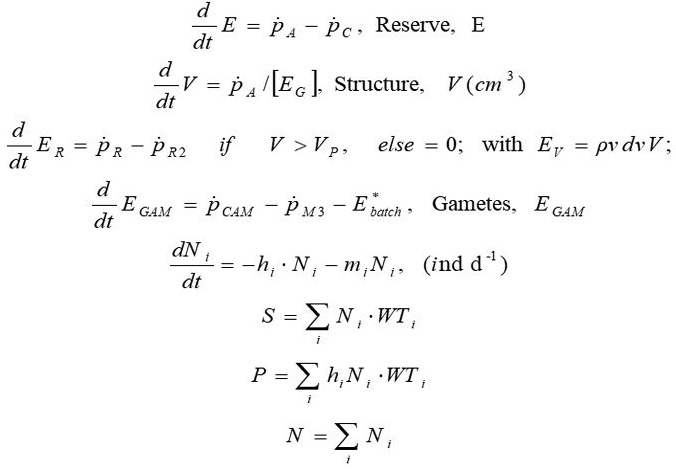
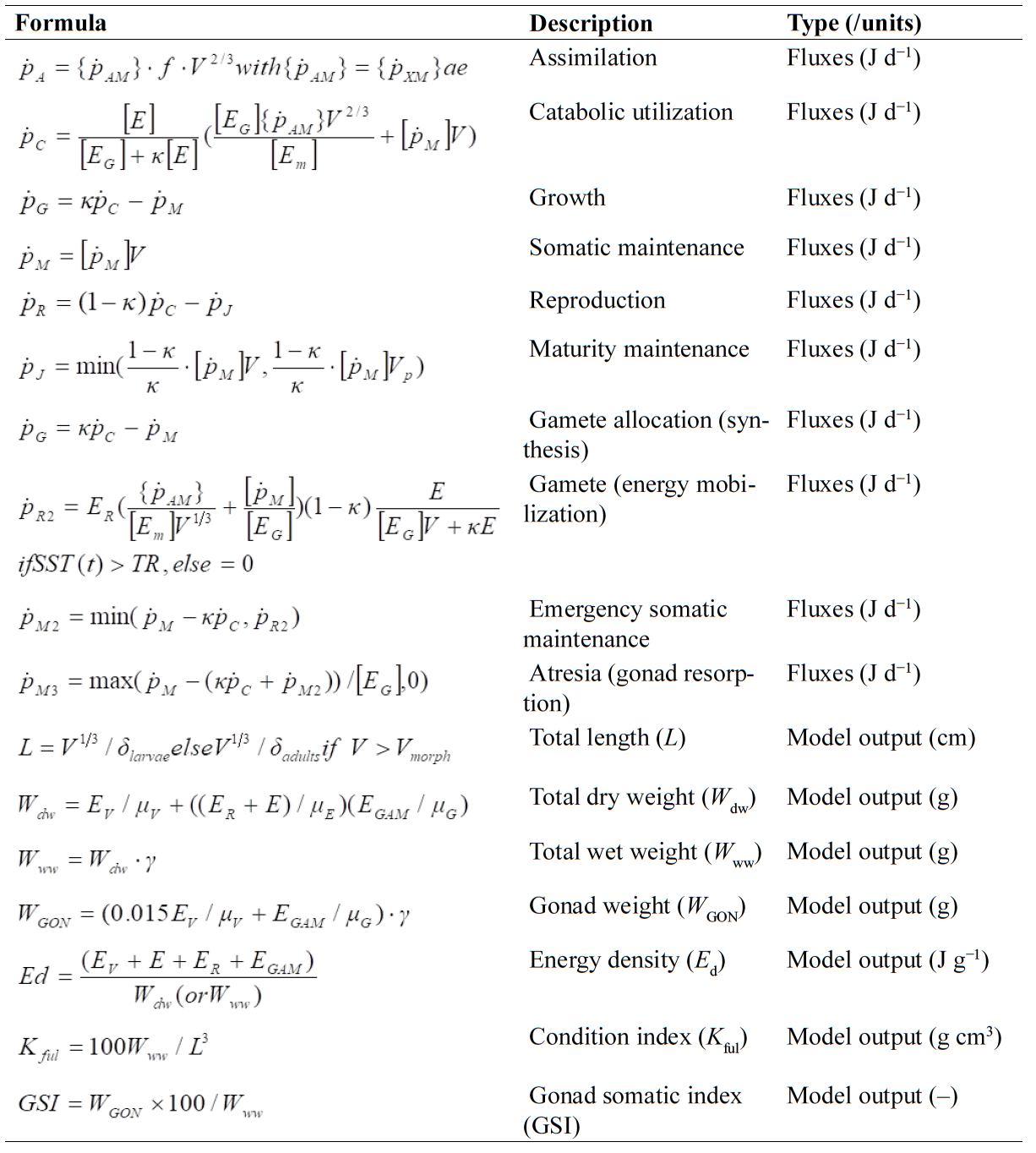
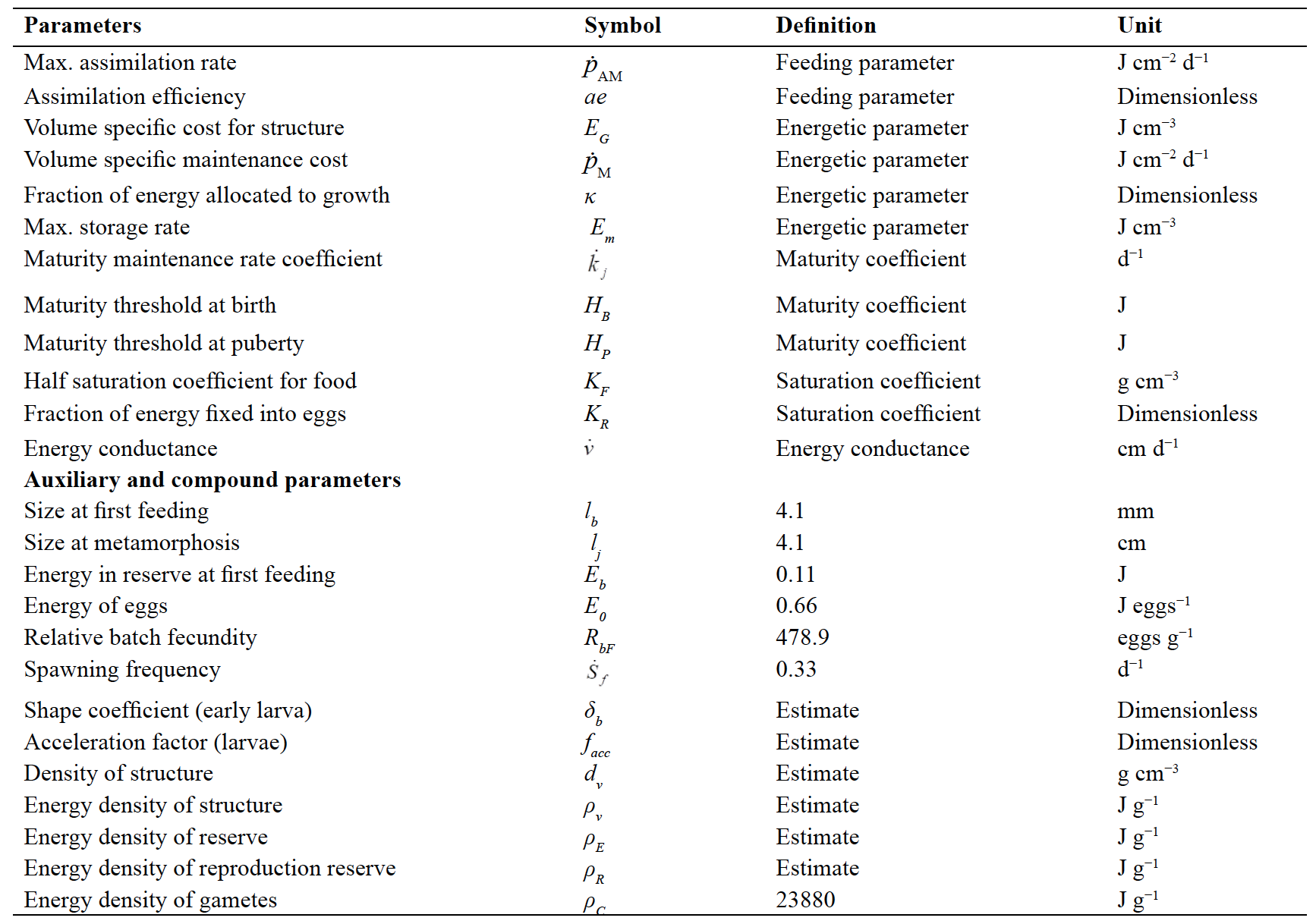
Dynamic energy budget (DEB; also known as Kooijman–Metz DEB) theory is a well-tested framework for modelling energy acquisition, and for describing vital rates at which organisms acquire and use energy, such as for growth and reproduction. The coupling of a DEB with an agent-based model (generating a DEB- ABM) enables examination of the effects of environmental change at a population-level on a species to be examined. The present study applied a DEB-ABM to the Japanese anchovy Engraulis japonicus. The DEB-ABM accurately captured energy acquisition and allocation throughout the anchovy lifecycle (egg, yolk sac larva, exogenous feeding larva, juvenile, and adult) and predicted how individual-level processes affect energy dynamics at higher levels of biological organization. We estimated primary model parameters (e.g., energy conductance, ὺ; allocation coefficient, κ; and volume-specific somatic maintenance, [á¹—M]), and for a 5-year simulation, calculated a mean population growth rate (rp) of 3.4 year−1. When DEB theory is combined with an ABM, the combined model describes the dynamics of a population of individuals, where each individual follows an energy budget model. Predicted demographic rates (growth, survival, reproduction) fall within observed ranges, fit average recorded values, and captured known seasonal trends. The DEB-ABM correlated intrinsic and density-independent population growth rates, and may be useful for predicting the metabolic responses of individuals or populations to environmental change.
Research Article · Volume 53, Issue 3, 1 April 2021 · Open Access
RETRACTED: Preliminary Assessment of a Coupled Dynamic-Energy Budget and Agent-based Model (DEB-ABM) for Predicting Individual and Population-Level Dynamics: A Case Study on Anchovy, Engraulis japonicus
· ·
Affiliations & Notes ⌄
- 1Department of Mathematics and Statistics, Shandong University, Weihai, Shandong 264209, China 2Function Laboratory for Marine Fisheries Science and Food Production Processes, Qingdao National Laboratory for Marine Science and Technology, Qingdao, Shandong 266237, China 3Yellow Sea Fisheries Research Institute, Chinese Academy of Fishery Sciences, Qingdao, Shandong 266071, China , * Corresponding author: shanxj@ysfri.ac.cn
Article Info ⌄
- Journal:
- Pakistan Journal of Zoology
- Published:
- 1 April 2021

Abstract
The full text of this article is available as a PDF — use Download PDF above.
Figures
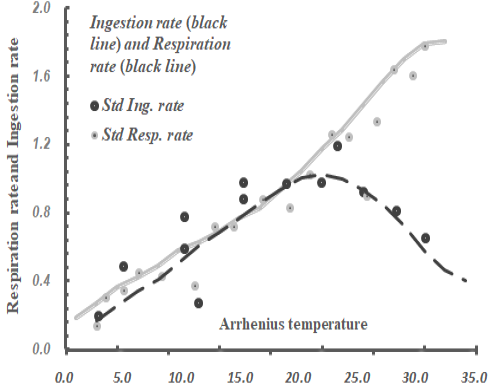
Arrhenius relationships used to estimate ingestion rate (black line) and respiration rate (grey line); corrections given for temperatures from 3-32 °C.
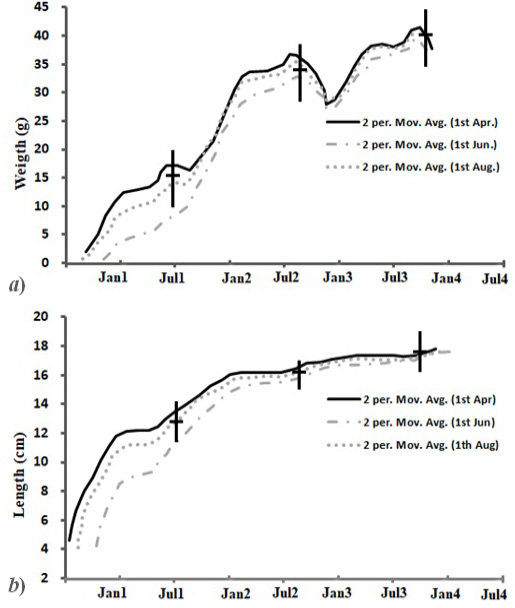
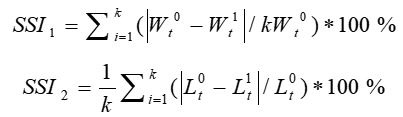
Anchovy growth in weight (top panel) and -length (bottom panel) measured by simulations in hatching dates (May to September) from 2000-2004.
Services
Article usage statistics
Loading…