Research Article · Volume 13, Issue 11, 22 October 2025 · Open Access
Anchovy By-Products in Animal Nutrition: Ecological Role, Utilisation and Sustainability
· · · · · · ·
Affiliations & Notes ⌄
1Department of Agricultural Science, Faculty of Agro-Based Industry, University Malaysia Kelantan, Jeli Campus,17600 Jeli, Kelantan, Malaysia
2Advanced Livestock and Aquaculture Research Group, Faculty of Agro-Based Industry, Universiti Malaysia Kelantan, Jeli Campus, 17600 Jeli, Kelantan, Malaysia
3Department of Animal Science and Fisheries, Faculty of Agricultural and Forestry Science, Universiti Putra Malaysia, Bintulu Sarawak Campus, Nyabau Road, 97008 Bintulu, Sarawak, Malaysia
4Department of Animal Nutrition and Feed Technology, Faculty of Animal Science, IPB University, Bogor 16680, Indonesia. *Correspondence | Nor Dini Rusli, Department of Agricultural Science, Faculty of Agro-Based Industry, University Malaysia Kelantan, Jeli Campus,17600 Jeli, Kelantan, Malaysia
The exploration of unconventional protein sources, such as anchovy waste, represents a critical advancement in the pursuit of sustainable and cost-effective alternatives to traditional feed ingredients.
The potential of anchovy waste as a feed ingredient has been highlighted, especially in the context of livestock and aquaculture diets.
Despite the promise shown by anchovy waste, several challenges must be addressed to ensure its safe and effective integration into animal nutrition.
In the future, the integration of fish waste and by-products could significantly enhance the sustainability of animal production systems, contributing to food security and environmental conservation.
Selected from the article's own text.
Abstract
The growing need for sustainable protein sources in animal nutrition has led to increased attention on underutilised marine resources, particularly by-products from anchovy (Engraulidae) processing. Anchovies are small pelagic fish with a global distribution. They hold significant ecological value and contribute economically to many coastal regions. However, anchovy processing generates substantial waste, such as heads, bones, viscera, and trimmings, that remains largely untapped despite its rich nutritional potential. This review explores the ecological importance of anchovies and recent developments in converting their processing residues into valuable animal feed ingredients. Anchovy by-products are rich in protein, essential amino acids, long-chain omega-3 fatty acids, and bioactive compounds. These properties make them suitable for use in livestock, poultry, and aquaculture diets. Their inclusion improves animal growth performance and reduces reliance on conventional protein sources like soybean meal and fishmeal. Utilising these by-products also aligns with circular economy practices by minimising waste and enhancing resource efficiency. Several processing techniques, including desalination, fermentation, enzymatic hydrolysis, and silage production, have been studied to improve the nutritional quality, safety, and digestibility of anchovy-derived feed ingredients. For example, desalting reduces sodium levels in cured anchovy waste, making it safer for non-ruminant consumption. Fermentation enhances nutrient availability and reduces anti-nutritional factors. Despite the promise, challenges remain. These include inconsistent nutrient composition, regulatory constraints, and the absence of standardised processing protocols. Future research should focus on quality control, safety standards, and optimised processing methods. Anchovy by-products offer strong potential to support sustainable, cost-effective, and environmentally friendly animal production systems.
As the global population continues to expand, the pressure to secure sustainable, cost-effective and environmentally responsible protein sources for animal feed has become increasingly urgent. Conventional protein ingredients such as soybean meal and animal-derived proteins, though nutritionally effective, present a host of environmental, economic, and ethical challenges. The large-scale cultivation of soybeans contributes to deforestation, biodiversity loss, and freshwater depletion, while the production of animal-derived proteins requires significant land and energy inputs and raises ethical concerns surrounding intensive livestock farming. These factors have catalysed global efforts to identify and develop alternative protein sources that can reduce the ecological footprint of animal production while maintaining or enhancing feed quality and animal performance.
This search for sustainable alternatives is closely aligned with broader goals of improving feed efficiency, lowering production costs, and reducing the environmental impact while meeting the growing global demand for animal products across various livestock sectors. Among these alternatives, microbial proteins derived from microalgae, yeast, fungi, and bacteria have emerged as highly promising. Produced in controlled environments independent of arable land and climatic conditions, these single-cell proteins offer high protein yields, consistent quality, and minimal resource inputs ; ; .
Similarly, insect meals particularly from black soldier fly larvae and mealworms, have attracted attention for their rich amino acid profiles, favourable feed conversion rates, and alignment with circular economy principles. In line with European Union (EU) policies promoting sustainable feed innovation, the inclusion of insect-based proteins in animal diets has seen growing regulatory support, representing an emerging trend in feed formulation and policy direction .
Fishery by-products represent another valuable, yet underutilised, protein source. These include heads, frames, viscera, and trimmings from commercially harvested species, which are often discarded or processed into low-value products. Among marine resources, anchovy (Engraulidae) by-products stand out due to their abundance and untapped potential. Anchovy by-products are particularly abundant due to the species high global catch volumes, especially in regions such as the Southeast Pacific and Mediterranean. Processing waste from anchovies is rich in digestible proteins, essential amino acids, long-chain omega-3 fatty acids, and bioactive compounds with immunomodulatory and antioxidant properties. Leveraging these by-products for feed use not only reduces food system waste but also supports resource efficiency and circular bioeconomy strategies. Incorporation of anchovy by-products into animal feed has demonstrated promising quantified benefits across species, including up to 50% replacement of fishmeal in aquaculture diets with improved weight gain and feed efficiency in Seurukan fish , enhanced growth performance and feed conversion in quail fed anchovy waste flour , and better feed conversion ratios in nursery pigs when anchovy fish meal with added solubles was used , collectively indicating both nutritional efficacy and potential cost savings in feed formulation.
Plant-derived alternatives have also been explored, including oilseed meals (e.g., rapeseed, sunflower), legume-based ingredients (e.g., peas, lupins), and agro-industrial by-products. These can partially or fully replace soybean meal in monogastric animal diets while delivering acceptable nutritional profiles, promoting meat quality, and reducing reliance on genetically modified crops ; . However, anti-nutritional factors, variable digestibility, and seasonal supply inconsistencies remain contradictions that hinder their broader commercial adoption, despite their ecological advantages.
While the promise of novel protein sources, including algae, duckweed, insects, and plant by-products, is evident, safety and regulatory considerations must be addressed. Potential contaminants such as heavy metals, mycotoxins, pesticide residues, and allergens require rigorous risk assessments. However, potential detoxification strategies include microbial bioremediation using Shewanella oneidensis , phytoremediation via aquatic plants , enzymatic enhancement through targeted feeds , and dietary interventions such as curcumin supplementation . Microplastic mitigation may draw from induced depuration methods in bivalves . Scalability hinges on species traits, contaminant type, aquaculture conditions, regulatory compliance, and investment in optimising safe, cost-effective applications. Furthermore, current feed legislation, particularly within the EU, needs to evolve to accommodate novel feed ingredients through clear, science-based regulatory frameworks (van der Spiegel et al., 2013).
In addition to ecological and regulatory considerations, digestibility, palatability, and animal performance outcomes remain key metrics for evaluating the feasibility of alternative proteins. Studies have shown that animal- and plant-derived alternatives, including casein, blood meal, peanut flour, and full-fat soybeans, can support growth performance and carcass quality comparable to conventional proteins when supplemented with essential amino acids and functional additives .
Replacing conventional protein sources such as soybean meal with alternative proteins offers substantial benefits for both environmental sustainability and economic resilience. It can help curb deforestation, minimize water and land use, and reduce dependence on volatile global soybean markets. Furthermore, the integration of food system by-products into feed rations supports a circular approach to resource use contributing to several UN Sustainable Development Goals, including responsible consumption and production (SDG 12), climate action (SDG 13), and life below water (SDG 14).
Among the most promising and underexploited resources in this domain are anchovy processing by-products. These materials hold significant potential to be transformed into high-value feed ingredients, including protein hydrolysates, fish meals, oils, and bioactive compounds. Their valorisation not only mitigates environmental waste but also enhances the economic efficiency and sustainability of both the fisheries and feed industries.
Anchovy by-product valorisation also offers a low carbon footprint (~1.5 kg CO2/kg) and good waste reduction through circular uses of residues, outperforming conventional fishmeal production, which has a higher carbon footprint (4 to ~29 kg CO2/kg) and energy demand . In comparison, plant-based protein sources provide similarly low or lower carbon footprints (~1.7 kg CO2/kg), reduced energy demand, and much lower waste generation (60-70% less), making them highly sustainable protein options .
To fully realise the potential of anchovy-derived feed ingredients, multidisciplinary research is needed, encompassing marine biology, feed science, biotechnology, and environmental policy. Safety validation, nutritional characterisation, process optimisation, and life cycle assessments are essential to guide their mainstream adoption. Despite their high nutrient potential, commercial uptake remains limited due to technological, regulatory, and market barriers. Furthermore, emerging research on bioactive peptides, enzymatic hydrolysis and functional properties of anchovy by-products suggests new opportunities for innovation in precision nutrition and functional feeds.
This review aims to synthesise current knowledge on the ecological role of anchovy species, recent advances in the valorisation of their processing by-products, and their application in sustainable animal nutrition systems across species and regions, while highlighting key challenges and future directions for research and policy development.
The anchovy: A global perspective
The anchovy is a small yet significant pelagic fish, widely distributed across the world’s oceans. With a range spanning from the warm tropical waters of Indonesia to the temperate regions of the East Sea ; ; , anchovies are found in various marine environments, including the Mediterranean Sea, Northwest Africa, Bone Bay, Jepara, Ambon Bay, and Morocco’s Atlantic Coast. Their presence extends to regions as diverse as Kayeli Bay, Sri Lanka, India, Malaysia, the Red Sea of Eritrea, and Argentina, with 172 species identified worldwide . Anchovies belong to the ordo Clupeiformes and the family Engraulidae, which includes 16 genera .
Ecological role
Anchovies are highly adaptable and exhibit diverse feeding habits, being omnivorous in nature. Anchovies filter-feed on both zooplankton and phytoplankton, playing a critical role in the marine food web . As marine planktivorous carnivores, they typically form large schools along coastal areas, thriving in tropical to warm temperate regions. Despite their small size, generally ranging from 10 to 20 cm, some species can grow up to 40 cm . Anchovies face numerous predators, primarily piscivorous fishes such as hairtail (Trichiurus japonicus), chub mackerel (Scomber japonicus), and jack mackerel. Despite these challenges, the anchovy’s resilience and adaptability underscore its potential, necessitating responsible management and conservation efforts to ensure its sustainability ; .
Population dynamics and environmental sensitivity
In the Western Mediterranean Sea, the anchovy species Engraulis encrasicolus is particularly abundant, sharing the habitat with sardines (Sardina pilchardus). However, fishing pressure is higher on anchovies due to their greater market value. The fluctuation in anchovy stocks is not solely a result of fishing activities but is also heavily influenced by environmental conditions. Factors such as currents, dispersion, and the survival rates of eggs and larvae are crucial to their population dynamics . This species is particularly sensitive to environmental changes, making its future distribution uncertain amidst the ongoing climate shifts .
Climate change threatens anchovy distribution by driving poleward and seasonal shifts in suitable habitats, reducing occurrence probabilities in southern ranges while expanding northern habitats, as projected by ecological niche and machine-learning models under IPCC RCP scenarios for species such as European (Engraulis encrasicolus), Japanese (E. japonicus), and Peruvian anchovies (E. ringens) ; . Anchovy stocks, which face rising pressures from climate change and growing demand for their by-products, are at risk of overfishing and ecosystem imbalance. Biomass estimates are expected to fluctuate between 7 to 11 million tonnes, that strongly influenced by climatic events such as the El Niño Southern Oscillation (ENSO), which reduces phytoplankton availability and impacts anchovy abundance ; Ofelio et al., 2023). Rising market demand further intensifies fishing pressure, increasing the risk of stock depletion and disrupting the marine ecosystem ; ; .
Economic importance
The importance of anchovies extends beyond their ecological role; they are also economically valuable, especially in regions like Indonesia where they are widely consumed. In Korean waters, the species Engraulis japonicus holds both commercial and biological significance. Their high market demand and adaptability to various environments underscore their economic significance and justify their inclusion in sustainable fishery management strategies . The anchovy’s global distribution, ecological importance, and economic value make it a species worth understanding and protecting. Its ability to adapt to various environments and its significance in the food chain highlights the need for continued research and monitoring, particularly in the face of environmental changes that threaten its habitat and populations.
Anatomy of anchovies
Anchovies, particularly the European anchovy (Engraulis encrasicolus) and related species, exhibit noteworthy functional adaptations significant to both their environmental roles and commercial significance. Fresh anchovies regularly display a streamlined and elongated body, which helps in their swimming proficiency, essential for their survival in aquatic environments . Morphologically, anchovies have a somewhat compressed shape, complemented by features such as a huge mouth designed for filter feeding, especially of little zooplankton . Their body scales are typically cycloid, contributing to smooth movement through water, whereas their coloration, which presents a stark contrast between a dark dorsal side and a shimmering stomach, plays a key part in camouflage, helping them avoid predators through counter-shading .
The anatomical characteristics of anchovies include specialized fins and gills, which are essential for their respiratory efficiency and movement. They have an anal fin thats long and made up of multiple branched rays, giving steadiness while swimming . Their pectoral fins are too strikingly huge, frequently extending towards the beginning of the pelvic fins, subsequently improving their manoeuvrability in turbid waters. Studies show that anchovies have a complex gill raker system that empowers them to filter food particles from the water successfully. These adaptations, such as the stretched gill rakers and various rakers present on the primary gill arch, are significant for their filter-feeding habits, permitting anchovies to devour microplankton and other little living beings inexhaustibly accessible in their habitat .
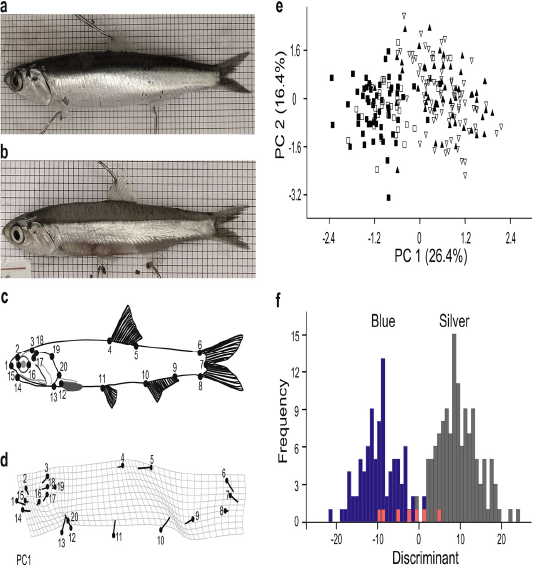
The elongated, dense gill rakers and specialised fins enhance anchovies’ filter-feeding efficiency and sustained swimming in plankton-rich waters, enabling effective nutrient extraction and biomass conversion. These anatomical traits make them highly suitable as nutrient-rich sources in feed application . Figure 1 illustrates the body shape and colour differences between two anchovy forms (Engraulis spp.) from Mersin Bay in the Eastern Mediterranean Sea, as well as the anatomical landmarks used for geometric morphometric analysis. The “Blue” phenotype, shown in panel (a), is typically found in the deeper waters of the bay, while the “Silver” phenotype in panel (b) is more common in the shallow inshore habitats. Both images are scaled equally, with one square representing 0.2 cm. Panel (c) presents a diagram marking 20 morphometric landmarks, indicated by black dots, which are essential for analyzing variations in body shape. These landmarks include points such as the tip of the premaxillary, borders of the head and fins, points of fin insertions, and the edges of the eye and cleithrum. This detailed anatomical mapping provides a standardized basis for comparing shape differences between the two phenotypes. The figure and data are adapted from Karahan et al. (2014).
The inner anatomy of anchovies is similarly compelling and pertains to their part within the marine food web. Inside their digestive system, the stomach plays a critical role by altering its shape and size concurring to the feeding habits of the fish. Anchovies for the most part display a huge, strong stomach that helps in crushing food, which improves nutrient retention . The alimentary canal is generally brief compared to other fish species, reflecting their dietary habits centered on quickly digestible prey. These adaptations are further underscored by the presence of considerable lipid reserves, which are crucial for reproductive success and energy provisioning amid their migration periods . Studies uncover that the lipid content in anchovies changes seasonally, correlating with reproductive cycles and natural conditions .
It is important to note that the anatomical structure of anchovy also makes them face certain environmental pressure, especially pollution and excessive fishing. Studies conducted in different marine environments, including the Mediterranean Sea, indicates that the anchovy’s population is very sensitive to changes in biodiversity and predation as a consequence to human activities . The presence of microplastic and other pollutants in anchovies has been recorded, which increases concerns related to their safety as a food source, highlighting the urgent needs of sustainable fishing practice and ecological conservation .
Anchovy also has unique anatomical reproduction characteristics. Their genital glands, especially in the spawning season, can account for a noteworthy portion of their overall body weight. This genital gland acts as an important indicator of reproductive health and may vary depending on the environmental conditions, affecting the global dynamics of the population . The consequences of this anatomical variability are beyond individual health to affect the sustainability of the population, which makes it necessary for the integration of anatomical studies into wider ecological assessments and conservation.
For the comparison of dried and fresh anchovies, the processing of anchovies in the form of dry forms completely changes the various anatomical characteristics mainly by dehydration. Fresh anchovies are about 150 mm long and are characterized by relatively soft meat and high content, while dried anchovies are more concentrated with hard structure due to dehydration . The process of dehydration improves the flavor and preserves anchovies while at the same time enhances its nutrition records, especially the concentration of omega-3 fatty acids, which are beneficial to human health .
Furthermore, during the drying process, the anatomical integrity of the anchovy body is preserved, allowing the use of all parts of the body, including bones and organs that are often considered interesting in different cookery . The high economic value of dried anchovies not only from their flavor profile, but also from their nutritional advantages, providing essential vitamins and minerals, making it a staple food in many regions, especially in Asian culinary tradition . Their use beyond direct consumption to serve as important ingredients in the water, soup and other preparations, highlighting their flexibility .
Sustainable management of anchovy processing waste
The management of food processing waste has become a global imperative, particularly in the context of increasing food demand, limited natural resources, and mounting environmental pressures. Efficient waste throughput, including collection, storage, transportation, treatment, and disposal has emerged as a cornerstone of sustainable food systems . Within the fisheries sector, the exponential growth of global fish production has generated a parallel increase in processing waste and by-products, which, if mismanaged, can lead to serious environmental and economic consequences (FAO, 2018).
As simplified in Figure 2, fish processing by-products have historically been regarded as waste streams with limited or no commercial value. They were commonly discarded or used for low-value applications such as landfill, compost, or low-grade fishmeal. This practice not only contributed to environmental degradation through the release of organic pollutants and greenhouse gases but also represented a significant loss of potentially valuable biomass . Recent advancements in waste valorisation technologies and a shift towards circular bioeconomy models have fundamentally changed this narrative. Fish by-products are now increasingly recognised as a source of high-value compounds and raw materials for various industries, including animal feed, nutraceuticals, pharmaceuticals, cosmetics, functional foods, and biofuels .
In some regions, particularly in Southeast Asia, traditional anchovy processing methods, such as gutting, salting, and drying, can generate up to 70% by-product waste (e.g., heads, bones, viscera, and scales) depending on the final product type . However, this percentage may vary across different processing methods and scales of operation. Key components include heads, frames, viscera, skin, bones, scales, and trimmings. Among these, viscera alone can represent approximately 20% of the total fish biomass and are notably rich in proteins and polyunsaturated fatty acids (PUFAs), including omega-3 lipids. If left unutilized, these organic materials can quickly degrade, leading to foul odours, environmental contamination, and public health hazards, while also incurring disposal costs .
Anchovy (Engraulis spp.), a small pelagic fish harvested in large quantities across the Mediterranean, Southeast Pacific, and parts of Asia, is a notable contributor to fish processing waste. Anchovy is typically processed into canned, salted, or fermented products, generating substantial by-products in the form of heads, frames, skin, and viscera. These components have traditionally been discarded or converted into low-value fishmeal and silage, despite their high nutritional content .
Recent studies have underscored the potential of anchovy processing waste as a rich source of functional nutrients and bioactive compounds. It is estimated that anchovy by-products can constitute approximately 32% of the fish’s total wet weight. These residues contain high levels of crude protein, lipids, essential amino acids such as lysine and leucine, and long-chain omega-3 fatty acids such as eicosapentaenoic acid (EPA) and docosahexaenoic acid (DHA). In addition, anchovy waste provides valuable minerals including calcium, phosphorus, and iron that further enhancing its appeal for feed and nutraceutical applications .
The nutritional composition of anchovy waste varies depending on the specific tissue type. For example, the frames (bones and residual muscle) typically exhibit the highest protein content, whereas viscera contain higher concentrations of lipids. Such compositional variability allows for targeted valorisation, enabling the production of specific end-products such as protein hydrolysates, fish oils, and mineral supplements . The heads and viscera, in particular, are excellent candidates for enzymatic hydrolysis to extract bioactive peptides with antioxidative, antimicrobial, and immunomodulatory properties.
Efficient management and valorisation of anchovy processing waste offer several benefits. Environmentally, it helps reduce organic waste accumulation and associated emissions. Valorising anchovy or fish processing waste instead of landfilling can reduce the GHG emissions associated with waste management by approximately 21%, making it a substantially more climate-friendly and resource-efficient approach ; ; . Economically, it 298 creates new revenue streams for fish processors and contributes to value chain optimization. From a sustainability perspective, converting by-products into functional ingredients supports resource circularity, reduces dependence on land-based protein sources, and contributes to the global agenda for sustainable food systems.
As the global fish processing industry continues to grow, particularly in developing regions with limited waste treatment infrastructure, innovative strategies for by-product utilisation will become increasingly essential. These may include biotechnological approaches such as microbial fermentation, enzymatic hydrolysis, and biorefinery systems tailored to recover proteins, lipids, and minerals. Integrating anchovy by-product valorisation into animal nutrition frameworks represents a promising pathway to enhance feed sustainability, reduce feed formulation costs, and support circularity in aquaculture and livestock systems.
Biochemical composition of anchovy
Anchovies (Engraulis encrasicolus) are small, nutrient-dense fish recognized for their rich composition of essential nutrients, making them a valuable resource in animal nutrition. Fresh anchovies have a composition of 75.56–81% moisture, 16.32–22.2% protein, 1.62–3.5% fat, 1.31–1.9% ash, and 0.11% carbohydrates, while their dried form offers enhanced protein concentration and nutrient density, shifting to 9–22.16% moisture, 60.2–68.82% protein, 2.96–7.8% fat, 7.98–12.33% ash, and 0.1–0.15% carbohydrates ; ; ; ; ; .
The fatty acid profile of anchovies is particularly noteworthy, featuring a high proportion of polyunsaturated fatty acids (PUFAs), including eicosapentaenoic acid (EPA) and docosahexaenoic acid (DHA), which are vital for various physiological functions in animals . Furthermore, anchovies contain a diverse array of essential and non-essential amino acids, contributing to their status as a high-quality protein source . Introduction of anchovy into livestock feed may improve growth performance and also enhance the overall nutritional quality of animal products. The following tables summarise the biochemical composition, metal concentrations (Table 1), fatty acid profiles (Table 2), and amino acid contents of anchovies (Table 3), providing a comprehensive overview of their nutritional value.
Table 1: Metals concentration in fresh and salt-dried anchovies (µg/g) .
Metals
Fresh anchovy (µg/g) dry weight
Fresh anchovy (µg/g) wet weight
Salt-dried anchovy (µg/g) dry weight
Salt-dried anchovy (µg/g) wet weight
Cr
0.200
0.151
1.700
0.921
Mn
5.320
4.008
3.450
1.869
Fe
130.0
98.74
119.0
64.91
Co
BDL (<0.0001)
BDL (<0.0001)
0.004
0.002
Ni
0.570
0.433
0.450
0.244
Cu
0.610
0.457
1.110
0.600
Zn
43.80
33.00
52.20
28.22
As
10.70
8.071
6.320
3.422
Cd
0.071
0.053
0.344
0.186
Pb
0.050
0.041
0.339
0.183
*(µg/g): metal weight/fish weight; BDL: below detection limit
To contextualise the nutritional and sustainability potential of anchovy by-products, their attributes were compared against conventional protein sources such as fishmeal and soybean meal. The comparative overview is presented in Table 4.
Table 2: Fatty acid composition of anchovy .
Fatty acid / nutritional index
Range (%)
Fatty acid/ nutritional index
Range (%)
C14:0
4.41 - 5.49
ΣMUFA (total monounsaturated fatty acids)
23.9 - 25.7
C15:0
0.80 - 0.97
C18:2n6c
1.84 - 2.31
C16:0
17.0 - 19.6
C18:3n6
0.12 - 0.16
C17:0
0.98 - 1.07
C18:3n3
1.17 - 1.51
C18:0
5.10 - 6.38
C20:2n6
1.20 - 2.09
C20:0
0.78 - 1.02
C20:3n3
0.22 - 0.24
C21:0
0.45 - 0.64
C20:4n6
1.11 - 1.34
C22:0
0.19 - 0.29
C22:2n6
0.31 - 0.42
C24:0
0.10 - 0.22
C20:5n3 (EPA)
8.63 - 9.99
ΣSFA (total saturated fatty acids)
31.6 - 34.6
C22:6n3 (DHA)
18.2 - 21.4
C14:1
0.26 - 0.31
ΣPUFA (total polyunsaturated fatty acids)
34.6 -37.5
C16:1
5.35 - 7.47
ΣPUFA/ΣSFA
1.00 - 1.17
C17:1
0.30 - 0.46
EPA + DHA
27.2 - 30.7
C18:1n9t
0.11 - 0.18
Σn3
28.9 - 32.1
C18:1n9c
11.9 - 15.8
Σn6
5.11 - 5.92
C20:1
0.54 - 2.28
Σn3/Σn6
5.12 - 6.27
C22:1n9
0.40 - 2.49
Σn6/Σn3
0.16 - 0.20
C24:1
1.10 - 1.68
Atherogenic index (AI)
0.56 - 0.70
*ΣMUFA: total monounsaturated fatty acid; ΣPUFA: total polyunsaturated fatty acid; ΣSFA: total saturated fatty acid
Table 3: Amino Acid Composition of Anchovy ; ; .
Amino Acids
Range (g/100 g protein)
Essential amino acids
Histidine
1.83 – 4.40
Isoleucine
2.74 – 4.64
Leucine
5.49 – 10.40
Lysine
4.54 – 9.34
Methionine
2.90 – 4.00
Phenylalanine
3.52 – 4.38
Threonine
3.98 – 7.90
Tryptophan
0.42 – 1.57
Valine
3.54 – 7.37
Non-essential amino acids
Alanine
4.10 – 10.46
Arginine
0.80 – 7.41
Aspartic Acid
6.80 – 13.88
Cysteine
1.03 – 1.06
Glutamic Acid
10.33 – 15.12
Glycine
8.31 – 17.20
Proline
1.57 – 7.20
Serine
4.56 – 7.20
Tyrosine
1.10 – 1.67
Table 4: Comparative overview of anchovy by-products, fishmeal, and soybean meal as feed ingredients.
Aspect
Anchovy by-products
Fishmeal
Soybean meal
Cost
Lower cost; can reduce feed expenses by 10–25%. Fish silage from anchovy waste is ~21% cheaper than fishmeal. Marketed as a cost-effective alternative ; ; ; ;
Generally high cost, subject to supply volatility and overfishing pressures; fishmeal price instability directly affects livestock and aquaculture industries ; ; .
Moderate but rising cost; influenced by global market volatility. Cultivation also entails significant environmental costs ; .
Protein content (%)
High protein content (60.2–68.8% in dried anchovy). By-products contain digestible proteins and essential amino acids, up to 44% being essential (e.g., lysine, leucine) ; ; ; .
High protein (60–72%), considered gold standard for amino acid balance; quality varies with species and processing .
High protein (44–52% depending on processing); widely used plant protein source. Deficient in methionine and may contain anti-nutritional factors requiring processing ; .
Lipid and fatty acids
10–20%; rich in long-chain omega-3 PUFA (EPA, DHA), beneficial for animal health and product quality.
6–12%; good source of EPA and DHA; benchmark lipid profile in aquafeeds.
<2%; mainly linoleic acid; lacks EPA/DHA, limiting role in aquaculture.
Minerals
Rich in calcium and phosphorus (from bones); high mineral digestibility.
High in phosphorus; highly available in animal diets.
High in phosphorus but mostly in phytate form; low bioavailability without phytase supplementation.
Environmental impact
Lower carbon footprint (~1.5 kg CO₂/kg). Valorises waste, reduces organic disposal emissions (~21%). Strong alignment with circular economy principles if managed sustainably ; ; ; .
Higher carbon footprint (4–29 kg CO₂/kg). Production demands significant energy; overfishing and marine ecosystem stress remain major concerns (FAO, 2018; .
~1.7 kg CO₂/kg. Associated with deforestation, biodiversity loss, pesticide use, and high water demand ; .
Weak–moderate: limited by sustainability of fisheries and reliance on wild stocks.
Moderate: dependent on responsible sourcing; negative impacts linked to land-use change and monoculture practices.
Pretreatment of anchovy waste
The utilisation of anchovy waste as a feed ingredient has garnered significant interest due to its high nutritional potential. However, the elevated salt content in anchovy by-products, particularly from salted or cured forms, presents a major obstacle requiring effective pretreatment . Desalting processes, initially developed to render salted fish suitable for human consumption, have been adapted to transform such waste into valuable animal feed components while preserving essential nutrients . A range of desalination techniques has been evaluated, each with distinct advantages and limitations.
Desalting methods
Desalting is a crucial pretreatment step for converting salt-cured anchovy by-products into safe and effective animal feed ingredients. Multiple methods have been explored, ranging from traditional soaking to more advanced multi-stage and solid-liquid extraction techniques.
Traditional water immersion involves soaking dried salt-cured fish in freshwater for up to 48 hours, reducing salt content from approximately 20% to as low as 2% . A modified two-step approach combining short immersion (2 minutes to 16 hours) with cooking yields residual salt levels between 3% and 9%. Brining followed by rehydration can also regulate salt and moisture levels, although uneven salt distribution may occur .
More controlled techniques, such as solid-liquid extraction using dispersed contact, have shown higher efficiency, especially when parameters like temperature, fish-to-water ratio, and particle size are optimised . A three-stage desalting method with freshwater has demonstrated greater NaCl reduction (to ~1.6%) compared to single-stage methods.
Desalting without water renewal, where fish are stirred in stagnant water every 12 hours for up to 96 hours, offers a simpler alternative but is relatively slow . Temperature plays a vital role; lower temperatures suppress microbial growth but can also hinder desalting rates. Cooking post-desalting can further reduce salt but may alter product texture .
These processes also influence physical characteristics such as weight gain, volume, and moisture content, which are positively correlated and inversely associated with salt content. The mass transfer during desalting involves pseudo-diffusional and hydrodynamic mechanisms .
Desalting anchovy waste reduces sodium content but may cause leaching of nutrients such as calcium and phosphorus, though reported losses of 15–30% remain unverified and require targeted studies ; . Evidence for substantial protein and vitamin (B12, D) losses is similarly limited and likely varies with process parameters ; . Optimising desalting conditions such as temperature, duration, and brine concentration can improve nutrient retention , while biotechnological approaches, including microbial consortia, show potential for further preservation ; .
Biochemical and microbial effects
Desalting also causes significant histological, biochemical, and textural transformations. During the process, pH and trimethylamine levels initially rise before stabilizing, while soluble protein concentrations decline due to leaching. Enzymes such as cathepsins and acid phosphatase decrease, whereas lipase activity increases, especially at elevated temperatures . High-pressure processing (HPP) has been applied post-desalting to extend shelf life from 7 days to up to 21 days under refrigeration, maintaining microbial safety and quality .
Application in animal feed
The application of desalted anchovy waste in poultry nutrition is a promising strategy. A combination of desalting with soybean meal reduced the salt content from 15.4% to 3.7% while preserving key minerals such as calcium, phosphorus, and magnesium . Protein retention exceeded 65%, and the fatty acid profile, including EPA and DHA, remained stable . Feeding trials have demonstrated that incorporating 2% desalted anchovy bones and argan cake into broiler diets improved weight gain and feed conversion ratios compared to conventional diets, supporting its viability as an alternative to fishmeal and soybean meal .
Optimisation of desalting conditions using response surface methodology (RSM) has enabled better control of nutrient preservation and process efficiency, offering valuable insights for scaling up . Broader applications of desalted anchovy waste in other livestock and possibly even human food products warrant further exploration .
Fermentation as a valorisation strategy
Fermentation represents another promising avenue for anchovy waste valorisation. Aerobic fermentation using Aspergillus oryzae has been shown to enhance amino nitrogen and antioxidant content in fish sauce, while reducing undesirable compounds such as biogenic amines . Anaerobic digestion, using anchovy sludge as a nitrogen source, supports biomethane production . Additionally, lactic acid fermentation by Lactobacillus plantarum and Tetragenococcus halophilus improves the flavour and safety of anchovy paste and traditional products like bekasam (Thienchai and Chaiyanan, 2012; .
Fermentation improves both the sensory and nutritional qualities of anchovy products. Proteolytic bacteria used in low-salt fermentations contribute to better flavour and reduced histamine levels . Enzymatic acceleration using proteases such as Protex 51FP further enhances amino acid content and overall product value . Additives like red pepper inhibit lipid oxidation and enhance microbial stability due to antioxidant components such as capsaicin and carotenoids . Free amino acids such as glutamic acid and valine contribute to the umami profile of fermented anchovy products .
Key fermentation parameters, including salt concentration, time, and bacterial starter cultures, must be carefully optimised to ensure desirable chemical and sensory characteristics ; . Efficient fermentation techniques can create locally produced high-value anchovy products, reducing reliance on imports and supporting regional economies . However, scaling up faces hurdles in resource-limited regions, including the supply of raw materials, facility availability, and skilled personnel . Integrating local resources and traditional knowledge with modern techniques can improve efficiency, reduce costs, and ensure consistent quality. Pilot programs and partnerships among communities, governments, and research institutions can help build capacity and support the safe and sustainable expansion of initiatives .
Table 5: Pretreatment methods used for anchovy waste, highlighting their mechanisms, effectiveness, and key findings
Method
Description
Key Findings
References
Traditional immersion in water
Soaking in freshwater for up to 48 hours.
Reduces salt content from ~20% to 2%.
Lorentzen et al., 2022
Two-Step immersion and cooking
Short immersion (2 min - 16 hrs) followed by cooking.
Reduces salt content to 3-9%.
Lorentzen et al., 2022
Brining and rehydration
Uses brining to regulate salt uptake before rehydration.
Controls water and salt levels but may lead to uneven salt distribution.
Erikson et al., 2004
Solid-Liquid extraction
Uses a dispersed contact technique with optimized temperature, fish piece size, and fish-to-water ratio.
Smaller fish pieces desalt more effectively.
Marchetti et al., 2021
Three-Stage desalting
Sequential freshwater desalting process.
Lowers NaCl to ~1.6%; suitable for feed/oil production.
Daniela et al., 2021
Stagnant water stirring
No water renewal; stirring every 12 hrs for 96 hrs..
Effective but slower process.
Lorentzen et al., 2021
Temperature effects
Lower temperatures slow bacterial growth but also slow desalting.
Affects salt loss, protein retention, and water uptake.
Pedro et al., 2004
Cooking after immersion
Additional step post-desalting.
Further reduces salt but affects texture.
Lorentzen et al., 2022
Poultry feed potential
Desalting combined with soybean meal.
Salt reduced from 15.4% to 3.7%, preserving essential minerals.
Boumendil et al., 2023
Fermentation methods
Aerobic (Aspergillus oryzae), Anaerobic (biomethane production), and Lactic Acid Fermentation.
Improves sensory qualities and nutritional value.
Sun et al., 2016; Fazzino et al., 2021; Thienchai and Chaiyanan, 2012
Fish silage
Acid hydrolysis or lactic acid fermentation of fish waste.
Cost-effective alternative to fish meal; reduces feed costs by ~21%.
Maksimenko et al., 2024; Güllü et al., 2015
Enzymatic hydrolysis
Used proteolytic enzymes on anchovy processing residues to produce protein hydrolysates rich in peptides and free amino acids
Increases peptide yield and essential amino acids to 42%.
Korkmaz and Tokur, 2022; Mangano et al., 2021
Fish silage: A sustainable feed alternative
Fish silage is a cost-effective and sustainable approach to converting anchovy waste into nutrient-dense animal feed. Produced via acid hydrolysis or microbial fermentation, silage yields a liquid product rich in peptides and free amino acids . It enhances crude protein content and has shown to support growth in species such as broiler chickens and Labeo rohita fingerlings . Compared to fishmeal, fish silage is up to 21% cheaper and can be integrated into existing waste management systems with minimal inputs (Güllü et al., 2015; .
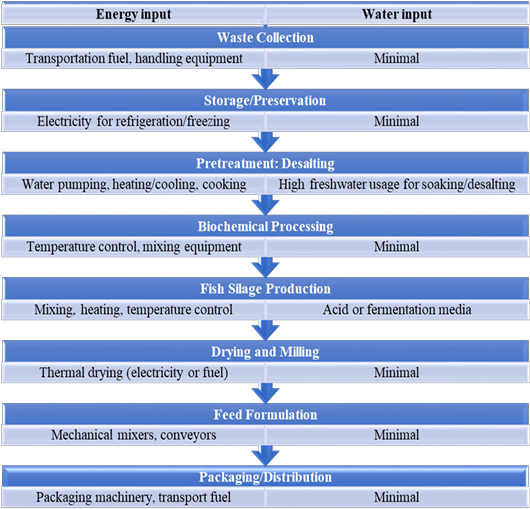
In addition to reducing feed costs, fish silage helps minimize environmental impact by recycling seafood waste. While it has shown success in aquaculture and, to a lesser extent, in poultry, its broader adoption depends on effective supply chains, quality control, and safety measures such as aflatoxin management and microbial control ; . Table 5 summarises key pretreatment methods for anchovy waste, including their mechanisms, effectiveness, and main findings. To further illustrate the overall conversion pathway of anchovy waste into feed ingredients, Figure 3 presents a process flowchart showing the sequential steps from waste collection through final feed production, with emphasis on energy and water input requirements (adapted from ; , 2022; .
The usage of anchovy waste in pig feed
Proper nutrition is essential during the early stages of a pig’s life, particularly post-weaning, when piglets face significant physiological and environmental stressors. To promote feed intake in newly weaned pigs, diets often include highly palatable and nutrient-dense protein sources. Fish meal is one such ingredient, valued for its balanced amino acid profile, and its richness in vitamins, minerals, and omega-3 fatty acids ; .
Fish meal has long been regarded as an excellent protein source for young pigs due to its comprehensive nutritional value. It provides essential amino acids required for growth, alongside health-supporting vitamins and minerals. Moreover, its omega-3 fatty acid content contributes to anti-inflammatory responses and enhanced immune function ; . However, the quality of fish meal can vary considerably depending on the species of fish used, raw material freshness, and processing methods are factors that can lead to inconsistent pig growth performance ; .
Stas et al. (2023)reported that replacing enzymatically treated soybean meal with anchovy fish meal, with or without fish soluble, did not affect nursery pig growth traits (ADG, feed intake, FCR) during the experimental phase (day 0–21; P > 0.10). In the common phase (day 21–42), pigs previously fed anchovy fish meal with soluble showed improved feed efficiency (P < 0.05), while overall performance (day 0–42) indicated only a tendency for higher efficiency. No differences were observed in removals, mortalities, or economic outcomes, suggesting anchovy by-products can replace conventional protein sources without compromising growth or health. The study also examined the economic implications of incorporating anchovy waste. Results indicated that neither the anchovy waste nor the fish soluble addition adversely affected economic performance indicators, suggesting both are economically feasible options . These findings support the use of anchovy waste, with or without solubles, as a practical alternative to conventional protein sources in early pig nutrition. Nevertheless, the variability in fish meal quality emphasises the need for careful ingredient selection to ensure consistent growth performance in newly weaned pigs.
Furthermore, anchovy protein is characterised by a high content of essential amino acids, particularly lysine, leucine, and threonine, which are critical for balancing amino acid profiles in pig diets to support optimal growth and protein synthesis ; . Studies show that anchovy meal contains about 44% essential amino acids, with lysine being the most abundant, making it a valuable protein source for nursery pigs . In addition to amino acid composition, the palatability of anchovy-based ingredients is enhanced by their rich profile of free amino acids and peptides, which can improve feed intake in weaned pigs facing stress-related anorexia . The omega-3 fatty acids (EPA and DHA) prevalent in anchovy also contribute to immune modulation and anti-inflammatory effects, indirectly supporting feed efficiency and health . However, variability in amino acid content due to seasonal and environmental factors requires careful formulation to maintain consistent nutritional quality ; . Overall, anchovy waste and meal represent promising alternatives to conventional protein sources in pig nutrition by providing balanced amino acids and enhancing diet palatability, which together promote better growth performance and feed utilisation.
The potential of anchovy waste usage in poultry feed
The increasing cost and environmental burden of conventional protein sources, particularly fish meal and soybean meal, have intensified the search for sustainable alternatives in poultry nutrition. Among these alternatives, anchovy processing waste especially anchovy heads have gained traction as a promising, underutilized protein-rich byproduct. The poultry industry, which heavily depends on high-quality protein for optimal growth and productivity, could benefit significantly from valorizing anchovy waste into functional feed ingredients.
Fish meal remains a gold standard in poultry diets due to its high digestibility, superior amino acid balance, and the presence of micronutrients such as omega-3 fatty acids, vitamins, and minerals. However, its high cost, driven by overfishing pressures and supply-chain volatility, poses economic challenges for poultry producers globally . Anchovy waste, particularly head fractions, presents a feasible substitute. These byproducts are often discarded or underutilized despite being rich in essential amino acids, minerals, and functional lipids. Transforming this waste into anchovy head flour for feed applications not only aligns with circular bioeconomy principles but also contributes to reducing feed costs and environmental waste.
Experimental evidence supports the nutritional efficacy of anchovy waste in poultry diets. Replacing 10% fish meal with anchovy head flour improved average daily weight gain by 7.5% and reduced the feed conversion ratio by 3.6% compared to the fish meal diet, while increasing feed intake by 3.6% and also improving feed efficiency by 3.8% compared to the fish meal diet . Additionally, anchovy-based meals have demonstrated antimicrobial and antioxidant properties that may support gut health and immune function, thereby reducing the need for prophylactic antibiotics in poultry production .
The use of anchovy meal is particularly relevant given the ongoing price volatility and environmental concerns associated with soybean cultivation. Anchovy waste-derived feed ingredients provide a locally available, low-cost, and ecologically sound protein source, potentially reducing the carbon footprint and land use associated with poultry feed production . As global demand for poultry meat continues to rise, such alternatives become increasingly important for sustainable intensification.
Recent advancements in waste processing technologies have further improved the feasibility of using anchovy waste in feed. For instance, bones from salted anchovies, which were previously considered non-recyclable due to high sodium content, have been explored for their mineral content particularly calcium, phosphorus, magnesium, and potassium. Novel desalination and thermal treatments now allow for nutrient preservation while reducing salt content to safe inclusion levels in poultry feed . Such innovations could facilitate the large-scale recovery and reintroduction of mineral-rich fish bone meal into poultry rations, addressing not only protein but also mineral requirements.
Despite its promise, the adoption of anchovy waste in poultry feed requires careful attention to processing standards, anti-nutritional factors, and amino acid balancing, especially for limiting amino acids such as methionine and lysine. Additionally, batch-to-batch consistency in nutrient composition remains a key challenge that must be addressed through standardised processing protocols and quality control measures.
Optimal usage levels in poultry diets
Research has demonstrated that anchovy meal can be used at levels of up to 10% in quail feed without negatively impacting growth performance. This substitution is highly recommended for quail farmers as it not only reduces anchovy wastage but also lowers the overall production costs of quail farming . Table 6 presents the effects of varying inclusion levels of anchovy in the diets of broilers and quails on their growth performance. Furthermore, studies have shown that the use of anchovy waste as a substitute for concentrate in duck diets, at levels of up to 50%, does not negatively affect their performance. This suggests that anchovy waste could be a viable option for other types of poultry as well, though further research is needed to determine the optimal usage levels and ensure a balanced protein-energy ratio .
However, while anchovy waste has shown potential in some poultry diets, its use in broiler diets must be approached with caution. Low levels of anchovy waste in broiler diets have been associated with small increases in body weight due to increased feed consumption. However, higher dietary levels of anchovy waste, or total replacement of soybean meal protein, have been detrimental to body weight and feed efficiency as well on growth performance . While substituting soybean meal with anchovy waste may provide certain nutritional benefits, the potential amino acid imbalance becomes critical at higher concentrations, particularly concerning methionine, which is essential for optimal growth in poultry. Its deficiency can lead to significant reductions in body weight and feed efficiency . Therefore, while there is significant potential for incorporating anchovy waste into various poultry diets, further research is necessary to optimise its use and ensure balanced nutrition for different poultry species.
Table 6: Effect on growth performance in broilers and quails with different inclusion levels of anchovy in diets.
No.
Species
Inclusion level
Effect
References
1
Broilers
10%
Feed Intake, g/bird: 2345.95g; ;Final Body Weight, g/b: 1591.88g; Body Weight Gain, g/b: 1545.38g; FCR: 1.48
Mandey et al (2017)
2
Quail
3%
Feed Intake, g/bird: 113.69g; Body Weight Gain, g/b: 15.15g; FCR: 7.53
Putra et al, (2018)
3
Quail
7%
Feed Intake, g/bird: 117.41g; Body Weight Gain, g/b: 15.42g; FCR: 7.62
Putra et al, (2018)
4
Quail
10%
Feed Intake, g/bird: 122.02g; Body Weight Gain, g/b: 19.15g; FCR: 6.39
Putra et al, (2018)
Utilisation of anchovy waste in aquaculture feeds
The search for sustainable and cost-effective alternatives to conventional fish meal in aquaculture has led to the exploration of various protein sources, including marine by-products and insect-based proteins. Anchovy by-products have emerged as promising feed ingredients due to their high protein content, balanced amino acid profile, and relatively low environmental footprint .
Studies in tilapia have shown that diets supplemented with anchovy waste, alone or in combination with insect proteins such as fly larva powder, can sustain growth rates equivalent to those of fish reared on commercial feeds (Mohd Yusof et al., 2022). Similarly, partial replacement of fish meal with anchovy waste in tilapia (Oreochromis niloticus) and catfish (Clarias batrachus) diets maintained growth performance, while seurukan fish responded positively at higher inclusion levels, showing improvements in both growth and gut health . These findings underscore the potential of anchovy waste to reduce reliance on conventional fish meal in freshwater species.
In contrast, responses in marine carnivorous species highlight the need for species-specific consideration. For example, Costa et al. (2020) reported that the inclusion of anchovy and squid hydrolysates (3%) in European seabass (Dicentrarchus labrax) diets mitigated the negative effects of plant-based proteins on growth, while Rahman et al. (2022) noted that anchovy and sardine meals remain core protein sources in olive flounder (Paralichthys olivaceus) diets. Such results indicate that the nutritional contribution of anchovy by-products varies with species physiology, feeding ecology, and dietary formulation.
From an economic perspective, feed represents 55–75% of total production costs in aquaculture, making substitution with lower-cost by-products financially attractive. Cost–benefit analyses suggest that partial replacement of fish meal with anchovy waste can reduce feed expenditure by 10–25% and, in some cases, enhance growth efficiency, thereby improving profitability ; . Conservative models indicate payback periods of 2–6 years, while optimistic scenarios suggest cost recovery can occur in less than 2 years. However, large-scale adoption will depend on standardising processing methods, ensuring consistent nutrient quality, and addressing regulatory and market acceptance challenges ; .
Overall, anchovy by-products represent a promising but species-dependent alternative protein source. Further targeted research is required to optimise inclusion levels across different aquaculture species, particularly high-value carnivorous fish, to ensure both nutritional adequacy and economic viability.
Challenge and future perspectives
The utilisation of anchovy byproducts in animal nutrition has encountered significant challenges, primarily coming from the variability in ingredient quality and the need for constant nutritional profiles. Anchovy byproducts, while rich in protein, essential fatty acids, and micronutrients, show considerable fluctuations in their nutritional composition due to factors such as seasonal changes and environmental conditions affecting anchovy stocks, as emphasized by studies on lipid content . These changes require complete quality assessments and the development of custom-made feed formulations to ensure that animal species, such as fish and poultry, receive a balanced diet and can be mitigated through predictive modelling, least-cost formulation, and robust quality assurance with real-time nutrient monitoring to ensure year-round species-specific feed quality ; ; . Furthermore, the integration of anchovy byproducts into animal feed must cope with regulatory challenges surrounding feed safety and fishmeal standards, which can differ significantly by region .
Regulatory frameworks for using anchovy byproducts in animal feed vary significantly between the EU and ASEAN. The EU maintains strict, science-based regulations prioritizing feed safety, traceability, and consumer protection, with tight controls on processed animal proteins and feed additives, shaped by past food crises . In contrast, ASEAN faces fragmented governance, with wide disparities in regulatory capacity, enforcement, and infrastructure among member states (Lin, 2018). While efforts are underway to harmonize standards based on Codex Alimentarius guidelines, challenges persist due to inconsistent laws and limited technical expertise, especially among small-scale producers . These differences highlight the complex regulatory landscape surrounding the integration of anchovy byproducts into feed across regions.
Harmonisation of regulatory disparities between the EU and ASEAN in anchovy by-product utilisation could be pursued through shared standards, regulatory training, joint research, and stakeholder engagement ; ; . Major obstacles include differing regulatory frameworks, economic and capacity gaps, cultural and political differences, and fragmented supply chains that complicate compliance and enforcement ; ; .
Looking ahead, the future perspectives for anchovy byproduct application in animal feed suggest a strong potential for enhancing the sustainability of agricultural practices. As the aquaculture industry seeks to lessen dependence on traditional fish meal from overfished stocks, anchovy byproducts can serve as a practical substitute, contributing to more sustainable feed production systems . The bioavailability of key nutrients, such as essential amino acids and fatty acids derived from anchovy byproducts, shows promise for improving animal growth performance and health . The ongoing research stresses the need to develop efficient processing techniques to maximise nutrient preservation while minimising the environmental impacts associated with conventional feed formulations .
Incorporating anchovy byproducts into animal nutrition aligns with global sustainability goals, encouraging a circular economy that values waste reduction and resource recovery. Enhanced collaboration among researchers, nutritionists, and aquaculture producers will be vital in optimizing the use of these byproducts. Future studies could focus on engaging local communities in regional anchovy fishing practices, ensuring reasonable access to high-quality feed ingredients while supporting food security initiatives . The exploration of innovative processing technologies, such as enzymatic hydrolysis for improving nutrient digestibility, can also show the way for utilising anchovy byproducts more effectively in animal nutrition, thereby promoting ecological health and livelihoods within seafood production systems .
Sustainable use of anchovy by-products can be advanced through optimised enzymatic hydrolysis to improve digestibility, targeted species-specific nutritional evaluations and community-based waste management models that strengthen local economies and food security ; ; . Additional opportunities include fermentation process improvements, blending with insect or plant proteins for synergistic feed benefits, and developing organic fertilisers to enhance crop yields while reducing chemical reliance ; ; . Comprehensive environmental impact assessments will further quantify advantages in greenhouse gas reduction, resource efficiency, and overall ecological footprint, guiding industry and policy uptake .
In order to scale up the use of anchovy byproducts in animal feed, pilot studies are required to assess processing methods that preserve nutrients and improve digestibility ; Bayraklı, 2023). Collaborations with industry partners are essential to apply research findings in scalable production systems . Engaging local communities can enhance innovation in techniques like enzymatic hydrolysis, supporting nutrient bioavailability and advancing circular economy goals in aquaculture ; ; .
Conclusion
The exploration of unconventional protein sources, such as anchovy waste, represents a critical advancement in the pursuit of sustainable and cost-effective alternatives to traditional feed ingredients. As global pressures mount to reduce environmental impacts and resource depletion, the need for innovative solutions in animal nutrition becomes increasingly urgent. Anchovy waste, particularly from fish processing residues like heads and bones, has emerged as a viable option for addressing these challenges, offering a range of benefits from reducing feed costs to minimizing environmental pollution through the repurposing of organic waste.
The potential of anchovy waste as a feed ingredient has been highlighted, especially in the context of livestock and aquaculture diets. Anchovy waste not only offers a rich source of essential nutrients, including protein and omega-3 fatty acids, but it also demonstrates the capacity to support growth performance comparable to conventional feeds. The incorporation of this waste into animal diets could help mitigate the rising costs of feed, which represent a significant economic burden for livestock and aquaculture producers globally. Additionally, by diverting fish processing waste from disposal into valuable feed resources, this strategy aligns with broader environmental sustainability goals, addressing both waste management and resource conservation.
Despite the promise shown by anchovy waste, several challenges must be addressed to ensure its safe and effective integration into animal nutrition. Ensuring nutritional adequacy, refining processing methods, and optimising inclusion rates are vital for maintaining feed quality, especially given the variability in nutrient composition. Government supervision will also play a key role in fostering the adoption of alternative protein sources by making clear guidelines and legislative support that are necessary to instill confidence in producers and consumers. In the future, the integration of fish waste and by-products could significantly enhance the sustainability of animal production systems, contributing to food security and environmental conservation. Constant research, collaboration among stakeholders, and supportive government policies will be essential for harnessing the full potential of anchovy waste and potentially contributing to a more sustainable model.
Acknowledgments
The authors gratefully acknowledge the financial support provided by the Ministry of Higher Education, Malaysia, under the Fundamental Research Grant Scheme (FRGS) (FRGS/1/2023/WAB04/UMK/02/4). This support was instrumental in facilitating the comprehensive review and analysis presented in this paper.
Novelty Statement
This review provides a comprehensive synthesis of current knowledge on the ecological significance and utilisation of anchovy processing residues in animal nutrition. It is novel in integrating ecological aspects, biochemical characterisation, and recent processing innovations, including desalting, fermentation and enzymatic hydrolysis within a circular economy context. The study emphasises the potential of anchovy by-products as sustainable, low-cost, and environmentally responsible protein sources capable of improving feed efficiency in livestock and aquaculture production systems.
Author’s Contribution
Mohamad Faiz Mohd Nor: Conceptualisation, literature review, data curation and initial manuscript drafting.
Khairiyah Mat: Supervision, validation of content, and critical revision of the manuscript.
Muhamad Hakim Mohd Ali Hanafiah: Data compilation, figure preparation, and reference organisation.
Hasnita Che Harun: Review of ecological and sustainability aspects, and editing of related sections.
Syed Muhammad Al-Amsyar: Contribution to biochemical and feed formulation sections, and data verification.
Mohd Mahmud: Assistance in data interpretation, proofreading, and technical review of the manuscript.
Anuraga Jayanegara: Expert review on feed technology and nutritional biochemistry; international collaboration input and manuscript refinement.
Nor Dini Rusli: Conceptualisation, project supervision, overall coordination, final editing, and corresponding author responsibilities.
Generative AI and AI-assisted technology statement
The authors declare that no generative AI was used in the creation of the scientific content, data interpretation, or conclusions of this manuscript. However, AI tools were used only to improve language clarity and grammar, with all edits verified by the authors.
Conflict of interest
The authors have declared no conflict of interest.
Figures
Figure 1:.
Body shape and colour differences between the two anchovy forms (Engraulis spp.) from Mersin Bay, Eastern Mediterranean Sea, and landmarks for geometric morphometrics. (a) Anchovy of the “Blue” phenotype typical of the deeper waters of Mersin Bay; scale: 1 square = 0.2 cm. (b) Anchovy of the “Silver” phenotype typical of the shallow inshore habitat of Mersin Bay; scale: 1 square = 0.2 cm. (c) Position of 20 morphometric landmarks (black dots): the tip of the upper jaw (1), the upper jaw pit (2), the head border (3), bases of the dorsal (4–5), anal (9–10), pelvic (11), and pectoral fins (12), as well as curvature points of the caudal peduncle (6–8), the cleithrum (13, 17–18), and eye and jaw features (14–16). Points 19 and 20 mark the pectoral fin insertions; scales are standardised across figures (Karahan et al., 2014).
Figure 2:.
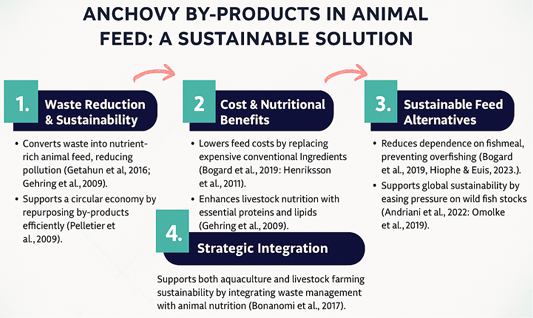
Utilisation of anchovy by-products in animal feed for sustainability.
Figure 3:.
Process flowchart illustrating the conversion of anchovy waste into animal feed, showing the sequential steps from initial waste collection through final feed production, with emphasis on energy and water input requirements at each stage of the process (adapted from Mangano et al., 2021; Lorentzen et al., 2021, 2022; Gencbay and Turhan, 2016).
References
Abidin D, Lavoué S, Alshari N, Nor S, Rahim M, Akib N (2021). Ichthyofauna of sungai merbok mangrove forest reserve, northwest peninsular Malaysia, and its adjacent marine waters. Check List, 17(2): 601-631. https://doi.org/10.15560/17.2.601[CrossRef]
Aderibigbe AS, Park CS, Adebiyi A, Olukosi OA, Adeola O (2020). Digestibility of amino acids in protein-rich feed ingredients originating from animals, peanut flour, and full-fat soybeans fed to pigs. Animals, 10(11): 1–11. https://doi.org/10.3390/ani10112062[CrossRef]
Ahmad F, Ayub MNA, Mohamad SN, Ibrahim S (2018). Proximate and amino acid compositions of selected dried anchovies (Whole and Processed) from Pangkor Island, Malaysia. Malays. Fish. J., 17: 39–50.
Ahmad R, Shapawi R, Lim L, Kian A, Tuzan A (2023). Evaluation of anchovy by-products as an ingredient in the diets developed for red hybrid tilapia (Oreochromis spp.) juveniles. Malaysian Appl. Biol., 52(3): 37-48. https://doi.org/10.55230/mabjournal.v52i3.2711[CrossRef]
Albo-Puigserver M, Pennino MG, Bellido JM, Colmenero AI, Giráldez A, Hidalgo M, Gabriel RJ, Steenbeek J, Torres P, Cousido-Rocha M, Coll M (2021). Changes in life history traits of small pelagic fish in the western mediterranean sea. Front. Mar. Sci., 8. https://doi.org/10.3389/fmars.2021.570354[CrossRef]
Albo-Puigserver M, Sánchez S, Coll M, Bernal M, Sáez-Liante R, Navarro J, Palomera I (2020). Year-round energy dynamics of sardine and anchovy in the north-western mediterranean sea. Mar. Environ. Res., 159: 105021. https://doi.org/10.1016/j.marenvres.2020.105021[CrossRef]
An Y, Wang Y, Tan S, Yusof M, Ghosh S, Chen Z (2020). Phytoremediation: A promising approach for revegetation of heavy metal-polluted land. Front. Plant Sci., 11. https://doi.org/10.3389/fpls.2020.00359[CrossRef]
Anam M, Baskara A, Agus A, Setyawan E, Akhda N (2024). An improvement of livestock feed quality through the production of fermented complete feed in the Karya Manunggal livestock group, donokerto, turi, sleman, yogyakarta. J. Pengabdian Kepada Masyarakat, 10(1): 43. https://doi.org/10.22146/jpkm.90732[CrossRef]
Arfelli F, Cespi D, Ciacci L, Passarini F (2023). Application of life cycle assessment to high quality-soil conditioner production from biowaste. Waste Manage., 172: 216–225. https://doi.org/10.1016/j.wasman.2023.10.033[CrossRef]
Armistead S, Babaahmadi A (2024). Navigating regulatory challenges, technical performance and circular economy integration of mineral-based waste materials for sustainable construction: A mini review in the european context. Waste Manage. Res. J. Sustain. Circ. Econ., 43(5): 674-683. https://doi.org/10.1177/0734242X241270973[CrossRef]
Bang M, Sohn D, Kim JJ, Choi W, Jang CJ, Kim C (2022). Future changes in the seasonal habitat suitability for anchovy (Engraulis japonicus) in Korean waters projected by a maximum entropy model. Front. Mar. Sci., 9. https://doi.org/10.3389/fmars.2022.922020[CrossRef]
Barat JM, Rodríguez-Barona S, Andrés A, Visquert M (2004). Mass transfer analysis during the cod desalting process. Food Res. Int., 37(3): 203–208. https://doi.org/10.1016/j.foodres.2003.11.001[CrossRef]
Bayrakli B (2023). Utilization of fish by-products for sustainable aquaculture: Nutritional analysis of fishmeal derived from the by-products of Oncorhynchus mykiss. Menba Kastamonu Üniversitesi Su Ürünleri Fakültesi Dergisi, 9(2): 8–14. https://doi.org/10.58626/menba.1360875[CrossRef]
Benjakul S, Morrissey MT (1997). Protein hydrolysates from pacific whiting solid wastes. J. Agric. Food Chem., 45(9): 3423–3430. https://doi.org/10.1021/jf970294g[CrossRef]
Boumendil I, Sisouane M, El-Haimer Y, Bounouar N, Khamlich J, Baggar A, Safi A (2023). Ecological desalination of anchovy residues and their mixture with soybean meal for the production of poultry feed: Optimization of waste through response surface methodology (RSM). J. Exp. Biol. Agric. Sci., 11(5): 834–844. https://doi.org/10.18006/2023.11(5).834.844[CrossRef]
Boumendil I, Taaifi Y, Khamlich J, Douiyeh I, Baggar A, Safi A (2024). Impact of incorporating argan cake (Argania spinosa L.) and desalted anchovy waste (Engraulis encrasicolus) on the productive performance of broiler chickens (Gallus gallus). J. Exp. Biol. Agric. Sci., 12(4): 645–652. https://doi.org/10.18006/2024.12(4).645.652[CrossRef]
Butler J, Rochester W, Skewes T, Wise R, Bohensky E, Katzfey J, Duggan K (2020). How feasible is the scaling-out of livelihood and food system adaptation in Asia-Pacific islands? Front. Sustain. Food Syst., 4. https://doi.org/10.3389/fsufs.2020.00043[CrossRef]
Cabrita A, Barroso C, Fontes-Sousa A, Correia A, Teixeira L, Maia M, Fonseca A (2024). Assessing functional properties of diet protein hydrolysate and oil from fish waste on canine immune parameters, cardiac biomarkers, and fecal microbiota. Front. Vet. Sci., 11. https://doi.org/10.3389/fvets.2024.1449141[CrossRef]
Campanini C, Albo-Puigserver M, Gérez S, Lloret-Lloret E, Giménez J, Pennino MG, Bellido JM, Colmenero AI, Coll M (2021). Energy content of anchovy and sardine using surrogate calorimetry methods. Mar. Environ. Res., 172. https://doi.org/10.1016/j.marenvres.2021.105510[CrossRef]
Chakraborty A, Paul B, Bhattacharyya D, Bhowal J (2022). Evaluation of fungal single cell protein as aqua feed on carcass analysis and growth performance of cirrhinus reba fingerlings. Aquacult. Res., 53(8): 3140-3153. https://doi.org/10.1111/are.15826[CrossRef]
Chan SXY, Fitri N, Mio Asni NS, Sayuti NH, Azlan UK, Qadi WSM, Dawoud EAD, Kamal N, Sarian MN, Mohd LMA, Low CF, Harun S, Hamezah HS, Rohani ER, Mediani A (2023). A comprehensive review with future insights on the processing and safety of fermented fish and the associated changes. Foods, 12(3): 558. https://doi.org/10.3390/foods12030558[CrossRef]
Chau LM, Ngoc HTB, Donnay-Moreno C, Bruzac S, Bergé JP, Hanh VT (2021). Protex 51FP as a starter for accelerating fish sauce fermentation from anchovy (Stolephorus commersonii). Emirat. J. Food Agric., 33(5): 379–387. https://doi.org/10.9755/ejfa.2021.v33.i5.2701[CrossRef]
Cho JH, Kim IH (2011). Fish meal nutritive value. J. Anim. Physiol. Anim. Nutr., 95(6): 685–692. https://doi.org/10.1111/j.1439-0396.2010.01109.x[CrossRef]
Ciriminna R, Scurria A, Fabiano-Tixier AS, Lino C, Avellone G, Chemat F, Pagliaro M (2019). Omega-3 extraction from anchovy fillet leftovers with limonene: Chemical, economic, and technical aspects. ACS Omega, 4(13): 15359–15363. https://doi.org/10.1021/acsomega.9b01168[CrossRef]
Corona O, Cinquanta L, Li Citra C, Mazza F, Ferrantelli V, Cammilleri G, Marconi E, Cuomo F, Messia MC (2023). Evolution of free amino acids, histamine and volatile compounds in the italian anchovies (Engraulis encrasicolus L.) sauce at different ripening times. Foods, 12(1): 126. https://doi.org/10.3390/foods12010126[CrossRef]
Costa M, Costas B, Machado M, Teixeira C, Fernández-Boo S, Sá T, Batista S, Marques A, Miranda F, Valente LMP (2020). Anchovy and giant squid hydrolysates can enhance growth and the immune response of European seabass (Dicentrarchus labrax) fed plant-protein-based diets. Aquaculture, 523. https://doi.org/10.1016/j.aquaculture.2020.735182[CrossRef]
Costello C, Cao L, Gelcich S, Cisneros-Mata M, Free C, Froehlich H, Lubchenco J (2020). The future of food from the sea. Nature, 588(7836): 95-100. https://doi.org/10.1038/s41586-020-2616-y[CrossRef]
Cuttitta A, Guisande C, Riveiro I, Maneiro I, Patti B, Vergara AR, Basilone G, Bonanno ANA, Mazzola DS (2006). Factors structuring reproductive habitat suitability of Engraulis encrasicolus in the south coast of Sicily. J. Fish Biol., 68: 264–275. https://doi.org/10.1111/j.0022-1112.2006.00888.x[CrossRef]
Czerner M, Tomás MC, Yeannes MI (2011). Ripening of salted anchovy (Engraulis anchoita): Development of lipid oxidation, colour and other sensorial characteristics. J. Sci. Food Agric., 91(4): 609–615. https://doi.org/10.1002/jsfa.4221[CrossRef]
Daniela M, Rolando J, Elena M, Marina C (2021). Valorization of residues from anchovy (Engraulis anchoita) salting-ripening process: Impact of desalting procedures in retention of biologically-active compounds. Food Sci. Technol., 150: 111896. https://doi.org/10.1016/j.lwt.2021.111896[CrossRef]
Djuragic O, Rakita S, Dragojlovic D (2021). The possibilities of alternative protein use in animal nutrition. IOP Conf. Ser. Earth Environ. Sci., 854(1). https://doi.org/10.1088/1755-1315/854/1/012026[CrossRef]
Erikson U, Veliyulin E, Singstad TE, Aursand M (2004). Salting and desalting of fresh and frozen-thawed cod (Gadus morhua) fillets: A comparative study using 23Na NMR, 23Na MRI, low-field 1H NMR, and physicochemical analytical methods. J. Food Sci., 69(3). https://doi.org/10.1111/j.1365-2621.2004.tb13362.x[CrossRef]
FAO (2018). The state of world fisheries and aquaculture 2018: Meeting the sustainable development goals. Food and Agriculture Organization of the United Nations.
Fazzino F, Paone E, Pedullà A, Mauriello F, Calabrò PS (2021). A new biorefinery approach for the full valorisation of anchovy residues: Use of the sludge generated during the extraction of fish oil as a nitrogen supplement in anaerobic digestion. Appl. Sci. (Switzerland), 11(21). https://doi.org/10.3390/app112110163[CrossRef]
Fidalgo LG, Mota MJ, D’Amil J, Queirós RP, Pinto CA, Delgadillo I, Saraiva JA (2024). Quality changes on cod fish (Gadus morhua) during desalting process and subsequent high-pressure pasteurization. Appl. Sci., 14(18): 8260. https://doi.org/10.3390/app14188260[CrossRef]
Fréon P, Sueiro JC, Iriarte F, Miro Evar OF, Landa Y, Mittaine JF, Bouchon M (2014). Harvesting for food versus feed: A review of Peruvian fisheries in a global context. Rev. Fish Biol. Fish., 24(1): 381–398. https://doi.org/10.1007/s11160-013-9336-4[CrossRef]
Gasco L, Acuti G, Bani P, Dalle Zotte A, Danieli PP, De Angelis A, Fortina R, Marino R, Parisi G, Piccolo G, Pinotti L, Prandini A, Schiavone A, Terova G, Tulli F, Roncarati A (2020). Insect and fish by-products as sustainable alternatives to conventional animal proteins in animal nutrition. Ital. J. Anim. Sci., 19(1): 360–372). Taylor and Francis Ltd. https://doi.org/10.1080/1828051X.2020.1743209[CrossRef]
Gencbay G, Turhan S (2016). Proximate composition and nutritional profile of the black sea anchovy (Engraulis encrasicholus) whole fish, fillets, and by-products. J. Aquat. Food Prod. Technol., 25(6): 864–874. https://doi.org/10.1080/10498850.2014.945199[CrossRef]
Georganas A, Giamouri E, Pappas A, Papadomichelakis G, Galliou F, Manios T, Zervas G (2020). Bioactive compounds in food waste: a review on the transformation of food waste to animal feed. Foods, 9(3): 291. https://doi.org/10.3390/foods9030291[CrossRef]
Gibson E, Stacey N, Sunderland TCH, Adhuri DS (2020). Dietary diversity and fish consumption of mothers and their children in fisher households in Komodo District, eastern Indonesia. PLoS One, 15(4). https://doi.org/10.1371/journal.pone.0230777[CrossRef]
Gullu K, Guzel S, Tezel R (2015). Producing silage from the industrial waste of fisheries. Ekoloji, 24(95): 40–48. https://doi.org/10.5053/ekoloji.2015.03[CrossRef]
Guo Y, Lundebye AK, Li N, Ergon Å, Pang S, Jiang Y, Zhu W, Zhao Y, Li X, Yao L, Wang L, Aakre I (2023). Comparative assessment of food safety regulations and standards for arsenic, cadmium, lead, mercury and iodine in macroalgae used as food and feed in China and Europe. Trends Food Sci. Technol., Elsevier Ltd. Vol. 141. https://doi.org/10.1016/j.tifs.2023.104204[CrossRef]
Güroy D, Karadal O, Mantoğlu S, Güroy B, Şimşek O, Çelebi K, Genç E (2022). The effects of feeding frequency on the growth performance, body composition, health status and histology of juvenile meagre (Argyrosomus regius). Aquacult. Res., 53(18): 6855-6867. https://doi.org/10.1111/are.16151[CrossRef]
Haider MS, Ashraf M, Azmat H, Khalique A, Javid A, Atique U, Zia M, Iqbal KJ, Akram S (2016). Nutritive evaluation of fish acid silage in Labeo rohita fingerlings feed. J. Appl. Anim. Res., 44(1): 158–164. https://doi.org/10.1080/09712119.2015.1021811[CrossRef]
Harahap RH, Putri NI (2024). Peran perikanan tangkap dalam mewujudkan ketahanan pangan: Suatu kajian sosiologis the role of catch fisheries in creating food security: A sociological study. Aquacoastmarine: J. Aquat. Fish. Sci., 3(2): 56–63. https://doi.org/10.32734/jafs.v3i2.16115[CrossRef]
He S, Franco C, Zhang W (2013). Functions, applications and production of protein hydrolysates from fish processing co-products (FPCP). Food Res. Int., 50(1): 289–297. https://doi.org/10.1016/j.foodres.2012.10.031[CrossRef]
Herrmann SD, Willis EA, Ainsworth BE, Barreira TV, Hastert M, Kracht CL, Schuna JM, Cai Z, Quan M, Tudor-Locke C, Whitt-Glover MC, Jacobs DR Jr (2024). Adult compendium of physical activities: A third update of the energy costs of human activities. J. Sport Health Sci., 13(1): 6–12. https://doi.org/10.1016/j.jshs.2023.10.010[CrossRef]
Howieson J, Chaklader M, Chung W (2023). Market-driven assessment of alternate aquafeed ingredients: seafood waste transformation as a case study. Anim. Prod. Sci., 63(18): 1933-1948. https://doi.org/10.1071/AN23064[CrossRef]
Islam MJ, Peñarubia OR (2021). Seafood waste management status in Bangladesh and potential for silage production. Sustainability (Switzerland), 13(4): 1–17. https://doi.org/10.3390/su13042372[CrossRef]
Jones AM, Wu F, Woodworth JC, Tokach MD, Goodband RD, DeRouchey JM, Dritz SS (2018). Evaluating the effects of fish meal source and level on growth performance of nursery pigs. Trans. Anim. Sci., 2(2): 144–155. https://doi.org/10.1093/tas/txy010[CrossRef]
Karahan A, Borsa P, Gucu AC, Kandemir I, Ozkan E, Orek YA, Acan SC, Koban E, Togan I (2014). Geometric morphometrics, Fourier analysis of otolith shape, and nuclear-DNA markers distinguish two anchovy species (Engraulis spp.) in the eastern mediterranean sea. Fish. Res., 159: 45–55. https://doi.org/10.1016/j.fishres.2014.05.009[CrossRef]
Kari NM, Ahmad F, Ayub MNA (2022). Proximate composition, amino acid composition and food product application of anchovy: A review. Food Res., 6(4): 16–29. https://doi.org/10.26656/fr.2017.6(4).419[CrossRef]
Kazemi M (2025). Recycling agricultural waste: Sustainable solutions for enhancing livestock nutrition. Vet. Med. Sci., 11(3). https://doi.org/10.1002/vms3.70321[CrossRef]
Kellems RO, Church DC (2002). Livestock feeds and feeding. Prentice Hall.
Kim SW, Easter RA (2001). Nutritional value of fish meals in the diet for young pigs 1, 2. J. Anim. Sci., Vol. 79. https://doi.org/10.2527/2001.7971829x[CrossRef]
Kim SW, Less JF, Wang L, Yan T, Kiron V, Kaushik SJ, Lei XG (2018). Annual review of animal biosciences meeting global feed protein demand: Challenge, opportunity, and strategy. https://doi.org/10.1146/annurev-animal-030117-014838[CrossRef]
Kocatepe D, Erdem E, Keskin I, Köstekli B, Kaya Y (2019). Differences on lipid quality index and amino acid profiles of European Anchovy caught from different area in Turkey. Food Technol. Ukrain. J. Food Sci., 7. https://doi.org/10.24263/2310-1008-2019-7-1-3[CrossRef]
Korkmaz K, Tokur B (2022). Optimization of hydrolysis conditions for the production of protein hydrolysates from fish wastes using response surface methodology. Food Biosci., 45. https://doi.org/10.1016/j.fbio.2021.101312[CrossRef]
Kuhad RC, Singh A, Tripathi K, Saxena R, Eriksson KEL (1997). Microorganisms as an alternative source of protein. Nutr. Rev., 55(3): 65–75. https://doi.org/10.1111/j.1753-4887.1997.tb01599.x[CrossRef]
Laso J, Margallo M, Celaya J, Fullana P, Gazulla C, Aldaco R, Irabien A (2016). Finding the best available techniques for an environmental sustainable waste management in the fish canned industry. Chem. Eng. Trans., 52: 385–390.
Lee H, Kim I (2021). Accumulations of artificial radionuclides 137Cs and 239+240Pu in anchovy from the Korean seas. Radioprotection, 56(4): 319–326. https://doi.org/10.1051/radiopro/2021009[CrossRef]
Li Q, Brendemuhl JH, Jeong KC, Badinga L (2014). Effects of dietary omega-3 polyunsaturated fatty acids on growth and immune response of weanling pigs. J. Anim. Sci. Technol., 56(1): 7. https://doi.org/10.1186/2055-0391-56-7[CrossRef]
Lin CF (2018). The emergence of ASEAN regional food safety governance: Structure, substance, and context. Food Drug Law J., 73(1): 73–96.
Liu Q, Sun M, Wang T, Zhou Y, Sun M, Li H, Xu A (2023). The differential antagonistic ability of curcumin against cytotoxicity and genotoxicity induced by distinct heavy metals. Toxics, 11(3): 233. https://doi.org/10.3390/toxics11030233[CrossRef]
Liu S, Liu Y, Alabia ID, Tian Y, Ye Z, Yu H, Li J, Cheng J (2020). Impact of climate change on wintering ground of Japanese anchovy (Engraulis japonicus) using marine geospatial statistics. Front. Mar. Sci., 7. https://doi.org/10.3389/fmars.2020.00604[CrossRef]
Lloret-Lloret E, Albo-Puigserver M, Giménez J, Navarro J, Pennino M, Steenbeek J, Coll M (2022). Small pelagic fish fitness relates to local environmental conditions and trophic variables. Progress Oceanogr., 202: 102745. https://doi.org/10.1016/j.pocean.2022.102745[CrossRef]
López-López A, Moreno-Baquero J, Garrido A (2023). The desalting process for table olives and its effect on their physicochemical characteristics and nutrient mineral content. Foods, 12(12): 2307. https://doi.org/10.3390/foods12122307[CrossRef]
Lorentzen G, Ageeva TN, Heia K (2021). Desalting of dried salt-cured cod (Gadus morhua L.) without water renewal - 3D imaging of volume change. Food Contr., 121. https://doi.org/10.1016/j.foodcont.2020.107613[CrossRef]
Lorentzen G, Lindberg SK, Ageeva TN (2022). Dried salt-cured saithe (Pollachius virens): Exploring the effects of a two-step desalting procedure. Immersion in cold water and cooking. J. Aquat. Food Prod. Technol., 31(7): 625–635. https://doi.org/10.1080/10498850.2022.2092435[CrossRef]
Lü J, Lin Y, Wu J, Zhang C (2021). Continental-scale spatial distribution, sources, and health risks of heavy metals in seafood: challenge for the water-food-energy nexus sustainability in coastal regions? Environ. Sci. Pollut. Res., 28(45): 63815-63828. https://doi.org/10.1007/s11356-020-11904-8[CrossRef]
Luthada-Raswiswi R, Mukaratirwa S, O’brien G (2021). Animal protein sources as a substitute for fishmeal in aquaculture diets: A systematic review and meta-analysis. Appl. Sci., 11(9): 3584. https://doi.org/10.3390/app11093854[CrossRef]
Madrid J, Pohlenz C, Viana MT, Lazo JP (2023). Apparent digestibility coefficients of selected protein ingredients for juvenile Totoaba macdonaldi. J. World Aquacult. Soc., 54(4): 1013–1025. https://doi.org/10.1111/jwas.12902[CrossRef]
Mahmoud M, Surtasi E (2022). Bioindication of beetles and spiders for the ecotoxicological study of the impact of heavy metals and their interaction with detoxification enzymes. Egypt. Acad. J. Biol. Sci. B Zool., 14(2): 231-246. https://doi.org/10.21608/eajbsz.2022.263627[CrossRef]
Maksimenko A, Belyi L, Podvolotskaya A, Son O, Tekutyeva L (2024). Exploring sustainable aquafeed alternatives with a specific focus on the ensilaging technology of fish waste. Fermentation Multidis. Digital Publ. Inst. (MDPI). 10(5). https://doi.org/10.3390/fermentation10050258[CrossRef]
Mandey JS, Rahasia CA, Sondakh BFJ, Pontoh CJ, Leke JR (2017). The effect of dietary substitution of hydrolyzed feather meal to anchovy fish meal on nutrients retention, performance and economic potential of broiler chickens. Proc. 15th ASEAN Conf. Food Sci. Technol., 305.
Mangano V, Gervasi T, Rotondo A, De Pasquale P, Dugo G, Macrì F, Salvo A (2021). Protein hydrolysates from anchovy waste: purification and chemical characterization. Natl. Prod. Res., 35(3): 399–406. https://doi.org/10.1080/14786419.2019.1634711[CrossRef]
Marchetti MD, Jimenez LRJ, Massa ÁE, Czerner M (2021). Valorization of residues from anchovy (Engraulis anchoita) salting-ripening process: Impact of desalting procedures in retention of biologically-active compounds. LWT Acad. Press. 150. https://doi.org/10.1016/j.lwt.2021.111896[CrossRef]
Margiati R, Marvie I, Nasution S (2024). Effect of salt concentration and fermentation time in the development of anchovy (Stolephorus sp.) bekasam as tempura raw material. J. Ilmu Dan Teknol. Pertan., 11(1): 15–28. https://doi.org/10.37676/agritepa.v11i1.4829[CrossRef]
Marramà G, Carnevale G (2016). An eocene anchovy from Monte Bolca, Italy: The earliest known record for the family Engraulidae. Geol. Mag., 153(1): 84–94. https://doi.org/10.1017/S0016756815000278[CrossRef]
May E, El-Sabaawi R (2022). Comparing methods for measuring egestion in aquatic animals. Limnol. Oceanogr. Methods, 20(11): 721-728. https://doi.org/10.1002/lom3.10516[CrossRef]
Mohanty B, Mahanty A, Ganguly S, Sankar TV, Chakraborty K, Rangasamy A, Paul B, Sarma D, Mathew S, Asha KK, Behera B, Aftabuddin M, Debnath D, Vijayagopal P, Sridhar N, Akhtar MS, Sahi N, Mitra T, Banerjee S, Sharma AP (2014). Amino acid compositions of 27 food fishes and their importance in clinical nutrition. J. Amino Acids, 2014: 1–7. https://doi.org/10.1155/2014/269797[CrossRef]
Mohd-Yusof MS, Hajini MH, Yusof NY (2022). Potential of fly larva and anchovy process waste powder as protein source in tilapia fish pellet. Potential of fly larva and anchovy process waste powder as protein source in Tilapia Fish Pellet. J. Soc. Sci. Hum., 7(1): 49–55.
Muscolo A, Mauriello F, Marra F, Calabrò P, Russo M, Ciriminna R, Pagliaro M (2022). Anchoisfert: A new organic fertilizer from fish processing waste for sustainable agriculture. Glob. Chall., 6(5). https://doi.org/10.1002/gch2.202100141[CrossRef]
Mutalipassi M, D’Anza E, Pugliano M, Firmamento R, Murano C, Ruocco N, Pennesi C, Procaccini G, Romeo T, Terlizzi A, Peretti V (2024). Casting light on the European anchovy: from biology to conservation and industry. Front. Ecol. Evol., 12: 01–24. https://doi.org/10.3389/fevo.2024.1352055[CrossRef]
Ndomondo-Sigonda M, Miot J, Naidoo S, Masota N, Ng’andu B, Ngum N, Kaale E (2020). Harmonization of medical products regulation: A key factor for improving regulatory capacity in the east African community. https://doi.org/10.21203/rs.3.rs-35630/v1[CrossRef]
Nguyen M, Fotedar R, Giridharan B (2023). The effects of fish protein hydrolysate as supplementation on growth performance, feed utilization and immunological response in fish: A review. Matec Web Conf., 377: 01020. https://doi.org/10.1051/matecconf/202337701020[CrossRef]
Nicolle A, Garreau P, Liorzou B (2009). Modelling for anchovy recruitment studies in the Gulf of Lions (Western Mediterranean Sea). Ocean Dynam., 59(6): 953–968. https://doi.org/10.1007/s10236-009-0221-6[CrossRef]
Ningrum EW, Patria MP (2021). A comparison of the microplastic consumption by small and large anchovy fish. J. Environ. Sci. Sustain. Soc., 10(Supplement): 5–7. https://doi.org/10.3107/jesss.10.PP02[CrossRef]
Novianti F, Mayasti NKI, Indriati A, Litaay C, Andriansyah RCE, Br Ketaren E, Widiantara T (2024). Techno-economic analysis of dry noodle products based on sago flour enriched with anchovy flour. IOP Conf. Ser. Earth Environ. Sci., 1338(1). https://doi.org/10.1088/1755-1315/1338/1/012068[CrossRef]
Nurmeiliasari N, Kususiyah K, Afriansyah E (2010). Performans pertumbuhan itik talang benih jantan melalui pemanfaatan limbah ikan teri sebagai sumber protein ransum. J. Sain Petern. Indonesia, 5(2): 115–122. https://doi.org/10.31186/jspi.id.5.2.115-122[CrossRef]
Nurulnadia MY, Nik-Nurasyikin NMA, Ling KH, Zahid BM, Adiana G, Nurlemsha BI (2021). Metal concentrations in fresh and salt-dried anchovy, Encrasicholina devisi, and estimation of target hazard quotient for consumers in Kuala Terengganu. Reg. Stud. Mar. Sci., 41. https://doi.org/10.1016/j.rsma.2020.101595[CrossRef]
Ofelio C, Moyano M, Sswat M, Rioual F, Moullec F, Aguirre-Velarde A, Peck M (2023). Temperature and prey density drive growth and otolith formation of the world’s most valuable fish stock. Sci. Rep., 13(1). https://doi.org/10.1038/s41598-023-43168-w[CrossRef]
Öğretmen ÖY (2022). The effect of migration on fatty acid, amino acid, and proximate compositions of the Black Sea anchovy (Engraulis encrasicolus, Linne 1758) from Turkey, Georgia, and Abkhazia. J. Food Composit. Anal., 105. https://doi.org/10.1016/j.jfca.2021.104197[CrossRef]
Okangny D, Segniagbeto G, Assou D, Chikou A, Montchowui É, Tona K, Lalèyé P (2020). Exploitation patterns of anchovies (Engraulis encrasicolus) by marine artisanal fisheries in togo (West Africa). J. Fish. Sci., 2(2). https://doi.org/10.30564/jfsr.v2i2.2283[CrossRef]
Oliveros-Ramos R, Shin YJ (2023). Future climate change impacts on anchoveta (Engraulis ringens) in the Northern Peru Current Ecosystem. bioRxiv. https://doi.org/10.1101/2023.02.14.528548[CrossRef]
Paone E, Fazzino F, Pizzone D, Scurria A, Pagliaro M, Ciriminna R, Calabrò P (2021). Towards the anchovy biorefinery: Biogas production from anchovy processing waste after fish oil extraction with biobased limonene. Sustainability, 13(5): 2428. https://doi.org/10.3390/su13052428[CrossRef]
Park B (2018). International regulatory issues on animal feed additives: Impacts on consumer safety and related-industry. J. Anim. Sci., 96(S3): 1. https://doi.org/10.1093/jas/sky404.000[CrossRef]
Parrini S, Aquilani C, Pugliese C, Bozzi R, Sirtori F (2023). Soybean replacement by alternative protein sources in pig nutrition and its effect on meat quality. Animals, 13(3). https://doi.org/10.3390/ani13030494[CrossRef]
Pedro S, Albuquerque MM, Nunes ML, Bernardo MF (2004). Pathogenic bacteria and indicators in salted cod (Gadus morhua) and desalted products at low and high temperatures. J. Aquat. Food Prod. Technol., 13(3): 39–48. https://doi.org/10.1300/J030v13n03_04[CrossRef]
Pizzurro F, Nerone E, Ancora M, Domenico M, Mincarelli L, Cammà C, Recchi S (2023). Exposure of mytilus galloprovincialis to microplastics: Accumulation, depuration and evaluation of the expression levels of a selection of molecular biomarkers. Animals, 14(1): 4. https://doi.org/10.3390/ani14010004[CrossRef]
Politikos D, Rose K, Curchitser E, Checkley D, Rykaczewski R, Fiechter J (2021). Climate variation and anchovy recruitment in the California current: A cause-and-effect analysis of an end-to-end model simulation. Mar. Ecol. Progr. Ser., 680: 111-136. https://doi.org/10.3354/meps13853[CrossRef]
Pradeep A, Remadevi G, Padmaprakashan A, Mannuthy RJ, Paul PT, Chalil GJ, Mathew S (2024). Impact of dehydrated anchovy powder on the growth and nutritional well-being of the human undernourished population: Assessing bioavailability and nutritional effectiveness through in vivo experimental models. J. Health Allied Sci. NU, 14(Suppl. S1): 564–575. https://doi.org/10.1055/s-0044-1786690[CrossRef]
Putra A, Dahlan I, Pratama A (2018). Substitution of anchovy waste flour for fish meal as conventional feed on quail performance (Coturnix-coturnix japonica). Indones. J. Agric. Res., 1(2): 105–111. https://doi.org/10.32734/injar.v1i2.315[CrossRef]
Raab K, Nagelkerke LAJ, Boerée C, Rijnsdorp AD, Temming A, Dickey-Collas M (2012). Dietary overlap between the potential competitors herring, sprat and anchovy in the North Sea. Mar. Ecol. Progr. Ser., 470: 101–111. https://doi.org/10.3354/meps09919[CrossRef]
Rahman MM, Kim KW, Lee SM (2022). Apparent digestibility coefficients of animal feed ingredients for olive flounder (Paralichthys olivaceus). Fish. Aquat. Sci., 25(11): 537–548. https://doi.org/10.47853/FAS.2022.e48[CrossRef]
Raj R, Raju CV, Lakshmisha IP, Pal J (2018). Nutritional and biochemical properties of fish silage prepared as an ingredient in poultry feed. Int. J. Curr. Microbiol. Appl. Sci., 7(5): 423–428. https://doi.org/10.20546/ijcmas.2018.705.054[CrossRef]
Raybaud V, Bacha M, Amara R, Beaugrand G (2017). Forecasting climate-driven changes in the geographical range of the European anchovy (Engraulis encrasicolus). ICES J. Mar. Sci., 74(5): 1288–1299. https://doi.org/10.1093/icesjms/fsx003[CrossRef]
Reksten AM, Somasundaram T, Kjellevold M, Nordhagen A, Bøkevoll A, Pincus LM, Rizwan AAM, Mamun A, Thilsted SH, Htut T, Aakre I (2020). Nutrient composition of 19 fish species from Sri Lanka and potential contribution to food and nutrition security. J. Food Compos. Anal., 91. https://doi.org/10.1016/j.jfca.2020.103508[CrossRef]
Ríos D (2025). Regulatory challenges and global trade implications of genome editing in agriculture. Front. Bioeng. Biotechnol., 13. https://doi.org/10.3389/fbioe.2025.1609110[CrossRef]
Sajid QUA, Asghar MU, Tariq H, Wilk M, Płatek A (2023). Insect meal as an alternative to protein concentrates in poultry nutrition with future perspectives (An updated review). Agriculture (Switzerland), 13(6). https://doi.org/10.3390/agriculture13061239[CrossRef]
Salinas E (2024). Valorization of fish processing waste to reduce biological pollutants. Fish Aqua J., 15: 351.
Samsi AN, Akhmad NA, Marlina S, Rusmidin R (2023). Anchovy (the Engraulidae family) and all of the potential aspect: A literature review. J. Pembelajaran Dan Biol. Nukleus, 9(1): 153–164. https://doi.org/10.36987/jpbn.v9i1.3661[CrossRef]
Schismenou E, Chatzifotis S, Tsiaras K, Somarakis S (2024). Anchovy and sardine condition and energy content in the north aegean sea (eastern mediterranean) in relation to their contrasting reproductive strategies. J. Fish Biol., 105(4): 1178-1188. https://doi.org/10.1111/jfb.15872[CrossRef]
Smith PE, Eppley RW (1982). Primary production and the anchovy population in the Southern California Bight: Comparison of time series. Limnol. Oceanogr., 27(1): 1–17. https://doi.org/10.4319/lo.1982.27.1.0001[CrossRef]
Sońta M, Rekiel A, Więcek J, Batorska M, Puppel K (2021). Alternative protein sources vs. GM soybean meal as feedstuff for pigs meat quality and health-promoting indicators. Animals, 11(1): 1–12. https://doi.org/10.3390/ani11010177[CrossRef]
Stas EB, DeRouchey JM, Tokach MD, Woodworth JC, Goodband RD, Gebhardt JT (2023). Evaluation of anchovy fish meal with or without added fish solubles on nursery pig performance. Kansas Agric. Exp. Stat. Res. Rep., 9(7). https://doi.org/10.4148/2378-5977.8520[CrossRef]
Steinhilber AE, Schmidt FF, Naboulsi W, Planatscher H, Niedzwiecka A, Zagon J, Braeuning A, Lampen A, Joos TO, Poetz O (2018). Species differentiation and quantification of processed animal proteins and blood products in fish feed using an 8-plex mass spectrometry-based immunoassay. J. Agric. Food Chem., 66(39): 10327–10335. https://doi.org/10.1021/acs.jafc.8b03934[CrossRef]
Sun J, Yu X, Fang B, Ma L, Xue C, Zhang Z, Mao X (2016). Effect of fermentation by Aspergillus oryzae on the biochemical and sensory properties of anchovy (Engraulis japonicus) fish sauce. Int. J. Food Sci. Technol., 51(1): 133–141. https://doi.org/10.1111/ijfs.12981[CrossRef]
Sung J, Kim B (2020). Effects of a hatchery byproduct mixture on growth performance and digestible energy of various hatchery byproduct mixtures in nursery pigs. Animals, 10(1): 174. https://doi.org/10.3390/ani10010174[CrossRef]
Taboada FG, Chust G, Santos MM, Aldanondo N, Fontán A, Cotano U, Álvarez P, Erauskin-Extramiana M, Irigoien X, Fernandes-Salvador JA, Boyra G, Uriarte A, Ibaibarriaga L (2024). Shrinking body size of European anchovy in the Bay of Biscay. Glob. Change Biol., 30(1). https://doi.org/10.1111/gcb.17047[CrossRef]
Taylor B, Ofori K, Parsaeimehr A, Evrendilek G, Attarwala T, Ozbay G (2025). Exploring the complexities of seafood from benefits to contaminants. Foods, 14(9): 1461. https://doi.org/10.3390/foods14091461[CrossRef]
Tepe A, Altaş T (2024). Technological processes applied to laboratory animal feeds and new feeding approaches. Düzce Tıp Fakültesi Dergisi, 26(S1): 24-29. https://doi.org/10.18678/dtfd.1504013[CrossRef]
Thienchai S, Chaiyanan S (2012). Anchovy paste production from lactic acid fermentation of Anchovy fish found in the Gulf of Thailand. KKU Res. J., 17(4).
Thongkao K, Thongmuang P, Owen RW, Sudjaroen Y (2024). Bang chang, thai cultivar chili pepper (Capsicum annuum var. acuminatum) extract in rice bran oil and its biological activities. Indian J. Agric. Res., 58(Special Issue): 1028–1034. https://doi.org/10.18805/IJARe.AF-850[CrossRef]
Tilami SK, Turek J, Červený D, Lepič P, Kozák P, Burkina V, Sakalli S, Tomčala A, Sampels S, Mráz J (2020). Insect meal as a partial replacement for fish meal in a formulated diet for perch perca fluviatilis. Turk. J. Fish. Aquat. Sci., 20(12): 867–878. https://doi.org/10.4194/1303-2712-v20_12_03[CrossRef]
Toigo SEM, Minaré MM, Alves ER, Sousa NG (2023). Use of fish waste for the production of animal nutritional supplement through the acid silage process. J. Eng. Res., 3(7): 1–11. https://doi.org/10.22533/at.ed.317372315036[CrossRef]
Tunca S, Lindroos M, Lindegren M (2022). Fisheries reference points under varying stock productivity and discounting: European anchovy as a case study. Mediterr. Mar. Sci., 23(4): 864-875. https://doi.org/10.12681/mms.28472[CrossRef]
Tural S, Turhan S (2017). Effect of anchovy by-product protein coating incorporated with thyme essential oil on the shelf life of anchovy (Engraulis encrasicolus L.) fillets. Food Sci. Biotechnol., 26(5): 1291–1299. https://doi.org/10.1007/s10068-017-0185-0[CrossRef]
van der Spiegel M, Noordam MY, van der Fels-Klerx HJ (2013). Safety of novel protein sources (insects, microalgae, seaweed, duckweed, and rapeseed) and legislative aspects for their application in food and feed production. Comprehens. Rev. Food Sci. Food Saf., 12(6): 662–678. https://doi.org/10.1111/1541-4337.12032[CrossRef]
Venugopal V (2021). Valorization of seafood processing discards: bioconversion and bio-refinery approaches. Front. Sustain. Food Syst., 5. https://doi.org/10.3389/fsufs.2021.611835[CrossRef]
Venugopal V, Kim S (2025). Mitigation of seafood-related environmental pollution: A green chemistry perspective. Green Low-Carbon Econ., 00: 1–12. https://doi.org/10.47852/bonviewGLCE52023459[CrossRef]
Venugopal V, Sasidharan A, Rustad T (2023). Green chemistry to valorize seafood side streams: An ecofriendly roadmap toward sustainability. J. Agric. Food Chem., 71(46): 17494-17509. https://doi.org/10.1021/acs.jafc.3c03126[CrossRef]
Vera Piombo M, Avaro M, Gittardi A, Cledon M, Rubilar T (2024). Fatty acid composition and metabolic pathways in Arbacia dufresnii (Arbaciidae: Arbacioida) gametes: Implications of shrimp byproducts in aquaculture feeds. Rev. Biol. Trop., 72(S1): 1–11. https://doi.org/10.15517/rev.biol.trop..v72iS1.58995[CrossRef]
Verma AK, Umaraw P, Kumar P, Mehta N, Sharma N, Kumar D, Sazili AQ, Lee SJ (2025). Peptides from animal and fishery by products: Uplifting the functionality of fifth quarter. Food Sci. Nutr., 13(4). https://doi.org/10.1002/fsn3.70140[CrossRef]
Vince J, Hardesty B, Wilcox C (2020). Progress and challenges in eliminating illegal fishing. Fish Fisheries, 22(3): 518-531. https://doi.org/10.1111/faf.12532[CrossRef]
Voykina A, Bugaev L, Kirichenko LGA, Urchenko K (2023). Seasonal dynamics of the total lipid content in the body of the anchovy Engraulis encrasicolus (Linnaeus, 1758) in 2017-2020. E3S Web Conf., 431: 01016. https://doi.org/10.1051/e3sconf/202343101016[CrossRef]
Wang X, Wang L, Chen L, Tian L, Zhu T, Wu Q, Li W (2022). Aqds activates extracellular synergistic biodetoxification of copper and selenite via altering the coordination environment of outer-membrane proteins. Environ. Sci. Technol., 56(19): 13786-13797. https://doi.org/10.1021/acs.est.2c04130[CrossRef]
Zulfahmi I, Audila A, Sari AN, Nur FM, Nugroho RA, Hasri I (2022). Anchovies (Stolephorus sp.) by-product material as a fish-feed ingredient of seurukan fish (Osteochilus vittatus): Effect on growth performance and gut morphology. J. Aquacult. Fish Health, 11(2): 255–268. https://doi.org/10.20473/jafh.v11i2.33189[CrossRef]
Zulkipli AS, Salleh RM (2021). Flavour improvement of protein hydrolysates derived from cephalopods byproducts using maillard reaction: A short review. ASM Sci. J., 15: 1–13. https://doi.org/10.32802/asmscj.2021.694[CrossRef]