Research Article · Volume 14, Issue 4, 13 October 2026 · Open Access
Optimization of Molasses Concentration and Incubation Time for the Production of Fermented Microbial Feed Additive from Black Soldier Fly Larvae (Hermetia illucens)
· · · ·
Affiliations & Notes ⌄
1Program Study of Animal Science, Faculty of Agriculture, Universitas Sumatera Utara, Medan 20155, North Sumatra, Indonesia
2Department of Chemistry, Faculty of Mathematics and Natural Science, Universitas Sumatera Utara, Medan 20155, North Sumatra, Indonesia. *Correspondence | Muhammad Amran, Program Study of Animal Science, Faculty of Agriculture, Universitas Sumatera Utara, Medan 20155, North Sumatra, Indonesia
The increase in LAB populations in treatments supplemented with molasses indicates that the availability of simple carbohydrates strongly supported microbial fermentation activity.
The relatively low populations observed in treatments without molasses supplementation further indicate that fermentable carbohydrate availability is essential for supporting microbial growth during fermentation.
The increase in Bacillus populations suggests that moderate molasses supplementation and optimum incubation time created favorable environmental conditions for microbial growth.
The present study demonstrated that molasses concentration and incubation time significantly affected the physicochemical characteristics and microbial populations of fermented microbial feed additive produced from Hermetia illucens larvae.
Selected from the article's own text.
Abstract
The restriction on the use of antibiotic growth promoters (AGPs) in animal production has encouraged the development of sustainable and environmentally friendly feed additives. This study evaluated the optimization of molasses concentration and incubation time for producing fermented microbial feed additive derived from black soldier fly larvae (BSF, Hermetia illucens). The novelty of this study lies in the simultaneous evaluation of molasses concentration and incubation time as key fermentation factors for improving physicochemical stability and beneficial microbial populations in BSF larvae-based microbial feed additives. A completely randomized factorial design with two factors was applied, consisting of molasses concentration (0, 75, and 150 mL per 150 g BSF larval paste and 150 mL distilled water) and incubation time (5, 10, and 15 days), with three replications for each treatment. The observed parameters included pH, total titratable acidity (TTA), and microbial populations of lactic acid bacteria (LAB), Actinomycetes, Bacillus sp., and yeast. The results showed a significant interaction (P<0.05) between molasses concentration and incubation time on all observed parameters. In general, increasing molasses concentration and extending incubation time reduced pH values while increasing TTA and microbial populations, indicating improved fermentation activity. The combination of 50% molasses concentration and 10 days of incubation produced the most favorable fermentation characteristics, with a pH value of 3.91, TTA of 2.43%, LAB population of 21.17 × 10â· CFU/mL, Actinomycetes population of 3.90 × 10â· CFU/mL, Bacillus sp. population of 2.83 × 10â· CFU/mL, and yeast population of 3.83 × 10â· CFU/mL. In conclusion, the use of 50% molasses combined with 10 days of incubation provided optimal conditions to produce a fermented microbial feed additive from black soldier fly larvae by improving fermentation characteristics and supporting the growth of beneficial microorganisms. The resulting product has potential application as a sustainable microbial-based feed additive for livestock production systems.
Keywords | Black soldier fly larvae, Fermentation, Microbial, Feed additive, Molasses, Incubation time
Introduction
Global challenges related to food security and sustainable livestock production have encouraged the development of innovative feed technologies that are economically feasible and environmentally sustainable. Feed costs remain the largest component of livestock production expenses, accounting for approximately 70% of total production costs . In addition to economic concerns, the livestock sector is currently facing increasing pressure to reduce the use of antibiotic growth promoters (AGPs) due to their negative impacts on public health and the environment. Long-term application of AGPs has been associated with the emergence of antimicrobial-resistant bacteria and antibiotic residues in animal-derived food products (Coniglio et al., 2023; . In Indonesia, the use of antibiotics as feed additives has been prohibited through the Regulation of the Minister of Agriculture No. 14/PERMENTAN/PK.350/5/2017 since January 2018 (Kementerian, 2017). Consequently, there is growing interest in developing sustainable microbial-based feed additives as alternatives to AGPs in livestock production systems.
Fermented microbial feed additives have attracted considerable attention because they may improve feed quality, support beneficial microbial activity, and enhance feed utilization efficiency. Fermentation processes can also increase the stability and functionality of feed materials through the production of organic acids and beneficial metabolites . The effectiveness of microbial fermentation is strongly influenced by substrate composition and fermentation conditions, particularly the availability of fermentable carbohydrates and incubation time. Black soldier fly (BSF; Hermetia illucens) larvae have recently gained significant attention as a sustainable biological resource for animal feed development. BSF larvae contain high protein levels and various bioactive compounds, including lauric acid and antimicrobial peptides, which contribute to their antimicrobial properties and potential application in livestock production (Moretta et al., 2020; . Despite these advantages, the direct use of BSF larvae as feed material may be limited by several factors, including variation in nutrient composition, the presence of chitin in the exoskeleton, and the need to improve microbial stability and functional properties before application as a feed additive . Fermentation can be used as a bioprocessing strategy to improve the functional quality of BSF larvae-based materials by promoting beneficial microbial growth, increasing organic acid production, and enhancing product stability . Therefore, fermenting BSF larvae into microbial feed additives may provide added value compared with their direct use as conventional feed ingredients. In addition, BSF larvae harbor diverse microbial communities, including Bacillus spp., Enterobacter spp., Microbacterium spp., and Actinomycetes, which may contribute to fermentation activity and microbial product development (Zheng et al., 2013; . Therefore, BSF larvae have promising potential as raw material for producing fermented microbial feed additives.
The success of fermentation is closely related to the availability of carbon sources that support microbial growth. Molasses, a by-product of the sugar industry, is widely used in fermentation processes because it contains readily fermentable sugars such as sucrose, glucose, and fructose (Dewi and Rasmiyana, 2025). Appropriate molasses concentration can stimulate microbial proliferation and organic acid production, whereas incubation time influences microbial adaptation and metabolite accumulation during fermentation (Van de Loo et al., 2025). Optimization of these factors is important to produce stable fermentation characteristics and desirable microbial populations. Several previous studies have reported the presence of beneficial microorganisms in BSF larvae. Fitri et al. (2023) observed that fermented products derived from BSF larvae were dominated by lactic acid bacteria, while Fassah et al. (2024) successfully isolated several LAB strains from BSF larvae. Utari et al. (2024) also reported that BSF larvae juice contained Gram-positive bacteria, particularly Bacillus spp. and Actinomycetes, which may support microbial-based feed applications. However, information regarding the optimization of fermentation conditions for producing fermented microbial feed additives from BSF larvae remains limited, particularly concerning the combined effects of molasses concentration and incubation time on fermentation characteristics and microbial populations.
Although previous studies have reported the microbial potential of black soldier fly larvae and the isolation of beneficial microorganisms from BSF-derived materials, most available studies have mainly focused on microbial identification or general fermentation outcomes ; ; ; . However, the optimization of fermentation conditions for producing BSF larvae-based microbial feed additives remains limited, particularly regarding the combined effects of molasses concentration and incubation time on fermentation characteristics and beneficial microbial populations. Therefore, the novelty of this study lies in optimizing these two key fermentation factors to determine favorable conditions that simultaneously improve acidity profile and support the growth of lactic acid bacteria, Actinomycetes, Bacillus sp., and yeast. It was hypothesized that molasses concentration and incubation time, as well as their interaction, would significantly affect the fermentation characteristics and beneficial microbial populations of BSF larvae-based microbial feed additives. Based on this research gap, this study aimed to evaluate the effects of molasses concentration and incubation time on pH, total titratable acidity, and microbial populations, including lactic acid bacteria, Bacillus spp., Actinomycetes, and yeast, in fermented microbial feed additive derived from BSF larvae (Hermetia illucens). The findings of this study are expected to contribute to the development of sustainable microbial-based feed additives for livestock production systems.
Materials and Methods
Location and duration of the study
This research was conducted at the Laboratory of Feed Nutrition and Technology and the Animal Production Laboratory, Department of Animal Science, Faculty of Agriculture, Universitas Sumatera Utara. The study was carried out over a period of four months, from July to October 2025.
Materials
The equipment used in this study included fermentation bottles, fermentation tubes, BSF larval rearing containers, analytical balances, autoclave, laminar airflow cabinet, microbiological analysis equipment, digital pH meter, centrifuge, vortex mixer, and titration apparatus. The materials used consisted of BSF eggs, tofu dregs as larval growth substrate, molasses, distilled water, media for microbial enumeration, and reagents for total titratable acidity analysis.
Experimental design
A factorial completely randomized design (CRD) was used with two factors: molasses concentration (A) and incubation time (B), each consisting of three levels. Each treatment combination was replicated three times, resulting in a total of 27 experimental units. Factor A consisted of three molasses concentration levels: A1 = 0% molasses (0 mL molasses), A2 = 50% molasses (75 mL molasses), and A3 = 100% molasses (150 mL molasses). While, factor B consisted of three incubation times: B1= 5 days, B2= 10 days, and B3= 15 days. Molasses concentration was defined based on the volume of molasses added relative to the volume of distilled water used in the fermentation mixture. Each experimental unit contained 150 g of BSF larval paste and 150 mL of distilled water. Accordingly, the 50% molasses treatment consisted of 75 mL of molasses, whereas the 100% molasses treatment consisted of 150 mL of molasses.
Preparation of fermented microbial feed additive from black soldier fly larvae
Black soldier fly larvae used in this study were obtained from larvae reared under controlled laboratory conditions at the Department of Animal Science, Faculty of Agriculture, Universitas Sumatera Utara. Tofu dregs were first fermented using a commercial microbial starter (Probio-7) for seven days and used as the primary growth substrate for BSF larvae. During larval rearing, substrate moisture was maintained by spraying distilled water daily, while manual mixing was performed every two days to prevent excessive heat accumulation. The larvae were harvested at 18 days of age before entering the prepupal stage to ensure relatively uniform physiological conditions . Harvested larvae were separated from the remaining substrate, washed thoroughly under running water, and air-dried to remove excess surface moisture. The cleaned larvae were then homogenized using a chopper until a uniform paste was obtained.
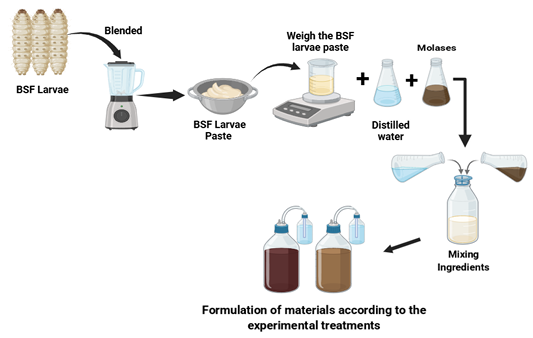
Prior to fermentation, all fermentation equipment, including bottles, tubing, spatulas, and glassware, was sterilized using an autoclave at 121°C for 15 minutes. Approximately 150 g of BSF larval paste was transferred into sterile fermentation bottles and mixed with molasses according to the assigned treatment level. Distilled water (150 mL) was subsequently added to each bottle. The fermentation mixture in each experimental unit therefore consisted of 150 g of BSF larval paste, 150 mL of distilled water, and molasses according to the treatment level, resulting in different final fermentation volumes depending on molasses addition. The fermentation containers were tightly sealed and connected to water-filled airlocks to maintain anaerobic conditions, facilitate gas release, and prevent oxygen entry. Fermentation was carried out at room temperature for 5, 10, or 15 days according to the respective treatment combinations. Samples were collected at the end of each incubation period, namely on days 5, 10, and 15. Before analysis, each fermented sample was homogenized to obtain a representative sample for pH, total titratable acidity, and microbial population analyses. The overall preparation procedure is presented in Figure 1.
Measured parameters
pH measurement
The pH value of the probiotic samples was measured using a calibrated digital pH meter . The instrument was standardized at pH 4 and 7 before use. The electrode was immersed in the sample until a stable reading was obtained.
Total titratable acidity (TTA) (%)
TTA was determined according to AOAC (2005). The supernatant was obtained by centrifuging the probiotic sample, and 10 mL of the supernatant was diluted with sterile distilled water (1:10 ratio). The diluted sample was titrated with 0.1 N NaOH using phenolphthalein as an indicator until a faint pink color appeared. The TTA value, expressed as a percentage of lactic acid equivalent, was calculated using the formula:
Figure 1.
Where; N = Normality of titrant (mol L⁻¹), V₁ = Volume of titrant (mL), V₂ = Volume of sample (mL), Eq.Wt = Equivalent weight of lactic acid (90.08)
Microbial population count
The total microbial population was determined using the total plate count (TPC) method. The media used for microbial enumeration included de Man, Rogosa, and Sharpe agar (MRS) for lactic acid bacteria (LAB), starch casein agar (SCA) for Actinomycetes, tryptic soy agar (TSA) for Bacillus spp., and potato dextrose agar (PDA) for yeasts. All tools and media were sterilized using an autoclave at 121°C for 15 minutes. One milliliter of sample was added to 9 mL of 0.1% Buffered Peptone Water (BPW) and vortexed for 1 minute to prepare the 10⁻¹ dilution. Serial dilutions were made up to 10⁻⁷. From each dilution, 1 mL was poured into sterile Petri dishes (in triplicate) and mixed with molten agar. After solidification, plates were incubated at 37°C for 24 hours in an inverted position. The colony forming units (CFU/mL) were calculated using the formula .
Figure 2.
Data analysis
Data were analyzed using Analysis of Variance (ANOVA) based on a completely randomized factorial design. When significant differences (P < 0.05) were observed, means were further compared using Duncan’s Multiple Range Test (DMRT). The optimum treatment was determined based on an integrated evaluation of physicochemical and microbiological responses, including low pH, appropriate total titratable acidity, and high populations of beneficial microorganisms. Although this study used factorial ANOVA and DMRT to identify the most favorable treatment combination, further studies may apply more advanced optimization methodologies to improve predictive accuracy and strengthen model-based treatment optimization.
Result and Discussion
Effect of molasses concentration and incubation time on pH and TTA of fermented microbial feed additive derived from BSF larvae
The analysis of variance showed a significant interaction (P < 0.05) between molasses concentration and incubation time on pH value and TTA of fermented microbial feed additive derived from Hermetia illucens larvae (Table 1). The results of DMRT indicated that the lowest pH value was observed in treatment A2B2 (3.91±0.06), although it was not significantly different (P > 0.05) from treatments A3B2 (3.92±0.03) and A3B3 (4.01±0.06). However, these treatments showed significantly lower pH values (P < 0.05) compared to A3B1, A2B3, A2B1, A1B2, A1B1, and A1B3. In contrast, the highest pH value was recorded in treatment A1B3 (6.28±0.11), indicating weak fermentation activity under conditions without molasses supplementation. The reduction in pH observed in treatments supplemented with molasses indicates that fermentation proceeded
Table 1: Interaction effect of molasses concentration and incubation time on pH and total titratable acidity of fermented microbial feed additive derived from Black Soldier Fly larvae.
pH
Titratable acidity (%)
Factor A
(Molasses level)
Factor B (Incubation time)
Mean
Factor A
(Molasses level)
Factor B (Incubation time)
Mean
B1
B2
B3
B1
B2
B3
A1
6.05 ± 0.02b
5.91 ± 0.07c
6.28 ± 0.11a
6.08 ± 0.18
A1
0.71 ± 0.06d
0.75 ± 0.06d
0.81 ± 0.14d
0.76 ± 0.09
A2
4.12 ± 0.08d
3.91 ± 0.06e
4.11 ± 0.03d
4.04 ± 0.11
A2
2.41 ± 0.26c
2.43 ± 0.06c
3.74 ± 0.08a
2.86 ± 0.70
A3
4.07 ± 0.02d
3.92 ± 0.03e
4.01 ± 0.06de
4.00 ± 0.07
A3
2.60 ± 0.20c
3.37 ± 0.45ab
3.29 ± 0.16b
3.09 ± 0.45
Mean
4.74 ± 0.98
4.58 ± 1.00
4.80 ± 1.11
Mean
1.91 ± 0.91
2.18 ± 1.17
2.61 ± 1.38
Note: A1 = 0% molasses, A2 = 50% molasses, A3 = 100% molasses; B1 = 5 days of incubation, B2 = 10 days of incubation, and B3 = 15 days of incubation. Values are presented as mean ± SD. Different superscript letters within the interaction means indicate significant differences (P < 0.05). Because a significant interaction between molasses concentration and incubation time was observed, the interpretation was primarily based on interaction means. Marginal means are presented descriptively to show the general trends of each factor.
effectively due to increased microbial metabolic activity. Molasses contains readily fermentable sugars such as sucrose, glucose, and fructose that can be utilized as energy sources by fermentative microorganisms during the fermentation process ; ; . The availability of these simple carbohydrates stimulates microbial metabolism and promotes the production of organic acids, which subsequently lowers the pH of the fermentation substrate. Similar findings were reported by Vera et al. (2022), who stated that carbohydrate-rich substrates enhance microbial fermentation activity and accelerate acidification during fermentation. The present study demonstrated that treatments without molasses supplementation (A1B1–A1B3) exhibited relatively high pH values ranging from 5.91 to 6.28. This condition indicates limited fermentation activity due to insufficient fermentable carbon sources. In addition, the increase in pH observed in treatment A1B3 suggests that prolonged incubation without adequate carbon availability may trigger protein degradation and the formation of alkaline metabolites such as ammonia, which contribute to pH elevation during fermentation . Conversely, treatments containing 50% and 100% molasses showed substantially lower pH values, indicating improved fermentation efficiency and greater acid production. Incubation time also influenced fermentation characteristics. The 10-day incubation period appeared to represent the optimal phase of microbial activity, as indicated by the lowest pH values observed in A2B2 and A3B2. During this period, fermentative microorganisms were likely in the exponential growth phase, actively converting simple sugars into organic acids. However, prolonged incubation for 15 days tended to slightly increase pH values in several treatments, possibly due to nutrient depletion and reduced microbial activity caused by excessive acid accumulation during fermentation ; .
A similar interaction pattern was also observed for TTA. The highest TTA value was obtained in treatment A2B3 (3.74±0.08%), although it was not significantly different (P > 0.05) from A3B2 (3.37±0.45%). Both treatments exhibited significantly higher TTA values (P < 0.05) compared to A3B3, A3B1, A2B2, A2B1, A1B3, A1B2, and A1B1. In contrast, treatments without molasses supplementation produced the lowest TTA values, ranging from 0.71 to 0.81%. The increase in TTA values reflects the accumulation of organic acids produced during microbial fermentation. Higher molasses concentrations provided sufficient fermentable substrates for microbial metabolism, thereby increasing acid production during fermentation ; . Extended incubation time also supported continued acid synthesis, particularly under conditions with adequate carbon availability. Nevertheless, excessive fermentation duration combined with high sugar concentration may eventually suppress microbial activity due to acid accumulation and osmotic stress ; . An inverse relationship between pH and TTA was clearly observed in this study. Treatments showing low pH values generally exhibited high TTA values, indicating that acid accumulation was the main factor responsible for pH reduction during fermentation . This relationship reflects active microbial fermentation and stable fermentation conditions within the fermented microbial feed additive. Overall, the combination of 50% molasses and 10–15 days of incubation produced favorable fermentation characteristics, characterized by low pH values and high TTA. These findings indicate that optimization of molasses concentration and incubation time is essential for improving fermentation efficiency and physicochemical quality of fermented microbial feed additive derived from black soldier fly larvae . From an optimization perspective, treatment A2B2 was considered the most favorable condition because it provided a balanced fermentation profile, characterized by the lowest pH value and adequate organic acid production without excessive acidity. Although several treatments produced comparable or higher TTA values, excessive acid accumulation may not always indicate better fermentation quality because it can suppress certain beneficial microorganisms during prolonged incubation. The availability of fermentable carbohydrates from molasses may stimulate lactic acid bacteria activity and organic acid production, leading to pH reduction and improved fermentation stability ; . Therefore, the selection of 50% molasses and 10 days of incubation was based not only on acidification response, but also on the ability of this treatment to maintain favorable microbial populations and fermentation stability.
Effect of molasses concentration and incubation time on the populations of LAB, Actinomycetes, Bacillus sp., and yeast in fermented microbial feed additive derived from BSF larvae
The analysis of variance revealed a significant interaction (P < 0.05) between molasses concentration and incubation time on the populations of LAB, Actinomycetes, Bacillus sp., and yeast in fermented microbial feed additive derived from Hermetia illucens larvae (Tables 2 and 3). The results of DMRT indicated that the highest LAB population was observed in treatment A3B2 (21.80 ± 0.62 × 10⁷ CFU/mL), although it was not significantly different (P > 0.05) from treatment A2B2 (21.17 ± 1.67 × 10⁷ CFU/mL). Both treatments showed significantly higher LAB populations (P < 0.05) compared to A3B1, A2B3, A3B3, A2B1, A1B2, A1B1, and A1B3. In contrast, the lowest
Table 2: Interaction effect of molasses concentration and incubation time on lactic acid bacteria and Actinomycetes populations of fermented microbial feed additive derived from Black Soldier Fly larvae.
Total Lactic Acid Bacteria x 107 (CFU/ml)
Total Actinomycetes x 107 (CFU/ml)
Factor A
(Molasses level)
Factor B (Incubation time)
Mean
Factor A
(Molasses level)
Factor B (Incubation time)
Mean
B1
B2
B3
B1
B2
B3
A1
2.60 ± 0.40ef
3.13±0.85e
0.60 ± 0.50f
2.11 ± 1.27
A1
0.87 ± 0.65d
1.27±0.25bcd
1.20±0.75cd
1.11 ± 0.55
A2
6.13 ± 1.85d
21.17±1.67a
12.57± 2.10bc
13.29± 6.73
A2
2.13 ± 0.06b
3.90±0.35a
3.10±0.40a
3.04 ± 0.81
A3
13.83 ± 1.44b
21.80±0.62a
10.70± 0.61dc
15.44 ± 5.03
A3
3.07 ± 0.25a
3.73± 0.38a
1.97±0.85bc
2.92 ± 0.91
Mean
7.52 ± 5.11
15.37±9.23
7.96 ± 5.69
Mean
2.02 ± 1.02
2.97±1.31
2.09±1.02
Note: A1 = 0% molasses, A2 = 50% molasses, A3 = 100% molasses; B1 = 5 days of incubation, B2 = 10 days of incubation, and B3 = 15 days of incubation. Values are presented as mean ± SD. Different superscript letters within the interaction means indicate significant differences (P < 0.05). Because a significant interaction between molasses concentration and incubation time was observed, the interpretation was primarily based on interaction means. Marginal means are presented descriptively to show the general trends of each factor.
Table 3: Interaction effect of molasses concentration and incubation time on Bacillus sp. and yeast populations of fermented microbial feed additive derived from Black Soldier Fly larvae.
Total Bacillus sp. x 107 (CFU/ml)
Total Yeast x 107 (CFU/ml)
Factor A
(Molasses level)
Factor B (Incubation time)
Mean
Factor A
(Molasses level)
Factor B (Incubation time)
Mean
B1
B2
B3
B1
B2
B3
A1
0.40 ± 0.10cd
0.33 ± 0.15cd
0.17 ± 0.06d
0.30 ± 0.14
A1
0.17 ± 0.06c
0.30 ± 0.20c
0.20 ± 0.10c
0.22 ± 0.13
A2
1.90 ± 0.60ab
2.83 ± 0.47a
1.23 ± 0.45bc
1.99 ± 0.83
A2
1.43 ± 1.06b
3.83 ± 0.58a
1.47 ± 0.25b
2.24 ± 1.34
A3
0.57 ± 0.35cd
2.73 ± 1.10a
1.73 ± 0.51b
1.68 ± 1.13
A3
1.30 ± 0.53b
3.30 ± 0.72a
1.00 ± 0.17bc
1.87 ± 1.17
Mean
0.96 ± 0.79
1.97 ± 1.37
1.04 ± 0.77
Mean
0.97 ± 0.85
2.48 ± 1.72
0.89 ± 0.58
Note: A1 = 0% molasses, A2 = 50% molasses, A3= 100% molasses; B1= 5 days of incubation, B2= 10 days of incubation, and B3= 15 days of incubation. Values are presented as mean ± SD. Different superscript letters within the interaction means indicate significant differences (P < 0.05). Because a significant interaction between molasses concentration and incubation time was observed, the interpretation was primarily based on interaction means. Marginal means are presented descriptively to show the general trends of each factor.
LAB population was recorded in treatment A1B3 (0.60 ± 0.50 × 10⁷ CFU/mL). The increase in LAB populations in treatments supplemented with molasses indicates that the availability of simple carbohydrates strongly supported microbial fermentation activity. Molasses contains fermentable sugars such as sucrose, glucose, and fructose that are readily utilized by LAB as energy sources during fermentation ; . The high LAB populations observed in A2B2 and A3B2 coincided with low pH values (3.91–3.92) and relatively high TTA values (2.43–3.37%), indicating active organic acid production during fermentation. These findings confirm that LAB played a dominant role in acidification and stabilization of the fermentation system. Similar observations were reported by Peralta et al. (2021), who stated that optimal carbohydrate availability promotes rapid LAB proliferation and enhances organic acid synthesis during feed fermentation. The present study also demonstrated that the 10-day incubation period represented the optimum phase for LAB growth. During this phase, microorganisms were likely in the exponential growth stage, actively converting carbohydrates into organic acids through fermentative metabolic pathways (Vera et al., 2022). However, prolonged incubation for 15 days reduced LAB populations, particularly in treatment A3B3 (10.70 ± 0.61 × 10⁷ CFU/mL). This decline was likely associated with excessive acid accumulation, nutrient depletion, and osmotic stress resulting from high sugar concentration during prolonged fermentation . In contrast, treatments without molasses supplementation (A1B1–A1B3) produced substantially lower LAB populations due to limited fermentable carbon availability. Black soldier fly larvae primarily contain complex organic compounds such as chitin and protein that are less readily utilized by LAB without additional carbohydrate supplementation .
A similar interaction pattern was observed in the Actinomycetes population (Table 2). The highest Actinomycetes count was recorded in treatment A2B2 (3.90 ± 0.35 × 10⁷ CFU/mL), although it was not significantly different (P > 0.05) from treatments A3B2, A2B3, and A3B1. Nevertheless, these treatments exhibited significantly higher populations (P < 0.05) compared to A2B1, A3B3, A1B2, A1B3, and A1B1. The increase in Actinomycetes population under moderate fermentation conditions indicates that this microbial group adapted well to the acidic fermentation environment. Actinomycetes are known to produce extracellular enzymes and bioactive metabolites that contribute to microbial balance and fermentation stability . The optimum growth of Actinomycetes observed in A2B2 suggests that fermentation conditions characterized by moderate acidity and adequate carbon availability were favorable for their development. However, prolonged fermentation combined with high molasses concentration tended to reduce Actinomycetes populations, as observed in A3B3. Excessive acidity and osmotic pressure may inhibit Actinomycetes growth and suppress metabolic activity during fermentation (Bhattacharjee et al., 2018). The relatively low populations observed in treatments without molasses supplementation further indicate that fermentable carbohydrate availability is essential for supporting microbial growth during fermentation.
The population of Bacillus sp. was also significantly affected (P < 0.05) by the interaction between molasses concentration and incubation time (Table 3). Treatment A2B2 produced the highest Bacillus sp. population (2.83 ± 0.47 × 10⁷ CFU/mL), although it was not significantly different (P > 0.05) from A3B2 (2.73 ± 1.10 × 10⁷ CFU/mL). Both treatments showed significantly higher populations compared to A3B3, A2B3, A2B1, A3B1, A1B1, A1B2, and A1B3. The increase in Bacillus populations suggests that moderate molasses supplementation and optimum incubation time created favorable environmental conditions for microbial growth. Bacillus species are known for their ability to produce extracellular enzymes such as proteases and amylases that contribute to substrate degradation during fermentation . The high Bacillus populations observed in A2B2 and A3B2 likely contributed to improved fermentation efficiency and nutrient transformation within the substrate. However, the decline in Bacillus populations after prolonged fermentation suggests that nutrient depletion and excessive acid accumulation may suppress microbial activity during the later stages of fermentation ; .
The total yeast population also showed a significant interaction (P < 0.05) between molasses concentration and incubation time (Table 3). The highest yeast population was observed in treatment A2B2 (3.83 ± 0.58 × 10⁷ CFU/mL), although it was not significantly different (P > 0.05) from A3B2 (3.30 ± 0.72 × 10⁷ CFU/mL). Both treatments showed significantly higher yeast populations compared to A2B3, A2B1, A3B1, A3B3, A1B2, A1B3, and A1B1. The increase in yeast populations indicates that molasses effectively supplied fermentable carbohydrates required for yeast metabolism during fermentation. Yeasts are capable of converting simple sugars into ethanol, carbon dioxide, and various organic metabolites that contribute to fermentation dynamics . The optimum yeast growth observed during the 10-day incubation period indicates that this stage provided suitable environmental conditions, including sufficient nutrients and moderate acidity. However, prolonged fermentation reduced yeast populations, likely due to ethanol accumulation, acid stress, and nutrient depletion during the later stages of fermentation . Treatments with high yeast populations also showed elevated LAB and Bacillus populations, suggesting synergistic interactions among microorganisms during fermentation. LAB contribute to environmental acidification, while yeast and Bacillus species produce metabolites and enzymes that support microbial stability and substrate degradation. This microbial interaction likely contributed to the improved physicochemical characteristics observed in treatments A2B2 and A3B2. The favorable microbial profile observed in A2B2 suggests that moderate molasses supplementation and 10 days of incubation created a balanced ecological condition for microbial growth. In this condition, LAB may contribute primarily to acid production and pH reduction, while Bacillus sp. may support substrate degradation through extracellular enzyme production and probiotic-related functions ; . Actinomycetes may contribute to microbial stability and bioactive metabolite production, whereas yeast may support fermentation dynamics through the utilization of simple sugars and production of growth-supporting metabolites ; . This microbial balance is important because the quality of fermented microbial feed additives is not determined only by a single microbial group, but by the combined activity and stability of several beneficial microorganisms. Therefore, A2B2 was selected as the optimum treatment because it provided the most balanced response among pH, TTA, LAB, Actinomycetes, Bacillus sp., and yeast populations.
Conclusion
The present study demonstrated that molasses concentration and incubation time significantly affected the physicochemical characteristics and microbial populations of fermented microbial feed additive produced from Hermetia illucens larvae. Among all treatments, the combination of 50% molasses and 10 days of incubation (A2B2) provided the most favorable fermentation condition, characterized by a low pH value (3.91), moderate total titratable acidity (2.43%), and high populations of beneficial microorganisms, including lactic acid bacteria (21.17 × 10⁷ CFU/mL), Actinomycetes (3.90 × 10⁷ CFU/mL), Bacillus sp. (2.83 × 10⁷ CFU/mL), and yeast (3.83 × 10⁷ CFU/mL). These results indicate that appropriate molasses supplementation and controlled fermentation duration are essential to support microbial growth and improve fermentation quality. Overall, fermented black soldier fly larvae produced under optimum conditions showed considerable potential as a locally sourced microbial feed additive for sustainable livestock production systems. These findings highlight the novelty and practical relevance of optimizing molasses concentration and incubation time as key fermentation factors for developing BSF larvae-based microbial feed additives.
Acknowledgment
The authors would like to express their sincere appreciation to the Faculty of Agriculture, Universitas Sumatera Utara, for the financial support provided through the Young Lecturer Research Grant Scheme under Contract Number 7247/UN5.2.3.D3/PT.01.03/2025. The authors also gratefully acknowledge the support and assistance of colleagues, laboratory staff, and students who contributed to the implementation of this research.
Novelty Statement
This study introduces a new approach to developing fermented microbial feed additives from Hermetia illucens larvae through the optimization of molasses concentration and incubation time. Unlike previous studies that mainly focused on microbial isolation, this research demonstrates how fermentation conditions influence physicochemical characteristics and the growth of beneficial microorganisms, including lactic acid bacteria, Actinomycetes, Bacillus sp., and yeast. The findings provide new insight into the potential use of black soldier fly larvae as a sustainable locally sourced microbial feed additive.
Authors’ contribution
MA and WFS conceived and designed the study and supervised the overall research activities. MA, VOA, AT, Y, and MAP conducted the field and laboratory experiments and collected the research data. MA and WFS performed the data analysis and prepared, revised, and finalized the manuscript. All authors read, reviewed, and approved the final version of the manuscript.
Generative AI and AI-assisted technology statement
During the preparation of this manuscript, the authors used AI-assisted technology solely to improve language clarity, grammar, and readability. All scientific content, data analysis, interpretation of results, and conclusions were developed and verified entirely by the authors. The authors take full responsibility for the content of this manuscript.
Conflict of interest
The authors have declared no conflict of interest.
Figures
Figure 1:.
Preparation process of fermented microbial feed additive derived from Hermetia illucens (Black Soldier Fly) larvae, illustrating the main stages of larval homogenization, molasses addition, anaerobic fermentation, incubation, and microbial analysis.
References
Aminuddin MH, Elias NH, Moh JH, Zainalabidin N (2023). Bioconversion of organic wastes by black soldier fly for chitin, lipid and protein production. https://doi.org/10.58915/ijbuse.v1.2023.240[CrossRef]
Amran M, Nuraini N, Mirzah M (2021). Effect of fermentation media with different microbes on the production of black soldier fly (Hermetia illucens) maggots. J. Petern., 18(1): 41-50. https://doi.org/10.24014/jupet.v18i1.11253[CrossRef]
AOAC (2005). Official methods of analysis of the association of official analytical chemists. Published by the Association of Official Analytical Chemist. Marlyand.
Bhattacharjee MK, Anees M, Patel A (2018). Increased viability of sugar transport-deficient mutant of the periodontal pathogen, Aggregatibacter actinomycetemcomitans. Curr. Microbiol., 75(11): 1460–1467. https://doi.org/10.1007/s00284-018-1545-6[CrossRef]
Cifuentes Y, Glaeser SP, Mvie J, Bartz JO, Müller A, Gutzeit HO, Vilcinskas A (2022). Isolation of Hermetia illucens larvae core gut microbiota by two different cultivation strategies. Front. Microbiol., 13: 956674. https://doi.org/10.1007/s10482-022-01735-7[CrossRef]
Coniglio MV, Luna MJ, Provensal P, Watson S, Ortiz ME, Ludueña HR, Cavaglieri L, Magnoli AP (2023). Use of the probiotic Saccharomyces cerevisiae var. boulardii RC009 in the rearing stage of calves. Int. J. Agric. Biosci., 12(3): 188-192. https://doi.org/10.47278/journal.ijab/2023.063[CrossRef]
De Simeis D, Serra S (2021). Actinomycetes: A never-ending source of bioactive compounds: An overview on antibiotics production. Antibiotics, 10(5): 483. https://doi.org/10.3390/antibiotics10050483[CrossRef]
Dewi PS, Rasmiyana R (2025). Sugarcane molasses: Composition, challenges, and utilization as an economically valuable raw material. J. Teknol. Dan Mutu Pangan, 4(1): 1–9. https://doi.org/10.30812/jtmp.v4i1.4764[CrossRef]
El-Asri O, Farag MA (2023). The potential of molasses from different dietary sources in industrial applications: A source of functional compounds and health attributes, a comprehensive review. Food Biosci., https://doi.org/10.1016/j.fbio.2023.103263[CrossRef]
Elshaghabee FMF, Rokana N, Gulhane RD, Sharma C, Panwar H (2017). Bacillus as potential probiotics: Status, concerns, and future perspectives. Front. Microbiol., 8: 1490. https://doi.org/10.3389/fmicb.2017.01490[CrossRef]
El-Tarabily KA, Sivasithamparam K (2021). Non-streptomycete Actinomycetes as biocontrol agents of soil-borne fungal plant pathogens. Appl. Microbiol. Biotechnol., 105(3): 1135–1154.
Fassah DM, Hairani A, Meryandini A, Astuti DA, Wiryawan IKG (2024). Shelf life of encapsulated lactic acid bacteria probiotics derived from black soldier fly larvae. J. Ilmu Nutr. Dan Teknol. Pakan, 22(1): 23–28. https://doi.org/10.29244/jintp.22.1.23-28[CrossRef]
Fitri SD, Laconi EB, Martin RS, Utari TA, Shofiah M, Nugroho JE, Rinaldy A, Erlangga K (2023). Viability of probiotics from maggot (Hermetia illucens) fermentation against temperature and storage duration. J. Ilmu Nutr. Teknol. Pakan, 21(3): 171-179. https://doi.org/10.29244/jintp.21.3.171-179[CrossRef]
Ghosh D (2020). Studies on the changes of biochemical, microbiological and sensory parameters of sauerkraut and fermented mix vegetables. J. Food Sci., 5(1): 78–83. https://doi.org/10.26656/fr.2017.5(1).193[CrossRef]
Gorrens E, Van Moll L, Frooninckx L, De Smet J, Vandeweyer D, Lachi D, Vilchez-Vargas R, Van Campenhout L (2021). Isolation and identification of dominant bacteria from black soldier fly larvae (Hermetia illucens) envisaging practical applications. Front. Microbiol., 12: 665546. https://doi.org/10.3389/fmicb.2021.665546[CrossRef]
Guan N, Liu L (2020). Microbial response to acid stress: mechanisms and applications. Appl. Microbiol. Biotechnol., 104(1): 51-65. https://doi.org/10.1007/s00253-019-10226-1[CrossRef]
Hawaz E, Tafesse M, Tesfaye A, Kiros S, Beyene DW, Kebede G, Boekhout T, Groenwald M, Theelen B, Degefe A, Degu S, Admasu A, Hunde B, Muleta D (2023). Optimization of bioethanol production from sugarcane molasses by the response surface methodology using Meyerozyma caribbica isolate MJTm3. Ann. Microbiol., 73(1): 1–15. https://doi.org/10.1186/s13213-022-01706-3[CrossRef]
Holanda R, Araújo J, de Abreu FC (2025). Enhancing the potential of sugarcane molasses in microbial electrosynthesis: Biological characteristics for CO2 capture and energy generation. J. Biomed. Nanotechnol., 21(1): 34–41. https://doi.org/10.1166/jbn.2025.3940[CrossRef]
Huang J, Wang X, Chen X, Li H, Chen YF, Hu Z, Yang S (2023). Adaptive laboratory evolution and metabolic engineering of Zymomonas mobilis for bioethanol production using molasses. ACS Synth. Biol., 12(4): 1297–1307. https://doi.org/10.1021/acssynbio.3c00056[CrossRef]
Huang XY, Wang CK, Zhao YW, Sun CH, Hu DG (2021). Mechanisms and regulation of organic acid accumulation in plant vacuoles. Hortic. Res., 8(1): 227. https://doi.org/10.1038/s41438-021-00702-z[CrossRef]
Kasmiarti G, Hermansyah H, Hariani PL, Novia N (2023). Optimization of Lachancea fermentati in bioethanol production from sugarcane molasses. https://doi.org/10.4108/eai.5-10-2022.2328345[CrossRef]
Kementerian PRI (2017). Regulation of the minister of agriculture of the republic of Indonesia number 14/PERMENTAN/PK.350/5/2017 concerning the classification of veterinary drugs. Jakarta: Kementerian Pertanian Republik Indonesia.
Li X, Chen Z, Wang J, Mu J, Lu X (2023). Symbiosis of acetic acid bacteria and yeast isolated from black tea fungus mimicking the kombucha environment in bacterial cellulose synthesis. Int. Food Res. J., International Food Research Journal, 30(6), 1504. https://doi.org/10.47836/ifrj.30.6.13[CrossRef]
Li Z, Zheng M, Zheng J, Gänzle MG (2023). Bacillus species in food fermentations: An under-appreciated group of organisms for safe use in food fermentations. Curr. Opin. Food Sci., 50: 101007. https://doi.org/10.1016/j.cofs.2023.101007[CrossRef]
Luo R, Zhang Y, Wang F, Liu K, Huang G, Zheng N, Wang J (2021). Effects of sugar cane molasses addition on the fermentation quality, microbial community, and taste of alfalfa silage. Animals, 11(2): 355. https://doi.org/10.3390/ani11020355[CrossRef]
Memon FU, Li C, Ahmad S, Cui Y, Feng X, Zeng P, Tian L (2025). Efficiency of microbial fermentation on microbial shifts, enzymatic activity, and transcriptions in black soldier fly larvae during the sugarcane waste conversion. Environ. Pollut., 381: 126588. https://doi.org/10.1016/j.envpol.2025.126588[CrossRef]
Mokhtar MN, Zakaria R, Mohammed MAP (2024). Optimizing lactic acid production through dynamic simulation in repeated-batch fermentation system. Adv. Agric. Food Res. J., 5(1). https://doi.org/10.36877/aafrj.a0000485[CrossRef]
Moretta A, Salvia R, Scieuzo C, Di Somma A, Vogel H, Pucci P, Sgambato A, Wolff M, Falabella P (2020). A bioinformatic study of antimicrobial peptides identified in the black soldier fly (BSF) Hermetia illucens (Diptera: Stratiomyidae). Sci. Rep., 10(1): 16875. https://doi.org/10.1038/s41598-020-74017-9[CrossRef]
Muhamad A, Noor SFM, Syahirah N, Hamid AI, Zaidi MAHM (2021). Physical factors optimization of Saccharomyces cerevisiae fermentation to enhance production of bioethanol: A review. Multidisciplinary Applied Research and Innovation,. 2(2): 266–277. https://publisher.uthm.edu.my/periodicals/index.php/mari/article/download/1849/665
Oliveira RA, Filho RM, Rossel CEV (2016). High lactic acid production from molasses and hydrolyzed sugarcane bagasse. Chem. Eng. Trans., 50: 307–312.
Pang Y, Zhang H, Wen H, Wan H, Wu H, Chen Y, Chen X (2022). Yeast probiotic and yeast products in enhancing livestock feeds utilization and performance: An overview. J. Fungi, 8(11): 1191. https://doi.org/10.3390/jof8111191[CrossRef]
Peng C, Ghanbari M, May A, Abeel T (2024). Effects of antibiotic growth promoter and its natural alternative on poultry cecum ecosystem: An integrated analysis of gut microbiota and host expression. Front. Microbiol., 15. https://doi.org/10.3389/fmicb.2024.1492270[CrossRef]
Peng W, Zhang Y, Wang Y, Wang L, Zhang J, Li F (2024). Effects of LactoBacillus plantarum and molasses on nutrient composition, aerobic stability, and microflora of alfalfa silage in sandy grasslands. Front. Microbiol., 15: 1358085. https://doi.org/10.3389/fmicb.2024.1358085[CrossRef]
Peralta JGB, Elegado FB, Simbahan JF, Pajares IG, Dizon EI (2021). Microbial and metabolite profiles of spontaneous and adjunct-inoculated cacao (Theobroma cacao L.) fermentation. J. Food Sci., 5(2): 331–339. https://doi.org/10.26656/fr.2017.5(2).526[CrossRef]
Rum IA, Maulana R, Santoso R, Fatmawati F (2025). Viability Test of lactic acid bacteria and lactic acid content in few commercial probiotic gels. Int. J. Multidis. Res., 7(4). https://doi.org/10.36948/ijfmr.2025.v07i04.54318[CrossRef]
Santos MSM, Mueller LP, Batistote M (2024). Stress factors and cytotoxic and genotoxic action of ethanol in Saccharomyces cerevisiae. Ciência e Natura, 46: e83730. https://doi.org/10.5902/2179460X83730[CrossRef]
Shi C, Ma J, Wu H, Luo J, Liu Y, Li K, Wang K (2022). Evaluation of pH regulation in carbohydrate-type municipal waste anaerobic co-fermentation: Roles of pH at acidic, neutral and alkaline conditions. Sci. Total Environ., 853: 158327. https://doi.org/10.1016/j.scitotenv.2022.158327[CrossRef]
Utari TA, Nugroho JE, Erlangga K, Martin RSH, Shofiah MS, Nahrowi (2024). Utilization of black soldier fly larvae juice as a probiotic supplement for broiler chickens: Effect on performance, immunity, haematology, and economic feasibility. BIO Web. Conf., 123: 01003. https://doi.org/10.1051/bioconf/202412301003[CrossRef]
Van de Loo J, Oslan SNH, Mokshin NAS, Othman R, Amin Z, Dejtisakdi W, Prihanto AA, Tan JS (2025). Comprehensive review of strategies for lactic acid bacteria production and metabolite enhancement in probiotic cultures: multifunctional applications in functional foods. Fermentation, 11(5): 241. https://doi.org/10.3390/fermentation11050241[CrossRef]
Vera-Pena MY, Hernandez-Garcia H, Valencia-Garcia FE (2022). Kinetic modeling of lactic acid production, co-substrate consumptions and growth in Lactiplantibacillus plantarum 60-1. Dyna-Colombia, 89(224): 50–57. https://doi.org/10.15446/dyna.v89n224.102243[CrossRef]
Wang S, Tian R, Liu B, Wang H, Li J, Li CH, Li M, Evivie SE, Li B (2024). Effects of carbon concentration, oxygen, and controlled pH on the engineering strain Lactiplantibacillus casei E1 in the production of bioethanol from sugarcane molasses.
Zi X, Liu Y, Chen T, Li M, Zhou H, Tang J (2022). Effects of sucrose, glucose and molasses on fermentation quality and bacterial community of Stylo silage. Fermentation, 8(5): 191. https://doi.org/10.3390/fermentation8050191[CrossRef]
Optimization of Molasses Concentration and Incubation Time for the Production of Fermented Microbial Feed Additive from Black Soldier Fly Larvae (Hermetia illucens) · ResearchersLinks