
Feeding management is a crucial factor in optimizing shrimp growth and survival, particularly in open marine aquaculture systems. The number of feeding trays used in sea floating cage systems can affect feed distribution efficiency and shrimp performance. This study aimed to examine the influence of different numbers of feeding trays on the growth and survival rate of vannamei shrimp (Litopenaeus vannamei) in floating net cages. The study was conducted for 90 days using 3x3x3 meter floating net cages with a stocking density of 3,600 shrimps per cage. Four treatments, comprising one, two, three, and four feeding trays, were applied in triplicate. Data were analyzed using one-way ANOVA followed by LSD test. The number of feeding trays significantly affected final weight, ADG, absolute growth, and survival rate (p < 0.05), but had no significant effect on FCR and feed efficiency. Treatments with three and four feeding trays produced the highest growth, namely final weight (14.78 g and 15.12 g), ADG (0.16 g day-1 and 0.16 g day-1), and absolute growth (14.45 g and 14.74 g). In addition, survival also showed the highest results (67.58 % and 67.83 %). However, there was no significant difference in feed conversion ratio and feed efficiency. Optimizing the number of feeding trays can enhance the growth and survival of vannamei shrimp in sea floating cages. The use of three or four feeding trays per cage is recommended for intensive L. vannamei sea farming to support sustainable aquaculture practices.
Special Issue: Innovations in Sustainable Fisheries, Marine Resources, and Food Systems for Food Security and Human Well-being · Volume 42, Issue 2, 22 October 2026 · Open Access
Optimization of Feeding Tray Number to Improve Growth and Survival of Vannamei Shrimp (Litopenaeus vannamei) Cultured in Sea Floating Cages
· · · ·
Affiliations & Notes ⌄
- 1Study Program of Aquatic Resources Management, Department of Aquatic Resources Management, Faculty of Fisheries and Marine Sciences, IPB University, Bogor, Indonesia
- 2Department of Aquaculture, Faculty of Agriculture and Animal Science, University of Muhammadiyah Malang, Malang, Indonesia
- 3Center for Coastal and Marine Resources Studies, IPB University, Bogor, Indonesia
- 4Department of Aquatic Resources Management, Faculty of Fisheries and Marine Sciences, IPB University, Bogor, Indonesia
- 5School of Business, IPB University, Bogor, Indonesia. *Correspondence | Riza Rahman Hakim, Study Program of Aquatic Resources Management, Department of Aquatic Resources Management, Faculty of Fisheries and Marine Sciences, IPB University, Bogor, Indonesia
- 6Email: rizarahman@umm.ac.id
Article Info ⌄
- Journal:
- Sarhad Journal of Agriculture
- Published:
- 22 October 2026
From the article
- However, varying feeding tray numbers in floating cages did not affect the feed conversion ratio (FCR) and feed efficiency.
- The best results for the ADG and absolute growth were in treatment C and D (three and four feeding trays per floating cage).
- The use of three and four feeding trays in vannamei shrimp farming in sea floating cages has shown better growth and survival performance compared to one and two feeding trays.
- The use of more than two feeding trays per floating cage is recommended so that feed distribution is more evenly distributed throughout the net area.
Selected from the article's own text.
Abstract
Introduction
Marine aquaculture, also known as mariculture, still has enormous potential for development in Indonesia. One such commodity is the vannamei shrimp (Litopenaeus vannamei), which has excellent prospects for development. Vannamei shrimp farming began to grow in popularity in 2000, and the production of farmed vaname shrimp in 2024 is expected to reach 786,382 tons (KKP, 2024). Shrimp including vannamei is the main commodity dominating Indonesia’s fisheries exports, with a value of USD 1.68 billion in 2024 .
Vannamei shrimp production has mostly been carried out in ponds, and intensification has been implemented in an effort to increase production. However, intensification can have a negative impact on the environment, such as water pollution if feed utilization is not optimal due to the accumulation of organic matter . Water management in shrimp grow-out ponds is often not carried out optimally, making it difficult to create an environment with good and stable water quality parameters as required during the maintenance period. As a result, water quality parameters become low, which ultimately causes shrimp to suffer from disease and crop failure.
Seeing the many problems of shrimp farming in ponds, one solution is to cultivate vannamei shrimp using a floating cage system in the sea. This floating cage system for vannamei farming can be an environmentally friendly alternative to shrimp farming . In addition, this farming system has the potential to become an applicable shrimp farming technology in the future, considering that Indonesia’s marine potential reaches 12,123,383 hectares, of which only 325,825 hectares have been utilized (KKP, 2015). The utilization of marine areas as aquaculture sites needs to be increased, as it will directly reduce the burden on land and mangrove and coastal areas as aquaculture sites .
Efforts to cultivate vannamei shrimp in the sea have been carried out for several decades ; , 2010; Effendi, 2016). However, reported outcomes remain highly variable, particularly in terms of survival, growth, feed conversion ratio (FCR), and overall productivity. Growth performance has ranged from 0.06–0.26 g day-¹, survival from 19.7–100.0%, and FCR from 0.72–5.44, indicating a strong influence of environmental conditions and the limited stability of existing sea-based cultivation technologies .
Although sea based culture of Litopenaeus vannamei has been widely studied, the optimization of feeding tray numbers in sea floating cages remains poorly understood. Previous research has mainly focused on stocking density, environmental suitability, feeding frequency, and feed management strategies to improve shrimp performance ; ; . In addition, recent studies have demonstrated that feeding management plays a critical role in determining growth, feed utilization efficiency, survival, and production sustainability in intensive shrimp culture systems ; . However, scientific evidence regarding the optimal number of feeding trays as a feed distribution mechanism in offshore sea floating cages is still lacking. This knowledge gap highlights the need for practical feeding strategies to enhance growth performance, survival, and production efficiency under marine culture conditions.
Materials and Methods
This experiment was carried out in the floating cage of the Sea Farming Centre of the Centre for Coastal and Marine Resources Studies (CCMRS), IPB University, which is situated on Semak Daun Island, Thousand Islands, Jakarta, Indonesia. The process of sampling and measurements was carried out for 90 days. The equipment used included 12 units of 3x3x3 m HDPE floating cages with 2 layers of netting. The outer net had a mesh size of 2.5 cm and the inner net had a mesh size of 0.5 cm. Other supporting equipment included scales, scoop nets, and buckets for feeding. The materials used included Post Larvae (PL 10) vannamei shrimp fry, which were first reared in fiber tanks for 45 days. Subsequently, 43,200 shrimp with an average weight of 0.4 grams were released into the floating cage with a stocking density of 3,600 shrimps per cage or 400 shrimps per m2.
The study utilized a completely randomized design (CRD) with four treatments of feeding tray numbers per cage unit. These were treatment A (one feeding tray per floating cage), treatment B (two feeding trays per floating cage), treatment C (three feeding trays per floating cage), and treatment D (four feeding trays per floating cage). There were 12 experimental units because each treatment was done three times. All cage units had uniform size, stocking density, and maintenance conditions to minimize the influence of non-treatment factors. The feeding trays used measured 80x80x10 cm. The frame of the feeding tray was made of 0.5-inch diameter PVC pipe, and the surface was made of net with a mesh size of 0,5 mm. The feeding trays were placed in the floating cage in accordance with each treatment.
The maintenance period lasted 90 days under standard conditions of cultivation. Shrimps were provided with commercial feed pellets (32% protein, 6% fat, and 4% fiber) four times a day (at 06:00, 11:00, 16:00, and 21:00). The rationing of the food supplied was calculated as 10 percent of the biomass of the shrimps, which gradually decreased to about 2 percent of biomass by the end of the culture cycle. Rationing was recalculated every 10 days according to the biomass of shrimps determined during sampling.
Feeding trays were employed as a feed management and monitoring tool throughout the experiment. After every feeding time, the feed tray was examined to determine the level of feeding response of the shrimps and to estimate the quantity of feeds consumed. The quantity of the uneaten feeds was estimated, which helped in determining the feed residues and adjusting the feeding rate accordingly. More or less feeds would be fed depending on the shrimp response to feeding and the quantity of the residual feed.
Body weight measurements of shrimp were taken every 10 days during cultivation. Twenty shrimp were sampled from each container. Shrimp weight was measured using digital scales with an accuracy of 0.01 g. The weight data obtained was used to calculate growth parameters. The parameters tested during the study were production performance, consisting of survival rates, final weight, average daily growth (ADG), absolute growth, feed conversion ratio (FCR), and feed efficiency.
Water quality monitoring was conducted weekly by measuring temperature, pH, dissolved oxygen, and salinity using a multiparameter water quality meter (AZ Instrument 86031, AZ Instrument Corp.) at a depth of 1 m within each experimental cage. In addition, water samples were collected and transported to the laboratory for the determination of ammonia and nitrite concentrations according to the standard methods described by APHA (2017).
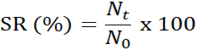
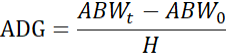
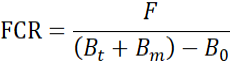
The growth performance and survival rate of Litopenaeus vannamei were calculated using the following equations:
Survival rate
Average daily growth
Absolute growth
AG = Wt – Wo
Feed conversion ratio
Feed efficiency

Description of variables
Where: SR = survival rate (%); Nt = number of shrimp at the end of the culture period; N₀ = number of shrimp at the beginning of the culture period; ADG = average daily growth (g day-¹); ABWt = average body weight at time t (g); ABW₀ = average body weight at the beginning of the culture period (g); H = culture period (days); AG = absolute growth (g); Wt = final body weight (g); W₀ = initial body weight (g); FCR = feed conversion ratio; F = total feed supplied during the culture period (g); Bt= total biomass at the end of the culture period (g); B₀ = total biomass at the beginning of the culture period (g); Bm = biomass of dead shrimp during the culture period (g); FE = feed efficiency (%); D = biomass of dead shrimp during the culture period (g).
All data obtained were tabulated for further testing. Growth performance and survival rate were examined using Analysis of Variance (ANOVA). If the results were significantly different, Least Significant Difference (LSD) test at 95% confidence was used. Data analysis was performed using Microsoft Excel 2019 and SPSS software.
Results and Discussion
Based on the results of study conducted during 90 days of rearing, it was found that the number of feeding trays significantly affected the survival rate and growth performance of vannamei shrimp (Litopenaeus vannamei) (p < 0.05), including final weight, average daily growth (ADG) and absolute growth. However, varying feeding tray numbers in floating cages did not affect the feed conversion ratio (FCR) and feed efficiency. The best results for the ADG and absolute growth were in treatment C and D (three and four feeding trays per floating cage). Growth performance and survival of vannamei shrimp during this study is shown in Table 1.
Table 1: The growth performance and survival of vannamei shrimp with varying feeding tray numbers in floating cage
|
Parameters |
Treatment |
|||
|
A (1 feeding tray) |
B (2 feeding trays) |
C (3 feeding trays) |
D (4 feeding trays) |
|
|
Initial weight (g) |
0,32 ± 0,09 |
0,37 ± 0,13 |
0,33 ± 0,06 |
0,38 ± 0,09 |
|
Final weight (g) |
11,25 ± 0,94b |
12,29 ± 1,63b |
14,78 ± 0,92a |
15,12 ± 1,48a |
|
ADG (g day-1) |
0,12 ± 0,01b |
0,13 ± 0,02b |
0,16 ± 0,01a |
0,16 ± 0,02a |
|
Absolute growth (g) |
10,92 ± 0,85b |
11,92 ± 1,65b |
14,45 ± 0,99a |
14,74 ± 1,40a |
|
FCR |
1,56 ± 0,13 |
2,05 ± 0,30 |
1,62 ± 0,19 |
1,65 ± 0,20 |
|
Feed efficiency (%) |
64,57 ± 5,29 |
49,48 ± 7,65 |
62,45 ± 7,38 |
61,28 ± 7,83 |
|
Survival rate (%) |
53,25 ± 4,18b |
52,92 ± 5,51b |
67,58 ± 7,34a |
67,83 ± 7,38a |
Note: Different superscript letters in the same row indicate that there is a significantly different effect between treatments (P<0.05) and the ± sign indicates the standard deviation number. ADG = Average Daily Growth, FCR = Feed Conversion Ratio
Growth performance
The results of the analysis in Table 1 show that differences in the number of feeding trays have a significant effect (P<0.05) on growth performance, including final weight, ADG, and absolute growth of vannamei shrimp (Litopenaeus vannamei). The average growth trend of vannamei shrimp during the culture period under different feeding tray treatments is presented in Figure 1.
Figure 1 illustrates the mean shrimp growth recorded at each sampling event (Sampling 1–9) during the 90-day culture period in treatments with different numbers of feeding trays. Sampling was performed at 10-day intervals to monitor growth progression throughout the experiment. Treatments with three and four feeding trays produced consistently higher growth compared with treatments with one and two feeding trays throughout the sampling period. Furthermore, as presented in Table 1, treatments with a higher number of feeding trays resulted in better growth performance compared to treatments with fewer feeding trays.
This effect was evident in the final weight, ADG, and absolute growth data in Treatments C (3 feeding trays) and D (4 feeding trays), which differed significantly from Treatments A (1 feeding tray) and B (2 feeding trays). This difference is closely related to feed distribution efficiency, shrimp feeding behavior, and environmental stability in the cultivation area. Treatments C and D with a density of 400 shrimp m-2 produced an ADG of 0.16 g day-1. This ADG value is higher than the results reported by Zarain-Herzberg et al. (2010), which was 0.13 g day-1 (stocking density of 420 shrimp m-2), Effendi (2016), which ranged from 0.11 to 0.14 g day-1, and Effendi et al. (2016) on the production performance of white shrimp (Litopenaeus vannamei) in sea net cages of grow-out rearing using periphyton juveniles, which was 0.15 g day-1.
Although feed distribution was not directly measured in the present study, the superior growth observed in Treatments C and D may be associated with a more spatially distributed feed delivery system. In open sea environments characterized by continuous water movement and current-driven dispersion, multiple feeding points could potentially increase feed accessibility throughout the cage and reduce localized feed losses. Previous studies have demonstrated that feeding management strongly influences feed utilization efficiency, feeding activity, and growth performance in L. vannamei culture systems ; . Furthermore, shrimp feeding activity is known to be highly responsive to environmental conditions and feed availability, suggesting that improved feed distribution may contribute to enhanced feeding opportunities .
Another possible explanation is related to shrimp behavioural interactions during feeding. The use of multiple feeding trays may have reduced the concentration of shrimp around a single feeding location, thereby potentially decreasing competition for feed. However, because behavioural observations were not conducted in this study, this mechanism should be considered speculative. Experimental evidence from L. vannamei indicates that feeding behaviour is influenced by density dependent interactions and dominance hierarchies, which can affect feed access and feeding efficiency among individuals . Therefore, providing several feeding locations may allow a more even distribution of feeding activity within the cage, contributing to the more uniform growth observed in Treatments C and D.
Similarly, the potential effects of feeding tray number on stress levels and shrimp behaviour were not evaluated in the present study and therefore cannot be confirmed. Nevertheless, previous studies have reported that feeding practices and feed allocation strategies can influence feed wastage, nutrient loading, and overall culture conditions, which ultimately affect shrimp performance ; . Future studies should directly quantify feed distribution patterns, feeding behaviour, and feed losses to clarify the mechanisms underlying the growth responses observed in sea floating cage systems.
In addition to these technical factors, the use of four feeding trays also increases the effectiveness of feed management. Feeding trays serve not only as a place to feed but also as a means of monitoring shrimp feeding response. With four observation points, farmers can more easily assess the consumption and activity levels of shrimp in various parts of the net so that feed doses can be dynamically adjusted according to the daily needs of the shrimp. This condition supports the principle of efficient and sustainable adaptive feeding. Recent studies have highlighted that feeding response-based management and precision feeding strategies can significantly improve feed utilization efficiency, reduce feed waste, and minimize nutrient discharge into the surrounding environment, thereby enhancing the sustainability of shrimp farming systems ; .
However, this ADG appears to be lower than the standard growth of vannamei cultivation in intensive ponds. Vannamei shrimp can achieve a daily growth of 0.20–0.25 g day-¹ in ponds . The relatively lower ADG observed in the present study may be associated with the environmental characteristics of sea floating cages, including stronger water currents, greater swimming activity, and higher maintenance energy requirements compared with pond systems. The lower growth observed in sea cages may reflect a trade-off between enhanced environmental exchange and increased energetic costs associated with swimming activity and adaptation to hydrodynamic conditions, compared with the relatively stable conditions found in intensive pond systems. Similar findings have been reported in recent studies indicating that environmental conditions and culture systems can influence energy allocation patterns in shrimp, whereby a greater proportion of assimilated energy is directed toward maintenance and adaptation processes rather than somatic growth. Consequently, growth performance may be reduced even when water quality remains within suitable ranges for culture ; .
Vannamei shrimp farming in sea floating cage with a higher ADG than the results of this study has also been achieved by Zarain-Herzberg et al. (2010), reaching 0.17-0.18 g day-1 when raising shrimp with an initial size of 0.5-1.0 g at a density of 200-300 shrimp m-2 for 58 days. Similarly, research by Effendi et al. (2016) on the production performance of white shrimp in sea net cages of grow-out rearing using biofloc, which were reared for 120 days at a stocking density of 550 shrimp m-2, produced an ADG of 0.19 g day-1. In cultivation in sea floating cages with a salinity of 35, it appears that vannamei shrimp are able to grow well. There are reports of poorer growth achieved by vannamei shrimp raised in waters with low salinity compared to those raised in waters with high salinity ; .
Furthermore, the results of the study show that differences in the number of feeding trays used in the vannamei shrimp farming system in sea floating cages do not have a significant effect on the feed conversion ratio (FCR) and feed efficiency. This condition indicates that the number of feeding trays is not a dominant factor determining the level of feed utilization efficiency in aquaculture systems in open sea waters, where environmental factors tend to have a stronger influence.
Additionally, vannamei shrimp have a high capacity for adaptive feeding behavior. They are benthic and actively search for food at the bottom of the net, both near and far from the feeding trays. Therefore, even with varying numbers of trays, the shrimp are still able to obtain sufficient food through their natural foraging activities (benthic feeding behavior).
Other factors that play a role are feed quality, feeding frequency, and relatively homogeneous environmental conditions between treatments. Feed nutrition, protein content, and feed digestibility have a greater influence on feed conversion ratio than the number of feeding points. In addition, stable environmental conditions in the sea, such as temperature, salinity, and dissolved oxygen (DO) levels, support efficient feed utilization by shrimp, so that variations in the number of feeding trays do not result in significant differences in FCR and feed efficiency parameters.
The average FCR of all treatments in this study was 1.7. This value is almost the same as the study conducted by Setiawan et al. (2017), which used a stocking density of 300 shrimp m-2 and a 60-day rearing period, resulting in an FCR of 1.65. A higher FCR value was produced by Effendi et al. (2016), which was more than 2.8. A better FCR value was produced by Zarain-Herzberg et al. (2010), with a stocking density of 420 shrimp m-2 and reared for 62 days, resulting in an FCR of 1.32.
Survival rate
The findings revealed that the feeding trays in treatment with 3 and 4 had better survival compared to those with 1 and 2 feeding trays. Although survival increased with an increase in the number of feeding trays used, the highest survival attained was about 68% only, which is still below the survival rates found in many commercial shrimp farms and past studies. Thus, while the feeding tray arrangement seems to have played a positive role in enhancing shrimp survival, there were certainly other mortality determinants involved as well. Because feed distribution, competition, stress responses, and environmental conditions were not directly measured in this study, these factors should be considered as potential rather than confirmed mechanisms explaining the observed survival differences ; Mustafa et al., 2023).
This survival rate is higher than that reported in a study conducted by Effendi et al. (2016), which was 58.93%. However, this survival rate is still lower than that reported in other studies, which reached more than 70% ; ; Zarain-Herzberg et al., 2006, 2010; ; ; . The main cause of low survival rate in this study was the presence of predators, namely Terapon jarbua fish, which entered the floating net cages. These predatory fish are difficult to control because they enter the nets from the juvenile stage until they grow large alongside the shrimp. In addition, mortality was also caused during sampling, especially when the shrimp were over 60 days old. After sampling, the shrimp appear stressed and weak, leading to mortality. Similar observations have been reported in marine aquaculture systems where predator interactions and handling stress can significantly reduce survival and production efficiency ; .
The relatively low survival rate observed in this study has important practical implications for commercial-scale production. In intensive shrimp farming, survival rates above 70–80% are generally considered desirable to ensure economic viability and efficient feed utilization. Consequently, the survival levels obtained in the present study indicate that factors beyond feeding management may still constrain production under sea floating cage conditions. Based on field observations, predator intrusion was identified as a major source of mortality. If records of shrimp losses attributable to predatory fish are available, quantifying the proportion of mortality associated with predator attacks would provide stronger evidence for this conclusion. Future studies should therefore incorporate direct monitoring of predator abundance and predator-related losses to better estimate their impact on production performance ; .
Table 2: The water quality parameters in sea floating cage of vannamei shrimp
|
Parameters |
Treatments |
|||
|
A (1 tray) |
B (2 trays) |
C (3 trays) |
D (4 trays) |
|
|
Temperature (oC) |
29.99± 0.00 |
30,04± 0.05 |
30,04± 0.04 |
30,00± 0.01 |
|
pH |
8,12±0.01 |
8,10± 0.01 |
8,11 ±0.01 |
8,12± 0.00 |
|
DO (mg L-1) |
5,25±0.02 |
5,24± 0.02 |
5,25 ±0.04 |
5,20± 0.07 |
|
Salinity |
35,80 ±0.20 |
35,66± 0.09 |
35,73 ±0.22 |
35,71 ±0.01 |
|
Ammonia (mg L-1) |
0,047 |
0,044 |
0,044 |
0,042 |
|
Nitrite (mg L-1) |
0,060 |
0,062 |
0,061 |
0,063 |
Note: Different superscript letters in the same row indicate that there is a significantly different effect between treatments (P<0.05) and the ± sign indicates the standard deviation number
Although there was no direct study on shrimp behavior in this experiment, the increased survival rate seen in treatments C and D might be linked to improved feed availability due to the use of many feeding trays. The use of many trays for feeding may help prevent shrimps from clustering around one point for feeding, thereby giving them more chances to access feeds. Prior research studies indicate that feeding management and feed accessibility have been found to affect shrimp welfare, growth, and survival. Nevertheless, behavioural observations are required to verify whether reduced feeding competition contributed to the higher survival observed in the present study ; ; .
In addition to feeding management, modifications to cage design may be required to reduce mortality associated with predator intrusion. The occurrence of Terapon jarbua inside the cages suggests that the mesh size or cage configuration may have allowed juvenile predators to enter the culture unit before reaching a larger size. The use of predator-exclusion nets, double-net systems, finer external mesh panels, and routine net inspection programs could potentially reduce predator access and improve survival rates. Similar biosecurity-oriented approaches have been recommended as best management practices for intensive shrimp farming and marine aquaculture systems to minimize external biological threats and enhance production stability ; ; .
Given that treatment D showed only a slight improvement over treatment C in growth and survival performance, the use of three feeding trays may represent a more cost-effective management strategy by achieving comparable production outcomes while reducing additional investment and operational costs.
Water quality parameters
Based on Table 2 shows that the results of the ANOVA and LSD tests indicated no significant differences (P>0.05) in water quality parameters among treatments. Temperature, pH, dissolved oxygen, salinity, ammonia, and nitrite remained within narrow ranges throughout the experimental period, demonstrating that all treatments were conducted under similar environmental conditions. Therefore, water quality was unlikely to confound the observed effects of feeding tray strategies on the performance of Litopenaeus vannamei cultured in sea floating cages.
The water quality parameters in the cages under all treatments still showed values within the optimum range for vannamei shrimp farming. Water quality parameters for intensive vannamei shrimp farming are temperature >27, pH 7.5-8.5, dissolved oxygen (DO) ≥ 4, salinity 26-32, ammonia ≤ 0.1, and nitrite ≤ 1 (Permen KP, 2016). Salinity in floating cages ranged from 35.66 to 35.80. This value is higher than the standard optimum range, but vannamei shrimp are a euryhaline shrimp group and can live in very low to high salinity ranges of 0.5–40 . According to Prasetyo et al. (2024), optimal salinity can increase feed utilization efficiency, nutrient availability, and metabolic processes, ultimately affecting shrimp growth. The results of this study also suggest that shrimp can adapt effectively to cultivation in sea floating cages. Habitat adaptation is usually the fish looking for suitable niches to grow and get food .
Conclusions and Recommendations
The use of three and four feeding trays in vannamei shrimp farming in sea floating cages has shown better growth and survival performance compared to one and two feeding trays. The use of more than two feeding trays per floating cage is recommended so that feed distribution is more evenly distributed throughout the net area. This aims to give all shrimp relatively equal opportunities to obtain feed. Further research should focus on improving survival rates and feed management to improve the FCR.
Acknowledgements
The authors thank to Indonesian Education Scholarships, Centre for Higher Education Funding and Assessment, Ministry of Higher Education, Science, and Technology, Republic of Indonesia, Endowment Fund for Education Agency, Ministry of Finance, Republic of Indonesia for the financial support, and Center for Coastal and Marine Resources Studies (CCMRS), IPB University for the support of research facilities.
Novelty Statement
The main novelty of this research lies in its attempt to optimize the number of feeding trays to adjust feeding patterns to the hydrodynamic characteristics of the sea, so that feed can be distributed more evenly, competition for food among vannamei shrimp is reduced, and the condition of the net base is maintained. This approach combines aspects of shrimp feeding behaviour (benthic feeding behaviour) with the dynamics of the open marine environment, which have not been widely explored in previous studies.
Authors’ Contribution
The contributions of authors are as follows:
Riza Rahman Hakim: Responsible for planning, coordinating, and implementing the entire research project. Oversees experimental design, fieldwork, analysis of results, and preparation of reports and scientific publications.
Yonvitner: Responsible for analyzing and controlling water quality at the research site, including measuring the physical and chemical parameters of seawater, evaluating environmental conditions, and interpreting their impact on shrimp survival.
Bambang Widigdo: Responsible for technical aspects of aquaculture, such as feed management, shrimp maintenance, feeding tray operation, and observation of shrimp growth and health during the research.
Rahmat Kurnia: Handles the design of experimental methods, determines the number of treatments and repetitions, and performs statistical analysis of growth, feed efficiency, and survival data to ensure the validity of the research results.
Dikky Indrawan: Analyzes aspects of production efficiency, feed costs, and the potential for increasing the productivity of floating net cage systems. Also plays a role in compiling managerial recommendations and models for applying research results on a commercial scale.
Generative AI and AI-assisted technology statement
The authors declare that no generative AI and AI assisted technology was used in the creation of this manuscript.
Conflict of interest
The authors declare that there are no conflicts of interest among the authors in the preparation of this manuscript. All authors have contributed to the research and approved the final manuscript for publication.
Figures
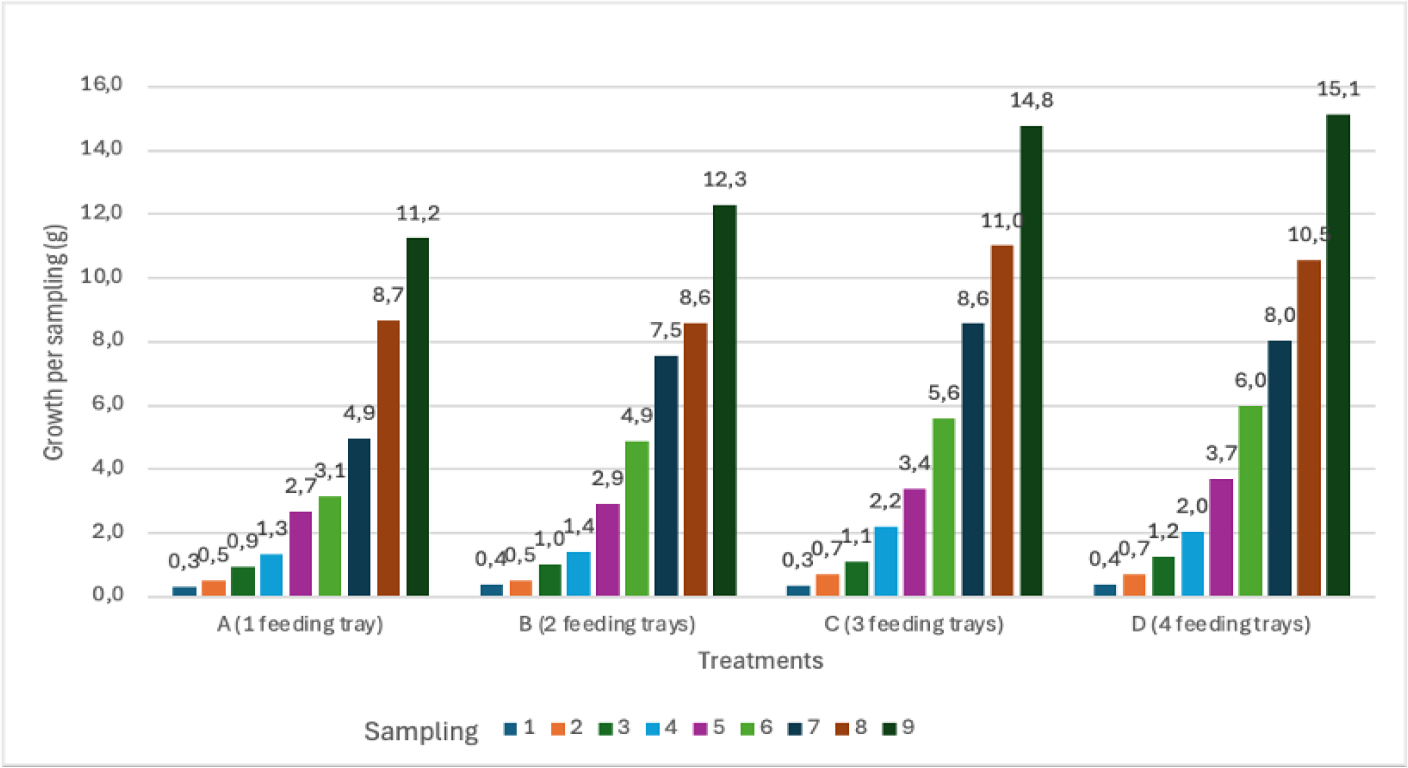
Average growth of Litopenaeus vannamei during each sampling period under different numbers of feeding trays in sea floating cages
References
- American Public Health Association (APHA). 2017. Standard methods for the examination of water and wastewater (23rd ed.). APHA Press.
- Bardera, G., M.A.G. Owen, F.N. Façanha, J.M. Alcaraz-Calero, M.E. Alexander, and K.A. Sloman. 2021. The influence of density and dominance on Pacific white shrimp (Litopenaeus vannamei) feeding behaviour. Aquac., 531: 735949. https://doi.org/10.1016/j.aquaculture.2020.735949[CrossRef]
- Barreto, A., A. Silva, D. Peixoto, C. Fajardo, W. Pinto, R.J.M. Rocha, L.E.C. Conceição, and B. Costas. 2023. Dietary protein requirements of whiteleg shrimp (Penaeus vannamei) post-larvae during nursery phase in clear-water recirculating aquaculture systems. Front. Marine Sci., 10: 1172644. https://doi.org/10.3389/fmars.2023.1172644[CrossRef]
- Campa-Córdova, A.I., C. Angulo, M. Zarain-Herzberg, R. Pacheco-Marges, F. Ascencio, M.A. Guzmán-Murillo, A.C. Sánchez-Ortiz, and A. Hernández-Llamas. 2022. Stressing stocking density and rearing time effect on whiteleg shrimp (Penaeus vannamei) reared intensively in floating cages. Latin Americ. J. Aquat. Res., 50(2): 158-167. https://doi.org/10.3856/vol50-issue2-fulltext-2814[CrossRef]
- Campbell, E., J.A. Becker, P. Bracher, B. Budhiraja, S. Chaiyapechara, W.N. Chen, L. Colyer, N. Karoonuthaisiri, G. Keeffe, J. McKinley, A. Petchkongkaew, W. Rungrassamee, and C.T. Elliott. 2026. Challenges and strategies for globally resilient shrimp aquaculture. npj Sci. Food, 10: Article 87. https://doi.org/10.1038/s41538-026-00787-7[CrossRef]
- Dong, S., D. Liu, B. Zhu, L. Yu, H. Shan, and F. Wang. 2022. A dynamic energy budget model for kuruma shrimp Penaeus japonicus: parameterization and application in integrated marine pond aquaculture. Anim., 12(14): 1828. https://doi.org/10.3390/ani12141828[CrossRef]
- Effendi, I., M.A. Suprayudi, E.H. Surawidjaja, E. Supriyono, M. Zairin Jr., and Sukenda. 2016. Production performance of white shrimp (Litopenaeus vannamei) under sea floating net cages with biofloc and periphyton juvenile. AACL Bioflux. Volume 9. Issue 4.
- Effendi, I. 2016. Budidaya intensif udang vaname (Litopenaeus vannamei) di laut: kajian lokasi, fisiologis dan biokimia. Disertasi. Institut Pertanian Bogor.
- Emerenciano, M.G.C., A.N. Rombenso, F.D.N. Vieira, M.A. Martins, G.J. Coman, H.H. Truong, T.H. Noble, and C.J. Simon. 2022. Intensification of Penaeid Shrimp Culture: An Applied Review of Advances in Production Systems, Nutrition and Breeding. Anim. 12(3): 236. https://doi.org/10.3390/ani12030236[CrossRef]
- Fendjalang, S.N.M., T. Budiardi, E. Supriyono, and I. Effendi. 2016. Production of white shrimp (Litopenaeus vannamei) in floating cage system with different stocking density at Thousand Island Strait. J. Ilmu dan Teknologi Kelautan Tropis., 8(1): 201-214. https://doi.org/10.29244/jitkt.v8i1.12718[CrossRef]
- Ghosh, S., R. Ranjan, S. Megarajan, P. Pattnaik, B. Dash, and L. Edward. 2016. Mixed culture of Pacific white shrimp Litopenaeus vannamei (Boone, 1931) and flathead grey mullet Mugil cephalus (Linnaeus, 1758) in floating cages. Indian J. Fish., 63(3): 63-69. https://doi.org/10.21077/ijf.2016.63.3.56378-08[CrossRef]
- Khanjani, M.H., M. Sharifinia, and M.G.C. Emerenciano. 2024. Biofloc technology (BFT) in aquaculture: what goes right, what goes wrong? a scientific-based snapshot. Aquacult. Nutrit., 7496572: 24 pages. https://doi.org/10.1155/2024/7496572[CrossRef]
- KKP. 2015. Budidaya udang vannamei (Litopenaeus vannamei) pola tradisional plus. Jurnal Kelautan dan Perikanan. Kementerian Kelautan dan Perikanan (KKP). Jakarta.
- KKP. 2024. Produksi perikanan budidaya pembesaran udang vaname di Indonesia. Kementerian Kelautan dan Perikanan (KKP). https://portaldata.kkp.go.id/datainsight/produksi-ikan-budidaya/detail/UDANG%20VANAME
- Lombardi, K.L., H.L.A. Marques, R.T.L. Pereira, O.J.S. Barreto, and E.J. dePaula. 2006. Cage polyculture of the Pacific white shrimp Litopenaeus vannamei and the Philippines seaweed Kappaphycus Alvarezii. Aquac., 258: 412-415. https://doi.org/10.1016/j.aquaculture.2006.04.022[CrossRef]
- Mustafa, A., R. Syah, M. Paena, K. Sugama, E.K. Kontara, I. Muliawan, H.S. Suwoyo, A.I.J. Asaad, R. Asaf, E. Ratnawati, A. Athirah, Makmur, Suwardi, and I. Taukhid. 2023. Strategy for Developing Whiteleg Shrimp (Litopenaeus vannamei) Culture Using Intensive/Super-Intensive Technology in Indonesia. Sustain., 15(3): 1753. https://doi.org/10.3390/su15031753[CrossRef]
- Nunes, A.J.P., L.L. Dalen, G. Leonardi, and L. Burri. 2022. Developing sustainable, cost-effective and high-performance shrimp feed formulations containing low fish meal levels. Aquaculture Reports,Volume 27: 101422. https://doi.org/10.1016/j.aqrep.2022.101422[CrossRef]
- Nurmafita and M.F. Asrofillah. 2025. Analysis of vaname shrimp export potential from Teluk Pambang ponds to international markets. International Conference on Industrial Technology and Business (INTECHBIZ). P. 608 -72.
- Pan, L.Q., L.J. Zhang, and H.Y. Liu. 2007. Ejects of salinity and pH on ion-transport enzume activities, survival and growth of Litopenaeus vannamei postlarvae. Aquacult., 273: 711-720. https://doi.org/10.1016/j.aquaculture.2007.07.218[CrossRef]
- Permen-KP. 2016. Peraturan Menteri Kelautan dan Perikanan Republik Indonesia Nomor 75 Tahun 2016 tentang pedoman umum pembesaran udang windu (Penaeus monodon) dan udang vaname (Litopenaeus vannamei).
- Prasetyo, D., R.R. Hakim, G.A. Sutarjo. H. Purnomo, and F. Ariansyah. 2024. Growth performance of Litopenaeus vannamei in low salinity cultivation with different natural feeds. BIO Web Confer.,143: 02006. https://doi.org/10.1051/bioconf/202414302006[CrossRef]
- Radulovich, R. and J.B. Fuentes-Quesada. 2019. Shrimp (Litopenaeus vannamei) artisanal production in floating cages at sea and polyculture with oyster (Crassostrea gigas). Aquac.,512: 734354. https://doi.org/10.1016/j.aquaculture.2019.734354[CrossRef]
- Reis, J., R. Novriadi, A. Swanepoel, G. Jingping, M. Rhodes, and D.A. Davis. 2020. Optimizing feed automation: improving timer-feeders and on demand systems in semi-intensive pond culture of shrimp Litopenaeus vannamei. Aquacult., Volume 519. https://doi.org/10.1016/j.aquaculture.2019.734759[CrossRef]
- Said, M.M., H.G. Abo-Al-Ela, and Y.A. El-Barbary, O.M. Ahmed, and H.S. Dighiesh. 2024. Influence of stocking density on the growth, immune and physiological responses, and cultivation environment of white-leg shrimp (Litopenaeus vannamei) in biofloc systems. Scient. Repor., 14: 11147. https://doi.org/10.1038/s41598-024-61328-4[CrossRef]
- Setiawan, A., M. Fadjar, and M. Firdaus. 2017. Effects of artificial substrates and stocking density on the growth and glycogen content in the cultivation of Litopenaeus vannamei in floating cage. Int. J. ChemTech Res. 10(4): 632-638.
- Supono, D. Puspitasari, and M. Sarida. 2022. Pengaruh penambahan kalsium pada media kultur salinitas rendah terhadap performa udang vaname Litopenaeus vannamei. Journal of Tropical Marine Sci., 5(2): 90-97. https://doi.org/10.33019/jour.trop.mar.sci.v5i2.3214[CrossRef]
- Tinh, T.H., F. Kokou, T.N. Hai, J.A.J. Verreth, and M.C.J. Verdegem. 2023. Effects of feed, carbohydrate addition and stocking density on Pacific white shrimp (Litopenaeus vannamei) production. Aquacult. Engineer., 101: 102325. https://doi.org/10.1016/j.aquaeng.2023.102325[CrossRef]
- Wang, Y., Y. Zhang, F. Ma, X. Tian, S. Ge, C. Man, and M. Xiao. 2024. Research on precise feeding strategies for large-scale marine aquafarms. J. Marine Sci. Engineer., 12(9): 1671. https://doi.org/10.3390/jmse12091671[CrossRef]
- Weldon, A., D.A. Davis, M. Rhodes, J. Reis, W. Stites, and P. Ito. 2021. Feed management of Litopenaeus vannamei in a high density biofloc system. Aquacul., Volume 544. https://doi.org/10.1016/j.aquaculture.2021.737074.[CrossRef]
- Witoko, P., R. Aziz, and M. Hardani. 2026. Culture of white shrimp (Litopenaeus vannamei) in sea floating net cage. AIP Confer. Proceed., 3228(1): 030013. https://doi.org/10.1063/5.0310028[CrossRef]
- Yan, B., X. Wang, and M. Cao. 2007. Effects of salinity and temperature on survival, growth, and energy budget of juvenile Litopenaeus vannamei. J. Shellf. Res., 26(1): 141-146. https://doi.org/10.2983/0730-8000(2007)26[141:EOSATO]2.0.CO;2[CrossRef]
- Yonvitner, E.S. Yuliana, S. Meichandri, R. Kurnia, B. Mennofatria, and I. Setyobudiandi. 2023. Climate variables relate biological respond of tropical fish: A review from small scale fisheries in Sunda Strait. IOP Conference Series: Earth Environ. Sci., 1260. 012037. https://doi.org/10.1088/1755-1315/1260/1/012037[CrossRef]
- Zarain-Herzberg, M., A.I. Campa-Cordova, and R.O. Cavalli. 2006. Biological viability of producing white shrimp Litopenaeus vannamei in seawater floating cages. Aquacult., 259: 283–289. https://doi.org/10.1016/j.aquaculture.2006.05.044[CrossRef]
- Zarain-Herzberg, M., I. Fraga, and A. Hernandez-Llamas. 2010. Advances in intensifying the cultivation of the shrimp Litopenaeus vannamei in floating cage. Aquacult., 300: 87-92. https://doi.org/10.1016/j.aquaculture.2009.12.016[CrossRef]
- Zhang, H., C. Yang, Y. Li, B. Ma, and B. Zhu. 2025. Environmental Factors Modulate Feeding Behavior of Penaeus vannamei: Insights from Passive Acoustic Monitoring. Anim., 15(14): 2113. https://doi.org/10.3390/ani15142113[CrossRef]
Services
Article usage statistics
Loading…