Research Article · Volume 13, Issue 7, 26 June 2025 · Open Access
Nephroprotective Effects of Rosmarinus officinalis Ethanolic Extract in Wistar Rats: Biochemical and Histological Analysis
· · ·
Affiliations & Notes ⌄
1Biology and Health Laboratory, Faculty of Sciences, Ibn Tofail University, Kenitra, Morocco. *Correspondence | Miloud Chakit, Biology and Health Laboratory, Faculty of Sciences, Ibn Tofail University, Kenitra, Morocco
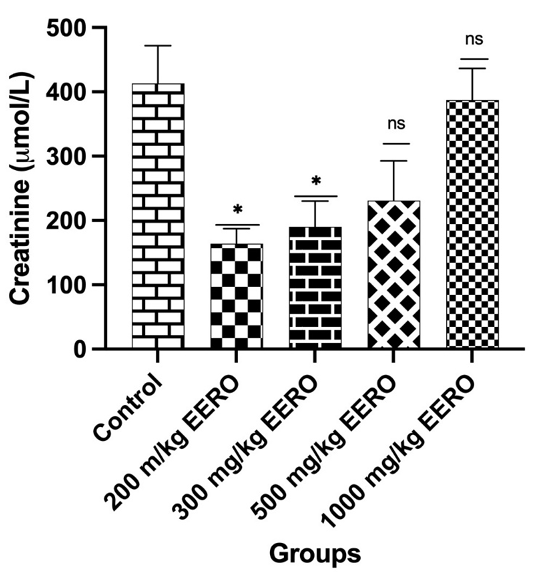
In our study, the administration of Rosmarinus officinalis ethanolic extract for 28 days induced a significant decrease in creatinine levels in the groups of rats treated with the 200 and 300 mg/kg doses of EERO in comparison with control rats.
This result indicates that EERO improves renal function and exerts a potent nephroprotective effect at 200 and 300 mg/kg of EERO, suggesting that the ethanolic extract of R. officinalis improves kidney function.
In our experiments, a high dose of Rosmarinus officinalis at 1000 mg/kg has no toxic effects on renal functions and suggests its pharmacological use in kidney diseases.
The results of the current study suggest using Rosmarinus officinalis as a supplement food for patients with kidney disorders and also as a pharmacological product for the treatment of kidney diseases.
Selected from the article's own text.
Abstract
Medicinal plants are considered an essential primary source for new molecules, necessary for the development of future drugs. Rosmarinus officinalis (RO) is a medicinal plant widely used by the local population for treating several diseases. The work aimed to explore the nephroprotective effect of RO in Wistar female rats. 30 Wistar female rats were assigned to 5 groups; the group of control received orally distilled water, while the other 4 groups received the ethanolic extract of RO at doses of 200, 300, 500, and 1000 mg/kg/day administered for 28 days. After the treatment, the rat blood samples were taken for hematological and biochemical study and for the dosage of biomarkers of oxidative stress, such as nitric oxide (NO) and the antioxidant enzyme catalase (CAT) in the kidneys. Kidney samples from each treatment group were histopathologically examined. Sections 3 to 5 μ thick were treated with hematoxylin, as well as the study of histological sections of this target organ. The results show no notable hemolytic changes in erythrocytes, hematocrit, granulocytes, and leukocytes (p>0.05). No significant differences in biochemical and histological parameters; However, the extract increased CAT levels and decreased NO in the kidney. The RO ethanolic extract exerts antioxidant activity, manifested by a nitric oxide level decrease and antioxidant enzyme catalase level increase in the liver and kidneys. This study concludes that the ethanolic extract of Rosmarinus officinalis exhibits appreciable protective effects on the kidneys by reducing oxidative stress markers, suggesting its potential use as a dietary supplement for patients with kidney disorders.
The kidneys play a vital role in the body: they filter waste from the blood and regulate water and mineral balance . When these organs are impaired, their filtration capacity decreases, leading to a buildup of toxins in the body . Without proper care, this deterioration can progress to advanced kidney failure requiring dialysis or a transplant ; .
The use of medicinal herbs by humans is an ancient practice. Nowadays, the majority of the inhabitants of the globe use a large number of plants, given their aromatic properties, as a remedy in traditional medicine. However, this traditional use is not based on any scientific evidence; it simply takes into account observations over the centuries ; .
For several years, the world of medical and biological sciences has been invaded by a new concept: “oxidative stress”, which expresses the inability of a cell to control the excess of oxygen free radicals. Although oxidative stress is not a disease, it is potentially involved in many diseases, as a triggering factor, or associated with complications during their development, as in the case of drug nephrotoxicity . The kidney is an organ that is particularly vulnerable to the toxicity of drugs present in the body . Drug-induced nephrotoxicity can be a sign of intoxication (dose-dependent phenomenon) or of an immunoallergic or vasomotor process with a normal dosage. The mechanisms are generally intertwined, but one of them predominates .
Given rosemary’s documented antioxidant properties, we hypothesize its potential therapeutic role in the management of renal diseases. Rosemary, an aromatic herb of the family Lamiaceae, appreciated for its aromatic, antioxidant, anticancer, antifungal, and antibacterial properties, is widely used in herbal medicine; it is the subject of recent research in the culinary, cosmetic, and agri-food fields . This plant contains a large number of substances that have multiple interests used in industry, food, cosmetology and pharmacy. Among these compounds are alkaloids, tannins, terpenes, and flavonoids ; .
Nephrotoxicity is one of the most frequent complication that occurs during exposure to toxins or drugs ; . In Morocco, traditional medicine is widespread. However, knowing that nephropathies are a real scourge in Morocco, the number of studies trying to find new molecules having the ability to prevent or even delay the onset of complications related to renal dysfunction remains very limited. The study explored the protective potential roles of Rosmarinus officinalis ethanolic extract on renal function in Wistar rats.
MATERIALS and methods
Plant Preparation
Rosmarinus officinalis was harvested in July 2023 in the Ras Lma region of Taza. Rosmarinus officinalis leaves were dried at 25 ± 3°C in the open air and protected from light to preserve the integrity of the molecules as much as possible, then finely ground using an electric grinder; grinding followed directly by sieving (250 to μm) resulted in a fine powder and a higher extraction yield. 100 g of Rosmarinus officinalis leaf material was extracted with 500 ml of 95% ethanol in a Soxhlet extractor during 4 hours. After extraction, the solvent was removed via a rotary evaporator operating at 60°C for 40 min with a speed of 2,000 rpm, resulting in a solid, sticky residue. The solvent-to-sample ratio was 20%.
Animals
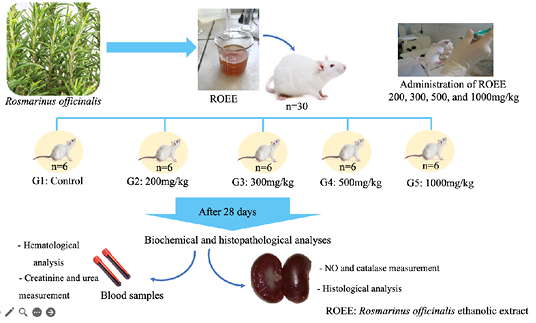
Only female rats were included due to their heightened sensitivity to renal toxicity. Healthy female rats were divided according to their weight homogeneity into 5 groups (n = 6/group). One group of these animals (control) received orally distilled water, and four groups received the ethanolic extract of Rosmarinus officinalis (EERO) at 200, 300, 500, and 1000 mg/kg/day administered for 28 days (Figure 1). After treatment, the rats spent the night fasting but with water free access. They were then anesthetized with 7 g of chloral hydrate/100 ml of distilled water (0.5 ml/100 g of rat body weight) by intraperitoneal injection, and then blood samples were taken for hematological and biochemical study, using ethylenediaminetetraacetic acid (EDTA) as an anticoagulant, and similarly, for the measurement of biomarkers of oxidative stress such as nitric oxide (NO), the antioxidant enzyme catalase (CAT) in the kidneys, as well as the study of histological sections of this target organ.
Hematological Analysis
An automatic hematological analyzer was used for assessing red blood cells and white blood cells, lymphocytes (L%), monocytes (M%), hematocrit (Hct), hemoglobin (Hb) and platelet count ; ; . The biochemistry of serum was performed using a spectrophotometer for creatinine and urea.
Determination of Oxidative Stress Markers (NO, CAT)
Nitric oxide determination: The method used to assess nitric oxide (NO) production from organ homogenates (liver and kidneys...) is based on determining the levels of the end products of NO synthesis, namely nitrites and nitrates . This determination is carried out using the Griess reagent, consisting of solution A (0.1% naphthylethylene diamine dichlorohydrate diluted in water) and solution B (1% sulfanilamide diluted in 5% H₃PO₄). The experimental procedure involves mixing 100 μl of Griess reagent and 100 μl of nitrite-containing sample in a spectrophotometer cuvette. Incubation of the mixture is carried out for 30 min at 25°C, followed by assessing optical density at 548 nm, following the method of Chao et al. (1992). NO levels are expressed in µmol/g tissue ; ; ; .
Catalase activity determination: Catalase activity (CAT) in organ homogenates was assessed using the method described by Aebi (1984). This technique is based on the measurement of optical density changes resulting from H₂O₂ decomposition. For each sample, a quantity of 60 µl (tissue extract or phosphate buffer per sample) was combined with 2340 µl of phosphate buffer (0.05 mM, pH 7.4) in a cuvette of quartz. Initiation of the reaction was achieved by adding 600 μl of H₂O₂ (1 M), and the absorbance was recorded over 2 minutes (with readings every 30 seconds) at 240 nm. Catalase activity is expressed in international units or μmoles of H₂O₂ destroyed per minute per gram of tissue at 25°C (IU or μmoles /min/g tissue) ; ; .
Histopathological Examination
Kidney samples from each treatment group were histopathologically examined. After fixation in 10% formalin, tissues were dehydrated and embedded in paraffin. 3- to 5-μ-thick sections were treated with hematoxylin and eosin. Slides obtained were observed under an optical microscope ; ; .
Table 1: Influence of Rosmarinus officinalis ethanolic extract on some hematological parameters (n=6).
Control
200 mg/kg
300mg/kg
500 mg/kg
1000 mg/kg
Erythrocytes (106/mm3)
6.14 ±0.93
6.04 ±0.09
6.89 ±0.59
6.25 ±0.45
6.48 ±0.70
Hemoglobin (g/dL)
12.00 ±1.03
12.25 ±0.05
13.55 ±1.35
12.30 ±1.00
12.20 ±1.40
Hematocrit (%)
34.30 ±4.30
37.90 ±0.20
44.25 ±3.25
40.70 ±2.80
39.55 ±4.45
Leukocytes (cells/mm3)
4850 ±1500
6300 ±2400
3150 ±1050
3439 ±3261
2450 ±1450
Lymphocytes (L%)
83.50 ± 4.50
82.50 ±1.50
81.00 ±3.00
83.00 ±6.00
82.50 ±3.50
Monocytes (M%)
5.00 ± 0.00
5.50 ±0.50
5.50 ±0.50
6.00 ±0.00
5.00 ±1.00
Platelets (103/mm3)
756.00 ± 35.00
789.00 ±16.00
812.00 ±162.00
834.00 ±75.00
1009.50 ±54.50
Statistical Analysis
Statistical analysis was carried out using GraphPad Instat software. All data are presented as mean ± standard error of the mean (SEM) and were compared using the one-way analysis of variance test (ANOVA). Control and treated group differences were assessed using the Tukey-Kramer test, with P < 0.05 considered significant.
RESULTS
Hematological Parameters
Table 1 describes the impact of daily oral administration of Rosmarinus officinalis ethanolic extract for 28 days on hematological parameters. The results show that there were no notable hemolytic changes in RBCs, WBCs, Hb, granulocytes, and leukocytes .
Biochemical Parameters
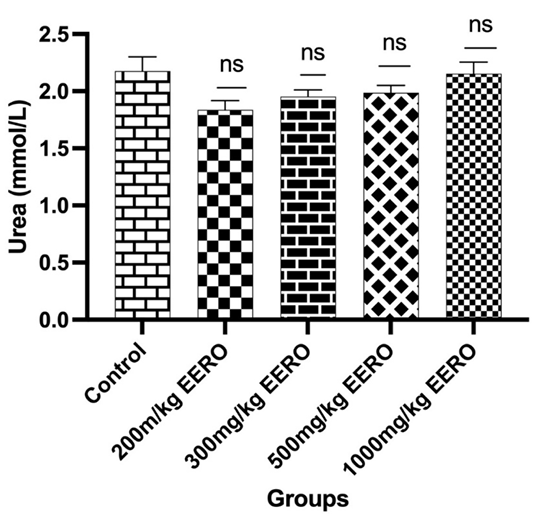
Urea: Figure 1 presents the effect of Rosmarinus officinalis ethanolic extract on urea levels. Our study showed that administration of Rosmarinus officinalis ethanolic extract for 28 days nonsignificantly decreased urea concentration in rats that received different doses of 200, 300, 500 and 1000 mg/kg of EERO in comparison with control rats.
Creatinine: Figure 2 shows the impact of the ethanolic extract on the biochemical parameter creatinine (creatinine levels). Our results showed that administration of Rosmarinus officinalis ethanolic extract for 28 days significantly decreased the creatinine concentration in rats that received 200 and 300 mg/kg doses of EERO in comparison with control rats. While the 500 and 1000 mg/kg dose of EERO decreased creatinine concentration in a nonsignificant manner compared to control rats.
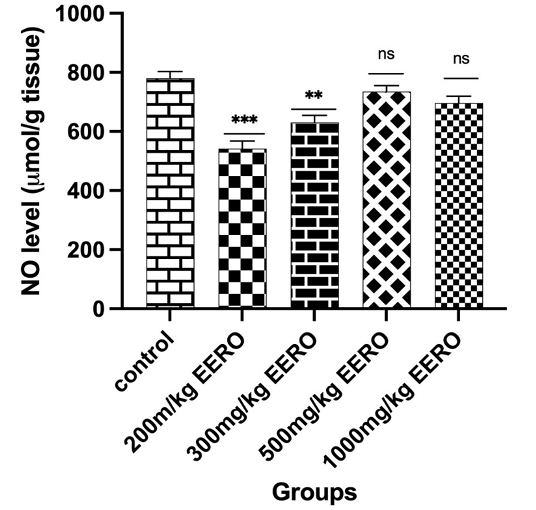
Nitric oxide: Figure 3 shows the impact of Rosmarinus officinalis ethanolic extract on nitric oxide (NO) levels in the kidneys. It is found that Rosmarinus officinalis ethanolic extract has an effect on NO (nitric oxide) levels in kidney tissue. It decreases nitrite/nitrate levels in all rats that received 200, 300, 500, and 1000 mg/kg in comparison with control rats. A highly statistically significant difference was revealed between the rats that received 200 mg/kg and those that received 300 mg/kg (p < 0.001). No difference was detected between the group of rats that received 500 and 1000 mg/kg doses of ROEE in comparison with control rats (p > 0.05).
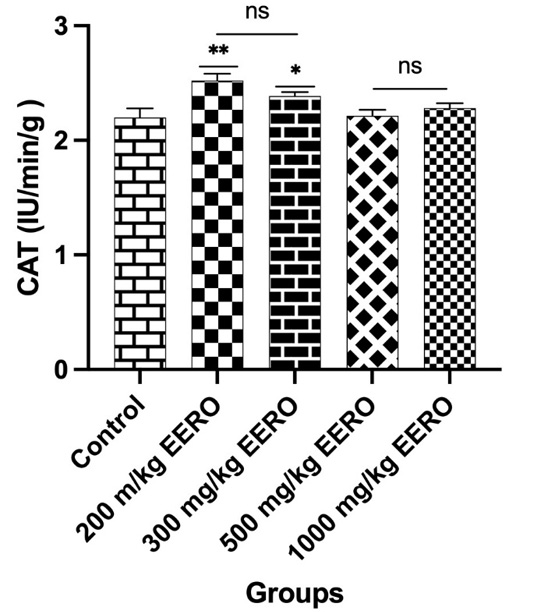
Catalase activity: The impact of Rosmarinus officinalis ethanolic extract on CAT levels (expressed in mmol/g of tissue) is represented in Figure 4. It is found that Rosmarinus officinalis ethanolic extract has an effect on CAT levels in kidney tissue. It increases catalase levels in rats receiving Rosmarinus officinalis ethanolic extract. A significant difference was detected in the group of rats that received 200 and 300 mg/kg of EERO, and no significant difference was noted in the rats that received 500 and 1000 mg/kg of body weight compared to the control rats (p > 0.05).
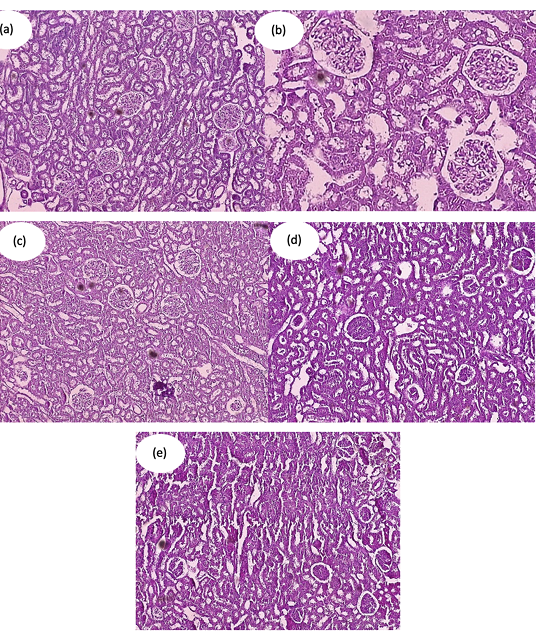
Histopathological examination: Histological analysis of the kidneys showed no pathologies in the cellular architecture of this organ. The histopathological results show normal tissue in all groups receiving different doses of 200, 300, 500 and 1000 mg/kg of EERO (Figure 5). No difference was revealed between treated and control rats (p > 0.05).
In the kidneys of control rats, the renal parenchyma is normal, without obvious signs of abnormality (Green glomerulus red renal microtubule), also for 200, 300, 500 and 1000 mg/kg, the renal parenchyma is normal with no signs of inflammatory or malignant abnormality (Figure 6).
DISCUSSION
Nephrotoxicity is one of the most common complications arising from exposure to toxins or drugs. Medicinal plant use constitutes an alternative for these problems. The study aimed to explore the impact of Rosmarinus officinalis ethanolic extract on renal function in Wistar rats.
Hematological parameters are assessed to determine an individual’s health status, describe the adverse effects of plant remedies, and also explore their potential for binding to the blood. The results show that there were no notable hemolytic changes in erythrocytes, hematocrit, granulocytes, and leukocytes .
Increased WBC release is an important stress biomarker and also helps defend the body against certain inflammatory situations, like bacterial infections and hemorrhages. The results show that Rosmarinus officinalis extract has no significant effects on WBC counts or their subtypes, including monocytes and lymphocytes, at any dose compared to control rats, indicating the safety of Rosmarinus officinalis ethanolic extract.
The retention of some molecules like creatinine and urea in the body is an indicator of renal damage. Altered levels of certain electrolytes, such as sodium, chloride, or magnesium can also be a marker of kidney disease . Our results show no significant difference in the levels of urea, creatinine, uric acid, glucose or triglycerides in all treated rats in comparison with control rats .
Urea (2H₂N-CO-NH) is the diamide of carbonic acid; it is a waste product formed in the liver from the transformation of dietary proteins (1g of protein gives 5.5 mmol of urea). Although it is a waste product, it is not toxic in itself; its plasma level increases in cases of renal failure . In current work, the administration of Rosmarinus officinalis ethanolic extract for 28 days nonsignificantly decreased urea levels in rats treated with 200, 300, 500, and 1000 mg/kg of EERO in comparison with control rats, suggesting that R. officinalis extract did not produce any signs or renal toxicity when administered orally for 28 days . Similarly, it is also found that 200, 300, 500 and 1000 mg/kg of EERO exerted an antinephrotoxic effect; this effect reduced as the dose increased. A study showed that administration of Rosmarinus officinalis aqueous extract at 100 and 2020 mg/kg, nonsignificantly decreases the level of urea ; . Similarly, the administration of rosemary essential oil at a dose of 0.5 ml/kg nonsignificantly decreases the level of urea . These results are in line with other studies that have demonstrated that the administration of Rosmarinus officinalis for 28 days in rats receiving 200, 300, 500 and 1000 mg/kg has no significant effect on the levels of urea and no alteration of these parameters compared to control rats ; .
Creatinine is methylguanidine acetic acid, produced in the liver from the amino acid glycine, arginine, and methionine. In the blood (creatinine level), it accurately assesses kidney function more than blood urea levels because creatinine is produced in muscle, and its blood level depends on kidney function and overall muscle mass. An increase in blood creatinine is therefore a more reliable indicator of kidney dysfunction than an increase in blood urea, which is subject to numerous interferences . In our study, the administration of Rosmarinus officinalis ethanolic extract for 28 days induced a significant decrease in creatinine levels in the groups of rats treated with the 200 and 300 mg/kg doses of EERO in comparison with control rats. While the 500 and 1000 mg/kg of EERO decreased creatinine levels in a nonsignificant manner compared to the control rats. This result indicates that EERO improves renal function and exerts a potent nephroprotective effect at 200 and 300 mg/kg of EERO, suggesting that the ethanolic extract of R. officinalis improves kidney function. A study demonstrated that administration of Rosmarinus officinalis aqueous extract at 100 and 220 mg/kg, nonsignificantly decreases the level of creatinine ; ; . Similarly, administration of rosemary essential oil at a dose of 0.5 ml/kg orally non-significantly decreases the level of creatinine . These results are in line with other studies showing that the administration of Rosmarinus officinalis hydroalcoholic extract for 28 days in the different groups of rats treated with the dose of 200, 500 and 1000 mg/kg does not cause any significant difference in creatinine levels and no alteration of these parameters compared to the control rats .
Reactive oxygen species (ROS) are produced through mitochondrial metabolism. ROS are responsible for damaging organic molecules in organisms, such as lipids, proteins, and DNA, resulting in a harmful biological state called oxidative stress . Plants constitute a reservoir of many different antioxidants, which neutralize the negative effects of oxidative stress . The main antioxidant components of Rosmarinus officinalis leaf extract are the phenolic carnosol and carnosic acid . A study demonstrated that administration of Rosmarinus officinalis aqueous extract by oral gavage at 400 mg/kg and rosmarinic acid at 10 mg/kg intraperitoneally daily for 28 weeks caused an increase in oxidative stress biomarkers and a decrease in inflammatory biomarkers’ levels . Carnosol and carnosic acid, the major diterpenoid phenolic molecules of rosemary, inhibit the production of NO. This effect resulted from the suppression of inducible nitric oxide synthase expression . This result is in line with our study, which demonstrates that the ethanolic extract administered by oral gavage for 28 days at doses of 200, 300 and 500 mg/kg causes a statistically significant decrease in nitric oxide (NO) level in the liver respectively (p < 0.01; p < 0.01 p < 0.05). Similarly, the doses of 200 and 300 mg/kg cause a statistically significant decrease in nitric oxide (NO) level in the right and left kidneys, respectively (p < 0.01; p < 0.01) but the doses of 500 and 1000 mg/kg are not statistically significant (p < 0.05) compared to the control group.
The results show that Rosmarinus officinalis ethanolic extract has an effect on CAT levels in kidney tissue. It increases catalase concentration in rats treated with different doses of Rosmarinus officinalis ethanolic extract. A significant difference was assessed in rats treated with the dose of 200 and 300 mg/kg and no significant difference was noted in the group of rats treated with 500 and 1000 mg/kg in comparison with control rats. Wang et al. (2017) have shown that rosemary extract intake significantly increased the activity of the antioxidant enzyme CAT . Other studies demonstrated that administration of Rosmarinus officinalis aqueous extract at 100 and 250 mg/kg increased the level of catalase in the kidneys ; . Similarly, another study showed that oral administration of rosemary essential oil at 0.5 ml/kg increased catalase levels .
Oxidative stress is characterized by increased production of free radicals and by a reduction in antioxidants . Plants contain a wide variety of natural antioxidants, which neutralize the harmful effects of oxidative stress ; . Several studies have shown that rosemary is rich in various phenolic and flavonoid compounds; these molecules restored the high level of oxidant markers and also inhibited the production of nitric oxide ; . Afonso et al., indicate that rosemary phenolic compounds enhance antioxidant defense in rat tissues .
A study demonstrated that administration of 10 mg/kg of Rosmarinus officinalis essential oil to Wistar rats for 7 consecutive days significantly increased liver catalase concentration compared to the control rats and also significantly modified most oxidative stress biomarkers and improved the liver oxidative status, resulting in a reduction of oxidative stress in rats . This result is consistent with our study, which demonstrates that the ethanolic extract administered by oral gavage for 28 days at 200, 300 and 500 mg/kg causes a statistically significant increase in catalase (CAT) levels in the liver respectively (p < 0.01; p < 0.001 p < 0.05), while 1000 mg/kg dose is not statistically significant (p < 0.05) in comparison with control rats.
Similarly, the doses of 200 and 300 mg/kg cause a statistically significant increase in catalase (CAT) concentration in the kidneys, respectively (p < 0.01; p < 0.05) but the doses of 500 and 1000 mg/kg are not statistically significant (p < 0.05) compared to control rats.
Histological studies serve as a reference for detecting pathological changes related to toxicity due to chemical substances (components of the plant) observed in tissues and organs such as the kidneys, which are considered more affected and sensitive to this substance.
Histological analysis of the kidneys revealed no pathologies in the cellular architecture of this organ, there were apparent evidence of normal renal tissue as intact glomeruli and Bowman’s capsule, also normal renal tubules and blood vessels in different treated groups. The histopathological results are also corroborated and confirmed by the results of the hematological examination and the biochemical estimation of biomarkers of renal damage, which were normal in all groups receiving different doses of 200, 300, 500, and 1000 mg/kg of EERO. They are also corroborated by the results of the estimation of biomarkers of oxidative stress, which showed that the extract decreases nitric oxide levels and increases catalase levels in the kidneys; hence, it exerts antioxidant effects and improves the kidney oxidative state. In our experiments, a high dose of Rosmarinus officinalis at 1000 mg/kg has no toxic effects on renal functions and suggests its pharmacological use in kidney diseases.
The primary limitation of this study is the analysis of a limited number of parameters; additional oxidative stress markers, such as glutathione peroxidase and xanthine oxidase, should be included to comprehensively assess kidney function.
CONCLUSIONS AND RECOMMENDATIONS
Rosmarinus officinalis has nephroprotective effects on renal functions. The study proved the nephroprotective effect of Rosmarinus officinalis in female rats, most probably related to its potent anti-inflammatory and antioxidant properties.
The results of the current study suggest using Rosmarinus officinalis as a supplement food for patients with kidney disorders and also as a pharmacological product for the treatment of kidney diseases. Deep research trials are needed to confirm its therapeutic effects.
ACKNOWLEDGEMENTS
We would like to express our gratitude to the staff of the Biology and Health Laboratory, Faculty of Science, Ibn Tofail University, for their support.
NOVELTY STATEMENTS
Our study uniquely demonstrates that Rosmarinus officinalis ethanolic extract administration exerts a nephroprotective activity related to its antioxidant properties. Our findings enhance the understanding of the mechanism undergone in the nephroprotective effect of this medicinal plant and justifying the use of Rosmarinus officinalis as a supplement food for patients with kidney disorders.
AUTHOR’S CONTRIBUTIONS
Said Babou conducted the experiments and analyzed the data. Miloud Chakit and Abdelhalem Mesfioui participated in the statistical analysis and in the review of the manuscript. Youssef Sqalli-Houssaini supervised the work, revised and approved the manuscript.
Conflict of Interest
The authors have declared no conflict of interest.
Figures
Figure 1:.
Experimental design.
Figure 2:.
Impact of Rosmarinus officinalis ethanolic extract on urea levels in Wistar rats (n=6). *p<0.05 vs. control group. Data was analyzed by using one-way ANOVA with Tukey-Kramer post-hoc.
Figure 3:.
Impact of Rosmarinus officinalis ethanolic extract on creatinine levels in Wistar rats (n=6). *p<0.05 vs. control group. Data was analyzed by using one-way ANOVA with Tukey-Kramer post-hoc.
Figure 4:.
Impact of Rosmarinus officinalis ethanolic extract on nitric oxide (NO) levels (µmol/g tissue) in the kidneys of Wistar rats (n=6). *p<0.05 vs. control group. Data was analyzed by using one-way ANOVA with Tukey-Kramer post-hoc.
Figure 5:.
Impact of Rosmarinus officinalis ethanolic extract on catalase levels (µmol/g tissue) in the kidneys of Wistar rats (n=6). *p<0.05 vs. control group. Data was analyzed by using one-way ANOVA with Tukey-Kramer post-hoc.
Figure 6:.
Histological sections of kidneys from rats treated with Rosmarinus officinalis ethanolic extract (H&E staining, 200x magnification). (a) Control group, (b) 200 mg/kg, (c) 300 mg/kg, (d) 500 mg/kg, (e) 1000 mg/kg.
References
Abadi MNA, Mortazavi M, Kalani N, Marzouni HZ, Kooti W, Ali-Akbari S (2016). Effect of Hydroalcoholic Extract of Rosmarinus officinalis L. Leaf on Anxiety in Mice. J. Evid. Based Complement. Altern. Med., 21(4):NP85–NP90. https://doi.org/10.1177/2156587216642101[CrossRef]
Abozid MM, Farid HEA (2018). Protective role and antioxidant activity of aqueous extract of rosmarinus officinalis against trichloroacetate-induced toxicity in liver of male rats. Asian J. Pharm. Clin. Res., 11(6):420–424. https://doi.org/10.22159/ajpcr.2018.v11i6.25353[CrossRef]
Aebi H (1984). Catalase in vitro. Methods Enzymol., 105:121–126. https://doi.org/10.1016/s0076-6879(84)05016-3[CrossRef]
Afonso MS, Silva AMDO, Carvalho EB, Rivelli DP, Barros SB, Rogero MM, Lottenberg AM, Torres RP, Mancini-Filho J (2013). Phenolic compounds from Rosemary (Rosmarinus officinalis L.) attenuate oxidative stress and reduce blood cholesterol concentrations in diet-induced hypercholesterolemic rats. Nutr. Metab., 10(1). https://doi.org/10.1186/1743-7075-10-19[CrossRef]
Aiboud A, Moussaif A, El Abbadi N, Ettabia A, El Hessni A, Ouichou A, Chakit M, Mesfioui A (2015). In vitro antidermatophytic activity of Allium sativum L, Nicotiana tabacum and Cade Oil against Trichophyton rubrum. World J. Pharm. Res., 4(1):414–423
Amaral GP, Dobrachinski F, Carvalho NR de, Barcelos RP, Silva MH da, Lugokenski TH, Dias GRM, Portella R de L, Fachinetto R, Soares FAA (2018). Multiple mechanistic action of Rosmarinus officinalis L. extract against ethanol effects in an acute model of intestinal damage. Biomed. Pharmacother. 98:454–459. https://doi.org/10.1016/j.biopha.2017.12.091[CrossRef]
Anila L, Vijayalakshmi NR (2003). Antioxidant action of flavonoids from Mangifera indica and Emblica officinalis in hypercholesterolemic rats. Food Chem., 83(4):569–574. https://doi.org/10.1016/S0308-8146(03)00155-9[CrossRef]
Baataoui S, Chakit M, Boudhan M, Ouhssine M (2023). Effect of Vitamin D Supplementation on the Response of Phosphocalcic Metabolism in Moroccan Population. Int. J. Chem. Biochem. Sci., 24(5):770–775.
Babou S, Chakit M, Gui RE, Mesfioui A, Sqalli-Houssaini Y (2025). Acute and Subacute Toxicity Assessment of Ethanolic Extract of Rosmarinus officinalis in Female Wistar Rats. Egypt. J. Vet. Sci., 56(13):389–402. https://doi.org/10.21608/ejvs.2025.369735.2715[CrossRef]
Berhan M, Kassahun D, Ermias L, Mahlet A, Tizazu Z, Gezu F, Eyasu M, Awol M (2018). Acute skin irritation, acute and sub-acute oral toxicity studies of Rosmarinus officinalis essential oils in mice and rabbit. Afr. J. Pharm. Pharmacol., 12(26):389–396. https://doi.org/10.5897/ajpp2018.4957[CrossRef]
Brikat S, Chakit M, Lamtai M, Fitah I, Abouyaala O, Mesfioui A, El-Hessni A (2023). Effects of Curcuma longa methanolic extract and losartan on anxiety- and depression-like behaviors induced by a high caloric diet in adult female Wistar rats. Int. J. Chem. Biochem. Sci., 24(6):886–895.
Brikat S, Lamtai M, Chakit M, Ibouzine-Dine L, Fitah I, Mesfioui A, Hessni AE (2024). Curcuma Longa Methanolic Extract and Losartan Improves Memory Impairment and Oxidative Stress induced by a High Caloric Diet in Wistar Rats. Adv. Anim. Vet. Sci., 12(4):614–623
Bryan NS, Grisham MB (2007). Methods to detect nitric oxide and its metabolites in biological samples. Free Radic. Biol. Med., 43(5):645–657. https://doi.org/10.1016/j.freeradbiomed.2007.04.026[CrossRef]
Chakit M, Aqira A, El Hessni A, Mesfioui A (2023). Place of extracorporeal shockwave lithotripsy in the treatment of urolithiasis in the region of Gharb Chrarda Bni Hssen (Morocco). Urolithiasis, 51(1):33. https://doi.org/10.1007/s00240-023-01407-9[CrossRef]
Chakit M, Aqira A, Mesfioui A (2024a). A case report of a giant bladder stone (12 × 8 cm, 610 g). Radiol. Case Rep., 19(3):970–973. https://doi.org/10.1016/j.radcr.2023.11.081[CrossRef]
Chakit M, Boussekkour R, El Hessni A, Bahbiti Y, Nakache R, Mustaphi HE, Mesfioui A (2022a). Antiurolithiatic Activity of Aqueous Extract of Ziziphus lotus on Ethylene Glycol-Induced Lithiasis in Rats. Pharmacogn. J., 14:596–602
Chakit M, El Hessni A, Mesfioui A (2022b). Ethnobotanical Study of Plants Used for the Treatment of Urolithiasis in Morocco. Pharmacogn. J., 14:542–547
Chakit M, Zahir RA, Mesfioui A (2024b). Giant pyonephrosis related to nephrolithiasis in diabetes woman: A case report. Radiol. Case Rep., 19(7):2625–2628. https://doi.org/10.1016/j.radcr.2024.03.044[CrossRef]
Chao CC, Hu S, Molitor TW, Shaskan EG, Peterson PK (1992). Activated microglia mediate neuronal cell injury via a nitric oxide mechanism. J. Immunol., 149(8):2736–2741
Charkiewicz AE, Omeljaniuk WJ, Garley M, Nikliński J (2025). Mercury Exposure and Health Effects: What Do We Really Know? Int. J. Mol. Sci., 26(5):2326. https://doi.org/10.3390/ijms26052326[CrossRef]
El Hasnaoui A, Mesfioui A, Berkiks I, Chakit M, Kribii A, Ali O, El Hessni A (2015). Effects of the peroxisome proliferator-activated receptors alpha agonist and Cinnamon oil on obesity induced by high fructose diet. World J. Pharm. Res., 4(5):23–38
El-Demerdash F, El-Sayed R, Abdel Daim M (2021). Hepatoprotective potential of Rosmarinus officinalis essential oil against hexavalent chromium-induced hematotoxicity, biochemical, histological, and immunohistochemical changes in male rats. Environ. Sci. Pollut. Res., 28:1–12. https://doi.org/10.1007/s11356-020-12126-8[CrossRef]
Elkaoui H, Chakit M, Mesfioui A, Elhessni A (2025). Flaxseed Administration Improves Affective and Cognitive Functions in Fructose Diet Wistar Rats. Egypt. J. Vet. Sci., 56(13):403–412. https://doi.org/10.21608/ejvs.2025.369553.2713[CrossRef]
Fiume MM, Bergfeld WF, Belsito DV, Hill RA, Klaassen CD, Liebler DC, Marks JG, Shank RC, Slaga TJ, Snyder PW, Gill LJ, Heldreth B (2018). Safety Assessment of Rosmarinus officinalis (Rosemary)-Derived Ingredients as Used in Cosmetics. Int. J. Toxicol., 37(3_suppl):12S-50S. https://doi.org/10.1177/1091581818800020[CrossRef]
Friedman AJ, von Grote EC, Meckfessel MH (2016). Urea: A Clinically Oriented Overview from Bench to Bedside. J. Drugs Dermatol., 15(5):633–639
Gonçalves GDA, Sá-Nakanishi ABD, Comar JF, Bracht L, Dias MI, Barros L, Peralta RM, Ferreira ICFR, Bracht A (2018). Water soluble compounds of: Rosmarinus officinalis L. improve the oxidative and inflammatory states of rats with adjuvant-induced arthritis. Food Funct., 9(4):2328–2340. https://doi.org/10.1039/c7fo01928a[CrossRef]
Hamed H, Boulila, Salha, Ghrab, Ferdaws, Kallel, Rim, Boudawara,Tahia, El Feki A (2020). The preventive effect of aqueous extract of Rosemary (Rosmarinus officinalis) leaves against the nephrotoxicity of carbon tetrachloride in mice. Arch. Physiol. Biochem., 126(3):201–208. https://doi.org/10.1080/13813455.2018.1508236[CrossRef]
Hoffbrand AV (2002). Essential Haematology. Blackwell Science.
Hussain S, Atkinson A, Thompson SJ, Khan AT (1999). Accumulation of mercury and its effect on antioxidant enzymes in brain, liver, and kidneys of mice. J. Environ. Sci. Health Part B Pesticides, Food Contam. Agric. Wastes, 34(4):645–660. https://doi.org/10.1080/03601239909373219[CrossRef]
Kherrab I, Chakit M, Brikat S, El-Arbaoui M, Mesfioui A, Elhessni A (2024a). Euphorbia resinifera propolis administration improves memory ability in high fructose treated rats. Res. J. Pharm. Technol., 17(10):4961–4967. https://doi.org/10.52711/0974-360X.2024.00763[CrossRef]
Kherrab I, Chakit M, Ez-znafry A, Mesfioui A, Elhessni A (2024b). Methanolic extract of Euphorbia resinifera propolis improves cognitive functions in adult male rats with chronic unpredictable mild stress. Neurosci. Behav. Physi., 54:1069–1081. https://doi.org/10.1007/s11055-024-01659-x[CrossRef]
Kherrab I, Chakit M, Mesfioui A, El Hessni A (2024c). Thyme honey supplementation effects on weight status and biochemical blood parameters in High Fructose treated rats during prepuberty and adolescence. Int. J. Chem. Biochem. Sci., 25(13):393–398
Kherrab I, Chakit M, Mesfioui A, El Hessni A (2024d). The effect of Euphorbia resinifera propolis on obesity induced by High Fructose diet in rats during prepuberty and adolescence. Int. J. Chem. Biochem. Sci., 25(14):23–29
Koolman J, Rhm KH (2005). Color Atlas of Biochemistry. Thieme.
Morsi RM, Mansour DS, Mousa AM (2022). Ameliorative potential role of Rosmarinus officinalis extract on toxicity induced by etoposide in male albino rats. Braz. J. Biol., 84:e258234. https://doi.org/10.1590/1519-6984.258234[CrossRef]
Nassiri A, Chakit M, Berkiks I, benmehammed H, Lamtai M, Chana L, Mesfioui A, El Hessni A (2023a). Sex Dimorphism of Memory Response to Long-term Effect Lipopolysaccharide Administration in Wistar Rats. Int. J. Chem. Biochem. Sci., 24(5):685–692.
Nassiri A, Chakit M, Berkiks I, Lamtai M, Hannour I, Mesfioui A, Hessni AE (2024a). Oxidative Stress Long-term effects of Lipopolysaccharide on Hippocampus and Prefrontal cortex in Male and Female Wistar Rats. Res. J. Pharm. Technol., 17(7):3268–3274. https://doi.org/10.52711/0974-360X.2024.00512[CrossRef]
Nassiri A, Lamtai M, Berkiks I, Benmhammed H, Coulibaly M, Chakit M, Mesfioui A, Hessni AE (2023b). Age and Sex-Specific Effects of Maternal Deprivation on Memory and Oxidative Stress in the Hippocampus of Rats. Int. J. Chem. Biochem. Sci., 24(6):121–129
Nassiri A, Lamtai M, Berkiks I, Benmhammed H, Sidi Mohamed C, Chakit M, Ibouzine-dine L, Mesfioui A, El-Hessni A (2024b). Age and Sex Dependent Effects of Maternal Deprivation on Anxiety- Like and Depressive-Like Behaviors and Oxidative Stress in the Prefrontal Cortex of Rats. Adv. Anim. Vet. Sci., 12(3):457–466. https://doi.org/10.17582/journal.aavs/2024/12.3.457.466[CrossRef]
Rašković A, Milanović I, Pavlović N, Ćebović T, Vukmirović S, Mikov M (2014). Antioxidant activity of rosemary (Rosmarinus officinalis L.) essential oil and its hepatoprotective potential. BMC Complement. Altern. Med., 14. https://doi.org/10.1186/1472-6882-14-225[CrossRef]
Saker H, Boussekine S, Gasmi S, Benkhedir A, Benali Y, Bensouici C (2023). Protective effect of rosmarinus officinalis extract on the nephrotoxicity caused by nickel chloride in wistar rats. J. Microbiol. Biotechnol. Food Sci., 12(6):e9764–e9764. https://doi.org/10.55251/jmbfs.9764[CrossRef]
Salokhe SS, Kolhe SU, Tembhurne SV, Hanmghar D (2020). 28 Days repeated oral toxicity study of Rosmarinus officinalis in Wistar Rats. J. Drug Delivery Ther., 10(6-s):67–74. https://doi.org/10.22270/jddt.v10i6-s.4616[CrossRef]
Singh R, Khan FN, Kalam S, Mani A, Patel J, Khan N, Pandey A (2011). Antioxidants: Elixir of life. Int. Multi. Res. J., 2012(1): 18–34
Wang HL, Sun ZO, Rehman RU, Wang H, Wang YF, Wang H (2017). Rosemary Extract-Mediated Lifespan Extension and Attenuated Oxidative Damage in Drosophila melanogaster Fed on High-Fat Diet. J. Food Sci., 82(4):1006–1011. https://doi.org/10.1111/1750-3841.13656[CrossRef]
Yousef MI, Mutar TF, Kamel MAE-N (2019). Hepato-renal toxicity of oral sub-chronic exposure to aluminum oxide and/or zinc oxide nanoparticles in rats. Toxicol. Rep., 6:336–346. https://doi.org/10.1016/j.toxrep.2019.04.003[CrossRef]
Yu MH, Choi JH, Chae IG, Im HG, Yang SA, More K, Lee IS, Lee J (2013). Suppression of LPS-induced inflammatory activities by Rosmarinus officinalis L. Food Chem., 136(2):1047–1054. https://doi.org/10.1016/j.foodchem.2012.08.085[CrossRef]