Research Article · Volume 13, Issue 7, 26 June 2025 · Open Access
The Effect of Picria fel-terrae Lour. Herbs Extract on Hematological, Biochemical and Endogenous Antioxidant Enzyme Levels in a Rat Model of Doxorubicin-Induced Toxicity
· · ·
Affiliations & Notes ⌄
1Doctoral Study Program, Faculty of Pharmacy, Universitas Sumatera Utara, 20155, Medan, Sumatera Utara, Indonesia
2Faculty of Pharmacy, Institut Kesehatan Medistra Lubuk Pakam, 20512, Deli Serdang, Sumatera Utara, Indonesia
3Department of Pharmacology, Faculty of Pharmacy, Universitas Sumatera Utara, 20155, Medan, Sumatera Utara, Indonesia
4Department of Pharmaceutical Biology, Faculty of Pharmacy, Universitas Sumatera Utara, 20155, Medan, Sumatera Utara, Indonesia. *Correspondence | Urip Harahap, Aminah Dalimunthe, Department of Pharmacology, Faculty of Pharmacy, Universitas Sumatera Utara, 20155, Medan, Sumatera Utara, Indonesia
Hemoglobin: The statistical analysis results on hemoglobin level observations showed a significant difference (p < 0.05) between the control group and the quercetin group and the 150 mg and 300 mg EEPH group.
In this study, the quercetin group showed normal levels of 14.16 ± 0.67 g / dL, while the EEPH group showed higher hemoglobin levels in the control group; this proves that EEPH can provide a protective effect against decreased hemoglobin due to doxorubicin.
However, the administrated of EEPH showed that the decrease in SOD due to doxorubicin could be prevented, as indicated by a significant increase in levels in the control group.
Increased hematological levels and clinical biochemistry, as well as increased levels of SOD enzymes associated with a decrease in LDH levels in rats, showed that EEPH the potential as a hepatoprotective and nephroprotective agent that can reduce the details of doxorubicin.
Selected from the article's own text.
Abstract
Cancer treatment is still a significant problem because of several side effects that can cause mortality and morbidity, such as doxorubicin, which is used in the treatment of various types of cancer with several side effects, such as cardiotoxicity and hematotoxicity. The formation of free radical compounds is likely to mediate this toxicity, so efforts are needed to avoid these side effects. Picria fel-terrae Lour herb contains various secondary metabolites with many properties, one of which is antioxidant. This study aims to analyze the activity of ethanol extract of Picria fel-terrae Lour herb (EEPH) in improving hematology, clinical biochemistry, lactate dehydrogenase (LDH), and superoxide dismutase (SOD) levels. The test was carried out using doxorubicin-induced and rats divided into five groups, each consisting of five animals: control, quercetin 50 mg/KgBW, EEPH 75, 150 and 300 mg/KgBW. Changes in rats body weight and heart organs were also observed. The results showed that EEPH improved the hematological profile as indicated by improvements in hemoglobin, hematocrit, leukocytes, erythrocytes, platelets, neutrophils segments, lymphocytes, monocytes, eosinophils, and basophils, all of which had better levels than the control group. EEPH also decreased ALT, AST, creatinine, and urea levels in doxorubicin-induced rats compared to the control group. LDH levels also decreased, and SOD increased after administration of EEPH. EEPH at 300 mg showed the most significant improvement and was comparable to the quercetin group. Based on the results obtained, it can be concluded that EEPH has the potential to be developed as a cardioprotective agent with activities that can improve hematological profiles, clinical biochemistry, reduce LDH, and increase SOD.
Cancer treatment with chemotherapy is still one of the main treatment methods in cancer treatment and is expected to continue to increase along with the increasing prevalence of cancer . However, cancer treatment is cytotoxic, targeting not only cancer cells but also healthy ones, so patients often experience side effects such as decreased blood cell counts, causing anemia, infection, bleeding, and hair loss ; . One of the drugs that has been widely used in the treatment of various types of cancer since is doxorubicin, which is an anthracycline antibiotic ; van der Zanden et al., 2021). However, the use of this drug has several side effects, such as cardiotoxicity and hematotoxicity (anemia, leukopenia, neutropenia and thrombocytopenia) ; . This condition is one of the most serious complications of chemotherapeutic drugs that can cause mortality and morbidity directly or indirectly ; . The toxicity is likely mediated by forming free radical compounds that can suppress or inhibit spinal cord function, iron that affects oxidative damage to macromolecules, membrane lipid peroxidation, and protein oxidation ; . Doxorubicin can inhibit red blood cell production and cause anemia, causing toxic effects on the liver with increased ALT (alanine aminotransferase) and AST (aspartate aminotransferase) activity, as well as increased urea and creatinine levels in kidney damage parameters ; ; ; ; ; . In addition, doxorubicin can also increase the activity of the cardiac enzyme LDH which is a marker of heart damage and reduce SOD which is an antioxidant that protects the heart from oxidative damage ; ; .
Based on the many side effects caused by the use of doxorubicin, it is important to find solutions to avoid these side effects, one of which is by using natural ingredients. Several studies have found that the use of plants as cardioprotective agents in reducing the side effects of various cardiotoxic drugs has been reported ; . The content of metabolite compounds in plants is thought to play an important role in reducing their toxicity . In this study, we report the herb Picria fel-terrae Lour, a medicinal plant from North Sumatra that has long been used traditionally to treat various diseases such as rheumatism, gout, and diabetes. Research reports also reveal the activity of this plant as an anti-inflammatory, anthelmintic, antidiabetic, diuretic effect, cardioprotective effect, anti-breast cancer, immunomodulator, antipyretic, malaria, skin problems, anti-ageing, pain relief, and immune system enhancer ; . This plant is also reported to contain various secondary metabolites, such as alkaloids, flavonoids, glycosides, saponins, and tannins, with potent antioxidant activity and high levels of total phenols and flavonoids ; . Potent antioxidant activity is expected to inhibit free radicals or oxidative stress, which can prevent damage and toxicity due to doxorubicin administration ; .
This study was conducted to determine the effects of ethanol extract of Picria fel-terrae Lour herb (EEPH) on hematological profiles, clinical biochemistry, LDH and SOD in rats induced by doxorubicin. This study began with preparing and identifying compounds in the extract using the thin-layer chromatography (TLC) method. We also observed changes in body weight, the relative weight of the heart organ, hematological parameters, clinical blood biochemistry, decreased LDH and increased SOD.
MATERIALS AND METHODS
Tools and Materials
The tools used are surgical instruments, glassware (Iwaki Pyrex), 1 ml syringe (Onemed), 3 ml syringe (Onemed), oral sonde, 5 ml test tube, centrifuge (Gemmy), rat cage, animal scales (Sartorius), analytical balance (Sartorius), rotary evaporator (Heidolph), microtube (GSBIO), spatula, parchment paper, microplate, micropipette (Dragonlab), object glass (Nesco), watch glass, refrigerator, vortex, hematology analyzer (Sysmex), chemistry analyzer (Cobas C501), spectrophotometer, and elisa reader kit (Abclonal). Meanwhile, the materials used in this study were Picria fel-terrae Lour, 70% ethanol (Smart Lab), distilled water, doxorubicin HCl (KalbeMed), ketamine (Bernofarm), quercetin (Sigma), CMC sodium 0.5% (Sigma), EDTA-2K (Ethylenediamine Tetra-Acetic Acid, 2K salt) (Sigma), NaCl 0.9% (MJB Pharma).
Extract Preparation
Picria fel-terrae Lour was obtained from Suka Dame Village, Kutalimbaru District, Deli Serdang Regency, Sumatera Utara Province. Then identified at the Medanense Herbarium Laboratory (MEDA), Department of Biology, Faculty of Mathematics and Natural Sciences, Universitas Sumatera Utara with number 6732/MEDA/2023.
The extract was made by maceration using 70% ethanol solvent by putting 500 g of dried Poguntano herb simplicia powder into a maceration container, adding 10 parts of solvent, covering and soaking for the first 6 hours while stirring occasionally, then leaving for 18 hours. Then, the maceration was separated by filtration; the filtration process was repeated at least once with the same solvent and a solvent volume of half the solvent in the first filtration. Then, the entire maceration is collected and evaporated with a rotary evaporator until the thick extract is obtained and then weighed, and a total of 73.3 grams or 14.6% of the weight of simplicia powder is obtained.
Experimental Design
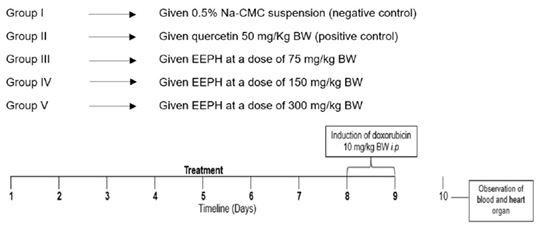
This test was conducted using 2 to 3-month-old male Wistar rats as subjects. Wistar rats are used because they are relatively easy to handle and are also reported to show vulnerability to cardiotoxicity induced by doxorubicin, similar to humans, so it is suitable for studying the effects of doxorubicin. The selection of male rats in this study was based on the consideration of the absence of the oestrous cycle that affected the study results so that the sample was more homogeneous and easily controlled ; . The use of these animals has received ethical approval following the guidelines of the Animal Research Ethics Committee, Faculty of Mathematics and Natural Sciences, Universitas Sumatera Utara, with number 0905/KEPH-FMIPA/2024. Rats are separated by one rat per cage and quarantined for seven days to adapt to a new environment and avoid stress. Eating and drinks are sufficiently given, about 50 grams per day. A total of 25 rats weighing 200-250 g were weighed, then grouped into five groups, and each group consisted of 5 rats; the groups and treatment schedules are shown in Figure 1. The selection of a maximum dose of 300 mg was based on the research of Amalia et al., 2024 which showed an increase in SOD from EEPH at doses of 200 and 400 mg/kg BW, which was not significantly different, so we took the middle value. While the minimum dose of 75 mg/kg BW was also based on the same study, where at a dose of 50 mg mg/kg BW, although it still showed an increase in SOD, the results were not too high, so we increased the minimum dose to 75 mg. The selection of a dose of 150 mg/kg BW is the middle value chosen.
Induction doxorubicin 10 mg/kgBW was given intraperitoneally on days 8 and 9. Body weight observations were carried out every 3 days, on days 1, 3, 6 and 9. On the 10th day, rats that had been fasted for approximately 12 hours (not fed, but still given water) were anaesthetized using ketamine 65 mg/kgBW, then blood was taken through the heart and organs were weighed to obtain relative organ weight. At the end of the observation, rats that have been sacrificed are then buried.
Hematology Observation
The blood taken is transferred into a blood tube as much as 0.5 ml and added with 5% EDTA-2K anticoagulant as much as 10 µL. Furthermore, the blood is examined using a Hematology analyzer to determine the levels of hemoglobin, hematocrit, leukocytes, erythrocytes, platelets, segmented neutrophils, lymphocytes, monocytes, eosinophils, basophils ; .
Clinical Biochemistry Observation
Some blood is centrifuged for 10 minutes at a speed of 3000 rpm to produce two layers, namely serum/supernatant and sediment. The serum layer is taken, collected in a microtube and stored in a refrigerator at -20. Then 100 µL of the test serum is reacted with 1000 µL of the test reagent in a 5 ml test tube, homogenized by the vortex. The absorbance is measured with a spectrophotometer at 37°C exactly after minutes 1, 2, and 3 at a wavelength of 340 nm. The same thing is done for the blank (reagent + aquadest). The AST, ALT, urea, and creatinine levels can be determined by calculating the average difference in sample absorbance per minute multiplied by a factor of 1745 ; .
LDH and SOD Observation
LDH and SOD examinations were performed using the serum that had been obtained. The examination was performed using the Elisa Reader Kit. The concentration was determined with a microplate mounted at 450 nm .
Data Analysis
Data are presented as mean ± standard error of the mean (SEM) and analyzed statistically using the one-way ANOVA method with GraphPad software version 9.0. Then, we continued with the Tukey HSD and Post Hoc tests. The p-value for significance is set at p < 0.05.
RESULTS AND DISSCUSION
Phytochemical Screening
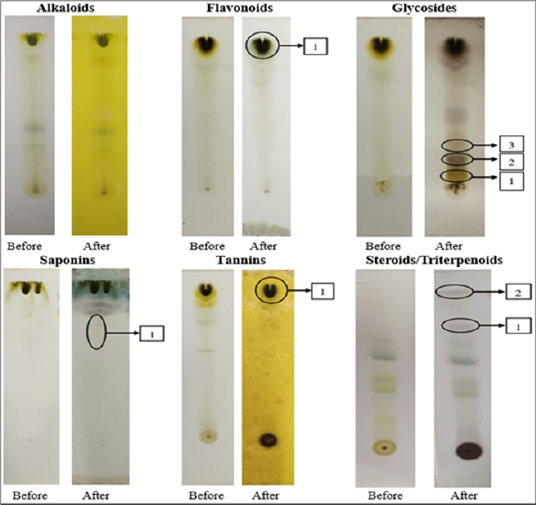
Phytochemical screening was carried out to determine the content of secondary metabolite compounds contained in the EEPH using thin-layer chromatography. The screening results (Figure 2) showed that Picria fel-terrae Lour simplex contains compounds of the flavonoid, saponin, tannin, glycoside, and steroid/triterpenoid groups. Table 1 shows that glycosides get 3 Rf values (0.13, 0.22, and 0.32), steroids/triterpenoids get 2 Rf values (0.77 and 0.97), while there is 1 Rf value each in flavonoids (0.93), saponins (0.76), and tannins (0.97). The Rf value or retention factor is a value or measurement determined based on the position of the spot on the solute in thin-layer chromatography. The staining results produced on the TLC plate are then calculated as the Rf value .
Table 1: Results of phytochemical screening of EEPH using thin layer chromatography.
Alkaloids
Flavonoids
Glycosides
Saponins
Tannins
Steroids/ Triterpenoids
Rf = -
Rf 1 = 0.93
Rf 1 = 0.13
Rf 2 = 0.22
Rf 3 = 0.32
Rf 1 = 0.76
Rf 1 = 0.97
Rf 1 = 0.77
Rf 2 = 0.97
Rf: Retention factor; -: Negative.
Contents such as flavonoids, triterpenoids, tannins, and saponins in EEPH have antioxidant activity that can potentially prevent free radicals that can cause damage, especially to the liver ; . The report showed high EEPH antioxidant test results with IC50 values using the ABTS method, namely 419.73 ± 1.61 μg/mL and the FRAP method, namely 36.77 ± 0.71 μg/mL, and also affected the increase in SOD levels in rats after doxorubicin-induced. The antioxidant mechanism in maintaining hematology and blood biochemistry levels due to free radicals is to break down and eliminate free radicals by converting harmful oxidative products into hydrogen peroxide. Antioxidants also absorb extra electrons from superoxide and stop the formation of damaging free radical chains .
Results of Body Weight Observations
The body weight of test subjects is a sensitive indicator of toxic symptoms ; ; . Changes in the body weight of test subjects were monitored every 3 days until the last day to determine the possible toxic symptoms. The results of body weight observations can be seen in Table 2.
Table 2: Results of body weight observation.
Group
Body Weight (g)
Day 1
Day 3
Day 6
Day 9
Control
200.80 ± 6.41
207.80 ± 7.15
216.60 ± 6.26
203.80 ± 6.37
Quercetin
202.00 ± 4.35
209.20 ± 5.26
218.20 ± 3.89
210.00 ± 2.91
EEPH 75 mg
200.40 ± 2.70
209.80 ± 2.48
217.20 ± 2.28
205.00 ± 3.16
EEPH 150 mg
205.00 ± 2.34
214.40 ± 2.07
221.40 ± 2.07
210.00 ± 2.00
EEPH 300 mg
204.20 ± 3.27
213.60 ± 2.96
221.20 ± 2.58
212.40 ± 2.79
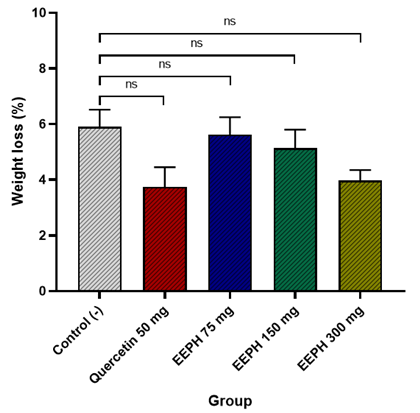
Based on the analysis results, there was no significant difference in weight gain between the control and test groups (p > 0.05) during the 9 days of observation. However, on the ninth day, there was a decreased in body weight in all tested groups. Administrated doxorubicin-induced on th e eighth day was a factor that caused weight loss in rats. Doxorubicin can affect changes in body weight, involving loss of muscle mass and body fat; this is caused by various factors, including decreased food intake, changes in how the body processes nutrients, and the effects of drugs on metabolism. This drug can change how the body uses protein, carbohydrates, and fats, potentially increasing calorie burning and weight loss . The weight loss percentage was calculated by comparing the weight observed on the sixth day and after induced on the ninth day. The highest percentage of weight loss after doxorubicin-induced was seen in the control group and the EEPH 75 and 150 mg groups. Meanwhile, quercetin and the EEPH 300 mg group experienced a lower percentage of weight loss; this may be due to the protective effects of quercetin and EEPH, which may reduce the side effects of doxorubicin . The percentage of weight loss graph shown in Figure 3.
Secondary metabolites, such as saponins and steroids in EEPH, may prevent weight loss by helping to regulate appetite and ensure adequate calorie intake. These compounds may also enhance nutrient absorption, which is important for maintaining the ideal body weight. The antioxidant activity of EEPH may also protect body cells from damage and help maintain overall health, including efficient metabolism ; .
.
Observation Results of Relative Heart Organ Weight
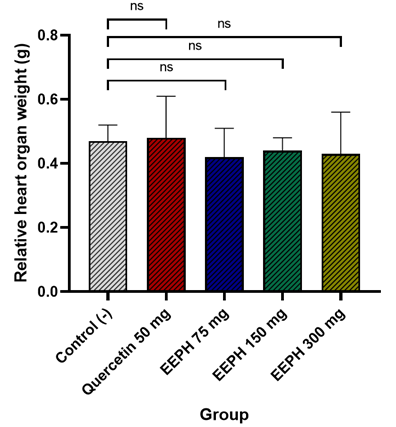
Observations were made on the heart organ using the relative organ weight ratio parameter. After surger, the heart organ of the rat was taken and weighed to see the heart weight according to each treatment group. The relative organ weight was calculated by comparing the absolute organ weight with the body weight . The relative weight of the white rat’s heart organ is generally 0.26 - 0.58 . The analysis results showed no significant difference in the relative weight of the heart organ between the control group and the tested group (p > 0.05). The results of observations of the average relative heart organ weight can be seen in Figure 4.
Hematology Examination Results
Hematology analysis was conducted to determine the protective effect of EEPH on doxorubicin-induced heart damage. Although hematology analysis does not directly detect heart damage, it can help monitor chronic conditions affecting heart disease, such as hemoglobin levels ; . The results are shown in Table 3.
Hemoglobin: The statistical analysis results on hemoglobin level observations showed a significant difference (p < 0.05) between the control group and the quercetin group and the 150 mg and 300 mg EEPH group. The 75 and 150 mg EEPH groups also showed significant differences (p < 0.05) with the quercetin group, while there was no significant difference (p > 0.05) between the 300 mg EEPH group and quercetin. The lowest hemoglobin levels were in the control group, followed by the 75, 150, and 300 mg EEPH groups, while the highest hemoglobin levels were in the quercetin group. Hemoglobin is a protein found in red blood cells that binds oxygen from the lungs to the entire body. Doxorubicin can cause a decrease in hemoglobin levels . Abnormal hemoglobin levels, either too high or too low, can indicate an imbalance in the production and destruction of red blood cells . Standard hemoglobin levels in rats range from 14.50 - 16.80 g / dL. In this study, the quercetin group showed normal levels of 14.16 ± 0.67 g / dL, while the EEPH group showed higher hemoglobin levels in the control group; this proves that EEPH can provide a protective effect against decreased hemoglobin due to doxorubicin. The increase in hemoglobin levels from EEPH can be caused by the content of metabolites and active substances that have antioxidant properties. Contents such as flavonoids, alkaloids, triterpenoids, and phenolic compounds in EEPH have antioxidant activity that plays an important role in maintaining stable hemoglobin levels because they can neutralize free radicals that can damage red blood cells and hemoglobin. Free radicals, with reactive single electrons, can cause lipid peroxidation in red blood cell membranes, triggering hemolysis and hemoglobin release. Antioxidants also absorb extra electrons from superoxide and stop the formation of damaging free radical chains .
Table 3: Results of hematology analysis.
Parameter
Group
References
Control
Quercetin
EEPH 75 mg
EEPH 150 mg
EEPH 300 mg
Hemoglobin (g/dL)
9.25± 0.87b***
14.16±0.67a***
10.34±0.76b***
12.44
± 0.61a**, b***
13.24
± 0.43a***
14.50–16.80
Hematocrit (%)
30.70±0.64b***
44.22±0.50a***
31.96±0.57a**,b***
34.94 ± 0.2a***,b***
38.50
± 0.37a***,b***
42.50–47.90
Leukocytes (103/µL)
3.06 ±0.11b***
12.12 ±0.27a***
3.06± 0.09b***
6.16± 0.25a***, b***
6.42± 0.35a***, b***
1.96–8.25 (CRL, 2008)
Erythrocytes (103/µL)
5.02± 0.08b***
7.43± 0.34a***
5.10± 0.19b***
6.86± 0.48a***
7.01± 0.33a***
7.27–9.65 (CRL, 2008)
Platelets (103/µL)
101.40± 2.84b***
1011.40 ±9.61a***
422.60± 20.19a***,b***
519.60
±13.07a***, b***
704.00
± 8.34a***, b***
638–1177 (CRL, 2008)
Segmented neutrophils (%)
44.94± 0.42b***
25.12±0.35a***
44.94± 0.20b***
42.12± 1.88a**,b***
34.94±0.23a***,b***
Not available
Lymphocytes (%)
5.90± 0.15b***
41.12± 0.43a***
5.78± 0.23b***
14.16±0.30a***, b***
14.00±0.15a***,b***
66.6–90.3 (CRL, 2008)
Monocytes (%)
26.16± 0.51b***
10.14± 0.39a***
25.02± 0.19a**, b***
24.28±0.44a***, b***
10.06±0.29a***
0.8–3.8 (CRL, 2008)
Eosinophils (%)
13.16± 0.81
12.06± 0.91
13.34±1.82
13.16± 0.27
12.18± 0.32
0.2–3.5 (CRL, 2008)
Basophils (%)
0.80± 0.15b**
0.50± 0.10a**
0.78 ± 0.19
0.76 ± 0.19
0.50 ± 0.18a**
0.0–0.8 (CRL, 2008)
The data were presented in mean ± standard error of the mean (SEM) (n = 5). a: significantly different from the control group (p < 0.05), b: significantly different from the quercetin group (p <0.05); (*: p < 0.05, **: p < 0.01, ***: p < 0.001).
Hematocrit: The statistical analysis results of the observation of hematocrit levels showed a significant difference (p < 0.05) between the control group and the EEPH group. The lowest hematocrit levels were in the control group, followed by the EEPH 75, 150, and 300 mg groups, while the highest levels were in the quercetin group. The results of statistical analysis on erythrocyte observations showed a significant difference (p < 0.05) between the control group, the quercetin group, and the EEPH 300 mg group. The EEPH 75 and 150 mg groups showed significant differences (p < 0.05) with the quercetin group, while there was no significant (p > 0.05) difference between the EEPH 300 mg group and the quercetin group. Doxorubicin can reduce the ability of erythrocytes to pass through microchannels, so its use can cause anemia, a condition where the level of erythrocyte cells decreases ; . Increasing hematocrit levels has a positive relationship with hemoglobin; the higher the hemoglobin levels, the higher the hematocrit levels ; . Standard hematocrit levels in rats range from 42.50 - 47.90 %. In this study, the quercetin group showed normal levels of 44.22 ± 0.50%. However, the administration of EEPH provided a protective effect against decreased hematocrit when compared to the control group. The antioxidant properties of EEPH content are thought to protect against damage caused by free radicals from doxorubicin-induced. The content of compounds that have antioxidant properties, such as flavonoids, can increase hematocrit levels ; . The observations showed that the quercetin group and the 300 mg EEPH test best maintained increased hematocrit levels. Hematocrit is the percentage of red blood cells in the blood, while hemoglobin is a protein in red blood cells that carries oxygen to cells .
Leukocytes: The statistical analysis results on leukocyte observations showed a significant difference (p <0.05) between the control group, the quercetin group, and the EEPH 150 and 300 mg group. All EEPH groups also showed significant differences (p < 0.05) with the quercetin group. Doxorubicin can affect leukocytes by reducing the number of leukocytes in the blood, increasing the risk of infection . Changes in the shape and structure of leukocytes have been reported after doxorubicin injection . Leukocyte levels from rats received doxorubicin had a lower doxorubicin effect. However, in this study, the leukocyte levels in all groups were still within standard limits, namely 1.96 - 8.25 103 / µL. The lowest leukocyte levels were in the control group and the EEPH 75 mg group, followed by the EEPH 150 and 300 mg groups, while the highest leukocyte levels were in the quercetin group; this shows the protective effect of EEPH which is thought to come from active compounds that are antioxidants. A significant increase in leukocytes can occur due to the presence of antioxidants which can increase the body’s immune system. The increase in the number of leukocytes in this study can be caused by the content of active compounds such as alkaloids, flavonoids, tannins and saponins, which have an immunostimulant effect ; .
Erythrocytes: The statistical analysis results on erythrocyte observations showed a significant difference between (p < 0.05) the control, quercetin, and EEPH 300 mg group. The EEPH 75 showed significant differences with the quercetin group (p < 0.05), while there was no significant difference (p > 0.05) between the EEPH 150, 300 mg group and the quercetin group. Doxorubicin can affect erythrocytes in various ways, such as by fusing with the erythrocyte lipid membrane, which can increase cell elasticity. Doxorubicin can also oxidize thiols from erythrocyte constituents, which can cause the oxidation of hemoglobin and membrane protein components. Doxorubicin can reduce the ability of erythrocytes to pass through microchannels. So, the use of the chemotherapy drug doxorubicin can cause anemia, which is a condition when the level of erythrocyte cells decreases ; . The standard erythrocyte levels range from 7.27 - 9.65 103 / µL, while in this study the highest erythrocyte levels were in the quercetin group, namely 7.43 ± 0.34 103 / µL and included in the normal category, while the EEPH 300 group approached the standard value, namely 7.01 ± 0.33 followed by the 150 and 75 mg groups, while the lowest erythrocyte levels were in the control group. Higher erythrocyte levels in the 300 mg EEPH group showed a protective effect against decreased erythrocyte levels due to doxorubicin; this may be due to the active compounds in EEPH, which can provide a protective effect against changes in erythrocyte levels due to doxorubicin. Research Syafira et al. (2022) revealed that secondary metabolite compounds produced in Semangkuk Fruit extract (Scaphium affine (Mast.) Pierre) such as alkaloids, tannins, saponins, and flavonoids can provide an effect to increase erythrocytes. Tannin, saponin, and flavonoid compounds are also contained in EEPH and are associated with antioxidant activity. Erythrocytes use enzymatic and non-enzymatic antioxidant mechanisms to protect themselves from oxidative stress. Enzyme antioxidants such as SOD, Catalase (CAT), and Glutathione Peroxidase (GPX) play an important role in neutralizing free radicals . Research Amalia et al. (2024) shows that EEPH can increase SOD levels in rats, so the mechanism of EEPH in maintaining erythrocytes in this study can be through increasing SOD. Other studies have shown that the effect of extracts containing flavonoids can protect erythrocytes from oxidative stress by maintaining reduced glutathione (GSH) and malondialdehyde (MDA) levels, inhibiting free radicals, and activating antioxidant enzymes ; ; .
Platelets: Statistical analysis results on platelet observations showed a significant difference (p < 0.05) between the control group, the quercetin group, and the EEPH 150 and 300 mg group. The EEPH group at all doses also significantly differences (p <0.05) from the quercetin group. Doxorubicin can reduce the number of platelets in the blood and contribute to thrombus formation and vascular damage . Doxorubicin can directly induce platelet cytotoxicity by depleting thiol proteins, reducing glutathione levels, and producing ROS (Reactive Oxygen Species), which will cause a decrease in platelet count, damage to platelet integrity, and activation of caspase-3 ; . Platelets are often considered some of the most vulnerable target cells to chemical-induced cytotoxicity; this is because platelets can become active and sensitive to chemicals, endogenous agonists, or damage under high shear stress conditions or in disease conditions ; ; . The standard platelet levels range from 638 - 1177 103/µL. In this study, the quercetin and EEPH 300 mg groups were still within normal levels, 1011.40 ± 9.61 and 704.00 ± 8.34 103 / µL, respectively. The lowest platelet levels were in the control group, followed by the EEPH 75, 150 and 300 mg groups. The quercetin group showed the highest platelet levels, followed by the EEPH group. High platelet levels in the EEPH group indicate that EEPH can protect against platelet damage due to doxorubicin. The content of various components in EEPH, such as flavonoids, can be antioxidants ; . Antioxidants can neutralize ROS that can damage and interfere with the normal function of platelets. Specific enzymes such as glutathione peroxidase, which are found in platelets, are involved in ROS metabolism. Disruption of this process can cause thrombotic disorders. So, the antioxidant activity of EEPH can prevent platelet damage by neutralizing ROS .
Neutrophil segment: The results of statistical analysis on neutrophil segment observations showed a significant difference (p < 0.05) between the control group, the quercetin group, and the 150 and 300 mg EEPH groups. The EEPH group at all doses also significantly differences (p < 0.05) from the quercetin group. Neutrophils contribute to doxorubicin-induced heart damage by releasing neutrophils, which cause blood vessel damage and decreased heart function that persists for weeks after therapy is completed . Segmented neutrophils are the most abundant white blood cell type and the first line of defence against infection . There is no information regarding normal neutrophil levels in rats. However, based on research reports that have been conducted, the percentage of normal segmented neutrophils in rats is 10–60% of total leukocytes ; . In this study, the lowest segmented neutrophil levels were in the quercetin group, followed by the EEPH 300 and 150 mg groups. The EEPH 75 and control groups had the same average neutrophil levels, while the highest segment neutrophil levels were found in the EEPH 150 mg group. The lower levels in the EEPH 300 and 150 mg groups compared to control showed that EEPH could protect segment neutrophil levels due to doxorubicin. Metabolite compounds such as flavonoids in plants can mediate shifts from immune cytokines in humans and reduce the number of neutrophils arising from free radicals .
Lymphocytes: The statistical analysis results on lymphocyte observations showed a significant difference between (p < 0.05) the control, the quercetin groups and the EEPH 150 and 300 mg groups. The EEPH group at all doses also significantly differences (p <0.05) between quercetin group. Lymphocytes are white blood cells that optimize the immune system to protect the body from disease attacks. Doxorubicin can inhibit lymphocyte cell proliferation by stopping the cell cycle in the G2/M phase ; . The standard lymphocyte levels range from 66.6 - 90.3 %. In this study, no lymphocyte levels fell into the normal category. However, the highest lymphocyte levels were found in the quercetin group, followed by the 150 and 300 mg groups. Meanwhile, the control and 75 mg EEPH groups showed the lowest levels and were not significantly different (p > 0.05). The increase in EEPH 150 and 300 mg lymphocyte levels indicates that EEPH can protect lymphocytes from doxorubicin when compared to control this can occur because the active compounds in EEPH, such as flavonoids, can affect the immune system response and increase the production of IL-2, which is involved in the activation and proliferation of lymphocyte cells. Flavonoids can also stimulate cytokine production in type 1 helper T cells (Th 1), which regulate the immune system .
Monocytes: The statistical analysis of monocyte observations showed a significant difference (p < 0.05) between the control group, the quercetin group, and the 150 and 300 mg EEPH group. The EEPH group at all doses also significantly differences (p < 0.05) between quercetin group. The quercetin group had the lowest monocyte levels, followed by the EEPH 300, 150, and 75 mg EEPH. In comparison, the highest monocyte levels were in the control group. Monocytes are a type of white blood cell that functions to fight infection and help the body clean up dead cells. Monocytes are the most significant blood cells and are part of the body’s second line of defence . The standard monocyte levels range from 0.8 to 3.8%. In this study, all groups experienced increased monocyte levels, and no groups fell into the normal category; this can be caused by doxorubicin-induced, which can reduce immunity, one of which is by affecting monocytes . Doxorubicin can increase monocytes and cause other effects on the immune system. Doxorubicin can also damage monocyte function, cause toxicity to blood progenitor cells, and cause monocyte infiltration, which can cause adverse cardiac remodelling . However, the lower monocyte levels in the EEPH groups compared to the control group indicate the effect of EEPH on monocyte levels due to doxorubicin; this may be because flavonoids can reduce monocytes by reducing monocyte migration, suppressing immune cell accumulation, regulating TNF-α expression, binding to monocyte chromatin and regulating the expression of genes involved in the cell cycle and cell development ; ; .
Eosinophils: Statistical analysis results on eosinophil observations showed no significant difference (p > 0.05) between the control group, the quercetin group, and the EEPH 150 and 300 mg groups. Eosinophils are white blood cells originating from the bone marrow and playing an important role in the immune system. Research reports show a relationship between higher circulating eosinophil counts and good prognosis and a relationship with response to neoadjuvant chemotherapy in cancer . However, no precise mechanism exists by which doxorubicin can affect eosinophil levels. One case study reported that the patient’s eosinophil count disappeared after starting treatment with doxorubicin. Another study found that the eosinophil increased after the first dose of chemotherapy and six months after completing chemotherapy ; . Although there was no significant difference (p < 0.05) in eosinophil levels in this study, eosinophil levels in all groups increased.
Basophils: Statistical analysis results on basophil observations showed a significant difference (p > 0.05) between the control group, the quercetin group, and the EEPH 300 mg group. The control and EEPH 75 mg groups found the highest basophil levels. In contrast, the quercetin and EEPH 300 groups had the lowest basophil levels. Basophils are white blood cells that play an important role in the immune system. High basophil levels can indicate infection, allergies, or severe medical conditions such as leukemia or autoimmune diseases . Doxorubicin can affect basophils, causing a red skin reaction, which can be caused by histamine released from basophils or mast cells ; . So, doxorubicin can be said to increase basophil levels. Doxorubicin is a chemotherapy agent with immunomodulatory effects that can eliminate myeloid-derived suppressor cells (MDSC), suppress T cell activation and proliferation. Doxorubicin can also cause cellular stress, triggering autophagy . In this study, the basophil levels of all groups were still in the normal category.
Clinical Biochemistry of Blood Examination Results
Observation of ALT and AST, urea and creatinine levels aims to determine the protective effect of EEPH administration
Table 4: Results of blood biochemistry analysis.
Group
Control
Quercetin
EEPH 75 mg
EEPH 150 mg
EEPH 300 mg
References
ALT (U/L)
953.40±3.29b***
258.80±3.37a***
338.40±3.12a***,b***
259.00±1.18a***
268.60±1.33a***
1-223.3
AST (U/L)
207.60±1.63b***
65.40±1.54a***
107.80±1.74a***,b***
58.60±1.08a***,b*
69.60±0.93a***
0.2 – 838.3
Urea (mg/dL)
59.42±0.18b***
42.88±0.17a***
49.12±0.14a***, b**
48.18±0.16a***,b**
47.40±0.14a***, b**
17.26-45.12
Creatinine (mg/dL)
0.37± 0.01b***
0.16±0.01a***
0.31±0.02a**, b***
0.18±0.02a***
0.22±0.01a***, b**
0.2 -1.2
The data were presented in mean ± standard error of the mean (SEM) (n = 5). a: significantly different from the control group (p < 0.05), b: significantly different from the quercetin group (p <0.05); (*: p < 0.05, **: p < 0.01, ***: p < 0.001).
widely on heart function from doxorubicin-induced. The results of the analysis are shown in Table 4.
ALT and AST: The statistical analysis results on ALT observations showed a significant difference (p > 0.05) between the control group, the quercetin group, and the EEPH group. The 75 mg EEPH group also showed a significant difference (p > 0.05) against quercetin, while the 150 mg and 300 mg EEPH groups did not show a significant difference (p < 0.05) with quercetin. The lowest ALT levels were found in the control and 75 mg EEPH groups, followed by quercetin, 150, and 300 mg EEPH groups. The standard ALT levels range from 1-223.3 U/L; in this study, no groups had levels in the normal category. However, the quercetin, EEPH 150, and 300 mg groups were closest to normal levels. Increased ALT levels can be caused by doxorubicin-induced, which can cause hepatic steatosis, cell damage, and oxidative stress. Studies in rats have shown that doxorubicin can cause increased ALT levels ; . Furthermore, observations of AST levels showed a significant difference (p > 0.05) between the control group, the quercetin group, and the EEPH group. The EEPH 75 and 150 mg groups also showed significant differences (p > 0.05) against quercetin, while the EEPH 300 mg group did not show a significant difference (p < 0.05) with quercetin. The lowest AST levels were found in the 150 mg EEPH group, followed by quercetin, 300 EEPH, and 75 mg. Meanwhile, the control group found the highest AST levels. The standard AST levels range from 0.2 - 838.3 U/L. In this study, all groups experienced an increase in AST, which could have been caused by doxorubicin-induced. Doxorubicin can damage liver tissue, which can cause increased AST levels; this is because doxorubicin produces superoxide radicals and peroxynitrite during metabolism in the liver, which can cause lipid peroxidation and liver damage ; . ALT and AST are enzymes produced by the liver and can also be found in the heart, muscles, kidneys, and brain that function to help digest protein in the body. High levels of ALT and AST in the blood may indicate damage to liver or muscle cells . EEPH content, such as antioxidant flavonoids and saponins, can potentially reduce the hepatotoxicity induced by doxorubicin by reducing oxidative stress, inflammation, and apoptosis, including decreased AST and ALT. Antioxidants have an important role in protecting cells from damage caused by oxidative stress. This protection can be through various mechanisms, including free radicals, increasing intracellular antioxidant defence, and modulating the pathway that regulates the survival and death of cells and can also increase the activity of antioxidant enzymes such as SOD, CAT, and GPX ; .
Urea and creatinine: The results of the statistical analysis of urea observation showed a significant difference (p > 0.05) between the control group, the quercetin group, and the EEPH group. The EEPH group also showed a significant difference (p > 0.05) against quercetin. The lowest urea levels were in the quercetin group, followed by the EEPH 300, 150, and 75 mg groups. In comparison, the highest urea levels were in the control group. Furthermore, creatinine levels significantly differences (p > 0.05) between the control group and the quercetin and EEPH groups. The EEPH 75 and 300 mg groups also showed significant differences (p > 0.05) against quercetin, while the EEPH 150 mg group did not show a significant difference (p < 0.05) with quercetin. The lowest creatinine levels were found in the quercetin group, followed by the EEPH 150, 300, and 75 mg groups. At the same time, the highest creatinine levels were found in the control. It has been reported that doxorubicin can cause increased plasma urea and creatinine levels, which are signs of nephrotoxicity ; . In this study, the antioxidant EEPH content, such as flavonoids, showed the potential for nephroprotective towards nephrotoxicity by doxorubicin, which was indicated by a reduction in an increase in urea and creatinine levels. This protection is mainly due to its suppressing oxidative stress and damage to kidney cells. Flavonoids can help reduce the effects of doxorubicin on the kidneys through several mechanisms, including reducing excessive reactive oxygen species (ROS), modulation of antioxidant pathways, and inhibition of inflammation ; .
Results of LDH and SOD Analysis
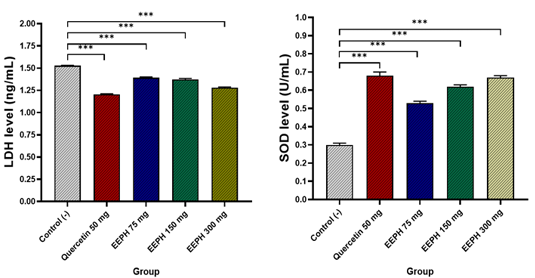
Figure 5 showed that in control, there was a significant increase in LDH and a decrease in SOD compared to the quercetin and EEPH groups. The control group showed the highest LDH levels, followed by EEPH 75, 150, and 300 mg. The quercetin group showed the lowest. Based on reports, doxorubicin can increase LDH levels in response to tissue damage, one of which is in the heart ; . However, the increase in LDH can be prevented by administering EEPH, as indicated by a significant decrease in levels compared to the control group.
Furthermore, in the analysed of SOD levels, the quercetin group had the highest levels, followed by the EEPH 300, 150, and 75 mg groups, while the control group showed the lowest levels. Based on reports, doxorubicin can reduce SOD levels by increasing cellular ROS production, which can trigger increased SOD expression as a defence mechanism ; . However, the administrated of EEPH showed that the decrease in SOD due to doxorubicin could be prevented, as indicated by a significant increase in levels in the control group. The quercetin and EEPH 300 mg groups did not even show significant differences (p > 0.05). The decrease in LDH levels and the increase in SOD levels in the administrated of EEPH can occur due to the secondary metabolite content contained therein. Secondary metabolites, which are natural compounds, are important factors that can increase the production of antioxidant enzymes such as SOD. Increased SOD activity can prevent cell damage and necrosis, which causes an increase in LDH. EEPH antioxidant activity can help protect cells from damage due to oxidative stress by inhibiting the formation of free radicals ; ; .
CONCLUSIONS AND RECOMMENDATIONS
This study found the potential of EEPH (Ethanol Extract of Picria fel-terrae Lour. herbs), which can reduce the detrimental effects caused by doxorubicin-induced. The content of antioxidant metabolites can prevented damage to free radicals formed by doxorubicin. Increased hematological levels and clinical biochemistry, as well as increased levels of SOD enzymes associated with a decrease in LDH levels in rats, showed that EEPH the potential as a hepatoprotective and nephroprotective agent that can reduce the details of doxorubicin. However, further research is needed to understand the mechanism of protection of EEPH in other toxicity targets from doxorubicin.
ACKNOWLEDGMENTS
We would like to thank the Doctoral Program of Pharmacy, Universitas Sumatera Utara for supporting this research.
NOVELTY STATEMENTS
This study is the first to comprehensively evaluate the cardioprotective, hepatoprotective, and nephroprotective effects of ethanol extract (Picria fel-terrae) Lour. (EEPH) in rats with doxorubicin toxicity through hematology, clinical biochemistry, LDH, and SOD analysis, to demonstrate its potential in maintaining blood balance and organ function during chemotherapy-induced oxidative stress.
AUTHOR’S CONTRIBUTIONS
Vivi Asfianti conducted the experimental work, running data analyzes and writing the original draft. Urip Harahap had the role in designing and generating the concept. Aminah Dalimunthe contributed to monitoring, controlling the research, and writing-review the draft. Panal Sitorus supervised the research. All authors reviewed and approved the final manuscript.
Conflict of Interest
The authors have declared no conflict of interest.
Figures
Figure 1:.
Group division and treatment schedule.
Figure 2:.
Results of phytochemical screening of EEPH using TLC. The marked circles are the Rf values (retention factors) determined based on the spot position of the solute in TLC. The staining results produced on the TLC plate were then calculated as the Rf value.
Figure 3:.
Percentage of weight loss in rats after doxorubicin-induced. The data were presented in mean ± standard error of the mean (SEM) (n = 5). (*: p <0.05, **: p <0.01, ***: p <0.001, ns/not significance: p >0.05).
Figure 4:.
Observation results of the average relative heart organ weight. The data were presented in mean ± standard error of the mean (SEM) (n = 5). (*: p <0.05, **: p <0.01, ***: p <0.001, ns/not significance: p >0.05).
Figure 5:.
Results of LDH and SOD analysis. The data were presented in mean ± standard error of the mean (SEM) (n = 5). (*: p <0.05, **: p <0.01, ***: p <0.001, ns/not significance: p >0.05).
References
Adeel M, Khalid M, Harrath AH, Mchiri L, Mansour L (2024). Quantifying anticancer drug toxicity on white blood cell count in cancer patients: A mathematical and computational approach. King Saud Univ. Sci., 36(1):103024. https://doi.org/10.1016/j.jksus.2023.103024[CrossRef]
Ahmed OM, Elkomy MH, Fahim HI, Ashour MB, Naguib IA, Alghamdi BS, Mahmoud HUR, Ahmed NA (2022). Rutin and Quercetin Counter Doxorubicin-Induced Liver Toxicity in Wistar Rats via Their Modulatory Effects on Inflammation, Oxidative Stress, Apoptosis, and Nrf2. Oxid. Med. Cell. Longev., 2022:1–19. https://doi.org/10.1155/2022/2710607[CrossRef]
Ahmed OM, Galaly SR, Mostafa MAMA, Eed EM, Ali TM, Fahmy AM, Zaky MY (2022). Thyme Oil and Thymol Counter Doxorubicin-Induced Hepatotoxicity via Modulation of Inflammation, Apoptosis, and Oxidative Stress. Oxid. Med. Cell. Longev., 2022:1–19. https://doi.org/10.1155/2022/6702773[CrossRef]
Alherz FA, Negm WA, El-Masry TA, Elmorshedy KE, El-Kadem AH (2023). The potential beneficial role of Ginkgetin in doxorubicin-induced hepatotoxicity: Elucidating the underlying claim. Biomed. Pharmacother., 165:115010. https://doi.org/10.1016/j.biopha.2023.115010[CrossRef]
Alhumaydhi FA (2020). Biochemical studies on the protective effect of honey against doksorubisin-induced toxicity in BALB/C mice. Int. J. Health Sci., 14(6): 31–37. Available at: https://pmc.ncbi.nlm.nih.gov/articles/PMC7644457
Al-Zharani M, Mubarak M, Rudayni HA, Al-Doaiss AA, Abd-Elwahab MM, Al-Eissa MS (2023). Quercetin as a Dietary Supplementary Flavonoid Alleviates the Oxidative Stress Induced by Lead Toxicity in Male Wistar Rats. Nutrients, 15(8):1888. https://doi.org/10.3390/nu15081888[CrossRef]
Amalia K, Dalimunthe A, Satria D, Sitorus P, Waruwu SB (2024). Antioxidant Activity of Ethanol Extract of Puguntano Herb (Picria fel-terrae Lour.) and Effect on Superoxidase Dismutase and Lactate Dehydrogenase Levels in Doxorubicin-Induced Rats. Trends Sci., 21. https://doi.org/10.48048/tis.2024.8199[CrossRef]
Arkew M, Gemechu K, Haile K, Asmerom H (2022). Red Blood Cell Distribution Width as Novel Biomarker in Cardiovascular Diseases: A Literature Review. J. Blood Med., 13:413–424. https://doi.org/10.2147/JBM.S367660[CrossRef]
Aryal B, Rao VA (2016). Deficiency in Cardiolipin Reduces Doxorubicin-Induced Oxidative Stress and Mitochondrial Damage in Human B-Lymphocytes. Plos One, 11(7): e0158376. https://doi.org/10.1371/journal.pone.0158376[CrossRef]
Atrahimovich D, Samson AO, Barsheshet Y, Vaya J, Khatib S, Reuveni E. (2019). Genome-wide localization of the polyphenol quercetin in human monocytes. BMC Genomics, 20(1):606. https://doi.org/10.1186/s12864-019-5966-9[CrossRef]
Auliafendri N, Rosidah R, Yuandani Y, Suryania S, Satria D (2019). The inhibitory activity of Picria fel-terrae Lour. herbs extract on nitric oxide production toward RAW 264.7 cells induced by lipopolysaccharide. Open Access Maced. J. Med. Sci., 7:3737-40. https://doi.org/10.3889/oamjms.2019.493[CrossRef]
Austermann J, Roth J, Barczyk-Kahlert K (2022). The Good and the Bad: Monocytes’ and Macrophages’ Diverse Functions in Inflammation. Cells, 11(12):1979. https://doi.org/10.3390/cells11121979[CrossRef]
Ayoka TO, Ezema BO, Eze CN, Nnadi CO (2022). Antioxidants for the Prevention and Treatment of Non-communicable Diseases. JERP, 7(3):179–189. https://doi.org/10.14218/JERP.2022.00028[CrossRef]
Barath B, Somogyi V, Tanczos B, Varga A, Bereczky Z, Nemeth N, Deak A. (2021). Examination of the relation between red blood cell aggregation and hematocrit in human and various experimental animals. Clin Hemorheol Microcirc., 78(2):187–198. https://doi.org/10.3233/CH-211109[CrossRef]
Basak D, Arrighi S, Darwiche Y, Deb S (2021). Comparison of Anticancer Drug Toxicities: Paradigm Shift in Adverse Effect Profile. Life, 12(1):48. https://doi.org/10.3390/life12010048[CrossRef]
Basal OA, Zahran RF, Saad EA (2023). Rifampicin efficacy against doxorubicin-induced cardiotoxicity in mice. Egypt Heart J., 75(1):73. https://doi.org/10.1186/s43044-023-00403-z[CrossRef]
Behranvand N, Nasri F, Emameh RZ, Khani P, Hosseini A, Garssen J, Falak R (2022). Chemotherapy: a double-edged sword in cancer treatment. CII. 71(3):507–526. https://doi.org/10.1007/s00262-021-03013-3[CrossRef]
Belger C, Abrahams C, Imamdin A, Lecour S (2024). Doxorubicin-induced cardiotoxicity and risk factors. Int. J. Cardiol. Heart Vasc., 50:101332. https://doi.org/10.1016/j.ijcha.2023.101332[CrossRef]
Bhagat A, Shrestha P, Jeyabal P, Peng Z, Watowich SS, Kleinerman ES (2022). Doxorubicin-induced cardiotoxicity is mediated by neutrophils through release of neutrophil elastase. Front. Oncol., 12. https://doi.org/10.3389/fonc.2022.947604[CrossRef]
Bhardwaj M, Yadav P, Vashishth D, Sharma K, Kumar A, Chahal J, Dalal S, Kataria SK (2021). A Review on Obesity Management through Natural Compounds and a Green Nanomedicine-Based Approach. Molecules (Basel, Switzerland)., 26(11):3278. https://doi.org/10.3390/molecules26113278[CrossRef]
Bhavani NKC, Manuaba FGBI, Budiana I, Suriman J (2020). Penurunan kadar hemoglobin, leukosit dan trombosit pasca 3 seri kemoterapi pada kasus kanker serviks di Rumah Sakit Umum Pusat Sanglah Denpasar Bali kurun waktu 1 Januari hingga 31Desember 2018. E-J. Medika Udayana, 9(8): 53–58. Available at: https://ojs.unud.ac.id/index.php/eum/article/view/69946
Boogaard, van den MCW, Komninos DSJ, Vermeij WP (2022). Chemotherapy Side-Effects: Not All DNA Damage Is Equal. Cancers, 14(3): 627. https://doi.org/10.3390/cancers14030627[CrossRef]
BPOM RI (2022). Peraturan Badan Pengawas Obat dan Makanan Nomor 10 Tahun 2022 tentang Pedoman Uji Toksisitas Praklinik secara In Vivo. Available at: https://standar-otskk.pom.go.id/kegiatan/perbpom-no-10-tahun-2022
Bray F, Laversanne M, Sung H, Ferlay J, Siegel RL, Soerjomataram I, Jemal A. (2024). Global cancer statistics 2022: GLOBOCAN estimates of incidence and mortality worldwide for 36 cancers in 185 countries. CA Cancer J. Clin., 74(3):229–263. https://doi.org/10.3322/caac.21834[CrossRef]
Cella PS, Matos RLN, Marinello PC, Costa JCD, Moura FA, Bracarense APFRL, Chimin P, Deminice R (2024). Doxorubicin causes cachexia, sarcopenia, and frailty characteristics in mice. PloS one, 19(4):e0301379. https://doi.org/10.1371/journal.pone.0301379[CrossRef]
Chandrakala AN, Singla DK (2022). Doxorubicin-induced apoptosis enhances monocyte infiltration and adverse cardiac remodeling in diabetic animals. Can. J. Physiol. Pharmacol., 100(5): 441–452. https://doi.org/10.1139/cjpp-2021-0596[CrossRef]
CRL (2008). Charles River Laboratories Parameter for Crl:WIN(Han).
Chaudhari U, Ellis JK, Wagh V, Nemade H, Hescheler J, Keun HC, Sachinidis A (2017). Metabolite signatures of doxorubicin induced toxicity in human induced pluripotent stem cell-derived cardiomyocytes. Amino Acids, 49(12):1955–1963. https://doi.org/10.1007/s00726-017-2419-0[CrossRef]
Christidi E, Brunham LR (2021). Regulated cell death pathways in doxorubicin-induced cardiotoxicity. Cell Death Dis., 12(4):339. https://doi.org/10.1038/s41419-021-03614-x[CrossRef]
Cortés-Funes H, Coronado C (2007). Role of anthracyclines in the era of targeted therapy. Cardiovasc. Toxicol., 7(2):56–60. https://doi.org/10.1007/s12012-007-0015-3[CrossRef]
Dalimunthe A, Satria D, Sitorus P, Harahap U, Angela IFD, Waruwu SB (2024). Cardioprotective Effect of Hydroalcohol Extract of Andaliman (Zanthoxylum acanthopodium DC.) Fruits on Doxorubicin-Induced Rats. Pharmaceuticals, 17(3):359. https://doi.org/10.3390/ph17030359[CrossRef]
Damodar G, Smitha T, Gopinath S, Vijayakumar S, Rao Y (2014). An evaluation of hepatotoxicity in breast cancer patients receiving injection doxorubicin. Ann. Med. Health Sci. Res., 4(1): 74. https://doi.org/10.4103/2141-9248.126619[CrossRef]
Debela DT, Muzazu SG, Heraro KD, Ndalama MT, Mesele BW, Haile DC, Kitui SK, Manyazewal T (2021). New approaches and procedures for cancer treatment: Current perspectives. SAGE Open Med., 9. https://doi.org/10.1177/20503121211034366[CrossRef]
Dini I, Mancusi A (2023). Weight loss supplements. Molecules, 28(14):5357. https://doi.org/10.3390/molecules28145357[CrossRef]
Duchnowicz P, Pilarski R, Michałowicz J, Bukowska B (2021). Changes in Human Erythrocyte Membrane Exposed to Aqueous and Ethanolic Extracts from Uncaria tomentosa. Molecules, 26(11):3189. https://doi.org/10.3390/molecules26113189[CrossRef]
Edrisi M, Daneshgar H, Rabiee N, Arghavani P, Moosavi-Movahedi F, Karizak AZ, Khatibi A, Hong J, Bagherzadeh M, Moosavi-Movahedi AA (2024). Doxorubicin bioavailability to human hemoglobin and cancer cells via MOF-A520. J. Mol. Liq., 394:123724. https://doi.org/10.1016/j.molliq.2023.123724[CrossRef]
El Sadda RR, Elshahawy ZR, Saad EA (2023). Biochemical and pathophysiological improvements in rats with thioacetamide induced-hepatocellular carcinoma using aspirin plus vitamin C. BMC Cancer, 23(1):175. https://doi.org/10.1186/s12885-023-10644-5[CrossRef]
Fraczkowska K, Bacia M, Przybyło M, Drabik D, Kaczorowska A, Rybka J, Stefanko E, Drobczynski S, Masajada J, Podbielska H, Wrobel T, Kopaczynska M (2018). Alterations of biomechanics in cancer and normal cells induced by doxorubicin. Biomed. Pharmacother., 97:1195–1203. https://doi.org/10.1016/j.biopha.2017.11.040[CrossRef]
Furdak P, Bartosz G, Stefaniuk I, Cieniek B, Bieszczad-Bedrejczuk E, Soszyński M, Sadowska-Bartosz I (2024). Effect of Garlic Extract on the Erythrocyte as a Simple Model Cell. Int. J. Mol. Sci., 25(10):5115. https://doi.org/10.3390/ijms25105115[CrossRef]
Gabani M, Castañeda D, Nguyen QM, Choi SK, Chen C, Mapara A, Kassan A, Gonzalez AA, Khataei T, Ait-Aissa K, Kassan M (2021). Association of Cardiotoxicity with Doxorubicin and Trastuzumab: A Double-Edged Sword in Chemotherapy. Cureus, 13(9):e18194. https://doi.org/10.7759/cureus.18194[CrossRef]
Gedikli E, Barış VÖ, Yersal N, Dinçsoy AB, Müftüoğlu SF, Erdem A (2023). Taurine Protects Doxorubicin-Induced Hepatotoxicity via Its Membrane-Stabilizing Effect in Rats. Life, 13(10):2031. https://doi.org/10.3390/life13102031[CrossRef]
Gonfa YH, Bachheti A, Semwal P, Rai N, Singab AN, Bachheti RK (2025). Hepatoprotective activity of medicinal plants, their phytochemistry, and safety concerns: a systematic review. Zeitschrift für Naturforschung C, 80(3-4):61-73. https://doi.org/10.1515/znc-2024-0116[CrossRef]
Hackert NS, Radtke FA, Exner T, Lorenz HM, Müller-Tidow C, Nigrovic PA, Wabnitz G, Grieshaber-Bouyer R (2023). Human and mouse neutrophils share core transcriptional programs in both homeostatic and inflamed contexts. Nat. Commun., 14(1):8133. https://doi.org/10.1038/s41467-023-43573-9[CrossRef]
Han JH, Lee EJ, Park W, Ha KT, Chung HS (2023). Natural compounds as lactate dehydrogenase inhibitors: potential therapeutics for lactate dehydrogenase inhibitors-related diseases. Front. Pharmacol., 14. https://doi.org/10.3389/fphar.2023.1275000[CrossRef]
Haward R, Konjeti S, Chacko J, Nadella JS, Roja SL, Rayapudi JJ (2024). Papaya Leaf Extract Elevates Platelet Levels in Individuals with Dengue Fever. Cureus, 16(5):e61090. https://doi.org/10.7759/cureus.61090[CrossRef]
Hosseinzade A, Sadeghi O, Biregani AN, Soukhtehzari S, Brandt GS, Esmaillzadeh A (2019). Immunomodulatory Effects of Flavonoids: Possible Induction of T CD4+ Regulatory Cells Through Suppression of mTOR Pathway Signaling Activity. Front. Immunol., 10. https://doi.org/10.3389/fimmu.2019.00051[CrossRef]
Huwait EA, Saddeek SY, Al-Massabi RF, Almowallad SJ, Pushparaj PN, Kalamegam G (2021). Antiatherogenic Effects of Quercetin in the THP-1 Macrophage Model In Vitro, With Insights Into Its Signaling Mechanisms Using In Silico Analysis. Front. Pharmacol., 12. https://doi.org/10.3389/fphar.2021.698138[CrossRef]
Ibrahim M, Jaafar H (2013). Abscisic Acid Induced Changes in Production of Primary and Secondary Metabolites, Photosynthetic Capacity, Antioxidant Capability, Antioxidant Enzymes and Lipoxygenase Inhibitory Activity of Orthosiphon stamineus Benth. Molecules, 18(7):7957–7976. https://doi.org/10.3390/molecules18077957[CrossRef]
Ikewuchi CC, Ifeanacho MO, Ikewuchi JC (2021). Moderation of doxorubicin-induced nephrotoxicity in Wistar rats by aqueous leaf-extracts of Chromolaena odorata and Tridax procumbens. Porto Biomed. J., 6(1):e129. https://doi.org/10.1097/j.pbj.0000000000000129[CrossRef]
Isirima JC, Okoroafor DO (2021). Prevention of doxorubicin-induced haematotoxicity by turmeric in Wistar rats. WJARR, 9(3):096–108. https://doi.org/10.30574/wjarr.2021.9.3.0084[CrossRef]
Jeong HR, Shim YS, Lee HS, Hwang JS (2021). Hemoglobin and hematocrit levels are positively associated with blood pressure in children and adolescents 10 to 18 years old. Sci. Rep., 11(1): 19052. https://doi.org/10.1038/s41598-021-98472-0[CrossRef]
Kciuk M, Gielecińska A, Mujwar S, Kołat D, Kałuzińska-Kołat Ż, Celik I, Kontek R. (2023). Doxorubicin—An Agent with Multiple Mechanisms of Anticancer Activity. Cells, 12(4):659. https://doi.org/10.3390/cells12040659[CrossRef]
Khadim RM, Al-Fartusie FS (2021). Antioxidant vitamins and their effect on immune system. J. Phys. Conf. Ser., 1853(1):012065. https://doi.org/10.1088/1742-6596/1853/1/012065[CrossRef]
Kim EJ, Lim KM, Kim KY, Bae ON, Noh JY, Chung SM, Shin S, Yun YP, Chung JH (2009). Doxorubicin‐induced platelet cytotoxicity: a new contributory factor for doxorubicin‐mediated thrombocytopenia. J. Thromb. Haemost., 7(7):1172–1183. https://doi.org/10.1111/j.1538-7836.2009.03477.x[CrossRef]
Kim HS, Lee YS, Kim DK (2009). Doxorubicin Exerts Cytotoxic Effects through Cell Cycle Arrest and Fas-Mediated Cell Death. Pharmacology, 84(5):300–309. https://doi.org/10.1159/000245937[CrossRef]
Kim SH, Lim KM, Noh JY, Kim K, Kang S, Chang YK, Shin S, Chung JH (2011). Doxorubicin-Induced Platelet Procoagulant Activities: An Important Clue for Chemotherapy-Associated Thrombosis. Toxicol. Sci., 124(1):215–224. https://doi.org/10.1093/toxsci/kfr222[CrossRef]
Kishimoto S, Maruhashi T, Kajikawa M, Matsui S, Hashimoto H, Takaeko Y, Harada T, Yamaji T, Han Y, Kihara Y, Chayama K, Goto C, Yusoff, F. M., Nakashima, A., & Higashi, Y. (2020). Hematocrit, hemoglobin and red blood cells are associated with vascular function and vascular structure in men. Sci. Rep., 10(1):11467. https://doi.org/10.1038/s41598-020-68319-1[CrossRef]
Kobori M, Takahashi Y, Sakurai M, Akimoto Y, Tsushida T, Oike H, Ippoushi K (2016). Quercetin suppresses immune cell accumulation and improves mitochondrial gene expression in adipose tissue of diet‐induced obese mice. Mol. Nutr. Food Res., 60(2):300–312. https://doi.org/10.1002/mnfr.201500595[CrossRef]
Kopecny L, Palm CA, Skorupski KA, Delgado M, Rebhun RB (2020). Risk factors associated with progressive increases in serum creatinine concentrations in cats with cancer receiving doxorubicin. J. Vet. Int. Med., 34(5):2048–2055. https://doi.org/10.1111/jvim.15867[CrossRef]
Koss-Mikołajczyk I, Todorovic V, Sobajic S, Mahajna J, Gerić M, Tur JA, Bartoszek A (2021). Natural Products Counteracting Cardiotoxicity during Cancer Chemotherapy: The Special Case of Doxorubicin, a Comprehensive Review. Int. J. Mol. Sci., 22(18):10037. https://doi.org/10.3390/ijms221810037[CrossRef]
Kozubek P, Wołoszczak J, Gomułka K (2023). Immune Reactions in Major Types of Oncological Treatment. Int. J. Mol. Sci., 24(14):11257. https://doi.org/10.3390/ijms241411257[CrossRef]
Lobang EWN, Putri IM, Hanafi Z, Widhiyastuti E (2021). Pengaruh Kombinasi Ekstrak Carica Papaya dan Propolis Terhadap Peningkatan Trombosit. J. Pharm., 9(2):26–32. https://doi.org/10.37013/jf.v9i2.107[CrossRef]
Lubis MF, Syahputra H, Illian DN, Kaban VE (2022). Antioxidant activity and nephroprotective effect of Lansium parasiticum leaves in doxorubicin-induced rats. J Res Pharm., 26(3):565-573. http://dx.doi.org/10.29228/jrp.154[CrossRef]
Ma W, Rousseau Z, Slavkovic S, Shen C, Yousef GM, Ni H. (2022). Doxorubicin-Induced Platelet Activation and Clearance Relieved by Salvianolic Acid Compound: Novel Mechanism and Potential Therapy for Chemotherapy-Associated Thrombosis and Thrombocytopenia. Pharmaceuticals, 15(12):1444. https://doi.org/10.3390/ph15121444[CrossRef]
Masselli E, Pozzi G, Vaccarezza M, Mirandola P, Galli D, Vitale M, Carubbi C, Gobbi G (2020). ROS in Platelet Biology: Functional Aspects and Methodological Insights. Int. J. Mol. Sci., 21(14):4866. https://doi.org/10.3390/ijms21144866[CrossRef]
McGill CJ, Ewald CY, Benayoun BA (2023). Sex-dimorphic expression of extracellular matrix genes in mouse bone marrow neutrophils. Plos One, 18(11):e0294859. https://doi.org/10.1371/journal.pone.0294859[CrossRef]
Mohammed HS, Hosny EN, Khadrawy YA, Magdy M, Attia YS, Sayed OA, AbdElaal M (2020). Protective effect of curcumin nanoparticles against cardiotoxicity induced by doxorubicin in rat. Biochim. Biophys. Acta, 1866(5):165665. https://doi.org/10.1016/j.bbadis.2020.165665[CrossRef]
Moulin M, Piquereau J, Mateo P, Fortin D, Rucker-Martin C, Gressette M, Lefebvre F, Gresikova M, Solgadi A, Veksler V, Garnier A, Ventura-Clapier R (2015). Sexual dimorphism of doxorubicin-mediated cardiotoxicity: potential role of energy metabolism remodeling. Circ Heart Fail., 8(1):98-108. https://doi.org/10.1161/circheartfailure.114.001180[CrossRef]
Mukherjee P, Roy S, Ghosh D, Nandi SK (2022). Role of animal models in biomedical research: a review. Lab Anim Res or LAR, 38(1):18. https://doi.org/10.1186/s42826-022-00128-1[CrossRef]
Naderi Y, Khosraviani S, Nasiri S, Hajiaghaei F, Aali E, Jamialahmadi T, Banach M, Sahebkar A (2023). Cardioprotective effects of minocycline against doxorubicin-induced cardiotoxicity. Biomed. Pharmacother., 158:114055. https://doi.org/10.1016/j.biopha.2022.114055[CrossRef]
Naparlo K, Bartosz G, Stefaniuk I, Cieniek B, Soszynski M, Sadowska-Bartosz I (2020). Interaction of Catechins with Human Erythrocytes. Molecules, 25(6):1456. https://doi.org/10.3390/molecules25061456[CrossRef]
Obata K, Mukai K, Tsujimura Y, Ishiwata K, Kawano Y, Minegishi Y, Watanabe N, Karasuyama H. (2007). Basophils are essential initiators of a novel type of chronic allergic inflammation. Blood, 110(3):913–920. https://doi.org/10.1182/blood-2007-01-068718[CrossRef]
Oliveira LPG, Conte FL, Cardoso EdO, Conti BJ, Santiago KB, Golim MdA, Feltran GdS, Zambuzzi WF, Sforcin JM (2019). A new chemotherapeutic approach using doxorubicin simultaneously with geopropolis favoring monocyte functions. Life Sci., 217:81–90. https://doi.org/10.1016/j.lfs.2018.11.060[CrossRef]
Otsuki N, Dang NH, Kumagai E, Kondo A, Iwata S, Morimoto C (2010). Aqueous extract of Carica papaya leaves exhibits anti-tumor activity and immunomodulatory effects. J. Ethnopharmacol., 127(3):760–767. https://doi.org/10.1016/j.jep.2009.11.024[CrossRef]
Patintingan CG, Louisa M, Juniantito V, Arozal W, Hanifah S, Wanandi SI, Thandavarayan R (2023). Moringa oleifera Leaves Extract Ameliorates Doxorubicin-Induced Cardiotoxicity via Its Mitochondrial Biogenesis Modulatory Activity in Rats. J. Exp. Pharmacol., 15:307–319. https://doi.org/10.2147/JEP.S413256[CrossRef]
Pehlivan DY, Durdagi G, Oyar EO, Akyol S, Ozbek M (2020). The effects of melatonin and thymoquinone on doxorubicin-induced cardiotoxicity in rats. Bratisl. Med. J., 121(10):753–759. https://doi.org/10.4149/BLL_2020_123[CrossRef]
Pogorzelska A, Mazur M, Świtalska M, Wietrzyk J, Sigorski D, Fronczyk K, Wiktorska K (2023). Anticancer effect and safety of doxorubicin and nutraceutical sulforaphane liposomal formulation in triple-negative breast cancer (TNBC) animal model. Biomed. Pharmacother., 161:114490. https://doi.org/10.1016/j.biopha.2023.114490[CrossRef]
Poncin A, Onesti CE, Josse C, Boulet D, Thiry J, Bours V, Jerusalem G (2021). Immunity and Breast Cancer: Focus on Eosinophils. Biomedicines, 9(9):1087. https://doi.org/10.3390/biomedicines9091087[CrossRef]
Pondugula SR, Salamat JM, Abbott KL, Flannery PC, Majrashi M, Almaghrabi M, Govindarajulu M, Ramesh S, Sandey M, Onteru SK, Huang CCJ, Iwaki Y, Gill K, Narayanan N, McElroy E, Desai D, Nadar R, Moore T, Dhanasekaran M (2021). A clinically relevant combination treatment with doxorubicin and cyclophosphamide does not induce hepatotoxicity in C57BL/6J mice. Liver Res., 5(4):239–242. https://doi.org/10.1016/j.livres.2021.04.002[CrossRef]
Prasanna PL, Renu K, Gopalakrishnan AV (2020). New molecular and biochemical insights of doxorubicin-induced hepatotoxicity. Life Sci., 250:117599. https://doi.org/10.1016/j.lfs.2020.117599[CrossRef]
Ray A, Pathak S, Ghorai S, Bhushan B, Banerjee S, Ghosh S (2023). Chemotherapy Induced Eosinophilia and its Significance among the Cancer Patients Treated at a Tertiary Care Teaching Hospital, West Bengal. Indian J. Public Health Res. Dev., 14(3):44–50. https://doi.org/10.37506/ijphrd.v14i3.19351[CrossRef]
Salni S, Herlina H, Purnamasari A (2022). A subchronic toxicity test of combination n-hexane and ethyl acetate fraction of rose myrtle leaves (Rhodomyrtus tomentosa [Ait.] Hassk) on male white rats. J. App. Biol. 11(1):100–108. https://doi.org/10.7324/JABB.2023.110115[CrossRef]
Satria D, Silalahi J, Haro G, Ilyas S, Hasibuan PAZ (2019). Cytoprotective activity of ethylacetate fraction of Picria fel-terrae Lour. herbs. Open Access Maced. J. Med. Sci., 7:3865-7. https://doi.org/10.3889/oamjms.2019.521[CrossRef]
Satria D, Dalimunthe A, Sitorus P, Waruwu SB, Vadhila M, Wahyu M (2024). Antioxidant Activity of Hydroalcoholic Extract of Puguntano Herbs and Andaliman Fruits by Cuprac Methods. Trad. Med. J., 29(2):192. https://doi.org/10.22146/mot.90337[CrossRef]
Satria D, Sitorus P, Dalimunthe A, Waruwu SB, Asfianti V (2024). Oral acute toxicity study of ethanol extract of Mobe leaves (Artocarpus lacucha Buch-Ham) in Wistar rats. Pharmacia, 71:1–8. https://doi.org/10.3897/pharmacia.71.e117500[CrossRef]
Serini S, Calviello G (2024). Potential of Natural Phenolic Compounds against Doxorubicin-Induced Chemobrain: Biological and Molecular Mechanisms Involved. Antioxidants, 13(4):486. https://doi.org/10.3390/antiox13040486[CrossRef]
Shah SMA, Akram M, Riaz M, Munir N, Rasool G (2019). Cardioprotective Potential of Plant-Derived Molecules: A Scientific and Medicinal Approach. Dose-Response, 17(2). https://doi.org/10.1177/1559325819852243[CrossRef]
Shahrasbi, Armin, Ardebili, Rafie KS, Ansari M, Rabani M (2017). Hematologic Adverse Effects following Systemic Chemotherapy. J. Oncol. Pract., 2(1). Available at: https://www.hilarispublisher.com/abstract/hematologic-adverse-effects-following-systemic-chemotherapy-26274.html
Shati AA, Eid RA, El-kott AF, Alqahtani YA, Shatoor AS, Zaki MSA (2024). Curcumin attenuates doxorubicin-induced cardiotoxicity via suppressing oxidative Stress, preventing inflammation and apoptosis: Ultrastructural and computational approaches. Heliyon, 10(5):e27164. https://doi.org/10.1016/j.heliyon.2024.e27164[CrossRef]
Silva AV (2020). Associations between clinical signs and pathological findings in toxicity testing. ALTEX, 38(2):198–21. https://doi.org/10.14573/altex.2003311[CrossRef]
Simon SCS, Utikal J, Umansky V (2019). Opposing roles of eosinophils in cancer. CII, 68(5):823–833. https://doi.org/10.1007/s00262-018-2255-4[CrossRef]
Skverchinskaya E, Levdarovich N, Ivanov A, Mindukshev I, Bukatin A (2023). Anticancer Drugs Paclitaxel, Carboplatin, Doxorubicin, and Cyclophosphamide Alter the Biophysical Characteristics of Red Blood Cells, In Vitro. Biology, 12(2):230. https://doi.org/10.3390/biology12020230[CrossRef]
Sleijfer S, Rizzo E, Litière S, Mathijssen RHJ, Judson IR, Gelderblom H, Van Der Graaf WTA, Gronchi A (2018). Predictors for doxorubicin-induced hematological toxicity and its association with outcome in advanced soft tissue sarcoma patients; a retrospective analysis of the EORTC-soft tissue and bone sarcoma group database. Acta Oncol., 57(8):1117–1126.https://doi.org/10.1080/0284186X.2018.1449248[CrossRef]
Song S, Chu L, Liang H, Chen J, Liang J, Huang Z, Zhang B and Chen X (2019). Protective Effects of Dioscin Against Doxorubicin-Induced Hepatotoxicity Via Regulation of Sirt1/FOXO1/NF-κb Signal. Front. Pharmacol., 10:1030. https://doi.org/10.3389/fphar.2019.01030[CrossRef]
Suleimani YA, Maskari RA, Ali BH, Ali H, Manoj P, Al-Khamiyasi A, Abdelrahman AM (2023). Nephroprotective effects of diminazene on doxorubicin-induced acute kidney injury in rats. Toxicol. Rep., 11:460–468. https://doi.org/10.1016/j.toxrep.2023.11.005[CrossRef]
Syafira R, Perawati S, Andriani M (2022). Pengaruh Pemberian Ekstrak Buah Semangkuk (Scaphium affine (Mast.) Pierre) terhadap Jumlah Eritrosit dan Leukosit pada Mencit Putih Jantan (Mus musculus). Pharm. J. Indones. 19(2):234. https://doi.org/10.30595/pharmacy.v19i2.13495[CrossRef]
Syafitri A, Yuandani, Widiyawati T, Anggraini DR, Waruwu SB (2025). Antioxidant Capacity of Benalu Duku Leaves Alcoholic Extract on SOD Level and Pancreatic Cytology in Induced Diabetic Rats. Baghdad Sci. J., 22(5). https://doi.org/10.21123/bsj.2024.11608[CrossRef]
Syahputra RA, Harahap U, Dalimunthe A, Pandapotan M, Satria D (2021). Protective effect of Vernonia amygdalina Delile against doxorubicin-induced cardiotoxicity. Heliyon, 7(7): e07434. https://doi.org/10.1016/j.heliyon.2021.e07434[CrossRef]
Timm KN, Ball V, Miller JJ, Savic D, West JA, Griffin JL, Tyler DJ (2022). Metabolic Effects of Doxorubicin on the Rat Liver Assessed with Hyperpolarized MRI and Metabolomics. Front. Physiol., 12. https://doi.org/10.3389/fphys.2021.782745[CrossRef]
van Berlo D, Woutersen M, Muller A, Pronk M, Vriend J, Hakkert B (2022). 10% Body weight (gain) change as criterion for the maximum tolerated dose: A critical analysis. Regul. Toxicol. Pharmacol., 134:105235. https://doi.org/10.1016/j.yrtph.2022.105235[CrossRef]
van der Zanden SY, Qiao X, Neefjes J (2021). New insights into the activities and toxicities of the old anticancer drug doxorubicin. FEBS J., 288(21):6095–6111. https://doi.org/10.1111/febs.15583[CrossRef]
Waruwu SB, Harahap U, Yuandani Y, Purnomo H, Satria D (2022). Anti-inflammatory activity and toxicity evaluation of 1,3-bis (p-hydroxyphenyl)urea. F1000Res, 11:418. https://doi.org/10.12688/f1000research.77443.1[CrossRef]
Wu L, Saxena S, Goel P, Prajapati DR, Wang C, Singh RK (2020). Breast Cancer Cell–Neutrophil Interactions Enhance Neutrophil Survival and Pro-Tumorigenic Activities. Cancers, 12(10):2884. https://doi.org/10.3390/cancers12102884[CrossRef]
Xu P, Zuo H, Chen B, Wang R, Ahmed A, Hu Y, Ouyang J (2017). Doxorubicin-loaded platelets as a smart drug delivery system: An improved therapy for lymphoma. Sci. Rep., 7(1):42632. https://doi.org/10.1038/srep42632[CrossRef]
Xu W, Wang TY, Becker RC (2011). Hematologic Diseases: From Within the Heart. Rev Esp Cardiol (Engl Ed)., 64(7):606–613. https://doi.org/10.1016/j.rec.2011.02.021[CrossRef]
Yao H, Yang F, Li Y (2022). Natural products targeting human lactate dehydrogenases for cancer therapy: A mini review. Front. Chem., 10. https://doi.org/10.3389/fchem.2022.1013670[CrossRef]
Zahra M, Abrahamse H, George BP (2024). Flavonoids: Antioxidant Powerhouses and Their Role in Nanomedicine. Antioxidants, 13(8):922. https://doi.org/10.3390/antiox13080922[CrossRef]
Zeng X, Du Z, Ding X, Jiang W (2021). Protective effects of dietary flavonoids against pesticide-induced toxicity: A review. Trends Food Sci. Technol., 109:271–279. https://doi.org/10.1016/j.tifs.2021.01.046[CrossRef]
The Effect of Picria fel-terrae Lour. Herbs Extract on Hematological, Biochemical and Endogenous Antioxidant Enzyme Levels in a Rat Model of Doxorubicin-Induced Toxicity · ResearchersLinks