Research Article · Volume 35, Issue 1, 29 June 2020 · Open Access
Morphological and Pathological Effects of Aspergillosis in Silver Carp, Hypophthalmichthys molitrix
· ·
Affiliations & Notes ⌄
1Department of Zoology, University of The Punjab, Lahore, Pakistan 2Department of Botany, University of The Punjab, Lahore, Pakistan , Corresponding Authors: Saira Saleemi saira.saleemi@yahoo.com
Aspergillus niger was more prominent with 50.52% infection followed by A. fumigatus (24.02%), A. flavus (17.06%), A. terreus (8.40%) (Table 1).
Aspergillus infection in ponds fishes may be due to intake of unhygienic feed present in the fish ponds.
Cyprinus carpio showed higher incidence of fungal infection (55%) as compared to other two species which showed 22.5% and 22% infection respectively.
Gills and skin showed relatively higher fungal infection than liver.
Selected from the article's own text.
Abstract
Fungal diseases are very common in freshwater fishes. Aspergillosis is a fungal disease of fish. This study was designed to examine a fungal infection in silver carp, Hypophthalmichthys molitrix. The infected fish showed clinical signs such as: eroded gills, damaged fins and lesions all over the body. The fish specimens showed mild to severe infection. The infection caused by fungus was confirmed by isolating the pathogenic fungus from affected skin, gills, fins, heart, liver, kidney and intestine of fish and culturing it on four different culture media; Malt extract agar (MEA), Corn meal agar (CMA), Sabouraud dextrose agar (SDA) and Potato dextrose agar (PDA). The inoculated culture plates were incubated for 5-8 days at 28-32 oC. The fungal growth in the form of colonies of different shapes and colour appeared in agar plates. Four Aspergillus spp.; Aspergillus terreus (8.40%), A. flavus (17.06%), A. fumigatus (24.02%) and A. niger (50.52%) were isolated from fish. Aspergillus niger showed high infection and it was recorded on all 200 fish samples. Fins were the most affected parts with 39.10% infection. Intestine was the least affected part with 6.59% infection. The major reason of aspergillosis in silver carp is the use of unhealthy and unhygienic feed given to silver carp reared in earthern ponds. Due to aspergillosis fish may not be recommended for human consumption. If proper health management practices are adopted on fish rearing facilities, then the chances of incidence of aspergillosis in silver carp may be minimized.
Novelty Statement | This study has highlighted fungal infection in a commercial fish silver carp. The impact of fungal infection on fish and aquaculture industry is discussed. New data on fungal infection is added and contributed.
Introduction
Fish is good source of animal protein throughout the world. Fish consumption is 11kg/capita/annum in world . It is an important source of selenium and omega-3 fatty acids and also has lower levels of fats. Consumption of fish oil also benefits to enhance cardiovascular health and early perceptive development . Fish meat is also involved in the impediment of restenosis after angioplasty . Among the saprophytic moulds, Aspergillus sp. plays an important role in the diseases of human, plants and animals. A number of Aspergillus species are found in soil, air and water . Initially mycoses were observed due to Oomycete especially Saprolegnia, but now aspergillosis is documented in freshwater fishes ; . Association between the fish mycoses and Aspergillus spp. are reported in India . The causative agent of aspergillosis was considered as A. terreus and A. flavus and it was reported in Labeo calbasu. Aspergillus spores are stored in the mucus of fishes. Aspergillus niger and A. flavus spores were found in the mucus of H. molitrix . The spores might become pathogenic, when these spores are established in skin and sometime invade in epidermis. Aspergillus niger and A. fumatigus hyphae were observed on wounds and lesions on skin of Channa punctatus . Firouzbakhsh et al. (2005) reported A. niger from gills of common carp (Cyptinus carpio), grass carp (Ctenopharyngodon idella) and silver carp. The infection leads to external and internal mycosis in these fishes. Aspergillus is not found only on the skin of fish but it is also found on the gills and intestine of fish . Aspergillus niger, A. fumigatus and A. flavus are reported from Channa striatus ; L. calbasu ; Oreochromis niloticus and Clarias gariepinus . Silver carp, is a popular commercial fish reared in ponds in Pakistan. However, little information is currently available on various aspects of fish disease and health management especially fungal infection in this fish. The aim of the present study was to study aspergillosis in the silver carp reared in earthen ponds.
Materials and Methods
Two hundred silver carp fish were obtained from Punjab University Research Fish Farm in Spring and Summer seasons in 2015-2016. These fishes were taken to lab in sterilized bags and shifted into fish tank and maintained for two days in Laboratory conditions. Health status of fishes was observed and body measurement were done. Body weight (46.24±38.29g) and total length (18.09±5.01cm) were observed. Silver carps were sterilized with 1% formaldehyde, 70% alcohol and sterilized distilled water for 5-10 minutes respectively. This was done to disinfect the fish to avoid secondary infection with airborne Aspergillus spores. For isolation of Aspergillus four type of medium were used i.e., Malt extract agar (MEA), Corn meal agar (CMA), Sabouraud dextrose agar (SDA) and Potato dextrose agar (PDA) were used in routine cultivation of Aspergillus species .
Streptomycin sulphate 250 mg was used as an antibiotic in each preparation of media to diminish bacterial infectivity. Inoculation was done with inoculating needle from infected parts of fish such as: fins, gills, skin, intestine, heart, liver and kidney of fish in Laminar flow. Inoculated plates were incubated at 28-32 ºC and fungal growth was observed after 5-8days. The material from Aspergillus colony was taken on clean glass slide and stained with 0.05% Trypanblue in Lectophonel and observed under microscope. Morphological identification was done with the help of Ellis et al. (2007) and Nyongesa et al. (2015).
Result
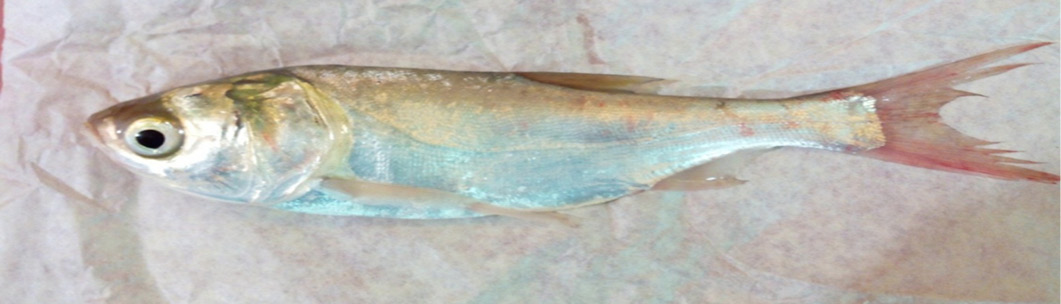
All the specimens of silver carp were infected with Aspergillus. Aspergillus spp. infection was noticed in the form of scales erosion and damaged fins. Lesions were noticed on many samples but deep wounds were not observed in any fish (Figure 1).
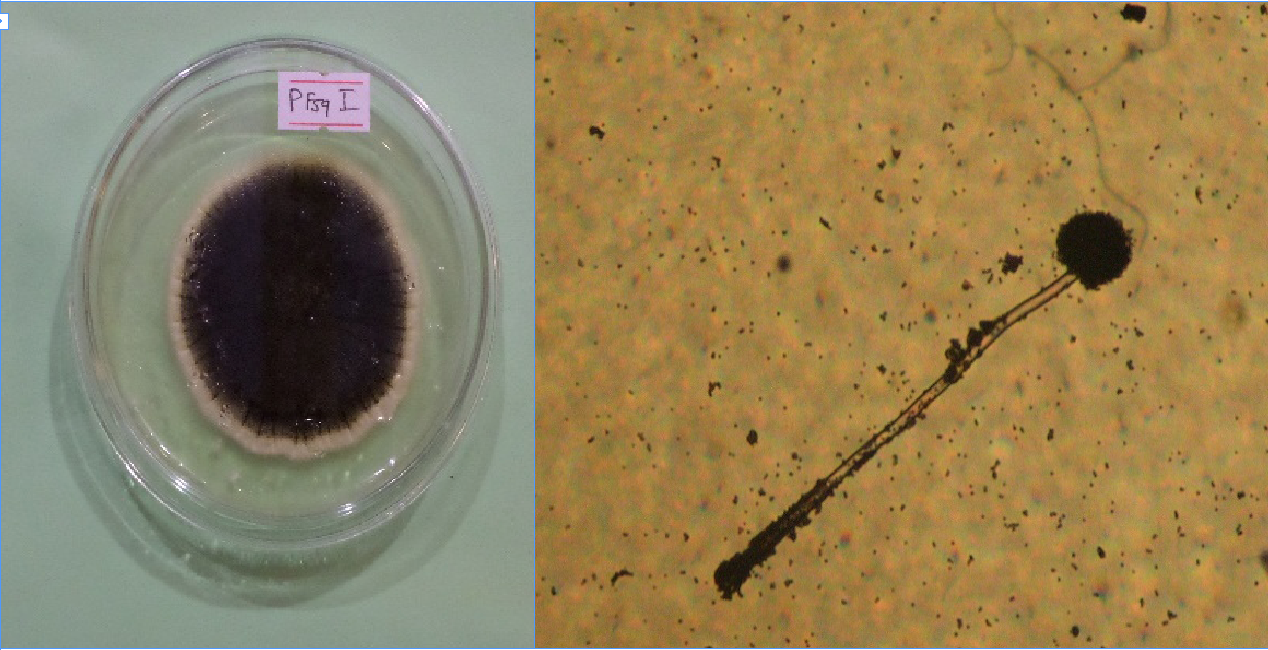
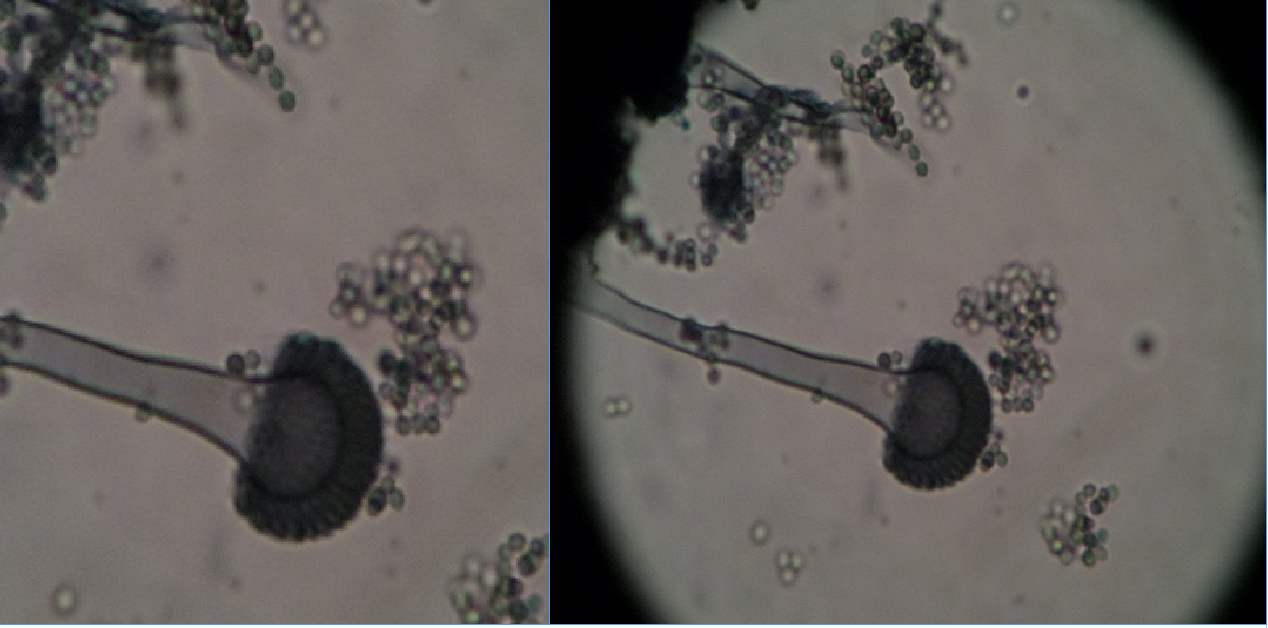
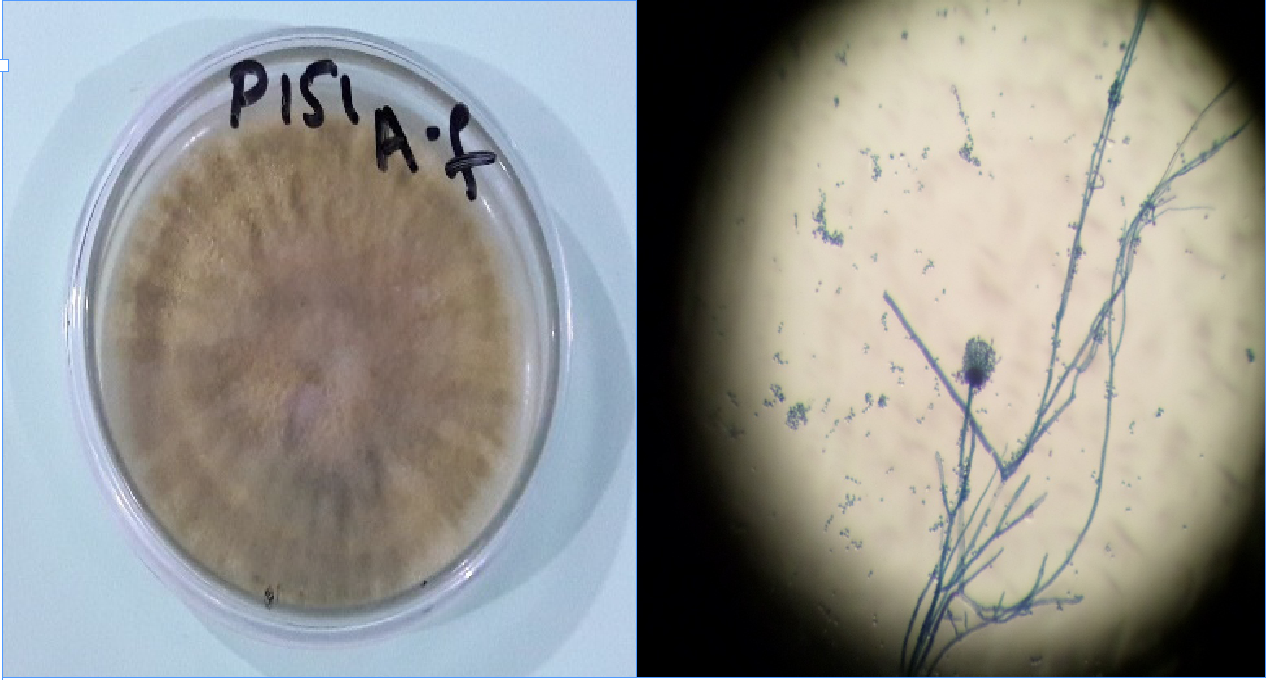
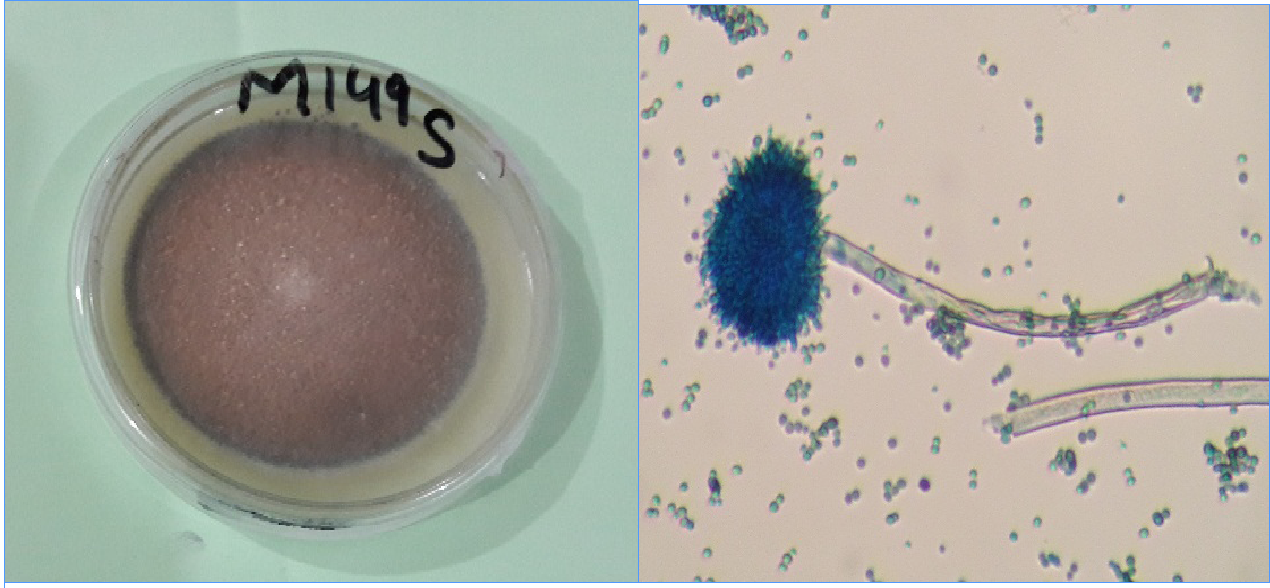
Four species of Aspergillus were isolated i.e., Aspergillus niger, A. fumigatus, A. flvaus and A. terreus. Aspergillus niger was more prominent with 50.52% infection followed by A. fumigatus (24.02%), A. flavus (17.06%), A. terreus (8.40%) (Table 1). When organ-wise infection was observed, fins showed highest infection (39.1%) and intestine showed least infection (6.59%) (Table 2). All the four species of Aspergillus showed different colonies color. Aspergillus niger, A. fumigatus A. flavus and A. terreus showed black, grey, green and skin color respectively on culture medium (Figures 2, 3, 4, 5).
Table 1: Percentage infection of different Aspergillus sp. in silver carp.
Sr. No.
Aspergillus sp.
No. of plates
% age infection
1
Aspergillus niger
944
50.52%
2
Aspergillus fumigatus
449
24.02%
3
Aspergillus flavus
319
17.06%
4
Aspergillus terreus
157
8.40%
Table 2: Organ wise fungal infection in silver crap.
S. No.
Organ
No. of plates
%age infection
1
Skin
303
16.38
2
Gills
235
12.7
3
Fins
723
39.1
4
Intestine
122
6.59
5
Heart
160
8.65
6
Liver
148
8
7
Kidney
158
8.54
Discussion
Aspergillosis was studied in silver carps. The isolated Aspergillus species were identified as A. niger, A. fumigatus, A. flavus, and A. terreus. Aspergillus niger was the most prominent Aspergillus sp. followed by the other three. Fins were the most affected area which showed 39.10% infection. Infection on vital organs like gills, heart, liver, kidney and intestine was low but seems to be more serious and sometime may be fatal.
Aspergillus infection in gill resulted in damage of secondary lamellae. It may be source of respiratory distress in fish (Iqbal et al., 2012a). Iqbal et al. (2012b) reported fungal infection in Ctenopharyngodon idella and Catla catla. This infection was related to such factors that cause environmental unsuitability. High stocking density, excessive organic fertilizer in ponds and incompatible water quality for fish health were included in environmental unsuitability. Aspergillus infection in ponds fishes may be due to intake of unhygienic feed present in the fish ponds. Decomposition and decay of contaminated feed also lead to more severe infection. . Iqbal et al. (2014) reported high infection in the head area of silver carp because this part first interacts with the Aspergillus spores during feeding and swimming.
Diversity of fungal species varies with the season of the year among freshwater fishes. It is more prevalent in the winter. Younis et al. (2020) reported A. flavus, A. fumigatus and A. niger from skin, fins, gills, eyes, liver, kidney and spleen of O. niloticus and C. gariepinus in winter. These fungal species were more prominent in winter as compared to spring and summer. In winter low temperature is responsible for fungal infection in fishes. Pachade et al. (2014) isolated different fungal species throughout the whole year. Aspergillus niger and A. flavus showed more infection from November to January.
Aspergillus showed maximum virulence while other fungal genera i.e. Rhizopus and Alternaria showed minimum virulence in L. rohita, C. catla, C. marulius and C. striatus . Ali (2015) investigated fungal infection on head, caudal fin and abdomen of C. carpio, C. carpio regularis (mirror carp) and H. molitrix from Suliamania Province, Iraq. Cyprinus carpio showed higher incidence of fungal infection (55%) as compared to other two species which showed 22.5% and 22% infection respectively.
The ratio of mycotic infection was observed 62% and it is considered bigger hazard to the aquaculture industry . Aspergillus flavus were isolated and identified from H. molitrix, C. auratus, C. carpio, Liza abu, Barbus luteus, Aspius varax and Mugil cephltus. Systematic mycosis results revealed that the percentage infection in fish was 62% as compared to other yeast.
Mycobiota associated with fish and their environment was described by Abdel-Sater et al. (2017). Eleven genera and twenty five fungal species were isolated and identified from broomtail wrasse (Cheilinus lunulatus), Crocodile fish (Cymbacephalus beauforti), Rabbit fish (Siganus rivulatus), Sergeant major (Abudefduf saxatili), Doublebar bream (Acanthopagrus bifasciatus), Klunzinger’s wrasse (Thalassoma rueppellii), Blacktip mojarra (Gerres oyena), Picnic sea bream (Acanthopagrus berala). Aspergillus sp. was isolated from the skin, gills and liver of fishes. Gills and skin showed relatively higher fungal infection than liver. isolated A. awamori, A. candidus, A. flavus, A. fumigatus, A. niger, A. oryzae, A. parasiticius, A. sulphureus and A. terreus from sun-dried fishes of Yemen. Recently Aspergillus spp. were isolated from seven fish species, Wallago attu, H. molitrix, L. rohita, C. mrigala, C. idella, C. carpio and C. catla from River Ravi .
The presence of aspergillus in silver carp sample is of a great significance in view of food safety and quality. Aspergillus spp. are common in air and soil, and their presence in fish samples might contain metabolites produced by them, that may make the fish consumption hazardous to human health. Similarly, Mitchell (2007) mentioned that the potency of these metabolites is not affected by cooking and may cause severe or fatal damage to the liver and kidney.
Aspergillus produce a group of toxic waste called aflatoxins that are major reason in the spoilage of food. If these toxic wastes assemble in fish tissues it is fatal for human consumption ; . Aspergillus spp. associated with fish mycoses . Aspergillus infections are not as dangerous as other fungus species such as Saprolegnia. It only affects those fishes which are under unfavorable environmental conditions. Aspergillus seems to be opportunist fungus; hence proper husbandry practices must be adopted on the fish farms. The study of aspergillosis, pathogenicity of Aspergillus species and histopathology of infected fishes needs our urgent attention to further understand this pathogenic fungus which is affecting warm water fish culture in Punjab, Pakistan.
Conflict of interest
The authors have declared no conflict of interest.
Figures
Figure 1:.
Infected silver carp show lesion on body and damage caudal fins.
Figure 2:.
Aspergillus niger (black colony and conidiophore).
Figure 3:.
Aspergillus fumigatus (grey colony and conidiophore).
Figure 4:.
Aspergillus flavus (Green colony and coiniophore).
Figure 5:.
Aspergillus terreus (skin and green colony and coiniophore).
References
Abbas, M.S., Khalaf, J.M. and Yassein, S.N., 2016. Isolation and identification of systemic mycological isolates from fishes samples that obtained from local markets in Baghdad, Iraq. World J. Exp. Biosci., 4(2): 143-146.
Abdel-Sater, M.A., Abdel-Hadi, A.M., Abdul-Raouf, U.M., Mohamed, F.A.S. and Emamn, A.M., 2017. Mycobiota associated with some Red Sea fish, shellfish and their environment at Hurghada, Egypt. J. Basic Appl. Mycol., 8: 9-23.
Adebayo-Tayo, B.C., Onilude, A.A. and Patrick. U.G., 2008. Mycofloral of smoke-dried fishes sold in Uyo, Eastern Nigeria. World J. Agric. Sci., 4(3): 346-350.
Ali, H.H., 2015. Isolation and identification of pathogenic fungi from carp fish in Suliamania Province, Iraq. Glob. J. Bio-Sci. Biotechnol., 4(4): 356-363.
Ayub, M., 2009. Overview of fisheries sector in Pakistan, 4th National Symposium on Fisheries, Lahore, Pakistan March 18th -19th 2009, pp. 2-15
Balasubramanian. S., Baby-Rani. P., Arul Prakash. A., Prakash. M., Senthilraja. P., and Gunasekaran. G., 2012. Antimicrobial properties of skin mucus from four freshwater cultivable fishes (Catla catla, Hypophthalmichthys molitrix, Labeo rohita and Ctenopharyngodon idella). Afr. J. Microbiol. Res., 6(24): 5110-5120.
Chauhan, R., Nisar. Z., and Baig, A.H., 2014. Studies on Aspergillomycosis in Labeo calbasu found infected with Aspergillus flavus and A. terreus. World J. Pharm. Pharm. Sci., 3(7):1842-1848.
Ellis, D., Davis, S., Alexious, H., Handke. R., and Bartley. R., 2007. Description of medical fungi, 2nded: South Australia
El-Tawab, A.A.A, El-Hofy, F.I, Moustafa, E. M, and Halawa, M.R., 2020. Insight into isolation, identification and antimicrobial sensitivity of some moulds isolated from fresh water fishes. Adv. Anim. Vet. Sci., 8(2): 174-182. https://doi.org/10.17582/journal.aavs/2020/8.2.174.182[Full text][CrossRef]
Firouz Bakhsh. F., Ebrahimzadeh Mousavi. H.A., and Khosravi. A.R., 2005. Isolation and identification of phathogenic and saprophytic fungi from gill lesions in cultivated cyprinids (Common carp, Silver carp and Grass carp). J. Vet. Res., 60: 15-19.
Iqbal, Z. and Saleemi, S., 2013. Isolation of pathogenic fungi from a freshwater commercial fish, Catla catla (hamliton). Sci. Int. (Lahore), 25(4): 851-855.
Iqbal, Z. and Khatoon, Z., 2019. Fungal infection in commercially important fishes of Balloki Headworks, River Ravi, Punjab, Pakistan. Int. J. Biol. Res., 7: 47-55.
Iqbal, Z., Najam, U and Saleemi, S., 2014. Fungal infection in silver carp, Hypophthalmichthys molitrix (valenceinnes) reared in earthen pond. Sci. Int. (Lahore), 26: 261-266.
Iqbal, Z., Asghar, M. and Rubaba, 2012b. Saprolegniasis in two commercially important carps. Pakistan J. Zool., 42: 515-520.
Iqbal, Z., Sheikh, U. and Mughal, R., 2012a. Fungal infections in some economically important freshwater fishes. Pak. Vet. J., 32(3): 422-426.
Jenkin, J.A.D., Scievenpiper, L.J., Pauly, D., Sumaila, R.U., Kendal, C.W.C., and Mowat, M. F., 2009. Are dietary recommendations for the use of fish oils sustainable. Can. Med. Assoc. Licensors, 180(6): 633-637. https://doi.org/10.1503/cmaj.081274[CrossRef]
Junaid, S.A., Olarubofin, F. and Olabode, A.O., 2010. Mycotic contamination of stockfish sold in Jos, Nigeria. J. Yeast Fungal Res., 1(7): 136 – 141.
Kumari, R. and Kumar, D.C., 2015. Fungal infection in some economically important freshwater fishes in Gandak river near Muzaffarpur region of Bihar. Int. J. Life Sci. Pharm. Res., 5: 1-11.
Lone, S.A., Manohar, S. and Qureshi, T.A., 2018. Studies on the isolation, identification and pathogenecity of five species of genus Aspergillus on some fishes of river Narmada. Int. J. Basic Appl. Res., 8(6): 1185-1197.
Mitchell, T.G., 2007. Medical mycology. In: Jawetz, Melnick and Adel erg’s (Eds.). Med. Microbiol. 24th Edition. McGraw Hill USA. pp. 621-625.
Nyongesa, B.W., Okoth, S. and Ayugi, V., 2015. Identification key for Aspergillus species isolated from maize and soil of Nandi County, Kenya. Adv. Microbiol., 5: 205-229. https://doi.org/10.4236/aim.2015.54020[CrossRef]
Ogorman, C.M., 2008. Discovery of sexual cycle in the opportunistic fungal pathogen Aspergillus fumigates, Nature, pp. 7528
Pachade, G.R., Bhatkar, N.V. and Hande, D.V., 2014. Incidences of Mycotic infections in Channa punctatus of Wadali Lake, Amravati, MS, India. Int. Res. J. Biol. Sci., 3(11): 47-50.
Podeti, K.R. and Benarjee. G., 2015. Studies on haematological and histological mycosis varations of Channa punctatus (bloch) found infected with Aspergillus fumigatus and Aspergillus niger spp exhibited EUS charecterstics. World J. Pharm. Pharm. Sci., 4(7): 1233-1246.
Podeti. K.R. and Benarjee. G., 2016. Studies on histological and histopathological mycosis variations of Channa striatus (Bloch) found infected with Asperigillus f umigatus and Aspergillus niger spp. caused EUS Charecterstics. Int. J. Pharm. Sci. Res., 7(2): 660-665.
Salawudeen, M.T., Kazeem, H.M., Raji, M.A., Oniye, S.J., Kwanashie, C.N. and Ibrahim, M.J., 2017. Isolation and identification of fungi from apparently healthy and diseased Clarias gariepinus from freshwater in Zaria, Kaduna State, Nigeria. Microbiol. Res. Int., 5(1): 8-15. https://doi.org/10.30918/MRI.51.17.012[CrossRef]
Shamsan, E.F. and Al-Jobory, H.J., 2018. Microbial status of sun-dried fish (Wazef) sold in different Yemeni Markets. PSM Biol. Res., 3(1): 1-8.
Turyk, M.E., Bhavsar., S.P., Bowerman, W., Boysen, E., Clark, M., Diamond, M., Mergler, D., Pantazopoulos, P., Schantz, S. and Carpenter, D.O., 2012. Risks and benefits of consumption of great lakes fish, Environ. Hlth. Perspect., 120: 11-18. https://doi.org/10.1289/ehp.1003396[CrossRef]
Younis, G.A., Esawy, A.M., Elkenany, R.M. and El-Deen, M.S., 2020. Conventional identification of pathogenic fungi isolated from fresh water aquarium fish (O. niloticus and C. gariepinus) combined with molecular identification of Saprolegnia parasitica in Egypt. Adv. Anim. Vet. Sci., 8(1): 77-88. https://doi.org/10.17582/journal.aavs/2020/8.1.77.88[Full text][CrossRef]