Research Article · Volume 35, Issue 1, 29 June 2020 · Open Access
Comparative Study of Two Synthetic Insecticides Spiromesifen and Thiamethoxam to Determine their Acute and Residual Toxicity against Lynx Spider (Oxyopes javanus)
·
Affiliations & Notes ⌄
1Department of Zoology, University of the Punjab, Quaid-i-Azam Campus, Lahore, 54590, Pakistan. , Corresponding Author: Dr. Abida Butt abidajawed.zool@pu.edu.pk
In this study acute and residual toxicity of insecticides Thiaethoxam and Spiromesifen on hunting spider O. javanus was investigated.
Our results indicate low of toxicity of spiromesifen towards O. javanus as compared to thiamethoxam.
However, residues of thiamethoxam were more toxic than the residues of spiromesifen.
Even though when these insecticides are slightly harmful for natural enemies like spiders, they can have advers sublethal effects on them.
Selected from the article's own text.
Abstract
ntegration of biological and chemical control methods are required to successfully manage insect pests. Along with insect pests, many predators of these pests are also present in crops and affected by these management activities. Spiders are the most abundant predators of insect pests in the agroecosystem. The present study was designed to assess and compare acute and residual toxicity of two insecticides i.e Spiromesifen and Thiamethoxam on the lynx spider Oxyopes javanus Thorell, 1887 under laboratory conditions. The field rate of both insecticides caused approximately 50% mortality in the population of O. javanus. Toxicity data showed that these insecticides are slightly harmful ( caused < 80% mortality) towards studied spider. Insecticide residues of different ages were used to evaluate the residual toxicity of both insecticides. Mortality in exposed spiders decreased with the increased age of the residues. The results of both assays showed that male spiders were more susceptible than female spiders in both acute and residual toxicity tests. The residues study data showed that spiromesifen is short- lived (< 5 days aged residues cause < 30% mortality) and that thiamethoxam is slightly persistent ( 5–15 days aged residues cause < 30% mortality).
Novelty Statement | The acute and residual toxicity of the tested insecticides, Spiromesifen and Thiamethox-am is determined first time on the male, female and total population of lynix spider Oxyopes javanus.
Introduction
To meet the increasing demand of food, insecticides are used for the management of agricultural insect pests throughout the world (Tilman et al., 2001; . But the use of insecticides have adversed affectes on the density and diversity of natural predators in agro-ecosystems by killing them directly or by reducing their prey and leading to starvation ; . Extensive use of insecticides decline the population of pollinators (Henry et al., 2012; Whitehorn et al., 2012), seed dispersers (Donald et al., 2001) and biological control agents in agroecosystems . As a result, natural enemies cannot perform up to their full potential in integrated pest management programs. The situation is even worse in developing countries where banned or restricted insecticides are available in the market and still use in crop fields .
Spiders are most diverse and abundant generalist predators in many agroecosystems ; . They are extremely effective in the management of insect pest population and ultimately controlling the damage to the crops ; . Spiders cause direct mortality of pests through their consumptive effect . They capture and kill more prey than they actually consume. This high rate of capture can reduce the pest number more significantly in the fields . Spiders also cause indirect mortality in insects through their non-consumptive effect. They dislodge insect pests (aphids and caterpillars); which increased the mortality of insect pests due to their exposure to harsh environmental conditions and other predators .
Spiders can also control prey populations because they often capture and kill more prey than they consume. Riechert and Lockley (1984) report that a spider may kill as many as 50 times the number of prey it consumes.
Insecticides have acute as well as chronic effects on spiders. In case of acute poisoning, contact or ingestion of insecticides cause the death of individual. Many field and laboratory studies reported mortality in spiders when exposed to different insecticides ; ; ; ; . Chronic exposure to insecticides not only causes the death directly; but it also bring several behavioral and physiological changes in spiders . Sub lethal effects of insecticides disturb the activity level of spiders , courtship behaviors , development time , reproductive rate and modify their web structure (Benamu et al., 2013; Pasquet et al,. 2016).
There are many factors that affect the mortality of spiders due to application of insecticides in the field i.e. concentration or dose, exposure duration, abiotic conditions and insecticide bioavailability. In agroecosystems, possible routes of uptake of insecticides by spiders are via contact with droplets of spray , via oral uptake by feeding on insecticide contaminated prey and via residual contact ; . Some insecticides have long residual activity like chlorinated hydrocarbons, organophosphates and pyrethroids . However, residual effect of few insecticides on spiders is also known but require more investigation ; Pekar and Haddad, 2005; .
Thiamethoxam is a second generation neonicotinoid. It belongs to thianicotinoil sub class and affect acetylcholine receptors of insect nervous system (Maiensfisch et al., 2001). It has both contact and systemic activity and used for drench, foliar, soil and seed treatment (Maiensfisch et al., 2001). It is very effective for the control of aphid, leafhopper and white fly in agroecosystem ; . However, it is toxic for naturel enemies like Serangium japonicum , Hippodamia convergens, Coleomegilla maculate , Coccinella septempunctata , Chrysoperla carnea and stink bug . The sublethal concentrations of thiamethoxam adversely affect life table parameters of predatory beetle Hippodamia variegata and Coccinella septempunctata . It impairs the navigation and homing ability of honey bee . It also reduces colony initiation in bumble bees .
Spiromesifen (tetronicacid derivative) is a growth regulator, acts as an inhibitor of lipid biosynthesis . Spiromesifen is very effective against sucking insect pests in many cropping systems including vegetables, cotton and ornamentals ; . It causes lethal and sublethal effects on natural enemies e.g. predatory mite Neoseiulus californicus, ; ; . It affects the life table parameters of predatory mite . It reduces reproductive potential of Galendromus occidentalis .
Oxyopes javanus (Oxyopidae) is an abundant lynx spiders in many agroecosystems throughout the world including rice , wheat , tea fields ; and cotton . It is the predator of many important insect pest species including white back planthopper, armyworm, pink graminous stem borer, cereal aphids, leafhoppers, grasshopper nymphs and tea mosquito bug ; ; ; .
Spiromesifen and thiamethoxam both insecticides are widely used in Pakistan to control insect pests in different agroecosystems ; , 2015; ; . The present study was designed to assess the acute and residual toxicity of insecticides spiromesifen and thiamethoxam on the population of O. javanus.
Materials and Methods
Specimens
Specimens of O. javanus were randomly collected from chemically untreated wheat fields of University of the Punjab, Lahore, Pakistan by sweep net and direct hand picking. Collected spiders were transferred to the laboratory and placed singly in glass container (50 mm height and 25 mm diameter). For acclimation with laboratory conditions, spiders were kept in laboratory at 27 ± 5 °C room temperature, 60-65 % relative humidity and 14:10 h light and dark period for atleast two days. To each spider three larvae of drosophila were provided daily as food until used in experiment. Water was continuously provided via moistened cotton wicks.
Table 1: Tested insecticides; grouped by MOA (Mode of action) on the bases of classification by Insecticide Resistance Action Committee (IRAC), their commercial name, active ingredient (A.I) content and formulation type.
Inhibitors of acetyl CoA carboxylase, Lipid synthesis. Growth regulation chemical (23)
228.6 g A.I/ L SCb
250 ml
a SC, Suspension concentrate; bWG, Wettable granules.
Insecticides
Commercial formulations of thiamethoxam (Actara® 25 WG by Syngenta) and spiromesifen (Oberon® SC by Bayer crop science) were purchased from local market (Table 1).
Acute toxicity assay
To check the acute toxicity, spiders were exposed directly to the insecticides by dipping method as describe by Tanaka et al. (2000). To prepare stock solution (spiomesifen 10 ml/ 500 ml and thiamethoxam 10g/ 500 ml), insecticide was dissolved in acetone and required concentrations (Field Rate, ½ Field Rate, ¼ Field Rate, 1/8 Field Rate and 1/16 Field Rate ) were prepared by diluting this stock solution in water. A plastic vial with screen lid was used for dipping the specimens in the insecticide solution for 10 seconds. Spiders in control group were treated with the water that contain acetone in the same quantity as present in the field rate concentration. After treatment spiders were shifted into their containers with paper towel to absorb dripping insecticide and were placed in the laboratory.
Prior to experiment preliminary range finding tests were carried out to find appropriate concentration range that produce zero to 99% mortality and six doses were selected to perform experiment. Tests for all concentrations were performed simultaneously. Mortality of the spiders was assessed at 2, 4, 8, 16, 24, 36, 48, 60, and 72 hours after exposure. Absence of any response in spiders after being stimulated by fine camel hair brush was declared as dead . All tests were replicated thrice and in each replicate ten spiders were present. No food was offered to spiders during the experiment.
Residual toxicity assay
To assess the residual toxicity of both insecticides against O. javanus, 1 L solution of tested insecticide was prepared according to maximum field application rate Table 1 . Whatman (No. 2) filter paper sheets (10 × 10) were dipped into solution of tested insecticide for two minutes and dried. Toxicity of both insecticides residues of age <1, 5, 10 and 20 days old was assessed. For this purpose, insecticide treated sheet was rolled in the form of tubes. A single spider was released into a roll of filter paper and ends of the roll were folded to ensure permanent contact with insecticide residues. The mortality of the spiders exposed to the residues of tested insecticides was checked for three consecutive days at regular intervals i.e., after 6, 12, 24, 36 48, 60 and 72 hours. For the control group similar test was performed using water. All tests were replicated thrice and in each replicate ten spiders were present.
Statistical analysis
For analysis, mortality data was divided in three groups i.e., only adult male, only adult female and whole population (65% immature of all instars, 25% adult female and 10% adult male). Population structure was based on our field collection. LC50 and LT50 was calculated for all the three groups. Concentration-mortality data was subjected to logistic model of probit analysis to calculate LC50 and residues age-mortality data to loglogistic model to calculate LT50. The formula of probit analysis is as following:
P = α + β[log10 (Dose)]
Toxicity and Persistance categories for laboratory bioassays are given in Table 4. Toxicity and persistence of these insecticides was categorised according to IOBC .
The susceptibilities of male, female and whole population of spiders towards both insecticides were analysed by Complete Randomized Design One-way ANOVA following Tukeys post hoc test. Normality of the data was tested using Shapiro-Wilk test. To perform all statistical analysis Minitab 16 was used.
Results
Acute toxicity
Median lethal concentration (LC50) of tested insecticides after 24 hours of application against O. javanus is given in Table 2.
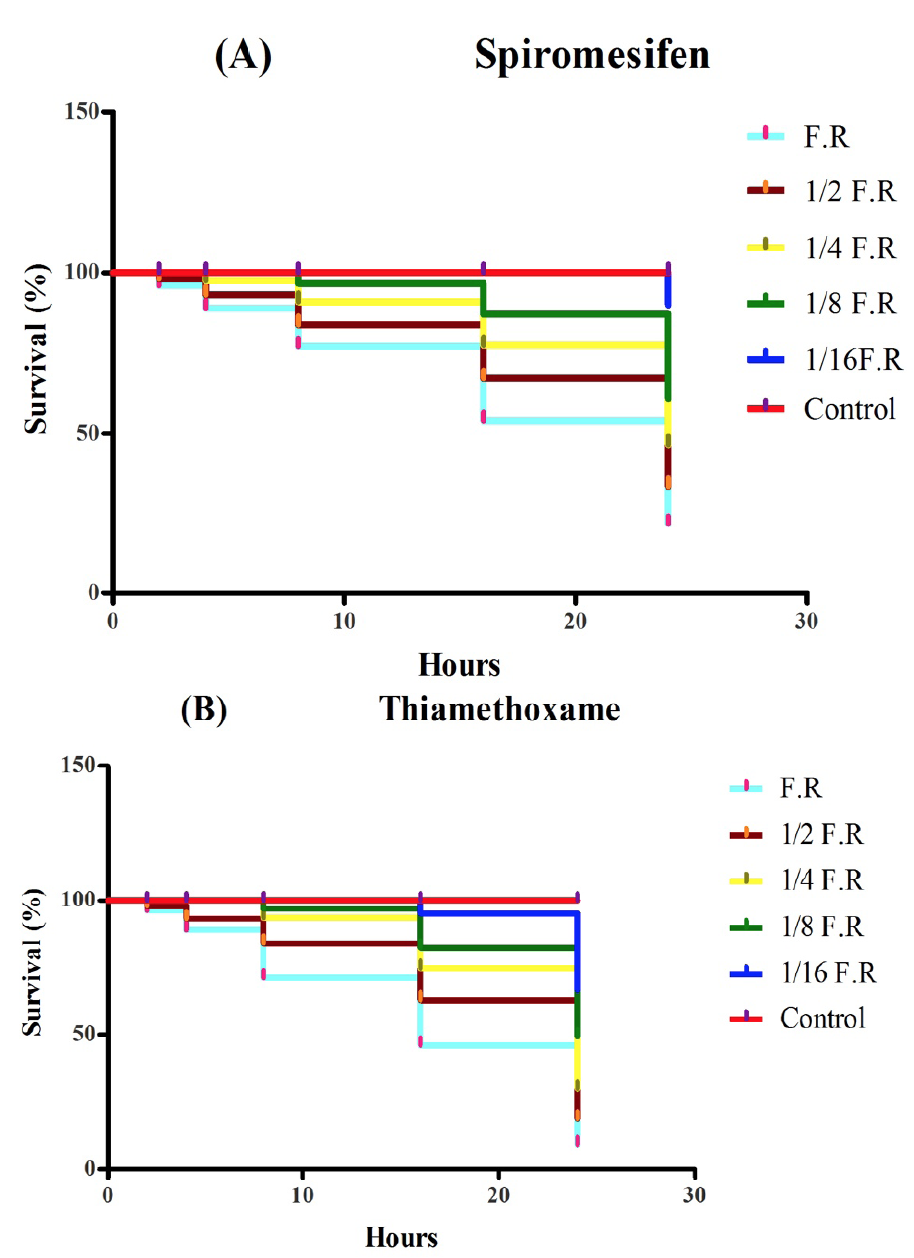
At field rate of spiromesifen, only 75 % mortality was recorded after 72 hours of treatment. LC50 values showed least tolerance of males than female and whole population against spiromesifen (F 2, 6 = 452.73; P < 0.001). According to IOBC classification, spiromesifen appeared slightly harmful towards O. javanus as it has caused less than 80% mortality (Table 4). Survival rate of the spiromesifen treated spiders is shown in Figure 1A.
Application of thiamethoxam at recommended field rate caused 100% mortality of spiders after 72 hours of treatment. Highest susceptibility was recorded in male spiders followed by total population and female spiders (F 2, 6 = 109.15; P < 0.001). According to IOBC classification, thiamethoxam also appeared slightly harmful towards O. javanus (Table 4). Survival rate of Thiamethoxam treated spiders is shown in Figure 1B.
The assessment of LC50 values as fraction of maximum field recommended concentrations ranges approximately from 0.7 to 1.0 for both insecticides. It also showed that both insecticides are slightly harmfull for this spider (Table 2). Survival of the control group was 100% after 24 hours of treatment (Figure 1A, 1B).
Residual toxicity
In residual contact bioassays, mortality decrease in spider when exposed to more aged residues of both insecticides, in all categories of spiders i.e male, female and whole population, Table 3.
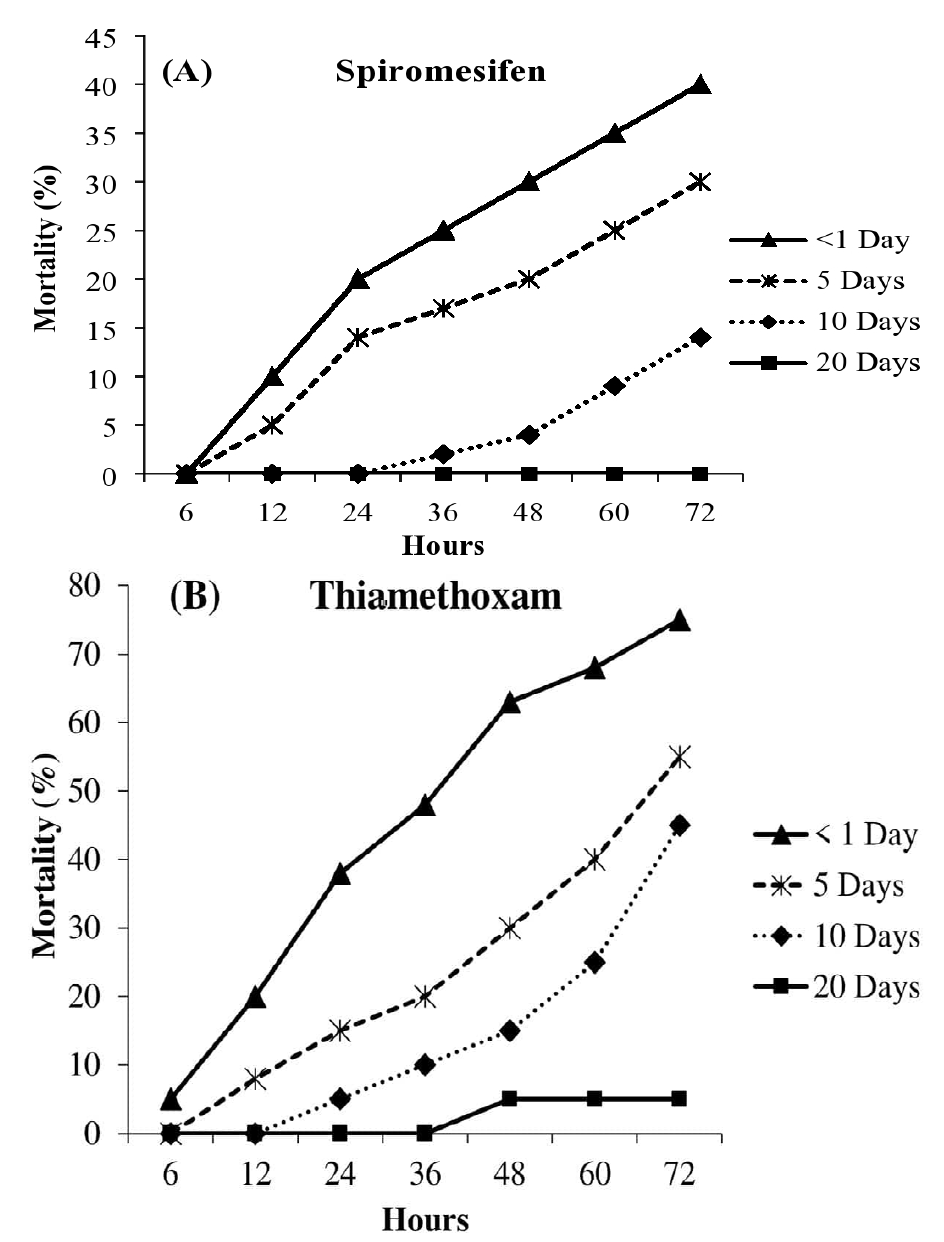
The effect of different aged residues of spiromesifen was significantly different on all categories ( residue age, F 3, 35 = 115.51, P < 0.001 , categories of spiders, F 3, 35 = 11.93, P < 0.001). The female spiders were least affected by aged residues of spiromesifen as 10 days old residues did not caused mortality in this category. According to IOBC classification spiromesifen was placed in class A i.e., short lived insecticide because its 5 days old residues produced < 30% mortality in O. javanus (Table 4, Figure 2A).
The effect of different aged residues of thiamethoxam on all tested categories was significantly different (residue age, F 3, 35 = 460.49, P < 0.001 ; categories of spiders, F 3, 35 = 258.25, P < 0.001). Female spiders were least effected by aged residues of thiamethoxam as 20 days old residues did not caused any mortality in spiders. According to IOBC classification thiamethoxam was placed in class B i.e. slightly persistent because less than 30 % mortality was recorded in O. javanus at 5-15 days old residues (Table 4, Figure 2B).
Table 2: Concentration of insecticide formulation tested for acute toxicity to male, female and total population of spiders.
Comp-ound
Population sex number
Formulation Con.tested (ppm)
LC50 (ppm)
LC50 asfraction of MFRC
LC90 as Fraction of MFRC
α
β
χ2
P-value
Male
180
63 – 2000
799.933c
0.799
1.913
1.579
0.002
31.742
< 0.001
Spirom-esifen
Female
500
63 – 2000
1048.20a
1.048
2.407
1.695
0.002
29.149
< 0.001
Popul-ation
800
63 – 2000
922.444b
0.922
2.160
1.637
0.002
30.187
< 0.001
Male
180
18.9 – 600
212.027c
0.707
1.655
1.638
0.007
58.748
< 0.001
Thiame-thoxam
Female
540
18.9 – 600
325.590a
1.085
2.277
1.999
0.006
30.926
< 0.001
Popul-ation
900
18.9 – 600
2 266.399b
0.888
1.978
1.788
0.007
42.839
< 0.001
Median lethal toxicity (LC50) after 24 hours of insecticide exposure, and LC50 as the fraction of the maximum field recommended concentration (MFRC), α is the intercept and β is the slope while χ2 is showing goodness of fit of the model.
Table 3: Toxicity of aged insecticide residues of field rate concentration tested for male, female and total population of spiders, their median lethal time (LT50) after exposure to insecticide residues, α is the intercept and β is the slope while χ2 is showing goodness of fit of the model.
Insecticide
Population category number
Residue age (Days)
LT50 (Hours)
α
β
χ2
P-value
Spiromesifen
Male
30
< 1
81.586
0.999
0.012
0.001
<0.001
30
5
89.653
1.784
0.012
0.495
<0.001
30
10
94.136
10.200
2.244
0.151
<0.001
30
20
No mortality
-
-
-
-
Female
30
< 1
147.153
5.477
1.097
0.613
<0.001
30
5
258.470
6.117
1.101
0.038
<0.001
30
10
No mortality
-
-
-
-
30
20
No mortality
-
-
-
-
Population
30
< 1
120.670
2.543
0.531
0.109
<0.001
30
5
223.173
2.701
0.499
0.407
<0.001
30
10
129.270
8.849
1.820
0.173
<0.001
30
20
No mortality
-
-
-
-
Thiamethoxam
Male
30
< 1
29.214
2.693
0.798
2.334
<0.001
30
5
58.077
4.010
0.987
0.416
<0.001
30
10
79.843
5.180
1.182
4.388
<0.001
30
20
216.680
5.539
1.030
4.683
<0.001
Female
30
< 1
39.901
3.590
0.974
0.531
<0.001
30
5
79.843
5.180
1.182
4.388
<0.001
30
10
79.063
11.437
2.617
0.116
<0.001
30
20
No mortality
-
-
-
-
Population
30
< 1
33.587
3.148
0.896
0.014
<0.001
30
5
69.109
4.444
1.049
1.811
<0.001
30
10
84.051
6.453
1.456
3.142
<0.001
30
20
392.461
5.353
0.896
2.362
<0.001
Discussion
Natural enemies are usually more sensitive to insecticides, because in them resistance against insecticides develop slowly as compared to their prey ; . In this study acute and residual toxicity of insecticides Thiaethoxam and Spiromesifen on hunting spider O. javanus was investigated. Both of these insecticides are used to control wide range of insect pests in various crop systems ; ; .
Lethal effect of any insecticide depends upon its type of active ingredient, dose and exposure time. In this study, commercial insecticides were used instead of their pure active ingredient, as this condition corresponds to field situation more closely. Thus, resulting toxicity effects cannot be solely referred to active ingredient, as it may be caused by additives present in composition of commercial insecticides . The concentration mortality relationship for both insecticides was also studied. Such detailed analysis help to estimate mortality at other concentrations too, as concentration of insecticides vary among crops .
Table 4: IOBC Classification based acute and persistence toxicity of tested insecticides.
** Harmless in <5 days, short lived; 5–15 days, slightly persistent; 16–30 days, moderately persistent and >30 days, persistent.
Results of present study showed that thiamethoxam is slightly harmfull for O. javanus. The LC50 value for population is near to its field application rate. Studies are available on the bad effect of thiamethoxam on naturel enemies ; ; . Sabry et al. (2014) reported thiamethoxam toxicity to the natural enemies trichogramma, lacewing and seven spotted lady bird beetle. Amirzade et al. (2014) reported that thiamethoxam is less toxic to predatory ladybird beetles as compared to other neonicotinoids acetamaprid and imidacloprid. According to Van deVeire and Tirry (2003) thiamethoxam was harmful to predators Orius laevigatus and Amblyseius californicus. Thiamethoxam have potential to severely harm predatory bug Macrolophus pygmaeus . According to Yao et al. (2015) thiamethoxam is severely toxic for predator Serangium japonicum. Bostanian and Laurin (2008) reported that thiamethoxam was not toxic towards predator Anystis baccarum. Its application decrease the abundance of the soil Oribatida, Gamasida and Actinedida So, thiamethoxam acute toxicity is vary from species to species of naturel enemies.
According to our findings thiamethoxam is slightly persistant in the form of residues and its residues also affect O. javanus. Bonmatin et al. (2015) reported that thiamethoxam is a persistent insecticide. The reported halflife of thiamethoxam is variable from 7–92 days . Result of present study show that 5 days old residues of thiamethoxam are detrimental for O. javanus. The residues of thiamethoxam were found in various environmental components e.g water, nectar, pollen and soil ; . It is reported that residues of thiamethoxam inhibit feeding in adult and cause mortality in nymphs of predatory bug Podisus maculiventris . Yao et al. (2015) reported that residues of thiamethoxam have slightly affected the predatory beetle Serangium japonicum. Thus residues of the thiamethoxam harm the nontarget organisms in different ways in agroecosystem.
Spiromesifen is a modern acaricide and insecticide used to control mites and sucking insects . It inhibits lipid biosynthesis and reduces the fertility in insects . Our results indicate low of toxicity of spiromesifen towards O. javanus as compared to thiamethoxam. Shah et al. (2016) showed that spiromesifen was less toxic to mosquitos in comparison to pyrithroids and neonicotinoids. Wahengbam et al. (2018) reported that spiromesifen is harmless towards Trichogramma sp. Spiromesifen did not affected the parasitoid ability of Eretmocerus mundus white fly . It reduces the number of thrips on pepper fruits . It is considered safe for pollinators ; . Wanumn et al. (2016) classified spiromesifen as slightly harmful towards two mirid predators N. tenuis and M. basicornis. Khan (2019) reported spiromesifen did not affect the parasitism ability of Tricogramma chilonis in laboratory.
This study showed short time bioavailability of insecticides spiromesifen for O. javanus. Residues of spiromesifen dissipate rapidly on fruit and vegetables but persist in soil for 15 days , 2014). Wanumen et al. (2016) classified spiromesifen as shortlived insecticide because its thee days old residues did not caused significant mortality in mirid bug. Kutuk and Yigit (2009) reported the residue of spiromesifen was harmless towards adult lady bird Serangium parcesetosum but caused some mortality in larvae. Similar results were reported by Schmidt et al. (2005) towards larvae of the Coccinella septempunctata when exposed to spiromesifen.
In this study, age of the insecticide residue was positively correlated with survival of the O. javanus. However, residues of thiamethoxam were more toxic than the residues of spiromesifen. And thiamethoxam is slightly persistent. Wanumen et al. (2016) reported that neonicotinoids are more persistent and toxic than tetronic acid derivatives.
Spiders show variable response towards toxic chemicals depending upon size and sex of the spider . In present study both acute and residual toxicity assays showed that male spiders were more vulnerable than female spiders. It may be due to lower weight to body area ratio of male spiders than females . Hof et al. (1995) reported lambda cyhalothrin affected male spider’s more than female wolf spiders. Pekar (1999) reported application of permethrin causes mortality directly related to body size of spiders. VanErp et al. (2002) reported male spiders are more susceptible to application of chlorpyriphos and diazinon than female wolf spider. According to an assumption of IOBC working group insecticides found harmless for a particular predator in laboratory testing have great chance of being low risk to population in field (Bigler , 1994).
Unfortunately in developing countries, there is lack of up to date information that are required to measures the total economic and agronomic outcomes and benefits of insecticides against their potential hazards and drawbacks. IPM approaches help to use insecticides wisely. For that purpose field based analysis are required to get reliable results that enable the application of insecticide in real environmental situation. Similarities of our results with the results of other studies on predacious arthropods indicate that the impact of insecticides on the existing pest/natural enemy complex must be taken into consideration when insect pest management strategies are planned.
Conclusion
The broad-spectrum insecticides should be used carefully. Instead of their vide spread use, they must be applied at hot spots of pests to save the natural predators like spiders. Even though when these insecticides are slightly harmful for natural enemies like spiders, they can have advers sublethal effects on them. This will decrease their fumctional role in agroecosystem. That is why only those products should be used in agroecosystems which are more specific against target pests and harmless for beneficial organisms. This would be helpful to reduce long term detrimental effects of insecticides on naturel enemies.
Conflict of interest
The authors have declared no conflict of interest.
Figures
Figure 1.
B: Survival (%) of Oxyopes javanus population when exposed to different concentrarion of Spiromesifen (A) and Thiamethoxam (B).
Figure 2.
Mortality (%) of O. javanus population when exposed to different age residues of Thiamethoxam (A) and spiromesifen (B).
References
Acda, M.N., 2007. Toxicity of thiamethoxam against Philippine subterranean termites. J. Insect. Sci., 7(1): 26. https://doi.org/10.1673/031.007.2601[CrossRef]
Amalin, D.M., Peña, J.E., Yu, S.J. and Mcsorley, R., 2000. Selective toxicity of some p esticides to Hibana velox (Araneae: Anyphaenidae), a predator of citrus leafminer. Fla. Entomol., pp. 254-262. https://www.jstor.org/stable/3496343 https://doi.org/10.2307/3496343[CrossRef]
Amirzade, N., Izadi, H., Jalali, M.A. and Zohdi, H., 2014. Evaluation of three neonicotinoid insecticides against the common pistachio psylla, Agonoscena pistaciae, and its natural enemies. J. Insect. Sci., 14(1): 35. https://doi.org/10.1093/jis/14.1.35[CrossRef]
Basnet, K. and Mukhopadhyay, A., 2014. Biocontrol potential of the lynx spider Oxyopes javanus (Araneae: Oxyopidae) against the tea mosquito bug, Helopeltis theivora (Heteroptera: Miridae). Int. J. Trop. Insect. Sci., 34(4): 232-238. https://doi.org/10.1017/S1742758414000538[CrossRef]
Basnet, K. and Mukhopadhyay, A., 2015. Life history of the spider, Oxyopes javanus (araneae: oxyopidae), an active predator of tea mosquito bug, Helopeltis theivora (heteroptera: miridae) in terai-dooars tea plantations. NBU J. Anim. Sci., 9: 1-8. ISSN 0975-1424
Beers, E.H. and Schmidt, R.A., 2014. Impacts of orchard pesticides on Galendromus occidentalis: Lethal and sublethal effects. Crop. Prot., 56: 16-24. https://doi.org/10.1016/j.cropro.2013.10.010[CrossRef]
Beleznai, O., Dreyer, J., Tóth, Z. and Samu, F., 2017. Natural enemies partially compensate for warming induced excess herbivory in an organic growth system. Sci. Rep., 7(1): 7266. https://doi.org/10.1038/s41598-017-07509-w[CrossRef]
Benamú, M.A., Schneider, M.I., González, A. and Sánchez, N.E., 2013. Short and long-term effects of three neurotoxic insecticides on biological and behavioural attributes of the orb-web spider Alpaida veniliae (Araneae, Araneidae): implications for IPM programs. Ecotoxicology, 22(7): 1155-1164. https://doi.org/10.1007/s10646-013-1102-9[CrossRef]
Bielza, P., Contreras, J., Quinto, V., Izquierdo, J., Mansanet, V. and Elbert A., 2005. Effects of Oberon® 240 SC on bumblebees pollinating greenhouse tomatoes. Pflanzenschutz-Nachr. Bayer, 58(3): 469-484.
Bielza, P., Fernández, E., Grávalos, C. and Izquierdo, J., 2009. Testing for non-target effects of spiromesifen on Eretmocerus mundus and Orius laevigatus under greenhouse conditions. Biocontrol, 54(2): 229. https://doi.org/10.1007/s10526-008-9162-0[CrossRef]
Bigler, F., 1994. Effects of pesticides on Chrysoperla carnea Steph.(Neuroptera, Chrysopidae) in the laboratory and semi-field. IOBC/wprs Bull., 17: 55-69.
Birkhofer, K., Arvidsson, F., Ehlers, D., Mader, V., Bengtsson, J. and Smith, H., 2016. Organic farming affects the biological control of hemipteran pests and yields in spring barley independent of landscape complexity. Landsc. Ecol., 31(3): 567-579. https://doi.org/10.1007/s10980-015-0263-8[CrossRef]
Bonmatin, J.M., Giorio, C., Girolami, V., Goulson, D., Kreutzweiser, D., Krupke, C., Liess, M., Long, E., Marzaro, M. and Mitchell, E.A., 2015. Environmental fate and exposure; neonicotinoids and fipronil. Environ. Sci. Pollut. 22(1): 35-67. https://doi.org/10.1007/s11356-014-3332-7[CrossRef]
Bostanian, N.J. and Laurin, M.C., 2008. Effects of ten pesticides to Anystis baccarum (Acari: Anystidae). Berlin, Germany 10th–12th October 2007, 35: 96-100.
Bucher, R., Binz, H., Menzel, F. and Entling, M.H., 2014. Effects of spider chemotactile cues on arthropod behavior. J. Insect. Behav., 27(5): 567-580. https://doi.org/10.1007/s10905-014-9449-1[CrossRef]
Butt, A. and Sherawat, S.M., 2012. Effect of different agricultural practices on spiders and their prey populations in small wheat fields. Acta Agric. Scand. Sect. B-Soil Pl. Sci., 62(4): 374-382. https://doi.org/10.1080/09064710.2011.624544[CrossRef]
Butt, A. and Xaaceph, M., 2015. Functional response of Oxyopes javanus (Araneidae: Oxyopidae) to Sogatella furcifera (Hemiptera: Delphacidae) in laboratory and mesocosm. Pakistan J. Zool., 47(1): 89-95.
Cloyd, R.A. and Bethke, J.A., 2011. Impact of neonicotinoid insecticides on natural enemies in greenhouse and interiorscape environments. Pest Manag. Sci., 67(1): 3-9. https://doi.org/10.1002/ps.2015[CrossRef]
Das, S., Roy, S. and Mukhopadhyay, A., 2010. Diversity of arthropod natural enemies in the tea plantations of North Bengal with emphasis on their association with tea pests. Curr. Sci. (Bangalore), 99(10): 1457-1463. https://www.jstor.org/stable/24069158
Deng, L., Dai, J., Cao, H. and Xu, M., 2006. Effects of an organophosphorous insecticide on survival, fecundity, and development of Hylyphantes graminicola (Sundevall)(Araneae: Linyphiidae). Environ. Toxicol. Chem., 25(11): 3073-3077. https://doi.org/10.1897/06-194R.1[CrossRef]
Desneux, N., Decourtye, A. and Delpuech, J.M., 2007. The sublethal effects of pesticides on beneficial arthropods. Ann. Rev. Entomol., 52: 81-106. https://doi.org/10.1146/annurev.ento.52.110405.091440[CrossRef]
Dinter, A. and Poehling, H.M., 1995. Side-effects of insecticides on two erigonid spider species. Entomol. Exp. Appl., 74(2): 151-163. https://doi.org/10.1111/j.1570-7458.1995.tb01887.x[CrossRef]
Donald, P., Green, R. and Heath, M., 2001. Agricultural intensification and the collapse of Europe’s farmland bird populations. Proc. R. Soc. Lond. Ser. B: Biol. Sci., 268(1462): 25-29. https://doi.org/10.1098/rspb.2000.1325[CrossRef]
Ekstrom, G. and Ekbom, B., 2011. Pest control in agro-ecosystems: an ecological approach. Crit. Rev. Pl. Sci., 30(1-2): 74-94. https://doi.org/10.1080/07352689.2011.554354[CrossRef]
El Hassani, A.K., Dacher, M., Gary, V., Lambin, M., Gauthier, M. and Armengaud, C., 2008. Effects of sublethal doses of acetamiprid and thiamethoxam on the behavior of the honeybee (Apis mellifera). Arch. Environ. Con. Toxicol., 54(4): 653-661. https://doi.org/10.1007/s00244-007-9071-8[CrossRef]
El-Naggar, J.B. and Zidan, N.H., 2013. Field evaluation of imidacloprid and thiamethoxam against sucking insects and their side effects on soil fauna. J. Pl.Prot. Res., 53(4): 375-387. https://doi.org/10.2478/jppr-2013-0056[CrossRef]
Elston, C., Thompson, H.M. and Walters, K.F., 2013. Sub-lethal effects of thiamethoxam, a neonicotinoid pesticide, and propiconazole, a DMI fungicide, on colony initiation in bumblebee (Bombus terrestris) micro-colonies. Apidologie, 44(5): 563-574. https://doi.org/10.1007/s13592-013-0206-9[CrossRef]
Elzen, G. and Pfannenstiel, R., 2009. Extreme Susceptibility of Hibana futillis1 Spiderlings to Selected Insecticides 2 in a Laboratory Bioassay. Southwest Entomol. 34(1): 103-107. https://doi.org/10.3958/059.034.0111[CrossRef]
Finney, D.J., 1971. Probit analysis, Cambridge University Press, Cambridge, pp. 50-80.
Geiger, F., Bengtsson, J., Berendse, F., Weisser, W.W., Emmerson, M., Morales, M.B. and Winqvist, C., 2010. Persistent negative effects of pesticides on biodiversity and biological control potential on European farmland. Basic. Appl. Ecol., 11(2): 97-105.
Girolami, V., Mazzon, L., Squartini, A., Mori, N., Marzaro, M., Di Bernardo, A., Greatti, M., Giorio, C. and Tapparo, A., 2009. Translocation of neonicotinoid insecticides from coated seeds to seedling guttation drops: a novel way of intoxication for bees. J. Econ. Entomol., 102(5): 1808-1815. https://doi.org/10.1603/029.102.0511[CrossRef]
Gontijo, P.C., Moscardini, V.F., Michaud, J. and Carvalho, G.A., 2014. Non-target effects of chlorantraniliprole and thiamethoxam on Chrysoperla carnea when employed as sunflower seed treatments. J. Pest. Sci., 87(4) :711-719. https://doi.org/10.1007/s10340-014-0611-5[CrossRef]
Griesinger, L.M., Evans, S.C. and Rypstra, A.L., 2011. Effects of a glyphosate-based herbicide on mate location in a wolf spider that inhabits agroecosystems. Chemosphere, 84(10): 1461-1466. https://doi.org/10.1016/j.chemosphere.2011.04.044[CrossRef]
Gupta, R.C., Mukherjee, I.R.M., Malik, J.K., Doss, R.B., Dettbarn, W.D. and Milatovic, D., 2019. Insecticides. Biomarkers Toxicol., Acad. Press, pp. 455-475. https://doi.org/10.1016/B978-0-12-814655-2.00026-8[CrossRef]
Hanna, C. and Hanna, C., 2014. Sublethal pesticide exposure disrupts courtship in the striped lynx spider, Oxyopes salticus (Araneae: Oxyopidae). J. Appl. Entomol., 138(1-2): 141-148. https://doi.org/10.1111/jen.12081[CrossRef]
Haughton, A. J., Bell, J. R., Wilcox, A. and Boatman, N.D., 2001. The effect of the herbicide glyphosate on non-target spiders: Part I. Direct effects on Lepthyphantes tenuis under laboratory conditions. Pest Manag. Sci., 57(11):1033-1036. https://doi.org/10.1002/ps.388[CrossRef]
Henry, M., Beguin, M., Requier, F., Rollin, O., Odoux, J.F., Aupinel, P.and Decourtye, A., 2012. A common pesticide decreases foraging success and survival in honey bees. Science, 336(6079): 348-350. https://doi.org/10.1126/science.1215039[CrossRef]
Hill, T.A. and Foster, R.E., 2000. Effect of insecticides on the diamondback moth (Lepidoptera: Plutellidae) and its parasitoid Diadegma insulare (Hymenoptera: Ichneumonidae). J. Econ. Entomol., 93(3): 763-768. https://doi.org/10.1603/0022-0493-93.3.763[CrossRef]
Hladik, M.L, Vandever, M. and Smalling, K.L., 2016. Exposure of native bees foraging in an agricultural landscape to current-use pesticides. Sci. Total Environ. 542: 469-477. https://doi.org/10.1016/j.scitotenv.2015.10.077[CrossRef]
Hof, A., Heimann, D. and Rombke, J., 1995. Further development for testing the effects of pesticides on wolf spiders. Ecotoxicol. Environ. Saf., 31(3): 264-270. https://doi.org/10.1006/eesa.1995.1073[CrossRef]
Irigaray, F.J.S.D.C. and Zalom, F.G., 2007. Selectivity of acaricide exposure on Galendromus occidentalis reproductive potential. Biocontrol. Sci. Technol. 17(5): 541-546. https://doi.org/10.1080/09583150701311820[CrossRef]
Jiang, H., Hu, J., Li, Z., Liu, J., Gao, G., Zhang, Q., Xiao, J. and He, Y., 2018. Evaluation and breeding application of six brown planthopper resistance genes in rice maintainer line Jin 23B. Rice, 11(1): 22. https://doi.org/10.1186/s12284-018-0215-4[CrossRef]
Kaplan, P., Yorulmaz, S. and Ay, R., 2012. Toxicity of insecticides and acaricides to the predatory mite Neoseiulus californicus (McGregor)(Acari: Phytoseiidae). Int. J. Acarol., 38(8): 699-705. https://doi.org/10.1080/01647954.2012.719031[CrossRef]
Karmakar, R., Singh, S.B. and Kulshrestha, G., 2009. Kinetics and mechanism of the hydrolysis of thiamethoxam. J. Environ. Sci. Hlth., Part B. 44(5): 435-441. https://doi.org/10.1080/03601230902934785[CrossRef]
Khan, H.A.A, Shad, S.A. and Akram, W., 2013. Resistance to new chemical insecticides in the house fly, Musca domestica L., from dairies in Punjab, Pakistan. Parasitol. Res. 112(5): 2049-2054. https://doi.org/10.1007/s00436-013-3365-8[CrossRef]
Khan, H.A.A., Akram, W., Iqbal, J. and Naeem-Ullah, U., 2015. Thiamethoxam resistance in the house fly, Musca domestica L.: current status, resistance selection, cross-resistance potential and possible biochemical mechanisms. PLoS One, 10(5): e0125850. https://doi.org/10.1371/journal.pone.0125850[CrossRef]
Khan, M., 2019. Integration of Selected Novel Pesticides with Trichogramma chilonis (Hymenoptera: Trichogrammatidae) for Management of Pests in Cotton. J. Agric. Sci. Tech., 21(4): 873-882.
Kutuk, H. and Yigit, A., 2009. Residual toxicity of pymetrozine, spiromesifen, spinosad and acetamiprid to the predacious ladybird Serangium parcesetosum (Coleoptera: Coccinellidae), a predator of the whitefly, Bemisia tabaci (Homoptera: Aleyrodidae) on greenhouse crops in the east Mediterranean region of Turkey. IOBC/WPRS Bull., 49: 353-358. http://www.iobc-wprs.org/pub/bulletin
Lefebvre, M., Bostanian, N.J., Mauffette, Y., Racette, G., Thistlewood, H.A. and Hardman, J.M., 2012. Laboratory-based toxicological assessments of new insecticides on mortality and fecundity of Neoseiulus fallacis (Acari: Phytoseiidae). J. Econ. Entomol., 105(3):866-871. https://doi.org/10.1603/EC11260[CrossRef]
Lefebvre, M., Franck, P., Olivares, J., Ricard, J.M., Mandrin, J.F. and Lavigne, C., 2017. Spider predation on rosy apple aphid in conventional, organic and insecticide-free orchards and its impact on aphid populations. Biol. Control., 104: 57-65. https://doi.org/10.1016/j.biocontrol.2016.10.009[CrossRef]
Liu, T.X., 2004. Toxicity and efficacy of spiromesifen, a tetronic acid insecticide, against sweet potato whitefly (Homoptera: Aleyrodidae) on melons and collards. Crop Prot., 23(6): 505-513. https://doi.org/10.1016/j.cropro.2003.10.006[CrossRef]
Ma, C., Zhang, Y., Sun, J., Imran, M., Yang, H., Wu, J., Zou, Y., Li-Byarlay, H. and Luo, S., 2019. Impact of acute oral exposure to thiamethoxam on the homing, flight, learning acquisition and short-term retention of Apis cerana. Pest Manag. Sci., 75(11); 2975-2980. https://doi.org/10.1002/ps.5411[CrossRef]
Maienfisch, P., Angst, M., Brandl, F., Fischer, W., Hofer, D., Kayser, H., Kobel, W., Rindlisbacher, A., Senn, R. and Steinemann A., 2001. Chemistry and biology of thiamethoxam: a second generation neonicotinoid. Pest Manag. Sci. 57(10):906-913. https://doi.org/10.1002/ps.365[CrossRef]
Mansour, F., Heimbach, U. and Wehling, A., 1992. Effects of pesticide residues on ground-dwelling lycosid and micryphantid spiders in laboratory tests. Phytoparasitica, 20(3): 195. https://doi.org/10.1007/BF02980841[CrossRef]
Marko, V., Keresztes, B., Fountain, M.T. and Cross, J.V., 2009. Prey availability, pesticides and the abundance of orchard spider communities. Biol. Contr., 48(2): 115-124. https://doi.org/10.1016/j.biocontrol.2008.10.002[CrossRef]
Michalko, R., Petrakova, L., Sentenska, L. and Pekar, S., 2017. The effect of increased habitat complexity and density-dependent non-consumptive interference on pest suppression by winter-active spiders. Agric. Ecos. Environ., 242: 26-33. https://doi.org/10.1016/j.agee.2017.03.025[CrossRef]
Mollaloo, M.G., Kheradmand, K., Sadeghi, R. and Talebi, A.A., 2016. Demographic analysis of sublethal effects of spiromesifen on Neoseiulus californicus (Acari: Phytoseiidae). Acarologia, 57(3): 571-580.
Moscardini, V.F., Gontijo, P.C., Michaud, J. and Carvalho, G.A., 2015. Sublethal effects of insecticide seed treatments on two nearctic lady beetles (Coleoptera: Coccinellidae). Ecotoxicology, 24(5): 1152-1161. https://doi.org/10.1007/s10646-015-1462-4[CrossRef]
Naveed, M., Salam, A., Saleem, M.A., Rafiq, M. and Hamza, A., 2010. Toxicity of thiamethoxam and imidacloprid as seed treatments to parasitoids associated to control Bemisia tabaci. Pak. J. Zool. 42(5): 559-565.
Nauen, R. and Bretschneider, T., 2002. New modes of action of insecticides. Pestic. Outlook, 13(6): 241-245. https://doi.org/10.1039/b211171n[CrossRef]
Navarro-Silva, M., Duque, J., Ramires, E., Andrade, C., Marques-Da-Silva, E., Marques, F., Delay, C., Fontana, J., Silva, A. and Fraguas, G., 2010. Chemical control of Loxosceles intermedia (Araneae: Sicariidae) with pyrethroids: field and laboratory evaluation. J. Econ. Entomol. 103(1): 166-171. https://doi.org/10.1603/EC09092[CrossRef]
Palumbo, J.C., 2009. Spray timing of spiromesifen and buprofezin for managing Bemisia whiteflies in cantaloupes. Pl. Hlth. Prog., 88: 1393-1400. https://doi.org/10.1093/jee/88.5.1393[CrossRef]
Pasquet, A., Tupinier, N., Mazzia, C. and Capowiez, Y., 2016. Exposure to spinosad affects orb-web spider (Agalenatea redii) survival, web construction and prey capture under laboratory conditions. J. pest. Sci., 89(2): 507-515. https://doi.org/10.1007/s10340-015-0691-x[CrossRef]
Pekár, S., 1999. Effect of IPM practices and conventional spraying on spider population dynamics in an apple orchard. Agric. Ecosyst. Environ. 73(2): 155-166. https://doi.org/10.1016/S0167-8809(99)00024-9[CrossRef]
Pekár, S. and Haddad, C.R., 2005. Can agrobiont spiders (Araneae) avoid a surface with pesticide residues? Pest Manag. Sci., 61(12): 1179-1185. https://doi.org/10.1002/ps.1110[CrossRef]
Pekar, S. and Benes, J., 2008. Aged pesticide residues are detrimental to agrobiont spiders (Araneae). J. Appl. Entomol., 132(8): 614-622. https://doi.org/10.1111/j.1439-0418.2008.01294.x[CrossRef]
Pekar, S., 2012. Spiders (Araneae) in the pesticide world: an ecotoxicological review. Pest Manag. Sci., 68(11): 1438-1446. https://doi.org/10.1002/ps.3397[CrossRef]
Prabhaker, N., Castle, S.J., Naranjo, S.E., Toscano, N.C. and Morse, J.G., 2011. Compatibility of two systemic neonicotinoids, imidacloprid and thiamethoxam, with various natural enemies of agricultural pests. J. Econ. Entomol. 104(3): 773-781. https://doi.org/10.1603/EC10362[CrossRef]
Rahmani, S. and Bandani, A.R., 2013. Sublethal concentrations of thiamethoxam adversely affect life table parameters of the aphid predator, Hippodamia variegata (Goeze)(Coleoptera: Coccinellidae). Crop. Prot., 54: 168-175. https://doi.org/10.1016/j.cropro.2013.08.002[CrossRef]
Rahmani, S., Azimi, S. and Moghadasi, M., 2016. LC30 effects of thiamethoxam and pirimicarb, on population parameters and biological characteristics of Macrolophus pygmaeus (Hemiptera: Miridae). 5: ISSN 22244255
Riechert, S.E., and Lockley, T. 1984. Spiders as biological control agents. Annu. Rev. Entomol., 29: 299-320.
Sabry, A-K. H., Hassan, K. A. Z. and Rahman, A., 2014. Relative toxicity of some modern insecticides against the pink bollworm, Pectinophora gossypiella (Saunders) and their residues effects on some natural enemies. Int. J. Sci. Environ. Tech., 3: 481-491. ISSN 2278-3687
Salman, S.Y. and Ay, R., 2014. Effect of hexythiazox and spiromesifen resistance on the life cycle of the predatory mite Neoseiulus californicus (Acari: Phytoseiidae). Exp. Appl. Acarol., 64(2): 245-252. https://doi.org/10.1007/s10493-014-9817-8[CrossRef]
Sarbaz, S., Goldasteh, S., Zamani, A.A., Solymannejadiyan, E. and Vafaei-Shoushtari, R., 2017. Side effects of spiromesifen and spirodiclofen on life table parameters of the predatory mite, Neoseiulus californicus McGregor (Acari: Phytoseiidae). Int. J. Acarol., 43(5): 380-386. https://doi.org/10.1080/01647954.2017.1325396[CrossRef]
Schmidt, M. H., Roschewitz, I., Thies, C. and Tscharntke, T., 2005. Differential effects of landscape and management on diversity and density of ground-dwelling farmland spiders. J. App. Ecol., 42(2): 281-287. https://doi.org/10.1111/j.1365-2664.2005.01014.x[CrossRef]
Shah, R.M., Alam, M., Ahmad, D., Waqas, M., Ali, Q., Binyamin, M. and Shad, S.A., 2016. Toxicity of 25 synthetic insecticides to the field population of Culex quinquefasciatus Say. Parasitol. Res., 115(11): 4345-4351. https://doi.org/10.1007/s00436-016-5218-8[CrossRef]
Shankarganesh, K., Suroshe, S. and Paul, B., 2015. Relative susceptibility of the Bikaner and Delhi populations of mustard aphid, Lipaphis erysimi (Kalt.)(Homoptera: Aphididae), and its predator, Coccinella septempunctata L.(Coleoptera: Coccinellidae), to different insecticides. Phytoprotection, 95(1): 27-31. https://doi.org/10.7202/1031955ar[CrossRef]
Sharma, S., Upadhyay, A., Haque, M., Padhan, K., Tyagi, P., Ansari, M. and Dash A., 2006. Wash resistance and bioefficacy of Olyset net a long-lasting insecticide-treated mosquito net against malaria vectors and nontarget household pests. J. Med. Entomol., 43(5): 884-888. https://doi.org/10.1603/0022-2585(2006)43[884:WRABOO]2.0.CO;2[CrossRef]
Sharma, S. and Pathania, A., 2014. Susceptibility of tobacco caterpillar, Spodoptera litura (Fabricius) to some insecticides and biopesticides. Indian J. Sci. Res. Technol., 2: 24-30. ISSN:-2321-9262
Shaw, E.M., Wheater, C.P. and Langan, A.M., 2005. The effects of cypermethrin on Tenuiphantes tenuis (Blackwall, 1852): development of a technique for assessing the impact of pesticides on web building in spiders (Araneae: Linyphiidae). Acta Zool. Bulg. Suppl., 1: 173-179.
Sherawat, S.M. and Butt, A., 2014. Role of hunting spiders in suppression of wheat aphid. Pak. J. Zool., 46(2): 309-315.
Sherawat, S.M., Butt, A. and Tahir, H.M., 2015. Effects of Pesticides on Agrobiont Spiders in Laboratory and Field. Pak. J. Zool., 47(4): 1089-1095.
Sherma, J., 2001. Recent advances in thin-layer chromatography of pesticides. J. AOAC Int., 84(4): 993-999. https://doi.org/10.1093/jaoac/84.4.993[CrossRef]
Simon-Delso, N., Amaral-Rogers, V., Belzunces, L.P., Bonmatin, J-M., Chagnon, M., Downs, C., Furlan, L., Gibbons, D.W., Giorio, C. and Girolami, V., 2015. Systemic insecticides (neonicotinoids and fipronil): trends, uses, mode of action and metabolites. Environ. Sci. Pollu., 22(1): 5-34. https://doi.org/10.1007/s11356-014-3470-y[CrossRef]
Sparks, T.C. and Nauen, R., 2015. IRAC: Mode of action classification and insecticide resistance management. Pestic. Biochem. Phys., 121: 122-128.https://doi.org/10.1016/j.pestbp.2014.11.014[CrossRef]
Srivastava, R., Ghosh, S., Mandal, D., Azhahianambi, P., Singhal, P., Pandey, N. and Swarup, D., 2008. Efficacy of Azadirachta indica extracts against Boophilus microplus. Parasitol. Res. 104(1): 149-153. https://doi.org/10.1007/s00436-008-1173-3[CrossRef]
Sterk, G., Hassan, S., Baillod, M., Bakker, F., Bigler, F., Blümel, S., Bogenschütz, H., Boller, E., Bromand, B. and Brun, J., 1999. Results of the seventh joint pesticide testing programme carried out by the IOBC/WPRS-Working Group ‘Pesticides and Beneficial Organisms’. Biocontrol, 44(1): 99-117.
Suenaga, H. and Hamamura, T., 2015. Effects of manipulated density of the wolf spider, Pardosa astrigera (Araneae: Lycosidae), on pest populations and cabbage yield: a field enclosure experiment. Appl. Ent. Zool., 50(1): 89-97. https://doi.org/10.1007/s13355-014-0310-y[CrossRef]
Sunderland, K., 1999. Mechanisms underlying the effects of spiders on pest populations. J. Arachnol., pp. 308-316.
Tahir, H.M. and Butt, A. 2008. Activities of spiders in rice fields of central Punjab, Pakistan. Acta Zool. Sinica., 54: 701-711.
Tahir, H.M. and Butt, A., 2009. Predatory potential of three hunting spiders inhabiting the rice ecosystems. J. Pest. Sci., 82(3): 217-225. https://doi.org/10.1007/s10340-008-0242-9[CrossRef]
Tanaka, K., Endo, S. and Kazano, H., 2000. Toxicity of insecticides to predators of rice planthoppers: spiders, the mirid bug and the dryinid wasp. App. Ent. Zool., 35(1): 177-187. https://doi.org/10.1303/aez.2000.177[CrossRef]
Taqi, R., Talha, R., Ahmad, N., Uamr, J.M., and Sami, U., 2019. Diversity and abundance of insects in cotton crop land of Punjab, Pakistan. GSC. Biol. Pharm. Sci., 9(2): 117-125. https://doi.org/10.30574/gscbps.2019.9.2.0209[CrossRef]
Tilman, D., Fargione, J., Wolff, B., D’antonio, C., Dobson, A., Howarth, R. and Swackhamer, D., 2001. Forecasting agriculturally driven global environmental change. Science, 292(5515): 281-284. https://doi.org/10.1126/science.1057544[CrossRef]
Tillman, P. and Mullinix, J.B., 2004. Grain sorghum as a trap crop for corn earworm (Lepidoptera: Noctuidae) in cotton. Environ. Entomol., 33(5): 1371-1380. https://doi.org/10.1603/0046-225X-33.5.1371[CrossRef]
Tirello, P., Pozzebon, A. and Duso, C., 2013. The effect of insecticides on the non-target predatory mite Kampimodromus aberrans: laboratory studies. Chemosphere, 93(6): 1139-1144. https://doi.org/10.1016/j.chemosphere.2013.06.046[CrossRef]
Torres, J.B., Silva-Torres, C.S.A. and Oliveira, J.V.D., 2003. Toxicity of pymetrozine and thiamethoxam to Aphelinus gossypii and Delphastus pusillus. Pesq. Agropec. Bras., 38(4): 459-466. https://doi.org/10.1590/S0100-204X2003000400003[CrossRef]
Tosi, S., Burgio, G., and Nieh, J.C. 2017. A common neonicotinoid pesticide, thiamethoxam, impairs honey bee flight ability. Sci. Rep., 7(1): 1201. https://doi.org/10.1038/s41598-017-01361-8[CrossRef]
Van De Veire, M. and Tirry, L., 2003. Side effects of pesticides on four species of beneficials used in IPM in glasshouse vegetable crops:” worst case” laboratory tests. IOBC-WPRS Bull., 26(5): 41-50.
Van Erp, S., Booth, L., Gooneratne, R. and O’halloran, K., 2002. Sublethal responses of wolf spiders (Lycosidae) to organophosphorous insecticides. Environ. Toxicol., 17(5): 449-456. https://doi.org/10.1002/tox.10078[CrossRef]
Wahengbam, J., Raut, A., Mandal, S. and Banu, A.N., 2018. Efficacy of new generation insecticides against Trichogramma chilonis Ishii and Trichogramma pretiosum Riley. Mortality, 10: 100.
Wanumen, A.C., Carvalho, G.A., Medina, P., Vinuela, E. and Adán, Á., 2016. Residual acute toxicity of some modern insecticides toward two mirid predators of tomato pests. J. Econ. Entomol., 109(3): 1079-1085. https://doi.org/10.1093/jee/tow059[CrossRef]
Whitehorn, P.R., O’connor, S., Wackers, F.L. and Goulson, D., 2012. Neonicotinoid pesticide reduces bumble bee colony growth and queen production. Science, 336(6079): 351-352. https://doi.org/10.1126/science.1215025[CrossRef]
Wood, T.J. and Goulson, D., 2017. The environmental risks of neonicotinoid pesticides: a review of the evidence post 2013. Environ. Sci. Pollut., 24(21): 17285-17325. https://doi.org/10.1007/s11356-017-9240-x[CrossRef]
Wrinn, K.M., Evans, S.C. and Rypstra, A.L., 2012. Predator cues and an herbicide affect activity and emigration in an agrobiont wolf spider. Chemosphere, 87(4): 390-396. https://doi.org/10.1016/j.chemosphere.2011.12.030[CrossRef]
Xu, Z., Qiu, X., Song, L. and Ren, S., 2001. Survey on the natural enemies of Spodoptera exigua (Hubner). J. Nat. Enemies. Insects., 2: 95-96.
Yao, F.L., Zheng, Y., Zhao, J.W., Desneux, N., He, Y.X. and Weng, Q.Y., 2015. Lethal and sublethal effects of thiamethoxam on the whitefly predator Serangium japonicum (Coleoptera: Coccinellidae) through different exposure routes. Chemosphere, 128: 49-55. https://doi.org/10.1016/j.chemosphere.2015.01.010[CrossRef]
Zhang, Z., Zhang, X., Liu, F. and Mu, W., 2015. Insecticide susceptibility of the green plant bug, Apolygus lucorum Meyer-Dür (Homoptera: Miridae) and two predatory arthropods. J. Pl. Prot. Res. 55(4): 362-370. https://doi.org/10.1515/jppr-2015-0048[CrossRef]
Comparative Study of Two Synthetic Insecticides Spiromesifen and Thiamethoxam to Determine their Acute and Residual Toxicity against Lynx Spider (Oxyopes javanus) · ResearchersLinks