
Fowl adenovirus has been reported in many countries and is a contagious agent related with inclusion body hepatitis (IBH) and hydropericardium syndrome (HPS) in chickens worldwide. Identification of fowl adenovirus (FAdV) serotype is of most importance in epidemiological studies of disease outbreak and the adaptation of vaccine strategies. In spite of appropriate administration of vaccination, FAdV outbreaks have been reported and caused significant losses in poultry flocks throughout Pakistan in recent years. To identify the serotype and gain a better understanding of the genetic properties of the FAdV strains responsible for recent outbreaks, the sequence analysis of hexon gene of 10 isolates associated with IBH and HPS was determined. Sequence alignment and phylogenetic analysis based on direct sequencing of hypervariable region of hexon gene grouped these sequences into two distinct groups, three FAdV isolates were clustered together belonging to fowl adenoviruses C species and serotype FAdV-4. The similar viruses have been commonly isolated since late 1980s from the poultry flocks. In addition, seven genetically related FAdV isolates were from fowl adenovirus type 11 in D species. To our knowledge, this is the first report of FAdV-11 strains identified in poultry production facilities in Pakistan. This study reveals the presence of two distinct groups of FAdV-4 and FAdV-11 in chickens affected with hydropericardium syndrome and inclusion body hepatitis. To control FAdvs, strict biosecurity protection measures are necessary and we propose the continuous epidemiological surveillance to support the prevention of the viruses spread into non-epidemic areas.
Research Article · Volume 50, Issue 5, 16 August 2018 · Open Access
Molecular Characterization and Phylogenetic Analysis of Fowl Adenoviruses Isolated from Commercial Poultry Flocks in Pakistan during 2014-15
· · · · · · · · ·
Affiliations & Notes ⌄
- 1Department of Biotechnology, Virtual University of Pakistan, 1-Davis Road, Lahore 2Quality Operations Lab (QOL), University of Veterinary and Animal Sciences, Lahore 3Department of Pathobiology, Faculty of Veterinary Sciences, Bahauddin Zakariya University, Multan, Punjab 4School of Biological Sciences, University of Punjab, Lahore 5Department of Molecular Biology, Virtual University of Pakistan, 1-Davis Road, Lahore 6Poultry Research Institute, Shamsabad, Rawalpindi, Punjab 7Safari Zoo, Raiwind
Article Info ⌄
- Journal:
- Pakistan Journal of Zoology
- Published:
- 16 August 2018

From the article
- However, in our study, the phylogenetic analysis based on variable hexon gene sequences showed all four strains (SR49, ATCC/VR-831, 75, 23548/t/263), previously enlisted as o FAdV species C, are clustered within FAdV species D with a support of high bootstrap value of 96%.
- In this study, nucleotide sequences were translated into amino acid sequences, and a region of 196 and 197 amino acids were analysed for FAdV-4 and FAdV-11 strains, respectively.
- This observation warrants use of vaccine made from local isolates/strains, as compared to imported vaccines, for maximum protection against circulating FAdV field strains.
- The Figure 5 and 6 showed that the seven newly isolated Pakistani FAdV strains (SFR1D to SFR7D) were closely related and clustered into serotype 11 in species D. All these strains showed >99% similarity with Indian and Chinese FAdV isolates.
Selected from the article's own text.
Abstract
Introduction
Adenoviruses (AdVs) are member of the family Adenoviridae, non-enveloped with an icosahedral nucleocapsid containing double stranded DNA genome, divided into five genera: Atadenovirus, Aviadenovirus, Ichtadenovirus, Mastadenovirus and Siadenovirus . Many species of birds like chickens, geese, ducks, turkeys and pheasants are affected by Aviadenoviruses worldwide. Egg drop syndrome (EDS), quail bronchitis (QB), inclusion body hepatitis (IBH), haemorrhagic enteritis (HE), and pheasant marble spleen disease (MSD) are all caused by this genus. IBH, hydropericardium syndrome (HPS) and gizzard erosions (GE) are the most important diseases in chickens associated with fowl adenoviruses (FAdVs) ; ; . Since the IBH was first identified in 1963 in the USA, the disease became a significant threat to the poultry industry worldwide. Both IBH and HPS have become the most important diseases in poultry industry worldwide causing considerable economic losses including Pakistan, India, Korea, Canada, USA, Hungary, Japan, and China ; ; ; ; ; ; .
In Pakistan, disease was identified in broiler during 1987-1988 and named Angara disease (the locality name) Angara Goth near Karachi, Pakistan . The disease erupted and spread out in all broilers farms in Pakistan. The disease was in acute form causing more than 50-80% mortality within 24-48 h in 3-6 week old broiler chickens. However, the disease status varied from the outbreaks of Hydropericardium in the broiler industry of Pakistan that wiped out broiler farming during 1987-88 . The clinical signs were like IBH; however, the pathological signs were the accumulation of a clear, straw colored fluid in the pericardial sac, and the disease was recognized as HPS .
FAdVs have been distinguished into five molecular groups e.g. FAdV-A-E. They are further divided into twelve serotypes e.g. FAdV-1 to 8a and 8b to 11 based on restriction enzymes, direct sequencing of specific gene and serum cross neutralization test ; . The previous studies confirmed that the serotype FAdV-4 causing HHS and FAdV2, 8a, 8b and 11 as causative agent of inclusion body hepatitis . The FAdVs have worldwide distribution and viruses from the FAdV-4 serotype have been isolated from the poultry flocks in Pakistan since 1987 ; ; ; . Multiple avian viruses e.g. Newcastle disease virus, avian influenza virus, Infectious bronchitis virus, Infectious bursal Disease Virus and FAdV from similar premises are isolated. Immunosuppressive viral disease caused by FAdVs and infectious bursal disease viruses may increase chicken susceptibility to other viruses leading to high mortality in the flocks.
The use of efficacious vaccines with strict biosecurity measures and good management practices may help prevent the disease. Inactivated oil-emulsion vaccine in some countries has been used to protect birds efficiently against HPS or IBH ; . Furthermore, progeny of vaccinated breeders has adequate level of maternally derived antibodies that known to protect birds from infection. Protection by maternally derived antibodies is an effective approach to protect young birds against FAdV . In Pakistan, attenuated vaccines or inactivated liver homogenate vaccines are currently using against HPS.
In recent few years, cases of HPS and IBH have been increased in the region where the other important poultry viruses are endemic. In particular, the viruses isolated repeatedly since 1987 could pose a severe threat to the rapidly growing poultry sector in Pakistan. In this study, avian adenoviruses (AAVs) were isolated during an active surveillance program of important poultry viruses in Punjab, Pakistan during 2014-15. The viruses were characterized through direct sequencing of hypervariable region of the hexon gene and phylogenetic analysis with other viruses was carried out.
Materials and Methods
Sample collection, cell culture inoculation, AGPT and DNA extraction
Samples were collected from the broiler/layer flocks with typical clinical signs of inclusion body hepatitis (IBH) and hydropericardium syndrome (HPS) around the vicinity of Lahore and Gujranwala districts of Punjab, Pakistan. Samples were processed at the Molecular Biology unit of the Quality Operations Laboratories and Molecular Biology Lab, Virtual University of Pakistan, Lahore. Birds with mild hepatitis, enlarged spleen, and swollen and yellow-brown color morbid liver with necrotic foci, flabby heart and depression were observed. Liver samples of deceased birds as well as the pericardial fluid from the ventricle sac were collected. Liver tissues were homogenized in normal saline solution containing streptomycin (0.1 mg ml-1) and penicillin (100 IU ml-1) clarified by low speed centrifugation 3100 x g. The liver suspension was used to assess the cytopathic effect. Primary chicken embryo liver cell culture was inoculated with the supernatant of infected liver suspension as described previously . The maximal 90-100% cytopathic effect was observed after 72-96 h post infection.
Agar-gel precipitation test (AGPT) was also performed using 1% Noble agar with serum from naturally infected birds, mainly the liver extract following the standard protocol as described previously . The homogenate of each sample was used for viral DNA extraction using Invitrogen® Genomic DNA purification kit. The DNA was quantified through Nanodrop C2000 (Applied Biosystem, USA) and stored at -40°C for further use.
PCR and sequencing
The extracted DNA was used for PCR amplification of the immunogenic determinant loop 1 (L1) region of the hexon gene by using primers FAdV-F: AACGTCAACCCCTTCAACCACC and FAdV-R: TTGCCTGTGGCGAAAGGCG as described previously . The reaction was carried out in final-volume of 25µl, consisting of 10 µl PCR mixture (Invitrogen, USA), 1µl of each primer (10 mM), 3µl viral DNA and 10µl sterile ultrapure water. The thermal profile of the reaction was as follows: An initial denaturation at 94°C followed by 35 cycles with denaturation at 94°C for 45 s, annealing at 55°C for 45 s, and elongation at 68°C for 1 min and final elongation at 68°C for 10 min. The PCR products were separated by 1% agarose-gel electrophoresis under 100V for half an hour and DNA fragments were purified by using GeneJet Gel Purification Kit (Thermo Scientific, USA) according to the manufacturer’s instructions. The purified PCR products were sequenced at both directions using ABI PRISM 3130XL, BigDye Terminator Cycle Sequencing Reaction Kit (Applied Biosystem, Foster City, CA, USA). The partial nucleotide sequences determined from the hexon gene were deposited to the GenBank with accession numbers KU557322-KU557331.
Analysis of nucleotide and amino acid sequences
The nucleotide sequences were aligned and edited by Geneious® Version 6.1.8. Nucleotide sequences of Pakistani FAdV-4 and FAdV-11 strains/isolates were compared to reference strains KR5 (Genbank accession number AF508951) and UF71 (Genbank accession number EU979378), respectively. Amino acid sequences of Pakistani FAdV-4 and FAdV-11 strains/isolates were predicted using Geneious and compared to respective reference strain’s amino acid sequence i.e. KR5 (protein ID AAN77077) and UF71 (protein ID ACL68146), respectively. Nucleotide and amino acid sequence of KR5 were trimmed to match the nucleotide and amino acid sequence length of Pakistani FAdV-4 strains/isolates.
Phylogenetic analysis
The nucleotide sequences were aligned and edited by using BioEdit V7.0.9.1 . Phylogenetic analysis was performed by MEGA6.1 using loop 1 (L1) region of the hexon gene . Hexon gene sequences of this study as well as those retrieved from GenBank (n = 85) were used in the phylogenetic analysis. The evolutionary history was inferred using the Neighbor-Joining method. The dataset included 894 positions in the final tree of hexon gene.
Analysis of the selective pressure on partial hexon protein sequences
Selective pressure on the partial sequence of hexon protein of Pakistani FAdV-11 strains/isolates and other FAdV strains in serotype 11 was performed using synonymous non-synonymous analysis program (SNAP) (http://hcv.lanl.gov/content/sequence/SNAP/SNAP.html). The ratio of non-synonymous to synonymous substitutions (dN/dS ratio) for each amino acid site in the partial hexon coding region was used to scan for evidence of positive or negative selection.
Results
Detection of FAdVs by PCR, CPE and AGPT
Ten fowl adenovirus isolates were recovered from from infected chicken flocks from Punjab districts (Gujranwala and Lahore) during 2014 and 2015. These isolates were characterized by PCR and direct sequence analysis as shown in Table I. The primers used in the study precisely amplified partial sequence of hexon gene and generated PCR products of approximately 897bp. The viruses were primarily identified by cytopathogenic effect (CPE) in monolayer of chicken embryo liver cells and showed rounding and clumping of infected cells. AGPT performed with serum from naturally infected birds and liver extracts as source of virus showed strong positive precipitation (results not shown).
Table I.- List of samples used in the study, strains name, time and site of collection, breed, age of birds, phylogenetic clustering, accession number and clinical signs.
| Strains | Year of collec tion | Loca-tion | Breed | Age | Phylog enetic cluster | Sero type | Accession number | Clin/ Pathol obser vation |
| Chicken/Adenovirus /Pak/SFR1-11D | 2014 | Gujran wala | Broiler | 22 da | Spc-D | Ser-11 | KU557322 | IBHd |
| Chicken/Adenovirus/ Pak/SFR2-11D | 2014 | Gujran wala | Broiler | 19 d | Sp-D | Ser-11 | KU557323 | IBH |
| Chicken/Adenovirus /Pak/SFR3-11D | 2014 | Gujran wala | Broiler | 20 d | Sp-D | Ser-11 | KU557324 | IBH |
| Chicken/Adenovirus /Pak/SFR4-11D | 2015 | Lahore | Layer | 5 wkb | Sp-D | Ser-11 | KU557325 | HSe |
| Chicken/Adenovirus /Pak/SFR5-11D | 2015 | Lahore | Broiler | 17 d | Sp-D | Ser-11 | KU557326 | IBH |
| Chicken/Adenovirus /Pak/SFR6-11D | 2015 | Gujran wala | Broiler | 20 d | Sp-D | Ser-11 | KU557327 | IBH |
| Chicken/Adenovirus /Pak/SFR7-11D | 2015 | Lahore | Layer | 4 wk | Sp-D | Ser-11 | KU557328 | HS |
| Chicken/Adenovirus /Pak/AW1-4C | 2014 | Lahore | Layer | 4 wk | Sp-C | Ser-4 | KU557329 | HS |
| Chicken/Adenovirus /Pak/AW2-4C | 2014 | Lahore | Broiler | 21d | Sp-C | Ser-4 | KU557330 | HS |
| Chicken/Adenovirus /Pak/AW3-4C | 2014 | Gujran wala | Broiler | 18 d | Sp-C | Ser-4 | KU557331 | HS |
ad, days; bwk, weeks; cSp, species; dIBH, inclusion body hepatitis; eHS, hydropericardium syndrome.
Nucleotide and amino acid sequence comparisons
Nucleotide sequence alignment of Pakistani FAdV-4 strains/isolates indicated that AW2-4C and AW3-4C were found similar and dissimilar with AW1-4C indicated two sequence types (STs). The data analysis showed that a total of 13 nucleotides variation when compared with reference strain KR5, six were nonsynonymous and seven were synonymous mutations. Position of nucleotide and amino acid differences is indicated in Figures 1 and 2.
The sequence alignment of Pakistani FAdV-11 strains/isolates indicated that SFR1-11D and SFR6-11D had identical sequence and SFR2-11D and SFR7-11D were similar. The sequence alignment showed five STs among FAdV-11 strains/isolates. When compared with reference strain UF71, there were 26 nucleotide variations which resulted in 14 amino acid changes. Position of nucleotide and amino acid changes is highlighted in Figures 3 and 4.
Phylogenetic analysis based on hexon gene sequences
To characterize the molecular epidemiology of recent field FAdV isolates, direct sequencing of hexon gene was performed. Phylogenetic analysis of the partial hexon gene identified seven FAdV isolates circulating in poultry production facilities were clustering in serotype FAdV-11, species D. Similar viruses were isolated previously from neighboring countries like India and China. The other three FAdV isolates clustered into serotype FAdV-4, species C, which is commonly isolated from the poultry production facilities in Pakistan (Figs. 5, 6). The FAdV-4 was predominantly responsible for the mortality caused by AAVs during last three decades in the region. These strains have 99% similarity with Italian strains 5997/chi/2007 (GenBank accession number, HM592281), 3890/chi/2007 (accession number, KM592288), Chinese strains SDSX/duck/2015 (accession number, KM899325), HB1510/chi/2015 (accession number, KU587519), Indian FAdV strains AD/-Quail-507/01 (accession number, AY581274), ABT/Haryana/2007 (accession number, EU847626), P4/chi/2011 (accession number, KR023952) and previously characterized Pakistani FAdV strain NARC/chi/3317/2008 (accession number, KM217572).
The newly identified serotype FAdV-11 strains in Pakistani poultry flocks is spreading rapidly and suggesting excessive risks despite other important poultry viruses. This is the first report of identification of FAdV-11 in broiler and layer flocks in the region, identifying this serotype as the causative agent of the disease. Similar viruses have been isolated in Indian and Chinese poultry flocks with 99% homology with Indian FAdV-11 strains 516-14C/ 2014 (accession number, KR781107), VRDC/SZ/HEP/2003 (accession number, KM250091), Chinese strains LN/1507 (accession number, KU497449) and (accession number, KM096546). Wide range distribution of the similar viruses detected in Canada (06-45872: accession number, EF685609), UK (380: accession number, KT862812) and Brazil (USP-01: accession number, FJ360747) poultry flocks with high homology of >98%.
Analysis of partial hexon protein sequences indicate negative/purifying selection
A pairwise comparison bioinformatics approach (SNAP) was applied to determine the synonymous and non-synonymous substitution rates and selective evolutionary pressure for the partial hexon protein. The dN/dS ratio above one indicates the positive selection, around one show the neutral selection, whereas below one indicates the negative or purifying selection. For Pakistani FAdV-11 strains, reported in this study, the dN/dS ratio was estimated to be 0.406, which indicates a negative or purifying selection. This ratio was 0.412 when Pakistani FAdV-11 strains, reported in this study, were analyzed with other strains of the FAdV-11 serotype reported from other countries.
Discussion
During the last five years, local poultry industry has faced severe outbreaks due to mixed infections of FAdVs associated with Inclusion Body Hepatitis (IBH) and Hydropericardium syndrome (HPS) ; with severe pathogenic strains of Newcastle disease virus (NDV) ; ; , low pathogenic avian influenza (AI) of subtype H9N2 and infectious bronchitis along with other bacterial and parasitic infections. Mixed infections of multiple viruses might weaken the resistance of chickens and thus facilitating the spread of new strains. Most poultry farms, surveyed during this study, were reported with heavy mortality due to mixed infections. Samples received during the surveillance program (2011-2015) for clinical investigation from farms positive for mixed infection . The adenoviruses were isolated from poultry farms already diagnosed positive for other important poultry viruses. For the isolation of FAdVs liver was extracted from the infected birds and preceded to direct sequencing of hexon gene.
In previous studies, various techniques such as micro titer cross neutralization tests , RFLP and PCR alone have been readily used in most laboratories to identify FAdV serotypes. Steer et al. (2009) proposed high resolution melting (HRM) curve analysis of the hexon gene to classify the FAdV serotypes. However, this technique has some limitations. The field strains experienced some nucleotide mutations that could shift the melting temperature of HRM curve or it could result in the disappearance of restriction enzyme’s site in RFLP analysis. Therefore, phylogenetic analysis and direct sequencing of the variable loop (L) region of the hexon gene was used as a convenient method for FAdV serotyping . The evaluation of FAdV molecular typing results might be prone to discrepancies between the recorded serotype and the sequence data of some strains in the public database. According to some previous FAdV classification systems like United State (US), European Union (EU) and current ICTV nomenclature systems, the serotype 3 was classified into FAdV species C with serotypes 4 and 10 . However, in our study, the phylogenetic analysis based on variable hexon gene sequences showed all four strains (SR49, ATCC/VR-831, 75, 23548/t/263), previously enlisted as o FAdV species C, are clustered within FAdV species D with a support of high bootstrap value of 96%. This grouping of FAdV is supported by phylogenetic analyses by Zhao et al. (2015) and Kajan et al. (2013). Other discrepancy is the strain SR48 (EU979368, AF508946) classified into serotype 2 by Harrach et al. (2012) and Kajan et al. (2013). However, the nucleotide sequence of this strain is highly similar to the strains in serotype 11 (>99%). The classification of the strain TR22 is questionable; though, the nucleotide sequence showed close similarity with the strains in species B. This strain was first time isolated in early 1960s and it was classified into serotype 5 due to close similarity with strain 340 ; . It has been suggested, as shown in Figure 6, that the strain TR22 might be the ancestor of the other viruses in serotype 5, specie B.
Mostly researchers target hypervariable regions for studies on the taxonomy and antigenic properties of adenoviruses. In this study, nucleotide sequences were translated into amino acid sequences, and a region of 196 and 197 amino acids were analysed for FAdV-4 and FAdV-11 strains, respectively. Compared with reference strains, various amino acid substitutions were observed in the loop L1 region of the previous Pakistani strains, indicating potential effect on antigenicity. This observation warrants use of vaccine made from local isolates/strains, as compared to imported vaccines, for maximum protection against circulating FAdV field strains.
In this study, two different serotypes, FAdV-4 and FAdV-11 were identified.. The Figure 5 and 6 showed that the seven newly isolated Pakistani FAdV strains (SFR1D to SFR7D) were closely related and clustered into serotype 11 in species D. All these strains showed >99% similarity with Indian and Chinese FAdV isolates. Highly similar strains’ distribution of FAdV might be due to the close geographical location and the cross-country animal trade between these countries. The role of wild/migratory birds cannot be ignored as the adenovirus specific antibodies have been detected in various wild species . The other three strains (AW1 to AW3) were grouped into serotype 4, species C. Fowl adenovirus serotype 4 associated with hydropericardium syndrome had been identified in Angara Goth near Karachi in 1987; since then, the same serotype has been identified from different regions of the country ; . Due to little or no nucleotide sequence availability in the GenBank, we could not analyze virus evolution in the region. However, in the current study, fowl adenovirus serotype 11 was first time isolated from infected birds in the country. The emergence of new viruses could be a significant threat to the rapidly growing poultry industry and other activities that involve birds keeping. Thus, continuous active surveillance program of important circulating poultry viruses in Pakistan is needed in order to formulate a control strategy.
Acknowledgement
We are thankful to Abid Hussain and his team, Poultry Disease Diagnostic Lab, Gakkhar, Gujranwala for their assistance in collection of samples. This project was funded by USDA (USDA/ARS/BEP/CRDF) grants, USDA CRIS 6612-32000-064-064D, PARB, Pakistan CGS Project 572.
Statement of conflict of interest
The authors have declared no conflict of interest
Figures
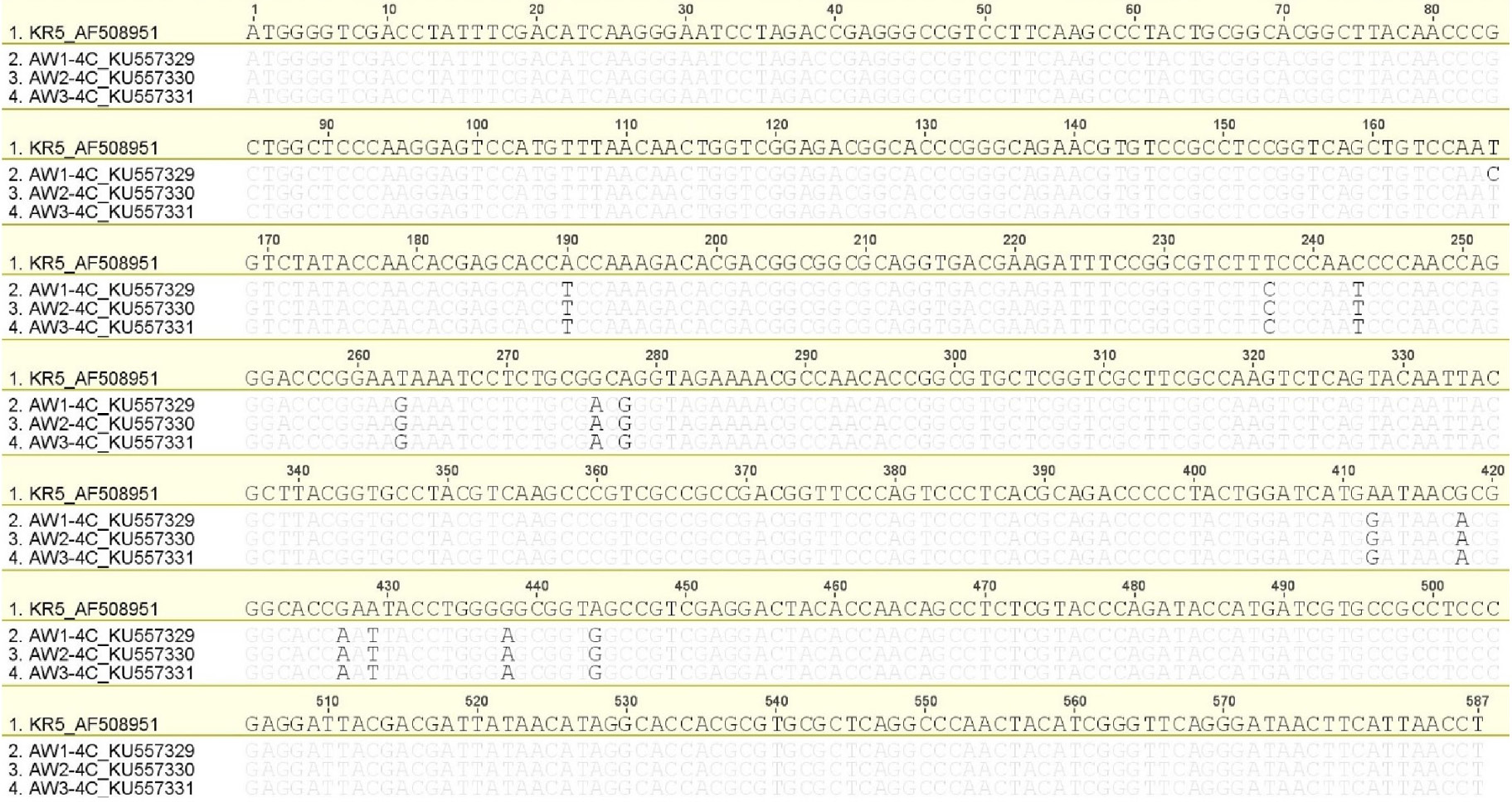
Nucleotide sequence alignment of Pakistani FAdV-4 strains/isolates with reference strain KR5 (AF508951). Differences with reference strain are highlighted.
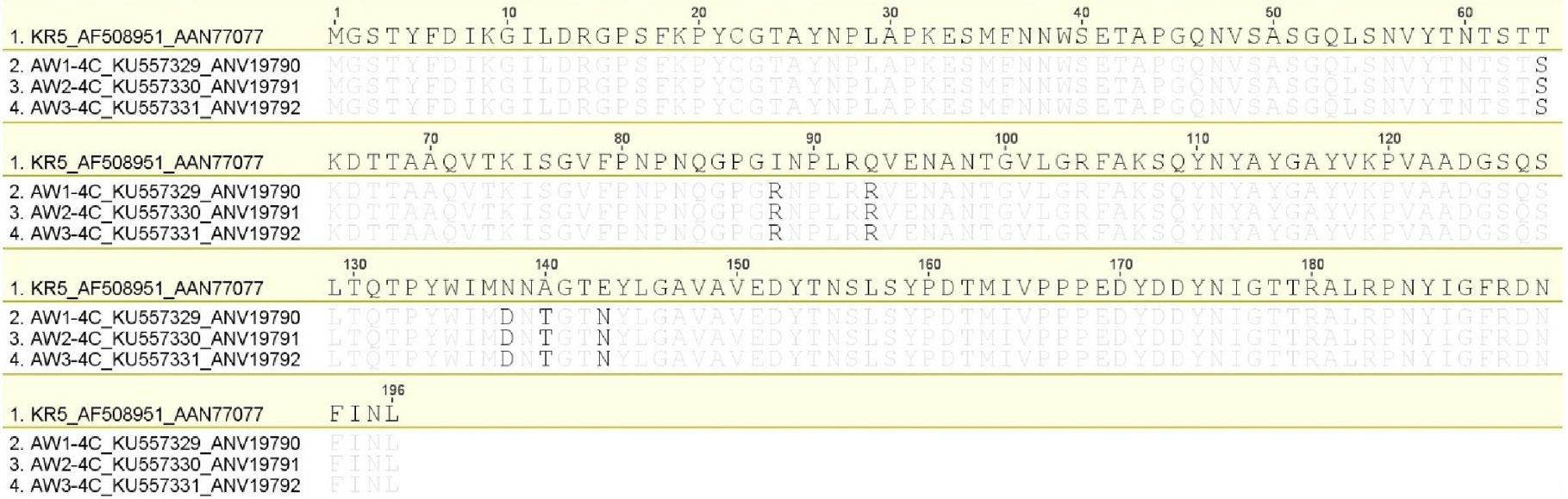
Predicted amino acid sequence alignment of Pakistani FAdV-4 strains/isolates with reference strain KR5 (protein ID AAN77077). Differences with reference strain are highlighted.
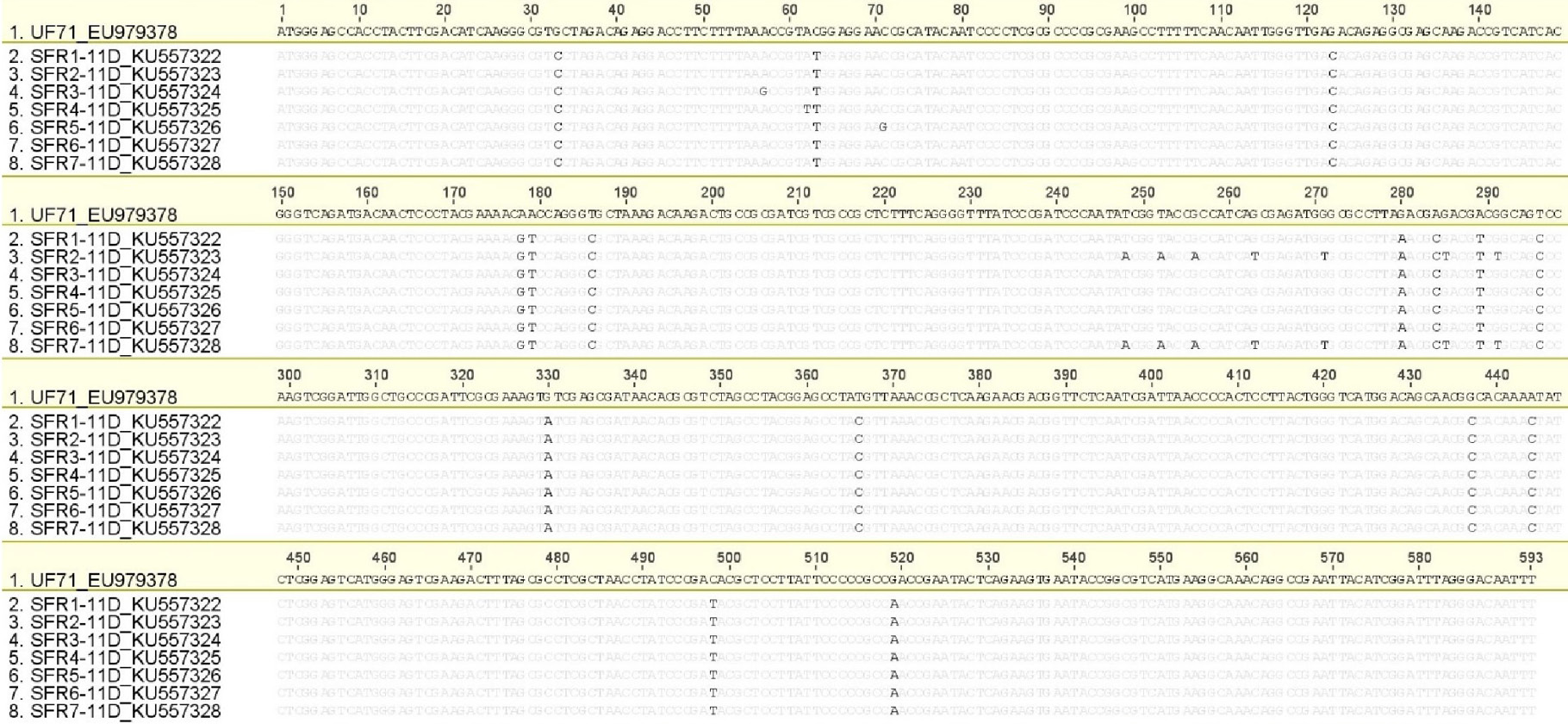
Nucleotide sequence alignment of Pakistani FAdV-11 strains/isolates with reference strain UF71 (EU979378). Differences with reference strain are highlighted.
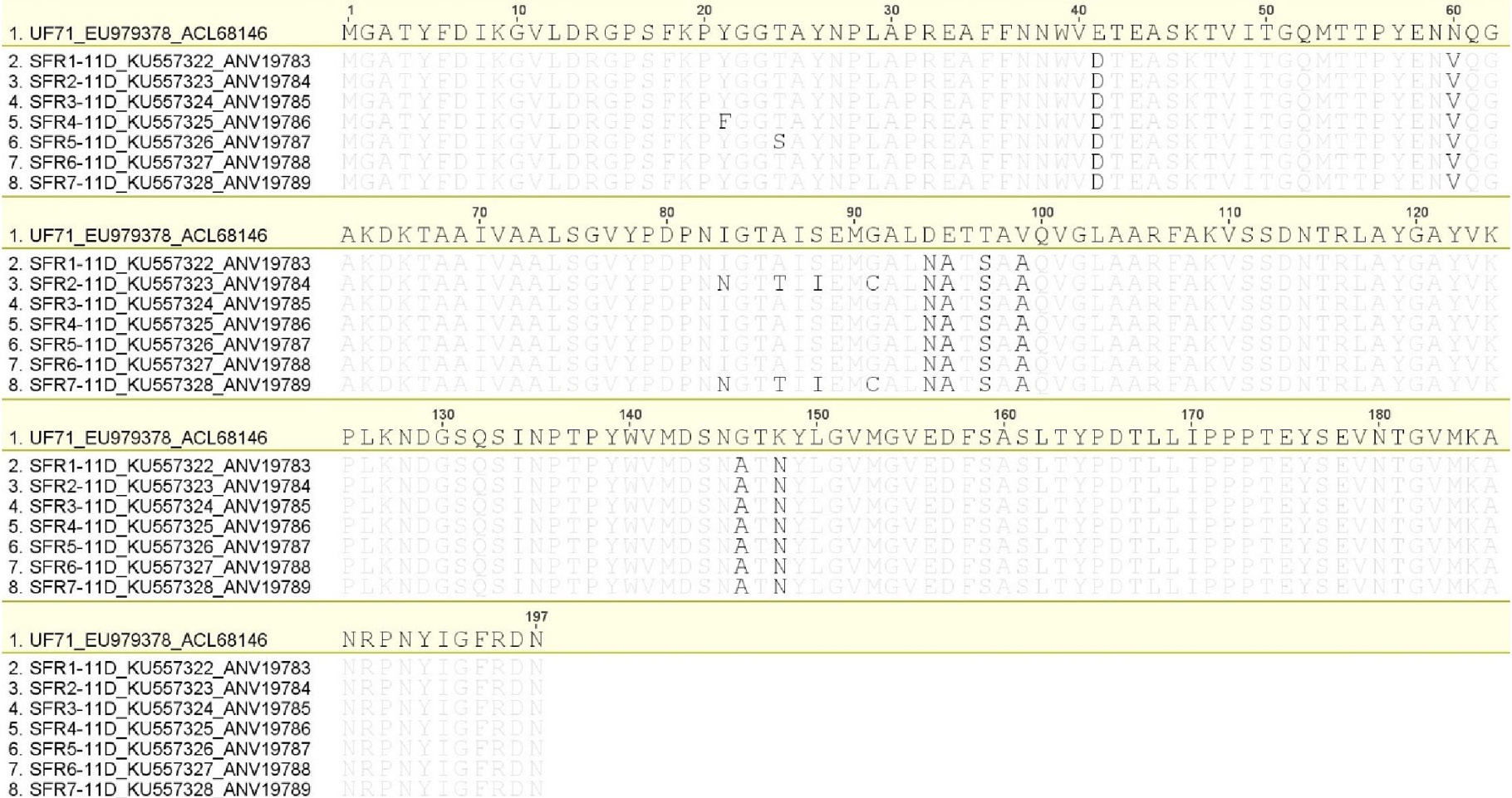
Predicted amino acid sequence alignment of Pakistani FAdV-11 strains/isolates with reference strain KR5 (protein ID ACL68146). Differences with reference strain are highlighted.
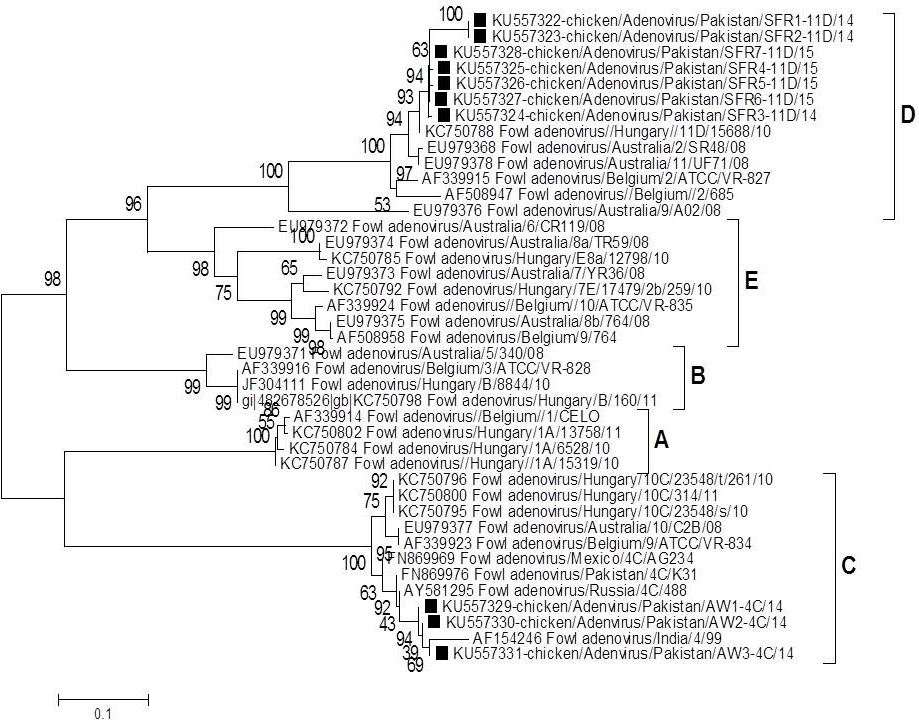
Phylogenetic analysis of the selected fowl adenoviruses (FAdVs) using nucleotide sequences encoding for the hexon gene. The data included Pakistani isolates, indicated with Black Square, and other already published FAdV strains retrieved from GenBank. FAdV strains are classified on species level e.g. species A, species B, species C, species D and species E. The evolutionary history was inferred using the Neighbor-Joining method. Numbers indicate the bootstrap values (1000 replicates). The analysis involved 42 nucleotide sequences.
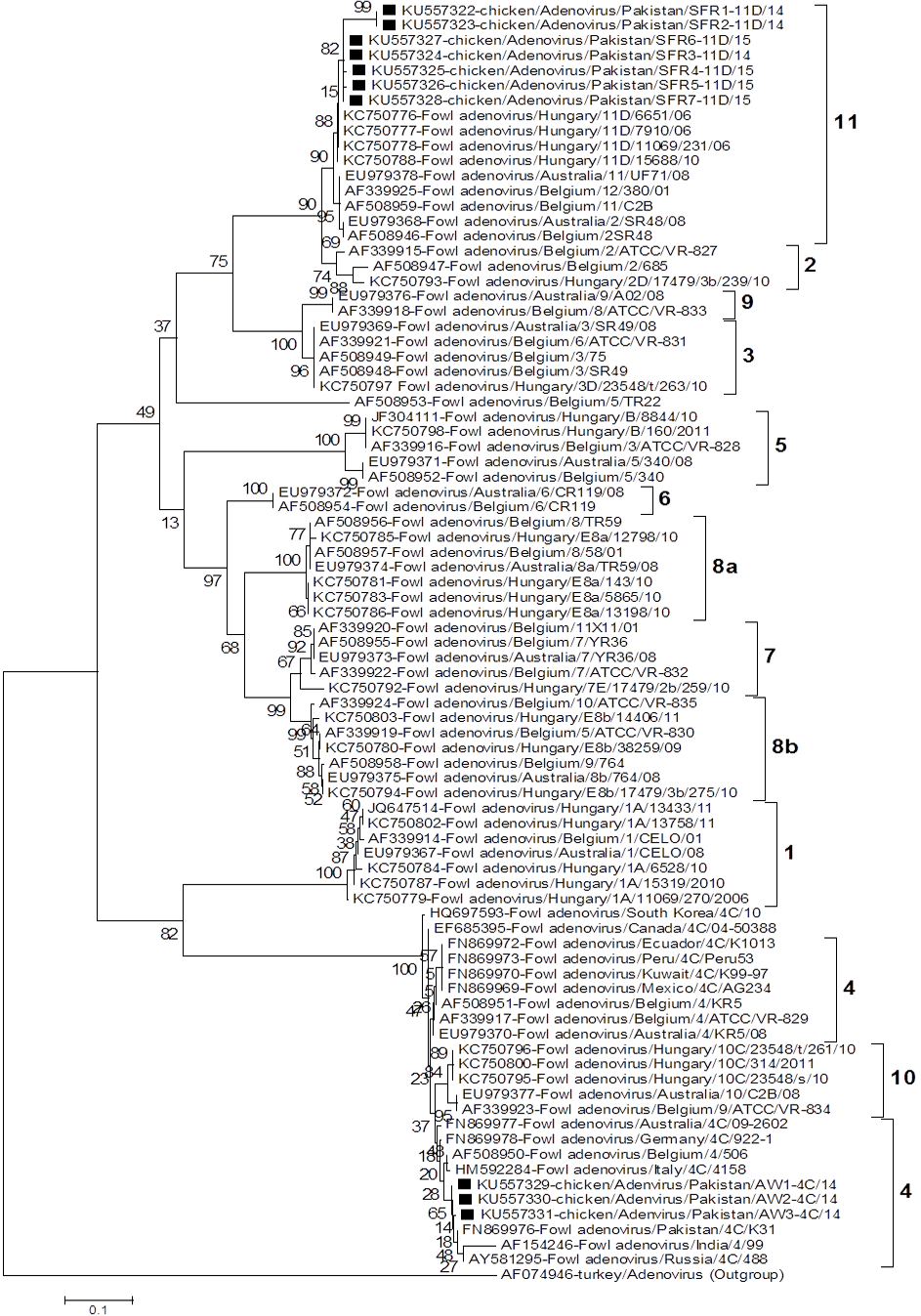
Phylogenetic analysis of the selected fowl adenoviruses (FAdVs) using nucleotide sequences encoding for the hexon gene. The data included Pakistani isolates, indicated with Black Square, and other already published FAdV strains retrieved from GenBank. FAdV strains are classified on serotype level 2,3,9,11 (species D), 5 (species B), 6,7,8a,8b (species E), 1 (species A), 4,10 (species C). The evolutionary history was inferred using the Neighbor-Joining method. The analysis involved 85 nucleotide sequences.
References
- Adair, B.M., Curran, W.L. and McFerran, J.B., 1979. Ultrastructural studies of the replication of fowl adenoviruses in primary cell cultures. Avian Pathol., 8: 133-144. https://doi.org/10.1080/03079457908418336[CrossRef]
- Afzal, M. and Ahmad, I., 1990. Efficacy of an inactivated vaccine against hydropericardium syndrome in broilers. Vet. Rec., 126: 59-60.
- Ali, S., Mehmood, M.S., Hussain, I. and Khan, M.N., 2015. Preparation and evaluation of lyophilized live attenuated vaccine of inclusion body hepatitis hydro-pericardium syndrome (IBH-HPS) against challenge in broiler chickens. Int. J. Agric. Biol., 17: 658-662. https://doi.org/10.17957/IJAB/17.3.14.560[CrossRef]
- Alvarado, I.R., Villegas, P., EI-Attrache, J., Jensen, E., Rosales, G., Perozo, F. and Purvis, L.B., 2007. Genetic characterization, pathogenicity, and protection studies with an avian adenovirus isolate associated with inclusion body hepatitis. Avian Dis., 51: 27-32. https://doi.org/10.1637/0005-2086(2007)051[0027:GCPAPS]2.0.CO;2[CrossRef]
- Anjum, A.D., 1990. Experimental transmission of hydropericardium syndrome and protection against it in commercial broiler chickens. Avian Pathol., 19: 655-660. https://doi.org/10.1080/03079459008418721[CrossRef]
- Cheema, A.H., Ahmad, J. and Afzal, M., 1989. An adenovirus infection of poultry in Pakistan. Rev. Sci. Tech. Off Int. Epizoot., 8: 789-795. https://doi.org/10.20506/rst.8.3.420[CrossRef]
- Choi, K.S., Kye, S.J., Kim, J.Y., Jeon, W.J., Lee, E.K., Park, K.Y. and Sung, H.W., 2012. Epidemiological investigation of outbreaks of fowl adenovirus infection in commercial chickens in Korea. Poult. Sci., 91: 2502-2506. https://doi.org/10.3382/ps.2012-02296[CrossRef]
- Crowle, A.J., 1973. Immunodiffusion. Academic Press, New York. p256
- Domanska-Blicharz, K., Tomczyk, G., Smietanka, K., Kozacynski, W. and Minta, Z., 2011. Molecular characterization of fowl adenoviruses isolated from chickens with gizzard erosions. Poult. Sci., 90: 983-989. https://doi.org/10.3382/ps.2010-01214[CrossRef]
- Hafez, H.M., 2011. Avian adenoviruses infections with special attention to inclusion body hepatitis/hydropericardium syndrome and egg drop syndrome. Pak. Vet. J., 31: 85-92.
- Hall, T.A., 1999. BioEdit: A user-friendly biological sequence alignment editor and analysis program for Windows 95/98/NT. Nucleic Acid Symposium Series No. 41, Oxford University Press, pp. 95-98.
- Harrach, B., Benko, M., Both, G.W., Brown, M., Davison, A.J., Echavarria, M., Hess, M., Jones, M.S., Kajon, A. and Lehmkuhl, H.D., 2012: Family-Adenoviridae. In: Virus taxonomy, 9th ed. (eds. A.M.Q. King, M.J. Adams, E.B. Carstens and E.J. Lefkowitz). Elsevier Academic Press, San Diego, CA, USA, pp. 125-141.
- Hess, M., 2000. Detection and differentiation of avian adenoviruses: A review. Avian Pathol., 29: 195-206. https://doi.org/10.1080/03079450050045440[CrossRef]
- Jabeen, A., Naeem, K., Siddique, N., Abbas, M.A. and Naqvi, S.M.S., 2015. Cloning, sequencing and bioinformatic analysis of hypervariable region of hexon gene of avian adenovirus 4 (AAV4) associated with Angara disease from Pakistan. Int. J. Agric. Biol., 17: 833-837. https://doi.org/10.17957/IJAB/14.0014[CrossRef]
- Jaffery, M.S., 1988. A treatise on Angara disease (hydropericardium pulmonary oedema-hepatonephritis syndrome). J. Pak. Vet. Med. Assoc., 34: 1-33.
- Kajan, G.L., Kecskemeti, S., Harrach, B. and Benko, M., 2013. Molecular typing of fowl adenoviruses, isolated in Hungary recently, reveals high diversity. Vet. Microbiol., 167: 357-363. https://doi.org/10.1016/j.vetmic.2013.09.025[CrossRef]
- Kawamura, H., Shimizu, F. and Tsubahara, H., 1964. Avian adenovirus: Its properties and serological classification. Natl. Inst. Anim. Hlth. Q (Tokyo), 4: 183-193.
- Lee, D.H., Swayne, D.E., Sharma, P., Rehmani, S.F., Wajid, A., Suarez, D.L. and Afonso, C., 2016. H9N2 low pathogenic avian influenza in Pakistan (2012-2015). Vet. Rec. Open, 3: 1-5. https://doi.org/10.1136/vetreco-2016-000171[CrossRef]
- Li, H., YanBo, Y., YanYan, G., YongGang, H., HongWei, X., XiaoHong, W. and ShouChun, W., 2010. Isolation and PCR identification of 12 strains of inclusion body hepatitis virus from clinical broilers. Chinese Vet. Sci., 40: 722-727.
- Mansoor, M.K., Hussain, I., Arshad, M. and Muhammad, G., 2011. Preparation and evaluation of chicken embryo adapted fowl adenovirus serotype-4 vaccine in broiler chickens. Trop. Anim. Hlth. Prod., 43: 331-338. https://doi.org/10.1007/s11250-010-9694-z[CrossRef]
- Mansoor, M.K., Hussain, I., Arshad, M., Muhammad, G., Hussain, M.H. and Mehmood, M.S., 2009. molecular characterization of fowl adenovirus serotype 4 (FAV-4) isolate associated with fowl hydropericardium-hepatitis syndrome in Pakistan. Pakistan J. Zool., 41: 269-276.
- Mase, M., Nakamura, K. and Minami, F., 2012. Fowl adenoviruses isolated from chickens with inclusion body hepatitis in Japan, 2009-2010. J. Vet. med. Sci., 74: 1087-1089. https://doi.org/10.1292/jvms.11-0443[CrossRef]
- McFerran, J.B., Clarke, J.K. and Connor, T.J., 1972. Serological classification of avian adenoviruses. Arch. GesamteVirusforsch., 39: 132-139. https://doi.org/10.1007/BF01241536[CrossRef]
- Mendelson, C., Nothelfer, H.B. and Monreal, G., 1995. Identification and characterization of an avian adenovirus isolated from a ‘spiking mortality syndrome’ field outbreak in broilers on the Delmarva Peninsula, USA. Avian Pathol., 24: 693-706. https://doi.org/10.1080/03079459508419108[CrossRef]
- Meulemans, G., Boschmans, M., Berg, T.P. and Decaesstecker, M., 2001. Polymerase chain reaction combined with restriction enzyme analysis for detection and differentiation of fowl adenoviruses. Avian Pathol., 30: 655-660. https://doi.org/10.1080/03079450120092143[CrossRef]
- Miller, P.J., Haddas, R., Simanov, L., Lublin, A., Rehmani, S.F., Wajid, A., Bibi, T., Khan, T.A., Yaqub, T., Setiyaningsih, S. and Afonso, C.L., 2015. Identification of new sub-genotypes of virulent Newcastle disease virus with potential panzootic features. Infect. Genet. Evol., 29: 216-229. https://doi.org/10.1016/j.meegid.2014.10.032[CrossRef]
- Mittal, D., Jindal, N., Tiwari, A.K. and Khokar, R.S., 2014. Characterization of fowl adenoviruses associated with hydropericardium syndrome and inclusion body hepatitis in broiler chickens. Virus Dis., 25: 114-119. https://doi.org/10.1007/s13337-013-0183-7[CrossRef]
- Nakamura, K., Mase, M., Yamaguchi, S., Shibahara, T. and Yuasa, N., 1999. Pathologic study of specific-pathogen-free chicks and hens inoculated with adenovirus isolated from hydropericardium syndrome. Avian Dis., 43: 414-423. https://doi.org/10.2307/1592638[CrossRef]
- Ojkic, D., Martin, E., Swinton, J., Vaillancourt, J.P., Boulianne, M. and Gomis, S., 2008. Genotyping of Canadian isolates of fowl adenoviruses. Avian Pathol., 37: 95-100. https://doi.org/10.1080/03079450701805324[CrossRef]
- Rabbani, M. and Naeem, K., 1996. In vivo and in vitro evaluation of avian adenovirus isolates from outbreaks of hydropericardium syndrome. In: Proceeding of International Symposium on Adenovirus and Reovirus Infections in Poultry. Rauischholzhausen, Germany, pp. 26-31.
- Rafique, S., Naeem, K., Siddique, N., Abbas, M.A., Shah, A.A., Ali, A., Rahim, A. and Rashid, F., 2018. Determination of genetic variability in Avian Infectious Bronchitis Virus (AIBV) isolated from Pakistan. Pakistan J. Zool., 50: 695-701. http://dx.doi.org/10.17582/journal.pjz/2018.50.2.695.701[Full text][CrossRef]
- Rehmani, S.F., Wajid, A, Bibi, T., Nazir, B., Mukhtar, N., Hussain, A., Lone, N.M., Yaqub, T. and Afonso, C.L., 2015. Presence of virulent Newcastle disease virus in vaccinated chickens in farms in Pakistan. J. clin. Microbiol., 53: 1715-1718. https://doi.org/10.1128/JCM.02818-14[CrossRef]
- Schachner, A., Marek, A., Jaskulska, B., Bilic, I. and Hess, M., 2014. Recombinant FAdV-4 fiber-2 protein protects chickens against hepatitis-hydropericardium syndrome (HHS). Vaccine, 32: 1086-1092. https://doi.org/10.1016/j.vaccine.2013.12.056[CrossRef]
- Schachner, A., Matos, M., Grafl, B., Hess, M., 2018. Fowl adenovirus-induced diseases and strategies for their control – a review on the current global situation. Avian Pathol., 47: 111-126. https://doi.org/10.1080/03079457.2017.1385724[CrossRef]
- Shah, M.S., Ashraf, A., Rehman, M., Khan, M.I. and Qureshi, J.A., 2012. A subunit vaccine against hydropericardium syndrome using adenovirus penton capsid protein. Vaccine, 30: 7153-7156. https://doi.org/10.1016/j.vaccine.2012.10.013[CrossRef]
- Shamim, S., Rehmani, S.F., Siddiqi, A.A., Qureshi, M.A. and Khan, T.A., 2009. Characterization of avian adenovirus type-4 causing hydro-pericardium syndrome in broilers in Karachi, Pakistan. Iran. J. Vet. Res., 10: 38-43.
- Steer, P.A., Kirkpatrick, N.C., O’Rourke, D. and Noormohammadi, A.H., 2009. Classification of fowl adenovirus serotypes by use of high-resolution melting-curve analysis of the hexon gene region. J. clin. Microbiol., 47: 311-321. https://doi.org/10.1128/JCM.00557-09[CrossRef]
- Tamura, K., Stecher, G., Peterson, D., Filipski, A. and Kumar, S., 2013. MEGA6: Molecular evolutionary genetics analysis version 6.0. Mol. Biol. Evol., 30: 2725-2729. https://doi.org/10.1093/molbev/mst197[CrossRef]
- Toro, H., Gonzalez, C., Cerda, L., Morales, M.A., Dooner, P. and Salamero, M., 2002. Prevention of inclusion body hepatitis/hydropericardium syndrome in progeny chickens by vaccination of breeders with fowl adenovirus and chicken anemia virus. Avian Dis., 6: 547-554. https://doi.org/10.1637/0005-2086(2002)046[0547:POIBHH]2.0.CO;2[CrossRef]
- Wajid, A., Dimitrov, K.M., Wasim, M., Rehmani, S.H., Basharat, A., Bibi, T., Arif, S., Yaqub, T., Tayyab, M., Ababneh, M., Sharma, P., Miller, P.J. and Afonso, C.L., 2017. Repeated isolation of virulent Newcastle disease viruses in poultry and captive non-poultry avian species in Pakistan from 2011 to 2016. Prevent. Vet. Med., 142: 1-6. https://doi.org/10.1016/j.prevetmed.2017.04.010[CrossRef]
- Wells, R.J. and Harrigan, K., 1974. A fatal adenovirus infection of broiler chickens: Inclusion body hepatitis. Vet. Rec., 94: 481-482. https://doi.org/10.1136/vr.94.21.481[CrossRef]
- Zhao, J., Zhong, Q., Zhao, Y., Hu, Y.X. and Zhang, G.Z., 2015. Pathogenicity and complete genome characterization of fowl adenoviruses isolated from chickens associated with inclusion body hepatitis and hydropericardium syndrome in China. PLoS One, 11: e0161744. https://doi.org/10.1371/journal.pone.0161744[CrossRef]
- Zsak, L. and Kisary, J., 1984. Grouping of fowl adenoviruses based upon the restriction patterns of DNA generated by BamHI and HindIII. Intervirology, 22: 110-114. https://doi.org/10.1159/000149541[CrossRef]
Services
Article usage statistics
Loading…