This study indicates that the poultry industry is undergoing a fundamental transformation driven by the integration of modern digital technologies such as artificial intelligence and the Internet of Things to enhance production efficiency and decision-making.
It also shows that advances in poultry nutrition, particularly functional feed additives and nanotechnology applications, significantly improve health performance and reduce reliance on antibiotics.
Poultry health management has become more integrated through preventive systems, early diagnosis, and the One Health approach to control emerging diseases.
Overall, the future of poultry production depends on the integration of technology, sustainability, and innovation to achieve efficient and resilient production systems.
Selected from the article's own text.
Abstract
Poultry production is one of the most rapidly expanding sectors in global animal agriculture, playing a crucial role in ensuring food security through the provision of affordable, high-quality animal protein. In recent years, the industry has undergone substantial transformation driven by technological innovation, sustainability requirements, and increasing pressure to improve efficiency while reducing environmental impact. This review aims to provide a comprehensive synthesis of recent advances in modern poultry production systems, with particular emphasis on precision poultry farming, nutritional innovations, health management strategies, environmental sustainability, and future technological and policy-driven developments. The findings indicate that the integration of precision livestock farming technologies, including artificial intelligence, Internet of Things (IoT), and sensor-based monitoring systems, has significantly improved real-time decision-making, disease prediction, and resource-use efficiency. Advances in poultry nutrition, particularly functional feed additives, nanotechnology-based delivery systems, and alternative protein sources, have enhanced growth performance, gut health, and immune function while reducing reliance on antimicrobial agents. Moreover, modern poultry health management has shifted toward integrated approaches combining biosecurity, vaccination, rapid diagnostics, and immune modulation within a One Health framework. Environmental sustainability remains a central concern, with growing adoption of circular economy principles, waste valorization technologies, and environmental monitoring systems to reduce greenhouse gas emissions and improve resource efficiency. Additionally, climate change adaptation strategies, including heat stress mitigation, genetic selection, and nutritional interventions, are essential for maintaining productivity under changing environmental conditions. Future poultry systems are expected to be shaped by the convergence of biotechnology, digital transformation, blockchain traceability, and smart automated farming systems, enabling more resilient and sustainable production models. In conclusion, the future of poultry production lies in the integration of digital intelligence, biological innovation, and environmental sustainability, leading to efficient, climate-resilient, and sustainable poultry systems capable of meeting the growing global demand for animal protein.
Keywords | Artificial intelligence, Climate adaptation, Poultry farming, Sustainability, Waste management, One health
Introduction
Poultry production represents one of the fastest-growing sectors within the global livestock industry and plays a vital role in ensuring food security by providing an affordable and high-quality source of animal protein. The continuous increase in global demand for poultry meat and eggs is driven by population growth, urbanization, rising income levels, and a shift in dietary preferences toward lean animal protein sources ; . As a result, the poultry industry has undergone significant intensification and modernization over recent decades, transitioning from traditional small scale systems to highly integrated, technology-driven production systems.
Modern poultry production is no longer focused solely on maximizing growth performance and feed efficiency; instead, it has evolved into a complex system that integrates animal health, nutrition, environmental control, biosecurity, and sustainability. Precision livestock farming technologies have emerged as a transformative approach in poultry management, enabling real-time monitoring of environmental conditions, bird behavior, and production parameters through sensors, automation systems, and data analytics ; . These innovations have significantly improved decision-making processes, early disease detection, and resource-use efficiency in commercial poultry operations ; .In parallel, substantial advancements have been achieved in poultry nutrition strategies. The use of functional feed additives, including probiotics, prebiotics, organic acids, phytogenic compounds, and nanotechnology-based supplements, has gained considerable attention for enhancing gut health, immune response, and feed utilization efficiency while reducing reliance on antibiotic growth promoters ; . Moreover, recent studies have highlighted the role of bioactive compounds and natural extracts in improving antioxidant status and metabolic performance in broiler chickens, contributing to more sustainable production systems.
Recent microbiological investigations have further emphasized the importance of beneficial intestinal microorganisms in poultry production systems. The identification of novel lactic acid bacteria strains isolated from the intestinal contents of adult chickens provides additional evidence of the critical role of gut microbiota in maintaining intestinal health, enhancing nutrient utilization, and supporting natural disease resistance. These findings support current strategies aimed at enhancing poultry productivity through microbiome-based approaches and reducing dependence on antimicrobial growth promoters .
Recent evidence also indicates that innovative supplementation strategies, such as nano-processed feed ingredients and plant-derived bioactive molecules, can significantly enhance growth performance and feed conversion efficiency in broiler chickens ; .
Despite these advances, poultry production systems continue to face major challenges, including emerging infectious diseases, antimicrobial resistance, heat stress, increasing feed costs, and environmental pollution associated with intensive production systems. Poultry manure management and greenhouse gas emissions have become critical environmental concerns, necessitating the development of sustainable waste recycling strategies such as biofertilizer production and bioenergy generation (FAO, 2022; . In addition, environmental monitoring technologies are essential for maintaining optimal housing conditions and reducing ammonia emissions and thermal stress in commercial poultry houses.
Furthermore, the integration of smart technologies, including artificial intelligence, machine learning, and Internet of Things (IoT)-based systems, has introduced a new paradigm known as Precision Poultry Farming. These systems allow continuous monitoring of flock health, feed and water intake, and environmental parameters, enabling predictive analytics for disease prevention and performance optimization (Banhazi et al., 2020; . Another recent contribution emphasized the importance of integrating nanotechnology-based approaches in poultry production systems to enhance productivity and immune response under environmental stress conditions, further supporting the transition toward smart and sustainable poultry farming systems .In addition to nutritional and technological interventions, biological preparations containing beneficial microbial cultures have demonstrated considerable potential for improving physiological status in poultry. Experimental evidence has shown that manufactured bacterial preparations can positively influence several cellular and biochemical blood parameters in laying hens, suggesting improvements in metabolic activity and overall health status. Such findings support the growing interest in integrating microbial-based supplements into modern poultry management programs as part of sustainable production strategies .
Although numerous studies have explored individual aspects of poultry nutrition, health management, environmental control, and precision farming, there is still a lack of integrated reviews that comprehensively link these components within a unified framework. Most existing literature tends to address these domains separately, limiting the understanding of their interactions in improving overall productivity and sustainability.
Therefore, this review aims to critically evaluate recent advances in modern poultry production systems, with a focus on precision farming technologies, nutritional innovations, poultry health management, environmental monitoring, and sustainable waste management. In addition, it highlights current challenges and future perspectives that will shape the next generation of poultry production systems, contributing to more efficient, resilient, and sustainable global poultry industries.
Conceptual framework of modern poultry production systems
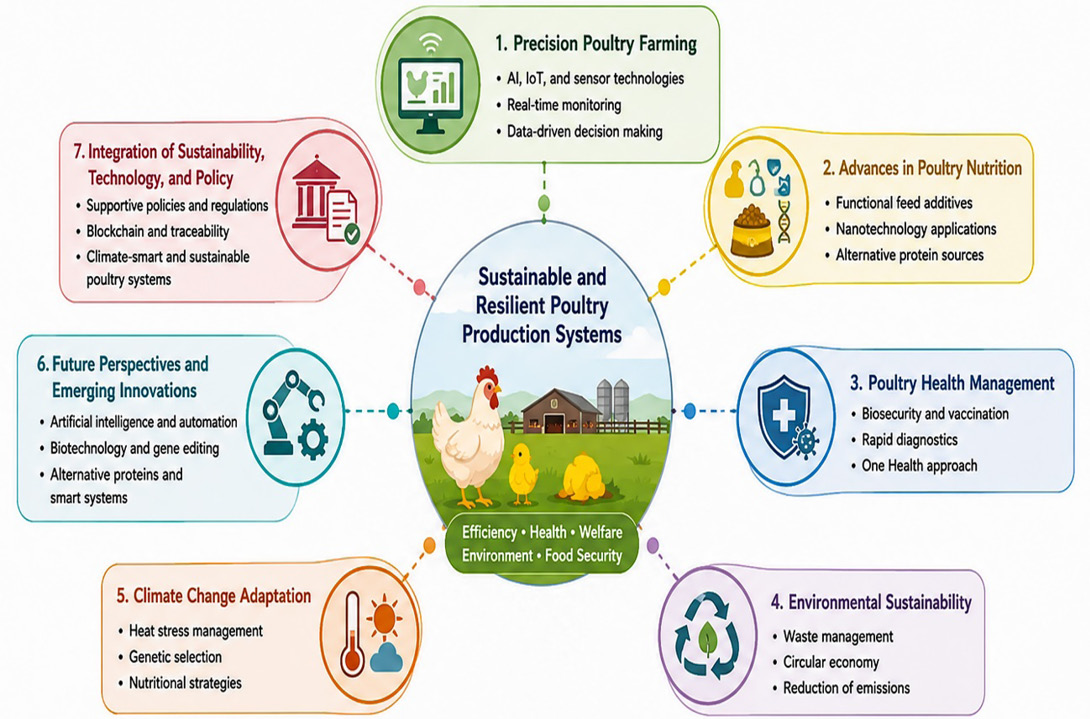
To provide a comprehensive overview of the major themes addressed in this review, Figure 1 illustrates the conceptual framework of modern poultry production systems. The framework integrates seven interconnected dimensions: precision poultry farming and digital transformation; advances in poultry nutrition and feed efficiency; poultry health, immunity, and disease control; environmental sustainability and waste management; climate change adaptation and production resilience; future perspectives and emerging innovations; and the integration of sustainability, technology, and policy. Collectively, these interconnected components demonstrate how multidisciplinary approaches are driving the transition toward more efficient, resilient, climate-smart, and sustainable poultry production systems.
Precision poultry farming and digital transformation
In recent years, the poultry industry has undergone a profound transformation toward Precision Poultry Farming, a modern production paradigm that integrates digital technologies and intelligent systems into farm management. This approach aims to enhance production efficiency, improve flock health, and optimize resource utilization ; Banhazi et al., 2012). Precision poultry farming is based on the integration of sensor technologies, Internet of Things (IoT) systems, big data analytics, and artificial intelligence (AI), enabling continuous and real-time monitoring of environmental conditions, bird behavior, and production performance indicators ; .
This digital transformation has significantly improved decision-making processes by allowing farmers and production managers to continuously monitor key environmental parameters such as temperature, humidity, ammonia concentration, and carbon dioxide levels. Such
monitoring helps reduce heat stress, enhance animal welfare, and maintain optimal housing conditions in poultry facilities . Recent innovations in precision poultry farming have expanded beyond conventional sensor networks to include portable smart monitoring devices designed for real-time environmental assessment. A notable development is the fabrication of intelligent alarm systems capable of continuously monitoring environmental variables associated with respiratory health risks in poultry houses. Such technologies provide early warning signals when environmental conditions deviate from acceptable thresholds, enabling rapid management interventions that improve bird welfare, reduce respiratory disorders, and enhance overall production efficiency. These developments further demonstrate the growing role of smart monitoring systems in modern data-driven poultry production . In addition, precise monitoring of feed and water intake enables early detection of abnormal patterns that may indicate disease onset or production inefficiencies (Banhazi et al., 2012).
One of the most important applications of precision poultry farming is the use of machine learning models for early disease prediction. These systems can identify subtle changes in behavioral and physiological parameters before clinical symptoms appear, thereby improving biosecurity measures and reducing reliance on late therapeutic interventions . Moreover, smart camera systems and automated behavior recognition technologies have become powerful tools for assessing poultry health, allowing objective evaluation of activity levels, feeding behavior, growth patterns, and social interactions .
Recent studies indicate that the integration of smart technologies in poultry production systems leads to significant improvements in feed conversion ratio, mortality reduction, and overall production efficiency compared to conventional management systems . Furthermore, these technologies contribute to environmental sustainability by reducing resource wastage and minimizing emissions associated with intensive poultry production systems (Banhazi et al., 2020).
However, despite these advantages, several challenges still limit the widespread adoption of precision poultry farming systems, including high initial investment costs, the need for advanced technical infrastructure, and limited technical expertise among small- and medium-scale producers . Nevertheless, global trends clearly indicate that poultry production is moving toward fully automated and integrated digital farm management systems.
Therefore, precision poultry farming represents not only a technological advancement but also a fundamental shift in livestock production philosophy, transitioning from reactive management approaches to predictive and data-driven decision-making systems. This shift is expected to play a central role in shaping the future of sustainable, efficient, and resilient poultry production systems worldwide.
Advances in poultry nutrition and feed efficiency
Poultry nutrition has undergone significant advancements in recent years, shifting from conventional approaches focused primarily on meeting basic nutritional requirements toward precision feeding strategies aimed at improving production efficiency, gut health, and sustainability. One of the key objectives in modern poultry production systems is improving feed conversion ratio (FCR), as it directly influences economic profitability and environmental sustainability ; ; Yuan et al., 2020). In addition, improved nutrient utilization is now recognized as a critical factor in reducing production costs and minimizing the environmental footprint of poultry farming.
The use of functional feed additives such as probiotics, prebiotics, organic acids, and phytogenic compounds has played a crucial role in modulating gut microbiota, enhancing nutrient absorption, and improving growth performance in poultry ; ; . These additives have also been shown to strengthen immune responses, improve intestinal integrity, and reduce the incidence of gastrointestinal diseases. Recent advances in functional nutrition have further expanded the application of nano-biological feed additives in laying hen production. Nano-synbiotic formulations combining beneficial probiotic bacteria with bioactive plant-derived carriers have demonstrated significant improvements in egg production, egg mass, feed conversion ratio, and economic feed efficiency. These benefits are largely attributed to enhanced gastrointestinal function, improved nutrient utilization, and better modulation of the intestinal microbiota, highlighting the growing importance of nano-enabled nutritional strategies in sustainable poultry production systems .
In recent years, nanotechnology-based feed delivery systems have emerged as a promising approach to enhance nutrient bioavailability and targeted delivery within the gastrointestinal tract, resulting in improved feed utilization efficiency and growth performance ; Hosseini et al., 2018). Additionally, plant-derived bioactive compounds have gained increasing attention as natural alternatives to antibiotic growth promoters, supporting global efforts to reduce antimicrobial resistance. The development of natural dietary supplements has emerged as an important strategy for improving poultry nutrition while reducing dependence on synthetic feed additives. Recent research demonstrated that formulations combining quail egg components with arugula (Eruca sativa) leaves possess valuable nutritional and bioactive properties that may support physiological performance and health status in poultry, Such natural feed supplements represent promising alternatives within sustainable nutrition programs aimed at enhancing productivity, health, and feed utilization efficiency through biologically active ingredients .
The relationship between nutrition and immunity has also become a central focus in poultry research. Proper nutritional strategies enhance immune competence and resilience against environmental stressors such as heat stress and infectious diseases . Bioactive compounds such as IgY antibodies, omega-3 fatty acids, and antioxidant-rich plant extracts have been investigated for improving both health status and productive performance.
Despite these advancements, poultry nutrition still faces several challenges, including fluctuations in feed ingredient prices, climate-induced variability in feed resources, and the need for precision feeding systems tailored to production stages. Consequently, precision nutrition integrates real-time data analytics and nutrient modeling to optimize feed efficiency and sustainability .Overall, poultry nutrition is progressively evolving toward data-driven, precision-based feeding systems that support sustainable and efficient poultry production.
Poultry health, immunity and disease control
Poultry health represents a fundamental pillar in modern production systems, directly influencing productivity, product quality, and overall industry sustainability. With the intensification of poultry farming systems worldwide, the control of infectious diseases has become one of the most critical challenges facing the industry. Viral, bacterial, and parasitic diseases such as Newcastle disease and avian influenza continue to pose significant economic and production risks if not properly managed (OIE, 2021).
Disease prevention strategies have evolved from conventional treatment approaches to integrated systems based on biosecurity measures, advanced vaccination programs, and immune system enhancement through functional nutrition. Nutrition-based immunity has emerged as a key concept in poultry science, demonstrating that optimized dietary strategies can significantly improve immune responses and reduce disease susceptibility (Gadde et al., 2017; . In addition, strict biosecurity protocols and continuous farm hygiene management are now considered essential pillars in modern poultry disease prevention systems (FAO, 2022).
In recent years, rapid diagnostic technologies have become essential tools for early detection of pathogens, enabling timely intervention before disease outbreaks spread within flocks. Molecular diagnostic tools such as PCR and ELISA have significantly improved detection accuracy and response speed. The increasing adoption of automated laboratory technologies has also improved the quality and efficiency of health assessment programs in poultry production. Comparative evaluations between traditional and automated blood analysis methods have demonstrated that automated systems can provide higher consistency, improved analytical accuracy, and enhanced reliability for measuring biochemical indicators in broiler chickens. These advances support more precise health monitoring and contribute to evidence-based management decisions by providing rapid and dependable diagnostic information under commercial production conditions . In addition, blood biomarkers are increasingly used to assess immune status and physiological health in poultry, providing objective indicators for improved health management strategies ; . Recent studies have further highlighted the value of integrating productive and physiological indicators when assessing flock health. In ISA Brown laying hens, body weight categories were shown to be significantly associated with reproductive hormone concentrations, serum biochemical profiles, and productive performance during the mid-laying period, indicating that body weight serves as an important physiological indicator of metabolic balance and reproductive efficiency. Monitoring body weight together with blood biochemical and hormonal parameters can therefore improve health assessment and management decisions in commercial laying flocks . Accurate assessment of blood biochemical parameters is essential for evaluating health status, nutritional balance, and physiological responses in poultry production systems. Recent investigations have demonstrated that pre-analytical factors, including blood collection sites and repeated freezing-thawing cycles of serum samples, may significantly influence the reliability of biochemical measurements. These findings highlight the importance of standardized sampling and laboratory handling procedures to ensure accurate health monitoring and evidence-based decision-making in poultry management programs .
Furthermore, innovative immunological approaches such as egg yolk antibody (IgY) technology have emerged as promising alternatives to conventional antibiotics. Recent studies have provided additional evidence supporting the application of egg yolk-derived immunoglobulins (IgY) as effective immunomodulatory agents in poultry production. Supplementation with both specific and non-specific IgY extracted from Lohmann egg yolk has been shown to enhance immune responsiveness in broiler chickens and improve their ability to resist health challenges under commercial production conditions. These findings further strengthen the potential of IgY-based strategies as sustainable alternatives to antibiotic-dependent disease control programs while contributing to improved flock health and productivity . IgY-based strategies have demonstrated effectiveness in reducing microbial load and enhancing disease resistance without disrupting gut microbiota balance, thereby supporting global efforts to reduce antimicrobial usage in livestock production systems ; . These developments are particularly important in addressing the growing challenge of antimicrobial resistance in animal agriculture (WHO, 2020).
Despite these advancements, the poultry industry continues to face significant challenges, including the emergence of antimicrobial-resistant pathogens, climate-driven shifts in disease patterns, and increased disease pressure in intensive production systems. Furthermore, global poultry trade and movement of live birds increase the risk of rapid disease transmission across regions, making surveillance systems and early warning mechanisms increasingly essential . Therefore, poultry health should no longer be viewed as a purely therapeutic discipline, but rather as an integrated system that combines nutrition, management, environment, and advanced technologies within a holistic One Health framework, linking animal, human, and environmental health in a sustainable production model .
Environmental sustainability and waste management in poultry production
Recent comprehensive reviews have emphasized that achieving sustainable poultry production requires the integration of technological innovation, environmental stewardship, resource-use efficiency, and resilience to emerging global challenges. Future poultry production systems are expected to rely increasingly on precision farming technologies, circular resource management, climate-resilient production practices, and multidisciplinary approaches that simultaneously improve productivity, animal welfare, environmental sustainability, and economic viability. These integrated strategies provide a comprehensive framework for developing more sustainable and resilient poultry industries capable of meeting the growing global demand for animal protein while minimizing environmental impacts .
Environmental sustainability in poultry production has become a critical global concern due to the increasing environmental burden associated with intensive livestock systems. Rapid expansion of poultry production has led to higher levels of manure accumulation, ammonia and greenhouse gas emissions, and potential contamination of soil and water resources when waste is not properly managed ; . These environmental pressures highlight the need for integrated and efficient waste management strategies that balance productivity with ecological protection.
Poultry manure management is a central component of sustainable production systems and involves several technological approaches, including composting, aerobic and anaerobic digestion, and biofertilizer production. These processes convert organic waste into valuable outputs such as organic fertilizers and renewable energy in the form of biogas, thereby reducing environmental pollution and improving resource efficiency ; . Beyond their application in biofertilizer and bioenergy production, poultry wastes can also serve as valuable raw materials for the development of bioactive products with antimicrobial properties. Recent research demonstrated the successful production of antibacterial compounds derived from poultry manure combined with Ziziphus spina-christi leaves, highlighting an innovative approach for waste valorization and resource recovery. Such technologies contribute to environmental sustainability by transforming agricultural waste into value-added products while simultaneously reducing environmental pollution risks associated with poultry manure accumulation . In addition, anaerobic digestion has gained increasing attention as a dual-benefit technology that reduces methane emissions while producing renewable energy. Recent technological developments have further enhanced the efficiency of poultry waste treatment through the integration of microbiological and digital innovations. A notable example is the development of bacterial starter cultures combined with digitally controlled bio-fermenter systems for poultry manure processing. Such systems have demonstrated considerable potential for improving anaerobic digestion efficiency and increasing methane (CH₄) production as a renewable energy source. These advances support sustainable waste management strategies by converting poultry manure into valuable bioenergy resources while simultaneously reducing environmental pollution associated with waste accumulation .
Recently, the circular economy concept has been widely adopted as a sustainable framework for poultry waste management. This approach emphasizes resource recovery, waste minimization, and recycling of nutrients back into agricultural systems, thereby closing the production loop. Evidence suggests that circular economy strategies in livestock systems can significantly reduce environmental footprints while improving economic efficiency (Ellen MacArthur Foundation, 2019; Nasir et al., 2020).The concept of waste valorization has recently expanded beyond energy and fertilizer production to include the manufacture of environmentally friendly sanitation products. Research on converting organic food residues into natural cleaning and disinfecting agents has demonstrated promising efficiency and sustainability benefits. Such approaches support circular economy principles by reducing waste disposal burdens while generating useful products that may contribute to improved hygiene management in agricultural and livestock production systems. These innovations further illustrate the potential of integrating waste recycling technologies into sustainable poultry production frameworks . Environmental monitoring technologies also play a crucial role in modern poultry housing systems by continuously assessing air quality parameters such as ammonia concentration, carbon dioxide levels, humidity, and particulate matter. The integration of smart sensors and real-time monitoring systems enables early detection of environmental risks and supports better ventilation and climate control decisions, ultimately improving both bird welfare and environmental performance ; . Overall, sustainable poultry production increasingly depends on the integration of waste valorization technologies, circular economy principles, and precision environmental monitoring systems to minimize ecological impacts while maintaining high productivity levels.
Climate change adaptation and poultry production resilience
Climate change has emerged as one of the most significant challenges affecting modern poultry production systems, particularly due to its direct and indirect impacts on bird health, productivity, and welfare. Increasing ambient temperatures, prolonged heat waves, and humidity fluctuations negatively affect feed intake, metabolic efficiency, immune competence, and growth performance in broiler chickens, resulting in considerable economic losses in intensive production systems ; . These impacts are expected to intensify as global warming continues, making climate adaptation a central priority in poultry science.
Heat stress management has therefore become a critical focus in modern poultry systems, with increasing adoption of environmental control technologies such as evaporative cooling systems, tunnel ventilation, insulation improvements, and automated climate monitoring systems. These technologies help maintain thermal comfort zones within poultry houses and reduce physiological stress responses associated with elevated environmental temperatures (Uyanga et al., 2021). Furthermore, precision environmental control systems now allow real-time adjustments of ventilation and cooling based on sensor data, improving both productivity and animal welfare. In addition, genetic selection for heat-tolerant poultry strains has gained increasing attention as a long-term adaptation strategy. Indigenous and slow-growing breeds have demonstrated greater resilience to thermal stress compared to highly select commercial strains, making them valuable genetic resources for sustainable breeding programs under climate change scenarios (Hristakieva et al., 2014; . Advances in quantitative genetics and genomic selection are also supporting the identification of heat-resistance traits for future breeding improvements.
Nutritional strategies have also been widely explored to mitigate the effects of heat stress in poultry. These include dietary supplementation with antioxidants, electrolytes, vitamins (especially vitamin C and E), amino acids such as methionine, and phytogenic compounds that help regulate oxidative stress and maintain physiological homeostasis under harsh environmental conditions (Sahin et al., 2001; . Such interventions play a key role in improving immune response, reducing oxidative damage, and stabilizing production performance during heat stress events. Overall, climate-resilient poultry production requires an integrated and multidisciplinary approach combining environmental management, genetic improvement, and precision nutrition strategies. The integration of climate-smart technologies and adaptive management practices is essential to ensure sustainable productivity and resilience of poultry systems under future climate change scenarios.
Future perspectives and emerging innovations in poultry systems
The future of poultry production is expected to be shaped by rapid technological advancements, sustainability-driven policies, and increasing global demand for safe and efficient animal protein production. One of the most promising directions is the full integration of artificial intelligence (AI), big data analytics, blockchain technologies, and digital traceability systems to create transparent, secure, and fully automated poultry supply chains ; . These systems are expected to improve food safety, traceability, and decision-making efficiency across the entire production chain.
Precision poultry farming is expected to evolve into highly autonomous systems where real-time data from sensors, cameras, and wearable devices will be continuously analyzed using machine learning and predictive algorithms. This will enable optimized feeding strategies, early disease detection, and precise environmental control with minimal human intervention. Such developments are expected to significantly improve productivity while reducing labor requirements, resource wastage, and environmental impacts ; .
Another emerging trend is the development of alternative protein sources for poultry feed, including insect meal, algae-based proteins, single-cell proteins, and fermented microbial biomass. These alternatives are gaining attention as sustainable substitutes for conventional feed ingredients such as soybean and maize, which are associated with environmental pressures and price volatility ; . Their adoption is expected to strengthen feed security and reduce the ecological footprint of poultry production systems.
Furthermore, advances in biotechnology and gene-editing technologies such as CRISPR-Cas9 are expected to play a transformative role in poultry breeding. These tools offer opportunities to improve disease resistance, feed efficiency, and environmental adaptability while accelerating genetic progress compared to conventional breeding methods . However, their application requires careful ethical regulation and biosafety considerations.
Sustainability will remain a central pillar in future poultry systems, with increasing emphasis on circular economy principles, carbon footprint reduction, renewable energy integration, and resource-efficient production models. The integration of energy recovery from waste, precision feeding systems, and automated environmental control is expected to define next-generation poultry production systems that are both economically viable and environmentally responsible.
Overall, the future of poultry production lies in the convergence of digital innovation, biotechnology, and environmental sustainability, leading to highly efficient, resilient, and climate-smart production systems capable of meeting future global food demands.
Integration of sustainability, technology, and policy in poultry production systems
The future development of poultry production systems depends on the effective integration of sustainability principles with technological innovation and supportive governance frameworks. As the sector continues to expand globally, there is an increasing need to ensure that productivity gains are achieved without compromising environmental integrity, animal welfare, or public health. This requires a systems-based approach that links farm-level technologies with broader institutional, market, and policy structures to enable sustainable transformation across the poultry value chain (FAO, 2023; .
Digital transformation and precision livestock farming are expected to play a central role in this integration by enabling real-time decision-making, improved resource efficiency, and reduced environmental emissions through data-driven management systems ; . In addition, interoperability between farm sensors, cloud computing platforms, and decision-support systems is becoming increasingly important for ensuring seamless data flow and improved operational efficiency across production stages.
At the same time, sustainability-oriented frameworks such as circular agriculture, regenerative livestock systems, and nutrient recycling models are gaining importance as tools for minimizing waste and improving resource recovery within poultry production systems (Ellen MacArthur Foundation, 2019; . Sustainable production systems increasingly depend on the development of environmentally friendly technologies capable of recovering valuable resources from industrial and agricultural wastes. Recent advances in biotechnological approaches, including the use of bio surfactants and eco-friendly recovery processes, demonstrate the potential of biological solutions for reducing environmental contamination and improving resource efficiency. Although such technologies have been primarily explored in industrial waste management, their underlying principles provide valuable insights for future poultry production systems, particularly in the development of cleaner production models, waste reduction strategies, and integrated circular economy approaches . These approaches emphasize closing nutrient loops by returning organic waste to agricultural systems, thereby reducing dependence on synthetic inputs and lowering environmental burdens.
Policy interventions are also increasingly important in shaping sustainable poultry production, particularly through regulations targeting greenhouse gas emissions, antimicrobial usage, and animal welfare standards. Such policies encourage producers to adopt cleaner production technologies and more responsible management practices aligned with environmental and public health goals ; . In parallel, sustainability reporting frameworks and environmental auditing systems are pushing agricultural industries toward greater transparency, accountability, and performance benchmarking (FAO, 2023).
Looking toward the future, the integration of artificial intelligence, blockchain-based traceability systems, and climate-smart agriculture strategies is expected to redefine poultry production systems. These innovations will enhance supply chain transparency, improve disease surveillance, and optimize production efficiency while reducing environmental impacts and food safety risks ; . Consequently, poultry production is likely to evolve into highly connected, intelligent, and climate-resilient systems that align economic productivity with environmental sustainability and global food security objectives.
Conclusion
This study indicates that the poultry industry is undergoing a fundamental transformation driven by the integration of modern digital technologies such as artificial intelligence and the Internet of Things to enhance production efficiency and decision-making. It also shows that advances in poultry nutrition, particularly functional feed additives and nanotechnology applications, significantly improve health performance and reduce reliance on antibiotics.
Poultry health management has become more integrated through preventive systems, early diagnosis, and the One Health approach to control emerging diseases. Environmental sustainability is increasingly achieved through circular economy principles and waste management strategies that reduce environmental impacts. Climate change adaptation remains a critical factor in ensuring production stability under variable environmental conditions. Overall, the future of poultry production depends on the integration of technology, sustainability, and innovation to achieve efficient and resilient production systems.
Acknowledgement
The authors sincerely acknowledge the Iraqi University, University of Thi-Qar, University of Basrah, Al-Esraa University, Al-Muthanna Agriculture Directorate/Ministry of Agriculture, and University of Wasit for their academic support and for providing access to library resources and references that contributed to the completion of this manuscript.
Novelty Statement
The novelty of this review lies in providing an integrated framework based on the latest studies published in reputable international journals, linking precision and digital poultry farming, food innovations, poultry health management, environmental sustainability, climate change adaptation, and future policy perspectives within a unified approach towards more efficient, resilient, and sustainable poultry production systems.
Author’s Contribution
Ibrahim M. Katie, Nawras I. Ashour, Sabah M. Al-Shatty, and Hayder D. Flayyih contributed to the preparation and writing of the original draft of the manuscript. Hydar F. Al-Hassani and Afrah Al-Rikabi were responsible for correspondence with the journal and publisher throughout the submission and revision process. Ahmed F. Kadhim and Mohammed S. Eukaal contributed to data collection and organization, manuscript formatting, critical review, and revision of the manuscript. All authors reviewed and approved the final version of the manuscript and agreed to be accountable for its content.
Generative AI and AI assisted technology statement
The authors declare that no generative AI and AI assisted technology was used in the creation of this manuscript.
Conflict of interest
The authors have declared no conflict of interest.
Figures
Figure 1:.
Integrated conceptual framework of modern poultry production systems.
References
Abaas NM, Hussein HS, Shakeer ZA, Kamel SS (2026). Effect of functional feeding strategies based on nano-biological additives on the productive performance of laying hens. Sarhad J. Agric., 42(2): 878–885. https://doi.org/10.17582/journal.sja/2026/42.2.878.885[Full text][CrossRef]
Abd El-Ghany WA (2019). Antibiotic growth promoters in poultry nutrition: A review. J. Adv. Vet. Res., 9(2): 59–65.
Abd El-Hack ME, El-Saadony MT, Saad AM, Salem HM, Ashry NM, Abo Ghanima MM, Shukry M, Taha AE, El-Tahan AM, AbuQamar SF, El-Tarabily KA (2022). Functional feed additives in poultry nutrition. Poult. Sci., 101(2): 101–115. https://doi.org/10.1016/j.psj.2021.101115[CrossRef]
Akhavan-Salamat H, Ghasemi HA (2021). Probiotics and gut health in poultry. Anim. Feed Sci. Technol., 271: 114756. https://doi.org/10.1016/j.anifeedsci.2020.114756[CrossRef]
Alabresm A, Madan ZA, Saleh SM, Al-Imara EA, Al-Buzayd HY, Aziz NM, Al-Shatty SM, Al-Salhi AA, Albaaj AK, Lead JR (2026). Sustainable and eco-friendly method for oil recovery from refinery sludge using froth flotation and biosurfactants. Environ. Asia, 19(2): 47.
Al-Maamouri TA, Alameer KKA, Hamzah ZR, Awadh GE, Misjel NR (2026). Sustainable poultry production systems: Integrating innovation, resilience, and future challenges. J. Anim. Health Prod., 14(3): 1019–1025. https://doi.org/10.17582/journal.jahp/2025/14.3.1019.1025[Full text][CrossRef]
Al-Saeedi MKI, Al-Jebory HH, Ajafar M (2023). Nanotechnology applications in poultry production under environmental stress. J. Anim. Health Prod., 28(2): 361–366.
Alsalhi A (2026a). Formulation and evaluation of a natural dietary supplement from quail egg and arugula leaves. Innov. Food Technol., 13(3): 263–270.
Al-Salhi A, Al-Shatty S, Al-Imara E, Al-Rikabi A (2025b). Manufacturing a bacterial starter and a digital bio fermenter to treat poultry manure and produce methane gas, CH4. An-Najah Univ. J. Res. A (Natl. Sci.), 40(2): 159–164. https://doi.org/10.35552/anujr.a.39.3.2696[CrossRef]
Al-Salhi AA (2025). Effect of blood collection site and samples freezing cycles on the biochemical parameters of poultry blood serum. J. Anim. Health Prod., 13(4): 1299–1304. https://doi.org/10.17582/journal.jahp/2025/13.4.1299.1304[Full text][CrossRef]
Al-Salhi AA (2026b). Association of body weight categories with reproductive hormones, serum biochemical profile, and productive performance in ISA Brown laying hens during the mid-laying period. J. Poult. Sci. Avian Dis. Available at: https://jpsad.com/index.php/jpsad/article/view/211
Al-Salhi AA (2026c). Enhancing immune response in broilers through supplementation with specific and non-specific IgY extracted from Lohmann egg yolk. J. Anim. Health Prod., 14(1): 205–211. https://doi.org/10.17582/journal.jahp/2026/14.1.205.211[Full text][CrossRef]
Al-Salhi AA, Al-Shareefi AL, Shanshool NJ, Kamel SS (2026b). Comparative study of biochemical accuracy, reliability and relevancy between traditional and automated methods for blood analyses in broiler chickens. Sarhad J. Agric., 42(3): 1088–1096. https://doi.org/10.17582/journal.sja/2026/42.3.1088.1096[Full text][CrossRef]
Al-Salhi AA, Al-Shatty SM (2023). Effect of the manufactured bacterial preparation on some cellular and biochemical blood characteristics of laying hens. An-Najah Univ. J. Res. A (Natl. Sci.), 37(1): 33–38. https://doi.org/10.35552/anujr.a.37.1.2096[CrossRef]
Al-Salhi AA, Al-Shatty SM, Al-Imara EA (2025a). Production of antibacterial from poultry manure and Ziziphus spina-christi leaves. IOP Conf. Ser. Earth Environ. Sci., 1549(1): 012051. https://doi.org/10.1088/1755-1315/1549/1/012051[CrossRef]
Al-Salhi AA, Al-Shatty SM, Al-Imara EA, Al-Khfaji QJ (2022). A new record of lactic acid bacteria strains from the contents of adult chicken intestines. Basrah J. Agric. Sci., 35(2): 199–222. https://doi.org/10.37077/25200860.2022.35.2.14[CrossRef]
Al-Salhi AA, Naser MJ, Majeed HA (2026a). Design, fabrication and evaluation of a portable smart alarm device for monitoring environmental conditions affecting respiratory health in poultry. Sarhad J. Agric., 42(2): 760–768. https://doi.org/10.17582/journal.sja/2026/42.2.760.768[Full text][CrossRef]
Banhazi TM, Lehr H, Black JL, Crabtree H, Schofield P, Tscharke M, Berckmans D (2012). Precision livestock farming systems for poultry production. Int. J. Agric. Biol. Eng., 5(3): 1–9. https://doi.org/10.3965/j.ijabe.20120503.001[CrossRef]
Berckmans D (2022). Precision livestock farming technologies and future perspectives. Anim. Front., 12(1): 12–19. https://doi.org/10.1093/af/vfac003[CrossRef]
Calder PC, Kapsokefalou M (2021). Nutrition and immunity interactions. Nutrients, 13(6): 2054. https://doi.org/10.3390/nu13062054[CrossRef]
Dawkins MS, Cain R, Roberts SJ (2022). Environmental control and welfare in commercial poultry housing systems. Poult. Sci., 101(4): 101–110. https://doi.org/10.1016/j.psj.2021.101110[CrossRef]
Destoumieux-Garzón D, Mavingui P, Boetsch G, Boissier J, Darriet F, Duboz P, Fritsch C, Giraudoux P, Le Roux F, Morand S, Paillard C, Pontier D, Sueur C, Voituron Y (2018). The One Health concept: 10 years old and a long road ahead. Front. Vet. Sci., 5: 14. https://doi.org/10.3389/fvets.2018.00014[CrossRef]
Dhama K, Latheef SK, Mani S, Samad HA, Karthik K, Tiwari R, Khan R, Alagawany M, Farag MR, Alam GM, Laudadio V, Tufarelli V (2015). Biomarkers in disease diagnosis in poultry. Vet. World, 8(4): 403–418.
Ellen MacArthur Foundation (2019). Cities and circular economy for food systems. https://ellenmacarthurfoundation.org
El-Sayed A, Kamel M (2020). Advanced applications of nanotechnology in veterinary medicine. Environ. Sci. Pollut. Res., 27: 19073–19086. https://doi.org/10.1007/s11356-018-3913-y[CrossRef]
FAO (2022). Livestock and climate change mitigation. Food and Agriculture Organization of the United Nations. https://www.fao.org
FAO (2023). The future of food and agriculture – Drivers and transformations. Food and Agriculture Organization. https://www.fao.org
Fawcett TW, Matthews LR, Hamilton J (2022). Artificial intelligence and machine learning applications in poultry production systems. Comput. Electron. Agric., 198: 107082. https://doi.org/10.1016/j.compag.2022.107082[CrossRef]
Gadde U, Kim WH, Oh ST, Lillehoj HS (2022). Alternatives to antibiotics in poultry production. Front. Vet. Sci., 9: 820861.
Gerber PJ, Steinfeld H, Henderson B, Mottet A, Opio C, Dijkman J, Falcucci A, Tempio G (2013). Tackling climate change through livestock: A global assessment. FAO. https://www.fao.org
Hamza Yasser EH, Abdul-Lateef Ali N, Al-Salhi A (2026). Effects of dietary gum Arabic supplementation on serum biochemical indices and endocrine profile of older laying hens. J. Poult. Sci. Avian Dis. https://jpsad.com/index.php/jpsad/article/view/216
Henry RJ, (2021). Alternative proteins for animal feed sustainability. Anim. Feed Sci. Technol., 276: 114935.
Hosseini SM, Nourmohammadi R, Nazarizadeh H, Latshaw JD (2019). Nanoparticles in animal nutrition and health. J. Anim. Physiol. Anim. Nutr., 103(1): 1–12. https://doi.org/10.1111/jpn.13000[CrossRef]
Hristakieva P, Mincheva N, Oblakova M, Lalev M, Ivanova I (2018). Heat stress response in different poultry genotypes. Braz. J. Poult. Sci., 20(3): 475–482.
IPCC (2022). Climate change 2022: Impacts, adaptation and vulnerability. Intergovernmental Panel on Climate Change. https://www.ipcc.ch https://doi.org/10.1017/9781009325844[CrossRef]
Kamilaris A, Fonts A, Prenafeta-Boldú FX (2019). Blockchain in agriculture and food supply chains. Comput. Electron. Agric., 162: 555–569. https://doi.org/10.1016/j.compag.2019.05.008[CrossRef]
Kovacs-Nolan J, Mine Y (2012). Egg yolk antibodies (IgY) in human and animal health. World’s Poult. Sci. J., 68(2): 363–373.
Lara LJ, Rostagno MH (2013). Impact of heat stress on poultry production. Animals, 3(2): 356–369. https://doi.org/10.3390/ani3020356[CrossRef]
Liakos KG, Busato P, Moshou D, Pearson S, Bochtis D (2018). Machine learning in agriculture: A review. Sensors, 18(8): 2674. https://doi.org/10.3390/s18082674[CrossRef]
Lioutas ED, Charatsari C (2020). Smart farming and digital transformation in agriculture. Agric. Syst., 188: 103023. https://doi.org/10.1016/j.agsy.2020.103023[CrossRef]
Makrygiannis I, Athanasiadis V, Chatzimitakos T, Bozinou E, Mantzourani C, Chatzilazarou A, Makris DP, Lalas SI (2023). Exploring the chemical composition and antioxidant properties of apricot kernel oil. Separations, 10: 332. https://doi.org/10.3390/separations10060332[CrossRef]
Mottet A, A, de Haan C, Falcucci A, Tempio G, Opio C, Gerber PJ (2017). Livestock: On our plates or eating at our table? Glob. Food Secur., 14: 1–8. https://doi.org/10.1016/j.gfs.2017.01.003[CrossRef]
Mujahid A, Akiba Y, Toyomizu M (2007). Oxidative stress and antioxidant defense in heat-stressed poultry. Poult. Sci., 86(11): 2391–2399. https://doi.org/10.3382/ps.2007-00127[CrossRef]
Nardone A, Ronchi B, Lacetera N, Ranieri MS, Bernabucci U (2010). Effects of climate change on animal production systems. Animal, 4(3): 391–410.
Naser MJ, Alhafadhi AH, Ajil AS, Al-Salhi AA, Al-Shatty SM (2025). Manufacturing a multi-use natural cleaner and disinfectant from restaurant waste and chemically evaluating its efficiency. IOP Conf. Ser. Earth Environ. Sci., 1549(1): 012038. https://doi.org/10.1088/1755-1315/1549/1/012038[CrossRef]
Nasir NM, Jamaludin MA, Zakaria MR (2020). Enhanced single-cell protein production from cassava waste by yeast fermentation. Waste Biomass Valor., 11(12): 6755–6764.
Nur Mahendra MY, Kamaludeen J, Pertiwi H (2023). Omega-6: Its pharmacology, effect on the broiler production, and health. Vet. Med. Int., 3220344: 10 pages.
OECD (2023). Agricultural policy monitoring and evaluation. Organisation for Economic Co-operation and Development. https://www.oecd.org https://doi.org/10.1787/f6edc3c2-en[CrossRef]
OIE (WOAH) (2021). Avian influenza and Newcastle disease manual. World Organisation for Animal Health. https://www.woah.org
Pandey DS, Katsaros G, Lindfors C, Leahy JJ, Tassou SA (2019). Fast pyrolysis of poultry litter in a bubbling fluidised bed reactor: Energy and nutrient recovery. Sustainability, 11(9): 2533. https://doi.org/10.3390/su11092533[CrossRef]
Pretty J (2018). Intensification for redesigned and sustainable agricultural systems. Science, 362(6417): eaav0294. https://doi.org/10.1126/science.aav0294[CrossRef]
Rossi G, Dembech C, Gastaldo A (2021). Smart sensing and precision farming technologies in poultry production. Comput. Electron. Agric., 180: 105893. https://doi.org/10.1016/j.compag.2020.105893[CrossRef]
Saeed M, Abbas G, Alagawany M, Kamboh AA, Abd El-Hack ME, Khafaga AF, Chao S (2019). Heat stress management in poultry farms: A comprehensive overview. J. Therm. Biol., 84: 414–425. https://doi.org/10.1016/j.jtherbio.2019.07.025[CrossRef]
Sahin K, Sahin N, Kucuk O (2001). Effects of vitamin C and vitamin E on performance, digestion of nutrients and carcass characteristics of Japanese quails reared under chronic heat stress (34°C). J. Anim. Physiol. Anim. Nutr., 85: 335–341.
Schade R, Gutierrez Calzado E, Sarmiento R, Chacana PA, Porankiewicz-Asplund J, Terzolo HR (2005). Chicken egg yolk antibodies (IgY-technology): A review of progress in production and use in research and human and veterinary medicine. Altern. Lab. Anim., 33(2): 129–154. https://doi.org/10.1177/026119290503300208[CrossRef]
Steinfeld H, Gerber P, Wassenaar T, Castel V, Rosales M, de Haan C (2006). Livestock’s long shadow: Environmental issues and options. FAO. https://www.fao.org
Tait-Burkard C, Doeschl-Wilson A, McGrew MJ, Archibald AL, Sang HM, Houston RD, Whitelaw CB, Watson M (2018). Livestock 2.0 – genome editing for fitter, healthier, and more productive farmed animals. Genome Biol., 19: 204. https://doi.org/10.1186/s13059-018-1583-1[CrossRef]
Uyanga VA, Wang M, Tong T, Zhao J, Wang X, Jiao H, Onagbesan OM, Lin H (2021). L-Citrulline influences the body temperature, heat shock response and nitric oxide regeneration of broilers under thermoneutral and heat stress condition. Front. Physiol., 12: 671691. https://doi.org/10.3389/fphys.2021.671691[CrossRef]
Valenzuela-Grijalva NV, Pinelli-Saavedra A, Muhlia-Almazan A, Domínguez-Díaz D, González-Ríos H (2017). Dietary inclusion effects of phytochemicals as growth promoters in animal production. J. Anim. Sci. Technol., 59: 8. https://doi.org/10.1186/s40781-017-0133-9[CrossRef]
Van Huis A (2020). Insects as feed in livestock production. J. Insects Food Feed, 6(3): 1–10. https://doi.org/10.3920/JIFF2020.0001[CrossRef]
Vranken E, Berckmans D (2017). Precision livestock farming for pigs. Anim. Front., 7(1): 32–37. https://doi.org/10.2527/af.2017.0106[CrossRef]
Wang-Helmreich H, Kreibich N (2019). The potential impacts of a domestic offset component in a carbon tax on mitigation of national emissions. Renew. Sustain. Energy Rev., 101: 453–460. https://doi.org/10.1016/j.rser.2018.11.026[CrossRef]
Wang F, Zhao Q, Zhang L, Chen J, Wang T, Qiao L, Zhang L, Ding C, Yuan Y, Qi Z, Chen T (2023). Co-digestion of chicken manure and sewage sludge in black soldier fly larvae bioconversion system: Bacterial biodiversity and nutrients quality of residues for biofertilizer application. Environ. Sci. Pollut. Res., 30: 119804–119813. https://doi.org/10.1007/s11356-023-30717-z[CrossRef]
WHO (2020). Antimicrobial resistance in food-producing animals. World Health Organization. https://www.who.int
Windhorst HW (2021). Global poultry industry trends and development. World’s Poult. Sci. J., 77(3): 589–606.
WOAH (2023). Animal health surveillance and disease reporting. World Organisation for Animal Health. https://www.woah.org
Wolfert S, Ge L, Verdouw C, Bogaardt MJ (2017). Big data in smart farming. Agric. Syst., 153: 69–80. https://doi.org/10.1016/j.agsy.2017.01.023[CrossRef]
Xin H, Gates RS, Green AR, Mitloehner FM, Moore PA Jr, Wathes CM (2011). Environmental impacts and sustainability of egg production systems. Poult. Sci., 90(1): 263–277. https://doi.org/10.3382/ps.2010-00877[CrossRef]
Yadav S, Jha R (2019). Gut health and feed efficiency in poultry. J. Anim. Sci. Biotechnol., 10: 1–15. https://doi.org/10.1186/s40104-018-0310-9[CrossRef]
Yuan L, Wang Y, Li Z, Ma X, Cui X, Chi X, Xu W, Hu S (2020). Sunflower seed oil containing ginseng stem–leaf saponins (E515-D) is a safe adjuvant for Newcastle disease vaccine. Poult. Sci., 99(10): 4795–4803. https://doi.org/10.1016/j.psj.2020.06.063[CrossRef]