
Basmati rice, an aromatic rice variety of economic importance and grown mainly in South Asia, is extremely valued in international export markets for its unique grain quality, aroma and cooking qualities. However, sustainable basmati rice production is under increasing threat from changing climatic conditions such as increasing temperatures, erratic rainfall patterns, high humidity, floods and drought stress. Climate change not only influences the crop growth and productivity but also increases the frequency, severity, and geographic range of important rice diseases such as sheath blight (induced by Rhizoctonia solani) and bacterial leaf blight (BLB) produced by Xanthomonas oryzae pv. oryzae. These diseases severely reduce grain yield, milling quality and market value of basmati rice even under ideal environmental conditions. Traditional disease management strategies relying heavily on chemical pesticides are becoming less effective and environmentally sustainable due to pathogen resistance, environmental issues, and climate unpredictability. Climate-smart disease management techniques are crucial to improve disease resilience and sustainable basmati rice production systems. This paper critically assesses the impact of changing environmental conditions on the management and epidemiology of sheath blight and BLB in basmati rice. Besides the consequences of high temperature, humidity and changes in agronomic practices on the disease outbreaks, the review highlights the importance of climate variables in host-pathogen-environment interactions. In addition, recent advances in precision agriculture, biological control agents, microbiome engineering, resistant and climate-resilient rice cultivars, integrated disease management, AI-based disease surveillance, remote sensing technologies and disease forecasting systems are critically reviewed. The potential of molecular breeding techniques such as gene pyramiding, CRISPR/Cas-mediated genome editing and marker-assisted selection to improve disease resistance under climate stress is also discussed. The paper addresses important issues such as disease diversity, lack of resistant germplasm, expensive technology and climate variability. The integration of sustainable agronomic practices with modern digital agriculture and biological technologies offers hopeful opportunities to reduce disease losses while lessening environmental impacts. Such analysis highlights the importance of transdisciplinary and climate-resilient disease management frameworks to ensure basmati rice yield, grain quality, and food security under future climate change scenarios.
Review · Volume 42, Issue 2, 14 September 2026 · Open Access
Climate-Smart Disease Management Strategies for Basmati Rice under Changing Environmental Conditions
· · · · · · · · · · ·
Affiliations & Notes ⌄
- 1Rice Research Institute, Kala Shah Kaku, Lahore, Pakistan
- 2Programme Management Unit, Agriculture Department, Lahore. *Correspondence | Sana E Mustafa, Rice Research Institute, Kala Shah Kaku, Lahore, Pakistan
- 3Email: Sanamustafa45@gmail.com
Article Info ⌄
- Journal:
- Advances in Agriculture and Animal Sciences
- Published:
- 14 September 2026
From the article
- Climate change is emerging as one of the most significant threats to sustainable basmati rice production by intensifying the incidence, severity, and geographical spread of major rice diseases such as bacterial leaf blight and sheath blight.
- Therefore, the development of climate-smart and sustainable disease management strategies is essential to ensure long-term productivity, grain quality, and food security in basmati rice production systems.
- Nevertheless, factors such as limited access to advanced technology, inadequate extension services, and a lack of climate-resilient basmati cultivars will require more efforts in farmer training and regional collaborations to ensure sustainable disease management in rice.
- Recent advances in molecular breeding, marker-assisted selection, gene pyramiding, and CRISPR/Cas-mediated genome editing have accelerated the development of disease-resistant and climate-resilient rice cultivars.
Selected from the article's own text.
Abstract
Introduction
The significant changes that climate change is bringing about in agricultural systems throughout the world are putting crop productivity, resource availability, and food security at risk. Increased temperatures, changes in precipitation patterns and more frequent extreme weather events interfere with the natural development cycles of crops, worsen water scarcity and increase pressures from pests and diseases . These problems are particularly troublesome for staple crops such as rice and potatoes, which are vital to feed the world’s growing population . Hence, developing climate-resilient agricultural techniques that allow cropping systems to withstand, adapt to, and recover from climate shocks is important to maintain food production in the face of changing environmental conditions. Rice is among the most important staple food crops in the world feeding more than half of the world’s population . It also plays a big role in agricultural economies, rural livelihoods and food security. The aromatic basmati rice holds a unique position amongst the various groups of rice grown all over the world due to its outstanding quality of grain, aroma, cooking quality and export value. Basmati rice is predominantly grown and exported by South Asian countries, especially Pakistan and India . Growing basmati rice results in a significant rise in agricultural revenue and foreign exchange earnings. But one of the biggest risks to sustainable rice production systems is the climate change especially for aromatic and fine rice cultivars which are extremely sensitive to climate changes ; GC and Roka, 2024; . Rice agroecosystems are greatly affected by global warming, erratic rainfall, rising atmospheric carbon dioxide concentrations, floods, droughts and changing humidity regimes. These environmental changes affect not only rice growth and productivity but also pathogen survival, virulence, host susceptibility and disease epidemiology. Climate variability is increasingly linked to severe outbreaks of rice diseases, especially bacterial leaf blight (BLB) caused by Xanthomonas oryzae pv. oryzae and sheath blight caused by Rhizoctonia solani . Both diseases are among the most damaging biotic stresses in rice cultivation worldwide in intensive rice production systems with dense canopy architecture and high nitrogen fertilization .
Bacterial leaf blight, one of the most economically important bacterial diseases of rice, can cause severe yield losses under ideal environmental conditions . The disease is particularly destructive in irrigated and humid rice-growing habitats where high temperature, rainfall and wind-driven rain promote pathogen transmission ; . Symptoms such as leaf withering, yellowing, dryness, and reduced photosynthetic efficiency ultimately result in a significant reduction in grain yield and quality . It has been recently reported that under changing climatic circumstances Xanthomonas oryzae is becoming aggressive and resilient, thus enhancing the severity of the disease in susceptible rice varieties . Also, sheath blight has become a major disease problem with the use of modern rice intensification methods. Climate change not only affects agriculture productivity but also influences the development of plant diseases through the interaction of host, pathogen and environment, often referred to as the “disease triangle” ; ; . Environmental changes may reduce host defence mechanisms, accelerate pathogen reproductive cycles, enhance inoculum survival and promote disease spread in previously non-endemic areas. Higher night-time temperatures and longer leaf wetness periods have been linked with grain quality degradation and increased rice disease epidemics. Moreover, the climate induced stress may reduce the physiological and biochemical defence mechanisms and therefore enhance the vulnerability of the rice plants .
Basmati rice cultivars are particularly susceptible to climatic disruptions due to their narrow genetic base, susceptibility to environmental stresses and vulnerability to several diseases. Rising temperatures may also increase disease risk through the development of microclimatic conditions conducive to pathogen growth as well as by reducing grain quality and filling time. By increasing pathogen diffusion and infection efficiency, variations in humidity and rainfall patterns may worsen disease epidemics. Furthermore, by altering agronomic practices like cropping intensity, fertilizer use, and irrigation frequency, climate change may have an indirect impact on disease incidence. Due to environmental issues, pathogen resistance, residue accumulation, and ecological imbalance, traditional disease management techniques that mostly rely on chemical pesticides are becoming less and less viable ; . Overuse of fungicides and bactericides can raise production costs while negatively impacting beneficial species, soil microbial diversity, and environmental health. Therefore, there is growing interest in developing climate-smart disease management plans that integrate environmental safety, resilience and sustainability into rice production systems .
One of the possible approaches to address the agricultural issues under climate change is climate smart agriculture (CSA). CSA’s aims are to: Reduce greenhouse gas emissions wherever possible; increase resilience and adaptation capacity; and improve productivity sustainably. Climate-smart disease management in rice production systems integrates resistant cultivars, biological control agents, precision agriculture technologies, disease forecasting models, and sustainable agronomic practices to reduce disease losses while maintaining environmental sustainability Ou (1985) and IRRI (2024). Integrated disease management, or IDM, is one of the best ways of controlling rice diseases in a constantly changing environment. IDM combines a number of compatible measures, such as cultural, biological, genetic, and chemical ways, to reduce disease development and minimise environmental dangers (FAO, 2023). The severity of the disease can be reduced significantly by the use of technologies such as balanced nitrogen fertilisation, proper plant spacing, crop residue management, water regulation, and crop rotation, which make the crop microenvironment non-conducive for pathogen development . Recent advances in rice pathology, genomics and digital agriculture have greatly enhanced the understanding of climate-driven disease dynamics in rice ecosystems. High-throughput sequencing technologies, transcriptomics and genome-wide association studies (GWAS) have identified novel resistance genes, quantitative trait loci (QTLs) and stress-responsive pathways for bacterial leaf blight and sheath blight resistance under abiotic stress conditions. The development of climate-resilient rice cultivars with durable and broad-spectrum disease resistance is increasingly driven by the emergence of genome-editing tools such as CRISPR/Cas systems. In addition, progress in the field of microbiome engineering has revealed the significance of beneficial rhizosphere and endophytic microorganisms in promoting plant immunity, nutrient absorption, and resistance to environmental stress.
The development and release of resistant rice varieties appear to be among the more cost-effective and ecologically sustainable options for managing diseases. Rapid development of disease resistant rice cultivars has been achieved through molecular breeding, marker-assisted selection, gene pyramiding and genome-editing technologies such as CRISPR/Cas systems . Several resistance genes (Xa genes) have been associated with resistance to bacterial leaf blight, and quantitative trait loci (QTLs) associated with sheath blight resistance are increasingly being integrated into elite rice germplasm. However, the speed of evolution and the variety of infections in changing environmental conditions continue to challenge the persistence of resistance . Biological control has attracted much attention as a sustainable alternative to petrochemical pesticides. Beneficial microorganisms such as Trichoderma, Pseudomonas fluorescens, Bacillus species and endophytic bacteria have shown enormous potential in controlling rice disease through antibiosis, competition, induced systemic resistance and rhizosphere engineering (Zhao et al., 2024). Recent advances in microbiome engineering and microbial consortia offer promising opportunities to improve disease resilience of rice ecosystem under climate stress. The advent of digital technologies and precision agriculture is changing disease management in rice production systems. Artificial intelligence (AI), machine learning, drones, remote sensing, Internet of Things (IoT)-based sensors and smartphone-assisted diagnostics are increasingly applied for early disease identification, real-time monitoring and site-specific management. AI-based disease prediction models can analyse weather variables, crop conditions, and pathogen dynamics to give early warnings and management recommendations (Le et al., 2024; . They hold great promise for enhancing disease detection and reducing unnecessary pesticide use in rice ecosystems threatened by climate change. Another important element of climate-smart disease management is disease forecasting systems. Weather-based forecasting models depend on environmental factors like temperature, humidity, rainfall and moisture in the leaves duration to predict disease outbreaks. These predictive techniques can be used by farmers to quickly take management actions to reduce the incidence of disease and financial losses . Forecasting systems combined with climate information services and precision agriculture technologies could substantially enhance the adaptive capacity of rice farming systems .
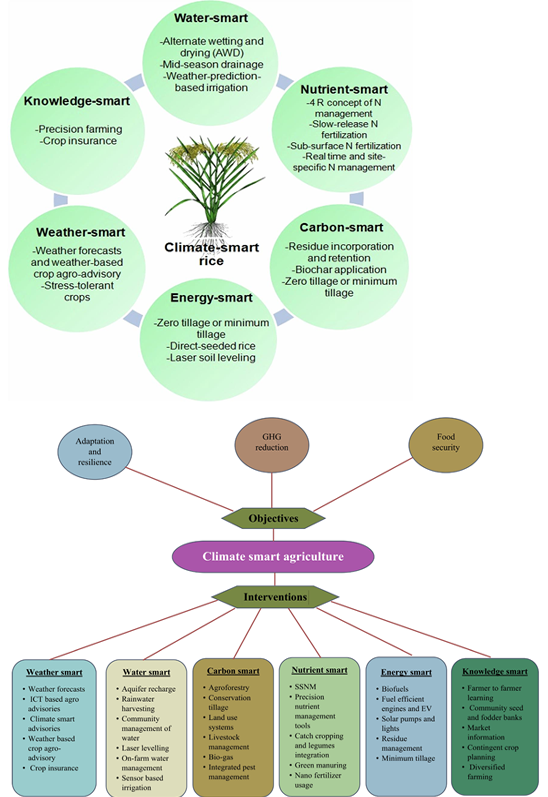
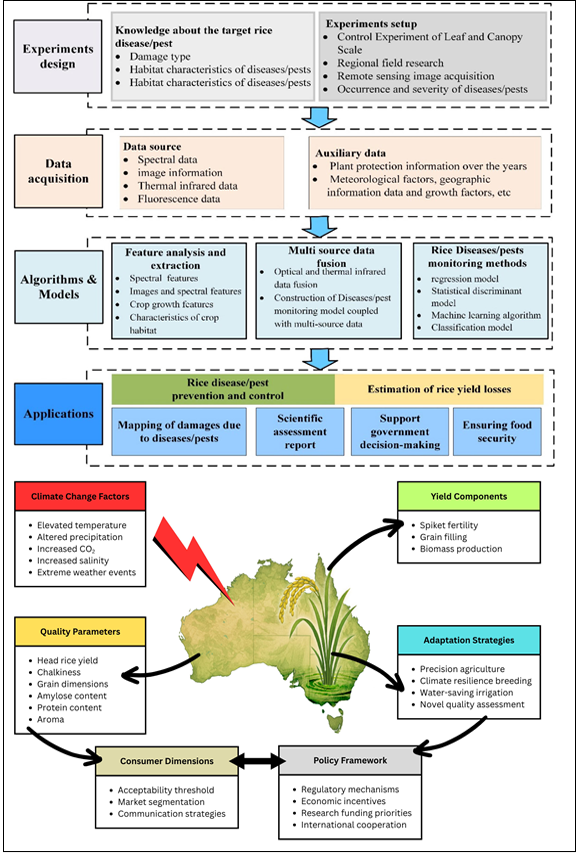
In the research on rice disease management, great progress has been made, but there are many challenges to be addressed. Figure 1 illustrates the major drivers of climate change. However, lack of resistant basmati germplasm, disease variability, climate unpredictability, low awareness among farmers and high cost of advanced technologies still limits the availability of climate smart management solutions. Furthermore, interdisciplinary strategies to create synergistic effects between plant pathology, genetics, climatology, microbiology and digital agriculture are required to establish resilient and sustainable disease control systems . Therefore, the objective of this review is to critically analyse the climate-smart disease management strategies including integrated disease management, resistant cultivars, biological control, disease forecasting and precision agriculture technologies and to study the impact of changing environmental conditions on the major diseases of basmati rice especially bacterial leaf blight and sheath blight . The review also focuses on emerging technologies, current challenges and future research directions for sustainable disease resilience in basmati rice production systems under climate change scenarios (Figure 2).
Climate-smart disease management strategies
Climate change is making it easier for pathogens to develop, survive, and spread, which is increasing the frequency and severity of rice diseases. Therefore, to protect basmati rice yield in spite of changing environmental conditions, sustainable and climate-resilient disease control strategies are crucial . In order to increase disease resilience while reducing environmental effects, climate-smart disease management combines biological, genetic, agronomic, and digital technology.
Integrated disease management (IDM)
By combining several effective strategies, integrated disease control reduces the need for chemical pesticides while inhibiting the growth of pathogens. Disease severity can be significantly decreased by cultural techniques such optimal planting density, balanced fertiliser treatment, crop residue management, and appropriate irrigation schedule. Sheath blight growth is favoured by excessive nitrogen fertilisation, which encourages the production of dense canopies and extended leaf dampness . Therefore, reducing the occurrence of disease requires balanced nutrient management. Table 1 presents a comparative analysis of bacterial leaf blight and sheath blight.
Resistant and climate-resilient cultivars
One of the most cost-effective and environmentally friendly methods of managing disease is the use of resistant rice varieties. Elite rice cultivars have been able to incorporate several resistance genes due to marker-assisted breeding and gene pyramiding techniques . In situations when temperatures are rising, heat-stable resistance genes like Xa7 become more crucial. However, resistance durability is still threatened by pathogen evolution and climate fluctuation (Table 2).
Table 1: Comparative analysis of BLB and Sheath Blight.
|
Characteristic |
Bacterial leaf blight |
Sheath blight |
|
Causal organism |
Xanthomonas oryzae pv. oryzae |
Rhizoctonia solani |
|
Pathogen type |
Bacterium |
Fungus |
|
Primary symptoms |
Leaf yellowing and wilting |
Oval lesions on sheath |
|
Favorable conditions |
High rainfall and humidity |
High humidity and dense canopy |
|
Yield loss |
20–70% |
10–50% |
Table 2: Resistant genes/QTLs in rice.
|
Disease |
Gene/QTL |
Chromosome |
Resistance type |
Major Function |
|
BLB |
Xa4 |
11 |
Major gene |
Broad-spectrum resistance |
|
BLB |
Xa21 |
11 |
Dominant |
Recognition of Xanthomonas oryzae pv. oryzae (Xoo) |
|
BLB |
xa5 |
5 |
Recessive |
Transcription factor modification |
|
BLB |
Xa7 |
6 |
Heat-tolerant resistance |
Stable under climate stress |
|
Sheath blight |
qShB9-2 |
9 |
QTL |
Reduced lesion spread |
|
Sheath blight |
qSB-11LE |
11 |
QTL |
Partial resistance |
Biological control and microbiome engineering
Rice diseases are controlled by biological control agents such Bacillus subtilis, Pseudomonas fluorescens, and Trichoderma harzianum through competition, antibiosis, and induced systemic resistance. Beneficial rhizosphere bacteria can concurrently improve stress tolerance and disease resistance, according to recent developments in microbiome engineering .
Precision agriculture and AI-based disease surveillance
Drones, IoT sensors, hyperspectral imaging, and artificial intelligence are transforming rice production disease surveillance systems. The early detection and prompt management decisions are made possible by AI-assisted disease detection techniques, which lower pesticide consumption and financial losses. Large-scale monitoring of outbreaks of disease and environmental risk factors is also made easier by remote sensing technologies . Despite their potential, precision agriculture and climate-smart technologies face multiple barriers to greater adoption by smallholder rice growers, including high costs, a lack of digital infrastructure, technical know-how, and access to credit and extension services. In Pakistan and other South Asian countries, these technologies can be promoted through fiscal incentives, public-private partnerships, cooperatives, and digital tools that harness the power of mobile phones to lower adoption costs and improve access to knowledge and credit. Farmer field schools, demonstration farms, digital advisory services, and other approaches are crucial to intensifying extension and build capacity in climate-smart disease management to intensify basmati cultivation.
Emerging trends and future perspectives
The future of climate-smart disease management in basmati rice will increasingly rely on integration of advanced breeding technologies, digital agriculture and ecological sustainability. Emerging approaches such as genomic selection, pan-genome analysis, speed breeding and multi-omics platforms are expediting the development of rice cultivars combining resistance to biotic and abiotic stresses . The use of artificial intelligence and deep learning algorithms for automated disease diagnosis is expected to transform precision agriculture through fast, economical and large-scale disease monitoring. Likewise, drone assisted imaging systems and satellite based remote sensing technologies are emerging as promising tools for real-time evaluation of disease severity and environmental stress in rice growing areas. Future research should focus on developing durable resistance through gene pyramiding, exploring wild rice germplasm for novel resistance sources, improving farmer accessibility to digital technologies, and strengthening interdisciplinary collaboration among plant pathologists, breeders, climatologists, microbiologists, and data scientists. Sustainable policy frameworks and farmer-centered climate adaptation strategies will also play a crucial role in ensuring resilient basmati rice production systems under future climate change scenarios .
Conclusions and Recommendations
Climate change is emerging as one of the most significant threats to sustainable basmati rice production by intensifying the incidence, severity, and geographical spread of major rice diseases such as bacterial leaf blight and sheath blight. Rising temperatures, irregular rainfall patterns, floods, drought stress, and changing humidity regimes not only influence crop growth and grain quality but also alter host–pathogen interactions and disease epidemiology. Conventional disease management approaches that rely heavily on chemical pesticides are becoming increasingly ineffective and environmentally unsustainable due to pathogen adaptation, resistance development, ecological imbalance, and climate unpredictability. Therefore, the development of climate-smart and sustainable disease management strategies is essential to ensure long-term productivity, grain quality, and food security in basmati rice production systems. In Pakistan, and more broadly, in South Asian countries, particularly in basmati growing areas of Punjab and Indo-Gangetic plains, there is a growing need to change disease management practices in rice cultivation to adapt to climate change. Research and extension agencies are promoting integrated disease management, cultivar resistance, nutrient management, and weather-based advisory services while new developments such as remote sensing, artificial intelligence, and digital tools for disease forecasting are being adopted in rice cultivation. Nevertheless, factors such as limited access to advanced technology, inadequate extension services, and a lack of climate-resilient basmati cultivars will require more efforts in farmer training and regional collaborations to ensure sustainable disease management in rice. This review highlights that integrated disease management combining resistant cultivars, balanced nutrient management, biological control agents, precision agriculture technologies, and disease forecasting systems offers a more resilient and environmentally friendly approach for managing rice diseases under changing climatic conditions. Recent advances in molecular breeding, marker-assisted selection, gene pyramiding, and CRISPR/Cas-mediated genome editing have accelerated the development of disease-resistant and climate-resilient rice cultivars. Similarly, emerging technologies such as artificial intelligence, machine learning, remote sensing, drones, IoT-based sensors, and hyperspectral imaging are revolutionizing disease detection, surveillance, and precision management in rice ecosystems. In addition, microbiome engineering and beneficial microbial consortia have shown promising potential for enhancing disease suppression and improving plant resilience under environmental stress. Despite these advances, several challenges remain, including rapid pathogen evolution, limited resistant germplasm in basmati rice, high costs of advanced technologies, and low accessibility of precision agriculture tools for smallholder farmers. Future research should therefore focus on strengthening interdisciplinary collaboration among plant breeders, pathologists, climatologists, microbiologists, and data scientists to develop integrated and climate-resilient disease management frameworks. Greater emphasis should also be placed on developing durable resistance, improving farmer awareness, integrating climate forecasting with disease prediction models, and promoting sustainable agricultural policies. Overall, the integration of modern biotechnological innovations with eco-friendly agronomic practices and digital agriculture provides a promising pathway toward sustainable and climate-resilient basmati rice production under future climate change scenarios.
Acknowledgment
Sincerely acknowledged to Syed Ali Zafar and Hafiz Mutther Javed in language editing, all others in writing support, and proofreading services.
Novelty Statement
This review uniquely integrates climate change impacts on BLB and sheath blight with climate-smart disease management in Basmati rice. It brings together resistant cultivars, molecular breeding, biological control, microbiome engineering, disease forecasting, AI, remote sensing, and precision agriculture to propose a sustainable framework for climate-resilient Basmati production.
Authors’ Contribution
Sana E Mustafa: Conceptualisation, supervision, project administration, writing original draft, review co-ordination.
Syed Ali Zafar: Validation, formal analysis, methodology.
Rana Ahsan Raza Khan: Data curation, literature review, investigation.
Faisal Rasool and Irfan Rasool: Resources, technical support, data collection for disease management.
Amjad Farooq: Data interpretation, graphical abstract development, visualization.
Numaira Shehzadi: Writing review and editing, reference management.
Muhammad Usman Saleem: Investigation, data collection on climate smart agriculture.
Bilal Atta, Ruqeyah Abdul Majeed and Hafiz Mutther Javed: Software, AI and precision agriculture content support.
Amara Nasiba: Validation, supervision, manuscript revision, literature survey, formatting and final proof reading.
Figures originality
Its confirmed that all figures are original.
Generative AI and AI assisted technology statement
The authors declare that no generative AI and AI assisted technology was used in the creation of this manuscript.
Conflict of interest
The authors have declared no conflict of interest.
Figures
Climate change drivers.
Climate-smart solutions
References
- Abbas, A., Mubeen, M., Iftikhar, Y. and Shakeel, Q., 2023. Rice sheath blight: A comprehensive review on the disease and recent management strategies. Sarhad J. Agric., 39(1): 111–125. https://doi.org/10.17582/journal.sja/2023/39.1.111.125[Full text][CrossRef]
- Adhikari, T., Kim, S., Lee, J. and Park, Y., 2024. Mechanism of rice resistance to bacterial leaf blight via phytohormones. Int. J. Mol. Sci., 25(18): 9987.
- Ahmad, R., Ansari, M.H., Thakur, M.B., Anwer, M.A., Singh, S.N., Kumar, G. and Kumar, R., 2024. A review on emerging insights into bacterial leaf blight of rice: Diagnostics, climate dynamics, and economic impact. Plant Arch., 55(10): 19025–19040.
- Alam, S., Sundaram, K.T., Singh, U.M., Prasad, M.S., Laha, G.S., Sinha, P. and Singh, V.K., 2024. Superior haplotypes towards the development of blast and bacterial blight-resistant rice. Front. Plant Sci., 15: 1272326. https://doi.org/10.3389/fpls.2024.1272326[CrossRef]
- Aminurrasyid, A.H., Ikmal, A.M. and Nadarajah, K.K., 2025. The rice-microbe nexus: Unlocking productivity through soil science. Rice, 18: 56. https://doi.org/10.1186/s12284-025-00809-0[CrossRef]
- Chandel, V., Kumar, R., Singh, P. and Sharma, D., 2025. Microbiome engineering for sustainable rice production: Strategies for biofertilization, stress tolerance, and climate resilience. Microorganisms, 13(2): 233. https://doi.org/10.3390/microorganisms13020233[CrossRef]
- Chen, J., Xuan, Y., Yi, J., Xiao, G., Yuan, D.P. and Li, D., 2023. Progress in rice sheath blight resistance research. Front. Plant Sci., 14: 1141697. https://doi.org/10.3389/fpls.2023.1141697[CrossRef]
- Costales, H., Callejo-Arruejo, A. and Rafanan, N., 2023. Development of a prototype application for rice disease detection using convolutional neural networks. arXiv Preprint.
- FAO, 2023. Climate-smart agriculture sourcebook. Food and Agriculture Organization of the United Nations.
- Ganesh, G. and Roka, P., 2024. Sheath blight of rice: A review of host plant interaction and disease management. Arch. Agric. Environ. Sci., 9(2): 404–408. https://doi.org/10.26832/24566632.2024.0902027[CrossRef]
- Gupta, V., Teja, B.S., Jamwal, G., Verma, M., Sharma, A., Sharma, A. and Pandit, V., 2025. Biological control of bacterial leaf blight in rice: A sustainable approach. Heliyon, 11(2): e41769. https://doi.org/10.1016/j.heliyon.2025.e41769.[CrossRef]
- Hasan, M.N., 2025. AI-assisted disease prediction systems for sustainable rice farming under climate change. Smart Agric. Technol., 9: 100612.
- Hassan, M.A., Islam, M.S. and Karim, M.R., 2024. Climate-driven epidemiology of rice bacterial leaf blight under tropical agroecosystems. J. Plant Dis. Prot., 131(4): 455–469.
- IPCC, 2023. Climate change 2023: Impacts, adaptation and vulnerability. Intergovernmental Panel on Climate Change. https://doi.org/10.1017/9781009325844[CrossRef]
- IRRI, 2024. Rice disease management under climate variability. International Rice Research Institute Technical Bulletin.
- Kalboush, Z.A., Hassan, M.Y.S.A., Sherif, A.A., Gabr, A., Wael E.A.Q. and Nehela, Y., 2024. Revisiting the emerging pathosystem of rice sheath blight. Front. Plant Sci., 15: 1499785. https://doi.org/10.3389/fpls.2024.1499785[CrossRef]
- Khush, G.S. and Jena, K.K., 2009. Current status and future prospects for research on blast resistance in rice. Plant Disease.
- Kumar, A., Singh, B. and Roy, S., 2025. AI-enabled smart disease surveillance systems in rice under changing climatic conditions. Smart Agric. Technol., 10: 100741.
- Latif, M.A., Hera, M.H.R., Rahman, L., Bhuiyan, M.R., Kayess, M.O., Rashid, M.M. and Saito, H., 2025. Pyramiding of multiple resistance genes for bacterial leaf blight and blast diseases in premium quality rice BRRI dhan81 through marker‐assisted selection. Plant Pathol., 74(6): 1641-1657. https://doi.org/10.1111/ppa.14112[CrossRef]
- Logavitool, G., Horanont, T., Thapa, A., Intarat, K. and Wuttiwong, K., 2025. Field-scale detection of bacterial leaf blight in rice based on UAV multispectral imaging and deep learning frameworks. PLoS One, 20(1): e0314535. https://doi.org/10.1371/journal.pone.0314535[CrossRef]
- Malik, A., Rejab, N.A. and Aziz, M.A., 2026. CRISPR/Cas9 genome editing in rice (Oryza sativa L.) for multi-stress resilience and prospects for agricultural sustainability. J. Crop Health, 78: 64. https://doi.org/10.1007/s10343-026-01328-8[CrossRef]
- Mew, T.W. and Gonzales, P., 2002. A handbook of rice seedborne fungi. International Rice Research Institute.
- Ou, S.H., 1985. Rice diseases. Commonwealth Mycological Institute.
- Patel, H., Verma, R. and Singh, D., 2024. Integrated nutrient and disease management strategies for sustainable rice production under climate stress. Agronomy, 14(5): 1182.
- Prasad, V., Rajpoot, S.K.S., Dixit, S., Dwivediand, D.K. and Maurya, M.K., 2024. Response of integrated disease management practices against sheath blight of rice. Int. J. Res. Agron., 7(1): 247–249. https://doi.org/10.33545/2618060X.2024.v7.i1d.224[CrossRef]
- Prity, F.S., Raquib, M., Murad, S.A., Rafi, M.J.A., Bhuiyan, M.K.B. and Bairagi, A.K., 2025. Neural network-based study for rice leaf disease recognition and classification. arXiv Preprint.
- Rahman, M.M., Islam, T. and Hossain, M.A., 2024. Climate variability and rice disease outbreaks: Implications for sustainable basmati rice production. Agric. Syst., 218: 103951.
- Raza, W., Usman, M., Ahmed, Z., Saeed, A., Jamshed, M., Shahzad, A.S., Fatima, F. and Akkari, A.A., 2025. Evaluating the performance of local Pakistani rice cultivars under reduced N dose. Adv. Agric. Anim. Sci. 41(2): 60-74. https://doi.org/10.17582/journal.aaas/2025/41.2.60.74[Full text][CrossRef]
- Rehman, H., Abbas, A. and Javed, M.A., 2025. Climate-smart breeding approaches for bacterial blight and sheath blight resistance in aromatic rice cultivars. Front. Sustain. Food Syst., 9: 1458821.
- Sabar, M., Ijaz, M., Khan, R.A.R., Mustafa, S.E., Fatima, R., Saher, H., Shahzadi, F., Javed, H.M., Zafar, S.A., Siddique, S. and Saleem, M.U., 2024. Sheath blight and bacterial blight resistance in rice: Mechanisms, progress and future perspectives for sustainable rice production. Plant Bulletin, 3(1): 102–112. https://doi.org/10.55627/pbulletin.003.01.0748[CrossRef]
- Saddami, K., Nurdin, Y., Zahramita, M. and Safiruz, M.S., 2024. Advancing Green AI: Efficient and accurate lightweight CNNs for rice leaf disease identification. arXiv Preprint.
- Savary, S., Willocquet, L., Pethybridge, S.J., Esker, P., McRoberts, N. and Nelson, A., 2019. The global burden of pathogens and pests on major food crops. Nat. Ecol. Evol., 3: 430–439. https://doi.org/10.1038/s41559-018-0793-y[CrossRef]
- Sheikh, M.J., Narejo, A.A., Khushk, G.M. and Magsi, H., 2019. Influence of climate shifting on agricultural and daily life activities in lower Sindh province of Pakistan. Adv. Agric. Anim. Sci., 35(2): 113-118.
- Singh, P., Mazumdar, P., Harikrishna, J.A. and Babu, S., 2019. Sheath blight of rice: A review and identification of priorities for future research. Planta, 250: 1387–1407. https://doi.org/10.1007/s00425-019-03246-8[CrossRef]
- Singh, R., Yadav, S., Kumar, P. and Sharma, V., 2025. Precision agriculture technologies for disease forecasting and climate-smart rice farming. Comp. Electron. Agric., 225: 109112.
- Sule, M.I.S., Shantosa S.Y., Suriadikusumah, A., and Banerjee, S., 2025. Advancing innovative climate-resilient and net-zero technologies to enhance rice productivity and sustainability amidst climate change. Sustainability, 17(20): 9322. https://doi.org/10.3390/su17209322[CrossRef]
- Teja, B.S., Gupta, V., Gupta, S.K., Sharma, A., Amin, Z., Mohiddin, F.A., Ashraf, S., Al-Tami, M.S. and Hamed, K.E., 2025. Microbial consortia as a biocontrol strategy for bacterial blight in basmati rice. Revista Argentina de Microbiología.
- Teja, B.S., Jamwal, G., Gupta, V., Verma, M., Sharma, A., Sharma, A. and Pandit, V., 2025. Biological control of bacterial leaf blight (BLB) in rice. A sustainable approach. Heliyon, 11(2): e41769. https://doi.org/10.1016/j.heliyon.2025.e41769[CrossRef]
- Vipul, K.A., Bochalya, M.S., Singh, A., Kumari, D., Kumar, P. and Kirti. 2025. Integrated and sustainable approaches for the management of rice sheath blight: A comprehensive review of current insights and future prospects. Int. J. Agron., 8(Special Issue 12): 468–476. https://doi.org/10.33545/2618060X.2025.v8.i12Sf.4504[CrossRef]
- Zhao, C., Piao, B., Wang, S., Lobell, X., Huang, D.B., Huang, Y., Mengtian, Y., Bassu, Y., Philippe, C., Jean-Louis, D., Ewert, J., Janssens, F., Tao, A.L., Erda, L., E., Martre, Q., Müller, P., Peng, C., Peñuelas, S., Ruane, J., Wallach, A.C., Wang, D., Tao, W.,Donghai, W., Zhuo, L., Yan, Z., Zaichun, Z. and Senthold, A., 2017. Temperature increase reduces global yields of major crops. Proc. Natl. Acad. Sci., 114(35): 9326–9331. https://doi.org/10.1073/pnas.1701762114[CrossRef]
- Zhao, P., Xiaojun, G.,, Yuan, S., Yang, X. and Huang, Y., 2024. Investigation of seeding performance of a novel high-speed precision seed metering device based on numerical simulation and high-speed camera. Computers and Electronics in Agriculture, 217: 108563. https://doi.org/10.1016/j.compag.2023.108563[CrossRef]
- Zhong, Q., Xu, Y. and Rao, Y., 2024. Mechanism of rice resistance to bacterial leaf blight via phytohormones. Plants, 13(18): 2541. https://doi.org/10.3390/plants13182541[CrossRef]
Services
Article usage statistics
Loading…