Research Article · Volume 13, 8 August 2025 · Open Access
Methicillin Resistant Staphylococcus aureus: Evolution, Resistance and Public Health Implications in the 21st Century
· · · · · · ·
Affiliations & Notes ⌄
- 1Department of Medical Microbiology and Parasitology, College of Health Sciences, Ladoke Akintola University of Technology, P.M.B, 4000, Ogbomooso, Oyo State, Nigeria
- 2Centre for Emerging and Reemerging Infectious Diseases, Ladoke Akintola University of Technology, P.M.B, 4000, Ogbomooso, Oyo State, Nigeria. *Correspondence | Correspondence: Olugbenga A. Olowe, Department of Medical Microbiology and Parasitology, College of Health Sciences, Ladoke Akintola University of Technology, P.M.B, 4000, O
Article Info ⌄
- Journal:
- South Asian Journal of Life Sciences
- Published:
- 8 August 2025

From the article
- Staphylococcus aureus, particularly methicillin-resistant strains (MRSA), remains a persistent global health threat due to its adaptability, resistance mechanisms, and widespread prevalence across hospital, community, and livestock settings.
- The increasing prevalence of MRSA strains, including HA-MRSA, CA-MRSA, and LA-MRSA, underscores the complexity of controlling its spread.
- Addressing MRSA requires a multifaceted approach, incorporating antibiotic stewardship, public health interventions, and global cooperation to mitigate its impact.
- Without effective control measures, MRSA will remain a significant challenge, contributing to increased healthcare costs, morbidity, and mortality worldwide.
Selected from the article's own text.
Abstract
INTRODUCTION
Staphylococcus aureus (S. aureus) is a prominent and significant species within the staphylococcal genus that contributes to human pathogenicity . It is a gram-positive, coccus-shaped, non-motile, and non-spore-forming opportunistic bacterium. S. aureus produces various enzymes, including nucleases, lipases, coagulase, catalase, proteases, collagenases, and β-lactamase, which contribute to its biochemical characteristics.
This bacterium is associated with a wide spectrum of infections, ranging from superficial to chronic conditions, and can colonize various anatomical sites in humans and animals due to its commensal and opportunistic nature. Commonly, S. aureus resides on the skin, mucosal surfaces, urinary and gastrointestinal tracts, and especially in the anterior nares of the respiratory system . It is a significant risk factor for numerous infections, including bloodstream infections (BSIs), skin and soft tissue infections (SSTIs), osteomyelitis, endocarditis, and nosocomial infections, and it is a leading cause of community-acquired infections. The diverse clinical manifestations are driven by an array of extracellular components such as surface proteins, capsules, enzymes, toxins, and other virulence factors .
In the early 1940s, before the advent of penicillin, an increased mortality rate were reported due to S. aureus infection that reached 90% case fatality rate which persisted up to 19th century (Jevon,1961). Subsequently, the production of β-lactamase enzyme by S. aureus renders penicillin ineffective due to the hydrolysis of its β-lactam ring, resulting in S. aureus developing resistance to penicillin shortly after its discovery. Subsequently, another antibiotic named methicillin was discovered in 1950, which proved effective against S. aureus for an extended period. Regrettably, the bacteria have developed considerable resistance to this antibiotic, rendering it ineffective. The resistance to this antibiotic was reported at an elevated percentage, referred to as methicillin-resistant strain of S. aureus (MRSA).
In recent years, S. aureus strains resistant to multiple antibiotics have emerged in both hospital and community environments . A significant portion of hospital-acquired S. aureus infections is attributed to methicillin-resistant S. aureus (MRSA), which has been recognized as a major cause of morbidity and mortality. These infections are linked to prolonged hospital stays and substantial healthcare expenses ; .
Methicillin-resistant Staphylococcus aureus (MRSA) is a multidrug-resistant bacterium that significantly contributes to morbidity, mortality, and increased healthcare costs. Responsible for approximately 200,000 invasive infections annually in Europe, MRSA was first identified in the 1960s. Over recent decades, it has emerged as a leading cause of hospital-acquired infections, associated with severe and often fatal diseases such as life-threatening pneumonia, necrotizing fasciitis, endocarditis, osteomyelitis, severe sepsis, and toxin-mediated conditions like toxic shock syndrome.
Since the 1990s, MRSA strains have spread globally, presenting significant challenges in clinical management due to their increasing prevalence and the evolution of resistance mechanisms . The widespread use of antibiotics, particularly methicillin, has driven the rise of resistance in Staphylococcus aureus, with MRSA strains now prevalent worldwide.
Methicillin resistance in S. aureus is primarily mediated by the mecA and mecC genes, which encode the penicillin-binding proteins PBP2a and PBP2c, respectively. These proteins confer resistance to nearly all β-lactam antibiotics, including penicillins, cephalosporins, carbapenems, and their derivatives. The extensive and often indiscriminate use of antibiotics has contributed to the emergence of multidrug-resistant strains, making it increasingly difficult to eradicate the bacteria from the environment.
Emergence and evolution of MRSA
Methicillin-resistant Staphylococcus aureus (MRSA) emerged in the late 1950s as a direct consequence of the widespread use of antibiotics, particularly methicillin . Initially introduced to combat penicillin-resistant strains, methicillin quickly became ineffective as MRSA strains developed resistance through the acquisition of the mecA gene, which encodes for a modified penicillin-binding protein (PBP2a) . This adaptation allowed MRSA to survive in the presence of beta-lactam antibiotics, leading to its rapid proliferation. Within just two years of methicillin’s introduction, MRSA was identified in clinical settings, illustrating the bacterium’s remarkable capacity for rapid genetic adaptation. Early studies indicated that MRSA strains were already present in the community, suggesting that resistance mechanisms may have evolved even before the clinical use of methicillin, emphasizing a long-standing co-evolutionary relationship between S. aureus and antibiotic pressures (Salam et al., 2023).
The genetic mechanisms underlying MRSA’s evolution are primarily driven by the acquisition of mobile genetic elements, particularly the staphylococcal cassette chromosome mec (SCCmec) . This element integrates into the bacterial chromosome and carries the mecA gene, conferring methicillin resistance. Over time, various SCCmec types have emerged, with each type exhibiting unique characteristics that contribute to the bacterium’s adaptability. Horizontal gene transfer plays a crucial role in spreading resistance genes and virulence factors among Staphylococcus species, leading to the emergence of hypervirulent community-associated MRSA (CA-MRSA) strains ; . The genetic diversity observed in MRSA is a result of both recombination events and mutations within the core genome, allowing these pathogens to exploit different ecological niches and enhance their survival in diverse environments .
The global dissemination of MRSA has been marked by the emergence of several epidemic clones, which have become predominant in healthcare-associated infections (HAIs). Major clones, such as ST5, ST8, and ST22, have been traced across continents, facilitated by factors such as international travel, poor infection control practices, and the interconnectedness of healthcare systems . For instance, the ST239 lineage, which originated in Europe, became endemic in Asian hospitals by the 1990s, while CA-MRSA strains like USA300 (ST8) emerged in the community, combining antibiotic resistance with enhanced virulence . Continuous genomic surveillance has revealed a dynamic landscape of MRSA, where clonal replacement occurs frequently, driven by antibiotic usage patterns and host immune pressures .
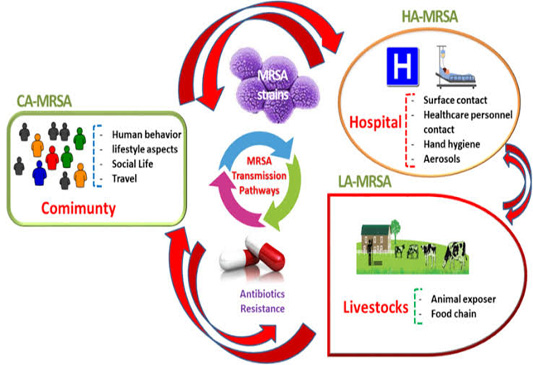
The evolution of MRSA is not confined to human hosts; zoonotic transmission plays a significant role in its spread. Livestock-associated MRSA (LA-MRSA), particularly CC398, has emerged in agricultural settings due to the routine use of antibiotics in livestock . This strain has been shown to spill over into human populations, complicating infection control efforts. Additionally, MRSA has been identified in household pets and wildlife, acting as reservoirs for resistance genes that can be transmitted back to humans . This relationship between human, animal, and environmental factors highlights the One Health approach, emphasizing the need for integrated strategies to combat MRSA and other antibiotic-resistant pathogens.
Types of MRSA
For a long time, MRSA has been regarded as a prototypical multidrug-resistant and nosocomial pathogen, frequently causing infections in hospitals and healthcare settings. Initially, its presence was primarily associated with healthcare environments, where specific risk factors facilitated its transmission .
In the late 1990s, a new strain of MRSA, termed community-acquired MRSA (CA-MRSA), emerged in community settings. This strain is highly pathogenic, capable of spreading efficiently, and can infect healthy individuals, including young people . Additionally, MRSA has become a significant colonizer in animals due to the extensive use of antibiotics in veterinary practices.
This animal-related strain, known as livestock-associated MRSA (LA-MRSA), is frequently identified in animals such as pigs, cattle, sheep, and goats and poses a zoonotic risk . Instances of MRSA infections in humans and animals underscore the role of animals as reservoirs for transmission, representing a major public health concern.
Hospital-acquired MRSA (HA-MRSA)
HA-MRSA refers to infections diagnosed based on a positive culture obtained more than 48 hours after hospital admission . This strain is resistant to almost all β-lactam antibiotics and other drug classes, making it a significant cause of hospital-acquired infections, particularly in children and young adults. It primarily affects immunocompromised individuals and those with skin injuries that facilitate transmission .
HA-MRSA strains, characterized by their geographic variation, began spreading in the 1980s and 1990s due to the emergence of new clones. These clones, including CC30, CC5, CC45, CC8, and sequence type 239 (ST239), have led to widespread hospital outbreaks, increasing mortality and morbidity rates . HA-MRSA is commonly associated with conditions such as dermatitis, septicemia, and infections of the heart and lungs, particularly in patients with risk factors like hospitalization, surgery, dialysis, or a history of MRSA infection .
Community-acquired MRSA (CA-MRSA)
Initially categorized as HA-MRSA, MRSA infections began appearing in individuals without prior hospitalizations in the 1990s, especially among children and young adults without typical risk factors (CDC, 1999). CA-MRSA is defined as MRSA isolated from community or outpatient settings without recent hospital contact or known risk factors. It causes infections in various parts of the body, primarily skin and soft tissues, but it can also lead to more severe conditions such as pneumonia, bloodstream infections, and endocarditis ; .
The dominant CA-MRSA lineage varies by region, with USA300 (CC8-ST8) prevalent in the United States and CC80 (ST80) in Europe. Transregional transmission has been observed between North America, the Middle East, Asia, and South America . CA-MRSA strains are generally resistant to β-lactam antibiotics but susceptible to drugs like trimethoprim-sulfamethoxazole, clindamycin, and tetracyclines. They often carry SCCmec type IV and are distinct from HA-MRSA, expresssing unique virulence factors and genetic profiles . These strains also harbor Panton-Valentine leukocidin (PVL) genes, which produce cytotoxins that contribute to their pathogenicity .
Livestock-associated MRSA (LA-MRSA)
MRSA’s impact extends beyond human medicine into veterinary medicine. In 2005, LA-MRSA was identified in pigs in the Netherlands, with a unique clone, ST398, within clonal complex CC398 . This lineage, also reported in the United States, differs from traditional HA-MRSA and CA-MRSA strains as it cannot be classified using standard pulsed-field gel electrophoresis (PFGE) methods .
LA-MRSA can spread among various animal species and to humans who interact closely with colonized animals, such as veterinarians and farmworkers . It causes infections like comb necrosis and septic conditions in poultry and can also colonize pets, such as dogs, cats, and horses, facilitating zoonotic transmission. Asymptomatic colonization by LA-MRSA is common in both humans and animals, but it can lead to severe infections, especially in heavily colonized individuals. This highlights the public health risks posed by MRSA as a reservoir in both human and veterinary environments.
Mechanisms of MRSA resistance
Methicillin-resistant Staphylococcus aureus (MRSA) owes its resistance primarily to the mecA gene, which is carried on the Staphylococcal Chromosome Cassette mec (SCCmec), a mobile genetic element that integrates into the bacterial chromosome ; . SCCmec elements vary in size and complexity, with multiple types (I–XIII) identified, each influencing the level of resistance and adaptability of MRSA strains . These cassettes not only encode mecA, which produces the low-affinity penicillin-binding protein PBP2a, but also often harbour additional resistance determinants, such as mecC (a mecA homolog) or other genes conferring resistance to non-β-lactam antibiotics. SCCmec elements facilitate horizontal gene transfer, allowing MRSA to rapidly acquire and disseminate resistance traits across bacterial populations . Recent studies have highlighted the evolutionary dynamics of SCCmec, revealing its role in the diversification of MRSA strains and their adaptation to environmental pressures, including antibiotic selection and host immune responses .
Beyond the classic mecA-mediated resistance, MRSA employs additional strategies such as efflux pumps, biofilm formation, and alterations in membrane potential to evade antibiotic action. For instance, the mepA gene has been implicated in ciprofloxacin heteroresistance, reducing membrane potential and limiting antibiotic entry . Biofilm-associated MRSA is particularly difficult to eradicate due to the protective extracellular matrix, which restricts antibiotic penetration and enhances persistence. Strategies targeting biofilm disruption, including antimicrobial peptides and quorum sensing inhibitors, have been proposed as alternative therapeutic avenues . Furthermore, recent findings suggest that bacteriophage therapy and CRISPR-based genome editing may offer novel approaches to counteract MRSA resistance mechanisms by selectively targeting resistant bacterial populations ; .
Recent molecular investigations have identified additional genes involved in MRSA resistance beyond mecA, including tarO, which is responsible for cell wall teichoic acid synthesis. The inhibition of tarO by berberine has been shown to compromise MRSA cell wall integrity, rendering the bacteria more susceptible to existing antibiotics . Another innovative approach involves the use of phytochemicals, such as quercetin, which has demonstrated potential in targeting bacterial proteins involved in resistance pathways . Additionally, silver nanoparticles have emerged as promising antimicrobial agents that disrupt MRSA cell division and induce DNA damage . These novel interventions indicate the potential for alternative treatment strategies that circumvent conventional antibiotic resistance mechanisms.
Combination therapies have gained attention as a means to counteract MRSA resistance, with recent studies highlighting the synergistic effects of combining antibiotics with natural compounds. The co-administration of curcumin and azithromycin has been shown to enhance antibacterial efficacy while reducing the likelihood of resistance development . Similarly, photodynamic inactivation techniques using natural photosensitizers have demonstrated time-dependent bactericidal effects against MRSA, offering a non-antibiotic approach to combat infections . Another emerging strategy involves the modification of existing antimicrobial peptides to enhance their specificity and efficacy against MRSA biofilms, reducing their risk of resistance evolution . These findings underscore the importance of integrating multiple treatment modalities to overcome the adaptive capabilities of MRSA.
As MRSA continues to evolve, the need for novel therapeutic strategies remains paramount. Advances in genome sequencing and computational biology have provided deeper insights into the genetic basis of resistance, allowing for the identification of new drug targets and the development of precision medicine approaches. Whole-genome sequencing studies have revealed previously uncharacterized resistance determinants that may serve as potential drug targets . The combination of genomic analysis with high-throughput screening of antimicrobial compounds is likely to yield innovative treatment strategies that minimize the selective pressure driving resistance . Ultimately, a multifaceted approach incorporating antibiotic stewardship, novel antimicrobial agents, and alternative therapeutic interventions will be essential to mitigate the growing threat of MRSA in both clinical and community settings.
Prevalence of MRSA
Global prevalence of MRSA
The global emergence and transmission of MRSA is a critical feature of its epidemiology. The spread of several strains of MRSA has been documented in numerous countries. The spread of MRSA transpires through two primary mechanisms; the propagation of existing clones among humans and animals, including transmission between species, or the acquisition of the SSCmec element by horizontal gene transfer .
MRSA poses a significant public health hazard due to its rising prevalence in hospitals, communities, and animals, as well as its transmission between humans and animals, infection rates, resistance, and therapeutic challenges . The annual healthcare cost attributed to MRSA infections is estimated to be 3 billion dollars. CA-MRSA has emerged as a predominant pathogen in recent years. MRSA mostly induces skin and soft tissue infections, resulting in bacteremia, which is associated with elevated mortality rates ranging from 15% to 60% .
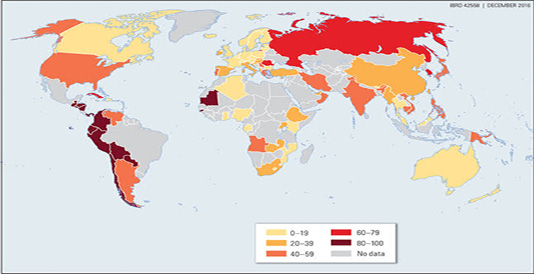
MRSA global prevalence varies significantly among countries around the world. In African countries such as Nigeria (39-55%), Libya (31%), South Africa (24-36%) and Tunisia (16-41%) were reported ; . 58.4% was reported in Portugal , 46% in India (Arora et al.,2009), 52% in Pakistan , 45% in China from 2015-2017 , 38.9% in Norway from 2008-2016 (Enger et al.,2015). The prevalence of CA-MRSA exhibits both increasing and decreasing trends across various countries. Figures include79% in Japan , 84.9% in Australia , 64.7% in India , 61% in Norway (Enger et al., 2022), and 44.3% in Iran .
Conversely, lower prevalence rates are reported from Egypt (16%) , 24% in China . The reduction in the prevalence of HA-MRSA and CA-MRSA may be associated with improved implementation of prevention measures. The fluctuations in the prevalence of HA−MRSA and CA-MRSA may be associated with the increase transmission of LA-MRSA from animal reservoirs to humans, particularly from food and companion animals.
Pathophysiology of MRSA
Staphylococcus aureus is both a commensal and opportunistic pathogen that predominantly colonizes the anterior nares of humans and animals. It can also be found in other anatomical sites, including the groin, gastrointestinal tract, and axillae, which serve as additional reservoirs for bacterial persistence. The progression of infection generally follows a series of stages, beginning with colonization, followed by the expression of virulence factors, the onset of infection, abscess formation, systemic spread, and eventual host adaptation through various regulatory mechanisms. Colonization significantly increases the risk of infection, particularly when the host’s immune defenses are weakened due to injury or underlying health conditions .
S. aureus employs a diverse array of virulence mechanisms, including surface proteins. These proteins facilitate bacterial adhesion by interacting with host extracellular matrix components such as fibrinogen, fibronectin, and collagen. This interaction plays a critical role in infections affecting prosthetic devices, bones, joints, and the endovascular system. Additionally, S. aureus produces multiple virulence-related enzymes, including adhesion proteins, chemotaxis inhibitors, proteases, lipases, hyaluronidase, staphylokinase, catalase, nucleases, collagenases, β-lactamases, and elastases, all of which contribute to its ability to establish infections within the host. Methicillin-resistant S. aureus (MRSA) strains also harbour mobile genetic elements (MGEs) that enhance their pathogenicity across different animal species. Moreover, S. aureus secretes various toxins including exotoxins, enterotoxins, hemolysins, and Panton-Valentine leukocidin (PVL)as well as superantigens that can trigger conditions such as foodborne illnesses (Dings et al., 2000).
Hospital-acquired methicillin-sensitive S. aureus (MSSA) is generally considered less virulent compared to hospital-acquired methicillin-resistant S. aureus (HA-MRSA), which exhibits increased pathogenicity and higher mortality rates. While the exact mechanisms underlying MRSA’s enhanced virulence are not yet fully elucidated, it is believed that the PBP2-α protein, encoded by the mecA gene, plays a key role in immunopathology by conferring resistance to β-lactam antibiotics. The presence of PBP2-α interferes with peptidoglycan cross-linking, allowing MRSA strains to survive despite antibiotic treatment, thereby enhancing their ability to evade host immune responses .
The regulation of virulence factor expression in S. aureus is crucial for its pathogenic potential. These factors are produced strategically based on the bacterium’s physiological needs to optimize resource allocation. While bacterial proteins are predominantly expressed during the exponential growth phase to facilitate early colonization, secreted toxins are primarily produced during the stationary phase, enabling bacterial dissemination into the bloodstream and exacerbating infection severity.
MRSA treatment
Over the years, several interventions had been employed in tackling the menace and threat of MRSA to public health. The treatment of methicillin-resistant Staphylococcus aureus (MRSA) remains a significant challenge due to its resistance to β-lactam antibiotics, necessitating the use of alternative antimicrobial strategies. Historically, vancomycin has been the gold-standard treatment for MRSA infections, but the emergence of vancomycin-intermediate (VISA) and vancomycin-resistant (VRSA) strains has prompted the need for alternative therapies . Linezolid, daptomycin, and ceftaroline have emerged as effective agents, with daptomycin being particularly useful for bloodstream infections due to its bactericidal activity .
Newer combination therapies, such as the use of ceftobiprole, have shown promise in addressing complicated MRSA infections . Recent advances in antimicrobial peptides (AMPs) have also demonstrated efficacy against MRSA, particularly in treating biofilm-associated infections, which are notoriously difficult to eradicate . Topical treatments, such as mupirocin, are employed for decolonization, while natural extracts, including olive leaf extract, have been investigated as potential alternatives due to their broad-spectrum antimicrobial properties. Innovative approaches such as RNA interference (siRNA-based therapies) targeting mecA have been explored to restore MRSA susceptibility to β-lactam antibiotics . Photothermal and nanomaterial-based therapies, including silver nanoparticles and redox-responsive peptidosomes, offer promising non-traditional treatment avenues by directly disrupting MRSA biofilms and cell membranes .
Additionally, bacteriophage therapy, which utilizes viruses to selectively target MRSA, has gained attention as an alternative to antibiotics, particularly for antibiotic-resistant infections. The development of hybrid therapies, combining antibiotics with bioengineered compounds such as curcumin and antimicrobial hydrogels, has shown potential in improving treatment efficacy while minimizing the risk of resistance development . As MRSA continues to evolve, treatment strategies must integrate antimicrobial stewardship, novel drug development, and alternative therapies to combat resistance effectively.
Conclusion
Staphylococcus aureus, particularly methicillin-resistant strains (MRSA), remains a persistent global health threat due to its adaptability, resistance mechanisms, and widespread prevalence across hospital, community, and livestock settings. The bacterium’s evolution has been driven by genetic adaptations, enabling it to survive in diverse environments and develop resistance to multiple antibiotics. The increasing prevalence of MRSA strains, including HA-MRSA, CA-MRSA, and LA-MRSA, underscores the complexity of controlling its spread. Efforts to combat MRSA have focused on improved surveillance, infection control measures, and the development of novel antimicrobial therapies.
However, the continued emergence of resistance highlights the need for a more integrated approach that considers human, animal, and environmental interactions. While treatment options such as vancomycin, linezolid, and novel antimicrobial strategies offer hope, the threat of resistance evolution necessitates ongoing research and innovative solutions. Addressing MRSA requires a multifaceted approach, incorporating antibiotic stewardship, public health interventions, and global cooperation to mitigate its impact. Without effective control measures, MRSA will remain a significant challenge, contributing to increased healthcare costs, morbidity, and mortality worldwide.
Acknowledgement
Appreciation to all the staff of HRH-CERID, Centre for emerging and reemerging infectious disease and department of medical microbiology for their technical support throughout this work
Novelty Statement
This study determined the prevalence of Methicillin Resistant Staphylococcus aureus: Evolution, Resistance and Public Health Implications in the 21st Century. These strains exhibit distinct genetic adaptations that contribute to their virulence and resistance to multiple antibiotics. The presence of MRSA in both human and animal populations underscores its public health significance and the need for effective control measures.
Author’s Contribution
AH conceptualized the work, AA, collected samples and wrote the manuscript. AO and OI also conceptualized the work, assisted with samples collection, did statistical analysis and reviewed the manuscript. OO assisted with samples collection, reviewed and corrected the manuscript. OO and OO assisted with samples collection, data analysis and manuscript review. OAO supervised the work from conception to reporting.
Conflict of interest
The authors have declared no conflict of interest.
Figures

Showing One Health Approach across Human, Animal and the Environments.

The global prevalence of MRSA shown in colours.
References
- Abdullahi IN, Fernández-Fernández R, Juárez-Fernández G, Martínez-Álvarez S, Eguizábal P, Zarazaga M, Lozano C, Torres C (2021). Wild animals are reservoirs and sentinels of Staphylococcus aureus and MRSA clones: A problem with “one health” concern. Antibiotics, 10(12): 1556. https://doi.org/10.3390/antibiotics10121556[CrossRef]
- Ahmed M, Kayode H, Okesanya O, Ukoaka B, Eshun G, Mourid M, Adigun O, Jerico O, Mohamed Z, Lucero-Prisno D (2024). CRISPR-cas systems in the fight against antimicrobial resistance: Current status, potentials, and future directions. Infect. Drug Resist., 17: 5229–5245. https://doi.org/10.2147/IDR.S494327[CrossRef]
- Alvarez-Uria G, and Reddy R (2012). Prevalence and antibiotic susceptibility of community-associated methicillin-resistant Staphylococcus aureus in a rural area of India: Is MRSA replacing methicillin-susceptible Staphylococcus aureus in the community? ISRN Dermatology, 2012: 1–5. https://doi.org/10.5402/2012/248951[CrossRef]
- Alzomor O, Alfawaz T, Alshahrani D (2017). Invasive community-acquired methicillin-resistant Staphylococcus aureus (CA-MRSA) infection in children: case series and literature review. Int. J. Pediat. Adol. Med., 4(3): 119–123. https://doi.org/10.1016/j.ijpam.2017.07.001[CrossRef]
- Ambade SS, Gupta VK, Bhole RP, Khedekar PB, Chikhale RV (2023). A review on five and six-membered heterocyclic compounds targeting the penicillin-binding protein 2 (PBP2A) of methicillin-resistant Staphylococcus aureus (MRSA). Molecules (Basel, Switzerland), 28(20): 7008. https://doi.org/10.3390/molecules28207008[CrossRef]
- Ansari M, Khan H, Khan A, Cameotra S, Alzohairy M (2015). Anti-biofilm efficacy of silver nanoparticles against MRSA and MRSE isolated from wounds in a tertiary care hospital. Indian J. Med. Microbiol., 33(1): 101–109. https://doi.org/10.4103/0255-0857.148402[CrossRef]
- Ardic N, Sareyyupoglu B, Ozyurt M, Haznedaroglu T, Ilga U (2006). Investigation of aminoglycoside modifying enzyme genes in methicillin-resistant staphylococci. Microbiol. Res., 161(1): 49–54. https://doi.org/10.1016/j.micres.2005.05.002[CrossRef]
- Arora S, Devi P, Arora U, Devi B (2010). Prevalence of methicillin-resistant Staphylococcus aureus (MRSA) in a tertiary care hospital in northern India. J. Lab. Phys., 2(2): 78–81. https://doi.org/10.4103/0974-2727.72154[CrossRef]
- Ayon NJ (2023). High-throughput screening of natural product and synthetic molecule libraries for antibacterial drug discovery. Metabolites, 13(5): 625–625. https://doi.org/10.3390/metabo13050625[CrossRef]
- Balcha FB, Neja SA (2023). CRISPR-Cas9 mediated phage therapy as an alternative to antibiotics. Anim. Dis., 3(1). https://doi.org/10.1186/s44149-023-00065-z[CrossRef]
- Benvenga V, Cuénod A, Purushothaman S, Dasen G, Weisser M, Bassetti S, Roloff T, Siegemund M, Heininger U, Bielicki J, Wehrli M, Friderich P, Frei R, Widmer A, Herzog K, Fankhauser H, Nolte O, Bodmer T, Risch M, Olivier D (2024). Historic methicillin-resistant Staphylococcus aureus: Expanding current knowledge using molecular epidemiological characterization of a Swiss legacy collection. Genome Med., 16(1). https://doi.org/10.1186/s13073-024-01292-w[CrossRef]
- Bhattacharya S (2015). Evaluation of multidrug resistant Staphylococcus aureus and their association with Biofilm Production in a Tertiary Care Hospital, Tripura, Northeast India. J. Clin. Diagn. Res., 2015 Sep;9(9):DC01-4. Epub 2015 Sep 1. PMID: 26500902; PMCID: PMC4606231.. https://doi.org/10.7860/JCDR/2015/13965.6417[CrossRef]
- Boussaud V, Parrot A, Mayaud C, Wislez M, Antoine M, Picard C, Delisle F, Etienne J, Cadranel J (2003). Life-threatening hemoptysis in adults with community-acquired pneumonia due to Panton-Valentine leukocidin-secreting Staphylococcus aureus. Inten. Care Med., 29(10): 1840–1843. https://doi.org/10.1007/s00134-003-1918-5[CrossRef]
- Brody T, Yavatkar AS, Lin Y, Ross J, Kuzin A, Kundu M, Fann Y, Odenwald WF (2008). Horizontal gene transfers link a human MRSA pathogen to contagious bovine Mastitis Bacteria. PLoS One, 3(8): e3074. https://doi.org/10.1371/journal.pone.0003074[CrossRef]
- Bukowski M, Piwowarczyk R, Madry A, Zagorski-Przybylo R, Hydzik M, Wladyka B (2019). Prevalence of antibiotic and heavy metal resistance determinants and virulence-related genetic elements in plasmids of Staphylococcus aureus. Front. Microbiol., 10. https://doi.org/10.3389/fmicb.2019.00805[CrossRef]
- Cave R, Cole J, Mkrtchyan HV (2021). Surveillance and prevalence of antimicrobial resistant bacteria from public settings within urban built environments: Challenges and opportunities for hygiene and infection control. Environ. Int., 157: 106836. https://doi.org/10.1016/j.envint.2021.106836[CrossRef]
- Centers for Disease Control and Prevention (U.S.) Task Force on Community Preventive Services (1999). Vaccine-preventable diseases: Improving vaccination coverage in children, adolescents, and adults: A report of the task force on community preventive services. U.S. Dept. of Health and Human Services, Centers for Disease Control and Prevention (Cdc); Washington, Dc.
- Chambers HF (2001). Methicillin-resistant Staphylococcus aureus. Mechanisms of resistance and implications for treatment. Postgrad. Med., 109(2 Suppl): 43–50.
- Chen H, Yin Y, van Dorp L, Shaw LP, Gao H, Acman M, Yuan J, Chen F, Sun S, Wang X, Li S, Zhang Y, Farrer RA, Wang H, Balloux F (2021). Drivers of methicillin-resistant Staphylococcus aureus (MRSA) lineage replacement in China. Genome Med., 13(1). https://doi.org/10.1186/s13073-021-00992-x[CrossRef]
- Chen Y, Sun L, Ba X, Jiang S, Zhuang H, Zhu F, Wang H, Lan P, Shi Q, Wang Z, Chen Y, Shi K, Ji S, Jiang Y, Holmes MA, Yu Y (2022). Epidemiology, evolution and cryptic susceptibility of methicillin-resistant Staphylococcus aureus in China: A whole-genome-based survey. Clin. Microbiol. Infect., 28(1): 85–92. https://doi.org/10.1016/j.cmi.2021.05.024[CrossRef]
- Coombs GW, Daley DA, Yee NW, Shoby P, Mowlaboccus S (2022). Australian group on antimicrobial resistance (AGAR) Australian Staphylococcus aureus sepsis outcome programme (ASSOP) annual report 2020. Commun. Dis. Intell., 46. https://doi.org/10.33321/cdi.2022.46.18[CrossRef]
- Cuny C, Strommenger B, Witte W, Stanek C (2008). Clusters of infections in horses with MRSA ST1, ST254, and ST398 in a Veterinary Hospital. Microbial Drug Resist., 14(4): 307–310. https://doi.org/10.1089/mdr.2008.0845[CrossRef]
- Cuny C, Wieler L, Witte W (2015). Livestock-associated MRSA: The impact on humans. Antibiotics, 4(4): 521–543. https://doi.org/10.3390/antibiotics4040521[CrossRef]
- Cuny C., Friedrich A., Kozytska S., Layer F., Nübel U., Ohlsen K., (2010). Emergence of methicillin-resistant Staphylococcus aureus (MRSA) in different animal species. Int. J. Med. Microbiol. 300 109–117. [DOI] [PubMed] [Google Scholar]
- Dantes R (2013). National burden of invasive methicillin-resistant Staphylococcus aureus Infections, United States, 2011. JAMA Intern. Med., 173(21): https://doi.org/10.1001/jamainternmed.2013.10423[CrossRef]
- DeLeo FR, Otto, M, Kreiswirth BN, Chambers HF (2010). Community-associated meticillin-resistant Staphylococcus aureus. Lancet, 375(9725): 1557–1568. https://doi.org/10.1016/S0140-6736(09)61999-1[CrossRef]
- Deresinski S, (2005). Methicillin-resistant Staphylococcus aureus: An evolutionary, epidemiologic, and therapeutic odyssey. Clin. Infect. Dis., 40(4): 562–573. https://doi.org/10.1086/427701[CrossRef]
- Dinges MM, Orwin PM, Schlievert PM (2000). Exotoxins of Staphylococcus aureus. Clin. Microbiol. Rev., 13(1): 16–34. https://doi.org/10.1128/CMR.13.1.16[CrossRef]
- Enger H, Larssen KW, Damås ES, Aamot HV, Blomfeldt A, Elstrøm P, Ås CG. A tale of two STs: molecular and clinical epidemiology of MRSA t304 in Norway 2008-2016. Eur J Clin Microbiol Infect Dis. 2022 Feb;41(2):209-218. doi: 10.1007/s10096-021-04353-9. Epub 2021 Oct 23. PMID: 34687359; PMCID: PMC8770451[CrossRef]
- Enger H, Larssen KW, Damås ES, Aamot HV, Blomfeldt A, Elstrøm P, Ås CG (2021). A tale of two STs: Molecular and clinical epidemiology of MRSA t304 in Norway 2008–2016. Eur. J. Clin. Microbiol. Infect. Dis., 41(2): 209–218. https://doi.org/10.1007/s10096-021-04353-9[CrossRef]
- Ferri M, Ranucci E, Romagnoli P, Giaccone V (2017). Antimicrobial resistance: A global emerging threat to public health systems. Crit. Rev. Food Sci. Nutr., 57(13): 2857–2876. https://doi.org/10.1080/10408398.2015.1077192[CrossRef]
- Fey PD, Saïd-Salim B, Rupp ME, Hinrichs SH, Boxrud DJ, Davis CC, Kreiswirth BN, Schlievert PM (2003). Comparative molecular analysis of community- or hospital-acquired methicillin-resistant Staphylococcus aureus. Antimicrob. Agents Chemother., 47(1): 196–203. https://doi.org/10.1128/AAC.47.1.196-203.2003[CrossRef]
- Fluit AC (2012). Livestock-associated Staphylococcus aureus. Clin. Microbiol. Infect., 18(8): 735–744. https://doi.org/10.1111/j.1469-0691.2012.03846.x[CrossRef]
- Franci G, Falanga A, Galdiero S, Palomba L, Rai M, Morelli G, Galdiero M (2015). Silver nanoparticles as potential antibacterial agents. Molecules, 20(5): 8856–8874. https://doi.org/10.3390/molecules20058856[CrossRef]
- Gauba A, and Rahman KM (2023). Evaluation of antibiotic resistance mechanisms in gram-negative bacteria. Antibiotics (Basel, Switzerland), 12(11): 1590. https://doi.org/10.3390/antibiotics12111590[CrossRef]
- Haag AF, Fitzgerald JR, Penadés JR (2019). Staphylococcus aureus in animals. Microbiol. Spect., 7(3). https://doi.org/10.1128/9781683670131.ch46[CrossRef]
- Hardy KJ, Hawkey PM, Gao F, Oppenheim BA (2004). Methicillin resistant Staphylococcus aureus in the critically ill. Br. J. Anaesth., 92(1): 121–130. https://doi.org/10.1093/bja/aeh008[CrossRef]
- Hiramatsu K, Ito T, Tsubakishita S, Sasaki T, Takeuchi F, Morimoto Y, Katayama Y, Matsuo M, Kuwahara-Arai K, Hishinuma T, Baba T (2013). Genomic basis for methicillin resistance in Staphylococcus aureus. Infect. Chemother., 45(2): 117. https://doi.org/10.3947/ic.2013.45.2.117[CrossRef]
- Hong XB, Yu ZL, Fu HB, Cai ZH, Chen J (2022). Daptomycin and linezolid for severe methicillin-resistant Staphylococcus aureus psoas abscess and bacteremia: A case report and review of the literature. World J. Clin. Cases, 10(8): 2550–2558. https://doi.org/10.12998/wjcc.v10.i8.2550[CrossRef]
- Hussain Y, Alam W, Ullah H, Dacrema M, Daglia M, Khan H, Arciola CR (2022). Antimicrobial potential of curcumin: Therapeutic potential and challenges to clinical applications. Antibiotics, 11(3): 322. https://doi.org/10.3390/antibiotics11030322[CrossRef]
- Idrees MM, Saeed K, Shahid MA, Akhtar M, Qammar K, Hassan J, Khaliq T, Saeed A (2023). Prevalence of mecA- and mecC-associated methicillin-resistant Staphylococcus aureus in clinical specimens, Punjab, Pakistan. Biomedicines, 11(3): 878. https://doi.org/10.3390/biomedicines11030878[CrossRef]
- Jevons MP (1961). Celbenin-resistant staphylococci. Br. Med. J., 1(5219): 124. https://doi.org/10.1136/bmj.1.5219.124-a[CrossRef]
- Kirmusaolu S (2017). MRSA and MSSA: The mechanism of methicillin resistance and the influence of methicillin resistance on biofilm phenotype of Staphylococcus aureus. Rise Virulence Antibiot. Resist. Staphylococcus aureus. https://doi.org/10.5772/65452[CrossRef]
- Klevens RM (2007). Invasive methicillin-resistant Staphylococcus aureus infections in the United States. JAMA, 298(15): 1763. https://doi.org/10.1001/jama.298.15.1763[CrossRef]
- Köck R, Becker K, Cookson B, van Gemert-Pijnen JE, Harbarth S, Kluytmans J, Mielke M, Peters G, Skov RL, Struelens MJ, Tacconelli E, Navarro Torné A, Witte W, Friedrich AW (2010). Methicillin-resistant Staphylococcus aureus (MRSA): Burden of disease and control challenges in Europe. Eurosurveillance, 15(41). https://doi.org/10.2807/ese.15.41.19688-en[CrossRef]
- Koo H, Allan RN, Howlin RP, Stoodley P, Hall-Stoodley L (2017). Targeting microbial biofilms: Current and prospective therapeutic strategies. Nat. Rev. Microbiol., 15(12): 740–755. https://doi.org/10.1038/nrmicro.2017.99[CrossRef]
- Lakhundi S, Zhang K (2018). Methicillin-resistant Staphylococcus aureus: Molecular characterization, evolution, and epidemiology. Clin. Microbiol. Rev., 31(4). https://doi.org/10.1128/CMR.00020-18[CrossRef]
- Lee AS, de Lencastre H, Garau J, Kluytmans J, Malhotra-Kumar S, Peschel A, Harbarth S (2018). Methicillin-resistant Staphylococcus aureus. Nature reviews. Dis. Primers, 4(18033): 18033. https://doi.org/10.1038/nrdp.2018.33[CrossRef]
- Lee BY, Singh A, David MZ, Bartsch SM, Slayton RB, Huang SS, Zimmer SM, Potter MA, Macal CM, Lauderdale DS, Miller LG, Daum RS (2013). The economic burden of community-associated methicillin-resistant Staphylococcus aureus (CA-MRSA). Clin. Microbiol. Infect., 19(6): 528–536. https://doi.org/10.1111/j.1469-0691.2012.03914.x[CrossRef]
- Lowy FD (1998). Staphylococcus aureus infections. New Engl. J. Med., 339(8): 520–532. https://doi.org/10.1056/NEJM199808203390806[CrossRef]
- Masimen MAA, Harun NA, Maulidiani M, Ismail WIW (2022). Overcoming methicillin-resistance Staphylococcus aureus (MRSA) using antimicrobial peptides-silver nanoparticles. Antibiotics, 11(7): 951. https://doi.org/10.3390/antibiotics11070951[CrossRef]
- Matuszewska M, Murray GGR, Ba X, Wood R, Holmes MA, Weinert LA (2022). Stable antibiotic resistance and rapid human adaptation in livestock-associated MRSA. ELife, 11: e74819. https://doi.org/10.7554/eLife.74819[CrossRef]
- Medina, C.D., Mi, G. and Webster, T.J., 2018. Synthesis and characterization of biogenic selenium nanoparticles with antimicrobial properties made by Staphylococcus aureus, methicillin-resistant Staphylococcus aureus (MRSA), Escherichia coli, and Pseudomonas aeruginosa. J. Biomed. Mater. Res. A, 106(5): 1400–1412. https://doi.org/10.1002/jbm.a.36347[CrossRef]
- Miragaia M (2018). Factors contributing to the evolution of mecA-mediated β-lactam resistance in staphylococci: Update and new insights from whole genome sequencing (WGS). Front. Microbiol., 9. https://doi.org/10.3389/fmicb.2018.02723[CrossRef]
- Monecke S, Coombs G, Shore AC, Coleman DC, Akpaka P, Borg M, Chow H, Ip M, Jatzwauk L, Jonas D, Kadlec K, Kearns A, Laurent F, O’Brien FG, Pearson J, Ruppelt A, Schwarz S, Scicluna E, Slickers P, and Tan HL (2011). A field guide to pandemic, epidemic and sporadic clones of methicillin-resistant Staphylococcus aureus. PLoS One, 6(4): e17936. https://doi.org/10.1371/journal.pone.0017936[CrossRef]
- Mostafa G, Badr MFA, Zeid MS, Eldegla H (2022). Nasal carriage of community acquired and inducible dormant methicillin resistant Staphylococcus aureus among healthcare workers of Mansoura University Children’s Hospital. Egypt. J. Med. Microbiol., 31(1): 75–81. https://doi.org/10.21608/ejmm.2022.211971[CrossRef]
- Nandhini P, Kumar P, Mickymaray S, Alothaim AS, Somasundaram J, Rajan M (2022). Recent developments in methicillin-resistant Staphylococcus aureus (MRSA) treatment: A review. Antibiotics, 11(5): 606. https://doi.org/10.3390/antibiotics11050606[CrossRef]
- Ngassam TC, Duprez JN, Lucas P, Blanchard Y, Boyen F, Haesebrouck F, Argudín MA, Mainil J, Thiry D (2021). Comparison of the staphylococcal chromosome cassette (SCC) mec in methicillin-resistant Staphylococcus aureus (MRSA) and non-aureus staphylococci (MRNAS) from animals and humans. Antibiotics, 10(3): 256. https://doi.org/10.3390/antibiotics10030256[CrossRef]
- Nguyen TLA, Bhattacharya D (2022). Antimicrobial activity of quercetin: An approach to its mechanistic principle. Molecules, 27(8): 2494. https://doi.org/10.3390/molecules27082494[CrossRef]
- Ogura K, Kaji D, Sasaki M, Otsuka Y, Takemoto N, Miyoshi-Akiyama T, Kikuchi K (2022). Predominance of ST8 and CC1/spa-t1784 methicillin-resistant Staphylococcus aureus isolates in Japan and their genomic characteristics. J. Glob. Antimicrob. Resist., 28: 195–202. https://doi.org/10.1016/j.jgar.2022.01.011[CrossRef]
- Pantosti A (2012). Methicillin-resistant Staphylococcus aureus associated with animals and its relevance to human health. Front. Microbiol., 3. https://doi.org/10.3389/fmicb.2012.00127[CrossRef]
- PawełTuliński FAC, Wagenaar JA, Dik M, Lucy and Birgitta D (2012). Methicillin-resistant coagulase-negative staphylococci on pig farms as a reservoir of heterogeneous staphylococcal cassette chromosome mec elements. Appl. Environ. Microbiol., 78(2): 299–304. https://doi.org/10.1128/AEM.05594-11[CrossRef]
- Punina NV, Makridakis NM, Remnev MA, Topunov AF (2015). Whole-genome sequencing targets drug-resistant bacterial infections. Hum. Genom., 9(1). https://doi.org/10.1186/s40246-015-0037-z[CrossRef]
- Rolo J, Worning P, Nielsen JB, Bowden R, Bouchami O, Damborg P, Guardabassi L, Perreten V, Tomasz A, Westh H, de Lencastre H, Miragaia M (2017). Evolutionary origin of the staphylococcal cassette chromosome mec (SCCmec). Antimicrob. Agents Chemother., 61(6). https://doi.org/10.1128/AAC.02302-16[CrossRef]
- Ripari, N., Pereira, A.F.M., Júnior, A.F., Rall, V.L.M., Aldana-Mejía, J.A., Bastos, J.K., Sforcin, J.M. (2023). Brazilian red propolis in combination with β-lactams exerts an efficient antibacterial action over methicillin-resistant Staphylococcus aureus (MRSA) strains. Journal of Applied Microbiology, 134(2), lxac080.
- Salam MA, Al-Amin MY, Salam MT, Pawar JS, Akhter N, Rabaan AA, Alqumber MAA (2023). Antimicrobial resistance: A growing serious threat for global public health. Healthcare, 11(13): 1946. https://doi.org/10.3390/healthcare11131946[CrossRef]
- Schaumburg F, Alabi AS, Peters G, Becker K (2014). New epidemiology of Staphylococcus aureus infection in Africa. Clin. Microbiol. Infect., 20(7): 589–596. https://doi.org/10.1111/1469-0691.12690[CrossRef]
- Sharma AD, Gutheil WG (2022). Synergistic combinations of FDA-approved drugs with ceftobiprole against methicillin-resistant Staphylococcus aureus. Microbiol. Spectrum, 11(1). https://doi.org/10.1128/spectrum.03726-22[CrossRef]
- Siddiqui T., Muhammad I. N., Khan M. N., Naz S., Bashir L., Sarosh N., (2017). MRSA: Prevalence and susceptibility pattern in health care setups of Karachi. Pak. J. Pharm. Sci. 30 2417–2421. [PubMed] [Google Scholar]
- Stefani S, Chung DR, Lindsay JA, Friedrich AW, Kearns AM, Westh H, MacKenzie FM (2012). Meticillin-resistant Staphylococcus aureus (MRSA): Global epidemiology and harmonisation of typing methods. Int. J. Antimicrob. Agents, 39(4): 273–282. https://doi.org/10.1016/j.ijantimicag.2011.09.030[CrossRef]
- Tabandeh M, Kaboosi H, TaghizadehArmaki M, Pournajaf A, Peyravii GF (2022). New update on molecular diversity of clinical Staphylococcus aureus isolates in Iran: Antimicrobial resistance, adhesion and virulence factors, biofilm formation and SCCmec typing. Mol. Biol. Rep., 49(4): 3099–3111. https://doi.org/10.1007/s11033-022-07140-7[CrossRef]
- Tavares A, Miragaia M, Rolo J, Coelho C, Lencastre H (2013). High prevalence of hospital-associated methicillin-resistant Staphylococcus aureus in the community in Portugal: evidence for the blurring of community–hospital boundaries. Eur. J. Clin. Microbiol. Infect. Dis., 32(10): 1269–1283. https://doi.org/10.1007/s10096-013-1872-2[CrossRef]
- Thwala T, Madoroba E, Basson A, Butaye P (2021). Prevalence and characteristics of Staphylococcus aureus associated with meat and meat products in African countries: A review. Antibiotics, 10(9): 1108. https://doi.org/10.3390/antibiotics10091108[CrossRef]
- Tigabu A, Tiruneh M, Mekonnen F (2018). Nasal Carriage rate, antimicrobial susceptibility pattern, and associated factors of Staphylococcus aureus with special emphasis on MRSA among urban and rural elementary school children in Gondar, Northwest Ethiopia: A comparative cross-sectional study. Adv. Prevent. Med., 2018: 1–11. https://doi.org/10.1155/2018/9364757[CrossRef]
- Turner NA, Sharma-Kuinkel BK, Maskarinec SA, Eichenberger EM, Shah PP, Carugati M, Holland TL, Fowler VG (2019). Methicillin-resistant Staphylococcus aureus: An overview of basic and clinical research. Nat. Rev. Microbiol., 17(4): 203–218. https://doi.org/10.1038/s41579-018-0147-4[CrossRef]
- Umaru GA, Kabiru J, Adamu NB, Umar YA (2011). A review of emerging Methicillin-resistant Staphylococcus aureus (MRSA): A growing threat to Veterinarians. Nig. Vet. J. 32(3): 174-186.
- Vengust M, Anderson MEC, Rousseau J, Weese JS (2006). Methicillin-resistant staphylococcal colonization in clinically normal dogs and horses in the community. Lett. Appl. Microbiol., 43(6): 602–606. https://doi.org/10.1111/j.1472-765X.2006.02018.x[CrossRef]
- Vestergaard M, Frees D, Ingmer H (2019). Antibiotic resistance and the MRSA problem. Microbiol. Spectrum, 7(2). https://doi.org/10.1128/9781683670131.ch47[CrossRef]
- Vitali LA, Petrelli D, Lamikanra A, Prenna M, Akinkunmi EO (2014). Diversity of antibiotic resistance genes and staphylococcal cassette chromosome mec elements in faecal isolates of coagulase-negative staphylococci from Nigeria. BMC Microbiol., 14(1). https://doi.org/10.1186/1471-2180-14-106[CrossRef]
- Voss A, Loeffen F, Bakker J, Klaassen C, Wulf M (2005). Methicillin-resistant Staphylococcus aureus in pig farming. Emerg. Infect. Dis., 11(12): 1965–1966. https://doi.org/10.3201/eid1112.050428[CrossRef]
- Wertheim, H.F.L.; Melles, D.C.; Vos, M.C.; Van Leeuwen, W.; Van Belkum, A.; Verbrugh, H.A.; Nouwen, J.L. (2005).The Role of Nasal Carriage in Staphylococcus Aureus Infections. Lancet Infect. Dis. 2005, 5, 751–762. [Google Scholar] [CrossRef] [PubMed]
- Wojtyczka R, Dziedzic A, Kępa M, Kubina R, Kabała-Dzik A, Mularz T, Idzik D (2014). Berberine enhances the antibacterial activity of selected antibiotics against coagulase-negative staphylococcus strains in vitro. Molecules, 19(5): 6583–6596. https://doi.org/10.3390/molecules19056583[CrossRef]
- Wozniak A, Grinholc M (2018). Combined antimicrobial activity of photodynamic inactivation and antimicrobials–state of the art. Front. Microbiol., 9. https://doi.org/10.3389/fmicb.2018.00930[CrossRef]
- Xuan J, Feng W, Wang J, Wang R, Zhang B, Bo L, Chen ZS, Yang H, Sun L (2023). Antimicrobial peptides for combating drug-resistant bacterial infections. Drug Resist. Updates, 68: 100954. https://doi.org/10.1016/j.drup.2023.100954[CrossRef]
- Yao D, Yu F, Qin Z, Chen C, He S, Chen Z, Zhang X, Wang L (2010). Molecular characterization of Staphylococcus aureus isolates causing skin and soft tissue infections (SSTIs). BMC Infect. Dis., 10(1). https://doi.org/10.1186/1471-2334-10-133[CrossRef]
- Yoon EJ, Lee H, Kim D, Shin JH, Shin JH, Jeong SH (2019). Methicillin-resistant Staphylococcus aureus blood isolates harboring a novel pseudo-staphylococcal cassette chromosome mec element. Front. Microbiol., 10. https://doi.org/10.3389/fmicb.2019.00540[CrossRef]
- Yoon YK, Lee MJ, Ju Y, Lee SE, Yang KS, Sohn JW, Kim MJ (2019). Determining the clinical significance of co-colonization of vancomycin-resistant enterococci and methicillin-resistant Staphylococcus aureus in the intestinal tracts of patients in intensive care units: A case–control study. Ann. Clin. Microbiol. Antimicrob., 18(1). https://doi.org/10.1186/s12941-019-0327-8[CrossRef]
Services
Article usage statistics
Loading…