
Weather extremes can have profound impact on plant physiology. The altered physiology of stressed plant can also modify trophic interactions in that plant environment. Aphids are important pests of wheat crop causing direct or indirect injury to the crop. The pest is routinely managed through use of insecticides. Insecticides due to their toxic effects are mostly not desired for use on food crops. Thus, alternative approaches such as biological and cultural control are more desirable. This research explores irrigation stress impacts on wheat aphids, predators, and yield characteristics under field conditions. The wheat crop was stressed at any of the tillering, booting, heading or grain formation stages by skipping irrigation during entire length of each stage. Unstressed wheat enjoyed irrigation at all four stages. Schizaphis graminum (Rondani) was the most abundant aphid species and coccinellids, the most abundant predators. S. graminum was least on unstressed or tillering stressed wheatbut was the most on wheat stressed at booting, heading, and grain formation stages. Irrigation stress reduced chlorophyll contents (5-25%) and wheat yield (kg/ha) (6-31%) when compared with unstressed wheat. The irrigation stress changed coccinellid abundance and predator-prey ratio. Altered plant physiology and a weaken plant defense under irrigation stress attracted feeding by more aphids which resultantly reduced chlorophyll amount. The abundant prey attracted more predation in the stressed wheat. The aphids and predator’s preference change under irrigation stress are clear in our findings. We also discuss tri-trophic effects and implications of current study toward wheat aphid control.
Research Article · Volume 54, Issue 6, 28 August 2022 · Open Access
Irrigation Stress to Wheat at Sensitive Growth Stages: Tri-trophic Effects and Implications for Aphid Control
· · ·
Affiliations & Notes ⌄
- 1Department of Entomology, Faculty of Agricultural Sciences and Technology, Bahauddin Zakariya University, Multan, Pakistan 2National Center for Natural Products Research, The University of Mississippi, University, MS, USA * Corresponding author: muhammadrazaq@bzu.edu.pk, farhanshah0009@yahoo.com
Article Info ⌄
- Journal:
- Pakistan Journal of Zoology
- Published:
- 28 August 2022

From the article
- Irrigation stress has a great tendency to induce aphids and predator’s preference and affect tri-trophic interactions on physiologically stressed plants.
- Booting, heading and grain formation are highly irrigation-sensitive stages, where irrigation stress can be highly dangerous, as results of physiological consequences or weaken plant defence, attracting feeding by more aphids.
- Tillering stressed wheat can recover from later irrigations to counter aphid infestation to produce more chlorophyll content and high wheat yield.
- Further research is needed to quantify yield losses due to the impact of aphid control and aphid infested wheat plants in stressed and well-irrigated wheat crop.
Selected from the article's own text.
Abstract
INTRODUCTION
Arthropod insect pests are a significant threat to agricultural production (Razaq et al., 2019b), and are responsible for an estimated crop loss of 15%, worldwide . Agricultural intensification practices have played vital role in changing pest population dynamics and behavior to cause damage to food crops, making them more challenging (Razaq et al., 2019a). For example, monoculture practice relies more on agriculture inputs like fertilizer and pesticides to manage food crops pests ; , 2020). Extreme weather conditions such as drought are also major challenges, affecting normal trophic interactions and pest control in the ecosystem. Drought affected plant changed their metabolic processes such as reduced photosynthetic capacity or prolonged stomata closing to prevent the loss of available water . In addition, drought affected plants have reduced vigour and their carbon/nitrogen ratios are also altered , which could resultantly influence plant susceptibility or resistance traits ; against a variety of phytophagous arthropod pests ; . Therefore, agro-climatic stressors can make pest management a bigger challenge for pest managers on food crops ; .
Wheat, Triticum aestivum L. is an important cereal grain crop, providing 20% of the world’s food calories . It provides essential dietary elements, fibers, and phytochemicals, necessary for good consumer health . At global level, about 77% of the wheat produced is consumed by the developing world . Being a staple diet, wheat shares 9.1% to the value added in agriculture and 1.7% of the GDP in Pakistan (GOP, 2018). The wheat production is challenged by many insect pests, particularly aphids. Aphids represent a complex of pest species that infest a range of agricultural and horticultural crops ; . They can infest both the above ground and the underground parts of the plants. Aphid species feed on phloem sap that is a rich source of nutrients with high sugar levels and free amino acids . While feeding on phloem sap, aphids extract large amount of amino acids and sugars and release excessive fluid as sugary exudates on leaf surface that subsequently invites sooty moulds and hinders photosynthetic and respirational functions. Also, aphids act as carrier of plant pathogens such as barley yellow dwarf virus ; . Schizaphis graminum (Rondani), Rhopalosiphum padi (L.) and Sitobion avenae (Fabricius) are major wheat yield reducers that can cause huge crop losses of 61% ; . Insecticides such as neonicotinoids are widely applied to manage aphid infestation since natural enemies alone are unable to provide sufficient pest control in wheat fields ; . However, increasing awareness on concerns regarding residual contamination of insecticides in food crops discourages synthetic insecticides use for aphid management ; . Non-chemical approaches such as biological control and cultural practices (sowing date, host plant resistance and plant spacing disrupting aphid population) are important pesticide alternatives ; ; .
Environmental stressor such as temperature can regulate aphid buildup and feeding dynamics, and can play a mediating role in insect pest management ; . Iirrigation (stressed or unstressed plants) is an important agronomic practices that may also change behavior of insect pests and may have implications toward pest control . The effect from weather extremes such as drought, i.e., irrigation stress, have been investigated previously focusing some of the phenological stages of wheat crop, like heading stage mainly under controlled condition, but rarely under field conditions and with regard to all phenological stages of wheat crop. The primary objective of the present study was to assess whether aphids and their predators show preference between stressed (any of the tillering, booting, heading and grain formation stages) and unstressed wheat. Furthermore, plant chlorophyll contents and biological yield components were also measured and compared between stressed and unstressed wheat.
MATERIALS AND METHODS
Field experimental setup
During the winter wheat growing season of 2018-19, a field experiment was conducted in the wheat crop field, planted in the agriculture research farm area of Faculty of Agricultural Sciences and Technology, Bahauddin Zakariya University, Multan, Punjab province of Pakistan (30˚ 11’ 44” N/ 71˚ 28’ 31” E.). Seeds used for the study were wheat variety ‘Galaxy’ and were sown on 31st December 2018 using a hand drawn drill. All the agronomic practices and recommendations by the local agriculture station were followed .
Water stress treatments were applied by skipping irrigation at any of the following four wheat growth stages: Tillering, botting, heading and grain formation. Once the stress stage was over in the respective treatment plot, the irrigation was resumed in that stressed plot for the rest of wheat growth period. This procedure was similarly followed for all four stress treatments. These four are the recommended stages where wheat requires irrigation to attain optimum yield potential . Alongside these, an additional treatment that enjoyed normal irrigation (no stress) was also included as check. The treatment plots were arranged in a randomized complete block design with 3 replicates. Each treatment plot measured 5m×3m. Adjustment treatment plots were separated by 1m row to avoid seepage effects. Aphids were the only pest species on wheat and no insecticides were applied for their management during the experiment.
Sampling
Pest sampling was carried out on a weekly basis from the initial pest appearance i.e., 26th February, 2019 until the time the crop matured and there was complete disappearance of aphid pests in all treated plots. At each sampling date, 10 plants from each treatment were selected at random and the numbers of aphids (mainly Schizaphis graminum) were estimated visually by counting from stem, leaves and ears of the selected plants. From the selected plants, predators (coccinellids, chrysopids, syrphids and spiders) were counted without disturbing plants, following Ibrar-ul-Hassan et al. (2004) and Shah et al. (2017).
Chlorophyll contents measurement and harvesting
Chlorophyll contents were measured from tillering until end of grain formation stage from ten wheat plants selected at random per each treatment. Three leaves from each of the upper, middle and lower stratum of a selected plant were used for measuring chlorophyll contents using a chlorophyll meter (SPAD-502) .
The wheat crop was harvested from 1m ×1m from each treatment plot to estimate yield (kg/ha). Additionally, thirty wheat plants (tillers) were also harvested from each treatment and transported to the laboratory to measure plant height, shoot biomass, grains per spike and 1000 seed weight .
Statistical analysis
Wheat aphids and predators data were tested for normality using Shapiro-Wilk test. Non-normalized data were square root transformed before analysis but results in tables and figures are presented from untransformed data. Effect of treatments on aphid abundance was assessed using repeated measures analysis of variance (ANOVA), fitting treatment and sampling time as factors . The chlorophyll contents measured at various sampling dates were similarly analysed. Predator mean densities per plant were pooled across sampling dates to obtain seasonal totals. The seasonal counts of pest and predators were further used to calculate predator-prey ratio. The effects of water stress treatments on predators, predator-prey ratio, chlorophyll contents and wheat yield and its components were analyzed using ANOVA. Significant (P<0.05) group means were separated using least significance difference (LSD; P<0.05) test. All analysis was performed using SPSS, software package, version 21.
RESULTS
Insect species
Three species of aphids were found to feed on wheat crop, including S. graminum, R. padi, and S. avenae. S. graminum was the most abundant species (F2,6=92.90, P<0.001, Fig. 1a), comprising about 90% of the total aphids, whereas other two species comprised only 10% of total aphids with the pest complex. The aphid data were pooled for the purpose of presenting results in next sections.
Natural enemy assemblages included coccinellids, mainly Coccinella septempunctata L., syrphids (Ischiodon scutellaris (Fabricius), chrysopids (Chrysoperla carnea (Stephens) and spiders (Oxyopes javanus Thorell). About 80% of the total predators were coccinellids (F3,8=452.14, P<0.001, Fig. 1b) followed by syrphids, spiders and chrysopids that altogether comprised 20% of the total predators. The results of the predatory insects are discussed on pooled data across species.
First trophic level: wheat yield and characters
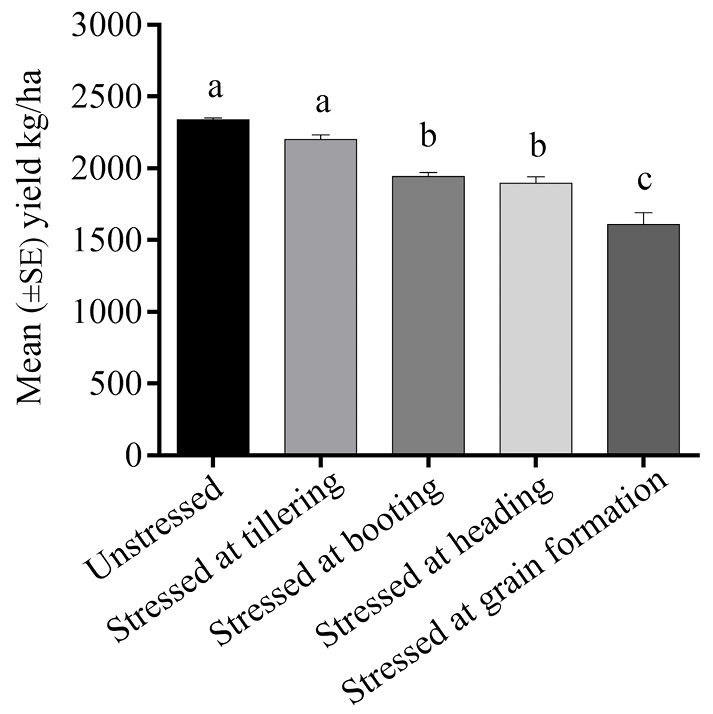
Plant height and shoot biomass was significantly highest in wheat that was maintained unstressed or stressed at tillering stage among various stress treatments (Table I). Grain per spike and thousand seed yield was similar among unstressed, tillering stressed, and booting stressed wheat and was higher than wheat stressed at heading and grain formation stages. Final wheat yield (kg/ha) differed markedly among stress treatments (F4,10= 8.90, P=0.002; Fig. 2). Yield obtained from unstressed or tillering stressed wheat was the highest, whereas it was the lowest from wheat stressed at heading stage. The intermediate yield was from wheat stressed at heading or grain formation stages. The reduction percentage was 18.93% and 31.20%, respectively, for wheat stressed at heading and grain formation stages when compared with unstressed wheat.
The effect of each treatment and sampling date was found to be significant for relative amount of chlorophyll contents (F24,60=3.73, P=0.002; Fig. 3a). The chlorophyll amount was the highest for unstressed wheat followed by tillering stressed wheat. Stressing wheat at booting, heading or grain formation stages significantly reduced chlorophyll amount (F4,10=73.31, P<0.001; Fig. 3b). The reduction in chlorophyll contents was the maximum for stressed wheat at heading stage (i.e., 24.51%), lowest for stressed wheat at tillering stage (i.e., 5.27%), and intermediate for stressed wheat at grain formation (i.e., 14.86%) and booting stages (i.e., 11.70%).
Second trophic level: Aphid dynamics
There was no colonization by wheat aphids in our trial through seedling until tillering stage (Fig. 4a). It was during the booting stage, when aphid colonization started on the wheat plants in the trial. Abundance of the aphids increased steadily, reached to peak numbers in the last week of March during the heading stage, following which, a steady declined started in the aphid populations. The sampling date by treatment interaction effect was significant (F20,50=6.74, P<0.001; Fig. 4a), which means differential effects by treatments over the entire sampling duration.
When treatment effects were evaluated using seasonal averages, aphid densities were significant among treatments (F4,10=33.76, P<0.001; Fig. 4b). Significantly fewer densities (P˂0.001) were obtained from unstressed wheat and tillering stressed wheat but higher aphid densities were obtained from booting stressed wheat. Wheat stressed at heading or grain formation stages recorded intermediate aphid densities. In comparison to unstressed plant, percent aphid increase was 57.28%, 46.14% and 20.70%, respectively, for the wheat stressed at booting, heading and grain formation stages (Fig. 4b).
Third trophic level: Natural enemy abundance
Predatory insect species were found to be active in wheat fields from mid-March until first week of April in 2019. Irrigation treatments showed a significant impact on overall predator abundance in our trial (F4,10=8.00, P=0.004; Fig. 5a). The predators were abundant in wheat stressed at booting stage and fewer in wheat stressed at tillering stage. Predator densities were lower and similar among the other stress treatments (i.e., heading and grain formation). There was significant effect of water stress on predator-prey ratio (F4,10=13.18, P=0.001; Fig. 5b). The predator-ratio was the highest at heading stage, but the lowest and similar at other stages.
Table I. Effect of water stress on plant height, shoot biomass, grains/spike and seed weight (1000 seeds) of wheat crops infested with aphids in the field at university farm in wheat season 2018-19.
| Plant height (cm) | Shoot biomass (g) | Grains/spike | Thousand seed weight (g) | |
| Unstressed plants Plants stressed at tillering | 63.50±0.45a 61.83±0.82a | 2.62±0.06a 2.49±0.07a | 32.83±1.39a 30.70±0.86a | 38.38±0.99a 38.60±1.33a |
| Plants stressed at booting | 55.40±1.28c | 1.97±0.14b | 30.30±1.25a | 35.36±0.79ab |
| Plants stressed at heading | 58.23±0.71b | 2.03±0.12b | 25.87±1.41b | 34.69±0.43b |
| Plants stressed at grain formation | 58.13±0.75b | 2.09±0.14b | 22.87±1.08c | 33.52±1.41b |
| ANOVAs | ||||
| F4,10 | 15.09 | 6.14 | 19.61 | 4.76 |
| P | 0.0009 | 0.0147 | 0.0003 | 0.0293 |
Means within columns followed by the different letter are significantly different (ANOVA with significant (P<0.05) treatment effects followed LSD test for mean comparison).
DISCUSSION
The current study explored how irrigation stress impacts tri-trophic interactions on wheat crop. Water has a key role in the survival of plants as it helps in photosynthesis, necessary for plant to make food . The quality and quantity of food resource relies on the amount of water available to the plant . Often herbivorous insects have chemoreceptors that detect plant water ; . It helps them to decide, which plant is nutritionally suitable for their growth and development . The influence of water stress on feeding behavior of different aphid species have been investigated previously on different host plants including wheat, barley and canola ; using different water stress levels (high, medium and low) under controlled conditions and at heading stage typically for wheat crop. These reports showed no preference for stressed barley by Rhopalosiphum maidis (Fitch) and Rhopalosiphum padi (L.) ; , and for stressed canola by Myzus persicae (Sulzer) and Lipaphis erysimi (Kaltenbach) . On the other hand, M. persicae strong preference for stressed Arabidopsis thaliana (L.) was noted . These reports suggest differential response of aphids to water stress on different host plants and supports the need for individual assessments for highly species-specific nature of trophic interactions, which also stimulated us to undertake present research.
We proved that aphid densities were greater in stressed plants than unstressed plants. Also, the study found that the aphids preferred wheat plants stressed at booting, heading and grain formation stages in comparison to wheat that was stressed at tillering stage. Other studies reported that aphids response to stress plants depend on the severity of the drought stress . In severe water stress, aphids may avoid these plants, change to alate forms and move away to suitable hosts. This may be due to the fact that severely stressed plants become poor in nutrition due to unavailability of water. However, low and medium stress plants have more aphids due to better nutrient availability. In our trial, irrigation stress was applied for a particular stage but not for all stages. Although plants would have undergone some stress when irrigation was stopped, but resorting irrigation on other critical stages would have allowed plants to recover its water and resultantly affect the severity of drought. Under water stress, plants can conserve moisture by closing their stomata, which lessens plants transpiration but raises cell temperature . Studies have shown that stressed plants with raised temperature are more preferable for aphids over unstressed plants with normal temperature because it favours the growth of aphids , possibly explaining our results of increased number of aphids in water stressed plants.
It has been reported that plants can compensate stress effects by increasing their nitrogenous compounds . The supply of nitrogenous compounds like amino acid has direct influence on efficiency of phloem feeding herbivores ; . In response to aphid feeding, plants lose their valuable amino acid and soluble sugar contents and the extent of loss varies according to the species of aphid ; . Aphid feeding can also cause a significant reduction in plant chlorophyll contents ; . In our findings, chlorophyll content reduction was higher in wheat, which was stressed at booting, heading and grain formation stages. As mentioned above, these stages had higher aphid infestations, which also reduced chlorophyll contents in these treatments, meaning an indirect role of short-duration water stress in reducing chlorophyll contents by attracting feeding by more aphids. Another plausible reason can be the effect of water stress itself at these stages. However, this conclusion shall remain provisional until the discrimination of the effect on chlorophyll contents either due to aphids or water stress. Further research will be directed towards determining the effect of water stress at growth stages of the wheat with and without aphids’ infestation.
The management of wheat aphids primarily relies on natural enemies in wheat agroecosystem of Pakistan. Coccinellid, chrysopids, syrphids, spiders, and parasitoids are commonly found agents of biological control providing natural aphid suppression in wheat ecosystem . Intraguild predation , temperature , 2021) and prey availability are among the major factors affecting predation efficiencies or biological control. In our findings, wheat stressed at booting and grain formation stages had abundant predators, whereas predator abundance was lowest in tillering stressed wheat. In order to search their prey, predators do rely upon several vibratory, olfactory, and visionary cues from their host ; . This suggests that wheat field with abundant prey resource are more likely to attract heavy predator abundance ; . The predator-prey ratio was the highest at heading stage. This suggests that stressing wheat at heading stage increases predator-prey ratio, whereas applying stress at other stages does not change predator-prey ratio when compared with unstressed wheat. This also means that irrigation stress is more likely to affect predation when applied at heading stage, which explains interactive effects of irrigation stress with wheat phenology. Through such interactive roles, water management practices can play their role in reducing aphid pressure; however, such interactions or their outcomes are likely to differ when stress is applied for a long duration, because prolonged stress can badly affect plant health and nutritional profile, which may cause shifts in prey and predator preferences, causing prey to find other plant hosts and predators to locate their prey ; Han et al.,, 2015).
In our findings, water stress at different growth stages of the wheat crop affected crop yield. Higher yield reduction was recorded from wheat that was stressed at grain formation stage followed by booting and heading stages. These stages had more aphid infestation, suffered more loss of chlorophyll content and produced low yield, indicating the high sensitivity of these stages toward water stress under the particular influence of aphid infestation ; . Although many studies have shown that plant chlorophyll contents have positive effect on yield enhancement ; but the production of high yield did not always ensure by high chlorophyll contents ; . Wheat grain yield depends on many plant characteristics including tillering density, spike length, grains/spike and grains weight . In the present study, water stress at different growth stages caused variations in plant height, shoot biomass, grains per spike and weight of seeds. The reduction in weight of grains and total yield under water stress treatments can be attributed to reduced translocation of nutrients within the plants that generated shrivelled grains due to accelerated maturity in response to reduced plant moisture.
CONCLUSIONS
Irrigation stress has a great tendency to induce aphids and predator’s preference and affect tri-trophic interactions on physiologically stressed plants. It is important to note, the effects from irrigation stress can be stage-dependent, as not all stages led to similar results. Booting, heading and grain formation are highly irrigation-sensitive stages, where irrigation stress can be highly dangerous, as results of physiological consequences or weaken plant defence, attracting feeding by more aphids. Tillering stressed wheat can recover from later irrigations to counter aphid infestation to produce more chlorophyll content and high wheat yield. Among the stressed stages, heading stage could significantly improve predator-prey ratio, however, further studies are needed to unveil the underlying mechanism. Overall, irrigation is necessary for wheat and determines preference for aphids and their predators. A strategic water management practices in the wheat crop can reduce aphid pressure in wheat fields. Further research is needed to quantify yield losses due to the impact of aphid control and aphid infested wheat plants in stressed and well-irrigated wheat crop.
ACKNOWLEDGEMENTS
We are greatful to Hamza Naeem, and Muhammad Tariq Javeed, Department of Entomology, Bahauddin Zakariya University, Multan, Pakistan, for their help with data collection.
Statement of conflict of interest
The authors have declared no conflict of interest.
Figures
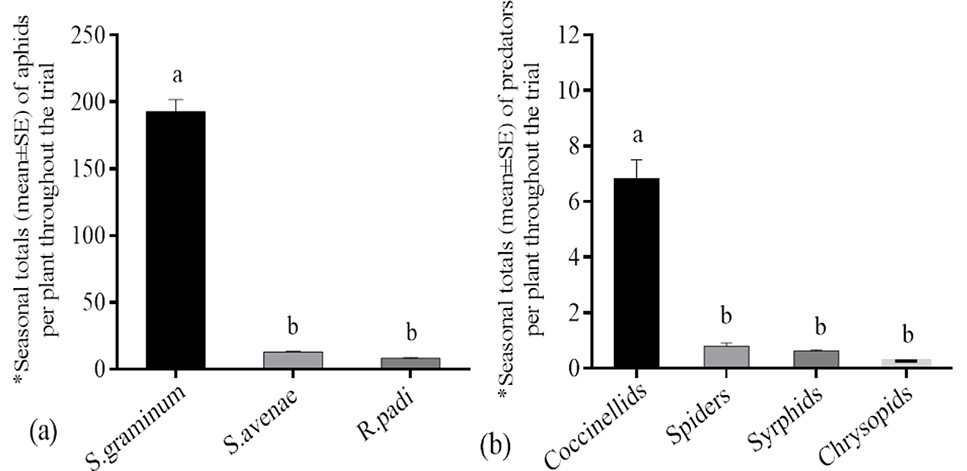
Total counts of wheat aphids (a) and natural enemies (b). The counts are based on data collection during 2019 from a wheat-trial, involving different stressed and unstressed stages of wheat crop as stress treatments. The field used for data collection was located at the University Farm in Multan, Pakistan. Bars topped with the same letter are not significantly different (P˃0.05; LSD test). *Total densities are the means of three replicates.
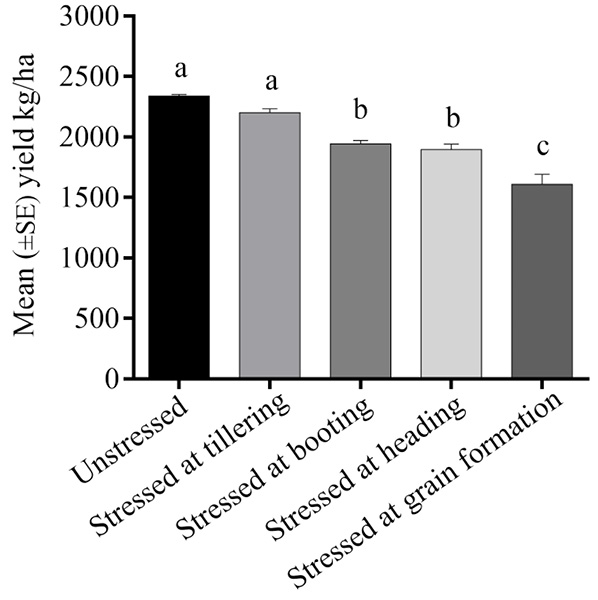
Wheat yield kg/ha from irrigation-stressed and unstressed wheat crop in the field at University farm in Multan, Pakistan, in 2019. Bars topped by the same letter are not significantly different (P˃0.05; LSD test).
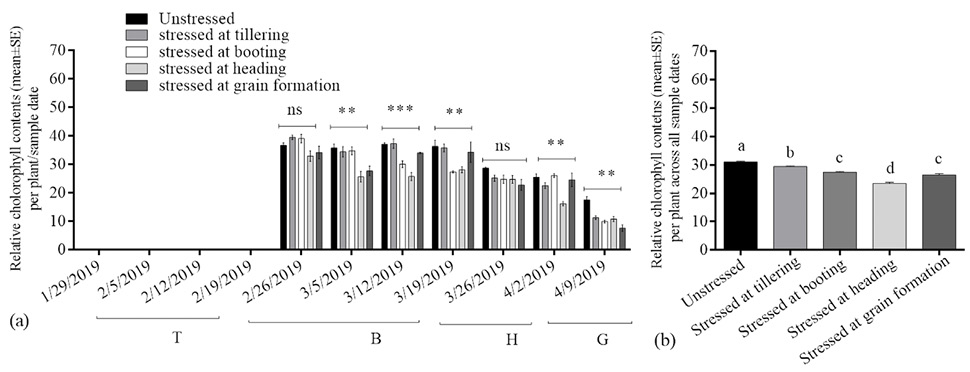
Mean chlorophyll contents per week (a); and their amount per season (b) per leaf from irrigation-stressed and unstressed wheat crop in the field at University farm in Multan, Pakistan, in 2019. Bars topped by the same letter are not significantly different (P˃0.05; LSD test). ns indicates non-significant difference. T: duration of tillering stage; B; duration of booting stage; H; duration of heading stage; G: duration of grain formation stage.
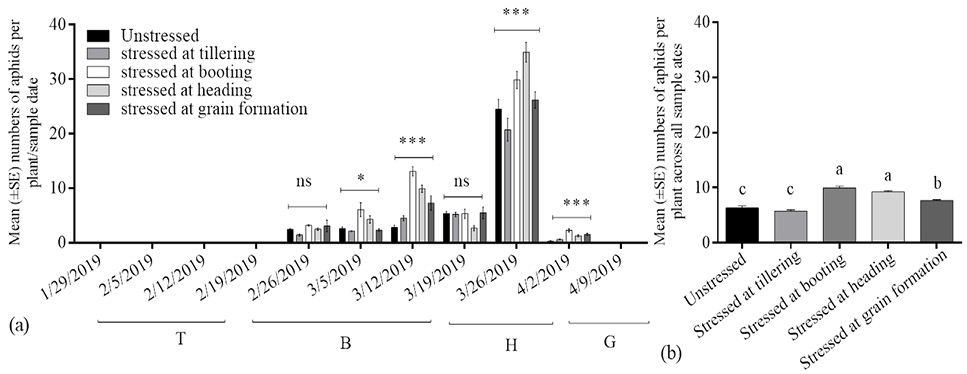
Aphid abundance per week (a); and their seasonal counts (b) per plant from irrigation-stressed and unstressed wheat crop in the field at University farm in Multan, Pakistan, in 2019. * and *** indicates significant difference at P<0.05 and P<0.001; ns indicates non-significant difference. Bars topped by the same letters are not significantly different (P˃0.05; LSD test). T: duration of tillering stage; B: duration of booting stage; H; duration of heading stage; G: duration of grain formation stage.
Predator abundance (a) and predator-prey ratio (b) per plant from irrigation-stressed and unstressed wheat crop in the field at University farm in Multan, Pakistan, in 2019. Predator data were pooled across species. Bars topped by the same letter are not significantly different (P˃0.05; LSD test).
References
- Ahmed, S.S., Liu, D. and Simon, J.C., 2017. Impact of water-deficit stress on tritrophic interactions in a wheat-aphid-parasitoid system. PLoS One, 12: e0186599. https://doi.org/10.1371/journal.pone.0186599[CrossRef]
- Akbar, W., Asif, M.U., Ismail, M., Bux, M. and Memon, R.M., 2017. Management of aphids on canola (Brassica napus L.) through cultural practices. Pak. Entomol., 39: 27-31.
- Aslam, M., Razaq, M., Akhter, W., Faheem, M. and Ahmad, F., 2005. Effect of sowing date of wheat on aphid (Schizaphis gramium Rondani) population. Pak. Entomol., 27: 79-82.
- Awmack, C.S. and Leather, S.R., 2002. Host plant quality and fecundity in herbivorous insects. Annu. Rev. Entomol., 47: 817-844. https://doi.org/10.1146/annurev.ento.47.091201.145300[CrossRef]
- Azandémè-Hounmalon, G.Y., Torto, B., Fiaboe, K.K.M., Subramanian, S., Kreiter, S. and Martin, T., 2016. Visual, vibratory, and olfactory cues affect interactions between the red spider mite Tetranychus evansi and its predator Phytoseiulus longipes. J. Pest Sci., 89: 137-152. https://doi.org/10.1007/s10340-015-0682-y[CrossRef]
- Barutçular, C., Yıldırım, M., Koc, M., Akıncı, C., Toptaş, I., Albayrak, O., Tanrıkulu, A. and El Sabagh, A., 2016. Evaluation of SPAD chlorophyll in spring wheat genotypes under different environments. Fresen. Environ. Bull., 25: 1258-1266.
- Cahon, T., Caillon, R. and Pincebourde, S., 2018. Do aphids alter leaf surface temperature patterns during early infestation? Insects, 9: 34. https://doi.org/10.3390/insects9010034[CrossRef]
- Chapin III, F.S., 1988. Ecological aspects of plant mineral nutrition. Adv. Miner. Nutr., 3: 61-191.
- Charmaine, M., 2018. Why is water important to photosynthesis? Available at: https://sciencing.com/water-important-photosynthesis-6436052.html (Accessed 18 Aug 2019)
- Diaz-Montano, J., Reese, J.C., Schapaugh, W.T. and Campbell, L.R., 2014. Chlorophyll loss caused by soybean aphid (Hemiptera: Aphididae) feeding on soybean. J. econ. Ent., 100: 1657-1662. https://doi.org/10.1093/jee/100.5.1657[CrossRef]
- Doorsher, K., 1988. Aphid modification of host plant metabolism. XVIII Int. Congress of Entomology, Vancouver, BC, Canada, July, XVIII Int. Congress of Entomology, Vancouver, BC, Canada, July.
- Douglas, A., 1993. The nutritional quality of phloem sap utilized by natural aphid populations. Ecol. Ent., 18: 31-38. https://doi.org/10.1111/j.1365-2311.1993.tb01076.x[CrossRef]
- Douglas, A., 2006. Phloem-sap feeding by animals: Problems and solutions. J. exp. Bot., 57: 747-754. https://doi.org/10.1093/jxb/erj067[CrossRef]
- Farooq, M., Wahid, A., Kobayashi, N., Fujita, D. and Basra, S., 2009. Plant drought stress: Effects, mechanisms and management, Sustainable agriculture. Springer, pp. 153-188. https://doi.org/10.1007/978-90-481-2666-8_12[CrossRef]
- Fereres, A., Gutierrez, C., Del Estal, P. and Castanera, P., 1988. Impact of the English grain aphid, Sitobion avenae (F.)(Homoptera: Aphididae), on the yield of wheat plants subjected to water deficits. Environ. Ent., 17: 596-602. https://doi.org/10.1093/ee/17.3.596[CrossRef]
- Gillespie, D. and McGregor, R., 2000. The functions of plant feeding in the omnivorous predator Dicyphus hesperus: water places limits on predation. Ecol. Ent., 25: 380-386. https://doi.org/10.1046/j.1365-2311.2000.00285.x[CrossRef]
- Gitelson, A.A., Keydan, G.P. and Merzlyak, M.N., 2006. Three-band model for noninvasive estimation of chlorophyll, carotenoids, and anthocyanin contents in higher plant leaves. Geophys. Res. Lett., 33: 1-5. https://doi.org/10.1029/2006GL026457[CrossRef]
- Goławska, S., Krzyżanowski, R. and Łukasik, I., 2010. Relationship between aphid infestation and chlorophyll content in Fabaceae species. Acta Biol. Cracov. Ser. Bot., 52: 76-80. https://doi.org/10.2478/v10182-010-0026-4[CrossRef]
- GOP, 2018. Economic survey of Pakistan 2017-18. pp. 17.
- Guler, S. and Ozcelik, H., 2007. Relationships between leaf chlorophyll and yield related characters of dry bean (Phaseolus vulgaris L.). Asian J. Pl. Sci., 6: 700-703. https://doi.org/10.3923/ajps.2007.700.703[CrossRef]
- Hale, B., Bale, J., Pritchard, J., Masters, G. and Brown, V., 2003. Effects of host plant drought stress on the performance of the bird cherry-oat aphid, Rhopalosiphum padi (L.): A mechanistic analysis. Ecol. Ent., 28: 666-677. https://doi.org/10.1111/j.1365-2311.2003.00563.x[CrossRef]
- Han, P., Bearez, P., Adamowicz, S., Lavoir, A.-V., Amiens-Desneux, E. and Desneux, N., 2015. Nitrogen and water limitations in tomato plants trigger negative bottom-up effects on the omnivorous predator Macrolophus pygmaeus. J. Pest Sci., 88: 685-691. https://doi.org/10.1007/s10340-015-0662-2[CrossRef]
- Hawkesford, M.J., Araus, J.L., Park, R., Calderini, D., Miralles, D., Shen, T., Zhang, J. and Parry, M.A., 2013. Prospects of doubling global wheat yields. Fd. Energy Secur., 2: 34-48. https://doi.org/10.1002/fes3.15[CrossRef]
- Hawkins, C., Aston, M. and Whitecross, M., 1985. Aphid-induced changes in growth indices of three leguminous plants: Unrestricted infestation. Can. J. Bot., 63: 2454-2459. https://doi.org/10.1139/b85-351[CrossRef]
- Holtzer, T.O., Archer, T.L. and Norman, J.M., 1988. Host plant suitability in relation to water stress. Science, 327: 812-818.
- Huberty, A.F. and Denno, R.F., 2004. Plant water stress and its consequences for herbivorous insects: A new synthesis. Ecology, 85: 1383-1398. https://doi.org/10.1890/03-0352[CrossRef]
- Ibrar-ul-Hassan, A., Humayun, J. and Khaliq, A., 2004. Microclimatic morphs and plant distribution analysis of Rhopalosiphum maidis (Fitch) and Schizaphis graminum (Rondani) on wheat. Asian J. Pl. Sci., 3: 516-521. https://doi.org/10.3923/ajps.2004.516.521[CrossRef]
- Inbar, M., Doostdar, H. and Mayer, R.T., 2001. Suitability of stressed and vigorous plants to various insect herbivores. Oikos, 94: 228-235. https://doi.org/10.1034/j.1600-0706.2001.940203.x[CrossRef]
- Iqbal, M., Ahmed, K., Ahmad, I., Sadiq, M. and Ashraf, M., 1999. Yield and yield components of durum wheat (Triticum durum Desf.) as influenced by water stress at various growth stages. Pak. J. biol. Sci., 2: 11-14. https://doi.org/10.3923/pjbs.1999.1438.1440[CrossRef]
- Islam, Y., Shah, F.M., Rubing, X., Razaq, M., Yabo, M., Xihong, L. and Zhou, X., 2021. Functional response of Harmonia axyridis preying on Acyrthosiphon pisum nymphs: The effect of temperature. Sci. Rep., 11: 1-13. https://doi.org/10.1038/s41598-021-92954-x[CrossRef]
- Islam, Y., Shah, F.M., Shah, M.A., Musa Khan, M., Rasheed, M.A., Ur Rehman, S., Ali, S. and Zhou, X., 2020. Temperature-dependent functional response of Harmonia axyridis (Coleoptera: Coccinellidae) on the eggs of Spodoptera litura (Lepidoptera: Noctuidae) in laboratory. Insects, 11: 583. https://doi.org/10.3390/insects11090583[CrossRef]
- Jakobs, R., Schweiger, R. and Müller, C., 2019. Aphid infestation leads to plant part-specific changes in phloem sap chemistry, which may indicate niche construction. New Phytol., 221: 503-514. https://doi.org/10.1111/nph.15335[CrossRef]
- Khan, A., Azam, F. and Ali, A., 2010. Relationship of morphological traits and grain yield in recombinant inbred wheat lines grown under drought conditions. Pak. J. Bot., 42: 259-267.
- Khan, A.M., Khan, A.A., Afzal, M. and Iqbal, M.S., 2012. Wheat crop yield losses caused by the aphids infestation. J. Biofertil. Biopestici., 3: 1-7.
- Khan, M. and Port, G., 2008. Performance of clones and morphs of two cereal aphids on wheat plants with high and low nitrogen content. Ent. Sci., 11: 159-165. https://doi.org/10.1111/j.1479-8298.2008.00262.x[CrossRef]
- Khattab, H., 2007. The defense mechanism of cabbage plant against phloem-sucking aphid (Brevicoryne brassicae L.). Aust. J. Basic appl. Sci., 1: 56-62.
- Kieckhefer, R. and Gellner, J., 1992. Yield losses in winter wheat caused by low-density cereal aphid populations. Agron. J., 84: 180-183. https://doi.org/10.2134/agronj1992.00021962008400020011x[CrossRef]
- King, C., Jacob, H.S. and Berlandier, F., 2006. The influence of water deficiency on the relationship between canola (Brassica napus L.), and two aphid species (Hemiptera: Aphididae), Lipaphis erysimi (Kaltenbach) and Brevicoryne brassicae (L.). Aust. J. Agric. Res., 57: 439-445. https://doi.org/10.1071/AR05137[CrossRef]
- Liu, D., Dai, P., Li, S., Ahmed, S.S., Shang, Z. and Shi, X., 2018. Life-history responses of insects to water-deficit stress: A case study with the aphid Sitobion avenae. BMC Ecol., 18: 17. https://doi.org/10.1186/s12898-018-0173-0[CrossRef]
- Magalhaes, L.C., Hunt, T.E. and Siegfried, B.D., 2009. Efficacy of neonicotinoid seed treatments to reduce soybean aphid populations under field and controlled conditions in Nebraska. J. econ. Ent., 102: 187-195. https://doi.org/10.1603/029.102.0127[CrossRef]
- Mahmood, I., Imadi, S.R., Shazadi, K., Gul, A. and Hakeem, K.R., 2016. Effects of pesticides on environment, Plant, soil and microbes. Springer, pp. 253-269. https://doi.org/10.1007/978-3-319-27455-3_13[CrossRef]
- Martin-StPaul, N., Delzon, S. and Cochard, H., 2017. Plant resistance to drought relies on early stomatal closure. Ecol. Lett., 20: 1-23. https://doi.org/10.1101/099531[CrossRef]
- Mattson, Jr, W.J., 1980. Herbivory in relation to plant nitrogen content. Annu. Rev. Ecol. Syst., 11: 119-161. https://doi.org/10.1146/annurev.es.11.110180.001003[CrossRef]
- Maxmen, A., 2013. Crop pests: Under attack. Nature. 501: S15. https://doi.org/10.1038/501S15a[CrossRef]
- Mewis, I., Khan, M.A., Glawischnig, E., Schreiner, M. and Ulrichs, C., 2012. Water stress and aphid feeding differentially influence metabolite composition in Arabidopsis thaliana (L.). PLoS One, 7: e48661. https://doi.org/10.1371/journal.pone.0048661[CrossRef]
- Meyer, S., Roces, F.and Wirth, R., 2006. Selecting the drought stressed: effects of plant stress on intraspecific and within-plant herbivory patterns of the leaf-cutting ant Atta colombica. Funct. Ecol., 20: 973-981. https://doi.org/10.1111/j.1365-2435.2006.01178.x[CrossRef]
- Mirande, L., Desneux, N., Haramboure, M. and Schneider, M.I., 2015. Intraguild predation between an exotic and a native coccinellid in Argentina: The role of prey density. J. Pest Sci., 88: 155-162. https://doi.org/10.1007/s10340-014-0597-z[CrossRef]
- Naeem, A., Hafeez, F., Iftikhar, A., Waaiz, M., Güncan, A., Ullah, F. and Shah, F.M., 2021. Laboratory induced selection of pyriproxyfen resistance in Oxycarenus hyalinipennis Costa (Hemiptera: Lygaeidae): Cross-resistance potential, realized heritability, and fitness costs determination using age-stage, two-sex life table. Chemosphere, 269: 129367. https://doi.org/10.1016/j.chemosphere.2020.129367[CrossRef]
- Noman, Q.M., Shah, F.M., Mahmood, K.and Razaq, M., 2021. Population dynamics of Tephritid fruit flies in citrus and mango orchards of Multan, Southern Punjab, Pakistan. Pakistan J. Zool., 54: 325-330. https://doi.org/10.17582/journal.pjz/20191021181023[Full text][CrossRef]
- Oelbermann, K. and Scheu, S., 2009. Control of aphids on wheat by generalist predators: effects of predator density and the presence of alternative prey. Ent. Exp. Appl., 132: 225-231. https://doi.org/10.1111/j.1570-7458.2009.00876.x[CrossRef]
- Ortiz, R., Sayre, K.D., Govaerts, B., Gupta, R., Subbarao, G., Ban, T., Hodson, D., Dixon, J.M., Ortiz-Monasterio, J.I. and Reynolds, M., 2008. Climate change: Can wheat beat the heat? Agric. Ecosyst. Environ., 126: 46-58. https://doi.org/10.1016/j.agee.2008.01.019[CrossRef]
- Oswald, C. and Brewer, M., 1997. Aphid–barley interactions mediated by water stress and barley resistance to Russian wheat aphid (Homoptera: Aphididae). Environ. Ent., 26: 591-602. https://doi.org/10.1093/ee/26.3.591[CrossRef]
- Paknejad, F., Nasri, M., Moghadam, H.T., Zahedi, H. and Alahmadi, M.J., 2007. Effects of drought stress on chlorophyll fluorescence parameters, chlorophyll content and grain yield of wheat cultivars. J. biol. Sci., 7: 841-847. https://doi.org/10.3923/jbs.2007.841.847[CrossRef]
- Perfect, T., 1986. Irrigation as a factor influencing the management of agricultural pests. Philos. Trans. R. Soc. A., 316: 347-354. https://doi.org/10.1098/rsta.1986.0013[CrossRef]
- Pinheiro, C. and Chaves, M., 2010. Photosynthesis and drought: can we make metabolic connections from available data? J. exp. Bot., 62: 869-882. https://doi.org/10.1093/jxb/erq340[CrossRef]
- Punjab, G.O.T., 2018. Production technology of wheat.
- Razaq, M., Mensah, R. and Athar, H.u.R., 2019a. Insect pest management in cotton. In: Cotton production (eds. K. Jabran and B.S. Chauhan). John Wiley and Sons, Inc., USA. https://doi.org/10.1002/9781119385523.ch5[CrossRef]
- Razaq, M., Shah, F.M., Ahmad, S. and Afzal, M., 2019b. Pest management for agronomic crops. In: Agronomic crops (ed. M Hasanuzzaman). Springer: Singapore, Springer, pp. 365-384. https://doi.org/10.1007/978-981-32-9783-8_18[CrossRef]
- Rosenzweig, C., Iglesias, A., Yang, X., Epstein, P.R. and Chivian, E., 2001. Climate change and extreme weather events; implications for food production, plant diseases, and pests. Glob. Change Hum. Hlth., 2: 90-104. https://doi.org/10.1023/A:1015086831467[CrossRef]
- Rouault, G., Candau, J.-N., Lieutier, F., Nageleisen, L.-M., Martin, J.-C. and Warzée, N., 2006. Effects of drought and heat on forest insect populations in relation to the 2003 drought in Western Europe. Annl. For. Sci., 63: 613-624. https://doi.org/10.1051/forest:2006044[CrossRef]
- Schwarz, T. and Frank, T., 2019. Aphid feeding by lady beetles: Higher consumption at higher temperature. BioContr., 64: 323-332. https://doi.org/10.1007/s10526-019-09931-7[CrossRef]
- Shah, F.M., Razaq, M., Ali, A., Han, P. and Chen, J., 2017. Comparative role of neem seed extract, moringa leaf extract and imidacloprid in the management of wheat aphids in relation to yield losses in Pakistan. PLoS One, 12: e0184639. https://doi.org/10.1371/journal.pone.0184639[CrossRef]
- Shah, F.M., Razaq, M., Ali, Q., Ali, A., Shad, S.A., Aslam, M. and Hardy, I.C.W., 2020. Action threshold development in cabbage pest management using synthetic and botanical insecticides. Ent. Gen., 40: 157–172. https://doi.org/10.1127/entomologia/2020/0904[CrossRef]
- Shah, F.M., Razaq, M., Ali, Q., Shad, S.A., Aslam, M. and Hardy, I.C.W, 2019. Field evaluation of synthetic and neem-derived alternative insecticides in developing action thresholds against cauliflower pests. Sci. Rep., 9: 1-13. https://doi.org/10.1038/s41598-019-44080-y[CrossRef]
- Shewry, P.R. and Hey, S.J., 2015. The contribution of wheat to human diet and health. Fd. Energy Secur., 4: 178-202. https://doi.org/10.1002/fes3.64[CrossRef]
- Simon, J.C. and Peccoud, J., 2018. Rapid evolution of aphid pests in agricultural environments. Curr. Opin. Insect Sci., 26: 17-24. https://doi.org/10.1016/j.cois.2017.12.009[CrossRef]
- Simpson, K., Jackson, G. and Grace, J., 2012. The response of aphids to plant water stress the case of Myzus persicae and Brassica oleracea var. capitata. Ent. Exp. Appl., 142: 191-202. https://doi.org/10.1111/j.1570-7458.2011.01216.x[CrossRef]
- Singh, P. and Sinhal, V.K., 2011. Effect of aphid infestation on the biochemical constituents of mustard (Brassica juncea) plant. J. Phytol., 3: 28-33.
- Städler, E., 1984. Contact chemoreception, chemical ecology of insects. Springer, pp. 3-35. https://doi.org/10.1007/978-1-4899-3368-3_1[CrossRef]
- Sytykiewicz, H., Czerniewicz, P., Sprawka, I. and Krzyżanowski, R., 2013. Chlorophyll content of aphid-infested seedling leaves of fifteen maize genotypes. Acta Biol. Cracov. Ser. Bot., 55: 51-60. https://doi.org/10.2478/abcsb-2013-0023[CrossRef]
- Tariq, M., Wright, D.J., Rossiter, J.T. and Staley, J.T., 2012. Aphids in a changing world: Testing the plant stress, plant vigour and pulsed stress hypotheses. Agric. For. Ent., 14: 177-185. https://doi.org/10.1111/j.1461-9563.2011.00557.x[CrossRef]
- Tofangsazi, N., Kheradmand, K., Shahrokhi, S. and Talebi, A., 2012. Effect of different constant temperatures on biology of Schizaphis graminum (rondani) (Hemiptera: aphididae) on barley, Hordeum vulgare L. (poaceae) in Iran. J. Pl. Prot. Res., 52: 319-323. https://doi.org/10.2478/v10045-012-0052-1[CrossRef]
- Tubiello, F., Schmidhuber, J., Howden, M., Neofotis, P.G., Park, S., Fernandes, E. and Thapa, D., 2008. Climate change response strategies for agriculture: Challenges and opportunities for the 21st century. Proceedings of the Agriculture and rural development discussion paper, 2008.
- Visser, J., 1986. Host odor perception in phytophagous insects. Annu. Rev. Ent., 31: 121-144. https://doi.org/10.1146/annurev.en.31.010186.001005[CrossRef]
- Wang, G., Kang, M.S. and Moreno, O., 1999. Genetic analyses of grain-filling rate and duration in maize. Field Crops Res., 61: 211-222. https://doi.org/10.1016/S0378-4290(98)00163-4[CrossRef]
- Waraich, E.A., Ahmad, R., Ali, A. and Ullah, S., 2007. Irrigation and nitrogen effects on grain development and yield in wheat (Triticum aestivum L.). Pak. J. Bot., 39: 1663-1672.
- Xiong, D., Chen, J., Yu, T., Gao, W., Ling, X., Li, Y., Peng, S. and Huang, J., 2015. SPAD-based leaf nitrogen estimation is impacted by environmental factors and crop leaf characteristics. Sci. Rep., 5: 13389. https://doi.org/10.1038/srep13389[CrossRef]
- Ye, M., Veyrat, N., Xu, H., Hu, L., Turlings, T.C. and Erb, M., 2018. An herbivore-induced plant volatile reduces parasitoid attraction by changing the smell of caterpillars. Sci. Adv., 4: eaar4767. https://doi.org/10.1126/sciadv.aar4767[CrossRef]
Services
Article usage statistics
Loading…