Research Article · Volume 14, Issue 10, 15 September 2026 · Open Access
Integrated Community-Based Agribusiness Models for Transforming Smallholder Cattle Farming: A Multi-Dimensional Sustainability Perspective
· · · ·
Affiliations & Notes ⌄
1Faculty of Animal Science, Universitas Brawijaya, Malang, 65145, Indonesia
2Faculty of Fisheries and Marine Science, Universitas Brawijaya, Malang, 65145, Indonesia
3School of Postgraduate, Universitas Brawijaya, Malang, 65145, Indonesia *Correspondence | Harsuko Riniwati, Faculty of Fisheries and Marine Science, Universitas Brawijaya, Malang, 65145, Indonesia
This study demonstrates that transforming traditional smallholder cattle farming into sustainable agribusiness units depends not solely on technical improvements or market access, but fundamentally on institutional strength and community participation.
The findings indicate that institutional cohesion, participatory governance, market integration, capacity building, and technology adoption should not be viewed as separate dimensions of agribusiness transformation.
Sustainability dimensions with livelihood assets within a community-based agribusiness model.
At the community level, collective marketing, participatory governance, and continuous capacity building are essential to support sustainable and competitive smallholder livestock agribusiness systems.
Selected from the article's own text.
Abstract
Smallholder cattle farming plays a critical role in ensuring food security and rural livelihoods in Indonesia, yet it continues to face persistent challenges, including low productivity, weak market integration, and fragmented institutional support. Despite policy interventions such as the Sekolah Peternakan Rakyat (SPR) program, existing approaches remain largely fragmented and lack a comprehensive sustainability framework. This study proposes and examines, through a systematic literature review, an integrated community-based agribusiness model for transforming traditional smallholder cattle farming into sustainable and competitive systems. We employed a qualitative, literature-based exploratory design using systematic literature review procedures as the method of data collection, synthesizing peer-reviewed articles, policy documents, and relevant reports. Thematic content analysis was conducted using NVivo 14 to identify key patterns and relationships across studies. The findings reveal that institutional strengthening, particularly leadership, trust, and governance, serves as the primary driver of transformation. Market integration through collective action, along with capacity building and knowledge transfer, further enhances system performance. However, significant constraints remain, including infrastructure limitations, unequal access to technology , and institutional disparities. The study proposes a multi-dimensional framework integrating ecological, economic, socio-cultural, technological, institutional, and informational aspects, supported by a livelihood-based perspective. This integrative approach provides a comprehensive pathway for enhancing productivity, resilience, and sustainability in smallholder livestock systems. This research contributes to the advancement of community-based agribusiness theory and offers practical insights for policymakers and development practitioners. The proposed model provides a scalable strategy for inclusive and sustainable livestock development in developing country contexts.
Smallholder livestock farming constitutes a critical pillar of food security and rural livelihoods across developing economies. In many low- and middle-income countries, including Indonesia, smallholder farmers contribute more than 90% of national beef production, highlighting their strategic role within domestic food systems . At the same time, rising global population and shifting dietary patterns toward higher animal protein consumption are expected to double beef demand by 2050 . Despite this growing demand, smallholder cattle farming systems continue to show low productivity , driven by structural inefficiencies, traditional management practices, and limited integration with market-oriented innovations . Traditional husbandry and management practices at the farm level continue to constrain productivity improvement and livestock health outcomes in many smallholder production systems, highlighting the need for modernization and capacity strengthening . These conditions indicate a structural mismatch between increasing market demand and the capacity of traditional production systems. In addition, animal health problems remain a persistent production constraint among smallholder farmers, reducing productivity and limiting the sustainability of livestock enterprises . Collectively, these challenges necessitate a fundamental transformation toward more integrated agribusiness models in which institutional, market, capacity-building, and technological interventions are designed and implemented jointly, rather than sequentially or in isolation, so that improvements in one dimension reinforce rather than offset progress in the others
The urgency of this transformation is intensified by the vulnerability of smallholder systems to economic and environmental shocks. In Indonesia, smallholder farmers supply approximately 95-98% of domestic beef production; however, national self-sufficiency has not been achieved , with a significant supply deficit around 27% still covered by imports . This paradox reflects deep-rooted systemic constraints, including low reproductive efficiency, inadequate feed quality, limited economies of scale, and weak bargaining positions within fragmented market structures . Beyond technical limitations, institutional weaknesses such as insufficient extension services, limited access to technology, and poor value chain integration further constrain productivity and profitability. Similar challenges have been reported in Indonesian smallholder dairy systems, where production performance remains highly dependent on the effectiveness of knowledge transfer, farm management practices, and technology adoption . As a result, smallholder cattle farming remains trapped in a low-input, low-output cycle, perpetuating rural income inequality and limiting sectoral competitiveness . It should be noted that this pattern is inferred from reported productivity, income, and market-participation indicators across the reviewed literature rather than from direct evidence of farmer aspirations; the reviewed studies do not establish whether smallholder farmers themselves seek to exit low-input systems or may rationally prefer lower-risk, lower-effort arrangements despite lower returns. This distinction is acknowledged as a limitation of literature-based synthesis and is revisited in the Discussion.
In response, a range of interventions have been introduced, including public-private partnerships , livestock clustering, and farmer field schools aimed at enhancing productivity and market access. Among these, the Sekolah Peternakan Rakyat (SPR) program represents a notable institutional innovation in Indonesia, designed to transform traditional cattle farming into a more organized, community-based agribusiness system through collective action, capacity building, and market integration . However, the reviewed literature reports inconsistent detail on SPR participation figures, program duration, and outcome measures across sites, and the synthesis presented here should therefore be read as a description of the program’s intended mechanisms rather than a validated evaluation of its measured impact. Parallel initiatives, such as the integration of cattle farming within oil palm systems, have also demonstrated potential in improving resource efficiency and reducing production costs . However, existing studies and interventions remain largely fragmented, often addressing isolated components such as breeding, feeding, or marketing. These approaches inadequately capture the complex, multidimensional nature of sustainability in smallholder systems.
This fragmentation reveals a critical gap in the literature: the absence of a holistic, community-integrated agribusiness framework that simultaneously addresses institutional, economic, social, technological, and informational dimensions of transformation. While previous research has acknowledged the importance of individual factors, limited attention has been given to how these dimensions interact within a cohesive system capable of sustaining long-term transformation. Consequently, there is a need to move beyond partial interventions toward an integrative model that aligns local socio-cultural contexts with modern agribusiness principles. This gap persists partly because single-dimension studies are more tractable and easier to publish with methodological depth, creating a disincentive for integrative work; this study accepts the associated trade-off of breadth over depth and positions itself explicitly as a synthesis-level contribution intended to be followed by dimension-specific empirical validation. This gap leads to the central research question of this study: How can a community-integrated agribusiness model effectively transform traditional smallholder cattle farming into sustainable and competitive enterprises.
To address this question, this study aimed to develop and assess an integrated, community-based agribusiness model that bridges traditional livestock practices with modern value chain systems. The proposed model emphasizes institutional strengthening, participatory governance, market integration, and capacity building as interconnected drivers of transformation. By leveraging local resources and fostering collective action, the model seeks to enhance productivity, improve income stability, and strengthen resilience among smallholder farmers.
The contribution of this study is twofold: Empirically, it provides context-specific insights into the mechanisms enabling sustainable transformation within community-based livestock systems. Theoretically, it advances the discourse on rural agribusiness transformation by integrating perspectives from sustainable development, institutional theory, and community empowerment into a unified
MATERIALS AND METHODS
Research design
This study adopted a qualitative exploratory research design in which a systematic literature review serves as the method of data collection, applied to analyze the institutional transformation of smallholder cattle farming within community-based agribusiness models, particularly under the Sekolah Peternakan Rakyat (SPR) framework.
Rather than relying on primary field data, the study synthesizes existing empirical and conceptual evidence to develop a comprehensive and integrative understanding of transformation pathways. This approach is particularly appropriate for examining complex, multi-dimensional phenomena where substantial knowledge exists but remains fragmented across studies ; . To ensure analytical rigor, the study combines systematic literature review procedures with thematic content analysis, enabling both structured data collection and in-depth qualitative interpretation.
Data sources and inclusion criteria
The study uses secondary data from peer-reviewed journal articles and official reports indexed in major academic databases, including Scopus, Web of Science, and DOAJ. To ensure the quality and relevance of the data, the following inclusion criteria were applied:
Publications within the last ten years to capture recent developments
Direct relevance to at least one of the key themes: smallholder livestock systems, community-based agribusiness, or SPR implementation
Availability of sufficient methodological transparency to support qualitative interpretation.
Sources that did not meet these criteria, including non-academic publications or studies lacking methodological clarity, were excluded. This screening process ensured that only credible and relevant evidence informed the analysis.
Data collection and extraction
Data collection followed a structured systematic review procedure based on the PRISMA 2020 framework. Literature searches were conducted using predefined keywords, including “Sekolah Peternakan Rakyat,” “community-based livestock,” “smallholder cattle farming,” and “agribusiness transformation,” across major academic databases, including Scopus, Web of Science, DOAJ, ScienceDirect, and Google Scholar.
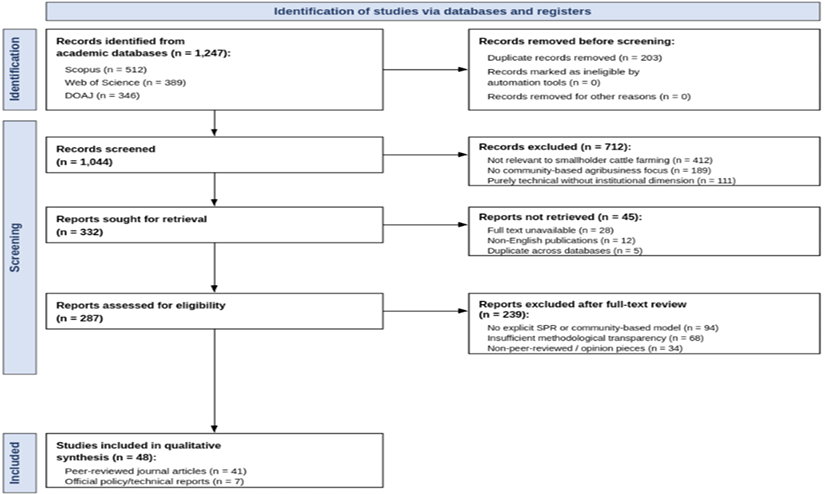
The literature selection process consisted of identification, screening, eligibility assessment, and inclusion stages. As illustrated in Figure 1, the initial search yielded 1,247 records. After duplicate removal and screening procedures, 287 articles were subjected to full-text eligibility assessment. Following the application of predefined inclusion and exclusion criteria, 48 studies remained for qualitative synthesis, comprising 41 peer-reviewed journal articles and 7 official reports. Screening and eligibility assessment were conducted by the all authors, with disagreements resolved through discussion, in order to reduce selection bias in the screening process.
Data analysis
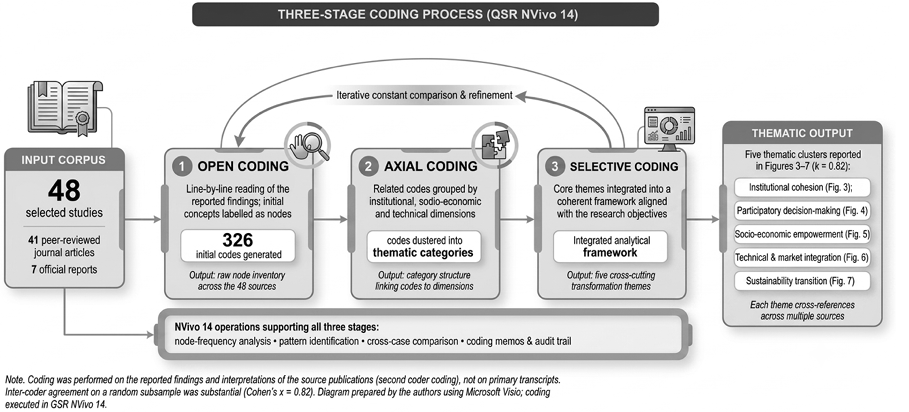
This study employed thematic content analysis supported by NVivo 14 software to systematically code, categorize, and synthesize qualitative data derived from the selected literature. The 48 selected studies generated a total of 326 initial codes during open coding, which were subsequently grouped into thematic categories through axial and selective coding procedures. The analysis followed a three-stage coding process:
Open Coding: Initial identification of concepts and patterns emerging from the data;
Axial Coding: Grouping of related codes into broader categories reflecting relationships among institutional, socio-economic, and technical dimensions;
Selective Coding: Integration of core themes into a coherent analytical framework aligned with the research objectives .
NVivo software enhanced analytical rigor by facilitating node frequency analysis, pattern identification, and cross-case comparisons. The analytical process was conducted iteratively, incorporating continuous comparison and refinement to ensure conceptual clarity. Because coding was performed on the reported findings and interpretations of the source publications rather than on primary transcripts or field observations, the resulting codes reflect how
themes were represented and interpreted by the original authors; this second-order coding process is acknowledged as a methodological limitation that may carry forward interpretive choices and emphases already present in the source literature.
To strengthen validity, each emergent theme was cross-referenced across multiple sources, ensuring interpretive consistency and robustness. Furthermore, the coding framework was explicitly aligned with the conceptual foundation of integrated community-based agribusiness models, enabling the analysis to directly address the study’s central research question on transformation pathways from traditional to sustainable livestock systems.
Trustworthiness and validation
To ensure the trustworthiness of the findings, this study adopted four key criteria: credibility, dependability, confirmability, and transferability.
Credibility was ensured by relying exclusively on high-quality peer-reviewed publications and official policy documents.
Dependability was strengthened through the use of a systematic and transparent coding process, supported by detailed coding memos and an audit trail within NVivo.
Confirmability was achieved by clearly documenting the data selection process, inclusion criteria, and analytical procedures.
Transferability was supported by providing detailed contextual descriptions, enabling readers to assess the applicability of findings to other settings.
In addition, triangulation was conducted by incorporating diverse types of sources (academic, technical, and policy-based), enhancing the robustness of the analysis .
Ethical considerations
As this study is based exclusively on publicly available secondary data, it does not involve human subjects and therefore does not require formal ethical approval. Nevertheless, ethical standards were strictly maintained by ensuring proper citation of all sources, avoiding plagiarism, and adhering to principles of responsible scholarship. The study emphasizes transparency, integrity, and accountability in the use and interpretation of secondary data.
Software acknowledgment
Thematic coding and node frequency analysis were conducted using NVivo 14 (Lumivero). Figures 1 and 2 were prepared using Canva. Reference management was performed using Mendeley.
RESULT AND DISCUSSION
Institutional cohesion as a foundation for collective action
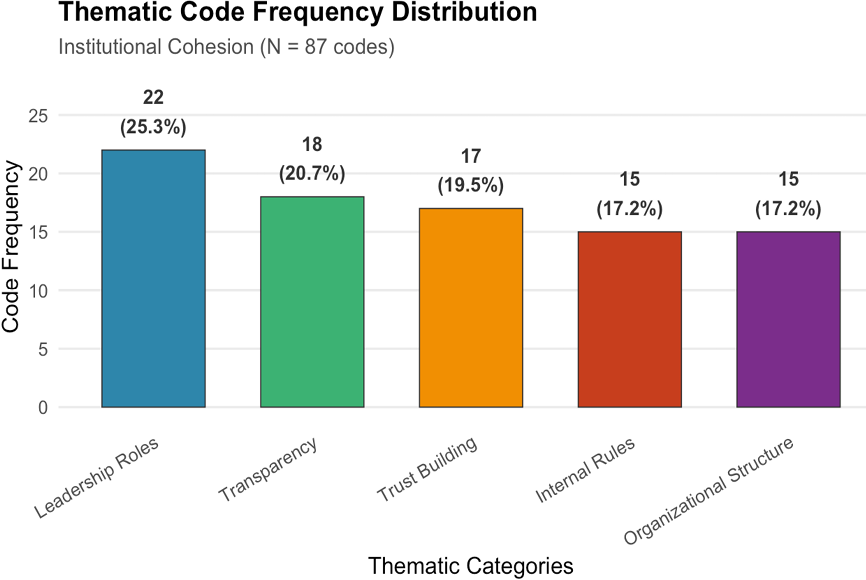
The thematic analysis revealed that institutional cohesion among smallholder cattle farmers is primarily driven by leadership, transparency, and trust (Figure 3). Leadership roles were the most frequently coded theme (n = 22), highlighting their central role in mobilizing collective action and bridging traditional farming practices with modern agribusiness logic. These frequencies represent how often a theme was coded within the reviewed publications rather than a measured indicator of real-world importance among farmers, and no statistical test
was applied to the difference between adjacent frequencies (e.g., 22 versus 18); the ranking should therefore be interpreted as descriptive of the literature’s emphasis rather than as evidence of relative causal importance. In total, 87 codes were identified across the five institutional-cohesion themes (Leadership Roles: 22, 25.3%; Transparency: 18, 20.7%; Trust Building: 17, 19.5%; Internal Rules: 15, 17.2%; Organizational Structure: 15, 17.2%). To assess coding reliability, a second coder independently coded a random subsample of the corpus; agreement between coders was substantial (Cohen’s κ = 0.82), a reliability estimate that applies to the thematic coding underlying Figures 3 through 7. Transparency (n = 18) and trust-building (n = 17) followed closely, indicating that social capital is a critical enabler of group-based governance. Internal rules and organizational structure (each n = 15) further highlighted the importance of formal mechanisms in ensuring accountability and operational efficiency. These findings suggest that sustainable transformation requires not only technical interventions but also the harmonization of institutional dimensions such as leadership, transparency, trust, rules, and structure within a cohesive governance framework.
Note: Leadership Role shows the highest frequency (22), indicating the importance of leadership aspects in institutional cohesion. Transparency (18) and Trust Building (17) occupy significant positions, indicating the importance of openness and trust. Internal Rules and Organizational Structure have the same frequency (15), indicating a balance between rules and organizational structure.
Simultaneously, trust is the social glue that ensures cooperation and long-term commitment to group-based farming models. “Internal Rules” and “Organizational Structure” each recorded a frequency of 15, reflecting a balanced importance attributed to formal governance mechanisms. Clear internal rules provide a regulatory framework that helps manage risks, define roles, and enforce accountability. Meanwhile, well-defined organizational structures support efficient coordination, facilitate information flow, and enable scaling of agribusiness operations. Taken together, these findings highlight that successful transformation of traditional smallholder cattle farms into sustainable agribusiness units is not solely dependent on infrastructure or market access. Instead, it requires a cohesive institutional environment where leadership, transparency, trust, rules, and structure are harmonized. These institutional dimensions must evolve hand-in-hand with technical and commercial innovations to ensure long-term viability and inclusivity of the community-based model.
Participatory deci sion-making and empowerment
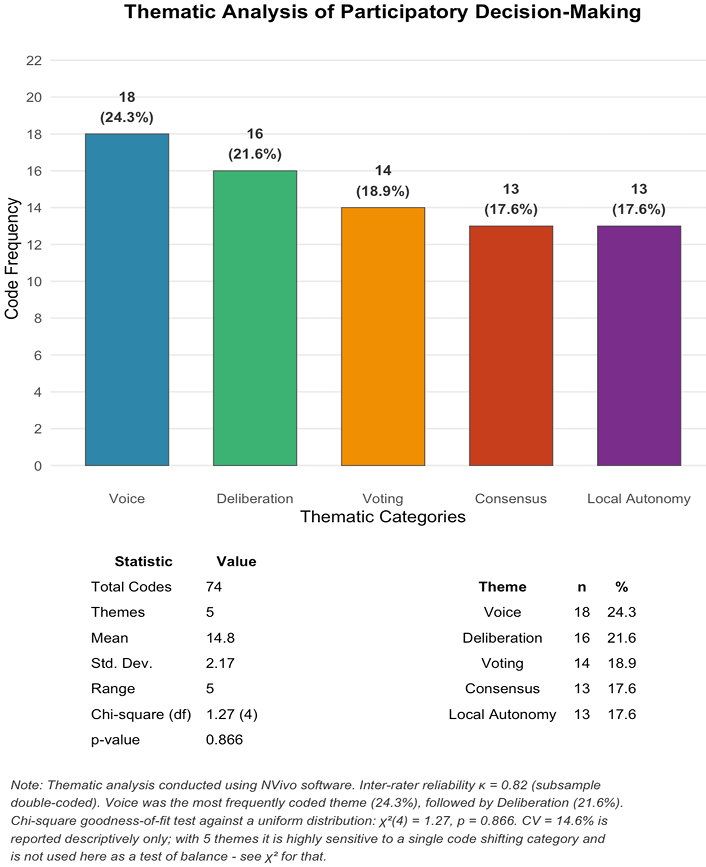
The thematic analysis presented in Figure 4 highlights key participatory governance dimensions observed within community-based cattle farming models. A total of 74 codes were categorized into five primary themes: Voice, Deliberation, Voting, Consensus, and Local Autonomy. The theme “Voice” emerged as the most prominent category, with a frequency of 18 (24.3%). This suggests that mechanisms allowing individuals to express their opinions and concerns are foundational in participatory governance within the community farming context. The prominence of this theme aligns with the inclusive nature of integrated models that seek to empower smallholders by ensuring their perspectives are acknowledged in decision-making processes.
“Voting” (n = 14, 18.9%) and “Consensus” (n = 13, 17.6%) reflect the coexistence of formal and informal decision-making practices. While voting provides a structured method for group resolutions, consensus-building highlights a cultural preference for harmony and collective agreement, which is particularly relevant in rural, traditional communities.
Lastly, the theme of “Local Autonomy” (13 occurrences, 17.6%) points to the degree of independence communities have in managing their own affairs. The presence of this theme underscores the importance of decentralized governance in promoting self-reliance, tailored strategies, and sustainability in smallholder systems. The distribution of themes across the five categories is relatively even (ranging from 13 to 18 coded instances; M = 14.8, SD = 2.17, CV = 14.6%), suggesting the existence of multifaceted participatory mechanisms. To test this observation formally, a chi-square goodness-of-fit test was conducted against a uniform distribution across the five themes; the result was non-significant (χ²(4) = 1.27, p = .866), indicating no statistically detectable deviation from an even distribution. The coefficient of variation is reported descriptively only and was not used as the basis for this statistical inference. Rather than relying on a single dominant approach, the data reflects a pluralistic governance environment where voice, deliberation, and both formal (voting) and informal (consensus) strategies are harmonized to support effective collective action. These findings reinforce the view that transforming smallholder cattle farms into community-driven agribusiness units requires more than technical interventions. It demands inclusive, participatory structures that respect local values while encouraging democratic engagement and autonomy. This approach builds trust and legitimacy, strengthens social cohesion , and enhances the resilience of institutional innovations.
Access to market and value chain integration
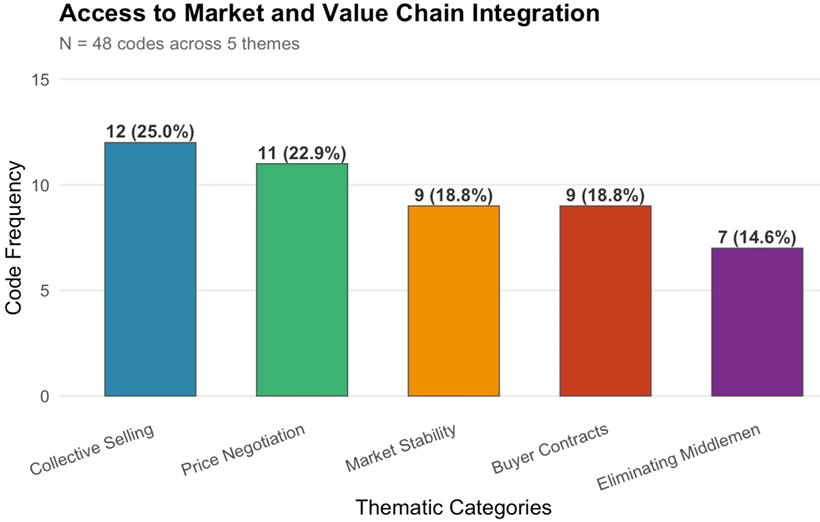
The statistical insights reveal critical patterns in how smallholder cattle farming communities strategically engage with markets under integrated, community-based models (Figure 5). In total, 48 codes were identified across five market-engagement themes: Collective Selling (12, 25.0%), Price Negotiation (11, 22.9%), Market Stability (9, 18.8%), Buyer Contracts (9, 18.8%), and Eliminating Middlemen (7, 14.6%). The most prominent theme, collective selling mechanisms (25.0%), suggests a strong inclination toward cooperative strategies. This indicates that smallholders are not merely acting as individual sellers but are organizing into group-based arrangements to access better markets and improve price stability. This pattern reflects a shift from traditional, fragmented selling practices to coordinated market participation a hallmark of emerging agribusiness behavior. When analyzed jointly, collective selling (25.0%) and price negotiation (22.9%) comprise 47.9% of the thematic distribution, signaling that market power enhancement is a dominant theme within the reviewed literature. As these figures are derived from published sources rather than from direct farmer surveys, they may partly reflect the research and policy priorities of donors and academics rather than the priorities smallholder farmers themselves would report; this distinction is an important boundary condition for interpreting the findings and is addressed further in the Discussion.
These finding highlights, how integrated models are not only about improving production systems but also about empowering farmers in the marketplace. Strengthened bargaining power, achieved through collective action and informed negotiation. represents a key institutional innovation that bridges traditional practices with more strategic, business-minded approaches. The theme of market stability (18.8%) ranks third, tied with buyer contracts (18.8%), both emphasizing the importance of risk mitigation and formalized trading relationships alongside growth objectives. The least frequently coded theme, eliminating middlemen (14.6%), suggests that direct disintermediation strategies, while present in the literature, remain a comparatively minor focus relative to collective bargaining approaches. This finding suggests that smallholder communities are equally concerned with securing stable, predictable income streams. By adopting collective models, they not only aim to capture better prices but also buffer against price volatility and market uncertainty. This balance between opportunity maximization and risk management is essential for long-term sustainability. In sum, these patterns point to a mature evolution of smallholder market engagement, where farmers are beginning to adopt agribusiness logics, such as cooperation, negotiation, and risk-sharing, within a culturally rooted, community-based structure. This supports the overarching transformation goal: bridging tradition and agribusiness through inclusive, locally embedded models that enhance both market integration and institutional resilience.
Capacity building and knowledge transfer
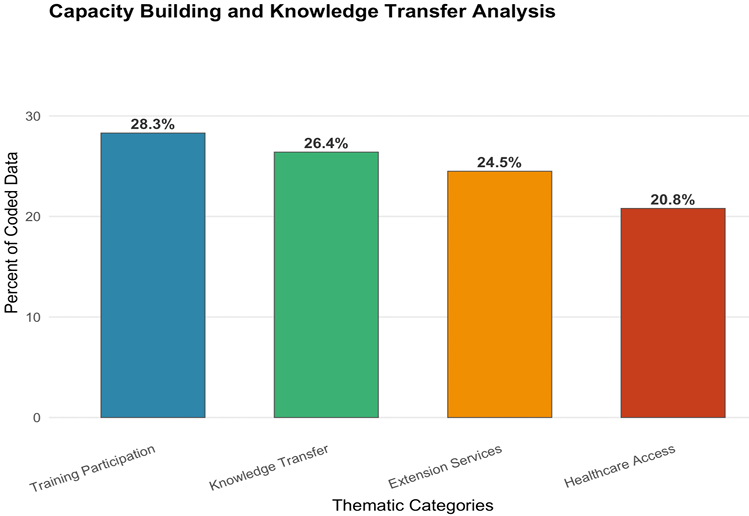
The analytical insights in Figure 6 emphasize the centrality of capacity building in the transformation of smallholder cattle farms through integrated community-based models. The most frequently occurring theme, training participation (28.3%), underscores a strong emphasis on human capital development.
This finding suggests that community empowerment through continuous learning is perceived as a core enabler of institutional change. Rather than relying solely on external support, the model encourages local actors to develop the skills necessary to manage agribusiness systems autonomously. Closely following are the combined themes of knowledge transfer (26.4%) and extension services (24.5%), which together represent 50.9% of the coded data. This reflects the importance of knowledge systems integration, ensuring that both formal (technical extension) and informal (peer-based knowledge sharing) channels are mobilized to support innovation and adaptation . Knowledge dissemination emerges not just as a support mechanism but as a structural pillar for long-term sustainability.
Across the four capacity-building themes, code frequencies range from 20.8% to 28.3%, a spread more accurately described as a graded hierarchy of emphasis than a statistically balanced distribution; unlike the participatory-governance themes in Figure 4, no formal goodness-of-fit test was conducted for this category, and the absence of such a test is acknowledged here as a limitation rather than implied evidence of balance. Instead of emphasizing one-dimensional capacity interventions (e.g., only technical or only economic), the model exhibits a holistic orientation addressing social, institutional, and infrastructural capacities in tandem. This multifaceted approach aligns with the complex nature of rural transformation, where agribusiness development must be embedded within broader community systems. Finally, the inclusion of healthcare access integration (20.8%) demonstrates an important shift toward comprehensive rural development, although this theme’s prevalence may also partly reflect the breadth of the search keywords (e.g., “rural development,” “livelihoods”) used to identify eligible literature, which could draw in publications with a human-health component; this possibility is acknowledged as a limitation of keyword-driven literature retrieval. This suggests that community-based agribusiness models are not solely concerned with agricultural productivity or market access but also seek to enhance overall well-being and resilience of rural populations. Addressing health-related vulnerabilities expands the model’s relevance, making it more adaptable and sustainable within traditional rural settings . These findings highlight that institutional transformation in smallholder cattle systems is not driven solely by economic incentives or structural reform. It also depends heavily on human capital and community social ties, cultivated through inclusive, knowledge-based, and community-responsive capacity building models. Such an approach effectively bridges the gap between traditional practices and modern agribusiness logic.
Technology adoption and infrastructure gaps
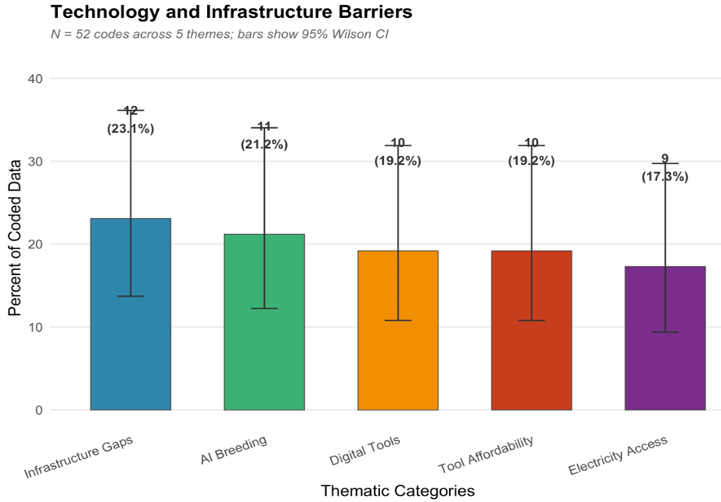
The thematic ranking in Figure 7 highlights critical technological and infrastructural factors influencing the transformation of smallholder cattle farms. The most frequently cited barrier is infrastructure gaps (n = 12, 23.1%), suggesting that inadequate physical and technological infrastructure remains a major constraint in advancing community-based agribusiness; as with the other thematic rankings in this study, infrastructure may also be a barrier that is comparatively easier to document and publish on than less tangible constraints such as farmer psychology or land tenure, and this possibility is noted as an interpretive caveat. Limited access to roads,livestock facilities, cold chains, and distribution networks undermines efforts to modernize traditional farming systems and connect them to wider markets.
The second most prominent theme is AI Breeding (11 codes, 21.2%), indicating growing awareness and interest in artificial insemination technologies among smallholders. This reflects a shift toward performance-oriented breeding systems that promise higher productivity and genetic improvements. However, the uptake of such technologies remains highly dependent on the availability of supporting infrastructure and extension services.
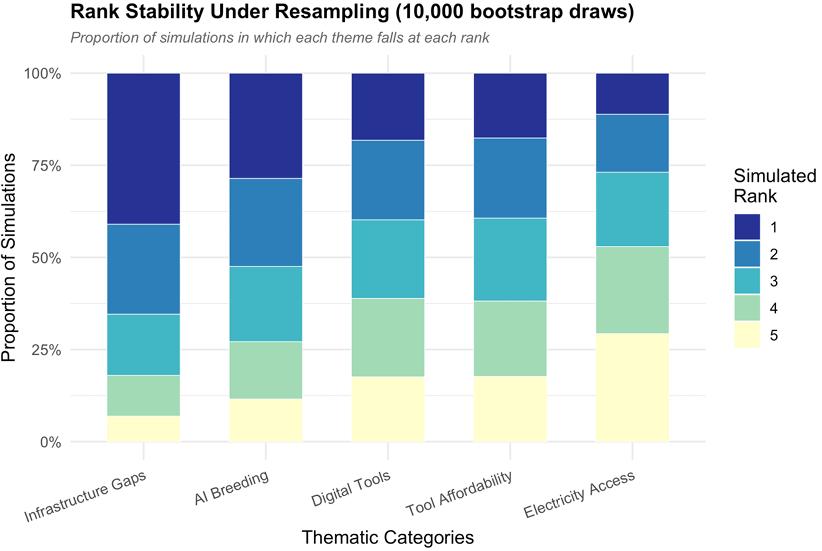
Methods: Qualitative data analyzed using NVivo software with systematic thematic coding approach. Total sample: N=52 codes across 5 major themes. Error bars represent 95% Wilson confidence intervals for each proportion, which overlap substantially across all five themes. See Figure 8 for a bootstrap-based sensitivity analysis of rank stability.
Digital tools and tool affordability are both cited in 10 codes (19.2% each), underscoring the dual challenge of technological access and cost barriers; passages discussing both access and cost in the same statement were coded under both themes where each concern was substantively addressed, which the authors acknowledge may result in some overlap between these two categories rather than fully mutually exclusive counts. On one hand, digital tools such as mobile-based livestock monitoring, digital
record-keeping, and market platforms offer transformative potential. On the other hand, the affordability of such tools remains a limiting factor, particularly in low-income, rural environments where financial margins are tight. These two themes together emphasize that digital transformation must be supported not only through innovation but also through equitable financing models. Finally, electricity access (9 codes, 17.3%) emerges as another crucial infrastructural enabler, ranking fifth among the coded barriers; given that grid electricity access is known to remain limited in many rural areas of Indonesia, this relatively lower ranking may reflect underreporting of electricity constraints within the reviewed publications rather than a lesser real-world severity, and this possibility is acknowledged as a limitation of the source literature. Without reliable energy access, the adoption of advanced breeding technologies and digital tools becomes nearly impossible. This issue reinforces the interconnectedness of infrastructure, technology, and institutional transformation in rural agribusiness contexts.
Theme distribution reflects a multi-layered technological transition, in which traditional cattle farming is constrained not only by lack of knowledge but also by systemic infrastructure and affordability issues. Bridging tradition and agribusiness, therefore, requires addressing foundational constraints while promoting inclusive access to modern tools and innovations. This dual approach is essential for enabling sustainable and scalable transformation in community-based cattle farming models. To address the concern that this ranking (based on a difference of only three coded instances between the highest- and lowest-frequency themes) might be fragile given the small sample of codes, a non-parametric bootstrap resampling analysis was conducted (10,000 resamples with replacement from the 52 coded instances; Figure 8). Infrastructure Gaps was the most robustly top-ranked theme, occupying the first rank in approximately 41% of resamples and the first or second rank in approximately 59% of resamples. AI Breeding occupied the first rank in approximately 29% of resamples. Digital Tools and Tool Affordability, which share an identical point estimate (10 codes, 19.2% each), were statistically indistinguishable from one another across resamples, each attaining the first rank in approximately 18% of simulations. Notably, Electricity Access, despite having the lowest point estimate, still attained the first rank in approximately 11% of resamples, illustrating that the ranking among the bottom four themes is not stable and should not be over-interpreted; only the position of Infrastructure Gaps as the most consistently emphasized barrier is reasonably robust to resampling.
DISCUSSION
This study demonstrates that transforming traditional smallholder cattle farming into sustainable agribusiness units depends not solely on technical improvements or market access, but fundamentally on institutional strength and community participation. The key findings reveal that strong leadership, transparency, and trust serve as the foundation of institutional cohesion that supports collective action. These elements directly address the core research question on how a community-integrated agribusiness model can effectively bridge traditional livestock practices and modern agribusiness systems.
These findings align with previous studies ; , which emphasize the importance of institutional capacity building and stakeholder synergy. Similar observations have been reported in Indonesia, where improvements in livestock productivity require integrated approaches combining management innovation, farmer capacity development, and institutional support mechanisms . However, this study offers a novel contribution by adopting a holistic approach that integrates not only technical and economic dimensions but also social, institutional, and informational aspects. The proposed model reflects an integration of agribusiness logic with community-based values, which have often been overlooked in top-down development approaches.
Furthermore, the participatory dimensions of decision-making were found to be prominent in this study. Mechanisms such as voice, deliberation, and consensus highlight that meaningful farmer involvement in internal governance enhances the legitimacy and social cohesion of community-based groups . These participatory structures not only improve the effectiveness of SPR (Sekolah Peternakan Rakyat) implementation but also strengthen institutional resilience in the face of external shocks.
On the other hand, these findings suggest a departure from top-down extension and cooperative models documented in the literature reviewed for this study (e.g., ; , which the source publications characterize as more centrally administered and less participatory than the community-driven governance mechanisms identified here. The proposed six-dimension framework (ecological, economic, socio-cultural, technological, institutional, and informational) shares conceptual ground with established frameworks such as the Sustainable Livelihoods Approach (SLA), which organizes human, natural, social, physical, and financial capital, and Agricultural Innovation Systems (AIS), which emphasizes actor interaction and knowledge flow within innovation networks. The distinguishing contribution of the present framework is not the introduction of entirely new capital or asset categories, but its explicit, literature-derived mapping of six sustainability dimensions onto five livelihood-asset categories specifically within the institutional context of community-based livestock agribusiness programs such as SPR, an integration that SLA and AIS address only partially and not in this sector-specific, institutionally grounded form.
Market integration also emerged as a critical transformation element. The dominance of themes related to collective selling and price negotiation reveals that farmers are beginning to adopt more strategic, business-oriented approaches . This marks a significant departure from fragmented, individual selling practices towards coordinated, market-savvy behavior, a key feature of an agribusiness mindset. These findings reinforce the theoretical proposition that sustainable transformation of smallholder farming requires interventions across the entire value chain, not only at the production level. The model proposed in this study therefore broadens the discourse on upstream-downstream integration in livestock development through locally embedded mechanisms.
In terms of capacity building, training and knowledge transfer were shown to be core pillars in institutional transformation. Previous evidence from Indonesian smallholder dairy farms suggests that farm-level management practices and continuous farmer education significantly influence production performance and animal health outcomes . Services and peer learning networks reveal that the model does not depend exclusively on external interventions but promotes autonomous learning and local leadership development . The balanced distribution of thematic codes between technical, social, and institutional capacities indicates that a multidimensional development approach is more effective in achieving long-term transformation goals. These findings support those of Delgado-Serrano et al. (2016) , who argued for capacity building as a key to farmer regeneration and institutional sustainability.
Nevertheless, the study also reveals significant structural gaps that remain major barriers to progress. Furthermore, persistent animal health challenges within smallholder production systems may exacerbate productivity constraints and reduce the effectiveness of agribusiness transformation programs if not addressed through integrated management interventions . Infrastructural limitations such as poor roads, inadequate livestock facilities, and unreliable electricity continue to constrain efforts to modernize traditional farming systems. This confirms that sustainable transformation cannot be achieved without foundational investments in physical infrastructure ; . In addition, the affordability and accessibility of digital tools remain a persistent challenge. While technologies such as artificial insemination and mobile-based livestock management offer promising benefits, their adoption is highly dependent on financial feasibility and supporting systems. These insights reinforce the importance of public investment and inclusive financing mechanisms in driving equitable technology adoption.
One surprising yet significant finding was the strong emergence of healthcare access as part of the capacity-building theme. This suggests that basic needs beyond agriculture remain central to the sustainability of rural livelihoods . It highlights that community-based agribusiness models must not only focus on increasing productivity or market access but also enhance social welfare and household resilience. By incorporating public health concerns, the model expands its relevance and adaptability, particularly in underserved rural areas. This reinforces the argument that agribusiness transformation must be embedded within a broader rural development agenda that is sensitive to the lived realities of farming households.
From a methodological standpoint, the use of NVivo-supported thematic analysis allowed for an in-depth and systematic examination of relationships across multiple dimensions. Validity was strengthened through data triangulation, transparent coding procedures, and the maintenance of an audit trail. As a literature-based study, the findings are inherently influenced by the scope, quality, and contextual diversity of the selected publications. Therefore, care should be taken when applying the proposed framework to regions with substantially different institutional, socio-economic, and environmental conditions. Nevertheless, the study’s main strength lies in its ability to integrate theoretical reflection with practical recommendations within a coherent analytical framework.
This research opens several pathways for future inquiry. Quantitative validation of the proposed model across diverse regions could strengthen its applicability. Future studies could explore: (1) the long-term impact of community-based models on household income and food security; (2) comparative analyses of SPR effectiveness under varying institutional settings; and (3) experimental studies on the adoption of digital livestock tools and their socio-economic effects. Additional research could also investigate the integration of SPR systems with microfinance schemes, agricultural insurance, and rural entrepreneurship training. This discussion affirms that successful transformation of smallholder cattle farming into sustainable agribusiness entities depends on a combination of institutional innovation, inclusive participation, market empowerment, human capital development, and infrastructural support. The integrative approach proposed in this study effectively bridges the gap between tradition and modernity, as well as between subsistence and market orientation. Therefore, the results not only provide practical insights for policymakers, development practitioners, and farmer groups, but also contribute to theoretical discourses on inclusive and resilient rural transformation. The model offers a concrete pathway for creating rural livestock systems that are participatory, competitive, and future-ready.
The findings indicate that institutional cohesion, participatory governance, market integration, capacity building, and technology adoption should not be viewed as separate dimensions of agribusiness transformation. Rather, they are interconnected mechanisms that work together to enhance the resilience and sustainability of smallholder livestock systems. Institutional cohesion lays the foundation for collective action, participatory governance promotes stakeholder engagement and accountability, market integration creates economic incentives for innovation, and capacity building and technology adoption improve adaptability and productivity. Together, these dimensions form supportive feedback loops that contribute to the long-term transformation of community livestock enterprises into sustainable agribusiness systems.
CONCLUSIONS
Sustainability dimensions with livelihood assets within a community-based agribusiness model. From a policy perspective, priorities should include strengthening farmer organizations, extension services, rural infrastructure, and improving access to digital technologies. At the community level, collective marketing, participatory governance, and continuous capacity building are essential to support sustainable and competitive smallholder livestock agribusiness systems.
ACKNOWLEDGMENTS
The authors gratefully acknowledge the Faculty of Animal Science and Technology (FAST), Universitas Brawijaya, for the use of its laboratory and research facilities, which were essential for the completion of this study
NOVELTY STATEMENT
This study presents a novel contribution by developing an integrated community-based agribusiness framework that systematically links six sustainability dimensions ecological, economic, socio-cultural, technological, institutional, and informational with five core livelihood assets: human, natural, social, physical, and financial capital. Unlike prior studies that primarily focus on fragmented aspects of livestock development, this research offers a unified and multi-dimensional analytical model that captures the complex interactions underlying transformation processes in smallholder cattle farming systems. By synthesizing empirical evidence on the Sekolah Peternakan Rakyat (SPR) model, this study further provides new insights into how community-based institutional arrangements interact with market integration, capacity building, and technological adoption. This integrative approach advances both theoretical and practical understanding of how traditional livestock systems can be transformed into resilient, sustainable, and market-oriented agribusiness enterprises. As this study is literature-based, the proposed linkages are presented as testable propositions for future empirical validation rather than as demonstrated causal findings; for example: (H1) higher institutional cohesion (leadership, transparency, trust) is associated with greater farmer participation in collective marketing; (H2) participatory decision-making mechanisms are positively associated with member retention and program sustainability in SPR-type groups; and (H3) capacity-building intensity moderates the relationship between technology access and farm productivity. Quantitative or mixed-methods studies designed to test these propositions represent a priority direction for future research.
AUTHOR’S CONTRIBUTION
Anie Eka Kusumastuti: Conceptualization, Methodology, Formal Analysis, Data Curation, Visualization, Writing – Original Draft. Hari Dwi Utami: Supervision, Validation, Writing – Review and Editing. Harsuko Riniwati: Conceptualization, Validation, Supervision, Writing – Review and Editing. Marjuki: Formal Analysis, Validation, Writing – Review and Editing. Reni Tiarantika: Investigation, Literature Search, Data Curation, Writing – Review and Editing. All authors contributed to the interpretation of the research findings, critically reviewed the manuscript, and approved the final version for publication.
Generative ai and ai-assisted technology statement
The authors used generative AI tools only for language editing and readability improvement. All scientific content, analysis, and conclusions are the original work of the authors, who take full responsibility for the manuscript.
Conflict of interest
The authors declare no conflicts of interest regarding the publication of this paper. The authors have no financial, personal, or institutional relationships that could inappropriately influence or bias the content of this manuscript.
Figures
Figure 1:.
PRISMA 2020 flow diagram of literature selection process .
Figure 2:.
Stages of qualitative data analysis.
Figure 3:.
Institutional cohesion analysis
Figure 4:.
Thematic analysis of participatory decision-making.
Figure 5:.
Access to market and value chain integration.
Figure 6:.
Capacity building and knowledge transfer analysis.
Figure 7:.
Technology and infrastructure barriers (bar chart with 95% wilson confidence intervals).
Figure 8:.
Rank stability of technology and infrastructure barriers under bootstrap resampling (10,000 draws).
References
Berdjour A, Srivastava AK, Sanfo S, Ahamadou B, Ewert F, Gaiser T (2025). Impact of fertilizer applications on grain and vegetable crops in smallholder Mixed Crop-Livestock (MCL) systems in West Africa. Eur. J. Agron., 164: 127525. https://doi.org/10.1016/j.eja.2025.127525[CrossRef]
Burdon WML, Sorour MK (2020). Institutional theory and evolution of ‘a legitimate’ compliance culture: The case of the UK financial service sector. J. Bus. Ethics., 162(1): 47-64. https://doi.org/10.1007/s10551-018-3981-4[CrossRef]
Burns RJL, Le KK, Siengsanun-Lamont J, Blacksell SD (2023). A review of coxiellosis (Q fever) and brucellosis in goats and humans: Implications for disease control in smallholder farming systems in Southeast Asia. One Health, 16: 100568. https://doi.org/10.1016/j.onehlt.2023.100568[CrossRef]
Coy D, Malekpour S, Saeri AK, Dargaville R (2021). Rethinking community empowerment in the energy transformation: A critical review of the definitions, drivers and outcomes. Energy Res. Soc. Sci., 72: 101871. https://doi.org/10.1016/j.erss.2020.101871[CrossRef]
Delgado-Serrano MM, Vanwildemeersch P, London S, Ortiz-Guerrero CE, Semerena RE, Rojas M (2016). Adapting prospective structural analysis to strengthen sustainable management and capacity building in community-based natural resource management contexts. Ecol. Soc., 21(2): 36. https://doi.org/10.5751/ES-08505-210236[CrossRef]
Ecer F, Yaran Ögel İ, Dinçer H, Yüksel S (2024). Assessment of metaverse wearable technologies for smart livestock farming through a neuro quantum spherical fuzzy decision-making model. Expert Syst. Appl., 255: 124722. https://doi.org/10.1016/j.eswa.2024.124722[CrossRef]
Emes E, Wieland B, Magnusson U, Dione M (2023). How farm practices and antibiotic use drive disease incidence in smallholder livestock farms: Evidence from a survey in Uganda. One Health, 17: 100627. https://doi.org/10.1016/j.onehlt.2023.100627[CrossRef]
Enayati M, Arlikatti S, Ramesh MV (2024). A qualitative analysis of rural fishermen: Potential for blockchain-enabled framework for livelihood sustainability. Heliyon, 10(2): e24358. https://doi.org/10.1016/j.heliyon.2024.e24358[CrossRef]
Feyissa AA, Tolera A, Senbeta F, Diriba Guta D (2025). Adoption decisions for climate-smart dairy farming practices: Evidence from smallholder farmers in the Salale highlands of Ethiopia. Clim. Smart Agric., 2(1): 100039. https://doi.org/10.1016/j.csag.2024.100039[CrossRef]
Gebremariam T, Belay S (2023). Livestock nutrition and feed balance on smallholder farms in Tanqua-Abergelle district, northern Ethiopia. Heliyon, 9(11): e22131. https://doi.org/10.1016/j.heliyon.2023.e22131[CrossRef]
Heerden N van, Grobbelaar SS, Meyer I, Vermeulen E (2024). Emerging smallholder cattle farming from a One Health perspective: A system dynamics model of the highveld region of South Africa. Environ. Sci. Policy, 152: 103646. https://doi.org/10.1016/j.envsci.2023.103646[CrossRef]
Kerbo AA, Degaga DT, Beyene AD (2024). Analysis of food security among eucalyptus tree farming smallholder farmers in Gurage Zone, Ethiopia: An application of a composite food security indicator. Heliyon, 10(7): e29072. https://doi.org/10.1016/j.heliyon.2024.e29072[CrossRef]
Kitole FA (2025a). Determinants of veterinary service adoption and its impact on livestock mortality in Tanzania. Prev. Vet. Med., 242: 106570. https://doi.org/10.1016/j.prevetmed.2025.106570[CrossRef]
Kitole FA (2025b). Impact of dairy farming extension programs on smallholder livestock keepers’ welfare among Maasai communities in Arusha, Tanzania. Prev. Vet. Med., 239: 106511. https://doi.org/10.1016/j.prevetmed.2025.106511[CrossRef]
Kpenekuu F, Antwi-Agyei P, Nimoh F, Dougill A, Banunle A, Atta-Aidoo J, Baffour-Ata F, Peprah Agyekum T, Addai G, Guodaar L (2025). Cost and benefit analysis of climate-smart agriculture interventions in the dryland farming systems of northern Ghana. Reg. Sustain., 6(1): 100196. https://doi.org/10.1016/j.regsus.2025.100196[CrossRef]
Lissah SY, Ayanore MA, Krugu JK, Aberese-Ako M, Ruiter RAC (2021). Managing urban solid waste in Ghana: Perspectives and experiences of municipal waste company managers and supervisors in an urban municipality. PLoS One, 16(3): e0248392. https://doi.org/10.1371/journal.pone.0248392[CrossRef]
Munaf S, Swingler K, Brulisauer F, O’Hare A, Gunn G, Reeves A (2024). Social media network analysis of smallholder livestock farming communities in the United Kingdom. Heliyon, 10(1): e23265. https://doi.org/10.1016/j.heliyon.2023.e23265[CrossRef]
Nazari-Shirkouhi S, Samadi S (2025). Enhancing healthcare supply chains: A comprehensive evaluation of lean, agile, resilient and green paradigms. Eng. Appl. Artif. Intell., 145: 110204. https://doi.org/10.1016/j.engappai.2025.110204[CrossRef]
Ndona A, Kambashi B, Beckers Y, Moulin CH, Bindelle J (2024). Contribution of traditional goat farming systems to the sustainable intensification of smallholder agriculture in sub-Saharan Africa: The example of the western part of the Democratic Republic of Congo. Farm. Syst., 2(2): 100079. https://doi.org/10.1016/j.farsys.2024.100079[CrossRef]
Opoku Mensah S, Osei-Acheampong B, Jacobs B, Cunningham R, Akoto AB (2025). Smallholder farmers’ climate change adaptation in Ghana: A systematic literature review and future directions. J. Environ. Manage., 384: 125598. https://doi.org/10.1016/j.jenvman.2025.125598[CrossRef]
Rifa’i, Radiati LE, Hawa LC, Surjowardojo P (2024). Prevalence of subclinical mastitis in Holstein-Friesian cow dairy among small-scale farms in Batu, Indonesia. Int. J. Vet. Sci., 13(5): 592-595.
Saputra FT, Surjowardojo P, Muchlas M, Ridhowi A, Rifa’i R (2025). Improving dairy production in Indonesia: Comparative lessons from India and the United States. Bio Web. Conf., 191: 100014. https://doi.org/10.1051/bioconf/202519100014[CrossRef]
Surjowardojo P, Susilorini TE, Ndaru PH, Rifa’i R (2025). Traditional milking hygiene practices and their effect on subclinical mastitis in Holstein-Friesian of small-scale farms. Adv. Anim. Vet. Sci., 13(5): 1036-1044. https://doi.org/10.17582/journal.aavs/2025/13.5.1036.1044[Full text][CrossRef]
Ticau IR, Dan MC, Hadad S, Nistoreanu P (2023). Sustainable development in peri-urban regions: A triangulation analysis. Sustainability, 15(20): 14837. https://doi.org/10.3390/su152014837[CrossRef]
Xu X, Xu Y, Li J, Lu Y, Jenkins A, Ferrier RC, Li H, Stenseth NC, Hessen DO, Zhang L, Li C, Gu B, Jin S, Sun M, Ouyang Z, Mathijs E (2023). Coupling of crop and livestock production can reduce the agricultural GHG emission from smallholder farms. Science, 26(6): 106798. https://doi.org/10.1016/j.isci.2023.106798[CrossRef]