Research Article · Volume 14, Issue 10, 15 September 2026 · Open Access
Utilization of Potato Peel Waste Extract Containing Solanine Compound in In Vitro Antibacterial Activity Against Staphylococcus aureus and Its Effects as a Feed Additive on Broiler Chicken Performance
· ·
Affiliations & Notes ⌄
1Department of Animal Nutrition and Feed Science, Faculty of Animal Science, IPB University, Bogor 16680, Indonesia
2Department of Nutrition and Feed Technology, Faculty of Animal Science, IPB University, Bogor 16680, Indonesia. *Correspondence | Yuli Retnani, Department of Nutrition and Feed Technology, Faculty of Animal Science, IPB University, Bogor 16680, Indonesia
Potato peel waste contains active compounds such as solanine, which has potential as a feed additive for broiler chickens.
At a concentration of 400 ppm, the potato peel waste extract inhibits Staphylococcus aureus, with an inhibition zone of 7 mm, classified as moderate inhibition.
The supplementation of 400 ppm potato peel waste extract has a positive effect on body weight, weight gain, FCR, and broiler chicken performance index.
Selected from the article's own text.
Abstract
Potato peel waste is not only a by-product but also a source of nutrients and bioactive compounds such as phenolics and glycoalkaloids. The active compounds in potato peel waste, such as α-solanine, have the potential to be used as phytogenic feed additives to replace Antibiotic Growth Promoters (AGPs) in poultry. This study aims to evaluate the effectiveness of potato peel waste extract in inhibiting bacterial activity and its effect on broiler chicken performance. A total of 180 one-day-old Cobb500 broiler chicken were randomly assigned to three treatments in a Completely Randomized Design, with six replicates per treatment and ten chickens per replicate: P0 (control), P1 (control + Vitachick®), P2 (control + 400 ppm potato peel extract). At a concentration of 400 ppm, potato peel extract inhibits Staphylococcus aureus, with an inhibition zone of 7 mm, classified as moderate inhibition. The supplementation of potato peel waste extract at a concentration of 400 ppm had a significant effect (P<0.05) on body weight, weight gain, feed conversion ratio (FCR), and broiler performance index. This supplementation also reduced broiler chickens mortality during the rearing period. In conclusion, potato peel waste extract with a concentration of 400 ppm has been shown to inhibit Staphylococcus aureus bacteria. Supplementation with this extract can also improve performance and reduce mortality in broiler chickens.
The valorization of agricultural waste as alternative feed resources represents a strategic approach to enhance sustainability, resource efficiency, and food security in livestock production systems. One type of agricultural waste that has great potential and has not been widely utilized is potato peelings (Solanum tuberosum L). According to FAO (2023), global potato production reached approximately 383 million tons, of which nearly 50% is processed into value-added products, including chips, French fries, starch, and purée. This processing generates substantial quantities of potato peel, accounting for approximately 15–40% (w/w) of the initial fresh weight, depending on the peeling method . In Indonesia, potato production reached 1.27 million tons in 2024 (BPS, 2024), with an estimated peel waste potential of 0.19–0.51 million tons. This substantial volume of waste presents both an environmental challenge and an opportunity for value-added utilization. Potato peels are not only a by-product but also a source of nutrients and bioactive compounds including starch, crude fiber, protein, minerals, phenolic compounds, and glycoalkaloids. Martínez-García et al. (2024) state that potato peel contains 3-10 times more glycoalkaloid compounds than the tuber flesh.
The main glycoalkaloids found in potato peel are α-solanine and α-chaconine, which together account for approximately 90% of the total glycoalkaloid content (Total Glycoalkaloids/TGA). α-solanine is a trisaccharide glycoalkaloid with the molecular formula C45H73NO15. Martínez-García et al. (2024) reported that the α-solanine content in potato peel ranged from 143–1273 mg kg⁻¹ DM. According to Friedman (2015), the α-solanine content in conventional potato peel ranges from 215–412 mg kg⁻¹ DM, while in organic potato skins, it ranges from 239–750 mg kg⁻¹ DM. Despite their beneficial bioactivities, glycoalkaloids are associated with potential toxicity at elevated concentrations. At concentrations above 200 mg kg⁻¹ FW (Fresh Weight), glycoalkaloids may cause symptoms of toxicity in humans, such as nausea, vomiting, diarrhea and abdominal cramps, often accompanied by a bitter taste sensation . The recommended limit for general consumption is 100 mg kg⁻¹ FW, with an upper safety threshold of 200 mg kg⁻¹ FW to reduce toxicological risk. More recent guidance from the European Food Safety Authority indicates that the acceptable daily intake of total glycoalkaloids should not exceed 1 mg kg⁻¹ of BW, a level at which no adverse effects have been observed .
Importantly, glycoalkaloids exhibit lower toxicity in animals compared to humans , suggesting a potential margin of safety for their application in livestock systems. Acute toxicity studies indicate that the LD₅₀ of solanine in mice is 32.3 mg kg⁻¹ BW, while chaconine has an LD₅₀ of 19.2 mg kg⁻¹ BW (Kuiper-Goodman and Nawrot, 1993). Oral administration of solanine to mice showed less toxic effects (oral LD50 ≥1000 mg kg⁻¹ BW) when compared with that of the parenteral administration . In rats, both solanine and chaconine exhibit higher toxic dose ranges, between 65.6–107.5 mg kg⁻¹ BW, when delivered via intraperitoneal injection . These findings indicate that glycoalkaloids may be safely utilized at controlled levels in animal.
The prohibition of antibiotic growth promoters (AGPs) as feed additives, as stipulated in Article 16 of the Regulation of the Minister of Agriculture of the Republic of Indonesia Number 14/Permentan/PK.350/2017, has significantly impacted the poultry industry. This policy was implemented due to the adverse effects associated with AGP use, including tissue residues, antimicrobial resistance, cross-resistance in antimicrobial therapy , and resistance of pathogenic bacteria in the intestine. Consequently, this has driven the development of safe and sustainable alternatives, such as phytogenic feed additives. Phytogenic feed additives (phytobiotics or phytochemicals) are natural compounds from plants that have benefits for improving the health and production performance of livestock .
The active compounds in potato peel, such as α-solanine, have the potential to be used as phytogenic feed additives to replace AGPs in poultry. Potato peel extract has been shown to inhibit the growth of Propionibacterium, Gram-positive and Gram-negative bacteria, and Candida albicans. Khalifa et al. (2016) reported that potato peel extract has antibacterial activity against Escherichia coli and Staphylococcus aureus. According to Helal et al. (2020), potato peel extract at a concentration of 400 ppm was able to inhibit Gram-positive bacteria, namely Bacillus subtilis and Staphylococcus aureus, as well as Gram-negative bacteria, namely Escherichia coli and Salmonella typhimurium. Amanpour et al. (2015) reported that potato peel extract exhibits antibacterial activity, with stronger effectiveness against Gram-positive bacteria than Gram-negative bacteria. In addition to its antimicrobial activity against viruses, bacteria, protozoa, and fungi, α-Solanine has been reported to exhibit a wide range of biological activities, including anti-inflammatory, antipyretic, antiallergic, and antidiabetic effects . Collectively, these characteristics indicate that α-solanine may enhance gut microbial balance, improve intestinal function, and support nutrient utilization, thereby supporting its potential as an effective natural alternative to AGPs for improving poultry health and performance.
Based on national statistics reported by BPS (2024), per capita chicken consumption in Indonesia has fluctuated annually but shows an overall increasing trend, with an average annual growth rate of 7.44 % during the period 2014–2023.This increasing demand intensifies the need for sustainable production strategies capable of maintaining productivity and animal health in the absence of AGPs. One promising approach is the utilization of phytogenic feed additives derived from agricultural by-products, such as potato peel waste.
Previous studies have demonstrated that supplementation with potato peel extract (15 and 30 mL L⁻¹ in drinking water), potato peel flour (15 and 30 g kg⁻¹), or their combination can improve production performance and carcass characteristics in Japanese quail . Additionally, Rahman et al. (2021) reported that the inclusion of 5% potato peel with exogenous enzyme supplementation can be incorporated into broiler diets without adversely affecting performance. However, studies investigating the administration of potato peel waste extract via drinking water as a direct alternative to AGPs in broiler chickens remain limited, particularly regarding its combined effects on antimicrobial activity and growth performance. Therefore, this study aims to evaluate the effectiveness of potato peel waste extract in inhibiting bacterial activity and its effect on broiler chicken performance.
MATERIALS AND METHODS
Preparation of potato peel waste extract
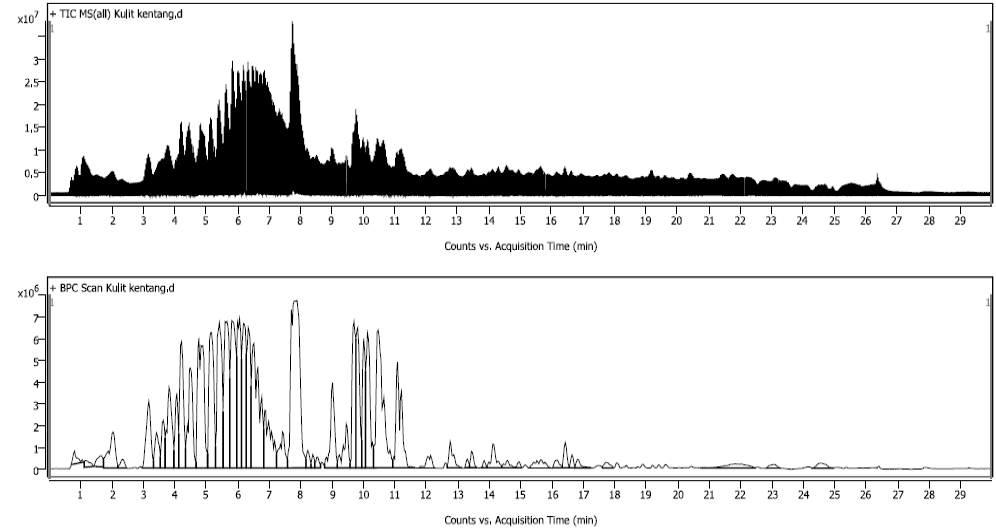
Potato peel waste was collected from restaurants and small businesses in Bogor Regency and was dried using a dome dryer at approximately 50 °C for 2–3 days. The dried potato peel waste was then ground using a grinder to obtain potato peel waste flour. The active compounds in the potato peel waste extract were analyzed using LC-MS/QTOF. Compound identification was performed based on accurate mass measurements and database matching. The complete LC-MS/QTOF chromatograms (TIC and BPC) were provided in Figure 1.
The extraction of potato peel waste flour was performed using the maceration method described by Amanpour et al. (2015) with modifications. Briefly, 10 g of potato peel waste flour was mixed with 200 mL of 96% ethanol and stirred using a magnetic stirrer for 3 h. The mixture was then macerated at room temperature for 24 h. After maceration, the extract was filtered through Whatman No. 41 filter paper to obtain the first filtrate. The residue was re-extracted using the same procedure to obtain the second filtrate. The first and second filtrates were combined and concentrated using a rotary evaporator at 50°C and 50 rpm to remove the solvent. The resulting extract was stored in a refrigerator until further use. The extraction yield was calculated using the following equation.
Figure 1.
Testing the inhibitory effect of potato peel waste extract on bacteria
Nutrient Agar (NA) medium was prepared by dissolving 0.5 g of NA in 10 mL of distilled water. The mixture was homogenized and then autoclaved at 121°C for 15 minutes. The medium was cooled to approximately 45–50°C, poured into test tubes at an angle, and allowed to solidify. Staphylococcus aureus cultures were streaked onto the NA medium and incubated at 37°C for 24 hours. Nutrient Broth (NB) medium was prepared by dissolving 0.8 g of NB in 100 mL of distilled water. The mixture was homogenized and autoclaved at 121°C for 15 minutes. One loopful of bacterial culture from the NA medium was inoculated into the NB medium and incubated at 37°C for 24 hours. The bacterial suspension was prepared by mixing 0.1 mL of bacterial inoculum with 9.9 mL of NB. The turbidity of the suspension was adjusted to the 0.5 McFarland standard, which was prepared from a mixture of 1% H₂SO₄ and 1% BaCl₂. The standard had an absorbance of 0.08–0.12 at a wavelength of 625 nm, corresponding to a bacterial concentration of 1 × 10⁸ CFU mL⁻¹.
Antibacterial activity was evaluated using the disk diffusion method. Mueller Hinton Agar (MHA) medium was prepared by dissolving 0.51 g of MHA in 15 mL of distilled water, followed by autoclaving at 121°C for 15 minutes. A volume of 0.1 mL of the bacterial suspension was transferred into a sterile Petri dish, after which the MHA medium was added. Once the medium had solidified, sterile paper discs were immersed in each treatment solution until fully saturated. The discs were impregnated with potato peel extract at concentrations of 400, 600, and 800 ppm, chloramphenicol (1.5 mg mL⁻¹) as the positive control, and 10% DMSO as the negative control. The impregnated paper discs were then aseptically placed on the surface of the agar medium that had previously been inoculated with the test bacteria according to the treatment layout. The Petri dishes were incubated at 37°C for 24 hours. After incubation, the diameters of the inhibition zones were measured using a digital caliper. The lowest concentration that produced a visible inhibition zone against bacterial growth was selected as the effective concentration and was used in the subsequent stage of the study.
Broiler management and nutrition
This study used 180 one-day-old Cobb500 broiler chickens of mixed sex. The average initial body weight of the day-old chicks (DOC) was 41.72 ± 0.85 g. The birds were reared from 1 to 35 days of age. They were housed in 18 colony pens measuring 1.0 m × 1.0 m × 0.5 m, with 10 birds allocated to each pen. Feed and drinking water were provided ad libitum. The birds were fed commercial starter and finisher diets, the compositions of which are presented in Table 1.
Table 1: Nutrient content of commercial feed.
Nutrient Content
Spesification
Starter
(1-14 days)
Finisher
(15-35 days)
Moisture content (%)
Max
14.00
14.00
Ash (%)
Max
8.00
8.00
Crude protein (%)
Min
21.00
19.00
Crude fat (%)
Min
5.00
5.00
Crude fiber (%)
Max
5.00
6.00
Calcium (%)
0.80 – 1.10
0.80 – 1.10
Phosphorus (%)
Min
0.50
0.45
Total aflatoxin (ppb)
Max
50.00
50.00
Lysine (%)
Min
1.20
1.05
Methionine (%)
Min
0.45
0.40
Methionine + Cystine (%)
Min
0.80
0.75
Tryptophan (%)
Min
0.19
0.18
Threonine (%)
Min
0.75
0.65
Experimental design and treatment
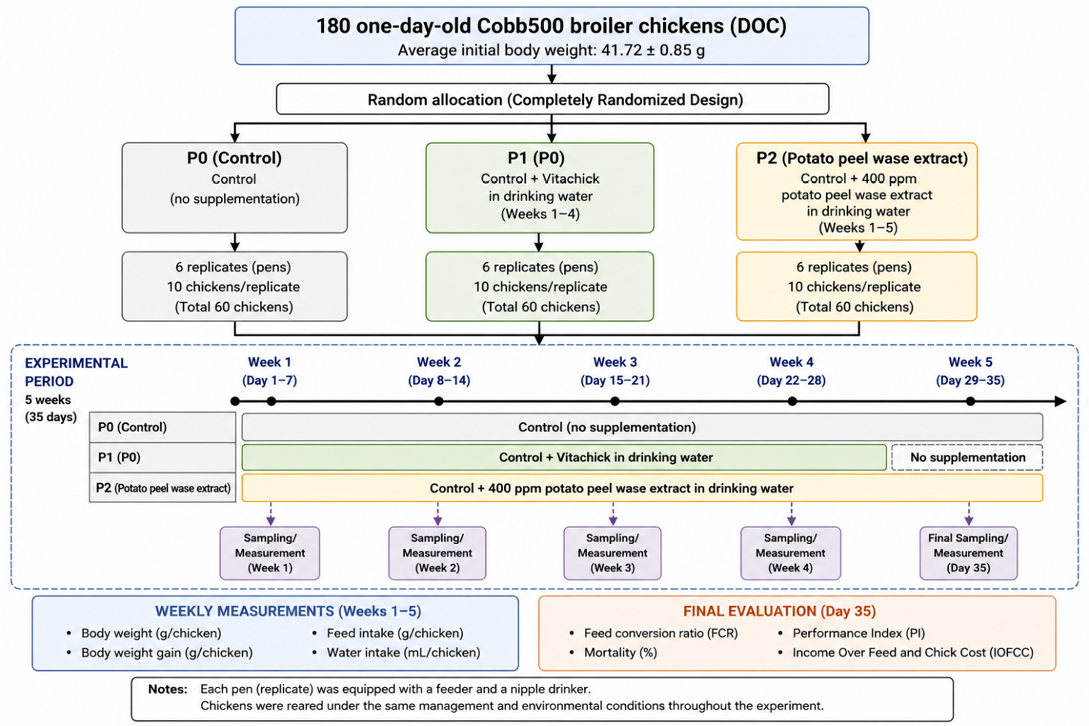
A total of 180 one-day-old Cobb500 broiler chickens, regardless of sex, were used in this study. The chicks were randomly allocated to three treatment groups, with six replicates per treatment and ten birds per replicate in a completely randomized design (CRD). All treatments were administered through the drinking water. The treatments were as follows: P0= drinking water without additives (control); P1= control + Vitachick®; and P2= control + 400 ppm potato peel waste extract.
Vitachick®, a commercial feed additive administered through drinking water, was provided according to the manufacturer’s recommendations, namely 5 g 7 L⁻¹ of drinking water during weeks 1–2 and 5 g 12 L⁻¹ during weeks 3–4. The supplemented drinking water was provided every morning at 7:00 a.m. at a volume of 1 L per pen. Thereafter, regular drinking water was supplied ad libitum at noon, in the afternoon, and in the evening for all treatment groups.
Vitachick® supplementation was administered only during the first four weeks in accordance with common commercial practice and was discontinued during the final week before harvest to minimize the potential risk of antimicrobial residues in broiler meat. In contrast, potato peel waste extract was supplemented continuously throughout the five-week experimental period. The overall experimental design, including the allocation of broiler chickens into treatment groups, the supplementation period for each treatment, and the sampling and measurement schedule, is illustrated in Figure 2.
Animal committee approval
All animal experimental procedures were reviewed and approved by the Research Ethics Committee, Faculty of Medicine, Universitas Andalas, Padang, Indonesia (Ethical Approval No. 104/UN.16.2/KEP-FK/2026; approved on 18 February 2026). All procedures were conducted in accordance with the institutional guidelines for the care and use of experimental animals.
Broiler performance measurement
Broiler chickens performance was evaluated over a 5-week rearing period. Feed intake (g chicken⁻¹) was calculated by subtracting the amount of feed remaining from the total amount of feed offered and dividing the result by the number of birds in each pen. Feed refusals were recorded weekly. Water intake (mL chicken⁻¹) was determined using the same procedure by subtracting the volume of water remaining from the initial volume offered and dividing the result by the number of birds in each pen. Water intake was measured every morning before the treatments were administered. Body weight (g chicken⁻¹) was measured weekly by weighing all birds in each pen and dividing the total body weight by the number of birds. Body weight gain (g chicken⁻¹) was calculated as the difference between the final body weight and the initial body weight recorded
at the beginning of the experiment. The feed conversion ratio (FCR), an indicator of feed efficiency, was calculated by dividing the average feed intake by the average body weight gain. Mortality (%) was determined by dividing the number of birds that died during the rearing period by the initial number of birds and multiplying the result by 100. The performance index (PI) was used to evaluate the overall production performance of broiler chickens during a single rearing period and was calculated using the following formula:
Figure 2.
Income Over Feed and Chicks Cost (IOFCC) is used to analyze the cost incurred during the research. The IOFCC value is obtained using the formula:
IOFCC = B – (A+C)
Description: A = feed intake × feed price; B = final body weight × chicken selling price; C = DOC price
Statistical analysis
The initial day-old chick (DOC) body weight was tested for normality using the Shapiro–Wilk test. Since no treatments had been applied at this stage, no comparative statistical analysis was performed. Experimental data were analyzed using one-way analysis of variance (ANOVA), followed by Duncan’s Multiple Range Test (DMRT) when significant differences were detected (P < 0.05). Mortality data were analyzed using the Chi-square test. All statistical analyses were performed using IBM SPSS Statistics version 25.0.
RESULTS AND DISCUSSION
Active compound of potato peel waste
LC-MS/QTOF analysis of potato peel waste extract generated a total ion chromatogram (TIC) and a base peak chromatogram (BPC), which are presented in Figure 1. Based on accurate mass measurements and database matching, several bioactive compounds were putatively identified in the extract (Table 2). These compounds belong to various chemical classes, including glycoalkaloids, alkaloids, flavonoids, saponins, organic acids, vitamins, carbohydrates, and other secondary metabolites. Among the detected compounds, glycoalkaloids, particularly solanine, were considered the most biologically relevant because glycoalkaloids are recognized as the principal bioactive constituents of potato peel and have been widely associated with antimicrobial, antioxidant, and
Table 2: Putatively identified bioactive compounds detected in potato peel waste extract by LC–MS/QTOF.
Note: Results from Advance Research Laboratory IPB University (2025); Reported biological activities were compiled from aJiménez-Champi et al. (2023), bSujana and Rahmad (2022), cRajput et al. (2013), dCheeke (2000), eKim et al. (2018), fTan et al. (2008), gZhang et al. (2015), hFerreira et al. (2018), iLi et al. (2018), jGiguère et al. (2013), kLandoni and Albarellos (2015), lBöttger et al. (2017), mLeeson and Summers (2005), nWu et al. (2014), oQi et al. (2017), pMandalari et al. (2017), qMushtaq et al. (2013), rKhan et al. (2011), sRauf et al. (2022), tOlanlokun et al. (2019), and uHidayat (2024).
immunomodulatory activities ; . In addition to solanine, several other putatively identified compounds, including veratramine, 3-prenylapigenin, ophiopogonin B, and niacinamide, have previously been reported to possess biological activities related to poultry health and performance. Veratramine and 3-prenylapigenin exhibit antimicrobial and anti-inflammatory properties, whereas ophiopogonin B may support intestinal integrity and immune function through its immunostimulatory effects ; . Niacinamide is an essential component of energy metabolism and has been reported to improve broiler performance, particularly under heat stress conditions .
Among the detected compounds, glycoalkaloids, particularly solanine, were considered the most biologically relevant because glycoalkaloids are recognized as the principal bioactive constituents of potato peel and have been widely associated with antimicrobial, antioxidant, and immunomodulatory activities ; . In addition to solanine, several other putatively identified compounds, including veratramine, 3-prenylapigenin, ophiopogonin B, and niacinamide, have previously been reported to possess biological activities related to poultry health and performance. Veratramine and 3-prenylapigenin exhibit antimicrobial and anti-inflammatory properties, whereas ophiopogonin B may support intestinal integrity and immune function through its immunostimulatory effects ; . Niacinamide is an essential component of energy metabolism and has been reported to improve broiler performance, particularly under heat stress conditions .
However, the identification of compounds in the present study was based solely on LC-MS/QTOF database matching and should therefore be regarded as putative. Individual compound concentrations were not quantified, making it impossible to determine their relative abundance or the specific contribution of each compound to the observed biological responses. Although several additional compounds were tentatively identified, their occurrence in biologically meaningful concentrations remains uncertain because their identities were not confirmed using authentic reference standards or targeted quantitative analyses. Consequently, the beneficial effects observed in this study should be attributed to the combined activity of the extract rather than to any individual compound.
Potato peel waste extract
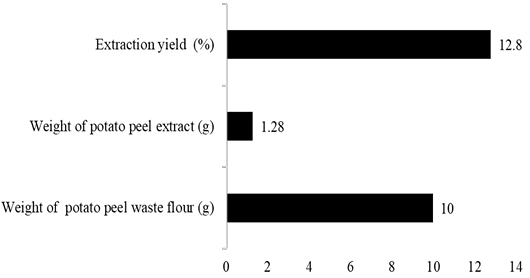
As shown in Figure 3, the extraction yield of potato peel waste extract was 12.8%, indicating a satisfactory extraction efficiency. According to Rahadyana et al. (2024), an extraction yield exceeding 10% is generally considered acceptable. The extraction yield obtained in the present study was higher than those reported by Kurniawan (2022) (7.63%) and Teklehaymanot et al. (2024) (10.42%). Differences in extraction yield among studies may be attributed to variations in the particle size of the dried plant material , extraction method, solvent type and solvent-to-material ratio, extraction temperature and duration, potato cultivar, geographical origin of the plant material, and the maturity stage at harvest .
Inhibitory effect of potato peel waste extract on bacteria
Potato peel waste extract exhibited different antibacterial activities against Escherichia coli and Staphylococcus aureus. As shown in Table 3, none of the tested extract concentrations (400, 600, or 800 ppm) inhibited the growth of Escherichia coli, as indicated by the absence of inhibition zones (0 mm). These results suggest that potato peel waste extract was ineffective against Escherichia coli at the concentrations evaluated. This lack of activity is likely related to the structural characteristics of Escherichia coli as a Gram-negative bacterium, which possesses an outer membrane containing lipopolysaccharides that restrict the penetration of many antimicrobial compounds . Consequently, Gram-negative bacteria generally exhibit greater resistance to antimicrobial agents than Gram-positive bacteria. In addition, the extract concentrations evaluated in the present study were likely below the minimum concentration required to inhibit Escherichia coli. This interpretation is consistent with the findings of Gebrechristos et al. (2020), who reported that potato peel extract inhibited Escherichia coli only at a minimum concentration of 5 mg mL⁻¹ (5,000 ppm). Furthermore, differences in extraction methods, solvent type and concentration, and potato cultivar may also have contributed to the discrepancies between the present findings and those reported in previous studies. These methodological differences can influence the extraction efficiency of bioactive compounds, particularly glycoalkaloids and phenolic compounds, thereby affecting the antibacterial activity of the resulting extract.
Table 3: Inhibitory activity of potato peel waste extract against bacteria.
Sample
Concentration (ppm)
Zone of inhibition (mm)
Escherichia coli
Staphylococcus aureus
Potato peel waste extract
400
0
7,00
600
0
9,50
800
0
10,00
Positive control (Chloramphenicol)
20,80
22,95
Negative control (DMSO)
0
0
In contrast, potato peel waste extract demonstrated antibacterial activity against Staphylococcus aureus. An inhibition zone of 7 mm was observed at 400 ppm, which increased to 9.5 mm at 600 ppm and 10 mm at 800 ppm. According to Kumowal et al. (2019), these inhibition zones are classified as moderate antibacterial activity. The increase in inhibition zone diameter with increasing extract concentration indicates a dose-dependent antibacterial effect against Staphylococcus aureus. This bacterium was selected because it is one of the most common bacterial pathogens affecting poultry and is associated with economically important diseases, including dermatitis, arthritis, osteomyelitis, synovitis, tenosynovitis, femoral head necrosis, bumblefoot, and omphalitis . Therefore, suppression of Staphylococcus aureus may contribute to maintaining broiler health and productivity.
Although the antibacterial activity of potato peel waste extract was considerably lower than that of chloramphenicol, which produced substantially larger inhibition zones against both bacterial species, the objective of the present study was not to replace therapeutic antibiotics but to evaluate the potential of potato peel waste extract as a phytogenic feed additive capable of reducing reliance on antibiotic growth promoters (AGPs). The moderate inhibition observed against S. aureus indicates that the extract possesses measurable antibacterial activity, although its efficacy under in vivo conditions should be interpreted cautiously because the gastrointestinal environment is considerably more complex than an in vitro agar diffusion system. As this study was designed as a preliminary investigation, the minimum effective concentration (400 ppm) against Staphylococcus aureus was selected for the subsequent in vivo experiment. The lowest effective concentration was intentionally chosen to minimize the potential risk of glycoalkaloid toxicity while maintaining measurable antibacterial activity.
Table 4: Broiler chicken performance during the rearing period.
Variable
Period (days)
Treatmens
P-value
P0
P1
P2
Feed intake (g chicken-1)
1-14
559.66 ± 31.67
551.92 ± 3.83
565.83 ± 5.63
0.453
15-35
2531.84 ± 210.84
2489.26 ± 121.80
2351.29 ± 140.78
0.166
1-35
3091.50 ± 272.82
3041.18 ± 149.51
2917.12 ± 161.68
0.237
Water intake (mL chicken-1)
1-14
1111.61 ± 116.60
1043.17 ± 92.12
1080.00 ± 41.30
0.432
15-35
4114.59 ± 447.14
4037.26 ± 292.61
3840.44 ± 351.03
0.435
1-35
5226.20 ± 553.41
5080.43 ± 260.37
4920.44 ± 489.19
0.720
Body weight (g chicken-1)
DOC
41.75 ± 2.14
41.17 ± 1.08
42.25 ± 1.78
-
1-14
279.89 ± 25.04ab
249.17 ± 37.85a
301.17 ± 23.27b
0.026
15-35
1752.29 ± 82.02a
1710.38 ± 46.60a
1842.29 ± 78.83b
0.017
1-35
1752.29 ± 82.02a
1710.38 ± 46.60a
1842.29 ± 78.83b
0.017
Body weight gain (g chicken-1)
1-14
238.14 ± 25.09ab
208.00 ± 37.24a
258.92 ± 22.09b
0.026
15-35
1472.40 ± 63.85
1461.21 ± 63.37
1541.12 ± 73.99
0.117
1-35
1710.54 ± 82.94a
1669.21 ± 47.00a
1800.04 ± 78.86b
0.019
Feed Conversion Ratio (FCR)
1-14
2.35 ± 0.24
2.65 ± 0.63
2.18 ± 0.16
0.082
15-35
1.72 ± 0.15
1.70 ± 0.13
1.52 ± 0.15
0.063
1-35
1.81 ± 0.15b
1.82 ± 0.13b
1.62 ± 0.15a
0.035
Mortality (%)
1-14
3,33
0,00
0,00
-
15-35
5,00
6,67
1,67
-
1-35
8,33
6,67
1,67
0.252
Performance Index (PI)
1-35
268.92 ± 27.64a
262.54 ± 26.53a
323.11 ± 44.00b
0.015
Note: Different superscripts on the same line indicate significantly different results (P<0.05); Initial body weight (DOC) was normally distributed (Shapiro–Wilk, P>0.05); Mortality data were analyzed using Chi-square test and are presented as percentages therefore no mean ± SD values are reported; P0 = control; P1 = control + Vitachick®; P2 = control + 400 ppm potato peel waste extract; DOC= Day Old Chicken.
Broiler performance
Feed intake
The results in Table 4 show that the treatment had no significant effect (P>0.05) on feed intake. The highest feed intake was found in treatment P0, while the lowest was found in treatment P2. The low feed intake in treatment P2 may be due to the content of active compounds such as solanine in potato peel, which act as antioxidants and antimicrobials . These compounds can increase the body’s antioxidant status, improve intestinal mucosal integrity, and reduce the population of pathogenic bacteria. This effect contributes to increased nutrient utilization efficiency, thereby improving feed conversion even though feed intake is slightly reduced. Overall, feed intake in this study was lower than the Cobb-Vantress (2022) standard, which states that feed intake for 35-day-old broiler chickens is 3635 g chicken-1. The low feed intake may be due to environmental conditions during rearing.
The average heat stress index (HSI) during rearing ranged from 151.95-158.66. During the starter phase, the HSI values were still considered tolerable because young broiler chickens require higher ambient temperatures to maintain their body temperature. Rahmawati et al. (2017) reported that the optimal HSI during the starter phase is approximately 155, indicating that the environmental conditions in the present study were still within the thermal requirements of young broilers. In contrast, the HSI values observed during the finisher phase were classified within the warning category. According to Yasa et al. (2019), an HSI ranging from 150 – 160 indicates the onset of heat stress, which may negatively affect broiler performance. Under these conditions, broilers increase their respiratory rate (panting) to dissipate excess body heat through evaporative cooling. Heat stress is also commonly associated with increased water intake, reduced physical activity, and decreased nutrient utilization efficiency, as a greater proportion of metabolic energy is diverted toward maintaining body homeostasis rather than supporting growth. Consequently, prolonged exposure to these environmental conditions may reduce feed intake, body weight gain, and feed efficiency in broiler chickens.
Water intake
The results in Table 4 show that the treatments had no significant effect (P>0.05) on the water consumption of broiler chickens. This could be due to the fact that feed consumption had no significant effect on all treatments. Pertiwi et al. (2017) stated that water consumption is influenced by the amount of feed consumed or the nutrient content of the feed consumed. Water consumption increases with increasing consumption and age of the chickens. As they age, chickens experience increased feed consumption and body weight, which leads to high water consumption to lower their body temperature and maintain their metabolic activity (NRC, 1994). Higher water consumption is very important to compensate for rapid muscle tissue growth and maintain feed efficiency. The highest cumulative water consumption occurred in treatment P0 (control), while the lowest was in treatment P2 (control + 400 ppm potato peel waste extract). The lower water intake observed in the P2 treatment (control + 400 ppm potato peel waste extract) was likely associated with changes in the visual characteristics of the drinking water. Potato peel extract is characterized by a dark brown color, a distinctive odor, and a bitter taste. The addition of the extract resulted in a light brown coloration, making the drinking water appear darker than that of the control treatment. This change in color may have influenced the birds’ drinking behavior because chickens rely heavily on visual cues when identifying feed and water sources.
The avian visual system possesses a high capacity for color discrimination due to its tetrachromatic vision, which is mediated by four types of cone photoreceptors. This enables chickens to perceive a wider range of colors and distinguish subtle color differences more effectively than humans. Consequently, changes in the color of feed or drinking water can influence feeding and drinking behavior. In contrast, the gustatory system primarily functions to detect nutrients and potentially harmful compounds after ingestion. Therefore, feed and water selection is influenced not only by taste but also by visual stimuli perceived before consumption. Recent studies on avian sensory physiology have demonstrated that visual perception plays a fundamental role in regulating feeding and drinking behavior, whereas the gustatory system serves as a secondary mechanism for evaluating the chemical properties of ingested substances .
Body weight and body weight gain
The initial body weight of day-old chicks (DOC) was normally distributed according to the Shapiro–Wilk test (P>0.05). Since no treatments had been applied at this stage, no statistical comparison among treatments was performed. The results in Table 4 show that the treatment had a significant effect (P<0.05) on the body weight and body weight gain of broiler chickens throughout the experimental period. These findings indicate that supplementation with potato peel waste extract at an appropriate concentration improved the growth performance of broilers. The higher body weight observed in the P2 treatment was likely associated with the presence of putatively identified bioactive compounds in potato peel, particularly phenolic compounds and glycoalkaloids such as solanine, which have been reported to possess potential as phytogenic feed additives. These compounds exhibit antioxidant and antimicrobial properties that may improve intestinal health, support a balanced gut microbiota, and enhance nutrient utilization efficiency, thereby contributing to improved broiler growth.
The antioxidant activity of potato peel extract is primarily attributed to the presence of phenolic compounds and glycoalkaloids in the potato peel. These bioactive compounds have been reported to scavenge free radicals and inhibit lipid peroxidation, thereby protecting cellular membranes from oxidative damage . During the experimental period, ambient temperature and relative humidity were generally above the optimal range for broiler chickens, suggesting that the birds were exposed to mild heat stress. Heat stress is known to increase the production of reactive oxygen species (ROS), leading to oxidative stress that can damage cellular membranes, proteins, and DNA, while impairing physiological functions, particularly within the gastrointestinal tract. Therefore, the antioxidant constituents of potato peel waste extract may have mitigated oxidative stress by reducing ROS accumulation and preserving intestinal mucosal integrity, which may have contributed to improved nutrient digestion and absorption.
The antimicrobial activity of phenolic compounds and glycoalkaloids may have inhibited the growth of pathogenic bacteria in the gastrointestinal tract, thereby helping to maintain gut microbial balance. This condition may reduce intestinal inflammation and decrease the amount of energy required for immune responses, allowing more energy and nutrients to be allocated to growth rather than to maintaining immune function. These mechanisms may partly explain the higher body weight observed in the P2 treatment despite its slightly lower feed intake compared with the other treatments. However, because intestinal microbiota composition, inflammatory biomarkers, and gut morphology were not evaluated in the present study, these proposed mechanisms remain speculative and require further investigation. Although supplementation with potato peel extract improved body weight and body weight gain compared with the control treatments, the values obtained in the present study remained lower than the performance standards reported by Cobb-Vantress (2022), which indicate a body weight and body weight gain of 2.653 g chicken⁻¹ and 2.521 g chicken⁻¹, respectively, at 35 days of age. This discrepancy may be attributed to several factors, including feed intake, broiler strain, sex, diet quality, environmental conditions, and management practices.
Feed conversion ratio (FCR)
The results in Table 4 show that the treatment had a significant effect (P<0.05) on the FCR value during maintenance. The FCR value in treatment P2 was significantly different (P<0.05) compared to P0 and P1. The low FCR value indicates that the administration of 400 ppm potato peel waste extract has better efficiency in converting feed into meat. This is in line with the opinion of Sumarno et al. (2022) that feed conversion is an indicator of feed utilization efficiency, where lower feed conversion reflects a higher level of efficiency. Overall, the feed conversion ratio obtained in this study was higher than the Cob-Vantress (2022), standard, which is 1.44 for 35 days of maintenance. This difference is most likely influenced by less than ideal rearing environmental conditions.
Mortality
During the 35-day rearing period, a total of 10 deaths were recorded out of 180 chickens, occurring from the starter period (1–14 days) to the finisher period (15–35 days). The mortality rate during the rearing period was 5.56%, which is considered high. Bell and Weaver (2002) reported that the mortality rate during the rearing period should not exceed 4%. Numerically, the lowest mortality rate was observed in treatment P2 (1.67%), followed by P1 (6.67%) and P0 (8.33%). However, the Chi-square test indicated that mortality did not differ significantly among treatments (P>0.05). The lack of statistical significance was likely due to the small number of mortality events, which limited the statistical power of the analysis. The highest mortality occurred during the finisher period, which is strongly suspected to be related to fluctuations in ambient temperature that caused an increase in the Heat Stress Index (HSI). Daud et al. (2017) stated that stress due to unfavorable environmental conditions is one of the main causes of increased mortality in broiler chickens. Treatment P0 or control had the highest mortality rate, which could be caused by the absence of additional supplementation in feed and water, making the livestock more susceptible to oxidative stress and disease. The lowest mortality was found in treatment P2 with 400 ppm potato peel waste extract supplementation. Potato peel waste extract contains bioactive components that can be useful as immunostimulants to enhance the chickens’ immune response to environmental stress and pathogen load.
Table 5: IOFCC values for broiler chickens.
Variable
Treatments
P0
P1
P2
Final weight (kg chicken-1)
1,75
1,71
1,84
Selling price (Rp kg-1)
24.500,00
24.500,00
24.500,00
Total income (Rp)
42.931,00
41.904,00
45.136,00
Feed price (Rp kg-1)
Starter
9.600,00
9.600,00
9.600,00
Finisher
9.600,00
9.600,00
9.600,00
Feed intake (kg chicken-1)
Starter
0,56
0,55
0,57
Finisher
2,53
2,49
2,35
Total feed cost (Rp chicken-1)
29.678,00
29.195,00
28.004,00
Vitachick requirement (g chicken-1)
-
1,75
-
Vitachick cost (Rp g-1)
-
400,00
-
Total Vitachick cost (Rp chicken -1)
-
700,00
-
PPWE requirement (mL chicken 1)
-
-
1,40
PPWE price (Rp mL-1)
-
-
4.287,00
Total PPWE cost (Rp chicken -1)
-
-
6.002,00
DOC price (Rp chicken -1)
11.000,00
11.000,00
11.000,00
Total expenditure (Rp)
40.678,00
40.895,00
45.006,00
IOFCC (Rp chicken -1)
2.253,00
1.009,00
130,00
Note: P0 = control; P1 = control + Vitachick®; P2 = control + 400 ppm potato peel waste extract; PPWE = Potato Peel Waste Extract; DOC = Day Old Chicken; IOFCC = Income Over Feed and Chick Cost; Rp = Indonesian rupiah.
Performance index (PI)
The performance index is one of the important parameters used to evaluate the success of broiler chicken production during the rearing period. The performance index is classified into five categories, namely poor (PI < 300), fair (301–325), good (326–350), very good (351–400), and excellent (PI > 400). The results of the study show that the treatment given had a significant effect (P<0.05) on the performance index of broiler chickens. Treatments P0 and P1 had performance index values that fell into the poor category, while P2 fell into the fair category. Higher performance index values indicate better feed utilization efficiency, which contributes to increased broiler chicken growth. Mahardika et al. (2020) stated that a high performance index can be achieved if performance such as high body weight, low mortality, and low feed conversion is achieved.
Income over feed and chick cost (IOFCC)
The highest Income Over Feed and Chick Cost (IOFCC) value was obtained in treatment P0. The lowest IOFCC value was found in treatment P2. The low IOFCC in treatment P2 was due to the additional cost of potato peel waste extract. The price of potato peel waste extract in this study was still relatively high. Despite having the lowest IOFCC value, in terms of performance, such as body weight, FCR, PI, and mortality, treatment P2 was better than P0 and P1. The high IOFCC value in treatment P0 was due to the absence of additional costs for livestock supplementation. A high IOFCC does not automatically indicate ideal maintenance conditions, especially if accompanied by high mortality that reduces total profits. The low IOFCC in this study was due to the high price of DOC and feed during the study period. The high prices were not offset by high selling prices, resulting in a low IOFCC. From a commercial perspective, the economic feasibility of potato peel waste extract supplementation depends largely on reducing extraction costs. If potato peel waste extract can be produced more efficiently using large-scale extraction systems, lower-cost solvents, or industrial by-products, the cost of supplementation may decrease substantially. Under such conditions, the improvements in feed efficiency, growth performance, and survival could potentially offset the additional production costs, thereby improving overall profitability. Income over feed and chick cost is influenced by various factors, including feed consumption, final body weight of chickens, feed prices, and chicken selling prices .
CONCLUSION
Potato peel waste contains active compounds such as solanine, which has potential as a feed additive for broiler chickens. At a concentration of 400 ppm, the potato peel waste extract inhibits Staphylococcus aureus, with an inhibition zone of 7 mm, classified as moderate inhibition. The supplementation of 400 ppm potato peel waste extract has a positive effect on body weight, weight gain, FCR, and broiler chicken performance index. This supplementation is also able to reduce broiler chicken mortality during rearing.
ACKNOWLEDGMENTS
The author would like to express his gratitude to Kemdiktisaintek through the BIMA master’s thesis research program for the research funding provided. The author would also like to thank the lecturers and staff of the Feed Manufacturing Division and Poultry Nutrition Division, Department of Nutrition and Feed Technology, IPB University, who have provided guidance and various facilities needed to support this research.
Novelty Statement
The novelty in this study is the application of potato peel waste extract through drinking water as a phytogenic feed additive for broiler chickens, with the advantage of providing antibacterial activity against Staphylococcus aureus and improving growth performance.
AUTHOR’S CONTRIBUTION
All authors contributed equally to the conceptualizations, interpretation, and validation of the experiment and data. Ananda Putri Tulus contributed to data collection, statistical analysis, and wrote the manuscript with support from Prof. Yuli Retnani and Dr. Widya Hermana. Prof. Yuli Retnani conceived of the experimental idea, investigated, and supervised this experiment. Dr. Widya Hermana contributed to verified the analytical methods and supervised this experiment. All authors discussed the results and contributed to the final manuscript.
Generative AI and AI assisted technology statement
The authors declare that no generative AI and AI assisted technology was used in the creation of this manuscript.
Conflict of interest
The authors have declared no conflict of interest.
Figures
Figure 1:.
LC-MS/QTOF chromatograms (TIC and BPC) of potato peel waste.
Figure 2:.
Experimental design and treatment
Figure 3:.
Extraction yield of potato peel waste extract.
References
Amanpour R, Abbasi-Maleki S, Neyriz-Naghadehi M, Asadi-Samani M (2015). Antibacterial effects of Solanum tuberosum peel ethanol extract in vitro. J. Herb. Med. Pharmacol., 4: 45–48.
Bell DD, Weaver WD (2002). Commercial chicken meat and egg production. Springer Science And Bussiness Media Inc, US. https://doi.org/10.1007/978-1-4615-0811-3[CrossRef]
BPS (Badan Pusat Statistik) (2024). Produksi tanaman sayuran dan buah-buahan semusim. Badan Pusat Statistik, ID.
Böttger EC, Crichlow GV, Jakob RP (2017). Mode of action and antibacterial activity of actinonin and its analogs. J. Biol. Chem., 292(42): 17365–17374.
Campbell NA, Reece J, Mitchell LG (2003). Biologi. 5th ed. Jakarta (ID): Erlangga.
Cheeke PR (2000). Actual and potential applications of Yucca schidigera and Quillaja saponaria saponins in human and animal nutrition. J. Anim. Sci., 77(1): 1–10. https://doi.org/10.2527/jas2000.00218812007700ES0009x[CrossRef]
Cobb-Vantress (2022). Partners Available at: https://www.cobb-vantress.com (accessed 20 Des 2025).
Daud M, Fuadi Z, Mulyadi (2017). Performa dan persentase karkas ayam ras petelur jantan pada kepadatan kandang yang berbeda. Agripet, 17(1): 67-74. https://doi.org/10.17969/agripet.v17i1.7557[CrossRef]
El-Tawab AAA, Hofy FI, Mohamed SR, Amin SH (2017). Characterization of methicillin resistance Staphylococcus aureus isolated from chicken and human. Benha Vet. Med. J., 32(1): 132-237. https://doi.org/10.21608/bvmj.2017.31198[CrossRef]
Figueira JG, Barros SC, Cases EV, Silva AS (2026). Glycoalkaloids in potatoes: Exploring health effects, analytical techniques, occurrence, mitigation measures. Food Chem. Toxicol., 207(115807): 1–17. https://doi.org/10.1016/j.fct.2025.115807[CrossRef]
Friedman M (2015). Chemistry and anticarcinogenic mechanisms of glycoalkaloids produced by eggplants, potatoes, and tomatoes. J. Agric. Food Chem., 63: 3323–3337. https://doi.org/10.1021/acs.jafc.5b00818[CrossRef]
Gebrechristos HY, Ma X, Xiao F, He Y, Zheng S, Oyungerel G, Chen W (2020). Potato peel extracts as an antimicrobial and potential antioxidant in active edible film. Food Sci. Nutr., 8(12): 6388–6345. https://doi.org/10.1002/fsn3.1119[CrossRef]
Giguère M, Prescott JF, Dowling PM (2013). Antimicrobial therapy in veterinary medicine. 5th edn. Wiley-Blackwell, US. https://doi.org/10.1002/9781118675014[CrossRef]
Hassan SH, Gul S, Zahra HS, Maryam A, Shakir HA, Khan M, Irfan M (2021). Alpha solanine: A novel natural bioactive molecule with anticancer effects in multiple human malignancies. Nutr. Cancer, 73(9): 1-12. https://doi.org/10.1080/01635581.2020.1803932[CrossRef]
Helal MM, Adawy TAE, Beltagy AEE, Bedawey AAE, Youssef SM (2020). Evaluation of potato peel extract as a source of antioxidant and antimicrobial substances. Menoufia J. Food Dairy Sci., 5: 79–90. https://doi.org/10.21608/mjfds.2020.171473[CrossRef]
Hidayat A (2024). Pharmacological activity of chemical compounds of potato peel waste Solanum tuberosum L. J. Exp. Pharmacol., 16: 123–135. https://doi.org/10.2147/JEP.S435734[CrossRef]
Jiménez-Champi JR, López GV, Martínez LA (2023). Identification and recovery of valuable bioactive compounds from potato peels. Crit. Rev. Food Sci. Nutr., 63(12): 2214–2232.
Kementan (Kementerian Pertanian) (2024). Buku outlook komoditas peternakan daging ayam. Pusat Data dan Sistem Informasi Pertanian Sekretariat Jenderal Kementerian Pertanian, ID.
Khalifa I, Barakat H, EL-Mansy H, Soliman S (2016). Optimizing bioactive substances extraction procedures from guava, olive and potato processing wastes and evaluating their antioxidants capacity. J. Food Chem. Nanotech., 2(4): 170-177. https://doi.org/10.17756/jfcn.2016-027[CrossRef]
Khan RU, Rahman ZU, Javed I (2011). Role of vitamins in poultry production: A review. J. Anim. Pl. Sci., 21(2): 1–11.
Kim SJ, Park JH, Lee JH (2018). Effects of dietary saponin supplementation on growth performance, lipid metabolism, and meat quality in broiler chickens. Poult. Sci., 97(11): 3912–3920.
Kuiper- Goodman T, Nawrot PS (1993). Solanine and chaconine. WHO Food Additives 30th ed. Geneva (CHE): JECFA.
Kumowal S, Fatimawali F, Jayanto I (2019). Uji aktivitas antibakteri nanopartikel ekstrak lengkuas putih (Alpinia galanga (L.) Willd) terhadap bakteri Klebsiella pneumoniae. Pharmacon. 8(4): 781-790. https://doi.org/10.35799/pha.8.2019.29354[CrossRef]
Kurniawan A (2022). Uji kandungan flavonoid pada ekstrak kentang secara kualitatif dan kuantitatif. BENZENA: Pharmac. Sci. J., 1(1): 32–41. https://doi.org/10.31941/benzena.v1i01.2024[CrossRef]
Landoni MF, Albarellos G (2015). The use of antimicrobial agents in broiler chickens. Vet. J., 205(1): 21–27. https://doi.org/10.1016/j.tvjl.2015.04.016[CrossRef]
Li Y, Wang J, Zhang H (2018). Kanzonol compounds from Broussonetia papyrifera: isolation, structure, and biological activity. J. Agric. Food Chem., 66(12): 3056–3064.
Mahardika CBDP, Pello WY, Pallo M (2020). Performa usaha kemitraaan ayam pedaging. J. Pertan. Terapan. 25(1): 1270-1281. https://doi.org/10.35726/jp.v25i1.450[CrossRef]
Mandalari G, Bennett RN, Bisignano G (2017). Antimicrobial activity of citrus limonoids and their potential benefits in animal nutrition. Food Chem., 225: 187–195.
Martínez-García I, Gaona-Scheytt C, Morante-Zarcero S, Sierra I (2024). Development of a green, quick, and efficient method based on ultrasound-assisted extraction followed by HPLC-DAD for the analysis of bioactive glycoalkaloids in potato peel waste. Foods. 13: 651. https://doi.org/10.3390/foods13050651[CrossRef]
Mehdi Y, Létourneau-Montminy MP, Gaucher ML, Chorfi Y, Suresh G, Rouissi T, Brar SK, Côté C, Ramirez AA, Godbout S (2018). Use of antibiotics in broiler production: Global impacts and alternatives. Anim. Nutr., 4(2): 170–178. https://doi.org/10.1016/j.aninu.2018.03.002.[CrossRef]
Mushtaq MMH, Pasha TN, Akram M (2013). Effect of niacin supplementation on growth performance, carcass characteristics and lipid profile of broilers under heat stress. J. Anim. Physiol. Anim. Nutr., 97(6): 1115–1121.
Mutter ZA, Abbas RJ (2023). Effect of stocking density and supplementation of potato peel (Solanum tuberosum L.) powder and extract on productive performance and some carcass characteristics of japanese quail. J. Surv. Fish. Sci., 20(3): 2693-2703.
Norgia W, Goian M, Lanculov L, Della D, Camella M (2008). Determination of glycoalkaloid content from potato tubercules (Solanum tuberosum). Sci. Papers Anim. Sci. Biotechnol., 41: 807–813.
NRC (National Research Council) (1994). Nutrient requirements of poultry. 9th edn. National Academy Press, US.
Olanlokun JO, Adebayo EA, Aderibigbe FA (2019). Phytochemical constituents and biological activities of Icacina senegalensis (Icacinaceae): A review. J. Pharmacogn. Phytochem., 8(2): 157–163.
Omayio DG, Abong GO, Okoth MW (2016). A review of occurrence of glycoalkaloids in potato and potato products. Curr. Res. Nutr. Food Sci., 4(3): 195–202. https://doi.org/10.12944/CRNFSJ.4.3.05[CrossRef]
Pawarti N, Iqbal M, Ramdini DA, Yuliyanda C (2023). Pengaruh metode ekstraksi terhadap persen rendemen dan kadar fenolik ekstrak tanaman yang berpotensi sebagai antioksidan. Medula, 13(4): 590–593.
Pertiwi DDR, Murwani R, Yudiarti T (2017). Bobot relatif saluran pencernaan ayam broiler yang diberi tambahan air rebusan kunyit dalam air minum. J. Peternakan Indones., 19(2): 60-64. https://doi.org/10.25077/jpi.19.2.60-64.2017[CrossRef]
Qi Q, Li R, Li H, Wang J (2017). Pharmacological effects and molecular targets of gambogic acid in cancer therapy: A comprehensive review. Biomed. Pharmacother., 93: 1203–1212.
Rahadyana RZ, Artini KS, Wardani TS (2024). Uji aktivitas antioksidan ekstrak biji bunga matahari (Helianthus annuus L) dengan menggunakan metode dpph (1,1-diphenyl-2-picryl hydrazil). J. Kesehatan Tambusai. 5(3): 8049–8056.
Rahman MA, Jamal U, Anwar U, Bilal MQ, Riaz M, Hussain M, Ahmad S (2021). Effects of potato peels inclusion with exogenous enzymes in broiler diet on growth performance, nutrients digestibility and carcass characteristics. Sci. Program., 104(4): 1-14. https://doi.org/10.1177/00368504211061972[CrossRef]
Rahmawati E, Suprijatna E, Sunarti D (2017). Pengaruh Frekuensi Pemberian Pakan dan Awal Pemberian Pakan terhadap Performa Ayam Buras Super. Jurnal Sain Peternakan Indonesia 12(2): 152–164. https://doi.org/10.31186/jspi.id.12.2.152-164[CrossRef]
Rajput N, Naeem M, Ali S, Zhang JF, Wang T (2013). The effect of dietary supplementation with curcumin on immunity and antioxidant capacity of broiler chickens under high ambient temperature. Poult. Sci., 92(4): 1125–1135. https://doi.org/10.3382/ps.2012-02853[CrossRef]
Rauf A, Imran M, Mubarak MS (2022). Biological significance of veratramine-type alkaloids: A review. Phytochem. Rev., 21(5): 1343–1362.
Rossi B, Toschi A, Piva A, Grilli E (2020). Single components of botanicals and nature-identical compounds as a non-antibiotic strategy to ameliorate health status and improve performance in poultry and pigs. Nutr. Res. Rev., 33(2): 218-234. https://doi.org/10.1017/S0954422420000013[CrossRef]
Schrenk D, Bignami M, Bodin L, Chipman JK, del Mazo J, Hogstrand C, Hoogenboom L, Leblanc J, Nebbia CS, Nielsen E (2020). Risk assessment of glycoalkaloids in feed and food, in particular in potatoes and potato-derived products. EFSA J., 18(8): 1–190. https://doi.org/10.2903/j.efsa.2020.6222[CrossRef]
Setyaningrum F, Handayani M, Setiadi A (2014). Income over feed cost pemeliharaan ayam broiler betina dengan ransum mengandung tepung S. molesta. AAJ, 3(2): 172-178.
Sierżant K, Piksa E, Konkol D, Lewandowska K, Ashgar MU (2023). Performance and antioxidant traits of broiler chickens fed with diets containing rapeseed or flaxseed oil and optimized quercetin. Sci. Rep., 13(14011): 1–13. https://doi.org/10.1038/s41598-023-41282-3[CrossRef]
Slanina P (1990). Solanine (glycoalkaloids) in potatoes: Toxicological evaluation. Food Chem. Toxicol., 28(11): 61–79. https://doi.org/10.1016/0278-6915(90)90074-W[CrossRef]
Sujana E, Nurhidayati T, Rahmad D (2022). Pemanfaatan limbah kulit kentang fermentasi sebagai bahan pakan alternatif ayam broiler. J. Peternakan Trop., 10(2): 115–123.
Sumarno, Woli Y, Supartini N (2022). Kajian performa produksi ayam pedaging pada sistem kandang closed house dan open house. J Agriek., 21(1): 42-50. https://doi.org/10.34145/agriekstensia.v21i1.1852[CrossRef]
Tan MJ, Ya JM, Turner N (2008). Antidiabetic and antihyperlipidemic effects of Momordica charantia (bitter melon) saponins in high-fat-fed rats. British J. Nutr., 99(3): 574–582.
Teklehaymanot LT, Nadew TT, Ayele AT (2024). Efficiency of potato peel extract in the preservation of cow butter. Heliyon. 10(40949): 1–13. https://doi.org/10.1016/j.heliyon.2024.e40949[CrossRef]
Vescovo D, Manetti C, Ruggieri R, Spizzirri UG, Aiello F, Martuscelli M, Restuccia D (2025). The valorization of potato peels as a functional ingredient in the food industry: A comprehensive review. Foods, 14(8): 1–29. https://doi.org/10.3390/foods14081333[CrossRef]
Wang ZJ, Liu H, Zeng FK, Yang YC, Xu D, Zhao YC, Liu XF, Kaur L, Liu G, Singh J (2023). Potato processing industry in China: current scenario, future trends and global impact. Potato Res. 66: 543–562. https://doi.org/10.1007/s11540-022-09588-3[CrossRef]
Wu G, Bazer FW, Dai Z, Li D, Wang J, Wu Z (2014). Amino acid nutrition in animals: Protein synthesis and beyond. Ann. Rev. Anim. Biosci., 2: 387–417. https://doi.org/10.1007/s00726-014-1739-6[CrossRef]
Yasa IMS, Darminta IK, Ta IK (2019). Kontrol heat stress index ruangan ayam broiler pada periode brooding secara otomatis berbasis arduino-uno. Politeknologi, 18(2): 151-157. https://doi.org/10.32722/pt.v18i2.1433[CrossRef]
Yoshida Y, Nishimura S, Tabata S, Kawabata F (2022). Chicken taste receptors and perception: recent advances inour understanding of poultry nutrient-sensing systems. World’s Poult. Sci. J., 78(1): 5–20. https://doi.org/10.1080/00439339.2022.2007437[CrossRef]
Zhang Y, Zhang J, Shen H, Chen J (2015). Isolation and biological activity of saponins from Tragopogon orientalis. J. Ethnopharm.,162: 45–52.