ResearchersLinks

Research Article · Volume 11, Issue 3, 12 February 2023 · Open Access

Influence of Organic Moringa oleifera Leaves Supplemented during Gestation and Lactation Periods: Modulation of Production Efficiency, Blood and Metabolic Parameters of Ewes and Lambs in Subtropics

· ·

Affiliations & Notes ⌄
  1. 1Animal and Fish Production Department, Agriculture and Food Sciences College, King Faisal University, P.O. Box 402, Al-Ahsa 31982, Saudi Arabia. *Correspondence | Abd El-Nasser Mohammed, Animal and Fish Production Department, Agriculture and Food Sciences College, King Faisal University, P.O. Box 402, Al-Ahsa 31982, Saudi Arabia
  2. 2Email: aamohammed@kfu.edu.sa
Article Info ⌄
Journal:
Advances in Animal and Veterinary Sciences
Published:
12 February 2023

From the article

  • The current study showed a superior effect of M. oleifera leaves (50 and 100g daily) to surpass the negative effect of ewes’ transitional period concerning thermos-tolerance index, body weights, ovarian follicle development, and blood and metabolite profiles.
  • The positive effects of M. oleifera leaves were transmitted to the resulting lambs until weaning age.

Selected from the article's own text.

Abstract

Recent attention has been grown to investigate ing Moringa oleifera (M. oleifera) effects on productive and reproductive performances in mammals. The aims of the current study were designed to explore the effects of Moringa oleifera leaves given to ewes during prepartum and postpartum periods on thermo-tolerance responses, body weight gain, ovarian structures growth, blood and metabolic profiles of ewes and resulting lambs in subtropics. Fifteen ewes of body weight 49.1 ± 1.86 kg/head and 2.50 years old were allotted using complete random design to control and two M. oleifera groups (50.0 and 100.0 g/day). Relative humidity and ambient temperature were recorded and the temperature humidity index (THI) was calculated. Body weights of ewes and resulting lambs (kg) were recorded during the prepartum and postpartum periods. The small, medium and large ovarian follicles were recoded postpartum on day 18, and corpora lutea (CL) were recorded on day 21. Collection of blood samples from ewes and lambs were performed at -8 weeks and -4 weeks pre-partum, parturition, +4weeks, and +8weeks postpartum. The blood samples were analyzed for blood and metabolic profiles, liver enzymes, and minerals. The results indicated that ewes suffered from thermal stress during the study and the stress was alleviated due to M. oleifera supplementation. The body weight of ewes (p<0.05) and lambs (p>0.05) were higher in M. oleifera group compared to the control one. Ovarian structures’ development was higher in M. oleifera groups if compared to the control group. M. oleifera supplementation resulted in significant improvement in hematological (RBCs, Hb, Ht, WBCs, neutrophils, and lymphocytes) and plasma parameters (total protein, albumin, globulin, glucose, urea, and minerals) of ewes and lambs. It could be concluded that M. oleifera leaves supplementation to pregnant ewes from eight weeks prepartum to eight weeks postpartum might be ameliorative for both productive and reproductive performances of ewes through modulating thermo-tolerance responses, blood and plasma parameters in subtropics.
 
Keywords | Moringa oleifera, Growth, Blood, Metabolites, Follicles
INTRODUCTION

Moringa oleifera is referred to as a miracle tree plant cultivated in Afghanistan, Pakistan, India, and Bangladesh countries ; . Recent attention has grown for investigating Moringa oleifera leaves effects as a non-conventional supplement on animal performance and human as well. M. oleifera leaf and its extracts were given to animals and humans in respect of therapeutic, productive, and reproductive purposes ; , b). M. oleifera leaves are confirmed to contain macro and micro nutrients including protein, fiber, sugars, saturated and unsaturated fatty acids, carotenoids, and tocopherols , b; , vitamins and minerals , which are important for both animals and human metabolism (Abdull-Razis et al., 2014; .

The M. oleifera leaves and its extracts were found to improve nutrient digestibilities, rumen environment, and growth performance ; , blood indices and metabolites ; ; ; , milk production and constituents ; ; , ovarian follicle development and the quality of the resulting oocytes, embryos and newborns , b). In addition, the beta-carotene, antioxidant minerals (zinc and selenium), antioxidant vitamins (A, C, and E), and other phytochemicals of M. oleifera known with their antioxidant ability can play an important role as anti-stress in subtropics ; ; , b; , b). Because of the several nutritional and anti-stress characteristics of M. oleifera leaves, the current study has been designed to explore the modulation effect of organic M. oleifera leaves during prepartum and post partum periods on thermo-tolerance responses, body weight gain, ovarian structures’ development, blood and plasma profiles of ewes and resulting lambs.

MATERIALS AND METHODS

The experimental procedures were approved by the ethical committee of the deanship of scientific research at King Faisal University (MAR-EA000532). This study was carried out on the farm of King Faisal University for 4 months. The organic M. oleifera leaves were purchased from Nadawy farm located in Gizan of KSA, which has got a certificate for organic M. oleifera production according to Saudi Organic law (OSKSA).

Animal management and experimental design

Fifteen healthy ewes of body weight, 49.1±1.86 kg/head and 2.50 year old, were assigned using complete random design to three equal groups including two M. oleifera and control groups (50 and 100.0 g/head/day). The ewes were individually living free in a standard pen. The ewes of control and M. oleifera were fed daily of a 1kg concentrate diet in addition to ad-libitum berseem hay (Table 1). The two M. oleifera groups were given daily 50 and 100g per head M. oleifera leaves per head. The M. oleifera levels were chosen according to previous studies ; ; ; , b; , b). Ewes had given free access to drinking water.

Table 1: Chemical composition of concentrate diet and M. oliefera leaves on dry matter basis.

Parameters, %

Concentrate diet

M. oliefera leaves

Dry matter

90.10 ± 0.90

90.31 ± 0.99

Organic matter

89.07 ± 0.90

88.58 ± 0.99

Crude protein

١5.40 ± 0.41

29.94 ± 0.50

Ether extract

2.40 ± 0.03

2.10 ± 0.03

Crude fiber

15.12 ± 0.40

30.02 ± 0.43

Non-free extract

56.15 ± 0.70

26.52 ± 0.28

Ash

10.93 ± 0.38

11.42 ± 0.35

Thermo-tolerance responses and body weights

Ambient temperature (°C) and relative humidity (%) were recorded simultaneously at 12.00 pm using a digital thermometer and hygrometer device (AcuRite 00613). Thermo-tolerance index (THI) was calculated using Mader et al. (2006) method. The physiological parameters including rectal temperatures (veterinary thermometer, Cornell, USA), respiration rates (flank movement per minute; (Al-Mafurji et al., 2022), partial pressure of oxygen (SPO2), and pulse rate (CMS60D-VET Handheld Veterinary Pulse Oximeter) were recorded monthly of M. oleifera and control groups. Body weights of ewes and lambs (kg) were recorded.

Ovarian follicle and corpus luteum development

The ovaries of M. oleifera and control groups were investigated for investigating the development of ovarian follicles and corpora lutea. The ovarian follicles were recorded at day 18 postpartum and they were classified into three categories including small, medium, and large follicles, and the corpora lutea were recorded at day 21 postpartum as mentioned in other studies , 2018).

Blood sampling and analyses

Five samples of blood were aspirated from all ewes of control and two M. oleifera groups during prepartum and postpartum weeks (-8 weeks, -4 weeks, parturition, +4 weeks, and +8 weeks) in addition to three blood samples were aspirated from resulting lambs (parturition, +4 weeks, and +8 weeks). The collected blood samples were analyzed for hematological and biochemistry parameters through hematology and biochemistry analyzers. The readable hematological parameters include RBCs (1012/l), hematocrit (%), and hemoglobin (g/dl) in addition to white blood cells (106/l) and their types. The recorded plasma profiles include total protein, albumin, urea, glucose, minerals (calcium, phosphorous, sodium, potassium, chloride, and magnesium), and liver enzymes.

Statistical analysis

Values of physiological parameters (respiration rate, rectal temperature, SpO2, and pulse rate), body weight (kg), ovarian follicles and copora lutea development, and blood and plasma profiles due to M. oleifera leaves supplementation were analyzed statistically using the GLM procedure of SAS (SAS, 2008) according to model: Yij = μ + Ti+ eij Where: μ = Mean, Ti = Effects of M. oleifera levels, and eij= Standard error. Duncans (1955) was used to compare between the two M. oleifera and control groups.

RESULTS AND DISCUSSION

The current experimental study explored the influences of M. oleifera leaves level (50.0 vs. 100.0 g daily) given to pregnant and lactating ewes during prepartum and postpartum periods on the thermo-tolerance index, body weight gain, ovarian structure development, and blood and plasma indices (Figures 1, 2, Tables 2-7). The current study showed a superior effect of M. oleifera leaves (50 and 100g daily) to surpass the negative effect of ewes’ transitional period concerning thermos-tolerance index, body weights, ovarian follicle development, and blood and metabolite profiles. M. oleifera leaves have been found to contain a substantial amount of carbohydrate (47.82%), protein (28.28%), fiber (28.35%), fat (7.57), saturated (3.76%) and unsaturated (3.79%) fatty acids and other substances (b-carotene, quercetin and antioxidants) as reported in several previous studies , b; ; ; , b; , 2012). Because of these novel chemical composition properties of M. oleifera leaves, it may give beneficial positive effects on the aforementioned investigated traits upon supplementation.

Thermos-tolerance responses

The average of ambient temperature, relativity humidity, and temperature humidity index (THI) during the four months experimental period is presented in Table 2. The temperature humidity index during the experimental period is higher than 75 THI, which indicates exposure of ewes to heat stress. Thermos-tolerance responses of ewes during the study (Table 3) revealed that rectal temperature was unchanged (°C) whereas respiration rate (p>0.05) and pulse rate (p<0.05) were decreased versus partial pressure of oxygen (SpO2), which increased (p>0.05) in M. oleifera groups compared to control one (Table 3).

Table 2: Average of ambient temperature, relativity humidity and temperature humidity index during experimental period.

Months

Ambient temperature

Relativity humidity

Temperature humidity index

March

30.90 ± 0.91

44.0 ± 1.99

78.10 ± 0.96

April

37.17 ± 0.40

38.10 ± 1.48

84.72 ± 0.43

May

40.84 ± 0.54

40.55 ± 1.28

89.88 ± 0.54

June

45.60 ± 0.33

38.87 ± 1.40

94.97 ± 0.52

Overall mean

38.62 ± 0.44

40.38 ± 1.30

86.91 ± 0.64

The most common parameter describing the level of heat stress in animals is the temperature humidity index (THI) . The environmental conditions give a higher rate of heat stress during the summer season versus a lower rate of heat stress during the spring or fall seasons of the Eastern Province of Saudi Arabia. High ambient temperature is a major stumbling block of animals’ performance, which is bred in subtropical and tropical environments . The higher ambient temperature leads to stress-induced hyperthermia and increased metabolic heat production . The negative effect of high temperature has risen when it is accompanied by high ambient humidity . The higher values of humidity and temperature negatively affected animals’ metabolic performance, growth, and reproduction. The rectal temperature, respiration and pulse rate, and SpO2 are parameters used to investigate heat stress responses in ruminants (Al-Mafurji et al., 2022). These parameters have been improved in M. oleifera groups because of the beta-carotene, antioxidant minerals, antioxidant vitamins, and other phytochemicals known for their antioxidant ability as anti-stress in subtropics ; . In addition, red blood cells, hemoglobin, total protein, and albumin values were significantly increased in M. oleifera group if compared to the control one in the current study and they significantly improved thermos-tolerance responses , 2014a, b).

Body weight and ovarian structures’ development

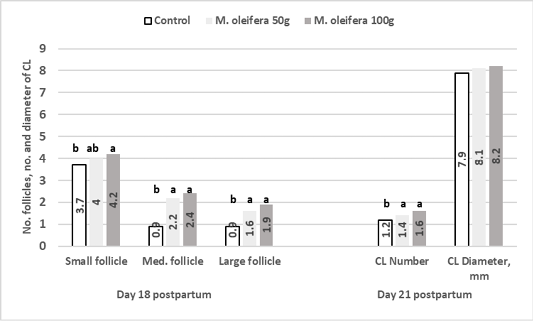
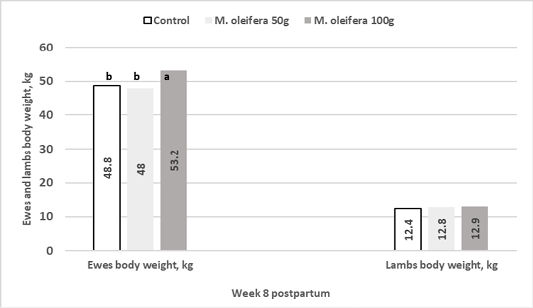
The recorded final body weights of ewes (p<0.05) and their resulting lambs (p>0.05) at 8 weeks postpartum were increased due to M. oleifera leaves (Figure 1). Moreover, the recorded ovarian follicles and corpora lutea at day 18 and 21 postpartum, respectively were high (p<0.05) due to M. oleifera supplementation (Figure 2). The recorded final body weight of ewes (p<0.05) and their resulting lambs (p<0.05) at 8 weeks postpartum were increased due to M. oleifera leaves supplementation compared to control diet as reported in previous studies ; . Feed supplements must be safe for the health and well-being of pregnant and lactating ewes to support their body weight gain and the development of ovarian structures ; . Several factors could be owing to the positive effects of M. oleifera on body weight improvement including higher (p<0.05) nutrient digestibility, total bacterial count, and fermentation in addition to a significant decrease in total protozoal count, ruminal ammonia-N, and methane production . M. oleifera extracts supplemented with lambs was proven effective as an anti-methane additive . The recorded ovarian follicles and corpora lutea at day 18 and 21 postpartum, respectively were increased (p<0.05) due to M. oleifera. Such improvement in ovarian structures development is owing to high performance, as previously indicated, in digestive tract functions and high (p<0.05) blood and plasma metabolites ; , b). In addition, the contents of saturated and unsaturated fatty acids contents of M. oleifera might be used to provide the precursors for prostaglandin and steroid hormone synthesis .

Table 3: Effects of M. oliefera on thermo-tolerance parameters of ewes over heat stress.

Parameters

Treatments

Control

M. oleifera 50.0g

M. oleifera 100.0g

Rectal temperature, °C

39.03 ± 0.50

39.10 ± 0.60

39.11 ± 0.5

Respiration rate/ min.

29.16 ± 0.18

27.32 ± 0.28

27.04 ± 0.38

Pulse rate/min.

88.52b ± 0.73

86.48ab ± 1.54

81.52a ± 1.29

Partial pressure of oxygen,%

96.60 ± 1.12

97.40 ± 1.31

98.56 ± 1.18

a,b Values with different superscripts between groups significantly differ at P < 0.05.

Table 4: Effects of Moringa oleifera leaves (50.0 and 100 g daily) supplementation on blood cells and hemoglobin values of ewes in subtropics.

Parameters

Treatments

Control

M. oleifera 50g

M. oleifera 100g

Red blood cells, 1012/L

11.34b ± 0.16

12.47a ± 0.23

12.56a ± 0.24

Hemoglobin, g/dl

12.10 ± 0.22

12.20 ± 0.15

12.35 ± 0.22

Hematocrit, %

32.28b ± 0.51

38.55a ± 1.05

39.59a ± 0.74

MCV, fl or µm3

28.44b ± 0.41

30.84ab ± 0.46

31.64a ± 0.53

MCH, pg/cell

10.70 ± 0.20

9.87 ± 0.24

9.91 ± 0.25

MCHC, g/dl or %

37.78 ± 0.85

32.23 ± 0.98

31.41 ± 0.71

White blood cells, 109/l

8.74b ± 0.26

9.64a ± 0.26

9.79a ± 0.21

Lymphocytes, 109/l

3.98b ± 0.16

4.56a ± 0.11

4.62a ± 0.11

Monocytes, 109/l

0.05 ± 0.00

0.06 ± 0.00

0.06 ± 0.00

Neutrophils, 109/l

3.54b ± 0.10

3.78ab ± 0.16

3.87a ± 0.11

Eosinophils, 109/l

1.03 ± 0.01

1.10 ± 0.02

1.10 ± 0.01

Basophils, 109/l

0.13 ± 0.00

0.15 ± 0.00

0.15 ± 0.01

a,b Values with different superscripts between groups significantly differ at P < 0.05. MCV, Mean corpuscular volume; MCH, Mean corpuscular hemoglobin; MCHC, Mean corpuscular hemoglobin concentration.

Table 5: Effects of Moringa oleifera leaves (50.0 and 100 g daily) supplementation to ewes on blood profiles of the resulting lambs in subtropics.

Parameters

Treatments

Control

M. oleifera 50g

M. oleifera 100g

Red blood cells, 1012/L

11.76b ± 0.12

12.53a ± 0.14

12.75a ± 0.10

Hemoglobin, g/dl

12.30b ± 0.32

12.75ab ± 0.30

12.91a ± 0.28

Hematocrit, %

34.37b ± 1.03

37.99 ab ± 1.77

39.15a ± 1.04

MCV, fl or µm3

29.20 ± 0.73

30.30 ± 1.30

30.70 ± 0.68

MCH, pg/cell

10.47 ± 0.28

10.20 ± 0.29

10.13 ± 0.23

MCHC, g/dl or %

35.97 ± 1.08

34.07 ± 1.37

33. 16 ± 1.06

White blood cells, 109/l

6.90b ± 0.31

7.60a ± 0.34

8.31a ± 0.30

Lymphocytes, 109/l

3.16b ± 0.21

3.56ab ± 0.21

3.93a ± 0.17

Monocytes, 109/l

0.05 ± 0.00

0.05 ± 0.00

0.05 ± 0.00

Neutrophils, 109/l

2.58b ± 0.13

2.84ab ± 0.15

3.11a ± 0.15

Eosinophils, 109/l

0.99 ± -.03

1.01 ± 0.03

1.06 ± 0.02

Basophils, 109/l

0.13 ± 0.01

0.14 ± 0.01

0.15 ± 0.01

a,b Values with different superscripts between groups significantly differ at P < 0.05. MCV, Mean corpuscular volume; MCH, Mean corpuscular hemoglobin; MCHC, Mean corpuscular hemoglobin concentration.

Table 6: Effects of Moringa oleifera leaves (50.0 and 100 g daily) supplementation on plasma biochemistry of ewes.

Parameters

Treatments

Control

M. oleifera 50g

M. oleifera 100g

Total protein, g/dl

7.50b ± 0.12

8.28a ± 0.09

8.42a ± 0.11

Albumin, g/dl

3.19b ± 0.04

3.60a ± 0.03

3.65a ± 0.04

Globulin, g/dl

4.31b ± 0.13

4.68a ± 0.08

4.77a ± 0.09

Albumin/Globulin

0.74 ± 0.03

0.76 ± 0.01

0.76 ± 0.01

Glucose, mg/dl

86.20a ± 1.08

80.84b ± 1.06

79.32b ± 1.03

Alkaline phosphatase, U/L

117.8 ± 1.65

116.20 ± 1.19

114.7 ± 1.10

Aspartate aminotransferase, U/L

158.2 ± 6.27

151.6 ± 5.71

154.0 ± 4.52

Gamma-glutamyl transferase, U/L

68.80 ± 1.55

67.64 ± 1.47

63.32 ± 1.61

Creatine Phosphokinase, U/L

194.5 ± 7.66

197.6 ± 7.26

198.2 ± 6.87

Blood urea nitrogen, mg/dl

14.22a ± 0.36

12.45b ± 0.27

12.15b ± 0.27

Urea, mg/dl

30.43a ± 0.78

26.64b ± 0.58

26.00b ± 0.57

Calcium, mg/dl

10.01b ± 0.15

11.62a ± 0.12

11.66a±11.66

Phosphorus, mg/dl

5.08b ± 0.20

5.70a ± 0.18

5.87a ± 0.15

Magnesium, mg/dl

0.53b ± 0.01

0.55ab ± 0.01

0.58a ± 0.01

Sodium, mmol/L

141.7 ± 1.04

140.7 ± 0.91

138.4 ± 1.12

Potassium, mmol/L

4.57 ± 0.11

4.80 ± 0.11

4.84 ± 0.11

Chloride, mmol/L

111.9 ± 0.67

110.10 ± 0.84

109.9 ± 0.88

a,b Values with different superscripts between groups significantly differ at P < 0.05.

Blood and plasma profiles

Blood and biochemistry values of ewes and their resulting lambs of the two M. oleifera and control groups are shown in Tables 4-7. Significant increases (p<0.05) of RBCs and hematocrit, WBCs, lymphocytes, and neutrophils were found in groups of M. oleifera ewes and their resulting lambs (Tables 4-5). In addition, total protein, albumin, globulin, and minerals (calcium, phosphorus, magnesium) values were increased (p<0.05) in groups of M. oleifera ewes and their resulting lambs whereas the values of glucose, urea (p<0.05) and hepatic enzymes (aspartate transaminase, γ-glutamyl transferase and alkaline phosphatase) (p >0.05) were decreased if compared to control group (Tables 6-7).

The blood and plasma values of M. oleifera and control groups were within the normal range of healthy ewes and lambs (Tables 4-7) ; ; , 2014a, b; ; . The valuable effects of M. oleifera leave on blood and

Table 7: Effects of Moringa oleifera leaves (50.0 and 100 g/kg diet) supplementation to ewes on plasma biochemistry of the resulting lambs.

Parameters

Treatments

Control

M. oleifera 50g

M. oleifera 100g

Total protein, g/dl

6.06b ± 0.09

6.43ab ± 0.13

6.51a ± 0.11

Albumin g/dl

2.98b ± 0.06

3.24a ± 0.05

3.21a ± 0.03

Globulin g/dl

3.08b ± 0.11

3.19ab ± 0.10

3.30a ± 0.09

Albumin/Globulin

0.98 ± 0.05

1.02 ± 0.03

0.98 ± 0.02

Glucose mg/dl

81.70a ± 3.11

70.10b ± 1.95

68.10b ± 2.76

Alkaline phosphatase, U/L

119.50 ± 1.89

121.80 ± 2.19

120.20 ± 1.99

Aspartate aminotransferase, U/L

146.80 ± 3.50

146.70 ± 4.36

133.0 ± 4.72

Gamma-glutamyl transferase, U/L

73.80 ± 2.82

70.30 ± 2.65

65.50 ± 3.04

Creatine Phosphokinase, U/L

195.1 ± 10.17

198.1 ± 11.0

196.5 ± 10.17

Blood urea nitrogen, mg/dl

15.64a ± 0.94

13.38b ± 0.71

13.04b ± 0.70

Urea, mg/dl

33.46a ± 1.05

28.63b ± 1.51

27.90b ± 1.50

Calcium, mg/dl

10.63b ± 0.10

11.41a ± 0.12

12.21a ± 0.11

Phosphorus, mg/dl

5.99b ± 0.38

7.36a ± 0.34

7.59a ± 0.17

Magnesium, mg/dl

0.58 ± 0.03

0.63 ± 0.04

0.62 ± 0.03

Sodium, mmol/l

131.90 ± 1.54

135.70 ± 0.63

137.20 ± 1.15

Potassium, mmol/l

4.60 ± 0.18

4.82 ± 0.16

4.94 ± 0.14

Chloride, mmol/l

109.0 ± 1.11

112.5 ± 0.76

115.30 ± 0.84

a,b Values with different superscripts between groups significantly differ at P < 0.05.

plasma profiles could be attributed to several factors including high (p<0.05) body weight, enhanced nutrient digestibility, and rumen fermentation , antioxidative characteristics regulating processes involved in the metabolism , b).

Several studies reported valuable effects of M. oleifera on blood and plasma indices ; , b; . The blood and plasma biochemical indicators in the present study were determined to explore the safety of M. oleifera leaves as a feed supplement for pregnant and lactating ewes and the resulting lambs. It has been found earlier that M. oleifera inclusion (25, 50, 75, 100%) to ewes or goat diets increased blood indices (red blood cells, hemoglobin and hematocrit) while white blood cells values decreased ; . M. oleifera lipid contents of saturated and unsaturated fatty acids might consider key constituents of the plasma membrane ; Mawatari et al., 2003). Polysaccharides of M. oleifera might gave positive effects on immune performance and intestinal health . Moringa polyphenol extract might have immunomodulatory characteristics (Lin et al., 2022). M. oleifera leaves contain beta-carotene and other phytochemicals known for their antioxidant ability, antioxidant vitamins, and essential micronutrients with antioxidant activity.

In the current study, the glucose and urea values were decreased (p<0.05) due to M. oleifera supplementation as indicated in several studies ; ; . The significant improvement in nutrient digestibility and body weight gain could be the reason for consuming glucose in metabolism and urea in protein synthesis.

Hepatic enzymes (AST, GGT, and ALP) are considered as an authoritative indicator of liver functions in ruminants ; , and the liver enzymes’ values were not differed due to M. oleifera inclusion in the diet either during gestation or lactation periods of ewes. Moreover, creatine kinase has been used as a screening diagnosis parameter of endometritis muscular damage or hypocalcemia in lactating cattle . In several studies, the M. oleifera leaves or its extract was given a protective role against conditions-induced hepatic toxicity (Abdull-Razis et al., 2014; .

The minerals (calcium, phosphorus, and magnesium) values were increased in M. oleifera groups when compared to control one as indicated in several previous studies (Abdull-Razis et al., 2014; Ogbe and Affiku, 2011; ; ; . Major minerals of blood (calcium, phosphorus, and magnesium) indicate the animal’s health and they are important for animals’ production (Nozad et al., 2020). Herein, the aforementioned mineral values were in the normal range and reflected the adequate minerals of M. oleifera and control diets . The increase in the aforementioned minerals in M. oleifera groups could be attributed to their presence in M. oleifera leaves . Calcium, phosphorus, and magnesium minerals are essential elements for skeletal building, muscle contraction, production of energy and anti-inflammatory and anti-viral agents . Collectively, the components of M. oleifera leaves lead to a significant improvement in the functions of the gastrointestinal tract and liver leading to an increase in body health and body weight gain during gestation and lactation periods of ewes in subtropics.

CONCLUSIONS

The unique properties of organic M. oleifera leaves as a source of high protein, saturated and unsaturated fatty acids and minerals after daily supplementation (100.0 g/head) to pregnant and lactating ewes resulted in enhancement of body health and ovarian follicle development through regulating body weight gain, thermo-tolerance responses, blood cells and metabolites, liver enzymes, and minerals values. The positive effects of M. oleifera leaves were transmitted to the resulting lambs until weaning age.

ACKNOWLEDGMENTS

This work was supported by the Deanship of Scientific Research, Vice Presidency for Graduate Studies and Scientific Research, King Faisal University, Saudi Arabia (GRANT2286).

Novelty Statement

M. oleifera supplementation to pregnant ewes improves thermo-tolerance parameters, blood and biochemical profiles of ewes and lambs in subtropics.

Author’s Contribution

Authors contributed equally to conceptualization, methodology, data analysis, writing, and editing manuscripts.

Conflict of interest

The authors have declared no conflict of interest.

Figures

Figure 1:
Figure 1:.

Effects of Moringa oleifera (50.0 and 100 g daily) on body weight of ewes and lambs at week 8 postpartum. a, b Values with different superscripts between groups significantly differ at P < 0.05.

Figure 2:
Figure 2:.

Effects of Moringa oleifera supplementation (50.0 and 100 g daily) on ovarian follicles and corpora lutea development. a, b Values with different superscripts between groups significantly differ at P < 0.05.

References

  1. Abdel-Raheem SM, Hassan EH (2021). Effects of dietary inclusion of Moringa oleifera leaf meal on nutrient digestibility, rumen fermentation, ruminal enzyme activities and growth performance of buffalo calves. Saudi J. Biol. Sci., 28: 4430-436. https://doi.org/10.1016/j.sjbs.2021.04.037[CrossRef]
  2. Abdull Razis AF, Ibrahim MD, and Kntayya SB (2014). Health benefits of Moringa oleifera. Asian Pac. J. Cancer Prevent., 15(20): 8571–8576. https://doi.org/10.7314/APJCP.2014.15.20.8571[CrossRef]
  3. Afzal A, Hussain T, Hameed A (2021). Moringa oleifera supplementation improves antioxidant status and biochemical indices by attenuating early pregnancy stress in beetal goats. Front. Nutr., 8: https://www.frontiersin.org/article/10.3389/fnut.2021.700957
  4. Ajuogu PK, Mgbere OO, Bila DS, McFarlane JR (2019). Hormonal changes, semen quality and variance in reproductive activity outcomes of post pubertal rabbits fed Moringa oleifera Lam. leaf powder. J. Ethnopharmacol., 233: 80–86. https://doi.org/10.1016/j.jep.2018.12.036[CrossRef]
  5. Akanmu AM, Hassen A, Adejoro FA (2020). Haematology and serum biochemical indices of lambs supplemented with Moringa oleifera, Jatropha curcas and Aloe vera leaf extract as anti-methanogenic additives. Antibiotics, 9(9): 1–7. https://doi.org/10.3390/antibiotics9090601[CrossRef]
  6. Al-Masruri H, Al-Zeidi R, Al-Mufarji A, Mohammed AA, Al-Madani A, Mohammed H (2022a). Leverage of Moringa oleifera supplementation on performances, biochemical, and milk profiles in mammals. Adv. Anim. Vet. Sci., 10(9): 2043-2050. https://doi.org/10.17582/journal.aavs/2022/10.9.2043.2050[Full text][CrossRef]
  7. Al-Masruri H, Al Zeidi R, Al Mufarji A, Mohammed AA (2022b). Moringa oleifera leaves supplementation to anaesthetized mice associated with changes of thermo-tolerance parameters, blood and plasma indices. Fresen. Environ. Bull., 8: 8179-8187.
  8. Al-Mufarji A, Mohammed AA (2022). Chemical composition and fatty acid profiles of organic Moringa oleifera: effects on modulation of blood and plasma parameters of ewes in subtropics. Adv. Anim. Vet. Sci. 10(6): 1227-1232. https://doi.org/10.17582/journal.aavs/2022/10.6.1227.1232[Full text][CrossRef]
  9. Al-Mufarji A, Mohammed AA, Al Zeidi R, Al Masruri H (2022a). Modulation impacts of Moringa oleifera on thermo tolerance parameters and blood indices in subtropical ewes under heat stress. Adv. Anim. Vet. Sci. 10(7):1641-1648. https://doi.org/10.17582/journal.aavs/2022/10.7.1641.1648[Full text][CrossRef]
  10. Al-Mufarji A, Mohammed AA, Al-Zeidi R, Al-Masruri H, Mohammed A (2022b). Effects of Moringa oleifera on follicular development, blood and metabolic profiles of subtropical ewes during peripartum. Adv. Anim. Vet. Sci. 10(8): 1706-1712. https://doi.org/10.17582/journal.aavs/2022/10.8.1706.1712[Full text][CrossRef]
  11. Armstrong B, Sera F, Vicedo-Cabrera AM, Abrutzky R, Åström DO, Bell ML, Chen BY, Coelho D, M, Correa, PM, Dang TN, Diaz MH, Dung DV, Forsberg B, Goodman P, Guo YL, Guo Y, Hashizume M, Honda Y, Indermitte E, Íñiguez C, Kan H, Kim H, Kyselý J, Lavigne E, Michelozzi P, Orru H, Ortega NV, Pascal M, Ragettli MS, Saldiva PHN, Schwartz J, Scortichini M, Seposo X, Tobias A, Tong S, Urban A, De La Cruz Valencia C., Zanobetti A, Zeka A, Gasparrini A (2019). The role of humidity in associations of high temperature with mortality: A multicountry, multicity study. Environ. Health Perspect., 127: 97007. https://doi.org/10.1289/EHP5430[CrossRef]
  12. Ashour EA, El-Kholy MS, Alagawany M, Abd El-Hack ME, Mohamed LA, Taha AE, Sheikh AI, Laudadio V, Tufarelli V (2020). Effect of dietary supplementation with Moringa oleifera leaves and/or seeds powder on production, egg characteristics, hatchability and blood chemistry of laying Japanese quails. Sustainability, 12(6): 2463. https://doi.org/10.3390/su12062463[CrossRef]
  13. Bohmanova J, Misztal I, Cole JB (2006). Temperature-humidity indices as indicators of milk production losses due to heat stress. J. Dairy Sci., 90: 1947–1956. https://doi.org/10.3168/jds.2006-513[CrossRef]
  14. Claire Wathes D, Robert E, Abayasekara R., John Aitken R (2007). Polyunsaturated fatty acids in male and female reproduction. Biol. Reprod., 77: 190–201. https://doi.org/10.1095/biolreprod.107.060558[CrossRef]
  15. Dai J, Tao L, Shi C, Yang S, Li D, Sheng J, and Tian Y (2020). Fermentation improves calcium bioavailability in moringa oleifera leaves and prevents bone loss in calcium deficient rats. Food Sci. Nutr., 8(7): 3692–3703. https://doi.org/10.1002/fsn3.1653[CrossRef]
  16. Duncan DB (1955). Multiple range and multiple F test. Biometrics, 11: 1. https://doi.org/10.2307/3001478[CrossRef]
  17. Elghandour MMY, Vallejo LH, Salem AZM, Mellado M, Camacho LM, . Cipriano M, Olafadehan OA, Olivares J, Rojas S (2017). Moringa oleifera leaf meal as an environmental friendly protein source for ruminants: Biomethane and carbon dioxide production, and fermentation characteristics. J. Cleaner Prod. 165: 1229-1238. https://doi.org/10.1016/j.jclepro.2017.07.151[CrossRef]
  18. El-Hedainy DKA, El-Wakeel E, Rashad AMA (2020). Effect of Moringa seed meal as a feed additive on performance of fattening male Barki sheep. Int. J. Vet. Sci. Res., 6(2): 184–187. https://doi.org/10.17352/ijvsr.000072[CrossRef]
  19. Estiyani A, Suwondo A, Rahayu S, Hadisaputro S, Widyawati MN, Susiloretni KA (2017). The effect of Moringa oleifera leaves on change in blood profile in postpartum mothers. Belitung Nurs. J., 3(3): 191–197. https://doi.org/10.33546/bnj.104[CrossRef]
  20. Fadiyimu A, Alokan J, Fajemisin A, Onibi G (2017). Feed intake, growth performance and carcass characteristics of west african dwarf sheep fed Moringa oleifera, gliricidia sepium or cassava fodder as supplements to panicum maximum. J. Exp. Agric. Int., 14(4): 1–10. https://doi.org/10.9734/JEAI/2016/25167[CrossRef]
  21. Fahey JW (2005). Moringa oleifera: A review of the medical evidence for its nutritional, therapeutic, and prophylactic properties. Part 1. Trees Life J., 1: 1–15.
  22. Farid AS, Hegazy AM (2020). Ameliorative effects of Moringa oleifera leaf extract on levofloxacin-induced hepatic toxicity in rats. Drug Chem. Toxicol., 43(6): 616–622. https://doi.org/10.1080/01480545.2019.1574811[CrossRef]
  23. Giuberti G, Rocchetti G, Montesano D, Lucini L (2021). The potential of Moringa oleifera in food formulation: A promising source of functional compounds with health-promoting properties. Curr. Opin. Food Sci., 42: 257-269. https://doi.org/10.1016/j.cofs.2021.09.001[CrossRef]
  24. Goff JP (2008). The monitoring, prevention, and treatment of milk fever and subclinical hypocalcemia in dairy cows. Vet. J., 176: 50–57. https://doi.org/10.1016/j.tvjl.2007.12.020[CrossRef]
  25. Gupta S, Jain R, Kachhwaha S, Kothari SL (2018). Nutritional and medicinal applications of Moringa oleifera Lam. Review of current status and future possibilities. J. Herbal Med., 11: 1–11. https://doi.org/10.1016/j.hermed.2017.07.003[CrossRef]
  26. Hernández-Becerra JA (2022). Physicochemical characteristics of yogurt from sheep fed with Moringa oleifera leaf extracts. Animals, https://doi.org/10.3390/ani12010110[CrossRef]
  27. Ignatov I (2020). Anti inflammatory and anti viral effects of potassium (K) and chemical composition of Moringa. Asian J. Biol., 9(2): 1–7. https://doi.org/10.9734/ajob/2020/v9i230081[CrossRef]
  28. Ignatov I, Popova T (2021). Applications of Moringa oleifera Lam., Urtica dioica L., Malva sylvestris L. and Plantago major L. Containing potassium for recovery. Molecules, 33: 14.
  29. Jaiswal D, Kumar Rai P, Kumar A, Mehta S, Watal G (2009). Effect of Moringa oleifera lam. leaves aqueous extract therapy on hyperglycemic rats. J. Ethnopharmacol., 123(3): 392–396. https://doi.org/10.1016/j.jep.2009.03.036[CrossRef]
  30. Jongrungruangchok S, Bunrathep S, Songsak T (2010). Nutrients and minerals content of eleven different samples of Moringa oleifera cultivated in Thailand. J. Health Res., 24: 123–127.
  31. Kassab AY, Hamdon HA, Mohammed AA (2017). Impact of probiotics supplementation on some productive performance, digestibility coefficient and physiological responses of beef bulls under heat stress conditions. Egypt. J. Nutr. Feeds, 20(1): 29-39. https://doi.org/10.21608/ejnf.2017.75102[CrossRef]
  32. Kassab AY, Mohammed AA (2013). Effects of dietary live dried yeast on some physiological responses and productive performances in sohagi ewes. Egypt. J. Nutr. Feeds, 16(2): 215-225.
  33. Kassab AY, Mohammed AA (2014a). Ascorbic acid administration as anti-stress before transportation of sheep. Egypt. J. Anim. Prod., 51(1): 13-19. https://doi.org/10.21608/ejap.2014.93664[CrossRef]
  34. Kassab AY, Mohammed AA (2014b). Effect of vitamin E and selenium on some physiological and reproductive characteristics of sohagi ewes. Egypt. J. Nutr. Feeds, 17(1): 9-18.
  35. Kholif AE, Gouda GA, Galyean ML, Anele UY, Morsy TA (2019). Extract of Moringa oleifera leaves increases milk production and enhances milk fatty acid profile of Nubian goats. Agrofor. Syst., 93(5): 1877–1886. https://doi.org/10.1007/s10457-018-0292-9[CrossRef]
  36. Kirmani NR, Rizwan D, Banday TM (2022). Moringa oleifera: The miracle tree and its potential as non- conventional animal feed: A review. Agric. Rev., https://doi.org/10.18805/ag.R-2405[CrossRef]
  37. Kumar PK, Mandapaka RT (2013). Effect of moringa oleifera on blood glucose, ldl levels in types ii diabetic obese people. Innov. J. Med. Health Sci., 3: 23–25.
  38. Lepherd M, Canfield PJ, Hunt GB, Bosward KL (2009). Haematological, biochemical and selected acute phase protein reference intervals for weaned female Merino lambs. Aust. Vet. J., 87(1): 5-11. https://doi.org/10.1111/j.1751-0813.2008.00382.x[CrossRef]
  39. Lin M, Zhang J, Chen X (2018). Bioactive flavonoids in Moringa oleifera and their health-promoting properties. J. Funct. Foods, 47: 469-479. https://doi.org/10.1016/j.jff.2018.06.011[CrossRef]
  40. Liu P, He B, Yang X, Hou X, Han J, Han Y, Nie P, Deng H, Du X (2012). Bioactivity evaluation of certain hepatic enzymes in blood plasma and milk of Holstein Cows. Pak. Vet. J., 32: 601–604.
  41. Mader TL, Davis MS, Brown-Brandl T (2006). Environmental factors influencing heat stress in feedlot cattle. J. Anim. Sci., 84: 712-719. https://doi.org/10.2527/2006.843712x[CrossRef]
  42. Mawatari S, Ohnishi Y, Kaji Y, Maruyama T, Murakami K, Tsutsui K, Fujino T (2003). High-cholesterol diets induce changes in lipid composition of rat erythrocyte membrane including decrease in cholesterol, increase in α-tocopherol and changes in fatty acids of phospholipids. Biosci. Biotechnol. Biochemist., 67(7): 1457–1464. https://doi.org/10.1271/bbb.67.1457[CrossRef]
  43. Meel P, Gurjar ML, Nagda RK, Sharma MC, Gautam L (2018). Effect of Moringa oleifera leaves feeding on hemato-biochemical profile of Sirohi goat kids. J. Entomol. Zool. Stud., 6: 41–48.
  44. Mohammed AA, Al-Hizab F, Al-Suwaiegh S, Alshaheen T, Kassab A, Hamdon H, Senosy W (2021). Effects of propylene glycol on ovarian Restoration, reproductive performance, Metabolic status and milk production of Farafra ewes in subtropics. Fresen. Environ. Bull., 30(7): 8192-8202.
  45. Mohammed AA, Kassab A (2015). Metabolic changes in blood and ovarian follicular fluid in baladi goats as affected by storage time duration. Egypt. J. Anim. Prod., 52(1): 47-54. https://doi.org/10.21608/ejap.2015.93638[CrossRef]
  46. Moyo B, Masika P, Hugo A, Muchenje V (2011). Nutritional characterization of Moringa (Moringa oleifera Lam.) leaves. Afr. J. Biotechnol., 10: 12925–12933. https://doi.org/10.5897/AJB10.1599[CrossRef]
  47. Moyo B, Oyedemi S, Masika P, Muchenje V (2012). Polyphenolic content and antioxidant properties of Moringa oleifera leaf extracts and enzymatic activity of liver from goats supplemented with Moringa oleifera leaves/sunflower seed cake. Meat Sci., 91: 441–447. https://doi.org/10.1016/j.meatsci.2012.02.029[CrossRef]
  48. Noro M, Cid TP, Wagemann FC, Arnés VV, Wittwer MF (2013). Valoración diagnóstica de enzimas hepáticas en perfiles bioquímicos sanguíneos de vacas lecheras. Rev. MVZ Córdoba, 18: 3474–3479. https://doi.org/10.21897/rmvz.170[CrossRef]
  49. Nova E, Redondo-Useros N, Martínez-García RM, Gómez-Martínez S, Díaz-Prieto LE, Marcos A (2020). Potential of Moringa oleifera to improve glucose control for the prevention of diabetes and related metabolic alterations: a systematic review of animal and human studies. Nutrients, 12(7): 2050. https://doi.org/10.3390/nu12072050[CrossRef]
  50. Nozad S, Ramin AG, Moghadam G, Asri-Rezaei S, Babapour A, Ramin S (2012). Relationship between blood urea, protein, creatinine, triglycerides and macro-mineral concentrations with the quality and quantity of milk in dairy Holstein cows. Vet. Res. Forum, 3: 55–59. https://doi.org/10.2298/AVB1101003N[CrossRef]
  51. Ogbe AO, Affiku JP (2011). Proximate study, mineral and anti-nutrient composition of Moringa oleifera leaves harvested from Lafia, Nigeria: potential benefits in poultry nutrition and health. J. Microbiol. Biotechnol. Food Sci., 1(3): 296–308.
  52. Onu PN, Aniebo AO (2011). Influence of Moringa oleifera leaf meal on the performance and blood chemistry of starter broilers. Int. J. Food Agric. Vet. Sci., 1(1): 38–44.
  53. Owens III FS, Dada O, Cyrus JW, Adedoyin OO, Adunlin G (2020). The effects of Moringa oleifera on blood glucose levels: A scoping review of the literature. Complement. Ther. Med., 50: 102362. https://doi.org/10.1016/j.ctim.2020.102362[CrossRef]
  54. Pandey A, Modi RJ, Lunagariya PM, Islam M (2022). Effect of feeding Moringa oleifera meal on growth performance of growing surti kids under intensive system of management. Ind. J. Vet. Sci. Biotech.
  55. Saini R, Prashanth KH, Shetty N, Giridhar (2014a). Elicitors, SA and MJ enhance carotenoids and tocopherol biosynthesis and expression of antioxidant related genes in Moringa oleifera Lam. leaves. Acta Physiol. Plant, 36: 2695–2704. https://doi.org/10.1007/s11738-014-1640-7[CrossRef]
  56. Saini R, Shetty N, Prakash M, Giridhar P (2014b). Effect of dehydration methods on retention of carotenoids, tocopherols, ascorbic acid and antioxidant activity in Moringa oleifera leaves and preparation of a RTE product. J. Food Sci. Technol. 51: 2176–2182. https://doi.org/10.1007/s13197-014-1264-3[CrossRef]
  57. SAS (2008). SAS user’s guide: Basics. Statistical Analysis System Institute, Inc., Cary, NC, USA.
  58. Sattler T, Fürll M (2004). Creatine kinase and aspartate aminotransferase in cows as indicators for endometritis. J. Vet. Med. Physiol. Pathol. Clin. Med., 51: 132–137. https://doi.org/10.1111/j.1439-0442.2004.00612.x[CrossRef]
  59. Senosy W, Kassab, AY, Mohammed AA (2017). Effects of feeding green microalgae on ovarian activity, reproductive hormones and metabolic parameters of Boer goats in arid subtropics. Theriogenology, 96: 16-22. https://doi.org/10.1016/j.theriogenology.2017.03.019[CrossRef]
  60. Senosy W, Kassab AY, Hamdon HA, Mohammed AA (2018). Influence of organic phosphorus on reproductive performance and metabolic profiles of anoestrous Farafra ewes in subtropics at the end of breeding season. Reprod. Domest. Anim., 53: 904-913. https://doi.org/10.1111/rda.13183[CrossRef]
  61. Silanikove N (2000). Effects of heat stress on the welfare of extensively managed domestic ruminants. Livest. Prod. Sci., 67(1): 1-18. https://doi.org/10.1016/S0301-6226(00)00162-7[CrossRef]
  62. Srikandakumar A, Johnson EH, Mahgoub O (2003). Effect of heat stress on respiratory rate, rectal temperature and blood chemistry in Omani and Australian Merino sheep. Small Rumin. Res., 49(2): 193-198. https://doi.org/10.1016/S0921-4488(03)00097-X[CrossRef]
  63. Teixeira E, Carvalho M, Neves V, Silva M, Arantes-Pereira L (2014). Chemical characteristics and fractionation of proteins from Moringa oleifera Lam. leaves. Food Chem., 147: 51–54. https://doi.org/10.1016/j.foodchem.2013.09.135[CrossRef]
  64. Vongsak B, Sithisarn P, Gritsanapan W (2014). Simultaneous HPLC quantitative analysis of active compounds in leaves of Moringa oleifera Lam. J. Chromatogr. Sci., 52 (7): 641–645. https://doi.org/10.1093/chromsci/bmt093[CrossRef]
  65. Warastomo MT, Suryapratama W, Rahardjo AHD (2021). The effect of additional moringa leaf flour (Moringa oleifera) and palm oil in feed on the physical properties of sheep. Angon. J. Anim. Sci. Tech., 3(2): 156–165.
  66. Wen Z, Tian H, Liang Y, Guo Y, Deng M, Liu G, Li Y, Liu D, Sun B (2022). Moringa oleifera polysaccharide regulates colonic microbiota and immune repertoire in C57BL/6 mice. Int. J. Biol. Macromol., 198: 135-146. https://doi.org/10.1016/j.ijbiomac.2021.12.085[CrossRef]
  67. Yasoob TB, Khalid AR, Zhang Z, Zhu X, Hang S (2022). Liver transcriptome of rabbits supplemented with oral Moringa oleifera leaf powder under heat stress is associated with modulation of lipid metabolism and up-regulation of genes for thermo-tolerance, antioxidation, and immunity. Nut. Res., 99: 25-39. https://doi.org/10.1016/j.nutres.2021.09.006[CrossRef]

Cited by 3 articles

In journals published by ResearchersLinks.

  1. Effect of Dietary Source of Omega-3 Fatty Acids on Milk Production, Fatty Acid Profiles and IGF-1 of Lactating Dairy Cows in Arid SubtropicsPakistan Journal of Zoology · 2024
  2. Effects of Dietary Omega-3 Fatty Acids on Reproductive Performance and Biochemical Parameters of Lactating Cows in Arid SubtropicsPakistan Journal of Zoology · 2024
  3. Effect of Alfalfa Hay Replacement with giant reed on Growth Performance, Nutrient Digestibility and Blood Metabolites of Ardi goats in Arid SubtropicsAdvances in Animal and Veterinary Sciences · 2023

Services

Article usage statistics

Loading…