Research Article · Volume 10, Issue 6, 26 May 2022 · Open Access
Chemical Composition and Fatty Acid Profiles of organic Moringa oleifera: Effects on Modulation of Blood and Plasma Parameters of Ewes in Subtropics
·
Affiliations & Notes ⌄
1Department of Animal and Fish Production, College of Agriculture and Food Sciences, King Faisal University, P.O. Box 400, Al-Hassa, Kingdom of Saudi Arabia. *Correspondence | Abd El-Naseer Ahmed Mohammed, Department of Animal and Fish Production, College of Agriculture and Food Sciences, King Faisal University, P.O. Box 400, Al-Hassa, Kingdom of Saudi Arabia
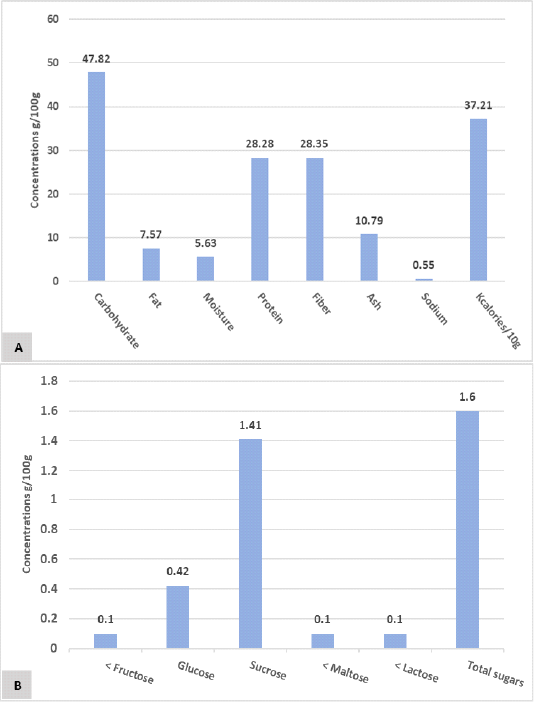
The current study presented organic Moringa oleifera leaves chemical composition, sugar and fatty acid profiles and its effect on modulation of blood and plasma parameters of ewes in subtropics (Figures 1-4).
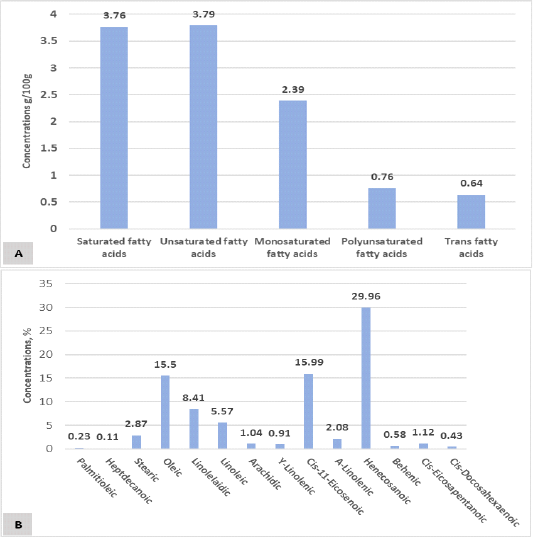
In addition, fatty acid profiles were saturated fatty acids (3.76%), unsaturated fatty acids (3.), monounsaturated fatty acids (2.39%), polyunsaturated fatty acids (0.76%) and trans fatty acids (0.64%).
The potential properties of M. oleifera as sources of protein and fatty acids profiles have been confirmed in this study through chemical analysis.
In addition, our study indicated that 25 and 50.0g organic M. oleifera daily supplementation to ewes resulted in improvement of body status through modulating blood and metabolites, liver and kidney functions.
Selected from the article's own text.
Abstract
Moringa oleifera (M. oleifera) has received recent attention as supplement for human nutrition and animal feed. Organic M. oleifera leaves were analyzed for chemical composition, sugar and fatty acid profiles and undetected pesticides residues and its effect on modulation of blood and plasma parameters of ewes in subtropics. Twenty seven Naimi ewes, 51.3 ± 2.70 kg body weight and aged 2.5 - 3.0 years, were randomly allocated to three equal groups (nine/group) as control and M. oleifera groups (25 & 50.0 g daily). Blood samples were collected and were subjected to analysis through hematology and plasma biochemistry analyzers. The hematological parameters include red and white blood cells (RBCs & WBCs), hematocrit (Ht) and hemoglobin (Hb) values. The plasma biochemistry parameters include plasma glucose, proteins, liver and kidney functions and minerals values. The results indicated that organic M. oleifera leaves contain protein (28.28%), carbohydrate (47.82%), fat (7.57) and fiber (28.35%). In addition, fatty acid profiles were saturated fatty acids (3.76%), unsaturated fatty acids (3.79), monounsaturated fatty acids (2.39%), polyunsaturated fatty acids (0.76%) and trans fatty acids (0.64%). Upon supplementation to ewes, M. oleifera leaves caused significant changes in hematological (RBCs, WBCs, Ht and Hb) and plasma biochemistry (total protein, albumin, urea, liver enzymes) parameters. It could be concluded that organic M. oleifera leaves contain compounds might be helpful in modulating blood and plasma parameters if supplemented to ewes in subtropics.
Moringa oleifera is generally a tree plant referred to as a miracle plant. M. oleifera is a native plant in Pakistan, Afghanistan, Bangladesh and India . M. oleifera is an important plant rich in certain micro and macro nutrients, which is important in medicine and nutrition for both human and animals ; ; . Leaves of M. oleifera are reported to contain substantial amounts of nutrients as protein, fiber, carotenoids and tocopherols ; ; Saini et al., 2014 a,b), vitamins as A, C and E , minerals as potassium, calcium, magnesium, iron, copper, zinc, selenium and manganese . The M. oleifera contain beta-carotene and other phytochemicals known with their antioxidant ability (quercetin, kaempferol, rutin, and caffeoylquinic acids); antioxidant vitamins (A, C and E) and antioxidant minerals (zinc and selenium), which can play important roles as anti-stress in arid subtropics ; ; ;.
Substantial variations in contents of M. oleifera has been shown as protein (19-29%), fiber (16-24%), minerals, vitamins and others according to cultivar and source ; ;. Improvement in growth performance ; , blood metabolites ; and milk production and composition , 2019; Hernández-Becerra et al., 2022) has been confirmed. Due to the several aforementioned nutritional benefits of M. Oleifera, this research has been carried out to determine organic M. oleifera leaves chemical composition and fatty acid profiles and its effect on modulation of blood and plasma profiles of ewes in subtropics.
MATERIALS AND METHODS
The experimental procedures were approved by the Ethical Clearance of the deanship of scientific research, vice presidency for graduate studies and scientific research, King Faisal University, Saudi Arabia [Ref. No. KFU-REC-2022-MAR-EA000532]. This experiment was carried out in the Research and Training Station of King Faisal University for 4 weeks. The organic M. oleifera leaves were obtained from Nadawy Farm – Gizan, Kingdom of Saudi Arabia (053/SA). The farm has got a certificate according to Saudi Organic law & By Law (OSKSA) valid from 30th November 2021 until 29th November 2022.
Experimental design and animal management
Twenty seven Naimi ewes, 51.3 ± 2.70 kg body weight and aged 2.5 - 3.0 years, were randomly allocated to three equal groups (nine/group) as control and two Moringa oleifera groups (25 & 50.0 g M. oleifera daily). The ewes were living in a standard pen at a stocking rate of 1.75 m2/ewe. The ewes were kept free inside the pen. The ewes were daily fed 1 kg basal concentrate diet for control group and basal concentrate diet supplemented with 25.0 and 50.0g M. oleifera per head in addition to ad-libitum berseem hay. The given supplemented levels of M. oleifera were chosen according to preliminary study for three weeks and previous study ; . The concentrate was offered twice at 08:00 a.m. and 16:00 p.m. Ewes was given access to drinking water ad-libitum.
Moringa oleifera analysis
Moringa oleifera leaves were pre-dried (65°C for 24 h), ground and milled (1 mm). The ground and milled composite samples were dried at 105°C for 3h. Chemical analyses of crude protein (CP), carbohydrate, fiber, fat, ash, sugar profiles (AOAC-994.10) and fatty acid profiles (AOAC-996.01) were determined according to procedures of A.O.A.C. (1995). The chemical analysis, sugar and fatty acid profiles were performed through IDAC MERIEUX NutriSciences lab (www.idac.com.sa).
Blood collection and analysis
Three blood samples were collected each ten days from the control and the two Moringa groups. The obtained blood samples were analyzed for hematological and chemistry parameters through hematology analyzers (Abaxis Vetscan HM5) and chemistry analyzers (Skyla VB1; http://www.skyla.com/page/about/index.aspx?kind=103). The readable hematological parameters include red blood cells (1012/l), hematocrit (%) and hemoglobin (g/dl) in addition to white blood cells (106/l) and their types. The readable plasma parameters include total protein (g/dl), albumin (g/dl), glucose (mg/dl), liver and kidney functions.
Statistical analysis
Values of chemical composition, sugar and fatty acid profiles of organic M. oleifera leaves are presented as mean. Values of blood and plasma due to M. oleifera supplementation to ewes were statistically analyzed using General Linear Model (GLM) procedure of SAS (SAS, 2006) according to the following model: Yij = μ + Ti+ eij Where: μ = Mean, Ti = Effect of M. oleifera and eij= Standard error
Duncan’s multiple range test (1955) was used to compare between means of the control and the two Moringa treated groups.
RESULTS AND DISCUSSION
The current study presented organic Moringaoleifera leaves chemical composition, sugar and fatty acid profiles and its effect on modulation of blood and plasma parameters of ewes in subtropics(Figures 1-4). Organic M. oleifera leaves contain protein (28.28%>), carbohydrate (47.82%), fat (7.57)and fiber (28.35%) as indicated in other studies ; ; Saini et al., 2014 a,b). In addition, fatty acid profiles were saturated fatty acids (3.76%), unsaturated fatty acids (3.), monounsaturated fatty acids (2.39%), polyunsaturated fatty acids (0.76%) and trans fatty acids (0.64%).To the best of our knowledge, the study presents the sugar and fatty acid profile for the first time (Figure 1). This percentage of saturated fatty acids (3.77%) to unsaturated fatty acids (3.80%) is of great importance for human health, fatty acids in produced milk. Mammals can synthesize all of the fatty acids (FAs) with the exception of FAs in the n-3 (omega-3) and n-6 (omega-6) families of polyunsaturated fatty acids (0.76 %), which should be supplied in the diets.
Blood And Biochemistry Profiles
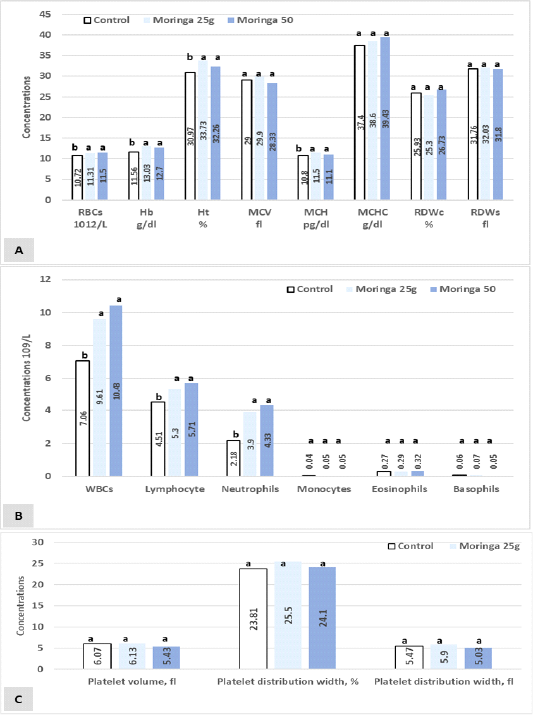
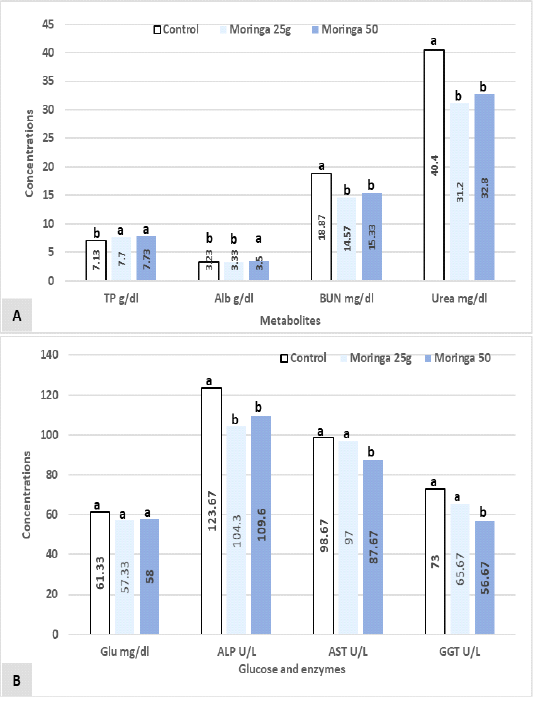
Blood and biochemistry profiles of the control and the two
Moringa groups are presented in Figures (3 & 4). The observed hematological and biochemistry values fell within the normal range for clinically-healthy small ruminants ; , 2014 a,b;2017; . The results indicated significant (P < 0.05) improvement of red and white blood cells, packed cell volume and hemoglobin values and plasma metabolites (total protein, albumin, liver enzyme and urea). Blood indices and plasma metabolites are an indicative of body’s health and thermal responses in mammalian species. The positive effects of M. oleifera on blood and plasma metabolite parameters might be due to several factors including antioxidative properties, nutrient digestibility, rumen fermentation and regulating pathways involved in the metabolism ; ; ; . M. oleifera leaf meal supplemented to goat and steer resulted in significant decrease
of CH4 , ruminal ammonia-N, and total protozoal number, while increase of CO2 production, fermentation pH and total bacterial count . In another study carried out in growing buffalo calves through M. oleifera dietary inclusion on nutrient digestibility, rumen fermentation and growth performance . The authors found improvement in rumen fermentation, growth performance, blood metabolites, and mitigated ammonia and methane values. Inclusion 25%, 50, 75, 100% M. oleifera to African ewe diets improved blood indices (RBCs, WBCs, Hb and PCV) , 2016; 2017). In addition, M. oleifera leaves supplemented at levels of 25%, 50, 75, 100% to Sirohi goat kids’ diets resulted in significantly increased RBCs, Hb, total protein and albumin in the 100% treatment, while the white blood cells decreased . Moringa oleifera extract given to lambs as an anti-methane additive was proven effective in reducing intestinal methane emission . In addition, when M. oleifera leaf powder was supplemented to rabbits during heat stress, it resulted in reduced glucose, total cholesterol, low-density lipoprotein cholesterol, and triglycerides . Because of M. oleifera lipid contents, they might considered key constituents of the plasma membrane and they are essential for the functionality of all cellular membranes. In addition, lipids form membrane vesicles or lipid droplets (LDs) that are involved in the transport of proteins, hormones or fat-soluble vitamins (A, D, E and K) in cells and extracellularly, for example in the blood stream .
The antioxidant activity of M. oleifera leaf extract on the enzymatic activity of the liver in goats has confirmed . M. oleifera polysaccharide effects was examined on immune indices of serum and organs in addition to colonic microflora of mice . The results indicated that M. oleifera polysaccharide gave positive effects on the immune performance and intestinal health. Enhancement of antioxidant enzymes was found upon feeding M. oleifera meal to transition Holstein cows . The effects of Moringa leaf and its extracts on immunity functions and antioxidant activity is due to Moringa polyphenols extract, which might have immunomodulatory properties ; . M. oleifera leaves contain beta-carotene and other phytochemicals known with their antioxidant ability (rutin, quercetin, kaempferol, and caffeoylquinic acids); antioxidant vitamins (A, C and E) and essential micronutrients with antioxidant activity (zinc and selenium). Selenium as an antioxidant element helps in detoxification and immune health.
CONCLUSIONS
The potential properties of M. oleifera as sources of protein and fatty acids profiles have been confirmed in this study through chemical analysis. In addition, our study indicated that 25 and 50.0g organic M. oleifera daily supplementation to ewes resulted in improvement of body status through modulating blood and metabolites, liver and kidney functions. This could be attributed to the bioactive compounds of M. oleifera as promising protectors of inflammation and oxidative stress processes. Moreover, in vivo and in vitro studies should be carried out on M. oleifera bioactive compounds to authenticate their possible applications over a wide range of dysregulation causing impaired metabolism of different species.
ACKNOWLEDGEMENTS
This work was supported through the Annual Funding track by the Deanship of Scientific Research, Vice Presidency for Graduate Studies and Scientific Research, King Faisal University, Saudi Arabia [GRANT61].
CONFLICT OF INTEREST
No conflict of interest for author to declare.
novelty statement
The article presented for the first time chemical composition and fatty acid profiles of organic Moringa oleifera.
authors contribution
Aiman Al Mufarji carried out the study and Abd El-Nasser Ahmed Mohammed carried out the experimental design and statistical analysis of data, wrote the manuscript for publication.
Figures
Figure 1. Figure 1.
Chemical composition of organic Moringa oleifera leaves (A) and sugar profiles (B). N.B. Concentrations of fructose, maltose and lactose less than 0.1 g/100 g.
Figure 2.
Saturated and unsaturated fatty acids contents (A) and fatty acid profiles (B) of organic Moringa oleifera leaves.
Figure 3.
Effects of Moringa oliefera on red blood cells (A), white blood cells (B) and platelet profiles (C) in ewes. RBCs red blood cells, Hb hemoglobin, Ht hematocrit, MCV mean corpuscular volume, MCH mean corpuscular hemoglobin, MCHC, mean corpuscular hemoglobin concentration, RDW, red cell distribution width; fl, femtoliters (10−15), WBCs white blood cells. a,b Values with different superscripts between groups significantly differ at P < 0.05.
Figure 4.
Effects of Moringa oliefera on plasma metabolites (A), glucose and enzymes in ewes (B). TP total albumin, Alb albumin, BUN blood urea nitrogen, Glu glucose, ALP Alkaline phosphatase, AST Aspartate aminotransferase, GGT Gamma-glutamyl transferase. a,b Values with different superscripts between groups significantly differ at P < 0.05.
References
A.O.A.C. (1995). Association of Official Analytical Chemists. Official Methods of Analysis, 16th ed. AOAC, Arlington, VA.
Abdel-Raheem S.M., Hassan E.H. (2021). Effects of dietary inclusion of Moringa oleifera leaf meal on nutrient digestibility, rumen fermentation, ruminal enzyme activities and growth performance of buffalo calves, Saudi J. Biol. Sci. 28: 4430-436. https://doi.org/10.1016/j.sjbs.2021.04.037[CrossRef]
Adjei-Fremah S., Ekwemalor K., Asiamah E., Worku M. (2019). Moringa oleifera polyphenols modulate galectin expression in LPS-induced bovine peripheral blood mononuclear cells. J. Dairy Sci. 102: 1.
Afzal A., Hussain T., Hameed A. (2021). Moringa oleifera Supplementation Improves Antioxidant Status and Biochemical Indices by Attenuating Early Pregnancy Stress in Beetal Goats. Frontiers in Nutrition, 8. https://www.frontiersin.org/article/10.3389/fnut.2021.700957 https://doi.org/10.3389/fnut.2021.700957[CrossRef]
Ajuogu P.K., Mgbere O.O., Bila D.S., McFarlane J.R. (2019). Hormonal changes, semen quality and variance in reproductive activity outcomes of post pubertal rabbits fed Moringa oleifera Lam. leaf powder. J. Ethnopharmacol. 233: 80–86. https://doi.org/10.1016/j.jep.2018.12.036[CrossRef]
Akanmu A.M., Hassen A, Adejoro F.A. (2020). Haematology and serum biochemical indices of lambs supplemented with Moringa oleifera, Jatropha curcas and Aloe vera leaf extract as anti-methanogenic additives. Antibiotics., 9(9): 1–7. https://doi.org/10.3390/antibiotics9090601[CrossRef]
Al Mufarji A, Mohammed A.A. (2022). Effects of Moringa oleifera supplementation on growth and reproductive performances, blood and antioxidant status, and milk production in mammals. Pak. J. Zool. (Submitted).
Duncan, D. B. (1955). Multiple range and multiple Ftest. Biometrics., 11: 1. https://doi.org/10.2307/3001478[CrossRef]
Elghandour M.M.Y., L.H. Vallejo, A.Z.M. Salem, M. Mellado, L.M. Camacho, M. Cipriano, O.A. Olafadehan, J. Olivares, S. Rojas (2017). Moringa oleifera leaf meal as an environmental friendly protein source for ruminants: Biomethane and carbon dioxide production, and fermentation characteristics. J. Cleaner Prod. 165: 1229-1238. https://doi.org/10.1016/j.jclepro.2017.07.151[CrossRef]
EL-Hedainy D. K. A., El-Wakeel E., Rashad A.M.A. (2020). Effect of Moringa seed meal as a feed additive on performance of fattening male Barki sheep. Int. J. Vet. Sci. Res. 6(2): 184–187. https://doi.org/10.17352/ijvsr.000072[CrossRef]
Fadiyimu A. A., Alokan J. A., Fajemisin A.N. (2010). Digestibility, nitrogen balance and haematological profile of West African dwarf sheep fed dietary levels of Moringa oleifera as supplement to Panicum maximum. J. Am. Sci. 6(10): 634–643.
Fadiyimu A., Alokan J., Fajemisin A., Onibi G. (2017). Feed Intake, Growth Performance and Carcass Characteristics of West African Dwarf Sheep Fed Moringa oleifera, Gliricidia sepium or Cassava Fodder as Supplements to Panicum maximum. J. Exp. Agric. Int. 14(4), 1–10. https://doi.org/10.9734/JEAI/2016/25167[CrossRef]
Fadiyimu A.A., Alokan J. A., Fajemisin A. N., Onibi G. E. (2016). Feed intake, growth performance and carcass characteristics of West African dwarf sheep fed Moringa oleifera, Gliricidia sepium or cassava fodder as supplements to Panicum maximum. J. Exp. Agric. Int. 1–10. https://doi.org/10.9734/JEAI/2016/25167[CrossRef]
Fahey J.W. (2005). Moringa oleifera: a review of the medical evidence for its nutritional, therapeutic, and prophylactic properties. Part 1. Trees Life J. 1, 1–15.
Giuberti G., Rocchetti G., Montesano D., Lucini, L. (2021). The potential of Moringa oleifera in food formulation: a promising source of functional compounds with health-promoting properties, Curr. Opin. Food Sci. 42: 257-269. https://doi.org/10.1016/j.cofs.2021.09.001[CrossRef]
Gupta S., Jain R., Kachhwaha S., Kothari S.L. (2018). Nutritional and medicinal applications of Moringa oleifera Lam.—Review of current status and future possibilities. J. Herbal Med. 11: 1–11. https://doi.org/10.1016/j.hermed.2017.07.003[CrossRef]
Hekmat S., Morgan K., Soltani M., Gough R. (2015). Sensory evaluation of locally-grown fruit purees and inulin fibre on probiotic yogurt in mwanza, Tanzania and the microbial analysis of probiotic yogurt fortified with Moringa oleifera. J. Health Popul. Nutr. 33: 60–67.
Jaiswal D., Kumar Rai P., Kumar A., Mehta S., Watal G. (2009). Effect of Moringa oleifera lam. leaves aqueous extract therapy on hyperglycemic rats. J. Ethnopharmacol. 123 (3): 392–396 https://doi.org/10.1016/j.jep.2009.03.036.[CrossRef]
Jongrungruangchok S., Bunrathep S., Songsak T. (2010). Nutrients and minerals content of eleven different samples of Moringa oleifera cultivated in Thailand. J. Health Res. 24: 123–127.
Kassab A.Y., Hamdon H.A., Mohammed A.A. (2017). Impact of probiotics supplementation on some productive performance, digestibility coefficient and physiological responses of beef bulls under heat stress conditions. Egypt. J. Nutr. Feeds. 20 (1), 29-39. https://doi.org/10.21608/ejnf.2017.75102[CrossRef]
Kassab A.Y., Mohammed A.A. (2013). Effects of dietary live dried yeast on some physiological responses and productive performances in sohagi ewes. Egypt. J. Nutr. Feeds. 16 (2): 215-225
Kassab A.Y., Mohammed A.A. (2014a). Ascorbic acid administration as anti-stress before transportation of sheep. Egypt. J. Anim. Prod. 51 (1): 13-19. https://doi.org/10.21608/ejap.2014.93664[CrossRef]
Kassab A.Y., Mohammed A.A. (2014b). Effect of vitamin E and selenium on some physiological and reproductive characteristics of sohagi ewes. Egypt. J. Nutr. Feeds (2014), 17 (1), 9-18.
Kekana T.W., U. Marume, M.C. Muya, Nherera-Chokuda F.V. (2020). Periparturient antioxidant enzymes, haematological profile and milk production of dairy cows supplemented with Moringa oleifera leaf meal. Anim. Feed Sci. Tech. 268: 114606. https://doi.org/10.1016/j.anifeedsci.2020.114606[CrossRef]
Kholif A. E., Gouda G. A., Galyean M. L., Anele U. Y., Morsy T.A. (2019). Extract of Moringa oleifera leaves increases milk production and enhances milk fatty acid profile of Nubian goats. Agrofor. Syst. 93(5): 1877–1886. https://doi.org/10.1007/s10457-018-0292-9[CrossRef]
Kholif A.E., Morsy T.A., Goudaa G.A., Anele U.Y., Galyean M.L. (2016). Effect of feeding diets with processed Moringa oleifera meal as protein source in lactating Anglo-Nubian goats. Anim. Feed Sci. Tech. 217: 45-55. https://doi.org/10.1016/j.anifeedsci.2016.04.012[CrossRef]
Lin M., Zhang J., Chen X. (2018). Bioactive flavonoids in Moringa oleifera and their health-promoting properties, J. Function. Foods, 47: 469-479. https://doi.org/10.1016/j.jff.2018.06.011[CrossRef]
Meel P., Gurjar M. L., Nagda R. K., Sharma M. C., Gautam L. (2018). Effect of Moringa oleifera leaves feeding on hemato-biochemical profile of Sirohi goat kids. J. Entomol. Zool. Studies. J. Entomol. Zool. Stud. 6: 41–48.
Mendoza-Taco MM, Cruz-Hernández A, Ochoa-Flores AA, Hernández-Becerra JA., Armando Gómez-Vázquez A., Moo-Huchin V.M., Piñeiro-Vázquez A., Chay-Canul AJ, Vargas-Bello-Pérez E (2022).Physicochemical Characteristics of Yogurt from Sheep Fed with Moringa oleifera Leaf Extracts. Animals. 12(1): 110. https://doi.org/10.3390/ani12010110[CrossRef]
Mohammed A.A., Al-Hizab F., Al-Suwaiegh S., Alshaheen T., Kassab A., Hamdon H., Senosy W (2021). Effects of propylene glycol on ovarian Restoration, reproductive performance, Metabolic status and milk production of Farafra ewes in subtropics. Fresen. Environ. Bull. 30(7): 8192-8202.
Mohammed A.A., Kassab A. (2015). Metabolic changes in blood and ovarian follicular fluid in baladi goats as affected by storage time duration. Egypt. J. Anim. Prod. 52 (1): 47-54. https://doi.org/10.21608/ejap.2015.93638[CrossRef]
Moyo B., Masika P., Hugo A., Muchenje V. (2011). Nutritional characterization of Moringa (Moringa oleifera Lam.) leaves. Afr. J. Biotechnol. 10: 12925–12933. https://doi.org/10.5897/AJB10.1599[CrossRef]
Moyo B., Oyedemi S., Masika P., Muchenje V. (2012). Polyphenolic content and antioxidant properties of Moringa oleifera leaf extracts and enzymatic activity of liver from goats supplemented with Moringa oleifera leaves/sunflower seed cake. Meat Sci. 91: 441–447. https://doi.org/10.1016/j.meatsci.2012.02.029[CrossRef]
Oyeyinka A.T., Oyeyinka S.A. (2018). Moringa oleifera as a food fortificant: Recent trends and prospects. J. Saudi Soc. Agric. Sci. 17: 127–136. https://doi.org/10.1016/j.jssas.2016.02.002[CrossRef]
Pandey A., Modi R. J., Lunagariya P. M., Islam M. (2022). Effect of Feeding Moringa oleifera Meal on Growth Performance of Growing Surti Kids under Intensive System of Management. Ind. J. Vet. Sci. Biotech. https://doi.org/10.21887/ijvsbt.18.1.14[CrossRef]
Razis A.F.A., Ibrahim M.D., Kntayya S.B. (2014). Health benefits of Moringa oleifera. Asian Pac. J. Can. Prev. 15: 8571–8576. https://doi.org/10.7314/APJCP.2014.15.20.8571[CrossRef]
Saini R., Prashanth K.H., Shetty N., Giridhar P. (2014a). Elicitors, SA and MJ enhance carotenoids and tocopherol biosynthesis and expression of antioxidant related genes in Moringa oleifera Lam. leaves. Acta Physiol. Plant. 36: 2695–2704. https://doi.org/10.1007/s11738-014-1640-7[CrossRef]
Saini R., Shetty N., Prakash M., Giridhar P. (2014b). Effect of dehydration methods on retention of carotenoids, tocopherols, ascorbic acid and antioxidant activity in Moringa oleifera leaves and preparation of a RTE product. J. Food Sci. Technol. 51: 2176 – 2182. https://doi.org/10.1007/s13197-014-1264-3[CrossRef]
SAS (2008). SAS User’s Guide: Basics. Statistical Analysis System Institute, Inc., Cary, NC, USA.
Teixeira E., Carvalho M., Neves V., Silva M., Arantes-Pereira L. (2014). Chemical characteristics and fractionation of proteins from Moringa oleifera Lam. leaves. Food Chem. 147: 51–54. https://doi.org/10.1016/j.foodchem.2013.09.135[CrossRef]
Vachier I., Chanez P., Bonnans C., Godard P., Bousquet J., Chavis C. (2002). Endogenous Anti-inflammatory Mediators from Arachidonate in Human Neutrophils. Biochem. Biophys. Res. Commun. 290 (1), 219-224. https://doi.org/10.1006/bbrc.2001.6155[CrossRef]
Vongsak B., Sithisarn P., Gritsanapan W. (2014). Simultaneous HPLC quantitative analysis of active compounds in leaves of Moringa oleifera Lam. J. Chromatogr. Sci. 52 (7): 641–645 https://doi.org/10.1093/chromsci/bmt093.[CrossRef]
Warastomo M. T., Suryapratama W., Rahardjo A.H.D., (2021). The effect of additional moringa leaf flour (Moringa oleifera) and palm oil in feed on the physical properties of sheep. angon: J. Anim. Sci. Tech. 3(2): 156–165.
Wen Z., Tian H., Liang Y., Guo Y., Deng M., Liu G., Li Y., Liu D., Sun B. (2022). Moringa oleifera polysaccharide regulates colonic microbiota and immune repertoire in C57BL/6 mice, Int. J. Biol. Macromol. 198: 135-146. https://doi.org/10.1016/j.ijbiomac.2021.12.085[CrossRef]
Yasoob T.B., Khalid A.R., Zhang Z., Zhu X., Hang S. (2022). Liver transcriptome of rabbits supplemented with oral Moringa oleifera leaf powder under heat stress is associated with modulation of lipid metabolism and up-regulation of genes for thermo-tolerance, antioxidation, and immunity, Nut. Res. 99: 25-39. https://doi.org/10.1016/j.nutres.2021.09.006[CrossRef]