Research Article · Volume 38, Issue 2, 10 December 2023 · Open Access
In vitro Acaricidal and Repellent Effects of Amomum subulatum Essential Oil Against Hyalomma Ticks
· · ·
Affiliations & Notes ⌄
1Department of Parasitology, University of Agriculture, Faisalabad, 38040, Pakistan. 2Institute of Microbiology, University of Agriculture, Faisalabad, 38040, Pakistan. Corresponding Author: Rao Zahid Abbas raouaf@hotmail.com
The result of this study indicates that A. subulatum essential oil is a possible approach option for either eliminating or suppressing Hyalomma tick infestation.
Moreover, methods to improve the longevity of essential oils as well as processes for improving oil yield following extraction needs to be improved.
Selected from the article's own text.
Abstract
The experiments were conducted to assess the acaricidal and repellent activities of Amomum subulatum (A. subulatum) (Black cardamom) essential oil against Hyalomma ticks in bovines. Gas chromatography-flame ionization detection (GC-FID) was performed to identify the chemical components of A. subulatum essential oil. The acaricidal and repellent activities of the A. subulatum essential oil against Hyalomma spp. were observed via adult immersion test (AIT), the larval immersion test (LIT), egg hatchability test (EHT), and the tick repellency assay. GC-FID provided that the main compounds of A. subulatum essential oil were monoterpenoids (limonene and α-terpinene, and α-terpineol) (33.8%) while other chemical compounds were α-terpinolene (9.5%), sabinene (9.3%), 1- Carveol (8.9%), α-phellandrene (7.8%), linalool (4.7%), myrtenol (4.7%), nerolidol (4.6%), β-pinene (4.6%), terphenyl acetate (3.6%), 1, 8-cineole (2.7%), and traces (1.7%). Five different concentrations of A. subulatum essential oil (0.31, 0.62, 1.25, 2.50, and 5% v/v) along with positive (0.1% Cypermethrin) and negative control (absolute alcohol) were prepared to check the acaricidal and repellent effects. A. subulatum essential oil significantly (p<0.05) enhanced the rates of mortality in a dose-dependent manner of adult and larvae of Hyalomma spp. Egg number, egg mass, and larval hatching were also reduced significantly (p<0.05) in a dose-dependent manner. As a result, reproductive index (RI), reproductive efficiency index (REI), and nutrient index (NI) were also decreased significantly (p<0.05) in a dose-dependent manner. Similarly, A. subulatum essential oil showed dose-dependent response against repellency of Hyalomma spp. The LC50 and LC90, RC50 and RC90 values for A. subulatum essential oil were also calculated. Excellent larvicidal, adulticidal, and repellent outcomes of A. subulatum essential oil against Hyalomma ticks were achieved.
Novelty Statement | This is the first time used Amomum subulatum essential oil against Hyalomma ticks and result indicates that A. subulatum essential oil is a potential approach for either eliminating or suppressing Hyalomma ticks’ infestation.
Introduction
Ticks are the main reservoirs of tick-borne pathogens of medical and veterinary concern. Tick- and tick-borne diseases prevail all over the world, typically in tropical and sub-tropical areas and affect almost 30% of the total cattle population . Among devastating parasitic infections of livestock, tick- and tick-borne diseases are ranked after mosquitoes and are considered as the most typical arthropod-borne diseases of livestock, humans, and companion animals . These ticks and tick-borne infections have doubled in the last two decades . Ticks cause direct and indirect losses to the livestock e.g., they induce fever, anemia, irritation leads to chronic stress, immunodepression, hide damage, poor feeding leading to lethargic condition, weight loss, decreased milk production, and in females increased calving interval . Multiple species of ticks infect humans and animals, but the Hyalomma spp. are among the most common ticks infesting and serving as a vector for zoonotic agents . Hyalomma spp. are among the most considered species of arachnids to be controlled by the farmers and researchers .
Various acaricides like synthetic pyrethroids organophosphates, carbamates, and organochlorines are being used to control these ticks but their frequent use is resulting in the development of resistant tick species . Acaricidal resistance has threatened the welfare of livestock farmers globally because it led to decreased productivity and the emergence of infections ; ; ; . Vaccines for the control of ticks have also been developed and being used commercially, but their efficacy is questionable, moreover they have limited value for the control of ticks . The vaccines in the future, if work successfully, cannot replace the therapeutic control measures. In this scenario, the need for alternatives is at prime for the control of ticks .
Multiple alternative strategies are being suggested by the scientists, including metallic nanoparticles, entomophagous fungi, botanical products etc. ; ; . Botanicals have always been a priority for the researchers to use as control of parasitic diseases ; ; . Multiple forms of botanicals i.e., whole plants, plant parts, extracts and essential oils etc. are in consideration ; . The essential oils have the most promising importance among the botanicals because of the active compounds present in them ; . The essential oils of various plants have been proven to contain multiple medicinal properties ; ; . Multiple essential oils have been tested for their acaricidal activities ; ; .
Amomum subulatum is commonly known as the Indian black cardamom or large cardamom . It is commonly found in the sub-continent region, and it is famous for its medicinal and culinary usage . Essential oil of A. subulatum is a dark liquid having a pungent smell . A. subulatum has been found to be antiparasitic and acaricidal in multiple experiments . This experiment was designed to evaluate the acaricidal activities of essential oil of A. subulatum against Hyalomma spp. because of its medicinal properties of A. subulatum. Researchers also checked its effects against arthropods but not particularly against Hyalomma ticks.
Materials and Methods
Collection of ticks and their identification
Hyalomma anatolicum (H. anatolicum), Hyalomma dromedarii (H. dromedarii), and Hyalomma marginatum (H. marginatum) were collected carefully from various parts of Faisalabad by dragging technique, as described by Falco and Fish (1992). The ticks were kept in perforated plastic bottles with labels to allow for air and moisture exchange. The ticks were then brought to the Chemotherapy Laboratory, Department of Parasitology, University of Agriculture, Faisalabad, Pakistan. An identification guidebook was used for the identification of ticks based on morphological traits .
Chemical composition of essential oils by gas chromatography-fluorescent
Ionization detection (GC-FID)
GC-FID technique was performed for the evaluation of the composition of A. subulatum. This technique was performed at Central Hi-tech Laboratory, University of Agriculture Faisalabad, Pakistan, using a GC-17 SHIMADZU® spectrophotometer. The columns were adjusted at DB WEX 30M 0.25, and nitrogen was used as a mobile phase at the flow rate of 20mL/min. Adjustment of temperature was done at 90°C for 120 sec, then at 180°C for the same time and then at 240°C for 180 sec. The observations were recorded and maintained accordingly. The compositions verified the essential oil’s purity, and the active compounds present in them .
Experimental design
In vitro acaricidal activity of A. subulatum essential oils was performed by preparing different dilutions. For this purpose, 0.31, 0.62, 1.25, 2.50, and 5% dilutions of A. subulatum essential oil were prepared with absolute alcohol (volume/volume; v/v), for adult immersion, larval immersion, egg hatch and tick repellency assays. For the adult immersion, larval immersion and egg hatch tests, absolute alcohol was maintained as negative control and 0.1% cypermethrin (Alphakill® by Agrichem Pharmauticlas, China) was used as a positive control. While for the acaricidal assay, N, N-diethyl-meta-toluamide (Pakistan Chemicals®; DEET) was used as positive control for the repellent assay and absolute alcohol remained as negative control. All the groups in all the test were replicated thrice for each test.
Adult immersion test
The Drummond et al. (1973) methodology was adhered to for adult mortality. Ten female ticks were initially weighed and immersed in various A concentration in accordance with this methodology five min with essential oil of subulatum. Ticks were dipped, then put in petri dishes with moist filter sheets and in a biological oxygen demand incubator set to maintain a temperature of 27°C and a humidity of 90% for a full day. Subsequently, the adult mortality was determined by counting both dead and live female ticks. After receiving dilutions, live female ticks were placed in perforated Eppendorf tubes and incubated for 20 days at 90% humidity and 27°C. Tick females deposited their eggs in Eppendorf tubes. To calculate reproductive parameters, egg mass and the residual weight of each individual female tick were recorded. For every concentration, the experiment was run three times, with a positive and a negative control. In this test, the following parameters were noted:
Adult mortality
Adult mortality was performed according to Drummond et al. (1973) guideline sand calculated according to the following formula:
IO% was calculated by using the following formula:
Equation 6.Equation 7.
Where IO and PE represented the inhibition of oviposition and product effectiveness, respectively.
Larval immersion test
The larval immersion test was used to calculate the effectiveness of A. subulatum essential oil on the larvae of Hyalomma spp. modified by Rosado-Aguilar et al. (2010). Tick larvae (7–14 days old) were utilized in this investigation. All the treatments and control groups were added into micro-centrifuge tube and 100 larvae were kept in each tube. After that, each tube was closed tightly and shaked vigorously for 5 sec and then gently for 5 min. Tubes were then opened and all larvae were shifted over filter paper to dry. These filter papers were then placed in an incubator for 24 h at 27°C and 90% relative humidity. Data were collected by counting dead and alive larvae with the help of a stereomicroscope .
Equation 2.
Egg hatchability test
In glass tubes, 300 Hyalomma eggs were submerged for 5 min in 5mL of A. subulatum essential oil. After decanting the solutions, the tubes were sealed with cotton plugs and incubated for roughly 14 days at 27 to 28°C and a relative humidity of 70 to 80%, until the eggs began to hatch. Ethanol was utilized as negative control and cypermethrin was used as positive control. There were three replications of each treatment. Larval hatchability and inhibition of larval hatchability percentages were recorded .
Equation 8.Equation 9.
Where Hc and Ht represented the hatchability in control and treated groups, respectively.
Tick repellency assay
The vertical migratory kind of behavior of adult ticks, which was created and redesigned by Tabari et al. (2020), was utilized to evaluate repellant activity. For this purpose, ten ticks were observed to check the repellency behavior of Hyalomma ticks against A. subulatum essential oil with absolute alcohol as negative control and DEET as a positive control. The whole experiment was conducted at 27°C and 90% relative humidity. After one hour, the number of ticks above and below the filter paper strips were counted for 15 min and the percentage repellency was calculated.
Equation 10.
Statistical analysis
Statistical analysis was done through one-way analysis of variance (ANOVA) and Tukey’s test by Minitab software while Probit Analysis by IBM SPSS software by keeping 95% confidence level and considering the results to be non-significant when P>0.05.
Results and Discussion
Chemical composition of A. subulatum
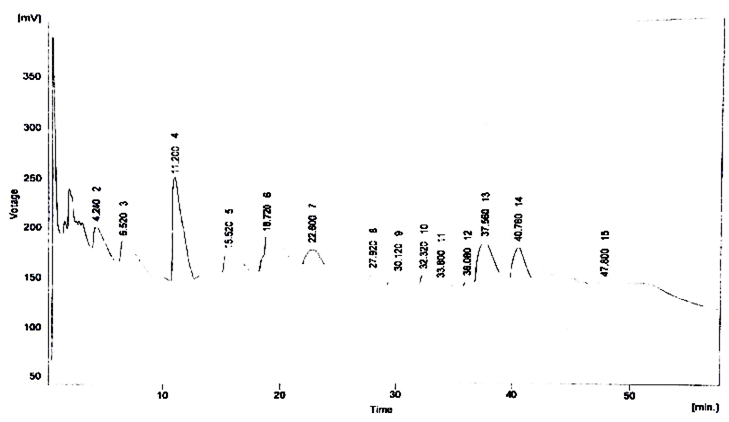
In the essential oil of A. subulatum, 13 chemical compounds were found among which the Limonene was present in greater concentration. The compounds are represented in Table 1; the peeks in the GC-FID assay are given in Figure 1.
Table 1: Phytochemical composition of A. subulatum essential oil through gas chromatography-flame ionization detection.
Sr. No
Time of retention
Name of the component
Concentration (%)
1
2.317
Limonene
11.9
2
7.783
α-Terpinene
11.1
3
19.367
α- Terpnineol
10.8
4
5.150
α-Terpinolene
9.5
5
13.050
Sabinene
9.3
6
16.567
1- Carveol
8.9
7
22.567
α-Phellandrene
7.8
8
37.300
Linalool
4.7
9
40.550
Myrtenol
4.7
10
25.700
Nerolidol
4.6
11
32.967
β-Pinene
4.6
12
28.750
Terphenyl acetate
3.6
13
31.133
1, 8-cineole
2.7
14
1.433
Traces/noise
1.7
Adult tick mortality
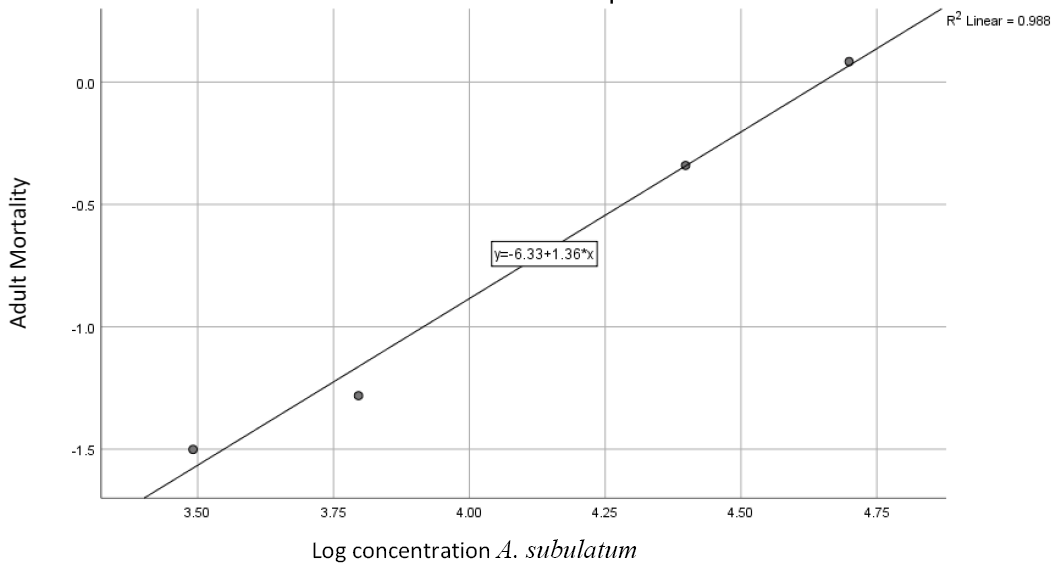
An adult immersion test was used to assess A. subulatum’s acaricidal activity against adult Hyalomma ticks at five different concentrations (0.31, 0.62, 1.25, 2.50, and 5%). The outcome showed that 5% of A. subulatum exhibited a significant (p<0.05) acaricidal effects against adult ticks as compared to negative control. Table 2 shows the lethal concentrations, or LC50 and LC90, that have also been found to be 2.80 and 21.11%, respectively. Probit analysis with a regression equation revealed a positive correlation between the concentration of A. subulatum essential oil and adult mortality. This showed that the concentration of essential oils increased together with an increase in adult mortality (Figure 2).
Table 2: Effect of various concentrations of A. subulatum essential oil against adults and larval stages.
Treatments
Adult tick mortality
Larval tick mortality
C1
6.66±5.77e
12.33±3.05f
C2
10±0de
21.33±2.08f
C3
23.33±5.77cd
31.33±2.51d
C4
36.66±5.77cd
45.33±3.05c
C5
53.33±5.77b
68.33±4.04b
CP
86.66±5.77a
90±4.58a
CN
6.66±5.77e
3.66±0.57g
C1, A. subulatum oil 0.31%; C2, A. subulatum oil 0.625%; C3, A. subulatum oil 1.5%; C4, A. subulatum oil 2.5%; C5, A. subulatum oil 5%; CN, Control Negative; CP, Control Positive. Mean±SD along with the same superscripts have a non-significant difference (p>0.05) from each other.
Larval tick mortality
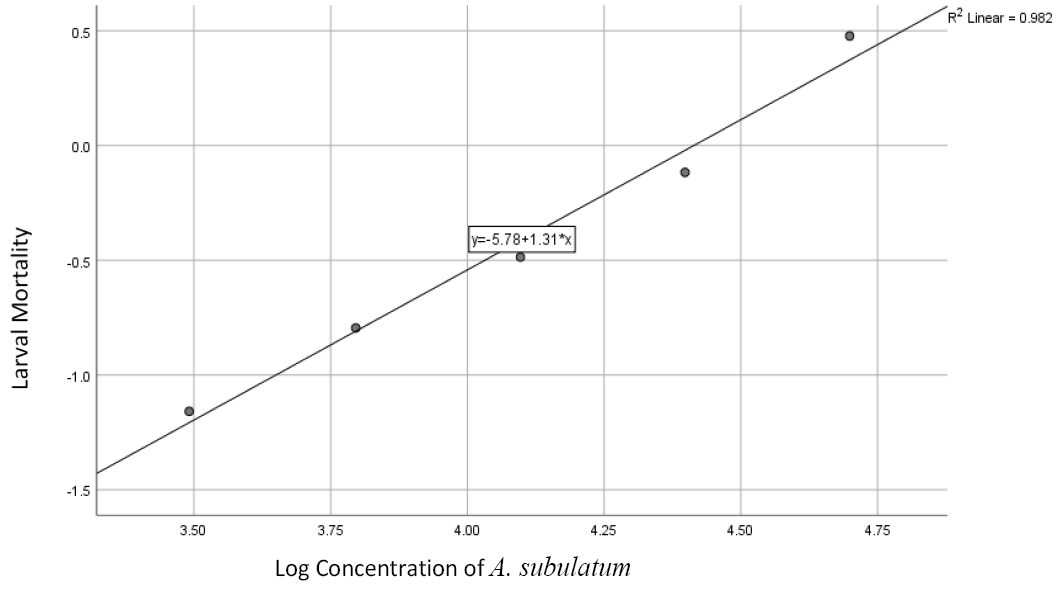
The larvicidal effect of A. subulatum essential oil at five different concentrations (0.31, 0.62, 1.25, 2.50, and 5%) was evaluated against the larvae of Hyalomma ticks by using a larval immersion test. Result revealed that 5% concentration of A. subulatum showed a significant (p<0.05) larvicidal effect against larvae of Hyalomma ticks. LC50 and LC90 values were also calculated which were 2.08 and 19.75%, respectively (Table 2). A. subulatum essential oil concentration and larval mortality were found to be positively correlated by probit analysis using a regression equation. This indicated that as essential oil concentration increased, adult mortality also did so, as illustrated in Figure 3.
Effect of various concentrations of A. subulatum essential oil on reproductive parameters and larval hatchability
There is evidence showing that the essential oil extracted from A. subulatum can decrease the Hyalomma tick’s reproductive capabilities. At 5% concentration, A. subulatum essential oil reduced Hyalomma tick oviposition by 64.88%. Additionally, it induced larval hatching at 38% and inhibited larval hatching at 62%. As the concentration of A. subulatum essential oil increased, the effect on oviposition reduction increased, but the egg hatching rate had been dropped from 80 to 38% when p< 0.05. Data revealed that as the concentration of the essential oil grew, the rate of larval hatching dropped, which affected the reproductive index and, thus, the rate of reproduction, as illustrated in Table 3.
Percentage repellency of Hyalomma ticks
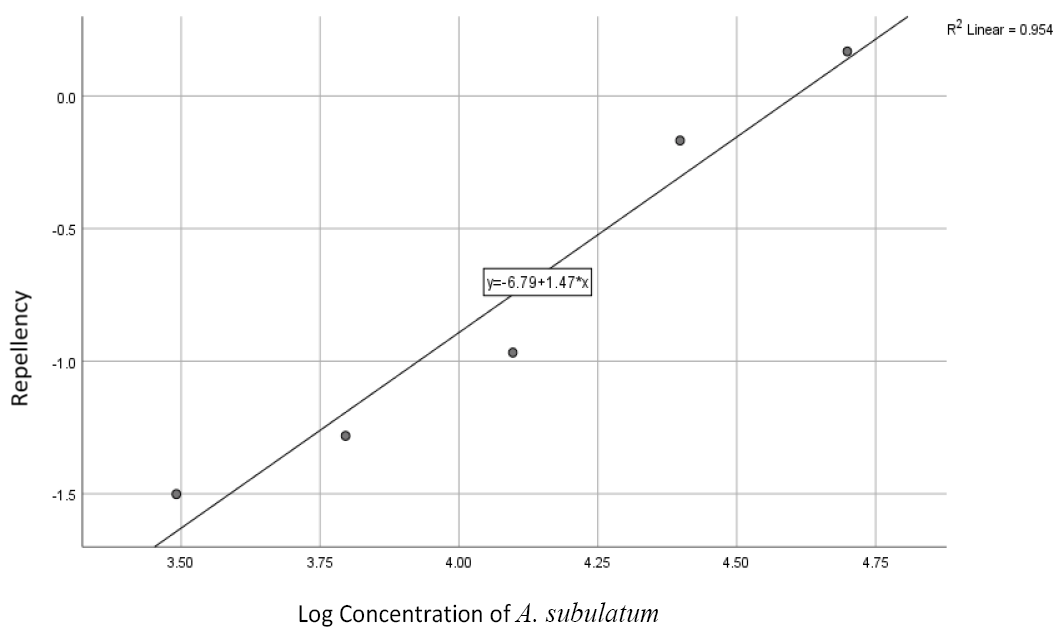
As illustrated in Figure 4, all concentrations of A. subulatum essential oil showed significant (p< 0.05) results against repellency of Hyalomma ticks except 0.31% concentration. The highest activity was observed at 5% concentrations of A. subulatum essential oil. RC50 and RC90 were also calculated by using probit analysis with regression equation which showed 2.68 and 19.49% values.
Product effectiveness
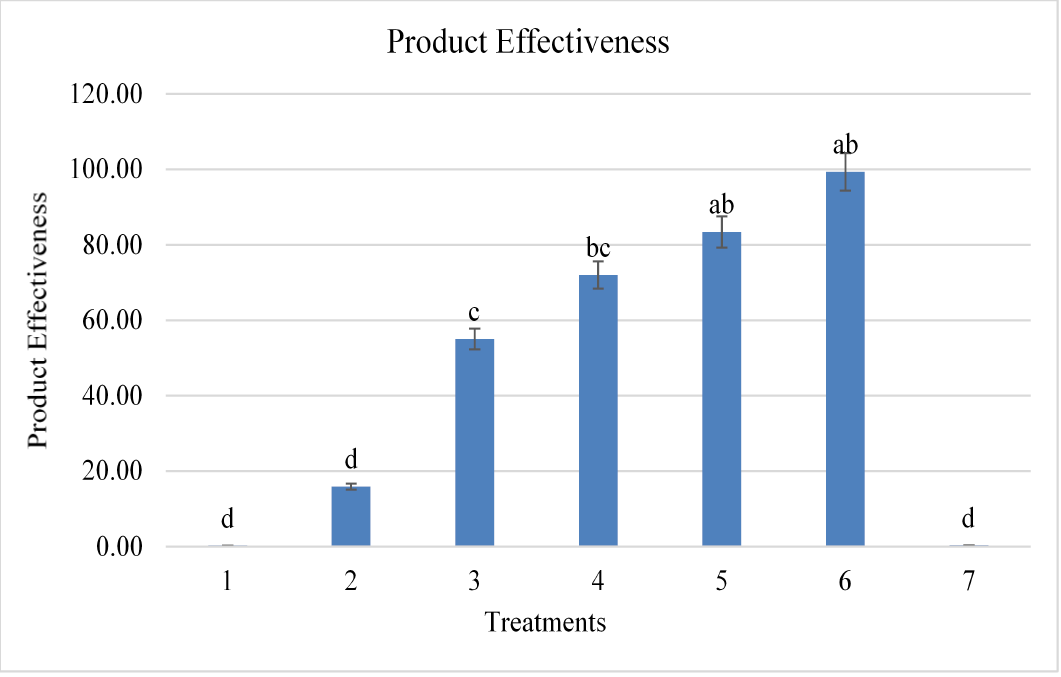
The efficacy of a test substance against ticks was measured through the product effectiveness parameter. Different concentrations of A. subulatum essential oil were used and proved to have different results in relation to effectiveness against Hyalomma species. The 5% concentration showed the best results against Hyalomma ticks, which had non-significant (p>0.05) results from the positive control (0.1% cypermethrin) as shown in Figure 5.
Infestation of arthropods, especially arachnids, causes huge economic loss globally ; ; . The tick infestations have been controlled by synthetic acaricides over the years, but ticks have developed resistance, which led to the discovery of alternative methods of tick control, especially
Table 3: Effect of various concentrations of A. subulatum essential oil on reproductive parameters and larval hatchability.
Treatments
IO (%)
EH/LH (%)
ILH (%)
RI (%)
REI (%)
NI (%)
C1
0.49±8.29d
80.33±2.4a
19.66±2.4d
51.06±4.25a
81.9±4.48a
72.85±0.4a
C2
12.05±10.6d
76.55±1.0a
23.44±1.01d
45.13±5.44a
69.06± 7.96a
69.77±1.9a
C3
38.1±7.66c
57.55±9.82b
42.44±9.82c
31.76±3.93b
36.95±10.49b
61.47±2.6b
C4
47.21±7.4bc
42.11±5.09c
57.88±5.09b
27.09±3.8bc
23.01±5.87bc
57.86±2.9b
C5
64.88±2.57b
38±1.52c
62±1.52b
18.02±1.3c
13.67±0.44cd
47.23±2c
CP
95.41±1.7a
11.33±2.51d
88.66±2.5a
2.35±0.87d
0.55±0.28d
8.82±2.9d
CN
0±0.94d
80±1.52a
20±1.52d
51.31±0.4a
82.09±1.09a
73.02±0a
IO, Inhibition of oviposition; EH/LH, Egg hatchability/larval hatchability; ILH, Inhibition of larval hatchability; RI, Reproductive index; REI, Reproductive efficiency index; NI, Nutrient index; C1, A. subulatum oil 0.31%; C2, A. subulatum oil 0.625%; C3, A. subulatum oil 1.5%; C4, A. subulatum oil 2.5%; C5, A. subulatum oil 5%; CN, control negative; CP: control positive. Mean±SD along with the same superscripts have a non-significant difference (p>0.05) from each other.
botanical agents, including essential oil ; . These essential oils are a volatile mixture of organic compounds that have a mechanism of action and target the ticks in a variety of ways ; ; . A. subulatum essential oil was extracted by hydro-distillation technique and its composition was determined by GC-FID. The major components found in A. subulatum were limonene and α-terpinene. These compositions are like previous studies ; but variation in the quantity of different components is because of the various factors such as genotype, geographic conditions, harvest time, drying techniques, extraction techniques, and storage conditions ; ; . These factors have an impact on the content and composition of the essential oils . The other GC-FID detected components along with their quantity in percentage and retention time are listed in Table 1. In the present study, different dilutions of A. subulatum essential oils were prepared in absolute alcohol. The response to adult and larval Hyalomma ticks was dose-dependent (Figure 2 and 3). In the mortality time graph, a significant (P<0.05) difference was observed between higher concentrations (2.5 and 5%) of A. subulatum and the negative control (absolute alcohol) and concluded that higher doses caused greater mortality of adult ticks and larvae. Alruhaili et al. (2023) reported that chemical constituents obtained from A. subulatum were very effective against insects, particularly Tribolium castaneum. In a similar study, Syzygium aromaticum essential oil had shown 100% tick mortality when it was used in 100mg/mL dose . On the other hand, a dose-dependent response was also observed in terms of egg production, egg hatchability, inhibition of larval hatchability, reproductive index, reproductive efficiency, and nutrient index. Nutrient index value was also decreased when the concentration of A. subulatum increased. The acaricidal activity of tested essential oil may be because of the main component’s limonene and α-terpinene which cause the inhibition of acetylcholinesterase enzyme activity in ticks while other compounds such as α- phellandrene, linalool, β-pinene, and 1, 8-cineole have minor inhibitory activity, but they have synergistic action . The reduction in the egg numbers was because of the female mortality in the first few days after A. subulatum oil treatment. The reduction in oviposition led to a drastic reduction in reproductive index and reproductive efficiency of the Hyalomma ticks when concentrations of essential oil are increased. Essential oils induce cuticular waxes to break and plug the ticks’ respiratory spiracles, which causes water stress and asphyxia . Additionally, these oils enter the cuticle, diffuse into the haemolymph, and are then transported to internal organs including the ovaries and salivary glands, impairing the digestion and reproductive systems .
Like acaricidal activity, a dose-dependent response of A. subulatum against the repellency of Hyalomma ticks was observed for 5 different concentrations. 5% concentration of A. subulatum produced effective response against Hyalomma ticks and showed significant (p<0.05) difference from the DEET treatment as shown in Figure 4. RC50 and RC90 were also calculated by using probit analysis with regression equation which showed 2.68 and 19.49% values. The repellency of A. subulatum is due to the active component limonene and other active components present in essential oil. Terpinene and limonene in the essential oils have proven repellent efficacy against Ixodes ticks ; and these were major components of essential oil of A. subulatum in this study (Table 1). These volatile substances create vapor barriers, driving arthropods away from the essential oil and giving them repelling properties .
Conclusions and Recommendations
The result of this study indicates that A. subulatum essential oil is a possible approach option for either eliminating or suppressing Hyalomma tick infestation. Further investigation is required to confirm these findings before recommending for commercial application. Moreover, methods to improve the longevity of essential oils as well as processes for improving oil yield following extraction needs to be improved.
Consent for publication
All authors are fine with the current version of the manuscript and give their consent for publication.
Ethical approval
Not applicable.
Conflict of interest
The authors have declared no conflict of interest.
Figures
Figure 1:.
Gas chromatography-flame ionization detection resultant chromatogram showing peaks against the time.
Figure 2:.
Dose-response model of A. subulatum essential oil against adults of Hyalomma spp.
Figure 3:.
Dose-response model of A. subulatum essential oil against larvae of Hyalomma spp.
Figure 4:.
Dose-response model of A. subulatum essential oil against adults of Hyalomma spp.
Figure 5:.
Product effectiveness of A. subulatum essential oil against Hyalomma spp. 1: A. subulatum oil 0.31%; 2: A. subulatum oil 0.62%; 3: A. subulatum oil 1.25%; 4: A. subulatum 2.50%; 5: A. subulatum oil 5%; 6: positive control; 7: negative control; Bars with the same superscript symbols differ non-significantly from each other (P>0.05).
References
Abbas, R.Z., Zaman, M.A., Sindhu, D., Sharif, M., Rafique, A., Saeed, Z., Siddique, F., Zaheer, T., Khan, M.K. and Akram, M.S., 2020. Anthelmintic effects and toxicity analysis of herbal dewormer against the infection of Haemonchus contortus and Fasciola hepatica in goat. Pak. Vet. J., 40: 455-460. https://doi.org/10.29261/pakvetj/2020.083[CrossRef]
Abdelbaset, A.E., Nonaka, N. and Nakao, R., 2022. Tick-borne diseases in Egypt: A one health perspective. One Hlth., pp. 100443. https://doi.org/10.1016/j.onehlt.2022.100443[CrossRef]
Abou Chehade, L., Angelini, L.G. and Tavarini, S., 2022. Genotype and seasonal variation affect yield and oil quality of safflower (Carthamus tinctorius L.) under Mediterranean conditions. Agronomy, 12: 122. https://doi.org/10.3390/agronomy12010122[CrossRef]
Ahmed, M., Riad, E., Diab, O., Mansour, H. and El-Mossalami M., 2022. Antibiotic residues in locally marketed fresh and frozen livers in Cairo and Giza, Egypt. Int. J. Vet. Sci., 11: 37-42. https://doi.org/10.47278/journal.ijvs/2021.073[CrossRef]
Akhtar, T., Shahid, S., Asghar, A., Naeem, M., Aziz, S. and Ameer, T., 2023. Utilisation of herbal bullets against Newcastle disease in poultry sector of Asia and Africa (2012-2022). Int. J. Agric. Biosci., 12: 56-65. https://doi.org/10.47278/journal.ijab/2023.044[CrossRef]
Al-Hoshani, N., Al Syaad, K.M., Saeed, Z., Kanchev, K., Khan, J.A. and Asif, M., 2023a. Anticoccidial activity of star anise (Illicium verum) essential oil in broiler chicks. Pak. Vet. J., 43: 553-558.
Al-Hoshani, N., Zaman, M.A., Al Syaad, K.M., Salman, M., Rehman, T. and Olmeda, A.S., 2023b. Assessment of repellency and acaricidal potential of Nigella sativa essential oil using Rhipicephalus microplus ticks. Pak. Vet. J., , 43(3): 606-610. http://dx.doi.org/10.29261/pakvetj/2023.054[CrossRef]
Ali, A., Bahmani, M., Pirhadi, M., Kaviar, V., Karimi, E. and Abbasi, N., 2022. Phytochemical analysis and antimicrobial effect of essential oil and extract of Loranthus europaeus Jacq on Acinetobacter baumannii, Staphylococcus aureus, and Pseudomonas aeruginosa. Kafkas Univ. Vet. Fak. Derg., 28: 161-167.
Alruhaili, M.H., Almuhayawi, M.S., Gattan, H.S., Alharbi, M.T., Nagshabandi, M.K., Jaouni, S.K.A., Selim, S. and AbdElgawad, H., 2023. Insight into the phytochemical profile and antimicrobial activities of Amomum subulatum and Amomum xanthioides: An in vitro and in silico study. Front. Pl. Sci., 14: 1136961. https://doi.org/10.3389/fpls.2023.1136961[CrossRef]
Bangulzai, N., Ahmed, S.F., Kashif, M., Fatima, M., Ahmed, M. and Mushtaq, N., 2022. Antifungal activity of essential oils extracted from different plants against Penicillium digitatum causing green mold of Citru. Int. J. Agric. Biosci. 11: 75-83. https://doi.org/10.47278/journal.ijab/2022.011[CrossRef]
Basit, M.A., Ijaz, M., Abbas, R.Z., Khan, J.A. and Ashraf, K., 2022. First molecular evidence of Ehrlichia infection: An emerging pathogen of small ruminants in Pakistan. Pak. Vet. J., 42: 208-214.
Betelhem, T., Shubisa, A. and Bari, F., 2022. Isolation, identification and antimicrobial resistance of Staphylococcus aureus isolates from mastitis cases of lactating dairy cows found in Sululta and Holleta Towns, Oromia, Ethiopia. Agrobiol. Rec., 8: 27-34. https://doi.org/10.47278/journal.abr/2022.006[CrossRef]
Bhutia, S.G., Upadhyay, S., Pradhan, A. and Sharma, L., 2022. Composition of essential oils from four major cultivars of large cardamom (Amomum subulatum Roxb.) grown in Sikkim. J. appl. Hortic., 24: 121-124. https://doi.org/10.37855/jah.2022.v24i01.23[CrossRef]
Bonnet, S.I., Vourc’h, G., Raffetin, A., Falchi, A., Figoni, J., Fite, J., Hoch, T., Moutailler, S. and Quillery, E., 2022. The control of Hyalomma ticks, vectors of the Crimean–Congo hemorrhagic fever virus: Where are we now and where are we going? PLoS Negl. Trop. Dis., 16: e0010846. https://doi.org/10.1371/journal.pntd.0010846[CrossRef]
Catani, L., Grassi, E., di Montanara, A.C., Guidi, L., Sandulli, R., Manachini, B. and Semprucci, F., 2022. Essential oils and their applications in agriculture and agricultural products: A literature analysis through VOSviewer. Biocatal. Agric. Biotechnol., pp. 102502. https://doi.org/10.1016/j.bcab.2022.102502[CrossRef]
Chaimanee, V., Warrit, N., Boonmee, T. and Pettis, J.S., 2021. Acaricidal activity of essential oils for the control of honeybee (Apis mellifera) mites Tropilaelaps mercedesae under laboratory and colony conditions. Apidologie, 52: 561-575. https://doi.org/10.1007/s13592-021-00843-z[CrossRef]
da Silva, L.A., das, G., Cardoso, M., Ferreira, V.R.F., Konig, I.F.M., Gonçalves, R.R.P., Brandão, R.M., Caetano, A.R.S., Nelson, D.L. and Remedio, R.N., 2021. Acaricidal and repellent activity of the essential oils of Backhousia citriodora, Callistemon viminalis and Cinnamodendron dinisii against Rhipicephalus spp. Vet. Parasitol., 300: 109594. https://doi.org/10.1016/j.vetpar.2021.109594[CrossRef]
da Silva, W.M.F., Kringel, D.H., de Souza, E.J.D., da Rosa Zavareze, E. and Dias, A.R.G., 2022. Basil essential oil: Methods of extraction, chemical composition, biological activities, and food applications. Fd. Bioprocess. Technol., 15: 1-27. https://doi.org/10.1007/s11947-021-02690-3[CrossRef]
Drummond, R.O., Ernst, S.E., Trevino, J.L., Gladney, W.J. and Graham, O.H., 1973. Boophilus annulatus and B. microplus: laboratory tests of insecticides. J. Econ. Entomol., 66: 130-133. https://doi.org/10.1093/jee/66.1.130[CrossRef]
El-Sayed, S.M., Ahmed, N., Selim, S., Al-Khalaf, A.A., El Nahhas, N., Abdel-Hafez, S.H., Sayed, S., Emam, H.M. and Ibrahim, M.A.R., 2022. Acaricidal and antioxidant activities of anise oil (Pimpinella anisum) and the oil’s effect on protease and acetylcholinesterase in the two-spotted spider mite (Tetranychus urticae Koch). Agriculture, 12: 224. https://doi.org/10.3390/agriculture12020224[CrossRef]
Estrada-Peña, A., Pfäffle, M.P. and Petney, T.N., 2017. Genus Hyalomma Koch, 1844. Ticks of Europe and North Africa: A guide to species identification. pp. 343-348. https://doi.org/10.1007/978-3-319-63760-0_65[CrossRef]
Falco, R.C. and Fish, D., 1992. A comparison of methods for sampling the deer tick, Ixodes dammini, in a Lyme disease endemic area. Exp. Appl. Acarol., 14: 165-173. https://doi.org/10.1007/BF01219108[CrossRef]
Faraone, N., Light, M., Scott, C., MacPherson, S. and Hillier, N.K., 2020. Chemosensory and behavioural responses of Ixodes scapularis to natural products: Role of chemosensory organs in volatile detection. Insects, 11: 502. https://doi.org/10.3390/insects11080502[CrossRef]
Ferreira, F.M., Delmonte, C.C., Novato, T.L.P., Monteiro, C.M.O., Daemon, E., Vilela, F.M.P., and Amaral, M.P.H., 2018. Acaricidal activity of essential oil of Syzygium aromaticum, hydrolate and eugenol formulated or free on larvae and engorged females of Rhipicephalus microplus. Med. Vet. Entomol., 32: 41-47. https://doi.org/10.1111/mve.12259[CrossRef]
Hussain, K., Alsayeqh, A.F., Abbas, A., Abbas, R.Z., Rehman, A., Waqar, Z.A.I.B. and Mahmood, M.S., 2022. Potential of Glycyrrhiza glabra (Licorice) extract an alternative biochemical and therapeutic agent against coccidiosis in broiler chickens. Kafkas Univ. Vet. Fak. Derg., 28: 585-591.
Ibrahium, S.M., Aboelhadid, S.M., Wahba, A.A., Farghali, A.A., Miller, R.J., Abdel-Baki, A.A.S. and Al-Quraishy, S., 2022. Preparation of geranium oil formulations effective for control of phenotypic resistant cattle tick Rhipicephalus annulatus. Sci. Rep., 12: 11693. https://doi.org/10.1038/s41598-022-14661-5[CrossRef]
Jabeen, F., Mushtaq, M., Qayyum, M., Ul Hasan, M., Zafar, M.A., Riaz, A. and Nasir, F., 2022. Tick taxonomy and nucleotide sequence analysis by internal transcribed spacer 2 (ITS 2) in large ruminants of Pothohar, Pakistan. Pak.Vet. J., 42: 554-560.
Jesser, E.N., Werdin-González, J.O., Murray, A.P. and Ferrero, A.A., 2017. Efficacy of essential oils to control the Indian meal moth, Plodia interpunctella (Hübner)(Lepidoptera: Pyralidae). J. Asia Pac. Entomol., 20: 1122-1129. https://doi.org/10.1016/j.aspen.2017.08.004[CrossRef]
Jimayu, G., 2022. Essential oil yield and yield related of basil (Ocimum basilicum L) as affected by NPS and nitrogen fertilizer rates at Wondo Genet, Southern Ethiopia. Int. J. Agri. Biosc. 11: 34-41. https://doi.org/10.47278/journal.ijab/2022.005[CrossRef]
Joshi, N.P. and Piya, L., 2019. Large cardamom (Amomum subulatum Roxb.) production, marketing and trade in the Indian sub-continent. J. Contemp. India Stud. Spac. Soc., 9: 1-13.
Kaaya, G.P., Mwangi, E.N. and Ouna, E.A., 1996. Prospects for biological control of livestock ticks, Rhipicephalus appendiculatus and Amblyomma variegatum, Using the Entomogenous Fungi Beauveria bassiana and Metarhizium Anisopliae. J. Invertebr. Pathol., 67: 15-20. https://doi.org/10.1006/jipa.1996.0003[CrossRef]
Kasaija, P.D., Estrada-Peña, A., Contreras, M., Kirunda, H. and de la Fuente, J., 2021. Cattle ticks and tick-borne diseases: a review of Uganda’s situation. Ticks Tick Borne Dis., 12: 101756. https://doi.org/10.1016/j.ttbdis.2021.101756[CrossRef]
Kumar, S.P., Gautam, G.K., Kumar, R. and Kumar, G., 2022. A review on Amomum subulatum and Elettaria Cardamomum with their pharmacological activity. Mat. J., 4: 1-6.
Li, W., Yu, Y., Wang, L., Luo, Y., Peng, Y., Xu, Y., Liu, X., Wu, S., Jian, L. and Xu, J., 2021. The genetic architecture of the dynamic changes in grain moisture in maize. Pl. Biotechnol. J., 19: 1195-1205. https://doi.org/10.1111/pbi.13541[CrossRef]
Mehnaz, S., Abbas, R., Kanchev, K., Rafique, M., Aslam, M., Bilal, M., Ather, A., Zahid, A. and Batool, T., 2023. Natural control perspectives of Dermanyssus gallinae in poultry. Int. J. Agric. Biosci., 12: 136-142. https://doi.org/10.47278/journal.ijab/2023.056[CrossRef]
Mubashir, A., Ghani, A. and Mubashar, A., 2022. Common medicinal plants effective in peptic ulcer treatment: A nutritional review. Int. J. Agric. Biosci., 11: 70-74. https://doi.org/10.47278/journal.ijab/2022.010[CrossRef]
Naseer, M.U., Iqbal, Z. and Aslam, B., 2022. In vitro efficacy of Areca catechu against cypermethrin resistant Rhipicephalus microplus and its phytochemical analysis. Pak. Vet. J., 42: 414-418.
Oladipupo, S.O., 2022. Toxicity and physiological effects of essential oil components against the German Cockroach, Blattella germanica (L.) (Ectobiidae). Auburn University.
Özüiçli, M., Girişgin, A., Diker, A., Baykalir, Y., Kisadere, İ. and Aydin, L., 2023. The efficacy of thyme, peppermint, eucalyptus essential oils, and nanoparticle ozone on nosemosis in honey bees. Kafkas Univ. Vet. Fak. Derg., 29. https://doi.org/10.9775/kvfd.2023.29167[CrossRef]
Radwan, I., Abdel-Hafeez, M.M.M., Hassan, S., Abdel-Wahab, A.A. and Abed. A.H., 2022. Effect of essential oils on biological criteria of gram-negative bacterial pathogens isolated from diseased broiler chickens. Int. J. Vet. Sci., 11: 59-67. https://doi.org/10.47278/journal.ijvs/2021.078[CrossRef]
Raheel, I., Orabi, A. and Tag, N., 2021. Down regulation of biofilm and quorum sensing genes of Pseudomonas aeruginosa and Pasteurella multocida isolated from broiler chicken pericarditis lesions by the action of some essential oils. Int. J. Vet. Sci., 10: 301-306. https://doi.org/10.47278/journal.ijvs/2021.058[CrossRef]
Rjeibi, M.R., Amairia, S., Mhadhbi, M., Rekik, M. and Gharbi, M., 2022. Detection and molecular identification of Anaplasma phagocytophilum and Babesia spp. infections in Hyalomma aegyptium ticks in Tunisia. Arch. Microbiol., 204: 385. https://doi.org/10.1007/s00203-022-02995-7[CrossRef]
Rosado-Aguilar, J.A., Aguilar-Caballero, A., Rodriguez-Vivas, R.I., Borges-Argaez, R., Garcia-Vazquez, Z. and Mendez-Gonzalez, M., 2010. Acaricidal activity of extracts from Petiveria alliacea (Phytolaccaceae) against the cattle tick, Rhipicephalus (Boophilus) microplus (Acari: ixodidae). Vet. Parasitol., 168: 299-303. https://doi.org/10.1016/j.vetpar.2009.11.022[CrossRef]
Saeed, Z., Abbas, R.Z., Khan, M.K. and Saleemi, M.K., 2023. Anticoccidial activities of essential oil of Amomum subulatum in broiler chicks. Pak. J. Agric. Sci., 60.
Saeed, Z. and Alkheraije, K.A., 2023. Botanicals: A promising approach for controlling cecal coccidiosis in poultry. Front. Vet. Sci., 10: 1157633. https://doi.org/10.3389/fvets.2023.1157633[CrossRef]
Saeed, Z. and Alsayeqh, A., 2023. Evaluation of anthelmintic, hematological and serum biochemical effects of herbal dewormer on the cattle. Slov. Vet. Res., 60. https://doi.org/10.26873/SVR-1624-2022[CrossRef]
Salman, M., Abbas, R.Z., Israr, M., Abbas, A., Mehmood, K., Khan, M.K., Hussain, R., Saleemi, M.K. and Shah, S., 2020. Repellent and acaricidal activity of essential oils and their components against Rhipicephalus ticks in cattle. Vet. Parasitol., 283: 109178. https://doi.org/10.1016/j.vetpar.2020.109178[CrossRef]
Salman, M., and Imran, A., 2022. In vitro anticoccidial evaluation of Citrus sinensis essential oil against Eimeria oocysts. Agrobiol. Rec., 10: 15-18. https://doi.org/10.47278/journal.abr/2022.020[CrossRef]
Sanchez-Vicente, S., Tagliafierro, T., Coleman, J.L., Benach, J.L. and Tokarz, R., 2019. Polymicrobial nature of tick-borne diseases. Clin. Sci. Epidemiol., 10: 10-1128. https://doi.org/10.1128/mBio.02055-19[CrossRef]
Selles, S.M.A., Kouidri, M., González, M.G., González, J., Sánchez, M., González-Coloma, A., Sanchis, J., Elhachimi, L., Olmeda, A.S. and Tercero, J.M., 2021. Acaricidal and repellent effects of essential oils against ticks: A review. Pathogens, 10: 1379. https://doi.org/10.3390/pathogens10111379[CrossRef]
Semenza, J.C., Rocklöv, J. and Ebi, K.L., 2022. Climate change and cascading risks from infectious disease. Infect. Dis. Ther., 11: 1371-1390. https://doi.org/10.1007/s40121-022-00647-3[CrossRef]
Shezryna, S., Anisah, N., Saleh, I. and Syamsa, R.A., 2020. Acaricidal activity of the essential oils from Citrus hystrix (Rutaceae) and Cymbopogon citratus (Poaceae) on the cattle tick Rhipicephalus (Boophilus) microplus larvae (Acari: Ixodidae). Trop. Biomed., 37: 433-442.
Sikander, M., Ashraf, M. and Muhammad, K.M.T.S., 2023. Antimicrobial resistance and virulence determinants of E. coli in bovine clinical mastitis in dairy farms. Cont. J. Vet. Sci., 3: 54-59.
Sobhy, H., AboElnaga, T.R., Behour, T.S. and Razin, E.A., 2021. In vitro trypanocidal activity of essential oils of some plants against Trypanosoma evansi. Int. J. Vet. Sci., 10: 191-195. https://doi.org/10.47278/journal.ijvs/2021.043[CrossRef]
Srisanyong, W., Bunyaluk, D., Srinontong, P. and Chitsanoor, S., 2021. Acaricidal activity of phenolic crude extract from Artocapus lakoocha leaves against cattle tick Rhipicephalus (Boophilus) microplus. Int. J. Vet. Sci., 10: 307-311. https://doi.org/10.47278/journal.ijvs/2021.063[CrossRef]
Tabari, M.A., Rostami, A., Khodashenas, A., Maggi, F., Petrelli, R., Giordani, C., Tapondjou, L.A., Papa, F., Zuo, Y. and Cianfaglione, K., 2020. Acaricidal activity, mode of action, and persistent efficacy of selected essential oils on the poultry red mite (Dermanyssus gallinae). Fd. Chem. Toxicol., 138: 111207. https://doi.org/10.1016/j.fct.2020.111207[CrossRef]
Tanda, A.S., Kumar, M., Tamta, A.K. and Deeksha, M.G., 2022. Advances in integrated management technology of insect pests of stored grain, advances in integrated pest management technology. Springer, pp. 157-196.
Thinh, B.B., Doudkin, R.V. and Thanh, V.Q., 2021. Chemical composition of essential oil of Amomum xanthioides Wall. ex Baker from Northern Vietnam. Biointerface Res. Appl. Chem., 11: 12275-12284. https://doi.org/10.33263/BRIAC114.1227512284[CrossRef]
Toro-Ortiz, R.D., Junior, I.d.S.V., Gonzales, J.C. and Masuda, A., 1997. Monoclonal antibodies against Boophilus microplus and their effects on tick reproductive efficiency. Vet. Parasitol., 69: 297-306. https://doi.org/10.1016/S0304-4017(96)01107-7[CrossRef]
Valcárcel, F., Elhachimi, L., Vilá, M., Tomassone, L., Sánchez, M., Selles, S.M.A., Kouidri, M., González, M.G., Martín-Hernández, R. and Valcárcel, Á., 2023. Emerging Hyalomma lusitanicum: From identification to vectorial role and integrated control. Med. Vet. Entomol., https://doi.org/10.1111/mve.12660[CrossRef]
Wojtunik-Kulesza, K.A., Kasprzak, K., Oniszczuk, T. and Oniszczuk, A., 2019. Natural monoterpenes: Much more than only a scent. Chem. Biodiv., 16: e1900434. https://doi.org/10.1002/cbdv.201900434[CrossRef]
Zhao, Y., Yang, Y.H., Ye, M., Wang, K. B., Fan, L.M. and Su, F.W., 2021. Chemical composition and antifungal activity of essential oil from Origanum vulgare against Botrytis cinerea. Fd. Chem., 365: 130506. https://doi.org/10.1016/j.foodchem.2021.130506[CrossRef]