Research Article · Volume 38, Issue 2, 10 December 2023 · Open Access
Pesticidal Potential of Essential Oils Against Callosobruchus maculatus Fab. (Coleoptera: Bruchidae) under Laboratory Conditions
· · · · · ·
Affiliations & Notes ⌄
1Department of Entomology, Faculty of Crop Protection, Sindh Agriculture University, Tando Jam. 2Department of Plant Pathology, Faculty of Crop Protection, Sindh Agriculture University, Tando Jam. 3Department of Entomology, Faculty of Agriculture, Lasbela University of Agriculture Water and Marine Sciences, Pakistan. 4Department of Plant Pathology, Faculty of Agriculture, Lasbela University of Agriculture Water and Marine Sciences, Pakistan. Corresponding author: Arfan Ahmed Gilal aagilal@sau.edu
All the essential oils i.e., orange, lemongrass, eucalyptus, and peppermint exhibited pesticidal potential against male and female C. maculatus by causing their mortality and repellency.
Orange and lemongrass oils were found to be more effective and lethal towards both males and females, whereas peppermint and eucalyptus oils were found to be more repellent.
The pesticidal potential of all oils increased with increasing doses and exposure timings as the lowest LD50 value was recorded for orange essential oil.
Therefore, essential oils of either orange or peppermint may be applied in the warehouses against C. maculatus to mitigate their population growth and grain damage.
Selected from the article's own text.
Abstract
Pulse beetle, Callosobruchus maculatus Fab. is a serious, multi-voltine and most destructive cosmopolitan pest in Asian and African countries on various pulses. Considering the target specificity of botanicals and less hazardous than synthetic insecticides, essential oils of orange (Citrus sinensis L.), lemongrass (Cymbopogon citratus Stapf.), eucalyptus (Eucalyptus globulus Labill.) and peppermint (Mentha piperita L.) were evaluated against C. maculatus adults. Each oil was applied at 0.1, 0.5, and 1.0ml doses on the filter paper. A long glass cylinder divided into three (A, B, and C) sections, supplied with 20g cowpea seeds at ends was used in the study. Ten freshly emerged male and female C. maculatus adults were released separately in the middle of B with the help of aspirator as treated (with oil) and untreated filter were placed at A and C sections, respectively. The number of adults were counted at A and C after 24 and 48 h to calculate the repellent efficacy and mortality percentage. All the essential oils showed pesticidal potential with orange and lemongrass found to be more effective in causing mortality of both male and female C. maculatus, whereas the peppermint and eucalyptus were found to be more repellent. The pesticidal potential of all oils increased with increasing doses and exposure timings. Maximum mortality and repellency of females after 48 h was recorded in orange oil (100.00±0.00%) and peppermint oil (90.00±0.00%), respectively, both applied at rate of 1.0ml dose, whereas maximum mortality and repellency of males after 48 h was also recorded in orange oil (96.67±3.33%) and peppermint (90.00±0.00%), respectively, applied at rate of 1.0ml dose. After 48 h, the lowest (0.008) and highest (0.095) LD50 values against C. maculatus female were recorded for orange and eucalyptus essential oils, respectively. The lowest (0.030 ml) and highest (0.057) LD50 values against C. maculatus males were also recorded for orange and eucalyptus essential oils, respectively. Thus, all the essential oils were found equally effective against both male and female C. maculatus. Therefore, it is suggested that the essential oils of orange or peppermint may be applied in the warehouses against C. maculatus to restrict their damage.
Novelty Statement | The essential oils of orange, lemongrass, eucalyptus, and peppermint were evaluated at 0.1, 0.5, and 1.0ml doses against adult male and female C. maculatus. All the essential oils were found effective to cause mortality and repellence in both the sexes with maximum mortality and repellency recorded in orange and peppermint oils, respectively. Pesticidal potential of all oils increased with increasing doses and exposure time against both the sexes of C. maculatus.
Introduction
The pulse beetle, Callosobruchus maculatus Fab. (Coleoptera: Bruchidae) is commonly known as cowpea weevil. It is a serious, multi-voltine and most destructive cosmopolitan pest of pulses like cowpea, lentils, black gram, green gram, and chickpea in Asian and African countries ; . The damage of C. maculatus starts from the standing crop in the field and the same will carry with the produce even during the storage in godowns ; . During storage, C. maculatus can cause 100% damage of pulse seeds , whereas its average losses can range between 20-30 and 5- 10% in tropical and temperate countries, respectively . Muntaha et al. (2017) reported that C. maculatus causes up to 10% damage to stored chickpea and up to 90% loss to stored gram. Pulse beetle infestation also invites secondary organisms such as rot organisms mostly fungi which leads to mycotoxin contamination, which create further degradation of legume grains. Seeds infested by pulse beetle thus become unhealthy for the consumption with poor germination percentage due to quantity and quality losses and fungal growth . Various management tools such as physical, biological, botanical, and chemical methods are utilized to minimize bruchids infestation, hence reduce grain losses . However, to overcome the bruchid’s infestation and protect stored legumes, insecticides are the most common method. Despite the direct and rapid control of bruchids by synthetic pesticides, many reasons i.e., pest resurgence, resistance, persistence, effects on non-target organisms, high cost, residual environmental impacts make insecticides an unsuitable option . Additionally, stored legumes should not be treated with insecticides as detrimental residues of toxic chemicals may cause serious effects on human health during consumption. Therefore, many other conventional and plant-based control methods are considered more safer and secure than insecticides . Natural insecticides that are extracted from plants contain several bio-active compounds and are generally known as bio-insecticides ; ; . Plants produced huge variety of chemicals i.e., phenolics, steroids, terpenoids and alkaloids that are used by plants for their protection and also possessed important insecticidal and medicinal properties ; ; . Various essential oils have repellent compounds that repel targeted insects by affecting their touch, taste, and smell senses. Generally, repellent effect of essential oils prevent pest from achieving their targeted site ; ; . Therefore, present study was conducted to evaluate the efficacy of some botanical oils i.e., lemongrass oil (Cymbopogon citratus), eucalyptus oil (Eucalyptus globulus), peppermint oil (Mentha piperita) and orange oil (Citrus sinensis) against C. maculatus.
Materials and Methods
Study location
The experiments were carried out at Stored Grain Research Laboratory, Department of Entomology, Sindh Agriculture University, Tandojam during 2022.
Collection and rearing of Callosobruchus maculatus
Callosobruchus maculatus were obtained from the culture that was already managed at the laboratory as further rearing was done in cowpea seeds. The F1 generation adults obtained from the culture were then utilized for the experiment to determine the repellence and mortality of various essential oils against them.
Essential oils
Four essential oils were purchased from Chiltan pure international, an ISO certified company and used in the study mentioned below:
Lemongrass (Cymbopogon citratus Stapf.)
Eucalyptus (Eucalyptus globulus Labill.)
Peppermint (Mentha piperita L.)
Orange (Citrus sinensis L.)
Experimental set-up, data collection and analysis
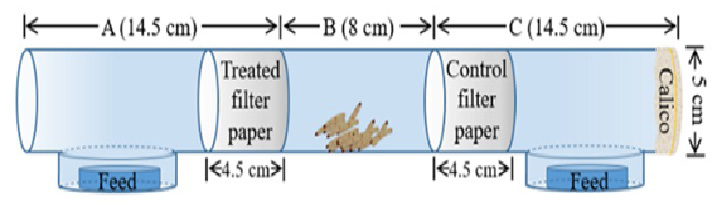
Following the study of Lee et al. (2020) and Park et al. (2018), a long glass cylinder (500 ml, 32 cm height, 2.75 cm diameter) trap was manufactured with slight modifications (Figure 1). The cylinder connected with feeding dishes divided into three sections (A, B, C), where the one end was covered with muslin cloth for ventilation and prevention of C. maculatus from escaping during the entire duration of experiment. Method of Jo et al. (2013) and Khaskheli et al. (2021) was used to evaluate repellency of the of essential oils. In this experiment, three doses of essential oils i.e., 0.1, 0.5, and 1.0ml were used against both adult males and females of C. maculatus. The respective dose of the individual oil was applied on a filter paper, thereafter, it was then allowed to air-dry for 20 minutes. Afterwards, the treated filter paper with respective dose of a particular oil was placed between section A and B of the glass cylinder, whereas control filter paper without any oil was kept between B and C (Figure 1). Ten freshly emerged F1 adults (males or females) were released separately in the middle of section B with the help of an aspirator. The face of glass cylinder was closed with a fine muslin cloth at the end of section C to ensure the ventilation inside it. The entire experiment was conducted at the temperature of 30±2 °C with 55±5% R.H. The completely randomized design was used to setup the experiment where three replications were managed for each essential oil treatment. A separate glass cylinder was used for each treatment, whereas cylinder was thoroughly cleaned and wiped using tissue paper after performing each replication.
The data were collected by counting the number of insects at sections C and A after 24 and 48 h of the application of essential oils.
The percentage repellency of the essential oils was calculated using the equation given below:
Equation 1.
Where, Nc is the number of insects in C section, and Na is the number of insects in section A.
The percentage of mortality was calculated by using the following equation:
Equation 2.
Analysis of variance was used to analyse the obtained data on mortality and repellency of essential oils for C. maculatus males and females, whereas means with significant differences were separated using the Least Square Difference (LSD) at 5% probability. All the analysis were performed using STATISTIX 8.1 computer software. Moreover, SPSS version 21, IBM Corp. was used to perform Probit analysis for the calculation of LD50 values for various essential oils for their insecticidal potential against C. maculatus.
Results and Discussion
Insecticidal potential of essential oils against Callosobruchus maculatus females
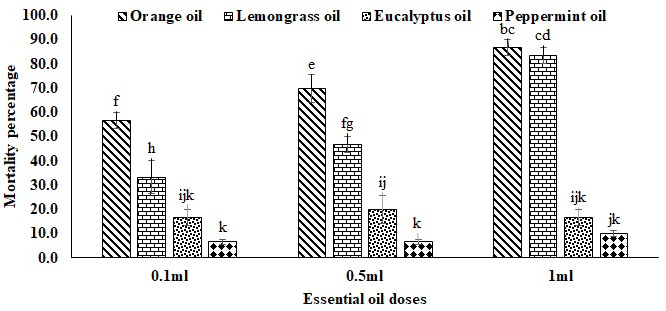
Figure 2 shows the results regarding the percentage mortality of C. maculatus females after 24 h application of various essential oils applied at various doses. A highly significant difference was recorded among various essential oils applied at various doses (F= 9.17, P < 0.001) to elicit the C. maculatus female mortality. According to the results, significantly the highest mortality (86.67±3.33%) after 24 h of application was recorded in orange oil applied at 1.0ml dose, followed by 83.33±3.33 and 10.00±0.00% mortality recorded in lemongrass and peppermint essential oils, respectively, both applied at 1.0ml dose. Moreover, in eucalyptus essential oil treatment, the highest mortality (20.00±5.77%) of C. maculatus females was recorded at 0.5ml dose, whereas the lowest mortality (6.67±3.33%) was recorded in 0.1 ml peppermint oil.
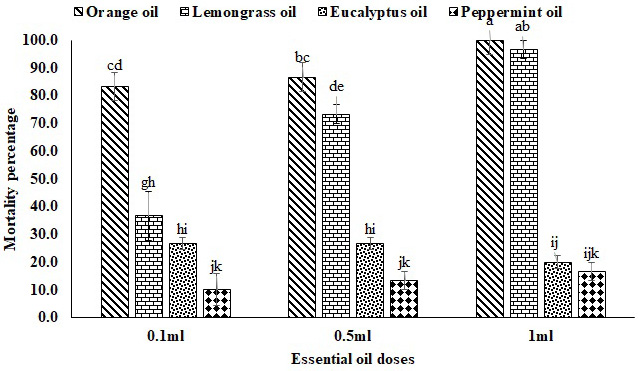
The mortality percentage of C. maculatus showed an increasing trend due to the application of various doses of essential oils after 48 h, exhibiting highly significant (F= 12.98, P < 0.001) difference among various treatments (Figure 3). According to the results, significantly the highest (100.00±0.00%) mortality percentage of C. maculatus after 48 h at 1.0ml dose was recorded in orange oil, followed by lemongrass (96.67±3.33%), whereas the lowest mortality was recorded in peppermint (10.00±5.77%) at 0.1ml dose. Moreover, the maximum mortality of female C. maculatus in orange oil (86.67±3.33%) and lemongrass (73.33±3.33%) was recorded at 0.5ml dose.
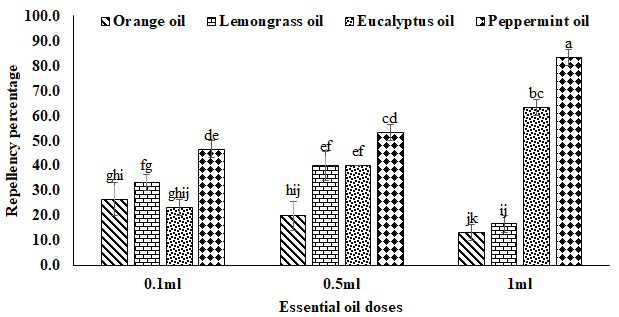
Figure 4 shows the results regarding the repellency percentage of C. maculatus females due to the application of different doses i.e., 0.1, 0.5 and 1.0ml after 24 h. Different essential oils showed significant difference (F = 16.76, P =< 0.001) in their potential to repel C. maculatus females. The highest repellency percentage was recorded in peppermint (83.33±3.33%) and eucalyptus (63.33±3.33%), whereas the maximum repellency of the females in orange oil (26.67±6.67%) was recorded at 0.1ml dose and lemongrass oil (40.00±5.77%) at 0.5ml dose. Moreover, orange (13.33±3.33%) and lemongrass (16.67±3.33%) oils exhibited the lowest repellency when applied at 1.0ml dose.
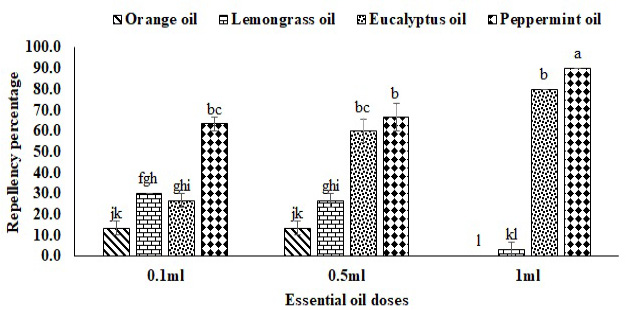
An increase in the repellency of C. maculatus was recorded at 48 h of the application of various doses of essential oils, however, there was a significant difference (F= 26.19, P < 0.001) among various oils applied at various doses (Figure 5). The highest repellency (90.00±0.00%) was recorded in peppermint and eucalyptus (80.00±0.00%) at 1.0ml dose, whereas the maximum repellency in lemongrass and orange oils was recorded as 30.00±00 and 13.33±3.33%, respectively, all applied at 0.1ml dose. Moreover, the lowest repellency was recorded in lemongrass (3.33±3.33) due to rise in mortality percentage at 1.0ml dose.
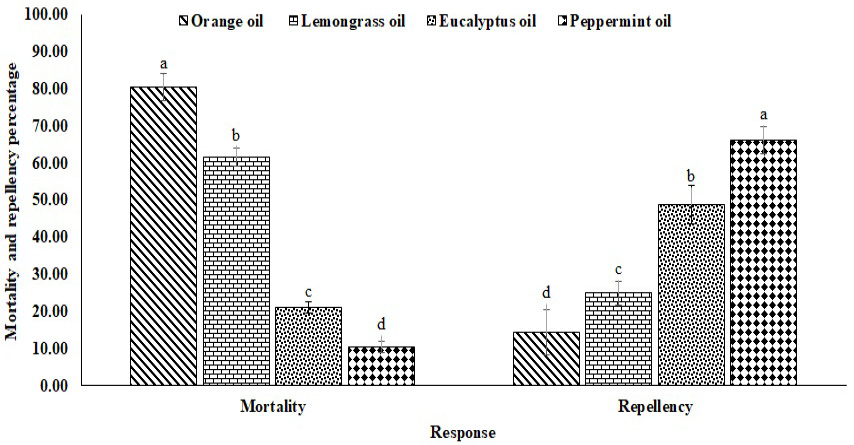
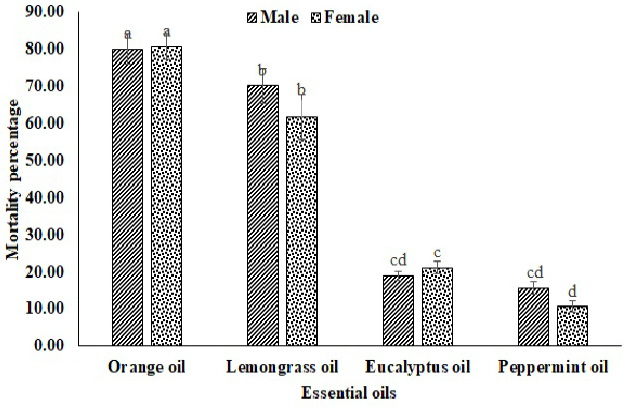
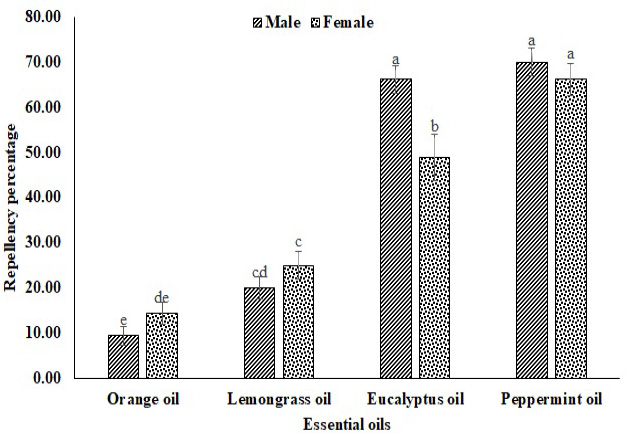
Overall repellency and mortality of C. maculatus females due to the application of various doses of different essential oils are given in Figure 6. The results confirmed a highly significant difference among various essential oils regarding their potential to cause mortality (F= 394.77, P < 0.001) and repellency (F= 220.21, P < 0.001) of C. maculatus females. Significantly, the highest overall mortality of female C. maculatus (80.56±3.57%) was recorded in orange oil, whereas the mortality percentage recorded in lemongrass (61.67±6.12%), eucalyptus (21.11±1.59%), and peppermint (10.56±1.51%) was significantly different from each other. Moreover, significantly the highest (66.11±3.63%) repellency of C. maculatus females was recorded in peppermint oil, followed by 48.89±5.11 and 25.00±3.16% repellency observed in eucalyptus and lemongrass oils, respectively. Moreover, the lowest (14.44±2.46%) repellency percentage of C. maculatus females was recorded in orange oil treatments.
Insecticidal potential of essential oils against Callosobruchus maculatus males
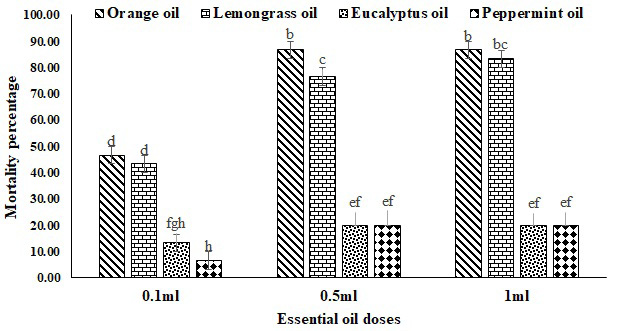
Figure 7 shows the results regarding the percentage mortality of C. maculatus males after 24 h application of various essential oils applied at various doses. A highly significant difference was recorded among various essential oils applied at various doses (F= 7.33, P= 0.0002) to elicit the C. maculatus male mortality. According to the results, significantly the highest mortality (86.67±3.33%) after 24 h of application was recorded in orange oil applied at 0.5 and 1.0ml doses. Moreover, the maximum mortality in lemongrass, and peppermint oils was recorded as 43.33±3.33% and 20.00±0.00%, respectively, both applied at 1.0ml dose, whereas in eucalyptus, the highest mortality (20.00±0.00%) was recorded at 0.5 and 1.0ml doses. Overall, the lowest mortality i.e., 6.67±3.33% was recorded in peppermint oil applied at 0.1ml dose.
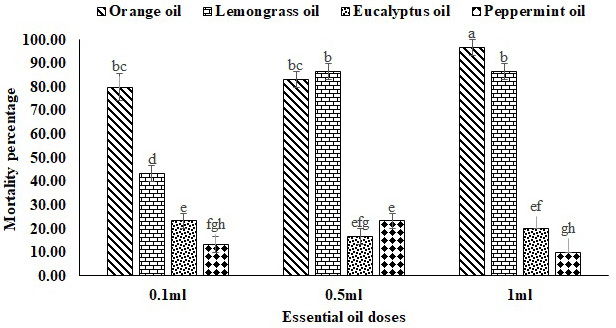
The mortality percentage of C. maculatus showed an increasing trend due to the application of various doses of essential oils after 48 h, with highly significant (F= 16.19, P < 0.001) difference among various treatments (Figure 8). According to the results, significantly the highest (96.67±3.33%) mortality percentage of C. maculatus males after 48 h was recorded in orange oil applied at 1.0ml dose, followed by lemongrass oil (86.67±3.33%) when applied at 0.5 and 1.0ml doses. Moreover, the maximum mortality of C. maculatus males in eucalyptus oil (23.33±3.33%) was recorded at 0.1ml dose. Overall, the lowest mortality was recorded in peppermint (10.00±0.00%) at 0.1ml dose.
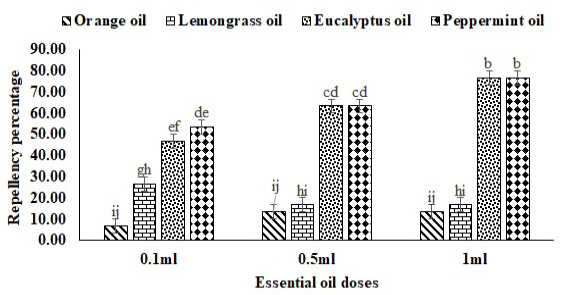
Figure 9 shows the results regarding the repellency percentage of C. maculatus males due to the application of 0.1, 0.5, and 1.0ml doses of essential oils after 24 h. Different essential oils showed significant difference (F= 4.37, P= 0.0041) in their potential to repel C. maculatus males as the highest (76.67±3.33%) repellency percentage was recorded in peppermint and eucalyptus at 1.0ml dose. Moreover, the maximum repellency of the males in orange oil (13.33±3.33%) and lemongrass (16.67±3.33%) when recorded at 0.5 and 1.0ml doses. Overall, the orange oil exhibited the lowest repellency (6.67±3.33%) when applied at 0.1ml dose and lemongrass (16.67±3.33%) when applied at 0.5 and 1.0ml doses.
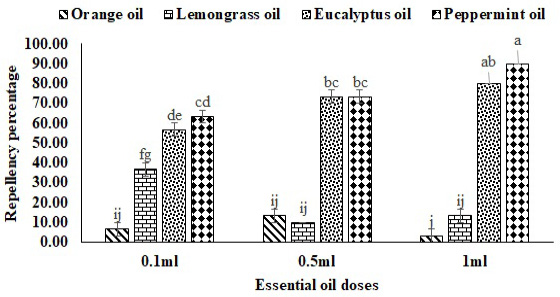
An increase in the repellency of C. maculatus was recorded at 48 h of the application of various doses of essential oils with a significant difference among various oils (F= 21.07, P < 0.001) applied at various doses (Figure 10). The highest repellency (90.00±0.00%) of C. maculatus males was recorded in peppermint and eucalyptus oil (80.00±0.00%), applied at 1.0ml dose. The maximum mortality in lemongrass and orange oils was recorded as 36.67±3.33 and 6.67±3.33%, respectively, both applied at 0.1ml dose. Overall, the lowest repellency was recorded in orange oil (3.33±3.33%) at 1.0ml and lemongrass (10.00±0.00%) at 0.5ml dose due to rise in mortality percentage in the respective treatment oils.
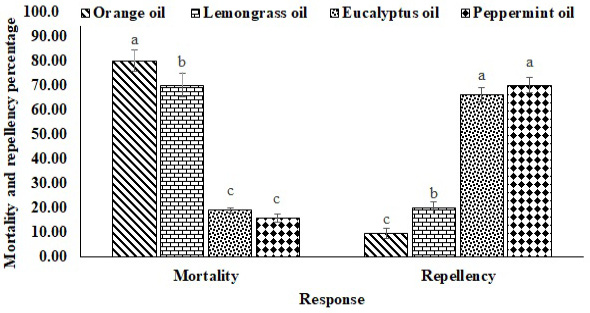
Overall repellency and mortality of C. maculatus males due to the application of various doses of different essential oils are given in Figure 11. The results confirmed a highly significant difference among various essential oils regarding their potential to cause mortality (F= 563.90, P < 0.001) and repellency (F= 418.71, P < 0.001) of C. maculatus males. Significantly, the highest overall mortality of C. maculatus (80.00±4.20%) was recorded in orange oil, whereas the mortality percentage recorded in lemongrass (70.00±4.78%), eucalyptus (18.89±1.11%), and peppermint (15.56±1.66%) was significantly different from each other. Moreover, significantly the highest (70.00±3.02%) mortality of C. maculatus males was recorded in peppermint oil, followed by eucalyptus (66.11±3.04%) and lemongrass (20.00±2.43%) essential oils. Overall, the lowest repellency (9.44±2.06%) of C. maculatus males was recorded in orange essential oil.
Overall effect of essential oils on mortality of C. maculatus male and female
The comparative analysis of various essential oils indicated all the oils were found equally effective (F= 1.12, P =0.2918) to cause mortality of both male and female C. maculatus. However, orange oil and eucalyptus were found relatively more toxic against females, whereas lemongrass and peppermint were more lethal against males (Figure 12).
Overall effect of essential oils on repellency of C. maculatus male and female
The comparative analysis of various essential oils indicated that all the oils were found equally effective (F= 1.47, P =0.2268) to cause repellency of both male and female C. maculatus. However, peppermint oil and eucalyptus showed relatively more repellent potential against males, whereas lemongrass and orange were more effective against females (Figure 13).
Lethal dose (LD50) of essential oils against Callosobruchus maculatus females and males
Table 1 describes the results regarding the LD50 values calculated for various essential oils used against female of C. maculatus. It was evident from the results that LD50 values of all the essential oils were time dependent, instead of dose dependent as LD50 values decrease at the data observation of 48 h from 24 h. Among all the essential oils, the lowest LD50 values after 24 h were recorded in orange [0.012 ml (0.000-0.046)], followed by lemongrass [0.070 ml (0.002-0.147)] and peppermint [0.108 ml (0.002-0.238)], whereas the eucalyptus showed the highest LD50 values of 0.198 ml (0.071-0.337) against C. maculatus females. After 48 h, the lowest [0.008 (0.001-0.019) and highest [0.095 ml (0.054-0.136) LD50 values were recorded for orange and eucalyptus essential oils, respectively. Moreover, LD50 values recorded for lemongrass and peppermint treatment were 0.068 ml (0.029-0.097) and 0.033 ml (0.000-0.133), respectively.
Table 1: LD50 values of various essential oils against Callosobruchus maculatus females.
Essential oil
H
LD50 (ml)
FL 95%
Slope ± SE
χ2
Probability
Eucalyptus
24-h
0.198
0.071-0.337
1.010±0.105
35.684
< 0.001
48-h
0.095
0.054-0.136
1.885±0.139
27.762
< 0.001
Lemon grass
24-h
0.070
0.002-0.147
1.629±0.138
94.411
< 0.001
48-h
0.068
0.029-0.097
2.536±0.254
33.723
< 0.001
Peppermint
24-h
0.108
0.002-0.238
1.012±0.108
66.581
< 0.001
48-h
0.033
0.000-0.113
1.128±0.133
89.602
< 0.001
Orange
24-h
0.012
0.000-0.046
0.996±0.152
25.692
0.001
48-h
0.008
0.001-0.019
1.142±0.206
13.719
0.056
Table 2: LD50 values of various essential oils against Callosobruchus maculatus males.
Essential oil
H
LD50 (ml)
FL 95%
Slope ± SE
χ2
Probability
Eucalyptus
24-h
0.139
0.089-0.187
0.767±0.103
11.453
0.120
48-h
0.057
0.024-0.093
0.669±0.105
6.175
0.520
Lemon grass
24-h
0.051
0.019-0.083
1.721±0.164
23.351
0.001
48-h
0.032
0.002-0.067
1.674±0.201
33.095
< 0.001
Peppermint
24-h
0.069
0.023-0.117
1.343±0.123
26.913
< 0.001
48-h
0.040
0.005-0.076
1.816±0.200
35.515
< 0.001
Orange
24-h
0.094
0.064-0.121
2.999±0.258
30.619
< 0.001
Table 2 describes the results regarding the LD50 values calculated for various essential oils used against male of C. maculatus. It was evident from the results that LD50 values of all the essential oils were time dependent, instead of dose dependent as LD50 values decrease at the data observation of 48 h from 24 h. Among all the essential oils, the lowest LD50 values after 24 h was recorded in lemongrass oil [0.051 ml (0.019-0.083)], followed by peppermint [0.069 ml (0.023-0.117)] and orange [0.094 ml (0.064-0.121)], whereas the eucalyptus showed the highest LD50 values of 0.139 ml (0.089-0.187) against C. maculatus After 48 h, the lowest [0.030 ml (0.001-0.064) and highest [0.057 ml (0.024-0.093) LD50 values were recorded for orange and eucalyptus essential oils, respectively. Moreover, LD50 values recorded for lemongrass and peppermint treatment were 0.032 ml (0.002-0.067) and 0.040 ml (0.005-0.076), respectively.
The current study was undertaken on the insecticidal potential of four essential oils i.e., orange oil, lemongrass, eucalyptus, and peppermint at three different doses i.e., 0.1, 0.5, and 1.0ml to determine their mortality and repellent efficacy against adult male and female C. maculatus. The obtained results indicated that essential oils of orange and lemongrass were found more effective to cause mortality of both male and female C. maculatus, whereas the peppermint and eucalyptus were found to be repellent towards both adults. Moreover, the mortality or repellence of C. maculatus adults increased with increasing dose of essential oils and their exposure timings. Among essential oils, orange oil showed highest mortality in females and males followed by lemongrass, whereas the highest repellence of males and females was recorded in peppermint oil, followed by eucalyptus. Moreover, among all tested doses of various essential oils, 1.0ml was proved to more effective as compared to 0.1 and 0.5ml, as the highest mortality or repellence of C. maculatus males and females was recorded after 48 h of the exposure.
Many studies have been reported to determine the insecticidal activity of essential oils against C. maculatus. De Souza et al. (2019) investigated the essential oil of lemongrass (C. citratus) against C. maculatus. The changes in the behaviour and high mortality were observed in male and female C. maculatus. Behavioural changes has led to reduction in the acetylcholinesterase activities in both sexes, β-esterase in females and decrease triacylglycerol in mated and unmated females. Kéita et al. (2001) also found males more susceptible than females when treated with essential oils of Ocimum basilicum and O. gratissimum. Similarly, Ojebode et al. (2016) investigated the potency of the essential oils i.e., A. indica, C. sinensis, and C. citratus against C. maculatus and other stored product pests. The highest mortality was observed in C. sinensis on first day of application followed by A. indica and C. citratus. Cymbopogon citratus also caused hundred percent mortality of adult within one h of exposure, whereas C. sinensis showed 100 percent mortality after three h of exposure. According to the study of Jayakumar et al. (2017) five essential oils i.e., nutmeg, eucalyptus, camphor, rosemary, and wintergreen showed 100 percent mortality against C. maculatus. The highest mortality of C. maculatus after 96 h of exposure was observed in citrodora (96 percent) and lemongrass oil (92 percent) at 5% concentration . Omotoso et al. (2020) found that essential oil of lemongrass has strong mortality and repellent effect against C. maculatus as reduction in egg laying, 80 percent mortality and 66 percent repellency was recorded on treated cowpea within 24 h of exposure. However, the beetle mortality and repellency were time and concentration dependent. Similarly, essential oil of lemongrass was capable to cause 100 percent mortality after 1-h of exposure, whereas orange oil (Citrus sinensis) exhibited 100 percent mortality after 3rd h of exposure against C. maculatus . Saeidi (2015) evaluated the efficacy of plant extract of Eucalyptus camaldulensis and Eucalyptus globulus and found that E. globulus was more effective against C. maculatus after 72-h of exposure. Ekeh et al. (2013) study reported that application of Citrus sinensis oil suppress C. maculatus population for moderate time of storage. While evaluating the insecticidal potential of peppermint oil the obtained results reveal that the most susceptible stage of C. maculatus was egg. Moreover, the application of peppermint oil has greater effect on male as compared to female and can significantly decrease the fecundity, survivorship, and mating frequency of next generation .
Pandey et al. (2014) while evaluating thirty-five essential oils of medicinal and aromatic plants against C. maculatus and C. chinensis found that Adhatoda vasica and Chenopodium ambrosioides L. showed 100% repellency for both insects, whereas Chenopodium sp. oil also caused 100% death of all tested organisms of the two species. Results also confirmed that application of 0.29 and 0.58 μl/ml of Chenopodium oil also showed a promising feeding deterrence with reduced seed damage for the two species. According to Satongrod et al. (2021) essential oil from piperaceae plant family also showed repellent effect against many stored grain pests. Similarly, when Oliveira et al. (2017) treat the Vigna unguiculata seeds with Piper hispidinervum (Piperaceae), they found that it repels insects away from the seeds and resulted in significantly less seed damage. Manju et al. (2019) also evaluated the repellent efficacy of twelve botanicals against C. maculatus and found that P. nigrum and A. indica extracts were more effective to control its population than others in green gram storage. Similarly, oils of castor, neem, and eucalyptus on Cajanus cajan seeds showed longer emergence period as well as no adult emergence, while the application of sunflower take longer time than control . Idoko and Ileke (2020) found that essential oil from Aframomum melegueta as the most effective among five oils they evaluated against the pulse beetle. Moreover, the effectiveness of citrus fruit peel extracts and Gnidia kraussiana was also evaluated against C. maculatus and were found to significantly affect its oviposition and larvae.
It has been mentioned that essential oils of lemongrass contain majority of terpenes and terpenoids such as10.120-β-pinene and β-mycene; 20.182- Citral (geranial); 19.766-citral (geranial) and citronellal; 20.435- Epoxy-linalooloxide (Furanoid); 22.733- Lavandulyl acetate; 23.338- Neric acid, whereas 10.073- β-pinene and β-myrcene; 10.577- Octanal; 11.812- Limonene; 14.455- Linalool; 13.474- 1-Octanol; 17.516- Decanal were reported as major terpenes and terpenoids in orange oil . Thus, the presence of such huge quantities of terpenes and terpenoids in orange and lemongrass essential oils may be responsible for their more toxic potential against C. maculatus adults. Moreover, Myint et al. (2021) identified eight main constituents in peppermint with menthol being the most abundant (43.29%) and the same may be responsible for its more repellent potential against C. maculatus adults. Myint et al. (2021) also reported comparatively less LD50 values of 0.018 (0.017–0.019) for peppermint essential oil against C. maculatus than essential oil of Syzygium aromaticum.
A recent review on the use of essential oils against C. maculatus indicated that essential oils from 121 plant species belonging to 26 families have shown their insecticidal potential against C. maculatus. Among the plant families, Lamiaceae (30 species) and Asteraceae (22 species) are the two most widely tested families against the C. maculatus as generally terpenoids and sesquiterpenoids classes of chemicals present in these plant essential oils are responsible for the insecticidal properties .
Therefore, in continuation of above studies, all essential oils elicit promising mortality and repellent effect against C. maculatus, but essential oils of orange and lemongrass were found more effective to cause mortality of both male and female C. maculatus, whereas the peppermint and eucalyptus were found to be repellent. Moreover, the mortality or repellence of C. maculatus adults increased with increasing dose of essential oils and their exposure timings.
Conclusions and Recommendations
All the essential oils i.e., orange, lemongrass, eucalyptus, and peppermint exhibited pesticidal potential against male and female C. maculatus by causing their mortality and repellency. Orange and lemongrass oils were found to be more effective and lethal towards both males and females, whereas peppermint and eucalyptus oils were found to be more repellent. The pesticidal potential of all oils increased with increasing doses and exposure timings as the lowest LD50 value was recorded for orange essential oil. Therefore, essential oils of either orange or peppermint may be applied in the warehouses against C. maculatus to mitigate their population growth and grain damage.
Conflict of interest
The authors have declared no conflict of interest.
Figures
Figure 1:.
Systematic diagram of cylinder traps for evaluating pesticidal efficacy of essential oils against Callosobruchus maculatus.
Figure 2:.
Effect of various essential oils on percentage mortality of female Callosobruchus maculatus after 24-h
Figure 3:.
Effect of various essential oils on percentage mortality of female Callosobruchus maculatus after 48-h.
Figure 4:.
Effect of various essential oils on percentage repellency of female Callosobruchus maculatus after 24-h.
Figure 5:.
Effect of various essential oils on percentage repellency of female Callosobruchus maculatus after 48-h.
Figure 6:.
Overall mortality and repellency percentage of various essential oils against female Callosobruchus maculatus.
Figure 7:.
Effect of various essential oils on percentage mortality of male Callosobruchus maculatus after 24-h.
Figure 8:.
Effect of various essential oils on percentage mortality of male Callosobruchus maculatus after 48-h.
Figure 9:.
Effect of various essential oils on percentage repellency of male Callosobruchus maculatus after 24-h.
Figure 10:.
Effect of various essential oils on percentage repellency of male Callosobruchus maculatus after 48-h.
Figure 11:.
Overall mortality and repellency percentage of various essential oils against male Callosobruchus maculatus.
Figure 12:.
Overall mortality percentage of various essential oils against male and female Callosobruchus maculatus.
Figure 13:.
Overall repellency efficacy of various essential oils against male and female Callosobruchus maculatus.
References
Ahuchaogu, C.E. and Ojiako, F.O., 2020. Attraction of Callosobruchus maculatus Fabricius (Coleoptera: Chrysomelidae: Bruchinae) to pods of cowpea plants at different developmental stages. Agro-Sci., 19: 32-39. https://doi.org/10.4314/as.v19i3.6[CrossRef]
Bai, L., Jiao, M.L., Zang, H.Y., Guo, S.S., Wang, Y., Sang, Y.L. and Du, S.S., 2019. Chemical composition of essential oils from four Rhododendron species and their repellent activity against three stored-product insects. Environ. Sci. Poll. Res., 26: 23198-23205. https://doi.org/10.1007/s11356-019-05577-1[CrossRef]
Bhalla, S., Gupta, K., Lal, B., Kapur, M.L. and Khetarpal, R.K., 2008. Efficacy of various non-chemical methods against pulse beetle, Callosobruchus maculatus (Fab.). In: Endure International Conference (12-15 October) on Diversifying Crop Protection, La Grande Motte. France. pp. 1-4.
Boeke, S.J., Barnaud, C., van Loon, J.J., Kossou, D.K., van Huis, A. and Dicke, M., 2004. Efficacy of plant extracts against the cowpea beetle, Callosobruchus maculatus. Int. J. Pest Manage., 50: 251-258. https://doi.org/10.1080/09670870410001702206[CrossRef]
Buxton, T., Takahashi, S., Eddy Doh, A.M., Baffoe‐Ansah, J., Owusu, E.O. and Kim, C.S., 2020. Insecticidal activities of cinnamic acid esters isolated from Ocimum gratissimum L. and Vitellaria paradoxa Gaertn leaves against Tribolium castaneum Hebst (Coleoptera: Tenebrionidae). Pest Manage. Sci., 76: 257-267. https://doi.org/10.1002/ps.5509[CrossRef]
Choochote, W., Chaithong, U., Kamsuk, K., Jitpakdi, A., Tippawangkosol, P., Tuetun, B. and Pitasawat, B., 2007. Repellent activity of selected essential oils against Aedes aegypti. Fitoterapia, 78: 359-364. https://doi.org/10.1016/j.fitote.2007.02.006[CrossRef]
De Souza Alves, M., Campos, I.M., de Brito, D.D.M.C., Cardoso, C.M., Pontes, E.G. and de Souza, M.A.A., 2019. Efficacy of lemongrass essential oil and citral in controlling Callosobruchus maculatus (Coleoptera: Chrysomelidae), a post-harvest cowpea insect pest. Crop Prot., 119: 191-196. https://doi.org/10.1016/j.cropro.2019.02.007[CrossRef]
Dinesh, L. and Raj, D.V., 2012. Efficacy of application of four vegetable oils as grain protectant against the growth and development of Callosobruchus maculatus and on its damage. Adv. Bio Res., 3: 55-59.
Ekeh, F.N., Oleru, K.I., Ivoke, N., Nwani, C.D. and Eyo, J.E., 2013. Effects of Citrus sinensis peel oil on the oviposition and development of cowpea beetle Callosobruchus maculatus (Coleoptera: Chrysomelidae) in some legume grains. Pakistan J. Zool., 45: 967-974.
El-Nagar, T.F., Abdel Fattah, H.M., Khaled, A.S. and Aly, S.A., 2012. Efficiency of peppermint oil fumigant on controlling Callosobruchus maculatus F. infesting cowpea seeds. Life Sci. J., 9: 375-383.
Elhag, E.A., 2000. Deterrent effects of some botanical products on oviposition of the cowpea bruchid Callosobruchus maculatus (F.) (Coleoptera: Bruchidae). Int. J. Pest Manage., 46: 109-113. https://doi.org/10.1080/096708700227462[CrossRef]
Gbaye, O.A., Millard, J.C. and Holloway, G.J., 2011. Legume type and temperature effects on the toxicity of insecticide to the genus Callosobruchus (Coleoptera: Bruchidae). J. Stored. Prod. Res., 47: 8-12. https://doi.org/10.1016/j.jspr.2010.08.001[CrossRef]
Hamad, Y.K., Abobakr, Y., Salem, M.Z., Ali, H.M., Al-Sarar, A.S. and Al-Zabib, A.A., 2019. Activity of plant extracts/essential oils against three plant pathogenic fungi and mosquito larvae: GC/MS analysis of bioactive compounds. BioResources, 14: 4489-4511. https://doi.org/10.15376/biores.14.2.4489-4511[CrossRef]
Hamada, H.M., Awad, M., El-Hefny, M. and Moustafa, M.A.M., 2018. Insecticidal activity of garlic (Allium sativum) and ginger (Zingiber officinale) oils on the cotton leafworm, Spodoptera littoralis (Boisd.) (Lepidoptera: Noctuidae). Afr. Entomol., 26: 84-94. https://doi.org/10.4001/003.026.0084[CrossRef]
Haq, I.U., Khurshid, A., Inayat, R., Kexin, Z., Changzhong, L., Ali, S. and Abbasi, A.M., 2021. Silicon-based induced resistance in maize against fall armyworm [Spodoptera frugiperda (Lepidoptera: Noctuidae)]. Pub. Lib. Sci. One, 16: 259-749. https://doi.org/10.1371/journal.pone.0259749[CrossRef]
Harshani, H.S. and Karunaratne, S., 2021. Chemical composition and insecticidal effect of fruit peel powders of two citrus species against Callosobruchus maculatus (F.) (Coleoptera: Bruchidae) in stored cowpea (Vigna unguiculata). Int. J. Pest Manage., 67: 131-138. https://doi.org/10.1080/09670874.2019.1698788[CrossRef]
Hussein, H.S., Salem, M.Z. and Soliman, A.M., 2017. Repellent, attractive, and insecticidal effects of essential oils from Schinus terebinthifolius fruits and Corymbia citriodora leaves on two whitefly species, Bemisia tabaci, and Trialeurodes ricini. Sci. Hortic., 216: 111-119. https://doi.org/10.1016/j.scienta.2017.01.004[CrossRef]
Idoko, J.E. and Ileke, K.D., 2020. Comparative evaluation of insecticidal properties of essential oils of some selected botanicals as bio-pesticides against Cowpea bruchid, Callosobruchus maculatus (Fabricius) [Coleoptera: Chrysomelidae]. Bull. Nat. Res. Centre, 44: 1-7. https://doi.org/10.1186/s42269-020-00380-2[CrossRef]
Jayakumar, M., Prabu Seenivasan, S., Rehman, F. and Ignacimuthu, S., 2017. Fumigant effect of some essential oils against pulse beetle, Callosobruchus maculatus (Fab.) (Coleoptera: bruchidae). Afr. Entomol., 25: 193-199. https://doi.org/10.4001/003.025.0193[CrossRef]
Jo, H.J., Park, K.M., Min, S.C., Na, J.H., Park, K.H. and Han, J., 2013. Development of an anti‐insect sachet using a polyvinyl alcohol− cinnamon oil polymer strip against Plodia interpunctella. J. Fd. Sci., 78: 1713-1720. https://doi.org/10.1111/1750-3841.12268[CrossRef]
Kéita, S.M., Vincent, C., Schmit, J.P., Arnason, J.T. and Bélanger, A. 2001. Efficacy of essential oil of Ocimum basilicum L. and O. gratissimum L. applied as an insecticidal fumigant and powder to control Callosobruchus maculatus (Fab.)[Coleoptera: Bruchidae]. J. Stored. Prod. Res., 37: 339-349. https://doi.org/10.1016/S0022-474X(00)00034-5[CrossRef]
Khaskheli, T.Z., Rajput, L.B., Memon, S.A., Dhiloo, K.H., Khaskheli, N.Z., Bhatti, Q.U.A. and Gilal, A.A., 2021. Repellent potential of medicinal oils against Tribolium castaneum (Herbst) under laboratory conditions. Abasyn J. Life Sci., 4: 7-15. https://doi.org/10.34091/AJLS.4.2.2[CrossRef]
Kiradoo, M.M. and Srivastava, M., 2010. A comparative study on the efficacy of two Lamiaceae plants on egg-laying performance by the pulse beetle Callosobruchus chinensis Linn. (Coleoptera: Bruchidae). J. Biopest., 3: 590-595.
Kosini, D., Nukenine, E.N., Agbor, G.A., Tchinda, A.T., Abdou, J.P., Yaya, J.A.G. and Kowa, T.K., 2021. Fractionated extracts from Gnidia kraussiana (Malvales: Thymeleaceae) as bioactive phytochemicals for effective management of Callosobruchus maculatus (Coleoptera: Chrysomelidae) in stored Vigna unguiculata (Fabales: Fabaceae) seeds. J. Ins. Sci., 21: 14. https://doi.org/10.1093/jisesa/ieab006[CrossRef]
Lee, H.E., Hong, S.J., Hasan, N., Baek, E.J., Kim, J.T., Kim, Y.D. and Park, M.K., 2020. Repellent efficacy of essential oils and plant extracts against Tribolium castaneum and Plodia interpunctella. Entomol. Res., 50: 450-459. https://doi.org/10.1111/1748-5967.12471[CrossRef]
Manju, K., Jayaraj, J. and Shanthi, M., 2019. Efficacy of botanicals against pulse beetle Callosobruchus maculatus (F.) in green gram. Ind. J. Entomol., 81: 144-147. https://doi.org/10.5958/0974-8172.2019.00014.2[CrossRef]
Mssillou, I., Saghrouchni, H., Saber, M., Zannou, A. J., Balahbib, A., Bouyahya, A., Allali, A., Lyoussi, B. and Derwich, E., 2022. Efficacy and role of essential oils as bio-insecticide against the pulse beetle Callosobruchus maculatus (F.) in post-harvest crops. Ind. Crops Prod., 189: 115786. https://doi.org/10.1016/j.indcrop.2022.115786[CrossRef]
Muntaha, S.T., Sagheer, M., Hasan, M.U. and Sahi, S.T., 2017. Repellent and growth inhibitory impact of plant extracts and synthetic pyrethroids on three strains of Callosobruchus chinensis L. Pakistan J. Zool., 49: 581-581. https://doi.org/10.17582/journal.pjz/2017.49.2.537.545[CrossRef]
Myint, K.K., Harahap, I.S. and Dadang, D., 2021. Biological activities and chemical composition of Mentha piperita and Syzygium aromaticum essential oil fractions against cowpea weevil, Callosobruchus maculatus (Fabricius)(Coleoptera: Bruchidae). J. Entomol. Ind., 18: 182-182. https://doi.org/10.5994/jei.18.3.182[CrossRef]
Nerio, L.S., Olivero-Verbel, J. and Stashenko, E., 2010. Repellent activity of essential oils: A review. Bioresour. Technol., 101: 372-378. https://doi.org/10.1016/j.biortech.2009.07.048[CrossRef]
Ojebode, M.E., Olaiya, C.O., Adegbite, A.E., Karigidi, K.O. and Ale, T.O., 2016. Efficacy of some plant extracts as storage protectants against Callosobruchus maculatus. J. Biotech. Biomater, 6: 217.
Oliveira, J.V.D., França, S.M.D., Barbosa, D.R., Dutra, K.D.A., Araujo, A.M.N.D. and Navarro, D.M.D.A.F., 2017. Fumigation and repellency of essential oils against Callosobruchus maculatus (Coleoptera: Chrysomelidae: Bruchinae) in cowpea. Pesquisa Agropecuária Brasileira., 52: 10-17. https://doi.org/10.1590/s0100-204x2017000100002[CrossRef]
Omotoso, S.E., Akinpelu, B.A. and Soyelu, O.J., 2020. Insecticidal effect of lemongrass oil on behavioural responses and biochemical changes in cowpea weevil, Callosobruchus maculatus (Fabricius). J. Phytopathol. Pest Manage., 7: 14-30.
Pandey, A.K., Palni, U.T. and Tripathi, N.N., 2014. Repellent activity of some essential oils against two stored product beetles Callosobruchus chinensis L. and C. maculatus F. (Coleoptera: Bruchidae) with reference to Chenopodium ambrosioides L. oil for the safety of pigeon pea seeds. J. Fd. Sci. Technol., 51: 4066-4071. https://doi.org/10.1007/s13197-012-0896-4[CrossRef]
Park, M.A., Chang, Y., Choi, I., Bai, J., Ja-hyun, N. and Han, J., 2018. Development of a comprehensive biological hazard-proof packaging film with insect-repellent, antibacterial, and antifungal activities. J. Fd. Sci., 83: 3035-3043. https://doi.org/10.1111/1750-3841.14397[CrossRef]
Peeyush, K., Sapna, M., Anushree, M. and Santosh, S., 2011. Insecticidal properties of Mentha species: A review. Ind. Crops Prod., 34: 802-817. https://doi.org/10.1016/j.indcrop.2011.02.019[CrossRef]
Rahman, M.A. and Sabiha, S., 2018. Efficacy of carbofuran against pulse beetle Callosobruchus maculatus (F.) (Coleoptera: Bruchidae) in black gram (Vigna mungo L.) seeds. J. Entomol. Zool. Stud., 6: 2480-2486.
Raja, M. and William, S.J., 2008. Impact of volatile oils of plants against the cowpea beetle Callosobruchus maculatus (FAB.) (Coleoptera: Bruchidae). Int. J. Integr. Biol., 2: 62-64.
Saeidi, K., 2015. Antifeedant and growth inhibitory activities of essential oils from Eucalyptus globulus and Eucalyptus camaldulensis on Callosobruchus maculatus (Coleoptera: Chrysomelidae). J. Novel Res. Pl. Prot., 6: 391-400.
Satongrod, B., Wanna, R., Khaengkhan, P. and Chumpawadee, T., 2021. Fumigant toxicity and bioactivity of Wedelia trilobata essential oil against cowpea weevil (Callosobruchus maculatus). Int. J. Agric. Technol., 17: 1591-1604.
Seth, W.N., Abla, D.M., Boris, D.K., Guillaume, K.K., Honor, K.K. and Isabelle, A.G., 2017. Insecticidal activity of four essential oils on the survival and oviposition of two sympatric bruchid species: Callosobruchus maculatus F. and Callosobruchus subinnotatus PIC. (Coleoptera: Chrysomelidea: Bruchinae). J. Stored Prod. Posthar. Res., 8: 103-112.
Weaver, D.K. and Subramanyam, B., 2000. Botanicals. In: Alternatives to pesticides in stored-product IPM. Springer., Boston, MA. pp. 303-320. https://doi.org/10.1007/978-1-4615-4353-4_11[CrossRef]